Extra pillows multiply faster than any other item in a small bedroom. A spare for guests, last year’s decorative set that didn’t get donated, the memory foam one that didn’t work out but feels wasteful to throw away: they land on the closet shelf in a loose, sliding pile until the shelf won’t hold anything else and the pillows start falling on your head every time you reach for a sweater.
The shelf itself isn’t the problem. Most closet shelves run 12 to 14 inches deep, and a standard pillow uncompressed is 20 by 26 inches, so the math was never going to work without some intervention. Nine ways to fix it below, starting with the one step that determines whether any of the rest is worth doing.
1. Sort the pillows that earn shelf space from the ones that don’t

Before you buy a single bag or bin, pull every pillow off the shelf and sort it into three piles: pillows you use monthly (guest bed, current decorative rotation), pillows you use seasonally, and pillows you’re keeping out of guilt. That third pile is usually the biggest one, and it’s the one eating the shelf.
A pillow that’s gone flat, yellowed, or lost its shape isn’t a backup, it’s clutter with a socially acceptable excuse. If you wouldn’t put it on a bed today, it doesn’t get a spot on a shelf that’s already too small. Donate what’s still usable and toss what isn’t, then work through the remaining six steps with only the pillows that survived the cut.
2. Compress spares with a vacuum bag before they hit the shelf
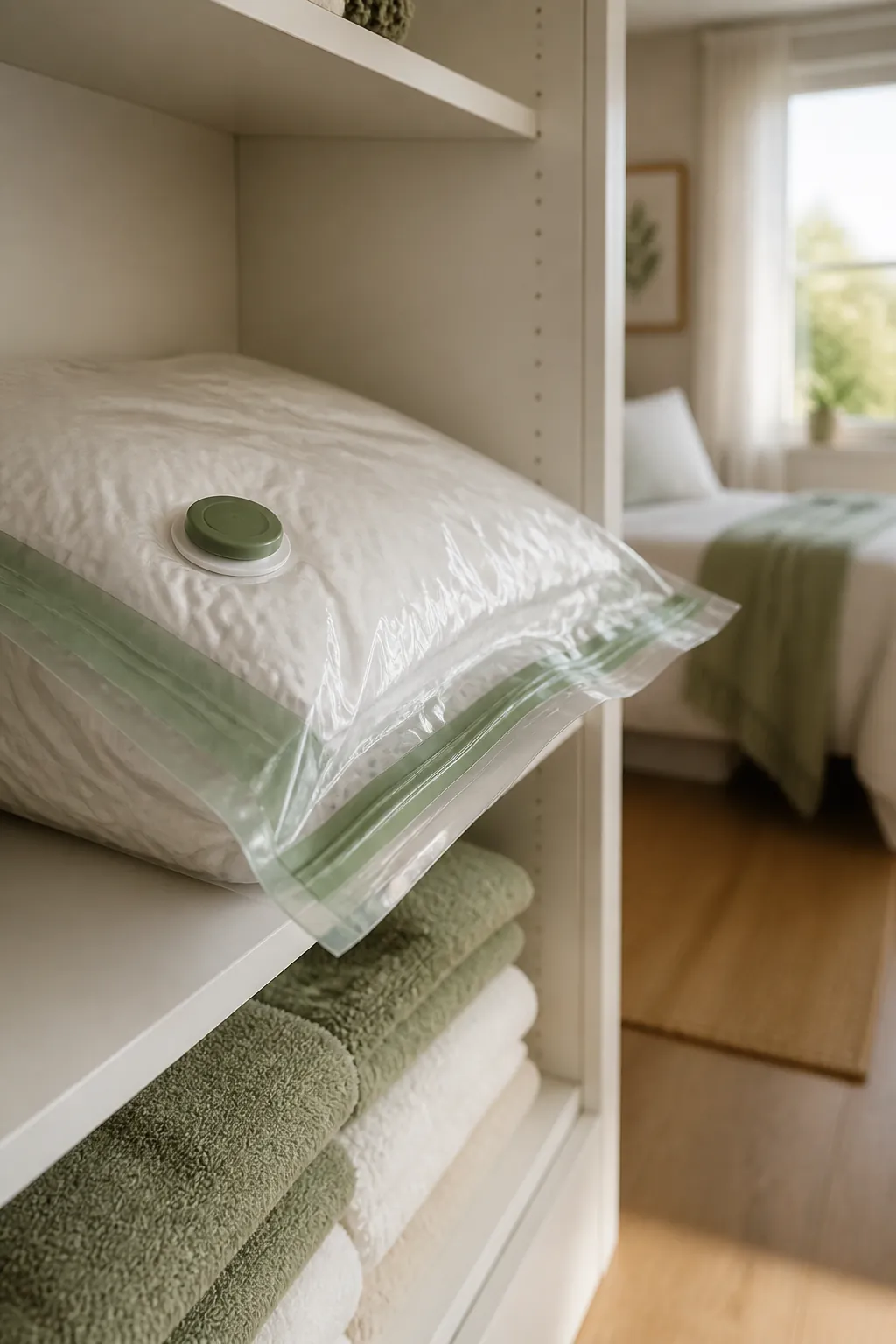
Air is the enemy on a shallow shelf, and a pillow is mostly air. Vacuum compression storage bags pull that air out with a household vacuum nozzle and shrink a standard pillow to roughly a quarter of its original size, which is often the difference between a shelf that closes and one that doesn’t.
This works well for down and synthetic fill, both of which loft back up once you let the air back in. It does not work for memory foam. Foam doesn’t bounce back from sustained compression the way loose fill does, and a memory foam pillow left vacuum-sealed for a season can come out permanently dented on one side. Save the vacuum bags for the spares you genuinely won’t touch for weeks, and give memory foam a bin instead.
3. Corral the pile with fabric bins made for closet tops
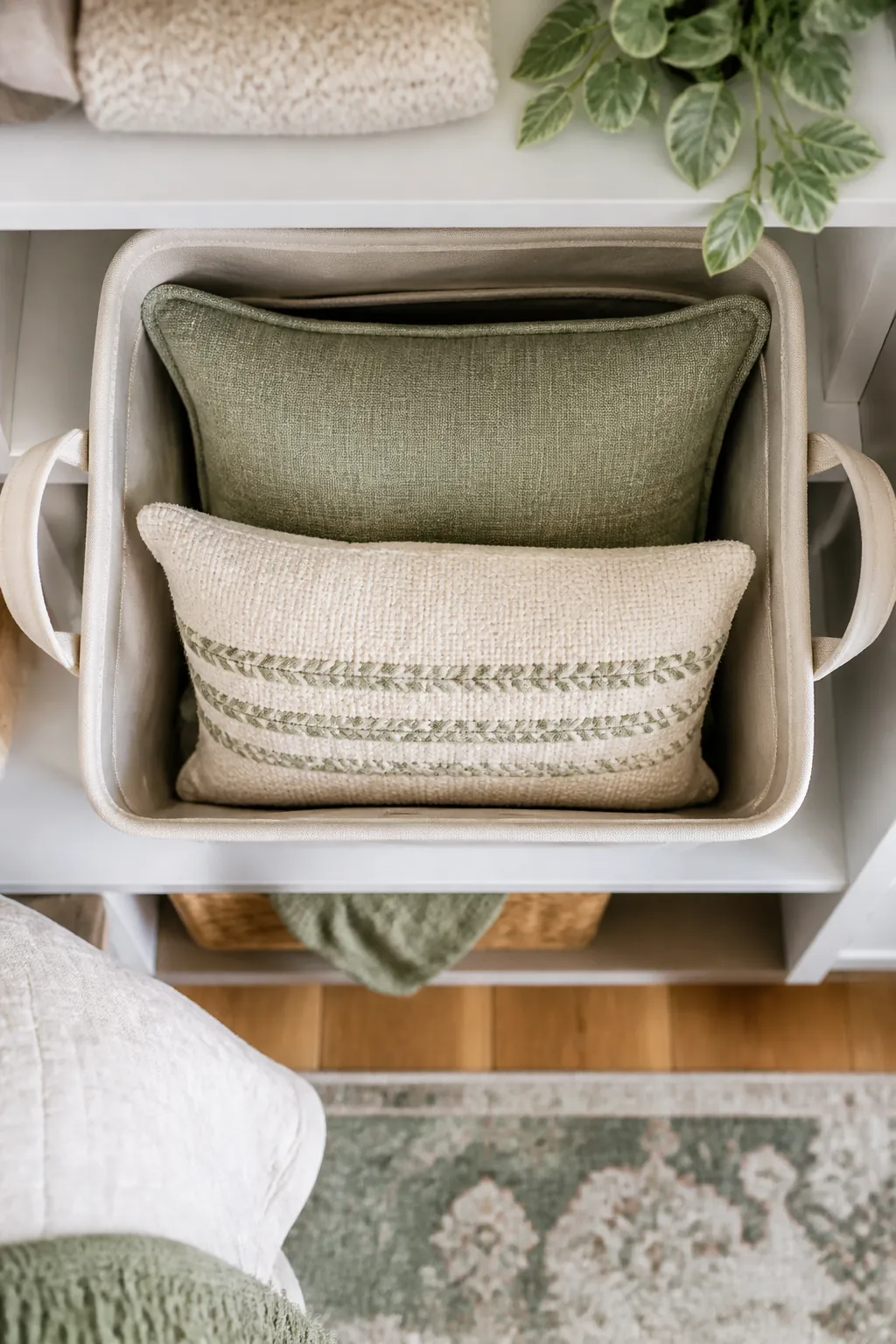
Loose pillows on an open shelf slide apart, slump forward, and eventually tip onto the floor of the closet, which is how a tidy shelf turns into a pile within a month. Fabric shelf bins for closet tops are sized specifically for that awkward shelf depth, and the sides hold pillows upright instead of letting them fan out.
Use one bin per category rather than one giant bin for everything. Decorative throw pillows in one, the guest-bed spare in another. When everything shares a single bin, finding the pillow you actually want means unpacking the whole thing, and that’s the exact friction that makes people give up on closet organization and just leave things loose again.
4. Split the shelf with dividers so bins don’t lean
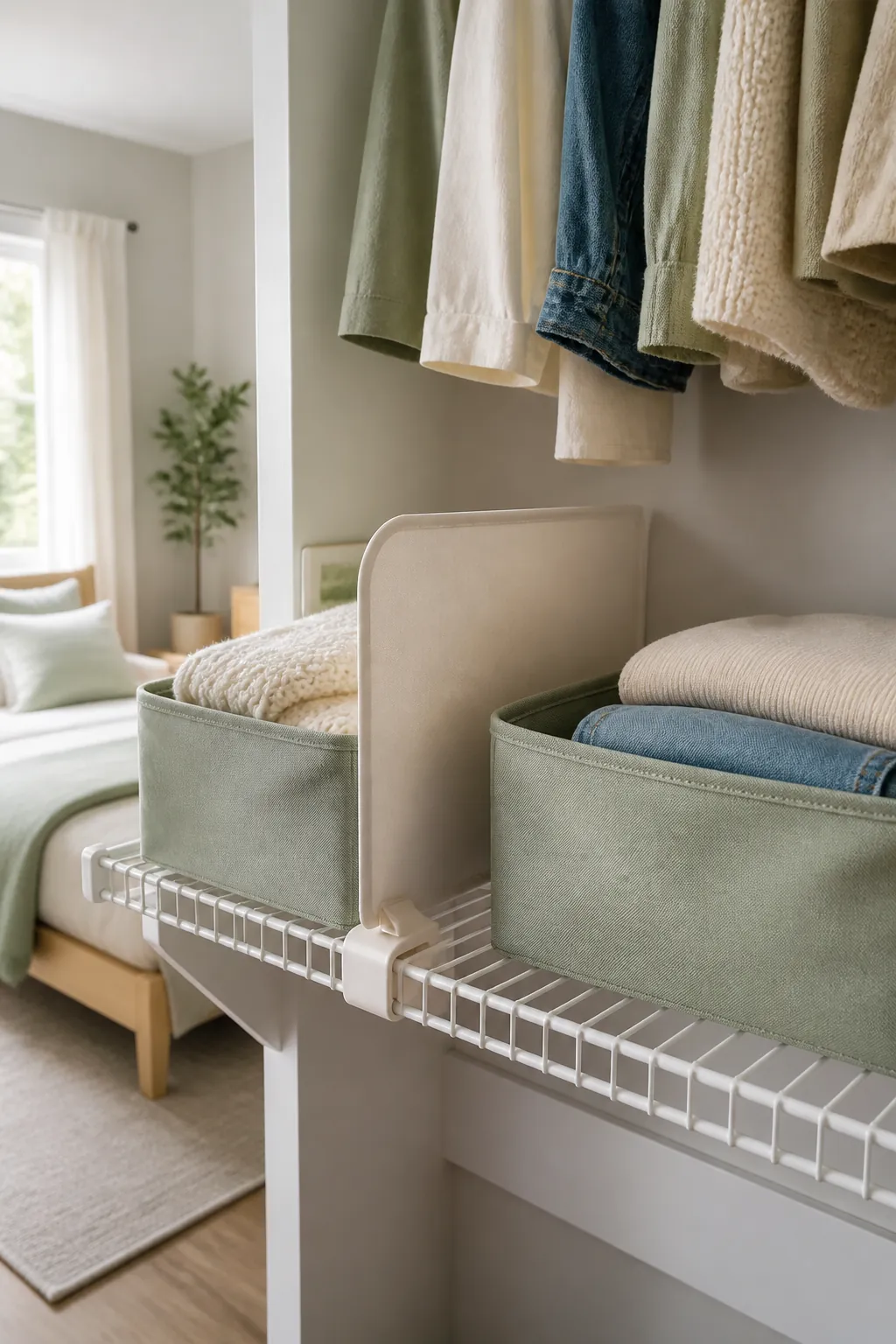
A closet shelf with nothing on it but bins looks organized for about a week, until the bins start sliding into each other and the whole row leans sideways every time you pull one out. Shelf dividers for closets clip onto the shelf edge and create fixed lanes, so each bin has a boundary instead of drifting into its neighbor.
This matters more on a wire shelf than a solid one, since wire shelving has almost no friction to hold anything in place. Space the dividers to match your bin widths exactly rather than eyeballing it, because a half-inch of slack per bin adds up to a noticeable lean by the third one.
5. Protect bare pillows in a pillowcase before they go up
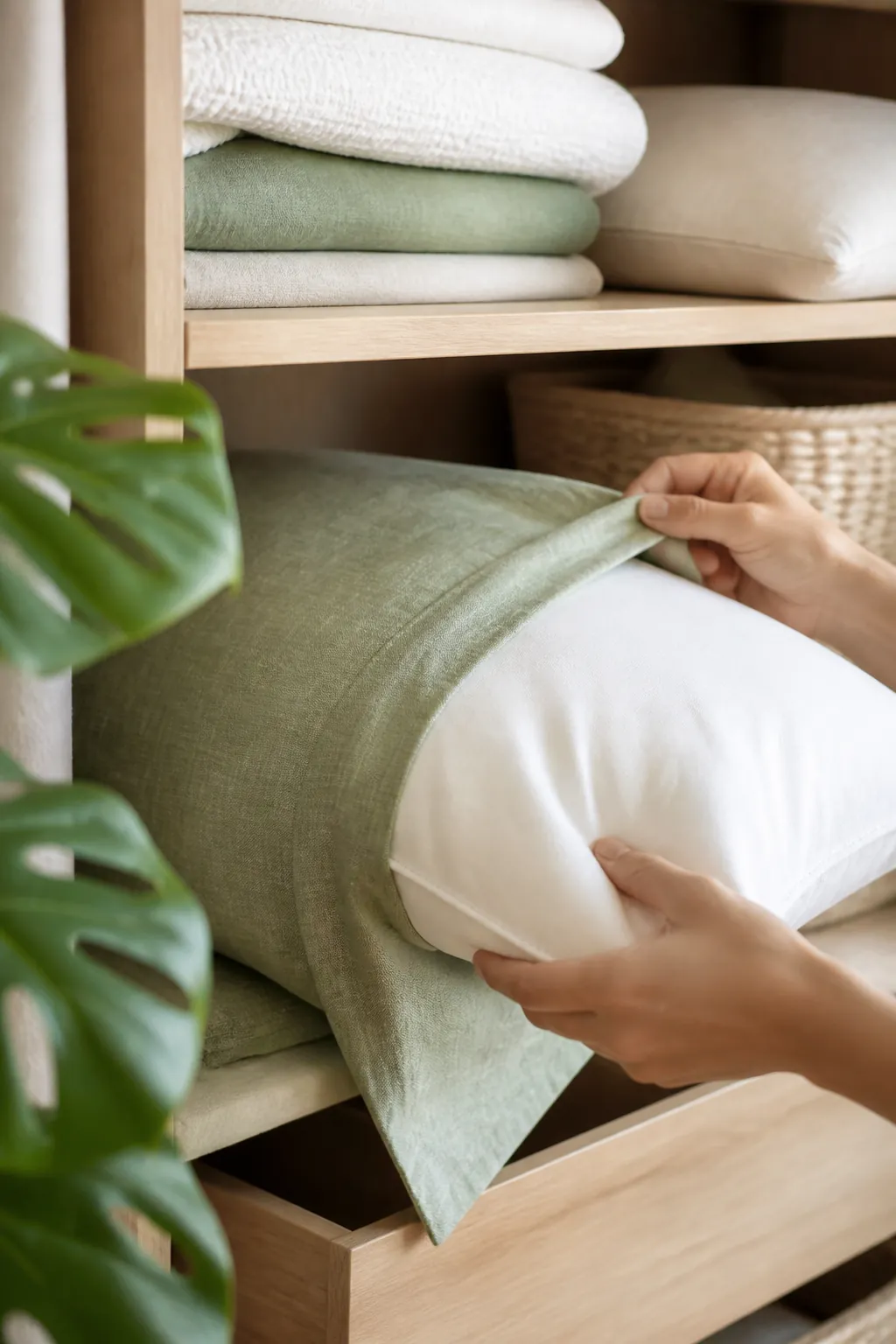
A pillow with no case on it starts picking up dust and closet-shelf grime within a couple of weeks, and by the time you pull it back out for a guest, it needs a wash before anyone can use it. That’s a fifteen-minute delay you don’t have when someone’s arriving in an hour.
Keep a plain case on every spare pillow before it goes into a bin or a vacuum bag, even an old one that no longer matches your bedding. It costs nothing and it means the pillow comes out ready to use instead of ready to launder. For pillows going into a vacuum bag specifically, a thin cotton case compresses fine; skip anything with a bulky knit or fringe trim, since that texture is what keeps a vacuum bag from sealing flat.
6. Reserve the front third of the shelf for the pillow you’ll actually grab

Closet shelves fail the same way under-bed storage does: the thing you need most often ends up buried behind everything else because nobody plans for retrieval, only for fitting things in.
Pick one pillow, almost always the guest-bed spare, and give it the front-most position every time, without exception. Everything seasonal or rarely used goes behind it. This is a five-second decision when you’re first organizing the shelf and a genuine hassle to fix later once three bins have already buried the one pillow you actually reach for a few times a year.
7. Use the closet’s back wall or door for flat throw pillows
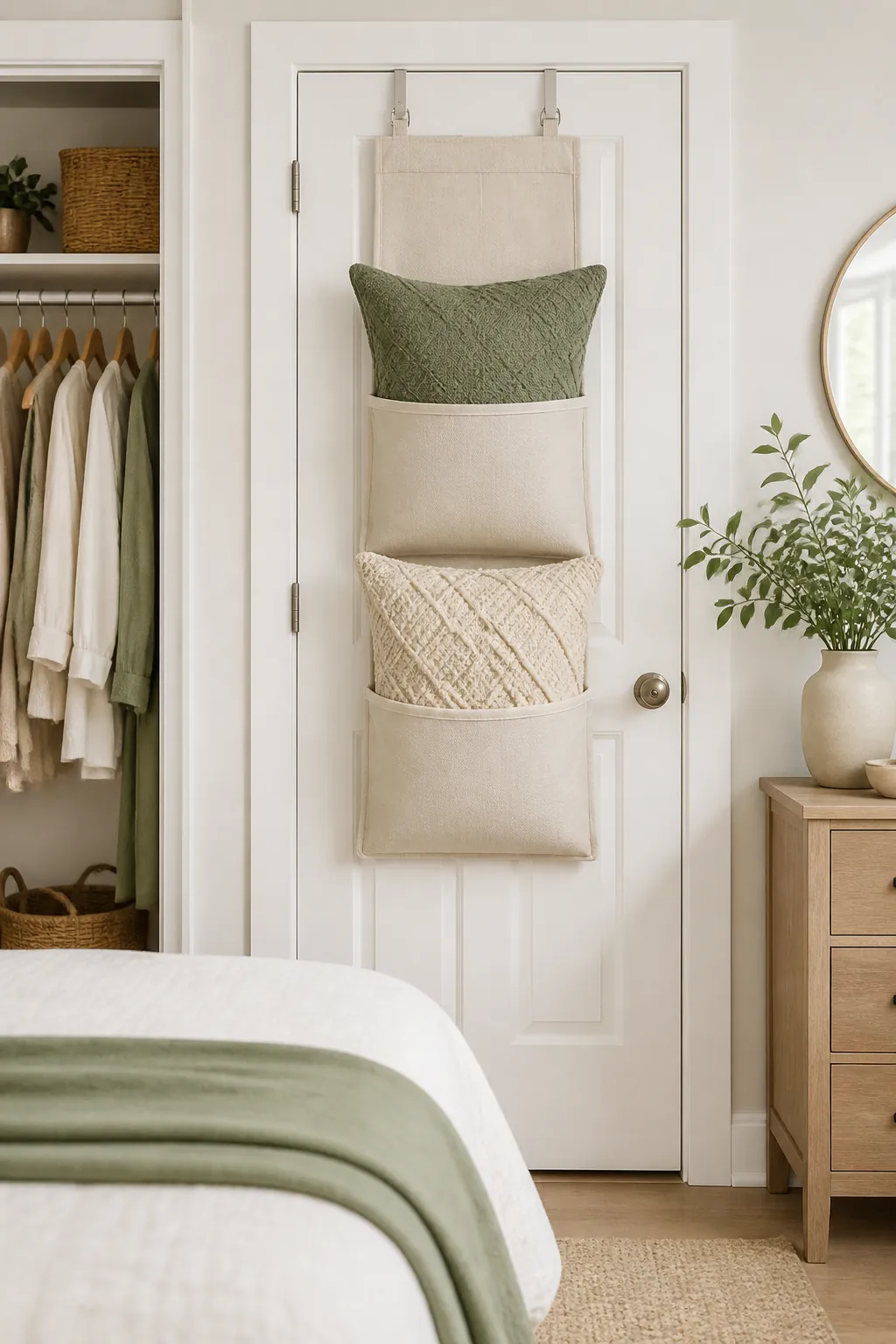
If the shelf is already full and you’re only dealing with a couple of flat decorative pillows, the shelf isn’t your only option. An over-the-door pocket organizer, the kind usually sold for shoes, holds flat throw pillows standing on edge without claiming any shelf depth at all.
This only works for pillows without a lot of loft, so a firm decorative pillow or a flat lumbar pillow fits; a fluffy euro sham does not, since it won’t stay flat in a shallow pocket. It’s a no-drill option too, which matters if the closet door is original to a rental and you’d rather not add hooks.
8. Rotate decorative pillows seasonally instead of storing them all
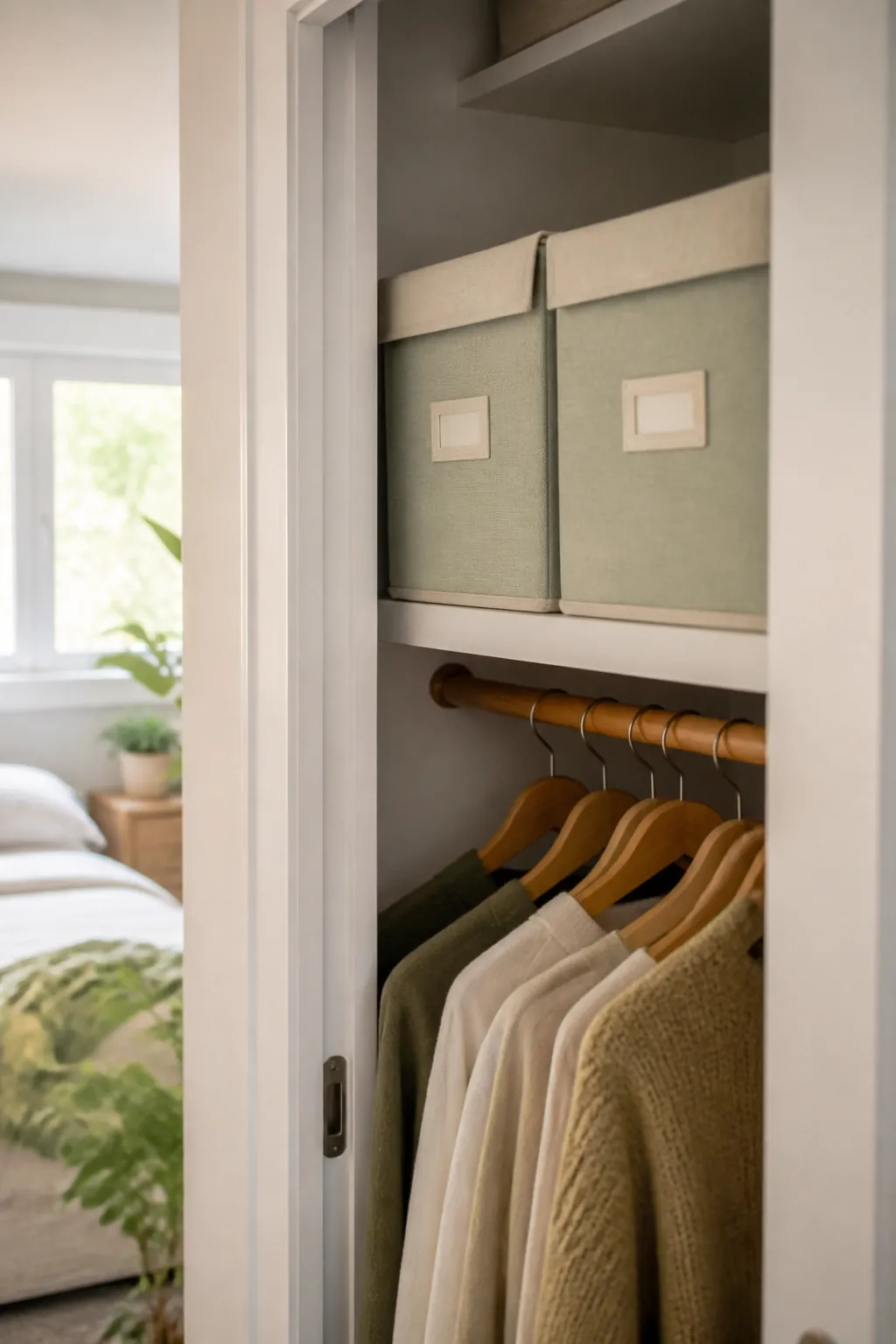
If you swap decorative pillows with the seasons, cotton and linen covers for warmer months, heavier textured ones for winter, you don’t need shelf space for both sets year-round. Store only the off-season set, and keep the current one in active use on the bed or the sofa where it isn’t taking up closet room at all.
Label each bin by season rather than by pillow type, so the swap takes a minute instead of an inventory check every time the weather turns. This one habit can cut the number of pillows living on the shelf at any given time by close to half.
9. Know when the closet shelf isn’t the answer

Past a certain point, more bins and better compression won’t fix a shelf that’s simply too small for how many pillows you own. If you’ve sorted, compressed, and divided and it’s still overflowing, the honest fix is owning fewer spares rather than finding a fourth storage trick.
A reasonable ceiling for most one- or two-bedroom setups is one guest spare per regular guest, plus whatever decorative pillows are in active seasonal rotation. Anything beyond that is arguably better served by under-bed storage, which has more usable volume than a shallow closet shelf ever will.
Where to start
Start with the sort, not the shopping. Pull everything off the shelf, get rid of what you wouldn’t put on a bed today, and only then figure out how much storage you actually need. For what’s left, vacuum bags handle the bulky spares you won’t touch for weeks, fabric shelf bins keep the decorative rotation from sliding into a pile, and shelf dividers stop those bins from leaning into each other every time you grab one.
If the shelf is still tight after all that, it’s not a storage problem anymore, it’s a quantity problem, and the fix is fewer pillows rather than a better bin.