In a small apartment the laundry basket is rarely the thing you planned for, and it is usually the largest object in the flat with no assigned home.
It migrates. It starts in the bathroom, moves to the bedroom when the bathroom gets crowded, and ends up in the hallway on laundry day, where it stays. Meanwhile a second pile forms on a chair, because the basket is somewhere else at the moment the clothes come off.
The fixes below are less about buying a nicer basket and more about deciding where laundry waits, both before and after it is washed. That second half is the one most people never assign.
1. Sorting is the job, not storage
A laundry basket is not really storing anything. It is holding clothes for a few days until there are enough of them.
The reason it feels like a storage problem is the moment before a wash, when the whole basket gets tipped onto the floor and separated into piles. That step needs floor space a small apartment does not have, and it makes the room look wrecked for twenty minutes.
Almost everything below removes that step rather than making the basket smaller.
It also explains why a bigger basket rarely helps. A larger container holds more days of washing, which means a heavier tip out and a longer sort, so the chore gets postponed further. Capacity is not the constraint.
2. Sort as you undress, not on laundry day
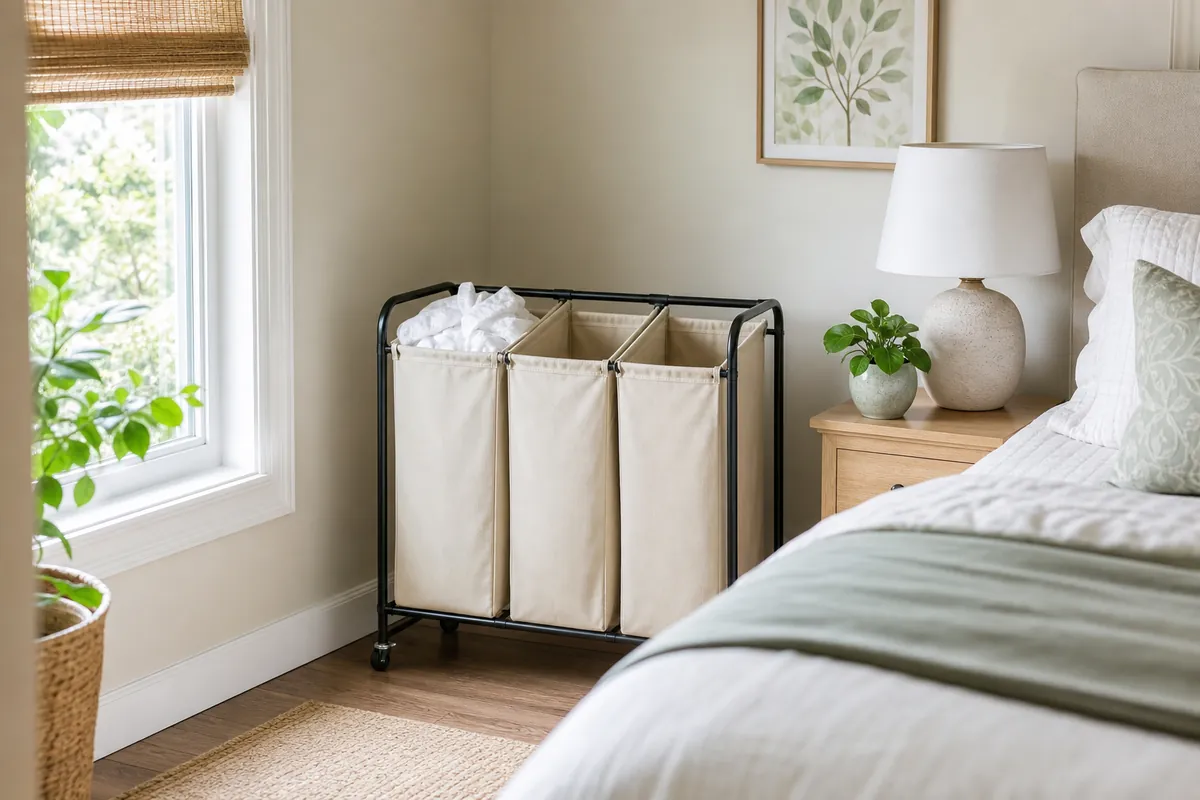
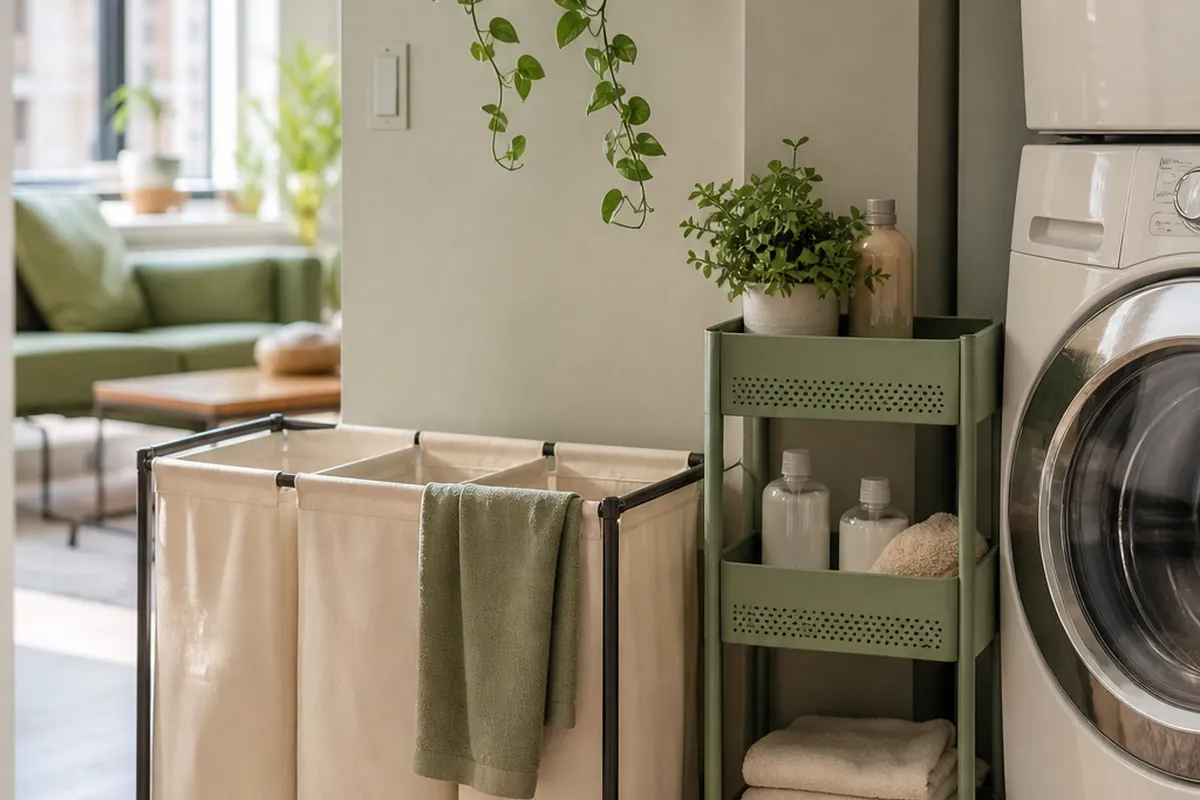
A three section laundry sorter changes the rhythm of the chore, because the sorting has already happened days earlier, one shirt at a time, at no cost.
Whites, colours, and one flexible bag for towels, delicates or work clothes, whichever your household actually generates. A full bag means a ready load. You skip the floor dumping entirely, which is the step that eats the time and the space.
The other gain is that a sorter is one object with one footprint rather than three baskets that end up in three rooms. In a small apartment, the number of objects matters as much as their size.
3. One basket per person does not scale
The instinct in a shared flat is a basket each. It is a reasonable idea that fails on floor area.
Four baskets in a two bedroom flat is four footprints, four things to walk around, and four half full containers that never quite make a load. Sorting by fabric rather than by person gives fuller loads, fewer washes and one place to look.
Where per person does earn its place is clean laundry, because that is sorted by owner anyway. Dirty by type, clean by person, is the split that works.
One exception is worth making. Anyone who washes on a different schedule to the rest of the household, a shift worker or someone with sports kit that cannot wait, is better off with their own bag in the sorter rather than their own basket in their room.
4. Use the gap beside the machine
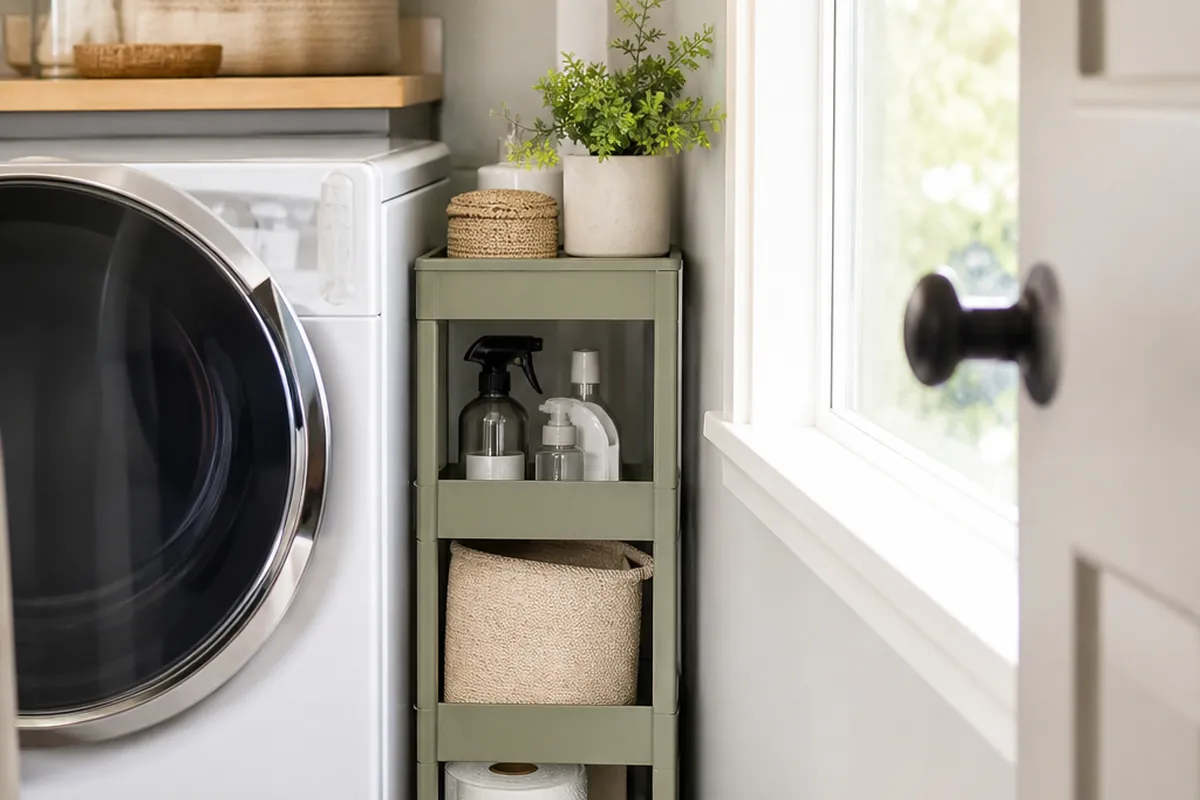
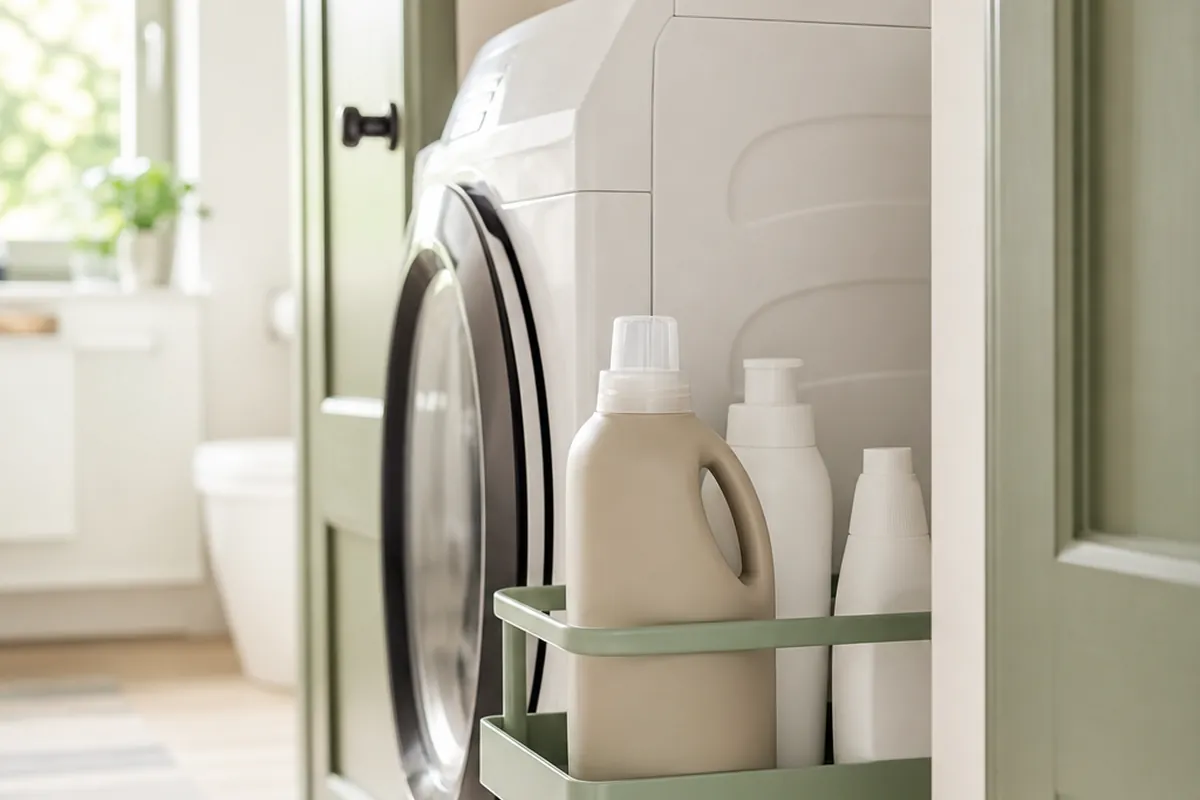
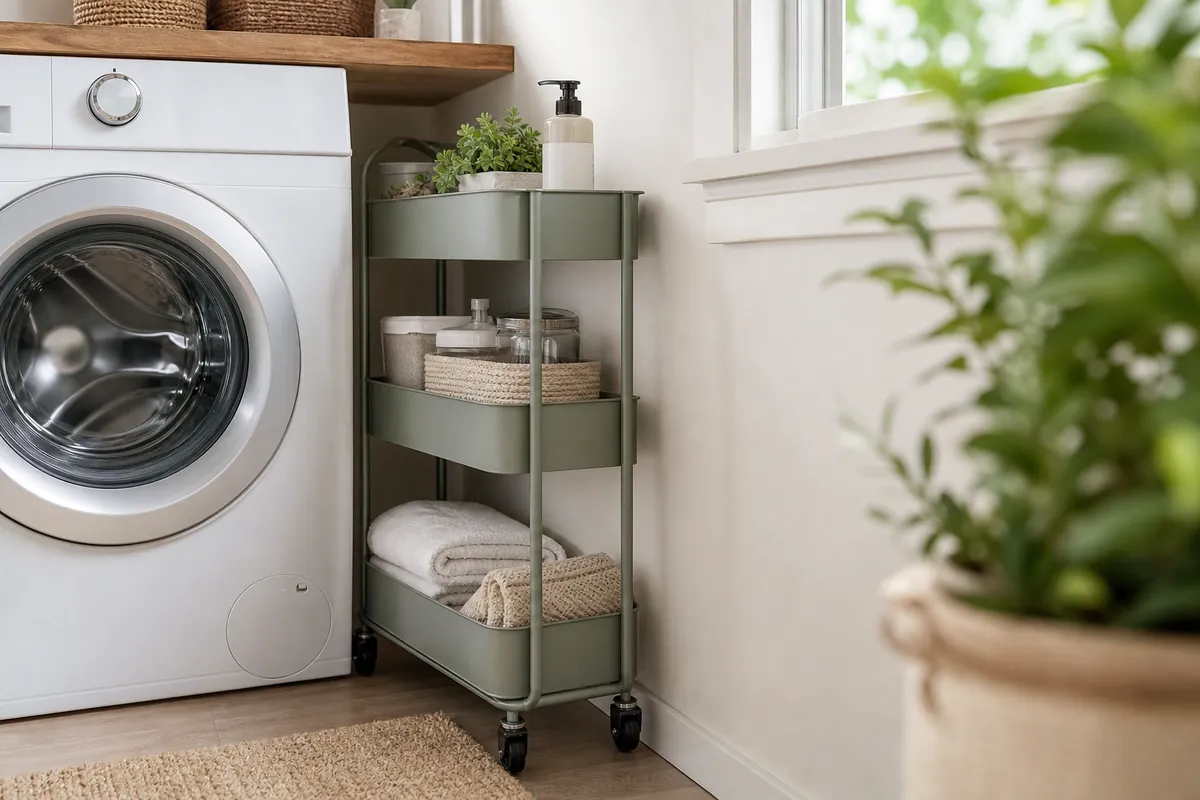
The space between a washing machine and the wall is usually four to ten inches wide, permanently empty, and the best basket parking in the flat.
Run a tape measure across the opening at its tightest point, which is usually the door trim rather than the wall itself. Shop for a slim rolling laundry cart at least an inch under that number.
That spare inch is the whole difference between rolling the cart out one handed while holding a full basket, and scraping it against the machine until you quit bothering after a week. Wheels matter here more than they look like they should, because a loaded narrow cart is awkward to lift out of a tight slot.
5. Dirty laundry needs air, clean laundry needs a lid
A sealed container of damp towels is a smell within two days. Gym clothes are worse.
Dirty laundry wants a vented or open basket, and ideally one you can see into, since a basket you cannot assess is a basket you overfill. Clean laundry is the opposite: it benefits from a lid, because a lid means you can put something on top of it and because dust settles on anything left out in a small flat.
Buying one lidded container and using it for both is the common mistake, and it is why so many baskets get scrubbed out twice a year.
If the only spot for the dirty basket is a bathroom, ventilation matters more still. A bathroom holds damp air already, so a mesh or slatted basket that lets a towel dry slightly between washes is worth choosing over a solid one, whatever it looks like.
6. Give clean laundry somewhere to wait
This is the step almost nobody assigns, and it is where the chair pile comes from.
Clean clothes need a holding place between the dryer and the closet, because the two events rarely happen on the same evening. If that place is undefined, it defaults to the nearest horizontal surface, which is a bed or a chair.
A second basket, a shelf, or the top of a dresser all work. What matters is that it is decided in advance and is not the same container the dirty clothes were in. The related layout question of where the machines and the drying go is covered in laundry room organization ideas for a tiny space.
7. Keep baskets out of walkways
A basket in a corridor is a basket that gets stepped around rather than used.
In a narrow flat the hallway feels like spare space because nothing is stored there, but it is the one area that has to stay clear for the flat to function. Anything parked in it becomes an obstacle first and furniture second.
Better spots are the dead corners: beside the machine, under a hanging rail, at the end of a bed, on the floor of a closet. Those places are already unused and are on the route between undressing and washing.
The route matters as much as the space. A basket two rooms away from where clothes come off will not be used, however good the spot looks, because the clothes have to travel further than the chair is away.
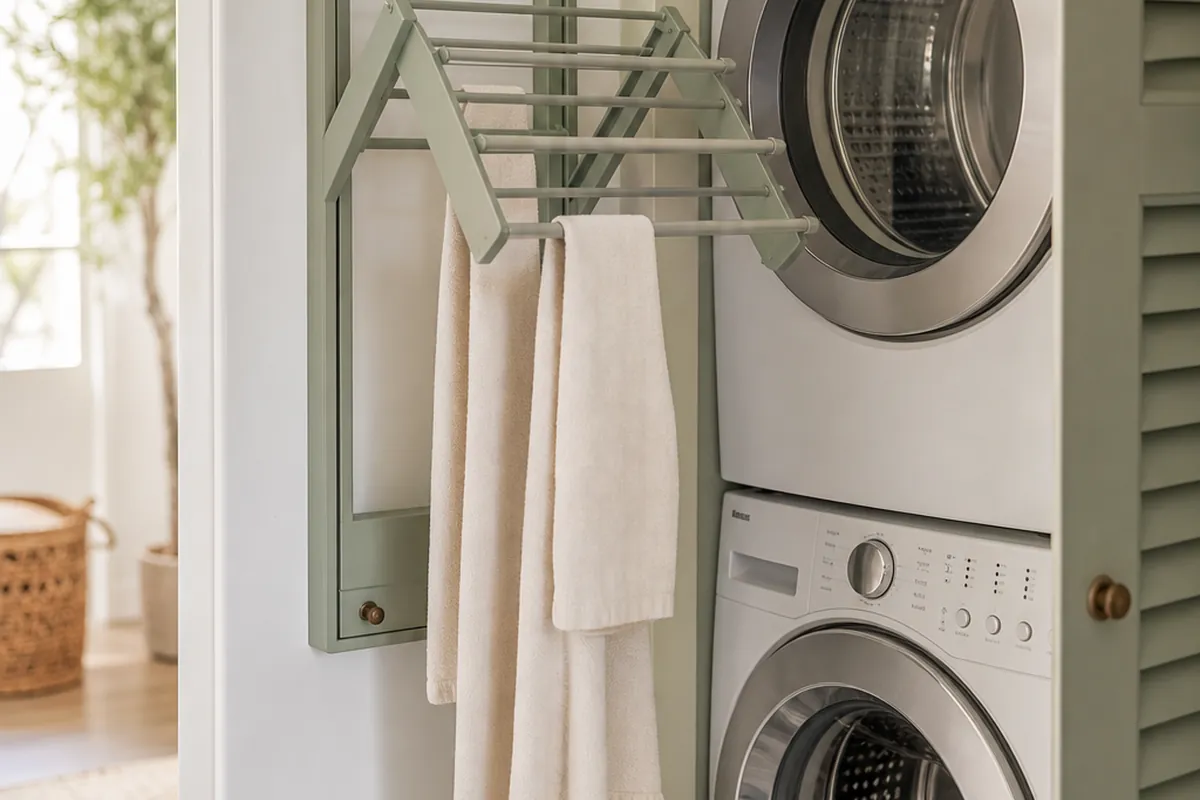
When there is no floor for a basket at all, the sorting has to hang. Laundry sorting ideas for a closet with no floor space covers the door and rail versions.
8. Soft baskets for the loads that break the rules
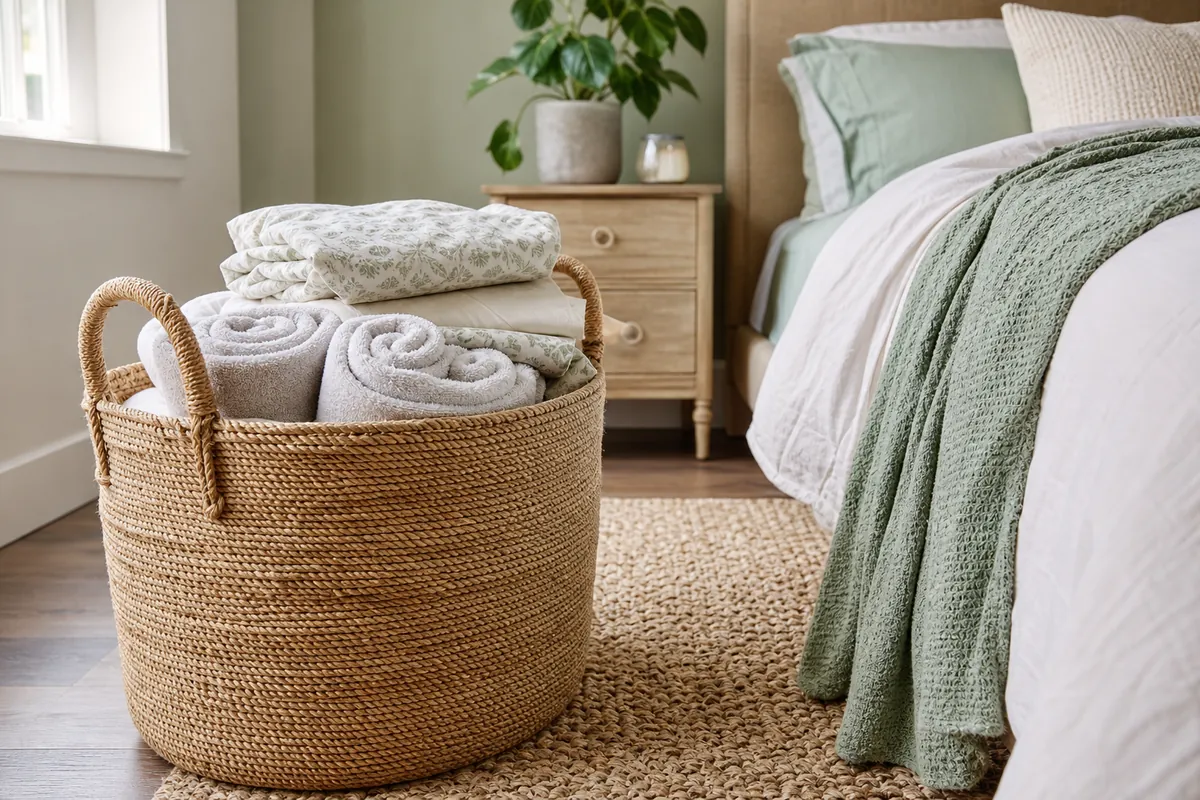
Bedding, towels and coats do not fit the normal system. A duvet cover fills a whole sorter bag on its own, and a set of towels is heavy enough to make a rigid basket awkward to carry.
A large woven storage basket takes those without complaint. At 65 litres it swallows a bedding change, the rope handles let you drag it rather than lift it, and being soft sided it collapses flat in the weeks it is not needed.
That last part matters in a small flat more than the capacity does. A rigid basket takes its full volume all year whether it is holding anything or not.
9. Height beats volume in a small flat
Two baskets of the same capacity can take very different amounts of usable space.
A tall narrow basket and a low wide one hold the same washing, but the tall one fits the gap beside a machine and the wide one only fits a floor. In a small apartment, the shape that matches an existing gap is worth more than the shape that holds slightly more.
Measure the gap first and choose the basket to it. Buying the basket first and then hunting for somewhere to put it is how baskets end up in hallways.
Check the carry height too. A basket you have to lift above waist height to get onto a machine is one you will drag along the floor instead, and a tall basket loaded with wet towels is heavier than it looks on the shelf in the shop.
10. Fold where the basket lands
The last one decides whether clean laundry ever gets put away.
If the clean basket lives in the bedroom and the folding happens on the sofa, the clothes make two journeys and often stall halfway. Put the clean basket where the folding actually happens, even if that is not where it looks tidiest.
Seasonal items that will not be worn for months should not be in this loop at all. Those belong in the same system as under bed storage for seasonal clothes, which keeps them out of the weekly cycle entirely. For the tight version of the whole setup, small laundry closet organization covers doing this in a cabinet.
The basket is a queue, not a cabinet
A laundry basket in a small apartment is a queue with two ends, and most setups only manage one of them.
Sort as you undress so laundry day needs no floor. Park the basket in a gap rather than a walkway. Then decide, in advance, where clean clothes wait before they are put away. The chair pile is almost always that last decision going unmade.