A closet with no floor space is the normal case in a rented apartment, not the unlucky one. The rail is full, the shelf above it is full, and the floor is already taken by shoes and a suitcase. So laundry ends up in a heap somewhere else, usually on a chair, and the sorting never happens because there is nowhere for it to happen. The fix is not a smaller hamper. It is using the one part of the closet nobody has claimed: the air.
1. Measure the dead air under the rail
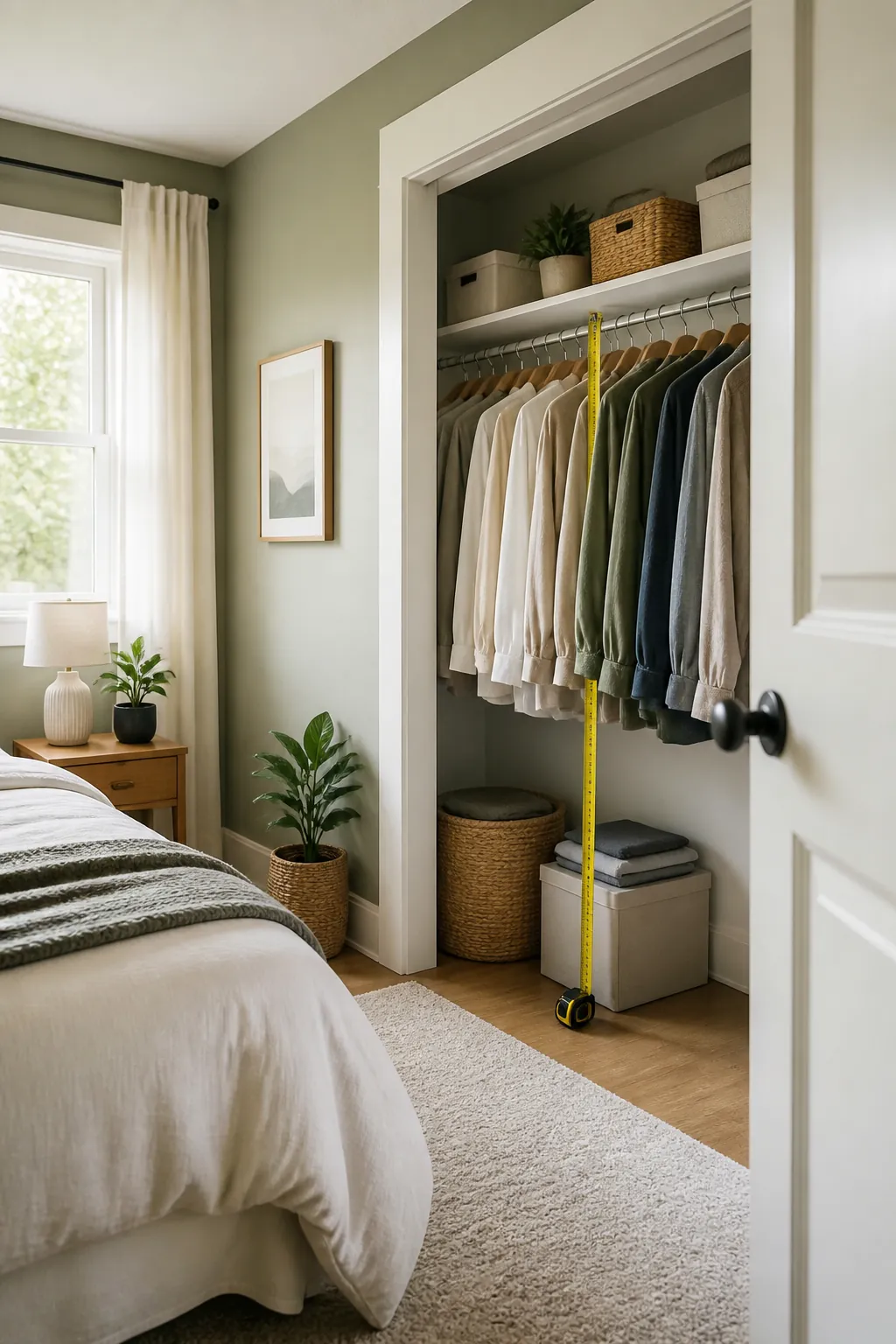
There is more unused height in a closet than anyone expects, and it is hiding in plain sight.
Most reach-in rails sit sixty-six to seventy-two inches from the floor. Shirts and folded pants hang around forty inches. That leaves roughly twenty-six to thirty-two inches of empty vertical space beneath your clothes, running the full width of the closet, holding nothing.
Measure yours before buying anything: floor to rail, then rail to the bottom of your longest hanging item. The gap between those numbers is your working space.
2. Hang the sorter instead of standing it

Once you know the gap, the answer becomes obvious.
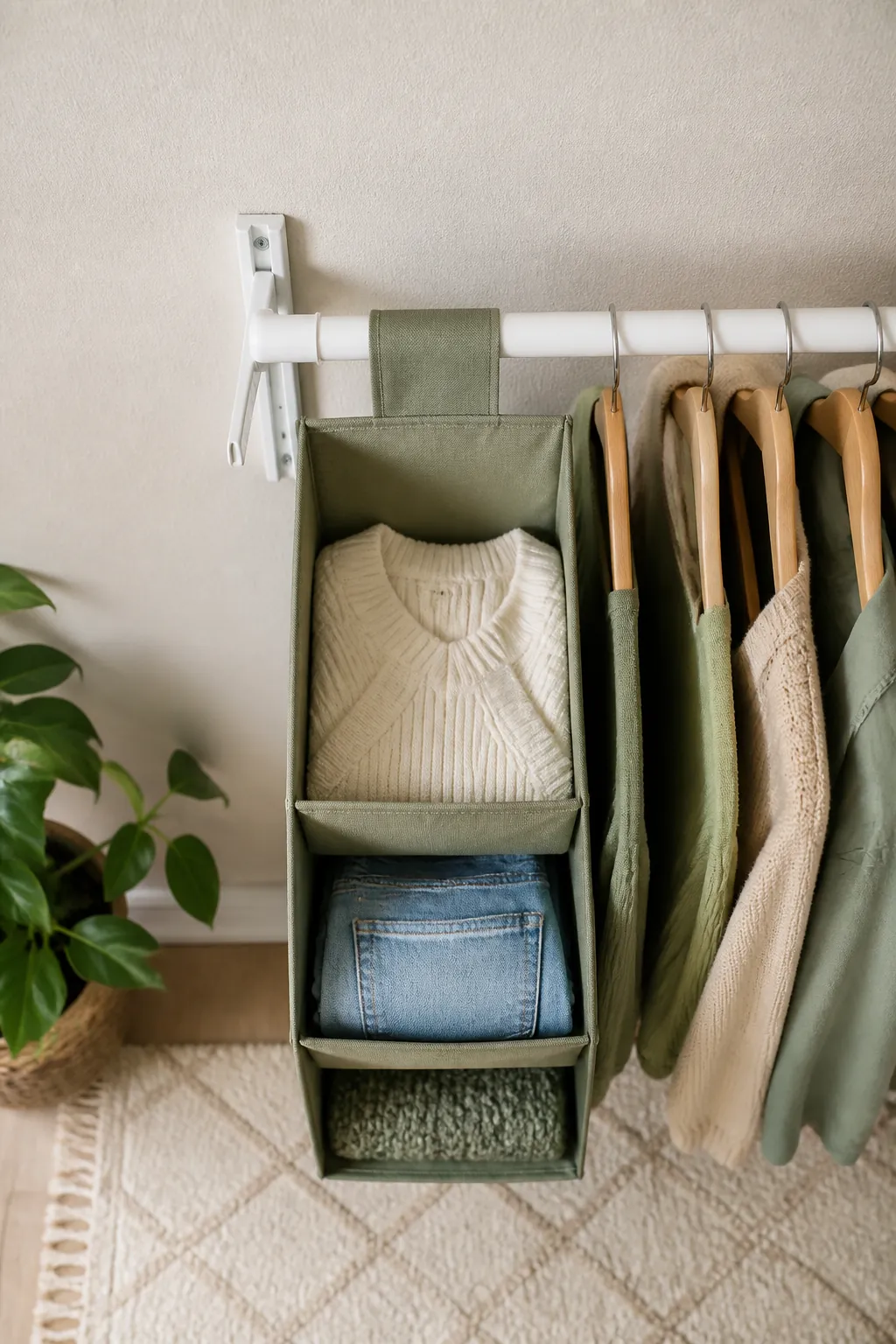
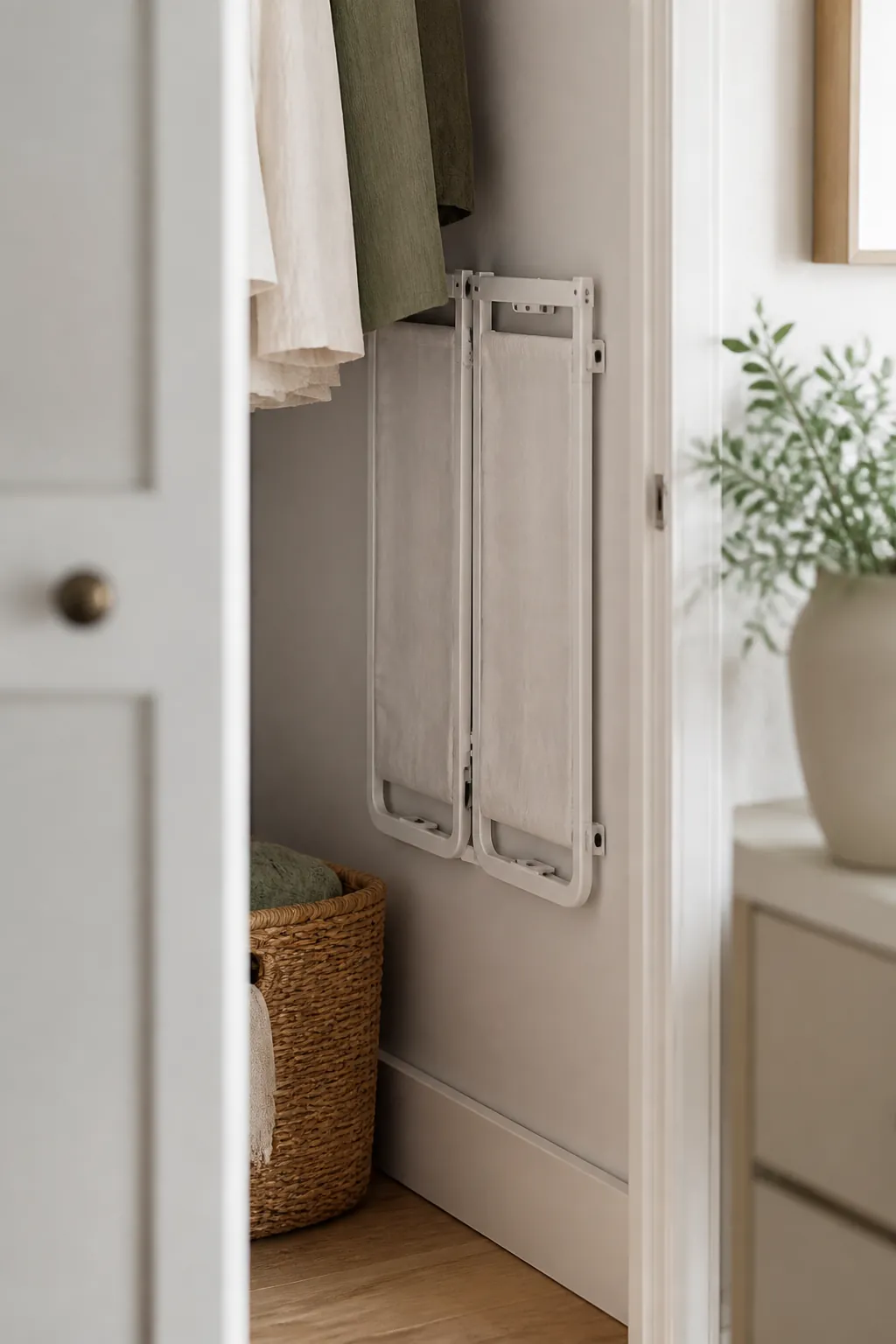
A 3-section laundry sorter that hangs from the rail occupies the dead air and takes no floor at all. Everything that was sitting on the closet floor stays where it is. Everything that was on the chair now has somewhere to go.
This is the single change that makes sorting possible in a closet that looks full, because you are not competing for space with anything.
3. Check the rail before you hang anything on it
This is where the idea fails, and it fails expensively.
A packed section runs to fifteen or twenty pounds. Three of them is forty to sixty pounds of dead load hanging off the rail brackets, and adjustable wire shelving was designed to hold clothes, not that. It bends first, which drops everything hanging above it on the floor.
Check what the rail is fixed into. If the brackets go into studs or a solid closet frame, you are fine. If they are drywall anchors holding a wire system, use a freestanding option instead and accept the floor space.
4. Two sections, not four
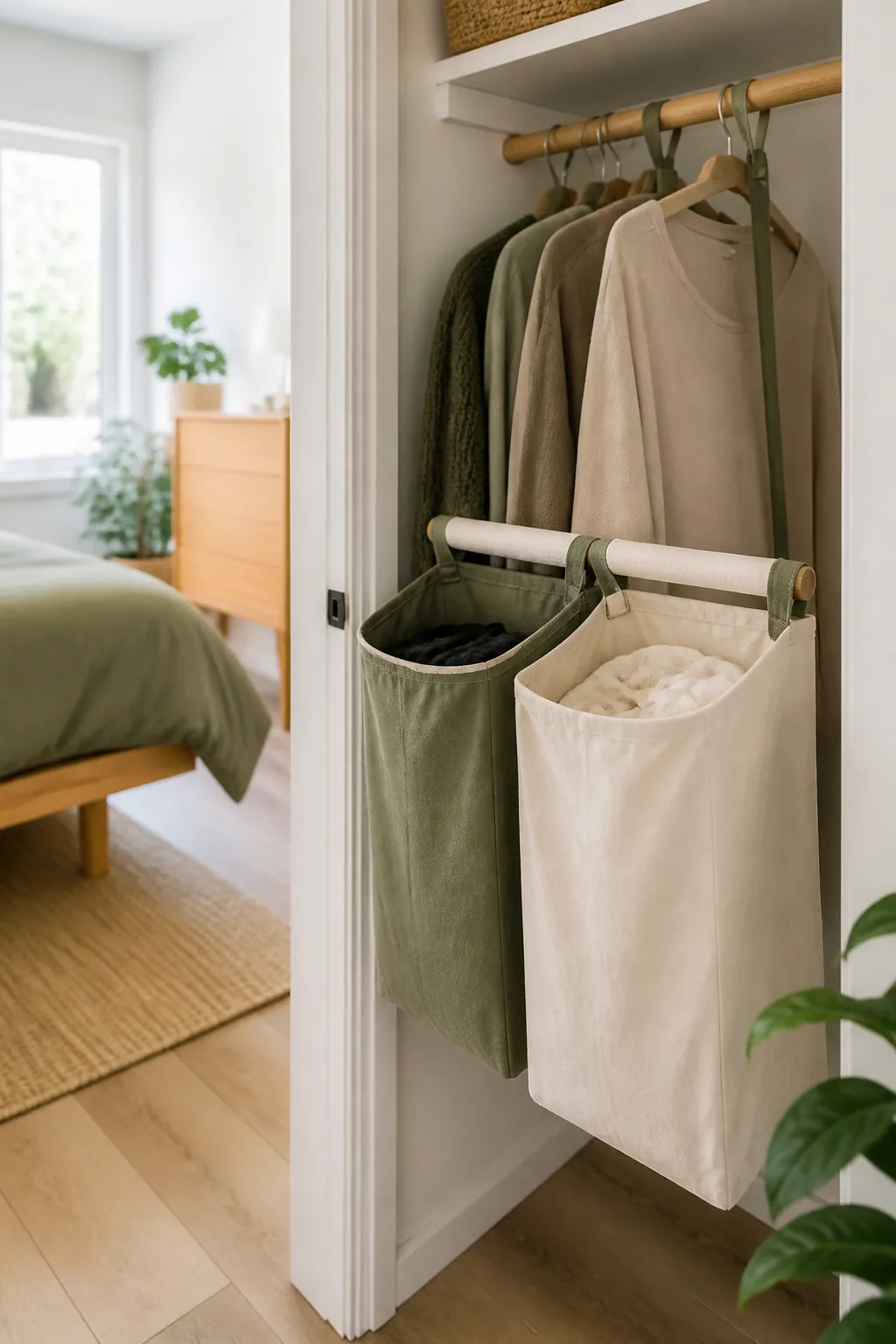
More divisions sounds more organized. In a closet it is the opposite.
Two sections, darks and lights, handles most households and keeps each bag wide enough to take a real load. Three is the practical maximum. A four-way sorter in a closet gives you four bags too narrow to hold a full wash, so people overfill one and ignore the rest, and within a month it is a single mixed heap with dividers in it.
Pick the division you will actually honor at eleven at night with an armful of clothes.
5. Sort as you undress, not on laundry day
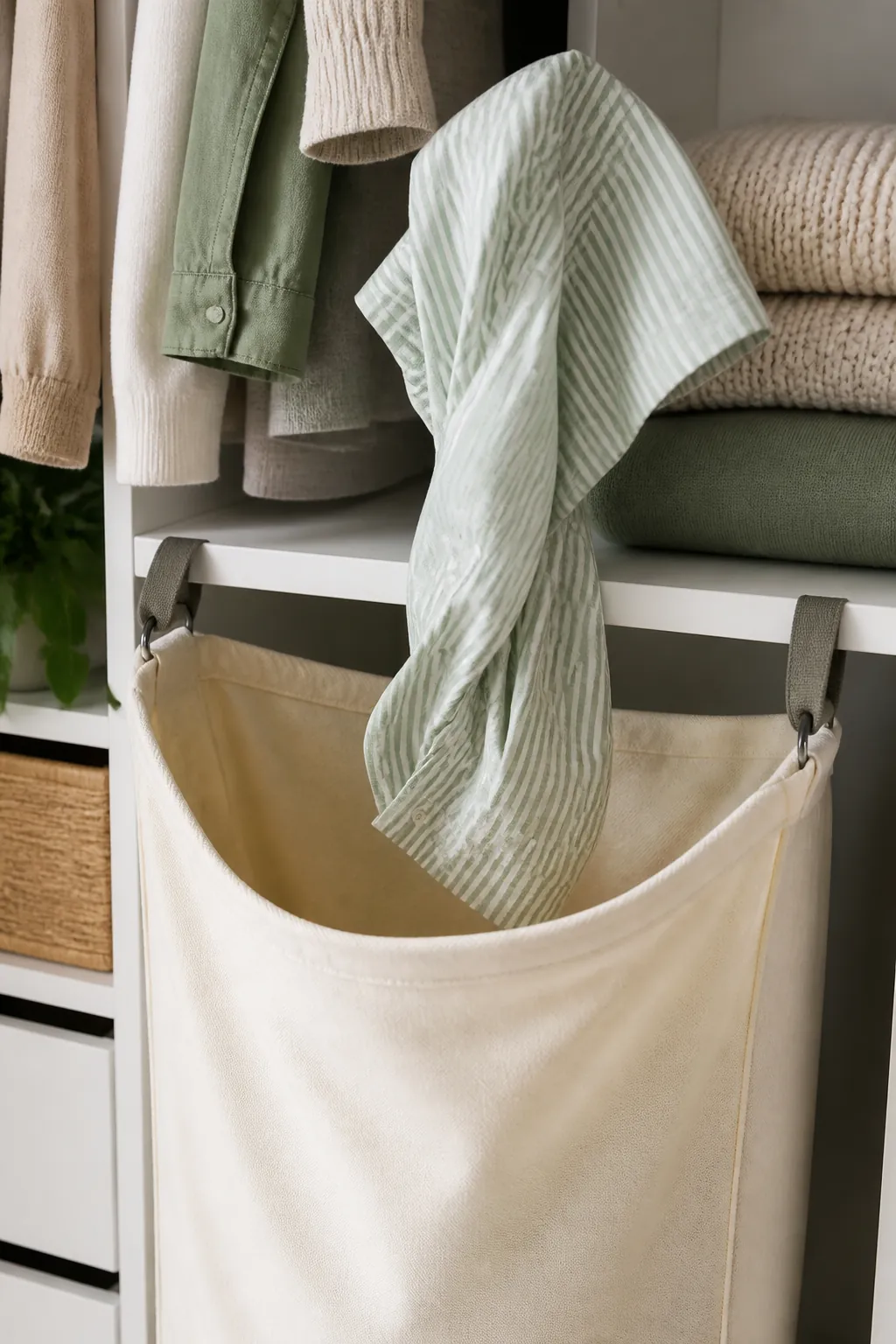
The behavior matters more than the equipment.
If sorting happens on wash day, you are sorting a mountain, which is a job. If it happens as clothes come off, it is a decision that takes half a second and it never accumulates. The whole point of the sorter being in the closet is that the closet is where you get undressed.
A hamper in a different room guarantees the chair pile, because the chair is closer than the hamper. Distance is the entire mechanism.
6. Use the back of the closet door
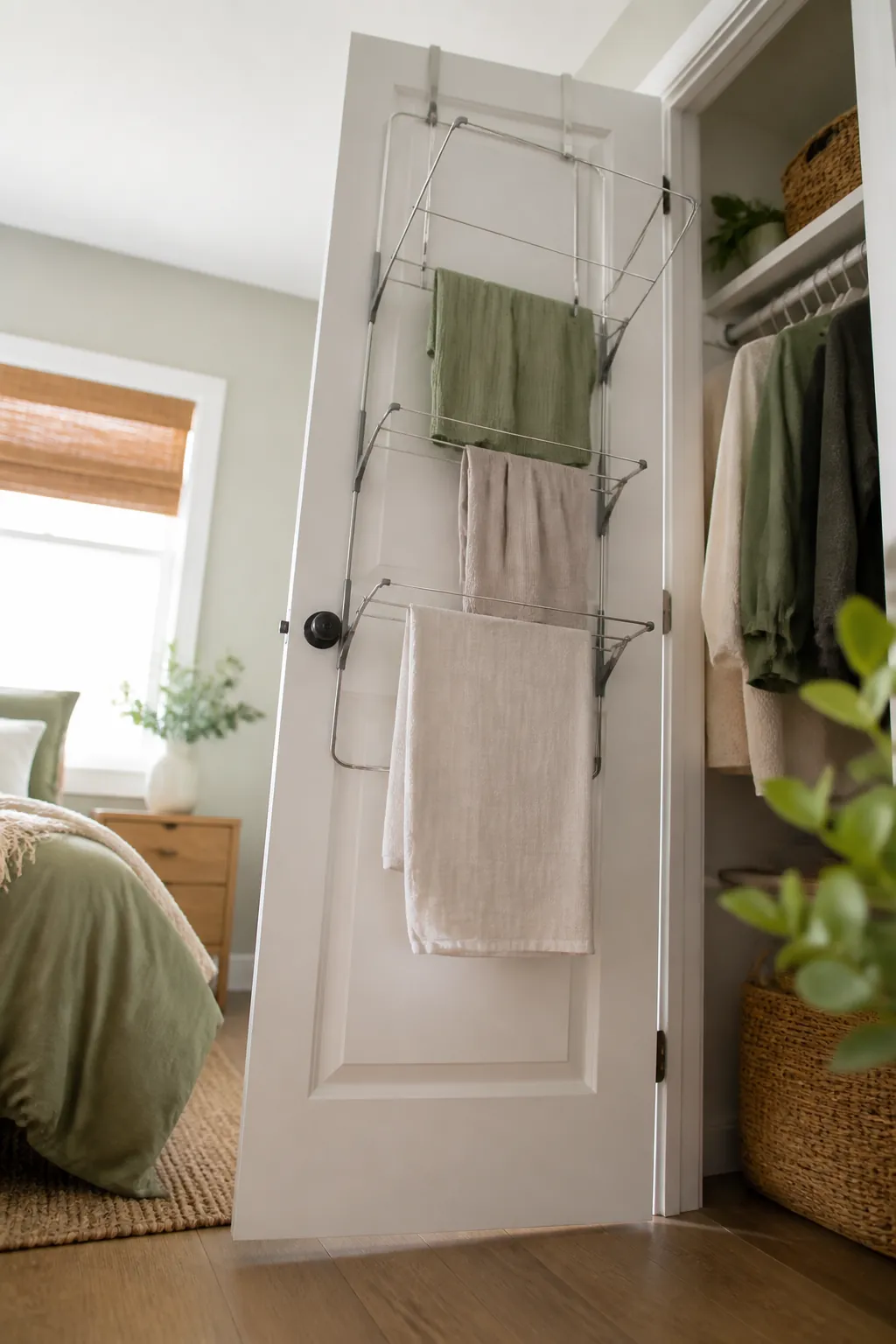
The door is a second vertical surface, and in a laundry context it has a specific job.
Hand-wash items, damp workout clothes and anything that cannot go in the dryer need to hang somewhere flat and airy. An over-the-door drying rack folds out for that and folds flat when it is not in use, which is the important part in a closet.
Keep the loaded depth to a few inches so the door still shuts over whatever is on the rail inside.
7. Never shut damp laundry in

The mistake that costs you the clothes rather than the space.
A closed closet has almost no airflow. Damp towels or wet workout clothes left in there overnight will smell by morning, and the smell transfers to everything hanging above it. In a small apartment it also puts moisture into a space with no ventilation, which is how a closet develops a musty background note you cannot trace.
Wet things go on the door rack with the door open, or they go somewhere else entirely. Nothing damp goes in a bag.
8. Give clean laundry a waiting place
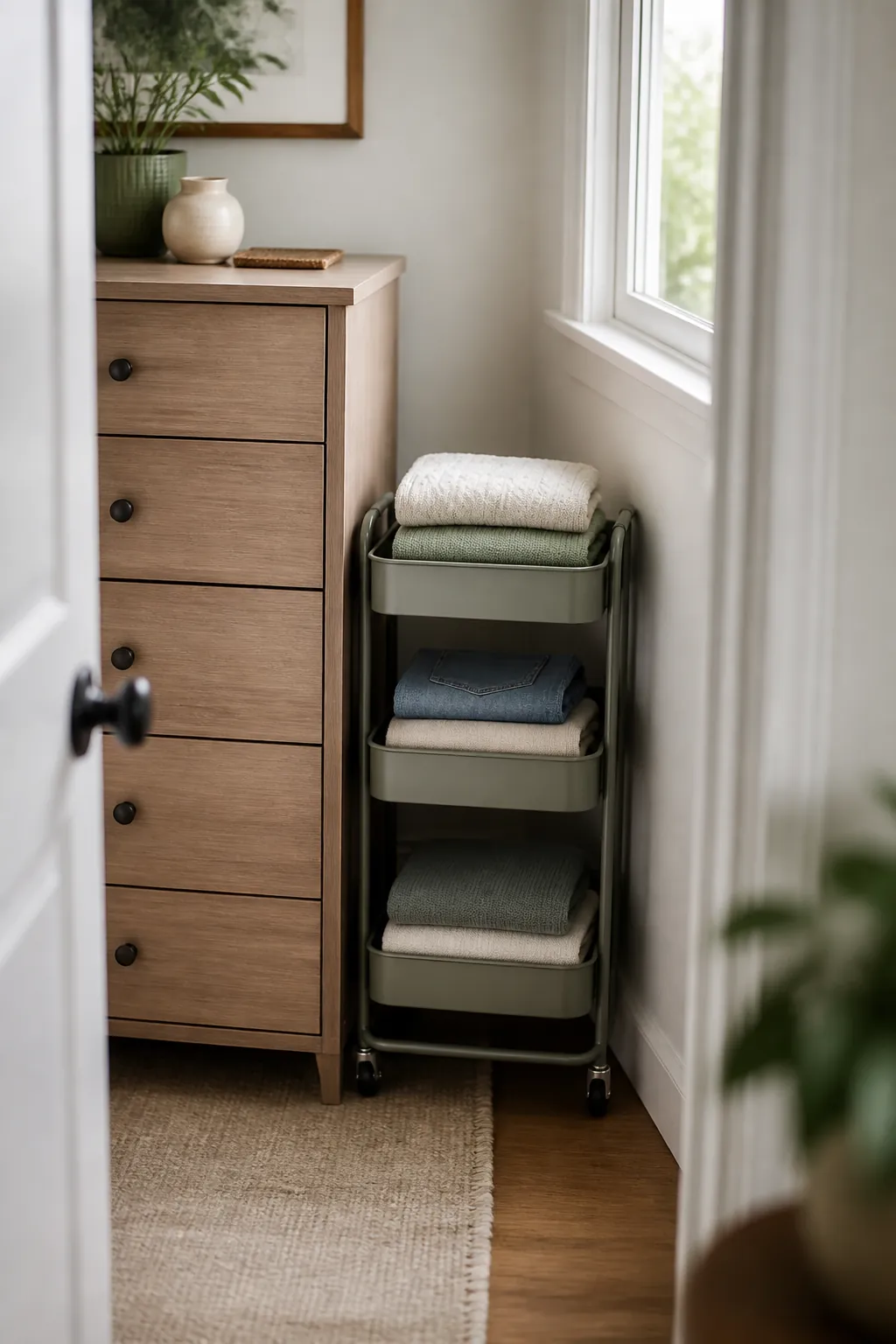
This is the step almost every laundry system skips, and it is why they fail.
The chair pile is usually not dirty clothes. It is clean laundry with nowhere to go between the dryer and the closet. Nobody decided where it waits, so it waits on furniture.
A slim rolling laundry cart parked in a gap works because it is a defined destination that can be wheeled to where you fold. What matters is not the cart specifically, it is that clean clothes have an address.
9. Park it in a gap, not a walkway

If anything does end up on the floor, where it goes decides whether it survives.
Look for the gap beside a chest of drawers, the space at the end of the rail, the few inches between the closet and the wall. Those are dead zones already. A basket there is invisible. The same basket in the middle of the floor is an obstacle, and obstacles get moved, and things that get moved end up wherever they were moved to.
Measure the gap first. Slim carts are often around ten to twelve inches wide for exactly this reason.
10. Empty it on a schedule, not when it is full
The last piece, and the one that keeps the whole thing working.
A sorter that only gets emptied when it overflows will overflow, because there is no signal until it is too late. Pick a day. The bags do not need to be full and it does not matter if one wash is small. What matters is that the closet returns to a known state every week rather than slowly filling until it stops working.
Systems in small spaces fail from accumulation, not from bad design.
Where to start
Measure floor to rail, then rail to the bottom of your longest hanging clothes. If the gap is twenty-six inches or more, a hanging two or three section sorter fits, and it costs you no floor at all. Check the rail is fixed into something solid before you load it.
Then sort as you undress rather than on laundry day, keep anything damp out of the closed closet, and decide where clean laundry waits. Most closets do not need more space. They need the air under the rail to start doing something.