The inside of a cabinet door is the largest flat surface in a small kitchen that has nothing on it. Every cabinet has one, they are all vertical, they are all hidden when the door is shut, and between them they add up to more square footage than the countertop. Most of them spend their whole lives blank.
The catch is that a cabinet door is a moving part. It swings, it has to clear whatever is on the shelf behind it, and it hangs on two hinges that were sized for the door alone. So the job is not “hang things on the door.” It is choosing the light, flat things that belong there and mounting them in a way the door can carry. Ten ideas below, starting with the two measurements that decide all the others.
1. Measure the gap and the clearance before you buy anything
Two numbers settle which organizers will work on your doors, and most people find them out after the parcel arrives.
The first is the gap at the top of the door. Open a cabinet and look at where the top edge of the door meets the frame. On frameless cabinets there is usually a small gap where a hang-over hook can sit. On face-frame cabinets the door often closes flush against the frame, and a hook there stops the door shutting. The second is the clearance between the back of the door and the front edge of the shelves inside. Anything you mount has to be shallower than that, or the door meets the shelf before it meets the frame. Measure both with the door shut, write them on a bit of tape inside the cabinet, and every organizer decision afterwards is a matter of reading a spec.
2. Hang a mesh basket over the door for the flat, light things
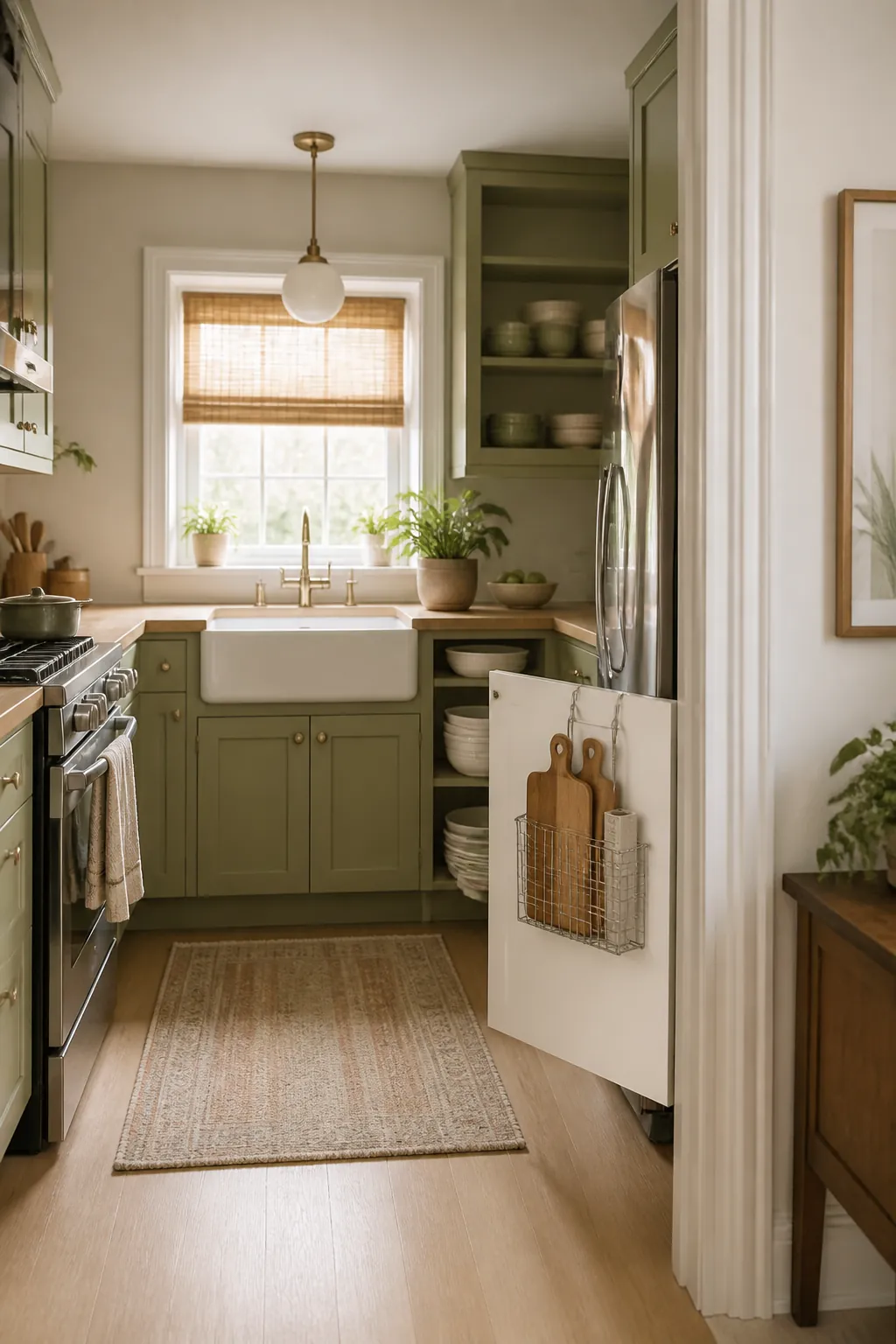
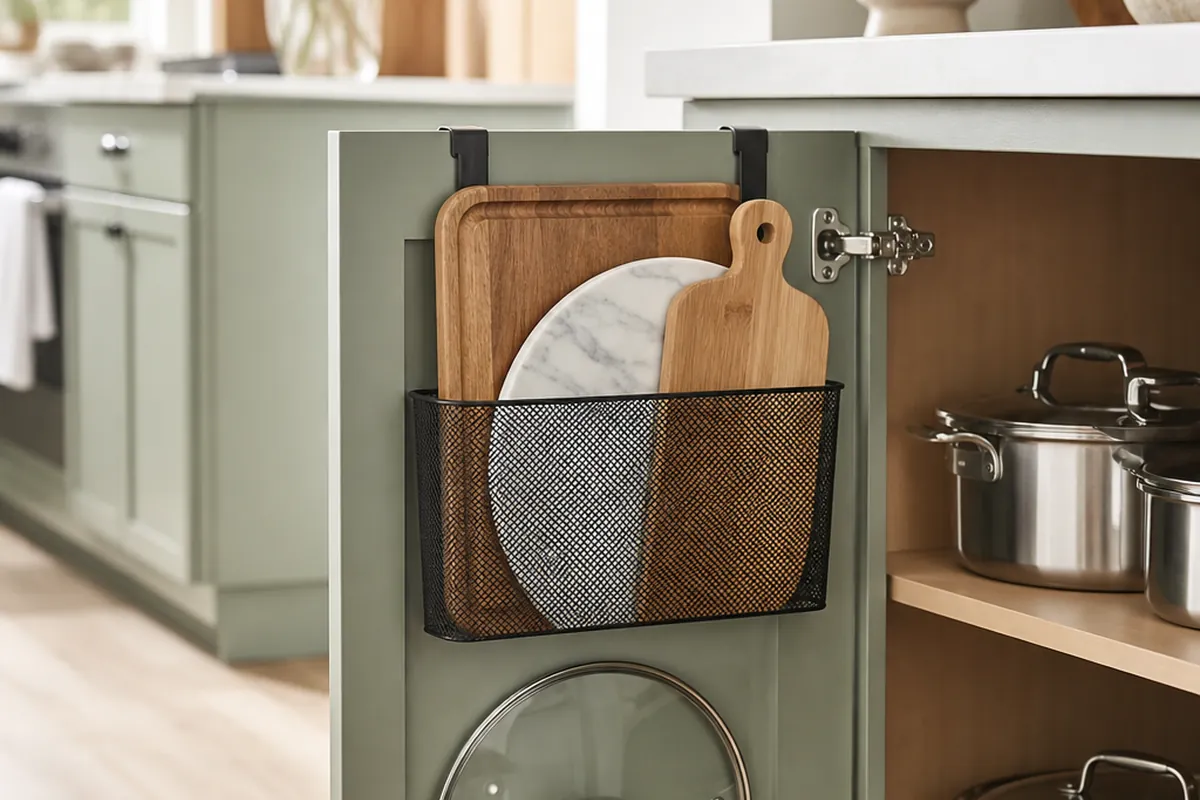
Where there is a top gap, a hang-over basket is the fastest organizer there is: it sits on the top edge of the door, needs no tool, and comes off in a second. An over-the-cabinet-door mesh organizer is about three and three-quarter inches deep and holds cutting boards, a box of foil, or a stack of lids in a single layer where you can see them.
Two things reviewers learn the hard way. Put a strip of felt or a folded piece of the packaging under the hooks, because bare metal on a painted door leaves a mark within a month. And check that three and three-quarter inches against the shelf clearance you measured, because on a cabinet with deep shelves the basket will hit them before the door closes.
3. Stand cutting boards and baking sheets on the door, not in a stack
Cutting boards stacked flat on a shelf mean lifting three to get the one at the bottom. Standing on edge on the door, each one is visible and comes out on its own. The same goes for the thin baking sheets that otherwise live under the oven. A hang-over basket handles two or three; beyond that, the baking sheet storage guide covers the rack options for a kitchen with no pantry. Keep the heaviest board in the cabinet and the two you actually use on the door.
4. Put the pot lids on the door, and do not bend the rack to fit a big one
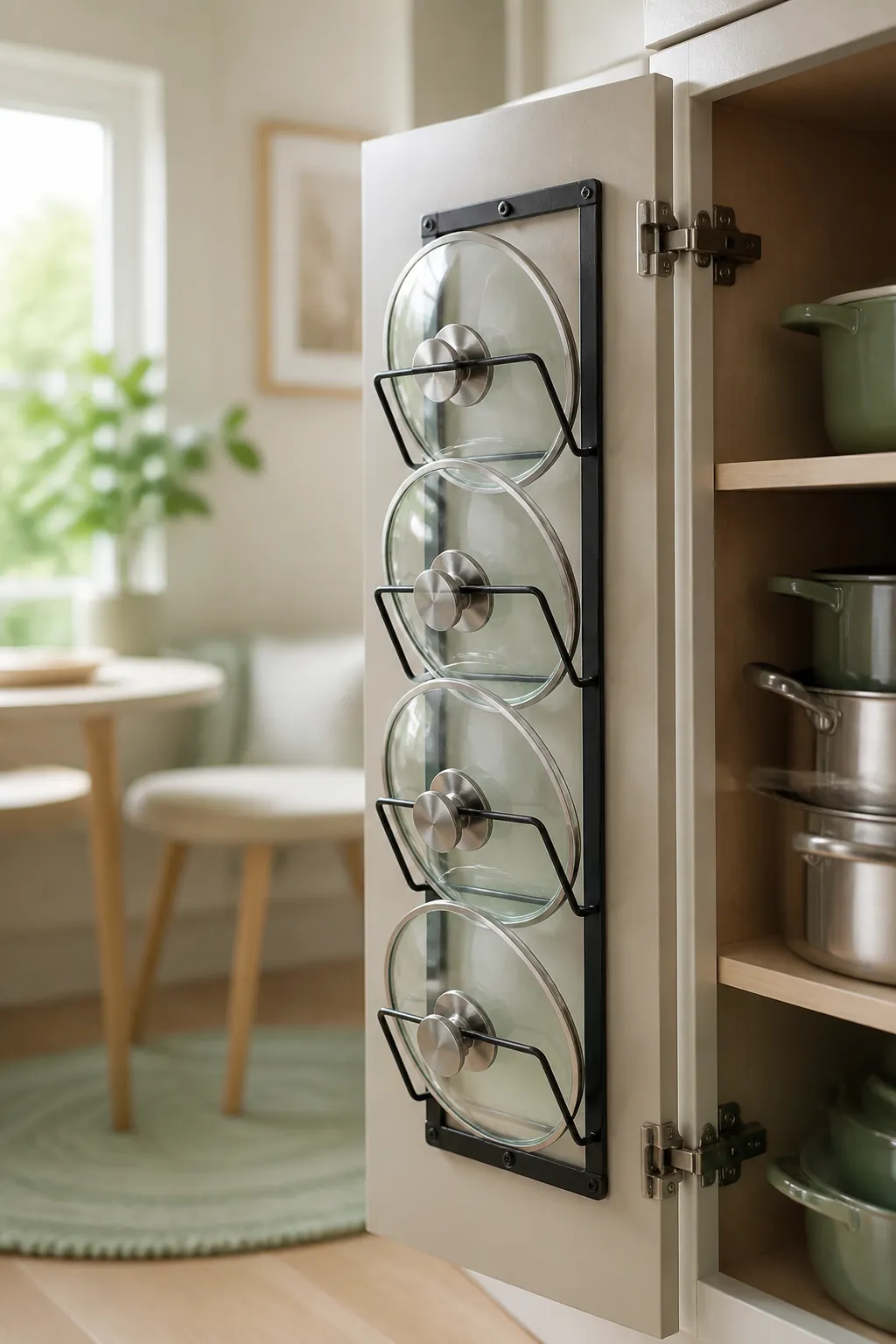
Lids are the worst-behaved object in a kitchen cabinet. They do not stack, they slide off pots, and the one you need is always at the bottom. A cabinet door pot lid organizer holds six lids by their handles in a vertical rack about two and a half inches deep, and it ships with both adhesive hooks and screws, so it works on a rented door and an owned one.
The manufacturer’s own warning is worth repeating: the rack is bendable, and if you bend it out to take an oversized lid it stands proud of the door and the door stops closing. Size the rack to the lids you have, and give the one giant stockpot lid a home inside the cabinet instead. If the pots themselves are the problem, the pots and pans guide for a tiny kitchen is about that half of the cabinet.
5. Use adhesive caddies for the small stuff, and make them actually stick
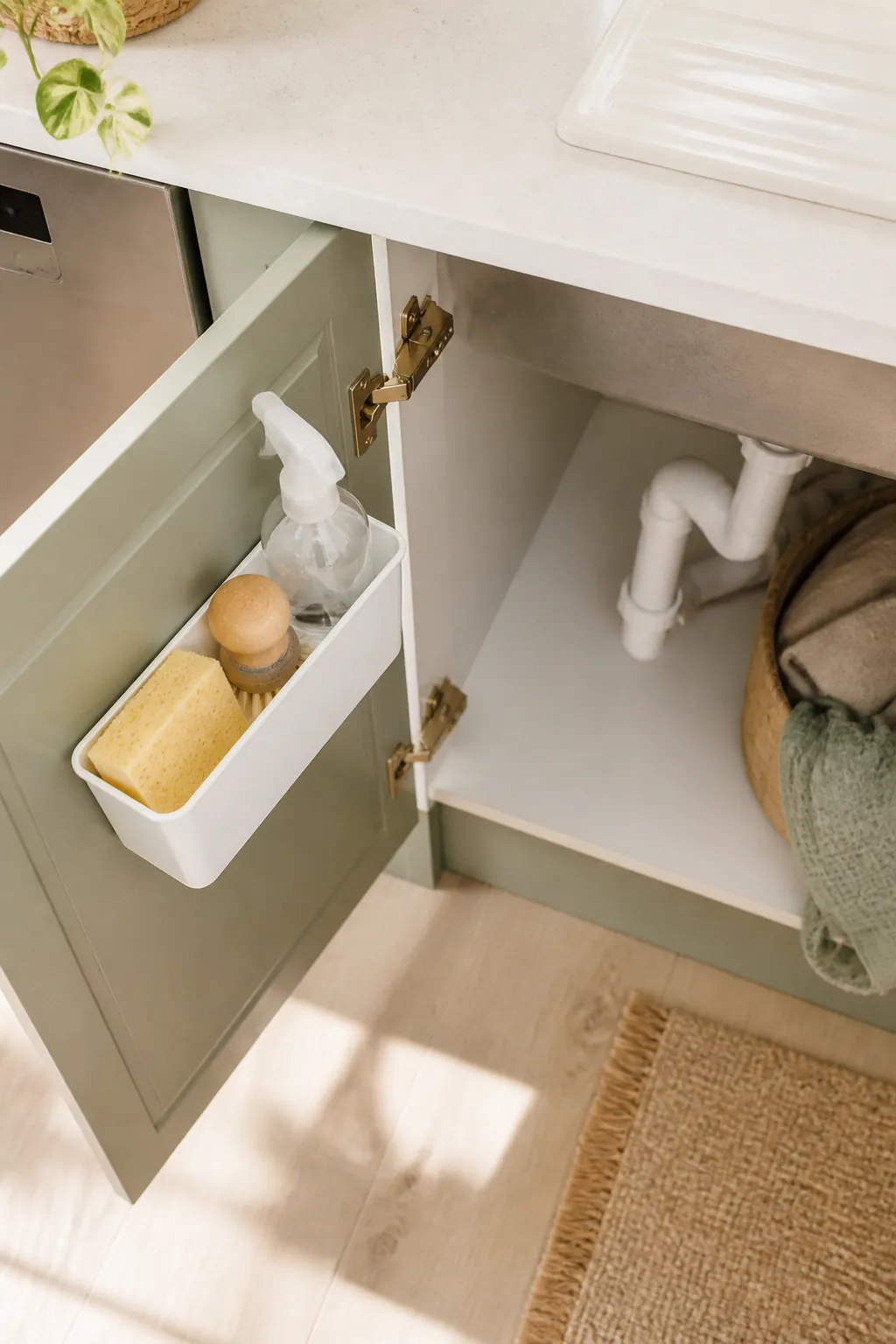
For the small things, a damage-free adhesive caddy on the door takes the sponge, the scrubber, the small bottle of dish soap, or a handful of spice packets, and comes off later with no hole. The reviews on every adhesive organizer split the same way: half say it holds for years, half say it fell off within the hour. The difference is almost never the product.
Three things decide it. The surface has to be smooth and sealed: laminate, melamine, painted wood, or metal. Unfinished, textured, or oiled wood will not hold, and the strip will take the finish with it when it fails. Wipe the spot with rubbing alcohol and let it dry. Then press the strip on for thirty seconds and leave the caddy empty for an hour before loading it. Reviewers who did those three things are the ones writing the five-star reviews.
6. Give foil, wrap and bags the door, because they are flat and light
The boxes of foil, cling wrap, and parchment are exactly the shape a door wants: long, thin, and light. In a drawer they take a whole drawer. On a door they take nothing. A hang-over basket holds three boxes upright; an adhesive rail with two hooks holds a roll of bags. Put them on the door of the cabinet nearest where you prep, not wherever there happens to be space, because the whole point is reaching for foil without opening three doors.
7. Use the under-sink door for the wet things
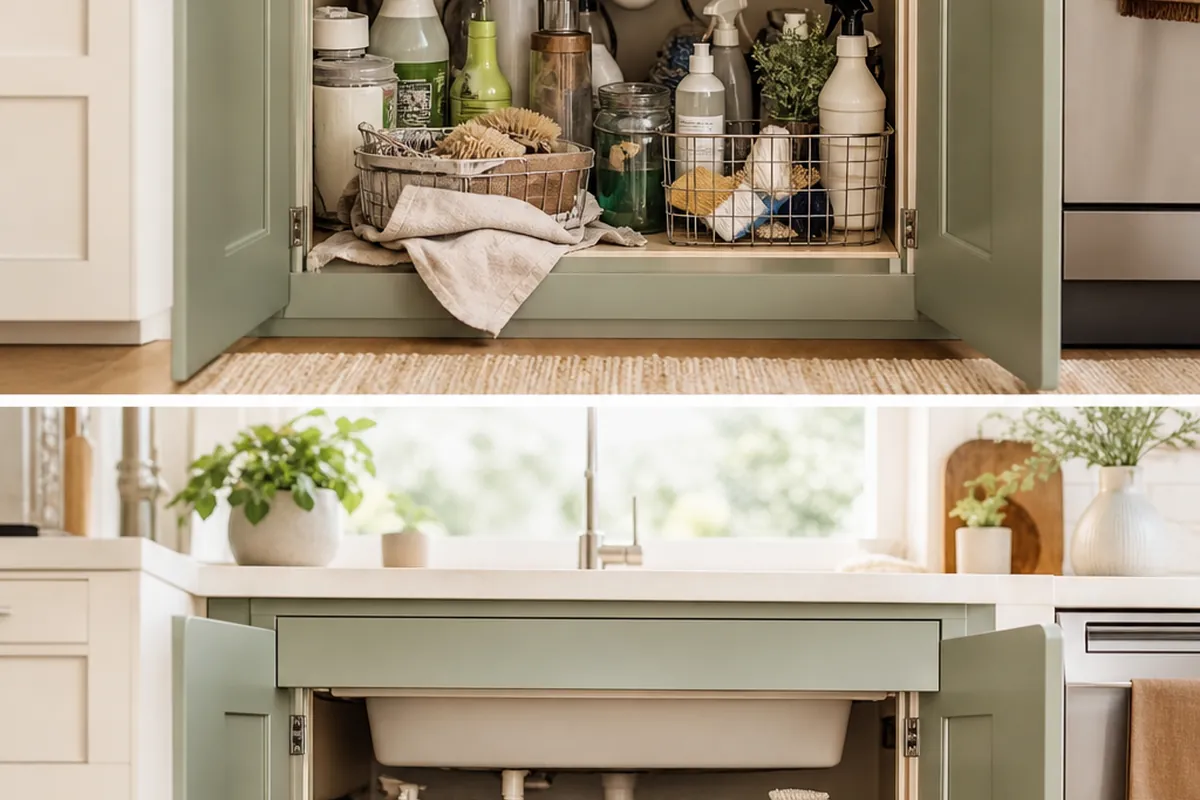
The cabinet under the sink is the one where the door matters most, because everything on the floor of it gets damp. The sponge, the rubber gloves, the bottle brush, and the small spray bottle all belong on the door, off the cabinet floor and out of whatever leaks. An adhesive caddy or a short adhesive rail with hooks handles it, and the door being slightly open when the cabinet is in use lets them drain.
The same logic applies to the bathroom vanity, where the under-sink bathroom organizer guide covers the rest of that cabinet. Check the caddy will clear the pipe trap before you stick it: under a sink the clearance is often the trap, not the shelf.
8. Spices on the door nearest the stove, in one layer
A spice rack on a cabinet door works if two things are true. The cabinet is the one beside the stove, so the jars are where you use them, and the rack holds a single layer, so every label faces you and nothing hides behind anything. A deep rack full of jars two rows thick is both heavy and useless, because you still cannot see the back row.
Small jars only. Glass is heavy in numbers, and a door full of full-size jars is the fastest way to a sagging hinge. If you have more than a door’s worth, the door gets the ten you cook with and the rest go inside.
9. Know what the hinges will carry, and what they will not
Two standard cabinet hinges are rated to carry the door. Everything you add is carried by the same two hinges, at the end of a lever, every time the door swings. A few pounds spread across the door is fine. The things that are not: cast iron lids, a full set of glass jars, large bottles of oil or cleaner, or anything that swings on a hook and knocks.
The first sign of a door that is overloaded is that it drops slightly and starts to catch on the frame or rub the door beside it. If that happens, take the heavy thing off before you adjust the hinge, because adjusting a hinge to compensate just moves the problem to the screw holes.
10. Do all of it without a screw if the kitchen is not yours
Almost nothing here needs a drill. Hang-over baskets sit on the door. Adhesive caddies, rails, and the lid rack’s adhesive hooks come off with a hairdryer on low and a slow peel from one corner, leaving nothing behind on a sealed surface. The one rule for a rental is no adhesive on raw wood, ever, because that is the case where the finish comes off with the strip and the deposit goes with it.
When you leave, take the organizers with you. They are the cheapest part of the kitchen to move, and the next kitchen will have doors too.
Where to start
Measure first: the gap at the top of the door and the clearance to the shelf. Those two numbers rule out the wrong organizers before you buy them.
Then start with the door that annoys you most, which is usually the one under the sink or the one where the lids live. One hang-over basket and one adhesive caddy will clear most of what is wrong with a small kitchen’s cabinets, and neither leaves a mark.