A standard mug is about four inches tall and three and a half inches across at the base, which sounds small until you own eighteen of them and one flat cabinet shelf. With no spare cabinet to add, every mug has to fit into space you already have, which usually means an overloaded stack, a shelf that never quite closes, or mugs living in a bowl on the counter because nowhere else was left.
None of that is a mug problem. It is a layout problem, and it responds to the same three moves that fix every cramped kitchen cabinet: use the height, use the corners, and stop treating every mug as equally important. Nine ways to do that below.
1. Count what you actually use before you store any of it
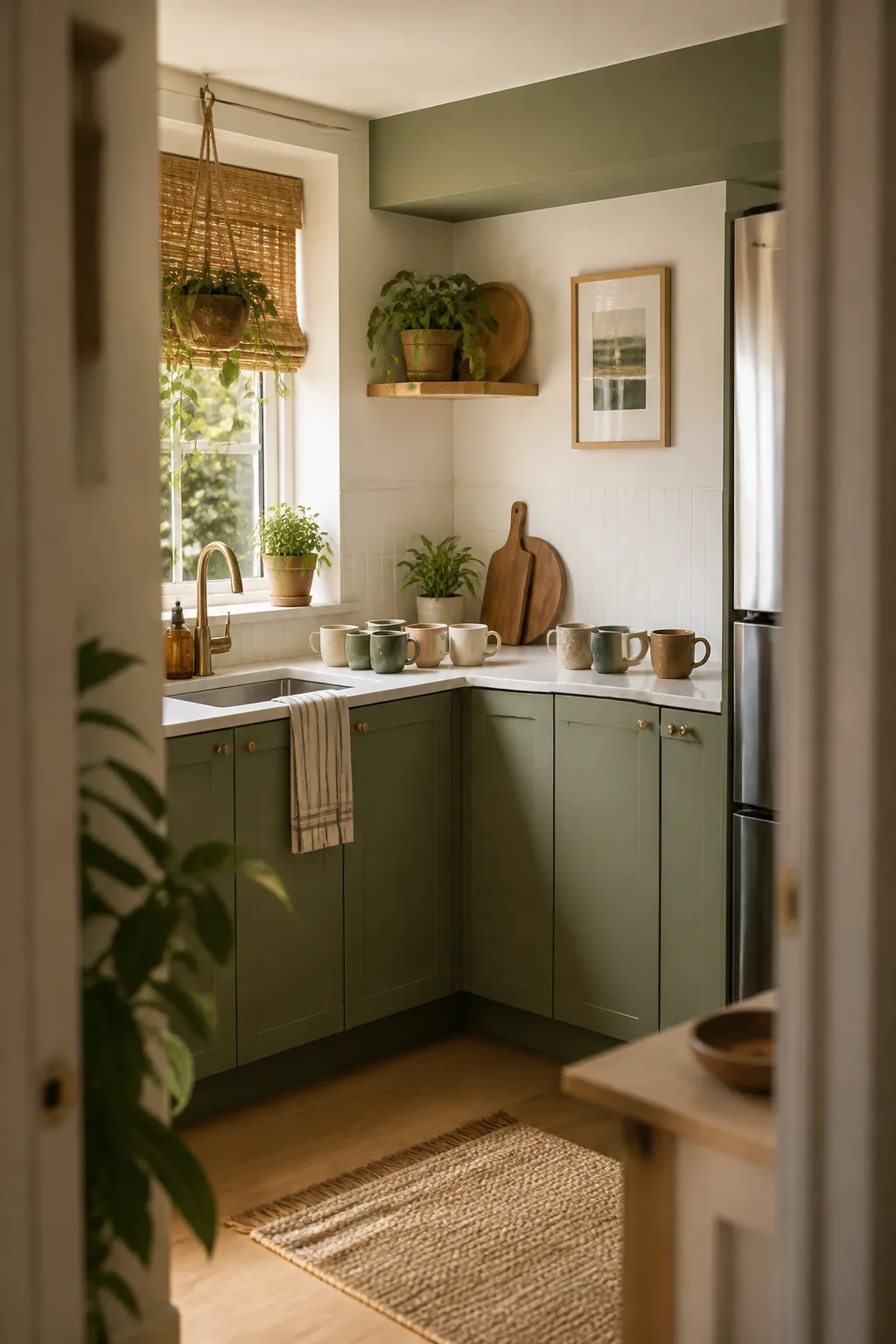
Pull every mug out onto the counter and split them into two piles: the ones you actually reach for, and everything else. Most two-person households drink from six to eight mugs on rotation and own closer to twenty, and it is that gap, not the cabinet, that runs out of room first.
The second pile does not need to disappear. It needs to stop competing with the daily mugs for the best shelf. Everything in the ideas below works better once it is only holding a rotation you actually use.
2. Stop stacking more than three deep
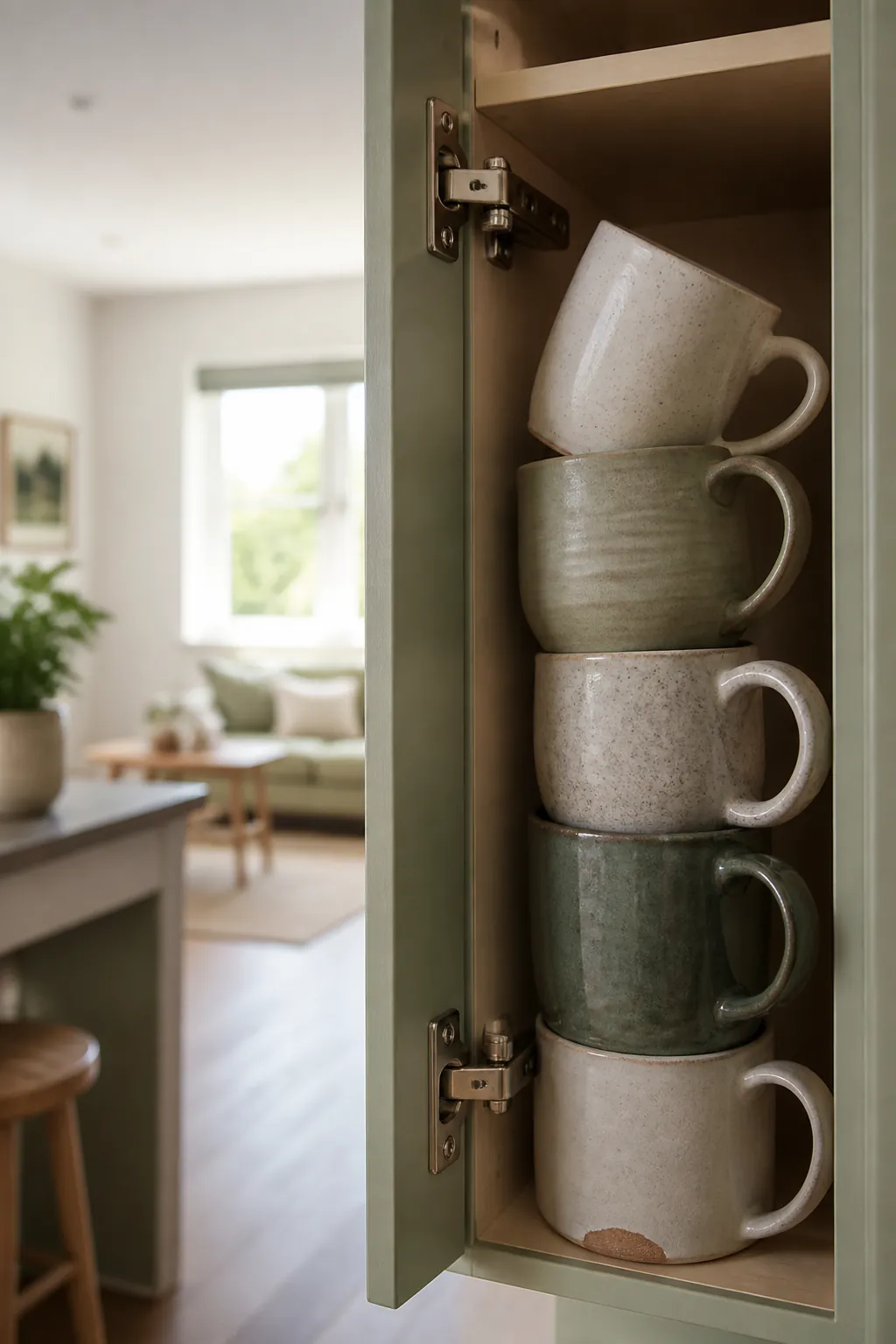
A tall stack looks efficient and is the reason your mugs are chipped. Ceramic rims are never perfectly flat, so each mug in a stack rocks slightly against the one below it, and the small point where they touch carries the full weight of everything above. Past three mugs, that rocking point is where the glaze gives out.
The bottom mug in a five-high stack is also the one you never use, because getting to it means lifting four others first. So the stack fails twice: it damages the mugs and it hides the one on the bottom. Cap any stack at three and give the rest a different home, which is exactly what the next few ideas are for.
3. Add a second tier with an expandable shelf riser
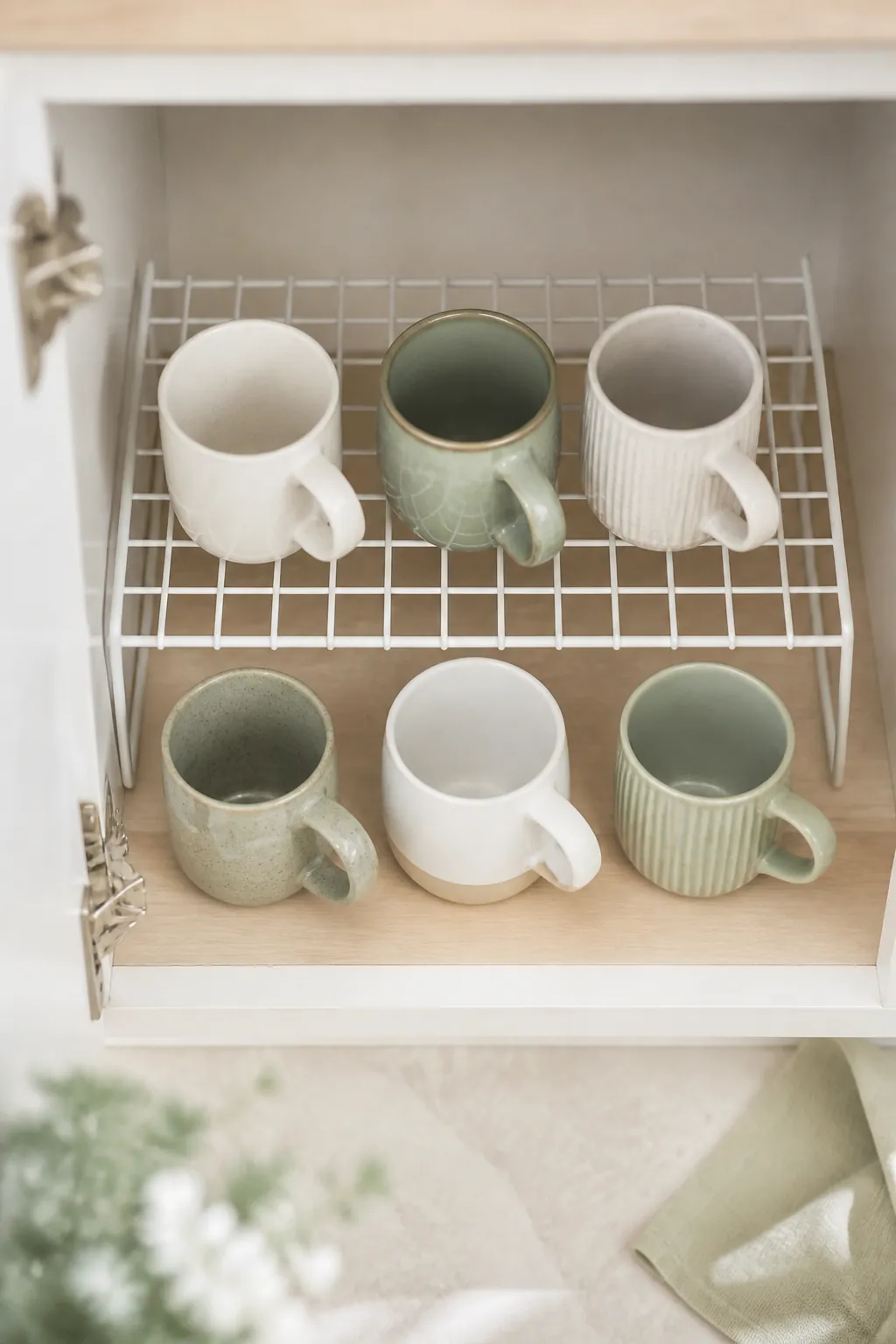
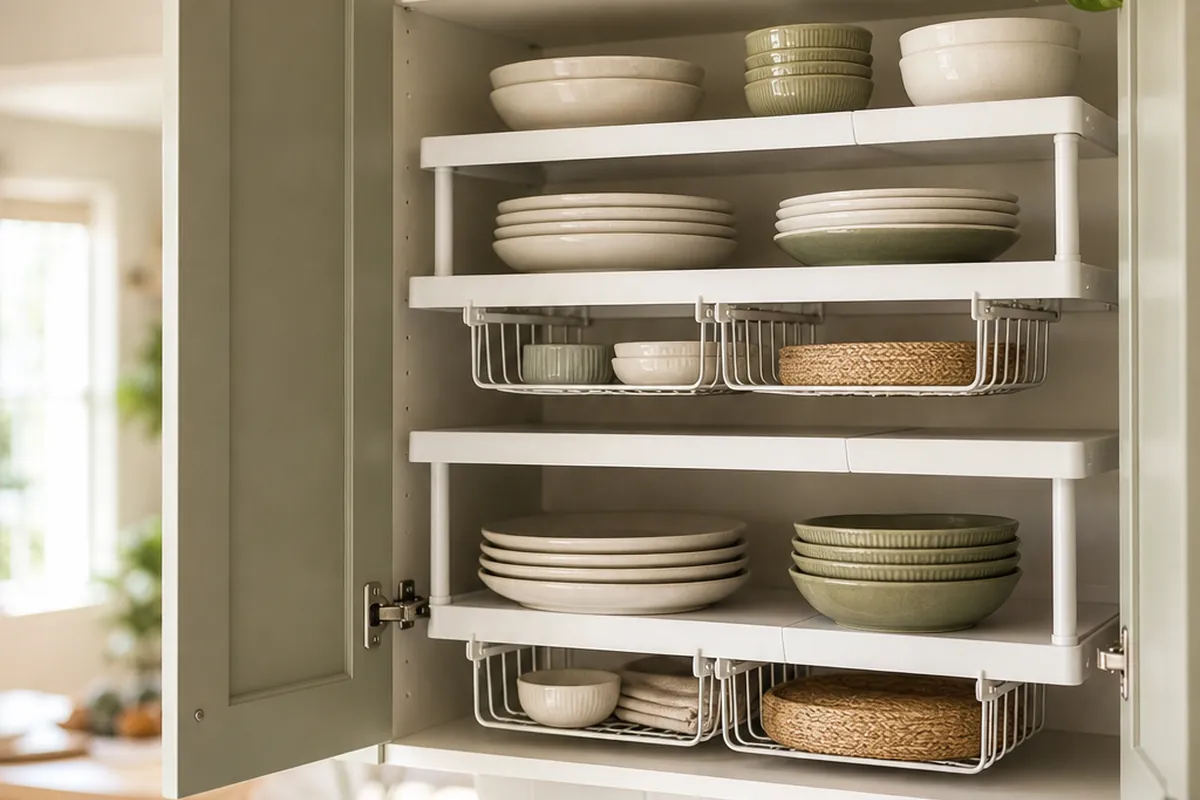
Most cabinet shelves are spaced for plates or bowls, which leaves eight to ten inches of dead air above a row of four-inch mugs. An expandable cabinet shelf riser turns that gap into a second row without touching the cabinet itself.
Put the mugs you use daily on the bottom tier, since it is the one you can grab without lifting anything, and use the raised tier for the second-string mugs from your sorted pile. Because the riser expands, it adjusts to the width of the shelf rather than forcing you to cut anything to fit, which matters if you rent and want it to come out clean at the end of the lease.
4. Turn a corner cabinet into a mug station with a turntable
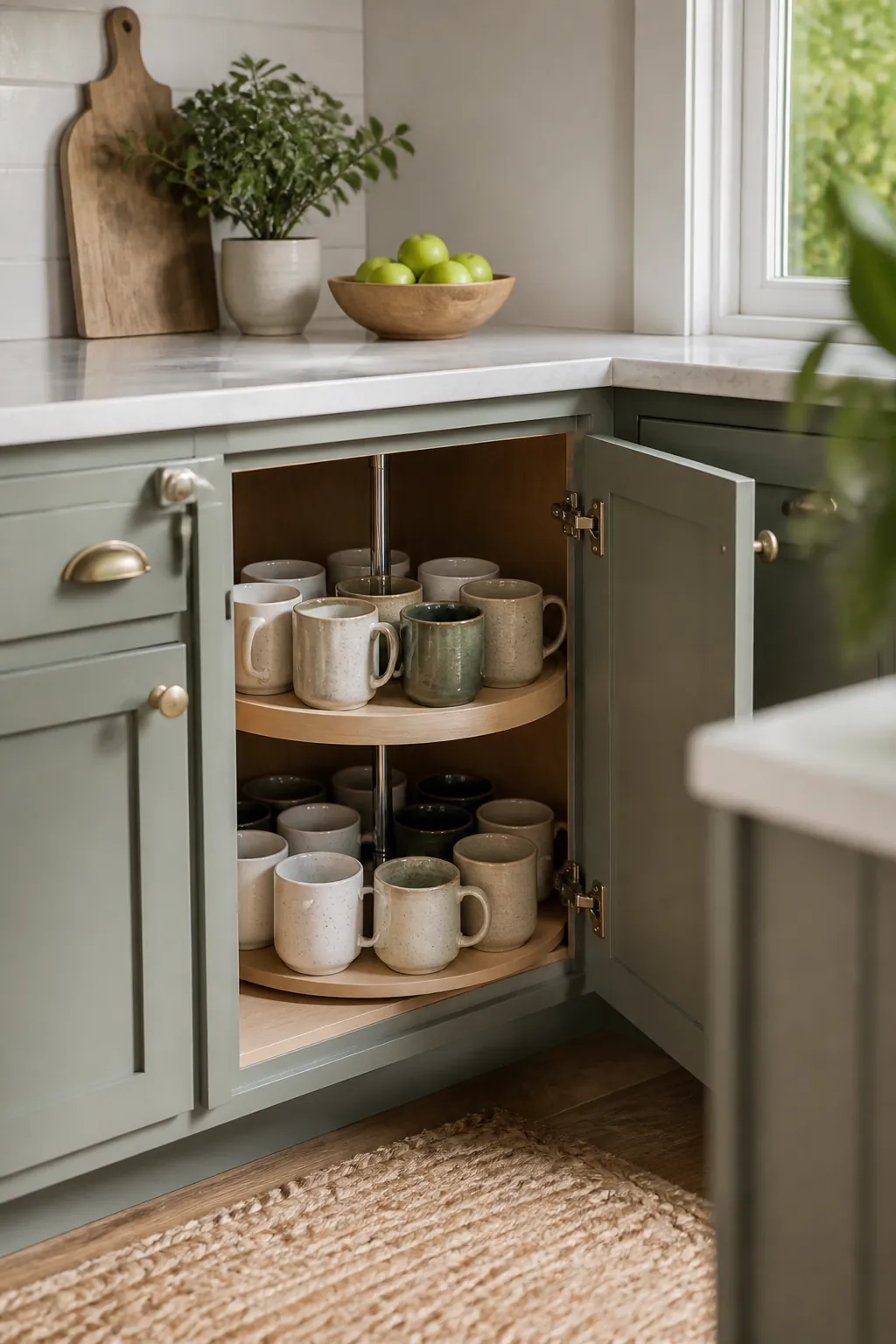
A blind corner cabinet is the single worst-used spot in most kitchens, because anything past the front few inches is only reachable by kneeling down and reaching blind. Mugs are round, light, and stackable in a ring, which makes them one of the best things to put on a turntable lazy Susan organizer instead of storing them there loose.
Load the outer edge with your daily mugs and the inner ring with the occasional ones, then spin the whole thing to bring whichever row you need to the front. This is where the mugs from your rarely used pile earn their keep: a corner cabinet is a fine place to lose track of a mug forever, but not on a turntable, since a spin brings everything back around.
The same spin works for spice jars, and spice organization for kitchens with no rack covers where a turntable fits and where a drawer insert does better.
5. Hang mugs under the shelf where nothing else can reach
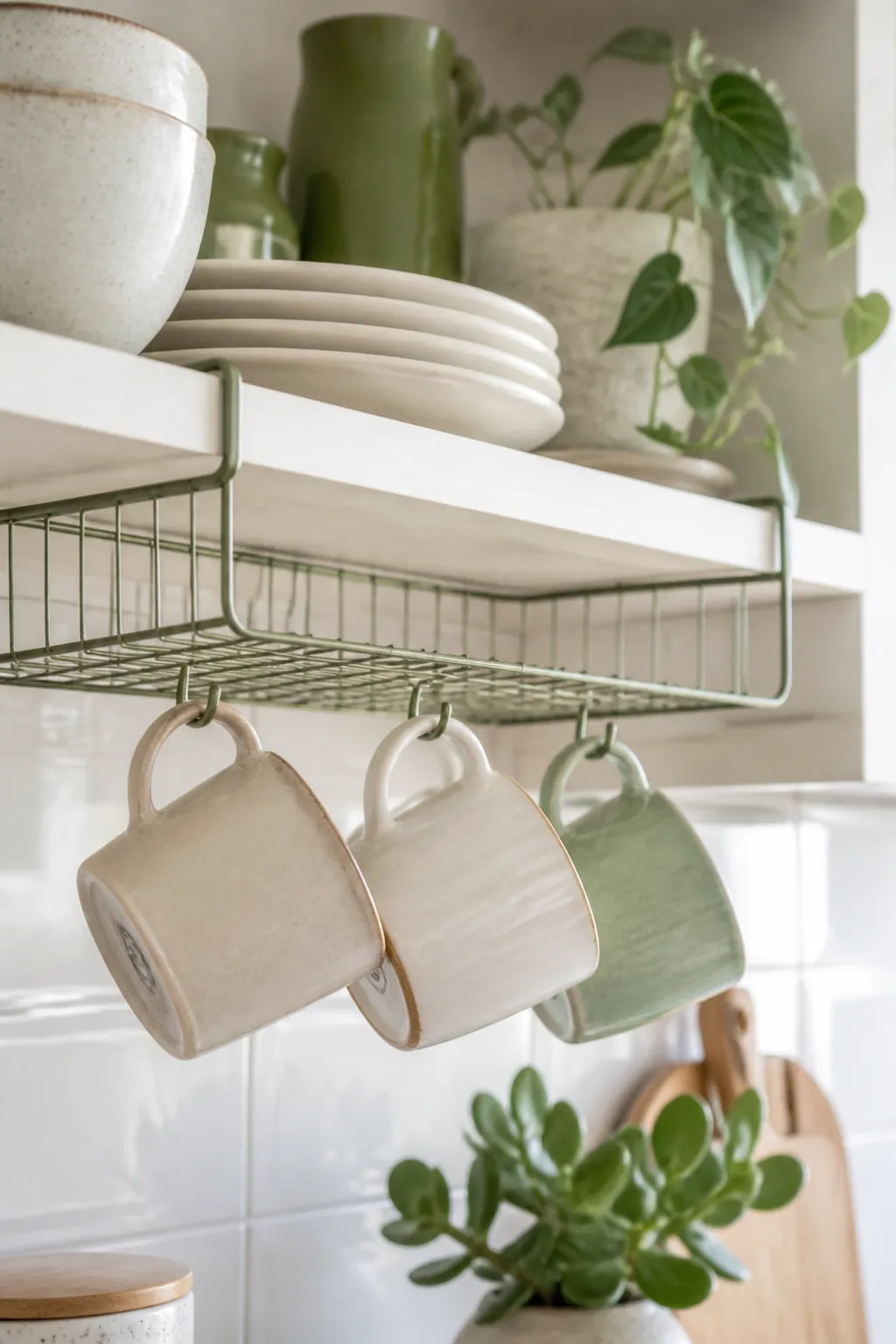
Below every shelf in a cabinet is a narrow band of space that nothing sits in, because nothing rests on thin air. Under-shelf hanging baskets clip onto the lip of an existing shelf with no tools and hang a small basket into that gap, and mugs sit in one easily by looping the handle over the rim or setting two or three in flat.
Keep the load light here. These baskets are sized for foil rolls and coffee filters more than a full mug set, so three or four mugs, not eight, is the right amount before the basket starts pulling forward on its clip. Use it for the mugs you reach for most, since it is the fastest thing in the cabinet to grab from.
6. Use peel-and-stick hooks inside a cabinet door
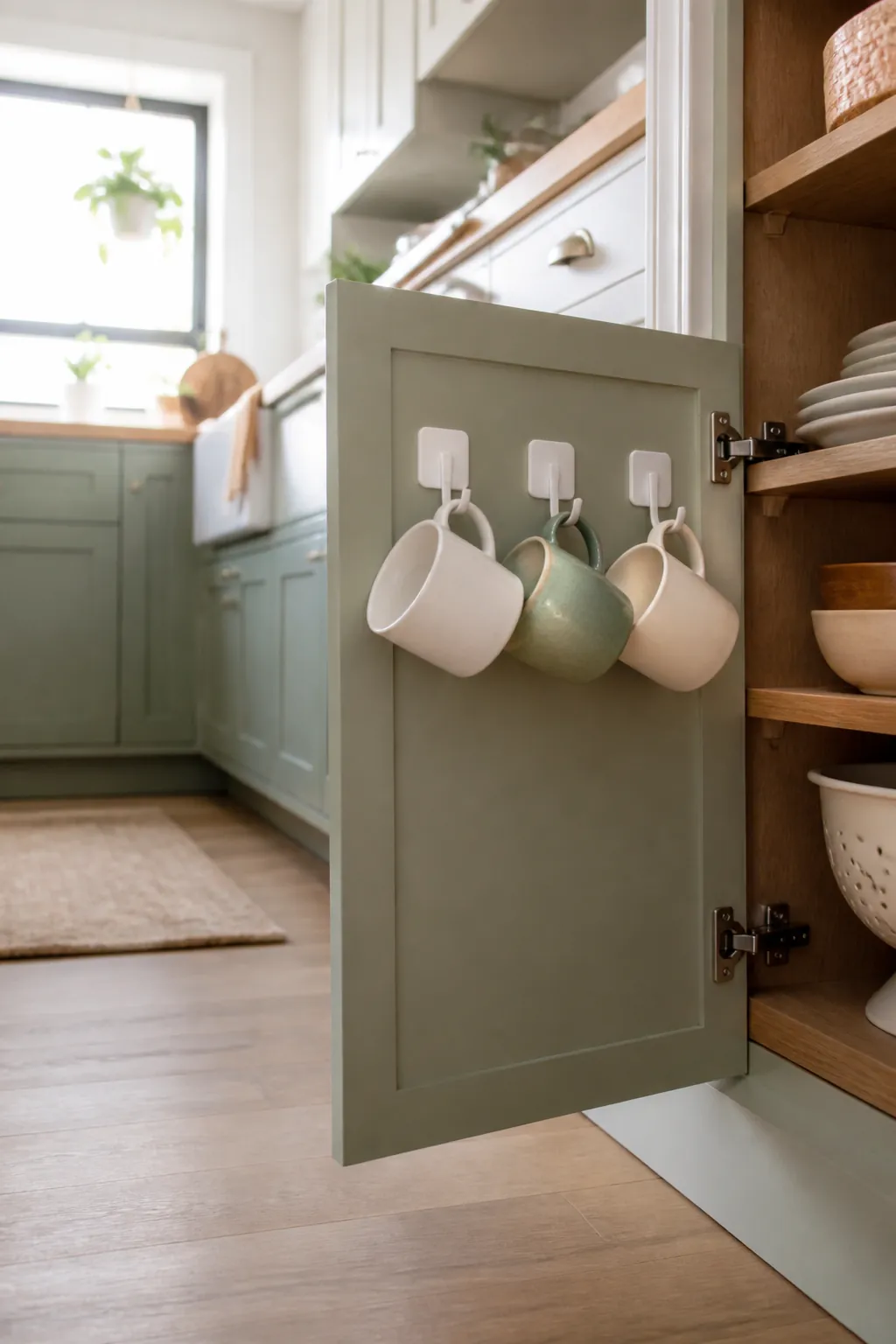
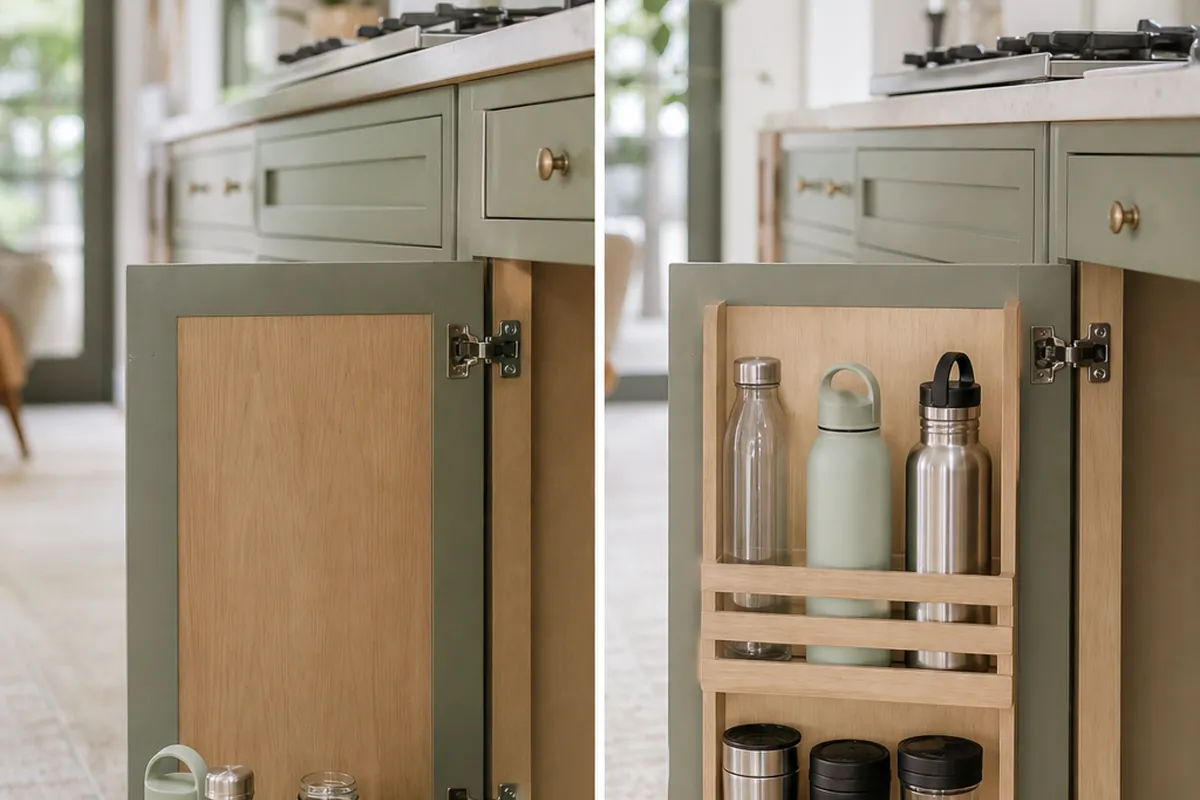
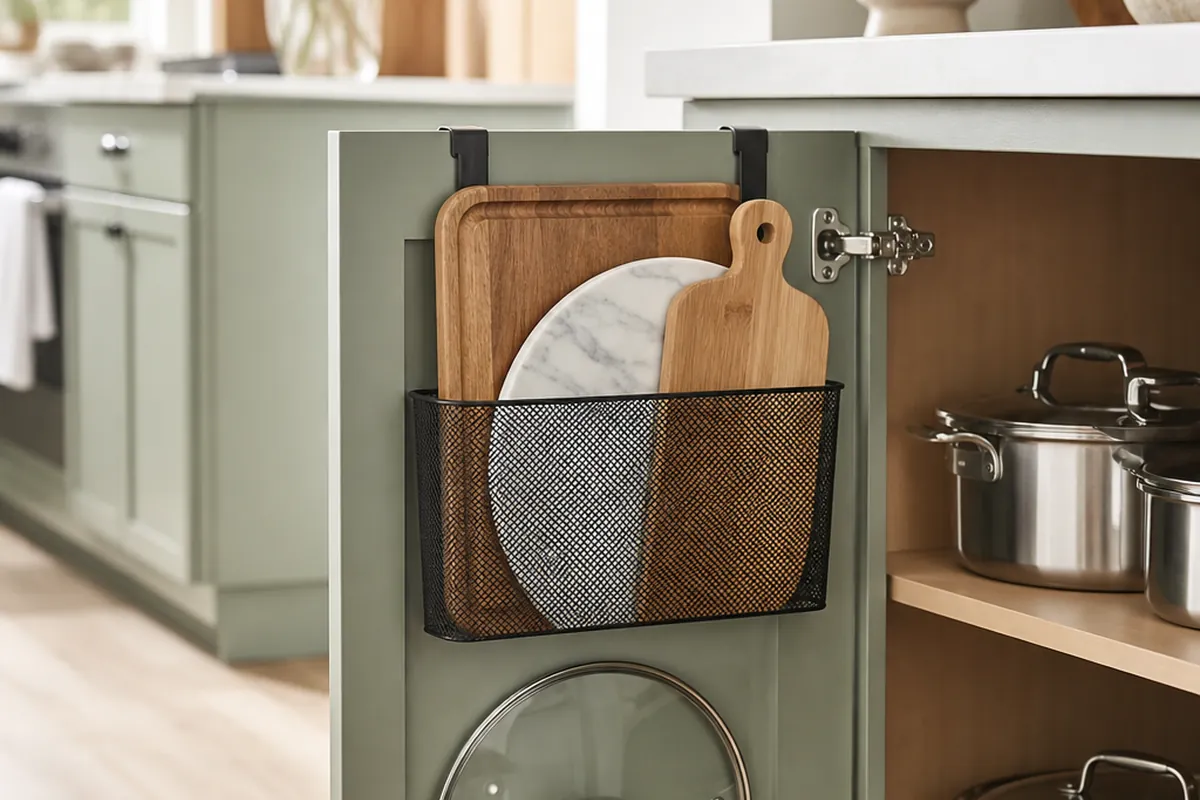
The inside of a cabinet door is flat, vertical, and almost always empty. A few small adhesive hooks, rated for the weight of a full mug rather than a dish towel, turn that door into hanging storage for two or three mugs by the handle, and it needs no drilling at all.
Mugs are only one use for that door, and inside cabinet door organizer ideas for a small kitchen covers the rest, from lids and foil to what the hinges can carry.
Check the rating before loading it. A full ceramic mug runs ten to fourteen ounces, and a hook rated for half a pound will slowly peel off the paint rather than fail all at once, so you will not notice until a mug is already on the floor. Stick to a smooth, painted or laminate door, since textured or raw wood surfaces do not hold adhesive backing reliably, and mount low enough that the door still swings past the mugs without knocking them.
7. Keep the coffee mugs at the coffee station, not in the cabinet
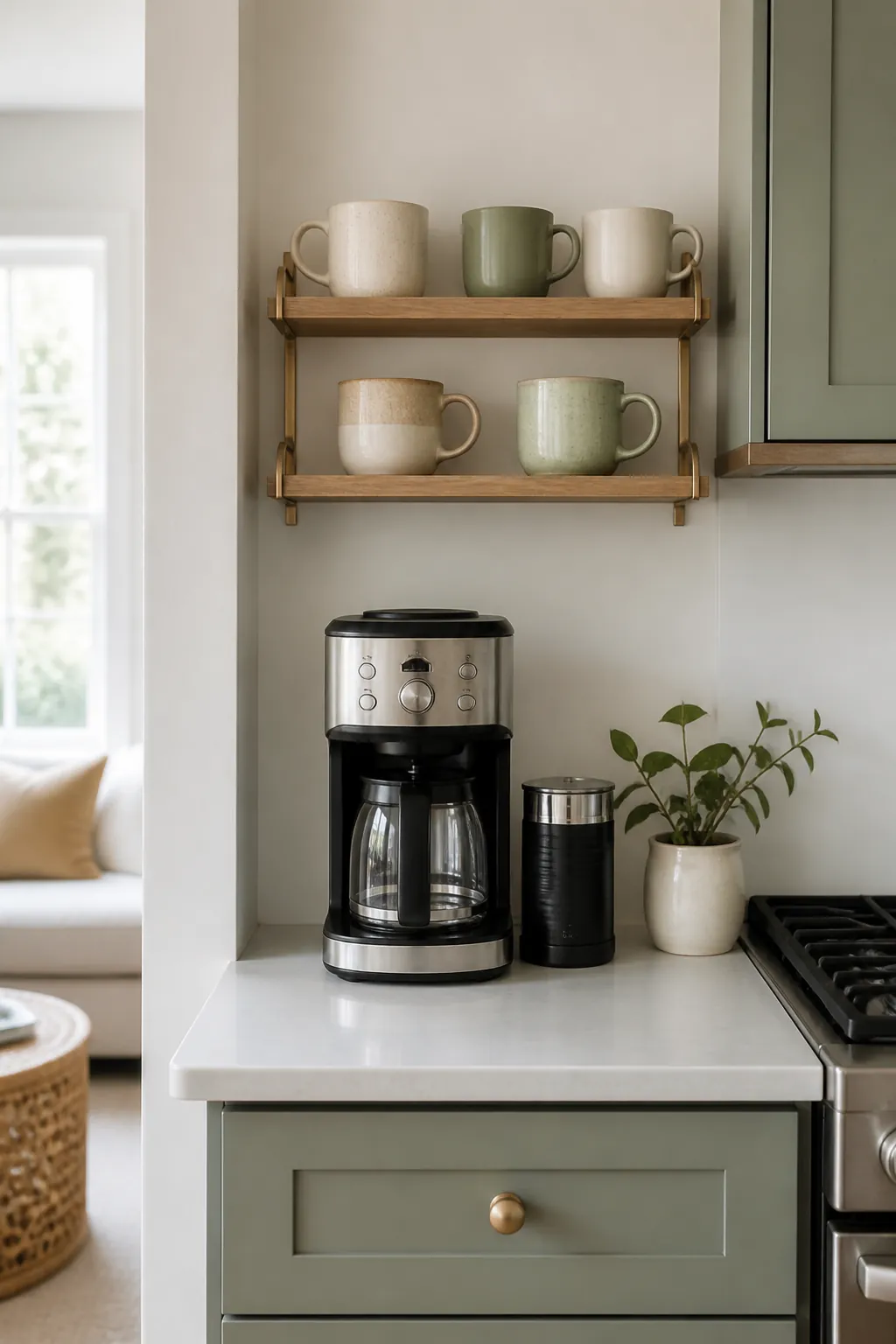
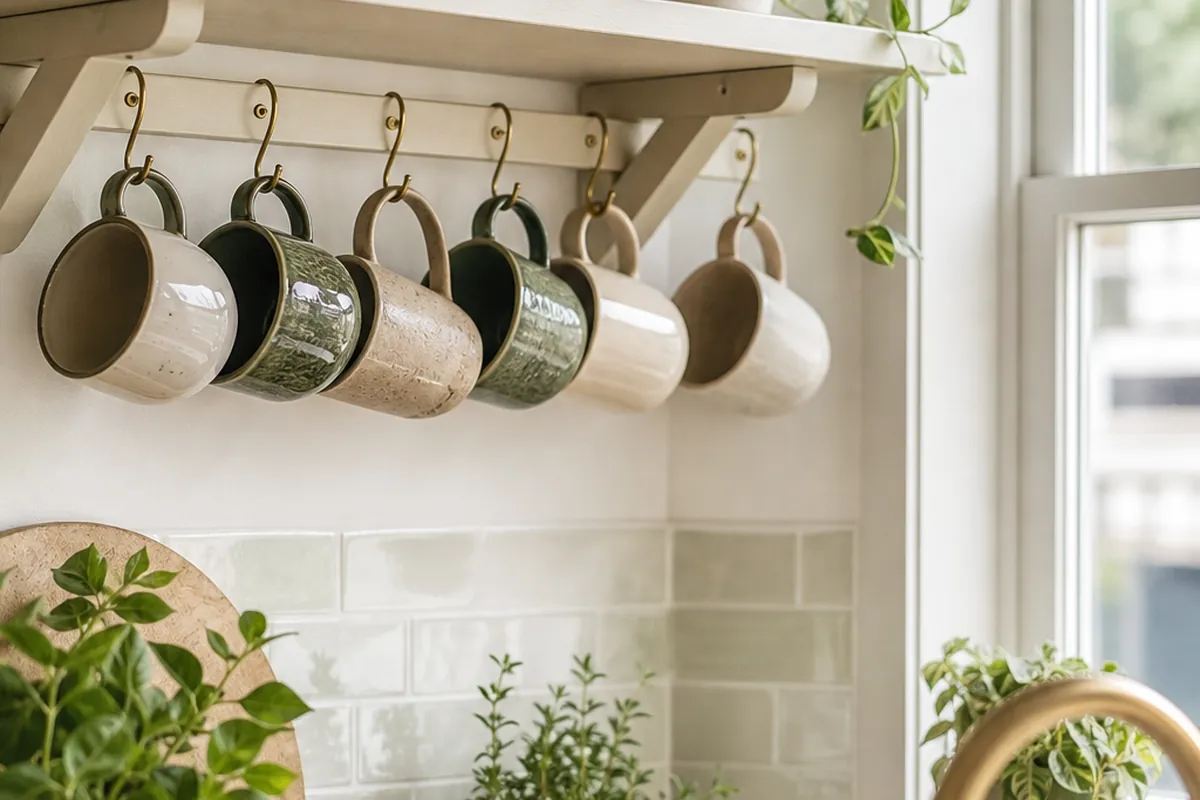
If you make coffee at the same spot on the counter every morning, the mugs you use for it do not need to live in a cabinet at all. A small open shelf, a short row of hooks, or even a tray beside the machine keeps four or five daily mugs exactly where your hand goes first thing.
This does two things at once. It takes the highest-traffic mugs out of the cabinet entirely, which frees a shelf’s worth of space for everything else, and it means the mugs you use every day are not buried behind the ones you use twice a year. If you are setting up the whole counter around this, the layout ideas in 10 Coffee Station Ideas for a Small Kitchen Counter cover the rest of it.
8. Lay the backup mugs on their side in a drawer
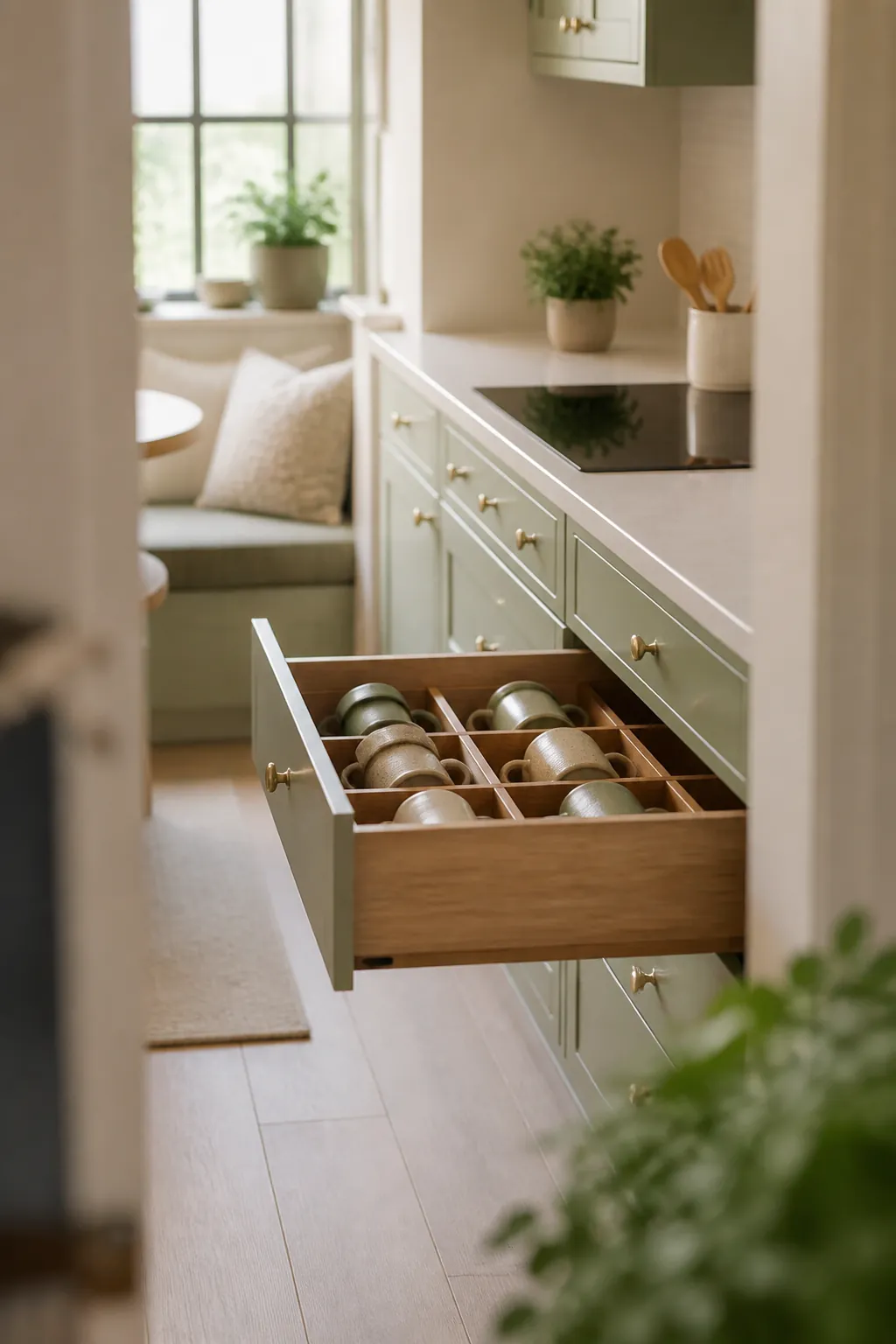
A deep kitchen drawer, the kind usually reserved for pots, will take mugs lying on their sides if the cabinet upstairs genuinely has nothing left. This is not the everyday solution, since a mug on its side is slower to grab than one standing upright, but it is a real place to put the guest mugs you bring out four times a year.
Divide the drawer before you load it, the same rule that applies to any drawer in the kitchen, so the mugs do not roll into each other every time the drawer opens and closes. A drawer with dividers keeps this workable. A drawer without them turns into a pile of mugs clinking around loose, which chips them the same way an overloaded stack does.
9. Set a one-in-one-out rule for gift and novelty mugs
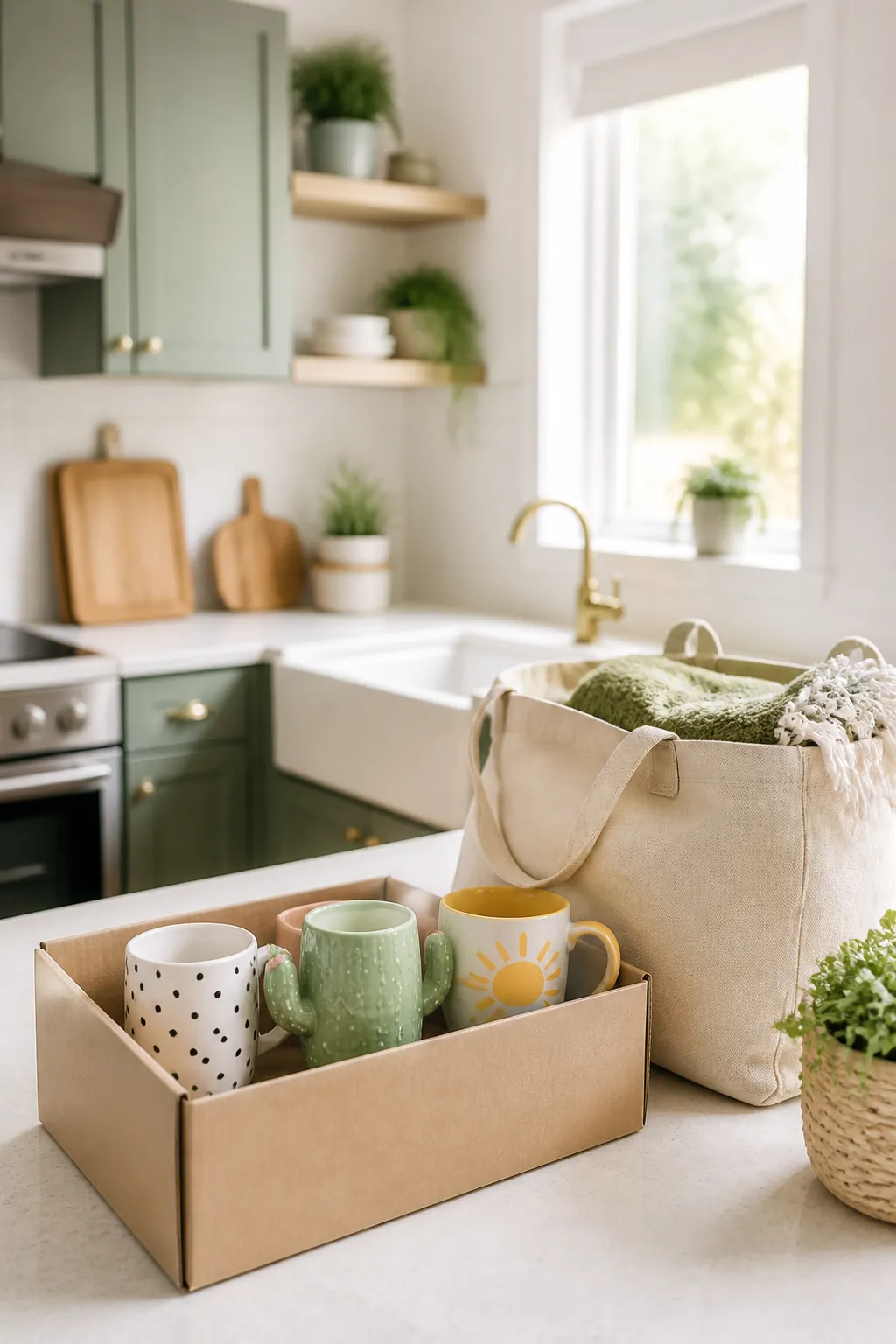
The mug collection that overflows a small kitchen is rarely the daily set. It is the conference giveaway, the mug someone brought back from a trip, and the three matching ones from a set of four where the fourth broke years ago. None of these get used, and all of them take up the same shelf space as the mug you reach for every morning.
Give the collection a hard limit equal to whatever your storage actually holds, and when a new mug comes in, an old one goes out to a box, a donation bag, or the back of a cabinet in another room entirely. This is the same discipline that keeps kitchen cabinets workable in general: the storage was never the shortfall, the volume was.
Where to start
Pull every mug out and sort it into daily and occasional before you buy anything. That single step usually solves more of the crowding than any organizer does, because most of what is crammed onto the shelf was never in rotation to begin with.
Then match the fix to the cabinet you have. A shelf riser adds a tier if the height is going to waste, a turntable rescues a blind corner, and a hanging basket or a door hook catches the daily mugs that do not need a shelf at all. Stacking beyond three is the one habit worth breaking regardless of which of these you add, since it is what is chipping the mugs you already own.