Baking sheets are the most awkward things in a small kitchen. They are large, flat, and stack into a single heavy slab that you have to lift entirely to reach the one at the bottom. In a kitchen with no pantry there is no obvious home for them, so they end up in the oven, on top of the refrigerator, or wedged behind a cabinet door that no longer closes. The fix is the same one that works for files and records: stop stacking them and stand them up.
1. On edge, not flat
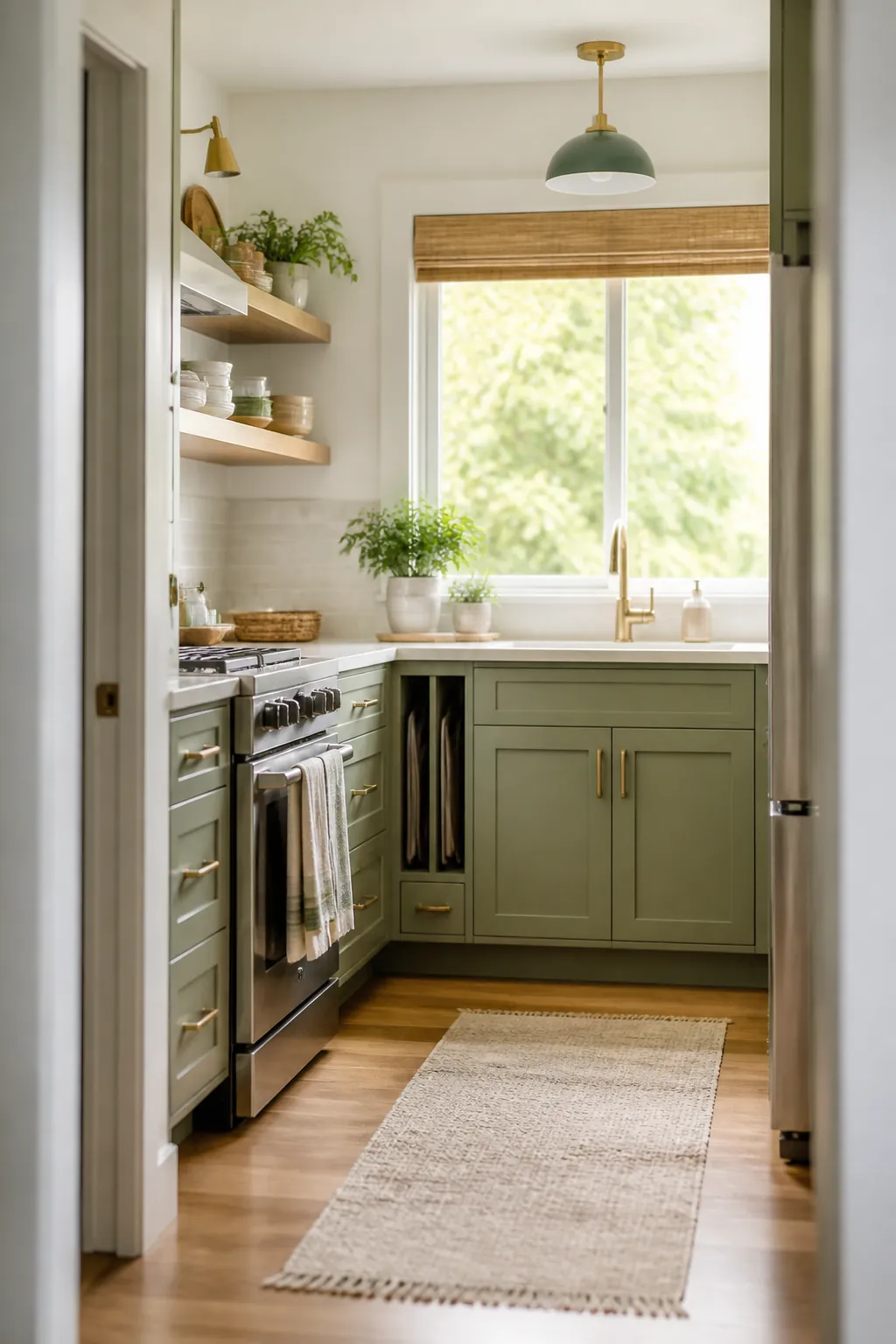
This is the whole idea and everything else follows from it.
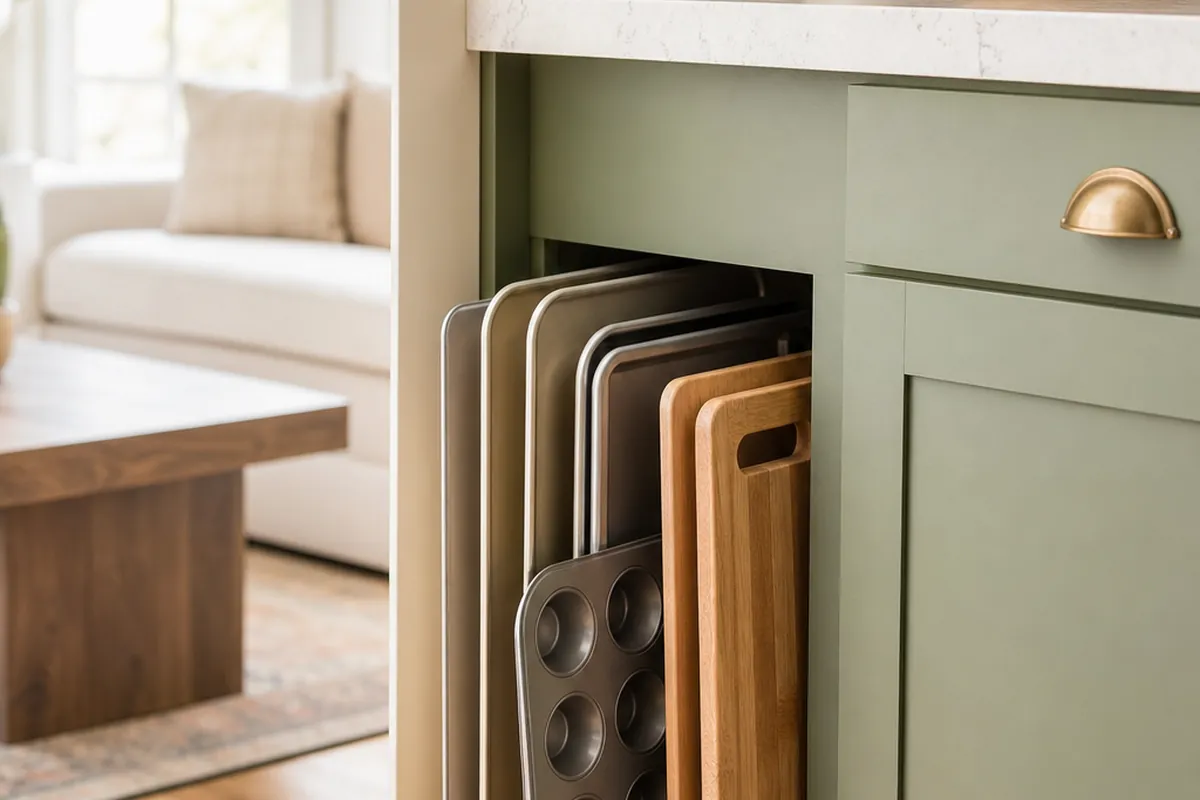
A half-sheet pan is around eighteen by thirteen inches. Lying flat it occupies an entire shelf. Standing on its long edge it takes about two inches of shelf width, and you can pull out any one of them without lifting the others.
Stacking is what makes baking sheets annoying, not their size. A stack of six means moving five pans to reach the sixth, so people take the top one every time and the rest go unused for years.
2. Measure across the rim, not the base
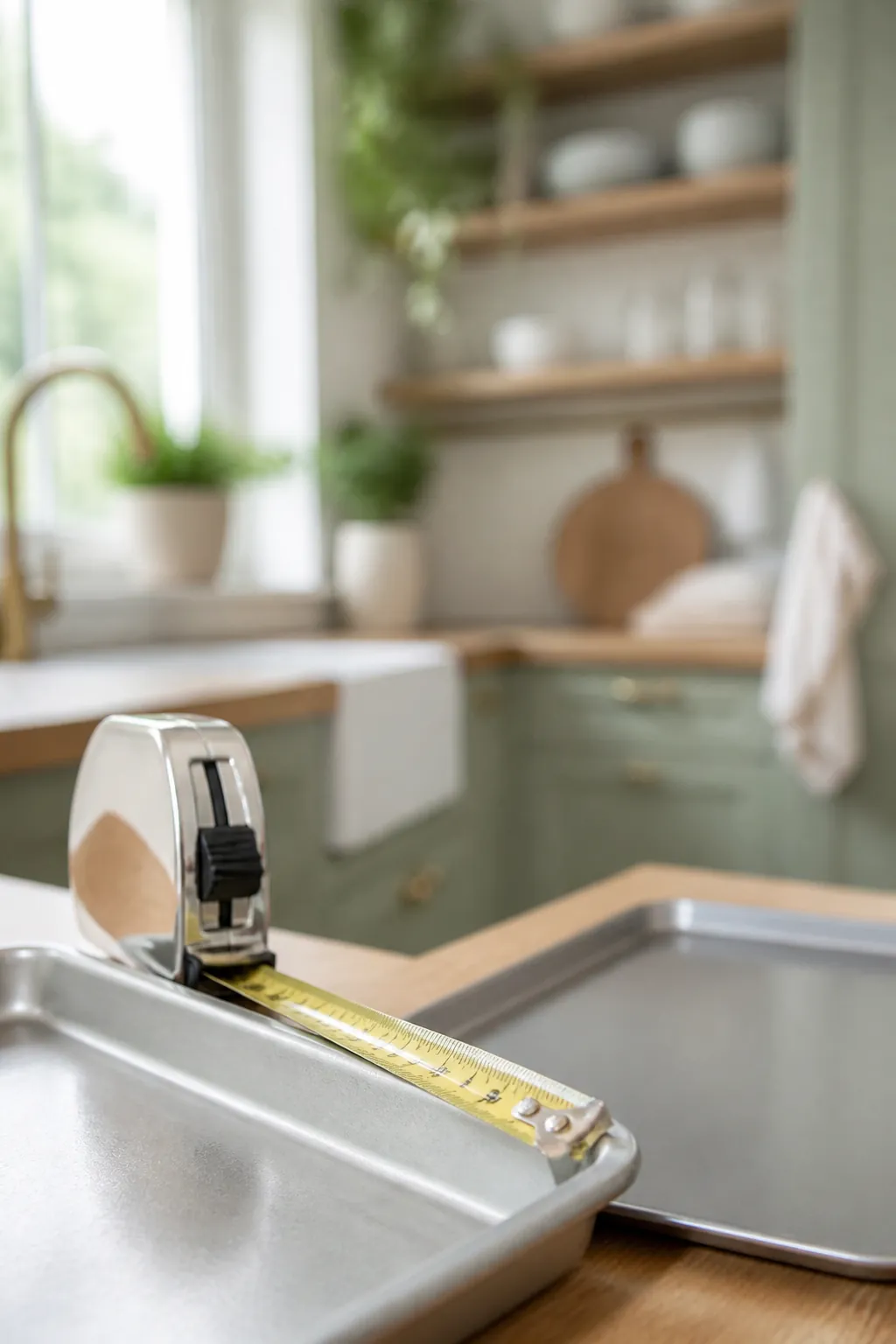
The detail that decides whether a rack fits.
A rimmed sheet is noticeably thicker than a flat cookie sheet, and racks are sold by slot count and slot width. Measure across the rim of your thickest pan, then add a little clearance, because pans that have to be forced into a slot get pulled out less.
Also check for warping. An older sheet that has bowed in a hot oven needs more slot width than its specification suggests, and warped pans are usually the ones you are trying to store rather than the ones you use.
3. A pan rack does the job in one purchase
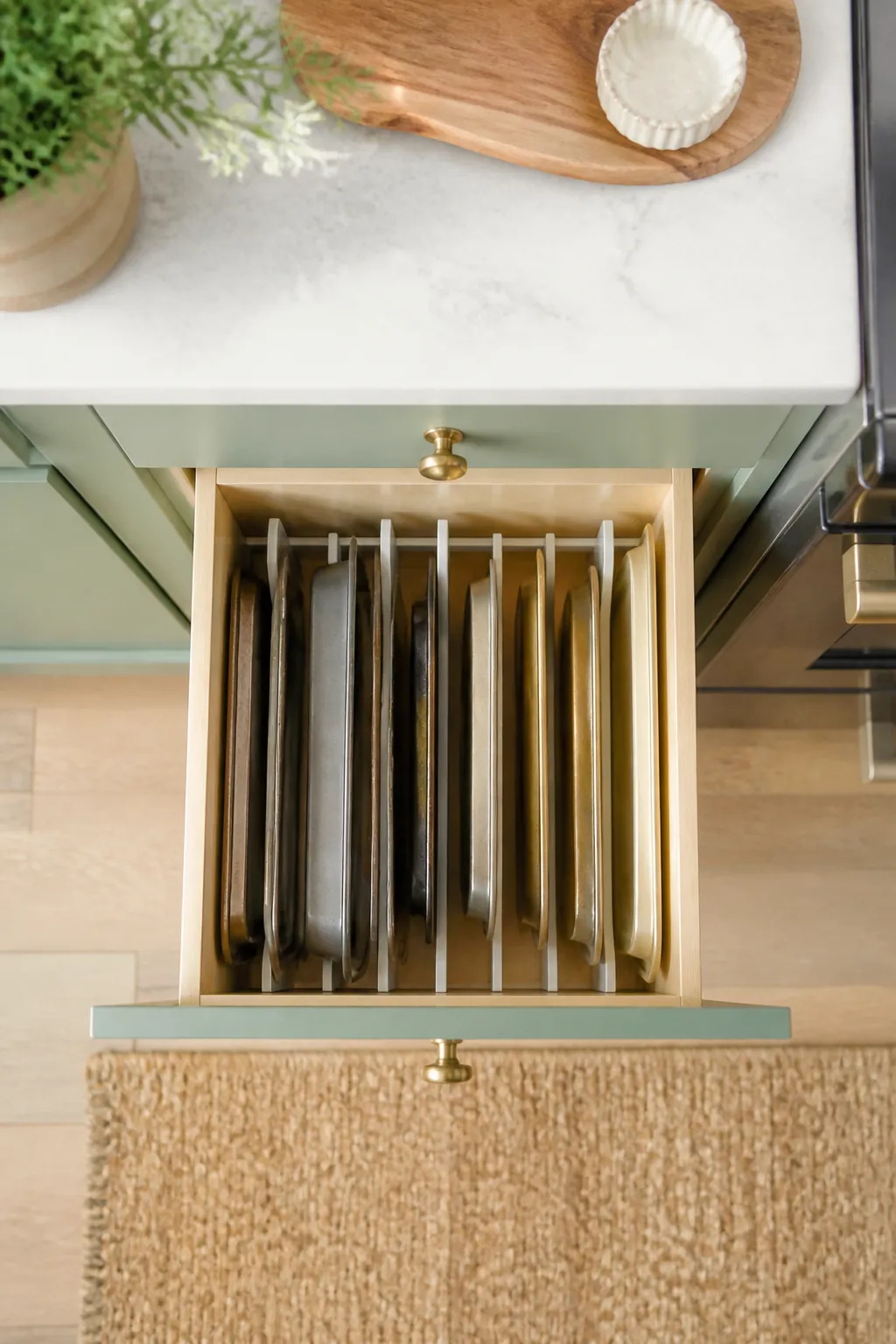
If you want this solved rather than engineered, buy the thing designed for it.
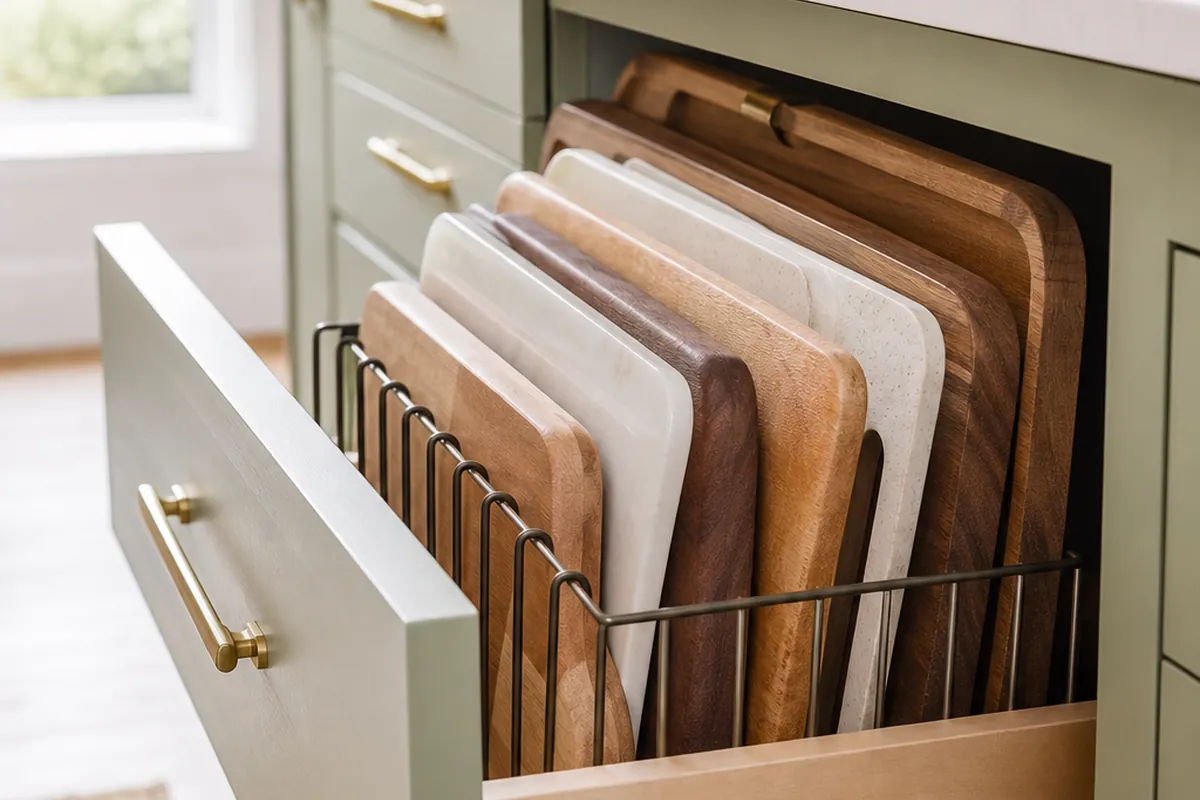
A vertical pan organizer rack holds sheets, cutting boards, muffin tins and cooling racks upright in one footprint. Most have adjustable dividers, which matters because a cookie sheet and a roasting pan are very different thicknesses.
Put it in a base cabinet, on a shelf, or on the counter if you bake often enough to justify the space. It works anywhere flat.
4. Wire dividers turn any shelf vertical
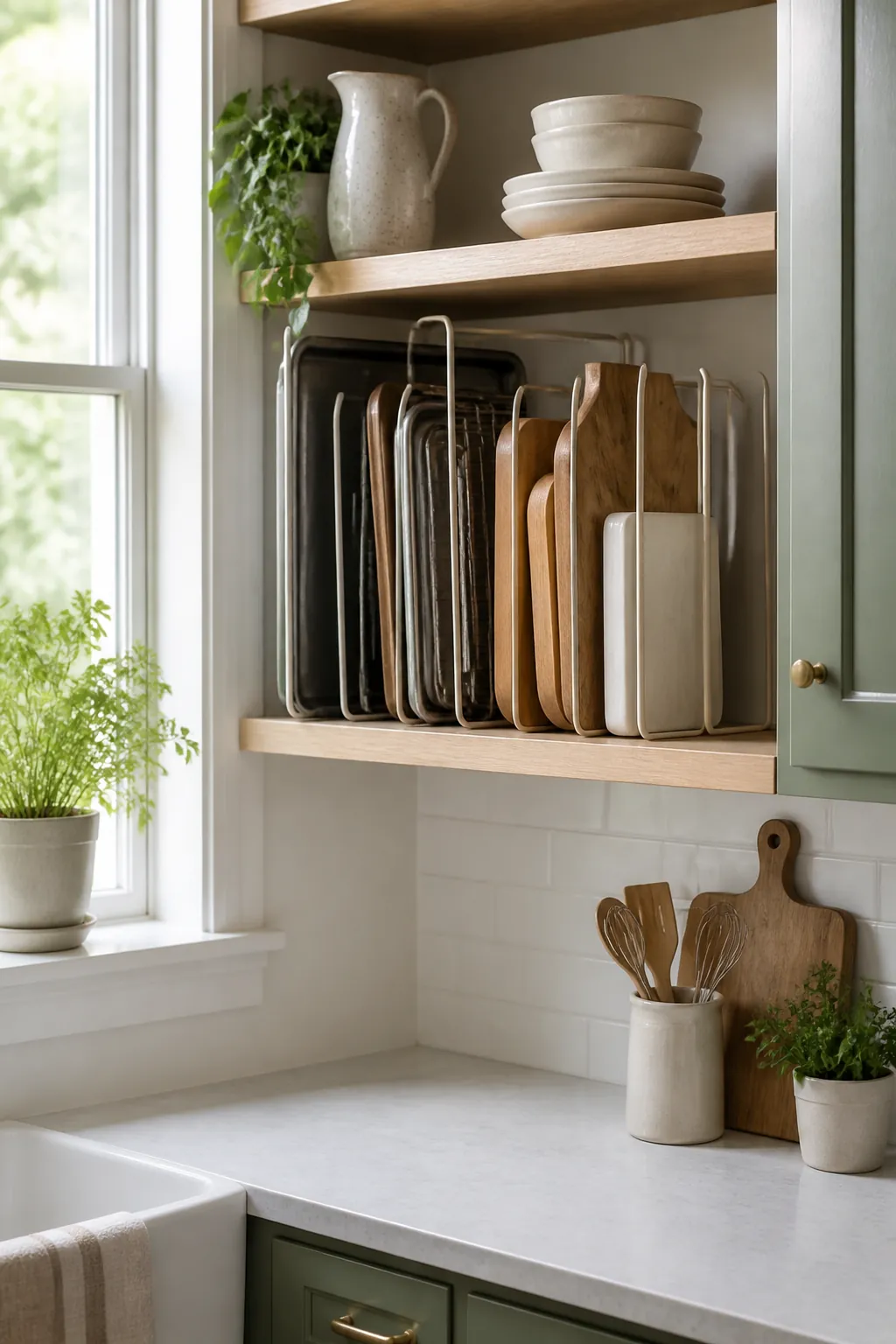
Cheaper, and it uses shelving you already have.
Wire shelf dividers clip onto an existing shelf and split it into vertical slots. That converts a shelf which currently holds one stack of pans into one that holds six standing pans plus the cutting boards.
The advantage over a rack is that you can space them to your own pans rather than to a manufacturer’s idea of them. The disadvantage is they need a shelf edge to grip, so they do not work on thick or lipped shelving.
5. Tension rods are the free version
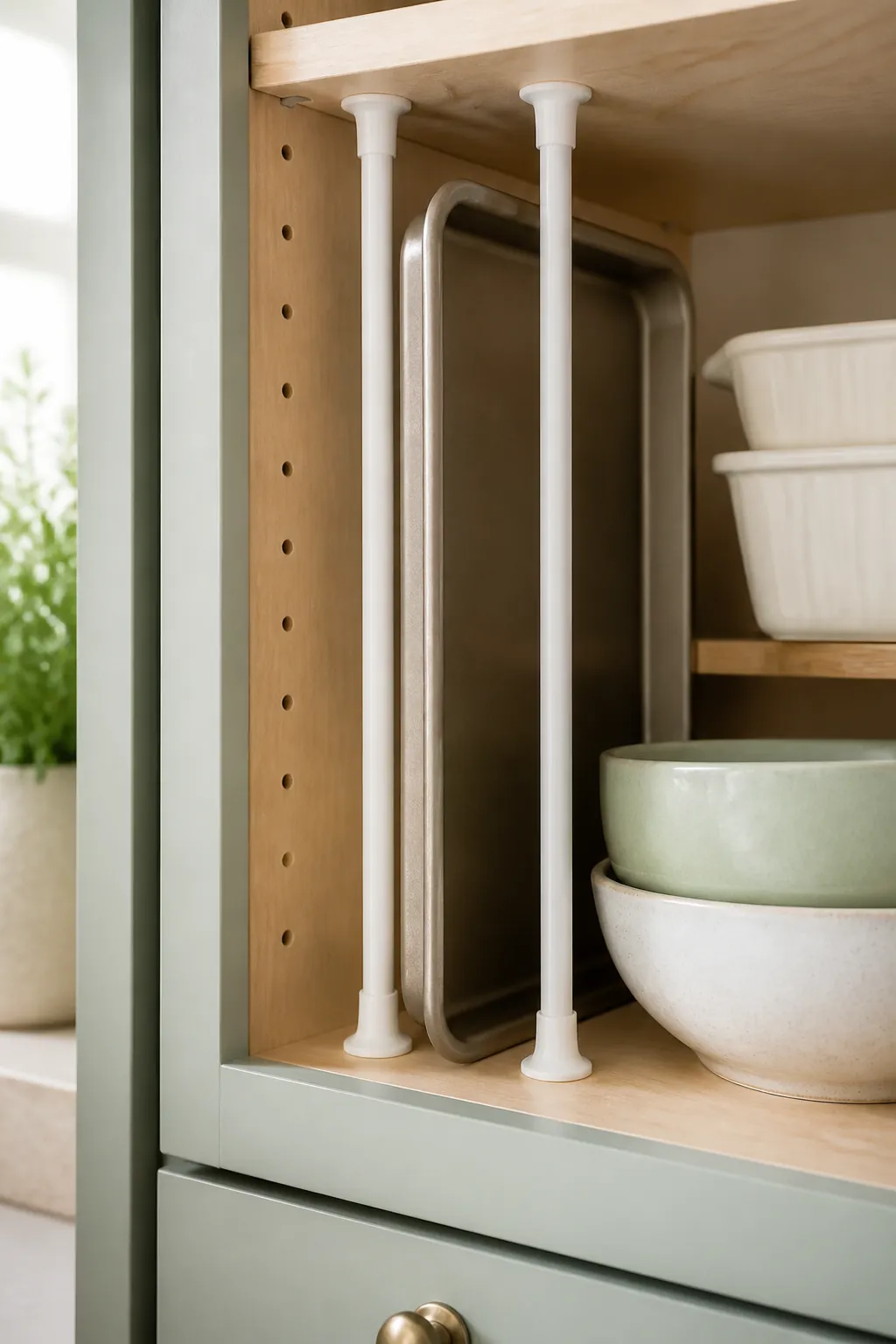
If you want to try the idea before buying anything, you probably own the parts.
Two tension rods fitted vertically inside a cabinet, a couple of inches apart, make a slot that holds a sheet upright. Three or four rods give you multiple slots. It is not elegant, but it proves whether vertical storage suits your kitchen before you spend anything.
Check the rods grip the actual cabinet sides rather than a thin decorative panel, and do not load them with cast iron.
6. The cabinet above the refrigerator is made for this
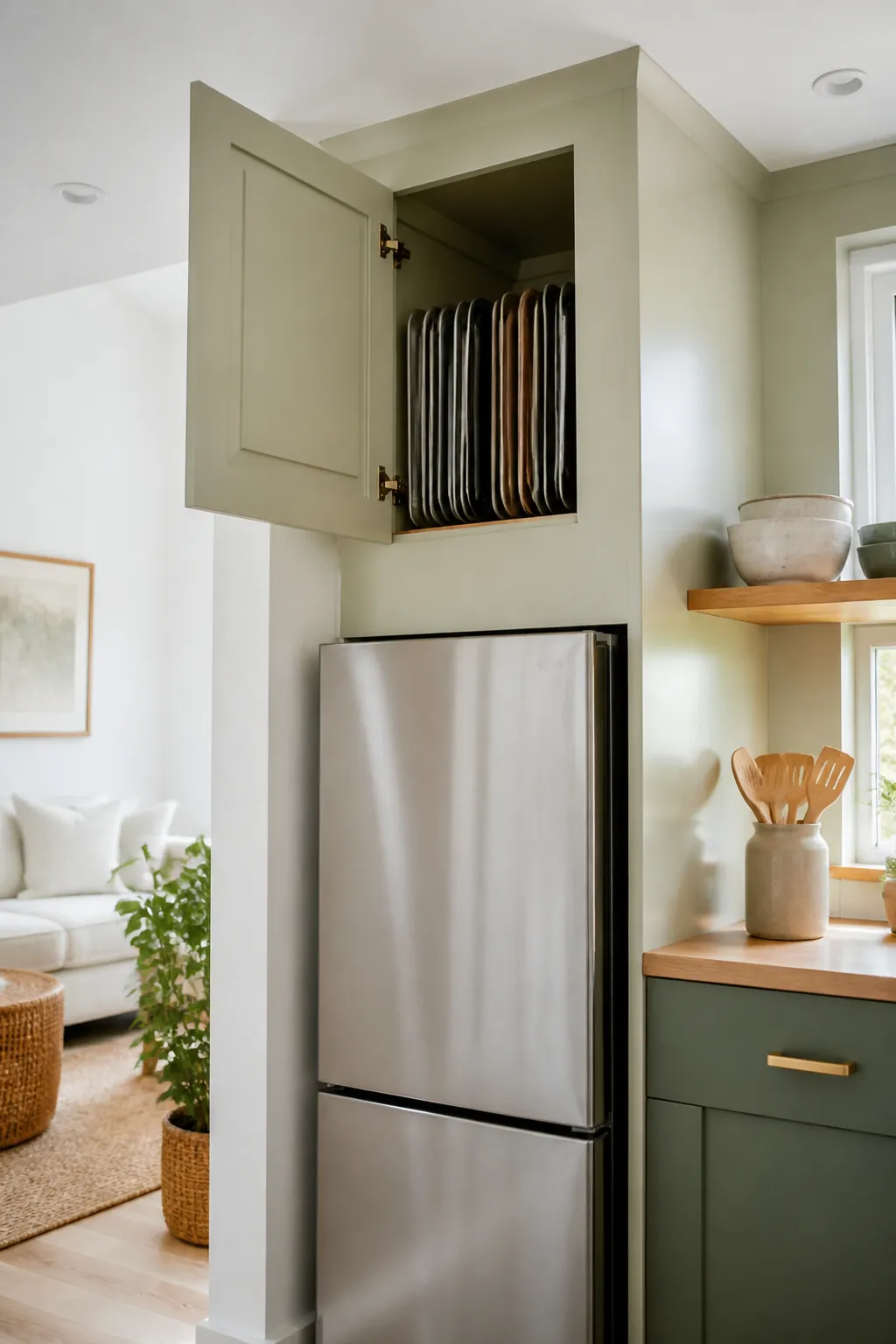
Every kitchen has one, and almost nobody uses it well.
That cabinet is too high and too shallow for anything you need often, which is why it usually holds a vase and an appliance box. But it is the right shape for flat things stood on edge, and baking sheets are things you reach for occasionally rather than daily.
Stand them up in there with a divider or two and you have solved the problem using space that was already wasted.
7. Check for a drawer under the oven
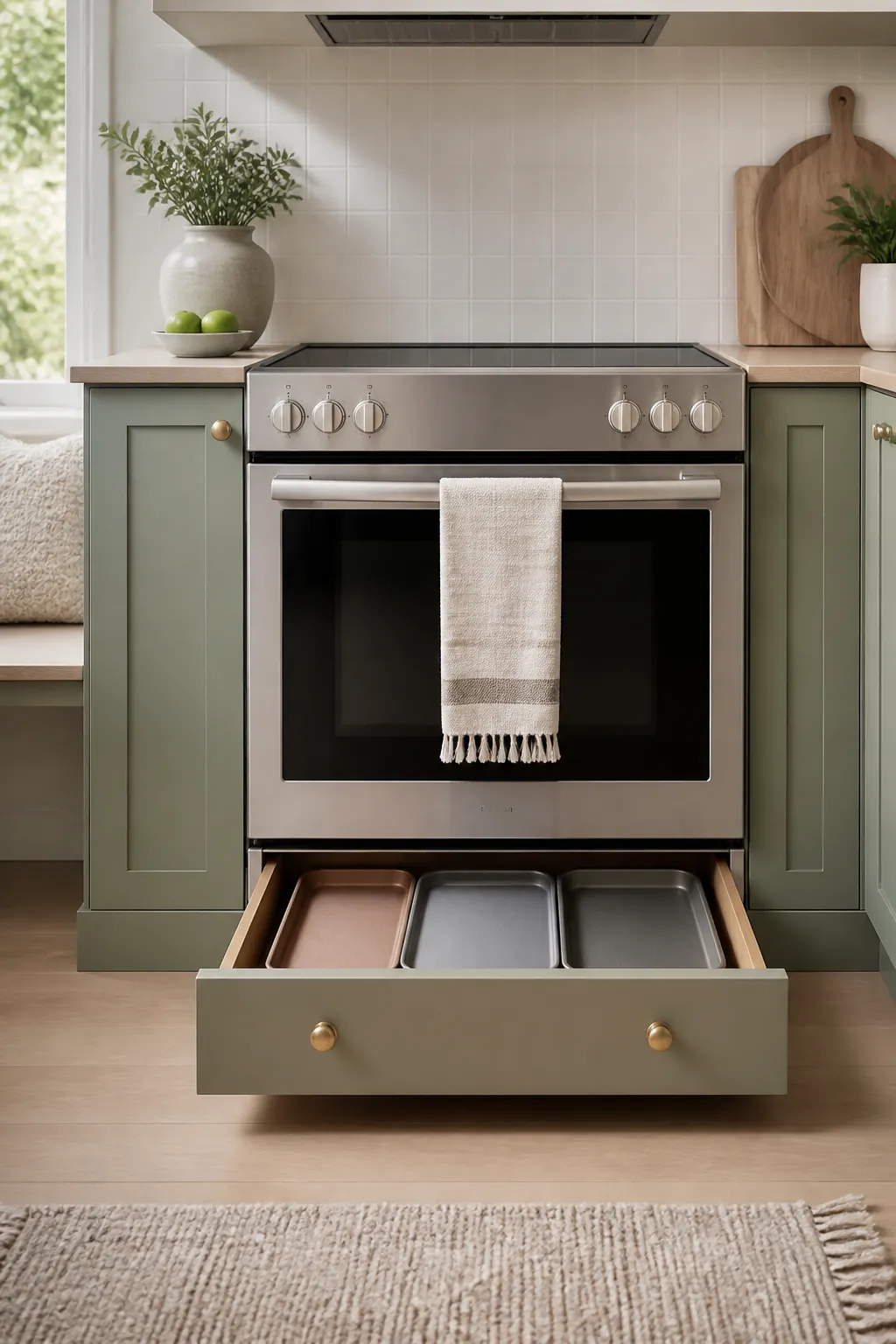
The storage people forget they own.
Many freestanding ovens have a shallow drawer underneath. On some it is a warming drawer, but on plenty it is plain storage, and it is exactly the footprint of a baking sheet. If yours is holding nothing but a grill pan, it will take three or four sheets lying flat with room over them.
Check your oven manual before loading it. A warming drawer gets hot, which rules out anything with a plastic handle or a silicone mat.
8. Use the back of a cabinet door
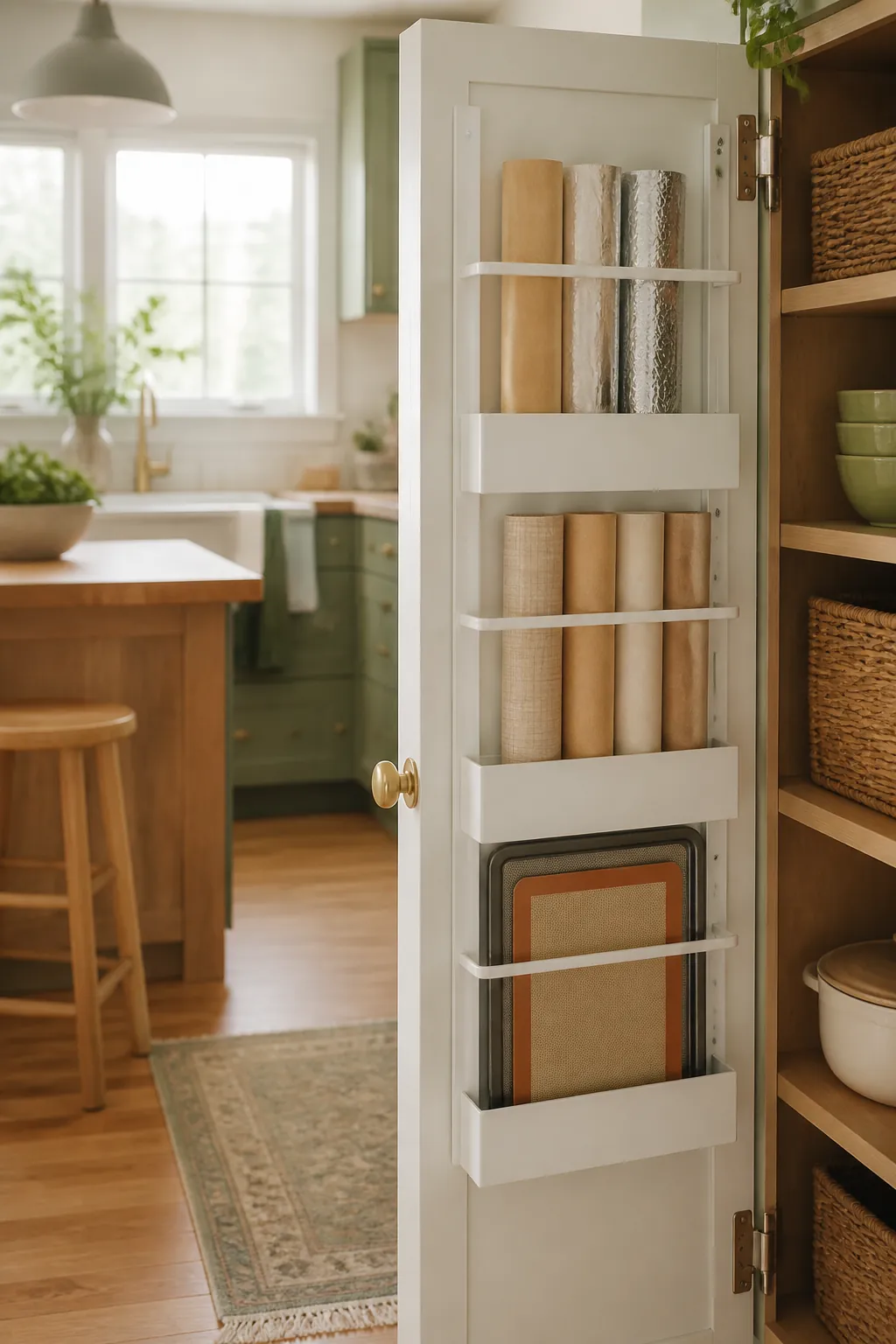
The last surface, and it suits the accessories rather than the pans.
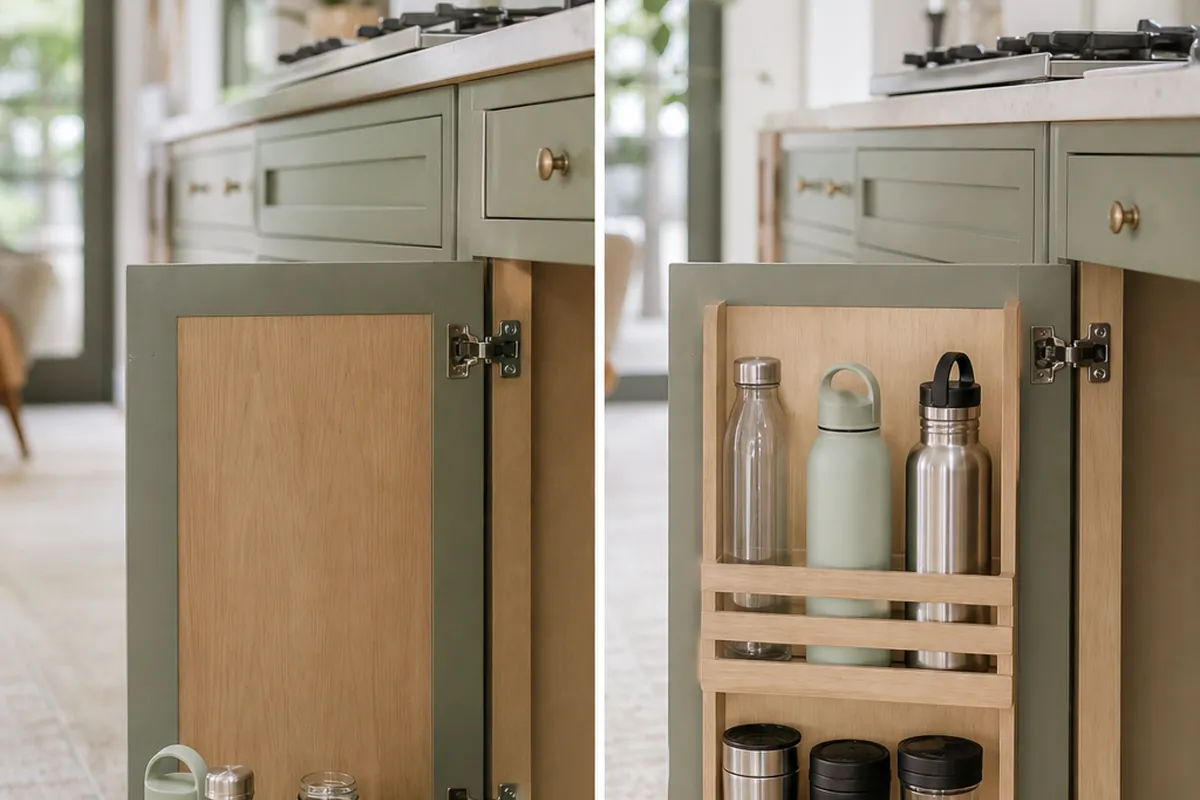
An over-the-door pantry organizer on a cabinet door holds the things that otherwise sit on top of the baking sheets: parchment rolls, foil, silicone mats, cooling racks. Getting those off the stack is half the reason the stack was hard to use.
Keep the loaded depth to a few inches so the door still shuts over whatever is inside the cabinet.
Measuring that clearance is the step most people skip, and these inside cabinet door organizer ideas show how, along with which door suits sheets, lids or foil.
9. Muffin tins and cooling racks need different rules
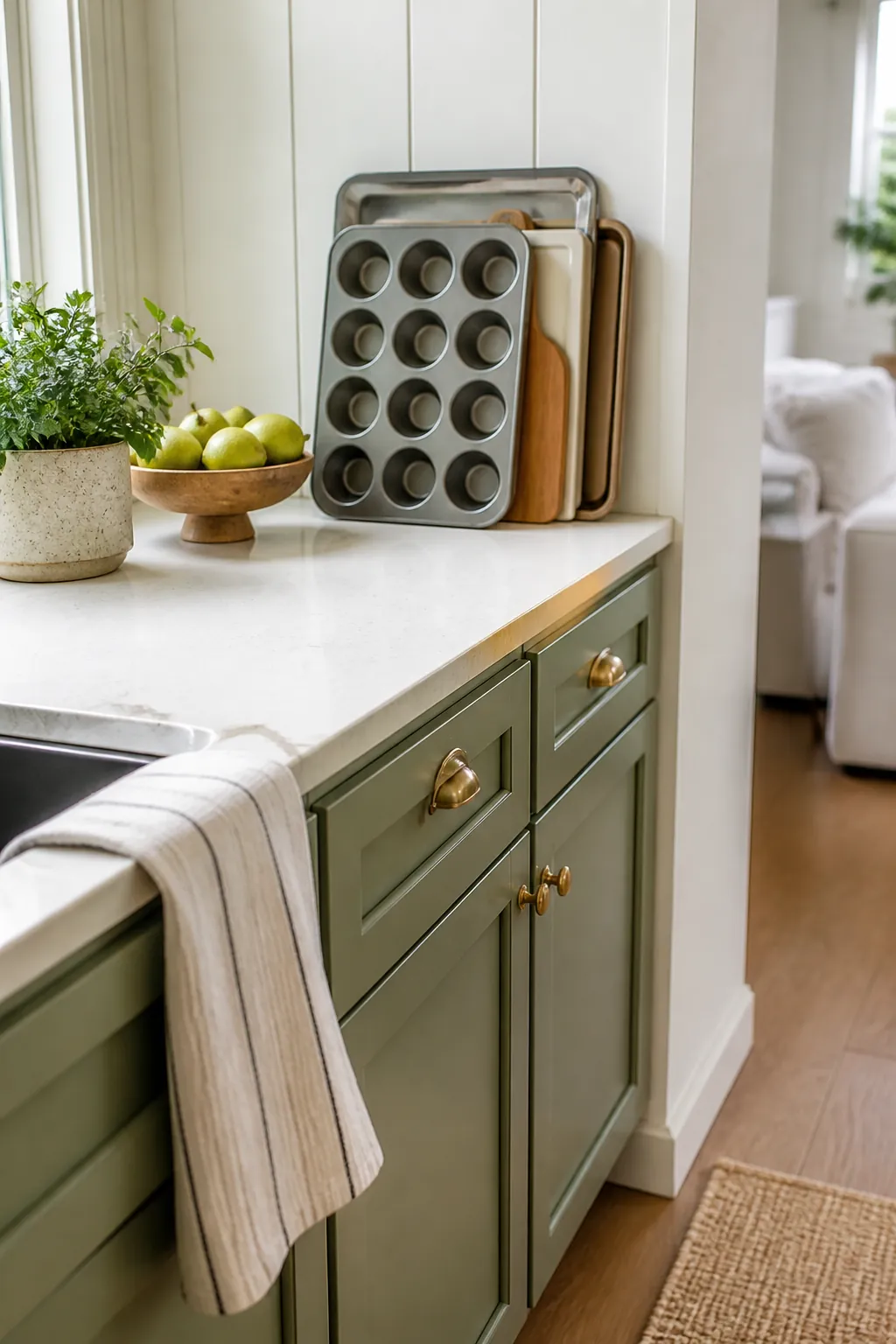
The two things that break a vertical system.
A muffin tin will stand on edge but it is top-heavy and tips out of a slot the moment you remove its neighbor. Cooling racks are the opposite problem: they are thin enough to slip through most dividers and end up lying at the bottom of the cabinet.
Give muffin tins a slot at the end of the row where a cabinet wall braces one side, or stack them flat somewhere else entirely, since they nest well and take almost no height. Put cooling racks in the narrowest slot, or against the back of the cabinet where the sheets hold them upright.
Cast iron is a third case. It does not belong in a vertical rack at all, because the weight will bend most dividers and a pan that slides out lands on your foot. Heavy things go low and flat, always.
10. Store by how often you bake
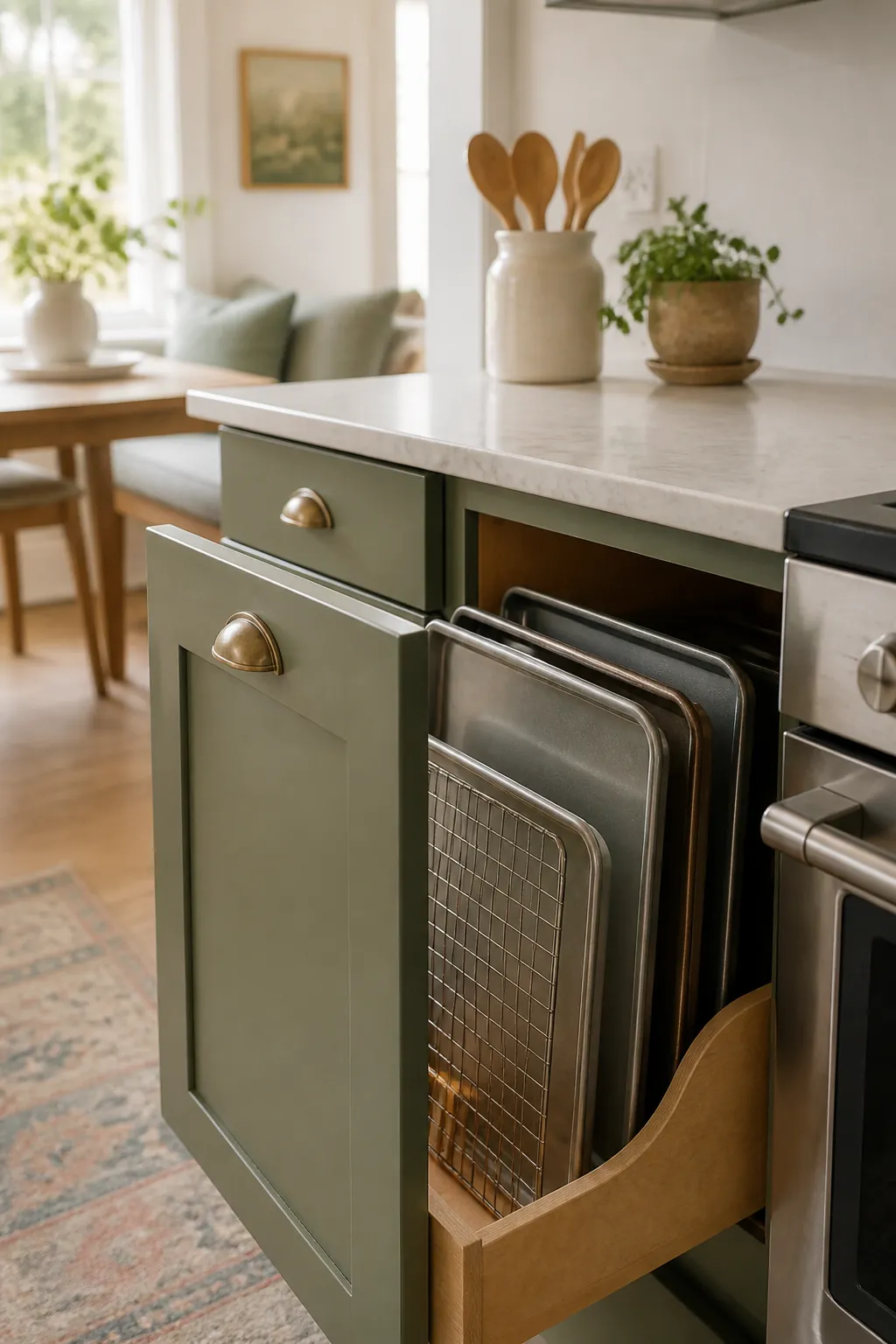
The last decision, and it is about honesty rather than storage.
If you bake weekly, the sheets belong somewhere you can reach without moving anything, which usually means a base cabinet at waist height. If you bake twice a year, they belong above the refrigerator and the good spot goes to something you use daily.
Most small kitchens are short of prime storage, not storage. Putting rarely used bakeware in the best cabinet is how that happens.
Where to start
Take every baking sheet out, measure the thickest one across its rim, and count them. Most households find they own more than they use and two of them are warped. Those go.
Then stand what is left on edge, using dividers, a rack, or two tension rods to hold them upright. Put the accessories on a cabinet door so nothing sits on top of the pans. In a kitchen with no pantry, the space was always there. It was just being used flat.