The little ceramic dish on your dresser is not a jewelry organization system. Look inside it: three chains braided into one, a single hoop, a hair tie, and a ring you forgot you owned. That dish is being asked to do the job of a full armoire on a surface the size of a placemat, so of course nothing in it stays wearable. Split the collection across three zones instead (wall, drawer, dresser top) and the knot problem mostly solves itself.
A small dresser can absolutely hold a good setup. What it cannot do is hold everything in one container, and it should not be storing pieces you quietly stopped wearing years ago.
Before you buy anything, split the collection three ways
Sort onto the bed, not into containers. Three piles, twenty minutes, no shopping yet.
Daily is what you reach for half-asleep: a pair of studs, a watch, the necklace that never comes off, a wedding band. Usually under ten pieces. It has to live within arm’s reach of wherever you actually get dressed, which for most people is not inside a lidded box.
Occasional covers anything you wear a few times a month. Statement earrings, gold hoops, the three or four necklaces you rotate. Visibility matters most for this pile, because the second something disappears into a drawer you stop remembering you own it.
Sentimental or never is grandma’s brooch, the bracelet that pinches, and the widowed earrings waiting on a partner that isn’t coming. Be ruthless here. Nothing in this pile has earned dresser space, and relocating it is the single biggest win most people get out of a jewelry overhaul. Bag it, write on the bag, and move it to a closet bin or under the bed.
While the drawers are empty, measure two things: the interior height of your shallowest drawer and the clear wall width beside the dresser. Every decision below hangs on those two numbers, and guessing is how people end up with trays that won’t let the drawer close.
10 jewelry organization ideas that fit a small dresser
1. Move the bulk of it onto the wall
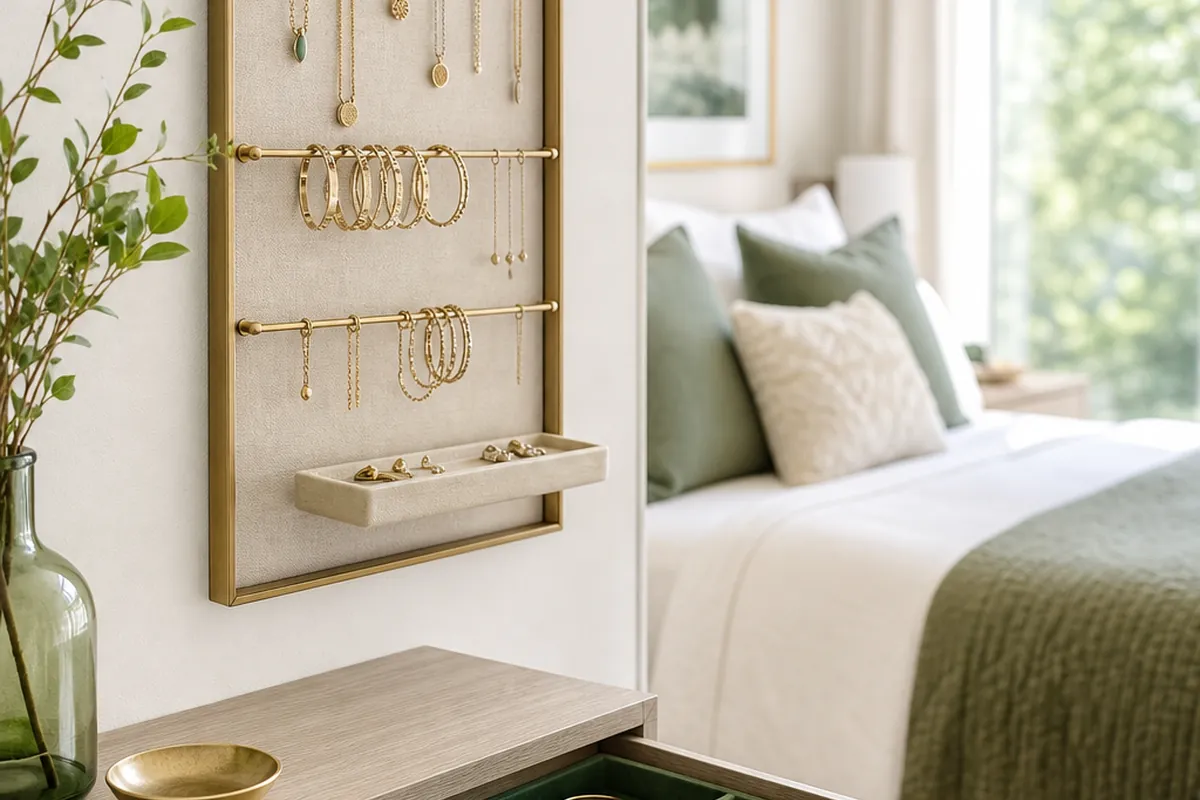
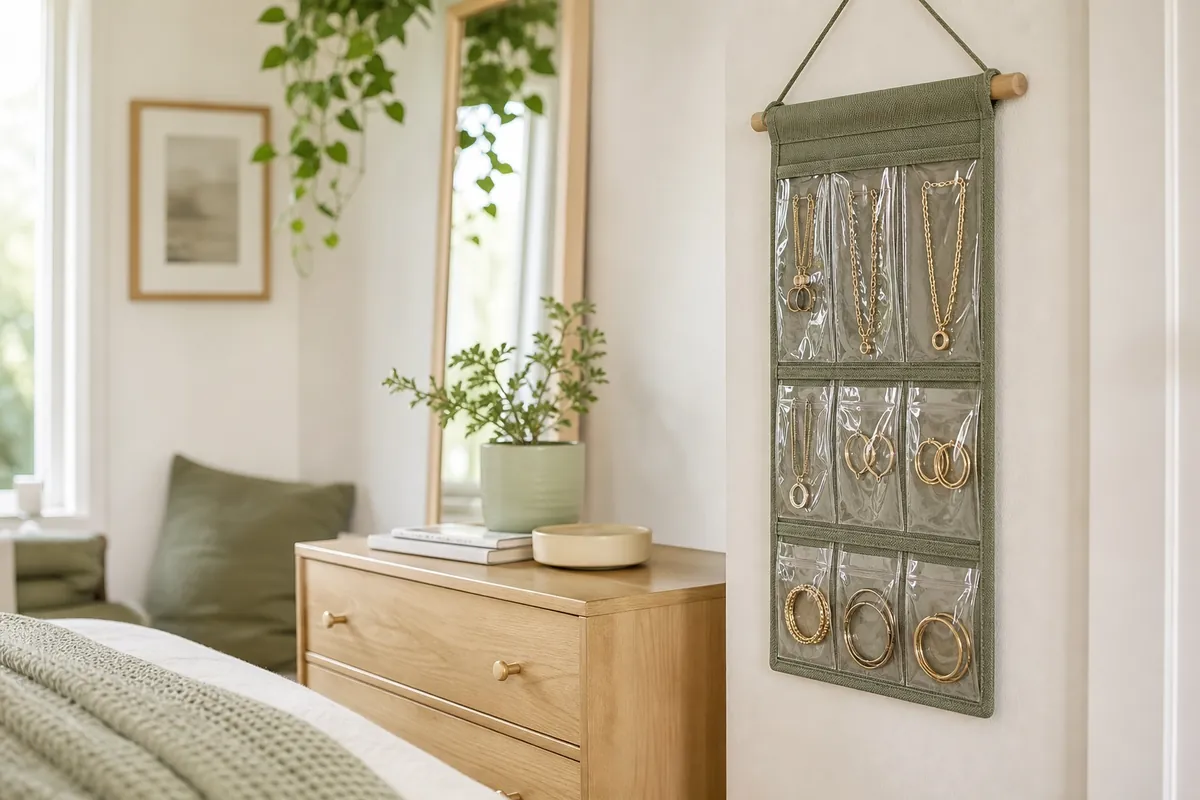
The wall beside a dresser is almost always dead space, and it’s the cheapest square footage in a small bedroom. A hanging jewelry organizer with clear vinyl pockets does more work there than any tabletop stand, because it puts the whole occasional pile at eye level where you can scan it in two seconds. Two sturdy adhesive hooks will carry one, or hang it from a slim tension rod inside the closet if you’d rather it stayed out of sight.
One opinionated note: cut it down. Most of these panels are built for a full-length door and run far longer than the gap above a dresser. Trim the bottom rows with scissors, run a line of fabric glue along the cut edge, and you get a tidy panel instead of a curtain flapping behind the furniture.
2. Turn the shallowest drawer into a velvet-lined jewelry drawer
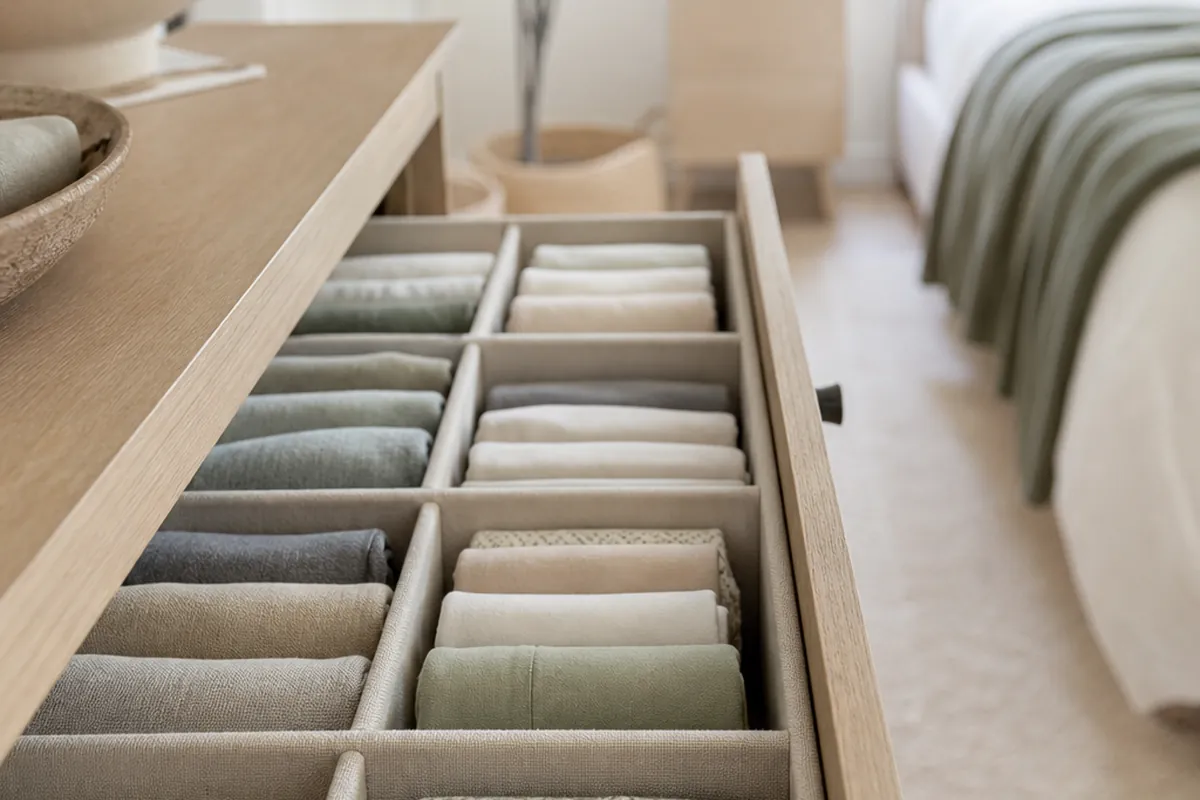
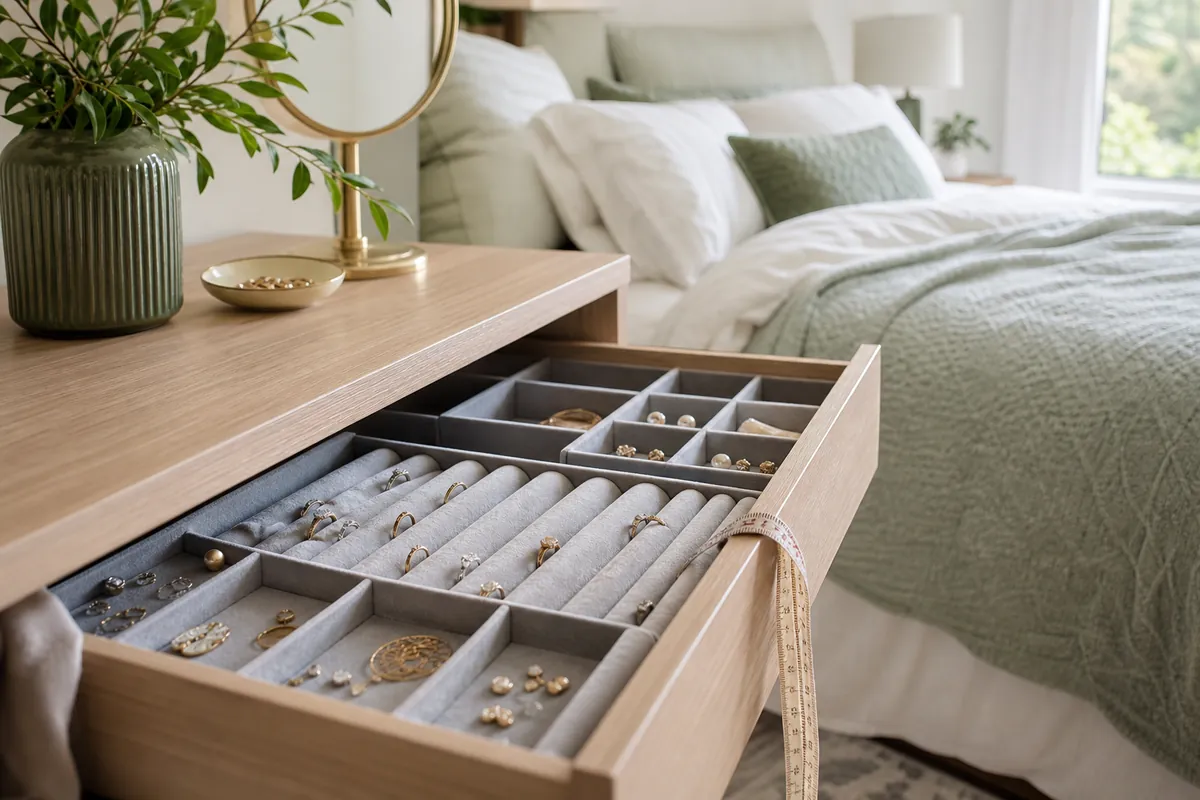
A set of velvet jewelry drawer trays, laid edge to edge, converts a top drawer into something close to a display case. Velvet grips, so rings stay seated when the drawer slams shut, and the nap won’t scuff plating the way hard plastic dividers do. Buy trays with mixed compartment sizes rather than a uniform grid; jewelry comes in wildly different shapes and a grid of identical squares wastes half its own space.
Got more than about three inches of interior height? Stack two layers. Daily on top, occasional underneath. This is also the move that lets a dresser double as a nightstand alternative in a small bedroom, since the top drawer stops being a junk drawer the moment it has a job.
3. Go vertical when the drawers are full
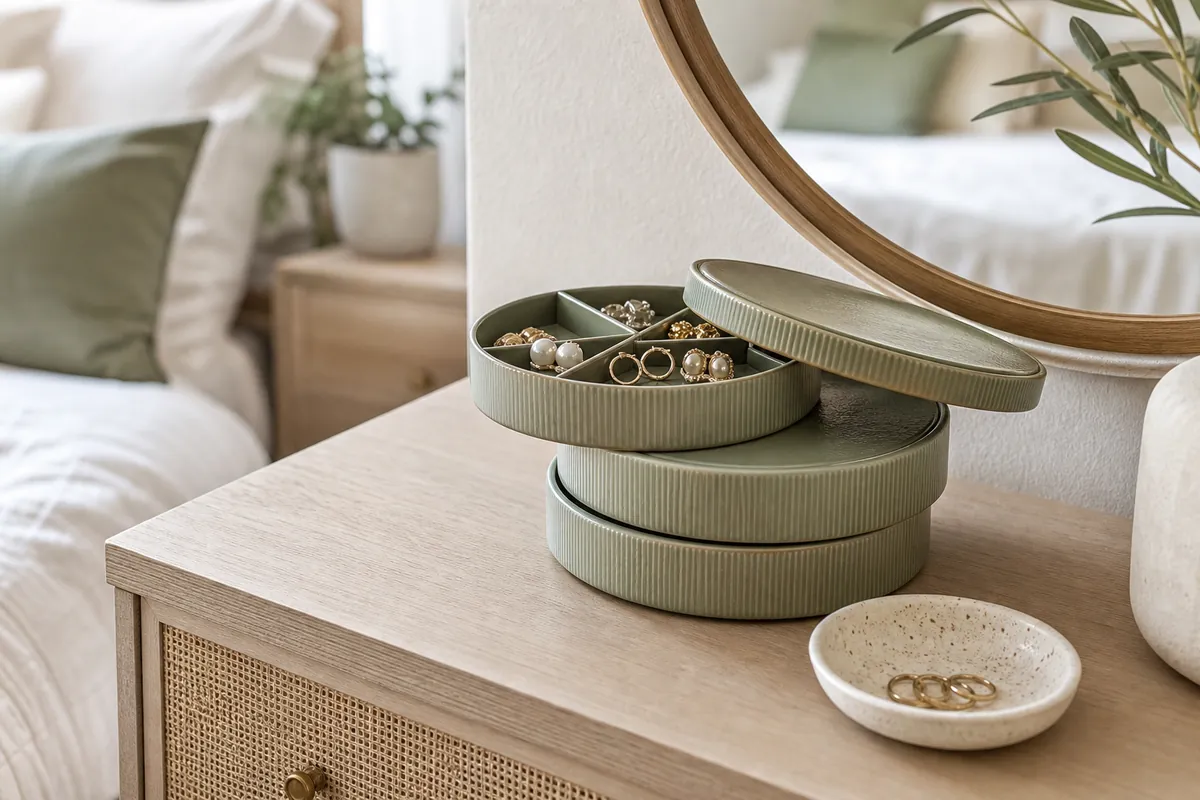
No free drawer? Stackable jewelry trays with lids climb instead of sprawling. Three of them occupy roughly the footprint of a mug and its saucer, the lids keep dust and hairspray off everything, and you lift a tray off the stack rather than digging through a pile.
They pay for themselves again the first time you travel, because one lidded tray drops into a weekend bag already sorted. Put a small sticker on each tray edge if you stack more than three, otherwise finding one bracelet means dismantling the tower.
4. Give necklaces height, not a bowl
Chains tangle because they’re stored lying down. Hang them and they physically can’t. Five or six small hooks on the wall between the dresser top and the mirror will carry the long pieces, or reserve the top row of the wall organizer for whatever you wear most. Fasten every clasp before hanging. An open clasp hooks the chain next to it, and that’s the entire origin story of the knot in the dish.
5. Earrings need a pierced surface
Studs and hooks want something to poke through, not a bowl to roll around in. A small mesh screen in a thrifted frame works. So does stiff cardstock punched with a hole punch and dropped into a velvet tray compartment, or a length of grosgrain ribbon pinned along the inside of a drawer. Pairs stay paired, which is the whole point. Earring backs get their own tiny lidded compartment, never loose.
6. Roll a washcloth for rings
Skip the purpose-built ring roll. Roll a clean washcloth tight, wedge it into a long narrow tray compartment, and press ring bands into the folds. A dozen rings sit visible and separated, it costs nothing, and you can throw it in the wash. Piling rings loose is how bands pick up hairline scratches from each other.
7. Sort by metal if you dress by outfit
Most guides tell you to sort by type: earrings here, necklaces there. That only helps if you shop your jewelry by category. If you get dressed by picking an outfit first, sort by metal and color instead, all gold together, all silver together, colored stones in their own tray. Matching takes one glance rather than four.
8. Hang the daily three where you stand
Two adhesive hooks on the side of the dresser at hip height, holding the watch and the everyday necklace. It sounds too basic to bother with. It’s also the reason a system survives a rushed Tuesday, because anything you wear every single day should never require opening a lid, a drawer, or a zipper.
9. Let the statement pieces decorate
One or two big pieces can hang on the mirror frame or from a knob on the wall and count as art. A heavy beaded necklace looks far better displayed than crushed flat under three others, and it frees a compartment for small things that genuinely need one. Keep it out of direct sun, which fades silk cord and thread faster than most people expect.
10. Keep exactly one landing dish
At 11pm you will pull off your earrings and refuse to open a tray. Plan for it. One small shallow dish stays on the dresser top for the day’s pieces, and it gets emptied into the trays while you’re getting ready the next morning. One dish is a system. Three dishes is a pile with better lighting.
Common jewelry organization mistakes on a small dresser
Deep containers. Anything taller than roughly two inches of interior depth becomes a tangle no matter how carefully you load it. Shallow and divided wins over deep and roomy, every time.
Keeping it in the bathroom. Steam accelerates tarnish on silver and dulls plating. Store the collection in the bedroom and carry in whatever you’re wearing that day.
Putting everything on display. Open display suits the rotation pile and does nothing for the sentimental one. Dust and light are hard on finishes, which is exactly the argument for lidded stackable trays: visible for what you wear, closed for what you keep.
Shopping before sorting. A freestanding armoire in a small bedroom usually relocates the mess and steals floor space you need for walking. Sort first, then buy to fit what survived. When the room has genuinely run out of surfaces, the wall and the bed frame are the next places to look, and there’s more on that in bedroom storage for when the room is already full.
Forgetting the closet door. If art, a radiator, or a window has claimed the dresser wall, the back of a closet door takes a hanging organizer just as happily. Renters without a closet at all will find workarounds in small bedroom storage with no closet.
Set up your jewelry organization in this order
Sort first, in one sitting, with a trash bag and a donation bag next to you. Hang the wall organizer second, since it absorbs the most volume and clears the dresser top immediately. Velvet drawer trays go in third, loaded with daily and occasional pieces only. Stackable lidded trays come last, sized to whatever the drawer couldn’t swallow.
Then wait a week before buying anything else. One category, usually earrings, will turn out to need a different container than you predicted, and learning that from a half-empty compartment beats learning it from an armoire you now have to find room for.