A bedroom with no closet forces one honest question: where does everything actually go? The usual mistake with small bedroom storage and no closet is buying a giant wardrobe that eats half the floor while your shoes still pile up by the door. There is a smarter path, and it runs through vertical space, furniture that pulls double duty, and a few pieces that genuinely earn their footprint.
What follows are fifteen ideas that hold up in real rooms, ranked loosely by how much storage they buy for the space they cost you.
Start With a Garment Rack, Not a Wardrobe
If you take one thing from this list, take this. A freestanding garment rack gives you hanging space without the bulk, the weight, or the moving-day nightmare of a solid wardrobe. Renters win twice here, because nothing gets screwed into a wall you do not own.
1. Put a Freestanding Garment Rack on Your Best Empty Wall
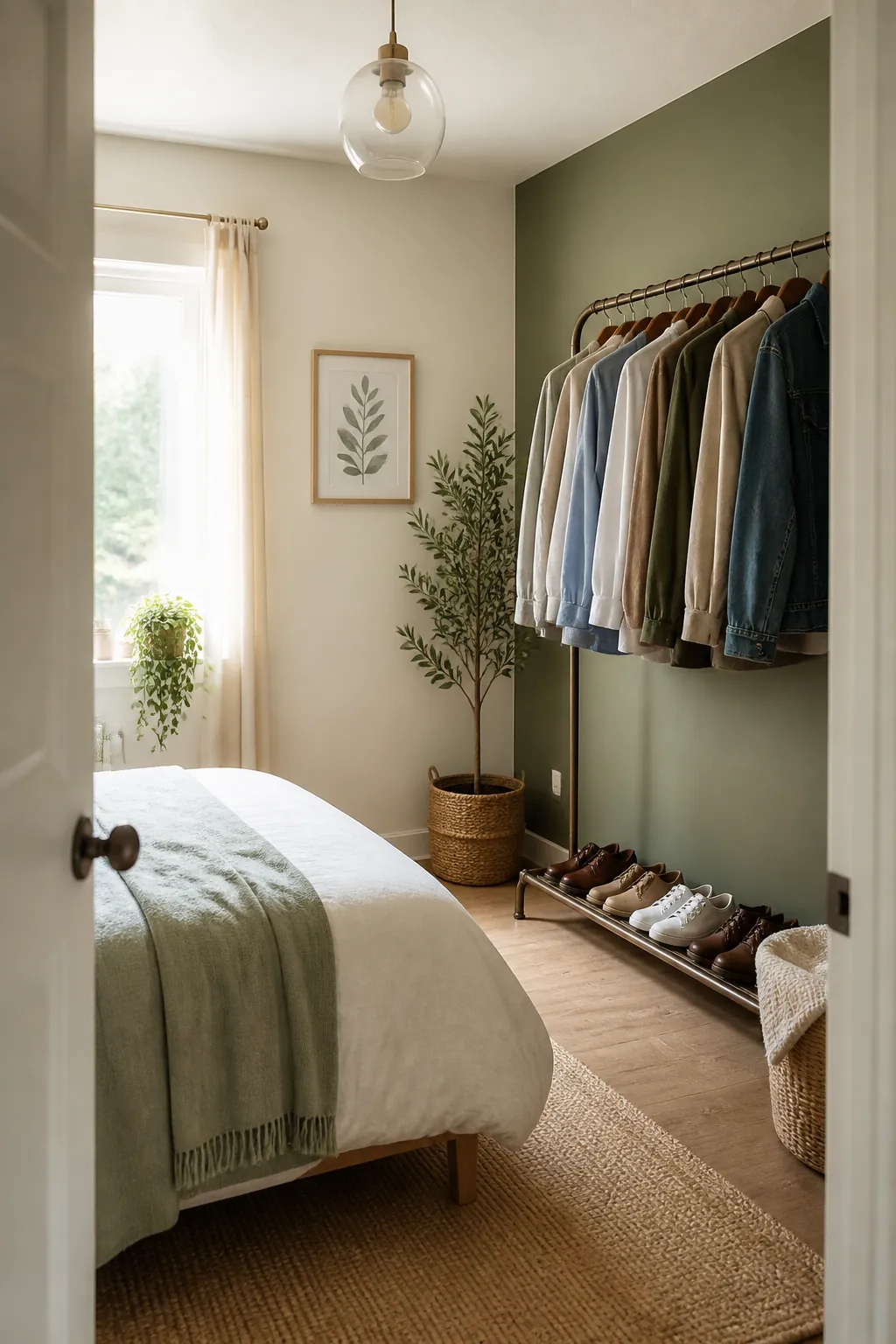
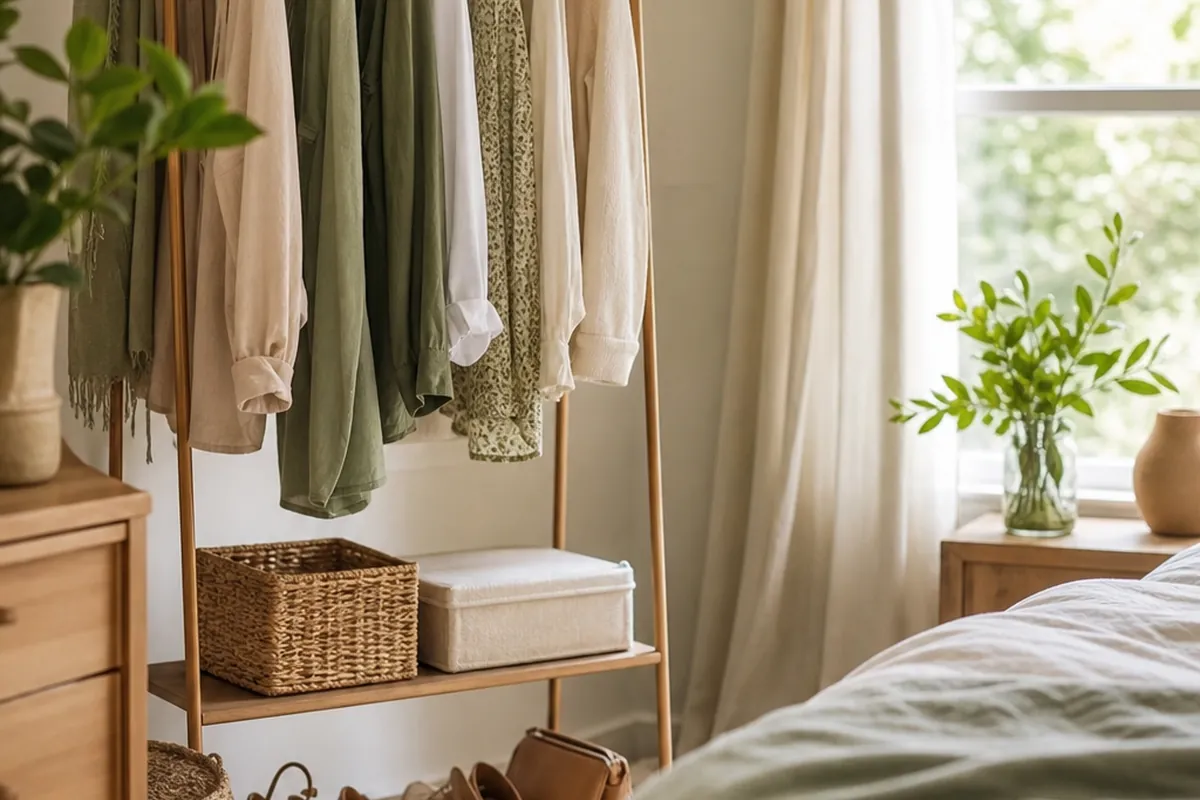
A Freestanding garment rack is the closest thing to an instant closet you can buy. Look for one with a lower shelf or two, since that turns the dead floor under your clothes into a home for folded sweaters, baskets, or a stack of shoe boxes. Push it against the longest uninterrupted wall so garments hang flat instead of jutting into a walkway.
Styling matters far more here than inside a closet, because everything is on display. Match your hangers (wood or slim velvet, pick one lane), face all garments the same direction, and color-sort left to right. Done well, an open rack reads as a deliberate design choice; left chaotic, it just reads as mess.
2. Hang a Curtain in Front of It if You Want the Mess Hidden
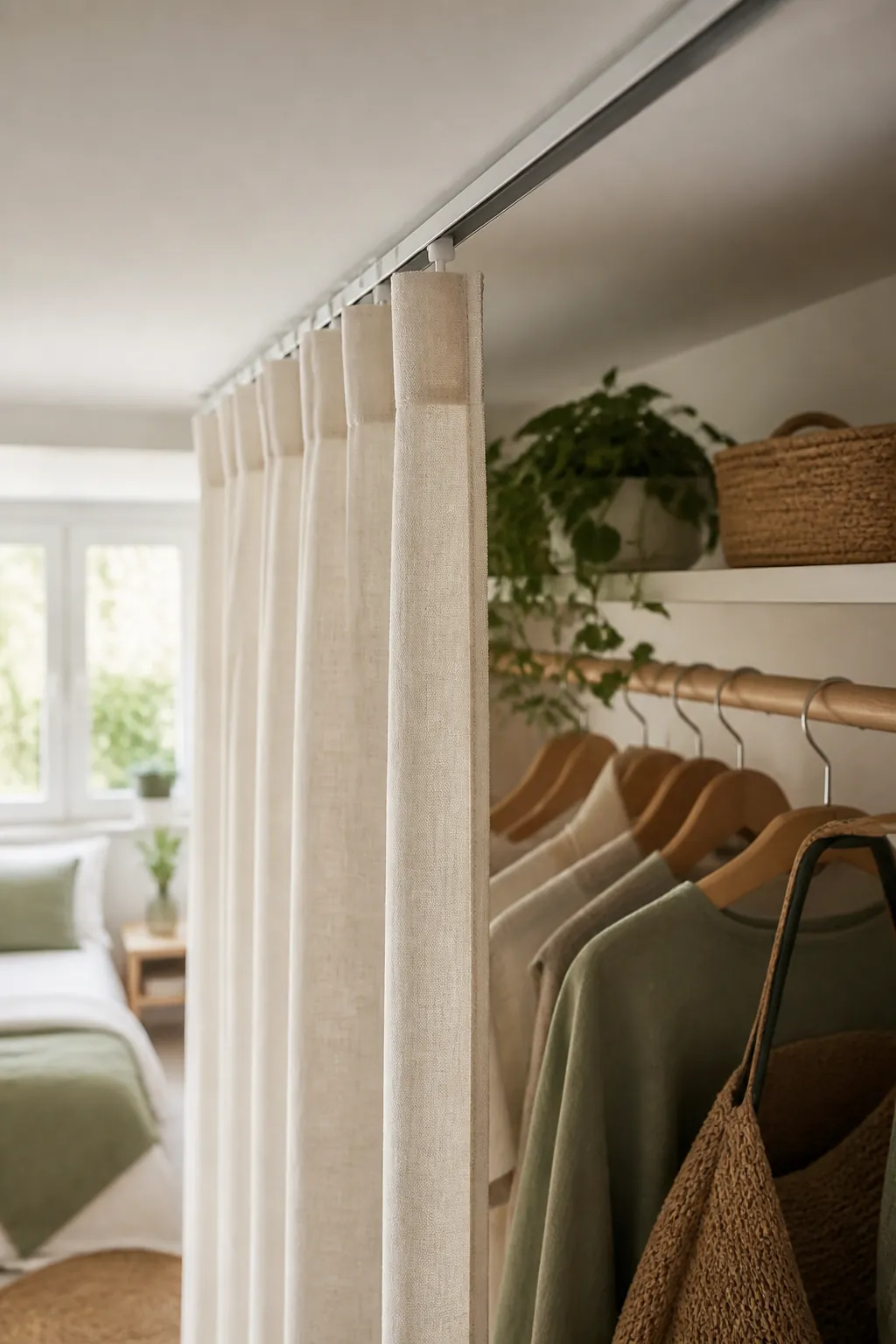
Mount a tension rod or a slim ceiling track a few inches out from the rack, then hang a light curtain. You keep the flexibility of open hanging with the calm of a closed look, and one motion slides it aside when you are getting dressed.
If the dresser is missing as well as the closet, clothes storage ideas when you have no dresser covers where the folded clothes go once the rack has the hanging ones.
Rethink the Nightstand as Storage, Not Decoration
A flat-top table beside the bed is a waste in a room with no closet. Every surface and every drawer needs to be doing a job.
3. Swap in a Slim Nightstand With Drawers
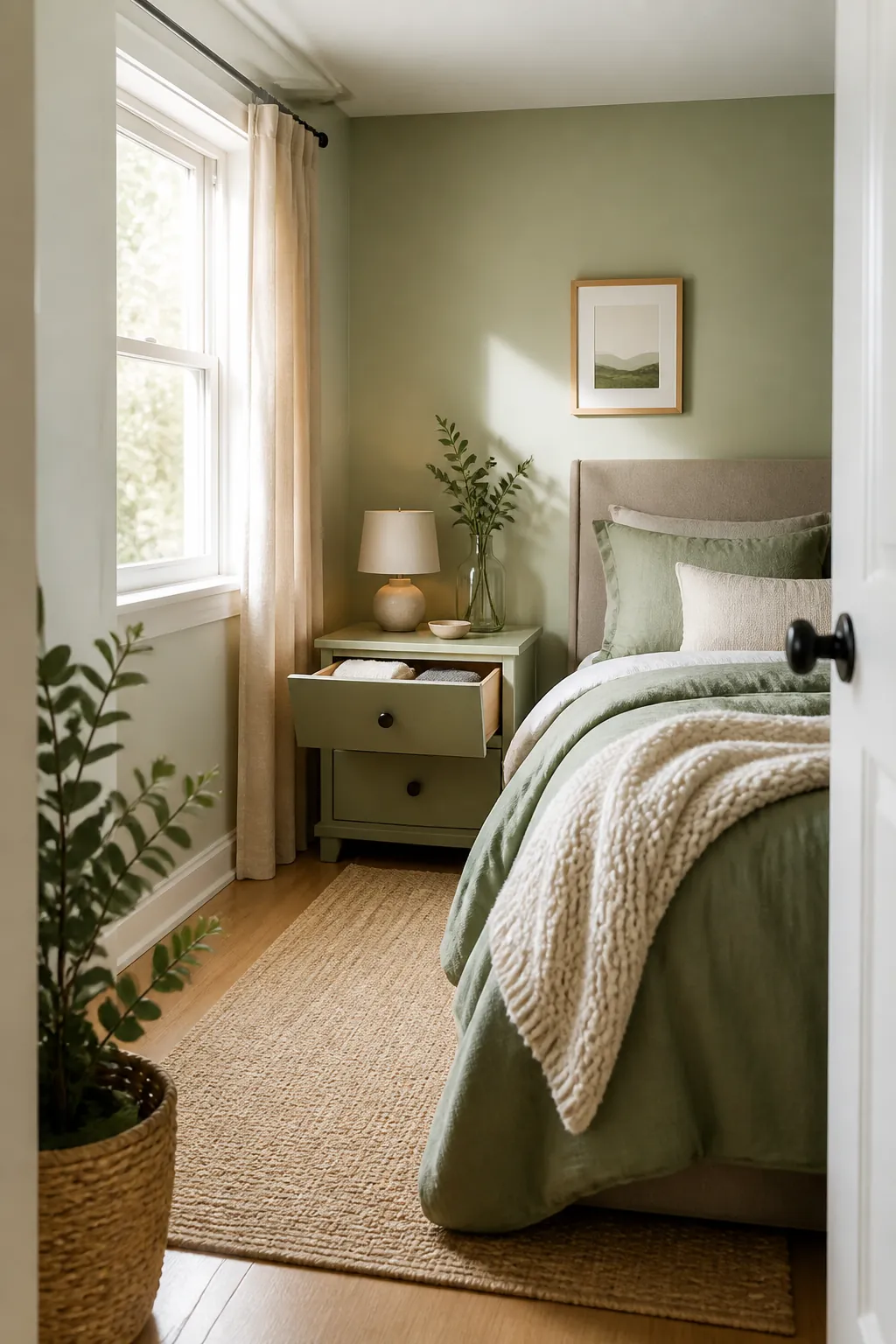
When floor space is tight, a Nightstand with drawers (slim) does two things at once: it holds your lamp and phone up top while the drawers swallow the small stuff that usually migrates into piles. Think socks, chargers, medication, and the book you are halfway through. Choose a narrow footprint, roughly twelve to fourteen inches wide, so it tucks close to the bed without crowding the walkway.
Drawers beat open shelves at the bedside for one plain reason: bedside clutter is exactly the kind you never want to look at. Tuck it behind a drawer front and it vanishes.
4. Use Tall Dressers Instead of Wide Ones
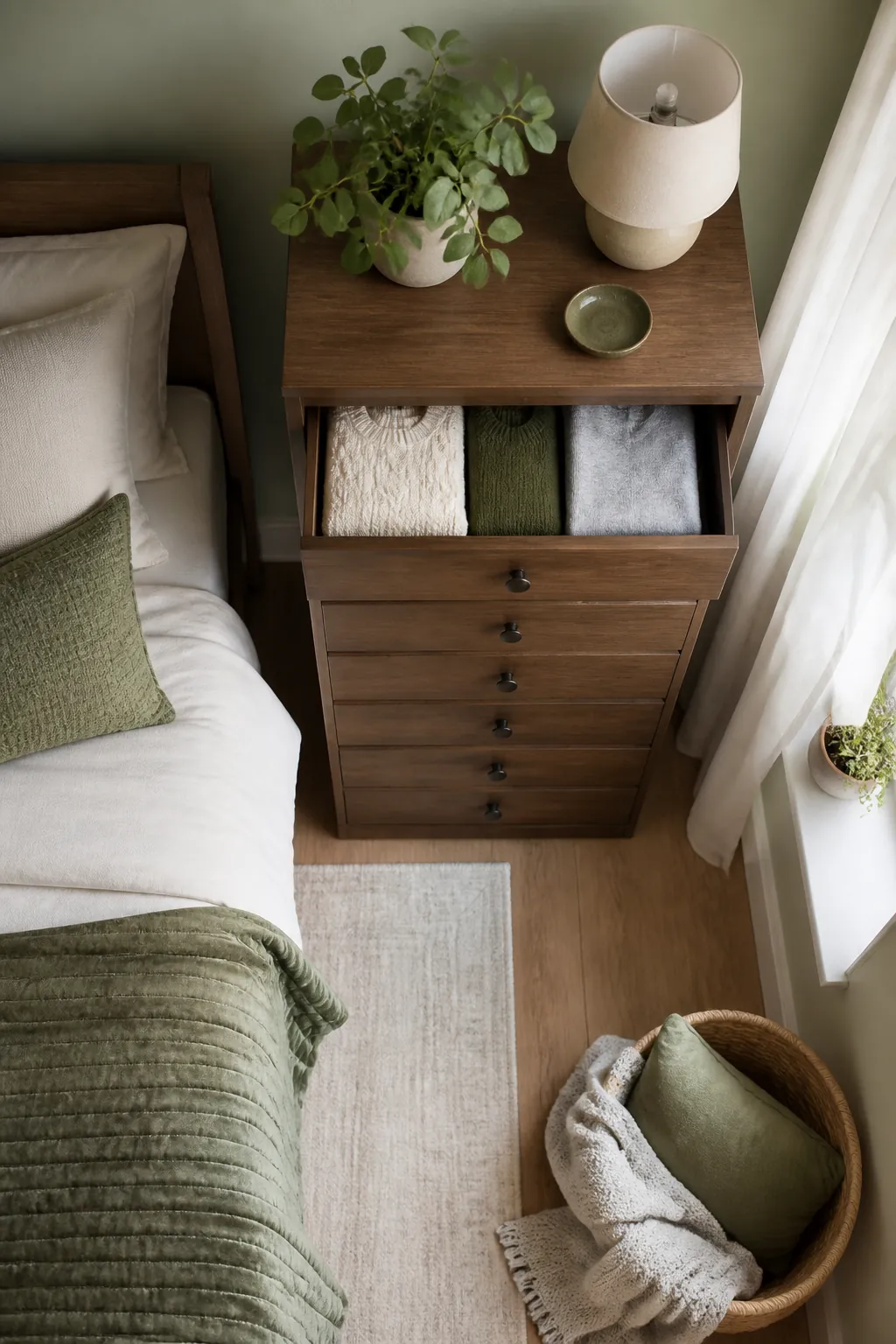
Without a closet, your dresser carries the folded-clothes load, so send it upward. A five- or six-drawer tallboy holds about the same volume as a wide double dresser while claiming far less floor. Set it in a corner or right beside the garment rack to build a single dressing zone rather than scattering storage all over the room.
Mine the Space Under the Bed
The area beneath your mattress is the biggest untapped volume in most small bedrooms, and it usually sits empty.
5. Roll Flat Bins Underneath
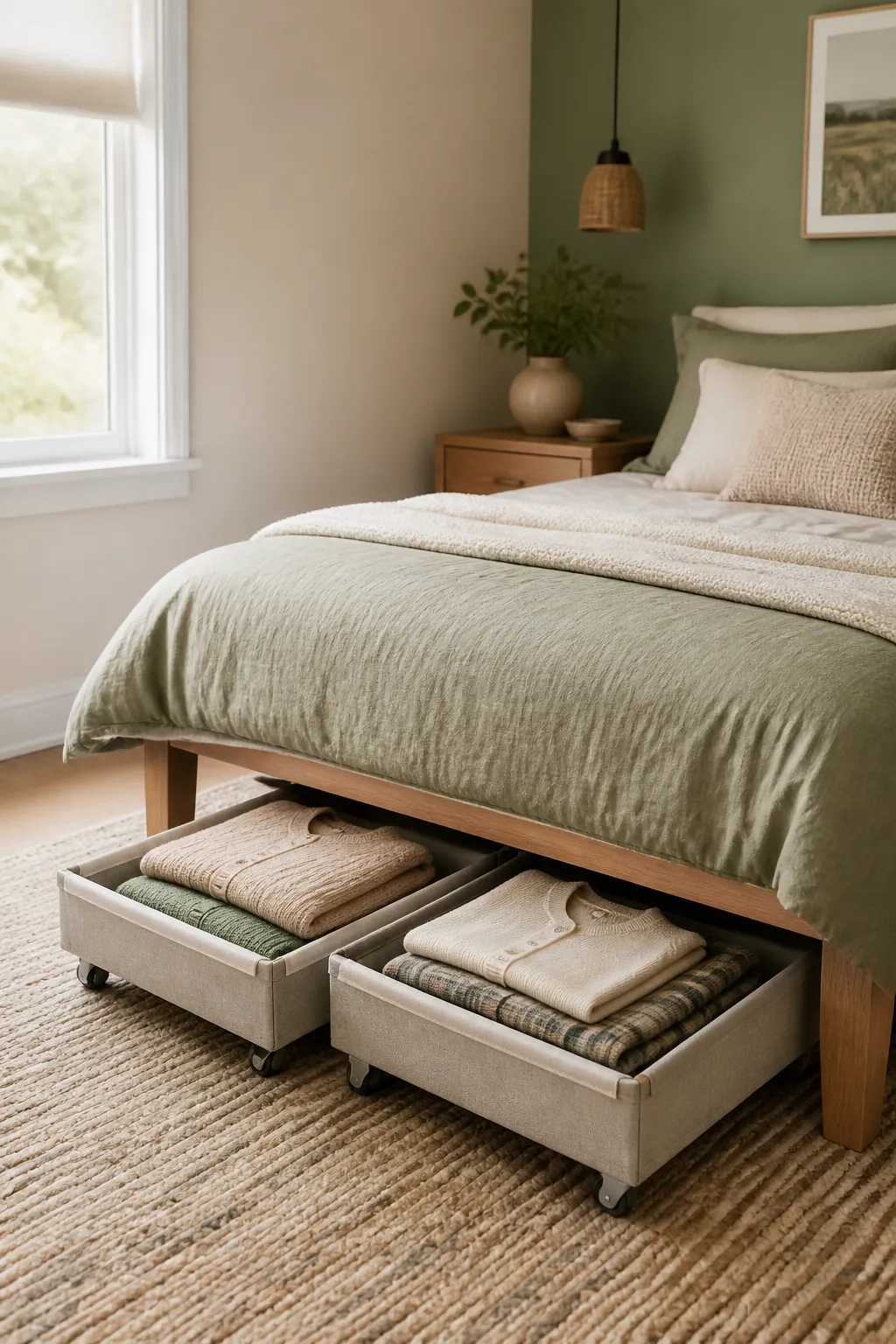
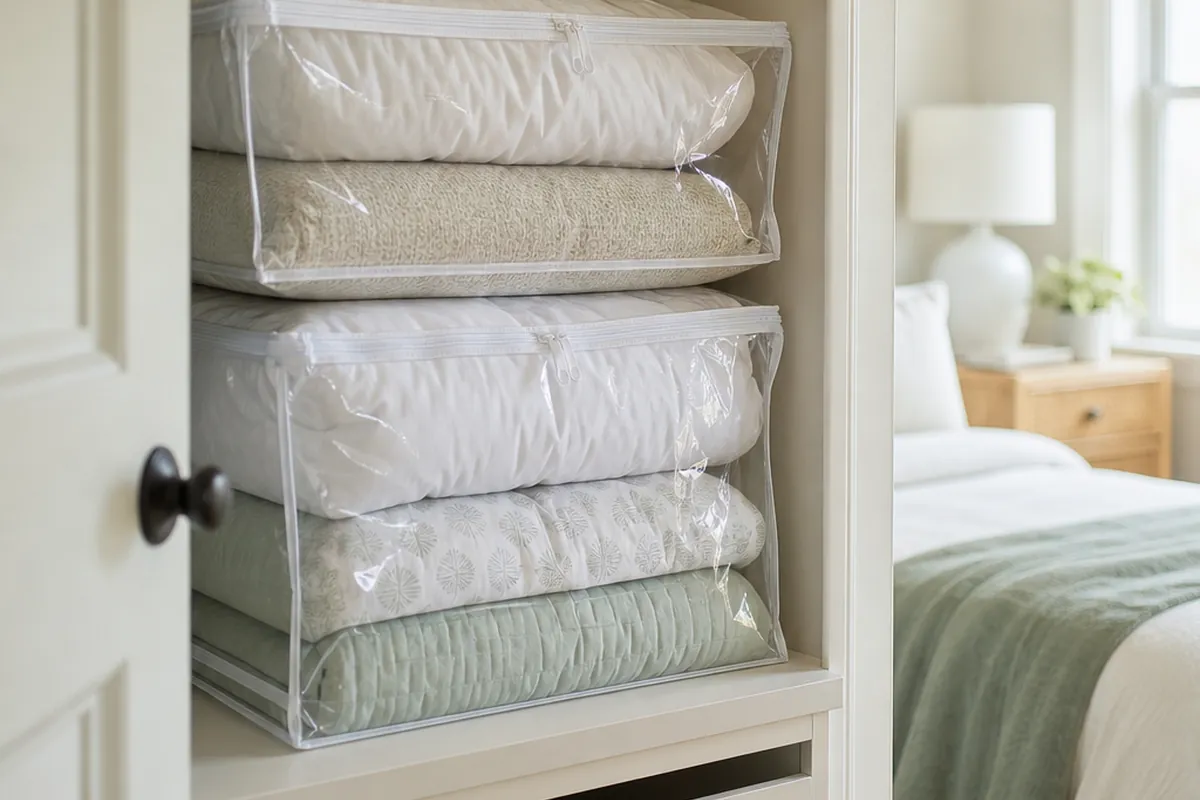
Low-profile bins on wheels slide out with a finger and keep off-season clothes, spare bedding, and shoes free of dust. Insist on the wheels, because a bin you have to drag across carpet is a bin you quietly stop using.
6. Raise the Bed With Risers to Buy More Clearance
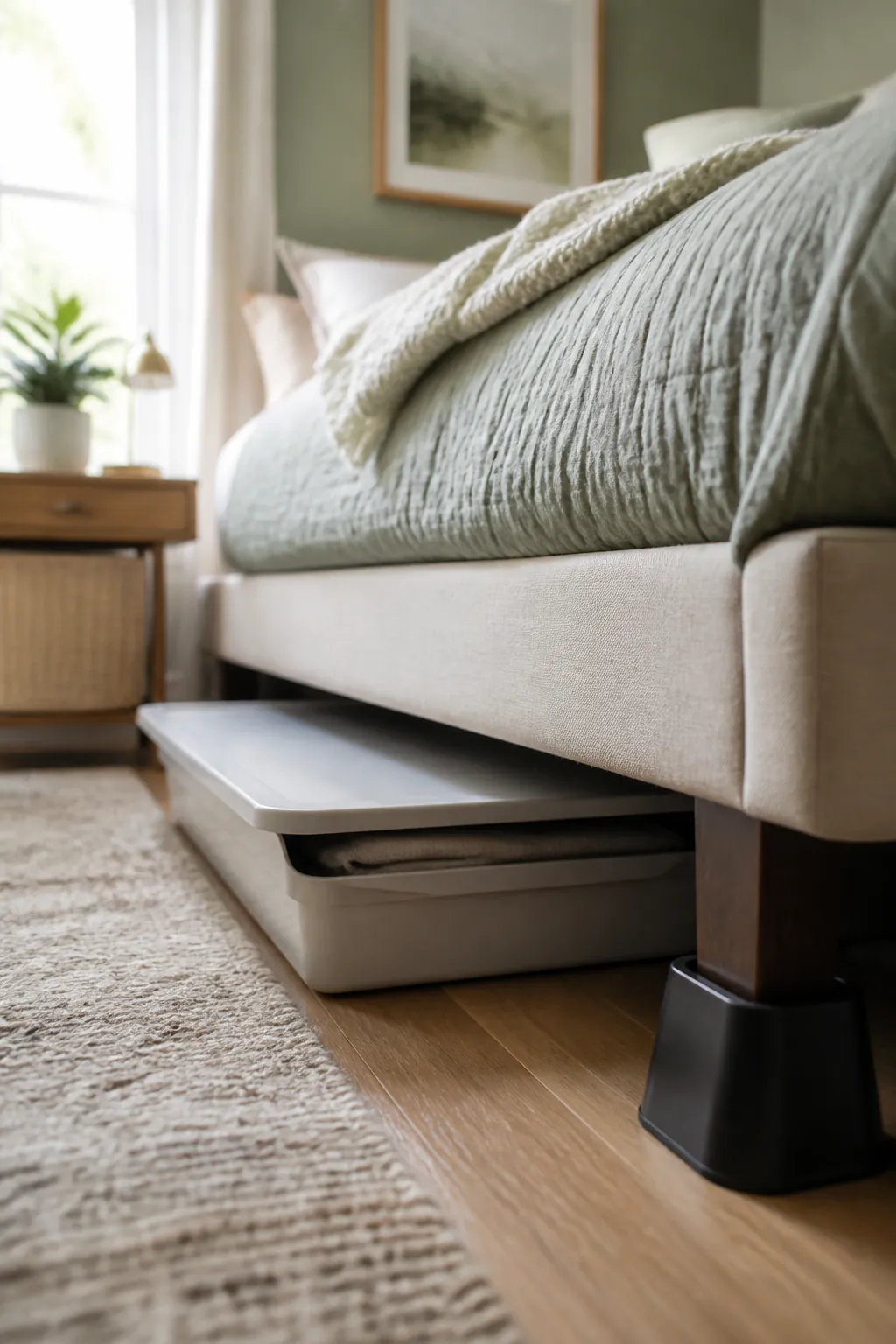
If your frame sits low, a set of bed risers adds several inches and turns shallow under-bed space into room for taller bins or a couple of packed suitcases. Pick risers with a recessed top so the legs cannot slip out from under you.
7. Consider a Storage Bed if You Are Buying Anyway
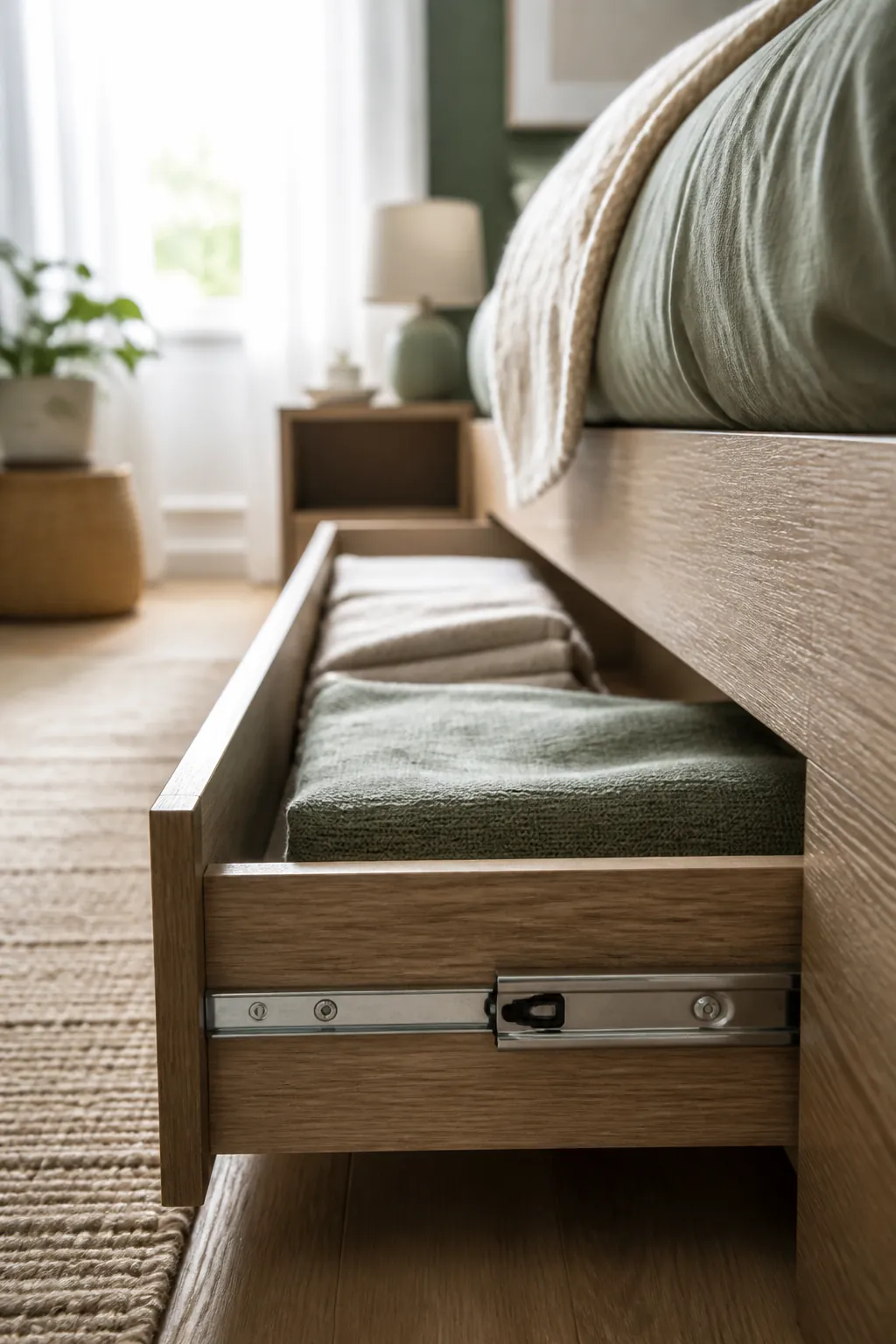
Shopping for a frame regardless? A platform bed with built-in drawers or a lift-up base can replace an entire dresser. For a no-closet room this is one of the strongest moves you can make, since it hides bulky things like winter coats and spare linens completely.
Go Up the Walls
Floor space runs out fast; wall space rarely does. In a closet-free room, the walls become your main storage system.
8. Install a Row of Wall Hooks by the Door
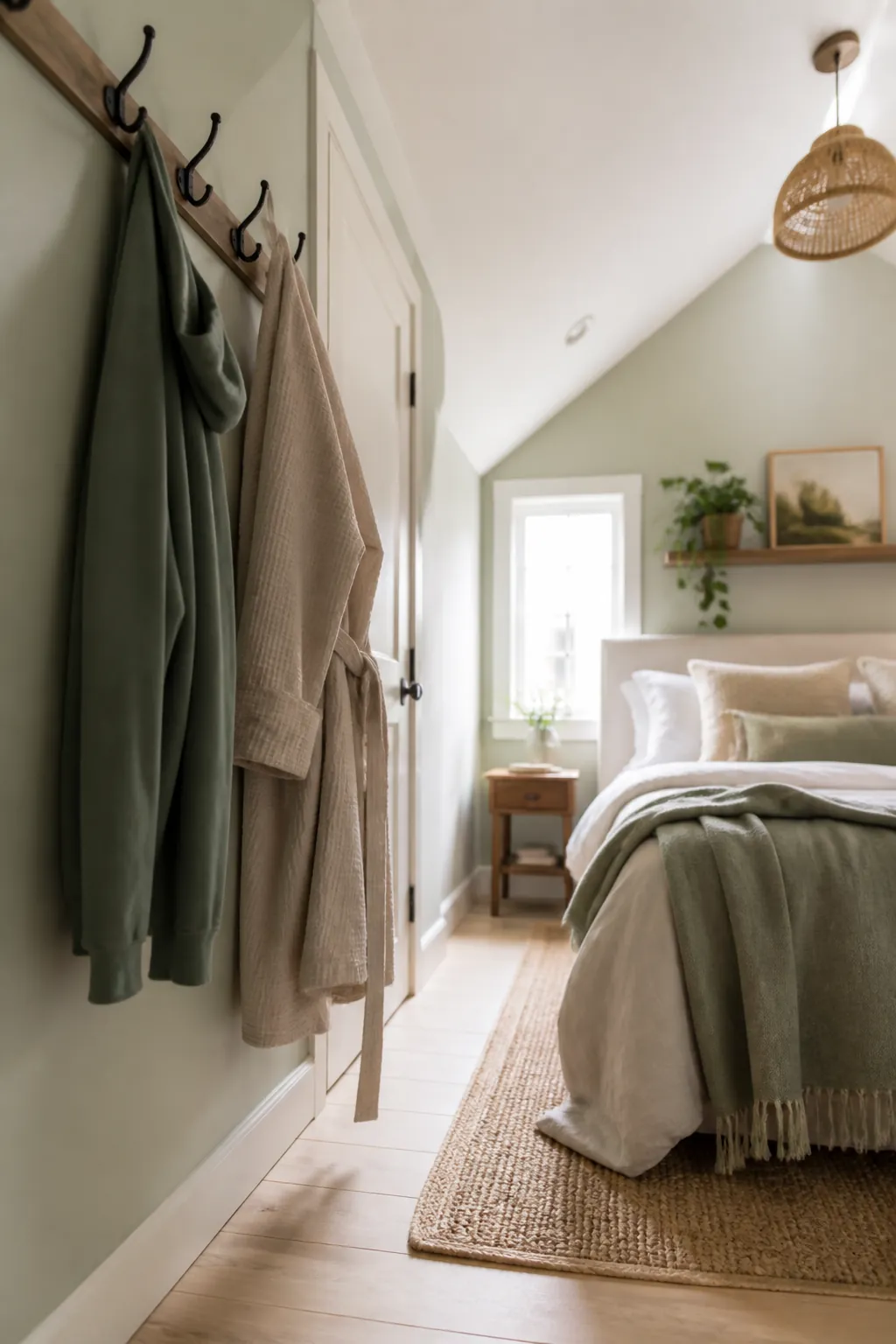
A sturdy hook rail near the door catches the clothes you have worn once but are not ready to wash: a robe, a hoodie, tomorrow’s outfit, a bag. That single habit is what kills the infamous chair pile before it starts.
9. Add Floating Shelves Above the Bed and Dresser
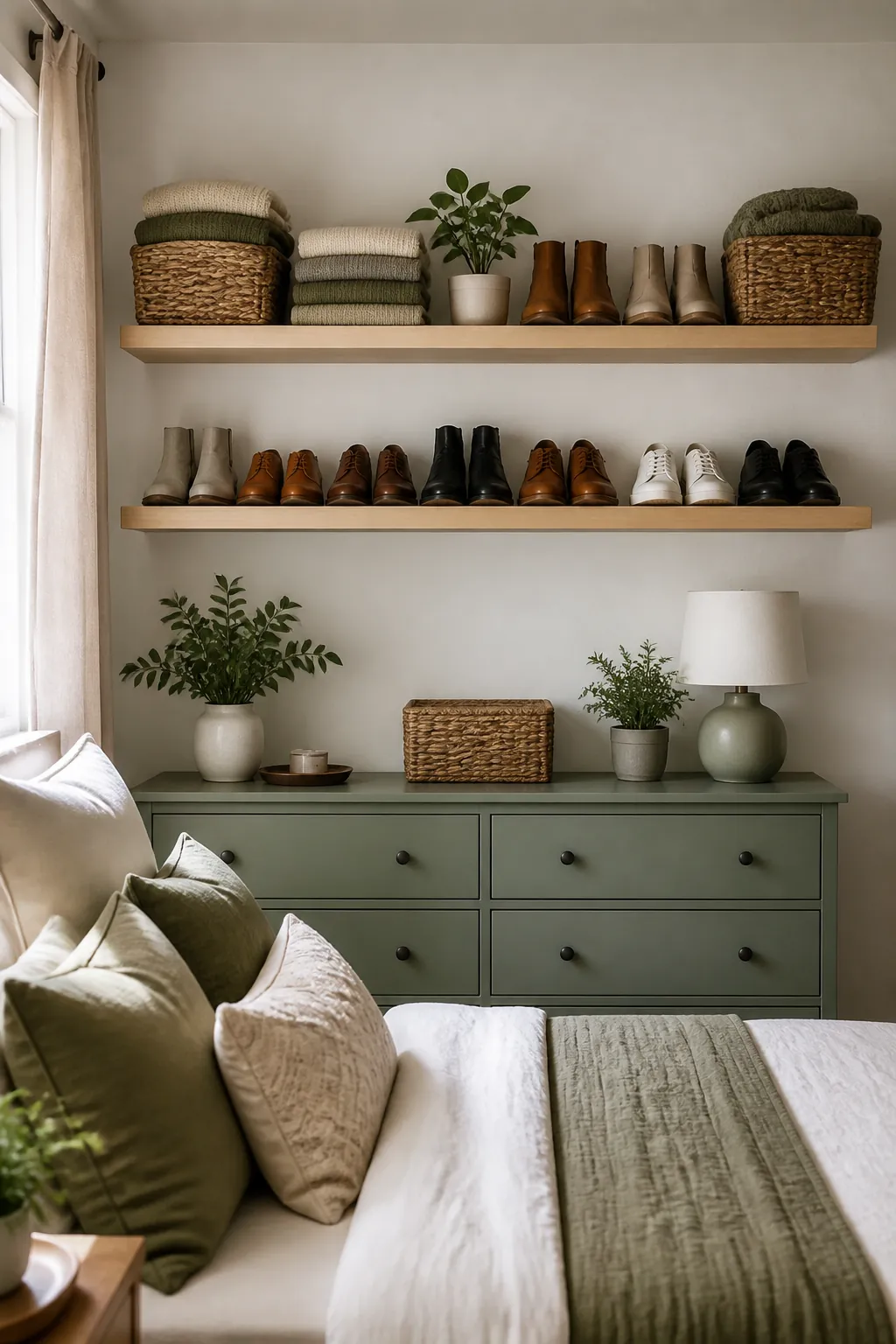
Shelves mounted high can hold folded knits in baskets, shoes in a row, or a mix of books and bins. Run them up toward the ceiling instead of clustering everything at eye level. The higher you park rarely-used items, the more your reachable lower zones open up.
10. Use an Over-the-Door Organizer
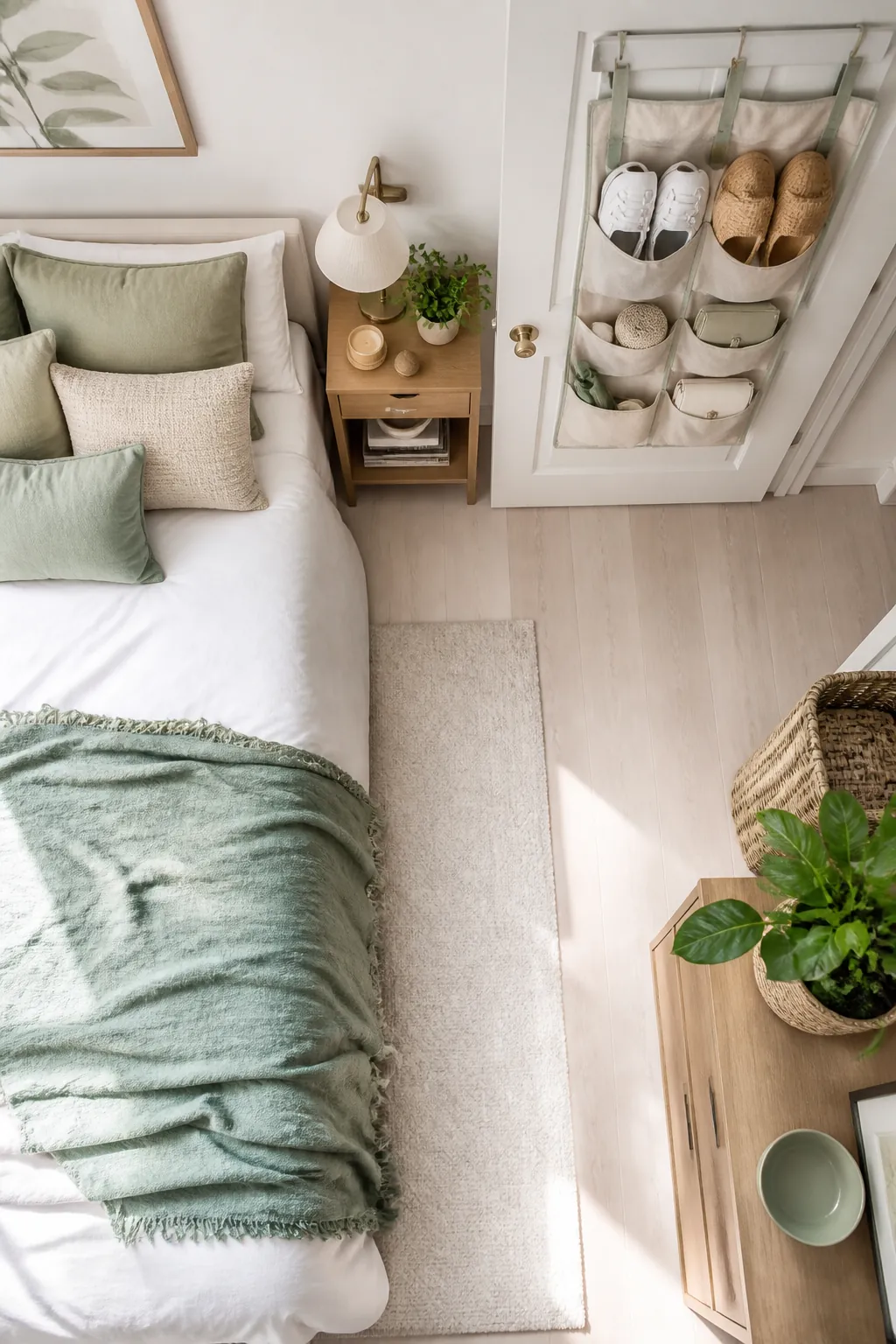
No closet door does not mean no door. A fabric pocket organizer on the bedroom door back holds shoes, accessories, or toiletries, and a slim over-the-door rack adds hanging room for towels or bags. It is real estate you were paying for anyway that costs you nothing in floor space.
Make Your Furniture Do Two Things at Once
In a small bedroom, every piece should justify its footprint by storing something.
11. Choose a Storage Ottoman or Bench for the Foot of the Bed
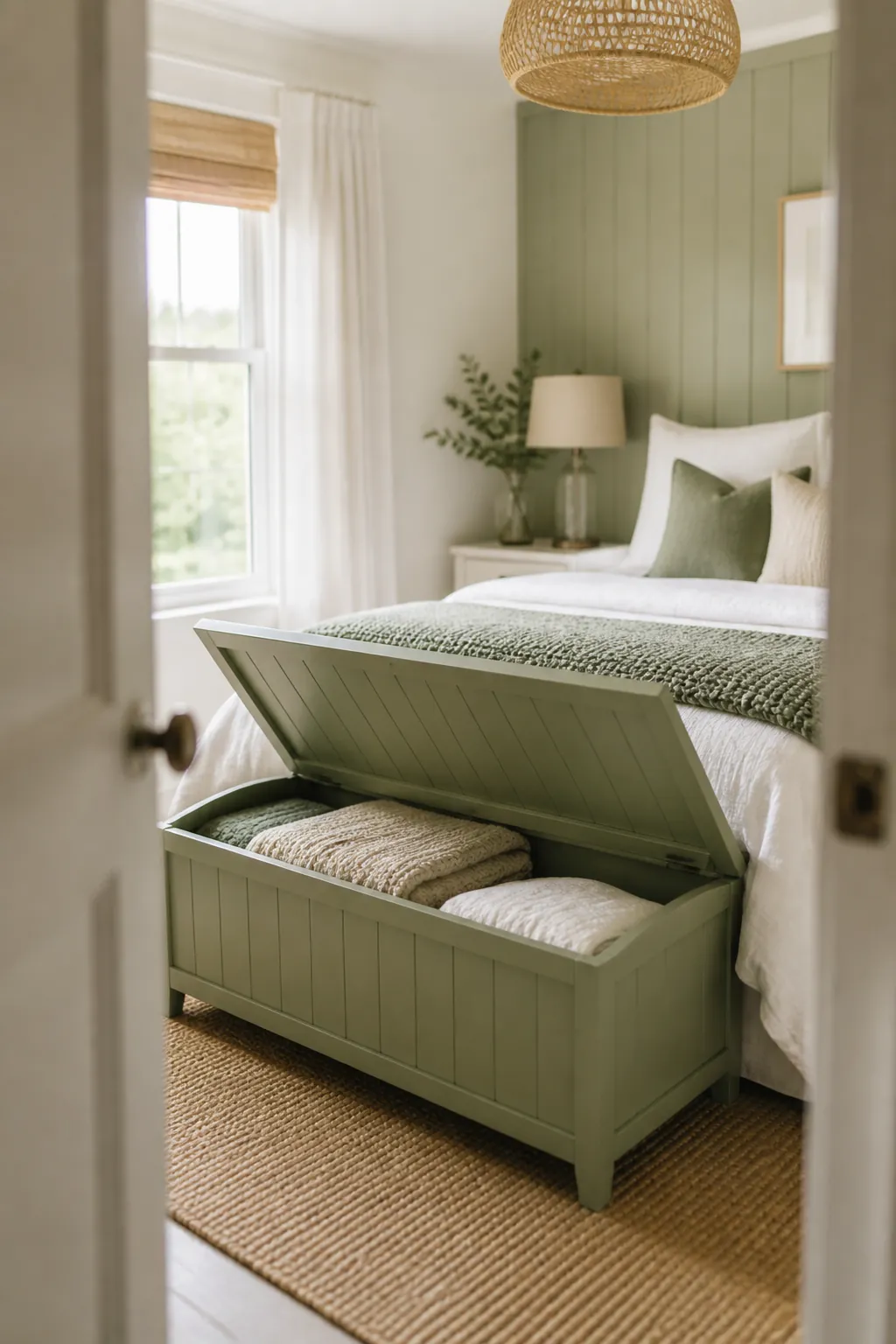
A bench with a hinged lid gives you a place to sit while you lace up shoes plus a hidden bin for blankets or bulky sweaters. Parked at the foot of the bed, it also anchors the space without piling on visual weight.
12. Pick a Headboard With Shelves or Cubbies
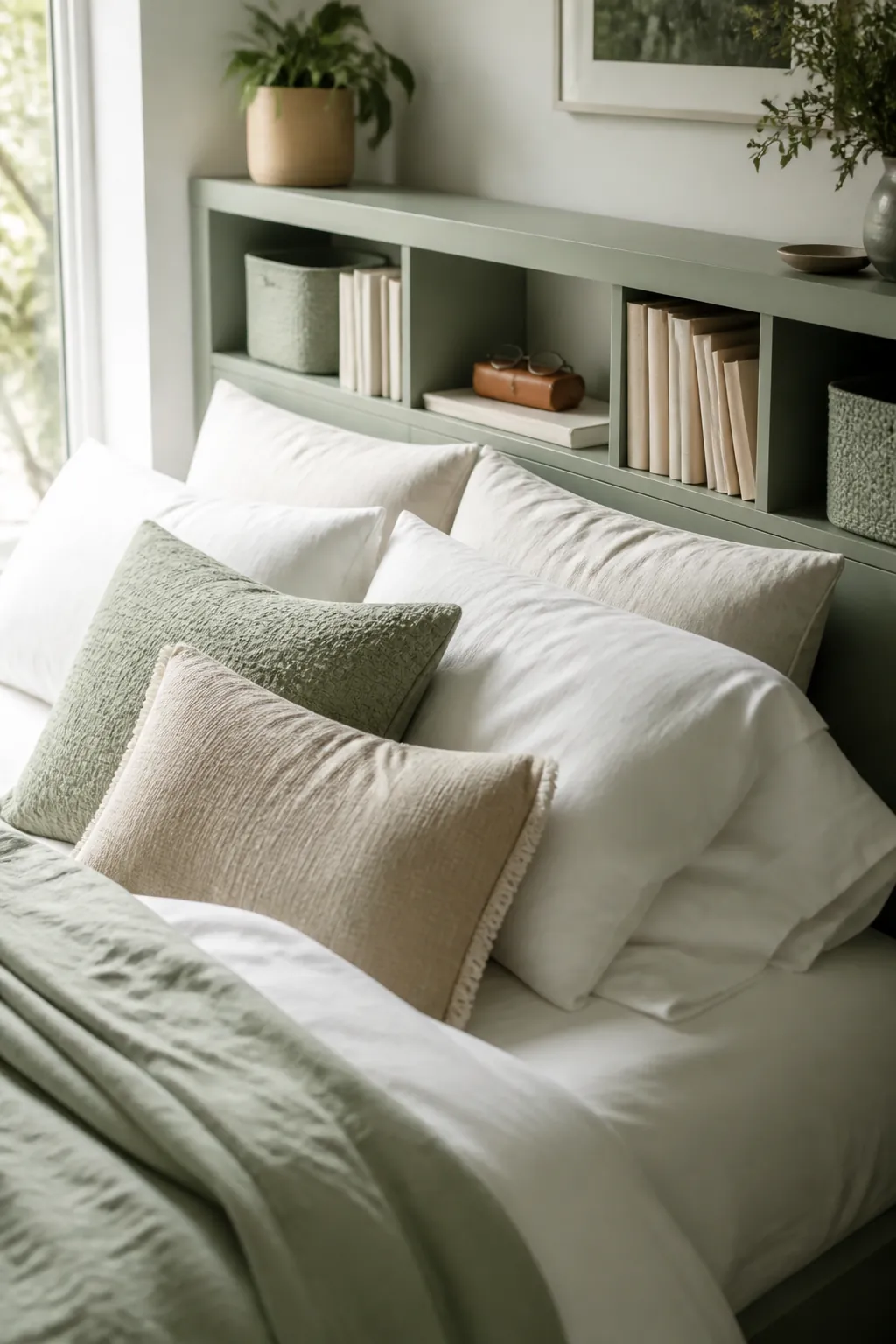
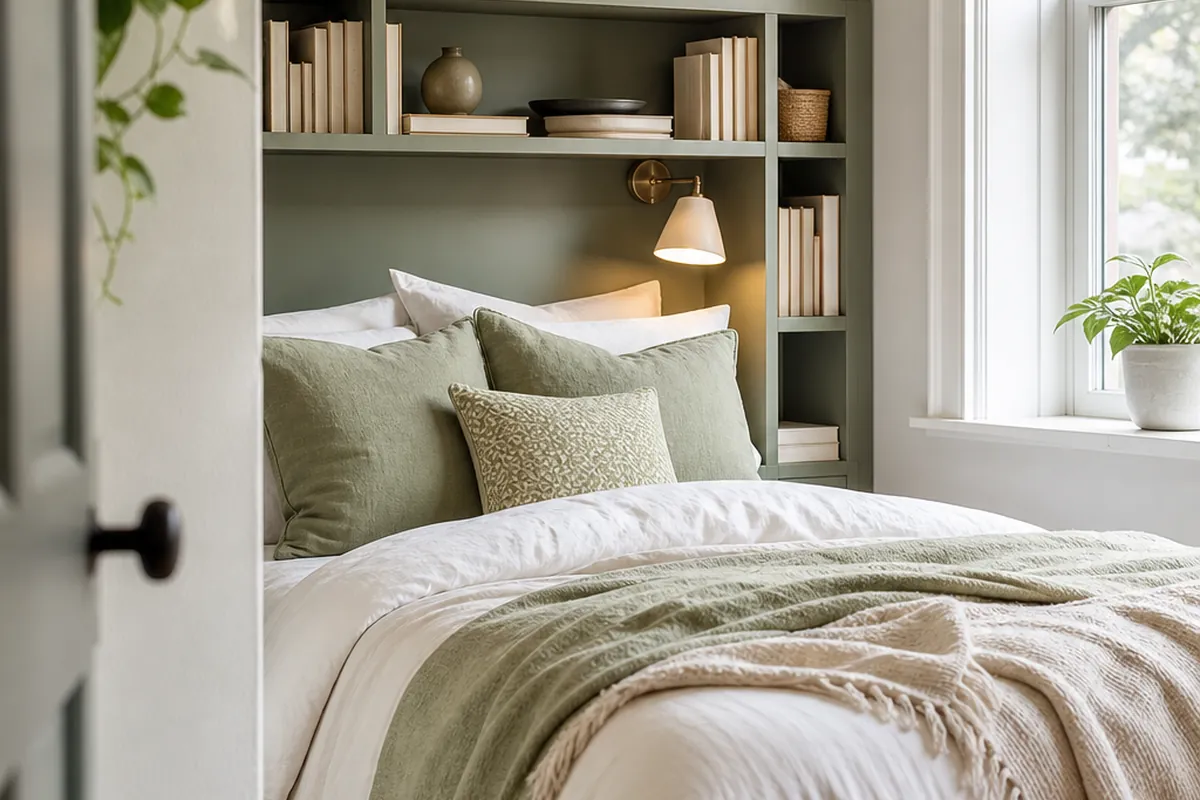
A bookcase-style headboard converts the wall behind your pillows into storage for books, glasses, and small bins. When every inch counts, that is genuine capacity you would otherwise leave blank.
13. Slide a Rolling Cart Into a Gap
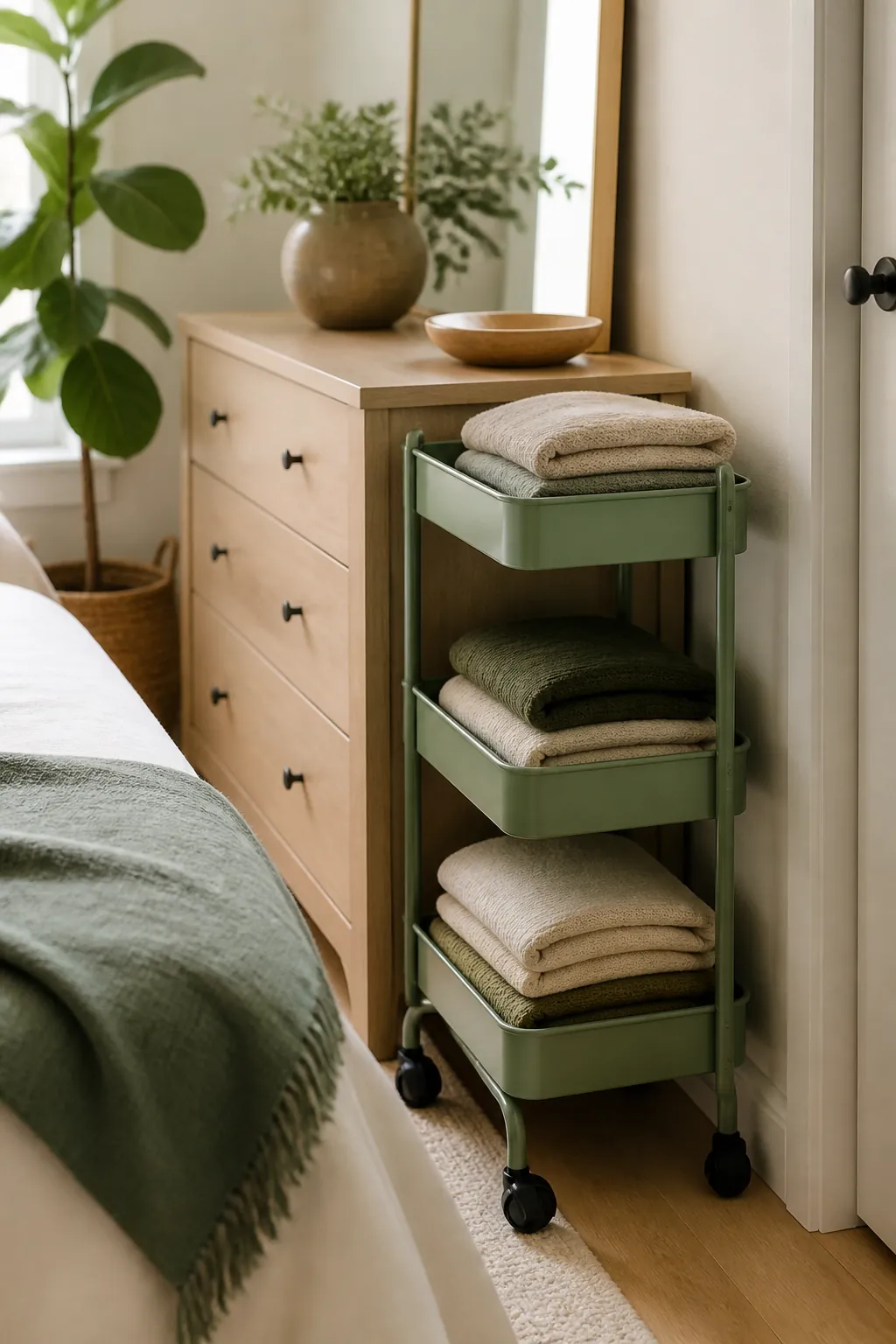
A narrow three-tier cart fits the awkward slot beside a dresser or at the end of the bed. Load it with folded athletic wear, accessories, or anything you want to wheel out and put back in seconds.
Divide and Defend the Space You Have
Storage only stays useful when things have assigned homes. Once the furniture is in place, turn your attention to the interiors.
14. Add Drawer Dividers to Every Drawer
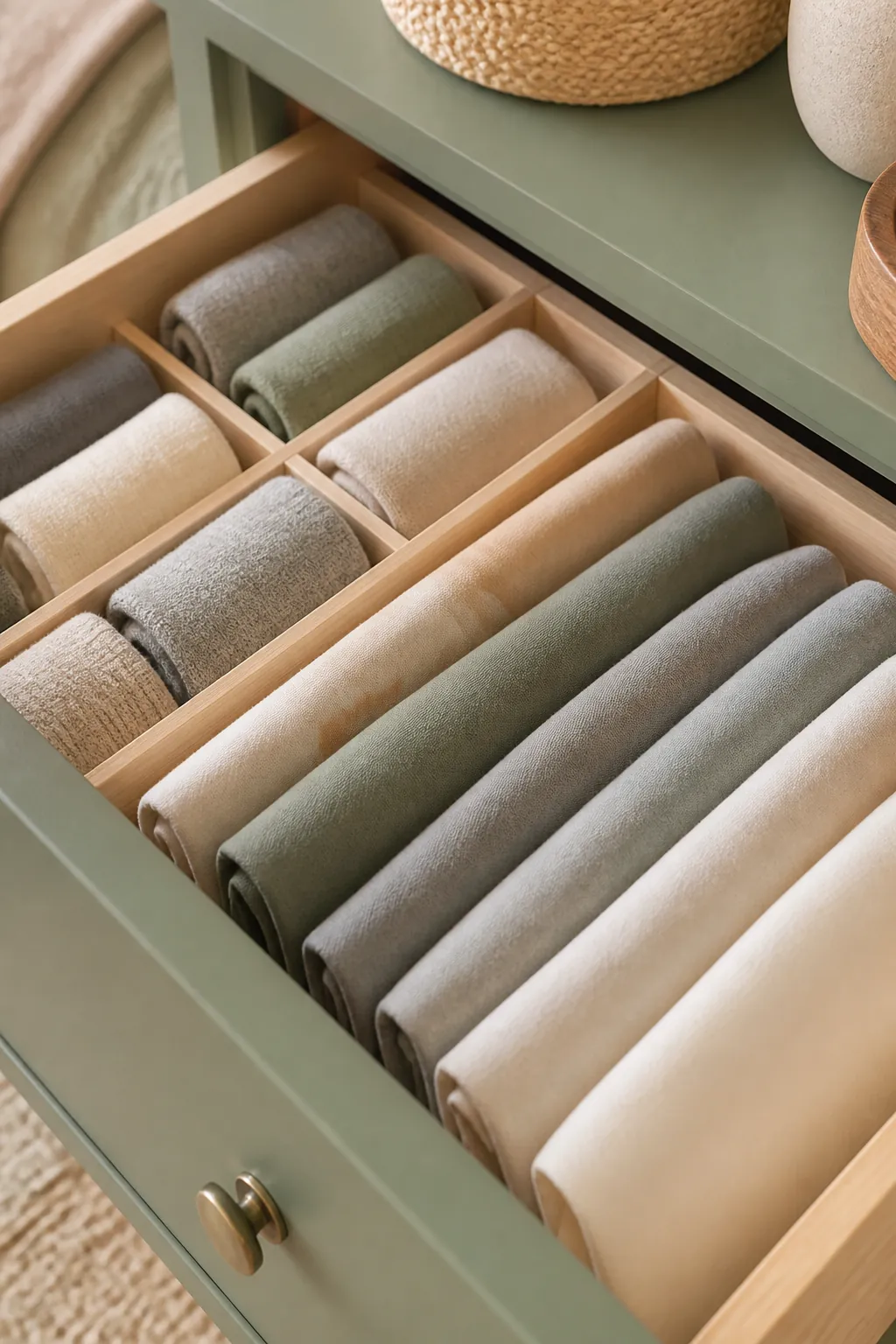
Left alone, a drawer collapses into a jumble within a week. Cheap adjustable dividers keep socks, underwear, and folded tees in their own lanes, and file-folding clothes vertically lets you see every item at a glance instead of digging through stacks. This discipline matters more with no closet, since your drawers are carrying the load a closet normally would.
15. Use Matching Baskets to Corral Open Shelves
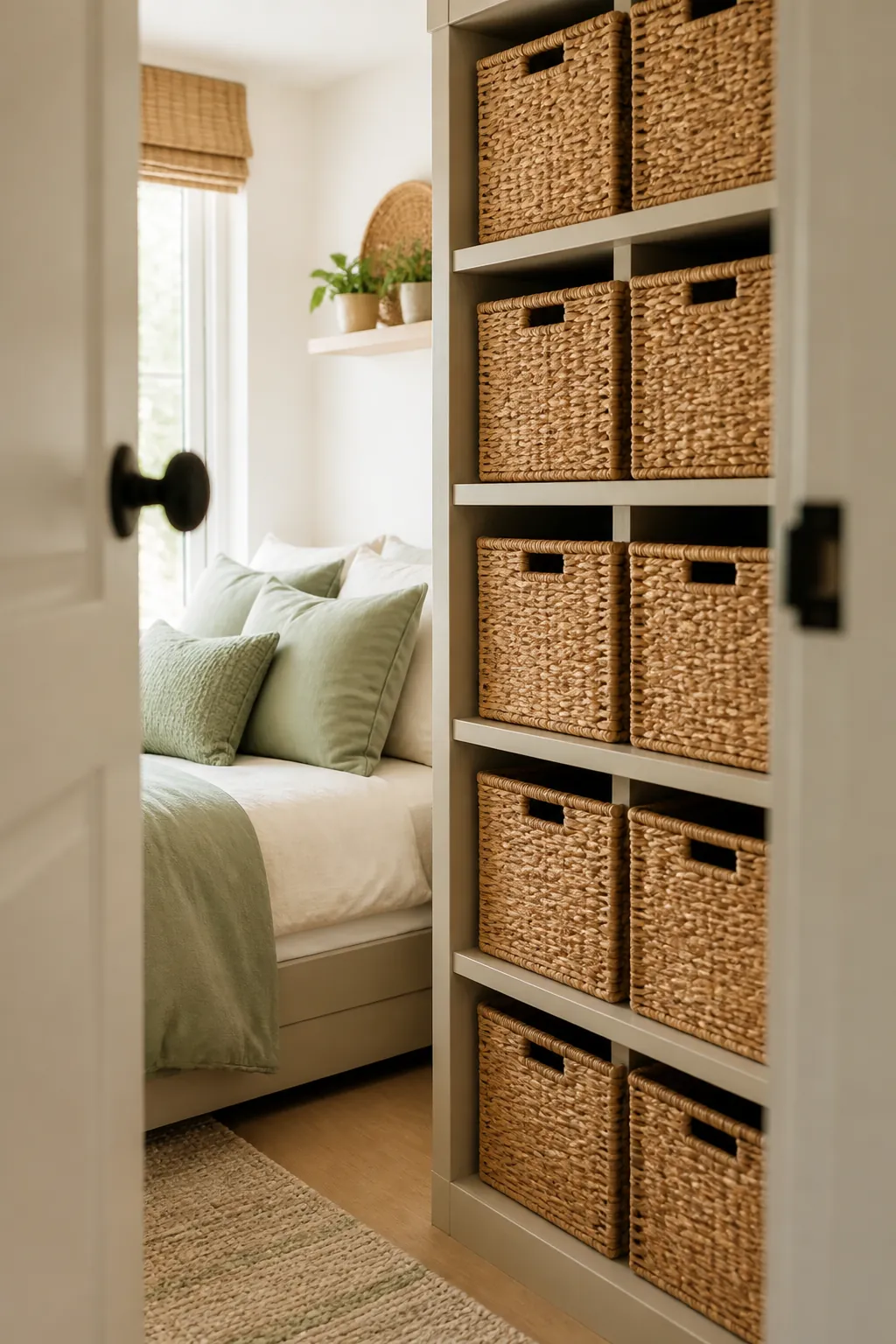
Open shelving looks cluttered the moment its contents wander. A set of matching baskets or fabric bins turns a messy shelf into a tidy grid and hides whatever you would rather not display. Label them if you share the room or tend to forget where things live.
When two people share the room, the dividing is half the job. Shared bedroom storage ideas for couples in a small room covers how to split the closet, the drawers and the bedside without a running argument.
How to Put It Together in a Real Room
Resist buying all fifteen. Pick the two or three that answer your actual problem, because most no-closet bedrooms need only three things: hanging space, folded-clothes storage, and a bedside catch-all.
Start with the Freestanding garment rack along your longest wall for anything that wrinkles. Add a tall dresser or a storage bed to absorb the folded clothes. Finish with a Nightstand with drawers (slim) so the small stuff has a home and your surfaces stay clear. Treat everything else here as a refinement you layer in when a specific pain point shows up, whether that is shoes with no landing spot or a chair pile that keeps reappearing.
The rooms that feel calm without a closet share one trait: every item has an assigned spot, and the tallest walls do the heaviest lifting. Build up rather than out, keep your open storage styled on purpose, and the missing closet quietly stops being something you notice.