A rental kitchen almost never comes with a place for towels or mitts built in. There is a stove, a sink, and a run of cabinets, and whatever hangs off the oven handle or gets draped over a cabinet knob is doing the actual job, because nobody designed a spot for it. That works until the oven handle is carrying three overlapping towels and the one you actually need to grab is at the bottom.
None of the fixes below need a drill, a landlord’s sign-off, or a kitchen remodel. They need a ring, a couple of hooks, and a drawer you already have, used with a little more intention than “wherever it lands.”
1. Give the everyday hand towel a ring near the sink, not a drawer
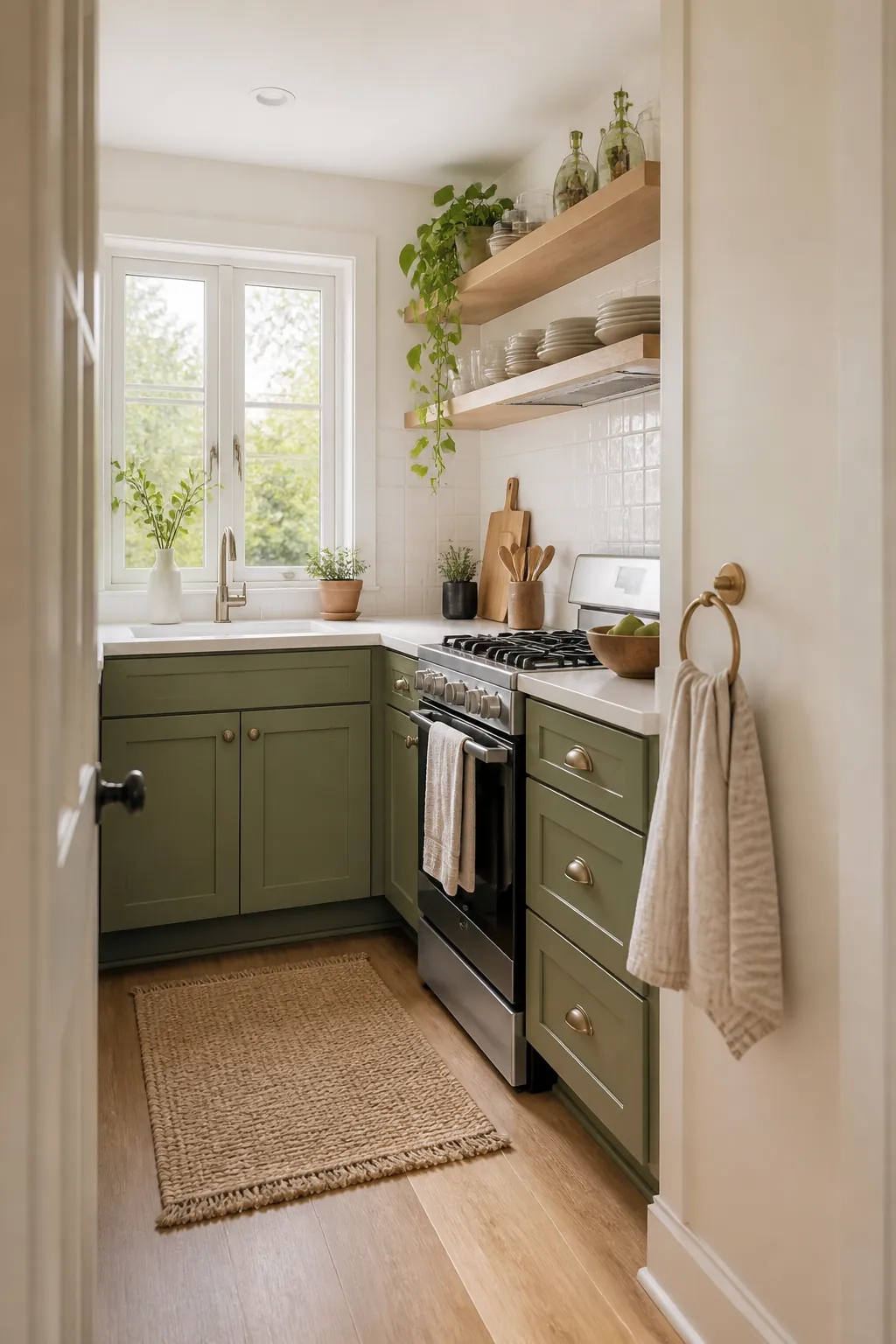
A hand towel that lives in a drawer never gets used as a hand towel. It gets pulled out once, hung back on the oven handle out of habit, and the drawer version becomes a spare nobody touches. A matte black towel ring mounted beside the sink solves this by giving the towel one fixed, obvious spot, the same logic a towel ring works for in a bathroom.
Hang the towel looped through the ring rather than folded over it. A loop dries on both sides and airs out between uses, while a folded-over towel keeps one damp layer pressed against another and starts smelling sour by day three. Position the ring so the bottom of the towel clears the counter edge; set too low, the hem sits in splash from the faucet and never fully dries.
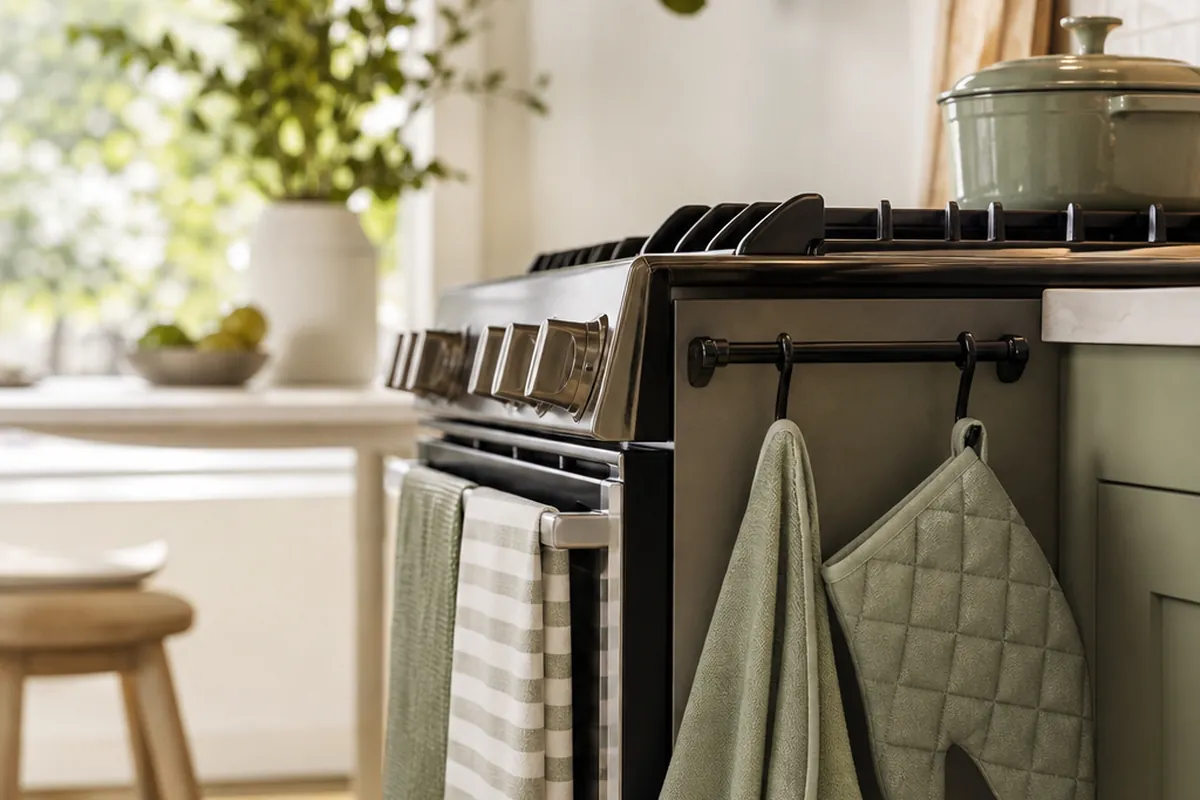
2. Keep the oven mitt pair on its own hook, right at the oven
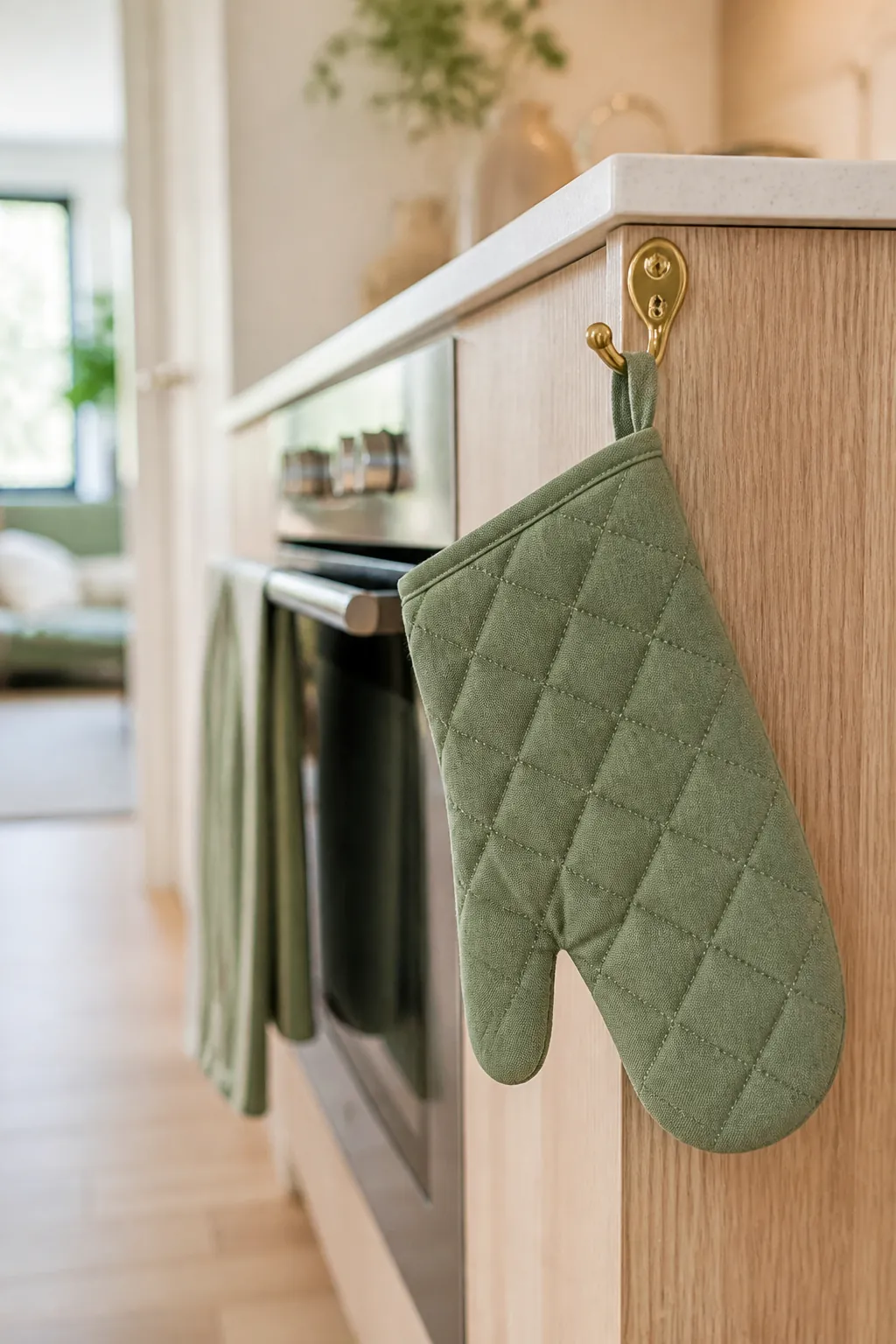
Mitts get stored with towels more often than not, and that is the wrong drawer for them. A mitt needs to be grabbed in the few seconds between a timer sounding and a pan needing a hand out of a 400-degree oven, and a drawer across the kitchen costs exactly those seconds.
Mount a single hook to the side of the oven, not directly above the burners, where rising heat and grease splatter will degrade the mitt’s fabric faster than normal use would. Keep real clearance from any open flame, at least 12 to 18 inches, since a draft or a bumped sleeve can swing hanging fabric into a burner faster than you would guess. If your stove sits against a cabinet run, the cabinet’s side panel is usually the better mounting surface than the wall behind the appliance.
3. Put spare towels and the backup mitt on the pantry door
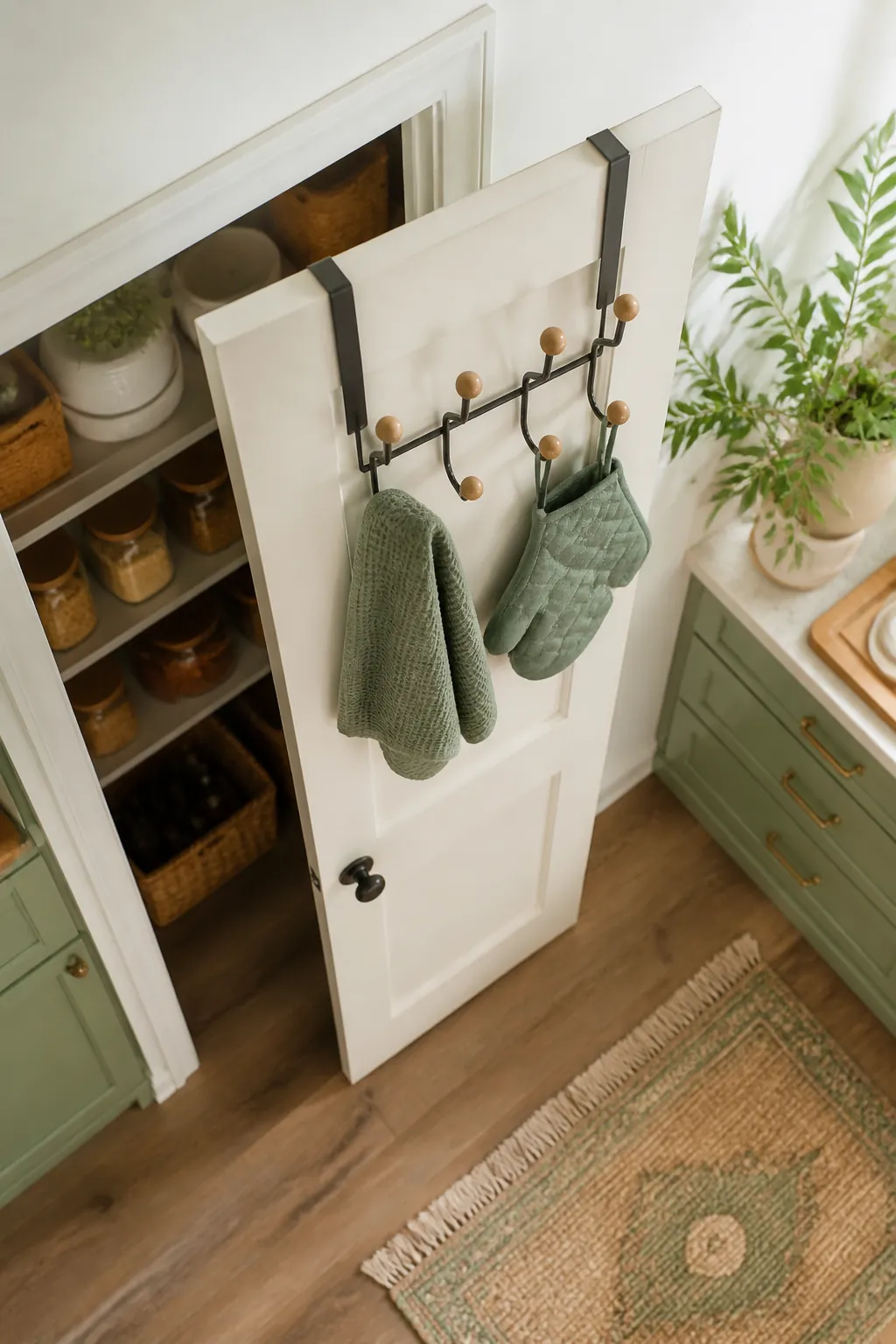
Every kitchen needs more towels in reserve than the one or two in daily use, and those spares need a home that is not the sink ring or the oven hook, both of which should stay clear for what is actively in rotation. An over-the-door hook hanger on the inside of a pantry or cabinet door gives spares a spot with zero wall damage, the same no-drill trick behind most renter pantry organization, since it hooks over the door’s top edge rather than fastening into anything.
Load the top two hooks with the backup oven mitt pair and a folded spare towel, and leave the lower hooks for an apron or a set of trivets. Check that the bracket clears your door’s thickness before buying; thin interior doors and thick, paneled pantry doors need different bracket depths, and a hanger that does not seat flush will rattle every time the door closes.
4. Split hygiene duty between two kinds of towel
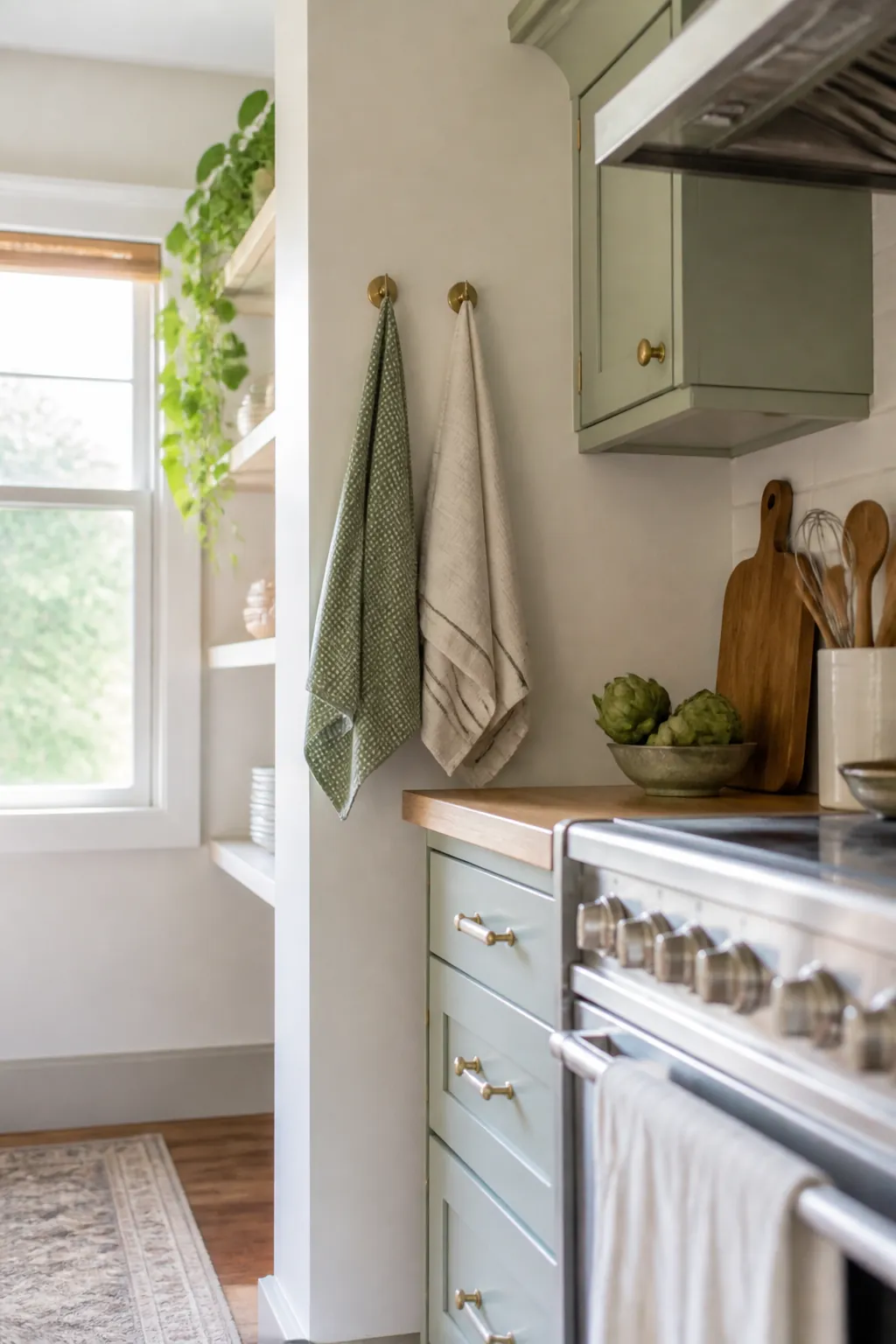
One towel wiping a counter after raw chicken and drying your hands a minute later is how a kitchen towel becomes the thing nobody wants to admit they are using. Keep a visibly different towel, a different color or pattern works fine, for “job” cleanup: raw meat juice, a dropped egg, the floor under the high chair. Everything else goes to the hand towel on the ring.
This is not pedantry. A damp towel is a working surface for bacteria for hours after it touches raw protein, and the next hands that dry on it inherit whatever was on the counter. Wash job towels on their own after use rather than folding them back into rotation, and you break that chain without adding a single extra product to the kitchen.
5. Fold and divide the drawer stock so towels stop tangling
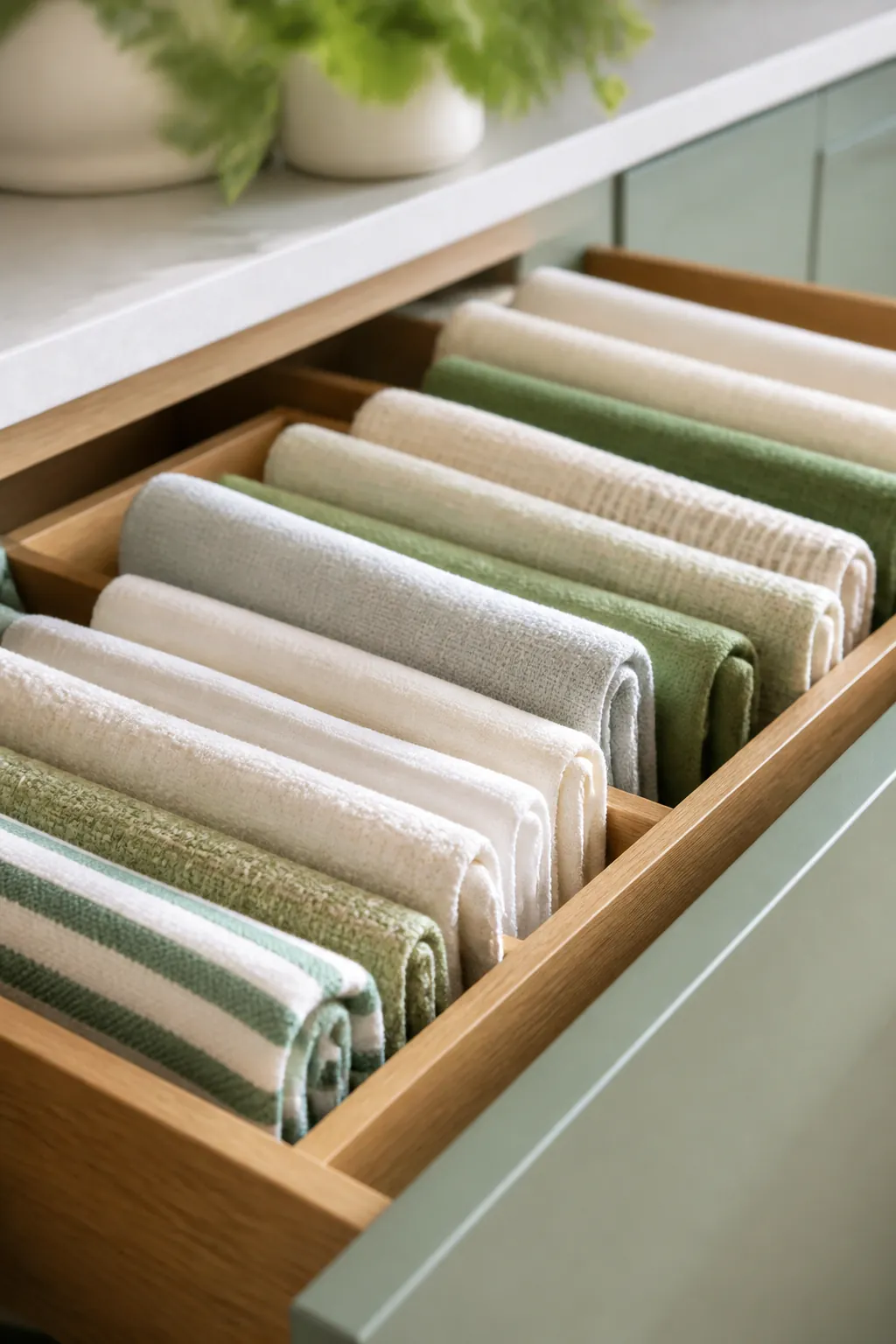
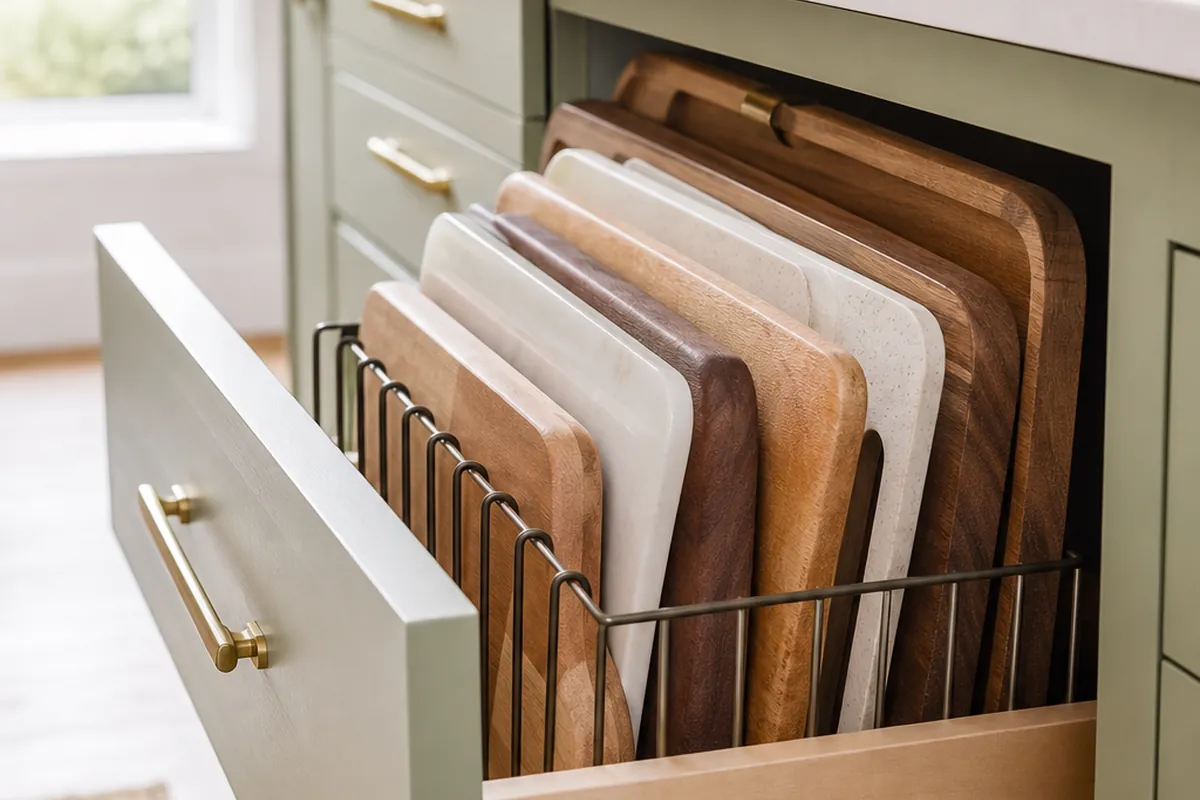
A drawer of loose folded towels looks tidy for about a week before the folds collapse and everything becomes one soft pile you have to unstack to find the thinner towel you actually wanted. Bamboo drawer dividers with labels fix this the same way they fix a junk drawer, by giving each stack a lane it cannot slide out of.
Measure the drawer’s interior depth before buying, not the width of the front panel, since kitchen drawer fronts often overhang the actual box by half an inch or more. Fold towels in thirds rather than quarters so they stand upright in a lane like files, which makes the bottom of the stack as visible as the top. Give dish towels and hand towels separate lanes even in the same drawer, so grabbing the wrong one by accident stops being the default.
6. Store trivets and pot holders apart from the mitts
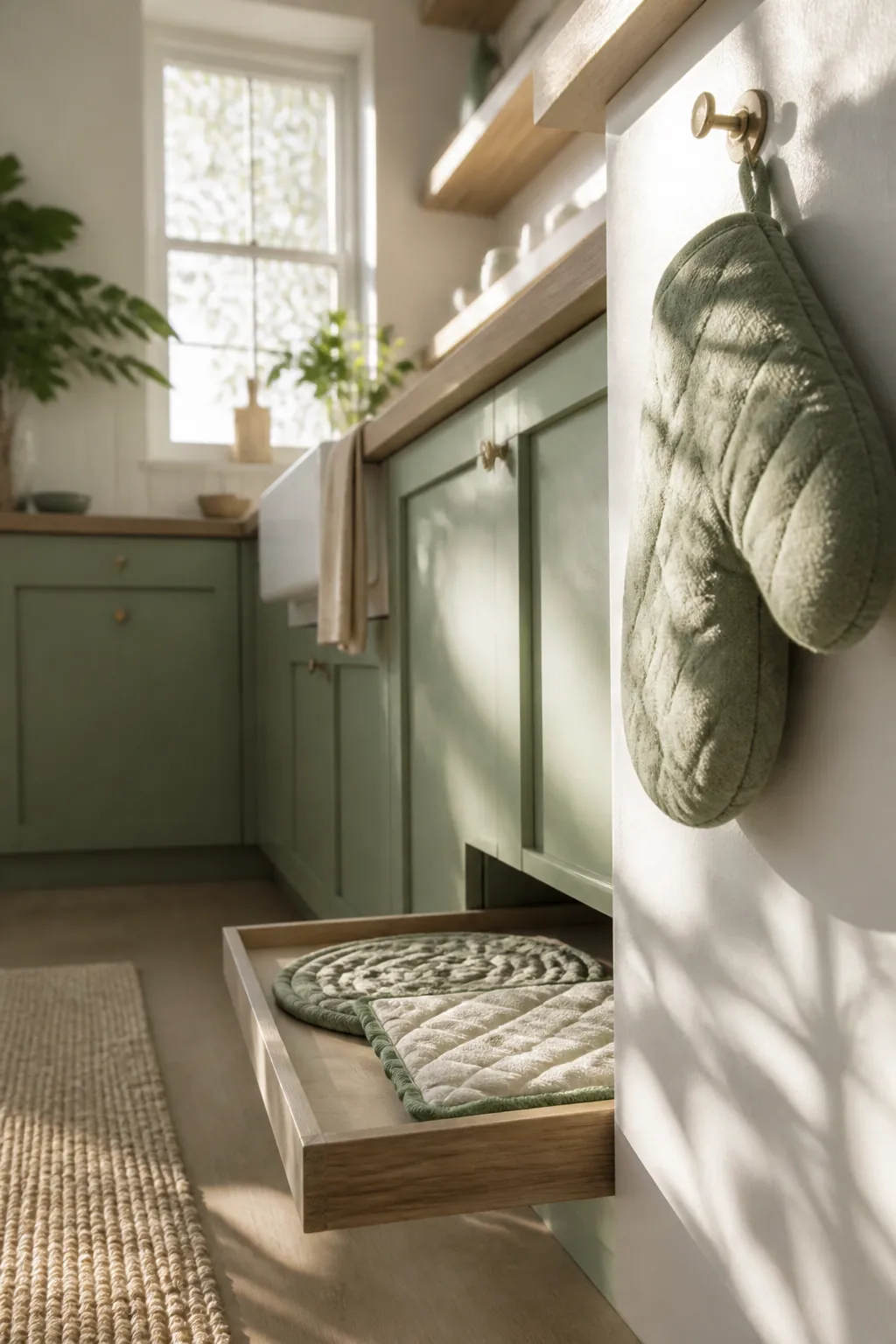
Mitts are bulky and padded through the whole hand; trivets and flat pot holders are thin and meant to sit still under a dish. Piling them together in one drawer or on one hook means digging through stiff, flat shapes to find a mitt, or crushing a mitt’s loft under something heavy stacked on top of it.
Give trivets their own shallow spot, a slot at the back of a drawer, a slim gap beside the stove, or a hook lower down on the same over-the-door hanger holding the spare mitts. The goal is just physical separation, since the two shapes do not nest and trying to store them as one category is where most mitt-and-trivet drawers go wrong.
7. Keep four to six towels in rotation, no more
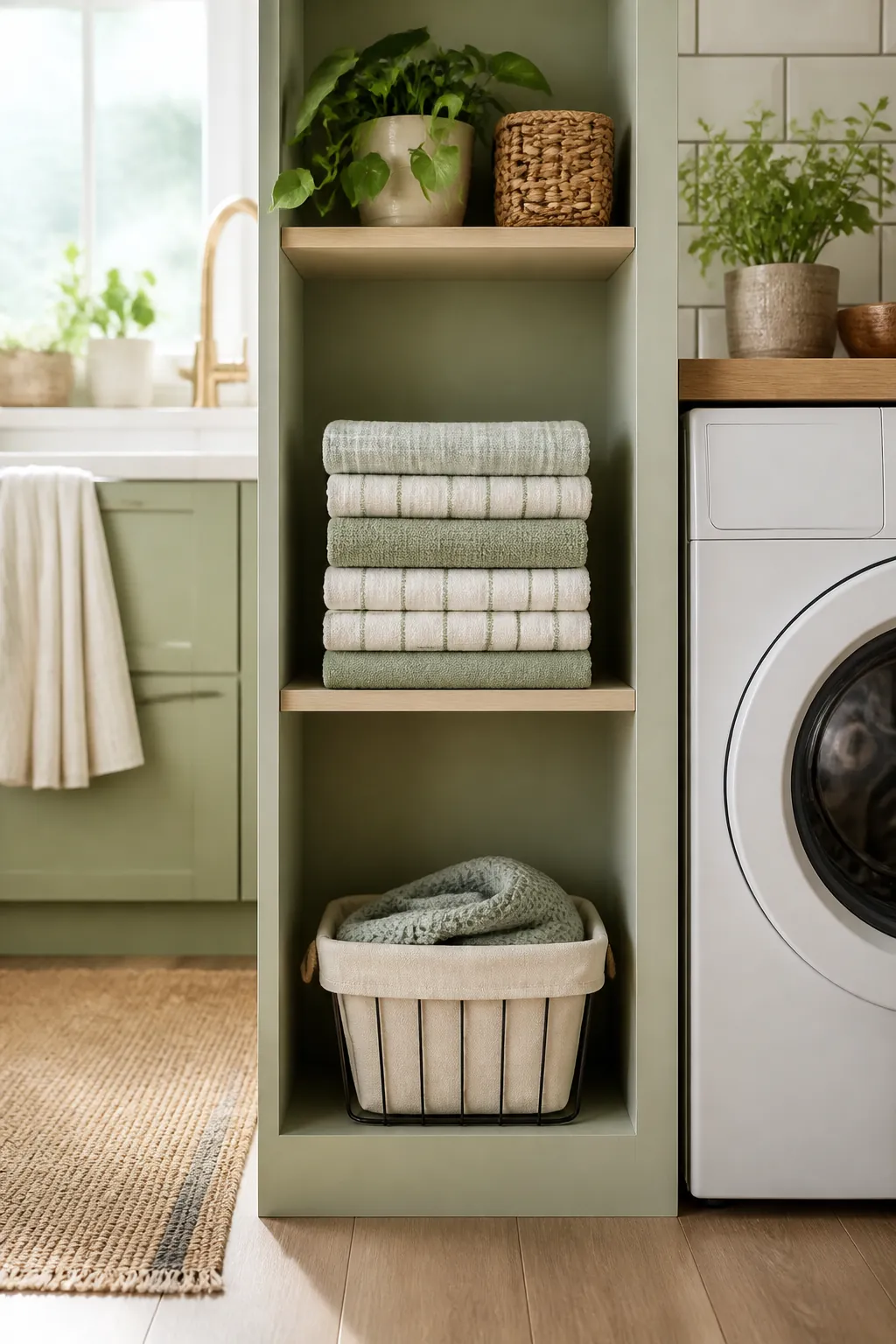
Too few kitchen towels and you are drying your hands on a damp one before laundry day arrives. Too many and a third of the stack sits unused at the bottom of the drawer, taking up space that could hold something you actually reach for. Four to six towels, split roughly evenly between hand towels and heavier dish towels, covers most households through a normal laundry cycle with one or two still dry in reserve.
Keep a small bin or a hook by the washer for towels pulled out of rotation once they are wet or stained, rather than letting them pile on the counter between loads. A fixed number also makes buying easier. Once you know your household runs through six, replacing a worn one becomes a one-for-one swap instead of a guess.
8. Let mitts dry fully before they go back on the hook
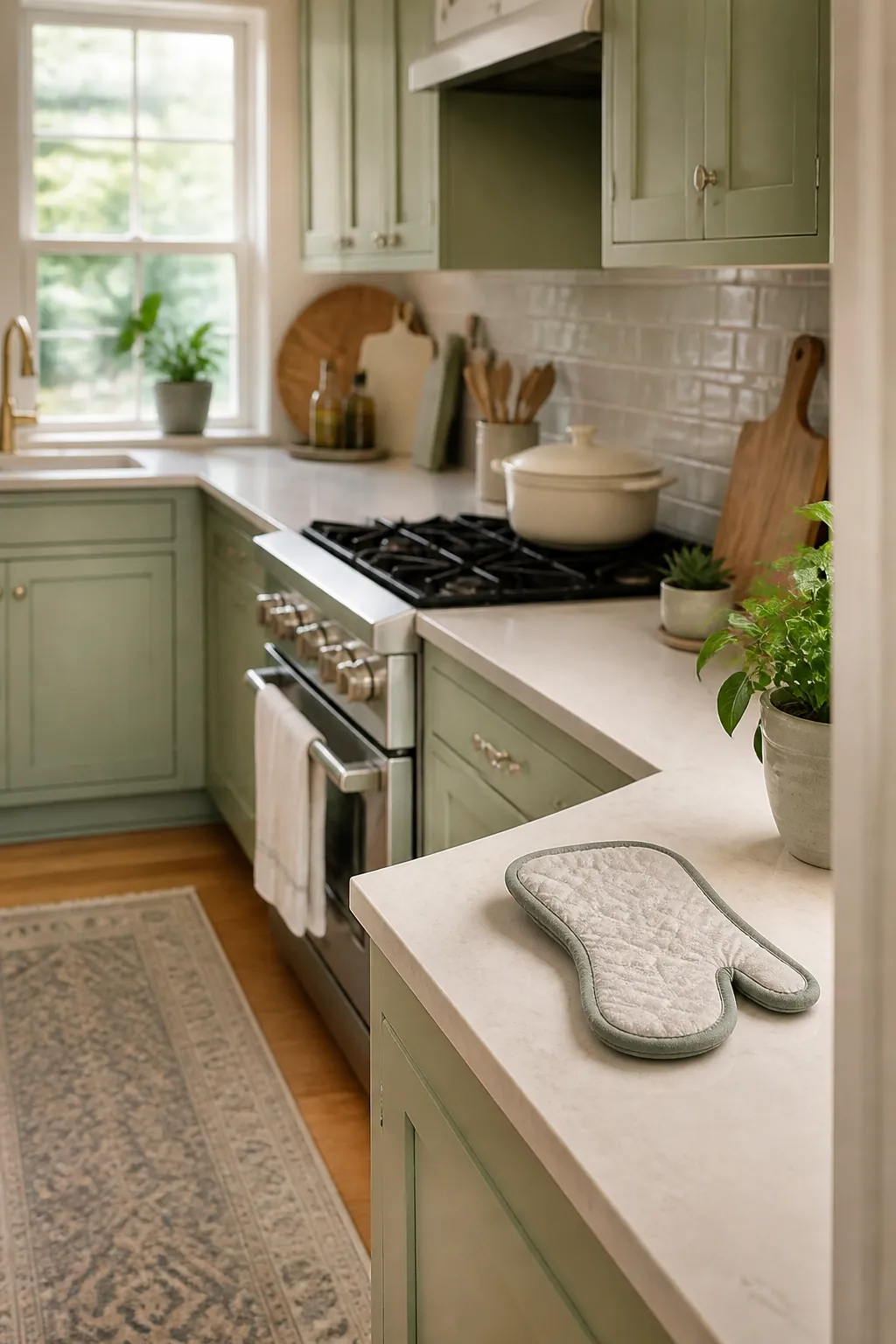
A silicone-exterior mitt with a cotton or quilted liner traps moisture against that liner after a wet job, wiping a spill or handling a steaming pot, even though the outside looks dry within a minute. Hang it straight back on its hook and that trapped dampness sits against the fabric in a closed loop until the next use, which is exactly the environment that grows a sour smell and eventually mildew inside the padding.
Give a mitt that got genuinely wet a few hours flat on the counter, liner side up, before it goes back on the hook. This matters more in summer and in kitchens with poor airflow, where a damp mitt can take most of a day to actually dry through rather than just dry on the surface.
9. Retire a mitt before it fails, not after
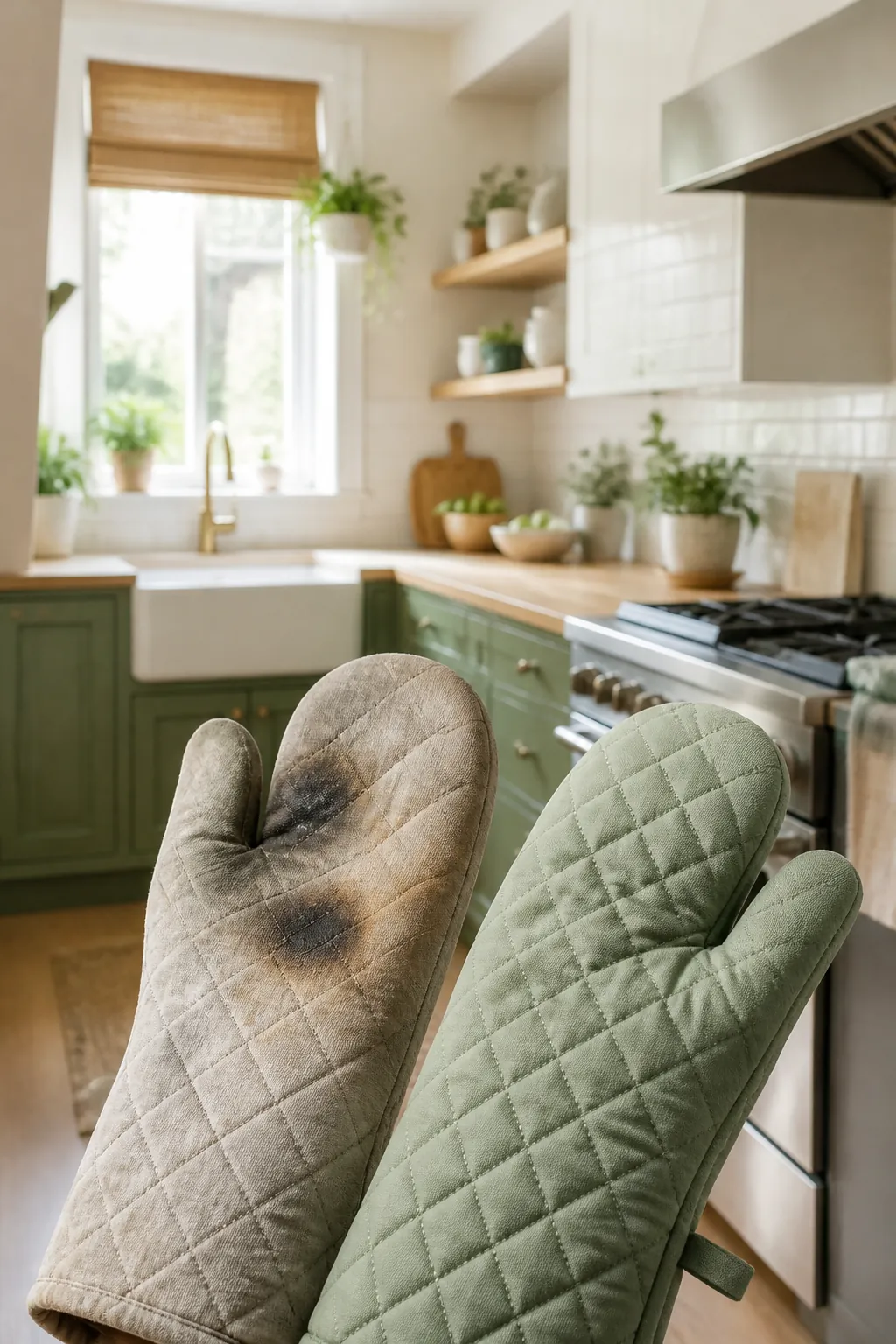
Insulating batting compresses a little with every wash and every grab, and a mitt that has done a year of regular duty has noticeably less loft than a new one, even if the outside fabric still looks fine. The real test is heat transfer: if you can feel warmth coming through within a couple of seconds of grabbing something properly hot, the mitt has already lost the margin it is supposed to give you.
Check for flattened padding, scorch marks, and thinning at the thumb and palm, the two spots that take the most contact. Replace the pair rather than one mitt at a time if you use them as a matched set, since an odd pairing of a fresh mitt and a worn one just means you reach for the good one every time and the worn one keeps failing quietly in the background.
Where to start
Start with the two hooks that matter most day to day: the towel ring by the sink and the single mitt hook beside the oven, not above it. Those two moves fix the habit of grabbing whatever is nearest, which is most of what makes a kitchen towel setup feel chaotic in the first place.
Add the over-the-door hanger for spares and the drawer dividers for the folded stock once the daily-use spots are settled, since both of those are about managing surplus rather than fixing a daily annoyance. Every piece here hooks, hangs, or slides into something you already have, so it all comes off clean at the end of the lease.