Every junk drawer starts as a reasonable idea and ends as a drawer you have to shove closed with your hip. Ours held four takeaway menus, a phone charger for a phone nobody owns, and eleven pens of which two worked.
The thing worth saying up front: the junk drawer is not the problem. Every home needs one place for the genuinely miscellaneous, and households that refuse to have one just spread that stuff across five rooms instead. The problem is a junk drawer with no limits. Nine ideas below for giving it some.
1. Empty it completely, onto a table
Do not sort inside the drawer. It feels efficient and it is the reason most junk drawers get tidied twice a year and never actually change.
Tip the whole thing onto a table or a tray. Seeing everything at once is what makes the duplicates obvious, and duplicates are most of what is in there. You will find three tape measures and no scissors, which tells you more about what to buy than any list would.
Wipe the empty drawer while you are there. The bottom of a junk drawer collects a fine grit of pencil shavings, crumbs, and mystery gray dust that has never once been cleaned.
2. Sort into keep, relocate, and bin, in that order
Three piles, no more. Extra categories are how a twenty-minute job becomes an afternoon.
Keep is for things that genuinely belong in a miscellaneous drawer: tape, string, a small screwdriver, spare keys, a tape measure. Relocate is the bigger pile than you expect, because most junk drawer contents have a real home and simply never made it there. Bin is for dead pens, expired coupons, and cables for devices you no longer own.
Be decisive about the cables. If you cannot identify what a cable belongs to within about five seconds, you will never identify it, and you will not miss it.
Reusable shopping bags are the classic relocate item, and they need a home before they take over a drawer or a cabinet. Reusable bag storage ideas for a small kitchen gives them one.
3. Divide the drawer before you put anything back
An undivided drawer is a bowl. Everything slides to the back when you open it and slides to the front when you close it, and within a week the sort you did is undone by physics.
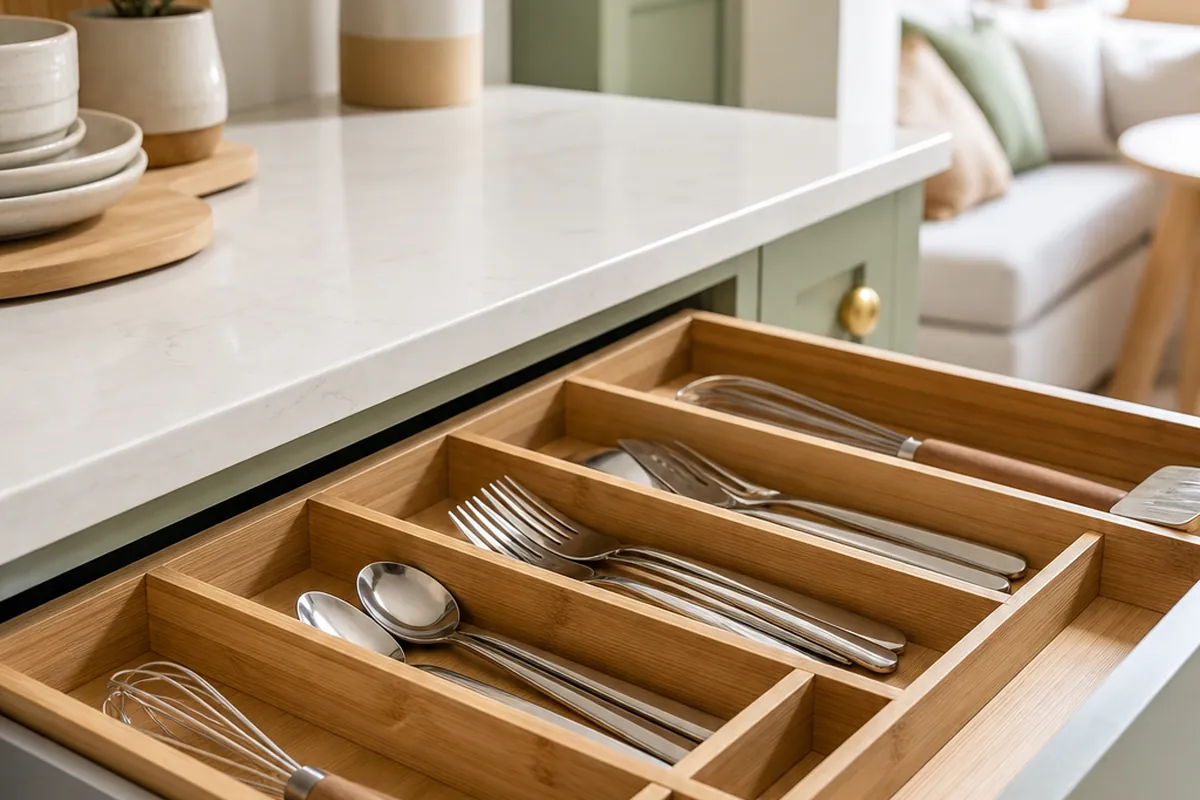
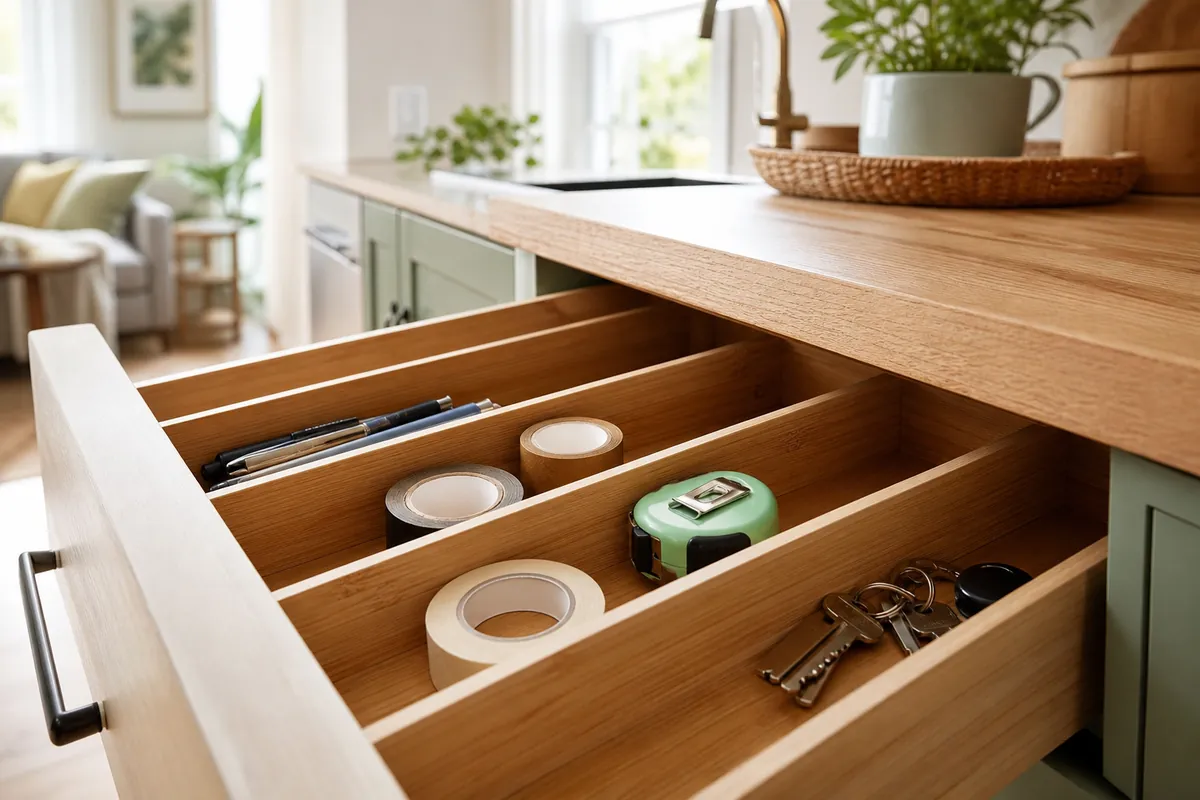
Bamboo drawer dividers with labels span the full depth of the drawer, so nothing migrates behind them. That full-depth contact is what makes dividers work where loose bins fail, since a bin that is shorter than the drawer just becomes another object sliding around inside it.
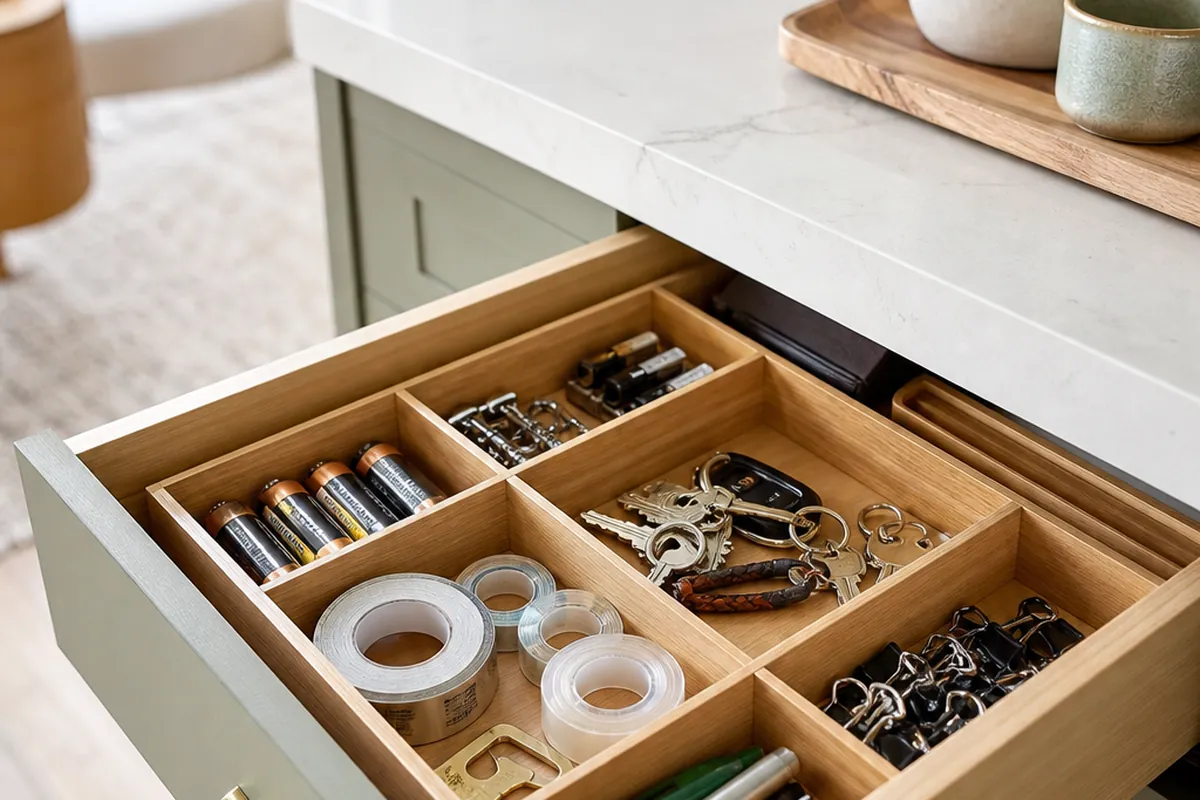
Fit the dividers to the things you are keeping rather than dividing the drawer evenly. Pens need a narrow lane, tape needs a square, and the tape measure needs a compartment it can lie flat in.
4. Keep the categories embarrassingly narrow
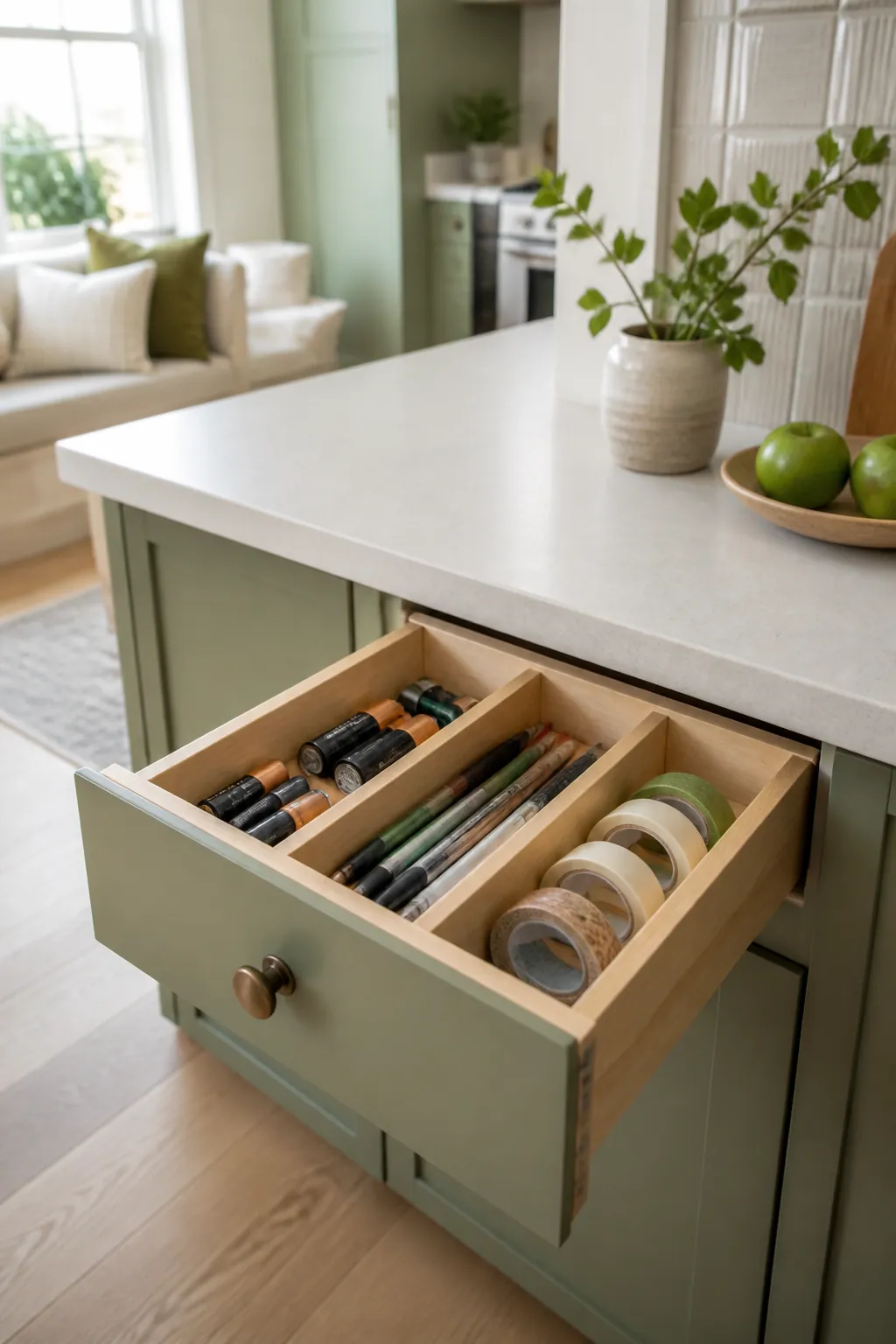
“Tools” is not a category, it is a shrug. Narrow categories are what make a drawer findable in the dark, which is when you usually need the flashlight.
Aim for compartments you could describe in two words: pens and pencils, tape and glue, keys and fobs, batteries, measuring. If a compartment needs “and other bits” to describe it, split it or empty it.
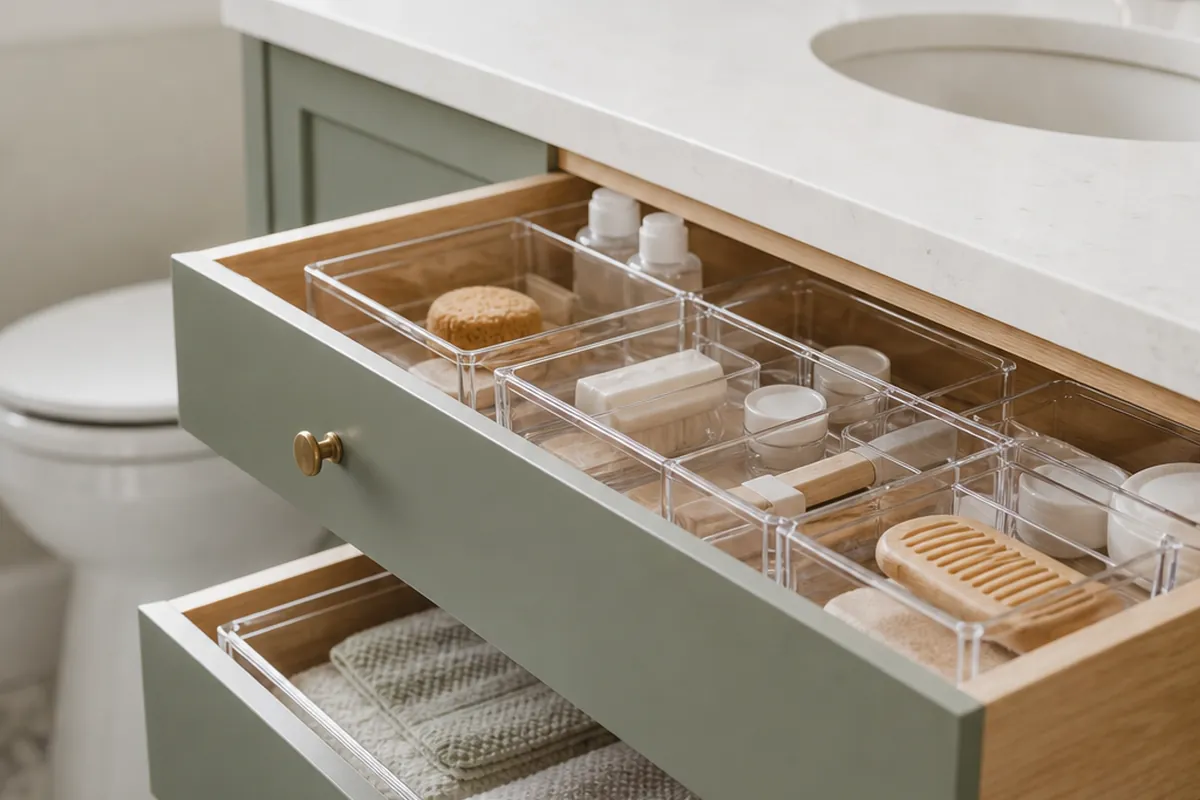
This is the same discipline that makes bathroom drawer organization work, and it is the single biggest difference between a drawer that stays sorted and one that reverts.
5. Use a clear organizer set for the very small things
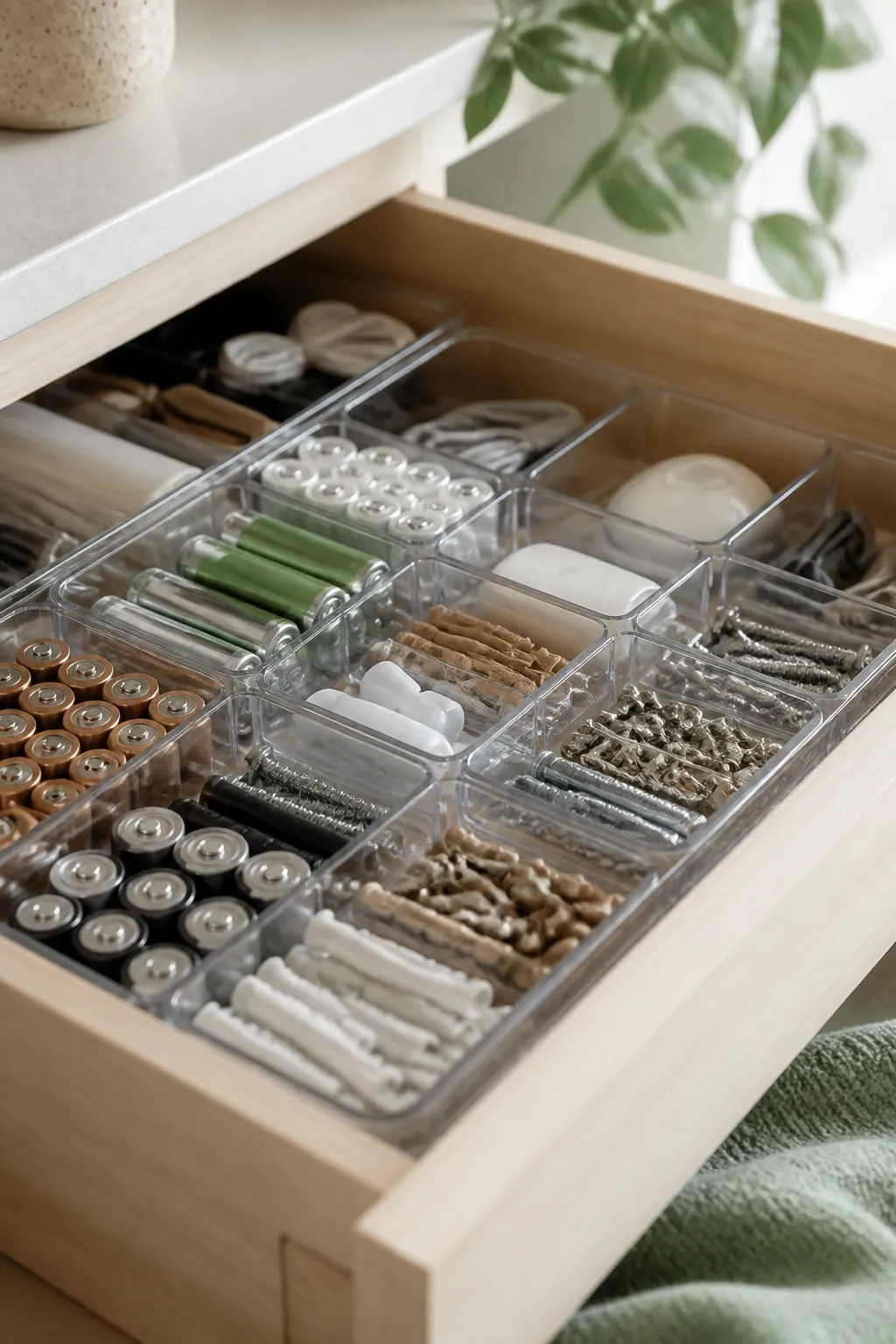
Some items are too small to justify a full divider lane, and those are the ones that end up loose and rattling: spare screws, batteries, safety pins, SIM trays.
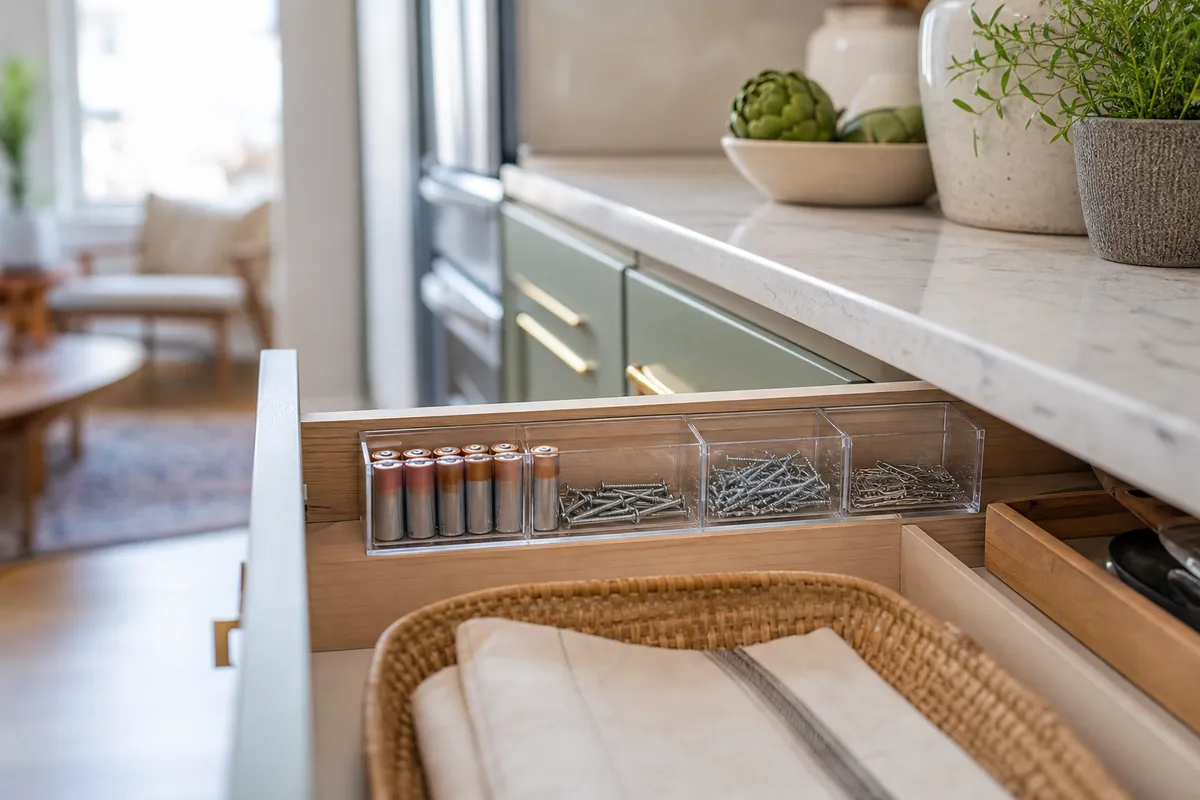
A clear drawer organizer set with several small compartments handles that tier without wasting drawer real estate on it. Clear matters more here than anywhere else in the house, because the whole point of the junk drawer is finding something without hunting.
Put the small-item organizer at the back of the drawer, not the front. You reach for tape far more often than a spare screw.
6. Fit the layout to an awkward drawer with adjustable dividers
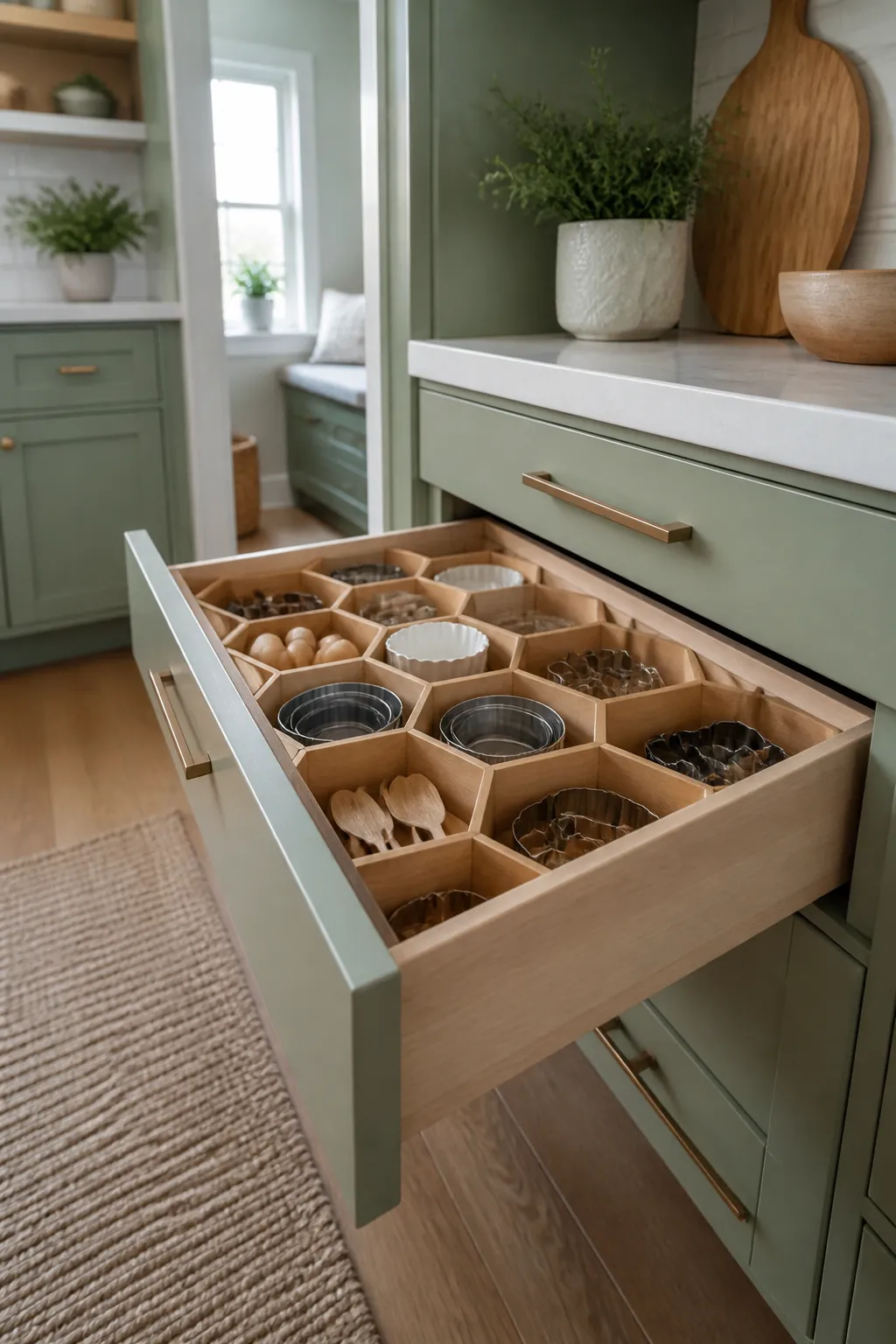
Kitchen drawers are rarely a size any organizer was designed for, and a set that almost fits leaves a two-inch gap that becomes a junk drawer inside your junk drawer.
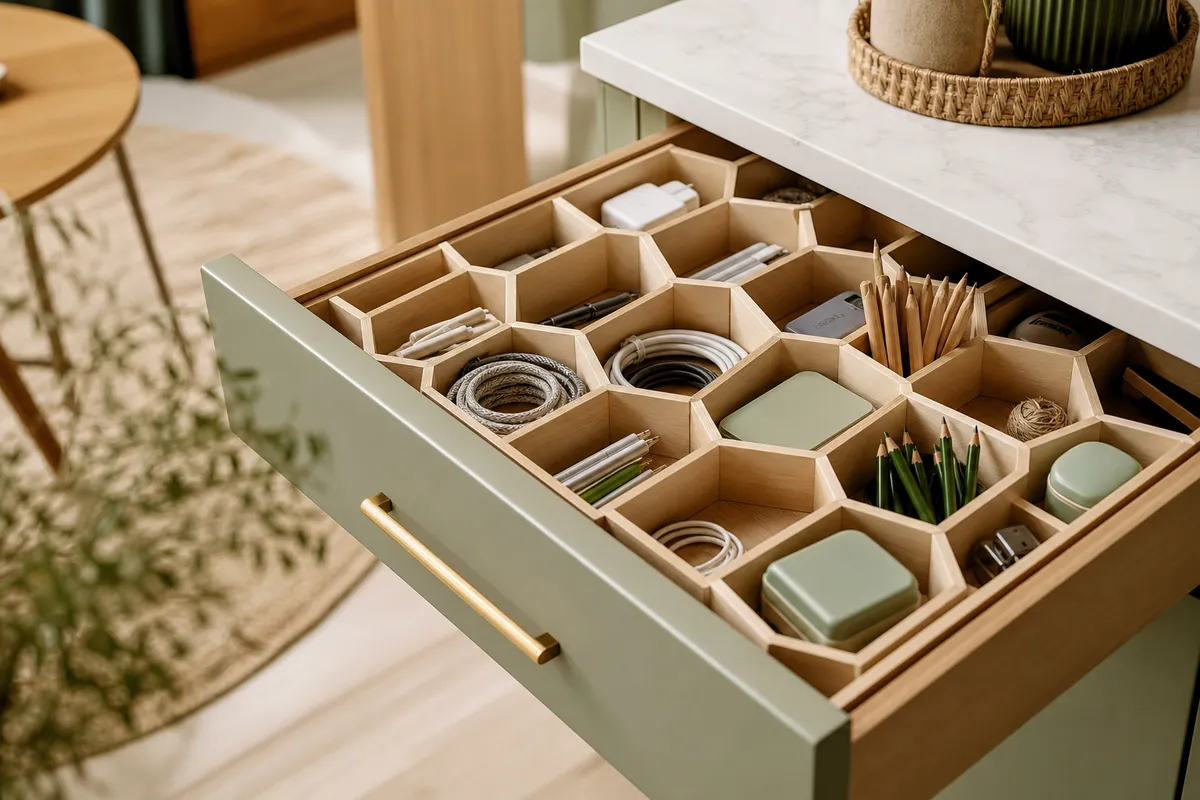
An adjustable honeycomb drawer divider solves the odd-size problem by filling the whole drawer with cells you configure yourself. It is the right answer for shallow drawers and for drawers with a rail or a lip that stops rigid trays sitting flat.
Measure the interior depth, not the drawer front. Drawer fronts overhang, sometimes by an inch, and that is exactly the error that gets an organizer sent back.
7. Give the drawer a hard limit
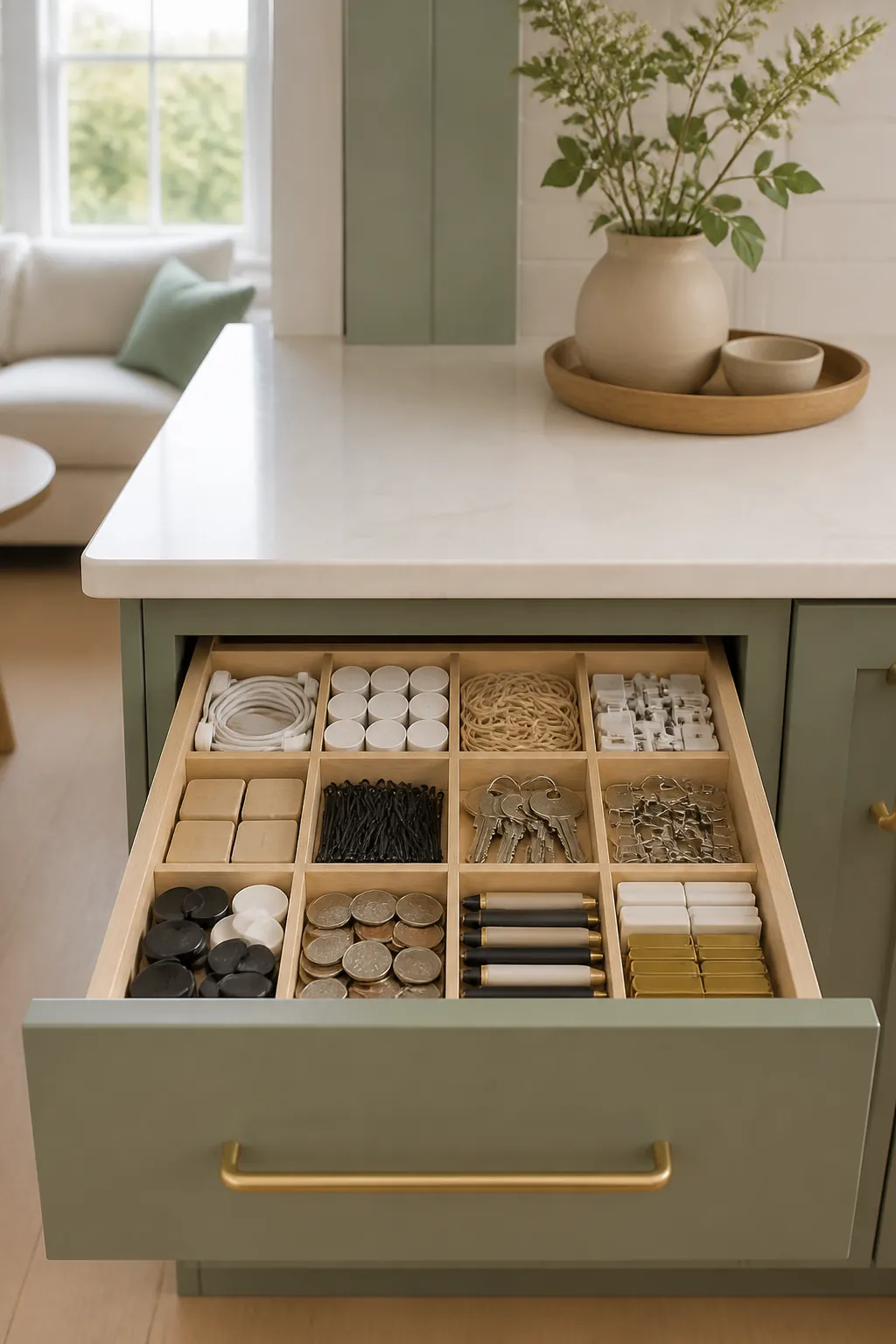
This is the idea that actually keeps it tidy, and it is free.
Once every compartment is full, the drawer is full. Something leaves before something new goes in. Dividers make that rule enforceable because fullness becomes visible, whereas an open drawer can always absorb one more thing until it cannot close.
If a category keeps overflowing, that is information. Overflowing pens means you own too many pens, not that you need a bigger drawer.
8. Move the emergency items somewhere findable

A junk drawer is the worst place for the things you need in a hurry, because a hurry is exactly when rummaging fails.
Torches, spare batteries for smoke alarms, and any medication should live somewhere obvious and consistent rather than under a layer of takeaway menus. Keep them in a labeled box in a cabinet, or hang the flashlight on a hook. This is not organizing pedantry, it is the difference between finding a flashlight in the dark and not.
9. Reset it in five minutes, twice a year
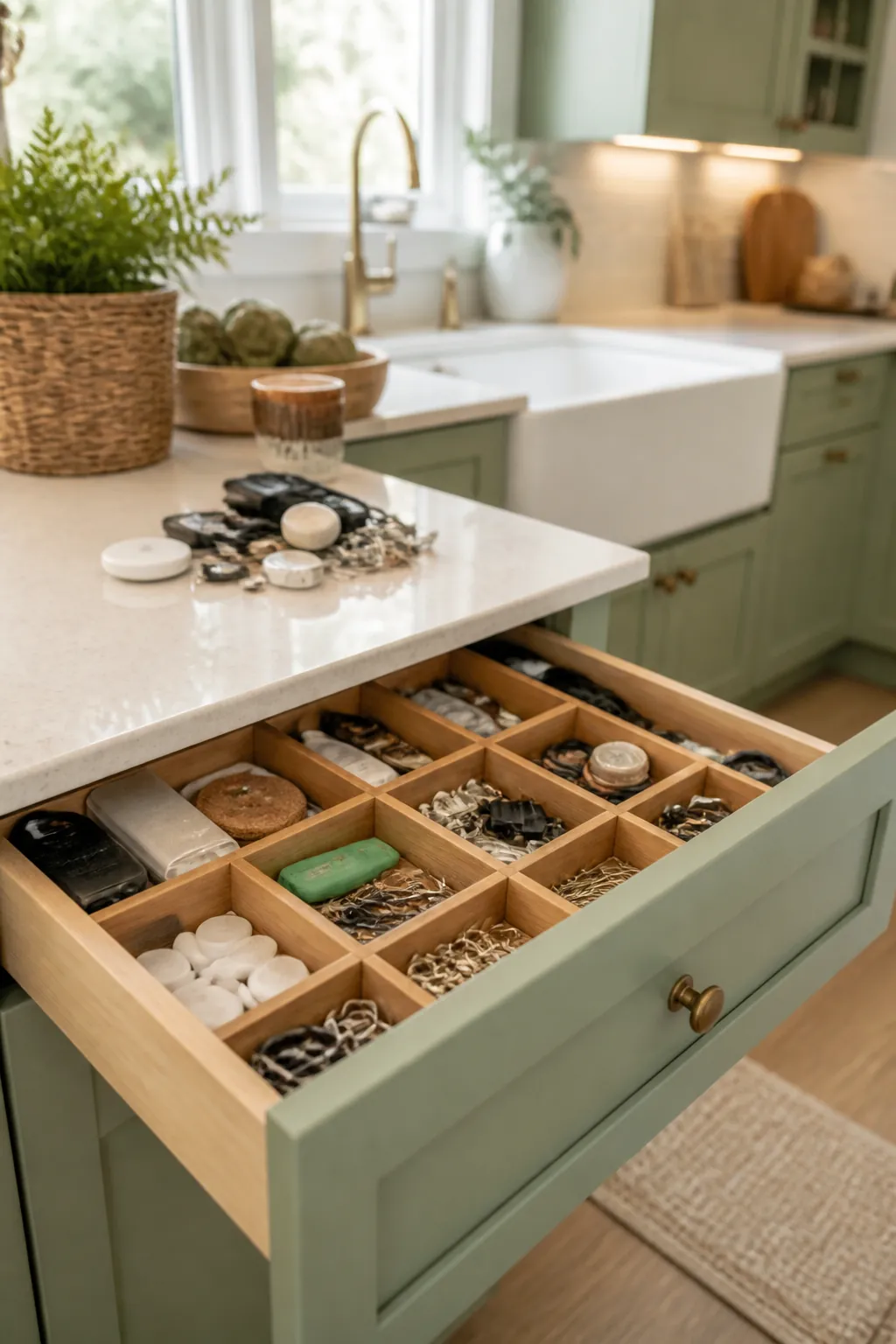
A junk drawer does not need a system, it needs a short recurring reset, because it is by definition the place where uncategorised things land.
Twice a year, tip it out again and repeat the three piles. It takes five minutes once the dividers are in, because the sorting decisions are already made and you are only removing what drifted in. Pair it with something you already do seasonally, like the clock change, so you do not have to remember it.
Junk drawer organization that survives
The order that works: empty it onto a table, sort into three piles and no more, divide the drawer to match what you actually kept, and then hold the line on the limit. Bamboo drawer dividers with labels handle the main lanes, a clear drawer organizer set catches the small rattling things, and an adjustable honeycomb drawer divider rescues an awkward-sized drawer.
The rule is the part people skip and the part that matters. A divided drawer with no limit is just a tidier version of the same problem in six weeks. If the rest of the kitchen needs the same treatment, kitchen cabinet organization works from the same principles.