Cutting boards are the one kitchen item that is both flat and heavy, which is exactly the combination that defeats most drawers. Lay two or three on top of each other and you get a slab you have to lift entirely to reach the bottom board, and in a small kitchen there is rarely a drawer built for anything else. The fix depends on a measurement almost nobody takes before they buy a divider: how tall is the drawer, really, compared with how wide the board is.
1. Measure the drawer’s height before you measure anything else
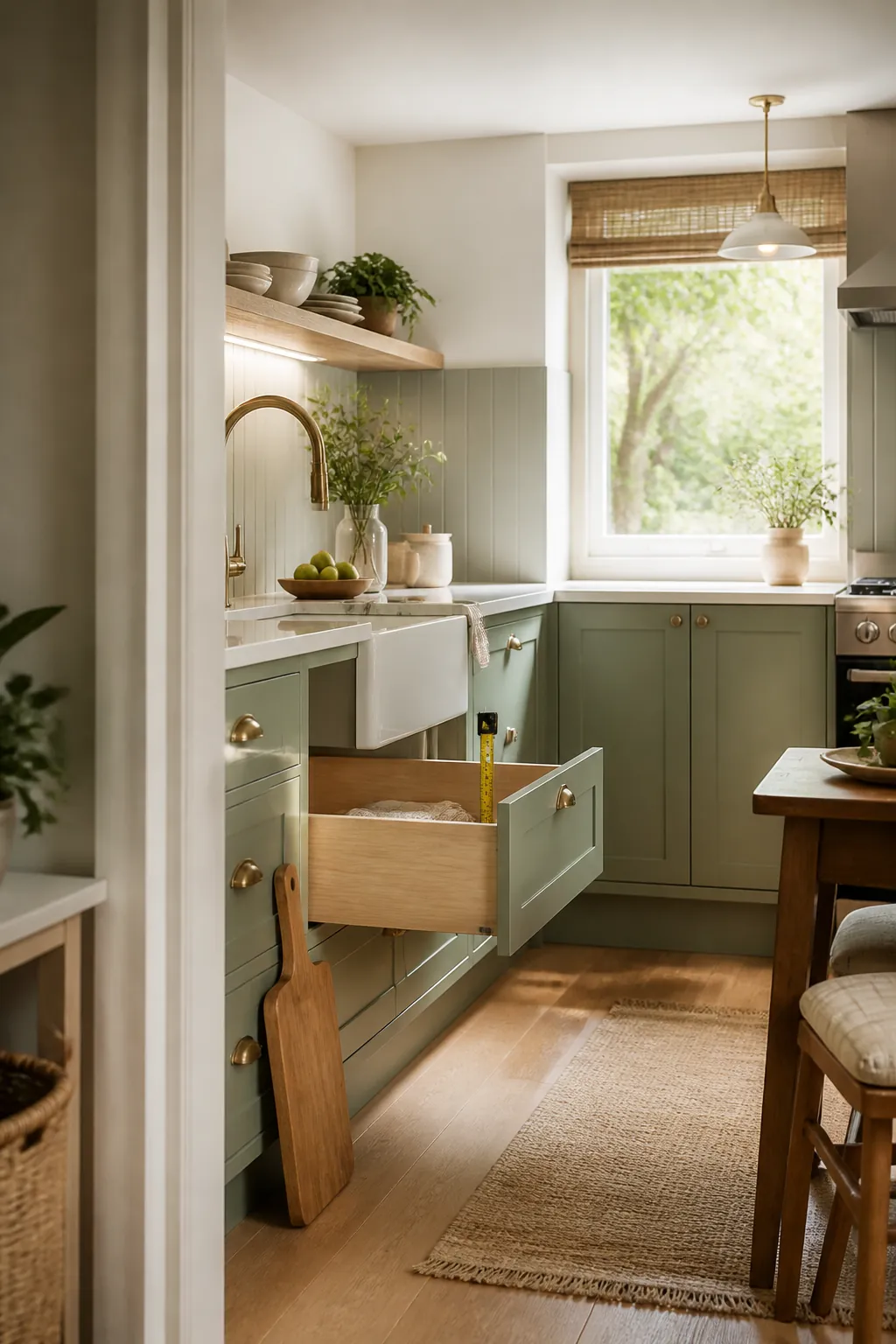
A standard wood cutting board runs about eighteen by twelve inches and three-quarters of an inch thick. A thin poly board is closer to fifteen by ten and a quarter-inch thick. Those numbers only matter once you know your drawer’s internal height, because that is the number that decides whether boards can stand up at all.
Most utensil drawers are three to four inches tall inside. A twelve-inch-wide board needs twelve inches of clearance to stand on its long edge, so in that drawer it simply cannot. People buy a tall divider for a shallow drawer more often than you would expect, and then wonder why the board will not sit down flat inside it.
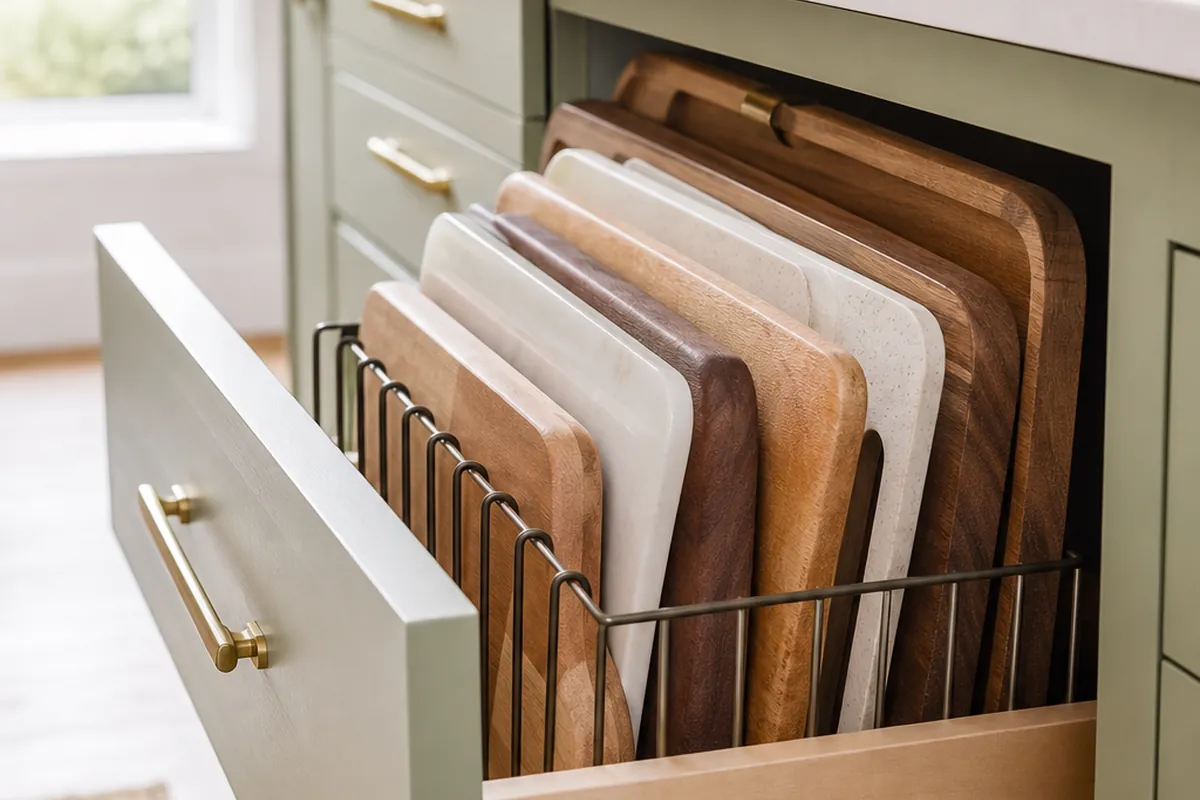
2. In a genuinely deep drawer, stand boards like records
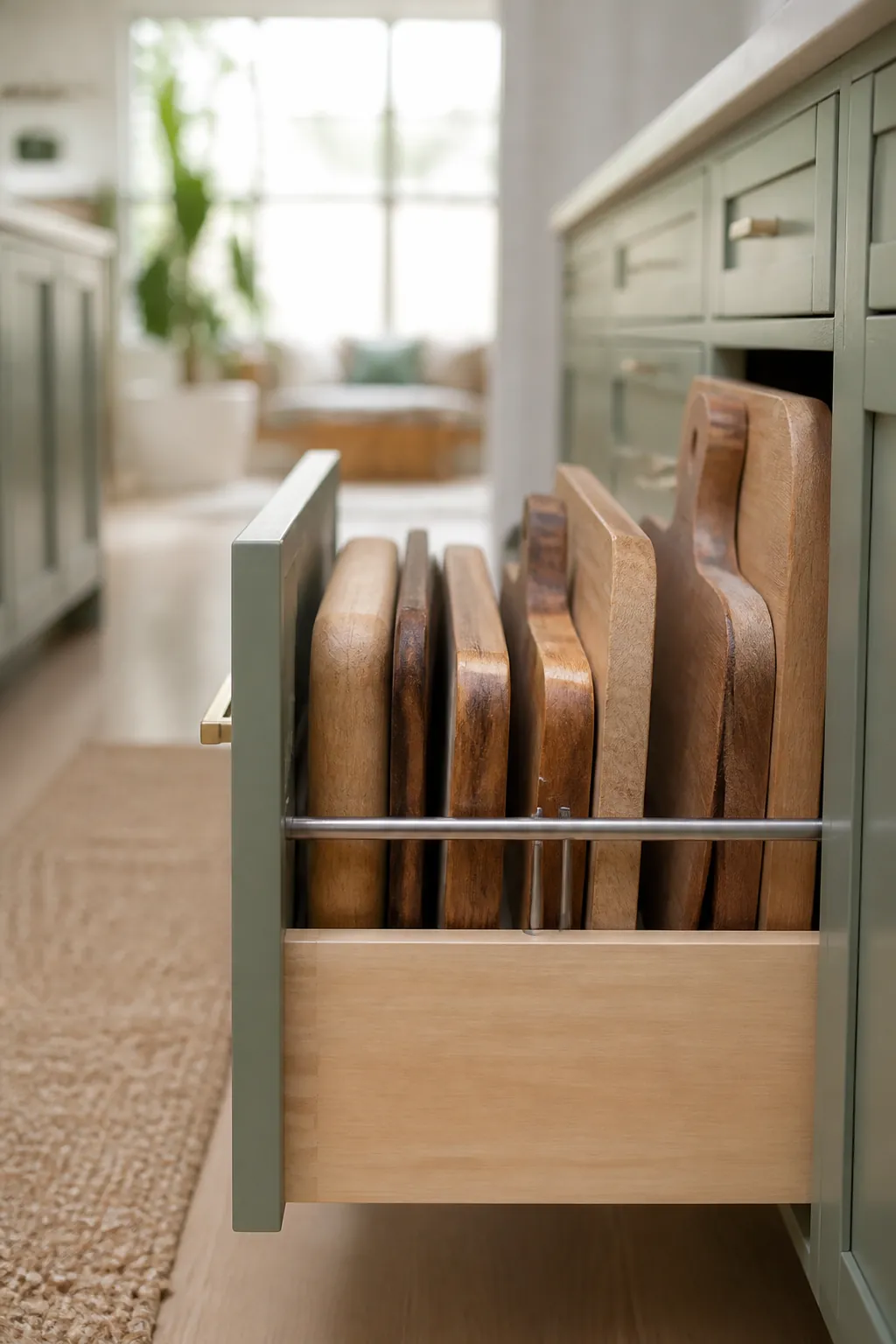
If you have one, this is the easy version. Some ranges have a deep drawer beneath the oven, and some runs of cabinets include one tall pull-out drawer instead of two shallow ones. Either gives the twelve-plus inches a board needs to stand on its long edge, front to back, the same way files stand in a filing drawer or sheet pans stand in a cabinet.
Standing beats stacking for the same reason it always does: you can pull out the middle board without lifting the two beside it. A stack of four boards means moving three to get the one on the bottom, which is why the heaviest board in most kitchens is also the one nobody uses.
3. A honeycomb divider handles the mismatched shapes
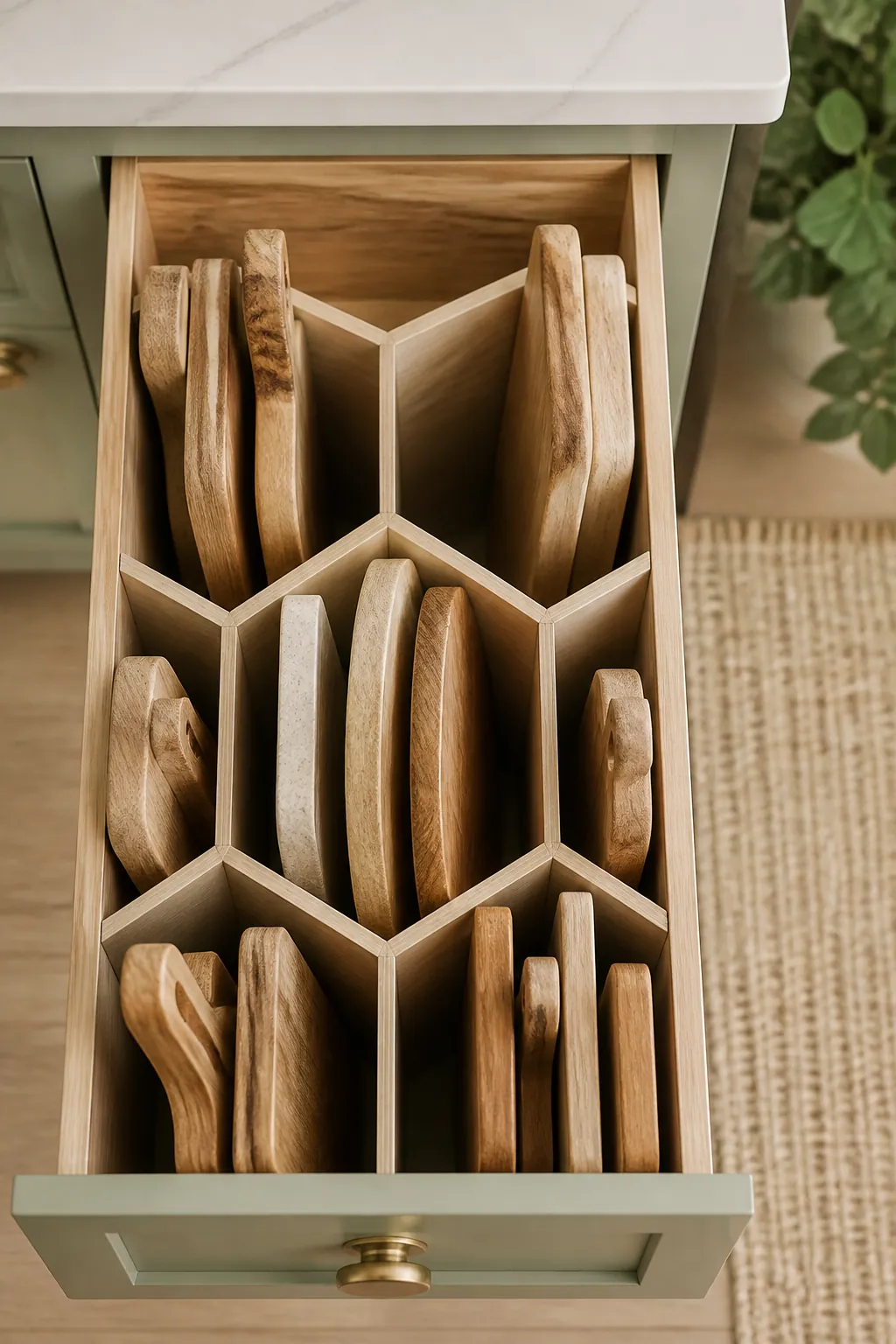
An adjustable honeycomb drawer divider earns its keep in a drawer that holds boards of genuinely different footprints: a large rectangular board next to a round one next to an odd-shaped charcuterie board. The hexagonal cells flex to grip whatever shape you push into them, rather than forcing everything into the same straight lane.
This is the right tool when the drawer is shared, not dedicated. If baking sheets or trays live in the same space as the boards, the honeycomb cells adjust to both without needing two separate systems.
4. Full-depth dividers make straight lanes sized to your thickest board
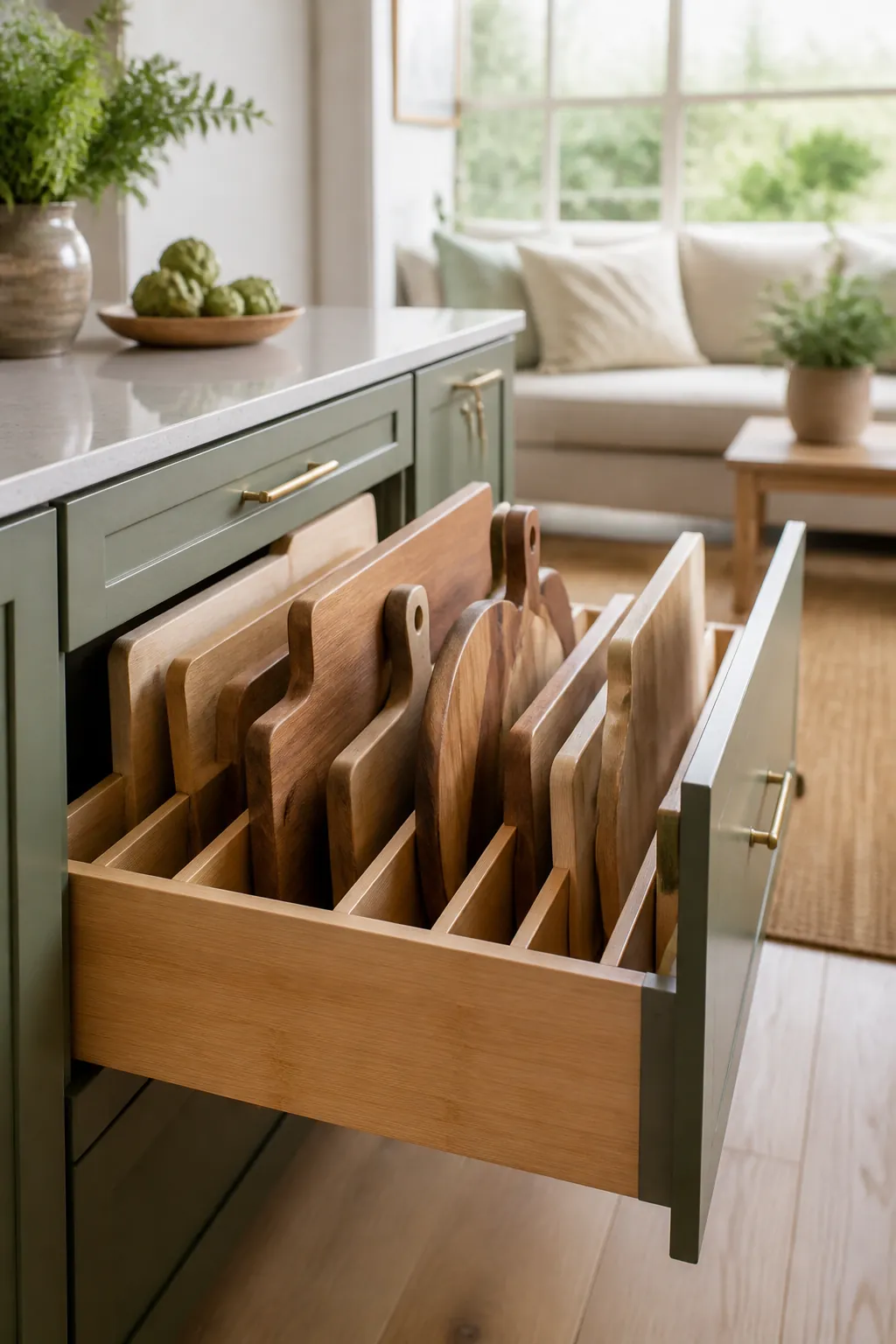
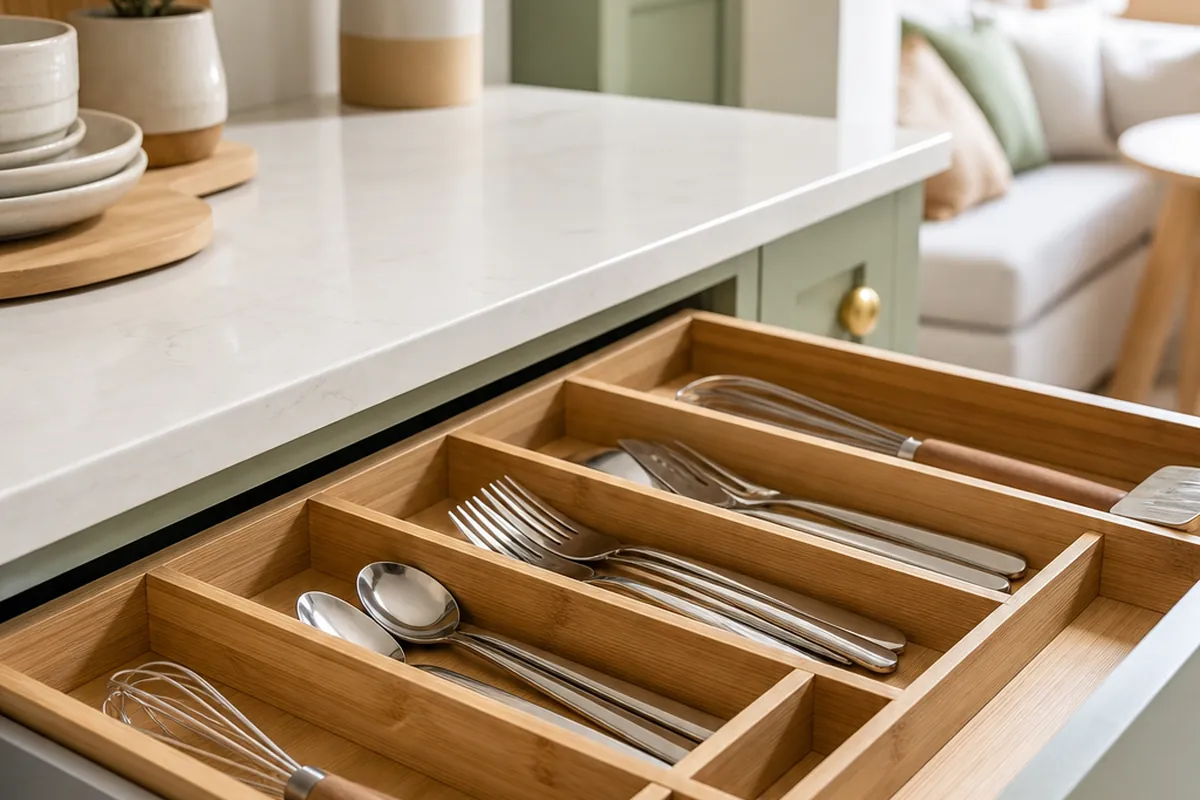
When the drawer is dedicated to boards that are mostly similar sizes, bamboo adjustable drawer dividers give you straight, full-depth lanes instead of cells. Set the lane width to your thickest board plus a little clearance, and every board after that slides into the same gap without being forced.
Full depth matters more here than with cutlery. A divider shorter than the drawer lets a heavy board tip sideways at the back, and a falling board is how a bamboo divider ends up cracked rather than just moved.
5. In a shallow drawer, boards lie flat in a tray
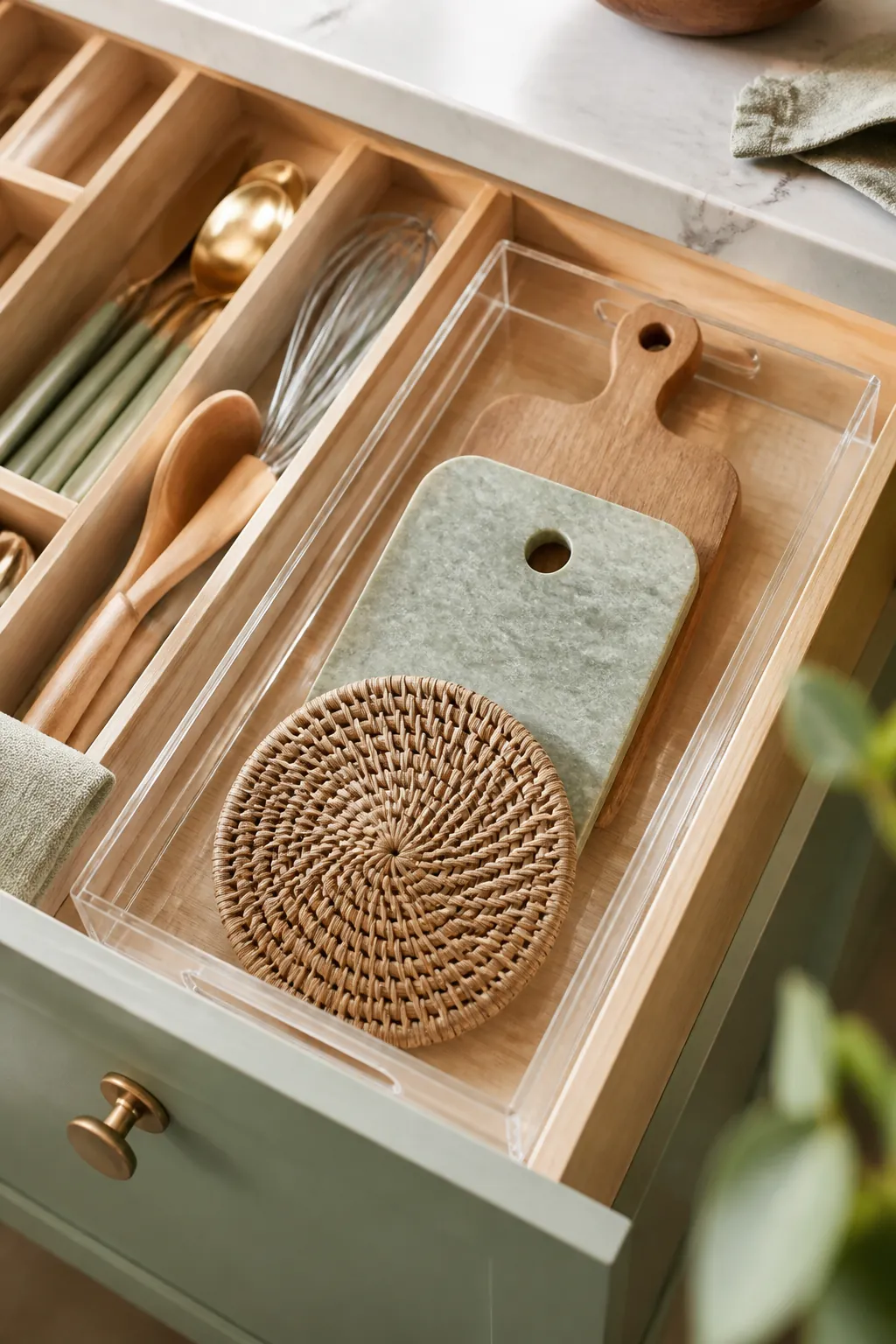
If your only option is the ordinary three-inch utensil drawer, stop trying to make boards stand and corral them flat instead. A clear acrylic drawer organizer tray set holds a couple of small bar boards, a trivet, or a cheese board in a fixed footprint, so they stay stacked neatly in one corner instead of drifting under everything else in the drawer.
This is a smaller-board solution. A full eighteen-inch board will not fit most trays of this kind, which is the point: trays are for the things too small to justify a divider of their own.
6. Flexible mats roll, they do not stand
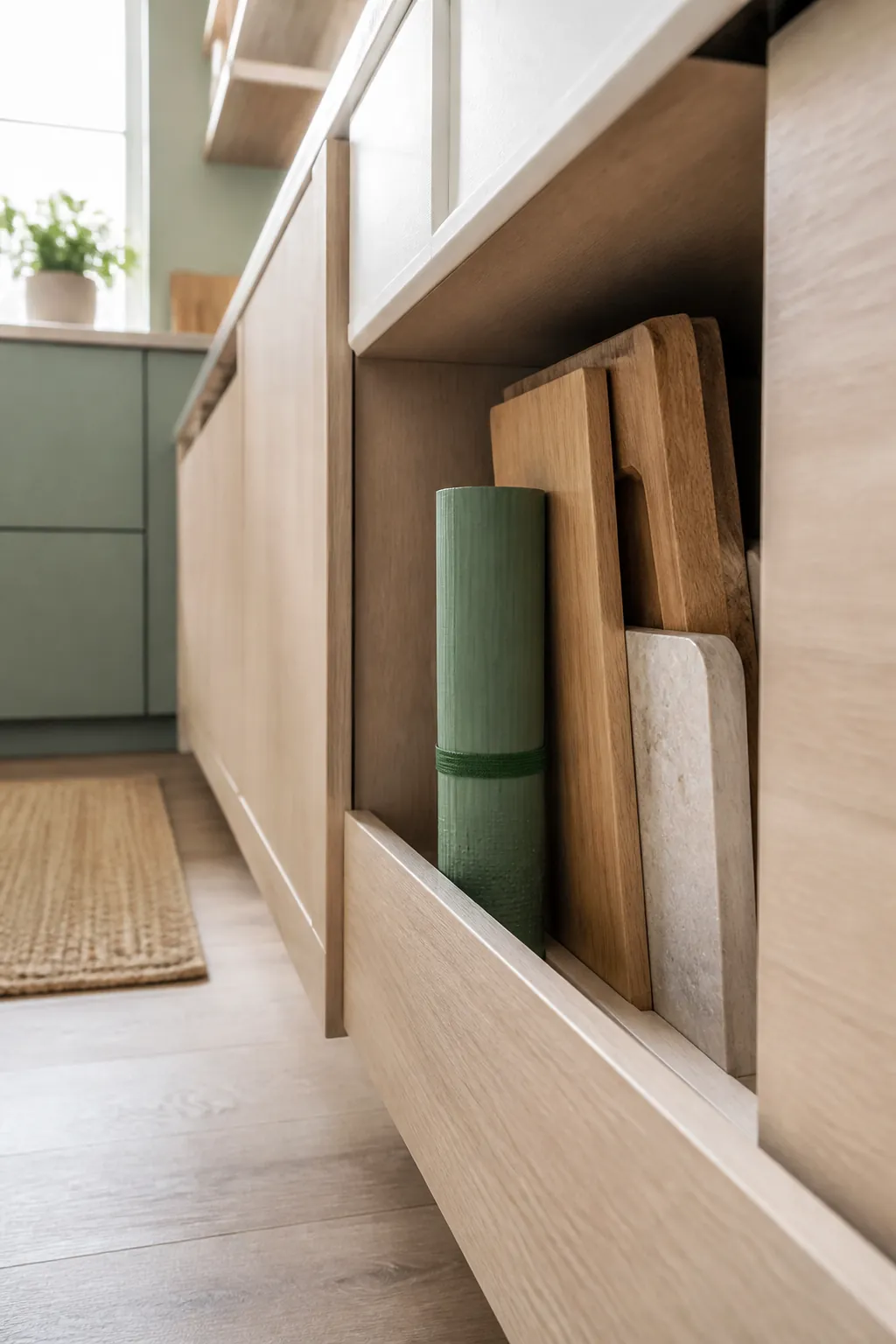
Thin flexible cutting mats bend around a finger, and trying to stand one upright in a divider slot just folds it over onto its neighbor. Roll them into a loose tube, secure with a band, and give them their own slot or a narrow gap at the end of a row of rigid boards.
Forcing a flexible mat into a slot cut for a three-quarter-inch wood board also wastes most of that slot’s width, since the mat collapses to almost nothing. If mats and boards share a drawer, give the mats the narrowest lane rather than splitting the width evenly.
7. Keep the everyday board in the front slot
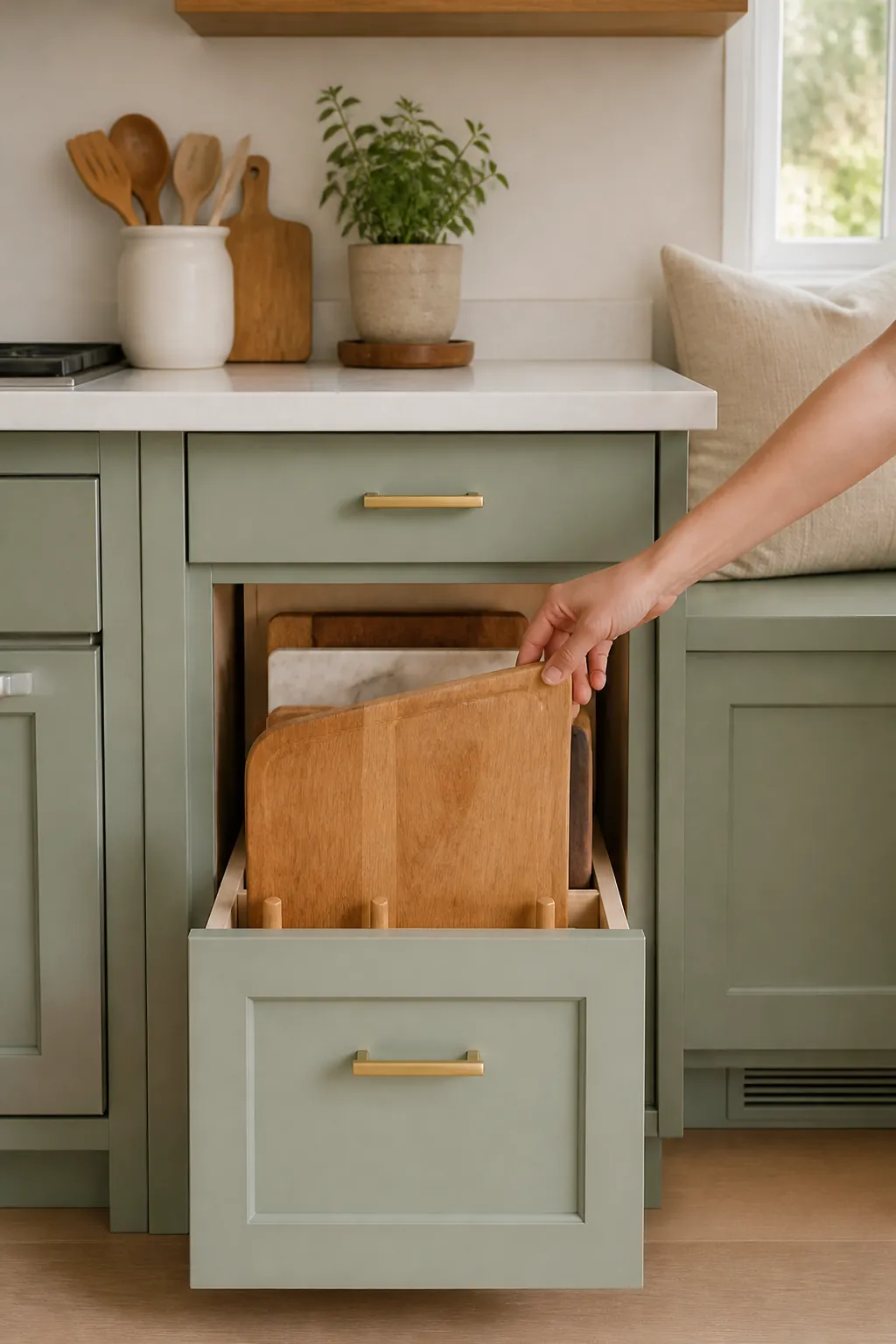
Once the drawer is divided, decide the order the same way you would zone any other drawer: the board you reach for daily goes in the slot nearest the front, not the one that happened to be sized right for it.
This sounds obvious until you actually divide a drawer, because the slots rarely come out identical and it is tempting to put the biggest board in the biggest slot regardless of how often you use it. A board you pull out once a week can sit in a back lane you have to nudge two others aside to reach; the one you use for dinner every night cannot. Reach-frequency should decide position before board size does.
8. Do not let one warped board set the rules for the whole drawer
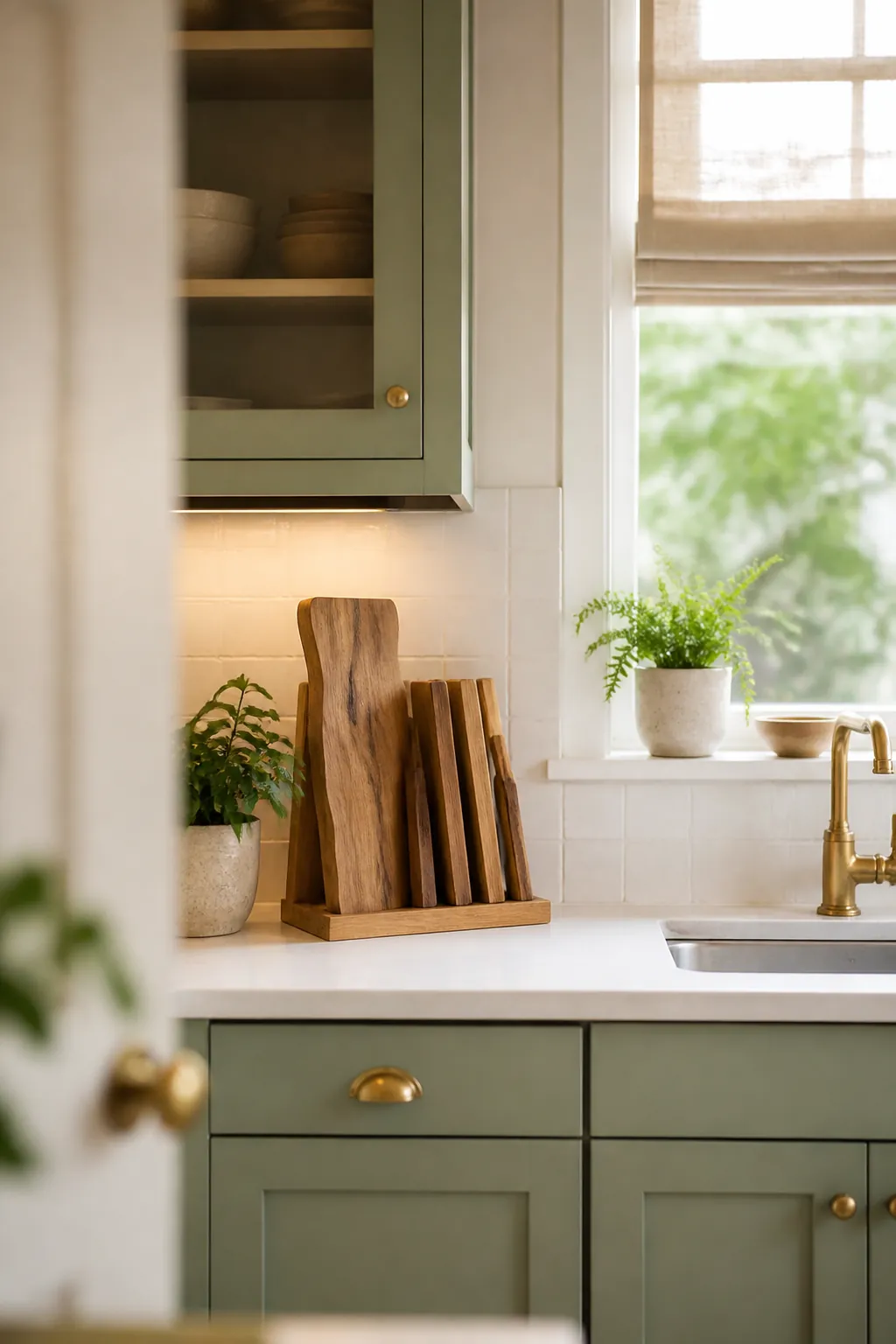
A wood board that has cupped slightly from water exposure needs more clearance than its flat dimensions suggest, and forcing it into a slot sized for a true board bows the divider or jams the drawer. If one board in the set has started to warp, give it a wider slot of its own rather than resizing every lane to fit it.
A board that is warping is also usually a board that is drying unevenly, which is worth fixing on its own terms: stand it on edge to dry after washing, not flat on a counter, and the warp often stops getting worse.
9. When nothing fits, borrow the cabinet instead
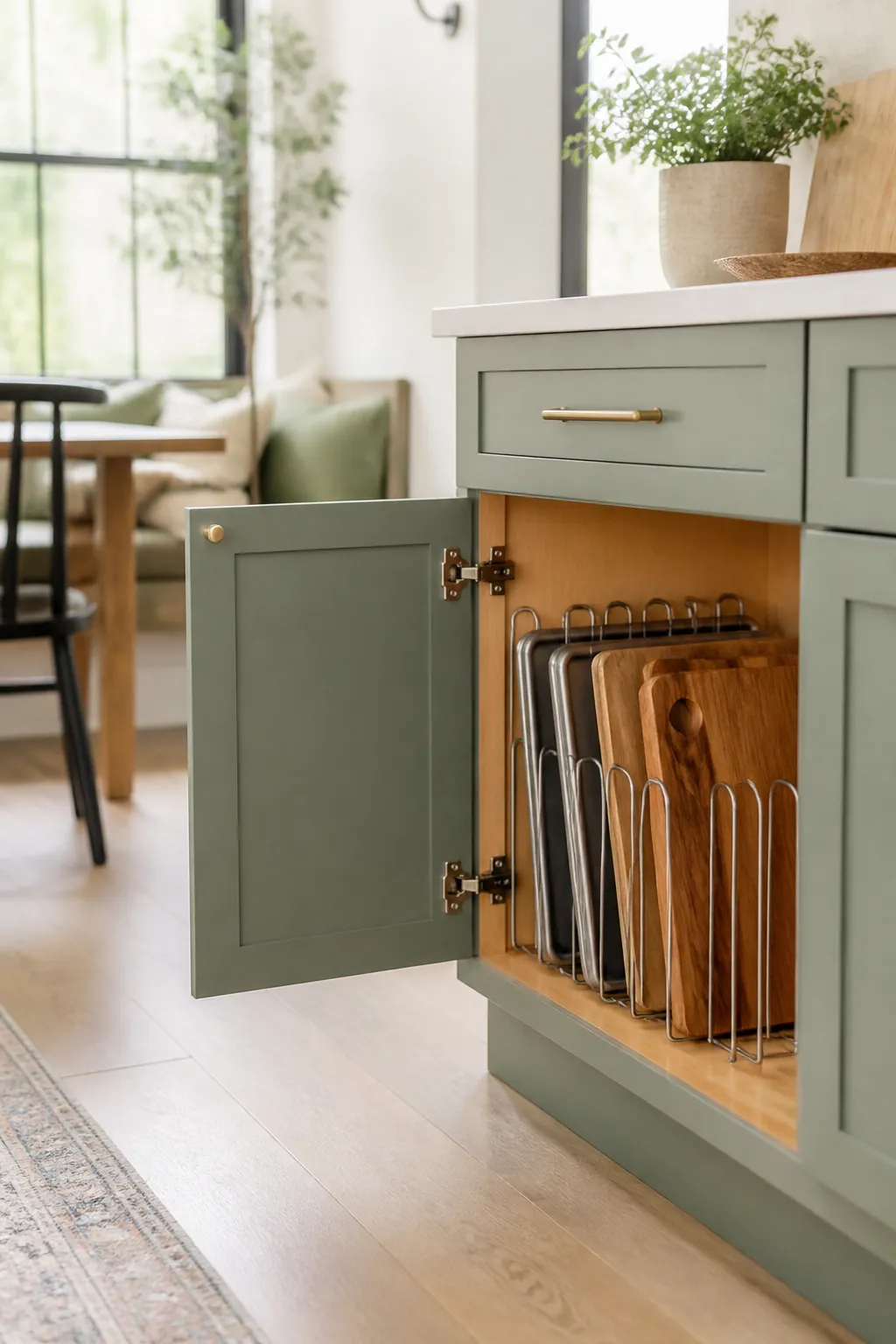
A full-size board in a small kitchen sometimes outgrows every drawer in the room, and that is fine, because the same vertical logic works in a cabinet. Wire shelf dividers or two tension rods turn a cabinet shelf into slots wide enough for an oversized board the same way they do for sheet pans, and the cabinet above the refrigerator holds boards you reach for only on weekends just as well as it holds anything else.
10. Dry boards fully before they go back in the drawer
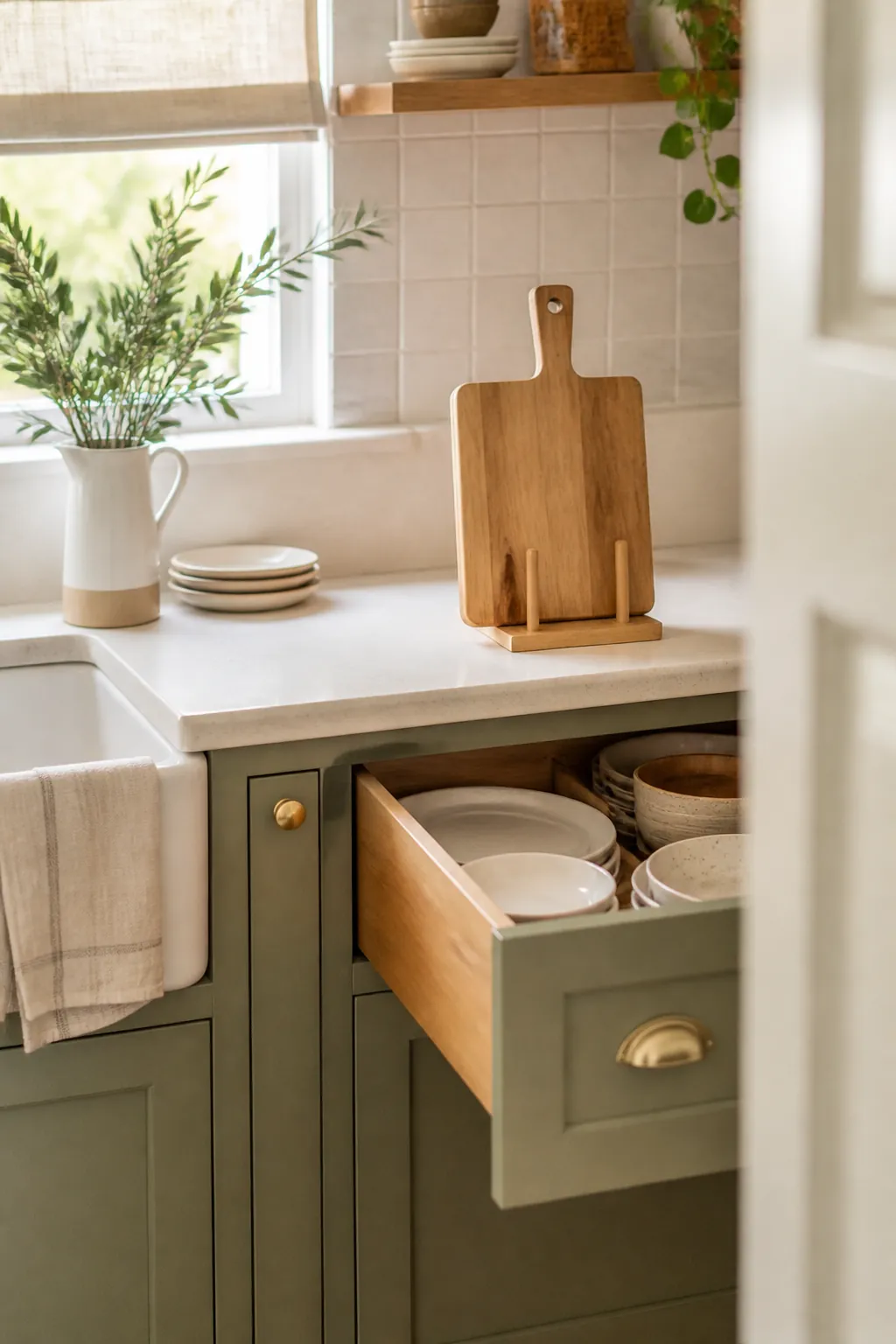
A board put away damp is the quiet cause of a drawer that starts to smell or a divider that swells and sticks. Wood is the bigger risk, since it holds moisture longest, but even plastic traps a film of water against whatever liner is under it.
Stand boards on a rack or lean them against something until they are properly dry, not just surface-dry, before the drawer closes on them. It costs an extra hour and saves a drawer that otherwise needs emptying and airing out every few months.
Where to start
Measure your drawer’s internal height first, since that single number decides whether any board in your kitchen can stand up at all. If you have a deep drawer, divide it with a honeycomb divider for mixed shapes or full-depth bamboo dividers for a set of similar boards, and give flexible mats their own narrow lane rather than a slot sized for wood.
If every drawer you own is the shallow kind, stop fighting it: a clear tray keeps small boards corralled flat, and anything too big for a drawer belongs standing in a cabinet instead. Either way, dry every board properly before it goes back in, since a damp board does more damage to a drawer than a decade of ordinary use.