A laundry closet is one of the meanest little spaces in a home. Two appliances, a folding door, maybe eight inches of clearance on either side, and somehow you’re supposed to stash detergent, dryer sheets, a hamper, and the pile of single socks nobody claims. Real small laundry closet organization has almost nothing to do with buying more bins. It’s about using the air above your machines and the slivers of space beside them.
Here’s how to read your specific closet, decide what goes where, and pick the two pieces of gear that solve the most common problems. No gutting, no drilling into anything your landlord will notice, just smart use of the box you already have.
Start by looking up, not out
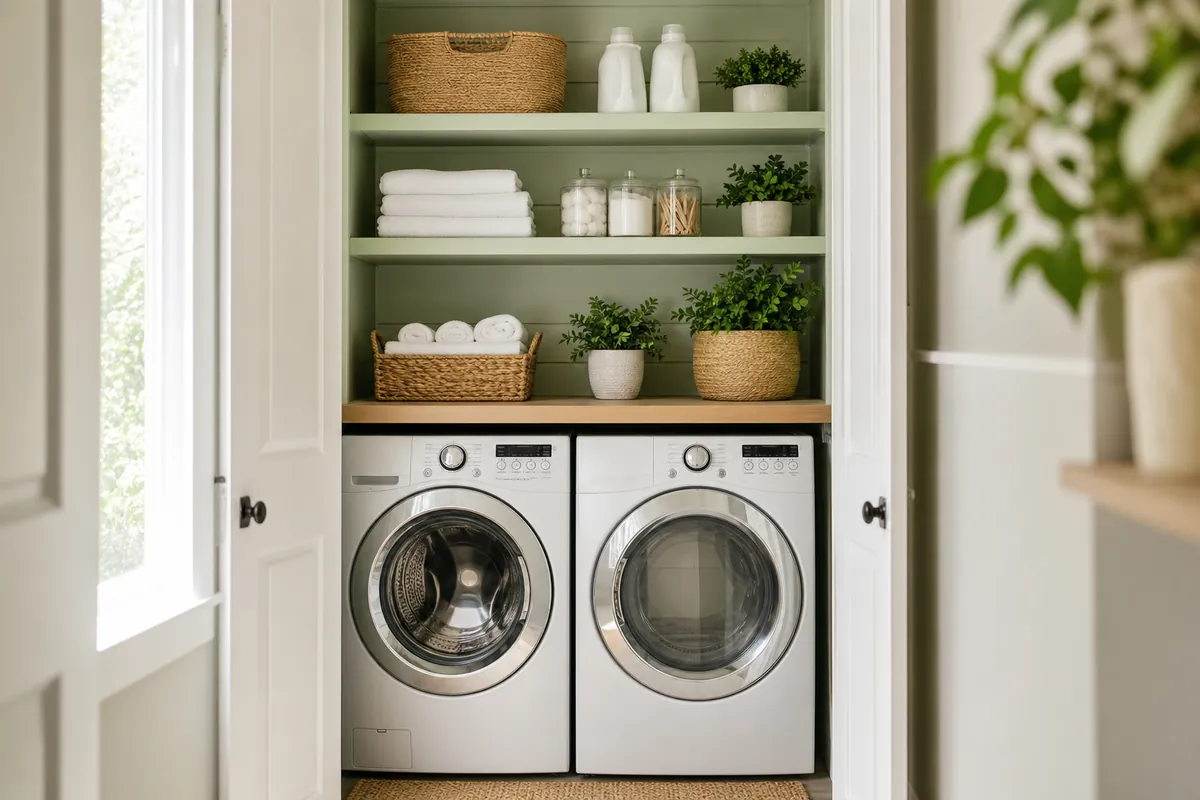
The biggest mistake people make in a small laundry closet is treating it like a floor problem. You don’t have floor. What you have is a tall, narrow column of mostly empty air above the washer and dryer, and that column is where your storage lives.
Before you buy a single thing, measure three numbers: the width of the opening, the depth from the back wall to the closet doors, and the height from the top of your machines to the ceiling or first shelf. Front-loaders with a countertop across the top behave completely differently from top-loaders, where the lids swing up and eat your vertical space. If you’ve got top-loaders, everything overhead has to clear that open lid. Leave a hand’s width of swing room and check it before you commit.
The overhead shelf is your anchor piece
An over-washer/dryer shelf unit is the workhorse of the whole setup, and it’s worth buying one built for the job instead of wedging a bookshelf in sideways. If towels and spare bedding are competing for those same shelves, linen closet organization covers how to split them. These straddle the machines on tall legs or mount to the wall above them, turning that dead air into one or two working shelves. Many come in adjustable widths, so you can size one to the actual gap between your machines and the side walls rather than guessing.
Why a straddle unit beats a floating wall shelf: no studs to find, weight spreads across the floor instead of hanging off the drywall, and it comes down clean on move-out day. That last part matters if you rent. Put daily-use items on the lower shelf, detergent and a little basket for stray buttons and lint, and send the stuff you touch twice a year up top, bulk refills, seasonal odds and ends, the iron.
One rule: never store liquids directly over a top-loader’s opening. A leaking cap dripping into the drum is a slow, sudsy disaster you won’t notice until it’s everywhere. Push liquids to the shelf edges or over the dryer side.
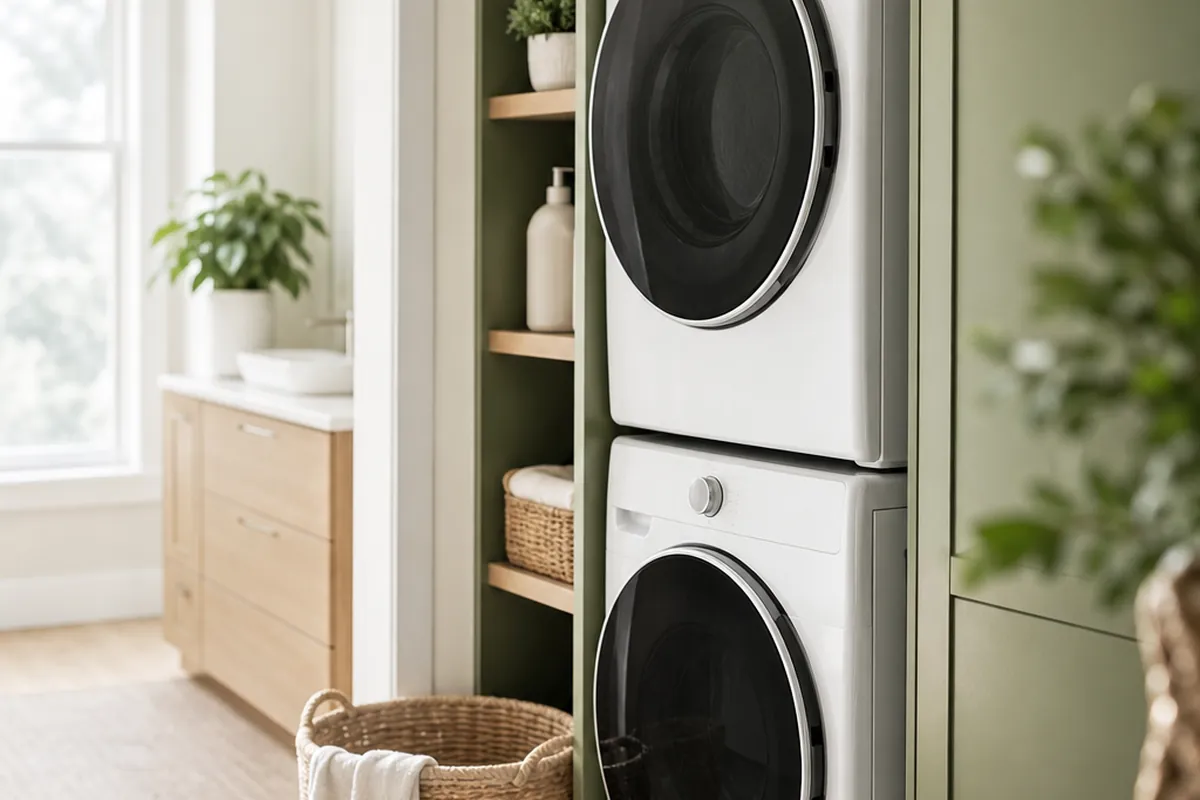
If your machines are stacked, the space above them is gone but the sides and the door are not, and storage ideas for a stacked washer and dryer closet works with that layout specifically.
Claim the gap beside your machines
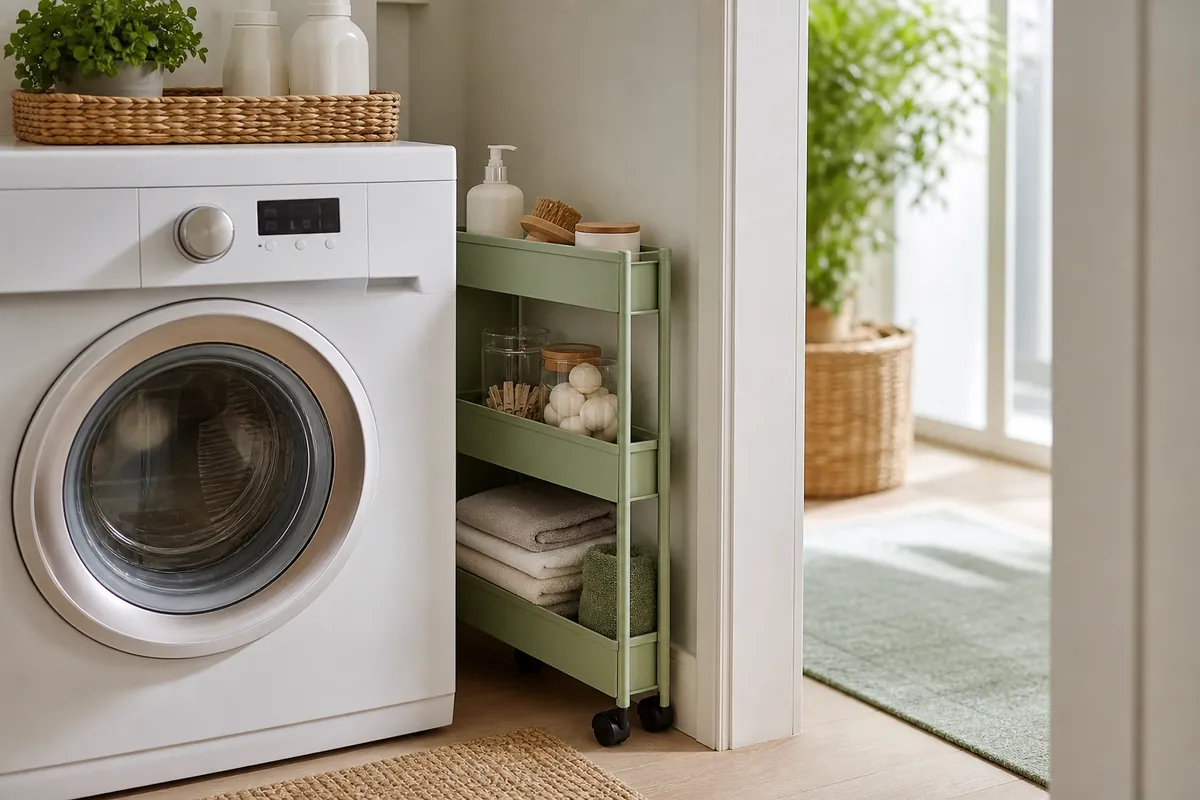
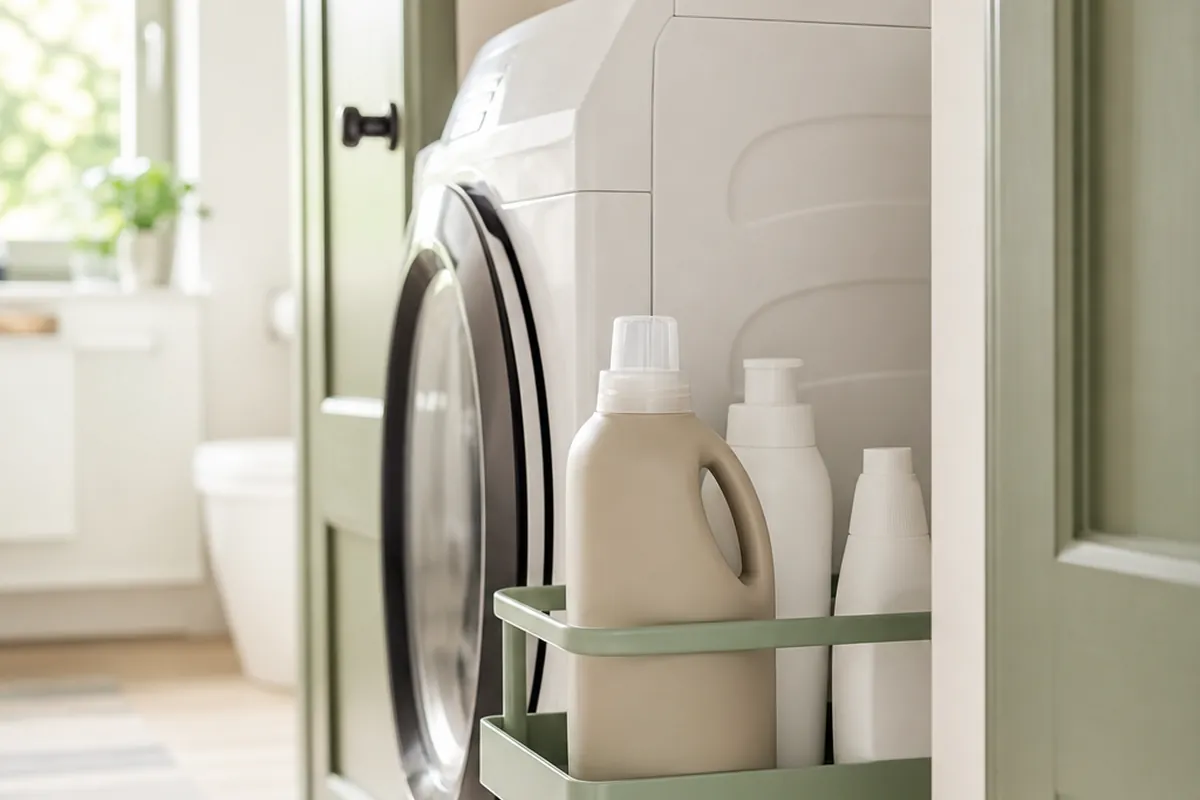
That three-to-six-inch canyon between your washer and the wall is prime real estate, and most people ignore it completely. A slim rolling laundry cart is built for that exact slot. It vanishes into the gap and rolls out when you need it, so you’re not fishing around in a dark crevice for the stain stick.
Stock the tiers by how often you reach for things. Top tier: the stuff you grab every load, pods or scoops, a lint brush. Middle: stain treatments, wool dryer balls, mesh bags for delicates. Bottom: overflow and refills. Because it rolls, you can wheel the whole thing out, fold on top of the dryer, and tuck it back. The carts sold on Amazon usually run three tiers on locking casters, and the locks matter, they stop the cart from drifting every time your hip bumps it.
If your gap is genuinely tiny, under three inches, skip the cart entirely. Forcing one that doesn’t fit just wedges it in place forever. Adhesive hooks or a slim over-the-door caddy will serve you better.
Doors are storage, so use them
The inside of a laundry closet door is a flat vertical surface doing absolutely nothing. An over-the-door organizer or a row of adhesive hooks turns it into a home for the ironing board, drying nets, a small hamper bag, a whisk broom. Bifold doors are the catch here, since they fold back against themselves. Measure the clearance before you hang anything with depth to it, or you’ll jam the door.
For the ironing board, a flat wall-mount bracket or an over-the-door hook keeps it upright and pinned instead of leaning in the corner, where it slides down and clips your ankle every time you walk past.
Give every category one home
Clutter in a laundry closet isn’t a space problem, it’s a decision problem. When the dryer sheets have no obvious home, they land on top of the machine, then on the floor. Fix that by assigning zones.
- Wash products live together, one shelf or one cart tier. Decant powder into a lidded container with a scoop so you’re not wrestling a torn cardboard box every load.
- Sorting and drying gets its own spot: mesh bags, a fold-flat drying rack, wool dryer balls in a little bowl.
- Lost-and-found needs a home too. A single small jar for coins, buttons, and orphan socks keeps that stuff from colonizing every flat surface.
Once each category has a defined place, the closet stays sorted with almost no effort, because putting things away becomes obvious instead of a daily judgment call.
Go vertical with drying
Hang-drying in a closet is the eternal struggle. A retractable clothesline mounted across the interior gives you a line that disappears when it’s not in use. A slim accordion rack that folds flat against the wall does the same job. What kills a small closet is a bulky freestanding rack parked in the middle of the floor, because in here that footprint is the entire room.
Contain the hamper problem
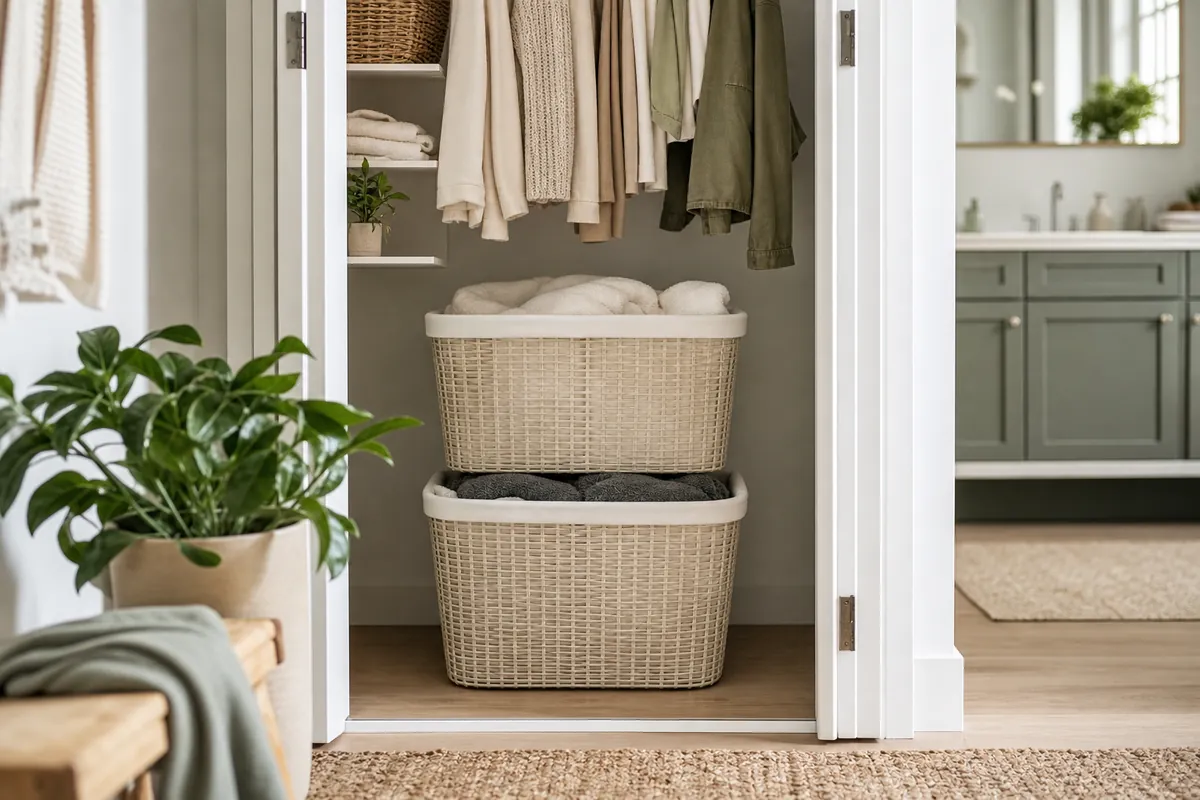
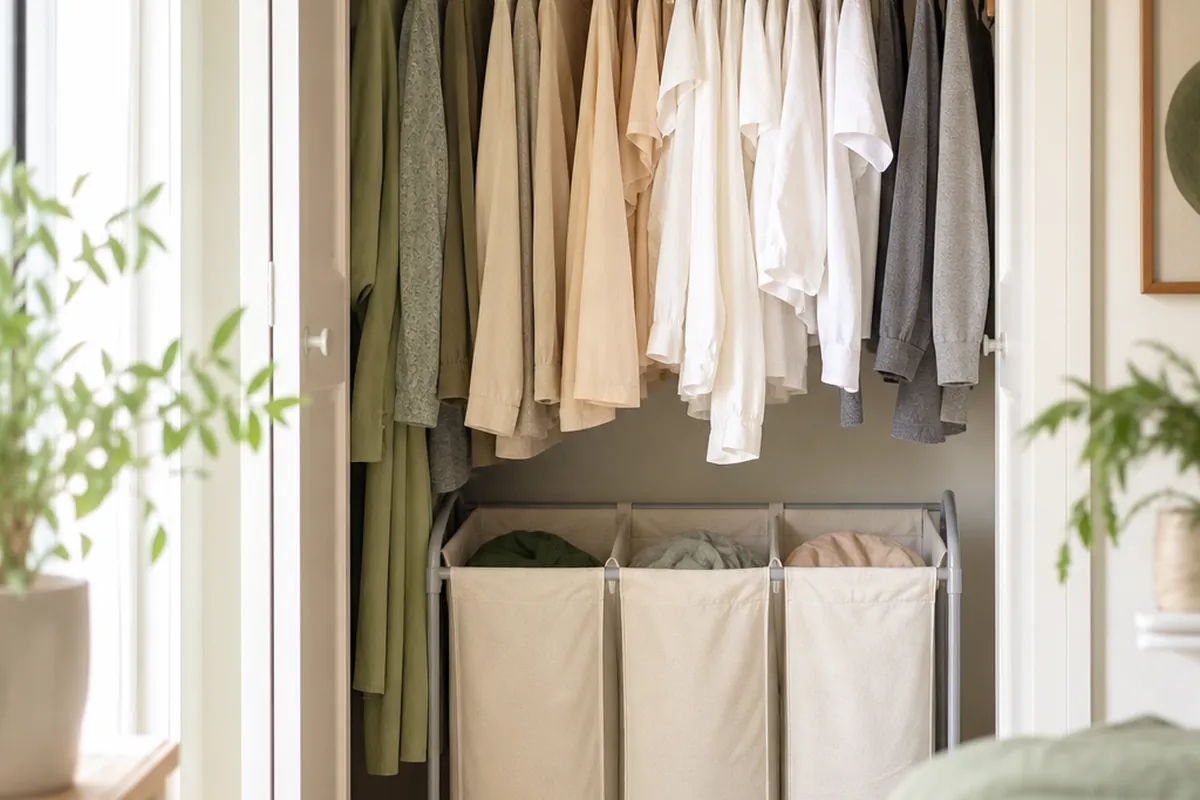
Dirty laundry expands to fill whatever you give it, so a giant bin in a small closet just becomes a giant pile. In tight spaces I’d reach for a two-bag sorting hamper that hangs from a rail, or a slim collapsible bin that tucks beside the rolling cart. Sort lights and darks as you toss them in and you skip the floor-sorting ritual completely, which is the step that makes laundry feel like a chore.
If your washer and dryer live inside a bathroom or hall closet, the same logic from our guide to small bathroom storage carries over: go vertical, use the door, keep the floor clear.
A realistic setup, start to finish
Here’s how the pieces stack up in a typical narrow closet, side-by-side or stacked machines. Install the over-washer/dryer shelf unit first, since it defines your overhead zones. Load it with detergent and refills, liquids toward the edges. Slide the slim rolling cart into the gap beside the washer and stock it by frequency. Set a small jar for lost items on the machine top or the low shelf. Hang the ironing board and a drying net on the door. Add a retractable line if you air-dry.
That’s the whole system. No renovation, nothing that won’t come out clean when you move. Good small laundry closet organization works with the awkward box you were handed instead of pretending you have a real laundry room.
If your machines sit in a broader utility or entry area rather than a dedicated closet, the same vertical thinking shows up in our entryway organization ideas, especially the parts about using door backs and slim rolling storage.
What to skip
A few things look tempting and then underperform in a small closet. Deep bins you can’t see into swallow everything at the back and you’ll forget it exists. Pretty matching jars that each hold two loads’ worth of detergent waste your shelf on aesthetics you don’t have room for. And any freestanding shelf wider than your machine gap will never sit flush. Buy for the space you measured, not the space you wish you had.
If the vacuum has ended up in this closet too, vacuum storage ideas for a small utility closet covers how to get it off the floor without blocking the machines.