Most apartments and older houses skip the mudroom entirely, so coats end up draped over a chair and shoes pile by the door like a small avalanche. Here’s the reassuring part: no mudroom small hallway storage is really just layering a few vertical zones onto a wall you already walk past every day. Forget the bench the size of a canoe and forget the contractor. What you need is a wall, a door, and a plan for where each type of stuff lands.
Below are eight ways to fake a mudroom in a hallway that’s barely wide enough to turn around in.
Start by mapping the four things that actually pile up
Watch what happens in the first ten seconds after someone walks through your door. Coats come off, bags drop, shoes get kicked into a heap, and keys land wherever there’s a flat surface. Those four habits are your zones, and a fake mudroom works when each one gets a dedicated home within arm’s reach of the entry.
Where people go wrong is buying one big furniture piece and hoping it swallows everything. In a narrow hallway that piece just eats your walking space. Split the jobs and build upward instead.
1. Hang an over-the-door coat rack (no wall damage required)
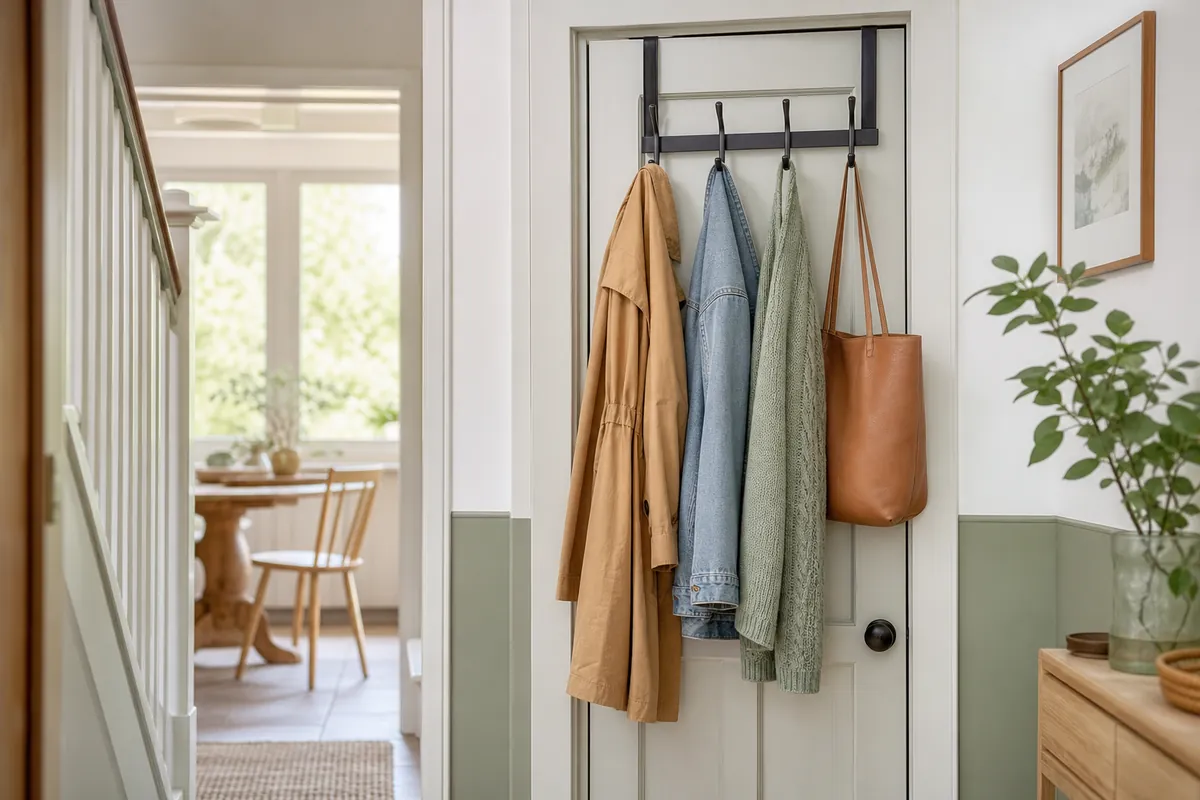
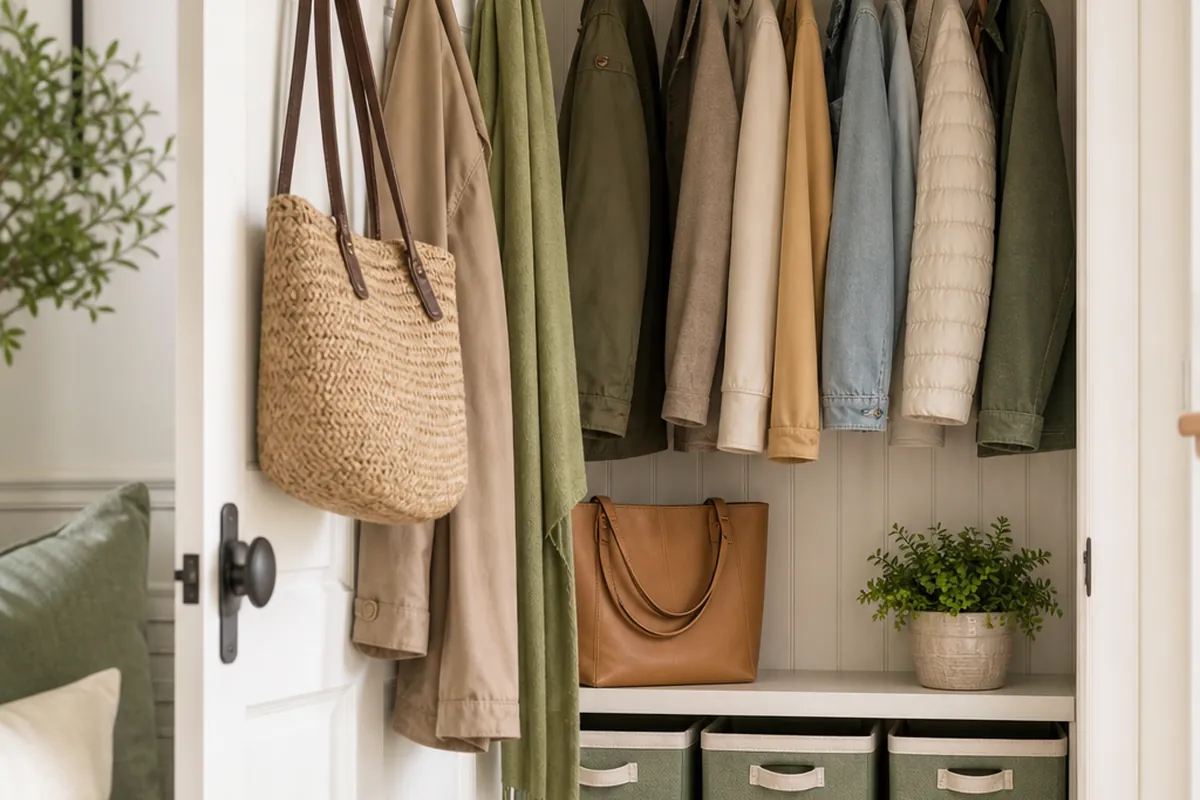
Renting, or simply not wanting to patch holes later? An over-the-door coat rack is the fastest small hallway storage win there is. It hooks over the top edge of your entry door or a nearby closet door and gives you five or six hooks without touching a single stud. If the hallway does have a closet, the same thinking works better inside it, which is what entryway closet organization covers. Coats, tote bags, dog leashes, and the scarf you always lose all get a landing spot at eye level.
One strong opinion: hang it on the inside of a closet or bathroom door near the entry if you have one, not on the front door itself. Coats on the swinging front door bang around every time it opens, and heavy winter jackets can make the door drift on its hinges. Tucked onto a side door, they stay out of the traffic lane.
For more hook and rail options once the door rack fills up, see coat and bag storage ideas for an entryway without a closet.
2. Build a shoe zone at floor level so the pile has walls
Shoes are what make a hallway look chaotic, because a loose heap spreads sideways with nothing to stop it. Give it a boundary. A low, narrow shoe rack (only about as deep as a single shoe) or even a shallow tray corrals the mess against the wall and keeps your path clear.
When floor space is truly gone, tilt-front shoe cabinets that stick out only a few inches earn their keep. They hold pairs at an angle, which is what lets the cabinet stay so shallow. Limit it to daily-wear shoes, though. Those heels you pull out twice a year belong in the bedroom closet, not clogging your entry.
3. Mount a wall cubby with baskets for the small stuff
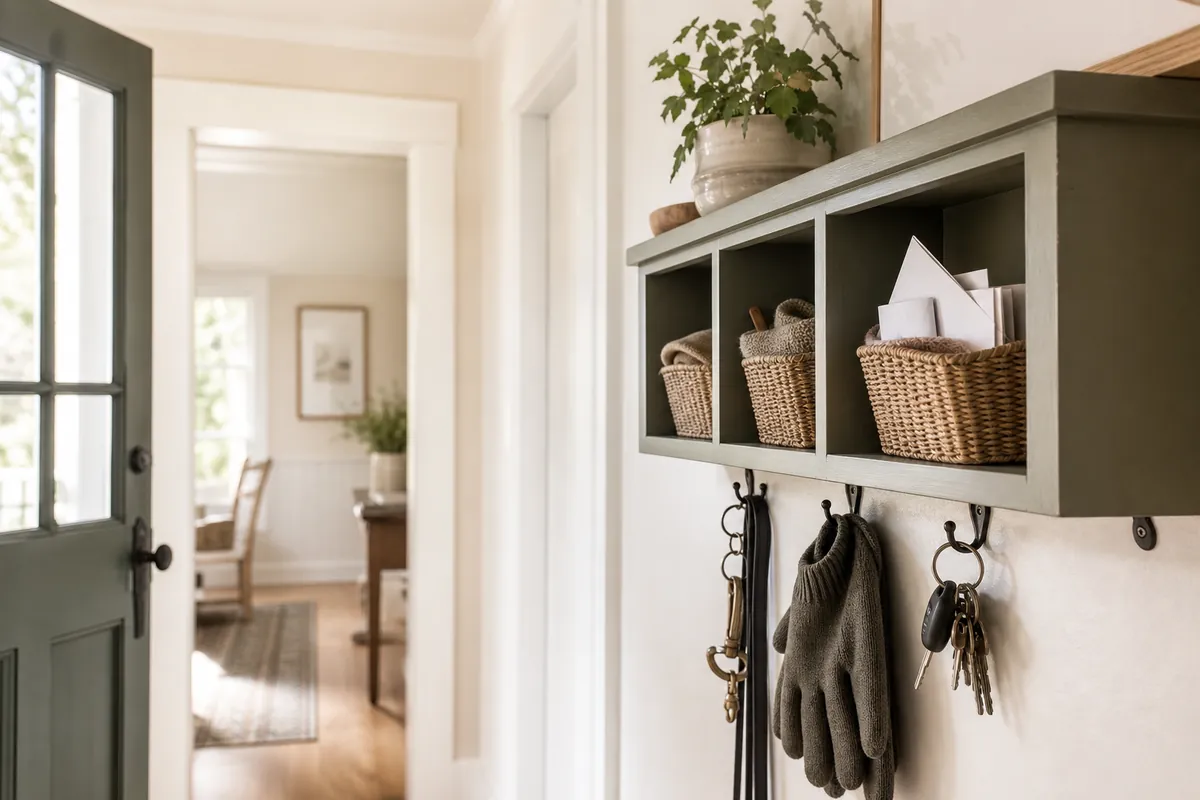
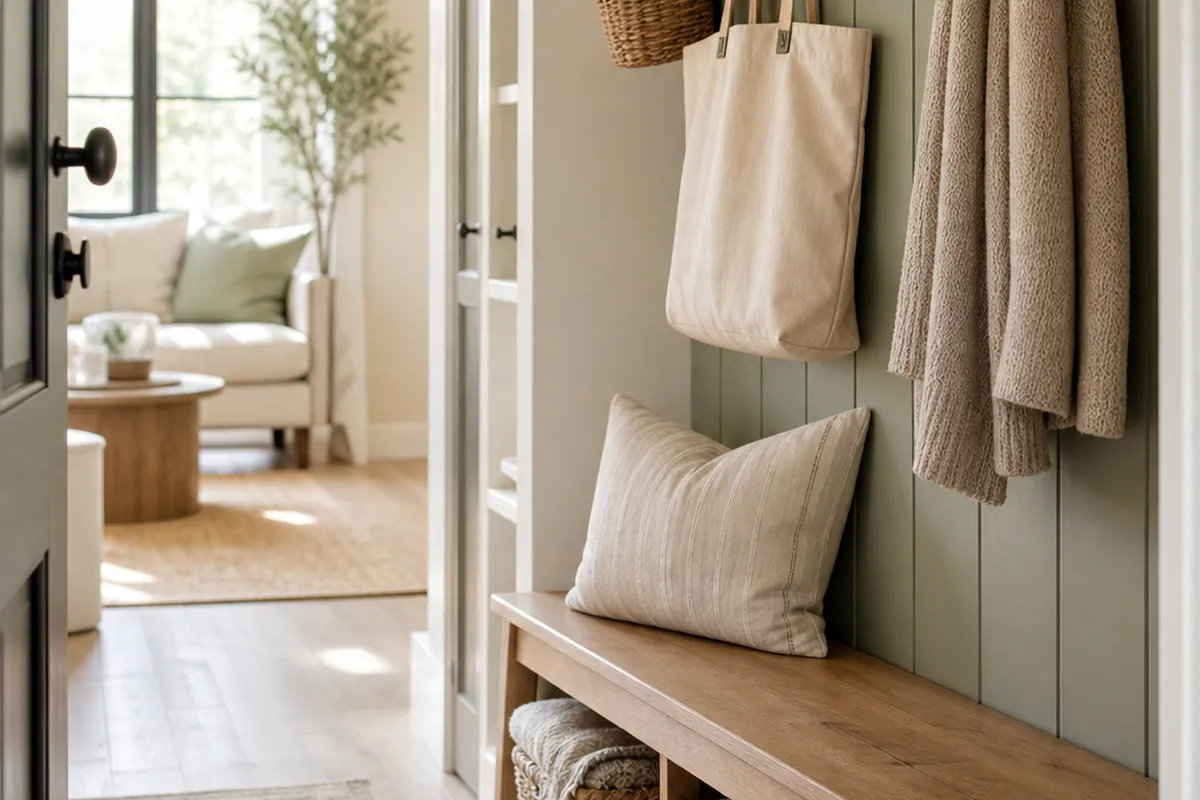
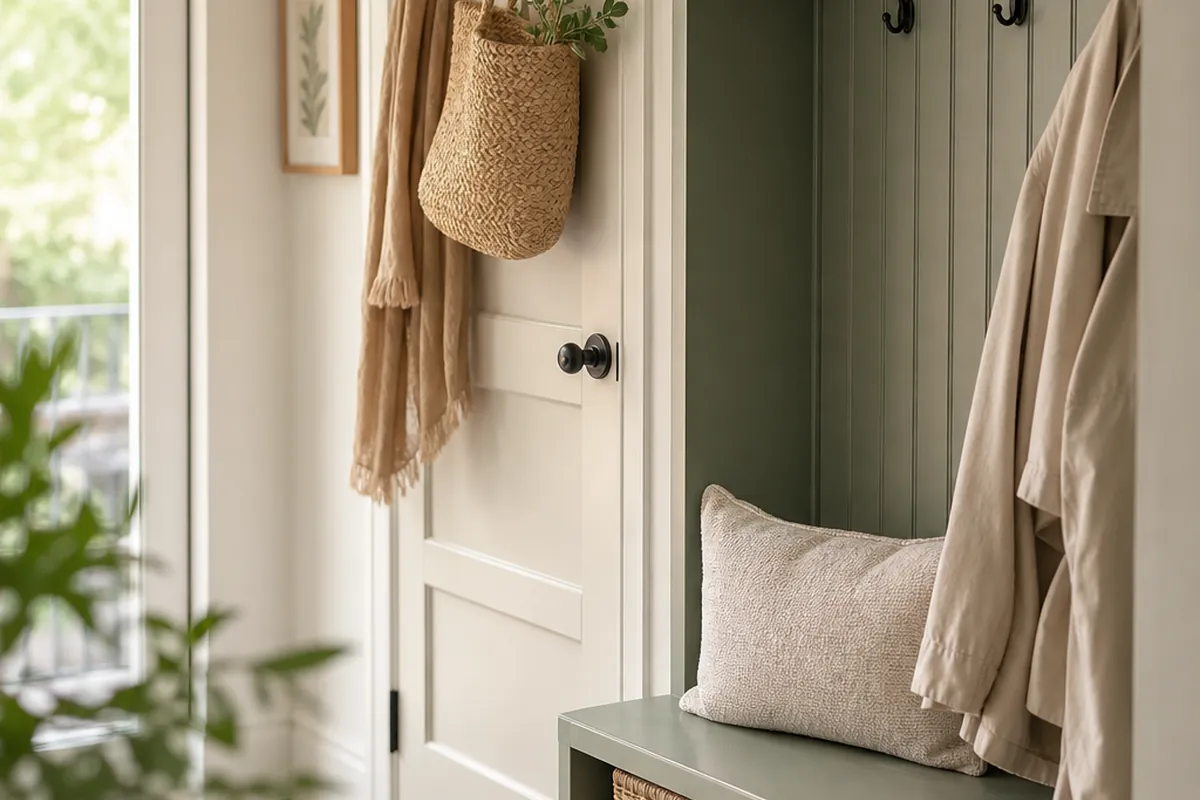
The single smartest move for a fake mudroom is a wall cubby with baskets. Think of it as your hooks-plus-basket combo doing the heavy lifting: hooks up top for coats, open baskets below for gloves, hats, sunglasses, mail, and the stray charging cable.
Baskets beat open shelves in an entry for one reason: they hide the visual clutter. An open shelf of loose gloves reads as mess, while the same gloves dropped into a basket read as tidy. Assign one basket per person if you share the space, and slap a label on each if kids are in the mix. Mount the cubby high enough to clear any bench or shoe rack below it so you’re stacking function into a single square foot of floor.
4. Add a slim bench or a stool you can actually sit on
A place to sit and pull boots off is what separates a real drop zone from a wall of hooks. Nothing says you need a full bench, either. A backless stool that tucks flush to the wall, or a narrow bench under a foot deep, does the job without blocking the run.
Bonus points if it hides storage underneath. Slide two baskets beneath a bench and it doubles as the shoe zone from tip number two. Every piece in a tight hallway should pull at least double duty.
5. Put a tray by the door so keys stop wandering
Keys, wallet, sunglasses, loose change: these tiny items cause the most daily friction because they never had a home to begin with. A small tray or a shallow dish on a floating shelf ends the morning scramble. Mount a narrow ledge at about elbow height if you have zero surface to spare, then park the tray there.
Keep that tray deliberately small. A big one quietly becomes a junk pile. Sized to hold just keys and a phone, it stays genuinely useful.
6. Use the wall above the door and the corners
The strip of wall above your door and the awkward corners sit dead in almost every hallway. A single high shelf spanning the top of the door frame holds seasonal gear you rarely reach for, like summer hats in January or a spare umbrella. Corner shelves grab that triangular space a rectangular piece can never use.
This is where the stuff that clutters your lower zones goes to live. Get it up high and out of the sightline, and the whole hallway suddenly reads calmer.
7. Layer a mirror to make the hallway breathe
A mirror isn’t storage, yet in a narrow entry it pulls off something storage can’t: it bounces light and makes the space feel twice as wide, which really matters once you’ve hung hooks and baskets on every surface. A leaning mirror steals floor, so mount this one flat to the wall.
Plenty of entry mirrors come with a slim shelf or a couple of hooks built into the frame. That’s the version worth buying in a tight hallway, since it earns its wall space twice over.
8. Contain the wet-weather mess with a boot tray
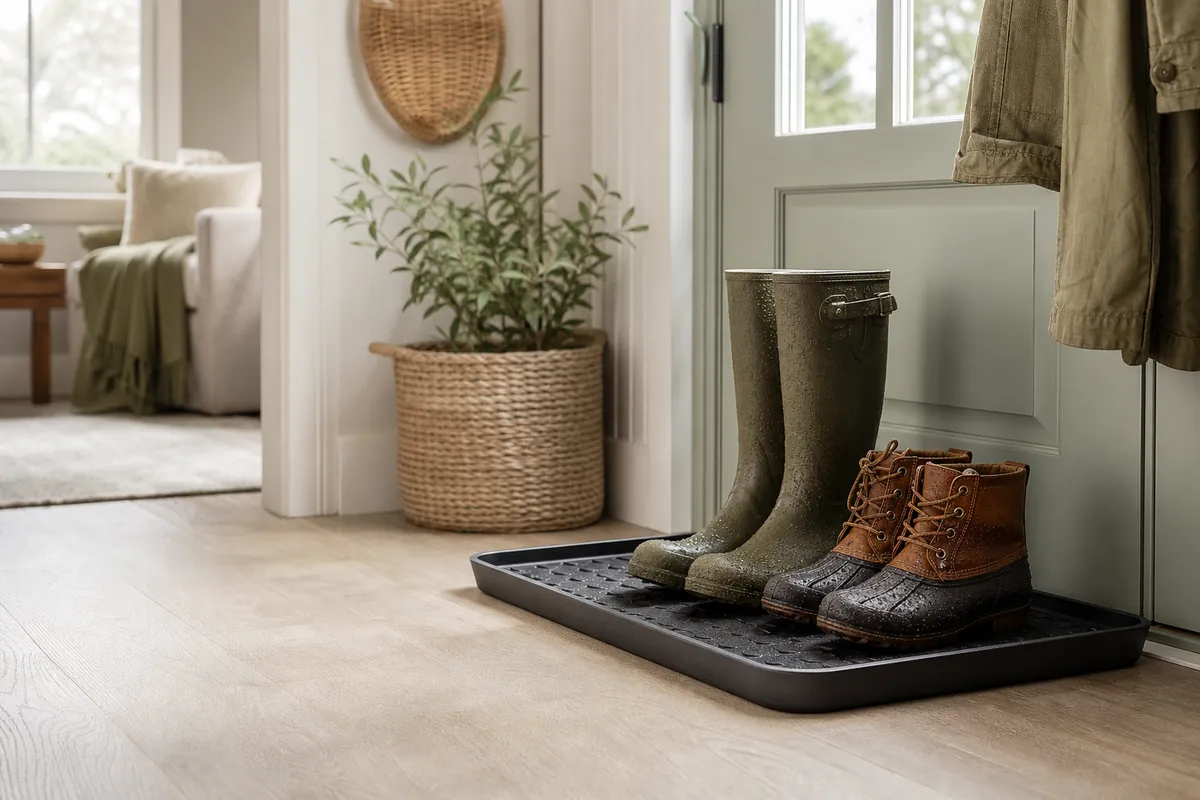
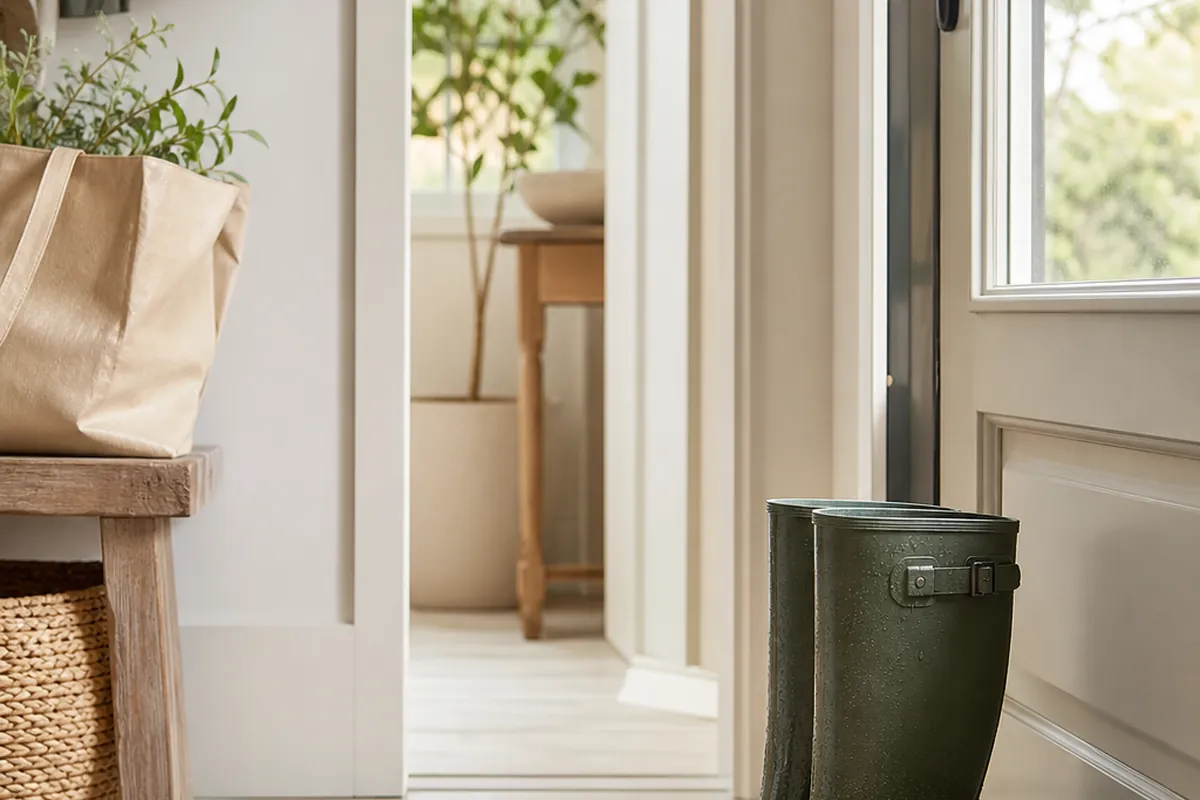
The whole point of a mudroom is mud. A rubber or metal boot tray by the door catches snowmelt, rain drips, and grit before any of it tracks down your hallway. Least glamorous item on the list, and the one that quietly saves your floors.
Set the tray directly under your coat hooks so drips from wet jackets land in it too. Line it flush against the baseboard so it never turns into a trip hazard in a narrow run.
If the boots are muddy more days than not, one tray is the start rather than the answer, and muddy boot storage ideas for a renter with no mudroom builds out the rest.
Putting it together in a hallway that’s really narrow
Hallway under about three feet wide? Resist installing all eight of these. Pick the vertical ones first: the over-door coat rack, the wall cubby with baskets, and a boot tray on the floor. That stack alone covers coats, small items, and wet shoes without stealing an inch of walking room.
Mount everything working from the top down. Hooks and the cubby go at the height where coats hang clear of the floor, the tray sits at the baseboard, and the key dish tucks in at elbow height between them. Layering by height is exactly what lets a two-foot stretch of wall do the work of a whole room.
For a full walkthrough of setting up an entry from scratch, this real plan for small entryway organization in an apartment pairs nicely with the wall setup here.
What to skip
Leave the oversized console table, the deep storage bench, and any freestanding coat tree with a wide base on the showroom floor. All three photograph beautifully in a roomy foyer, and all three turn a small hallway into an obstacle course. In tight quarters, anything on the floor should be shallow, and anything holding weight belongs on the wall or the door. Follow that one rule and your fake mudroom will outperform plenty of real ones.