A narrow hallway is the hardest entry to furnish, because every inch you give to storage is an inch taken from the only route into the home. Most entryway bench advice quietly assumes you have a square porch and a spare wall. You have a corridor, a door that swings, and about three feet of width to work with. The good news is that a bench is still the right answer here, as long as you pick the depth and the position from measurements rather than from a photo.
1. Measure the door’s arc before anything else
The front door decides where the bench can go, and nothing else gets a vote.
Open the door fully and watch where the leading edge sweeps. Mark that line on the floor with tape. Everything inside that arc is unavailable, no matter how empty it looks when the door is shut. A bench that stops the door short of fully open is the kind of daily irritation that ends with the bench being moved to a bedroom within a month.
If the arc eats the only usable wall, put the bench beyond the swing further down the hallway, and keep hooks alone on the wall nearest the door.
2. Keep the walkway at thirty inches
This is the number that decides whether a hallway stays usable.
You need roughly thirty inches of clear width to walk through comfortably, and closer to thirty-six if you regularly carry bags or a laundry basket. Measure from the front edge of the bench to the opposite wall, not from the wall behind it. The bench depth is already spent.
If the hallway is thirty-six inches wide and you want thirty clear, you have six inches of depth to play with, which means the bench belongs somewhere else and the wall gets hooks only. Better to know that from a tape measure than after a delivery.
3. Twelve to fourteen inches deep is the sweet spot
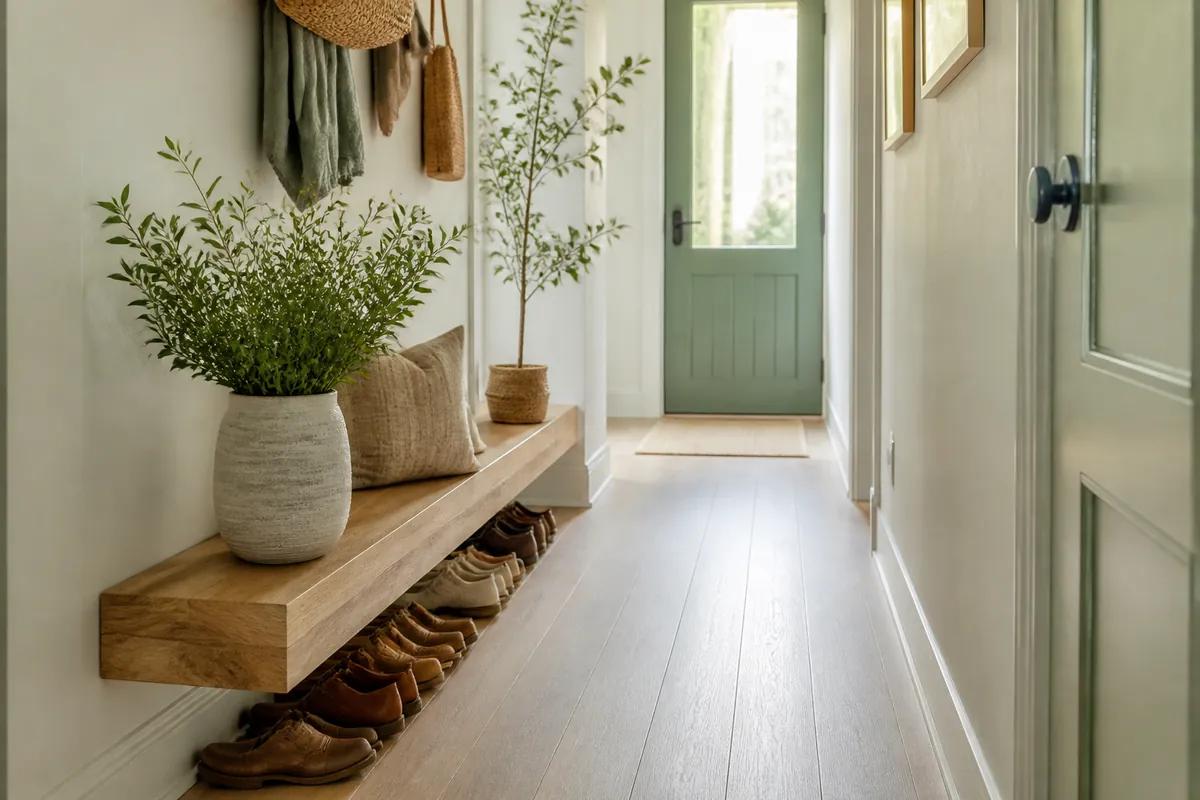
Bench depth is the specification that matters most and the one product listings bury.
Twelve to fourteen inches is deep enough to sit on properly and to take a row of adult shoes underneath. Past sixteen inches a bench starts reading as an obstacle in a corridor, and under eleven it becomes a perch nobody actually uses because your knees are up by your chest.
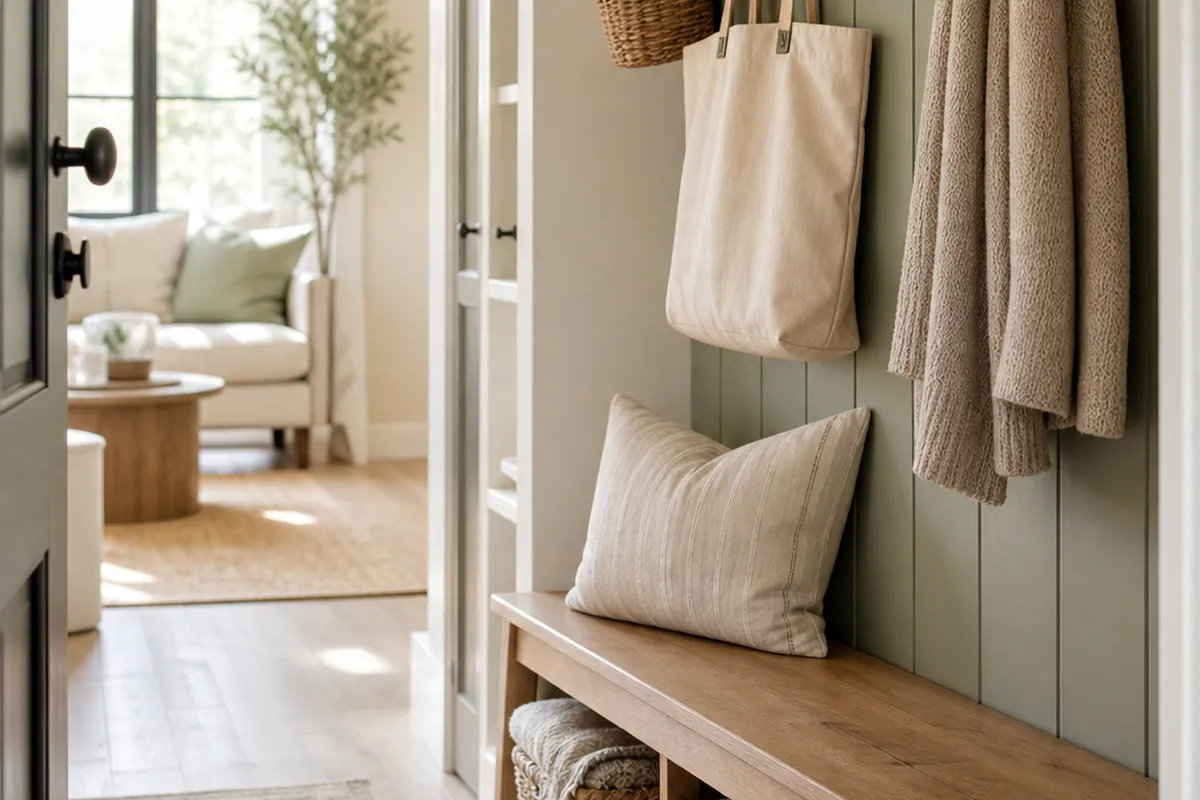
A narrow entryway bench with shoe storage built for this depth gives you a seat and a shoe rack in the same footprint, which in a hallway is the only way both fit.
4. Length is where you have freedom
Depth is constrained. Length usually is not, and people underuse that.
A hallway will often take a bench that is four or five feet long without anyone noticing, because it runs with the corridor rather than across it. That extra length buys you the storage you cannot buy with depth. Two people can sit down at once, which matters more than it sounds on a school morning.
Run it along the wall until something stops you: a radiator, a doorway, the stairs. Then stop there.
5. Baskets underneath, not open clutter
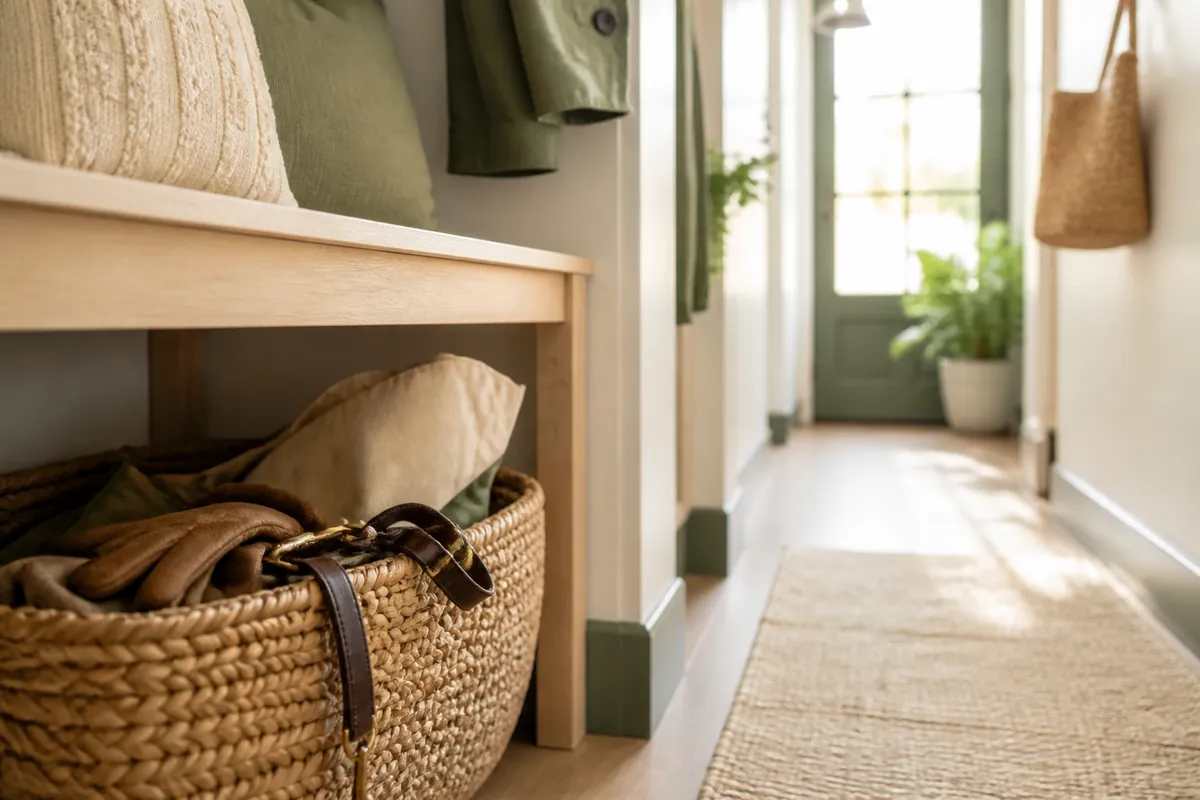
What goes under the bench determines whether the entry looks tidy from the living room.
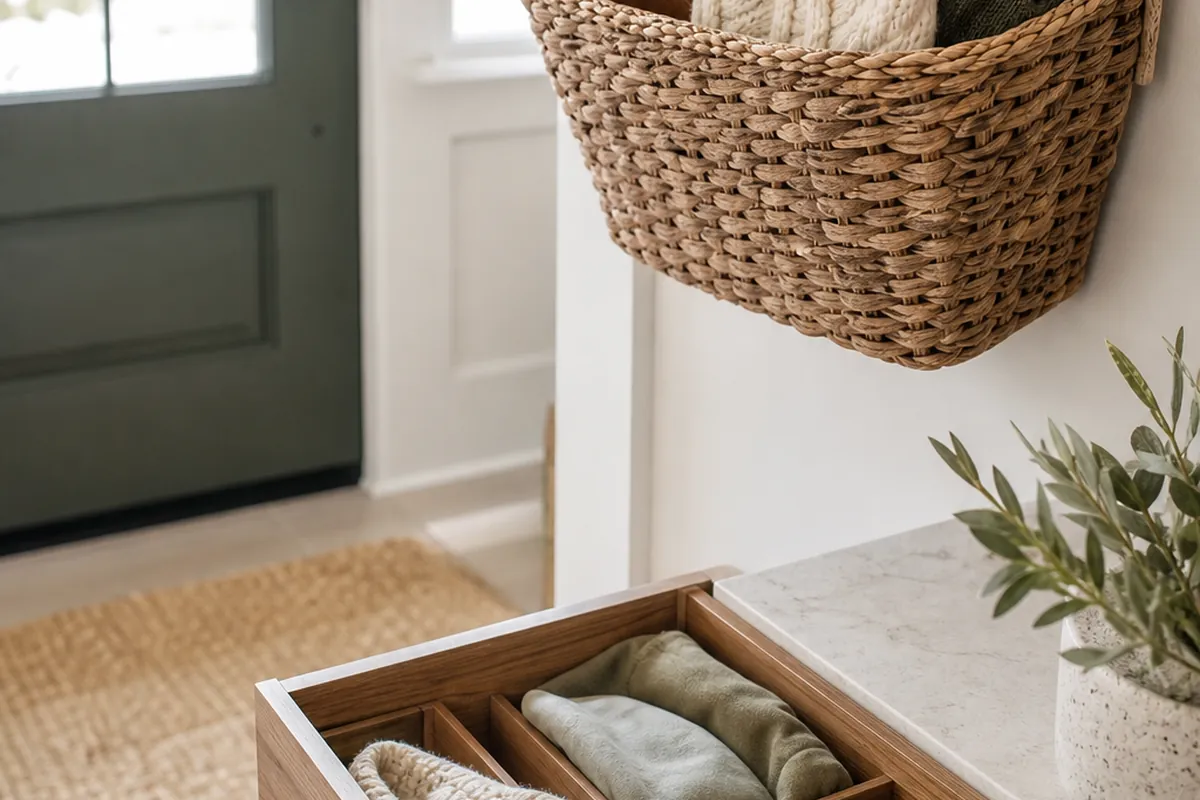
Open shoe rails are best for the shoes actually worn daily, because anything with a lid or a front panel adds a step that gets skipped. But for gloves, dog leads, spare bags and the general silt of an entryway, a large woven storage basket hides the mess without hiding the function.
The practical split: shoes stay visible, everything else goes in a basket.
6. One basket per person, and mean it
This is the rule that stops a bench becoming a shelf for everything.
Give each member of the household exactly one container. When it is full, something comes out. The constraint does the work that nagging otherwise has to do, and it makes tidying a five-second decision rather than a project.
Households that skip this end up with a bench nobody can sit on, which defeats the entire purpose of buying a bench instead of a shoe rack.
7. Hooks go above head height when seated
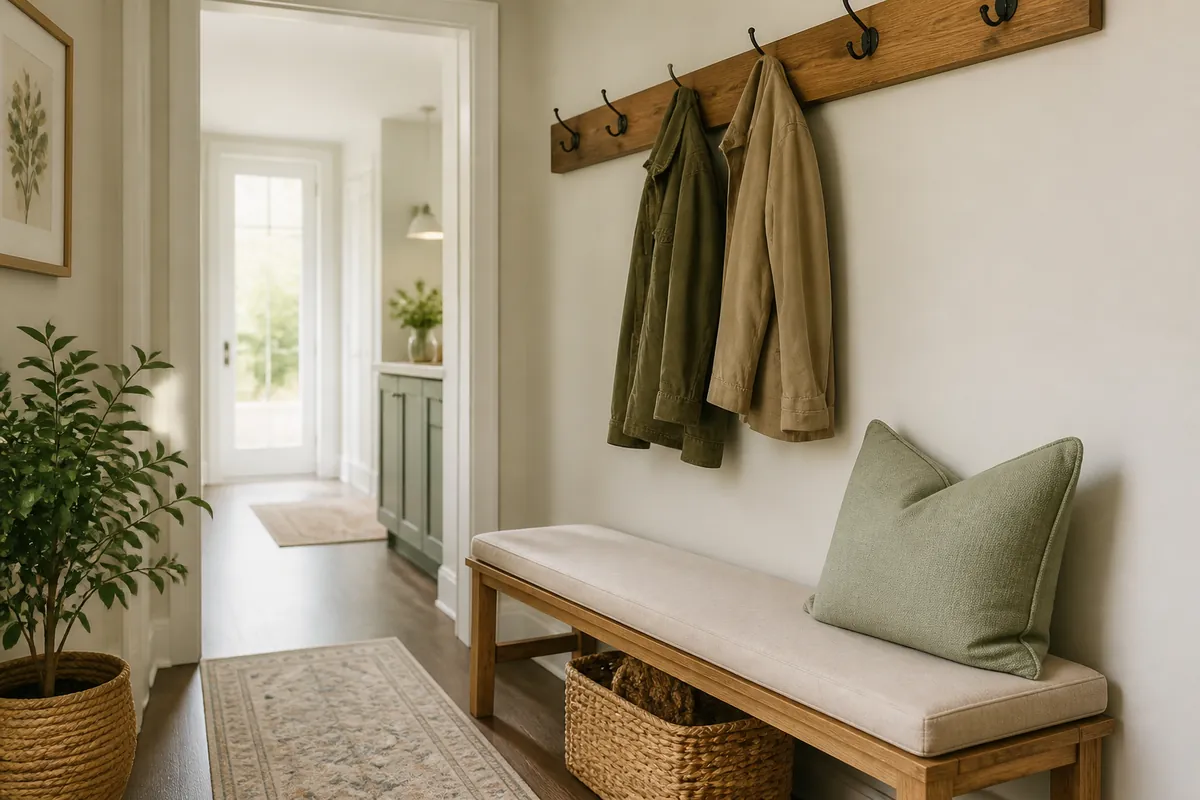
The wall above the bench is the other half of the system, and the height is not obvious.
Coats need to clear the head of someone sitting down to put shoes on, which in practice means the rail sits around sixty-six to seventy-two inches from the floor. Lower than that and you get a faceful of wet coat every time you sit.
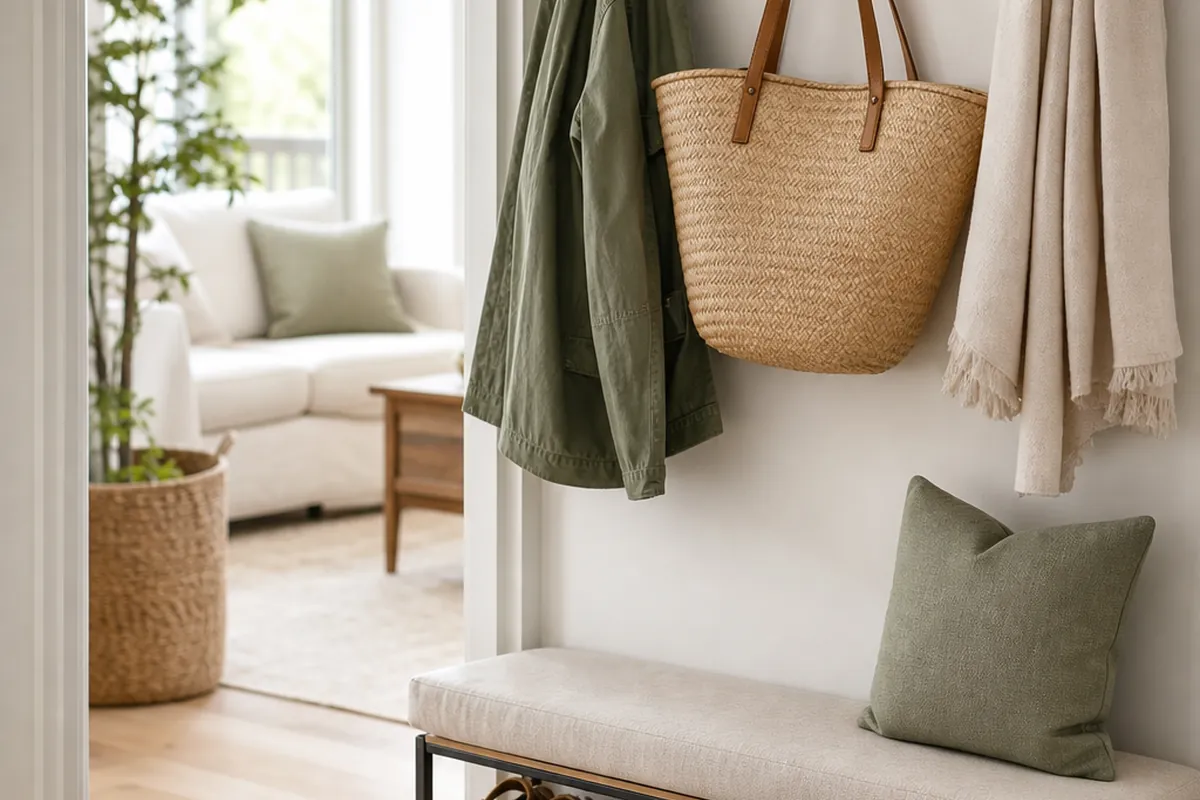
A wall-mounted coat rail with hooks fixed at that height turns the wall into the bulk storage and leaves the bench for sitting and shoes.
If children use the same wall, add a second rail at roughly thirty-six to forty inches rather than splitting the difference. One middle height suits nobody.
8. Fix into studs, not just drywall
A coat rail carries more weight than people expect, and it fails at the worst moment.
Three winter coats plus a wet school bag is a serious load hanging off a few screws. Find the studs and fix into them, or use anchors rated well above what you plan to hang. Hardware that pulls out of the wall in the first month teaches the whole household that the floor is the reliable option, and you never get them back.
Test it honestly: hang off the rail with some of your weight before you trust it with the coats.
9. Current season only
An entryway is working storage, not an archive.
Whatever is on the bench and the hooks should be what people are wearing this month. Winter coats in July and beach bags in January are the reason the system silts up. Everything out of season goes to a bedroom closet or under a bed, and comes back when the weather does.
This single rule usually halves what the entry has to hold, which is how a narrow hallway starts coping.
10. Use a mat to mark the boundary
The cheapest thing on this list, and it works better than it should.
A mat directly in front of the bench signals where shoes belong, and it does most of the enforcement without anyone saying anything. Shoes land on the mat instead of drifting down the hallway, and the visual line makes a spill of footwear obvious rather than ambient.
It also catches the water and grit that would otherwise end up under the bench, which is what makes the whole arrangement need cleaning.
11. Give wet shoes somewhere to drip
The failure that turns a nice bench into a swollen one.
Wet boots parked under a wooden bench put water into the underside of the seat and into the floor beneath it, and neither dries properly because there is no airflow under there. Over a winter that is real damage, and in a rental it is your problem.
A shallow boot tray under or beside the bench takes the drips and can be tipped out. Anything with a raised lip works: the point is a surface that holds water rather than passing it into the wood.
Keep the wettest things at the end of the bench nearest the door rather than in the middle. That way the mess stays in one place instead of tracking down the whole hallway.
Where to start
Tape the door arc, measure the width, and subtract thirty inches. Whatever depth is left is the bench you can buy, and if the answer is negative then your entry is a hooks-and-mat entry rather than a bench entry. That is a perfectly good outcome, and it is much better than discovering it after a delivery.
If a bench does fit, run it long rather than deep, put shoes underneath and everything else in one basket per person, and get the coat rail up above sitting height. The narrow hallway stays a route, and it also becomes somewhere you can put your shoes on sitting down.