Most apartment entryways aren’t really rooms. Yours is probably a stretch of wall by the door, maybe a corner, sometimes just the two feet before the living room begins. That awkward zone is where keys vanish, shoes pile up, and yesterday’s mail quietly multiplies. Good small entryway organization in an apartment has nothing to do with buying a matching furniture set. The goal is simpler: give four or five specific items a home so they stop landing on the floor.
Here’s how to build that drop zone from the ground up, starting at the floor and working toward the wall. That order is what keeps a narrow space walkable instead of clogged.
Measure the walkway before you shop
Stand in your doorway and figure out how much floor you can give up without turning sideways to squeeze through. A comfortable path runs about the width of your shoulders plus a little room to swing a bag off. In many apartments that leaves eight to twelve inches of depth against the wall. Go deeper than that and you’ll clip your hip on it every single day.
This number outranks every style decision you’re about to make. A gorgeous storage bench that eats half your hallway gets resented within a week. Jot down the depth you can spare, and treat it as a hard ceiling nothing gets to break.
Why depth beats width in a narrow entry
People fixate on how long a piece is. In a tight entry, though, depth is what makes the space feel cramped or open. Something long but shallow reads as part of the wall and disappears. Short but deep, and it juts into the room and chops the sightline in half. Given two options, pick the shallower one almost every time.
Put a slim bench where the shoes land
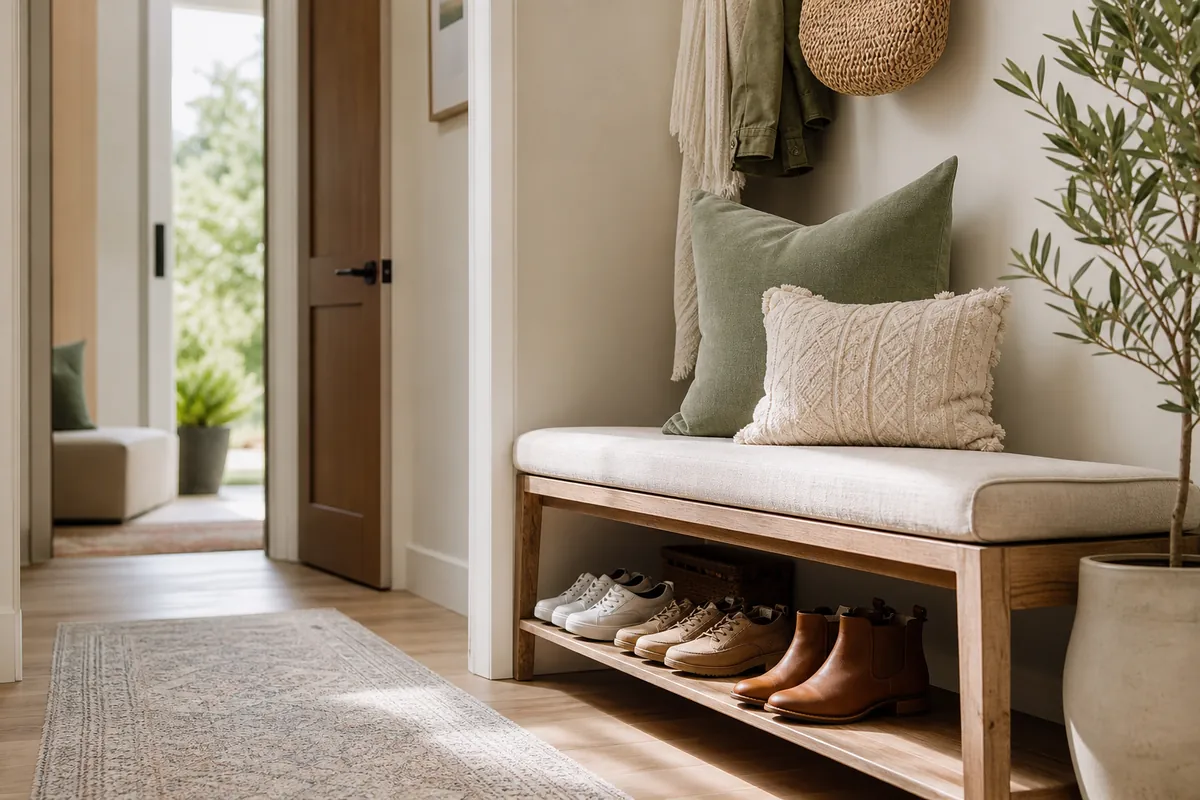
Shoes are the loudest clutter in an entryway. They’re on the floor, they’re dirty, and four or five pairs tend to accumulate within a day. The fix is a single piece that pulls double duty: a spot to sit while you deal with your feet, plus a place to hide the shoes underneath.
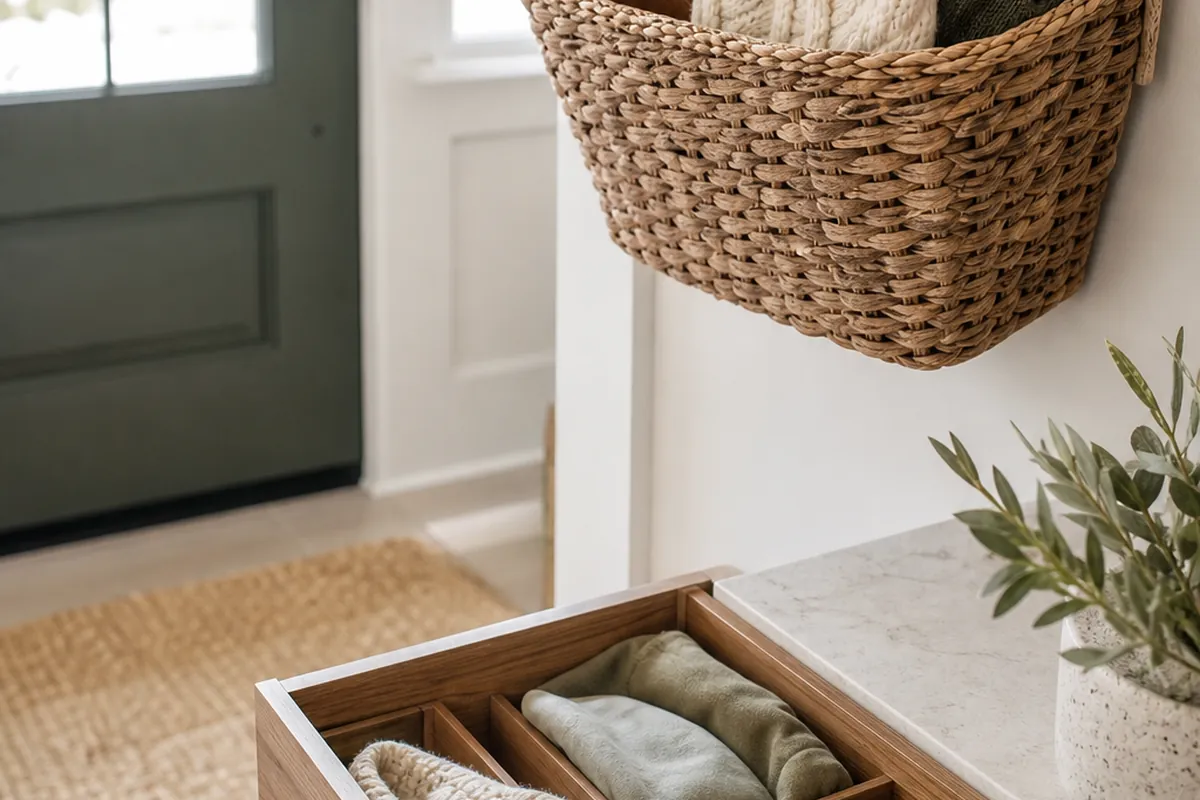
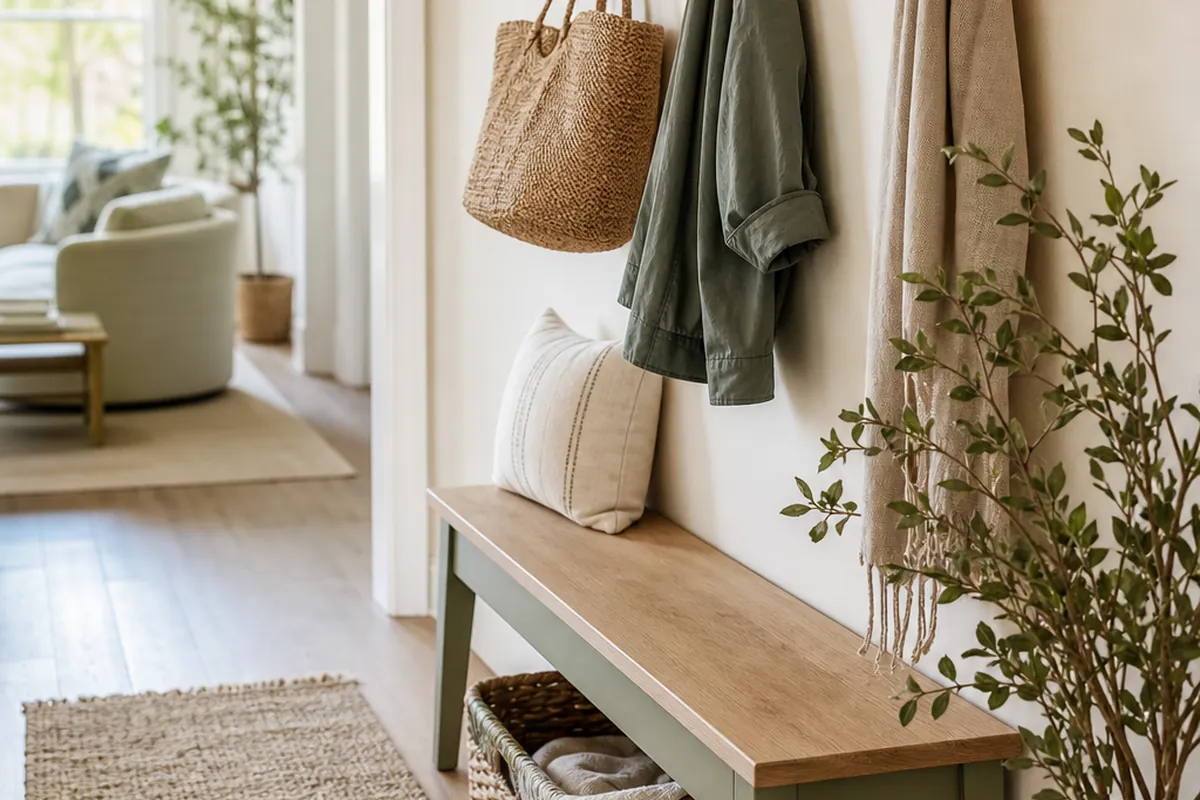
A narrow entryway bench with shoe storage becomes the anchor of the whole setup. Look for open cubbies or a slatted lower shelf rather than closed drawers. Open storage lets you toss shoes in without opening anything, and that’s the only system that survives a rushed morning. There’s also the thing people forget until they’re hopping on one foot in the hallway: you need somewhere to sit to pull on boots.
Set the bench flush against the wall, and skip the urge to center it under a window for symmetry. Push furniture into the least-traveled corner instead, so the door swing and the walkway both stay clear.
Keep the bench from becoming a dumping ground
A bench seat is a magnet for bags, mail, and whatever’s in your hands when you walk in. Keep that surface mostly bare. One tray or a small basket on one end catches the daily junk, and the rest of the seat stays open for actually sitting. Fill the whole top and the bench quietly stops being a bench.
Living with kids or a roommate? Assign each cubby underneath, one person’s shoes per slot, capped at two pairs. Overflow gets banished to a closet. That cap is the whole reason a shoe cubby doesn’t turn into a heap.
Move keys and mail up onto the wall
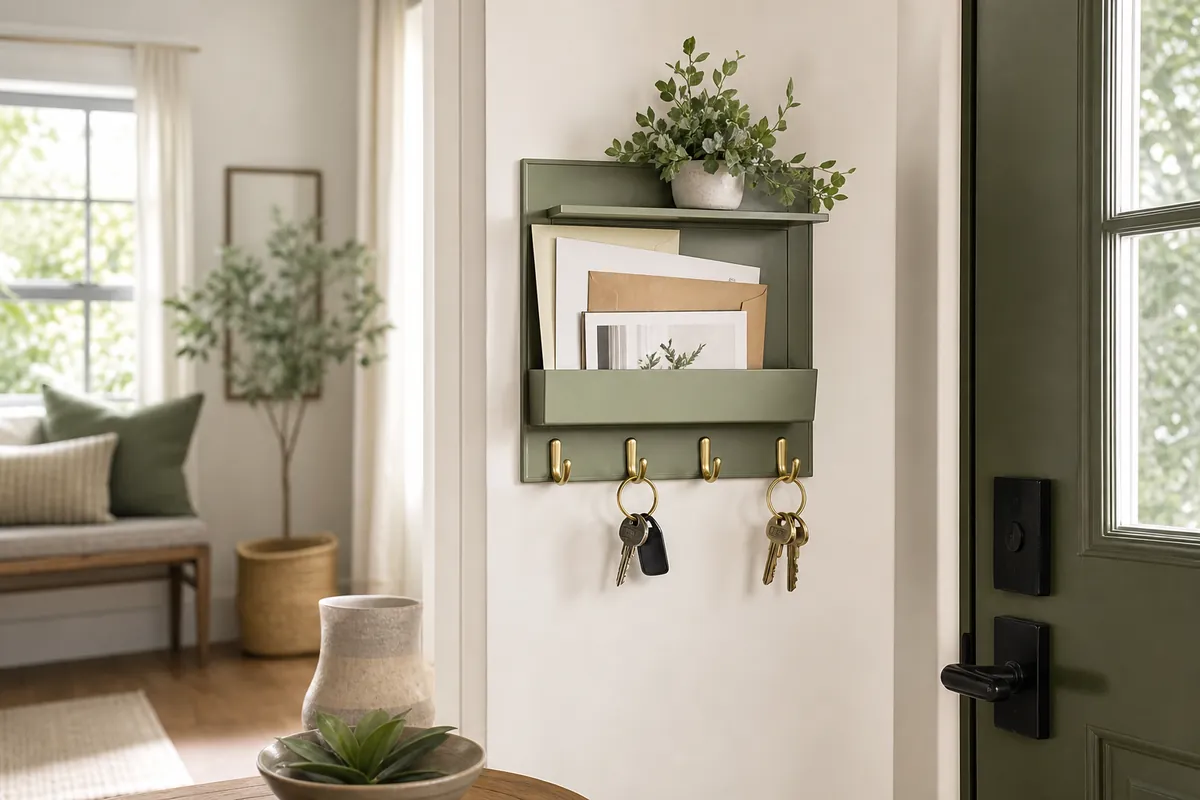
The second-biggest entryway problem is small and flat: keys, mail, a stray charging cable, sunglasses. These things need a home at hand height, and the wall is the only surface a small apartment can spare for them.
A wall-mounted key and mail organizer solves this in one move. Mount it at eye level near the door. The hooks hold keys and maybe a lanyard, while the little shelf or slot catches mail before it drifts to the kitchen counter. This single piece kills the two habits that cause the most daily friction: hunting for keys while you’re already late, and letting bills build into a paper avalanche.
Hang it on the doorknob side of the door, not the hinge side, and high enough that you drop keys without bending. Renting and can’t drill? Good news, these organizers weigh almost nothing. A pair of heavy-duty adhesive strips rated well above the empty weight will hold one fine, as long as the wall is smooth and clean when you press it up.
Give mail a two-day rule
A mail slot only helps if it never becomes a graveyard. Treat the wall organizer as a holding pen, not storage. Whatever lands there gets dealt with inside about two days: recycle the junk, act on the bill, file the rest. Keep the slot deliberately small, because a slot that holds a week of mail invites exactly a week of mail.
Add hooks, then add more hooks
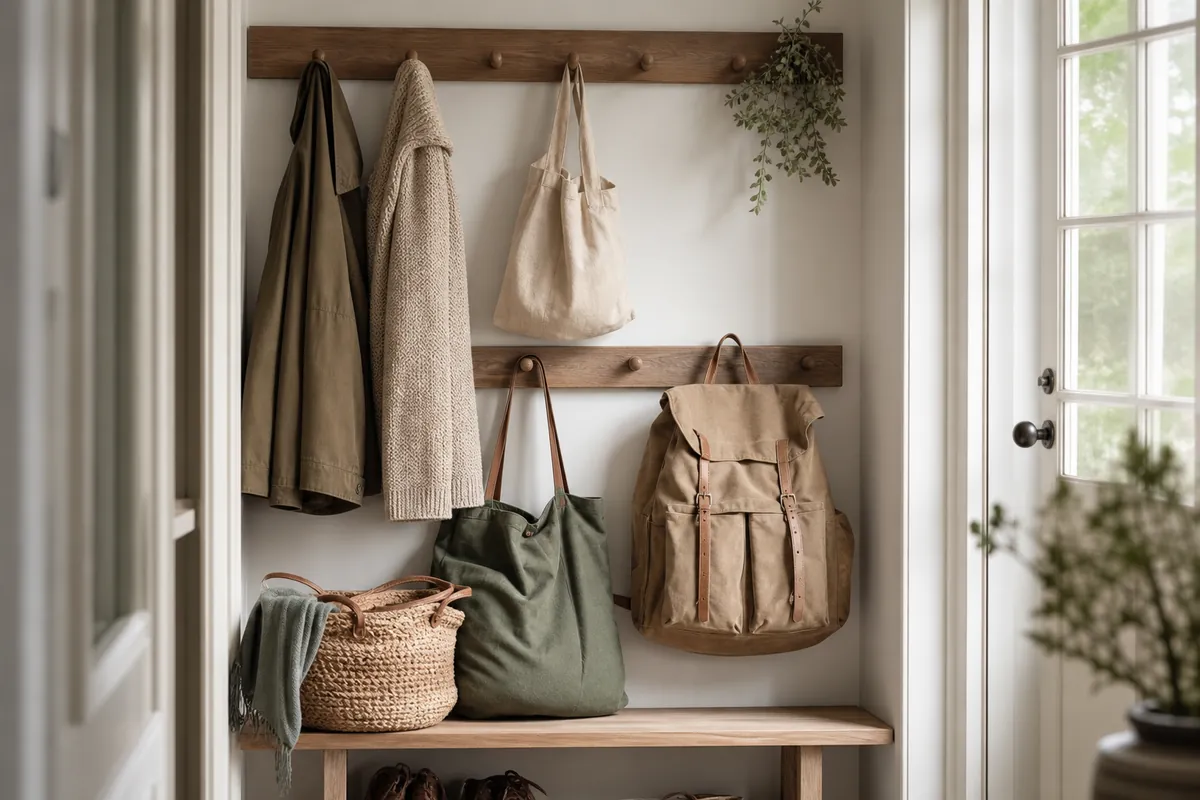
Hooks are the highest-value inch of storage in any entryway. They turn a blank wall into parking for jackets, bags, umbrellas, dog leashes, and reusable totes. Buy more than feels reasonable, since every household underestimates how many things want to hang by the door.
Mount a row at two heights if the wall allows. Put one line around shoulder height for adult coats and bags, and a lower line for kids or the tote you grab most. Space them a hand-width apart so a bulky coat doesn’t crowd its neighbor. A rail of hooks does the work of a coat closet in a fraction of the footprint, which is exactly the trade small apartments need to make.
No usable wall at all? The back of the entry door is fair game. Over-the-door hooks hand you a whole vertical surface without touching the wall, a genuine lifesaver in a rental where drilling is off the table.
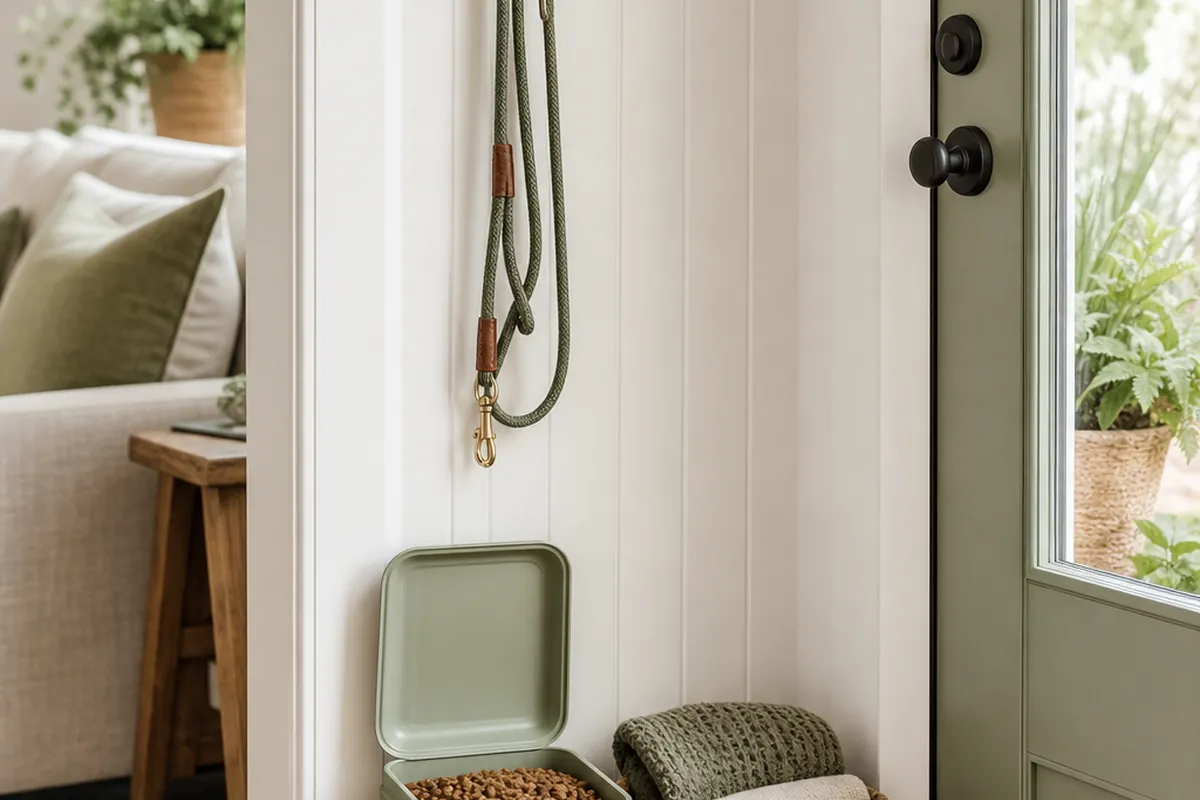
If a leash, harness and towel are competing for those hooks, pet gear storage for a small apartment entryway gives the dog its own zone so the coats get theirs back.
Work the vertical space above eye level
The wall above your coats usually sits empty, and empty wall is wasted storage in a small home. One narrow shelf mounted above the hook rail holds a basket for gloves, hats, and the gear you only need in one season. Keep whatever lives up there inside a bin so the high shelf reads as tidy from below instead of as a cluttered ledge.
Seasonal rotation earns its keep more here than anywhere else in the apartment. Winter, and the daily zone holds scarves and gloves. Summer arrives, those get boxed and stashed elsewhere, and the entry breathes again. Don’t ask a small space to carry twelve months of gear at once.
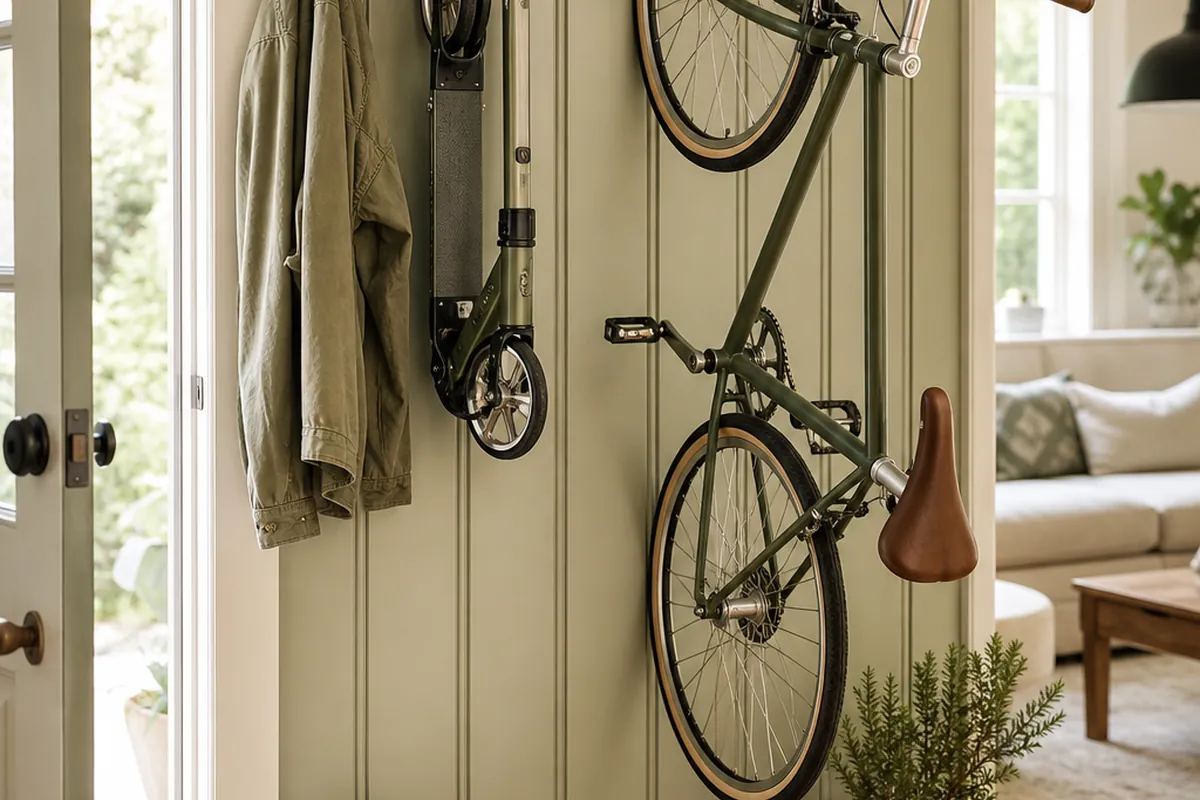
A bike or a scooter is the biggest thing that can go up a wall, and scooter and bike storage ideas for a small entryway covers the hooks and racks that hold one without wrecking the paint.
Beat the floor pile with a boot tray and better light
Two small additions punch well above their size. A shallow boot tray under or beside the bench corrals wet shoes and the grit they track in, which spares you from mopping a muddy hallway every rainy week. Light matters just as much. A lot of entry clutter piles up simply because the corner is dim and nobody wants to put things away where they can’t see. A stick-on battery puck light or a small plug-in lamp makes the drop zone feel like a place worth keeping neat.
A quick mirror trick for tight entries
Hang a mirror on the entry wall and the whole space reads twice as deep. It pays off practically too, working as your last-look station before you leave, which stops you doubling back through the apartment for a forgotten collar or crumb. Can’t hang it? Lean a slim one against the wall above the bench.
Build it without buying everything at once
None of this needs to arrive on day one. If I had to rank the buying order, the narrow bench with shoe storage comes first, because shoes are the worst offender by far. Next comes the wall-mounted key and mail organizer, since those small items trigger the most daily scrambling. Hooks follow, then the shelf above them.
Work in that sequence and you’ll watch the floor clear before you’ve spent much. A small entryway in an apartment doesn’t need to look like a catalog spread. It needs a spot for shoes off the floor, keys and mail parked on the wall, and enough hooks to catch everything in your arms when your hands are full and the door is already swinging shut behind you.
The entryway is the first room in a wider order of operations, and small apartment organization ideas covers what to tackle after the door is sorted.