A bike and a scooter parked by the front door take up floor space no small entryway has to spare, and neither one folds small enough to disappear into a basket. Lean a bike against the wall and the handlebar juts out 22 to 26 inches, right into the path anyone with an armful of groceries has to walk. Leave a scooter on its wheels and it rolls the second the door swings open. Getting both off the floor without wrecking a rental wall is mostly a question of weight and clearance, not willpower.
1. Measure the bike and scooter before you shop for anything
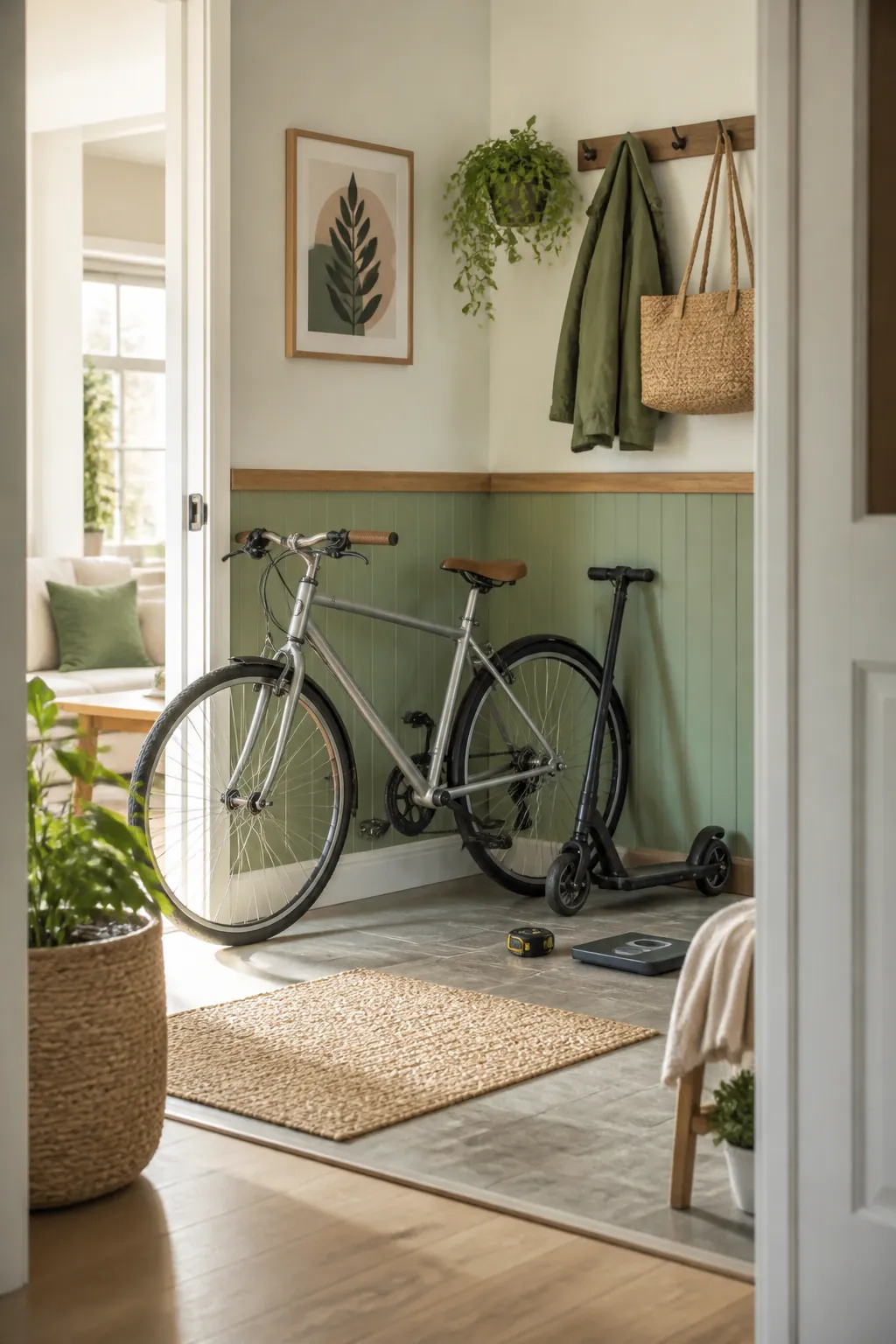
A road bike typically runs 18 to 22 pounds with an overall length near 68 to 70 inches and handlebars 22 to 24 inches wide. A hybrid or mountain bike climbs to 28 to 32 pounds, and an e-bike with the battery in place can land anywhere from 45 to 70 pounds, which changes everything downstream about how it gets stored. A kid’s bike is smaller and lighter, usually 40 to 45 inches long and 15 to 20 pounds.
Scooters vary just as much. A basic kick scooter folds down to roughly 40 by 16 by 8 inches and weighs 8 to 12 pounds. An e-scooter folds to a similar footprint but carries a battery that pushes it to 26 to 40 pounds, and some cargo or long-range models pass 50. Weigh what you actually own, on a bathroom scale if you have to, rather than assuming “it’s just a bike” covers every case.
2. Hang the bike by its front wheel, not leaned flat against the wall
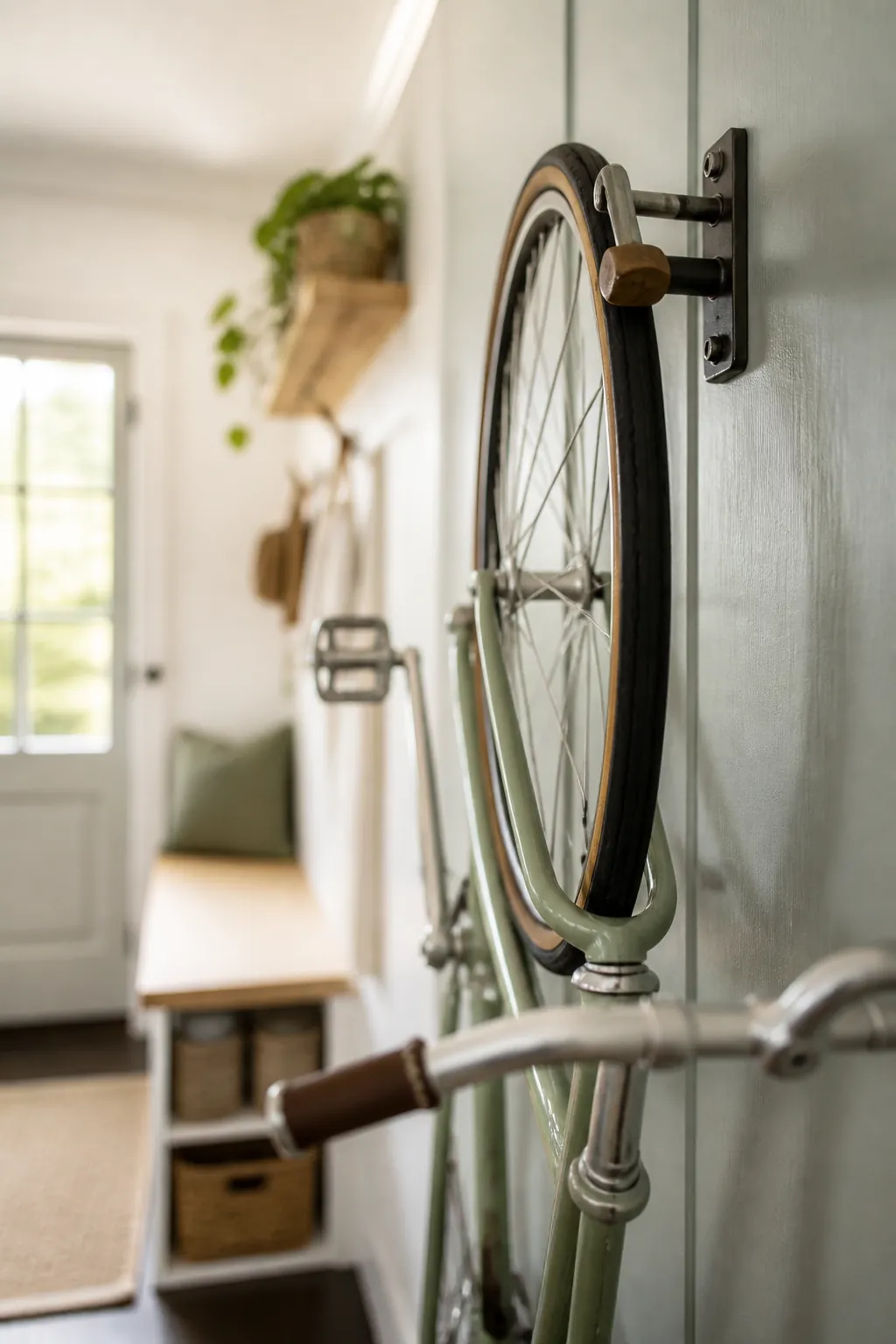
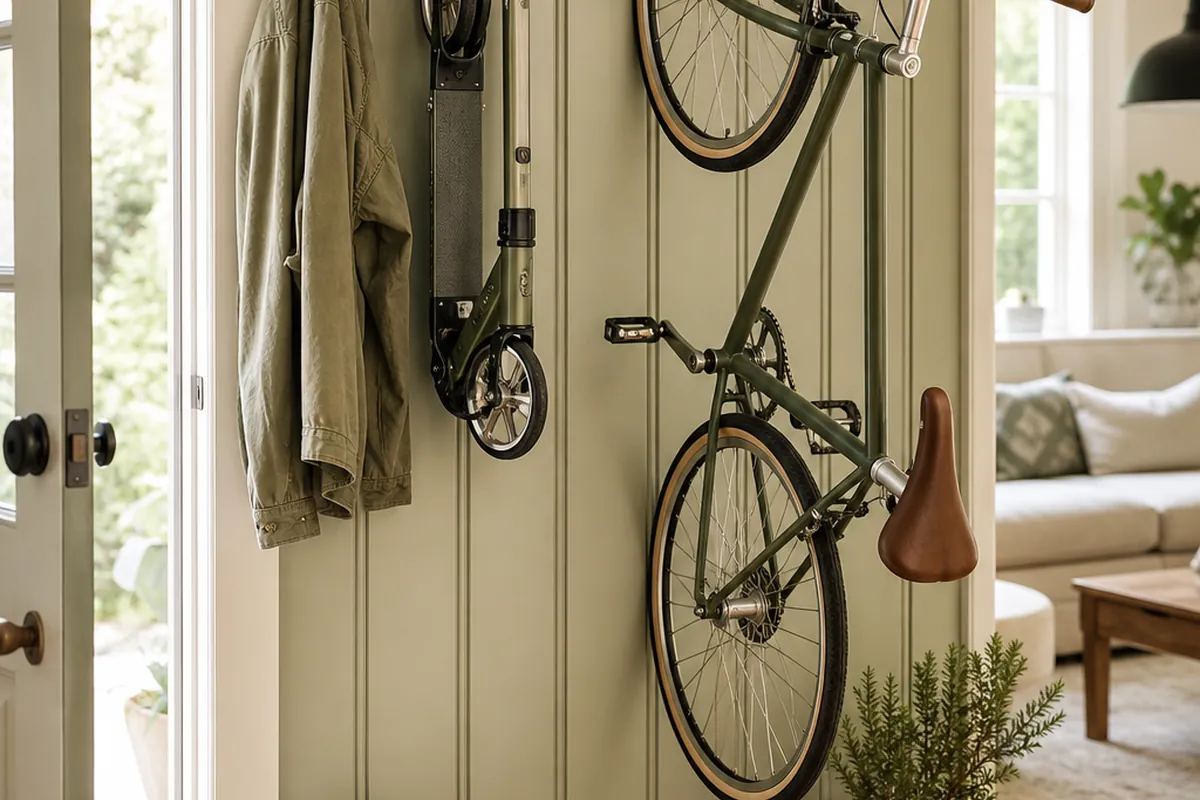
A bike leaned against a wall eats the same 22 to 26 inches of floor depth as the handlebar is wide, and the rear tire slowly grinds a black stripe into the baseboard behind it. Hanging it by the front wheel from a vertical hook solves both problems, but it needs 6 to 8 inches of clearance between the wall and the point where a pedal or crank arm would swing, or the bike scuffs paint every time it settles.
A heavy-duty wall hook rack rated for 40 pounds or more comfortably takes a road or hybrid bike. Check the rating before buying, not after, since this is the number that decides whether the bike stays on the wall or ends up back on the floor with a hole in the drywall.
3. Give the scooter its own hook, not a share of the bike’s
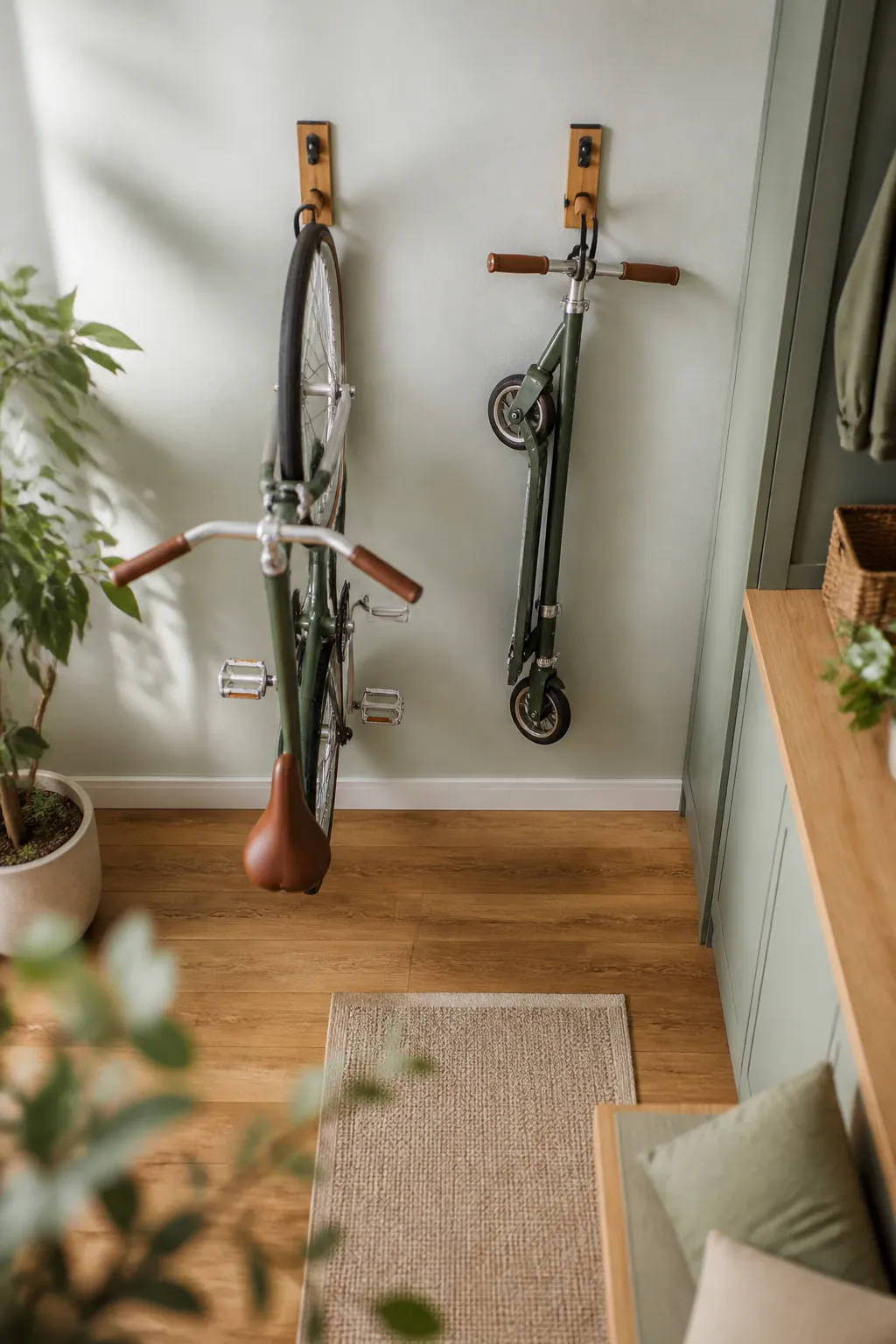
A scooter storage rack built specifically for this job exists, but none of them have a verified listing on this site, so the honest option is a second wall hook rather than a specific product. Space it 10 to 12 inches from the bike’s hook, measuring on center, so a folded scooter hangs by its deck or handlebar T-bar without its tires touching the bike’s rear wheel.
That spacing matters more than it sounds like it should. Two items hung too close together sway into each other every time the front door opens, and the resulting scuffing on both frames is exactly the kind of wear a security deposit inspection catches.
4. Rate the hook for the real weight, especially with an e-bike
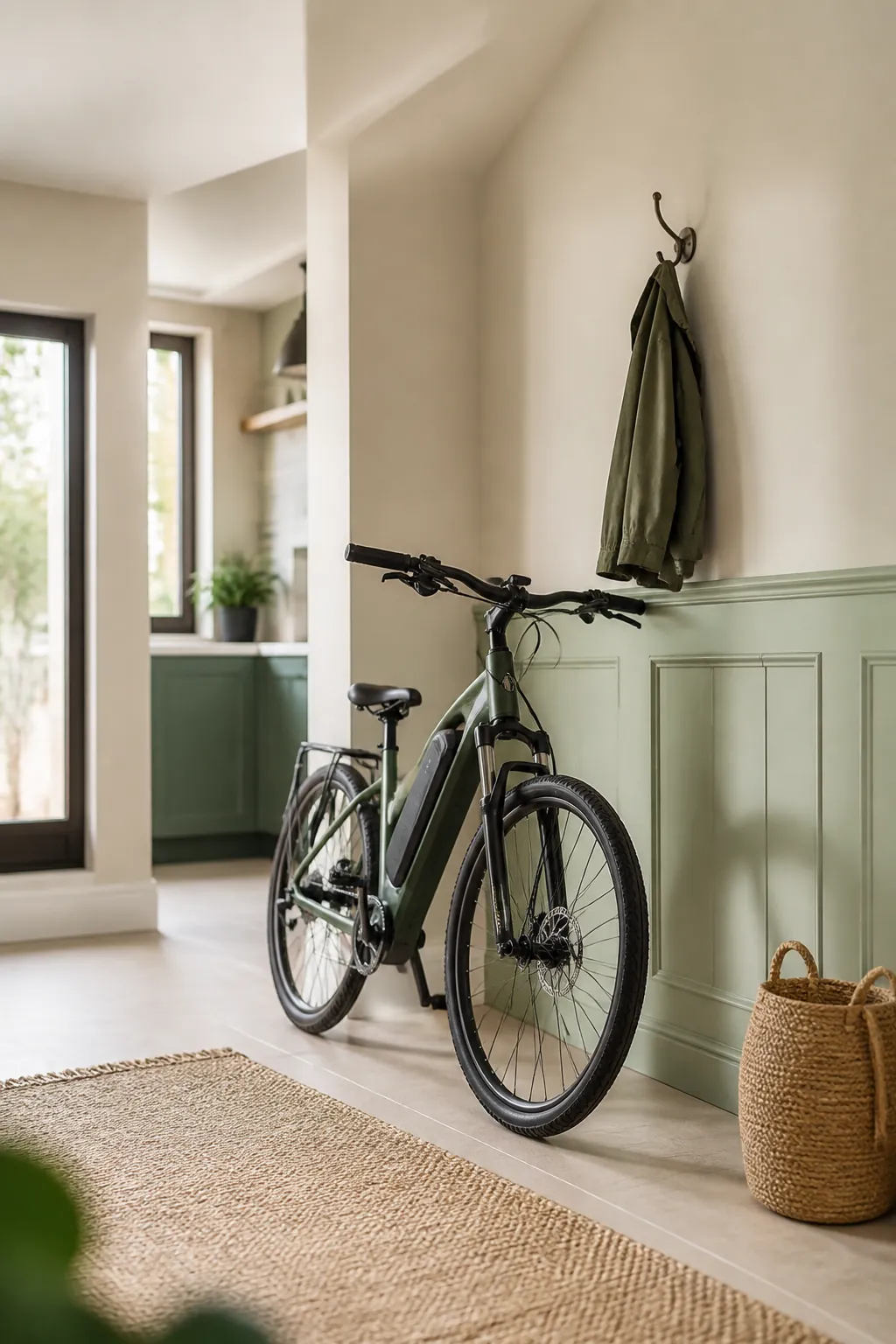
Adhesive wall hooks are typically rated for 5 to 10 pounds, a standard coat hook for maybe 15 to 20, and even a heavy-duty wall hook rack usually tops out around 40. That ceiling covers a road bike or hybrid with room to spare, but it does not cover an e-bike at 45 to 70 pounds or a heavy e-scooter pushing past 30.
The failure mode here is not the hook itself. It’s the anchor. A stud-mounted hook rated for 40 pounds is still just fastened into wood, and asking it to carry 60 pounds of e-bike, plus the leverage of the frame swinging slightly with every door swing, is how a hook pulls loose weeks after it seemed fine. Past about 40 pounds, plan for a floor spot with a mat instead of trusting hardware built for something lighter.
5. Mount into a stud, or go over-the-door when you can’t drill
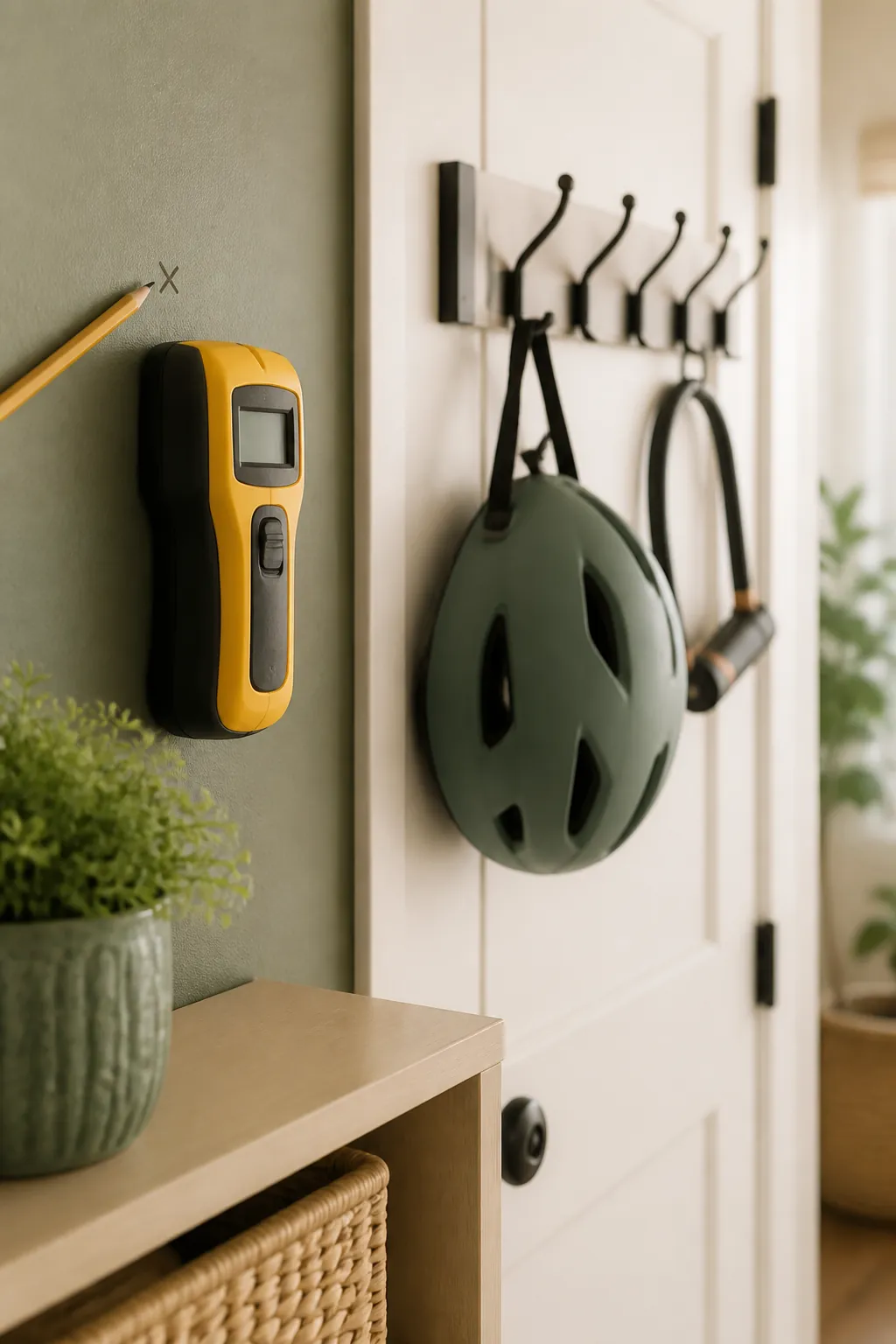
Find the stud with a stud finder and mark the center in pencil before you drill anything. Drywall alone, even with a rated anchor, is a reasonable bet under about 20 pounds and a poor one for a bike that pushes past that, especially with the load swinging every time someone brushes past it.
Renters who cannot put a hole in the wall still have the back of the nearest interior door to work with. An over-the-door hook rack grips the top edge with no fixings and comes off cleanly at move-out. It handles a folded kick scooter, a helmet, a lock and a pump without trouble, but check the per-hook rating rather than the rack’s total, and don’t ask it to carry a full bike frame. Most interior door hardware isn’t built for that much weight hanging off one edge, and a standard door runs 1.375 inches thick, which some racks won’t clamp at all.
6. Keep handlebars and pedals out of the front door’s swing
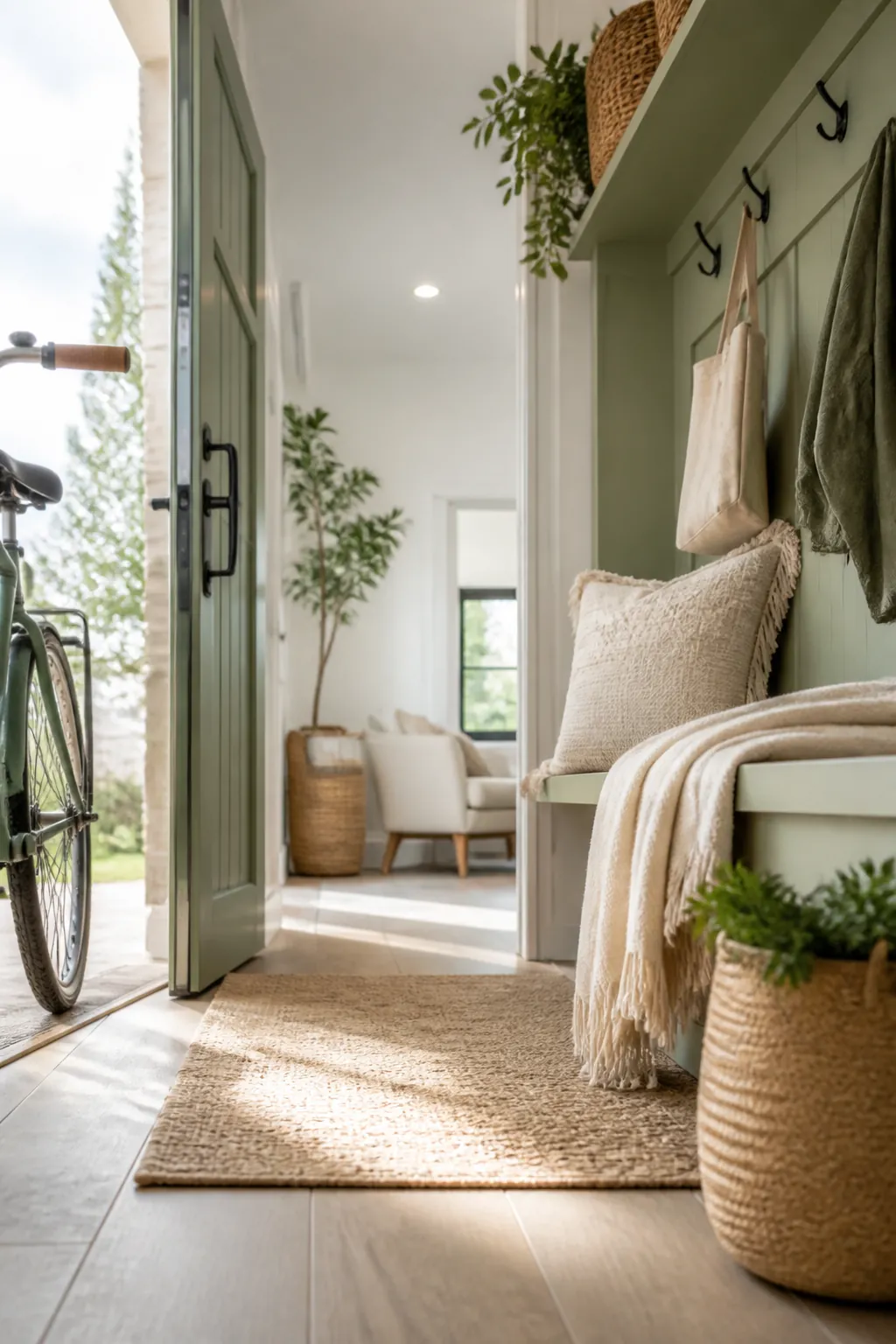
Open the front door all the way and watch where the leading edge travels. A standard interior door sweeps 30 to 36 inches through that arc, and a handlebar sticking out 24 inches from the wall sits well inside it. Every time someone comes in carrying something, that handlebar gets clipped, and within a week the bike gets moved back onto the floor out of frustration.
Mount both hooks on the wall the door swings away from, not toward. If the entryway is narrow enough that no wall clears the swing, a spot just past the door’s arc down the hallway usually works better than forcing it to fit where it clearly doesn’t.
7. Protect the floor and wall from tires with a mat, not bare surfaces
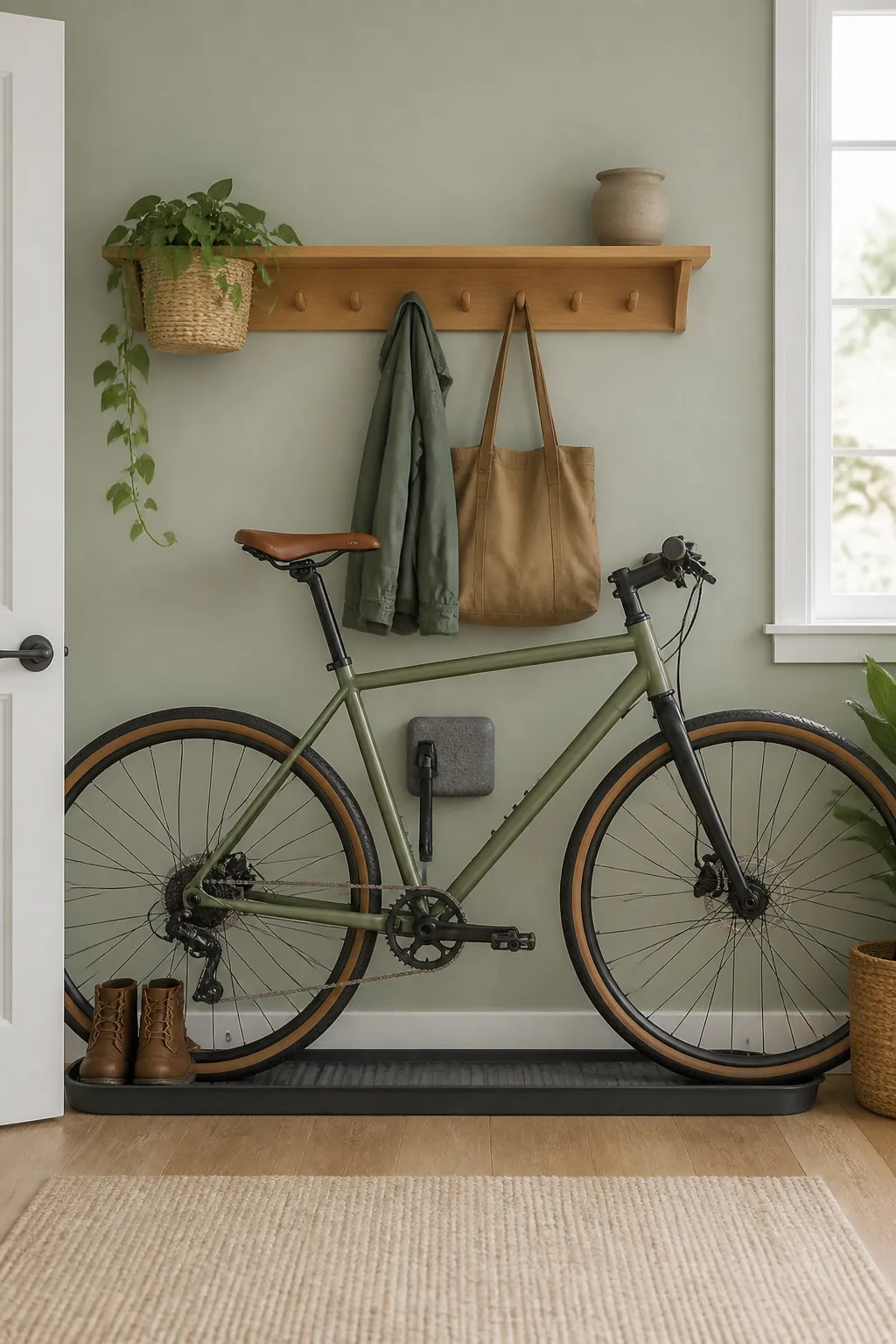
Bike and scooter tires track in whatever the sidewalk had on them: grit, road oil, and in winter, salt that never fully dries between rides. Parked in the same spot day after day, that residue works into hardwood finish and can dent softer vinyl plank flooring under the point load of a kickstand or a resting wheel.
A boot tray under both tires catches the mess and wipes clean in seconds instead of needing a scrub. Add a soft foam stopper, even a folded towel, wherever a pedal or crank arm rests against the wall, since a crank arm ground into the same spot for months leaves a mark no amount of touch-up paint fully hides.
8. Corral helmets, locks and pads on a bench instead of the floor
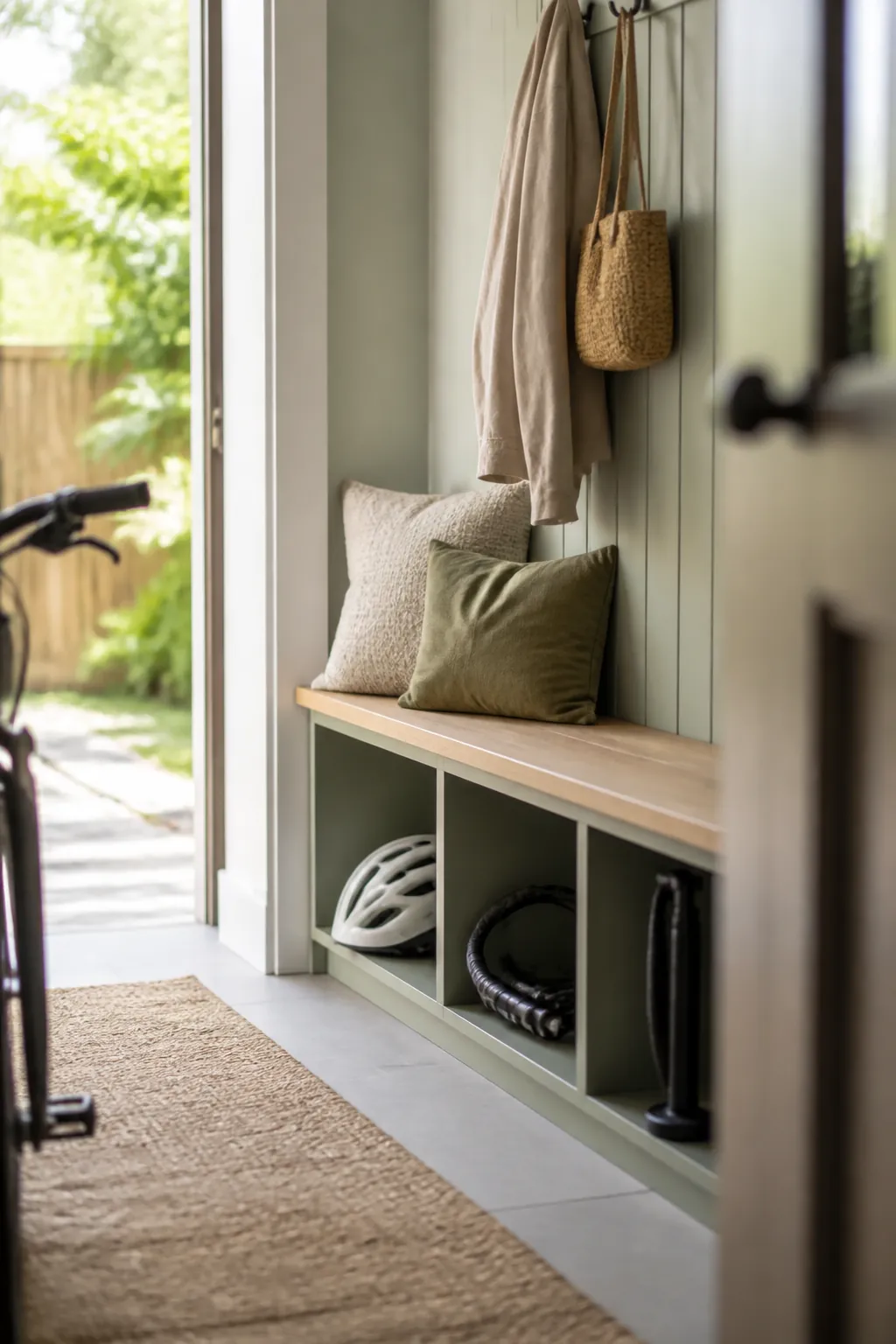
A bike and scooter rarely travel alone. Helmets, a chain lock, knee pads and a bike pump all need somewhere to land, and without a dedicated spot they pile up on the floor directly under the hooks, which defeats the point of getting the bike and scooter off it.
A narrow entryway bench with shoe storage, at 12 to 14 inches deep, sits well next to a wall-hung bike without doubling the floor footprint, and its shoe cubbies double as a home for a helmet and a lock once you stop expecting them to hold only shoes. Pair it with a hook by the door for keys so the small stuff has a landing spot that isn’t the bench seat either.
9. Manage the e-scooter charging cord without a trip hazard
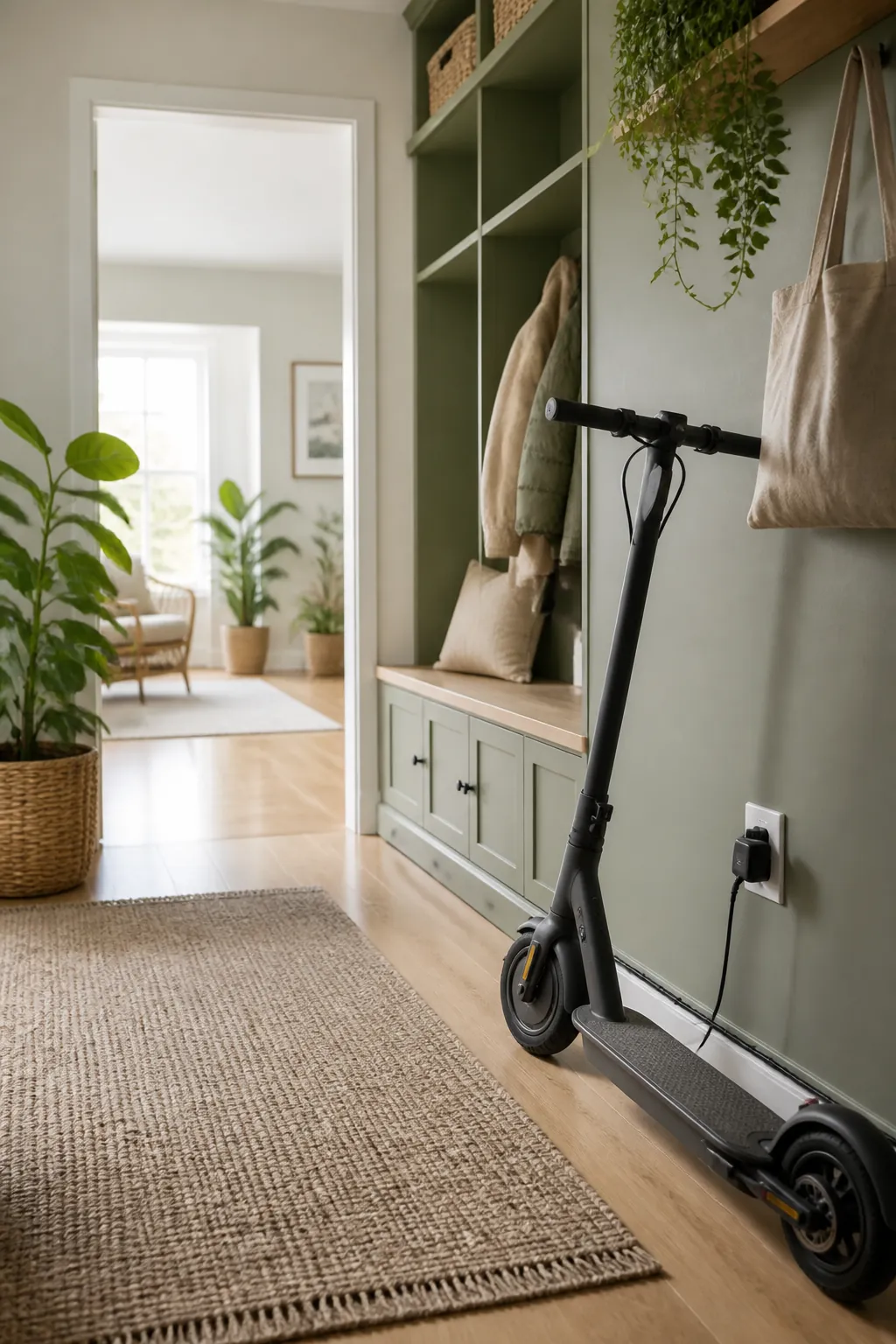
An e-scooter or e-bike battery needs to charge somewhere, and that somewhere is usually the nearest outlet, which is rarely right next to where the scooter is parked. A charging cord left loose across an entryway is one of the more avoidable ways to trip someone carrying a bag of groceries in the dark.
Run the cord along the baseboard rather than across open floor, and use adhesive cable clips rather than tape, since tape pulls paint off a rental wall when it comes off and clips do not. Park the scooter itself within cord reach of the outlet before you settle on a final spot for it, not after, so the setup doesn’t get moved a second time once the cord turns out too short.
Where to start
Weigh the bike and scooter, or check their listed weights, before deciding anything else. Under about 40 pounds, a stud-mounted wall hook or heavy-duty hook rack handles either one, as long as the position clears the front door’s swing and leaves 6 to 8 inches for the pedal to hang free. Past that weight, especially with an e-bike or e-scooter, stop trying to hang it and give it a marked, mat-protected spot on the floor instead.
Whichever way it goes, plan a landing spot for the helmet, lock and charging cord at the same time as the bike itself. A wall that solves the bike but leaves the helmet on the floor and the cord across the walkway has only solved the half of the problem that was never really the hard part.