A drawer of gloves and mittens looks fine in September and falls apart the first cold morning in November, when it turns out that half of what’s in there is a single glove with no partner and the current winter set is buried under three garden gloves nobody’s touched since spring. Gloves are small enough to vanish inside a bigger bin and numerous enough, one pair per person times however many people leave the house each morning, that a vague pile stops working within a few weeks. None of this needs a mudroom. It needs pairs that stay paired and a spot small enough that finding a match takes one glance, not a dig.
1. Measure what you’re actually storing before buying a bin
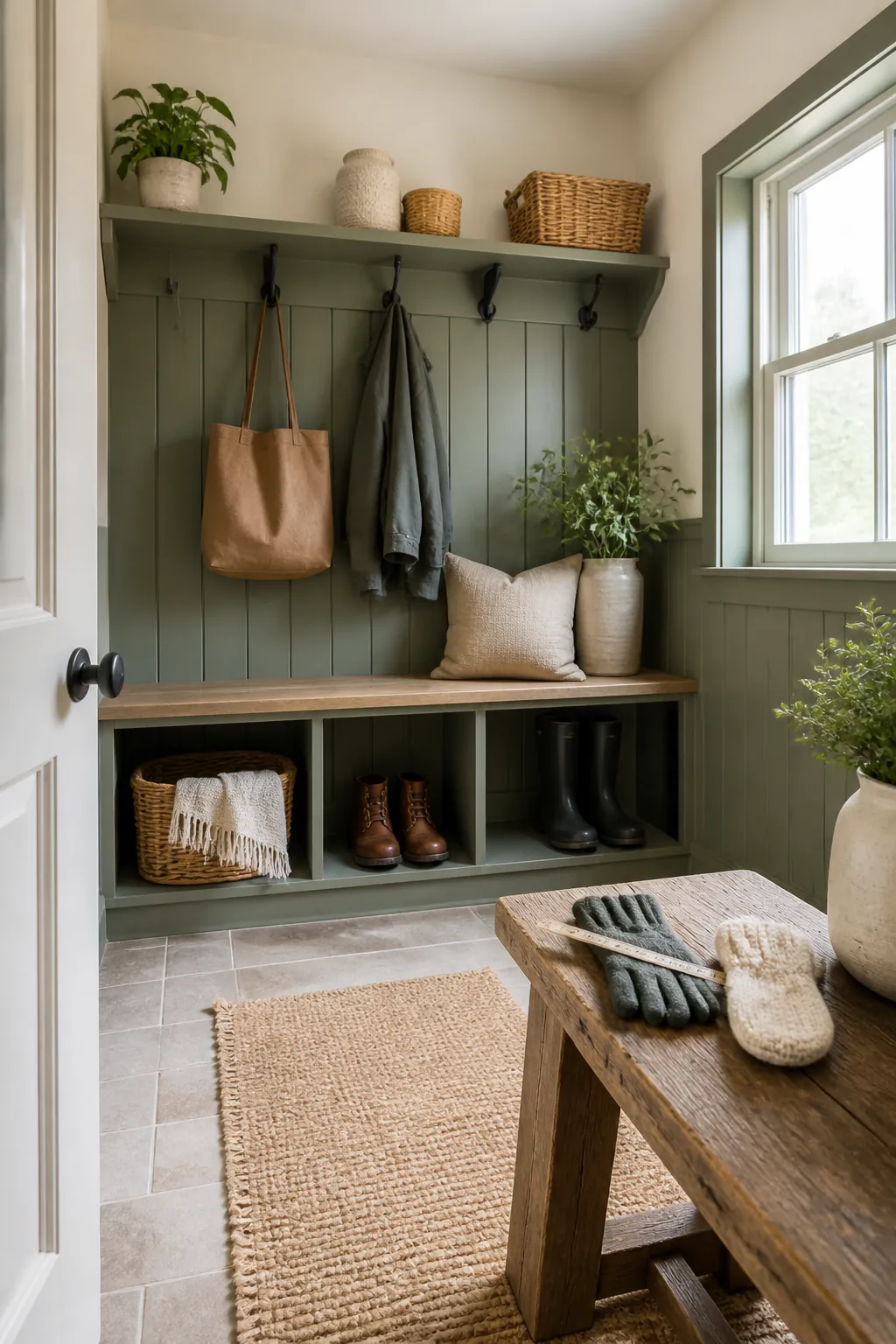
A folded adult glove runs about 4 by 9 inches, and a kid’s mitten is closer to 3 by 5. That sounds obvious until you’re standing in a store aisle deciding between bins, because most general-purpose bins are sized for sweaters or shoes and swallow gloves whole, leaving so much dead space that pairs sink to the bottom and stay lost until spring cleaning turns them up.
The fix is sizing the container to the item, not the other way around. A shallow drawer 3 to 4 inches deep holds a season’s worth of gloves in a single layer, where every pair is visible at a glance instead of stacked three deep. If the entryway furniture doesn’t have a drawer that shallow, a low, wide basket does the same job on a shelf.
2. Pin every pair together before it ever goes into storage
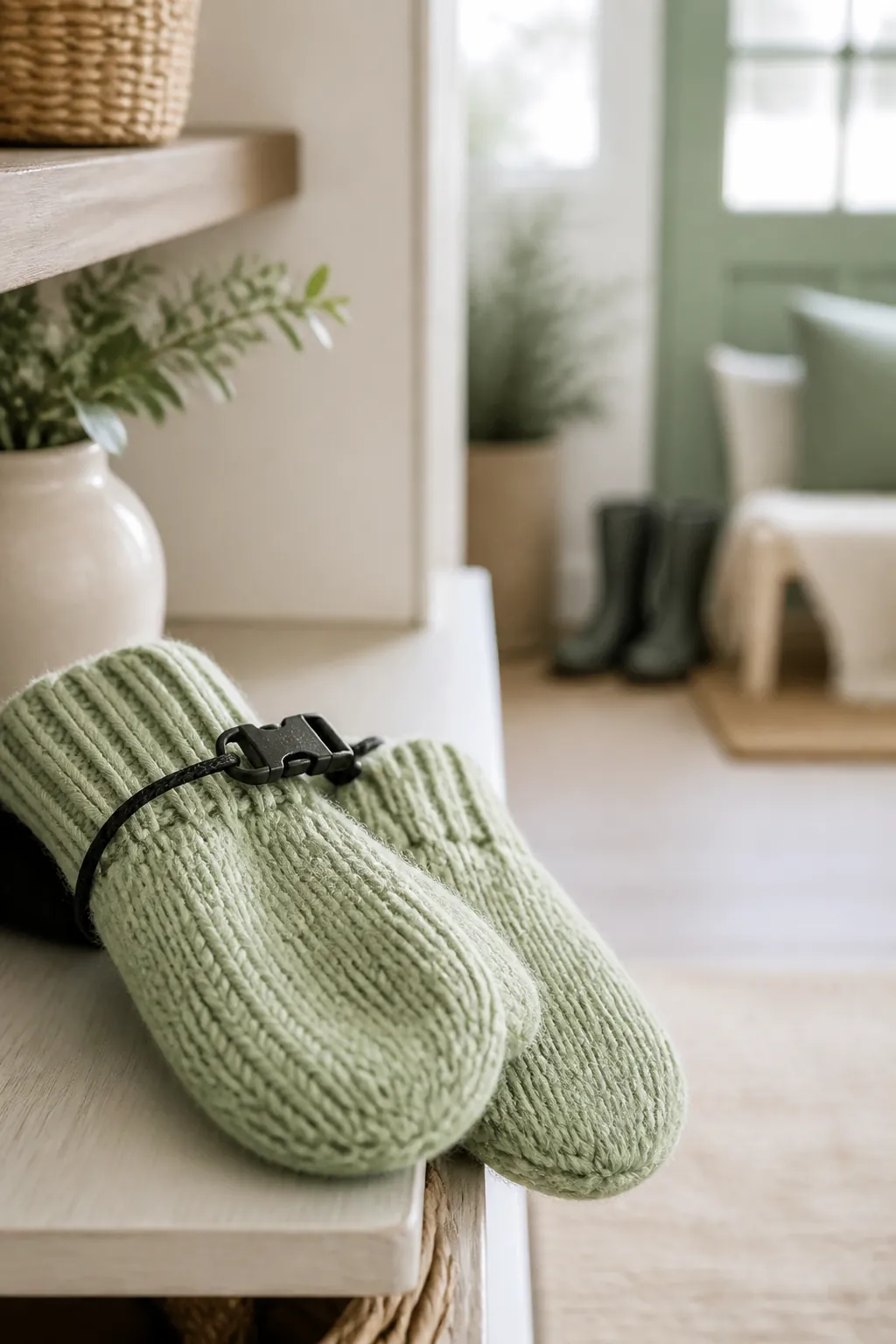
This is the single change that fixes more glove chaos than any container will. A mitten clip pinned through the cuff of each glove, connected by a short cord, means the pair comes off a kid’s hands still attached to each other and goes back into the bin the same way. For adults, a small binder clip or a plain safety pin through both cuffs works just as well and costs nothing.
The alternative, for a household that loses count of clips, is running a length of round elastic cord through both coat sleeves with a mitten clipped to each end, an old trick that keeps mittens tethered to the coat itself so they can’t end up anywhere else. It looks a little old-fashioned. It also means a 5-year-old cannot lose a mitten between the school bus and the front door, because it’s never actually detached from the sleeve.
3. Give wet gloves somewhere to dry before they go back in the bin
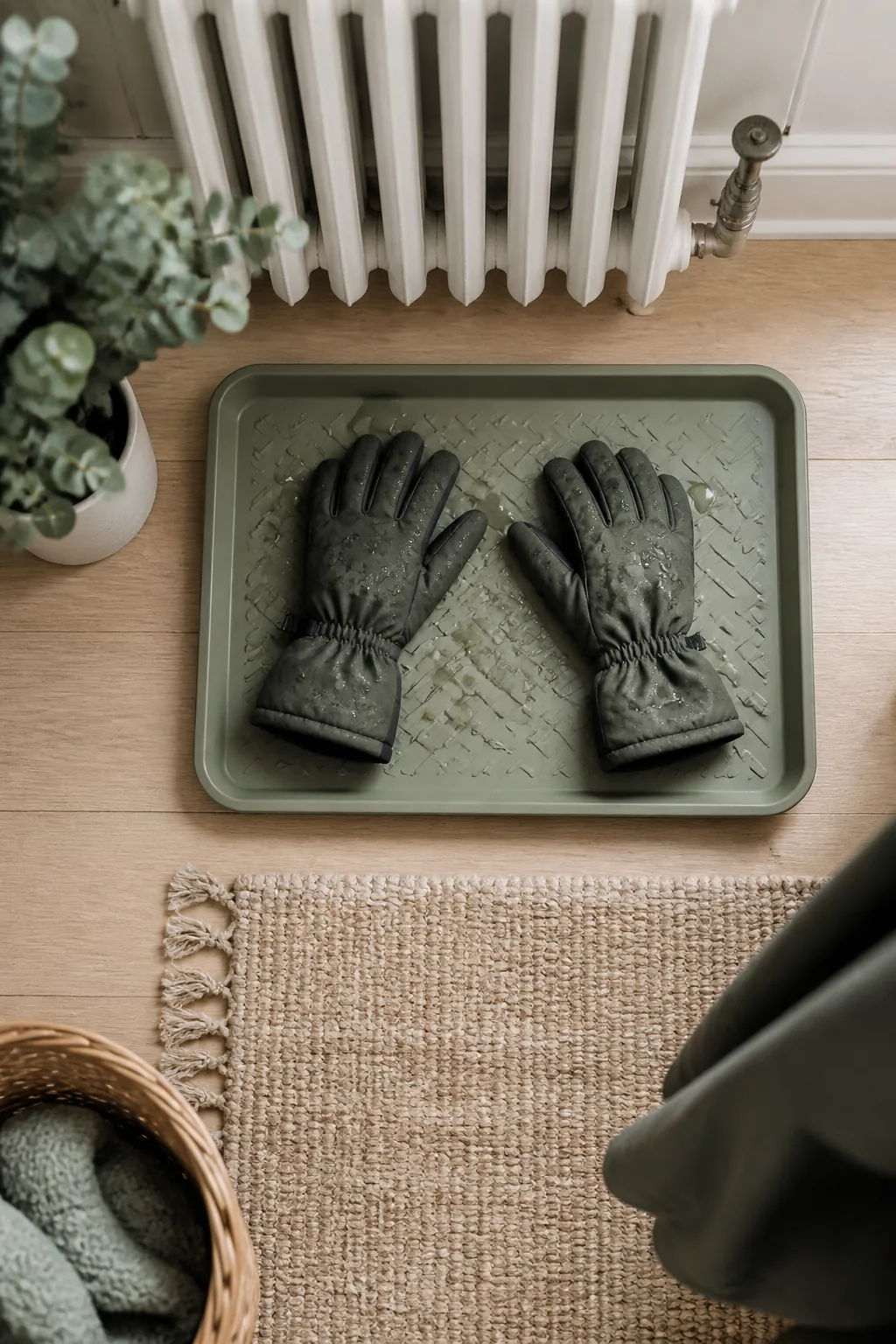
Gloves and mittens that come in from snow, slush, or a wet dog walk are the one category in an entryway that actively punishes being put away immediately. Packed damp into a closed drawer or bin, wool and fleece stay wet for days and start to smell musty, and that smell doesn’t come out with a normal wash cycle.
Give them a drying spot first: a hook, a radiator rail kept a few inches clear of direct heat, or simply laid open-side down on a boot tray for a couple of hours. Only once they’re dry to the touch, not just cool, do they go back into the main storage. This step gets skipped when the drying spot is more than a few steps from the door, so it has to be right there, not down the hall in a laundry room.
4. Mount a basket at kid height for the pairs in daily rotation
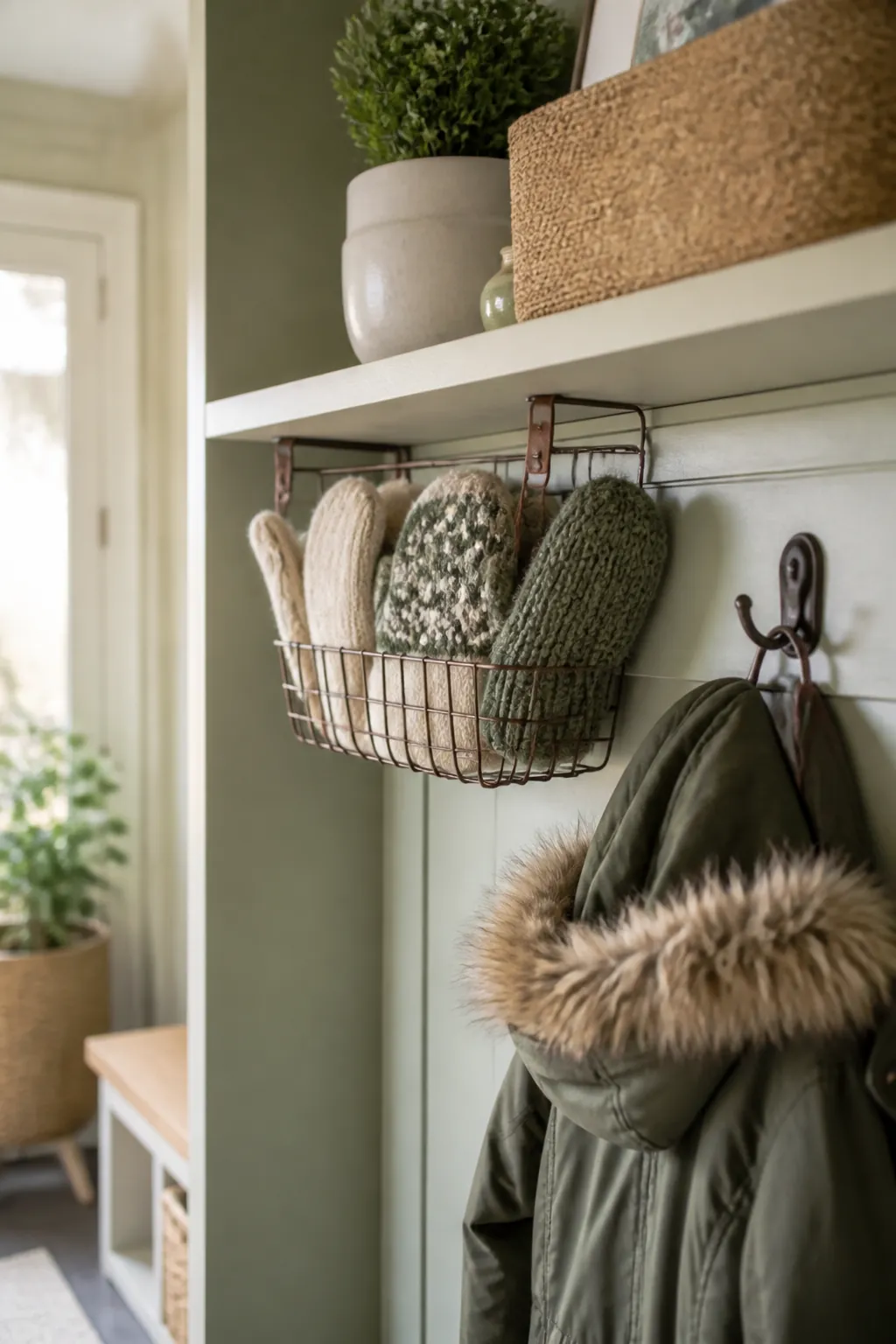
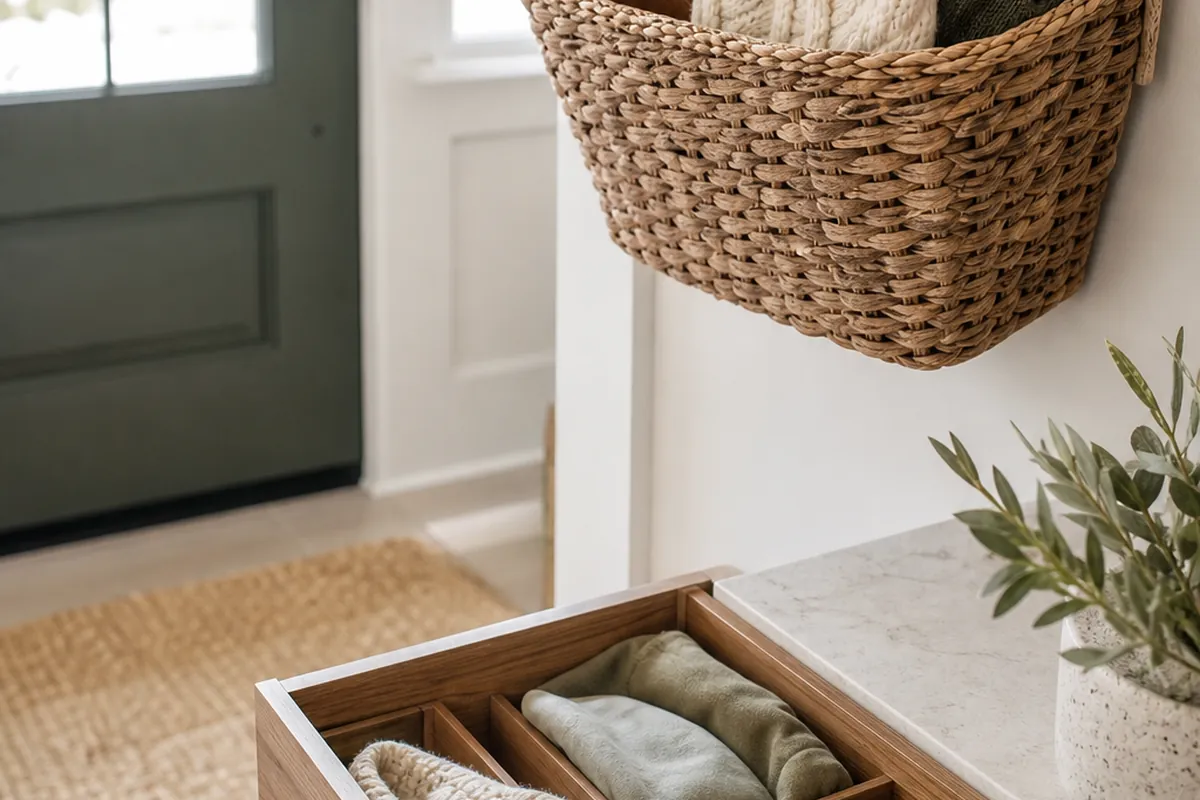
An under-shelf hanging basket clips onto the underside of an existing shelf and adds storage without eating any floor space or drilling a single hole, which makes it one of the few genuinely deposit-safe additions to a rental entryway. Its open mesh sides matter more than they look like they would: airflow keeps a mostly-dry glove from turning musty the way a solid plastic bin does.
Mount it low, around 30 to 36 inches off the floor for a school-age kid, rather than at the adult coat-hook height most entryways default to. A basket a child can reach and drop mittens into unassisted gets used every day. One that requires being lifted gets skipped after the first week, and the mittens end up on the floor instead.
5. Sort a drawer by household member, not by glove type
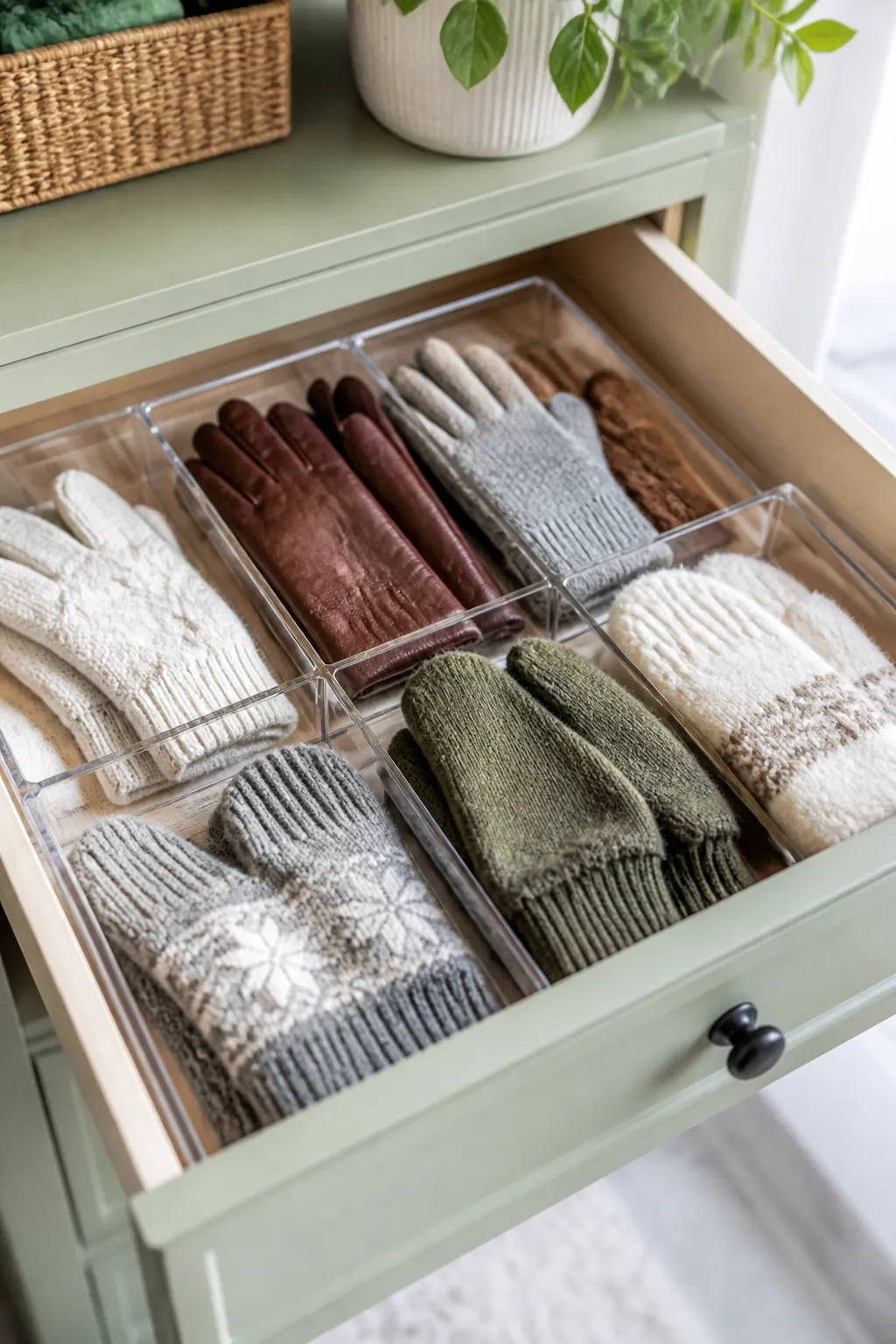
Sorting gloves by type, all the mittens together, all the gloves together, sounds tidy and works terribly in practice, because nobody actually needs “a glove.” They need their own gloves, on their way out the door, without checking three sizes to find the right one.
A clear drawer organizer set split into sections works better sorted by person, one compartment per family member, so each pair lives in exactly one place regardless of style. A compartment roughly 6 by 6 inches holds two to three pairs comfortably, which covers a daily pair plus a spare without crowding.
6. Give each kid a labeled spot, not a shared pile
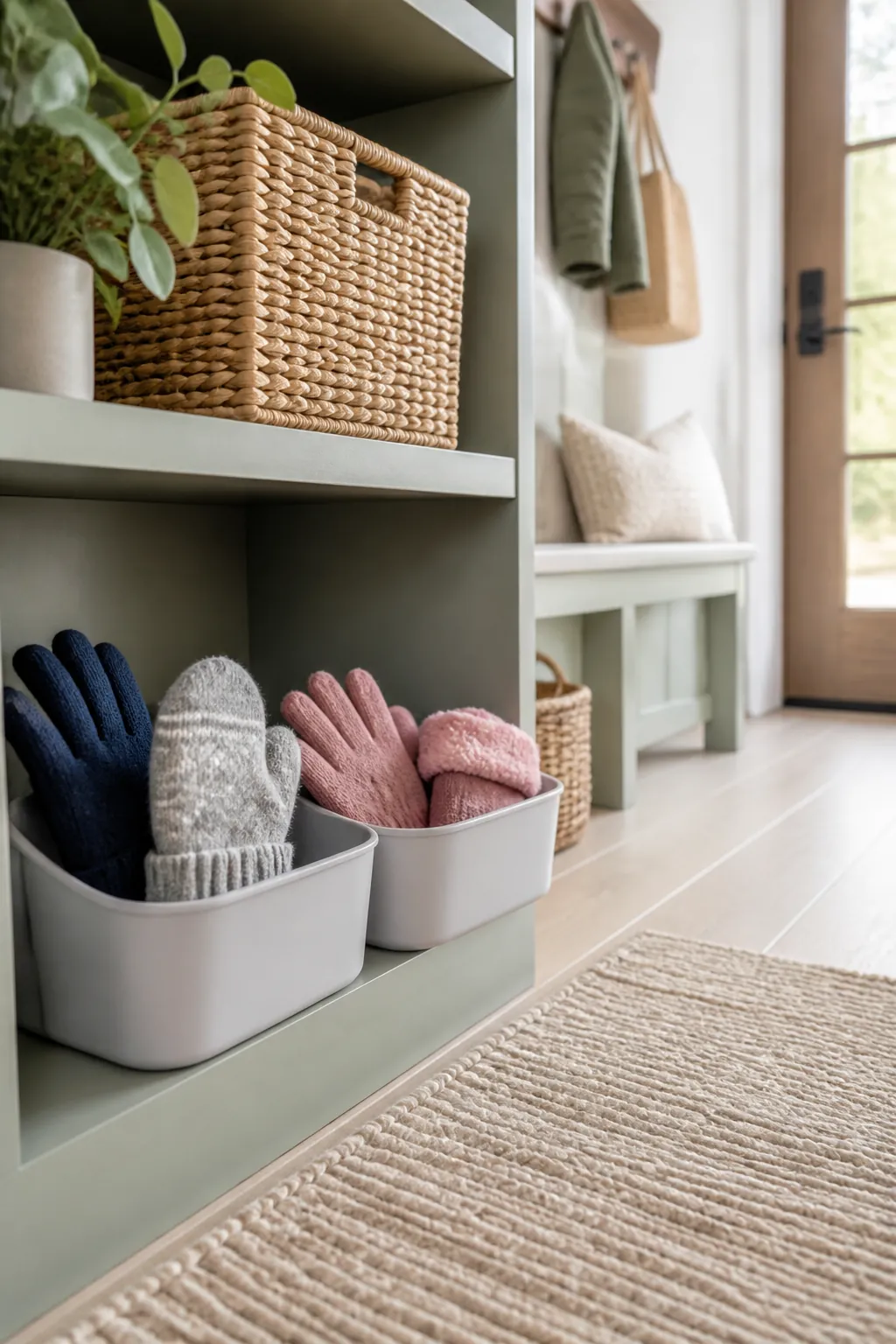
In a household with more than one child, a shared glove pile is where mornings go to die. Kids grab whatever fits close enough, sizes get swapped without anyone noticing, and the search for “my actual mittens” starts over every single day.
Labeling solves this faster than any container choice does. A section, a pocket, or a small bin per child, marked with a name rather than a picture a toddler will outgrow reading, means everyone’s gloves land in the same spot they came from. This is the same logic that makes entryway closet organization work for coats, applied to something small enough to get lost twice as fast.
7. Use an over-the-door organizer when there’s no drawer to give up
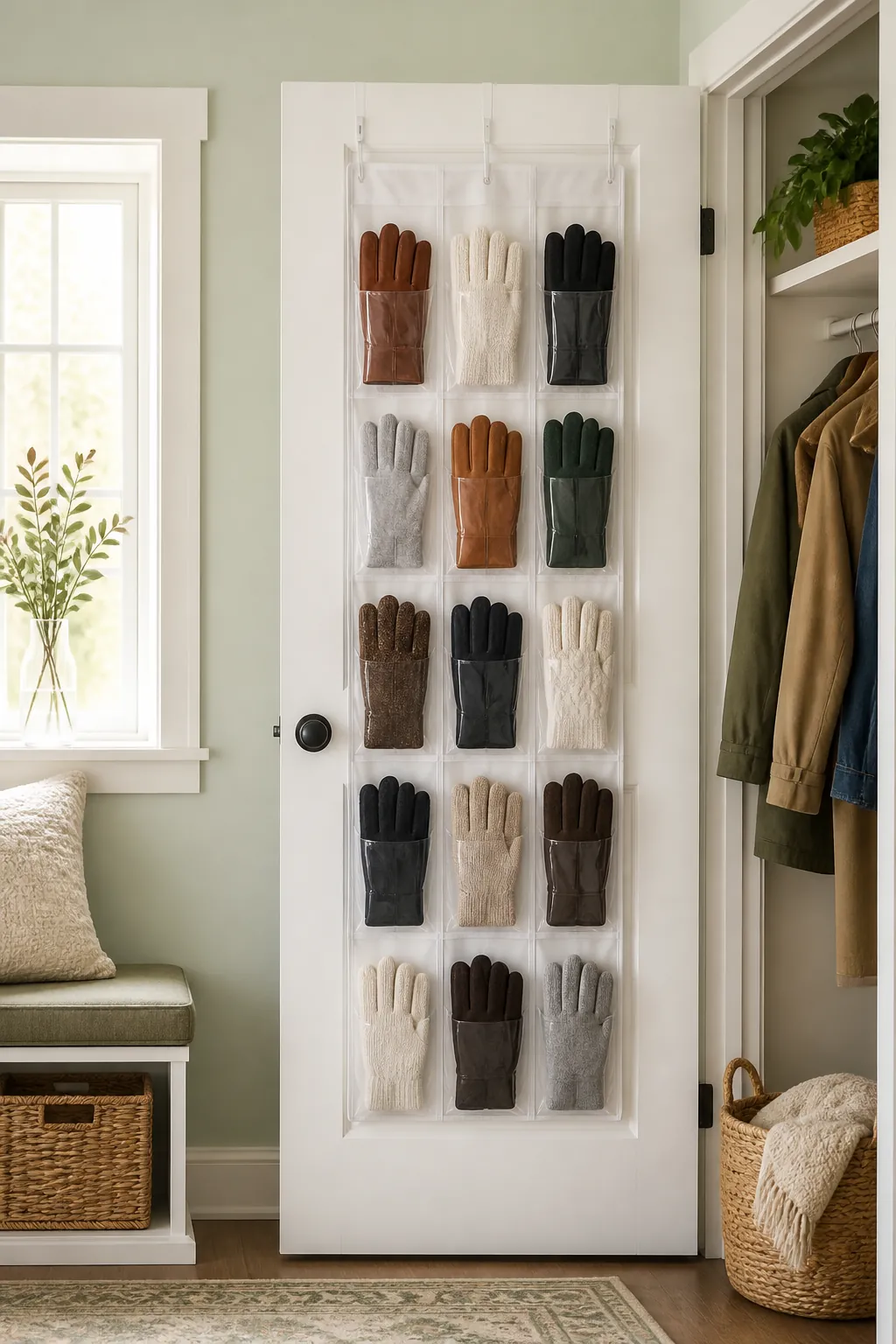
Plenty of small entryways have no furniture with a spare drawer, and buying a new piece just for gloves is overkill for something this size. The back of a nearby closet door solves it instead. An over-the-door shoe organizer with clear pockets repurposes well here, since each 8-by-10-inch pocket holds one to two pairs of gloves with the pair visible through the clear front, which turns “finding your gloves” into a glance instead of a search.
It needs no drilling and comes down cleanly at move-out, and one pocket per family member keeps the sorting-by-person rule from step 6 intact. Check the door’s thickness before ordering: most of these organizers are built for a standard 1.375-inch interior door, and a thicker one leaves the hanging bar too loose to sit flat against the door face.
8. Split the collection by season and swap it twice a year
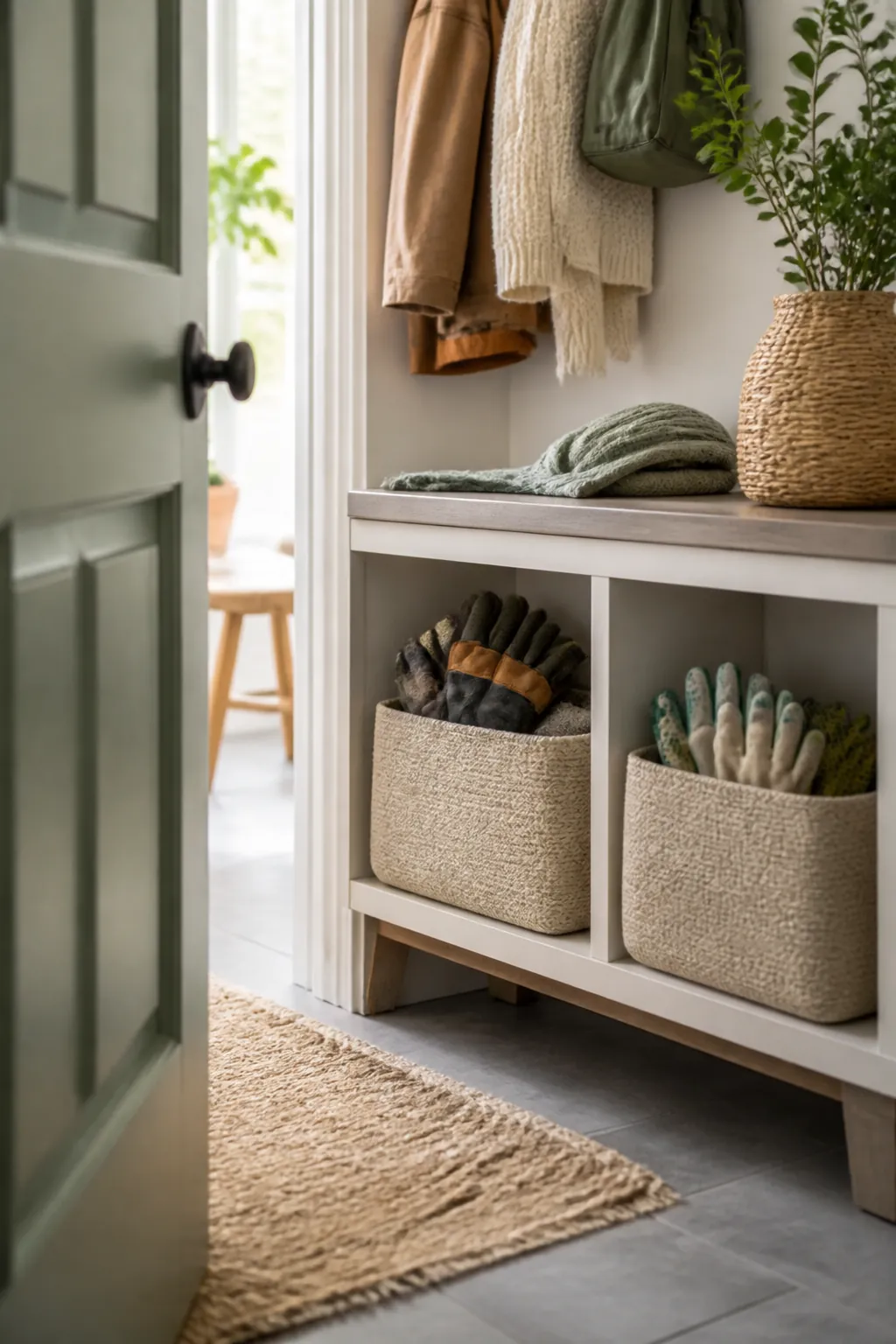
Winter gloves, garden gloves, and a spare pair of work gloves all end up competing for the same few square feet if nothing separates them by when they’re actually used, and a bin holding all three at once is why a winter glove search in December turns up two mismatched garden gloves first.
Keep the current season’s gloves in the main entryway spot and move everything else, gardening pairs in spring and summer, spare winter pairs once the weather turns, to a closet shelf or a bin elsewhere in the home. The twice-yearly swap doubles as the moment you notice the pair that’s been outgrown or the glove that’s been an orphan for a year, the same seasonal discipline that keeps hat storage from sprawling.
9. Keep orphan gloves in one bin with an expiration date
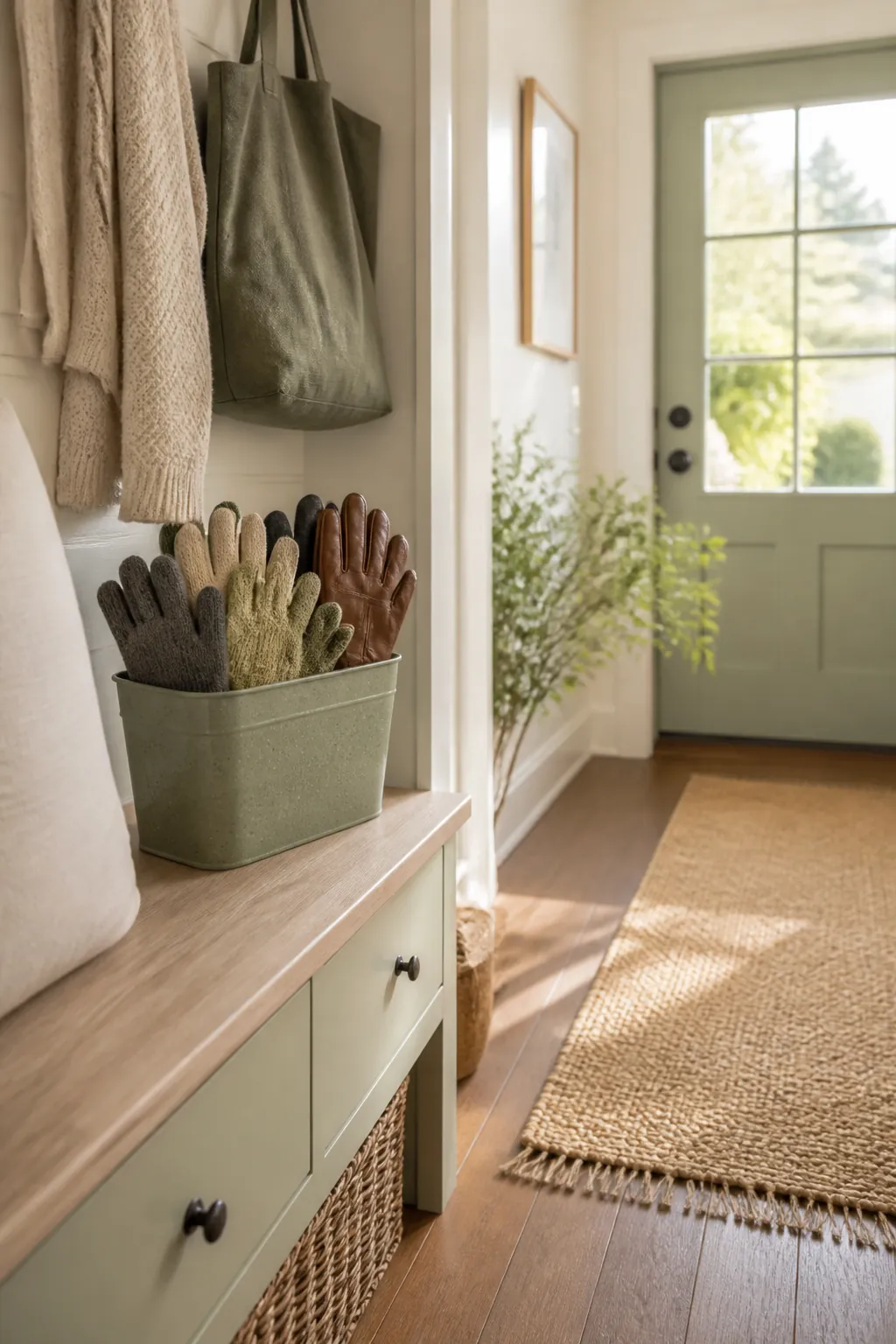
Every household accumulates single gloves, and the instinct is to keep every one of them indefinitely just in case the match turns up. That instinct is how a drawer meant for current pairs slowly fills with singles that will never be reunited.
Give orphans one dedicated spot, small enough to hold maybe ten singles, separate from the main storage. Most matches turn up within a few weeks, pulled out of a coat pocket or found under a car seat. Write the season’s date on a sticky note inside the bin, and anything still unmatched when that date rolls around again gets donated or tossed rather than carried forward for another year of taking up space it isn’t earning.
Where to start
Start with the pinning trick in step 2, since it’s free, takes minutes, and prevents most of the problem the other eight ideas exist to clean up after. A pair that never separates doesn’t need to be found, sorted, or matched again.
After that, size a container to what you actually own rather than what happened to be on the shelf, whether that’s a shallow drawer sorted by person, a hanging basket at a kid’s reach, or an over-the-door pocket system for a family with no drawer to spare. The goal isn’t a bigger space for gloves. It’s a system where a pair goes back exactly where it came from, every single time, without anyone having to think about it.