A dog’s gear does not stay contained the way a coat does. The leash ends up looped over a doorknob, the treat bag migrates to the kitchen counter, and the food bag sits open on the floor because the pantry shelf it was supposed to live on was never actually big enough. In a studio or a one-bedroom, all of that collects right at the door, in the same few square feet already doing double duty for shoes and mail. None of it needs more square footage. It needs each category to have exactly one spot, sized for what it actually holds.
1. Give the leash and harness a hook of their own
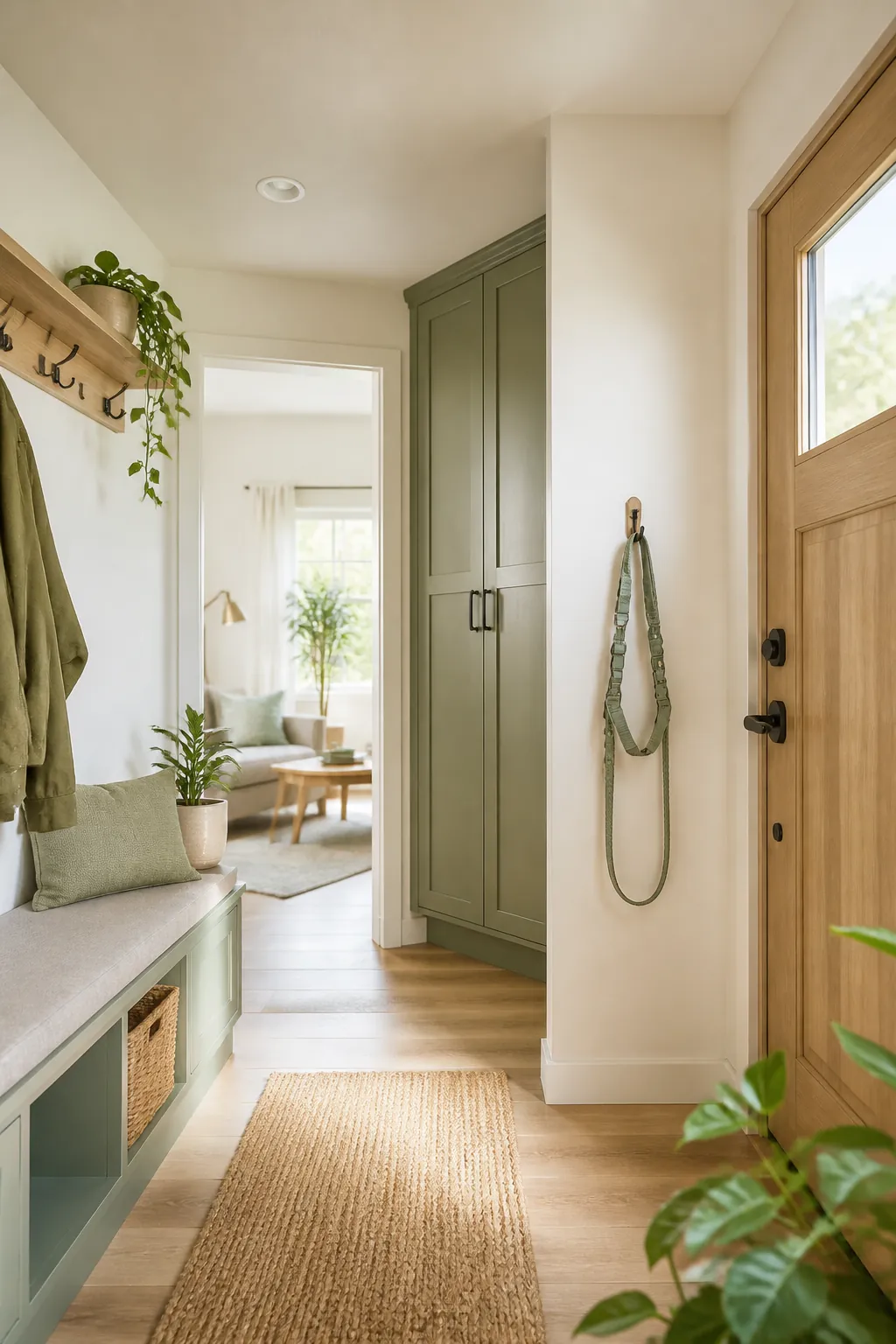
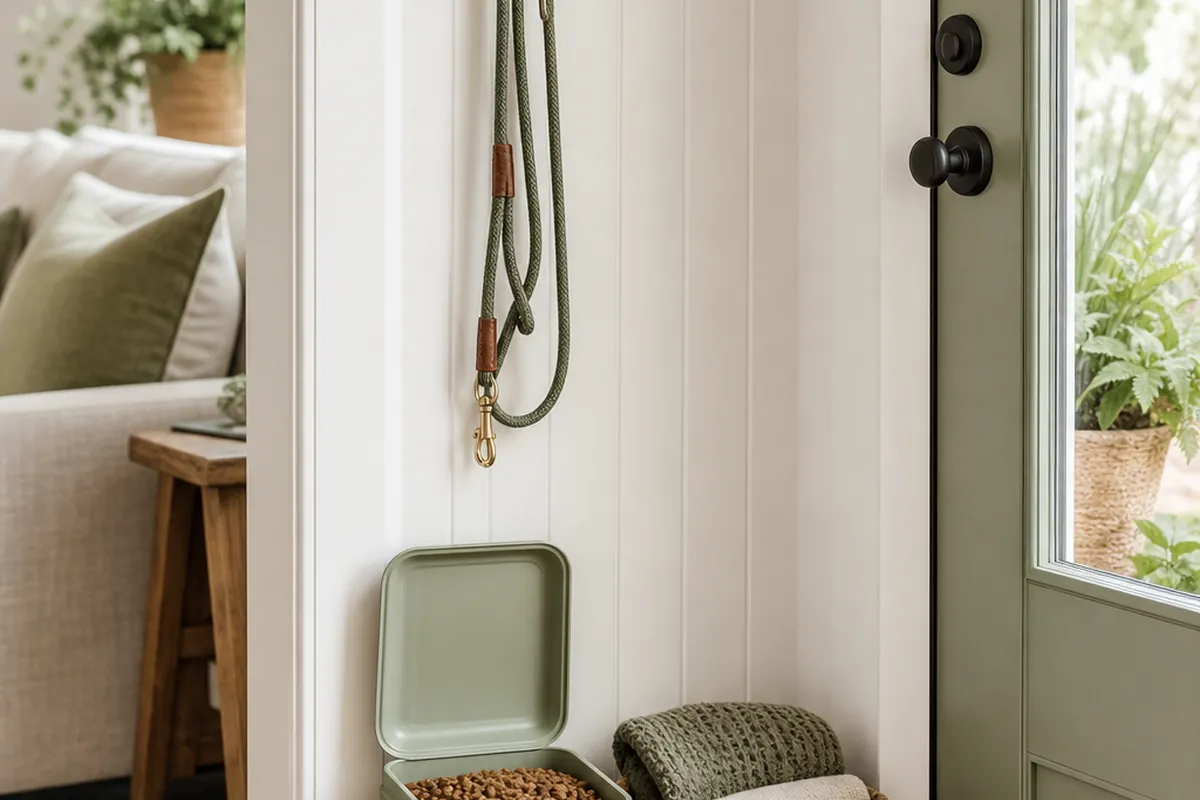
Every entryway wall already has a hook for coats, and that is exactly why a leash hung there disappears under a jacket sleeve the one morning you’re already running late. A dog’s leash, most coiled to about 8 to 10 inches across, and a harness barely add a pound of hanging weight together, so a second, smaller hook costs almost nothing in wall space to add.
Mount it lower than the coat hooks, around 40 to 48 inches from the floor, so it’s reachable one-handed while holding a leash clip in the other. Keep it close enough to the door that grabbing the leash and opening the door is one motion, not two trips across the room.
2. Weight-rate the hook honestly, since leash gear is lighter than it looks
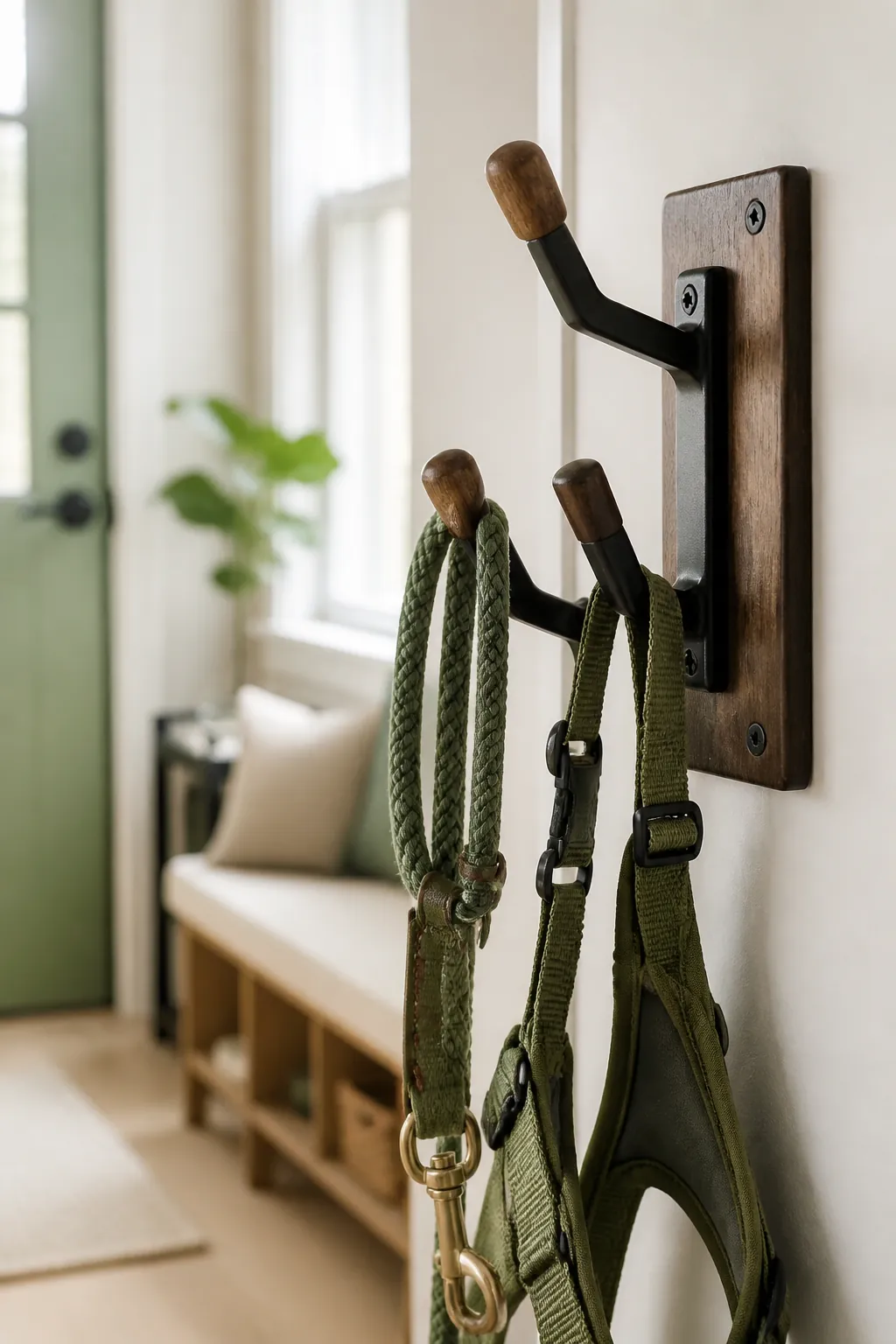
A stroller or a heavy coat needs a stud-mounted hook rated for real weight. A leash and harness together rarely clear 2 pounds, which puts them well inside what a light-duty adhesive hook can actually hold, no drilling required.
That said, check the rating printed on the packaging rather than assuming “small hook” means “fine for anything.” Humidity and temperature swings near an exterior door weaken adhesive strips faster than they do in a closet, and a hook that starts to peel usually gives no warning before it lets go. A heavy-duty wall hook rack mounted into a stud is worth the extra step if the wall allows it, since it removes the guesswork entirely and holds more than a leash ever will need.
3. Store dry food in a bin sized to the actual bag, not the shelf you have free
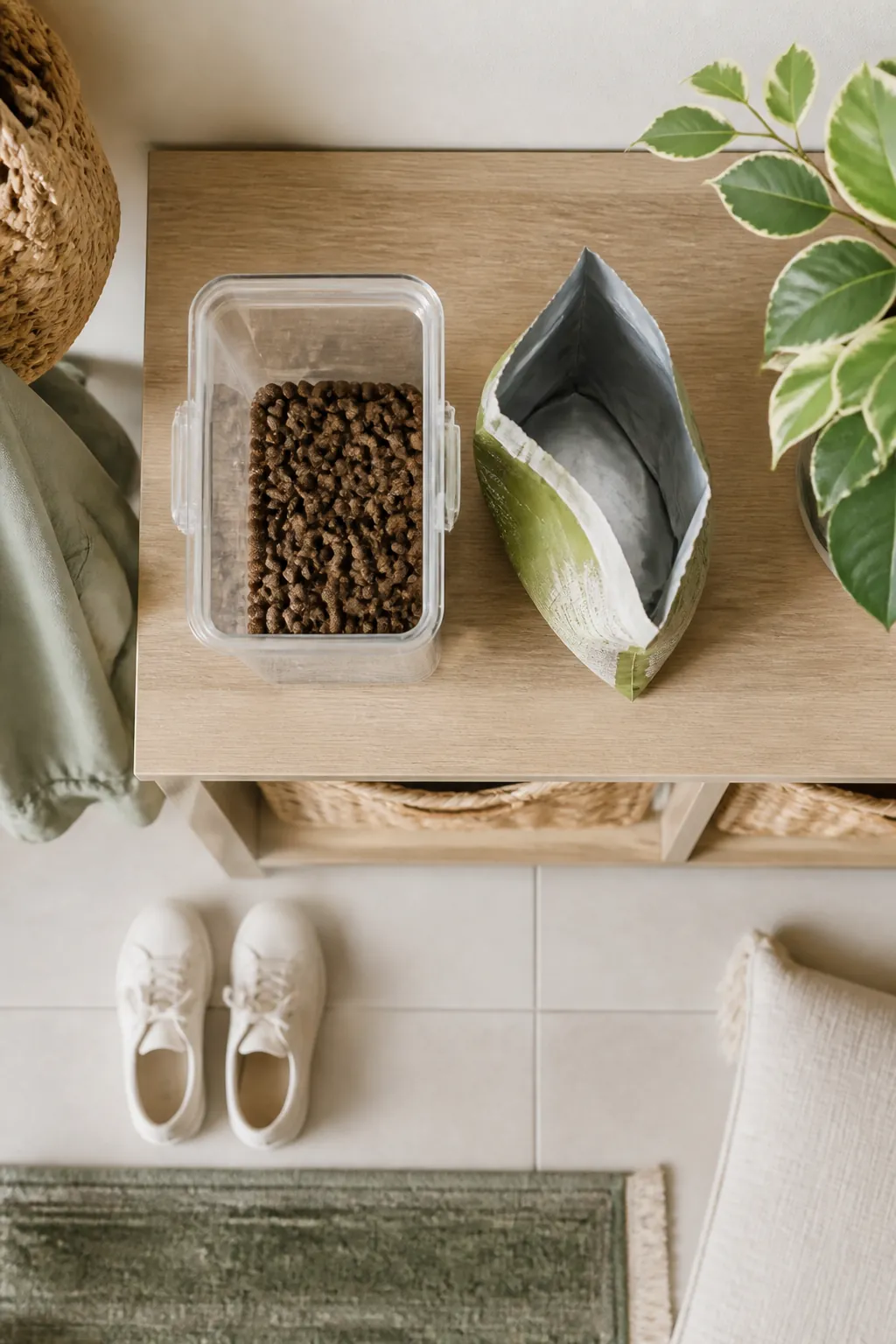
A 15-pound bag of kibble needs roughly a 6-quart airtight container to hold it with the lid seated flat. A 30-pound bag needs closer to 12 quarts. Buying whatever bin happens to fit the shelf, rather than measuring the bag first, is how food ends up half in the bin and half still in the torn paper sack sitting next to it.
Clear stackable food storage bins with a gasketed lid do two jobs at once near a front door: they keep moisture out on humid days when the door opens and closes constantly, and they keep a determined mouse or a curious dog from chewing through a paper bag that was never built to survive being knocked over.
4. Keep a poop bag dispenser clipped within arm’s reach of the leash
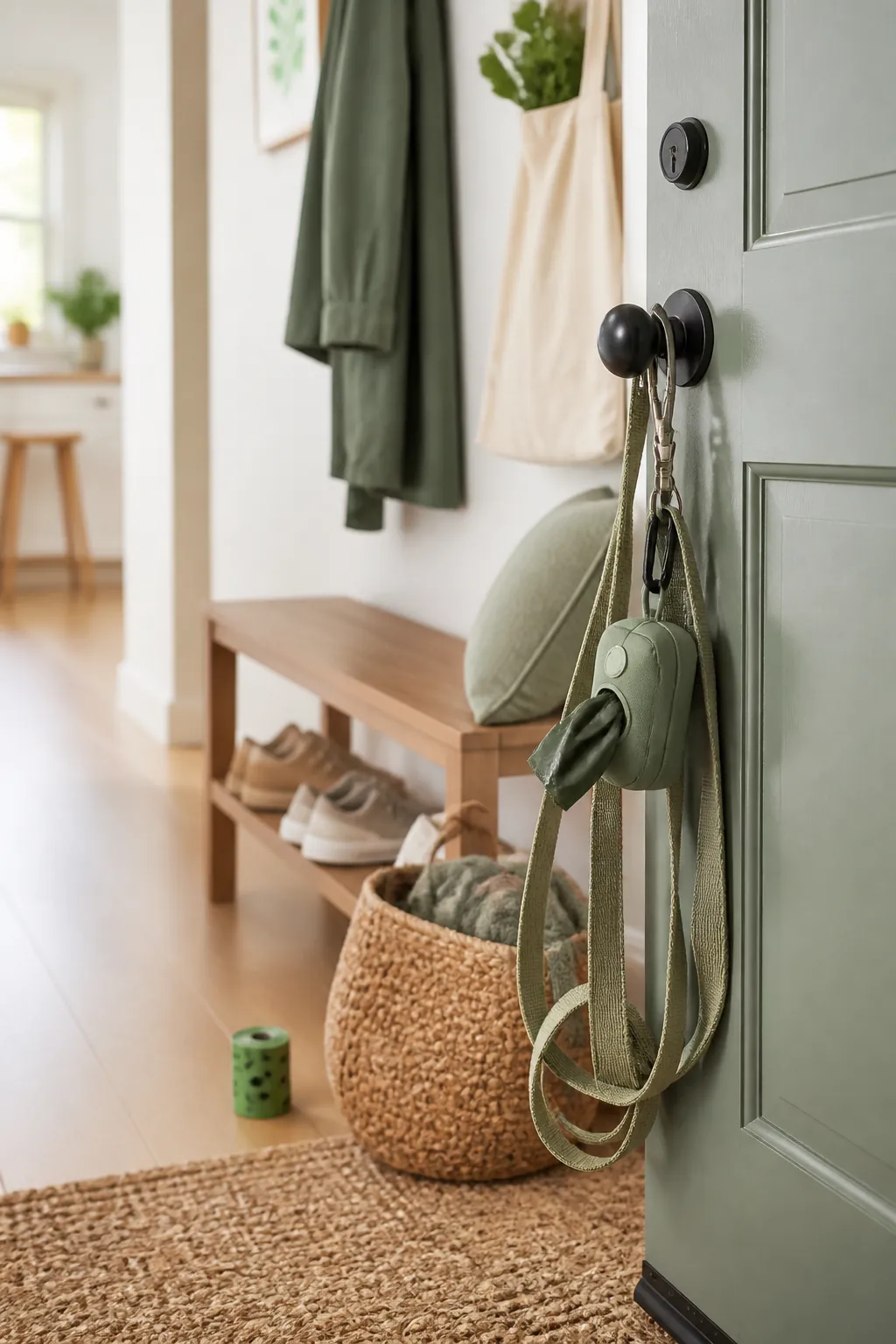
A roll of bags left in a kitchen drawer means a stop before every single walk, and that’s the kind of small friction that eventually gets skipped, which is worse than the alternative. A dispenser clipped to the leash hook, or hung on a nearby hook of its own, means the bag is already in your pocket by the time the leash is in your hand.
Most dispensers hold one roll of about 15 bags at a time. Keep a spare roll in the entryway too, not just the pantry, so a run of rainy walk-heavy days doesn’t leave you at the door with an empty dispenser and no backup closer than another room.
5. Turn an over-the-door organizer into the grooming and treat station
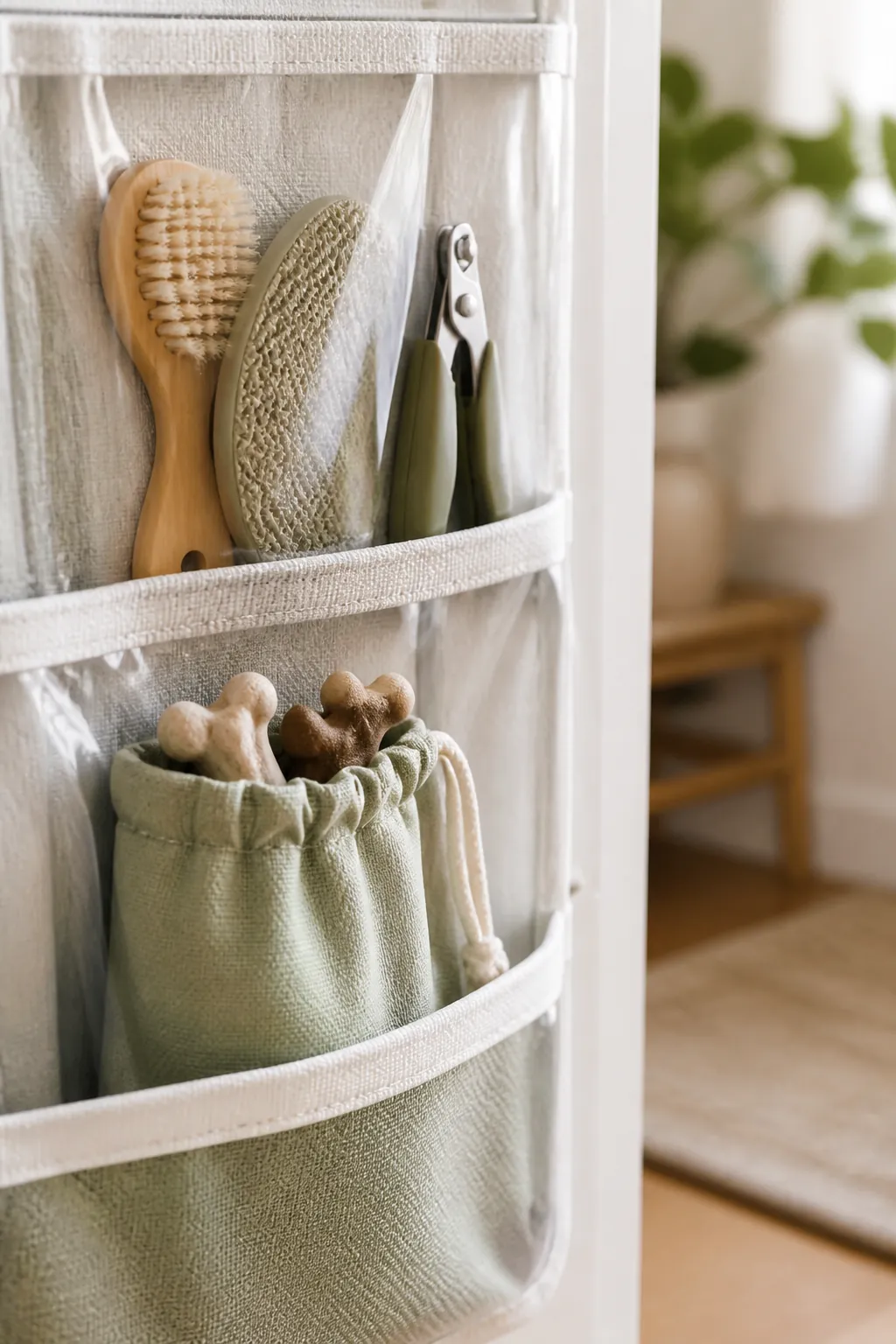
The back of a nearby closet door is unused vertical space that most entryways waste completely, and it happens to be exactly the right size for the small, loose items that pet gear generates: nail clippers, a brush, a treat pouch, a spare collar, vet paperwork.
An over-the-door shoe organizer with clear pockets repurposes well here, since its 8-by-10-inch pockets are closer to the size of these items than they are to shoes. Check the door’s thickness before ordering, since most of these are sized for a standard 1.375-inch interior door and a thicker one can leave the top bar too loose to hang flat. Hang it on a door that’s used daily, like the coat closet, rather than a guest room door nobody opens.
6. Give muddy paws a mat and a towel, not the bare floor
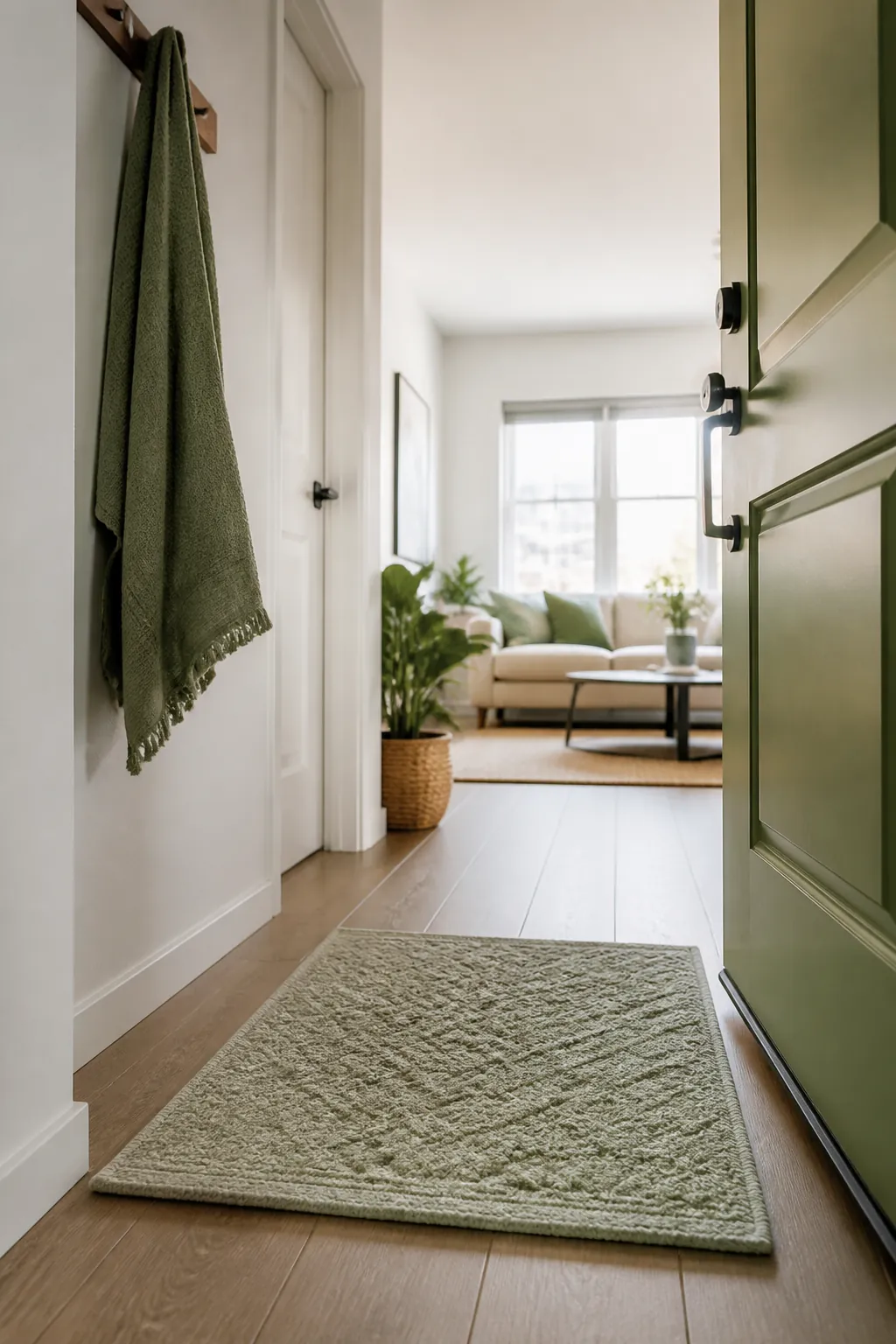
Paws pick up whatever the sidewalk had on it: grit, salt in winter, and moisture that never fully dries between walks. Parked at the same spot inside the door every day, that residue works into hardwood finish the same way a stroller tire does, and it’s worse with four feet doing the tracking instead of two wheels.
A washable mat around 24 by 36 inches, set just inside the door, catches most of it before it reaches the rest of the floor. Keep a small towel on a hook right next to the mat for a quick paw wipe on wet days. If the towel has to be fetched from the bathroom first, it won’t get used, and the whole point of having it there is that it’s faster than not bothering.
7. Corral toys and spare gear in one basket, off the floor
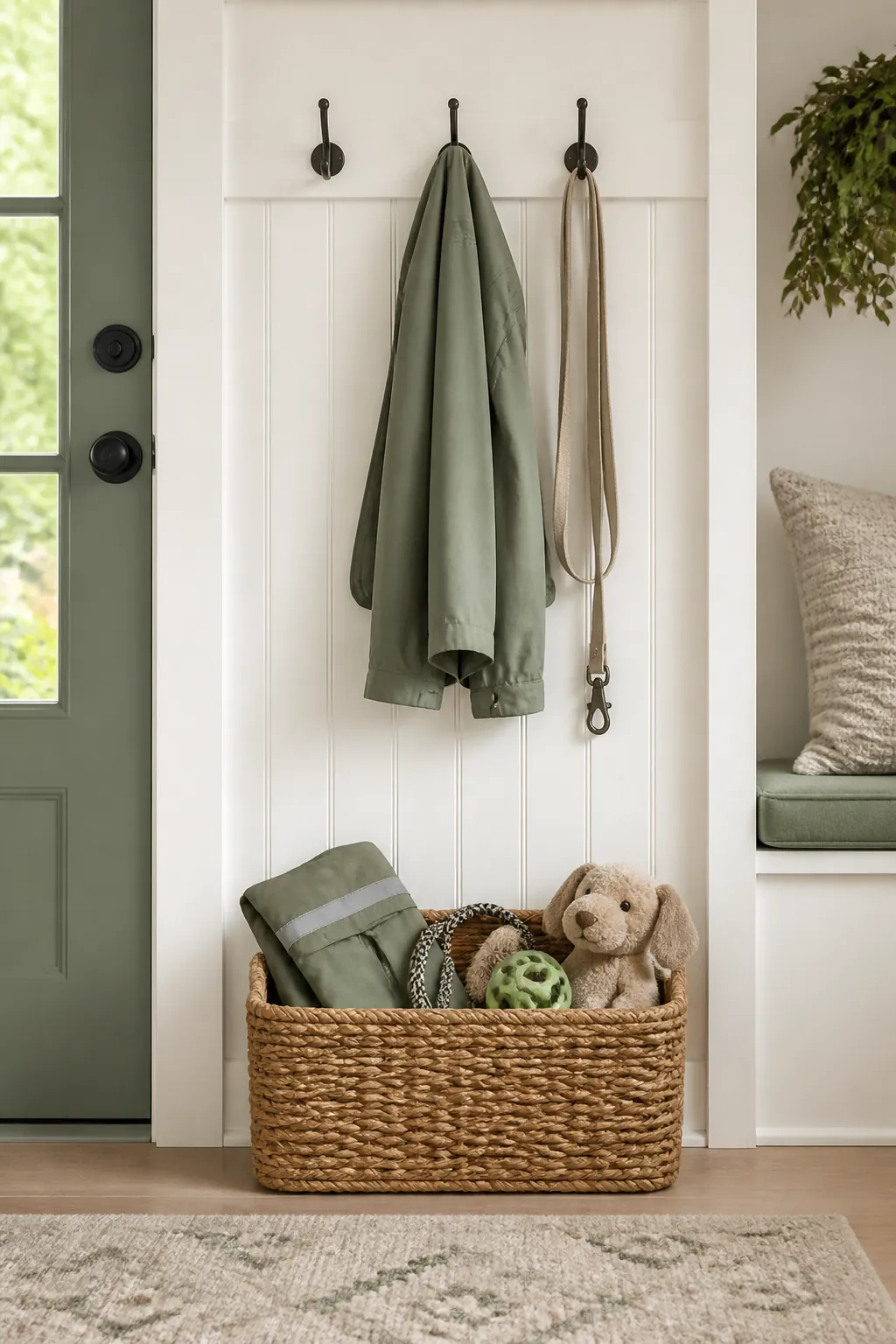
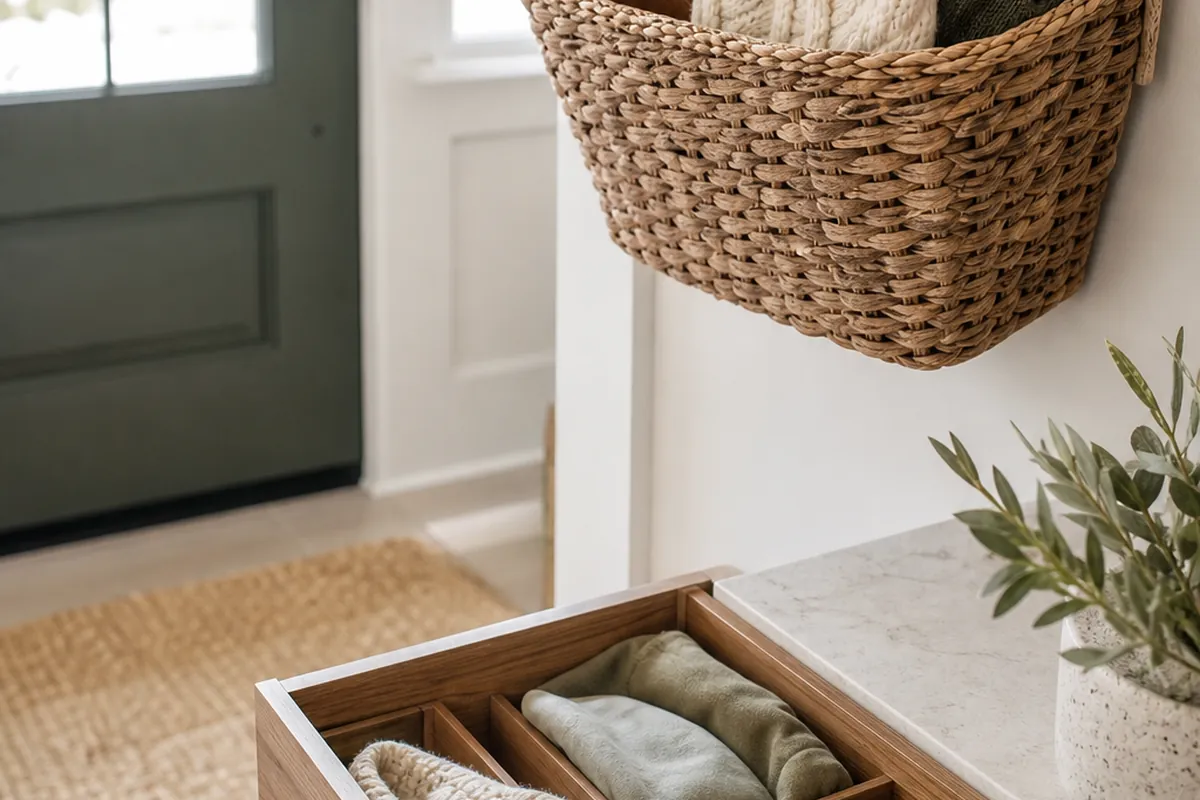
Squeaky toys, a spare leash, a raincoat, and a chew bone all tend to end up loose on the entryway floor if they don’t have a container of their own, and a floor covered in dog toys is both a trip hazard and the first thing a guest sees. A woven basket, roughly 14 inches across, set on the floor or on a low shelf, gives all of it one home without needing a labeled system.
Keep this basket for spares and extras only, not the leash or the food, both of which need their own fixed spot from the earlier steps. A basket that becomes the catch-all for everything pet-related turns back into the same tangled pile it was meant to replace.
8. Fold and store the travel crate when it isn’t in use
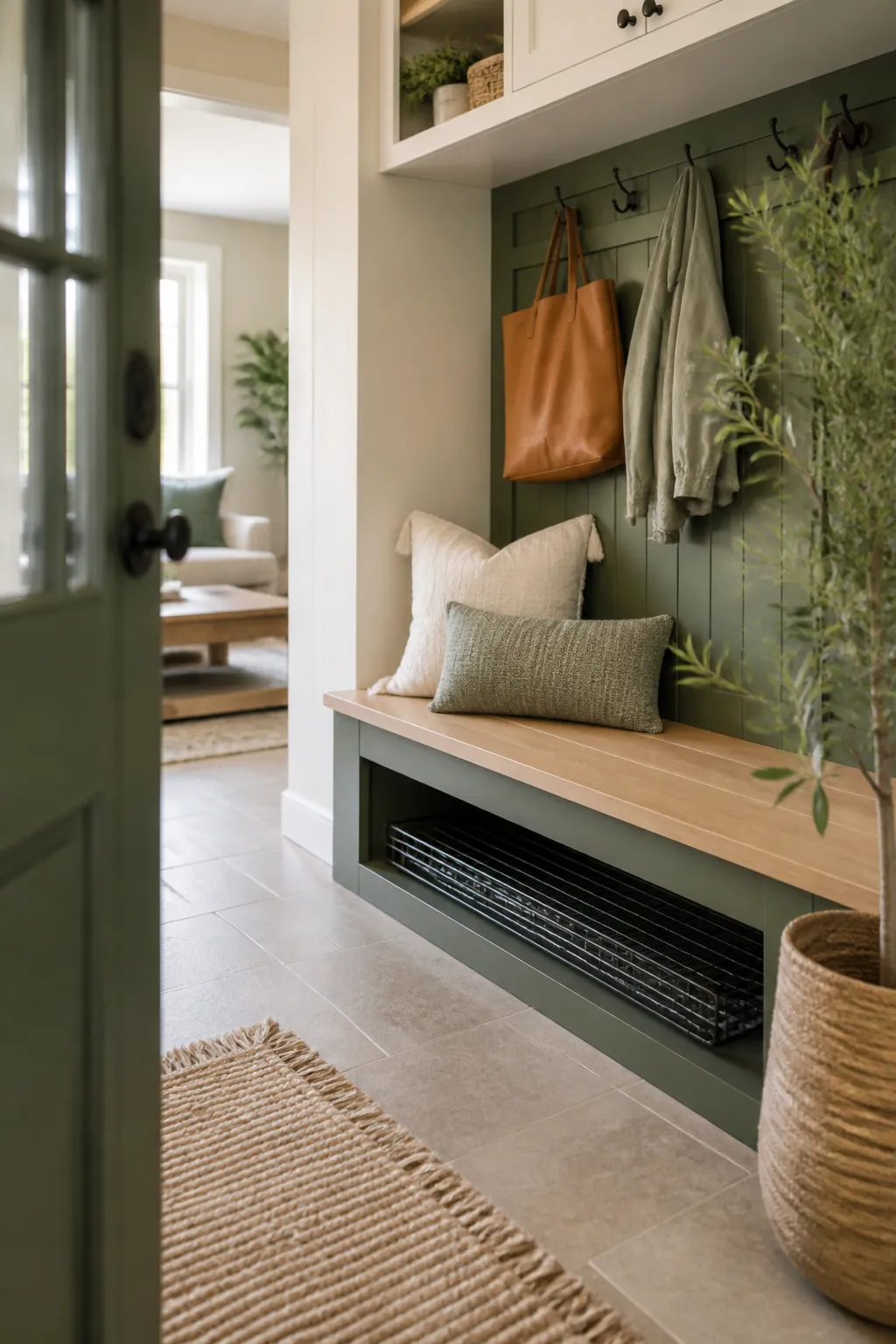
A collapsible wire or soft-sided crate, used for the vet or for travel, does not need to sit assembled in the entryway between trips. Most wire crates fold flat to 2 to 4 inches thick, and a soft-sided one collapses even smaller, which means it slides easily into the back of a closet or the gap under an entryway bench instead of eating floor space every day it isn’t needed.
Measure that gap before assuming it fits. A bench with a low apron or a closet already packed with shoes can leave less than the 3 inches most folded crates need. If there’s genuinely no space for it flat, a hard-sided carrier can sometimes double as a stand for a lamp or a small plant, which at least puts unused floor space to work rather than storing it as dead weight.
9. Give a second pet separate gear, not a shared hook
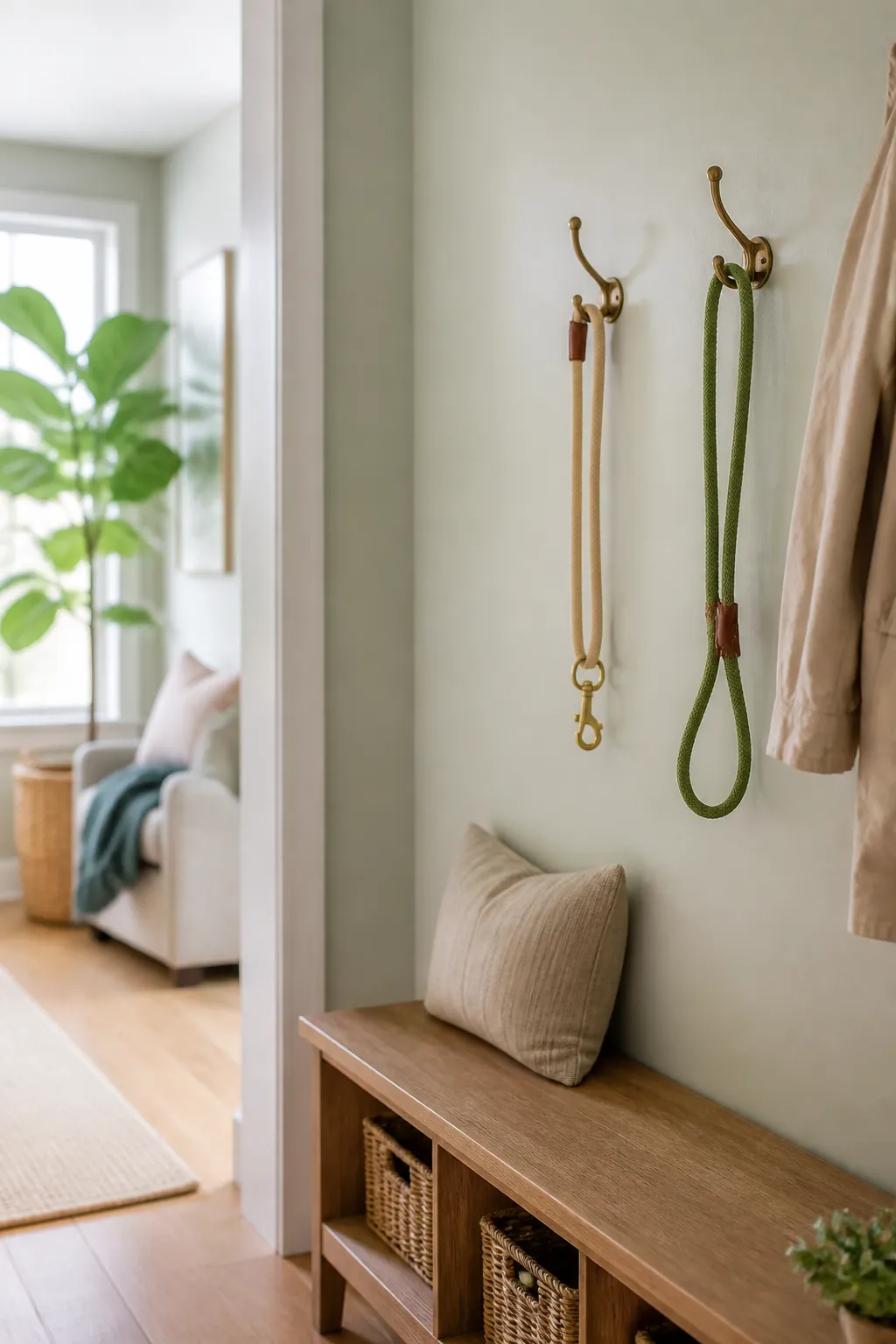
Two leashes sharing one hook tangle every single time, and untangling them right as you’re trying to get out the door is the exact moment you have the least patience for it. If the household has more than one pet, add a second hook spaced at least 6 inches from the first, so each leash hangs independently.
The same logic applies to food. Two pets eating different formulas or amounts do better with two smaller bins than one bin holding a mixed bag, since a mixed bin is how the wrong food ends up in the wrong bowl on a rushed morning. Label each bin if the difference matters for a health reason, since a system that depends on remembering which bin is which eventually fails on the one day it can’t.
Where to start
Start with the leash and the food, since those are the two things you touch every single day and the two most likely to end up loose on a counter or the floor. A dedicated hook sized for the actual weight of a leash and harness, and a bin sized for the actual bag of food, solve most of the daily friction on their own.
Everything else, the treats, the toys, the crate, can wait a week or two while you see what genuinely needs a spot versus what was only ever cluttering the floor because it never had one. A small entryway doesn’t need a bigger footprint for pet gear. It needs each category to stop sharing space with the others.
If you are buying for the pet owner rather than setting up your own hallway, storage gifts for pet owners in a small apartment picks the pieces from this list that work as presents.