Every apartment has one closet that is not really for anything. It holds the vacuum, the spare duvet, a toolbox, four carrier bags of other carrier bags, and a box nobody has opened since the move. It is the closet you shut quickly.
The reason it gets like that is structural rather than personal. A linen closet has a category, so things either belong or they do not. A storage closet has no category, so nothing can be rejected from it. Fixing it means giving it categories it never had, and then giving it the shelves to hold them.
1. Decide the three things it holds
Before anything comes out, decide what this closet is for. Three categories is about the limit for a small closet, and naming them is what lets you say no later.
A common set is cleaning equipment, household spares such as bulbs and batteries, and bulky seasonal items. Yours might be tools, luggage and sports gear. What matters is that the list is short and stated, because a closet that holds three named things can turn away a fourth, and a closet that holds everything cannot.
2. Empty it completely, and be honest about the middle
Take it all out. The front is things you use, the back is things you forgot, and the middle is the interesting part: things you keep because deciding feels like work.
That middle layer is usually a third of the closet. Broken items awaiting repair, duplicates, gifts you will not use. You do not have to be ruthless, but you do have to decide, because in a small apartment that third is the difference between a closet that works and one you shut quickly.
3. Add shelves, because the closet is mostly air
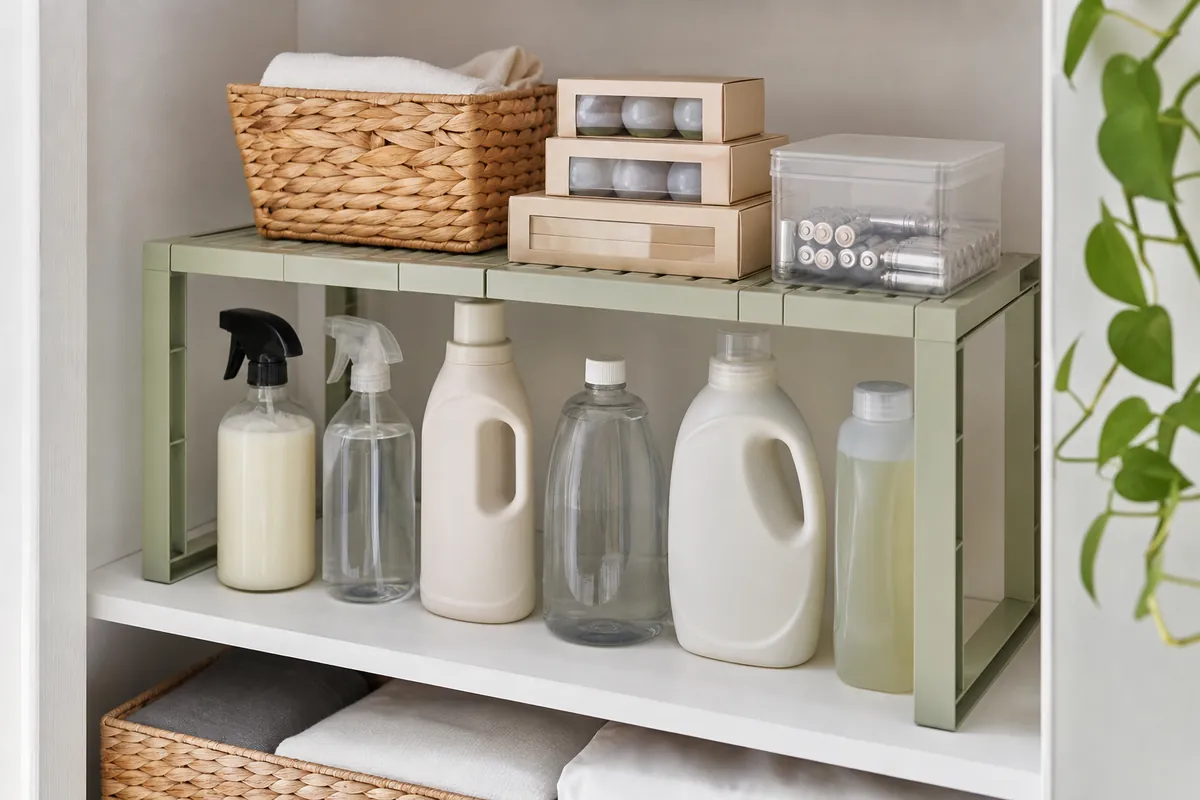
Almost every storage closet is built with one or two shelves at heights chosen for hanging coats. The result is thirty to forty centimetres of unused air above everything on those shelves.
An expandable cabinet shelf riser is the cheapest way to take that back. It sits on the existing shelf and creates a second level, so a shelf holding one layer of bottles now holds two. Expandable matters because closet widths are never standard and a fixed riser that nearly fits is useless.
Put the riser where the items are small and the wasted air is worst, which is usually the shelf holding cleaning products and spares. The same trick works in a linen closet, where folded stacks leave the same gap.
4. Use bins with handles, because depth is the real enemy
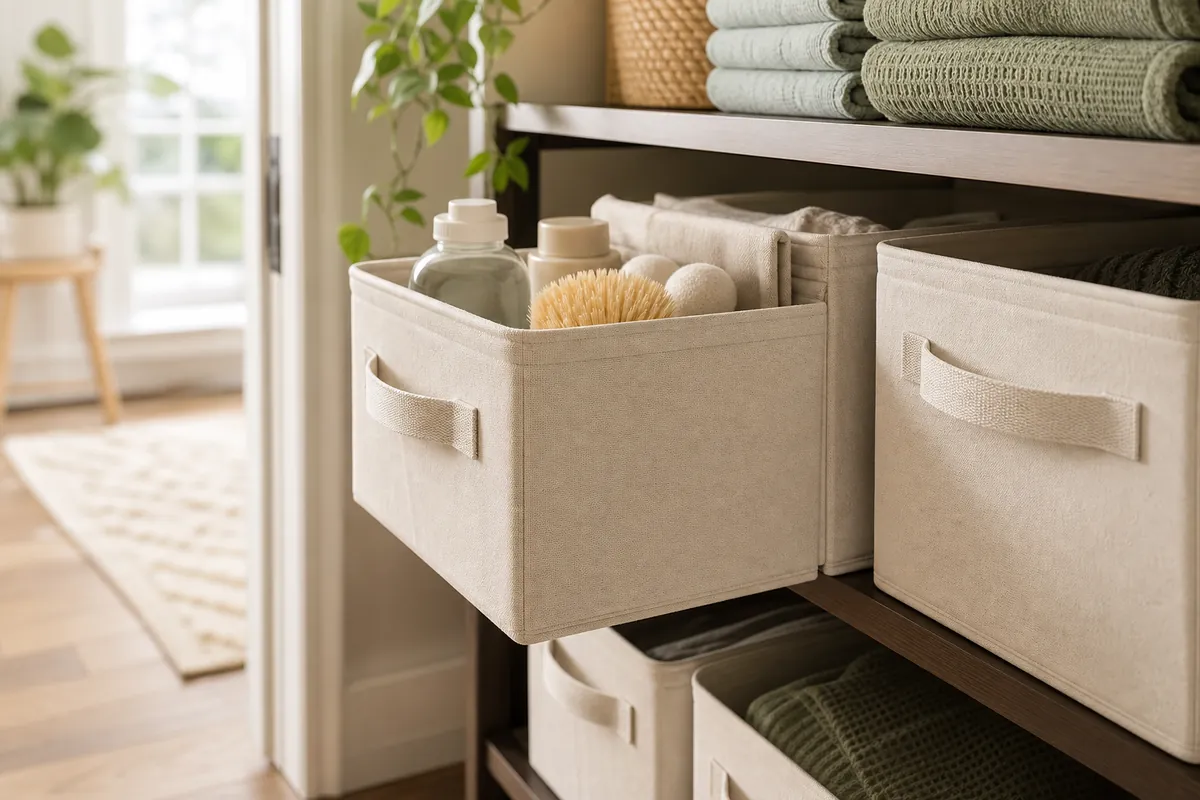
Storage closets are usually deeper than they are wide, and the back half of a deep shelf is functionally lost. Anything that goes back there is invisible, and invisible means forgotten.
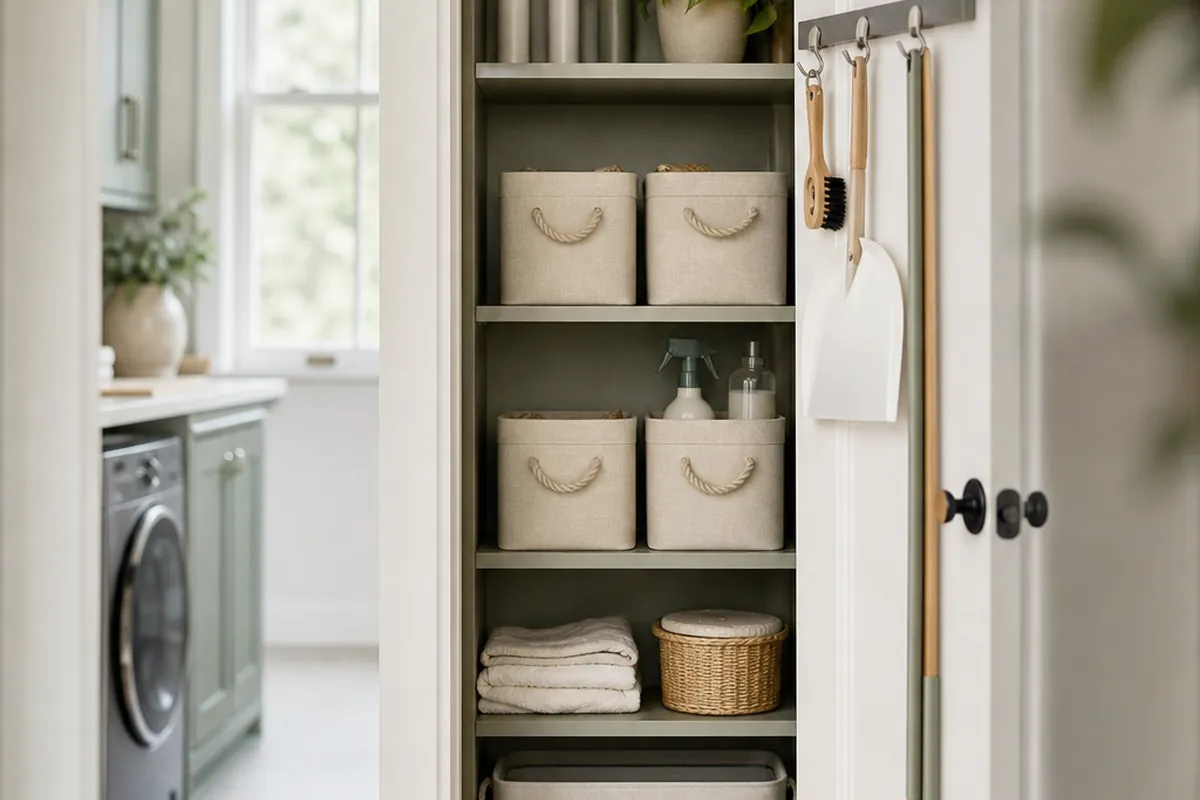
Fabric storage bins with handles turn a deep shelf into something closer to a drawer. You pull the whole bin out, take what you need, and push it back, so the depth becomes usable rather than decorative. The handle is the part that matters. A bin without one has to be dragged by its rim, which is annoying enough that people stop pulling it out and start piling things in front of it.
Fabric over clear here, deliberately. This closet’s contents will never look coordinated, and fabric quietly stops that being visible every time you open the door.
5. Put the long handled things on the door
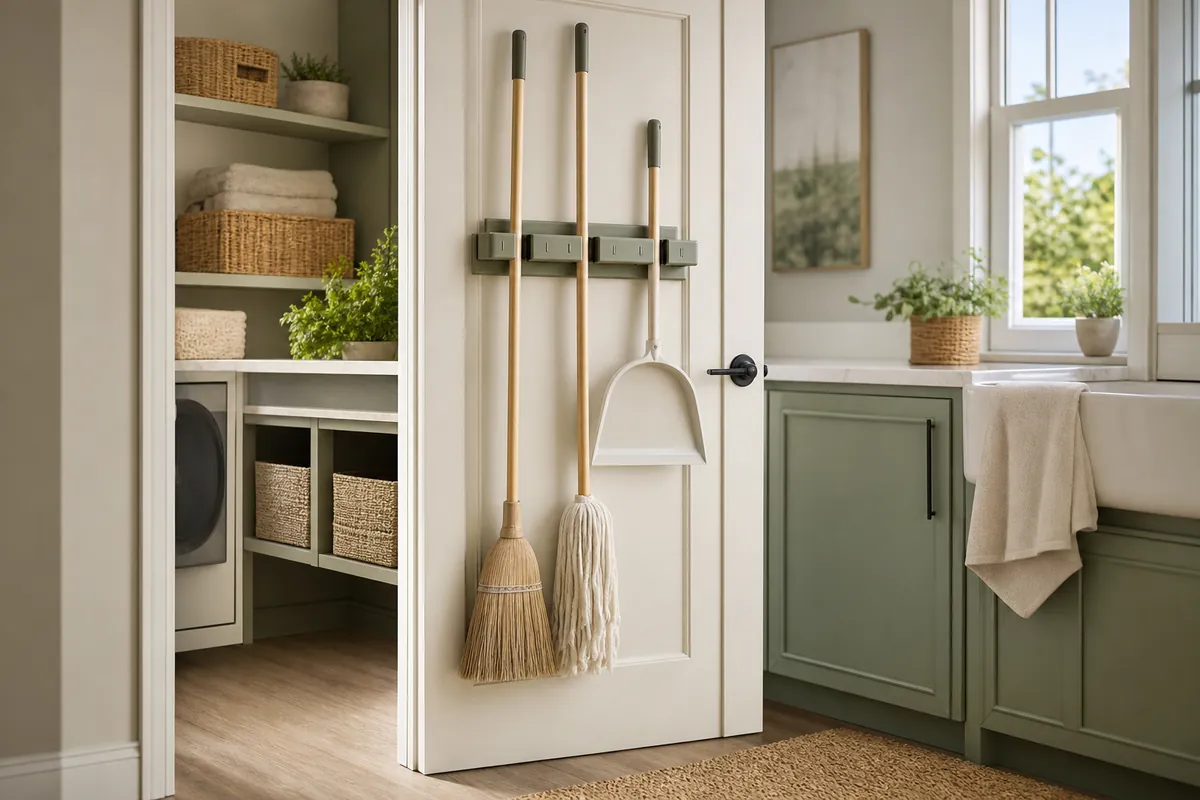
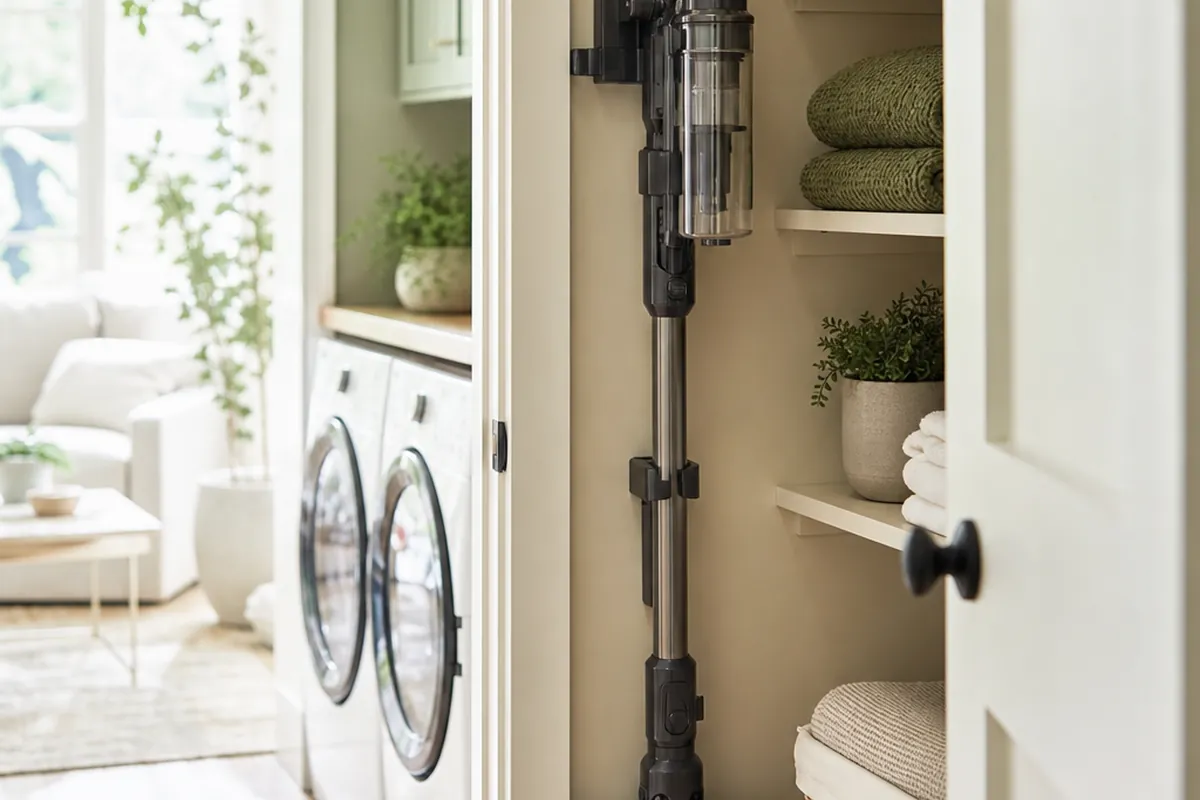
Brooms, mops and the vacuum hose fall over. That is their nature, and once one falls the closet floor becomes a place you reach into rather than step into.
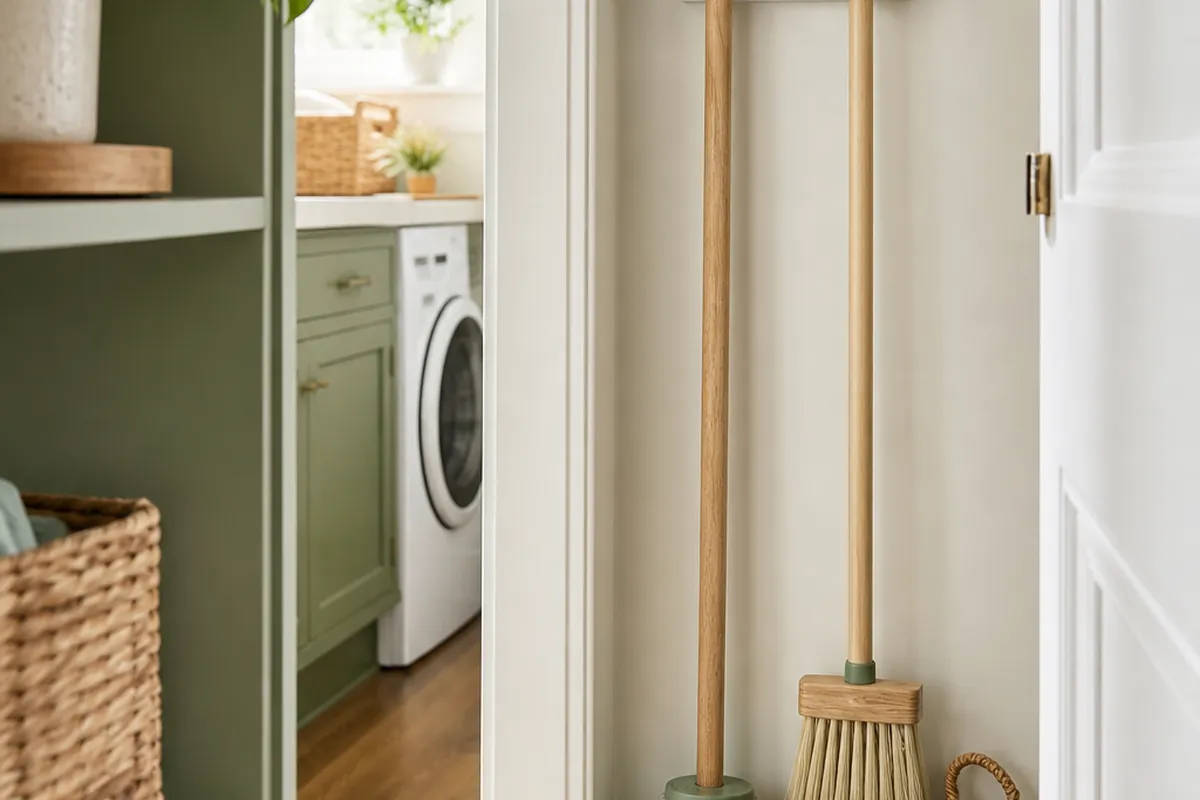
A wall-mount broom and supply organizer fixed to the inside of the door holds them upright and clears the floor entirely. The inside of a closet door is genuinely the most wasted surface in an apartment, and it is the one place where mounting hardware is invisible to everyone including a landlord at the end of a tenancy.
Check the door has clearance before you mount. A shallow closet with a deep shelf may not close over a loaded door rack, and finding that out afterwards is a bad afternoon.
6. Weight low, light high, rarely used at the very top
The order is not aesthetic. Heavy things at head height are how people get hurt reaching into closets, and the top shelf of a storage closet is above head height for most of us.
So: heavy and frequently used between knee and shoulder, light things above that, and the genuinely seasonal at the very top where reaching costs effort. If getting something down requires a chair, that is a feature, because it stops the top shelf becoming another middle layer.
7. Keep one shelf deliberately empty
This feels wasteful in a small apartment and it is the thing that keeps the closet working.
A closet at full capacity has nowhere to put the next thing, so the next thing goes on the floor, and then the closet is a pile. An empty shelf, or even half of one, absorbs the suitcase between trips and the box that arrives before you have decided about it. Slack is what stops the system collapsing the first time life adds something.
8. Label, even though it feels excessive for three categories
You will remember what is in the bins. Nobody else in the apartment will, and in six months neither will you.
Labels do a second job that matters more: they make putting things back unambiguous, which is when systems actually fail. Nothing elaborate, a written label on the handle is enough. The bar is that someone else could put the batteries away correctly without asking.
9. Treat the floor as allocated, not available
An empty closet floor is an invitation. Things get set down there for a moment and stay for a year, and because they are below eye level they stop registering.
Allocate it on purpose. Two labeled bins, or the vacuum in its own spot, occupying the floor deliberately. A floor that already has a job is much harder to casually add to than one that looks free.
10. Review it when the seasons change, not when it overflows
The trigger matters more than the frequency. Reviewing when it overflows means reviewing in a bad mood, and the result is shoving rather than deciding.
Tie it to something already in your calendar. When the winter coats come out and the summer things go away, the storage closet gets fifteen minutes. Twice a year is enough to catch the middle layer before it becomes a third of the space again. If your closets are working harder than that, the approach in small closet organization covers the clothing side of the same problem.
The seasonal boxes are usually the ones that break the system, and the Christmas box is the worst of them. Christmas ornament storage ideas for a small apartment covers how to pack it so it takes less of this closet.
The closet you stop shutting quickly
A storage closet does not fail because you own too much. It fails because it was never given a job, was built with half the shelves it needed, and had no slack for the next thing.
Name three categories, add a level, get the long handled things onto the door, and leave one shelf empty. It will hold more than it does now, and you will be able to see what is in it, which is most of the point. The same thinking applies next door in a small laundry closet.