A tennis racket, a soccer ball and a duffel bag of cleats do not share a shape, and that is exactly why one bin never holds them all for long. The racket pokes out at an angle, the ball rolls under the bench the first time the door swings open, and the bag sits on the floor because nothing nearby was ever sized for it. A small entryway can absorb a surprising amount of sports gear, but only once each shape gets its own spot instead of fighting the others for the same patch of floor.
1. Sort equipment by shape before buying one bin for everything
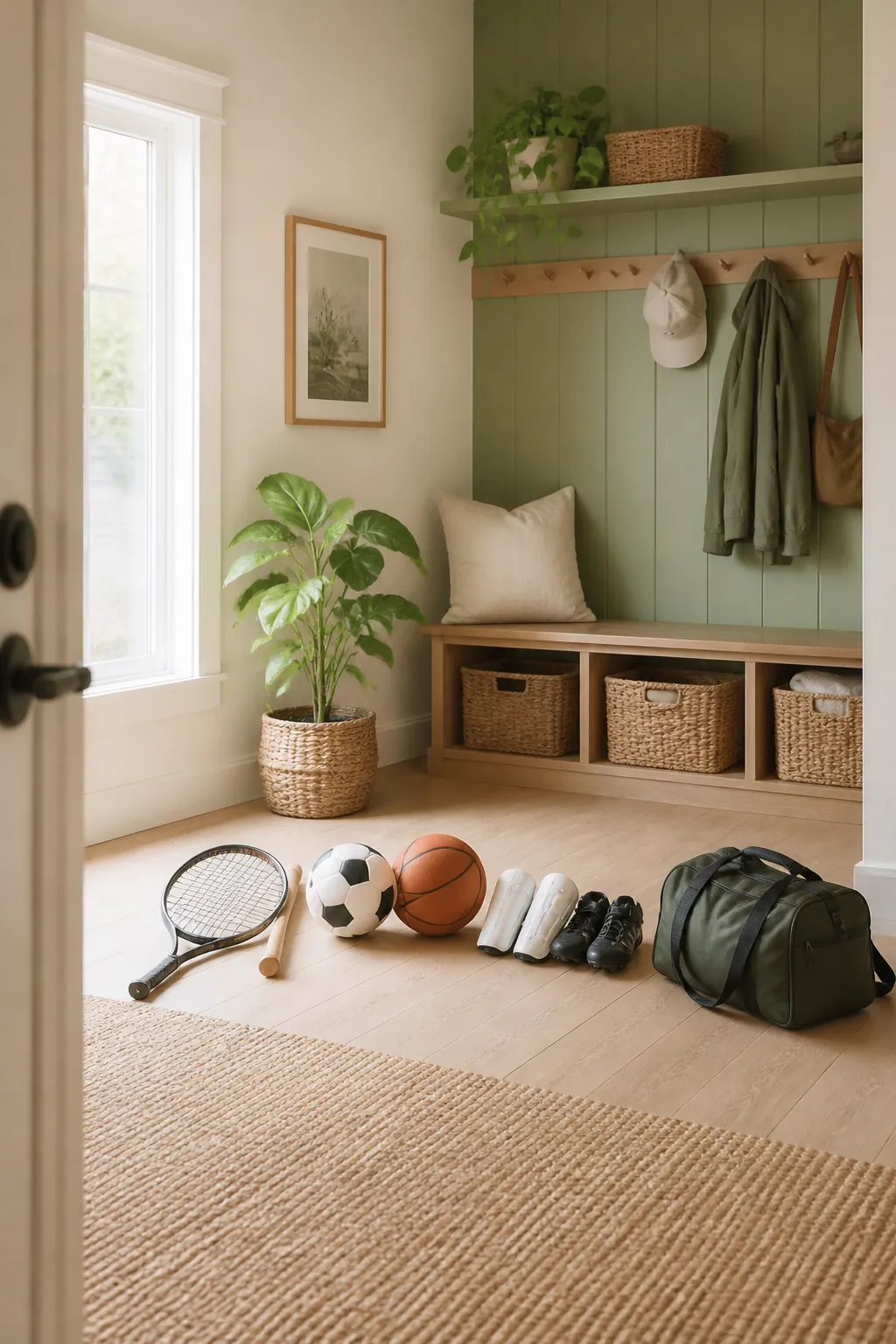
Rackets, bats and sticks are long and thin and want to hang vertically. Balls are round and want to be contained, not stacked. Pads, guards and gloves are flat and small enough to get lost in a deep bin. A packed duffel bag is soft, heavy, and does not hang well on anything rated under about 10 pounds. Lay everything out on the floor once and group it by these four shapes before buying a single product, because a bin that’s perfect for pads is the wrong depth for balls and a hook that’s perfect for a racket won’t hold a bat.
This sort also surfaces the gear that does not actually belong in the entryway at all. A yoga mat or resistance bands used indoors usually live closer to where they’re used, and pulling those out of the pile first frees up real space for the stuff that genuinely needs to be by the door.
2. Hang rackets, bats and sticks from a wall hook instead of leaning them in the corner
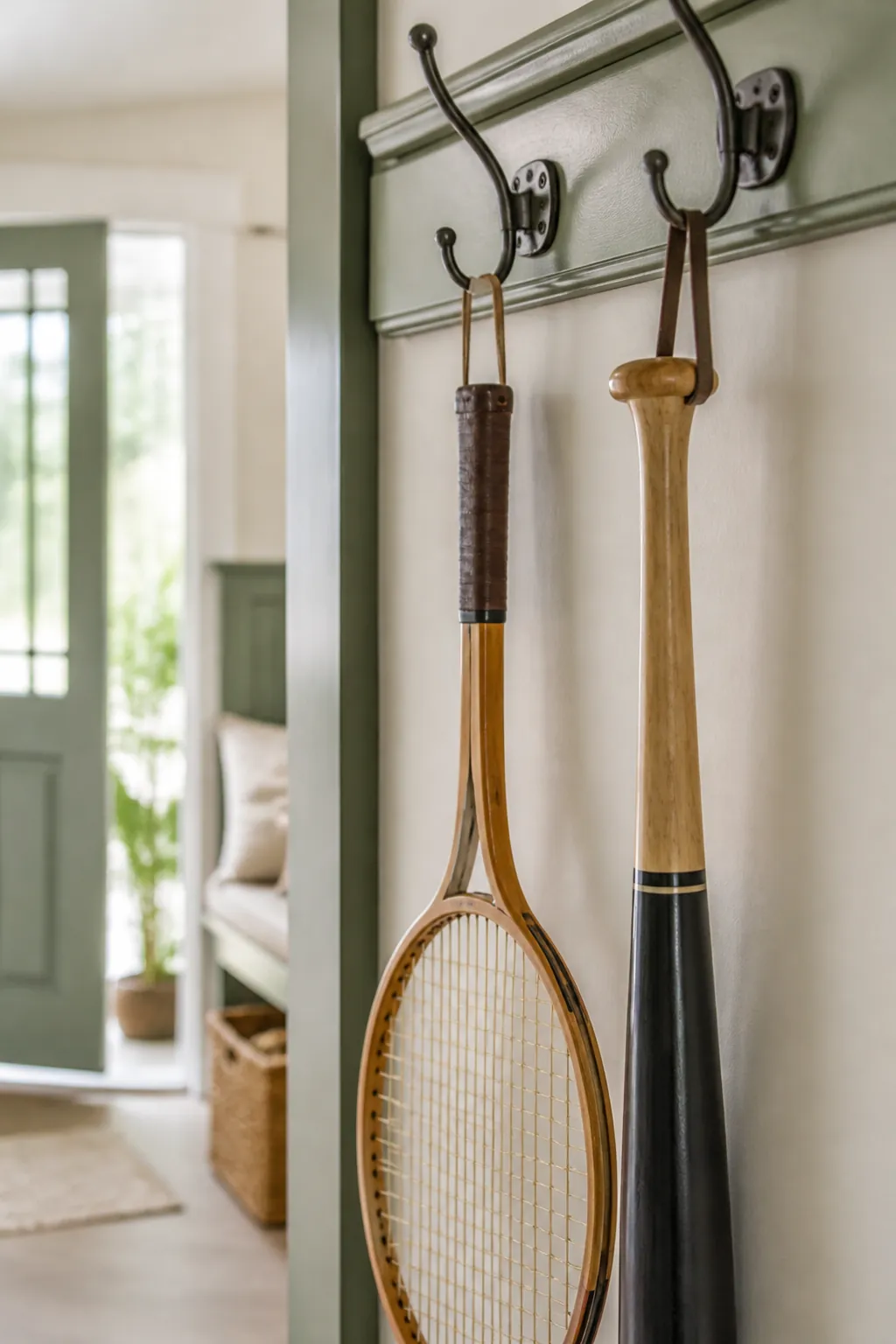
A racket or bat leaned in a corner slides flat the first time someone brushes past it, and a dropped bat on a hardwood floor leaves a dent that a landlord notices at move-out. Hanging each one solves that, but length changes how it hangs. A standard adult tennis racket runs about 27 inches with an 11-inch head, which clears most hook spacing without touching the floor or the ceiling. An adult baseball bat runs 32 to 34 inches, long enough that it needs real clearance underneath, while a youth bat at 24 to 28 inches is closer to racket length.
A heavy-duty wall hook rack mounted into a stud holds either comfortably, since even a loaded bat barely clears 2 pounds. Space each hook at least 6 inches apart on center so a racket head doesn’t knock into a bat handle every time the door opens nearby. Renters who can’t drill can get close with a rated adhesive hook instead, but check its weight limit against the item’s actual weight, not the lightest thing you own, since most adhesive hooks top out well under what a stud-mounted hook will hold.
3. Give round balls a basket deep enough to stop them rolling out
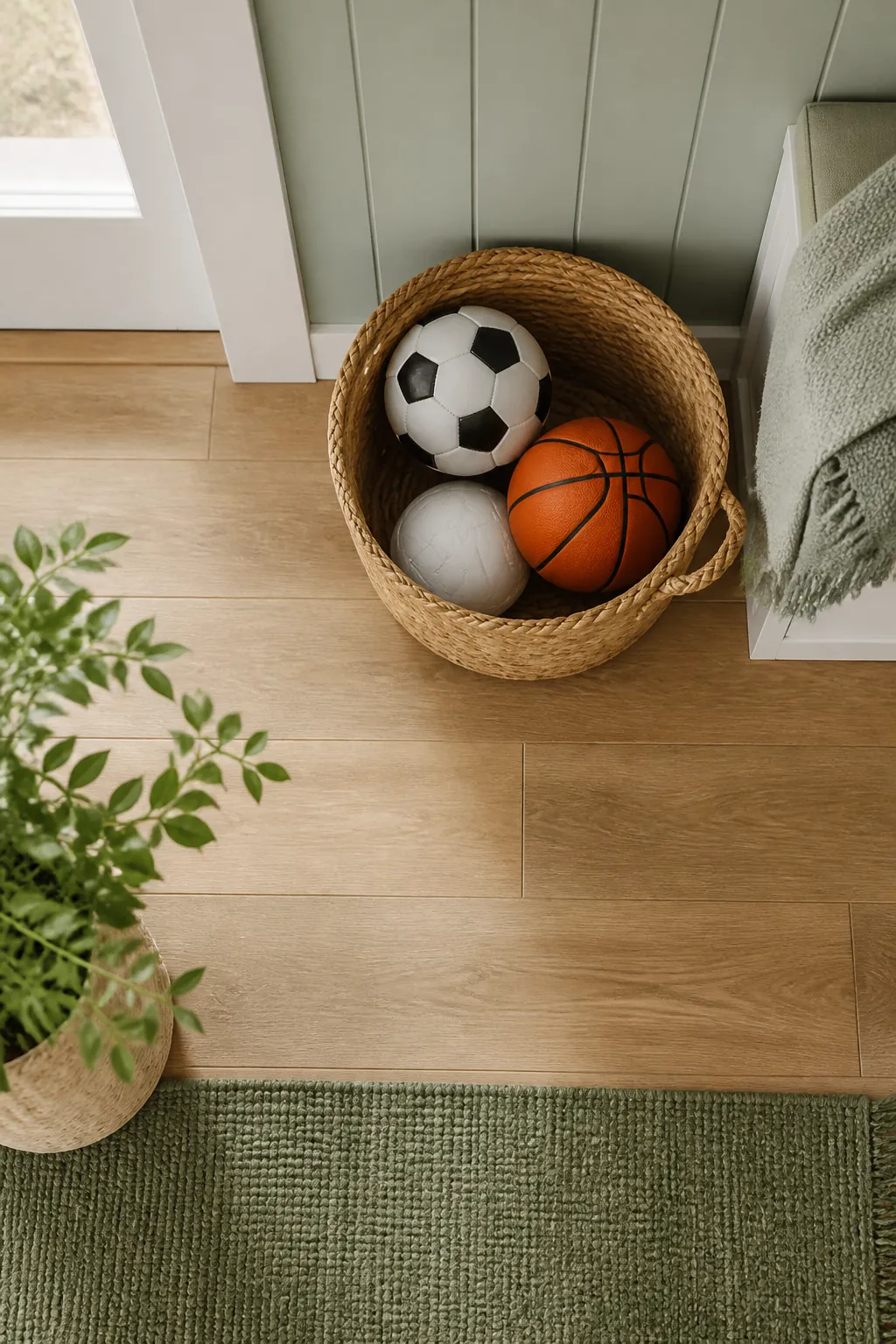
A size 5 soccer ball measures about 8.65 inches across, a basketball closer to 9.5 inches, and a volleyball sits around 8.2 to 8.5 inches. A shallow decorative tray that’s 4 or 5 inches deep holds none of these; the ball just rolls over the rim the first time the front door’s draft catches it or a shoe clips the edge. The basket needs sides at least 10 to 12 inches tall, taller than the biggest ball it holds, or the containment is only theoretical.
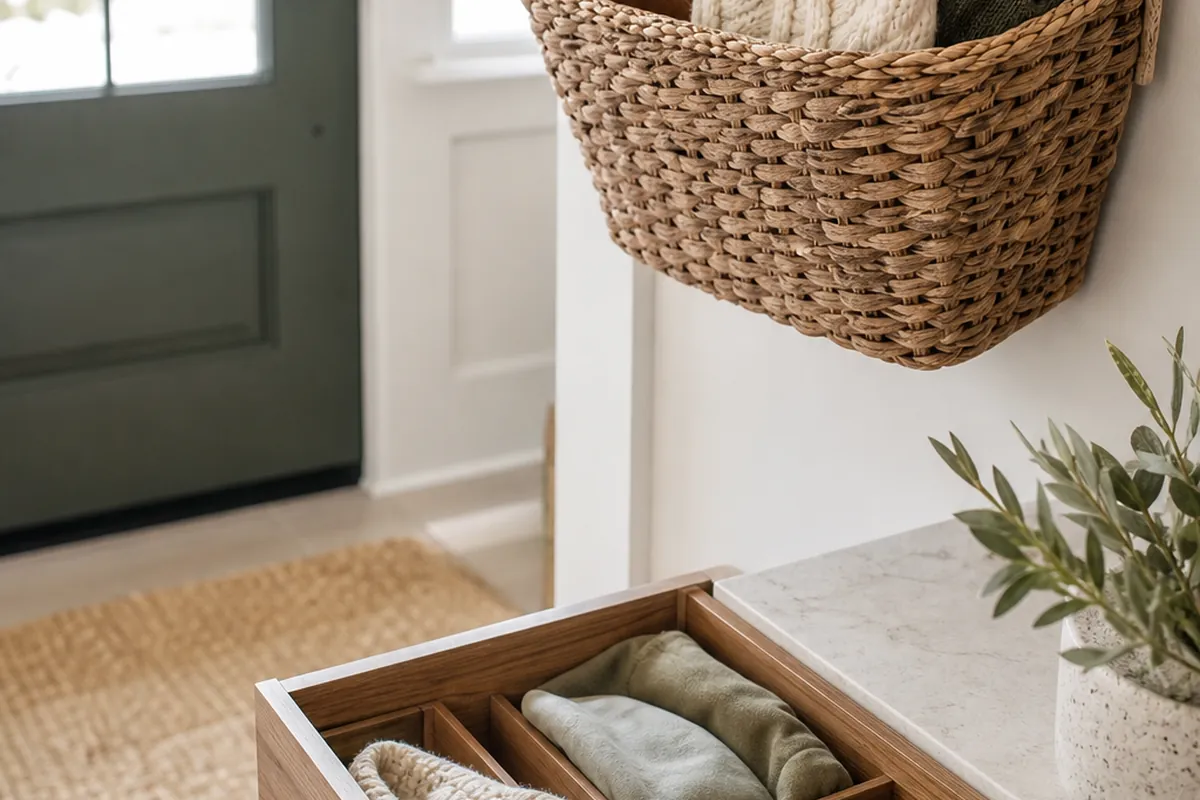
A large woven storage basket at roughly 15 inches across and 14 inches deep holds three or four full-size balls with room to lift one out without the others tumbling. Keep it against a wall rather than in the main walking path, since even a contained ball basket is still something to trip over if it sits where feet actually land.
4. Rate the hook for a packed gear bag, not an empty one
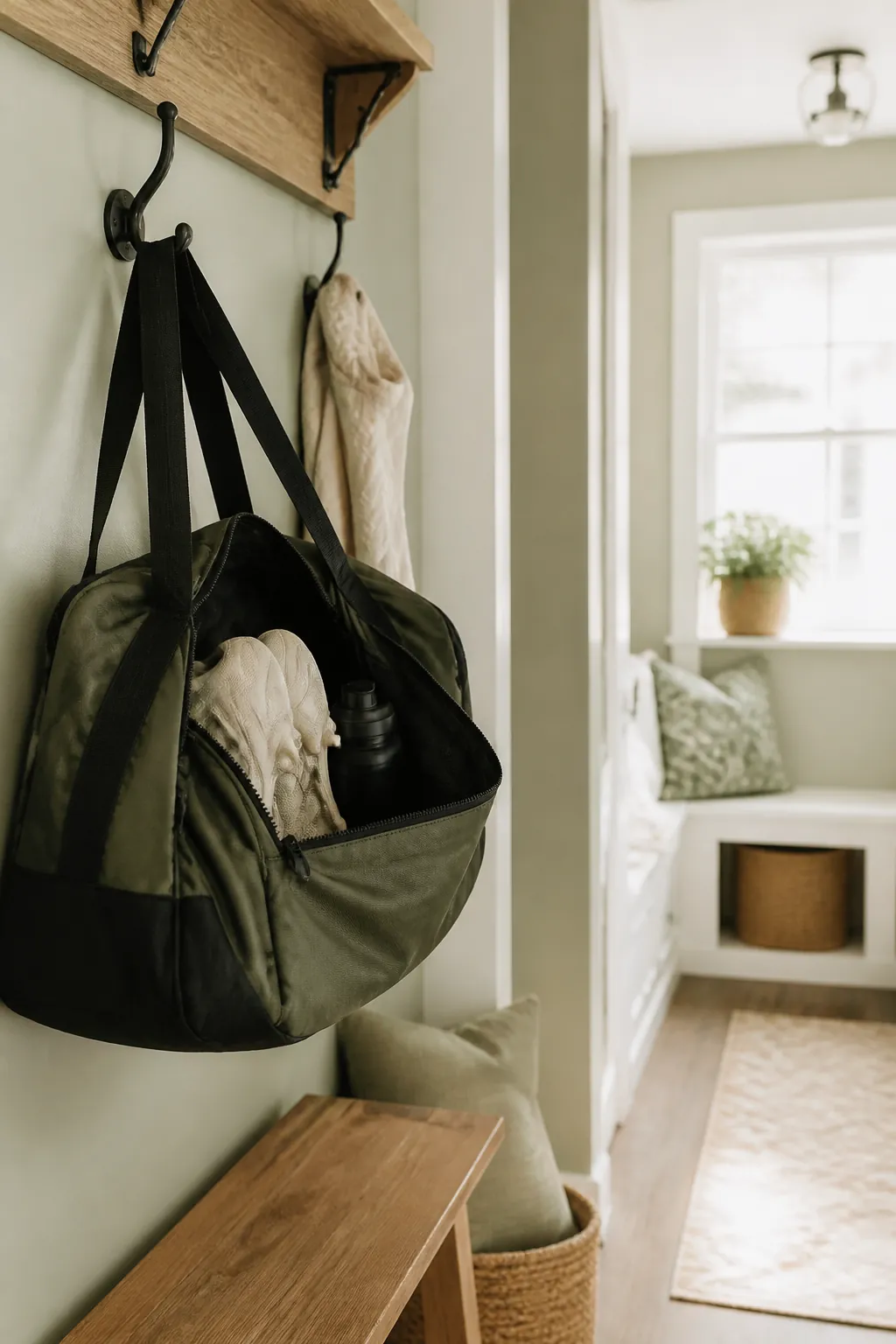
An empty duffel bag weighs almost nothing, which is how people end up hanging it from a hook rated for a bathrobe. Pack it with a pair of cleats, shin guards, a water bottle and a change of clothes, and that same bag can run 10 to 15 pounds, sometimes more with hockey or lacrosse gear. An adhesive hook rated for 5 to 10 pounds holds the empty bag fine and fails within a week once it’s actually doing its job.
Weigh the bag packed, not empty, before picking hardware. A stud-mounted hook rated for 15 to 20 pounds covers most single-sport duffels, and the same heavy-duty wall hook rack used for rackets and bats upstream has the margin to spare. If the bag is genuinely heavy, a hook is still the wrong tool; set it on a low shelf or the floor against a wall instead of trusting any hook to carry it every single day.
5. Keep cleats and turf shoes off the regular shoe rack
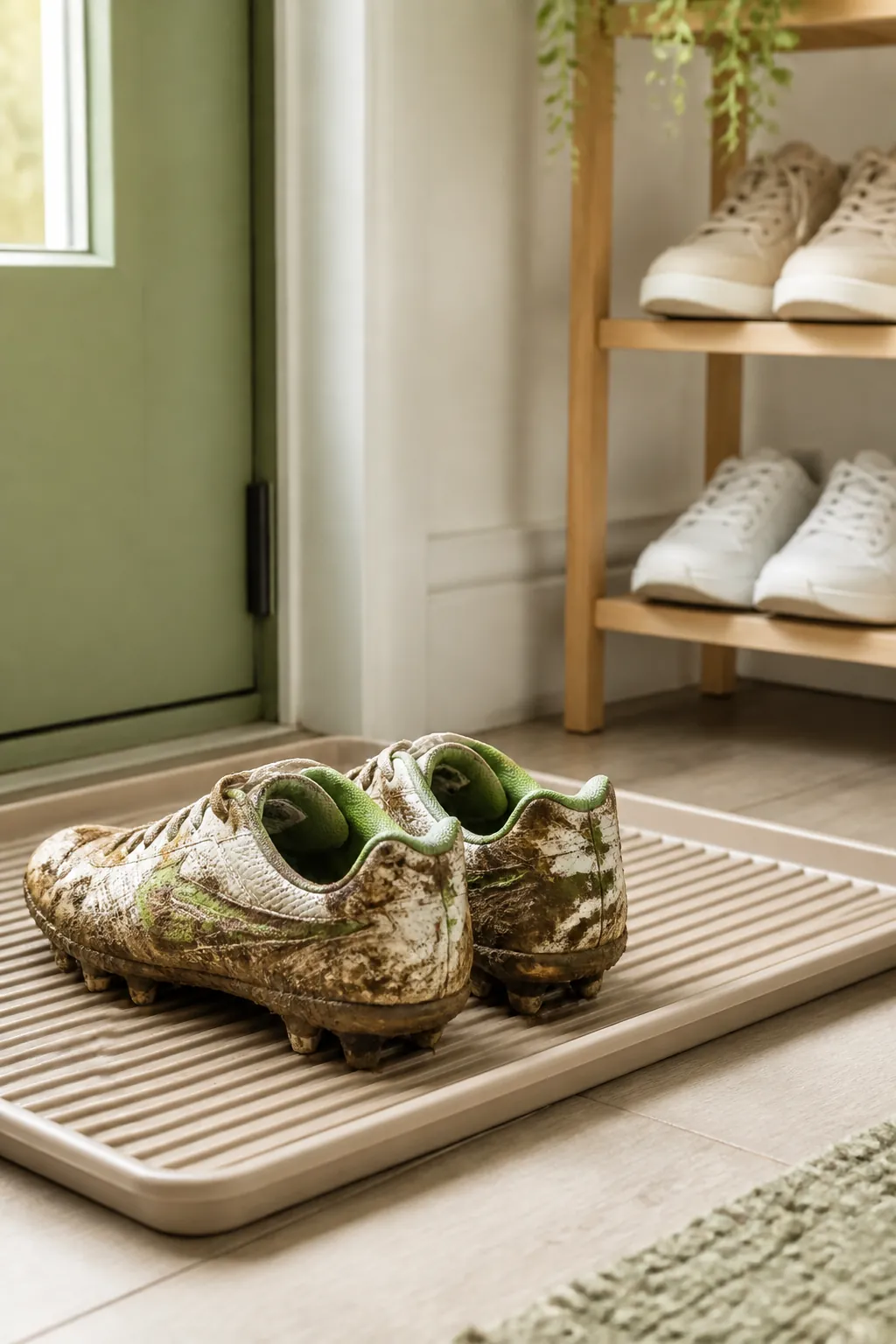
Cleats pick up mud, grass stains and field debris that regular shoes never touch, and stacking them with everyday shoes transfers all of it to whatever sits underneath. Metal or hard rubber studs can also scuff hardwood and vinyl plank in a way a sneaker sole doesn’t, especially when weight comes down on just two or three contact points instead of a flat sole.
Give cleats their own tray, not a shelf, and let them dry out fully before they go into any closed container. Wet cleats sealed into a bin after practice need 24 to 48 hours to dry on their own; skip that step and the bag smells like a locker room by the next game. A boot tray with raised ridges keeps the shoes up off their own runoff while they dry, and it wipes clean in seconds instead of needing a scrub every week.
6. Give helmets their own hook; never stack them
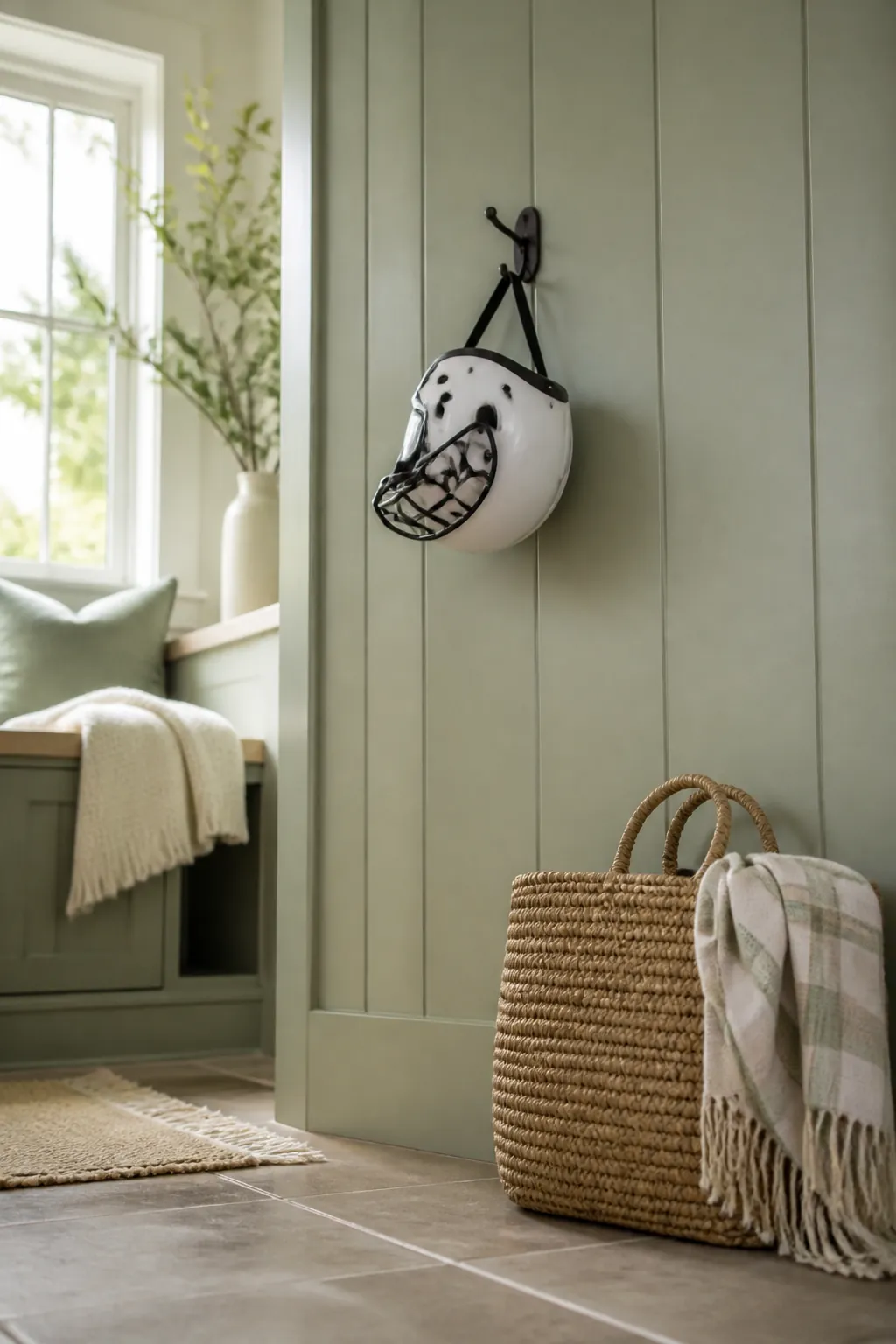
A helmet’s foam liner is built to absorb one real impact by crushing permanently in that one spot. It is not built to absorb a second helmet, a bat, or a bag resting on top of it between games, and that kind of slow, repeated weight compresses the padding long before the outer shell shows any wear. A $150 helmet that’s been quietly flattening under a pile for a season protects noticeably less than it did new, with nothing on the outside to show it.
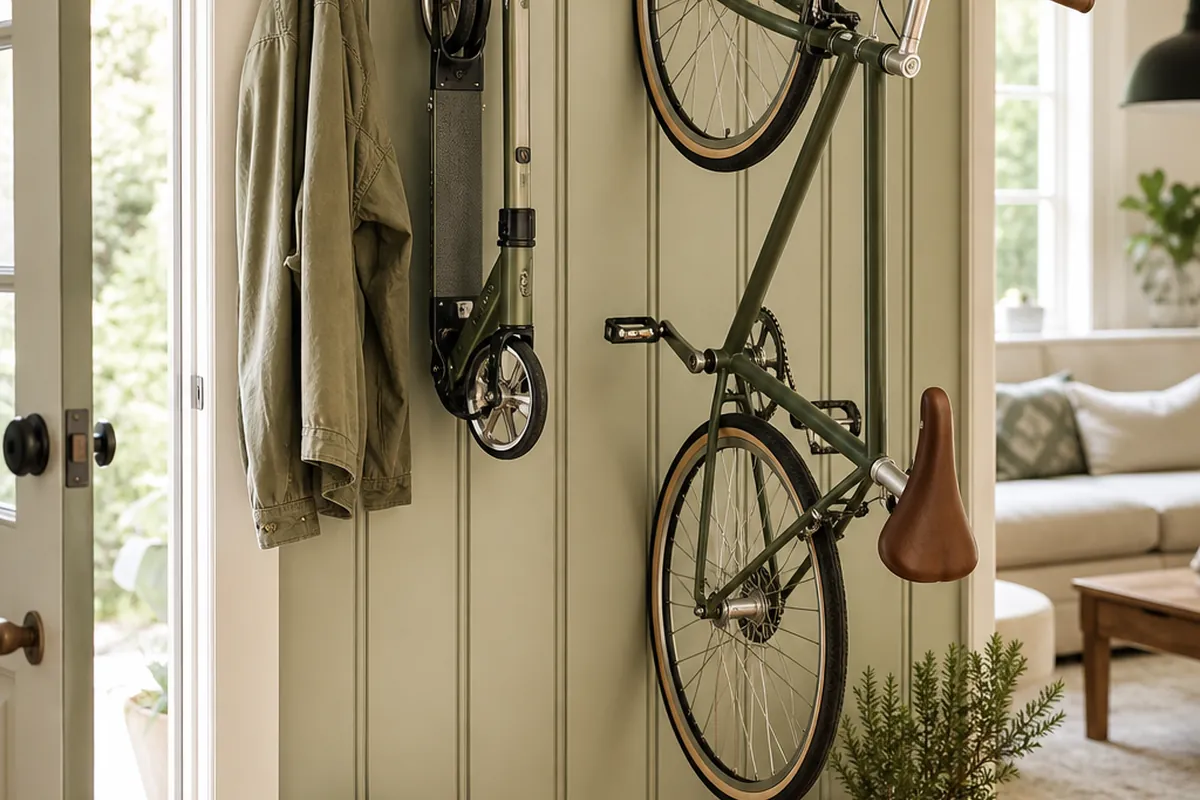
Hang each helmet by its chin strap from its own hook, never set shell-down on a shelf under other gear. A lightweight multi-sport, bike or hockey helmet, usually a pound or less, hangs fine from a standard coat hook, while a football helmet at 4 to 6 pounds does better on the same heavy-duty rack used for the bats and rackets. If there’s more than one player in the house, give each helmet its own hook spaced apart, the same rule that keeps two kids’ bikes from scuffing each other on a shared hook.
7. Corral the small stuff that disappears in an over-the-door organizer
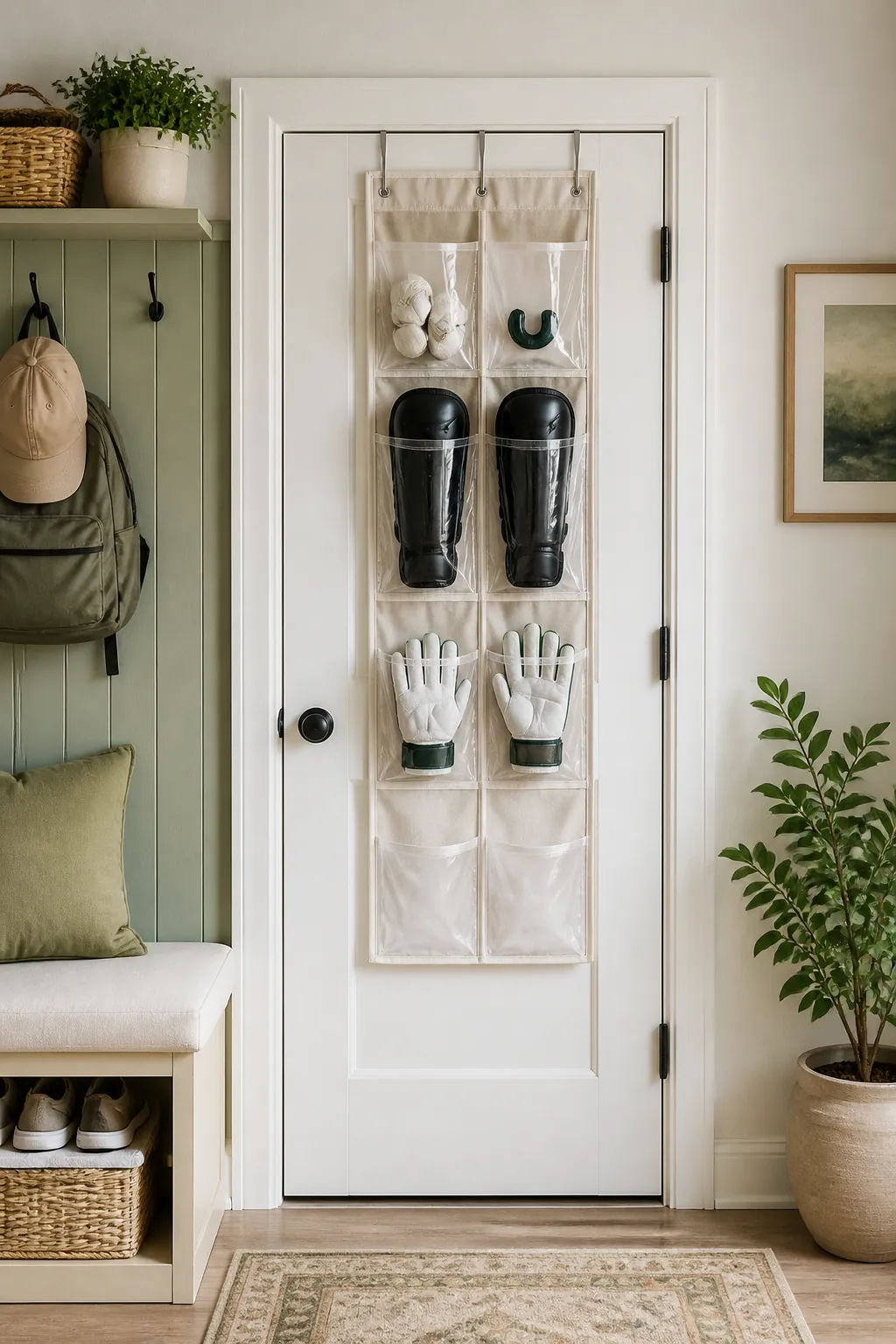
Shin guards, a mouth guard, batting gloves, a jump rope and spare laces are all small enough to vanish into a deep bin, and a five-minute search for a mouth guard before practice is five minutes nobody budgeted for. The back of a nearby closet door is unused vertical space built for exactly this kind of loose, flat gear.
An over-the-door shoe organizer with clear pockets repurposes well here, since its pockets, about 4.3 by 9.5 inches, fit gloves, wristbands, mouth guards and rolled socks at least as well as they fit shoes, and the clear front means you can see what’s in each slot without unzipping or digging. Check the door’s thickness before ordering, since the hooks fit a standard interior door up to 1 3/8 inches thick, and hang it on a door used daily rather than a guest closet nobody opens.
8. Mount a slim vertical rack in the corner when you have more gear than wall
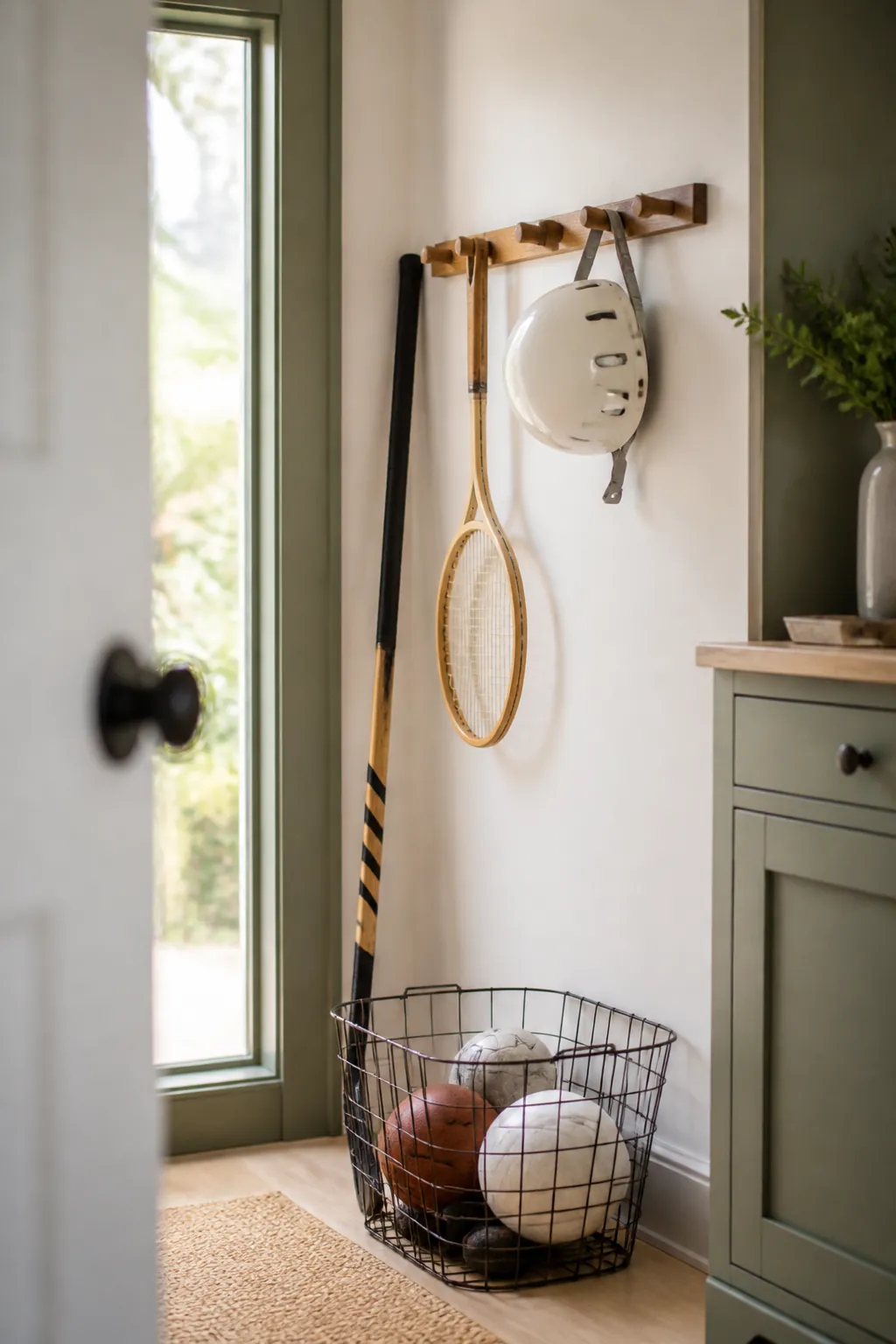
A single wall hook rack covers a few items well, but a household with a racket, a bat, two helmets and a hockey stick runs out of hook spacing fast, especially on a narrow strip of wall between a door and a closet. Hockey and lacrosse sticks run 50 to 60 inches for an adult, long enough that they need either their own tall corner or a horizontal hook arrangement rather than competing for the same vertical run as shorter gear.
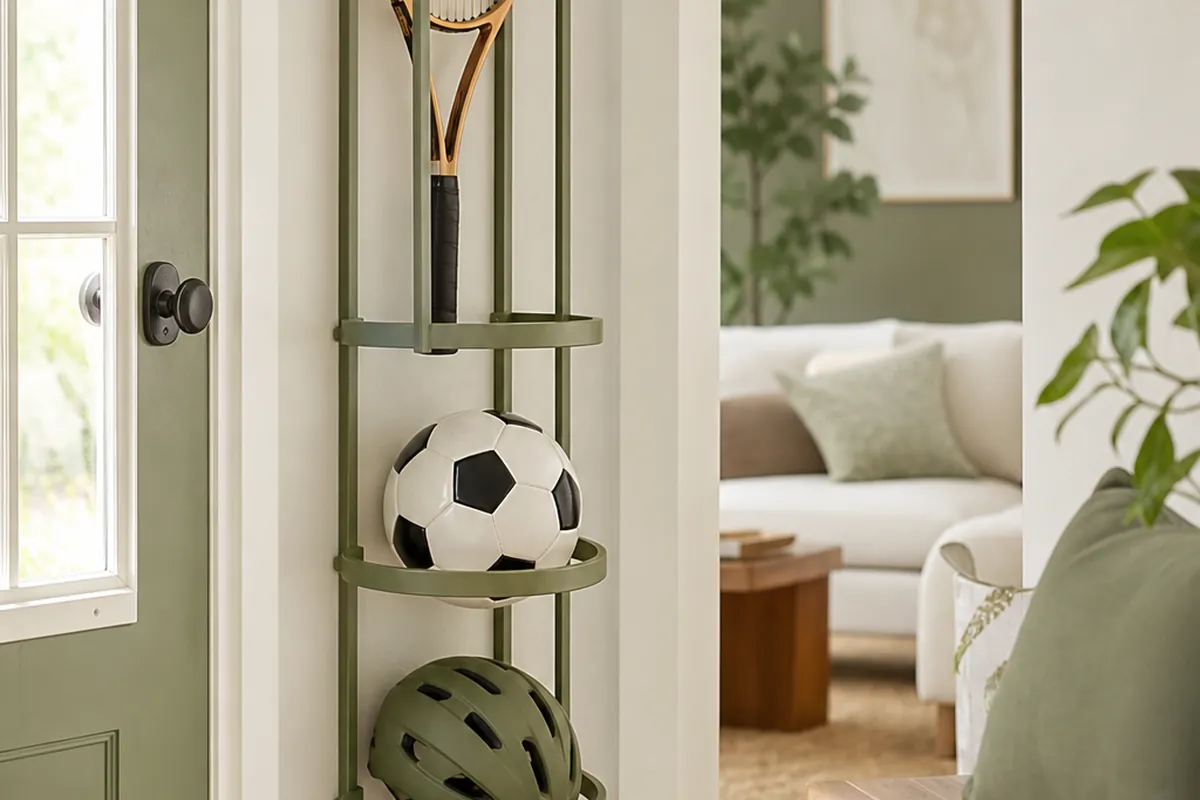
A corner is usually the most overlooked spot in a small entryway, since nobody walks through it and nothing else wants it. Stack the footprint vertically there instead of spreading it across the wall: a ball basket on the floor, a hook rack mounted above it at racket height, and the tallest items, sticks or a bat, leaned into the actual corner angle where two walls support them better than open air does.
9. Build in a drying step before anything goes back on its hook
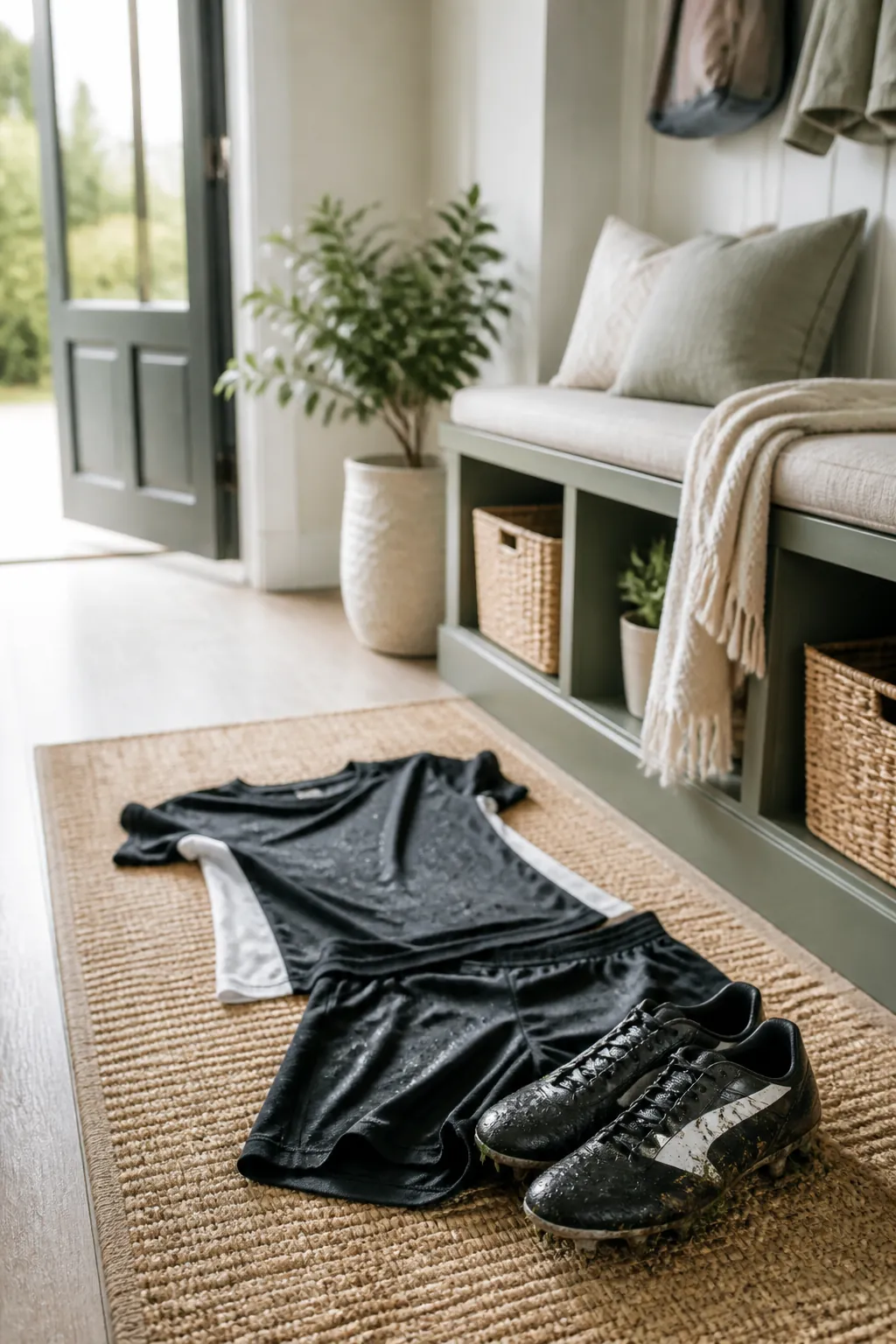
Gear that goes straight from the field into a closed hook, bin or bag without drying first is how an entryway starts to smell like one, and it happens faster than people expect. A sweaty uniform, wet cleats and a damp mouth guard all need open air for a few hours before they go anywhere sealed, not just a quick wipe-down.
Treat the entryway’s drying step the same way a kitchen treats a dish rack: a fixed spot where things sit out in the open for a set amount of time before they’re put away for good. A boot tray or a mat near the door works for this, and once everything’s dry, the actual put-away takes under a minute because every shape already has its spot from the steps above.
Where to start
Start with whichever shape is currently causing the most floor clutter, usually the balls or the duffel bag, and solve that one first. A basket deep enough to hold a ball at rest, or a hook rated for the bag’s packed weight rather than its empty one, fixes the single biggest daily annoyance without touching anything else yet.
Everything else, the helmets, the small pads, the sticks in the corner, can follow over the next week once you’ve seen what the household actually uses daily versus what only ever ends up on the floor because it never had a spot. A small entryway can hold a surprising amount of sports gear. It just can’t hold it as one undifferentiated pile.