A first apartment rarely comes with more than one closet, one rod, and a kitchen layout inherited from whoever lived there before. There is no garage to spread into, no attic for the off-season box, and often no dishwasher, laundry room, or entry closet either, just a single door and whatever wall space sits near it. The furniture is usually hand-me-downs and flat-pack basics that arrived before anyone measured the room. A gift that actually helps here works with that reality instead of assuming a bigger apartment: no drilling, no permanent fixtures, and a fit that survives the next move, because a first apartment is rarely the last one. These 12 do that.
1. An adjustable closet rod doubler
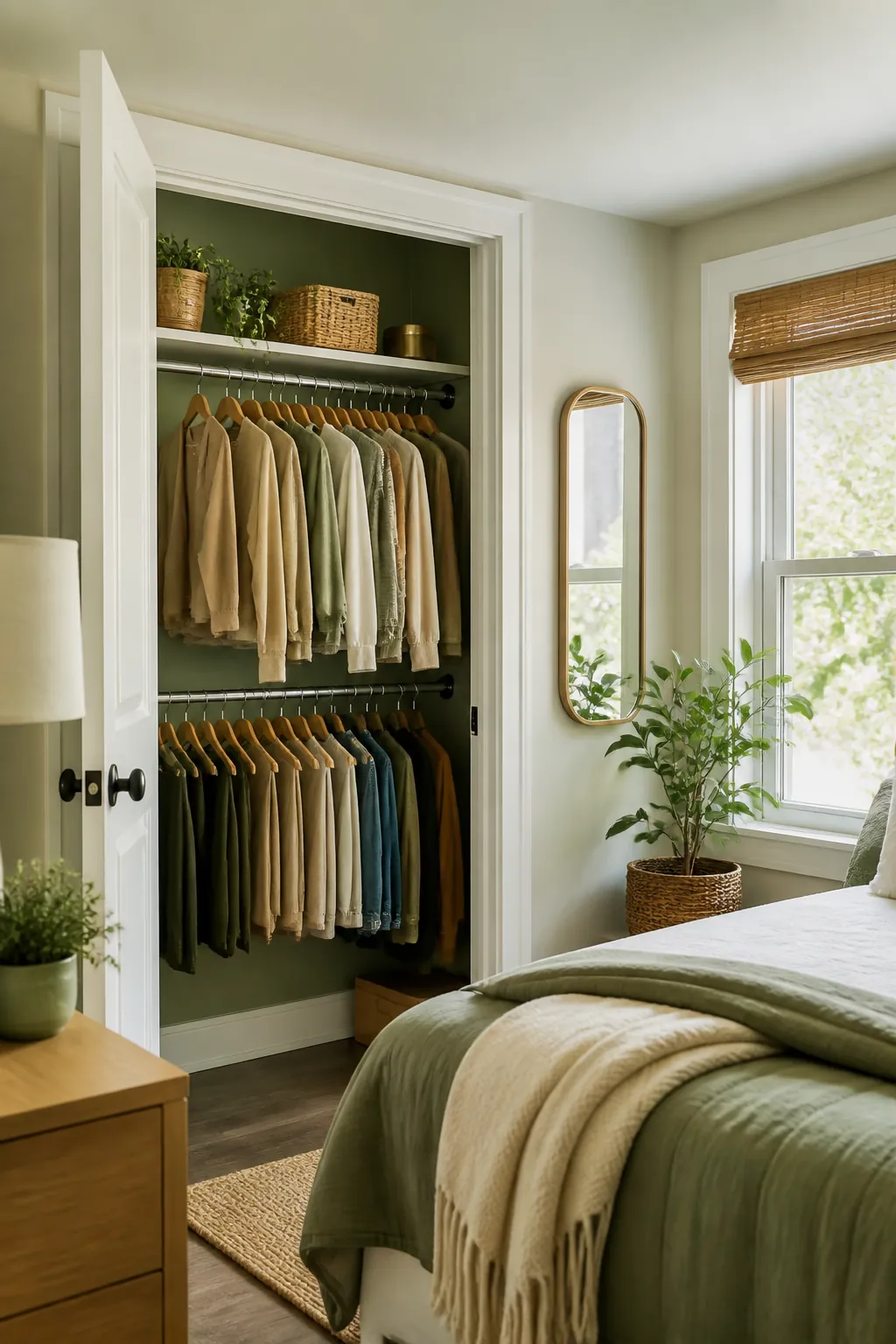
Most first apartment closets hang everything from a single rod set around 66 inches off the floor, the right height for a dress or a long coat and a waste of space for the shirts, folded pants, and short jackets that make up most of a first apartment’s clothes. A closet rod doubler clamps onto that existing rod and drops a second one to roughly waist height, doubling the hanging space without a screw. Check the diameter of the existing rod first, since most run 1 to 1.25 inches, and a doubler sized for the wrong one grips loosely and lets the lower rod twist sideways under a full load of shirts within a month.
2. A 6-shelf hanging closet organizer
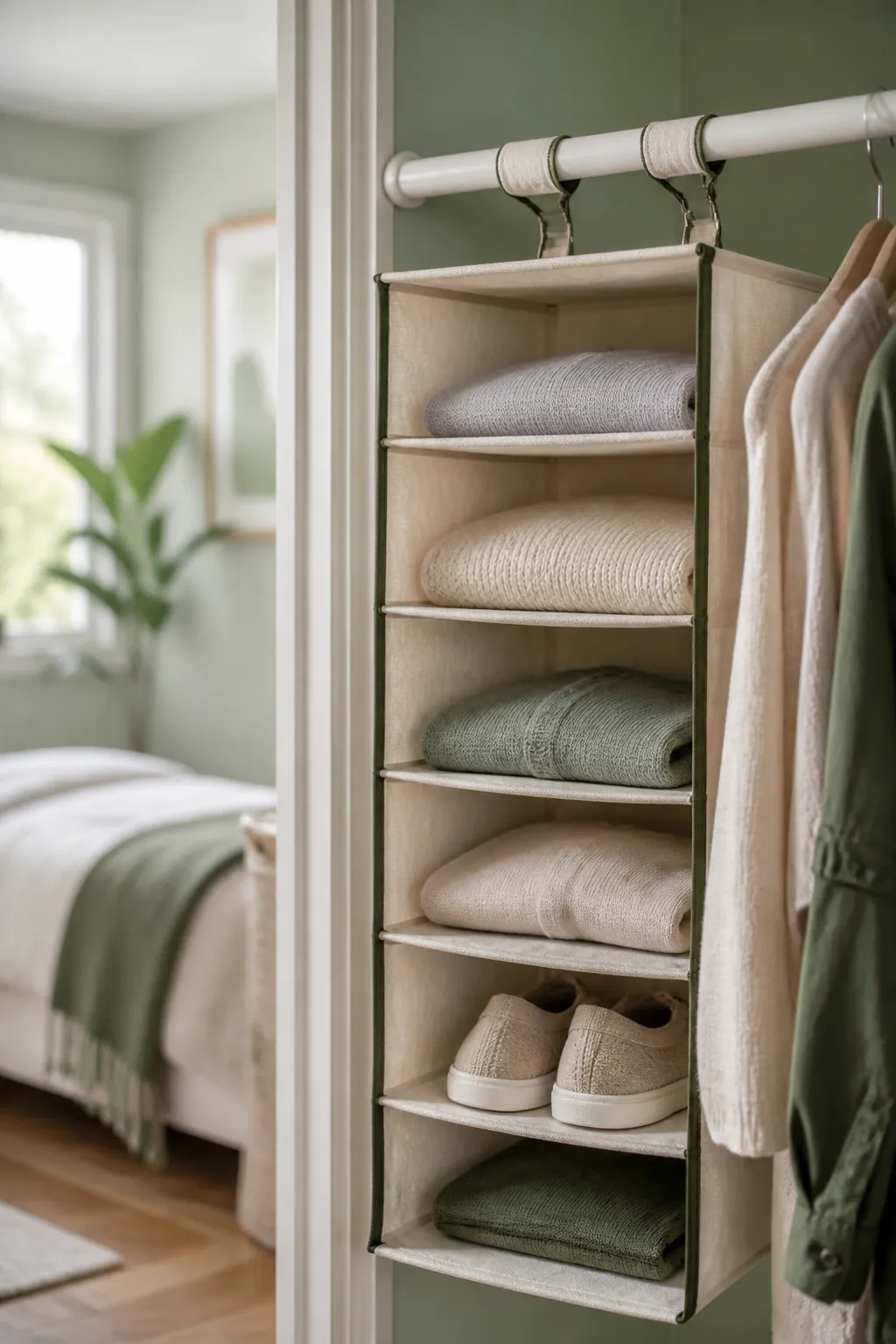
If the closet has one shelf above the rod and nothing else, a hanging organizer fills the space below it instead of fighting for room on it. A 6-shelf hanging closet organizer clips over the rod and drops six canvas cubbies for folded sweaters, shoes, or a spare set of sheets. Measure the drop first: six shelves at roughly 9 to 10 inches each add up to about 55 inches, and a rod mounted low to clear a long coat, common in older buildings, may not leave enough clearance before the bottom cubby rests on the floor.
3. An over-the-door shoe organizer with clear pockets
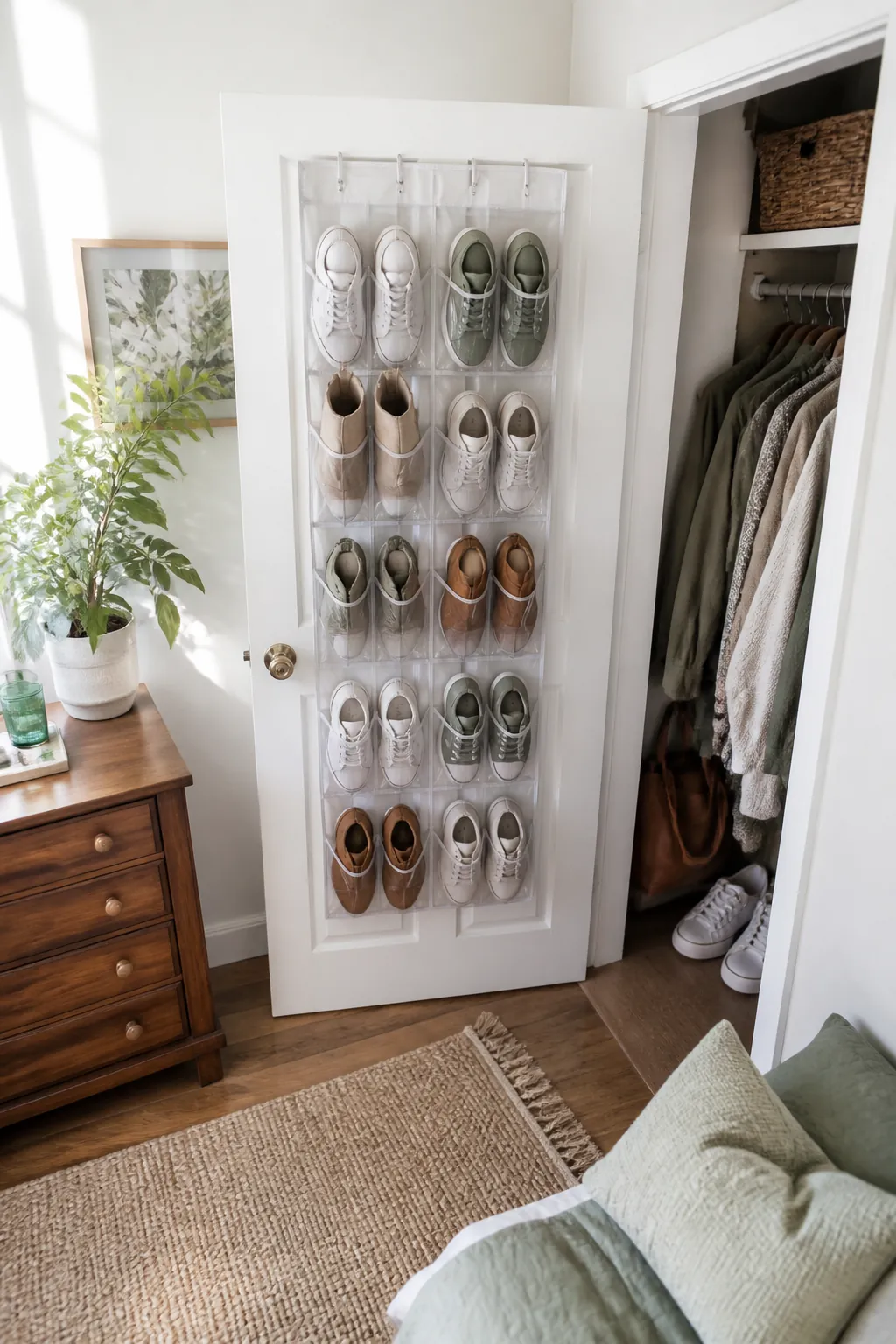
A first apartment often has no mudroom, just a pile of shoes that migrates further into the living room every week. An over-the-door shoe organizer with clear pockets hangs on the closet or entry door and holds a dozen or more pairs in rows without touching the wall. It fits most interior doors up to about 1.75 inches thick, but hollow-core doors, standard in almost every rental, can flex under a fully loaded top row, so keep heavier boots low and lighter shoes near the top.
4. Adjustable bed risers
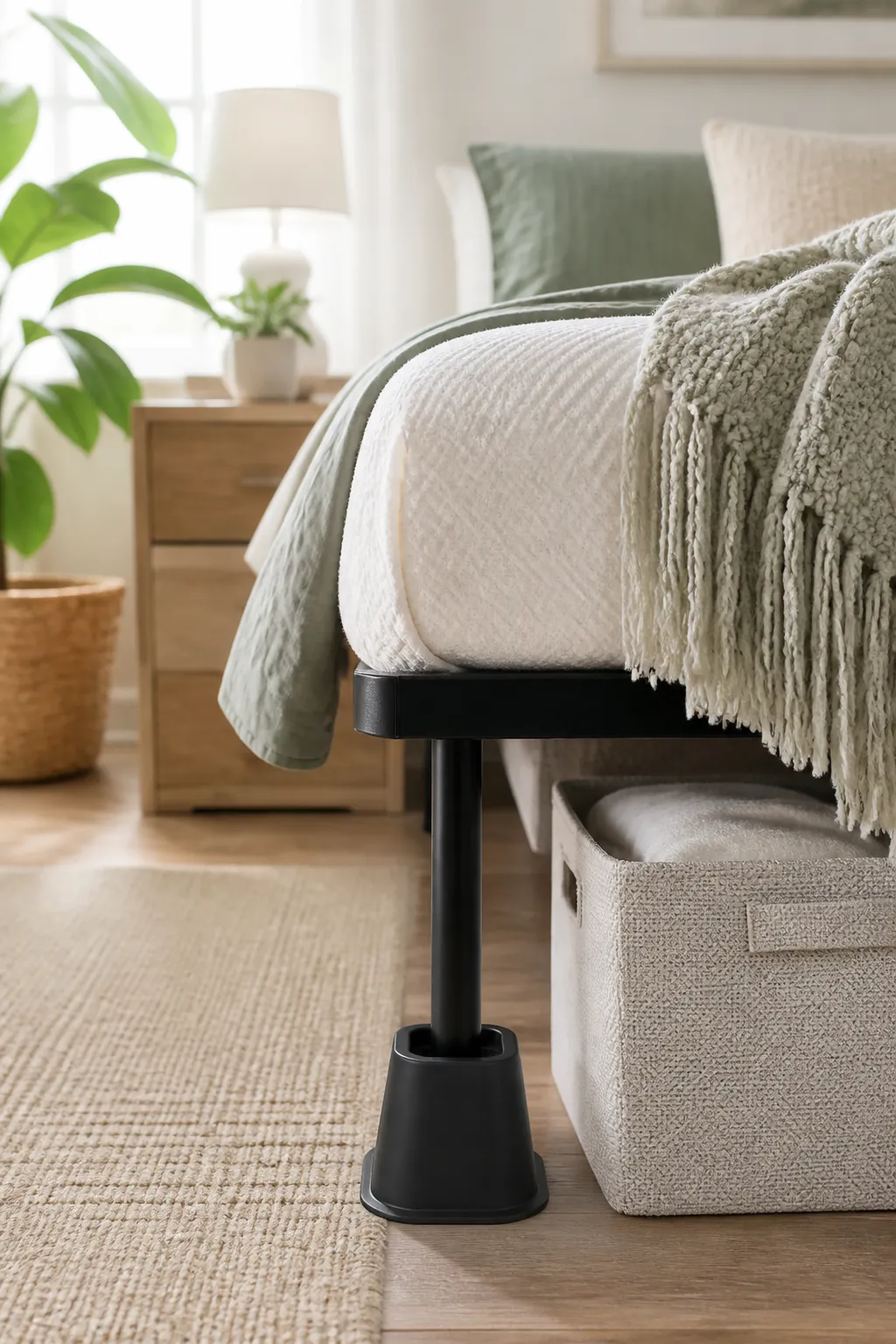
A studio or one-bedroom rarely has room for a second dresser, which makes the space under the bed frame the only real overflow storage in the apartment, if there is enough of it. A set of adjustable bed risers lifts the frame three to five inches, turning a gap too tight for a shoebox into one that clears a real bin. Check the leg style first: a cup-style riser grips a straight post leg well but does nothing for a platform bed’s flat, wide foot, and a frame on casters needs risers built to lock a wheel in place rather than a cup it can simply roll out of.
5. Vacuum compression storage bags
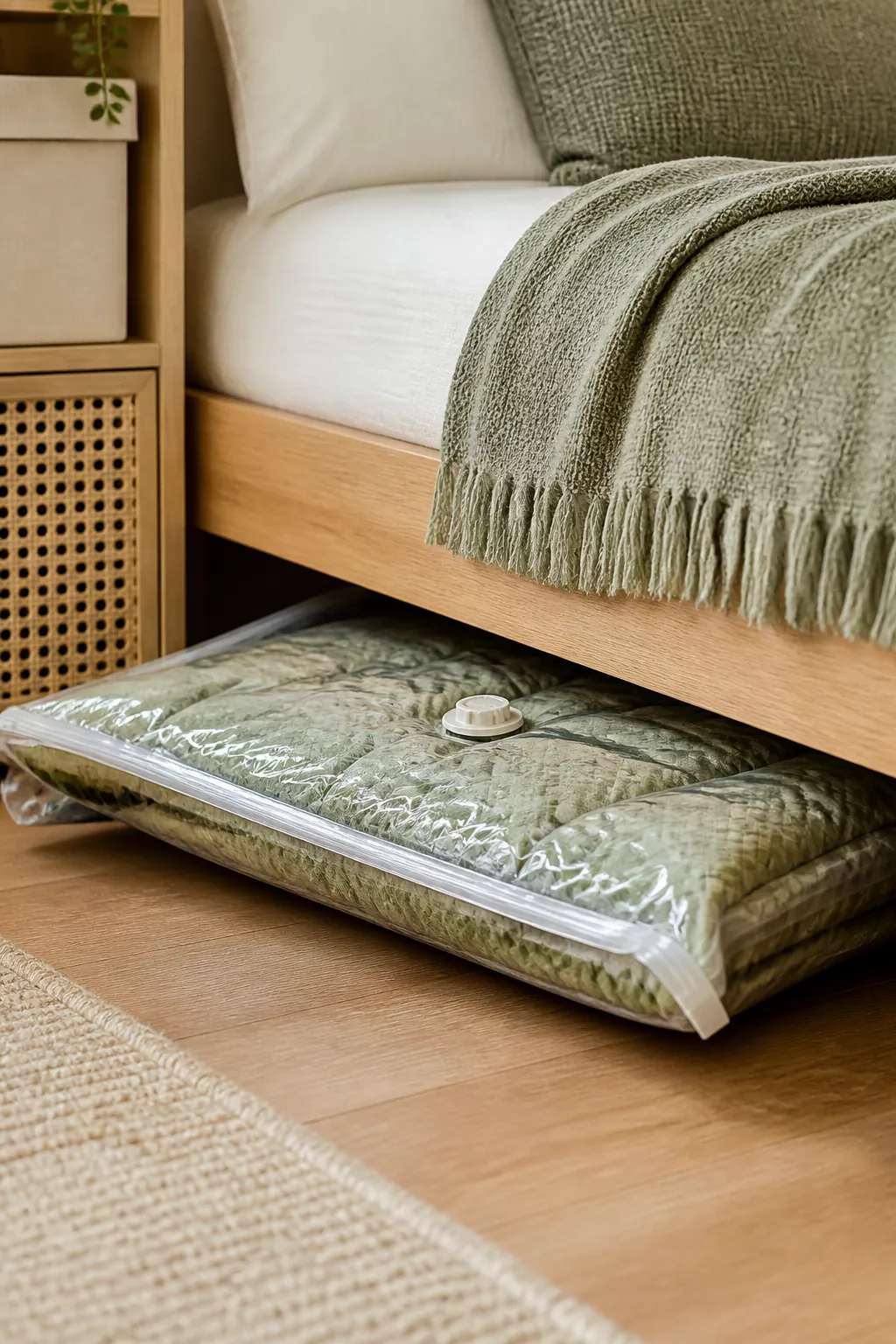
Once the bed is raised, what goes under it matters as much as the clearance itself. Vacuum compression storage bags flatten a winter comforter or a season of sweaters to a fraction of their folded size, stretching a shallow under-bed gap much further than bins alone. They need an actual vacuum, even a handheld one, to pull most of the air out; rolling a bag by hand gets partway there but it slowly reinflates over a few weeks as the seal relaxes. Check the plastic thickness too, since a bag under about 4 mils develops a pinhole against an exposed bed frame screw or a rough hardwood floor.
6. Shelf dividers for a linen closet
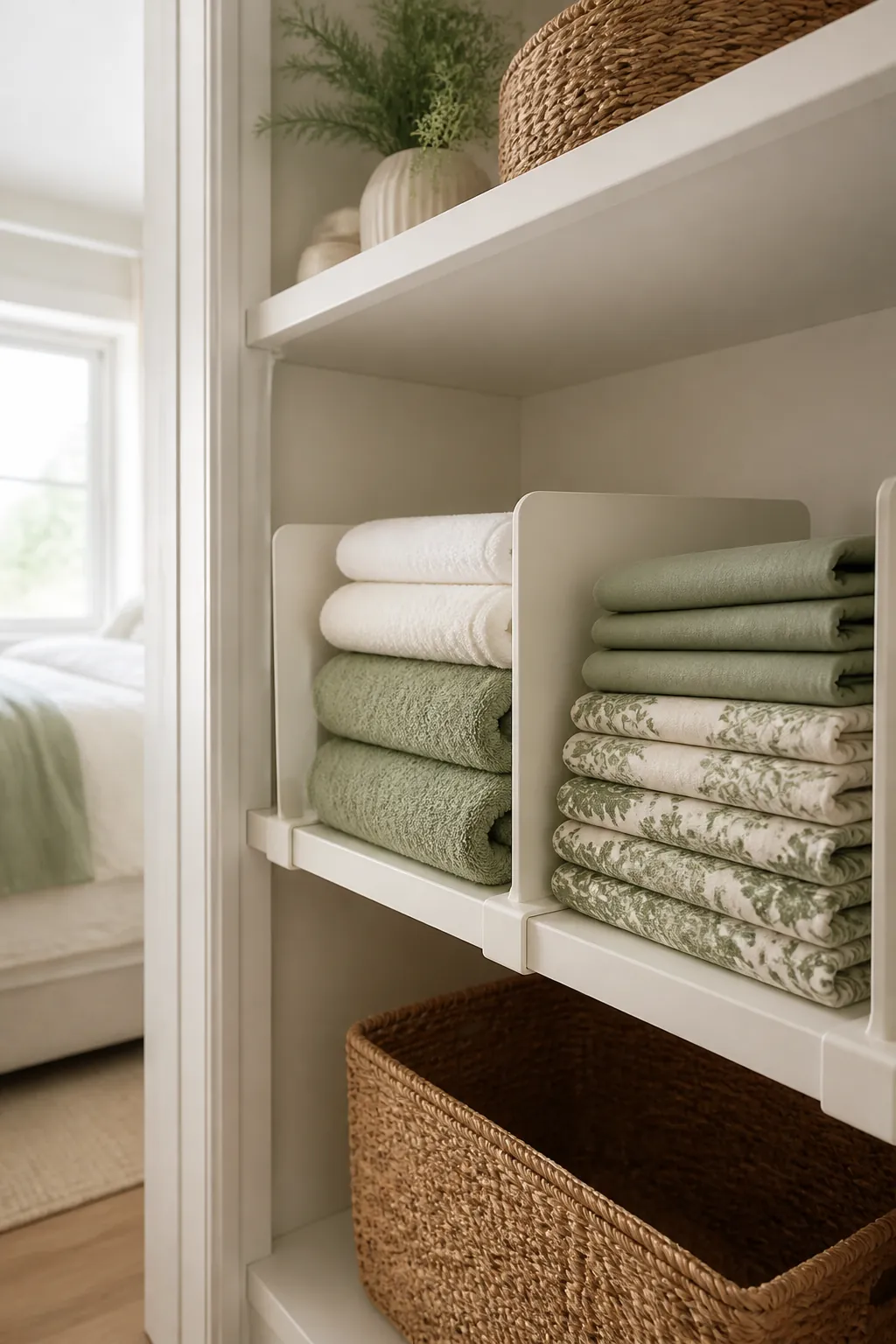
Many first apartments come with one shallow linen closet for everything from towels to cleaning supplies, and a single deep shelf turns into a leaning stack the moment more than one category shares it. Shelf dividers clip onto the shelf edge and split it into upright lanes, so pulling a towel off the bottom of one stack does not topple the sheets next to it. Most clip-style dividers need an edge under about an inch thick to grip, so a solid shelf with a thick front lip, more common in older buildings, needs a freestanding divider instead.
7. A pull-out under-sink organizer
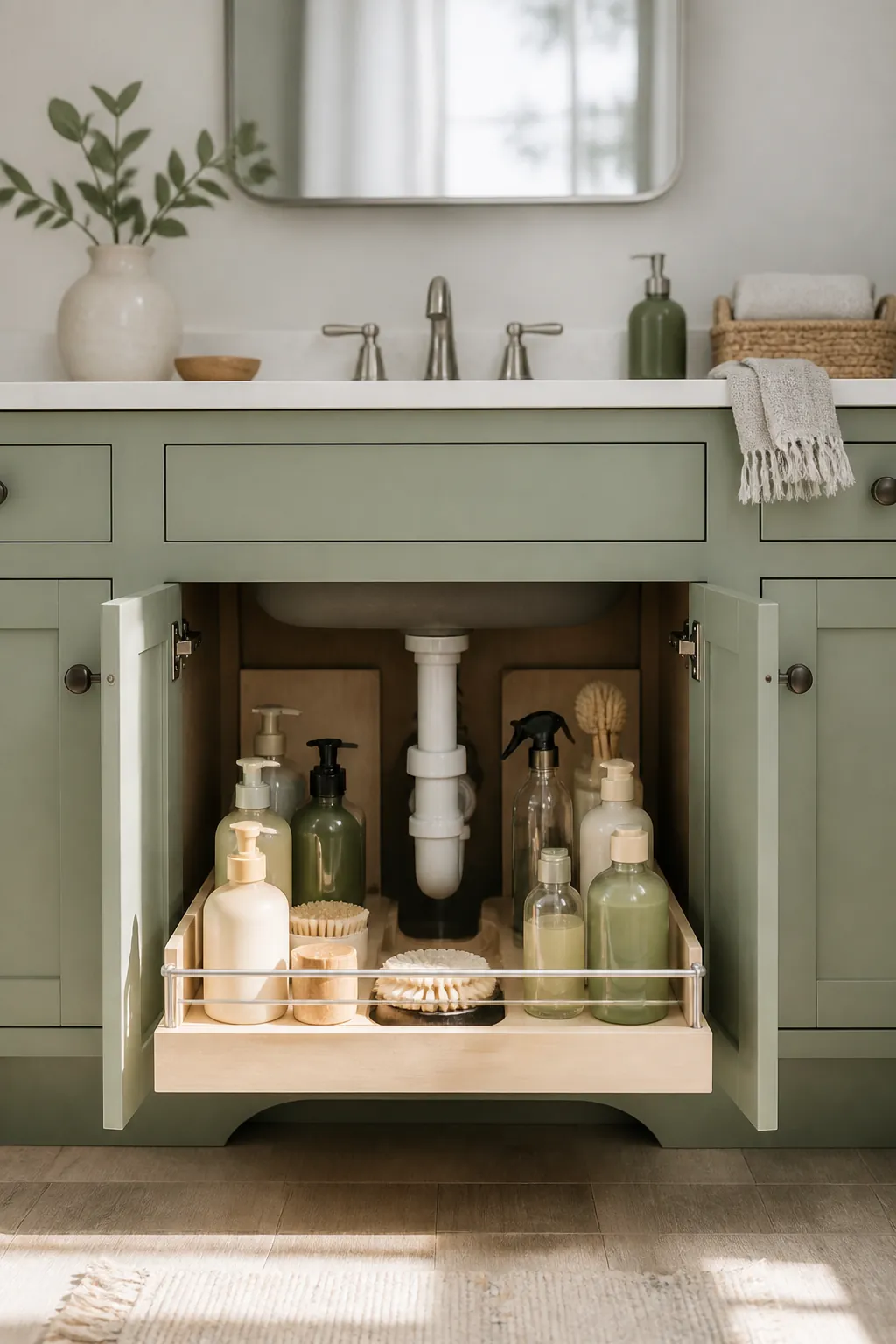
The cabinet under a kitchen or bathroom sink in a first apartment is almost never empty space. It is a pipe, a trap, and whatever bottles have been stacked around them since move-in day. A pull-out under-sink organizer slides forward on its own rails and puts everything behind the door within reach instead of buried behind the pipe. Measure the narrowest point of the opening, not the widest, since a fixed-width unit that clears the door but not the trap will not go in. Also check the floor-to-trap clearance, usually 3 to 5 inches, which rules out anything with a tall bottom shelf.
8. A wall-mount desk organizer
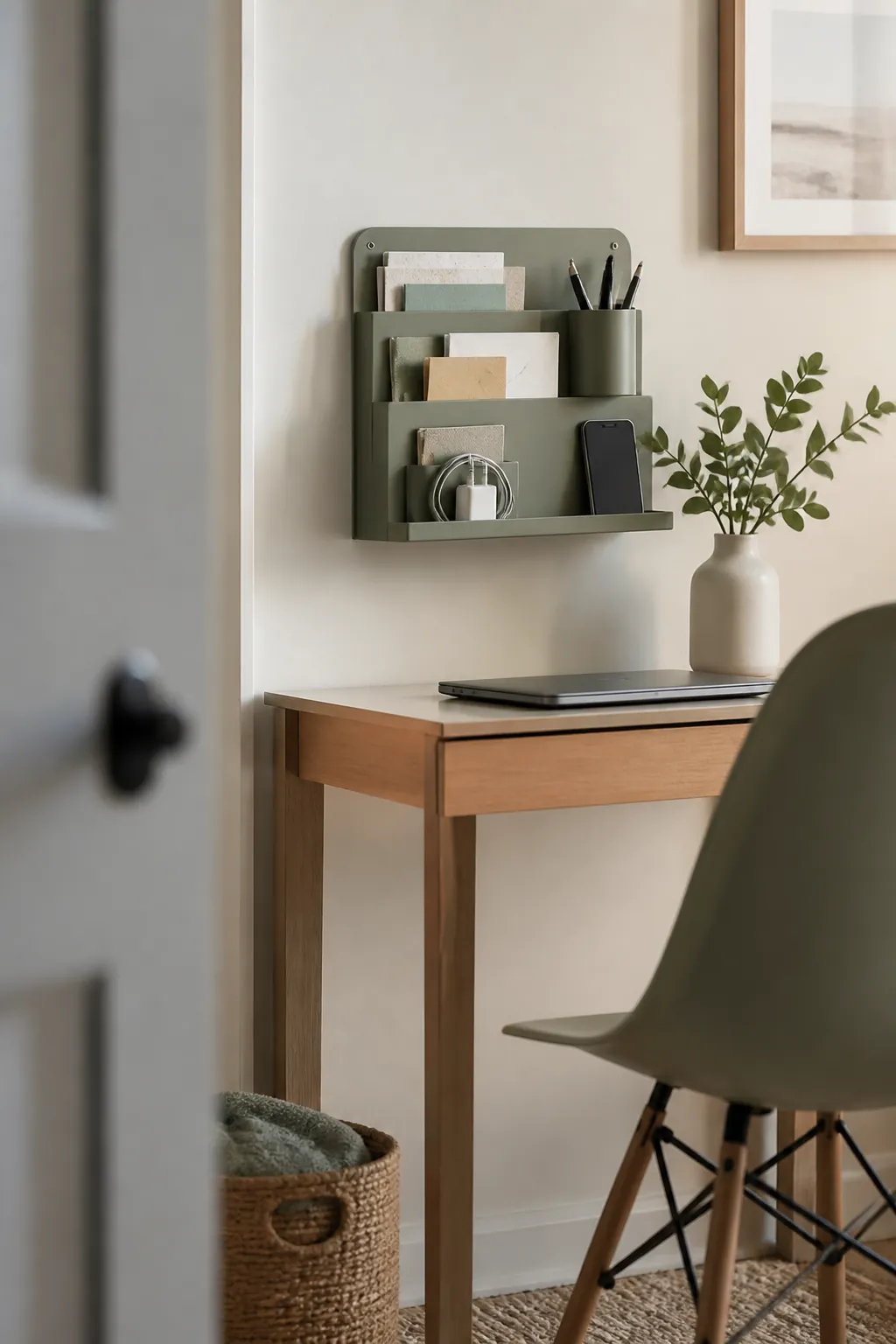
A first apartment desk is often a hand-me-down or flat-pack basic with no drawers, so mail, chargers, and pens end up piled on the one surface meant for actual work. A wall-mount desk organizer clears that surface by moving the small stuff onto the wall above it, using adhesive strips instead of a screw. Most of those strips are rated for only 5 to 8 pounds, and a daily-used charger brick or a stack of folders can start peeling one off a textured apartment wall within a few weeks, so test a strip in an inconspicuous spot first.
9. A cable management box
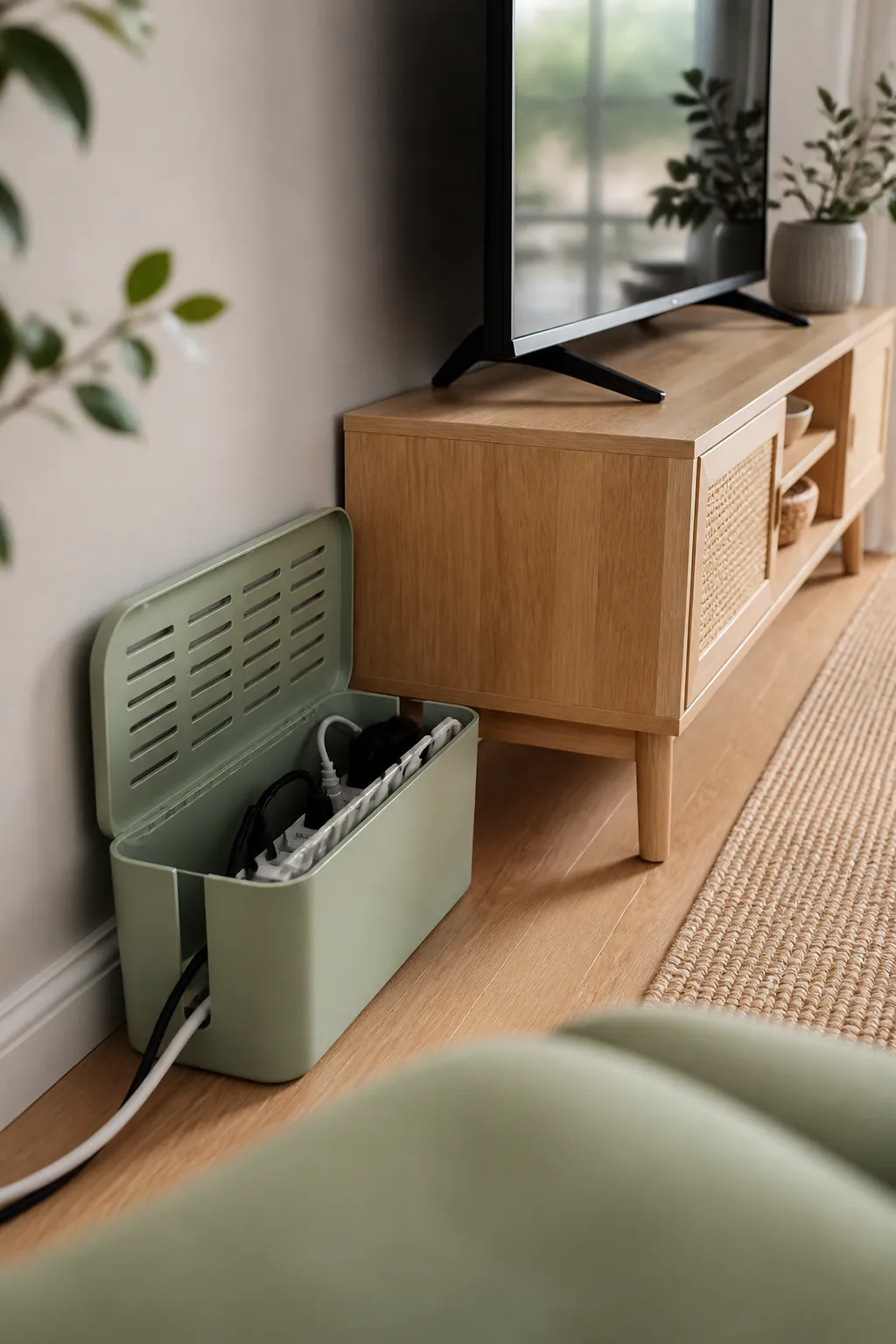
Older apartment buildings tend to have fewer outlets than newer ones, so a first apartment’s entertainment corner usually runs on one power strip feeding cords for the router, a lamp, and whatever else lacks its own outlet. A cable management box hides the strip and cords behind a vented lid instead of leaving them along the baseboard. Check the box’s inside depth against the actual strip, since one with widely spaced outlets can be too wide for a compact box, and skip a sealed box if the strip feeds a router running around the clock, since it needs the vents.
10. A slim rolling laundry cart
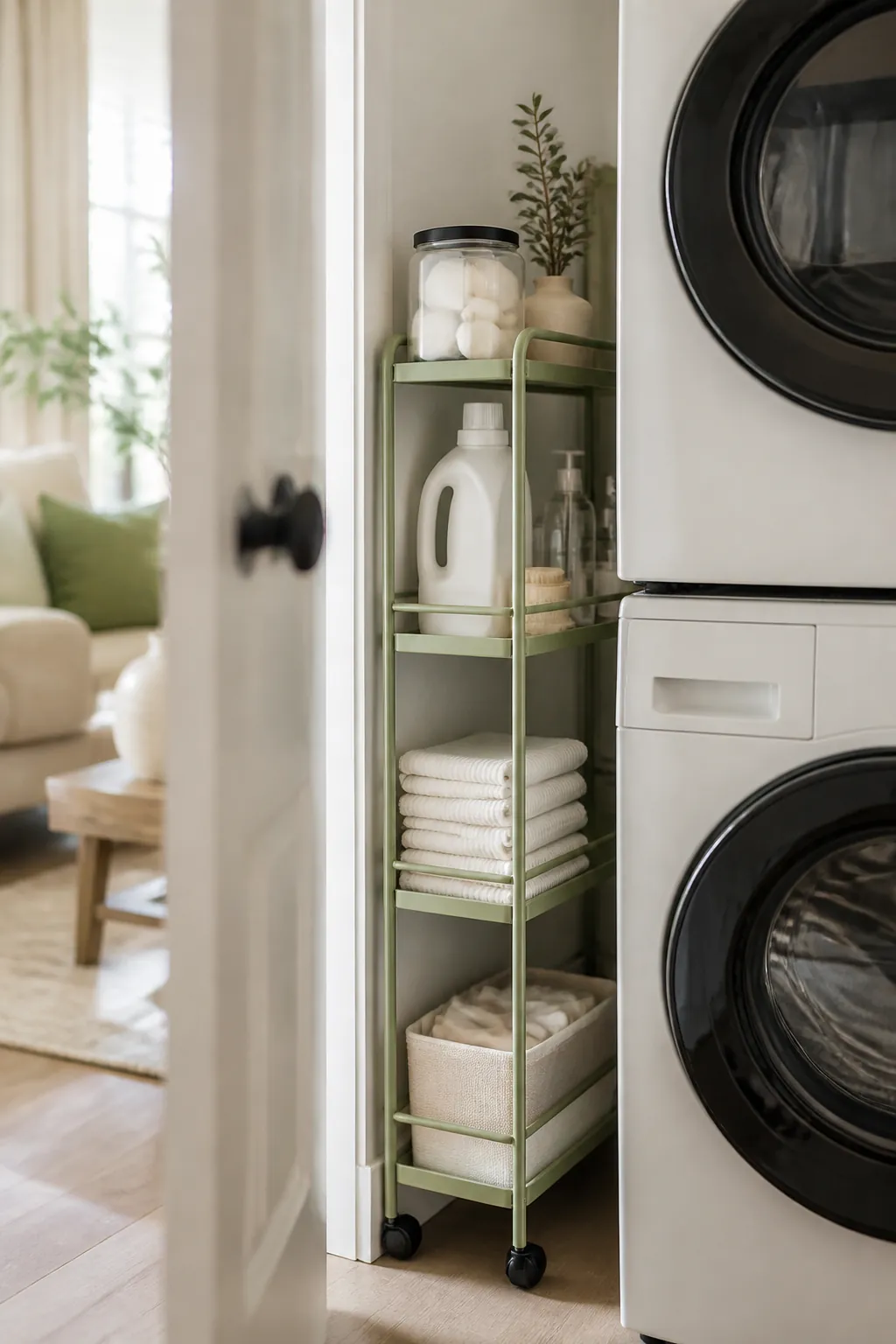
An in-unit laundry closet in a first apartment is usually sized for exactly the washer and dryer, with no shelf for detergent or dryer sheets. A slim rolling laundry cart wedges into the leftover gap beside the machines, some as narrow as 6 to 10 inches, and rolls out to restock. Measure that actual side gap rather than the closet’s total width, since a stacked unit’s control panel or vent hose can eat an inch or two that listing photos never show.
11. An entryway bench with shoe storage
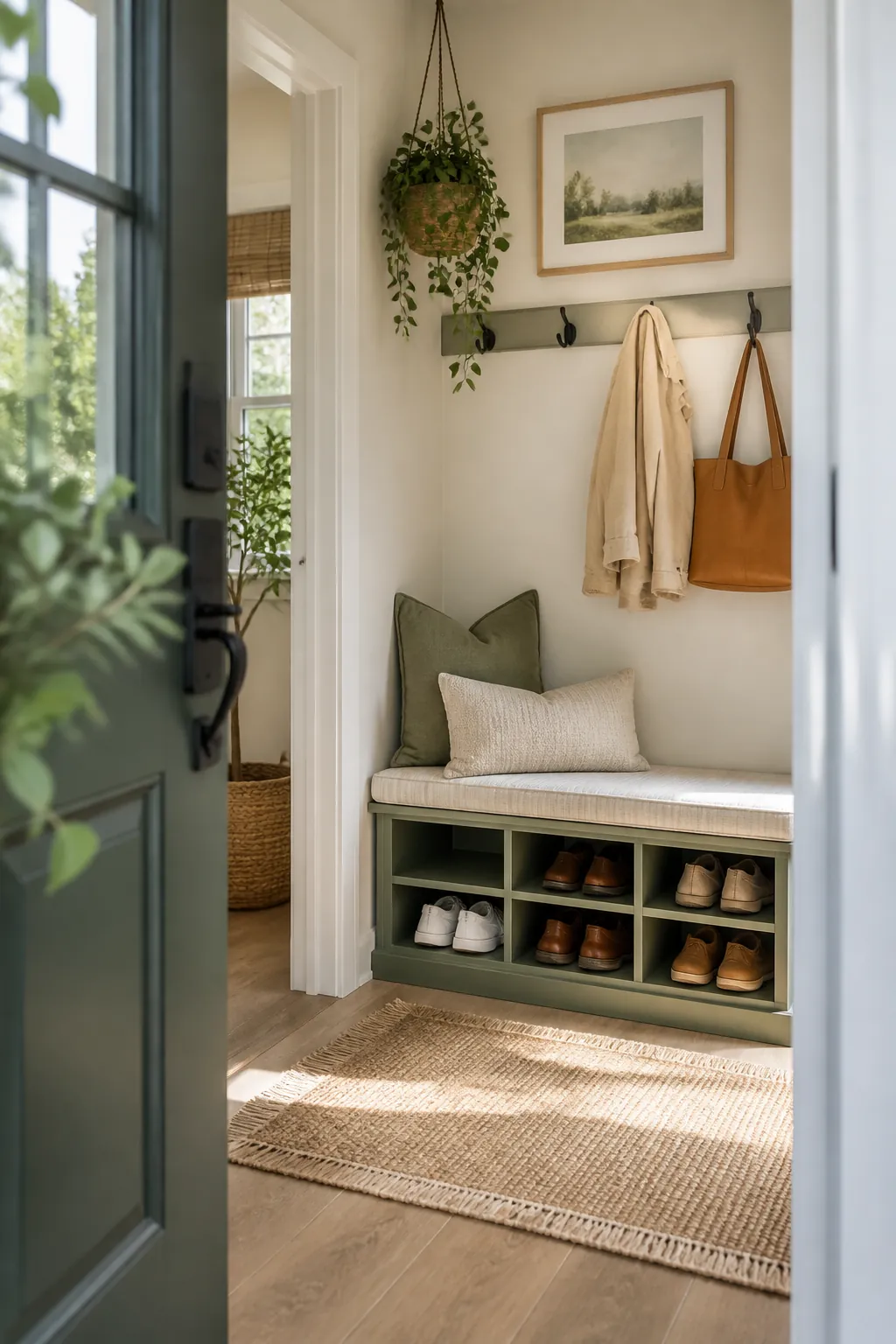
A first apartment door frequently opens straight into the living room with no closet or landing spot nearby, just a wall. A narrow entryway bench with shoe storage, under about 12 inches deep, fits along that wall and gives shoes a cubby instead of a pile at the threshold. Check the door’s swing before placing it, since a bench too close to the hinge side can block the door from opening fully, and an in-swinging front door often needs the bench on the opposite wall instead.
12. A label maker
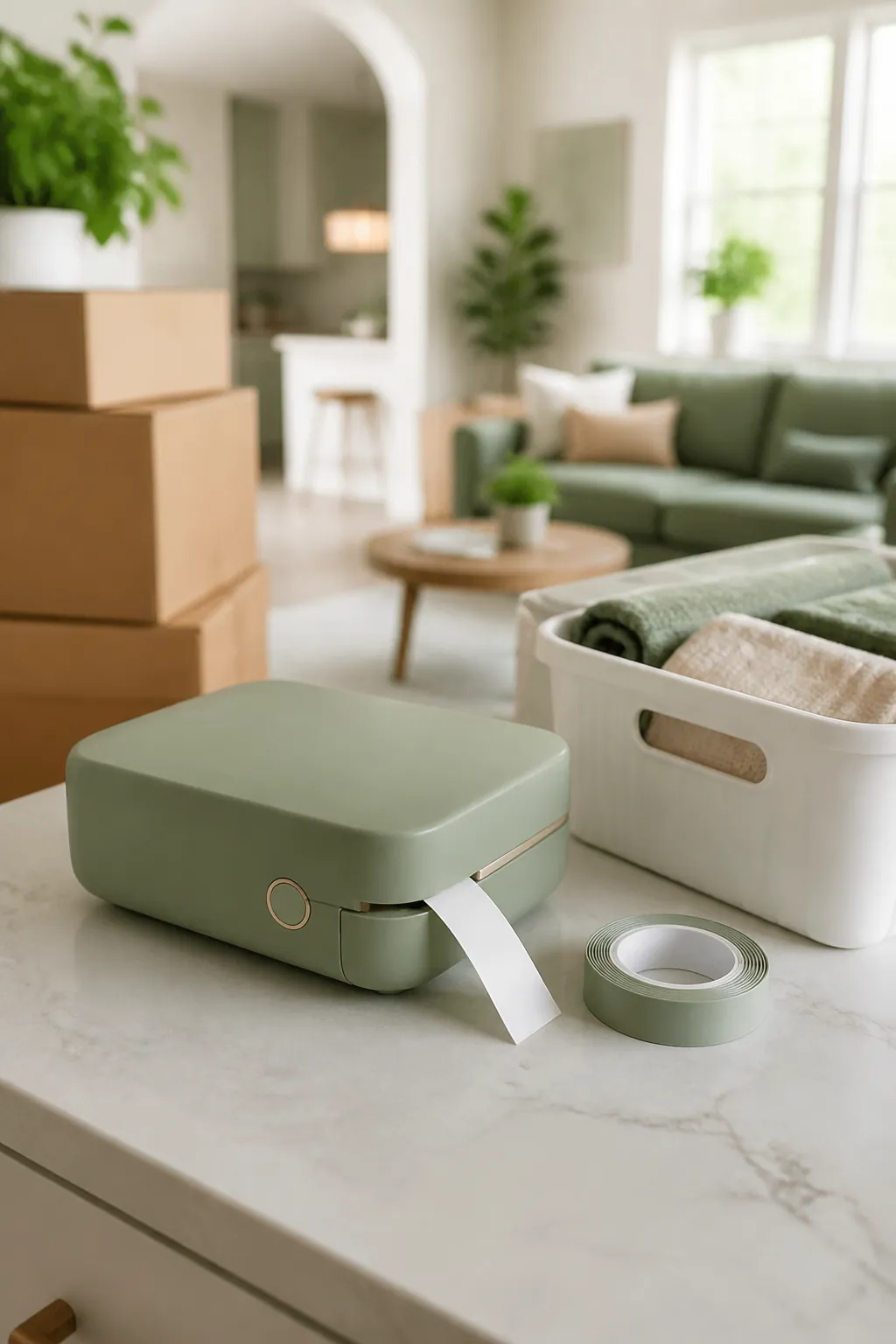
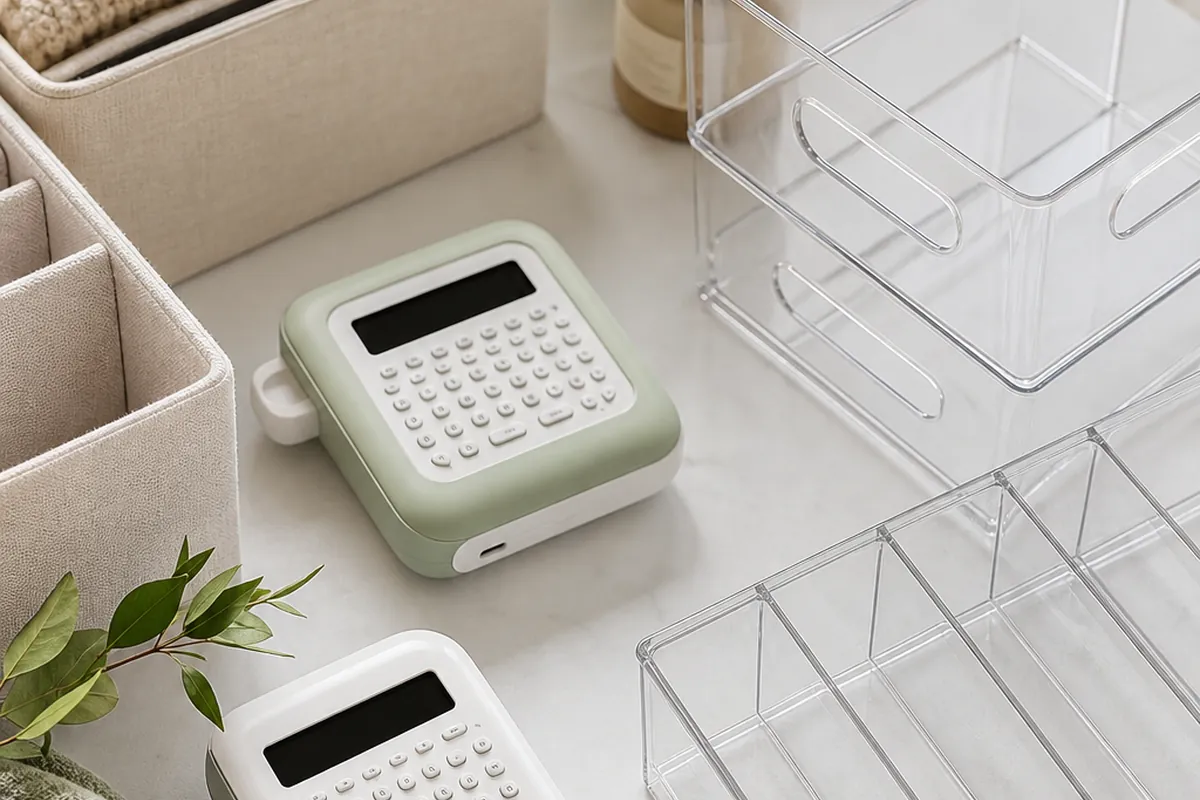
Save this one for last, since it turns eleven separate gifts into one working system rather than eleven containers nobody remembers the contents of. A label maker earns its keep fastest in an apartment shared with a roommate, where a fridge shelf, a cabinet, or a stack of still-unopened moving boxes needs a name on it before anyone can agree on whose is whose. Most come with a single starter cartridge good for only a few dozen labels, so budget for a spare roll if the gift is going to someone labeling an entire apartment’s worth of bins at once.
Where to start
Do not buy all 12. Pick two or three based on what you actually know about the place: a rod doubler and hanging organizer for a small closet, the bed risers and compression bags if there is no garage to store things in, or the entryway bench if shoes already pile up by the door. Pair whichever containers you choose with the label maker, since a system without labels tends to slide back into a pile within a few months of the move-in energy wearing off. None of these need a landlord’s permission or a deposit at risk, which is the whole point of a good first-apartment gift.