A nursery outgrows its own storage system faster than almost any other room in the house. A newborn arrives with a dresser mostly empty and a closet holding a handful of 0-3 month outfits, and four months later that same dresser is overflowing while half the closet holds clothes nobody can fit a baby into yet. Most baby shower gifts solve for day one. The useful ones solve for the six months after that, when the real mess shows up.
These nine gifts are picked for that stretch, and every one skips the drill, since most new parents are renting, between moves, or simply not ready to patch a hole six months before a lease is up.
1. Clear stackable storage bins for diapers and wipes sorted by size
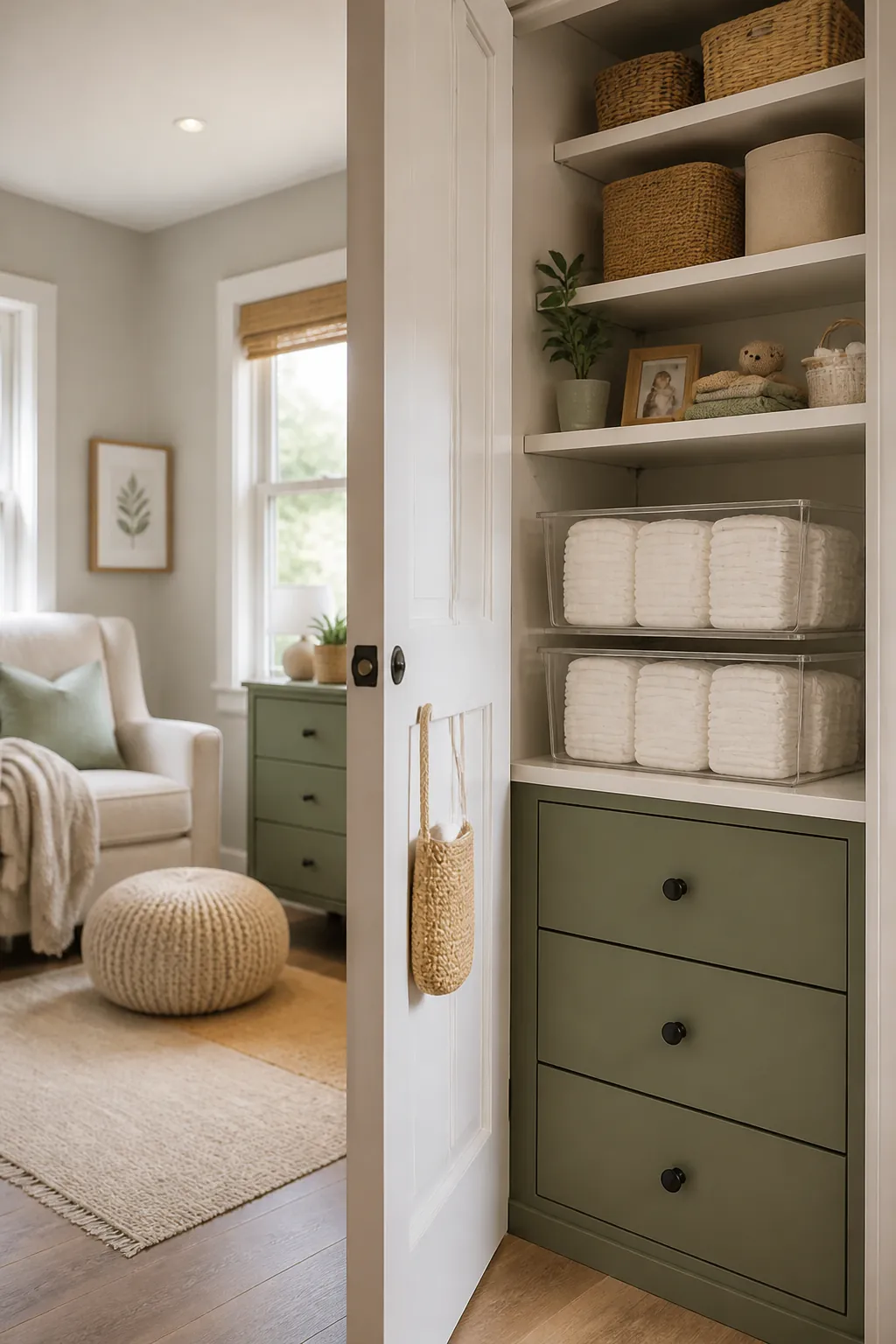
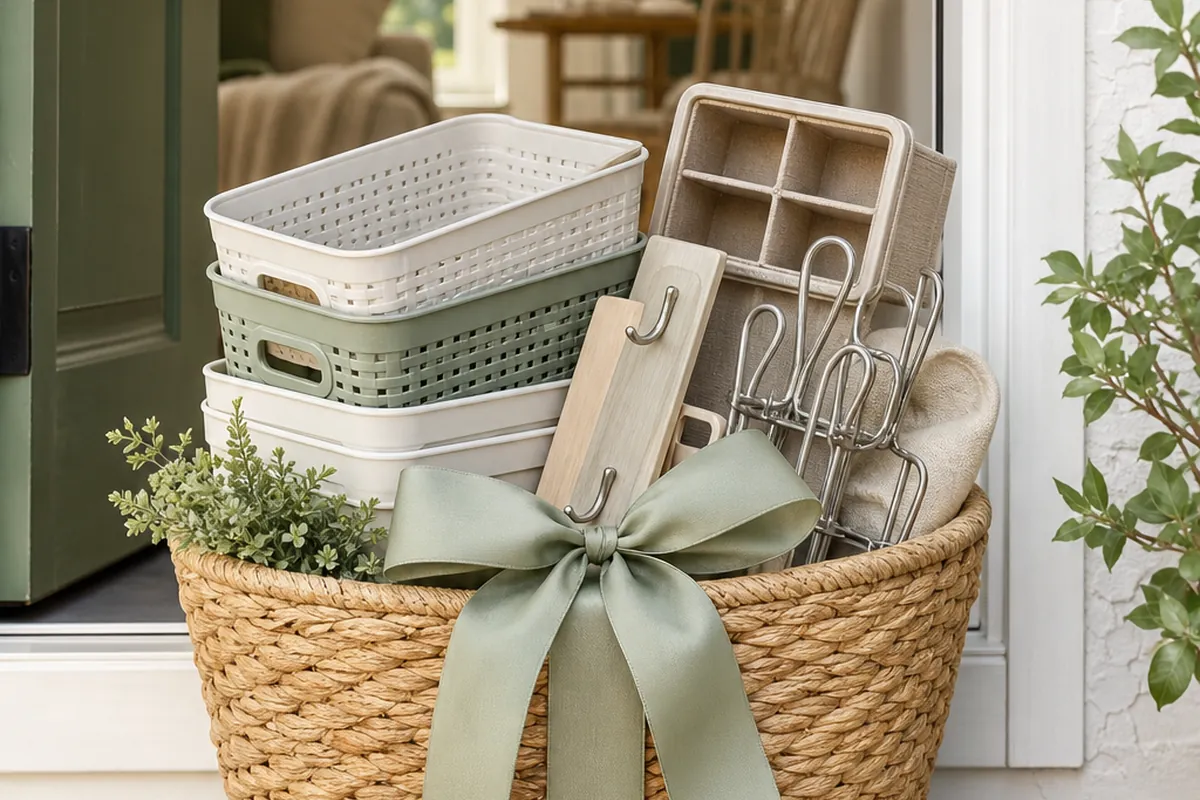
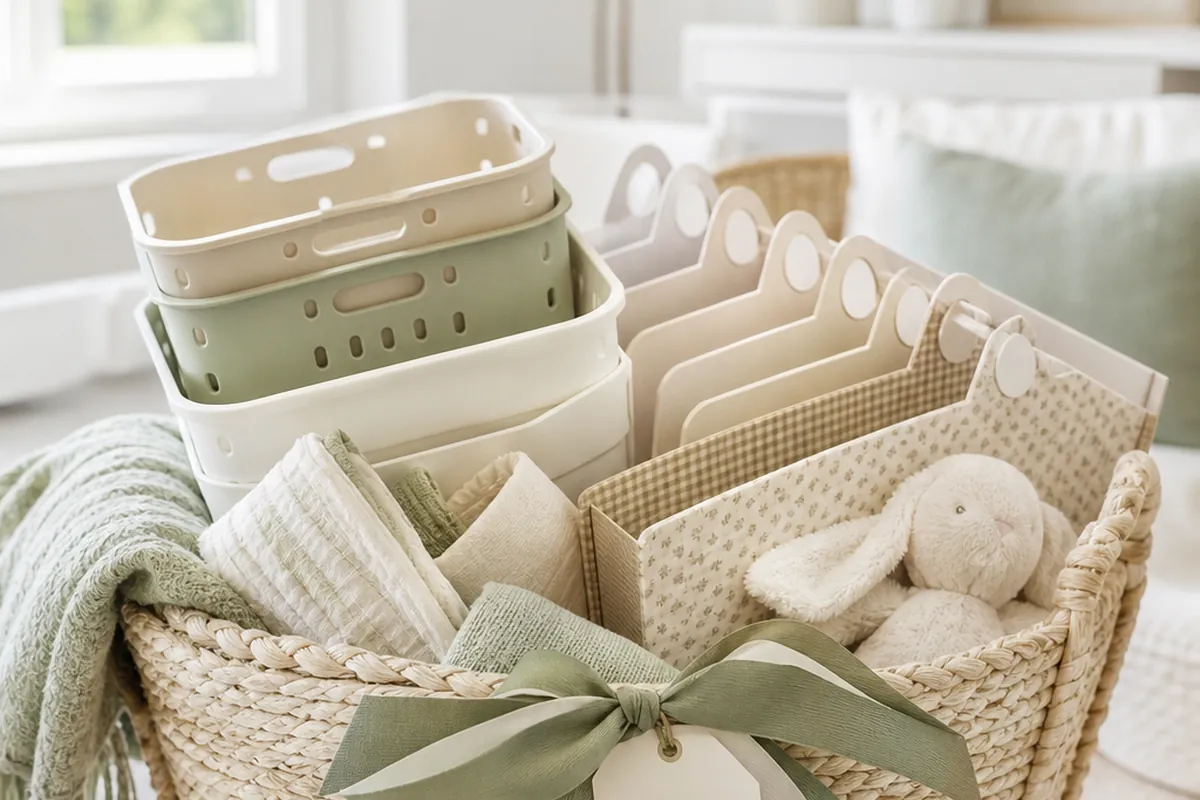
Newborn diapers and size 1 diapers look nearly identical from the outside, and a parent running on three hours of sleep will grab the wrong stack more than once if both are loose on a shelf. A clear stackable storage bin keeps each size in its own labeled container, and the clear sides mean a glance tells you which one is nearly empty without pulling it off the shelf first.
Buy two or three before the baby arrives, since newborns typically move through a size within four to six weeks, and a bin already labeled “size 1” waiting on the shelf beats scrambling to relabel one at 2 a.m. Stack no more than three high on a closet shelf; a fourth bin on top usually clears the shelf above it by less than an inch and tips when someone reaches for the bottom one.
2. Dresser drawer dividers sized for onesies, sleepers, and socks
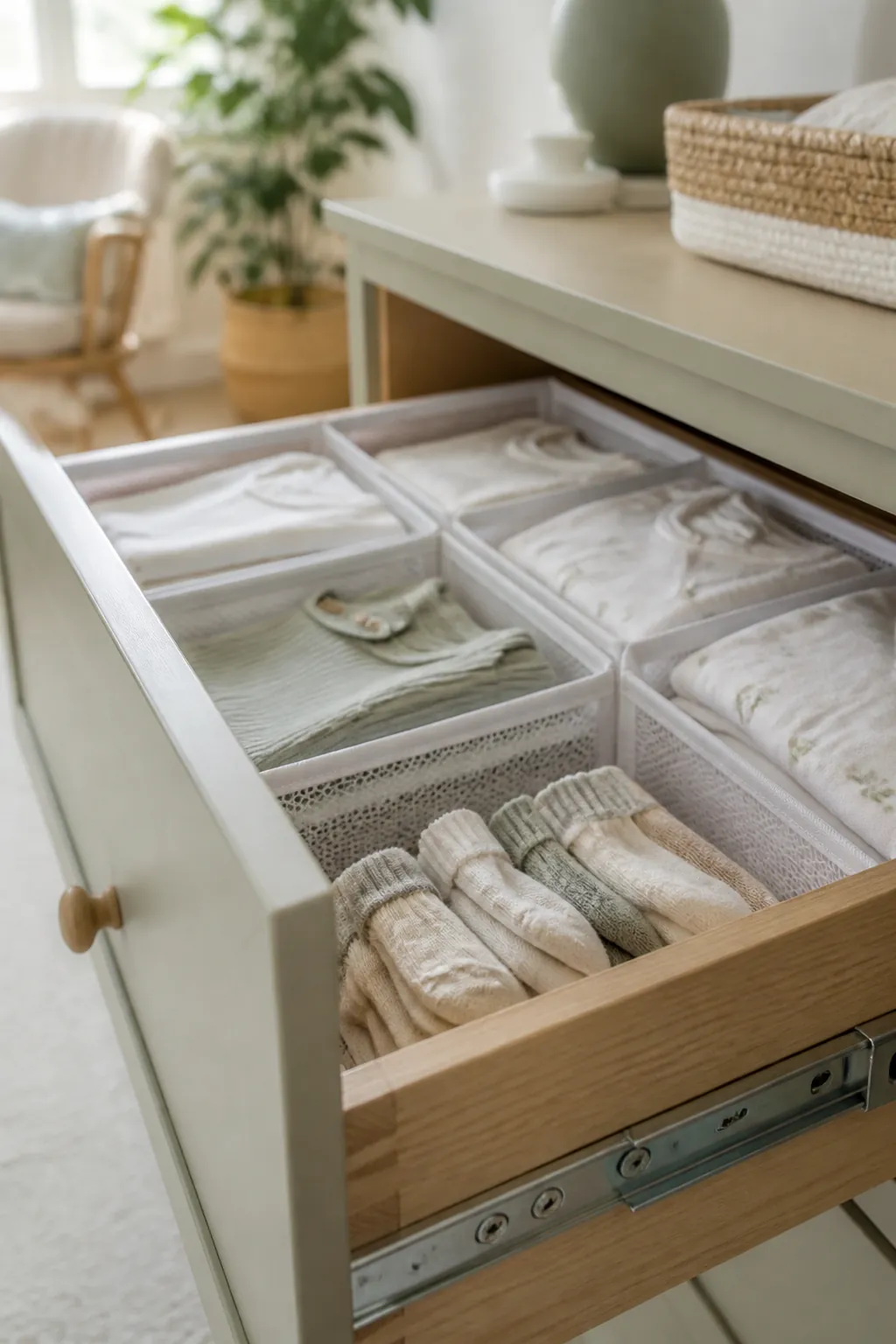
A nursery dresser drawer that held three neat stacks on day one turns into one undifferentiated pile of onesies, sleepers, and socks by the second month, mostly because nothing in the drawer is holding a boundary. Nursery dresser drawer dividers split a standard 24 to 30 inch wide drawer into four to six lanes, each narrow enough that a stack of folded onesies stays upright instead of slumping sideways the moment the drawer gets jostled shut.
The failure mode worth avoiding is buying dividers sized for an adult dresser. Baby clothes are small enough that a lane built for folded adult shirts, usually 6 inches or wider, wastes half its width; look for adjustable dividers that can narrow down to 3 or 4 inches so a stack of newborn socks gets its own lane instead of sliding loose in a gap meant for something bigger.
3. Hanging closet dividers that grow with the baby’s sizes
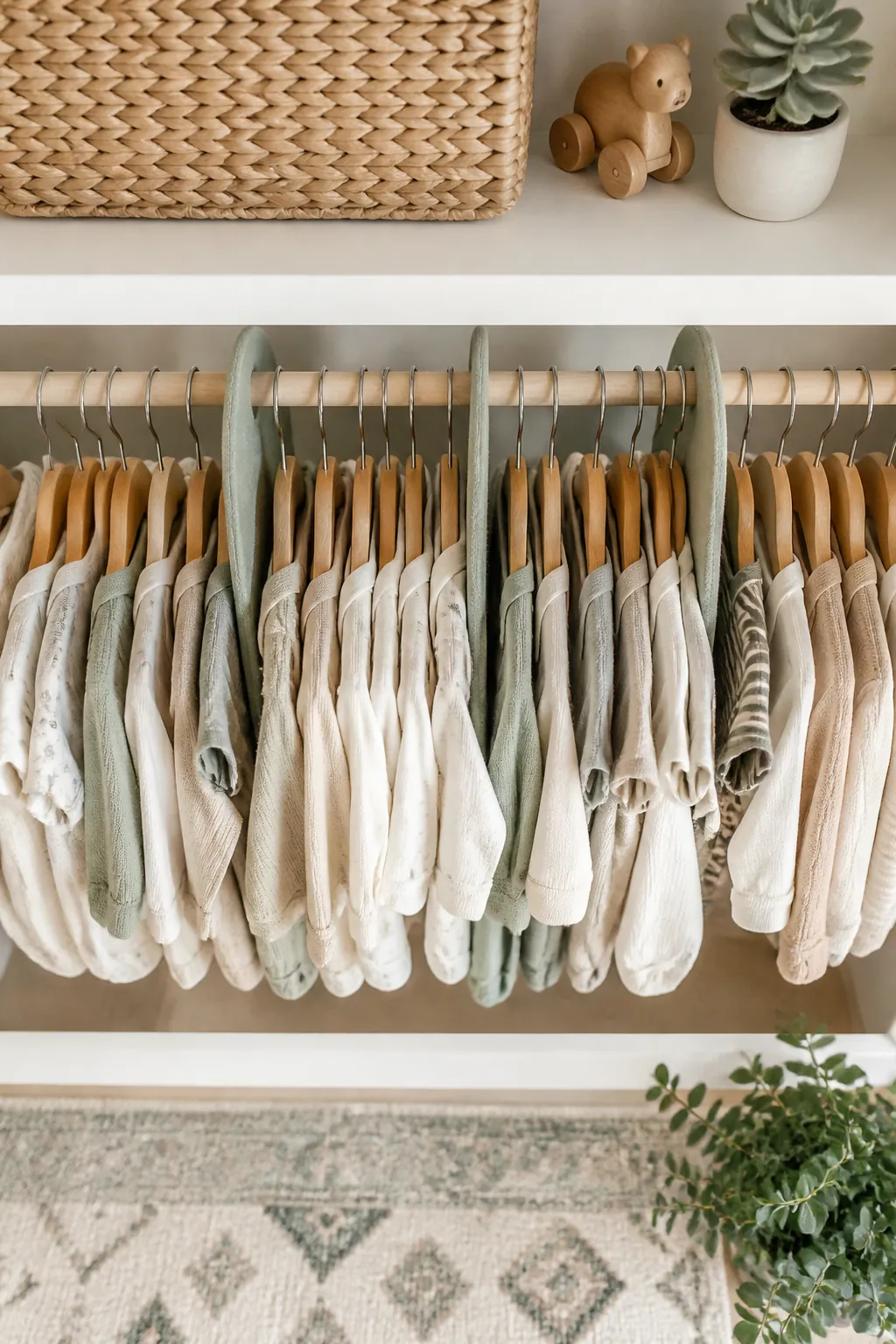
A nursery closet rod holding 0-3 month clothes looks like it has room to spare, right up until 6-9 month clothes arrive and nobody can tell which end of the rod is which anymore. Hanging closet dividers for baby clothes clip directly onto the existing rod and mark off each size range with its own tab, so the rod reads left to right by age instead of by whatever order things got hung up in.
Look for a set with movable tabs rather than fixed slots, since baby sizing runs roughly 0-3, 3-6, 6-9, 9-12, and 12-18 months in the first year and a half, and a set built for only four fixed ranges stops matching reality by the fifth size change. Move the tabs forward every few weeks rather than waiting for a drawer to overflow first; it is a thirty-second job done early and a frustrating one done after the fact.
4. A stackable caddy for the changing station that travels room to room
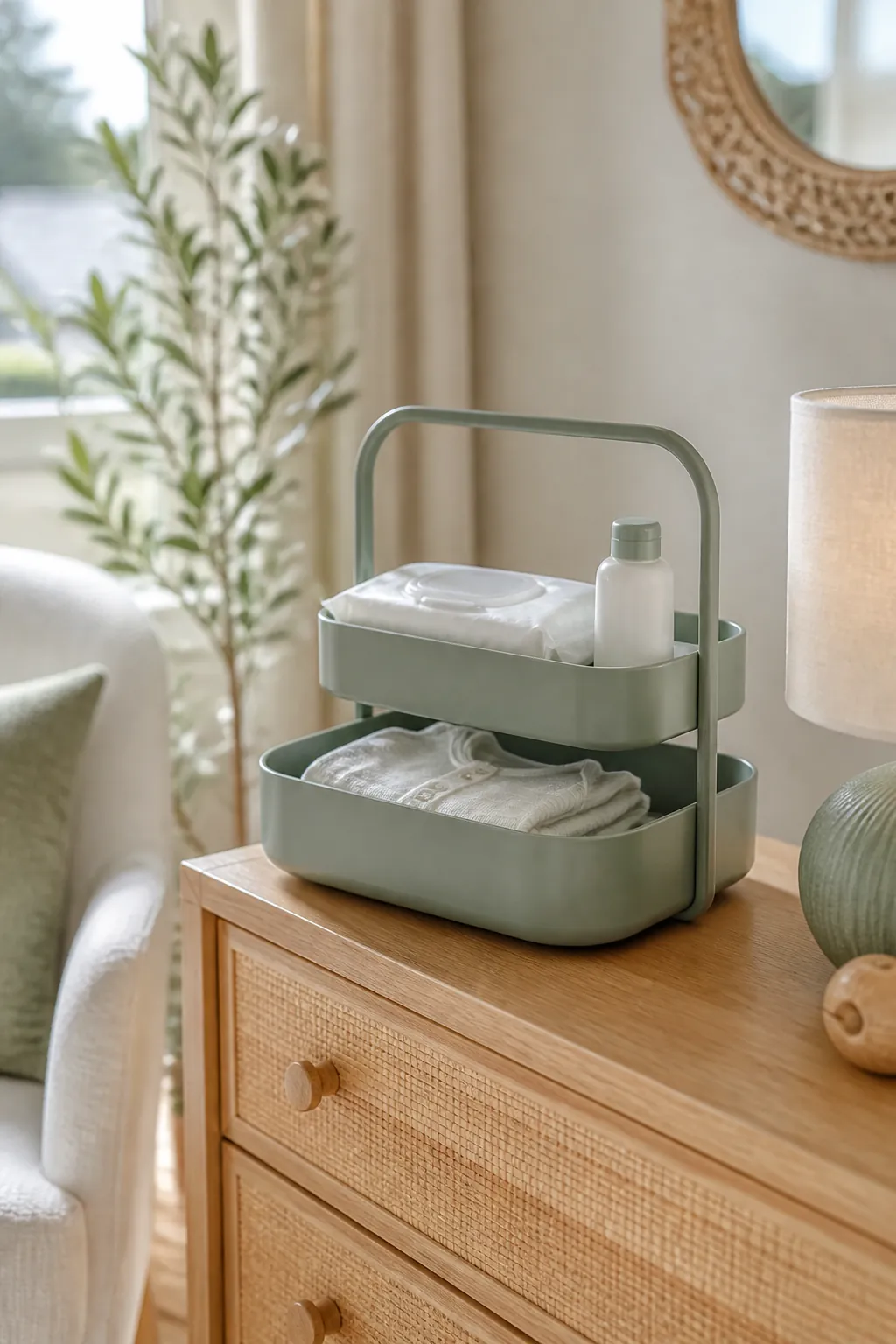
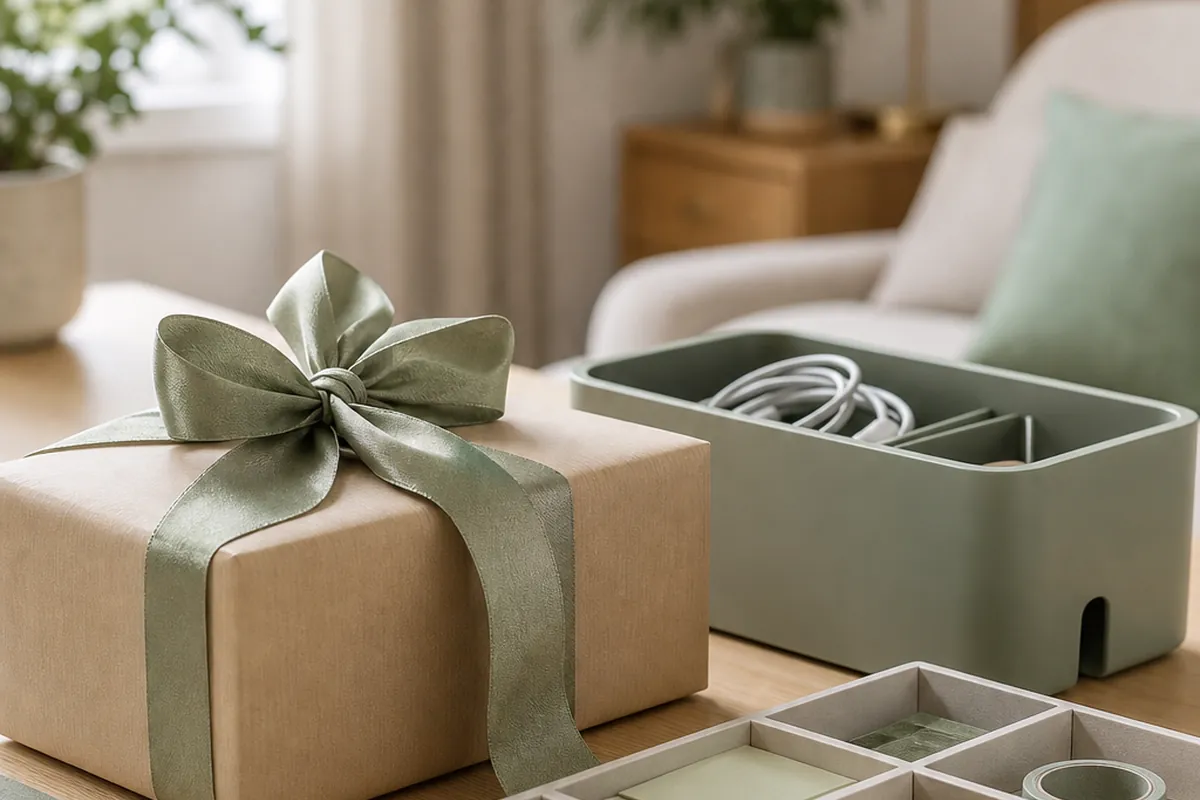
The changing table almost never ends up being the only place diapers get changed, and whatever holds the wipes, cream, and a spare onesie needs to move with the parent rather than stay fixed to one surface. A stackable supply caddy with a handle carries everything from the nursery to the living room in one trip and nests with a second one on a shelf when it’s not in use, which an open basket or a repurposed tote never manages as cleanly.
Most caddies in this style run 9 to 11 inches long inside, enough for a stack of wipes and two or three small bottles side by side, but not deep enough for a full-size diaper box, so it works best paired with a bin that holds the bulk diaper supply nearby rather than trying to carry everything at once.
5. A label maker for sizes, rotation, and the inevitable hand-me-downs
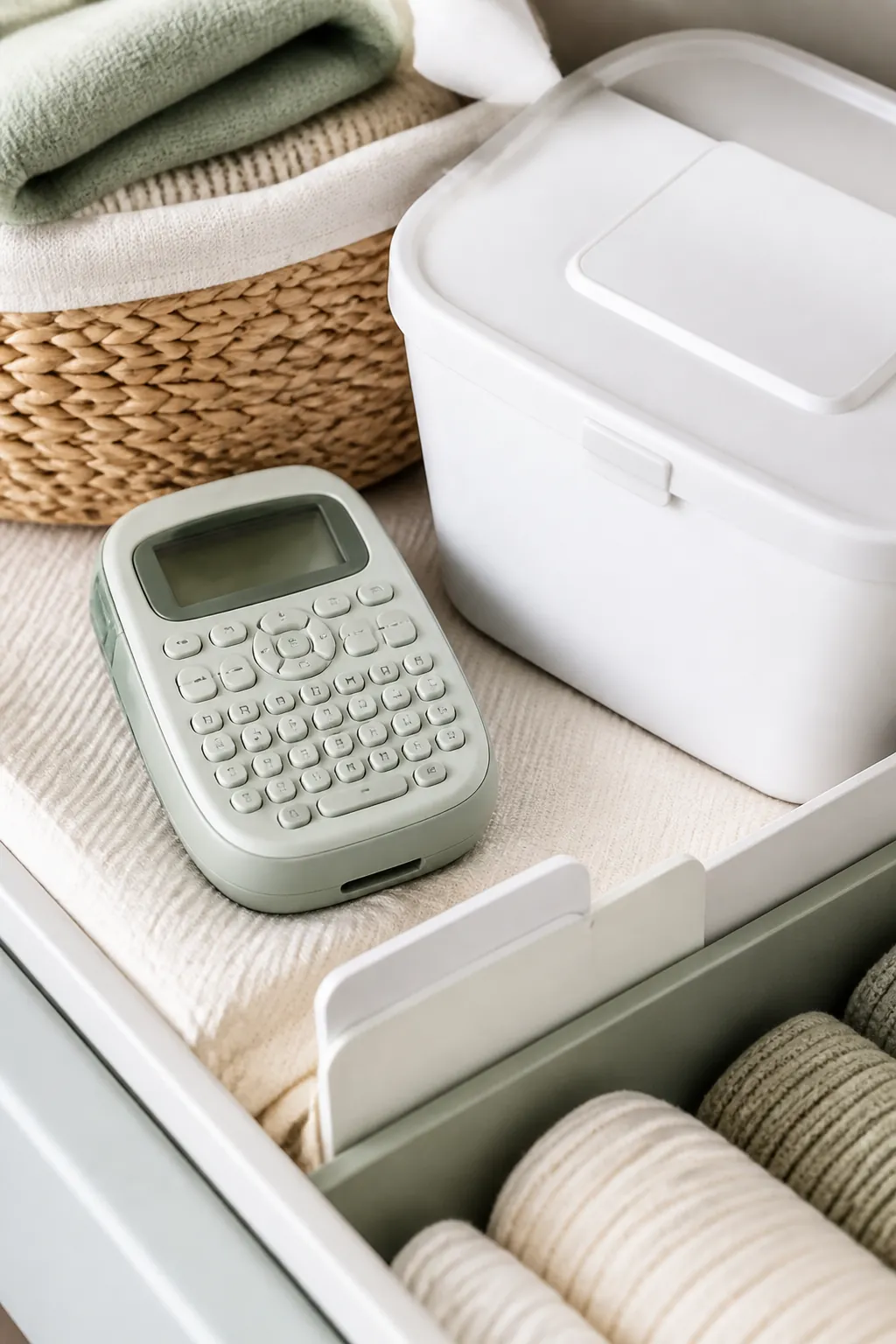
Save this one for the parent who is already drowning in bins, since a label maker turns every other gift on this list into a system instead of a guessing game. A label maker earns its keep on diaper bins, closet divider tabs, and the inevitable bag of hand-me-down clothes from a friend with an older kid, where “guess the size” costs real time during a 3 a.m. outfit change.
Budget for a spare label cartridge if the gift is going to a parent who plans to label every drawer, bin, and divider in the room at once, since most come with only a starter roll good for a few dozen labels.
6. Vacuum compression bags for the next size up, waiting in the wings
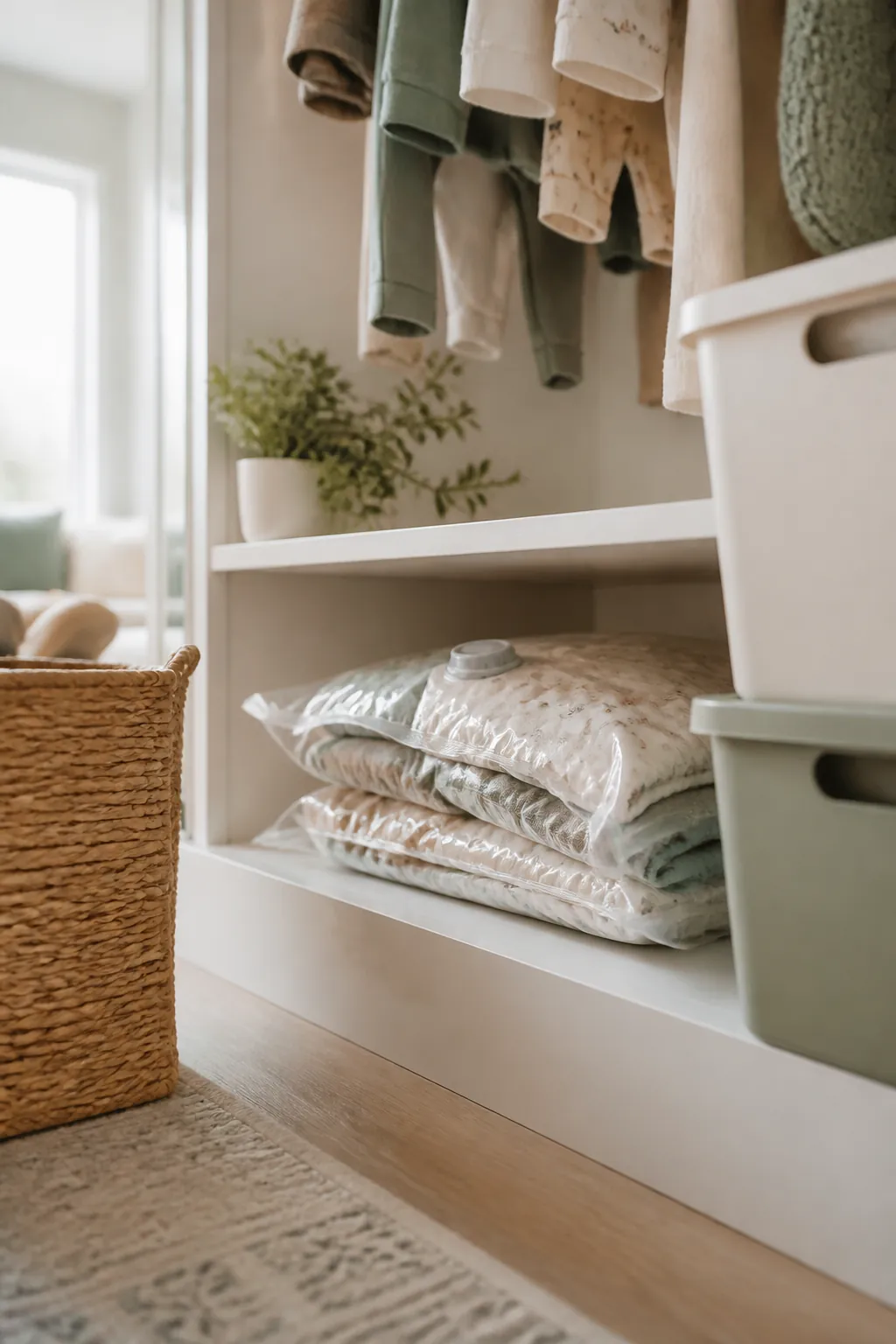
Every nursery closet ends up holding two wardrobes at once: the clothes a baby is wearing now, and the next size up, already outgrown by an older sibling’s hand-me-downs or bought ahead on sale. Vacuum compression storage bags flatten that waiting wardrobe to a fraction of its folded size, freeing closet or under-crib space for what actually fits today.
They need an actual vacuum, even a handheld one, to pull the air out properly; rolling a bag by hand gets partway there but slowly reinflates over a few weeks as the seal relaxes. Check the bag’s thickness too, since anything under about 4 mils can develop a pinhole against a baby hanger’s wire hook stored inside it by mistake.
7. Under-bed storage bins for the overflow gear that doesn’t fit yet
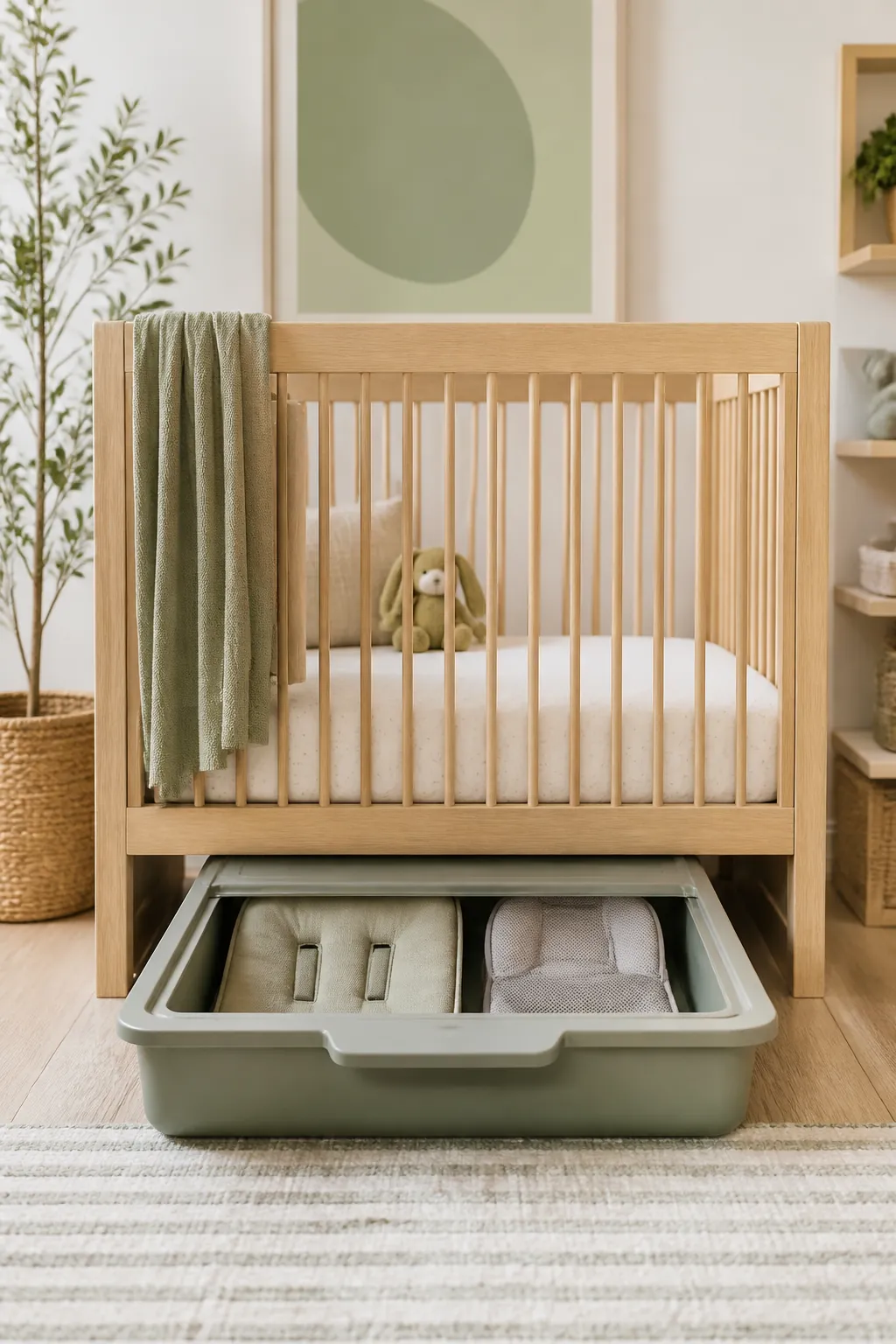
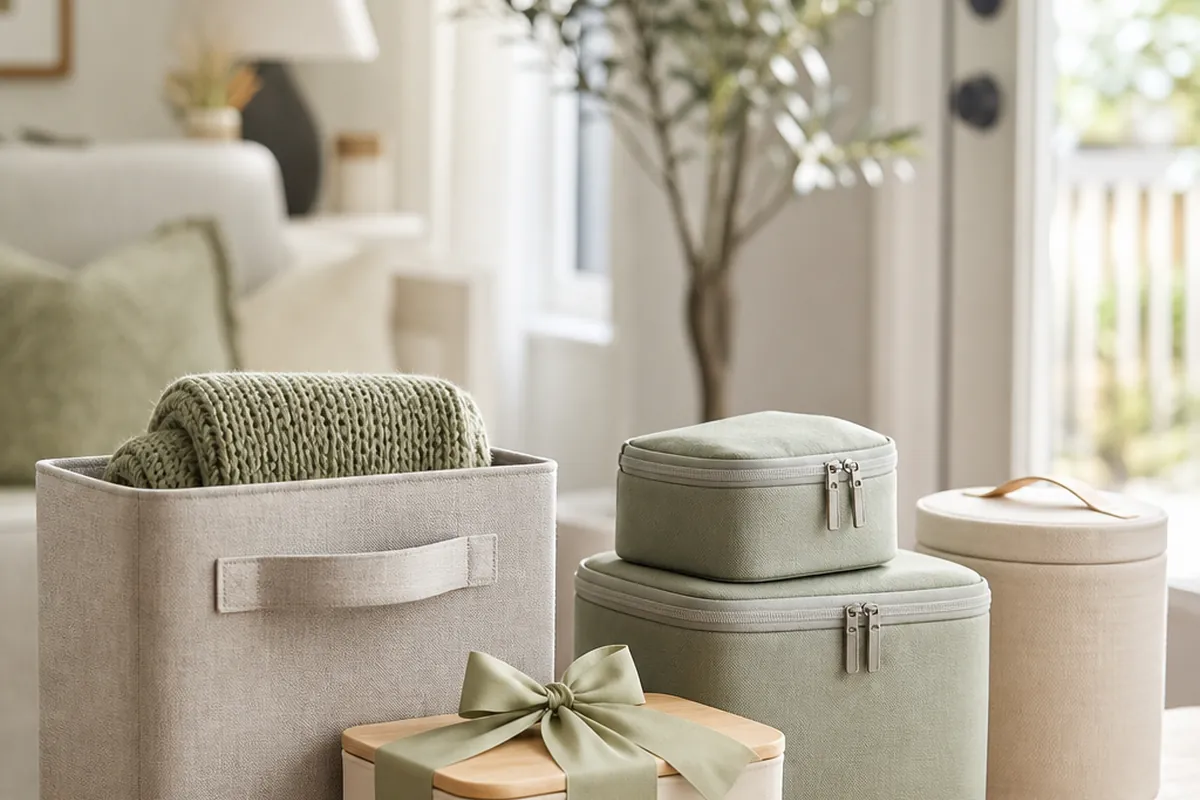
Strollers, bouncers, and the next-size car seat insert rarely fit anywhere a nursery was actually designed to hold them, and the space under a crib or a guest bed is often the only overflow spot in the room. Under-bed storage bins with lids keep that overflow gear dust-free and out of sight, and a lidded bin matters more here than almost anywhere else in the house, since loose fabric and foam under a crib collects dust that ends up airborne right where a baby sleeps.
Measure the actual clearance under the crib or bed frame before buying, not the bin’s listed height alone; most cribs leave 6 to 7 inches, and a bin an inch too tall will not slide the last few inches without scraping the frame’s underside.
8. An over-the-door organizer for the small stuff around the changing table
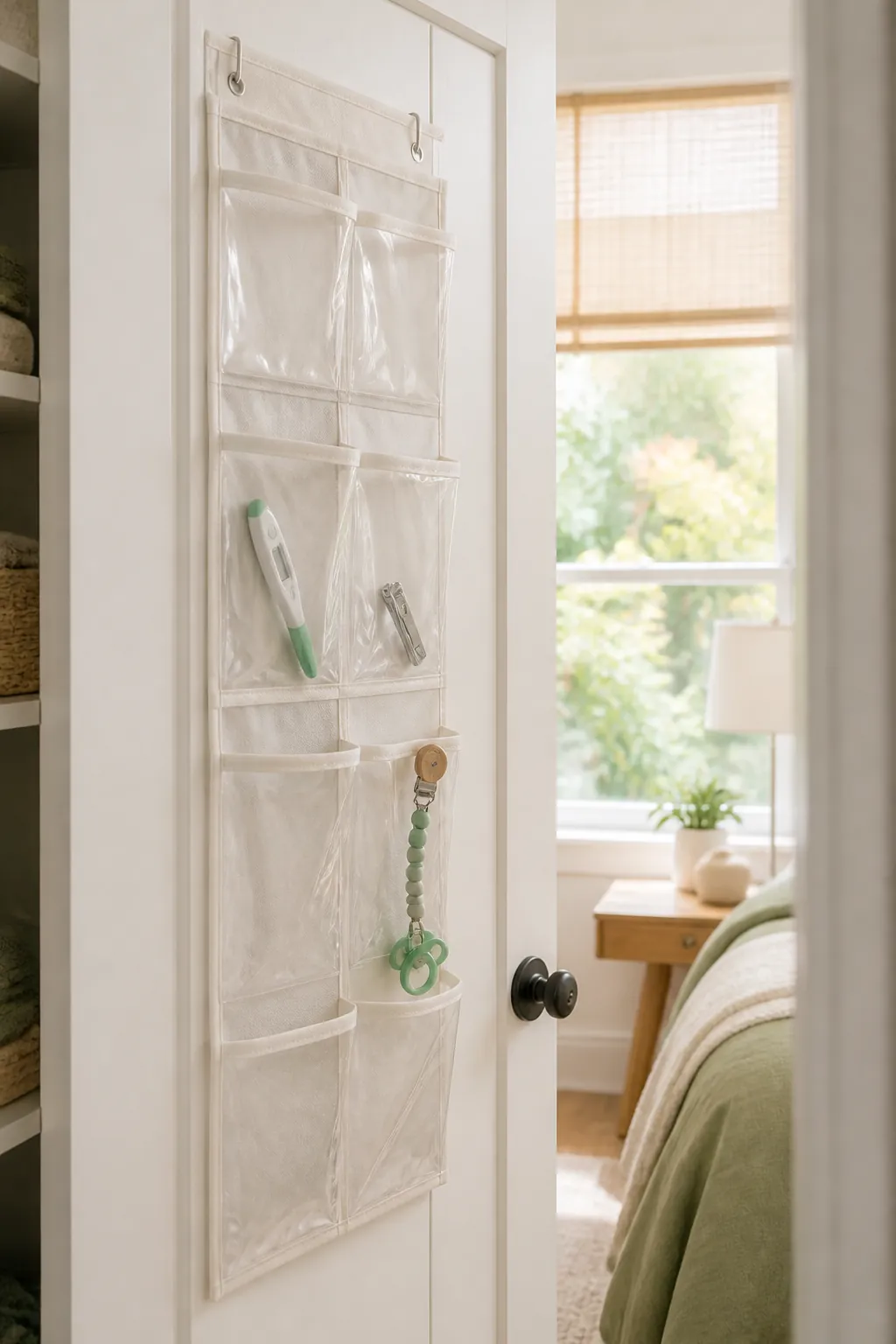
A changing table drawer fills up fast with things too small to bin individually: nail clippers, a thermometer, teething rings, a spare pacifier clip. An over-the-door organizer with clear pockets, built for shoes but just as useful here, hangs on the nursery closet door and gives each small item its own pocket at a glance instead of a drawer that needs digging through one-handed while holding a baby.
Measure the door’s thickness first. Most interior doors run about 1.375 inches, and a handful of budget organizers are sized for a thinner exterior door profile and swing loosely every time the door opens, which is enough to knock small items out of the top pockets over time.
9. Adhesive wall storage cups for the reach zone around the changing table
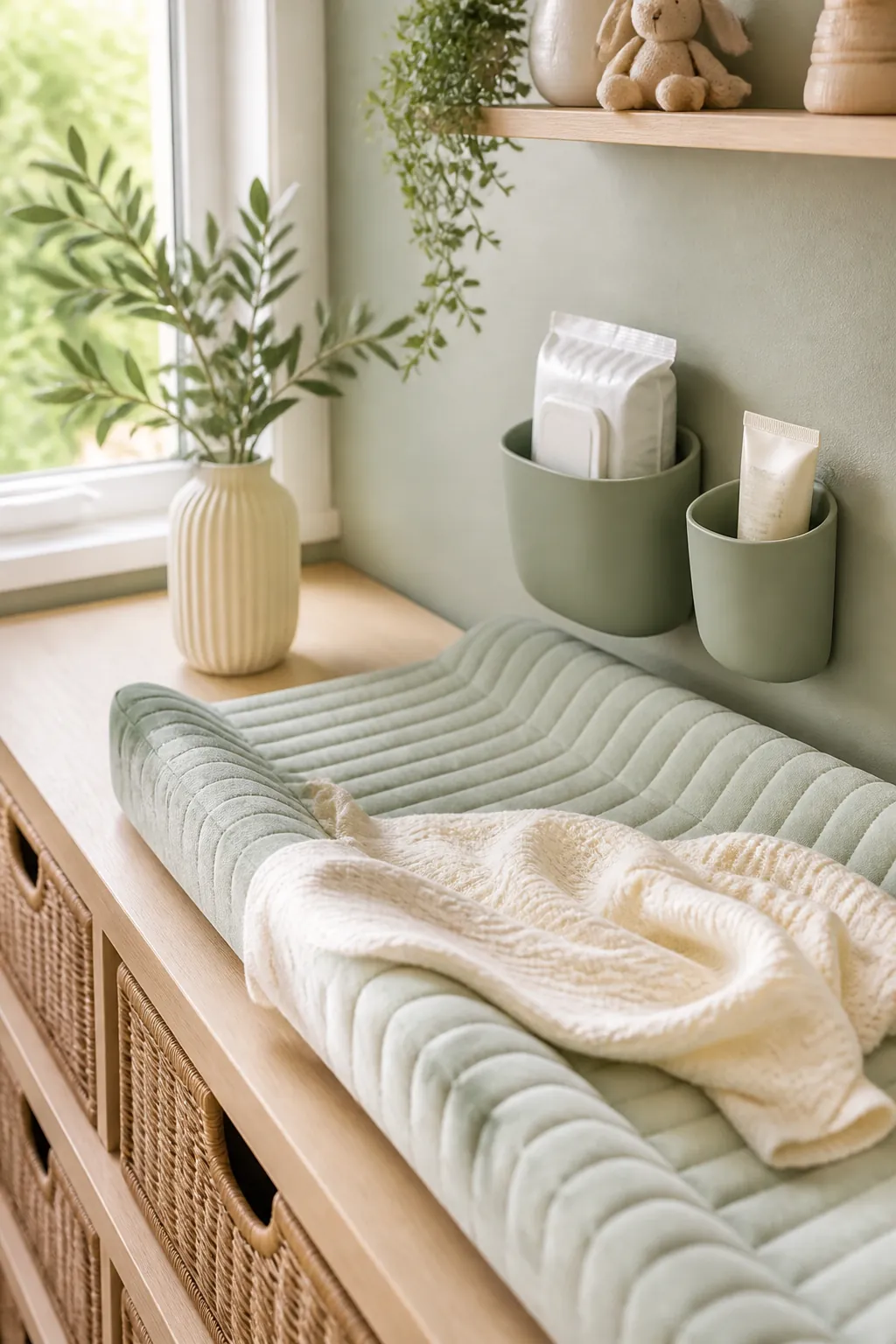
The spot a parent actually reaches for mid-change, right beside the changing pad, rarely has a shelf there already, and a renter cannot drill one in without risking the deposit. A set of adhesive wall storage cups mounts directly beside the pad with no screw, holding a small stack of wipes or a tube of cream exactly where a hand already reaches, and peels off clean at move-out.
These cups are rated for only a few pounds each, so keep them to lightweight items like a wipes pack or cream rather than a full bottle of lotion or anything glass, and press firmly for the full cure time printed on the packaging, usually 24 hours, before loading them up; a cup loaded the same day it goes up is the one most likely to slide down the wall by morning.
Where to start
Skip the five-item grab bag and pick two that solve the same part of the room. The dresser dividers and the closet dividers both target the clothes that are already piling up by month two, while the under-bed bins and vacuum bags target the gear that has nowhere else to go. Add the label maker to either pair and the gift stops being a container and starts being a system the parents keep using well past the newborn stage, which is the only real test a nursery storage gift has to pass.