In a small living room a bookshelf is rarely just holding books. It is holding books, plus the router, plus board games, plus a basket of chargers, plus the things that have nowhere else to be. Which is fine, and is actually the best use of it, but it means the shelf has to be organized as mixed storage rather than as a library.
The goal is a shelf that reads as calm from across the room while genuinely absorbing the clutter that a small living room generates. Ten ideas below.
1. Take everything off and be honest about the books
Start empty. A bookshelf reorganized in place just redistributes the same problem.
Then make the unpopular decision: which books are you keeping because you will read or reference them, and which are you keeping because they are books. In a small room the second category is expensive, because every shelf inch it occupies is an inch the room’s actual clutter cannot use.
You do not have to be ruthless. Removing one shelf’s worth is usually enough to change how the whole unit works.
2. Plan the ratio before you start putting things back
Decide in advance roughly how much of the unit is books and how much is closed storage. In a small living room, about two thirds books and one third bins works well.
Committing to that ratio up front is what stops the shelf becoming all books and no storage, which then pushes the clutter back onto the floor and the coffee table. It is easier to decide this while the shelves are empty than to claw space back later.
3. Use closed bins for the things that are not decorative
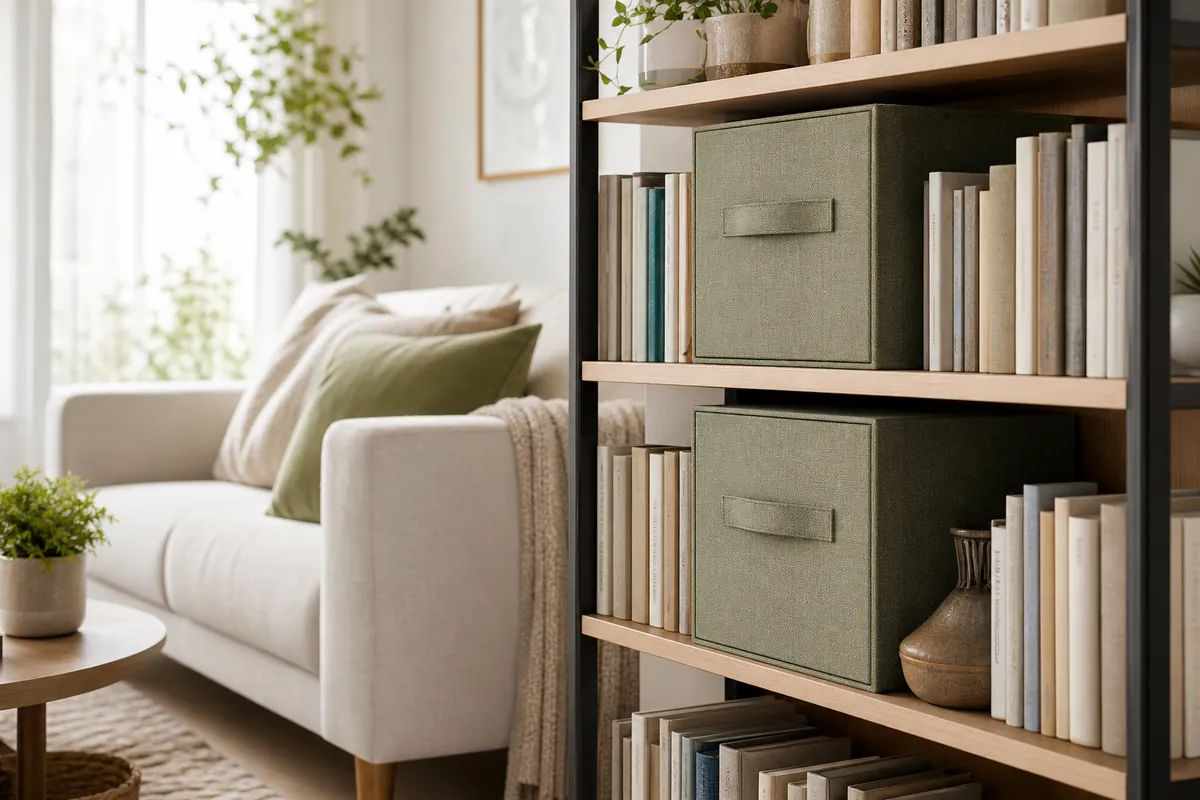
Chargers, remotes, batteries, craft bits, paperwork: real, necessary, and visually noisy.
Fabric storage cubes sized to the shelf openings turn a whole cube of clutter into one clean rectangle. Two or three of them across the unit is usually the right number: enough to absorb the mess, few enough that the shelf still reads as a bookshelf.
Measure the shelf opening height as well as width. Cube storage is sold to fit standard cube units, and a normal bookshelf shelf is often shorter.
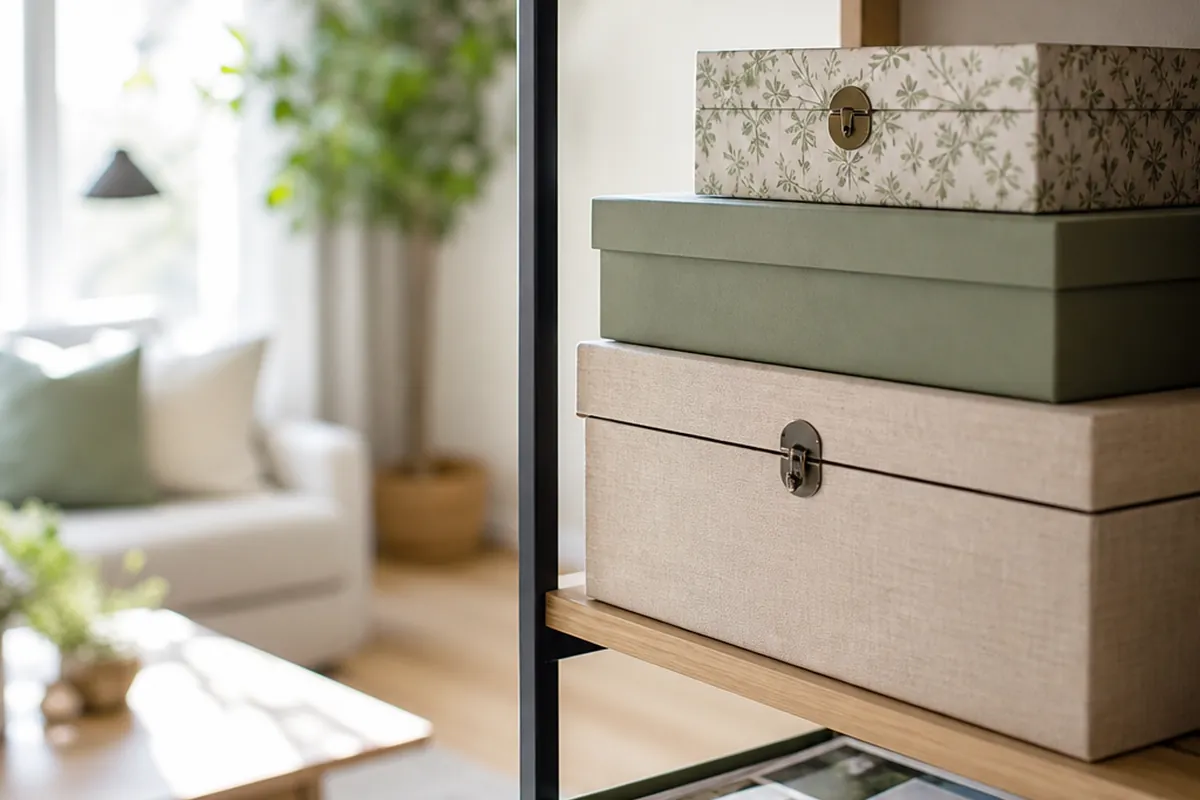
Photos and keepsakes are the usual contents of those bins, and photo and keepsake storage ideas for a small living room covers boxes that protect them from light and damp rather than just hiding them.
4. Mix in woven texture so it does not read as storage furniture
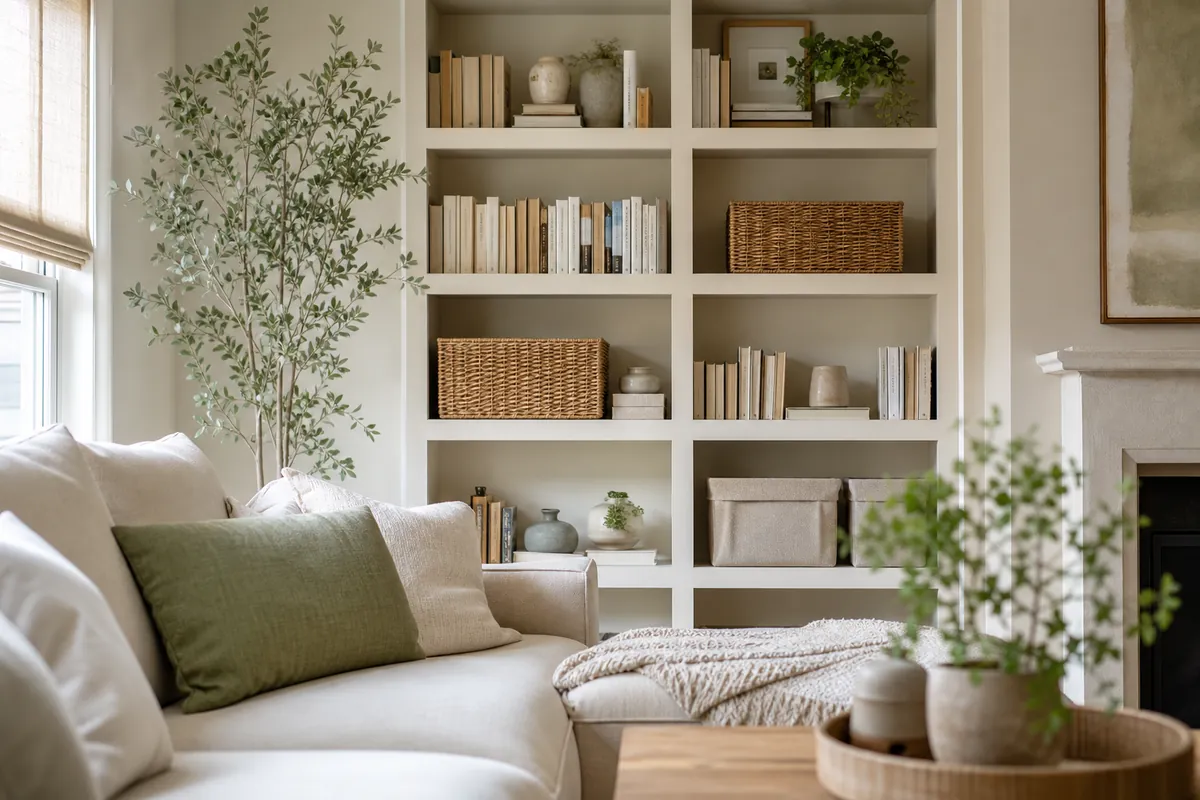
An entire wall of identical fabric boxes looks like a stockroom.
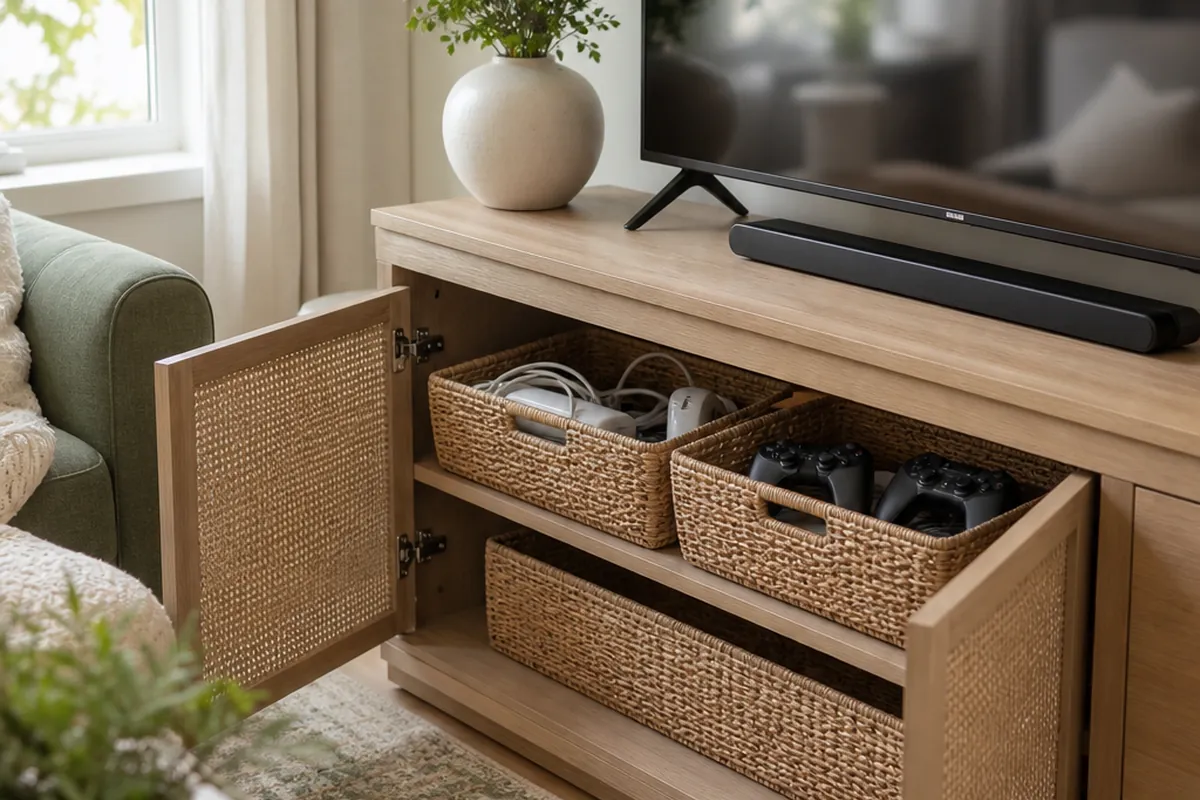
Woven storage bins break that up. Using two materials rather than one, some fabric and some woven, makes the closed storage read as a deliberate part of the room instead of a compromise. It is the same trick that makes blanket storage look intentional rather than like laundry.
5. Corral the small things in small baskets
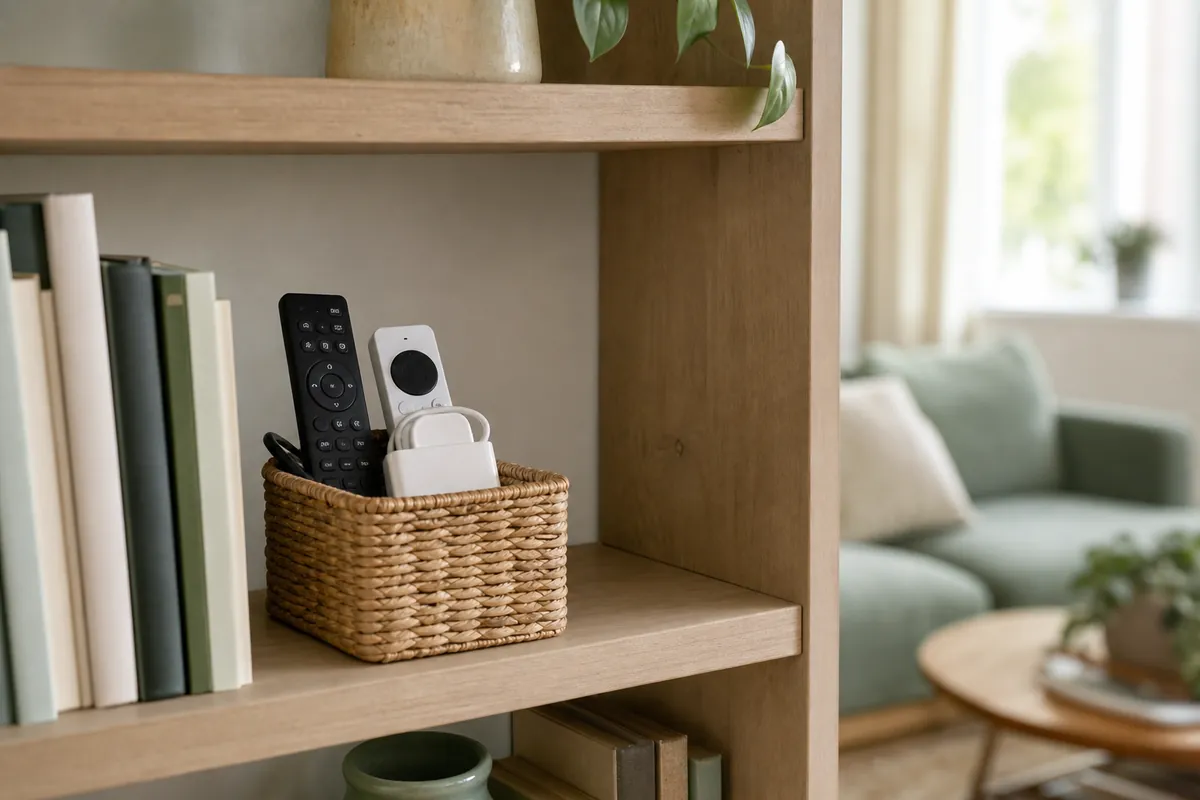
The reason a shelf looks messy is rarely the books. It is the six small objects sitting in front of them.
Small storage baskets collect those into one object per shelf: one for remotes, one for chargers, one for the pens and sticky notes. A shelf with three objects on it looks calm. The same shelf with fifteen small objects looks chaotic even if every one is aligned.
6. Alternate upright rows with horizontal stacks
Shelves of uniformly upright books read as a wall of spines, which is visually busy in a small room.
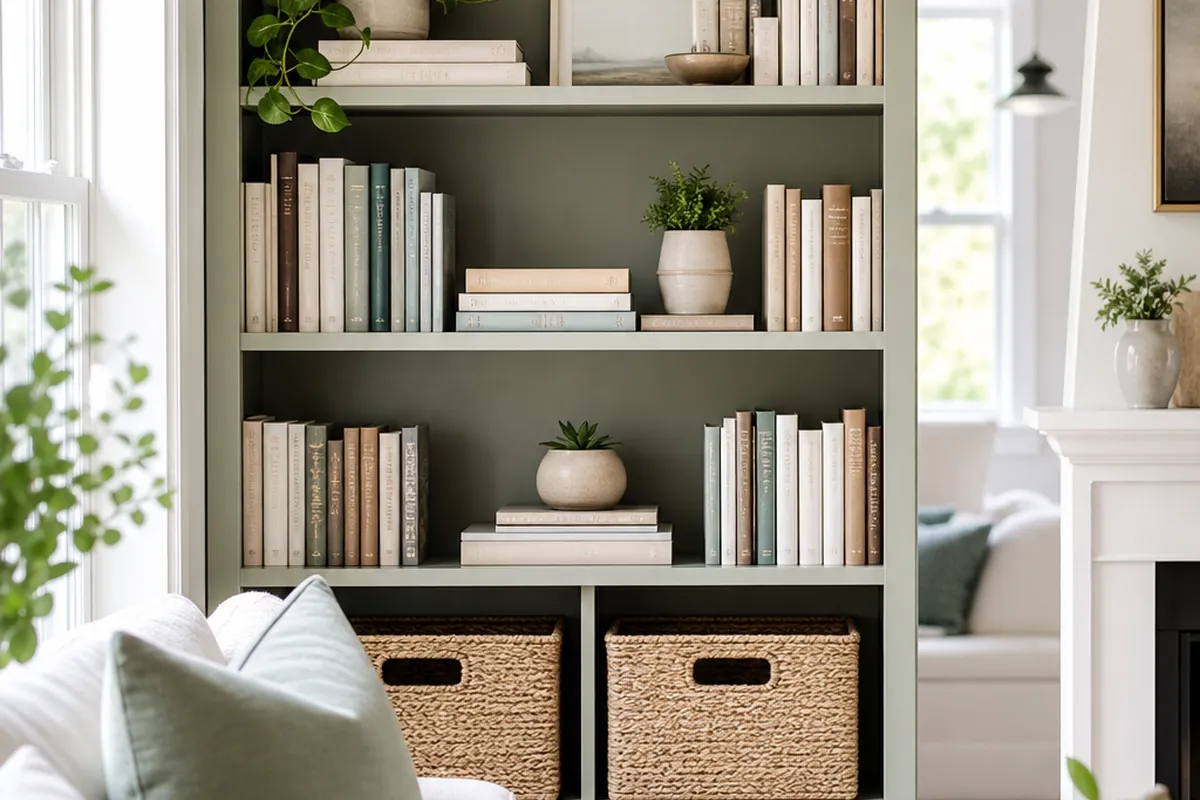
Break the rhythm: a run of upright books, then a short horizontal stack, then a gap. The horizontal stacks double as platforms for a small plant or a frame, which stops those objects needing their own space. It also gives the eye somewhere to rest, which is most of what makes a shelf look styled rather than stuffed.
7. Leave deliberate gaps
This feels wasteful in a small room and it is the thing that makes the shelf look designed rather than crammed.
Aim for roughly a fifth of the shelf length empty, distributed rather than in one block. Packed edge to edge always reads as clutter regardless of how neat the contents are, and an empty stretch is also where the book you are currently reading lands instead of the sofa.
8. Put weight low and light things high
Practical and visual at once. Heavy hardbacks and full bins belong on the bottom shelves, lighter paperbacks and decorative objects higher.
It makes a tall unit far more stable, which matters in any home and especially with children or pets around. It also looks correct: a unit with visual weight at the top feels top-heavy even when it is perfectly safe.
9. Anchor it, particularly in a rental
A tall bookshelf against a wall is a genuine hazard, and the fix is two screws.
Anti-tip straps anchor to a stud and leave two small holes that are trivially filled when you leave, which most landlords accept without complaint. Heavy items low, as above, does a lot of the same work but is not a substitute.
10. Give the shelf one job it must keep doing
A bookshelf in a small living room drifts back to chaos when nothing defines what belongs on it.
Pick the job: it is the room’s closed storage, or it is the games and craft shelf, or it is the library with a bit of overflow. Anything that does not fit that job goes elsewhere. Without that rule the shelf becomes the default destination for every homeless object, which is exactly how it got full the first time. The same discipline is what makes toy storage in a living room survive past the first week.
Bookshelf organization that stays calm
The sequence: empty it, decide the book-to-storage ratio before you refill, then put the noisy stuff behind closed fronts. Fabric storage cubes absorb the bulk clutter, woven storage bins keep it from looking like a stockroom, and small storage baskets collect the little objects that actually create the mess.
Then style it lightly: alternate upright and stacked, leave a fifth of it empty, weight low. And give the unit one defined job, because a shelf that will accept anything eventually holds everything.