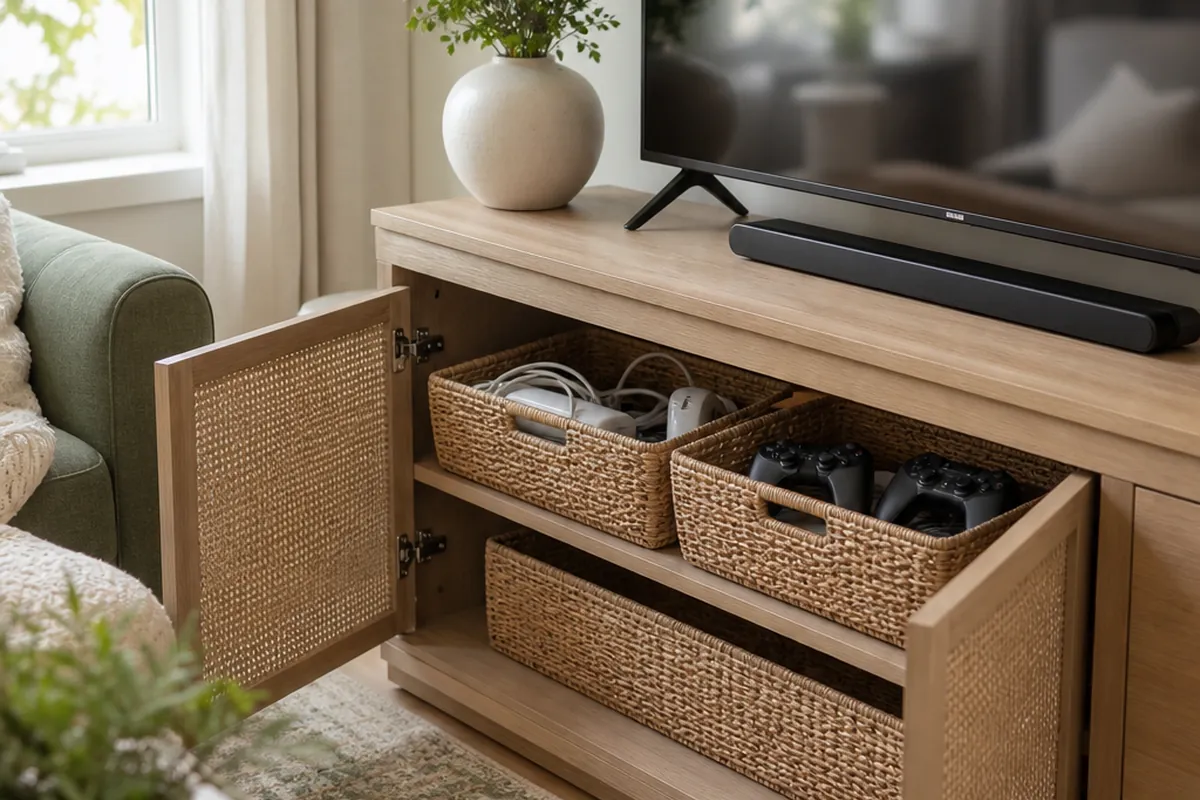
A small living room shows its wiring. There is no deep console to hide behind, no spare wall to run things along, and the sofa is usually a foot from a socket. So the room can be tidy in every other respect and still read as cluttered, because a gray nest of cable is sitting in the corner under the lamp.
Cord organization is the least glamorous job in a living room and one of the most visible once it is done. Ten ideas below, in the order that actually removes the most visual noise per minute spent.
1. Unplug everything and count what is actually live
Start by pulling the whole lot out and plugging back only what earns it. Most living rooms are powering at least two things nobody uses: a charger for a device that left the house years ago, a games console nobody switches on, a lamp on the far side of a sofa.
Every cable you remove is one you never have to hide. This step alone usually cuts the tangle by a third, and it costs nothing.
While the sockets are empty, wipe behind the furniture. It is the one moment you will ever have easy access.
2. Put the power strip in a box
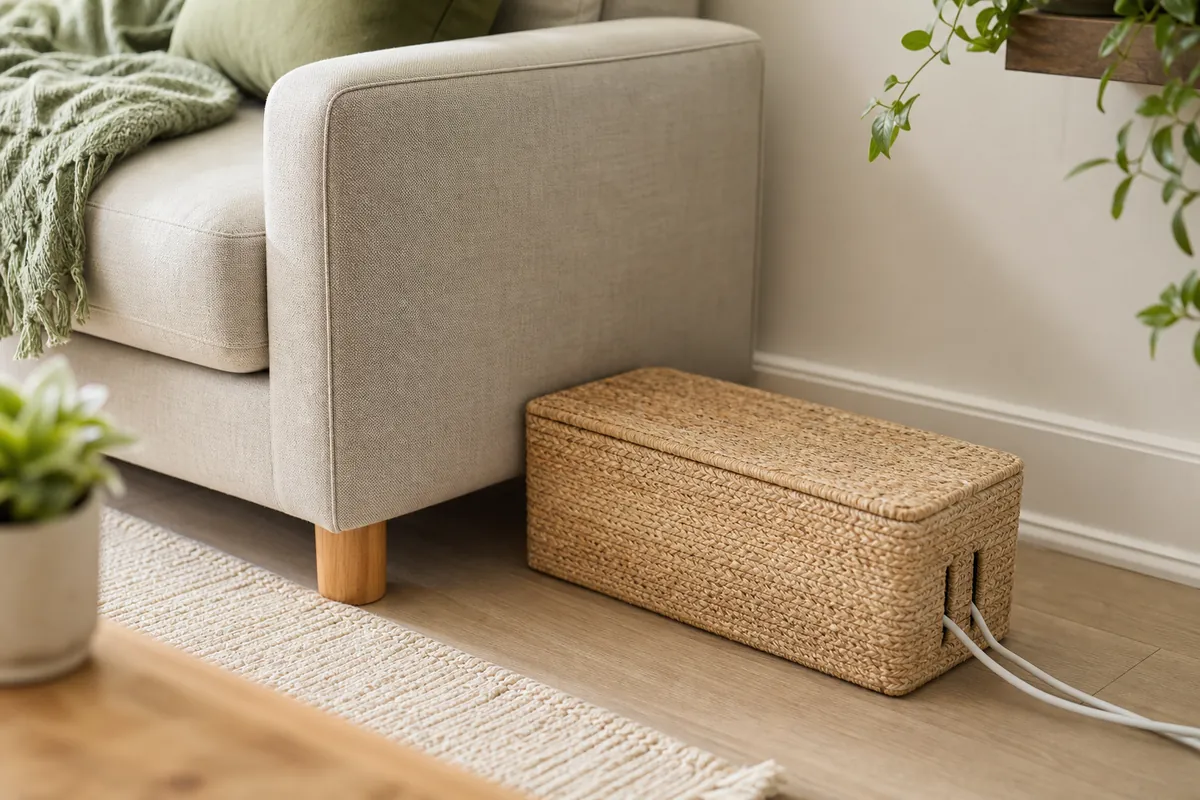
The single biggest visual win is containing the thing every cable leads to.
A cable management box swallows the strip and the slack, and turns a nest into one clean object that reads as furniture. Cables enter at one end and leave at the other, so what you see is a lid, not a spaghetti pile.
Buy the vented type sold for the job rather than repurposing a sealed storage box. Power bricks get warm, and heat needs somewhere to go. Do not overload the strip just because it is now out of sight, either, which is a genuinely easy mistake once the tangle is hidden.
3. Clip cables along an edge that already exists
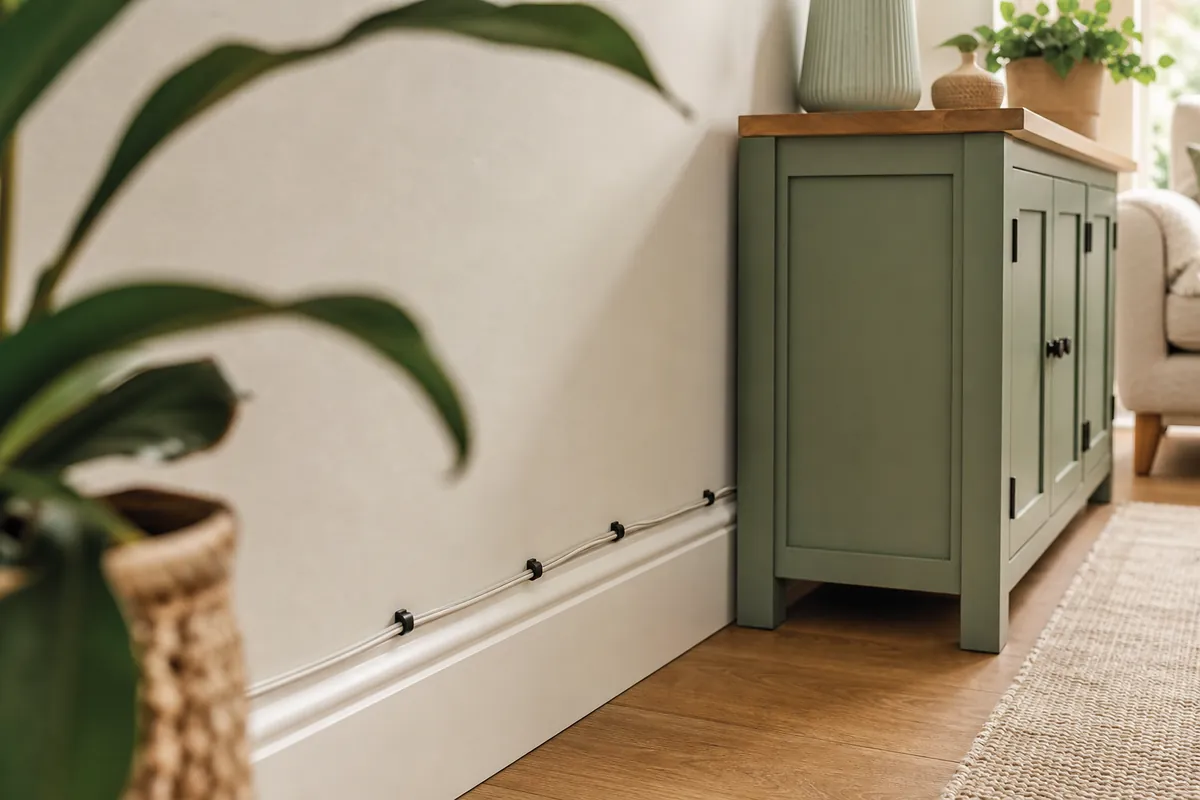
Cables look untidy mainly when they cross open space. Run them along a line the eye already accepts and they mostly disappear.
Adhesive cable clips hold a run along the back edge of a sideboard, the underside of a shelf, or the top of the baseboard. The rule is to follow architecture rather than take shortcuts. A cable running diagonally across a wall is glaring; the same cable tracing a baseboards is invisible.
For renters, choose removable adhesive rated above the cable weight, and take clips off with a little heat from a hairdryer rather than pulling. Never staple or nail a cable.
4. Lift the run off the floor entirely
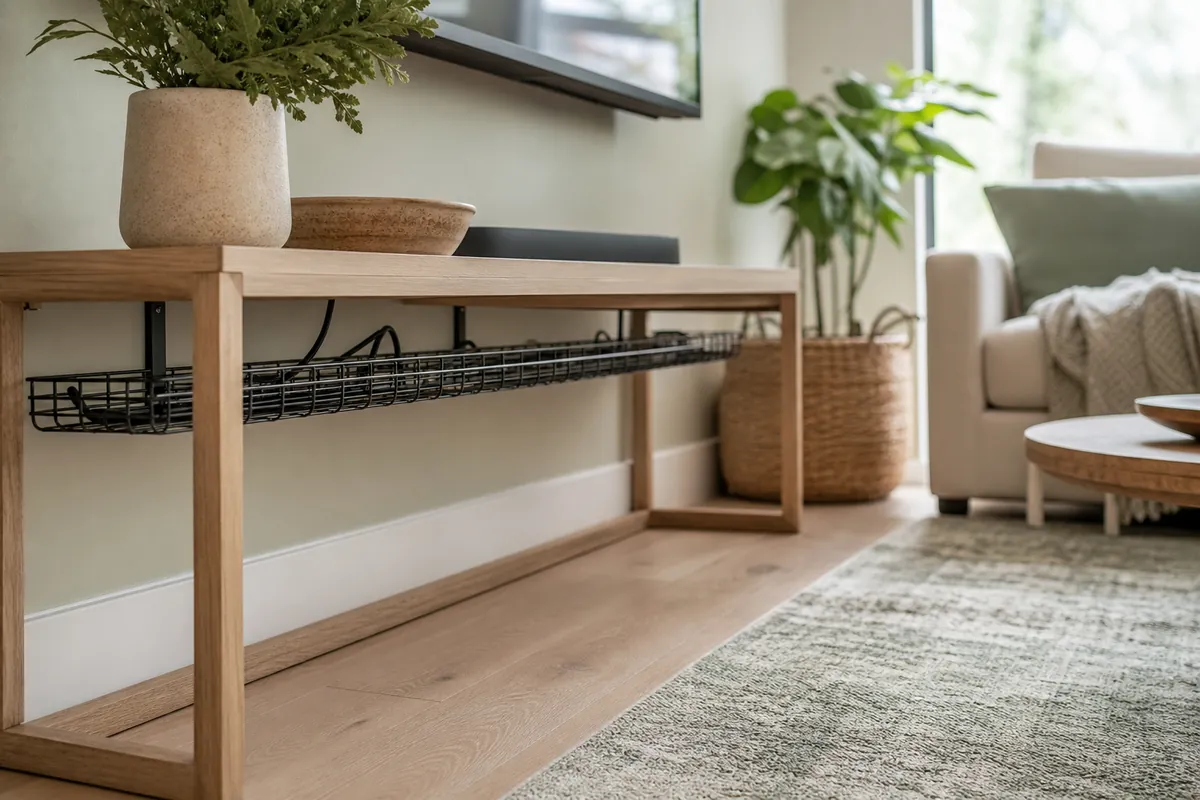
Floor cables are the ones that collect dust, get vacuumed over, and eventually get stood on.
An under-desk cable tray mounts beneath a desk, console, or side table and carries the whole bundle along in mid-air. It is sold for desks and works just as well under any piece of furniture with a flat underside, which in a small living room is usually where the router and the modem end up.
Fit it toward the back edge so nothing is visible from seated eye level. That is the only sightline that matters in a living room.
5. Bundle by device, not by direction
The instinct is to gather every cable heading the same way into one sleeve. It looks tidy and it makes the next repair miserable.
Group by what the cables belong to instead: TV bundle, router bundle, lamp. When something fails you pull one bundle rather than unpicking the lot. Label both ends of anything that goes into a hub. Masking tape and a pen is fine, and takes two minutes you will be grateful for in a year.
6. Leave deliberate slack at both ends
A cable pulled taut between two points is a trip hazard and a failure point, and it looks tense in a way people notice without knowing why.
Leave a gentle loop at each end. It lets you move furniture a few inches to clean without unplugging anything, and it stops strain on the connector, which is where cables die. Coil the slack loosely, never in a tight ring.
7. Use furniture as the hiding place
In a small living room the best cable management is usually something you already own.
A sofa with a solid back, a low bookcase, a plant on a stand: any of them will conceal a socket and a bundle if positioned with that in mind. A storage ottoman is particularly useful, since the hollow interior takes the router and its slack without you buying anything else.
Check heat again if you go this route. A router in a closed box with no airflow will throttle itself.
The TV console is the furniture most cords run to, and TV console storage ideas for a small living room covers how to choose and organize one so the cables and the remotes both disappear.
8. Give charging one fixed spot
Phone and laptop chargers are the cables that move, which is why they are always draped over the arm of the sofa.
Pick one place, mount a small tray or a shallow basket there, and keep the charging cables clipped so they return to it. The point is not neatness for its own sake. It is that a wandering charger is the single cable most likely to be left across a walkway.
9. Hide the run behind the rug, not under it
Running a cable under a rug is the classic fix and it is a bad one. Foot traffic works the insulation over time and the damage is invisible until it is not.
Route along the rug’s edge instead, tucked into the gap between rug and baseboard, or run it behind furniture and accept a slightly longer path. If a cable genuinely must cross a walkway, use a proper floor cord cover rather than fabric.
10. Do the last five percent
Every cable job ends with two or three stragglers that seem not worth the effort, and those are the ones people see.
The lamp lead trailing down the wall, the HDMI hanging behind the TV, the one charger by the sofa. Ten minutes finishing those does more for how the room reads than the previous hour did, because a nearly-tidy room still looks untidy. This is the same principle as clearing the last surface in toy storage for a small living room: the eye finds the exception, not the rule.
Cord organization that stays done
The sequence: unplug and cull, contain the power strip, then route what is left along edges that already exist. A cable management box handles the socket end, adhesive cable clips do the routing, and an under-desk cable tray lifts the bundle off the floor.
After that it is only maintenance, and maintenance is mostly the charging spot. Give the cables that move a fixed home and the ones that do not stay where you put them. If the room still feels busy once the wires are gone, the storage ideas in blanket storage for a living room tackle the next most visible clutter.