Open the drawer and it’s the same knot every time: three hair ties looped around a bobby pin, a scrunchie stretched flat under a claw clip, and a headband bent into a curve it will now hold forever. Most hair accessory storage fails for one reason. Everything gets sorted by “hair stuff” instead of by size, so a two-inch bobby pin and a four-inch claw clip end up sharing one bin and neither one sits flat.
The nine ideas below fix that by size first, category second, and end with the habit that keeps a drawer this small from re-tangling within a week.
1. Empty the drawer and sort by size, not category
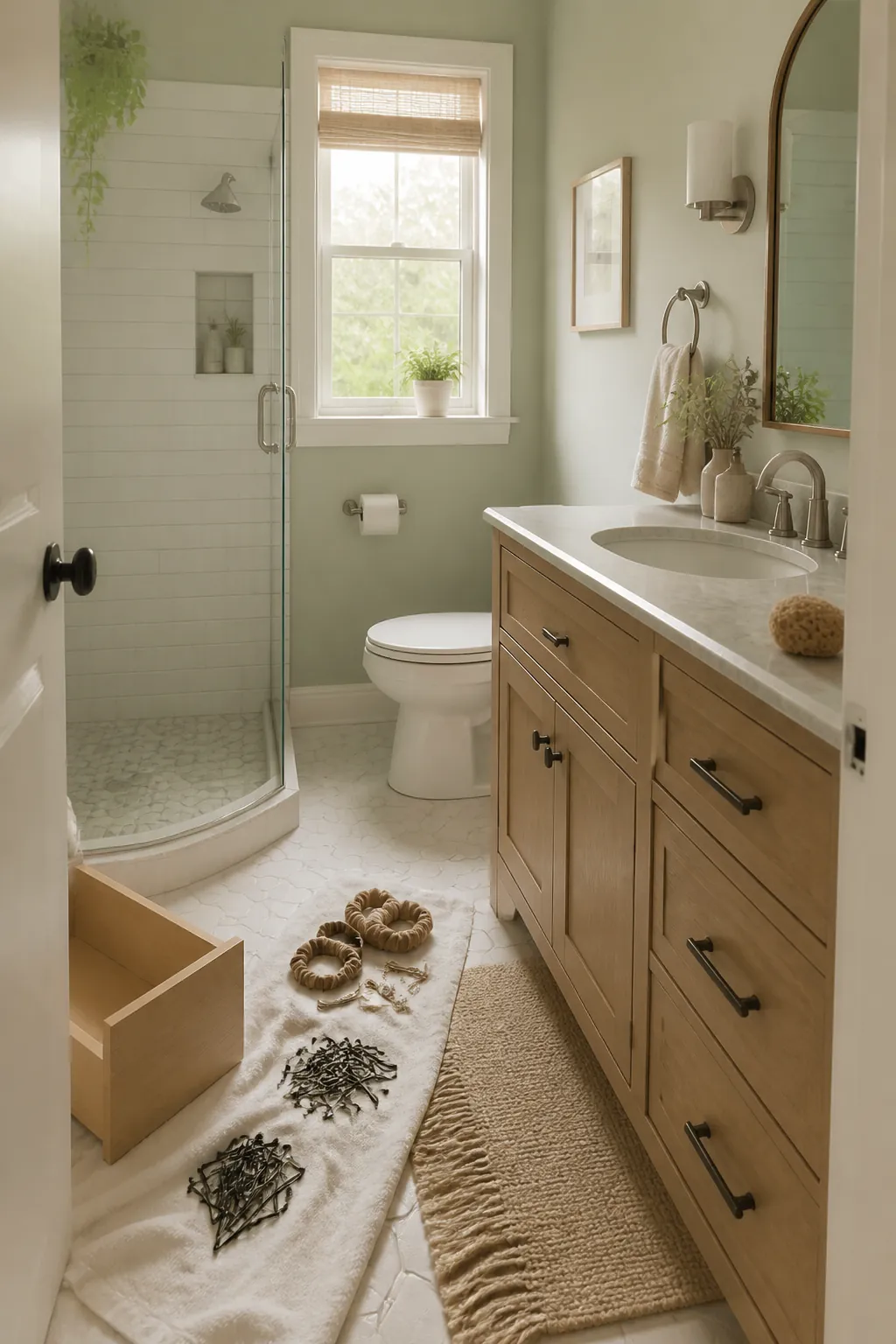
Tip the whole drawer onto a towel and split the pile into three rough groups by dimension: small and rigid (bobby pins, small clips, thin elastics), medium and bulky (scrunchies, claw clips, thicker ties), and long and flat (headbands, wrap ties). This matters more than sorting by “for buns” or “for everyday,” because size is what actually determines which container a thing survives in. A pin dropped into a compartment built for a scrunchie just slides to the bottom and disappears; a scrunchie stuffed into a compartment built for a pin gets stretched and squashed until it loses its shape. While you’re at it, toss the elastics that have gone limp or split at the seam. A dead hair tie left in the drawer becomes the core that every other tie in the drawer wraps itself around.
2. Corral pins and small clips in a honeycomb divider
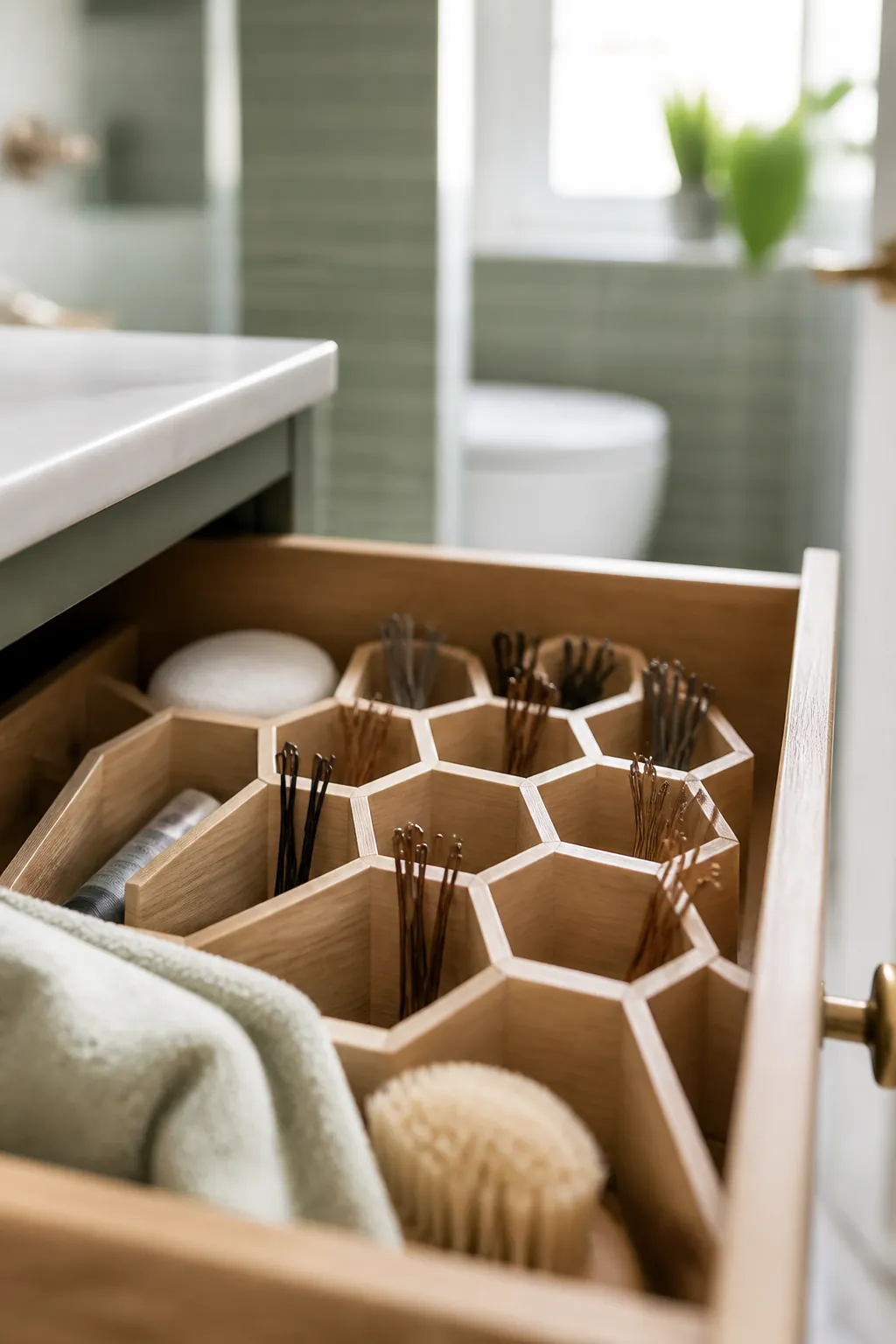
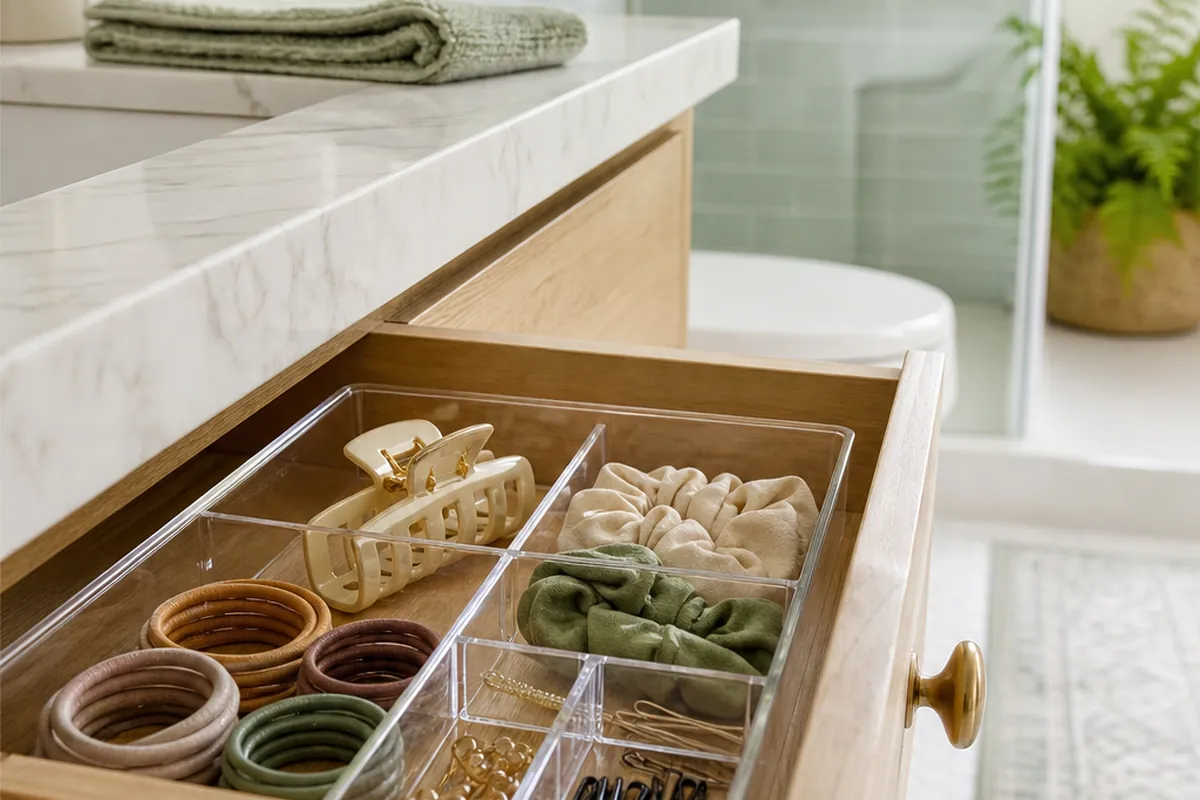
An adjustable honeycomb drawer divider is built for exactly this size class. Its individual cells run about 1.4 to 1.6 inches across, which is close to a snug fit for a bobby pin, a small snap clip, or a handful of thin elastics, but too tight for anything bulkier. Stand pins on their end inside a cell rather than laying them flat, since an upright pin takes a third of the floor space and you can see the metal glinting instead of hunting through a flat pile. The dividers expand to fit odd drawer widths without adhesive or hardware, which matters in a rental bathroom drawer that’s rarely a clean, standard size.
3. Give scrunchies and thick ties their own open lane
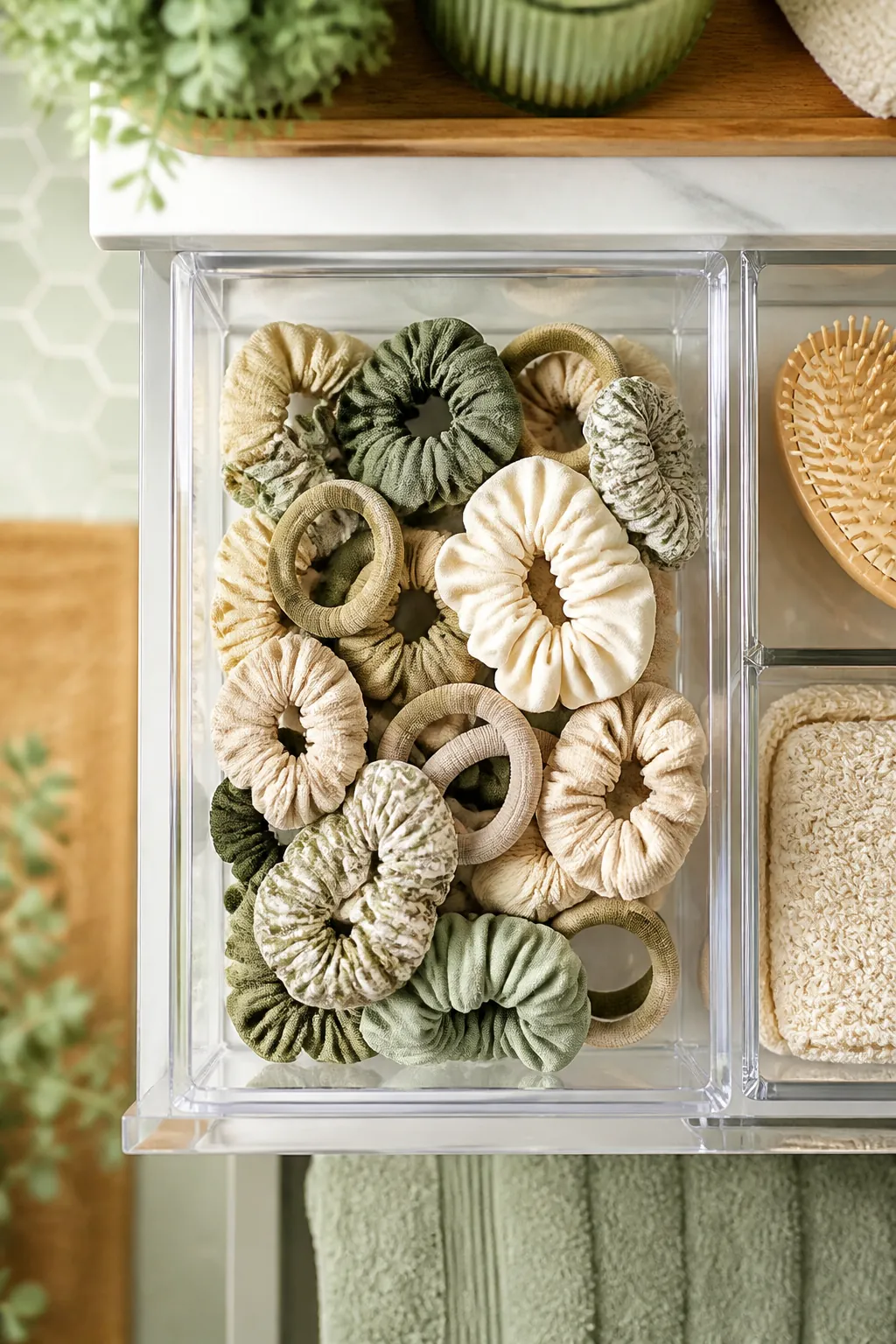
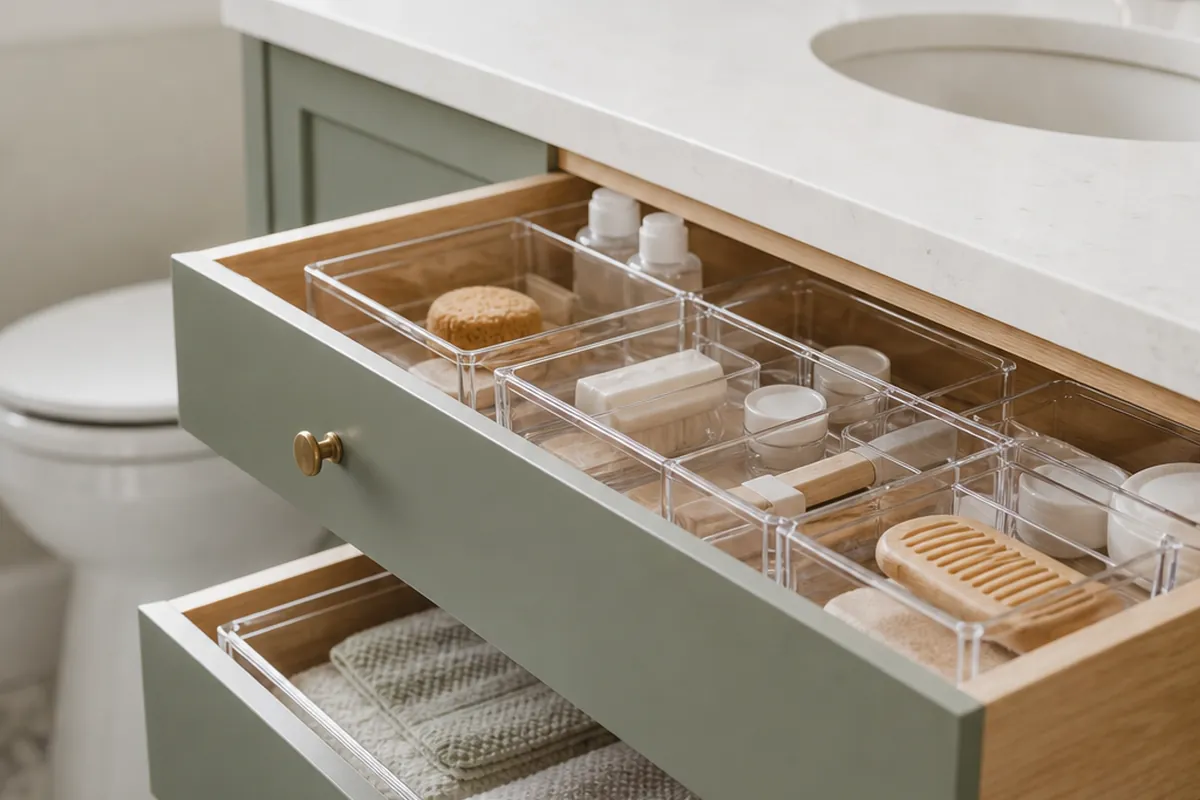
Don’t try to force scrunchies into small compartments at all. A clear acrylic drawer organizer set usually includes one or two wider trays alongside the small squares, and that wider tray is where scrunchies and thick elastics belong. Let them sit in a loose, unstretched pile rather than looping them over a peg or divider wall. Any storage method that holds a scrunchie’s elastic stretched, even slightly, shortens how long it holds its snap, and a favorite scrunchie going slack early because of how it sat in a drawer is a real cost hiding in something as small as a storage choice.
4. Stand headbands on their edge instead of stacking them flat
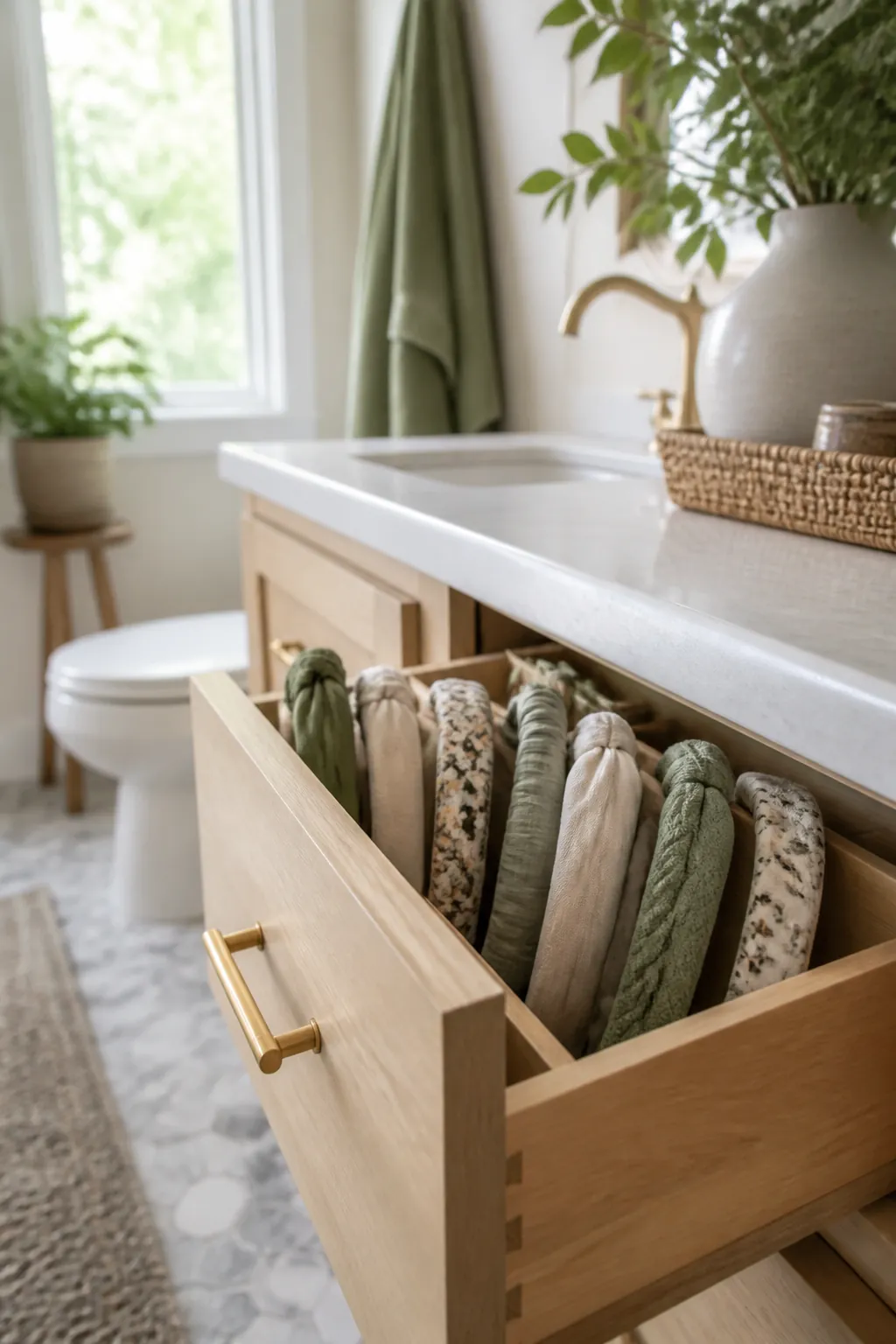
Headbands are the accessory people store worst, because stacking three or four flat on top of each other means the bottom one takes a permanent curve from the weight above it. Store them standing on edge instead, the way you’d file magazines, using the tallest section of your organizer or a narrow gap along the side of the drawer. A headband under an inch wide takes almost no floor space stood on edge, and you can flip through the row to find the one you want without lifting the others out first. If your drawer is under three inches deep, a hard plastic headband will likely stick above the lip when standing, so reserve edge storage for the flexible fabric-wrapped kind and lay rigid ones flat in a dedicated tray instead.
5. Keep the overflow and travel set in a lidded case
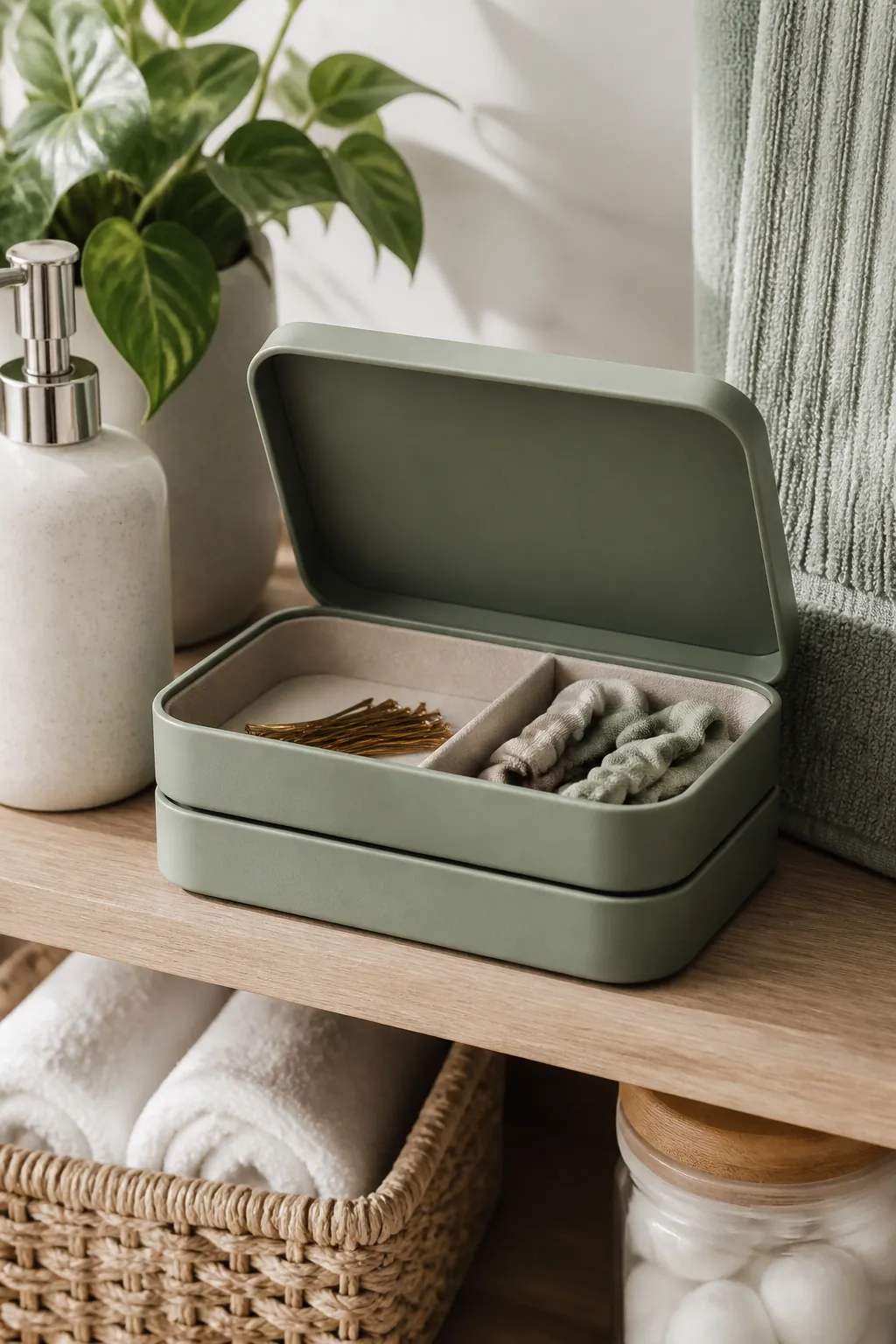
Not everything needs a fixed slot in the daily drawer. A stackable jewelry tray with a lid works well as a home for the accessories you don’t use daily: seasonal headbands, a spare set of bobby pins, or a small travel kit you can grab and toss in a bag without loose pins scattering through your luggage. The individual compartments run small, closer to a coin tray than a scrunchie bin, so this is better suited to pins, small clips, and thin ties than to bulky pieces. Keep it at the back of the drawer or stack a second one on top, since the lid means nothing spills even if the drawer above gets a hard shove closed.
6. Size the organizer to the drawer, not the other way around
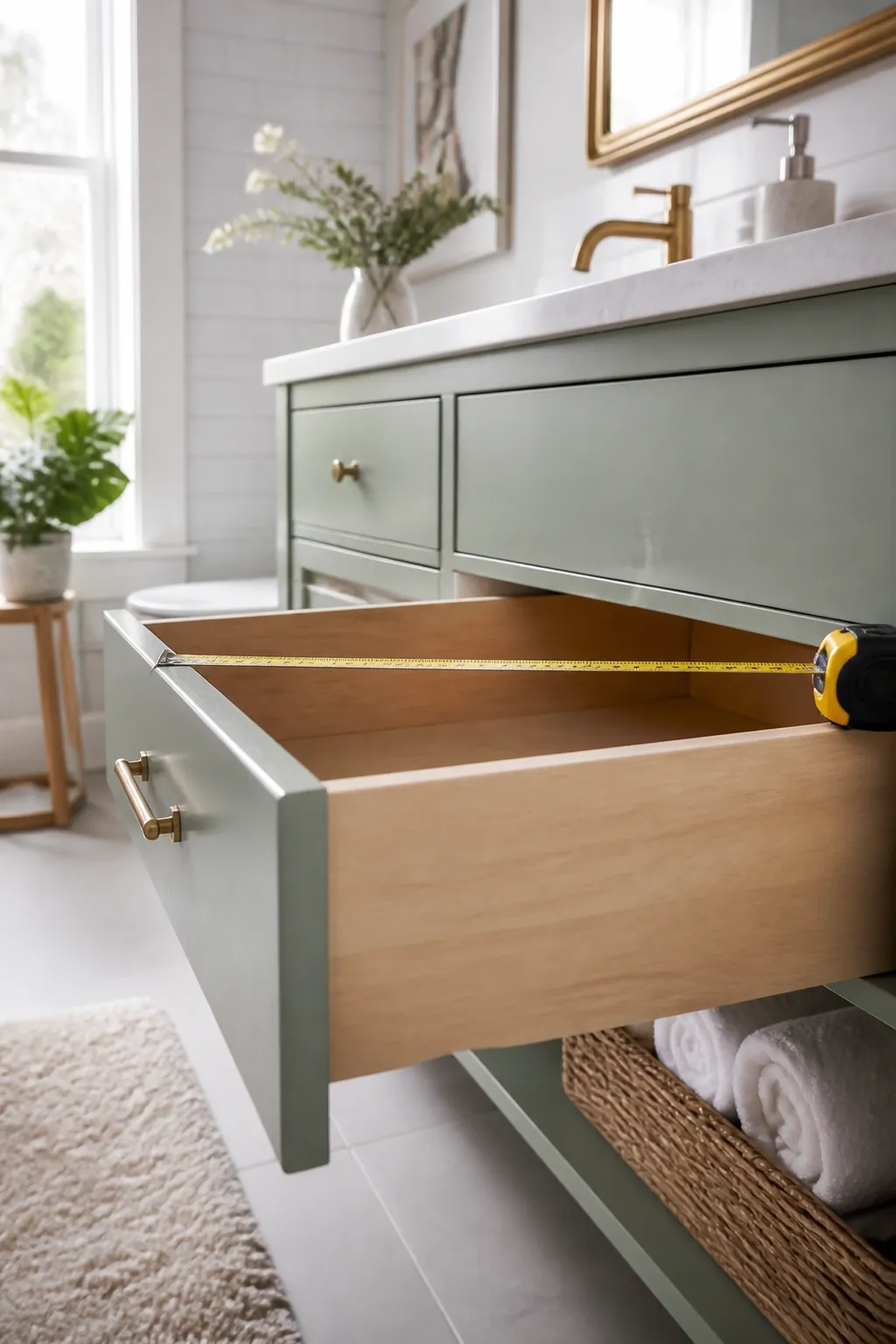
Measure the drawer’s interior before you buy anything, not the cabinet face, because face-frame overlay and drawer glides both shave real space off the opening. A shallow bathroom vanity drawer commonly runs 2.5 to 4 inches deep, which rules out any organizer taller than that unless you want it jamming on the runners every time you close the drawer. Measure the depth with the drawer fully open and subtract a quarter inch for clearance, since a tray that fits exactly to the millimeter will bind the moment humidity swells the wood even slightly, which happens constantly in a bathroom.
7. Zone front to back by how often you reach for it
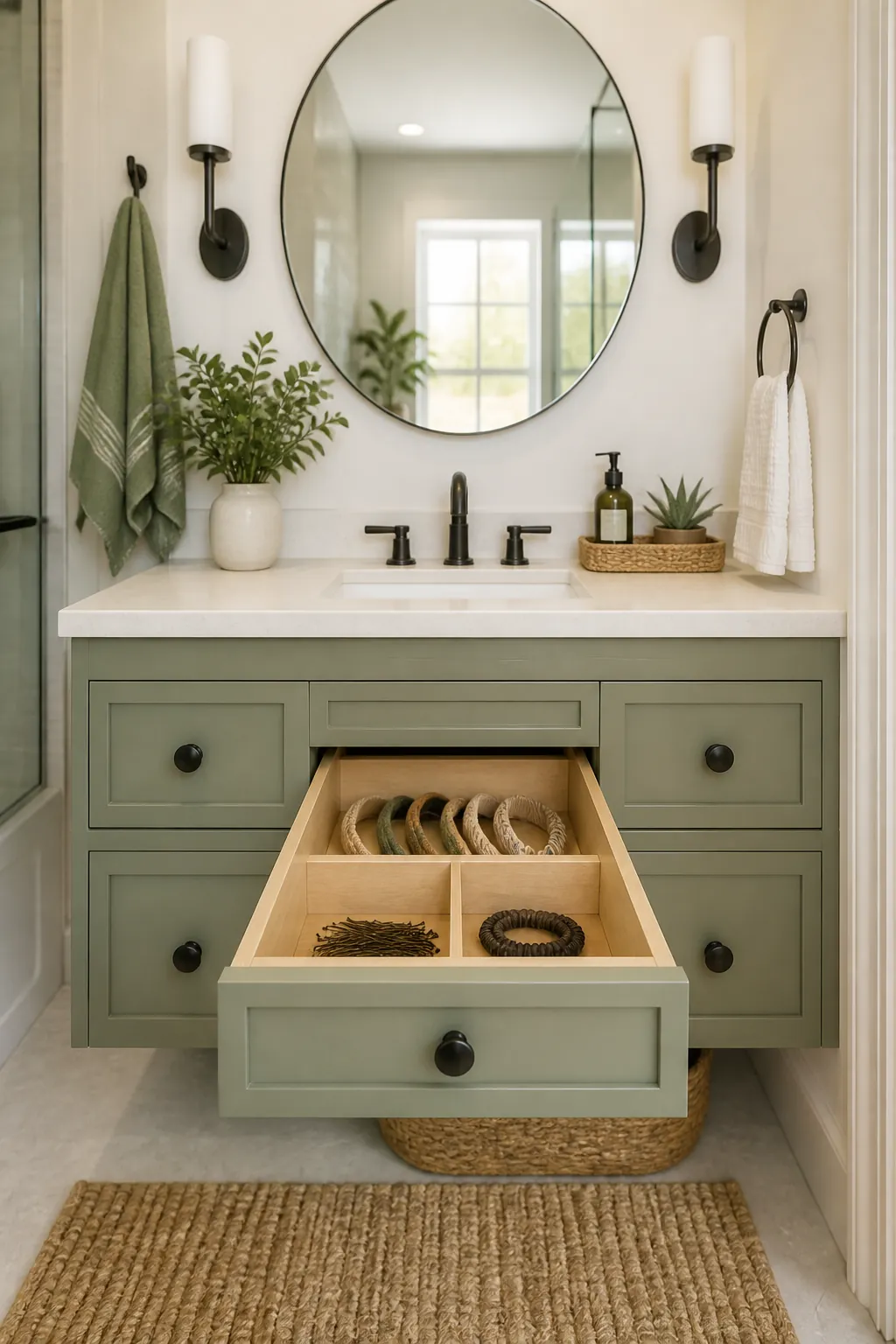
Drawer organization works best when the layout matches your morning, not a tidy grid for its own sake. Put your daily bobby pins and go-to hair tie color in the front section, closest to your hand when the drawer’s barely cracked open. Push the spare headbands, backup clips, and the travel case toward the back. This sounds obvious written down, but most people build the organizer first and sort the contents in afterward, landing daily items in whatever section happened to be biggest rather than closest.
8. Separate tangled elastics from anything with teeth
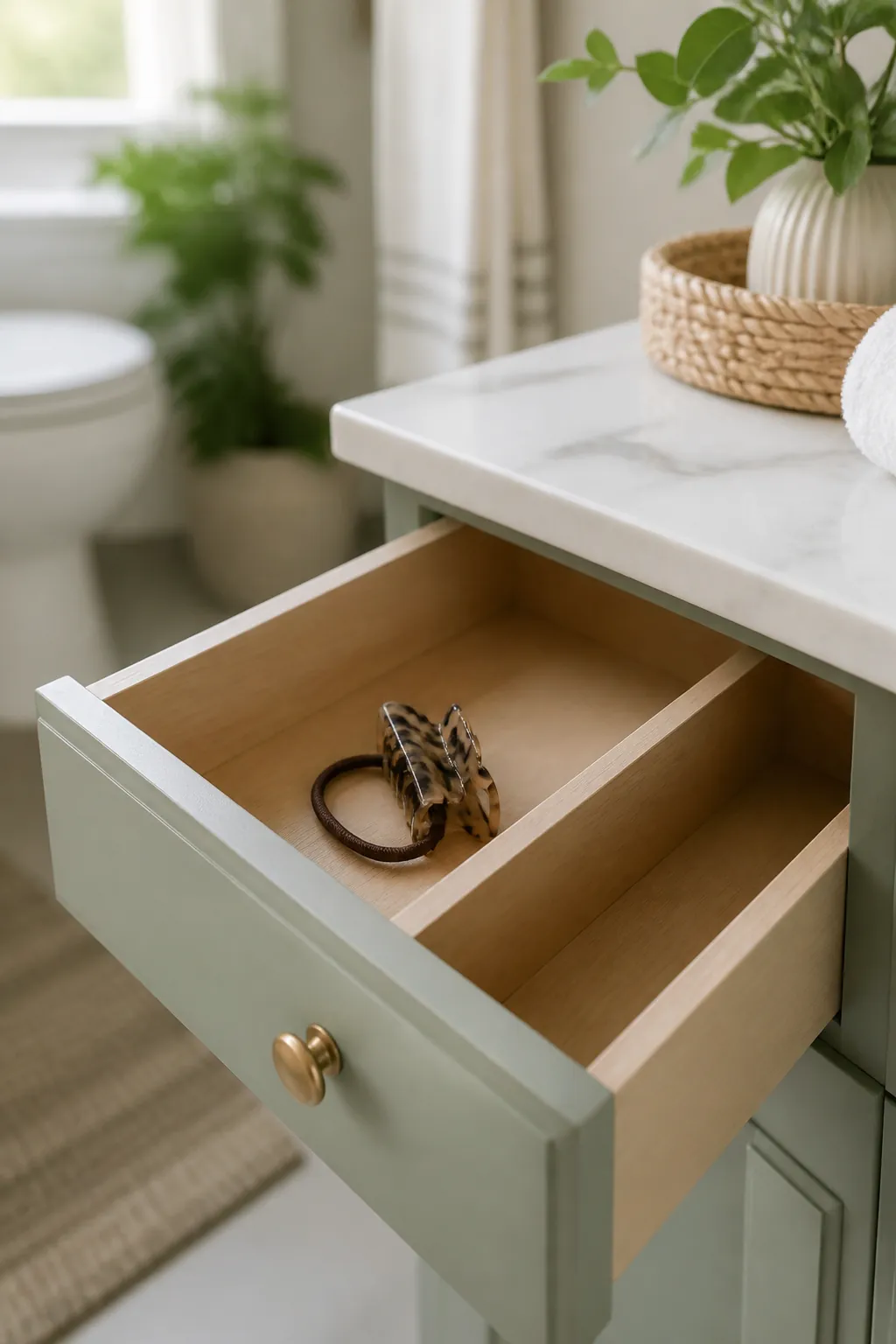
The single biggest cause of a re-tangled drawer isn’t clutter volume, it’s mixing categories that snag on each other. A claw clip’s teeth or a bobby pin’s crimped end will catch a loose hair tie every time they share a compartment, and one snagged elastic becomes the anchor the rest of the pile wraps around within days. Keep clips, anything with a clasp, and anything with teeth in a completely separate section from ties and elastics, even if that means an extra small compartment you weren’t planning to use. It’s a five-minute fix the first time and it’s the reason the system holds past week one.
9. Reset the drawer in under a minute, once a week
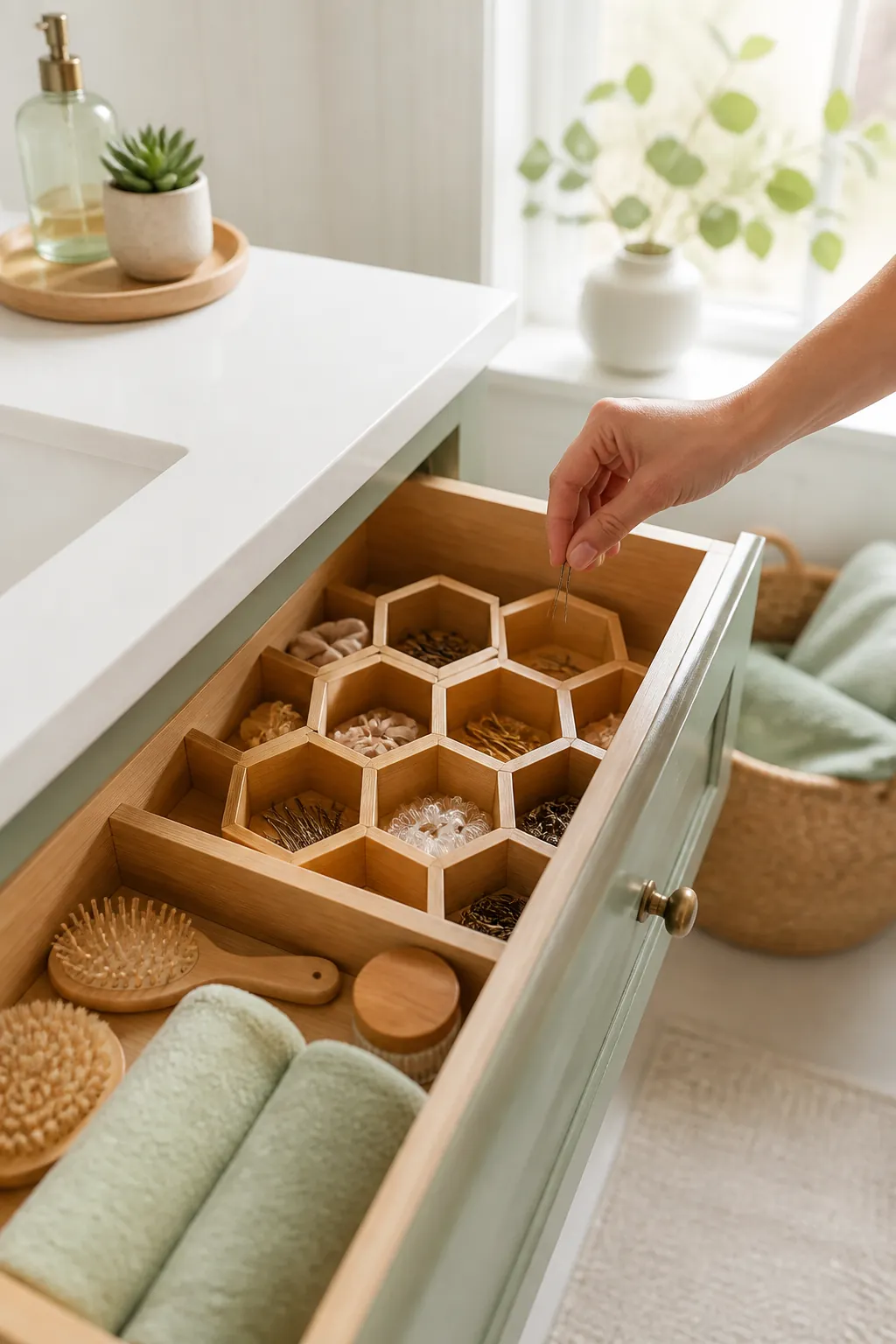
Once the sections exist, maintenance is genuinely quick: a thirty-second sweep at the end of the week putting stray pins back in their cell and coiling loose ties instead of tossing them in on top of everything. Do a real purge monthly rather than weekly, since that’s a better rhythm for catching the snapped elastics and bent pins that accumulate slower than daily clutter but still eat real space. A hair tie that’s lost its stretch isn’t doing anyone a favor sitting in the drawer, it’s just quietly shrinking the room available for the ones you’ll actually reach for tomorrow.
Where to start
If you only do one thing from this list, sort by size before you sort by anything else. A honeycomb divider handles pins and small clips, a wider open tray handles scrunchies and thick ties without stretching them, and a lidded case takes the overflow off your daily drawer’s plate entirely. Measure the drawer’s real depth before buying, zone front to back by what you actually reach for each morning, and keep anything with teeth away from anything elastic. That’s the whole system, and it holds up because it’s built around how these things actually snag, not just what looks tidy the day you set it up.