A vacuum standing in a utility closet takes up more room than it looks like it should. It’s not the machine itself, it’s the handle sticking out at an angle, the cord pooled around the base, and the fact that you have to move it every time you want the broom behind it. In a closet that’s twenty-four to thirty inches wide, one upright parked on the floor can eat a third of your usable footprint. The fix isn’t a bigger closet. It’s getting the vacuum, and everything that lives next to it, off the floor and onto the walls.
1. Measure before you buy anything
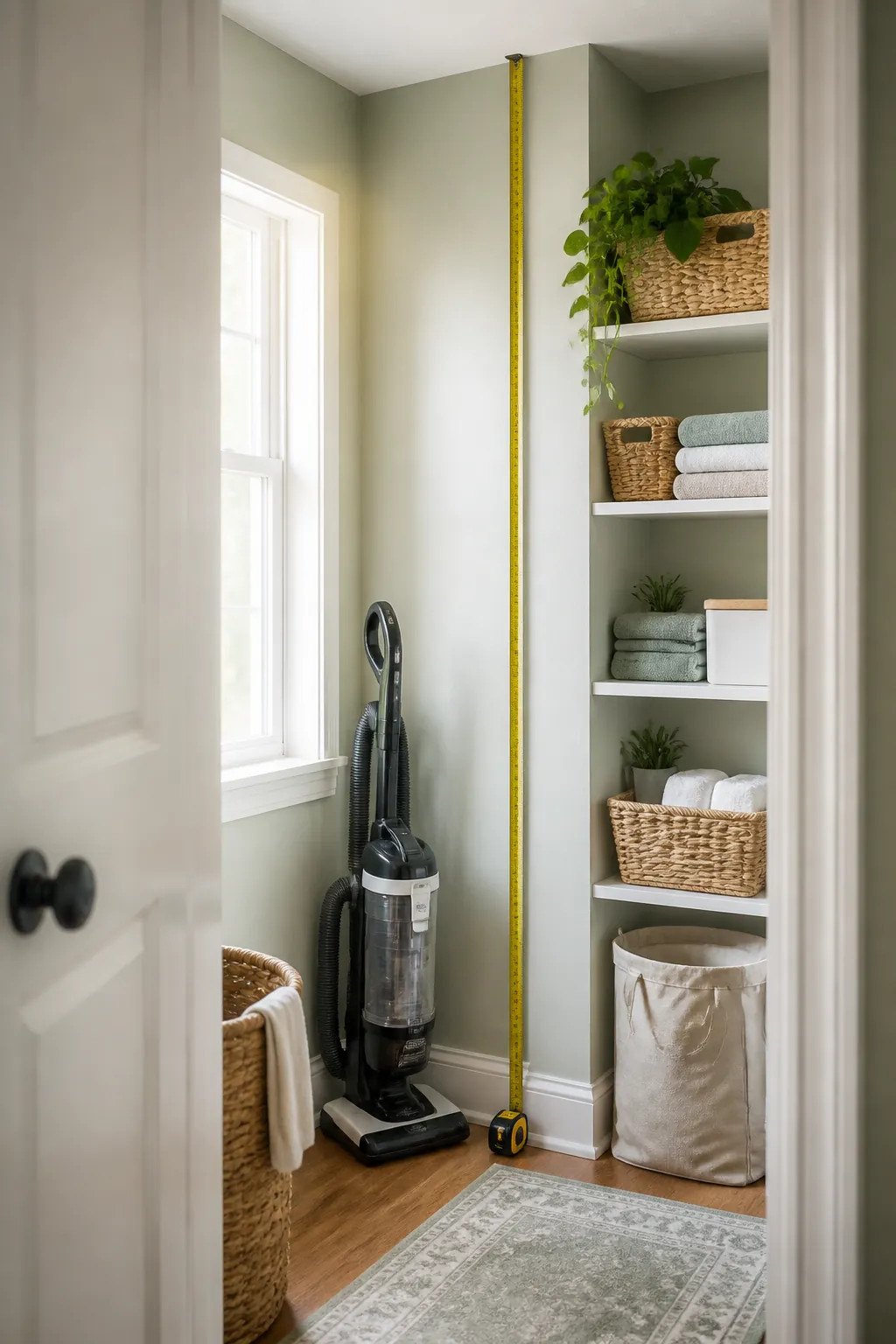
Utility closets in rentals tend to run twenty-four to thirty-six inches wide and twelve to eighteen inches deep, sometimes with a water heater or furnace access panel eating part of that. Before you buy a holder, measure three things: the width of clear wall you actually have, the depth from the wall to the door when it’s shut, and the swing of the door itself. A bracket that sticks out more than three or four inches will catch the door on a shallow closet, and you won’t find that out until it’s already screwed in.
Measure your vacuum too. Full-size uprights run twelve to fifteen inches wide at the base and fifteen to twenty pounds. A cordless stick vacuum is a different animal, usually under seven pounds with a slim body that fits a lighter-duty holder. Know which one you’re hanging before you pick hardware rated for the wrong job.
2. Get the body off the floor, not just the head
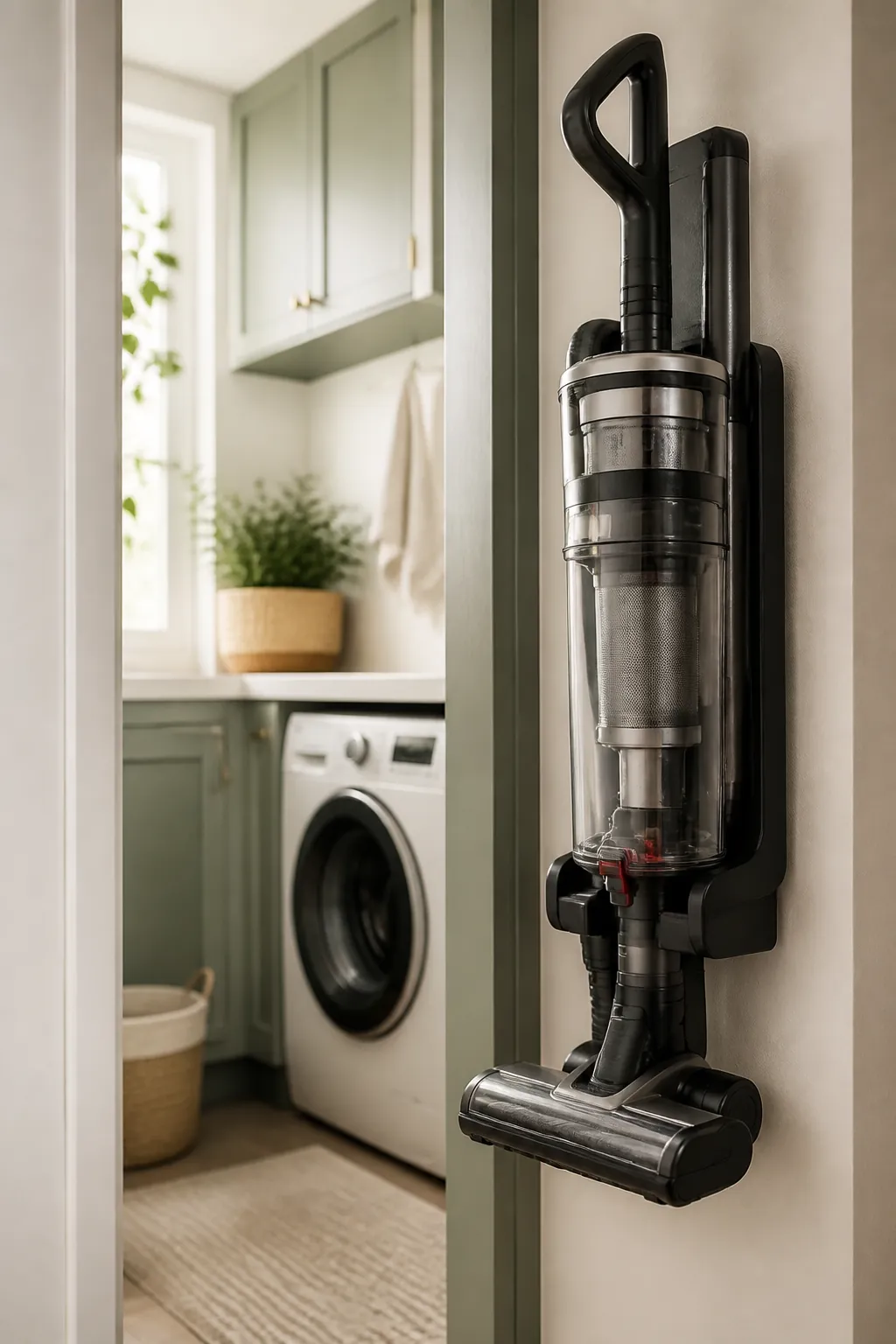
A vacuum standing on its own base still claims the same footprint whether it’s plugged in or not, and the handle swings out into the closet every time the door opens. A wall mounted holder that cradles the neck or body of the machine reclaims that floor entirely. The wall-mount broom and supply organizer does this along with the broom and mop, which matters more than it sounds like in a closet where every tool competes for the same six square feet.
Hang it high enough that the base clears the floor by an inch or two. A vacuum that still touches down isn’t really off the floor, it’s just leaning at a different angle.
3. Check what’s behind the wall before you drill
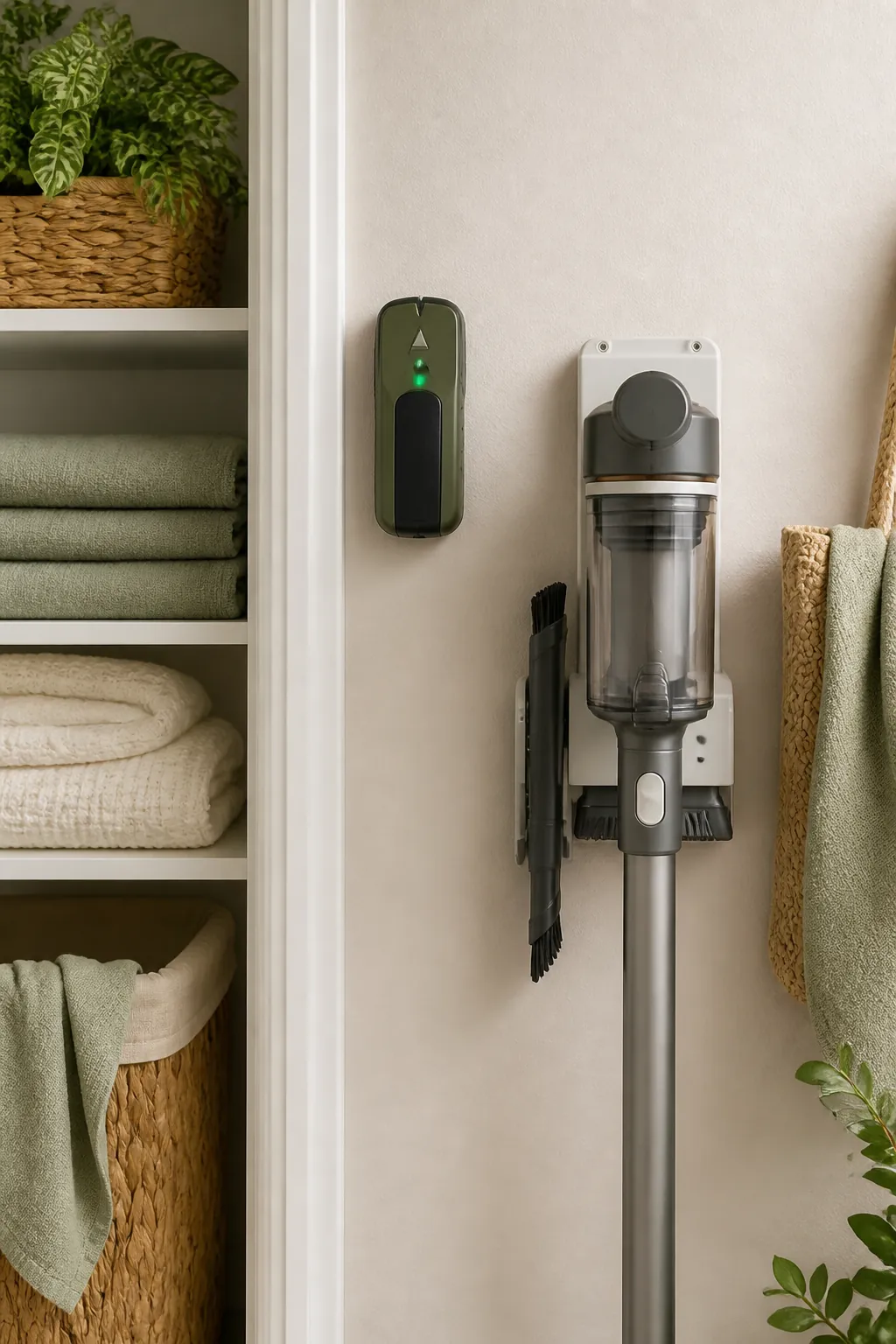
This is where a good idea turns into a hole in the drywall with nothing holding it up. A loaded holder with a fifteen-pound upright puts real torque on whatever it’s screwed into, not just straight-down weight. Find the stud with a stud finder or by tapping for the dense sound, and put at least one screw into it. If there’s no stud where you need one, use a rated toggle anchor, not a plastic drywall anchor meant for a picture frame. Adhesive-mount holders exist and they’re fine for a broom or a dustpan, but they top out around five to ten pounds, and a full upright will pull one off the wall within a season.
If you’re renting and can’t drill at all, a tension rod wedged corner to corner, or an over-the-door option, keeps you no-drill and deposit-safe, just at the cost of holding less weight.
4. Hang it from the body, not the hose
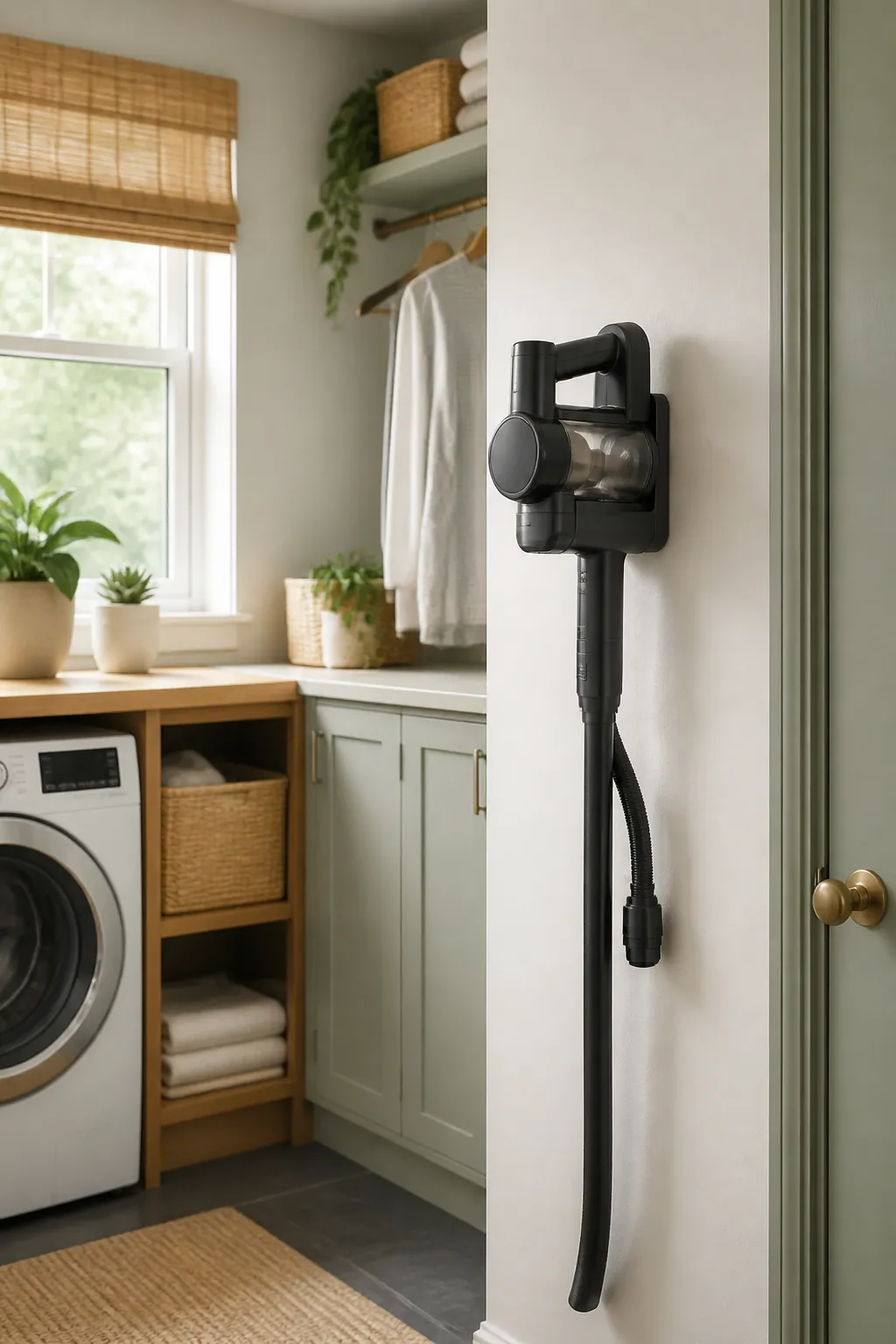
The plastic coupling where the hose meets the canister isn’t built to carry the vacuum’s full weight indefinitely. Hang the machine from that joint and the constant strain eventually cracks the collar, usually not while you’re watching, so the first sign is the vacuum on the floor and a hose that no longer seals. Use a holder that grips the handle or the main body instead, and if your vacuum has a molded carry handle, that’s the point to hang it from.
5. Corral broom, mop, and dustpan on one rail
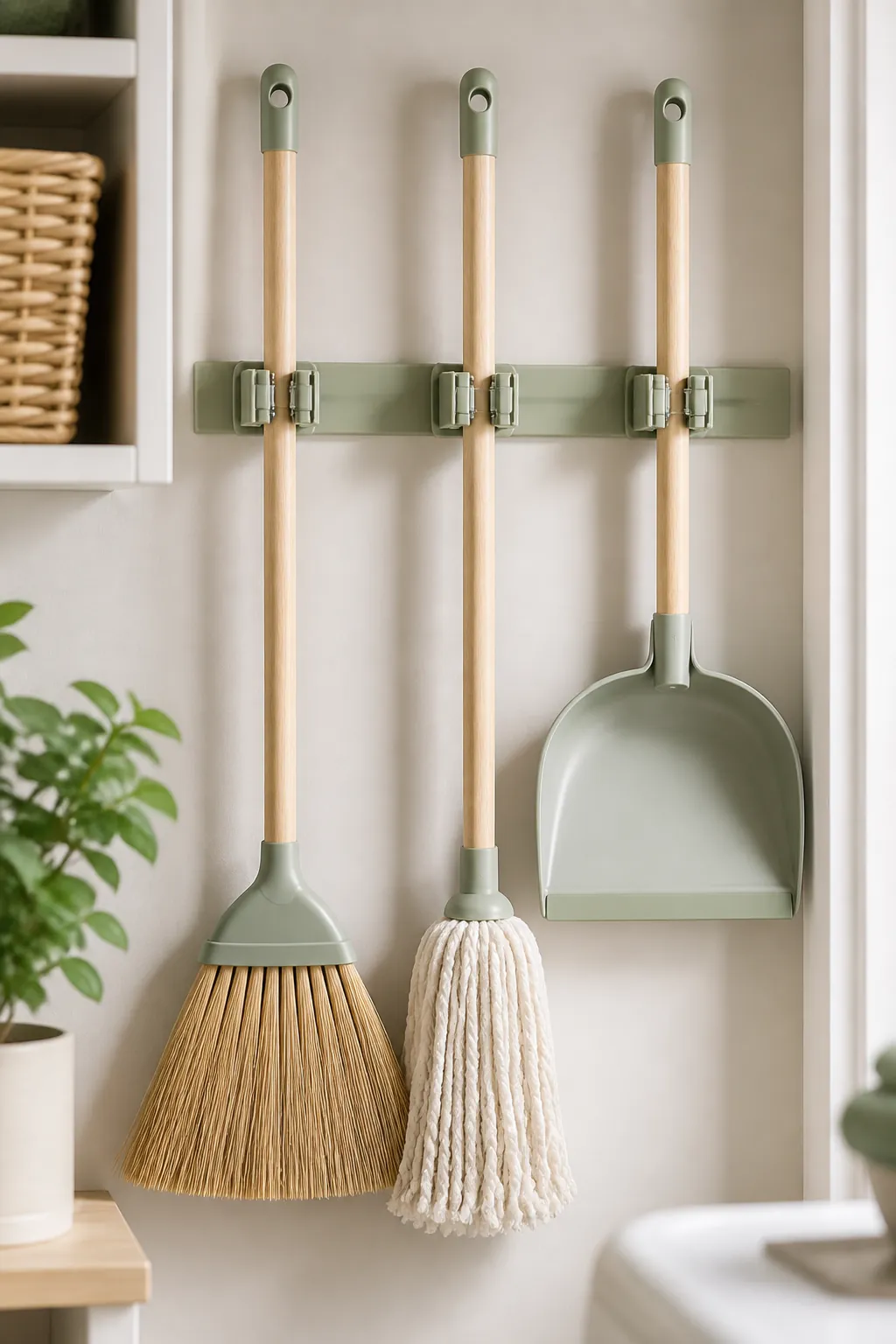
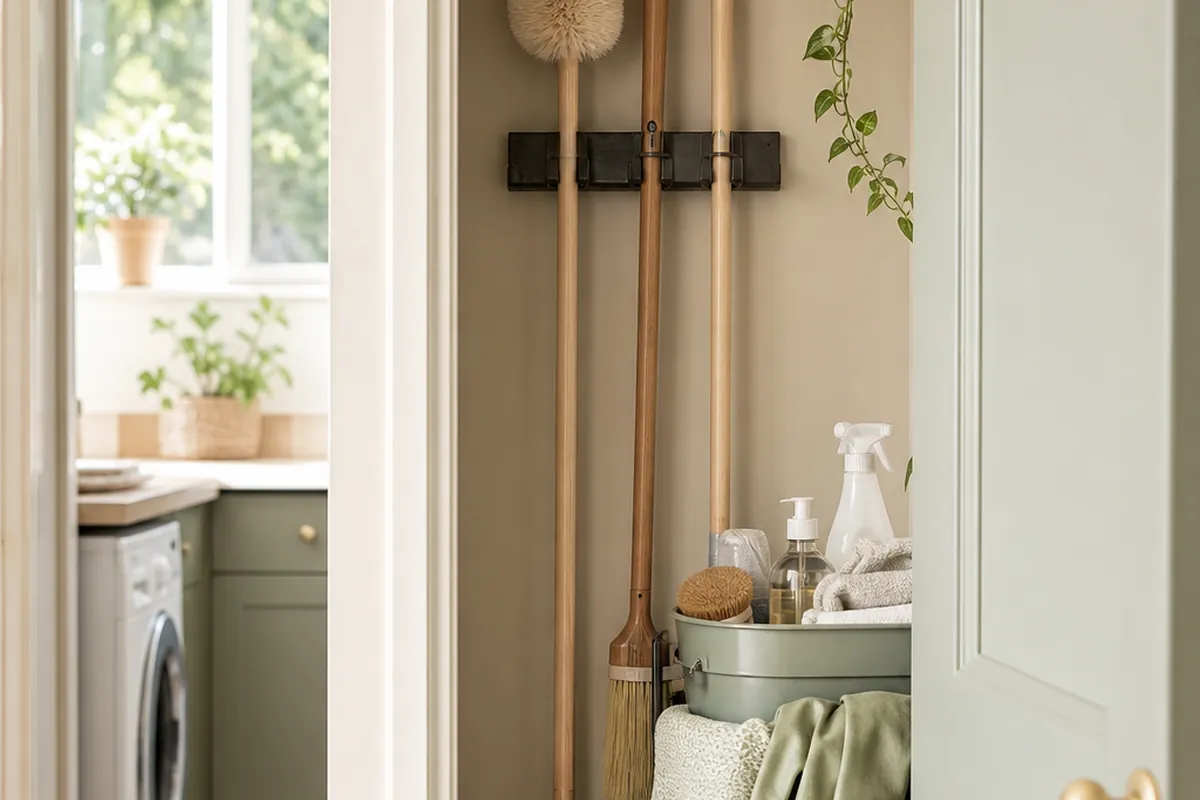
Loose-standing cleaning tools slide, lean, and eventually end up in a heap on the closet floor, which is usually what pushes people to buy a second bin they don’t have room for. A single rail with spring clips holds several handles side by side, each one gripped independently so pulling one out doesn’t topple the rest. Mount it at a height where the bristles or mop head clear the floor, both for cleanliness and so nothing’s resting in its own residue.
Point wet mop heads down and angled away from the vacuum’s electrical housing. Damp bristles a few inches from a plug or motor vent is a bad combination in a closet with no airflow.
6. Use the back of the door for the small stuff
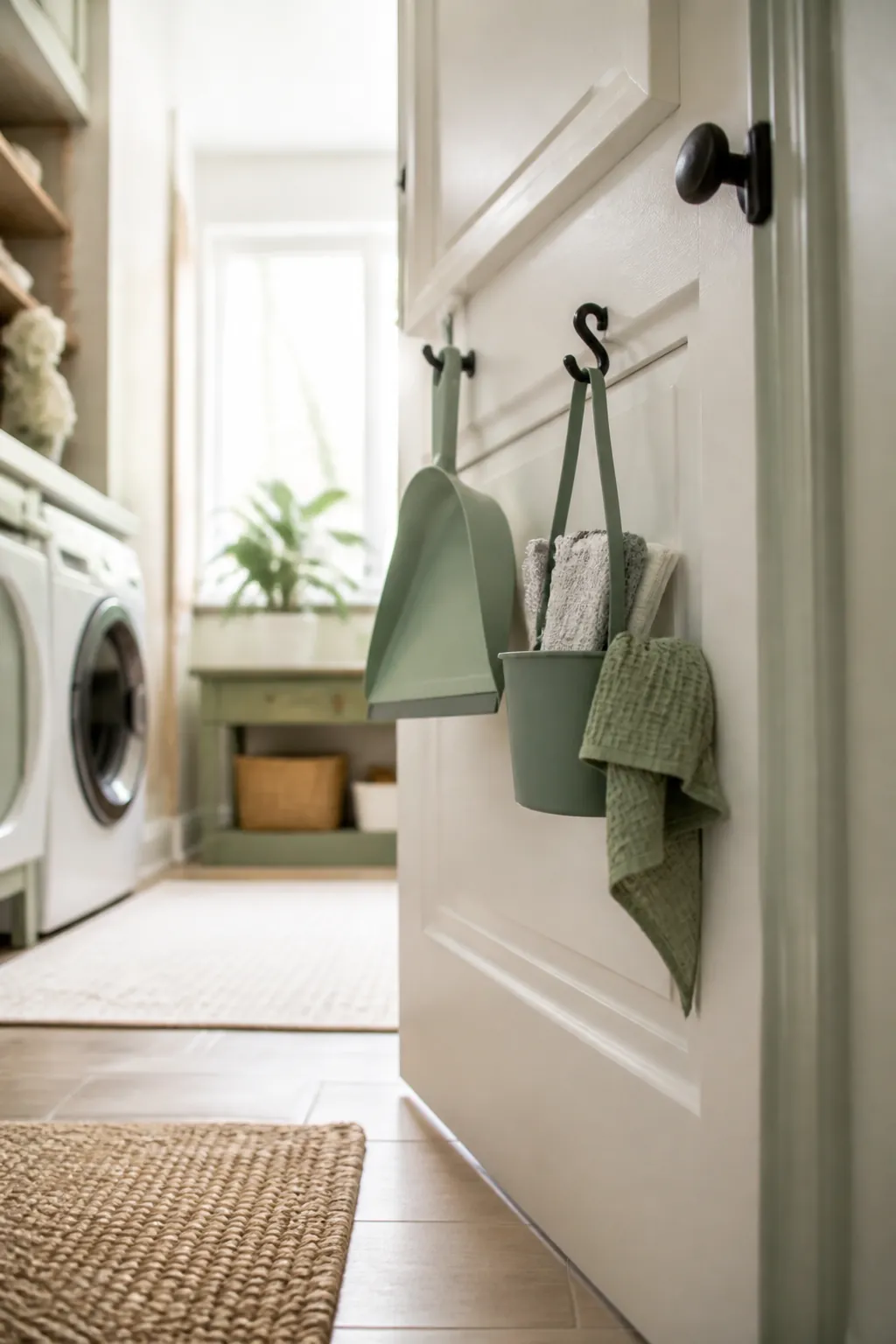
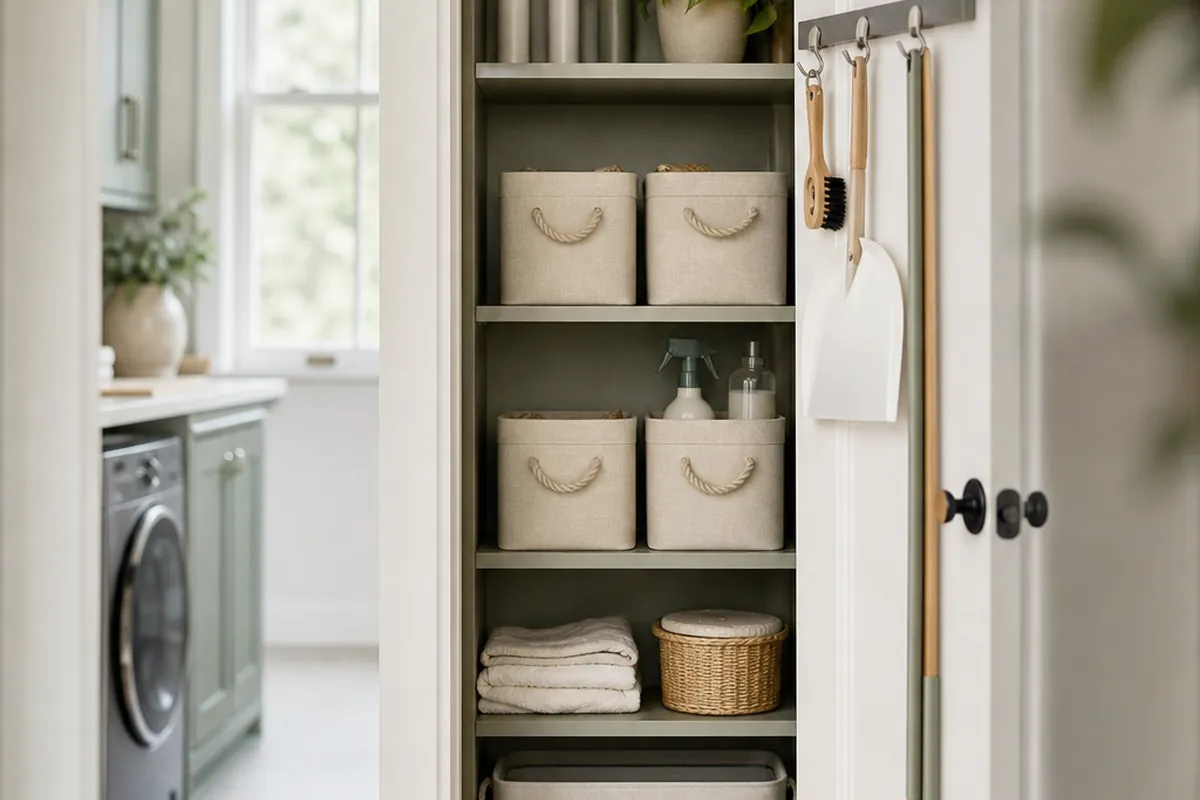
The inside of a utility closet door is flat, vertical, and almost always empty. An over-the-door hook hanger turns it into a home for a dustpan, a lint roller, spare vacuum bags, or a small caddy of cleaning cloths. Keep whatever you hang shallow, an inch or two of depth, so the door still closes over the holder and rail mounted on the wall behind it.
Measure the gap between the door and the wall-mounted gear with the door shut before you commit to anything with real depth, like a caddy or a basket. Two things fighting for the same few inches means one of them jams the door.
7. Loop the cord separately from the vacuum
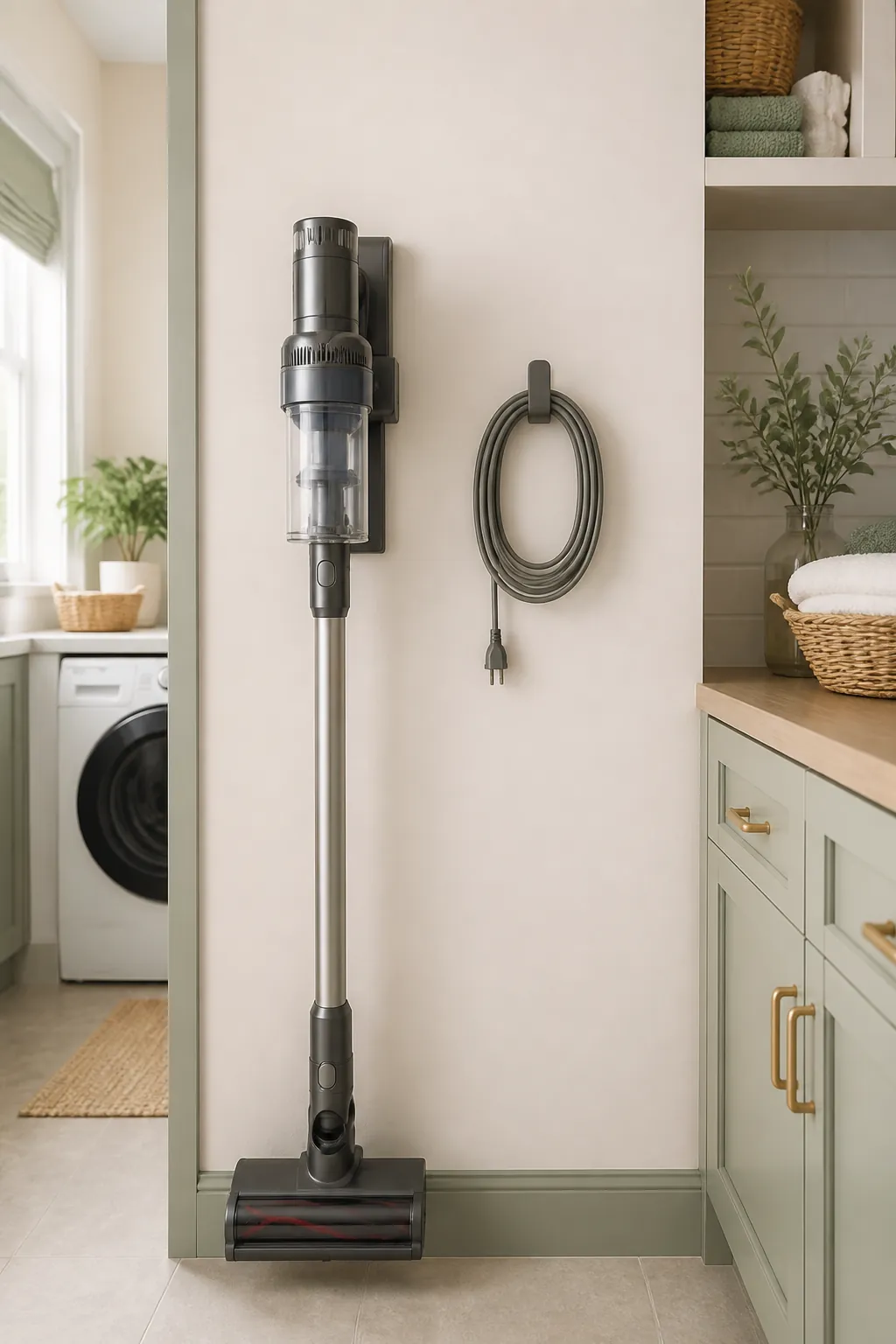
A cord left to hang loose off the vacuum’s body drapes down toward the floor and across the door opening, which is exactly where you’ll catch it with a foot in a dark closet. Wrap the cord and clip it with its own hook, mounted a few inches from the main holder, so it stays contained without adding strain to the vacuum’s mount point. A heavy-duty wall hook rack works well for this, and doubles as a spot for a spray bottle or a bag of clothespins once the cord’s handled.
8. Give a stick vacuum its charging dock, not a shelf
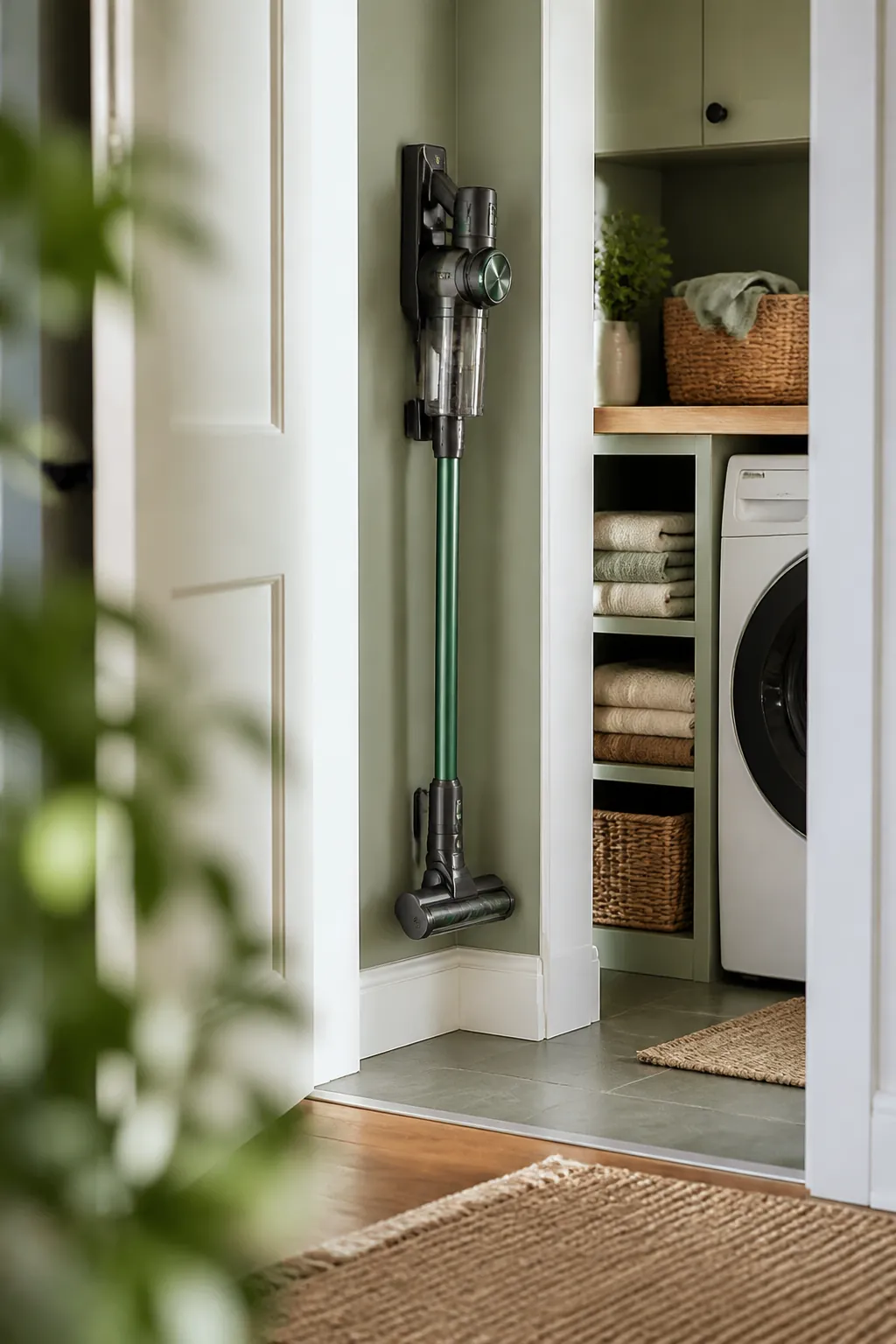
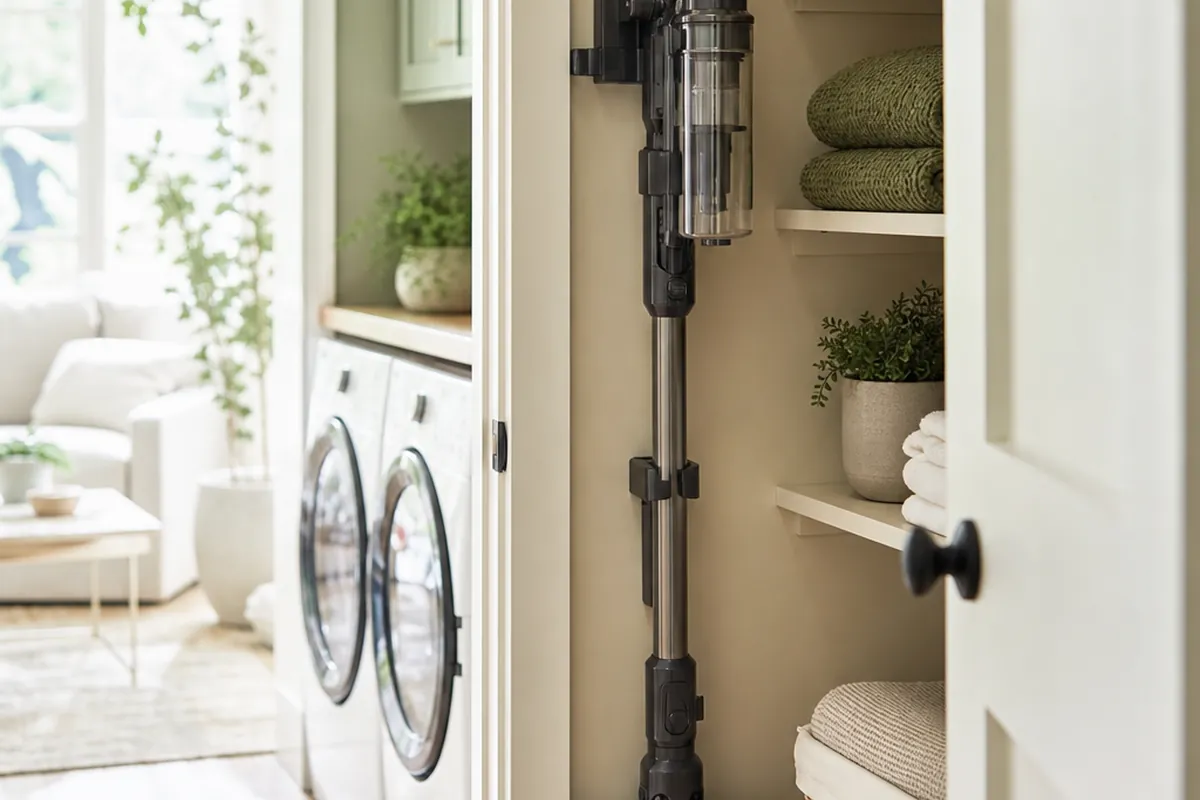
Cordless stick vacuums usually ship with a wall-mount charging dock, and it’s tempting to skip installing it and just prop the vacuum in a corner instead. Don’t. Most docks need a wall outlet within two to three feet of cord length, so mount the dock first and let the outlet placement decide where it goes, not the other way around. Set the dock height so the canister clears the floor when it’s docked, the same rule as the upright holder in section two. A stick vacuum leaned in a corner instead of docked also isn’t charging, which means it’s dead the next time you need it.
9. Reserve the actual floor for what needs it
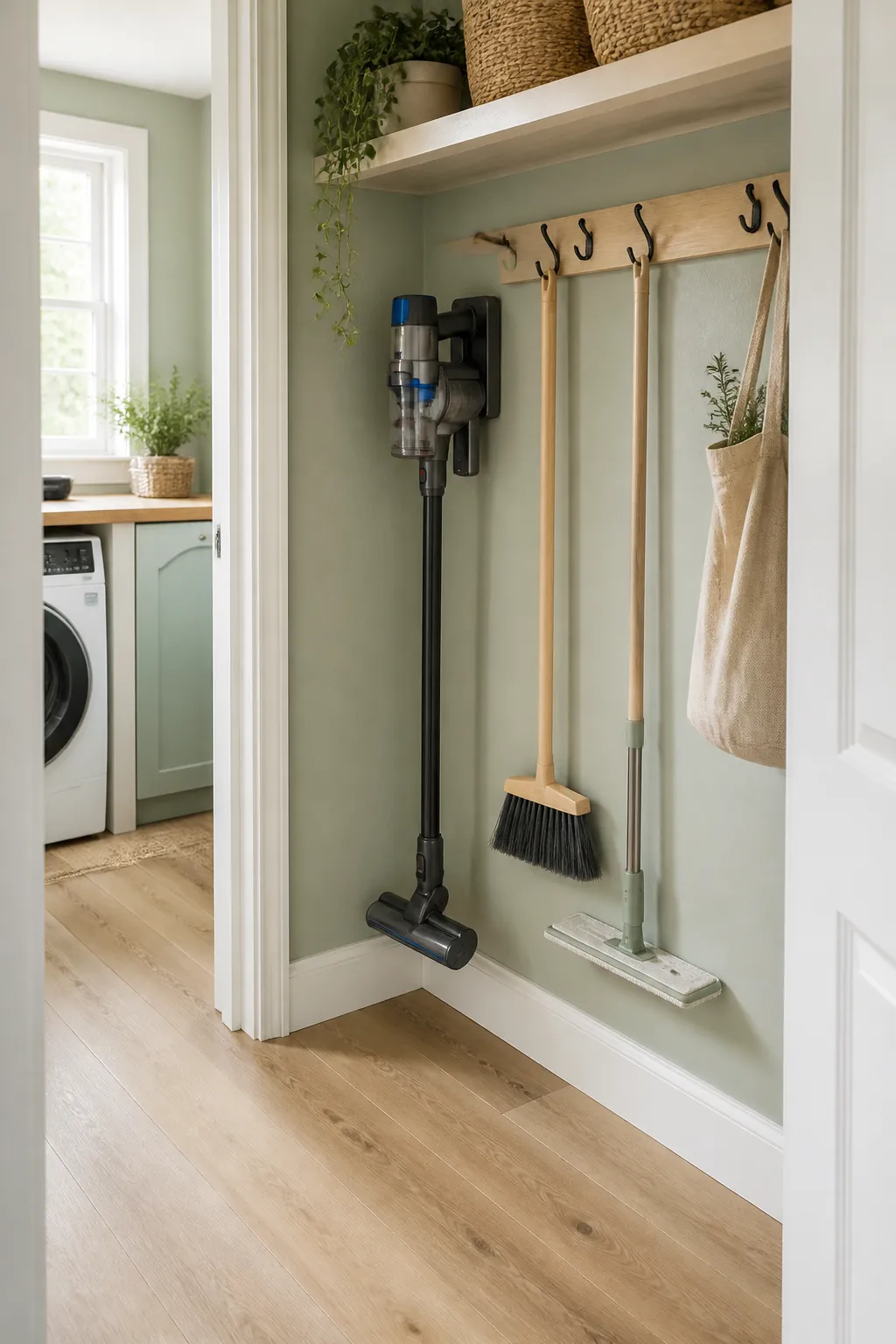
Once the vacuum, broom, mop, and cord are all on the walls or the door, the floor should have almost nothing on it, maybe a small bin for rags or a step stool if the closet is tall enough to need one. Resist the urge to fill that reclaimed space with something else standing upright. The entire point of moving everything to vertical storage was to keep the floor clear so the door swings, the vacuum comes out without snagging on anything, and you’re not doing a small unpacking job every time you need to clean.
Where to start
Measure your wall, your vacuum, and your door swing before buying anything. Find a stud for the main holder if your vacuum is a full-size upright, since that’s the one piece of hardware doing real load-bearing work. Hang the vacuum from its body, loop the cord onto its own hook, and put the broom and mop on a shared rail so nothing’s sliding around loose. Once those are handled, the floor of a small utility closet stops being storage and goes back to being floor.