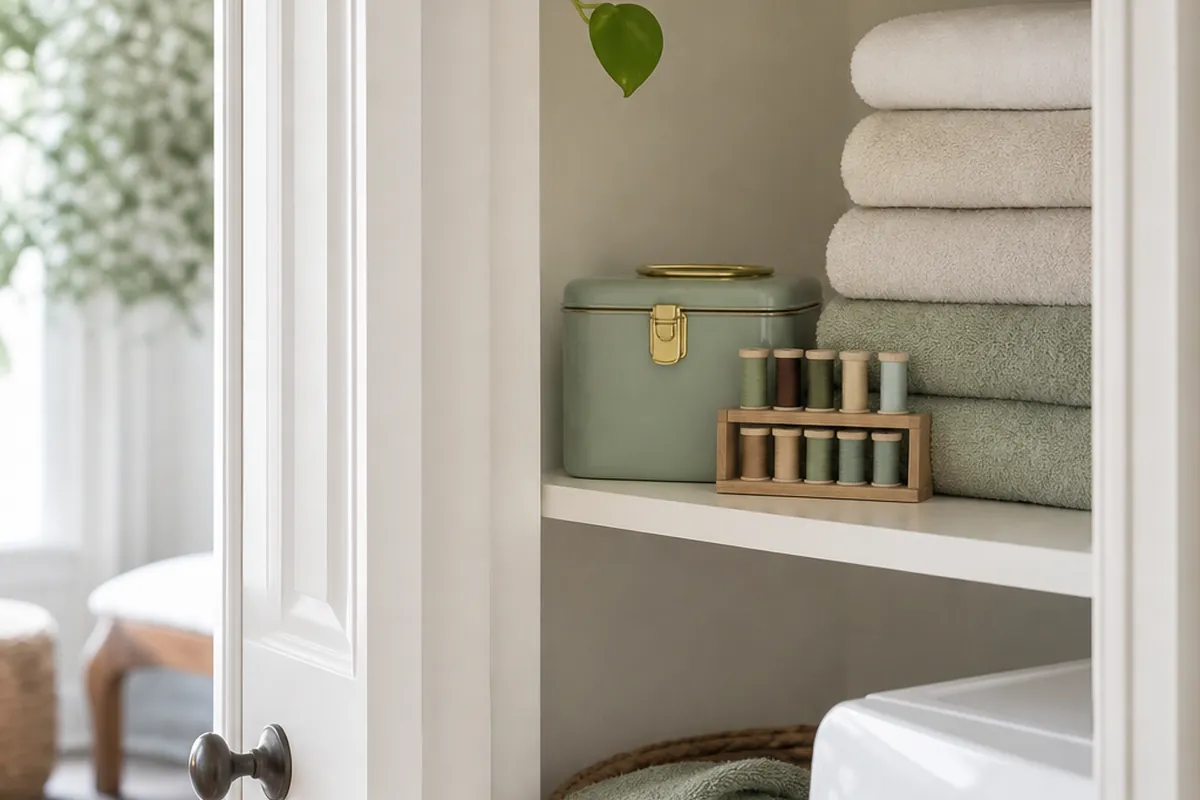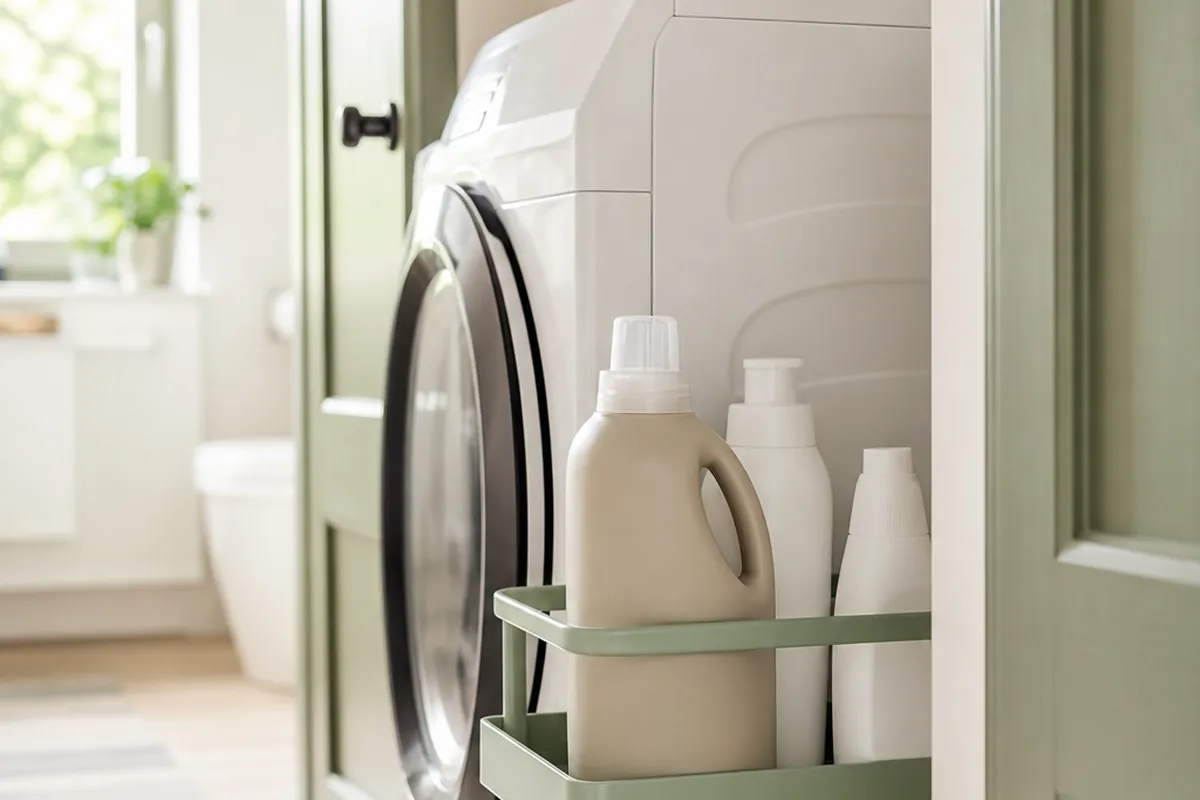
A lint roller rolls off every flat surface you set it on, a stain pen goes missing in a drawer the one week you actually need it, and a half-used stain remover spray ends up on its side in a cabinet, dripping. None of these are big objects. They’re small, round, and awkward on purpose, which is exactly why they never stay where a laundry closet puts them: a shelf edge, a bucket rim, or the top of the dryer. Lint roller and stain remover storage in a closet this size isn’t about finding one more bin. It’s about giving a handful of odd-shaped things a slot each so they stop rolling, tipping, and drying out.
Most of what lives in this category is small enough to lose and shaped wrong to stack: a lint roller handle, a stain pen barrel, a stain remover bottle six to nine inches tall. Every fix below is sized to those shapes specifically, not to a generic “laundry supplies” bin that just moves the clutter one shelf over.
1. Measure the door, the drawer, and the shelf depth first
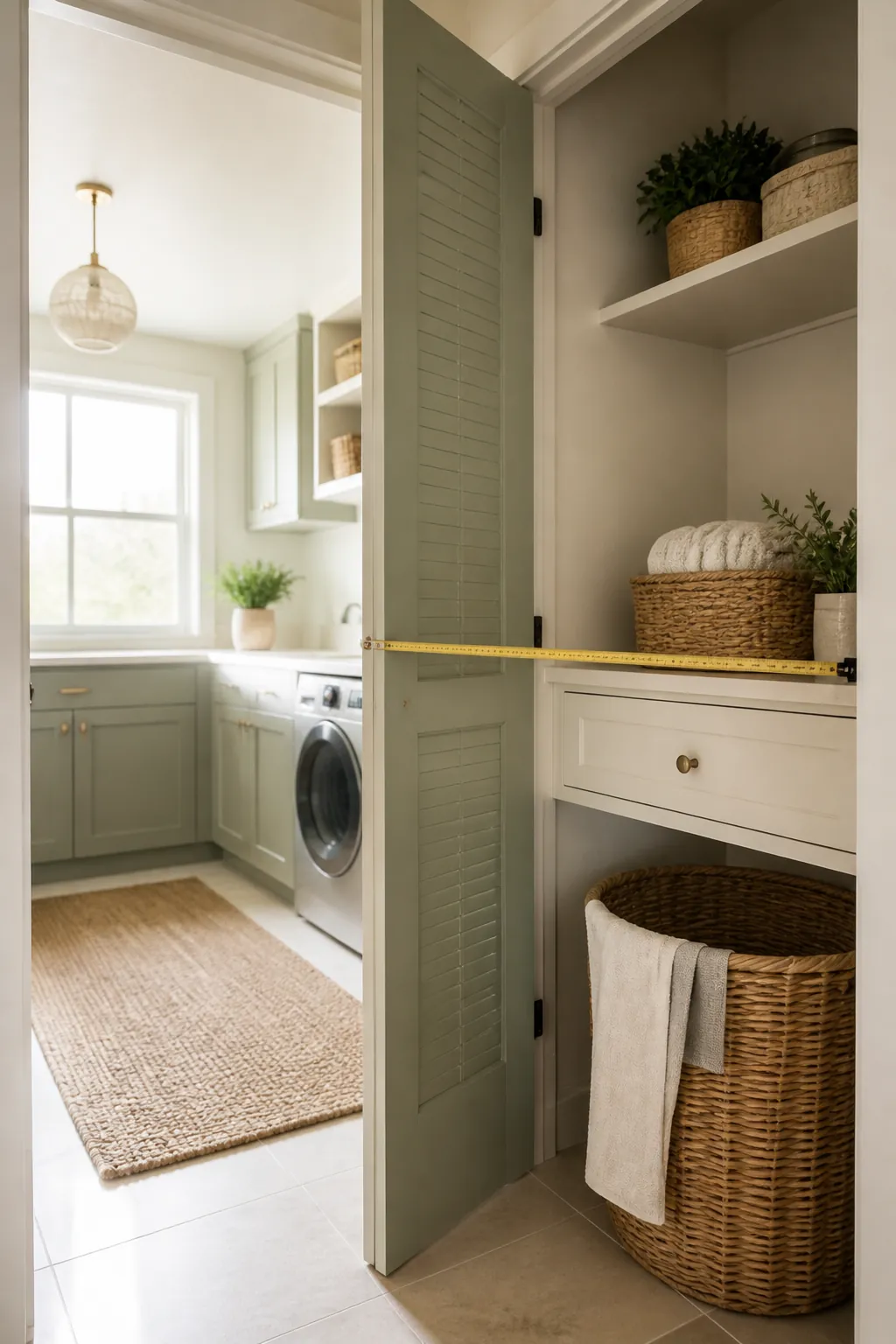
Three numbers decide what fits here, and they’re smaller than the ones you’d use for a mop or a hamper. The depth of any drawer you’re considering, since a lint roller handle alone runs 10 to 11 inches and needs the drawer to be at least that long on the diagonal if it’s going in at an angle. The clearance between the closed door and whatever’s mounted on it, since an over-the-door pocket organizer typically adds 2 to 3 inches of depth that has to clear the washer or a shelf unit on the inside wall. And the height of the lowest shelf, since anything mounted on a door swings through an arc and will clip a shelf set too low.
Measure with the door fully open and fully closed, not just open. A pocket organizer that clears the washer with the door open can still catch the dryer’s control panel on the way shut if the door swings past 90 degrees in a tight closet.
2. Give the lint roller a slot instead of a flat shelf
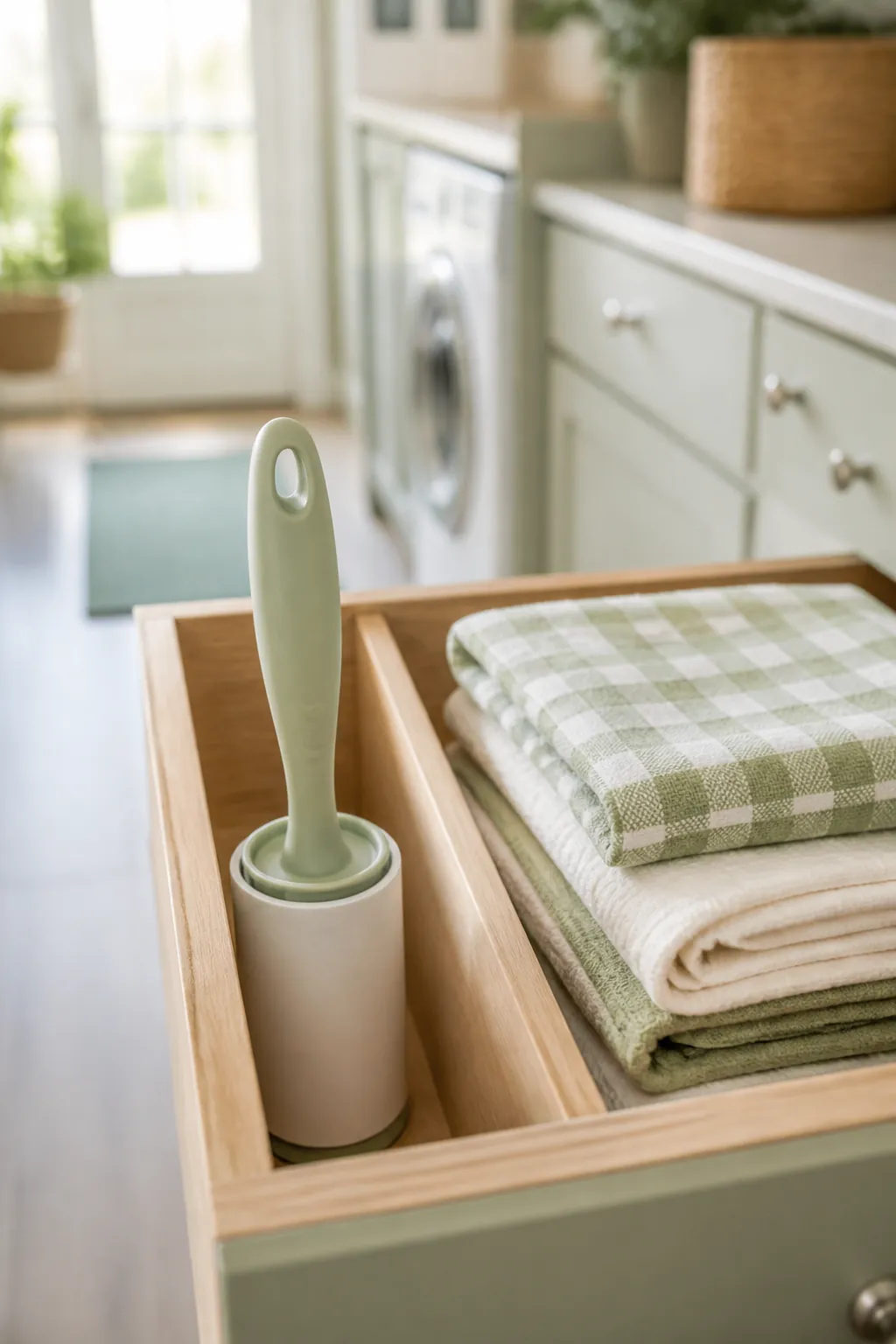
A lint roller set down flat on any surface rolls until it hits something, because the sticky roller end outweighs the handle and the whole thing is round in cross-section. The fix isn’t a bigger shelf. It’s a slot narrow enough that the handle can’t tip sideways: a drawer divider channel, a vertical pocket, or even a toilet-paper-roll tube taped upright inside a bin works in a pinch.
A clear plastic drawer organizer tray set solves this cleanly if the roller is going in a drawer rather than on the door. Pick the narrowest compartment in the set, the ones usually sized for pens and makeup brushes, and stand the roller in it sticky-end up so the adhesive side never touches the tray floor. That one detail matters more than it sounds: a roller resting adhesive-down on plastic for a few weeks picks up dust and loses tack from the bottom sheets even before anyone peels one off.
3. Stand stain pens and sticks up, never loose in a drawer
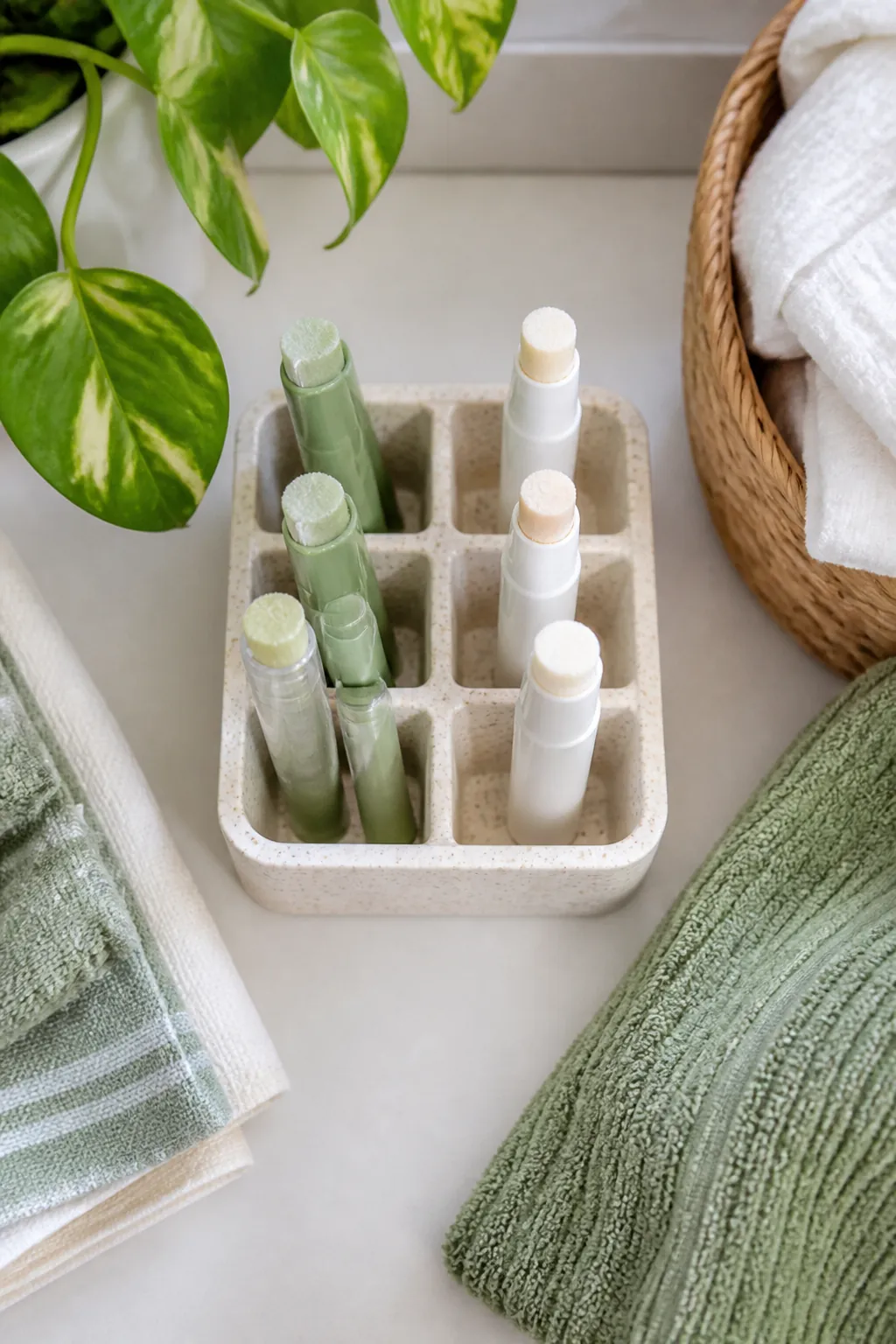
A stain pen tossed loose into a junk drawer rolls to the back, gets buried under lint roller refills, and dries out at the tip because the cap works its way loose from being jostled every time the drawer opens. Stand pens and sticks tip-down in their own small compartments instead, the same tray set used for the lint roller works here, and they stay capped, upright, and visible.
Tip-down matters for a reason beyond tidiness: gel-based stain pens rely on gravity to keep fluid at the applicator tip, and stored cap-down, the gel pools at the wrong end and the first swipe after months of storage comes out dry. A shallow compartment that’s barely longer than the pen, around 5.5 to 6 inches, keeps it from sliding sideways and tipping over every time the drawer slides shut.
4. Mount spray bottles upright, never on their side
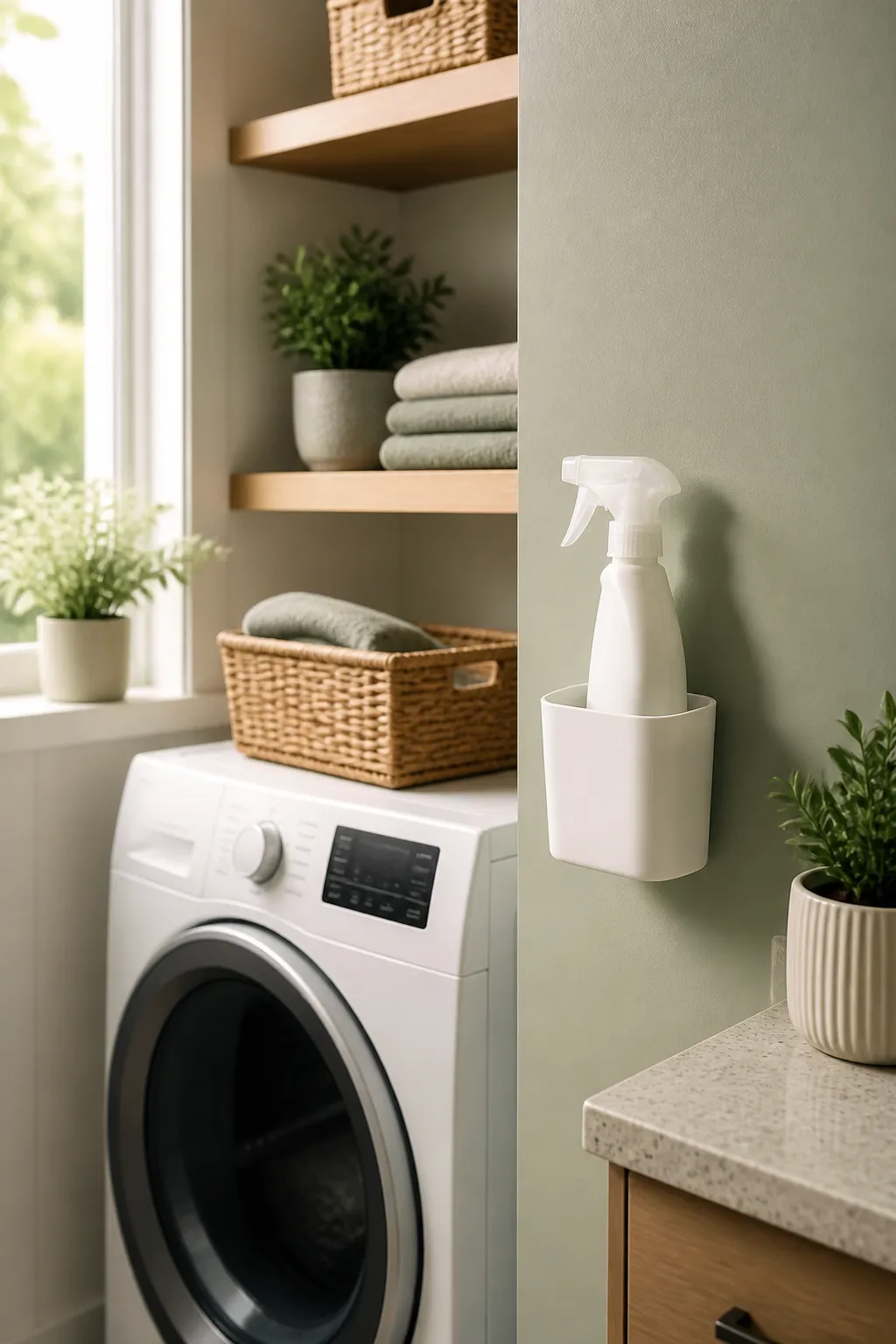
Stain remover sprays get laid on their side more than almost anything else in a laundry closet, usually because they don’t fit upright on a crowded shelf. That position is the one thing to avoid: a trigger sprayer’s seal is built to resist fluid pressing straight down, not fluid pressing sideways against the trigger mechanism, and a bottle on its side for a few weeks develops a slow leak at that seal that shows up as a sticky ring on the shelf.
A set of adhesive wall storage cups gives a spray bottle its own upright slot on the side wall or the inside of the door frame, away from the shelf entirely. Mount the cup at a height where the bottle’s trigger clears the cup’s rim, usually 6 to 7 inches of clearance for a standard 22-ounce bottle, so you can pull it straight up without catching the trigger guard on the lip.
5. Build one over-the-door kit for the whole lineup
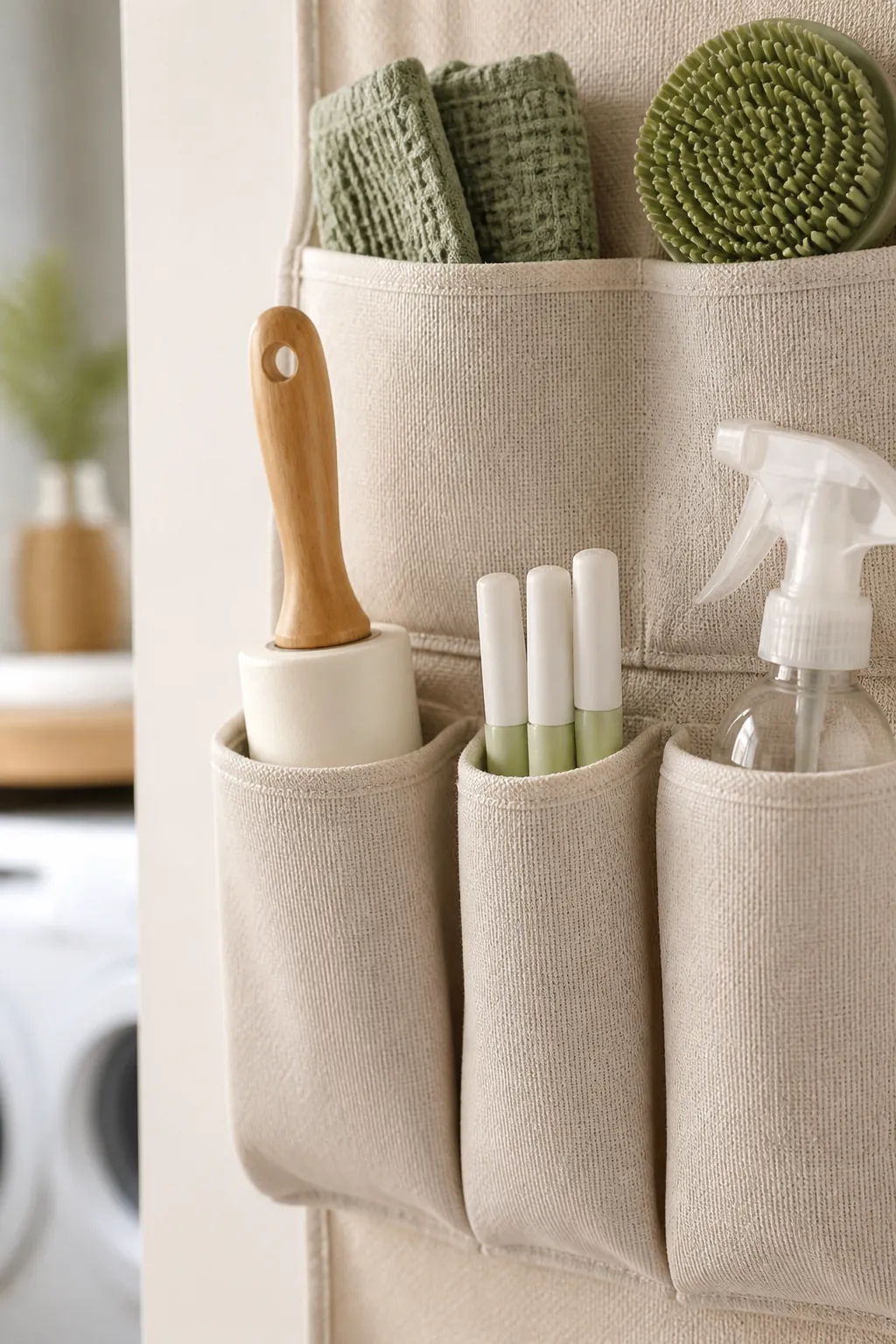
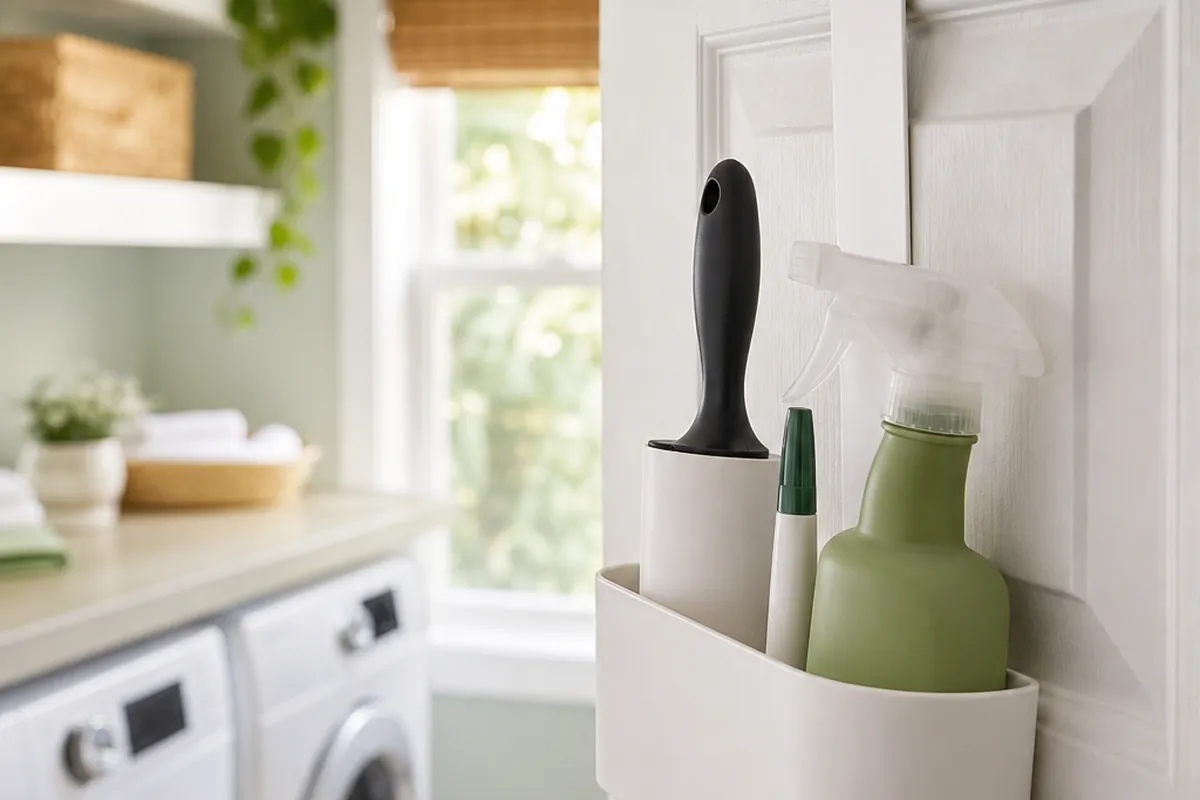
If the drawer and wall cup options above feel like scattering the same five items across three different spots, an over-the-door pocket organizer solves it in one piece. An over-the-door pantry organizer was built for spice jars and cans, but its pockets run 3 to 4 inches wide, which happens to be close to ideal for a lint roller, two or three stain pens, and a single spray bottle, all visible and all within reach of the washer.
Load the heaviest item, the spray bottle, into a lower pocket rather than a top one. Every swing of the door adds momentum to whatever’s mounted highest, and a full bottle riding at the top of a six-foot door travels further and faster with each open and close than the same bottle two rows down. Check the organizer’s weight rating against a full bottle, not an empty one you tested it with in the store.
6. Keep adhesive refill sheets away from heat and humidity
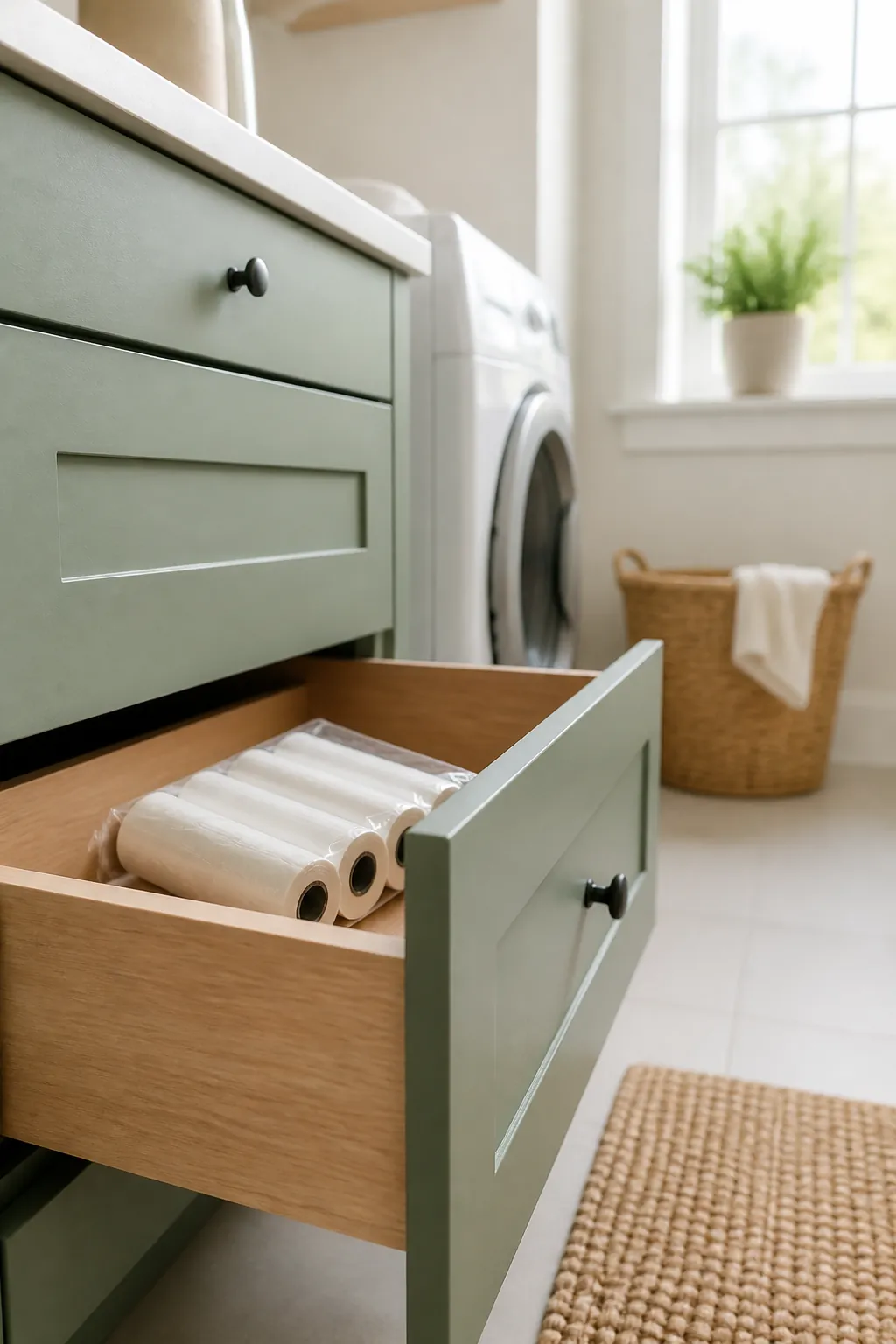
A sealed lint roller refill roll holds its tack for a year or more sitting in a closed drawer. The same roll left out on an open shelf next to a running dryer loses grip in a few months, because the dryer’s exhaust heat and the ambient humidity of a laundry closet both work against the adhesive. The top few sheets go first and stop pulling lint almost entirely, while the sheets underneath, still sealed against each other, stay fine.
Store spare refills in a closed drawer or a small lidded bin rather than loose on the shelf, and keep that bin at least a foot from the dryer’s vent connection if the closet is tight enough that distance is tight to come by. If you only have room for one refill roll at a time, buy single packs instead of the bulk multipacks, since an opened bulk pack left half-used degrades the same way a single roll does.
7. Split the grab-and-go kit from the backup stock
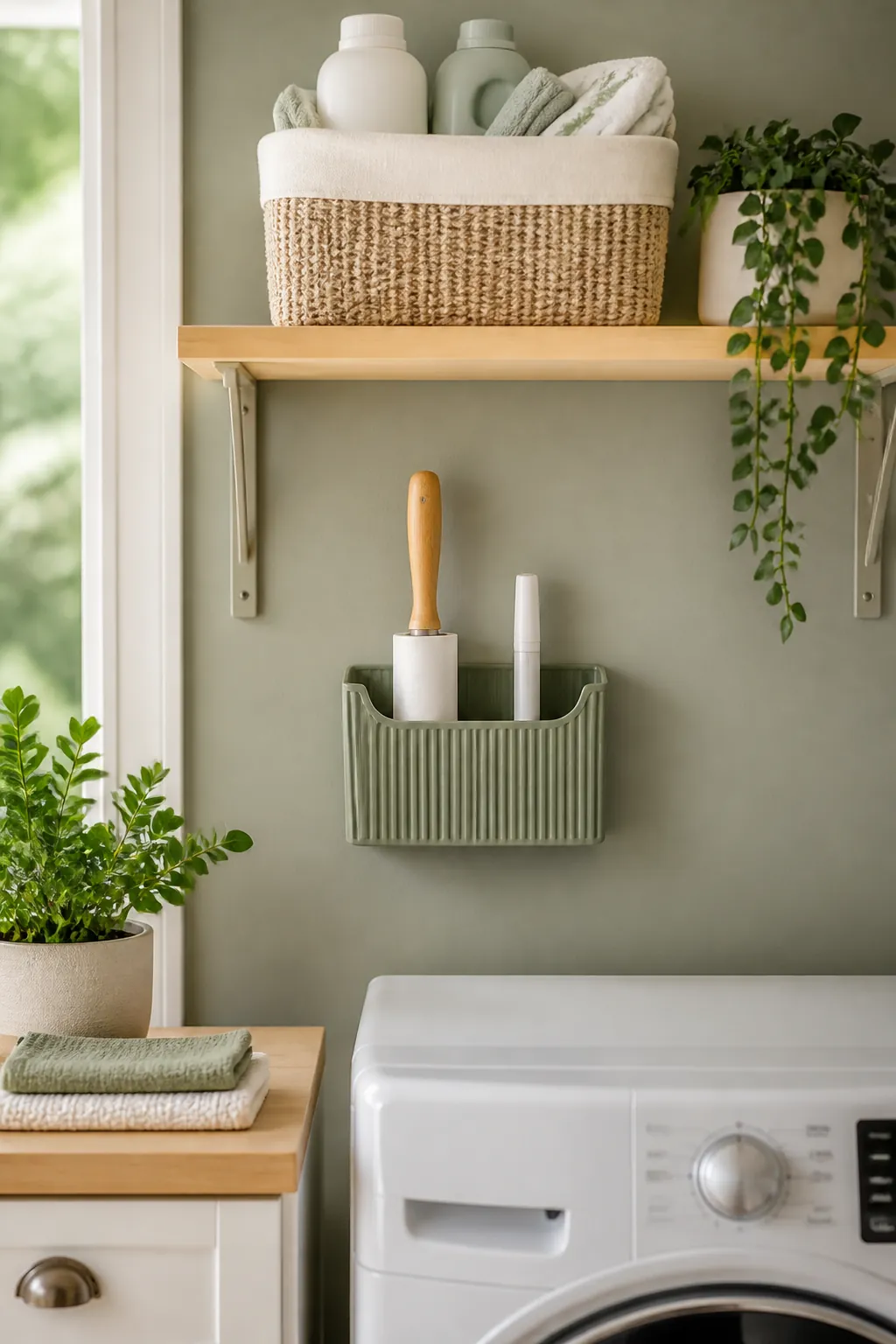
Everything you’d reach for mid-fold, one lint roller, one stain pen, one spray bottle, belongs at arm height, separate from the backup bottles and spare refills that only come out once a month. Mixing the two means digging past three spare lint rollers every time you actually need the one in use, and that’s the moment people give up and leave the pile loose on top of the dryer instead.
Keep the active kit small on purpose. One of each item is enough for daily use; everything past that is backup stock and belongs on a higher or lower shelf, out of the way of the kit you touch constantly. This split costs nothing and takes about five minutes to set up, but it’s the single change that keeps the day-to-day items from migrating back into a pile.
8. Corral loose caps and spare sheets in one small bin
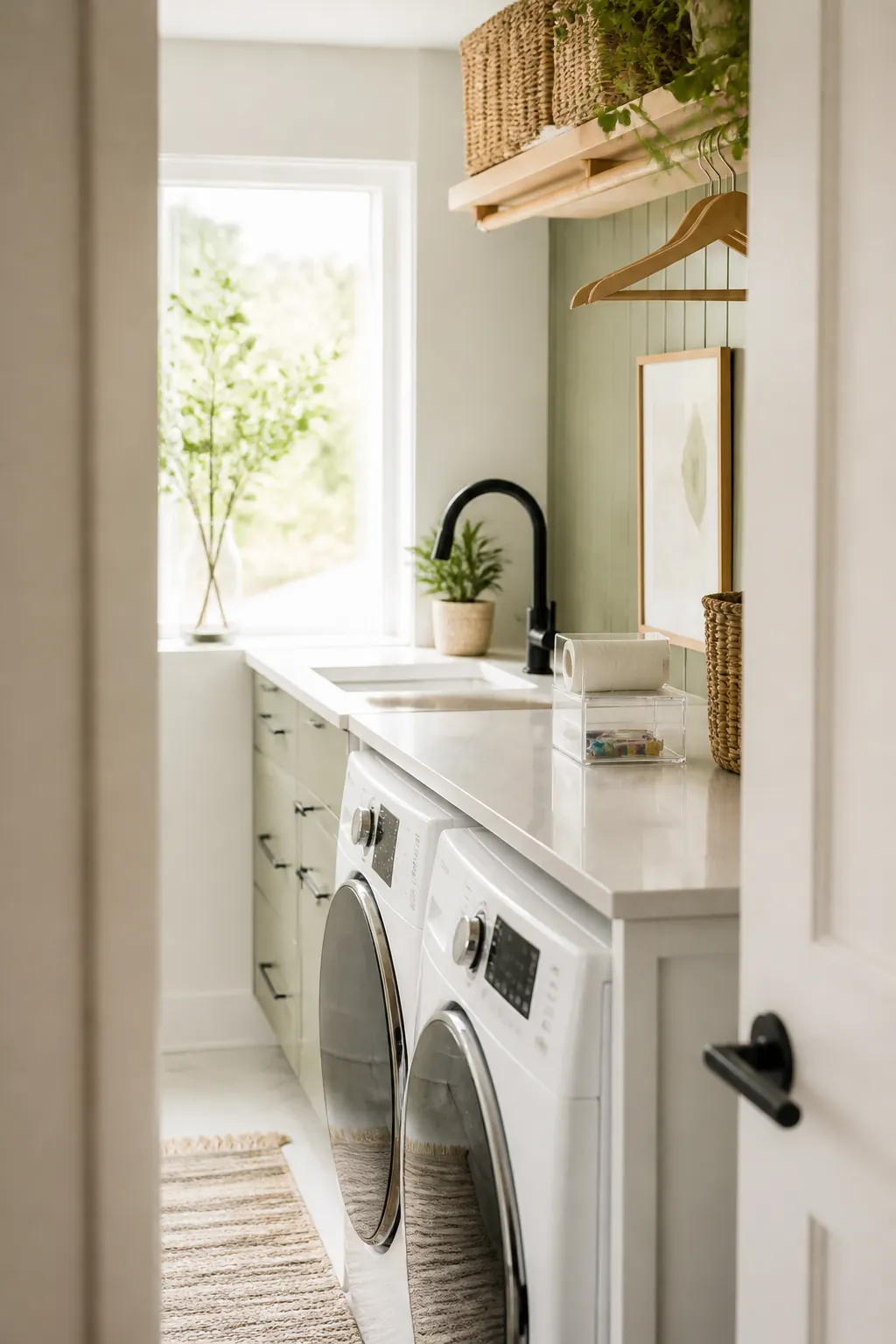
Spare caps, the extra sheet or two peeled off a lint roller before you realized it was the wrong size, and a half-used refill roll all end up loose at the bottom of a drawer if they don’t get a container of their own. A set of small clear stackable drawers, the kind sized for ribbon or hardware, holds this exact category of small loose parts without needing its own shelf space.
Give the bin a hard rule: it holds backup pieces only, never the item currently in use. A stain pen with its cap in the bin and its body on the shelf is a stain pen you’ll search two spots for the next time you need it in a hurry, which defeats the entire point of sorting these items in the first place.
9. Recheck the kit every season and toss what’s past its prime
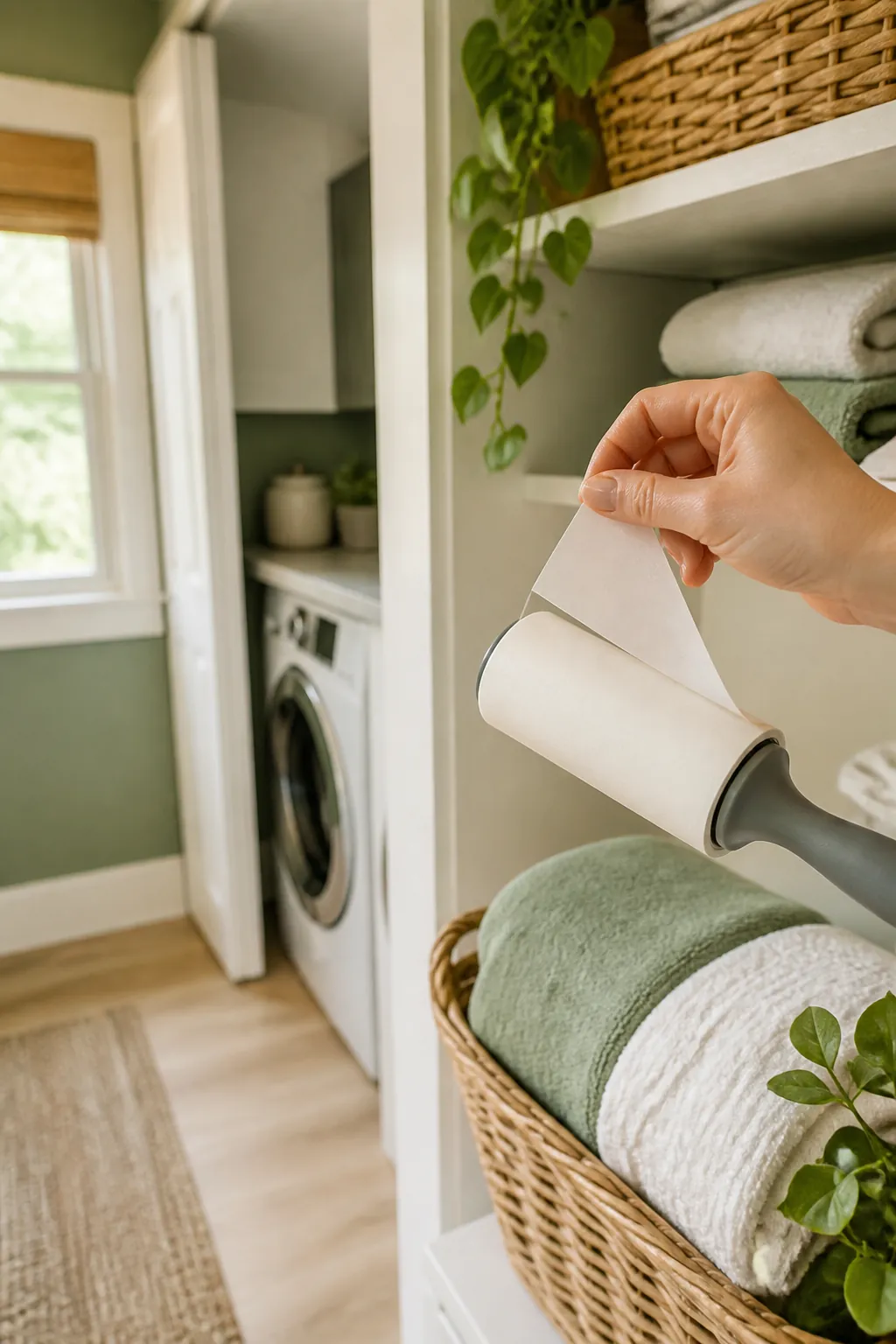
A lint roller’s adhesive degrades gradually, so the sign something’s gone stale is usually a sheet that peels off but barely picks up lint, not a roller that obviously fails. Every season, peel back the top sheet of any roller that’s been sitting and check it actually grabs something before trusting it on a dark sweater five minutes before you need to leave.
Stain pens and sticks dry out the same slow way. If the gel at the tip has gone chalky or won’t deposit onto a test scrap of fabric, it’s done, regardless of how much product is left visible in the barrel. This is also the moment to check any adhesive-mounted wall cup or over-the-door organizer is still holding its full load, since both lose grip gradually rather than all at once.
Where to start
Measure the drawer, the door swing, and the lowest shelf before buying anything, since those three numbers rule out half of what looks like it should fit. Give the lint roller and the stain pens upright slots instead of flat surfaces, stand every spray bottle up rather than on its side, and build one over-the-door kit if you’d rather solve this in a single piece than scatter it across a drawer and a wall cup. Split the daily kit from the backup stock, and recheck both every season for sheets and gels that have quietly gone stale. None of this takes more than twenty minutes to set up, and it’s the difference between reaching for a working lint roller and finding out it doesn’t work with a dark sweater already in your hands.