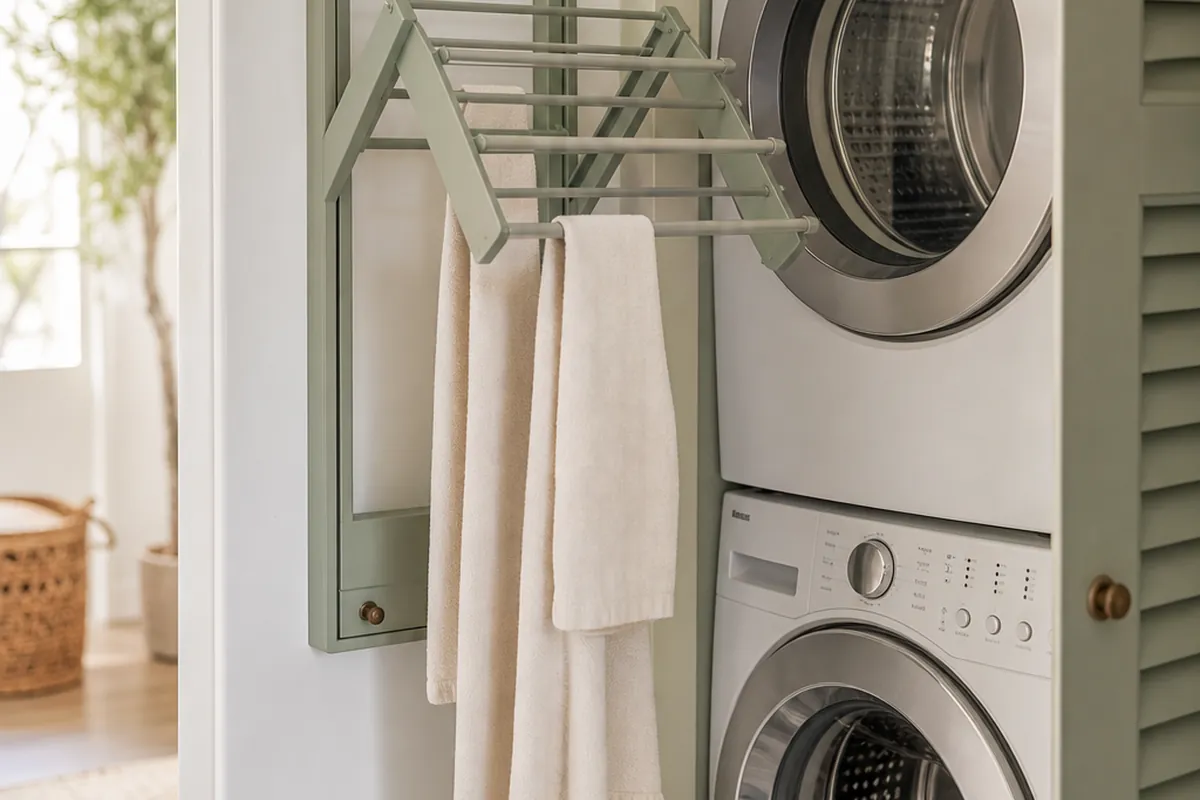
A small laundry space usually has room for a washer and dryer and nothing else, which is a problem the moment you own anything that cannot go in the dryer. Sweaters, delicates, the one shirt that shrinks, all of it needs somewhere to hang, and a freestanding rack parked in the middle of a closet or a hallway is furniture nobody asked for. The fix is not a bigger rack. It is a rack that lives on a surface you already have and disappears the moment the laundry is dry.
1. Measure the wall, the door, and the floor before you buy anything
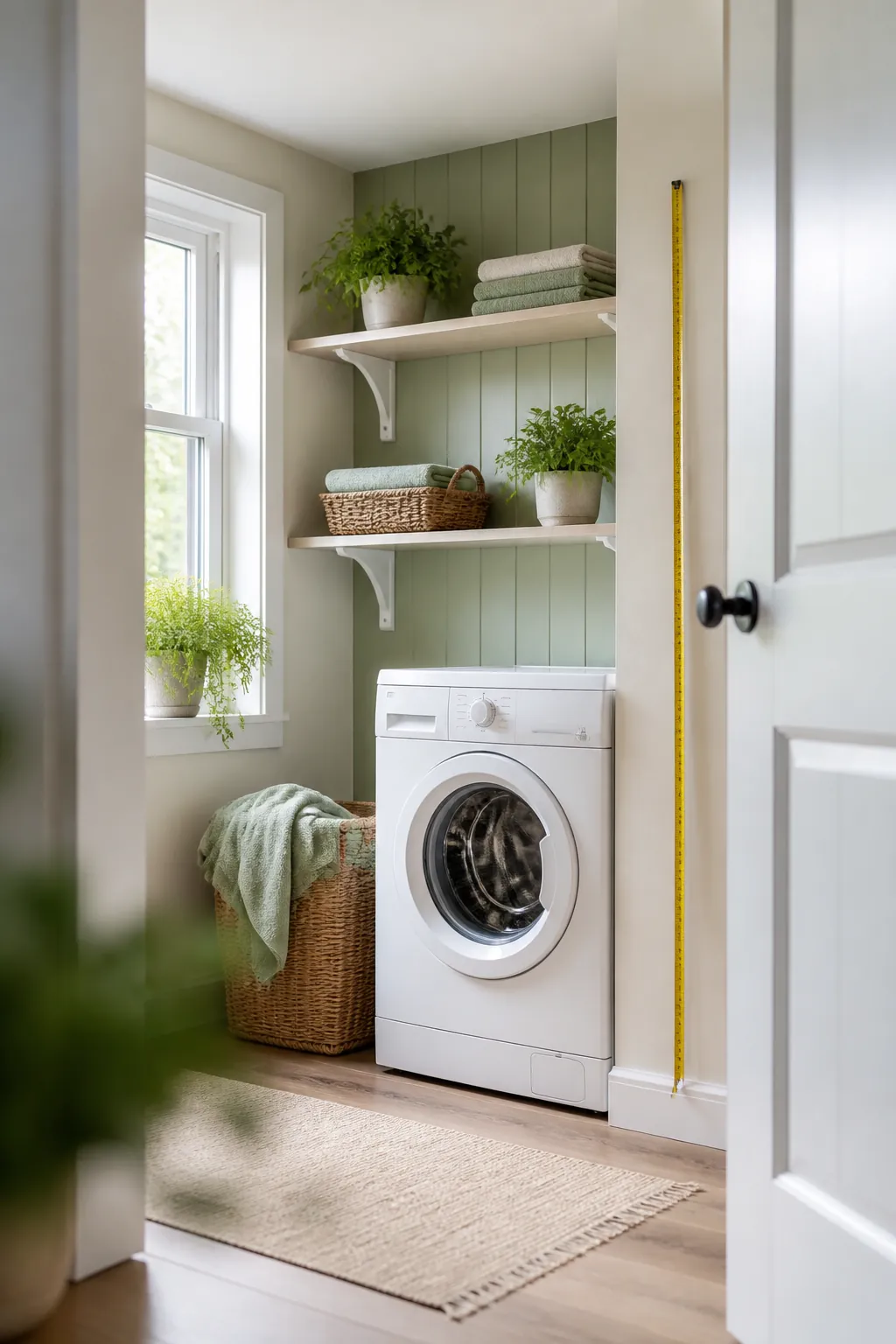
Three numbers decide what will actually work here, and none of them take more than a minute.
The clear wall space beside or above the machines, in inches, both width and height. The thickness of the door if you are considering an over-the-door model, because most of those are built for standard interior doors and fail on anything thinner or thicker. And the floor footprint you can spare for a rolling rack when the wall and door options are already full.
Write all three down before you shop. A rack that is two inches too wide for the wall gap or too heavy for the door it is meant to hang on is not a small mistake in a small laundry space, because there is no second spot to try it in.
2. A wall-mounted folding rack for the load you do every week
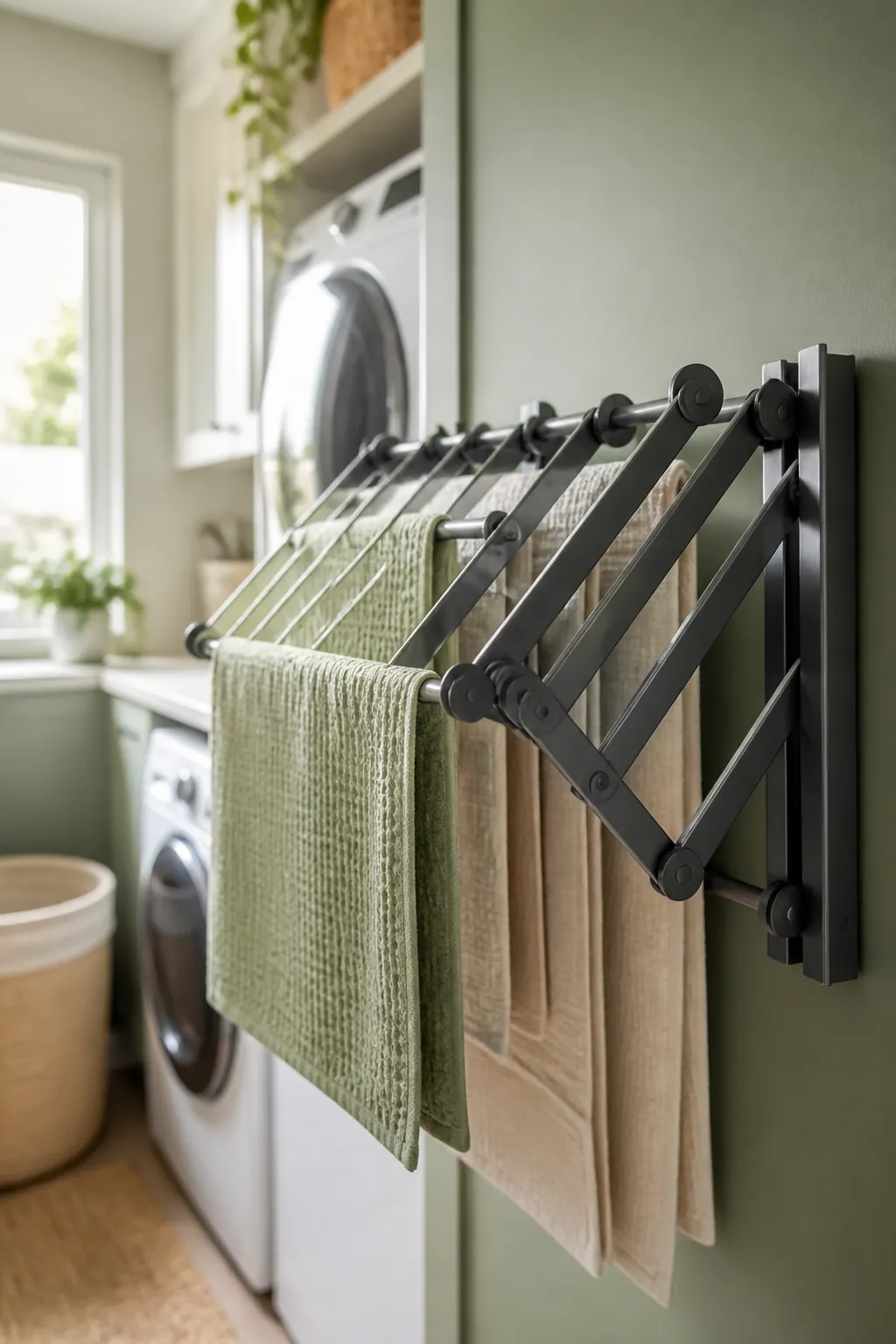
A wall-mounted folding drying rack is the workhorse here, and the design does the work. Open, the arms fan out to roughly two feet of drying length. Closed, it folds back to about four inches deep, so it does not eat the walkway between the machines and the door.
Most of these are rated for around twenty to twenty-six pounds spread across every arm, which in practice is a couple of wet towels and a handful of shirts. That is enough for a normal laundry day. It is not enough for a full load of soaked bath towels hung all at once, which is where the weight limit actually gets tested.
3. Check what is behind the wall before you hang anything heavy

This is the step that decides whether the rack survives its first real load.
A folding rack loaded with wet laundry is pulling outward on its bracket every time it is open, and drywall anchors alone were not built for that kind of repeated strain. Find the stud with a stud finder or by knocking for the solid sound, and mount into it. Two small holes in a stud patch in minutes when you move out, which is a fair trade for a bracket that will not work loose after a few months of towels.
If there is no stud anywhere near a usable spot, do not force it. Move to the door option below or the rolling rack instead of trusting drywall alone with wet weight that swings.
4. An over-the-door rack for delicates and small loads
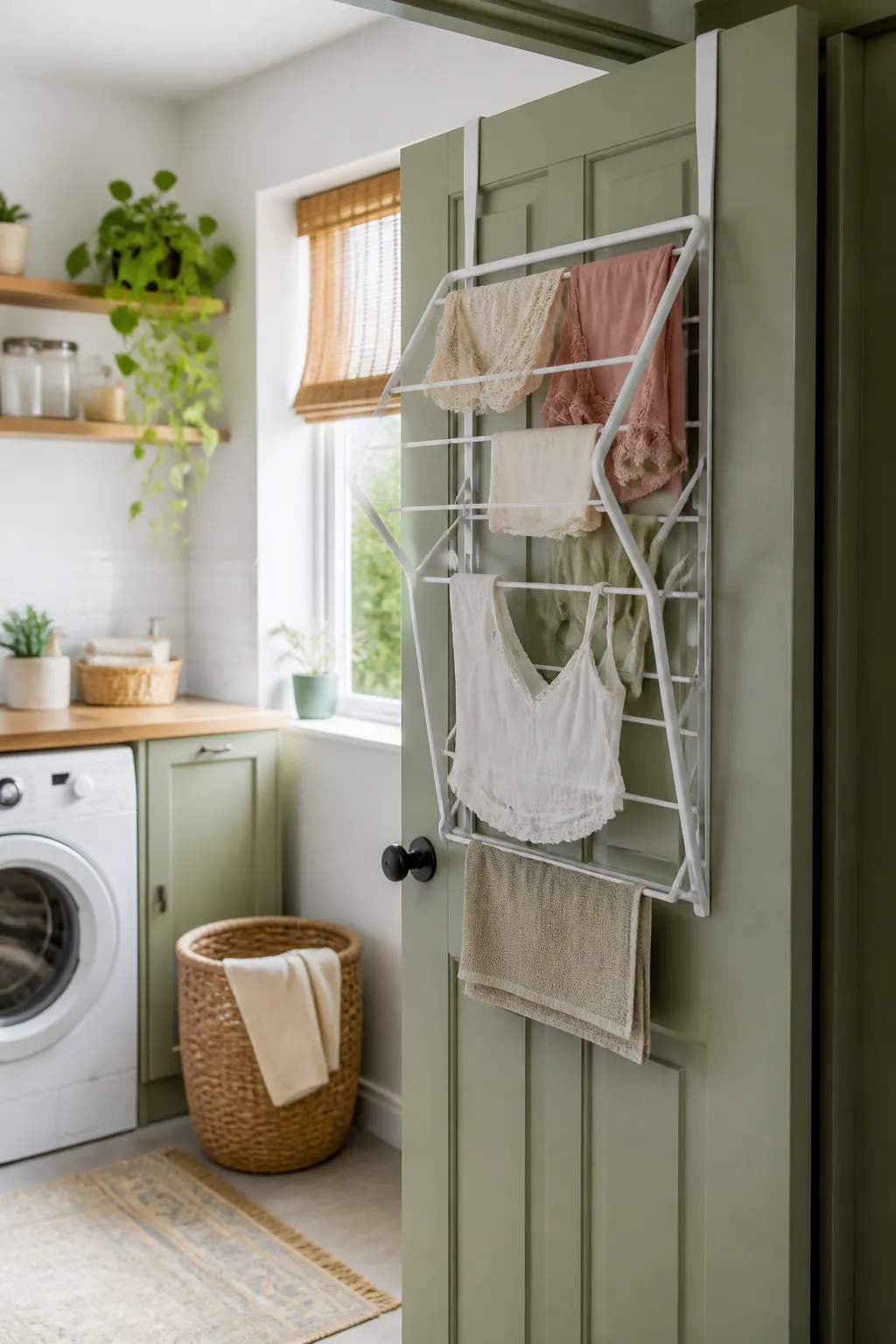
An over-the-door drying rack hangs over the top of the door and folds flat against it, usually to about two inches deep, so the door still closes behind it. It needs no drilling and no stud, which makes it the better choice in a rental where the wall beside the machines is not an option.
The failure mode is the door itself. These are built for a standard solid swinging door around an inch and a half thick. A bifold or louvered closet door will flex under the weight and pull out of alignment within a few loads, and a very thick or paneled door may not let the hooks seat properly at all. Check the door type before the rack, not after.
Keep the load on it light. This is the spot for delicates, hand-washed items and the shirt that cannot go in the dryer, not the week’s towels.
5. A rolling garment rack for the overflow on a heavy week

A folding wall rack and a door rack between them cover most weeks. They do not cover the week everything needs to hang at once, which happens more than anyone plans for.
A freestanding garment rack on casters solves that overflow without becoming permanent furniture. Because it stands on the floor rather than a wall or a door, it carries real weight on its rod, enough for a full load of shirts and pants on hangers. Roll it in front of a window on a dry day, then roll it back into a corner or a closet once the laundry is off it.
Some renters use a retractable clothesline strung between two walls for the same overflow job, which works if both walls take an anchor. A rolling rack needs neither wall to hold, which is the advantage in a space where you are not sure what is behind either one.
6. Use the dead air above a stacked washer and dryer
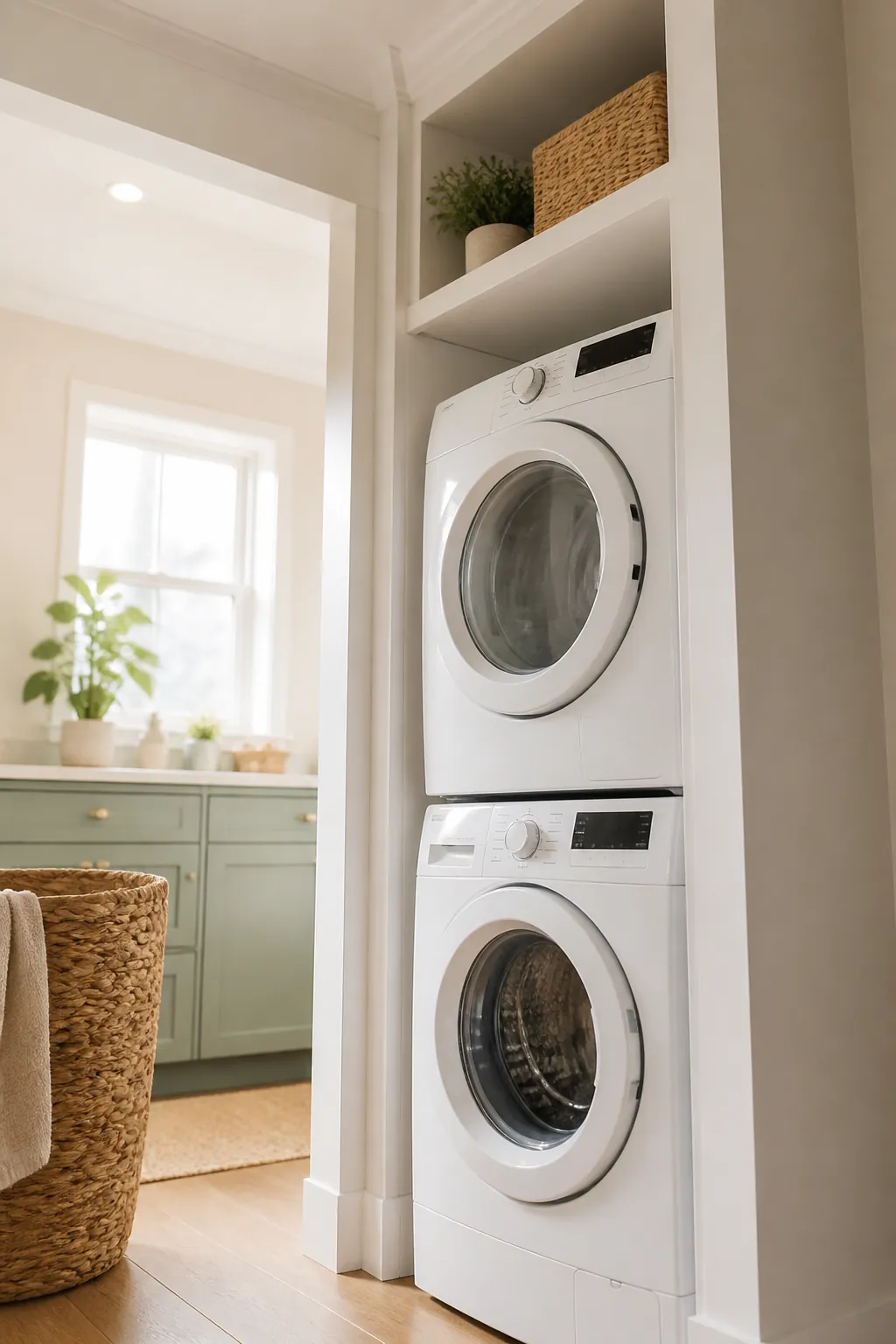
A stacked washer and dryer leaves a column of air above the top unit that nothing else claims, often two feet or more before the ceiling.
That space is worth using before you add floor equipment. A folding wall rack mounted above the stack, high enough to clear the dryer door when it opens, catches that dead air instead of the floor beside it. Measure the dryer door swing before you place the bracket, because a rack mounted too low will foul the door every time you unload a cycle, and that is the kind of mistake you rediscover daily rather than once.
7. Give every piece of laundry breathing room
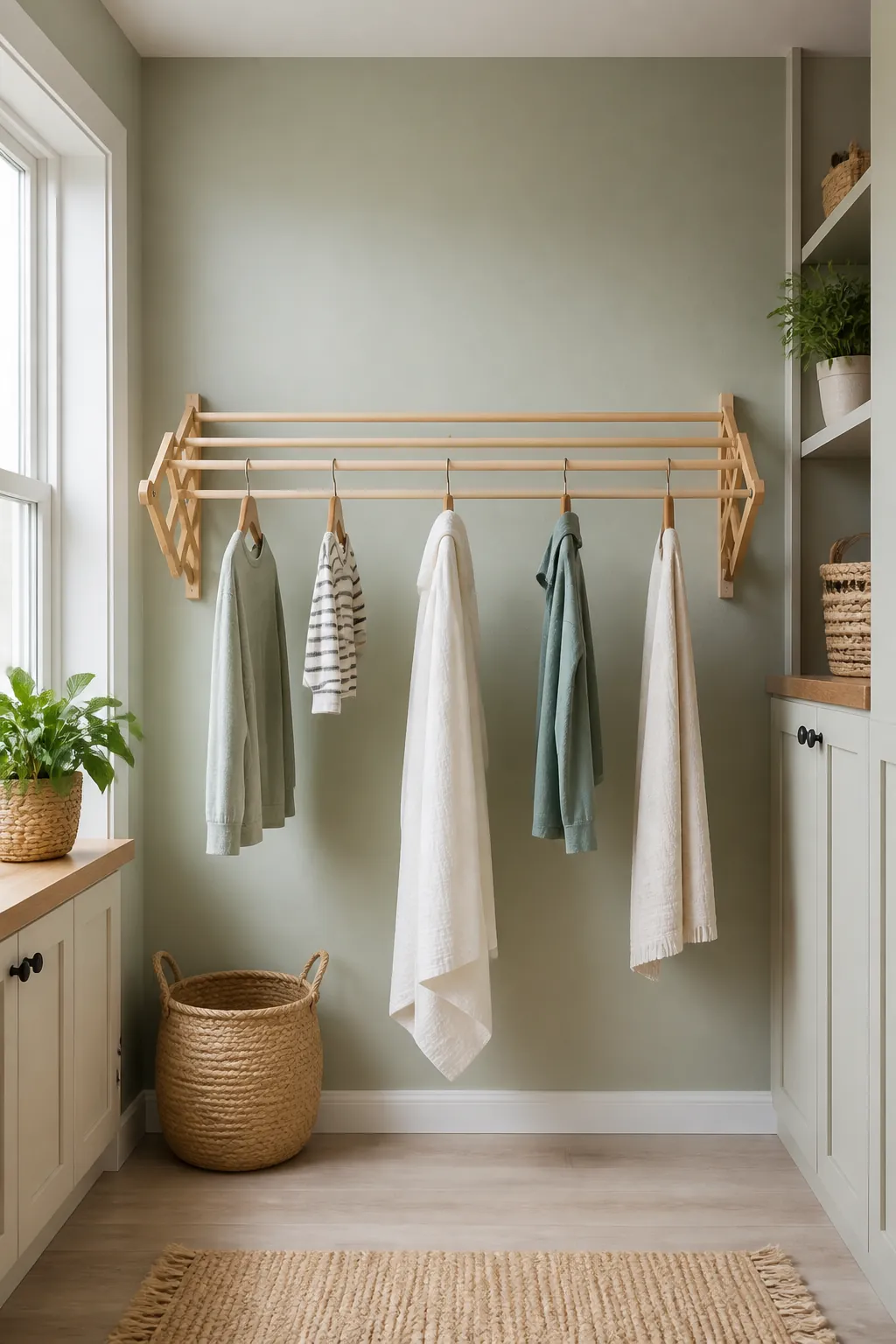
A rack that looks full is not the same as a rack working well.
Wet items hung touching each other trade moisture back and forth and both take longer to dry, sometimes twice as long as they would with a gap between them. Leave an inch or two between hangers and between items on the same arm. It means fewer things fit per load, which feels like a step backward until you notice everything is actually dry by evening instead of still damp the next morning.
8. Keep air moving so a closed laundry space does not turn humid
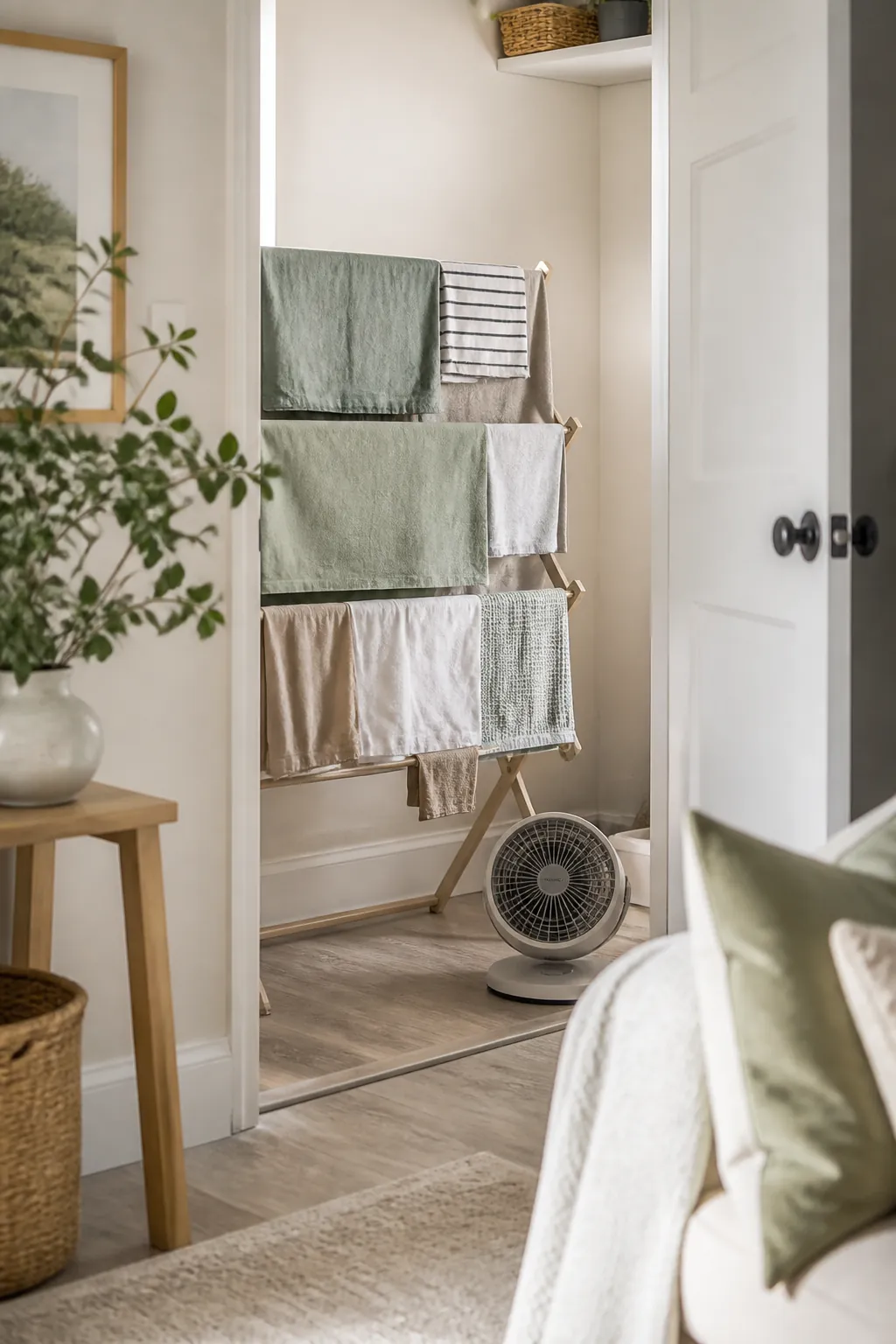
A laundry closet with the door shut and wet items hanging inside is a small, sealed room gaining moisture with nowhere for it to go.
Crack the door, run a small clip fan pointed at the rack, or open a window in the room if there is one. Even an hour of real airflow after loading the rack cuts drying time substantially and keeps the humidity from settling into the walls, which in a windowless interior closet is the difference between a laundry space and a slow mildew problem. Laundry room organization ideas for a tiny space covers the same airflow problem across a full room rather than just this rack.
9. Fold it away the moment the load is dry
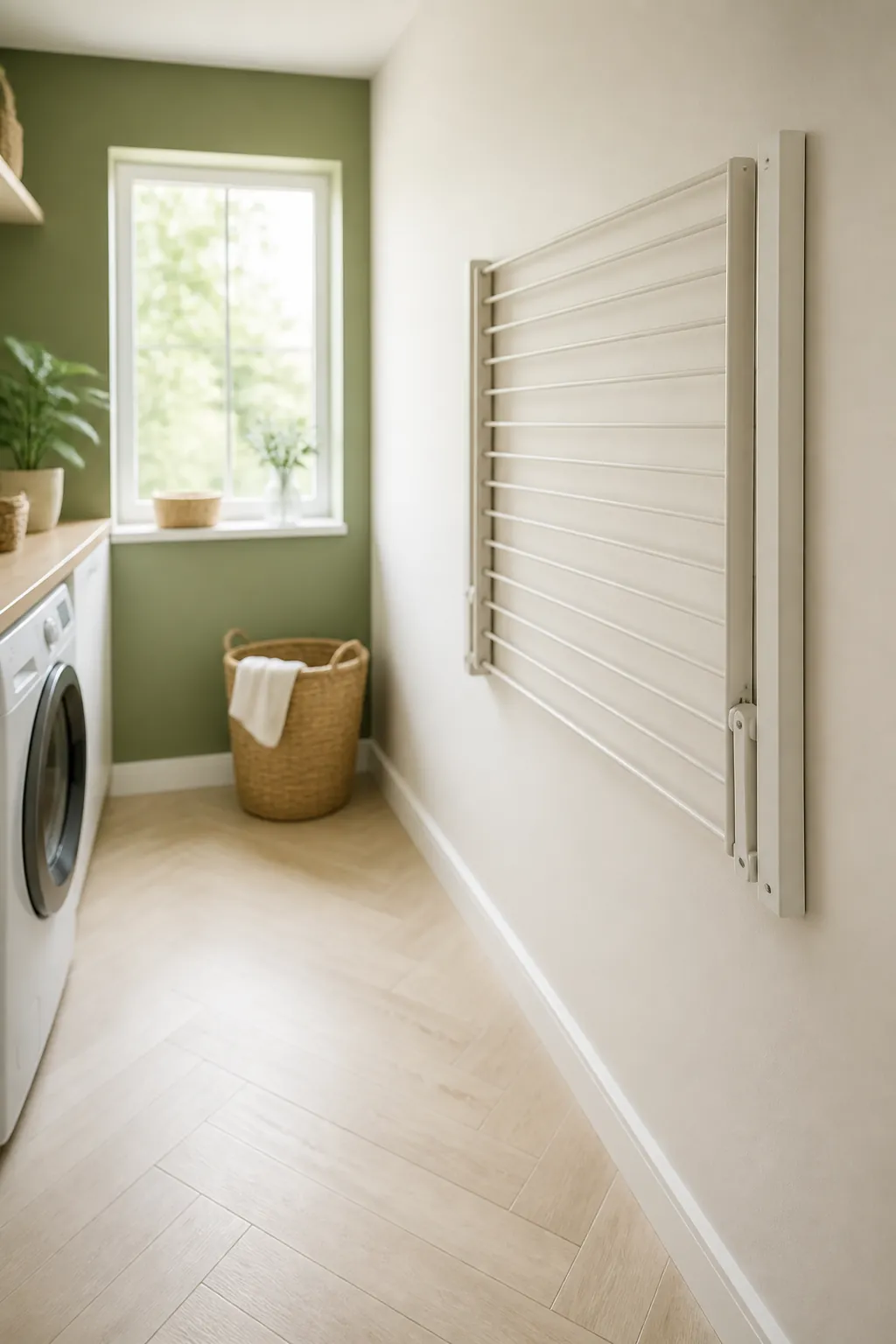
The whole point of choosing racks that fold and roll is losing the habit of leaving them out.
A wall rack left open all week is not saving you anything over a freestanding one, since it still blocks the same stretch of floor or wall. Fold it flat as soon as the last item comes off, and the space goes back to being a walkway rather than a permanent laundry display. This pairs well with keeping the floor itself clear in the first place, which detergent storage for a laundry closet with no shelf covers from the supply side rather than the drying side.
Where to start
Measure the wall space, the door thickness, and the floor gap before you buy anything, since each rack style depends on a different one of those numbers. A wall-mounted folding rack anchored into a stud handles the weekly load, an over-the-door rack on a solid door takes delicates, and a rolling garment rack covers the overflow week without becoming permanent furniture.
Then give the laundry room air. Space items apart, crack the door or run a fan while things dry, and fold every rack flat the moment it is empty. A small laundry space was never short of drying capacity. It was short of surfaces that give the space back when they are not in use.