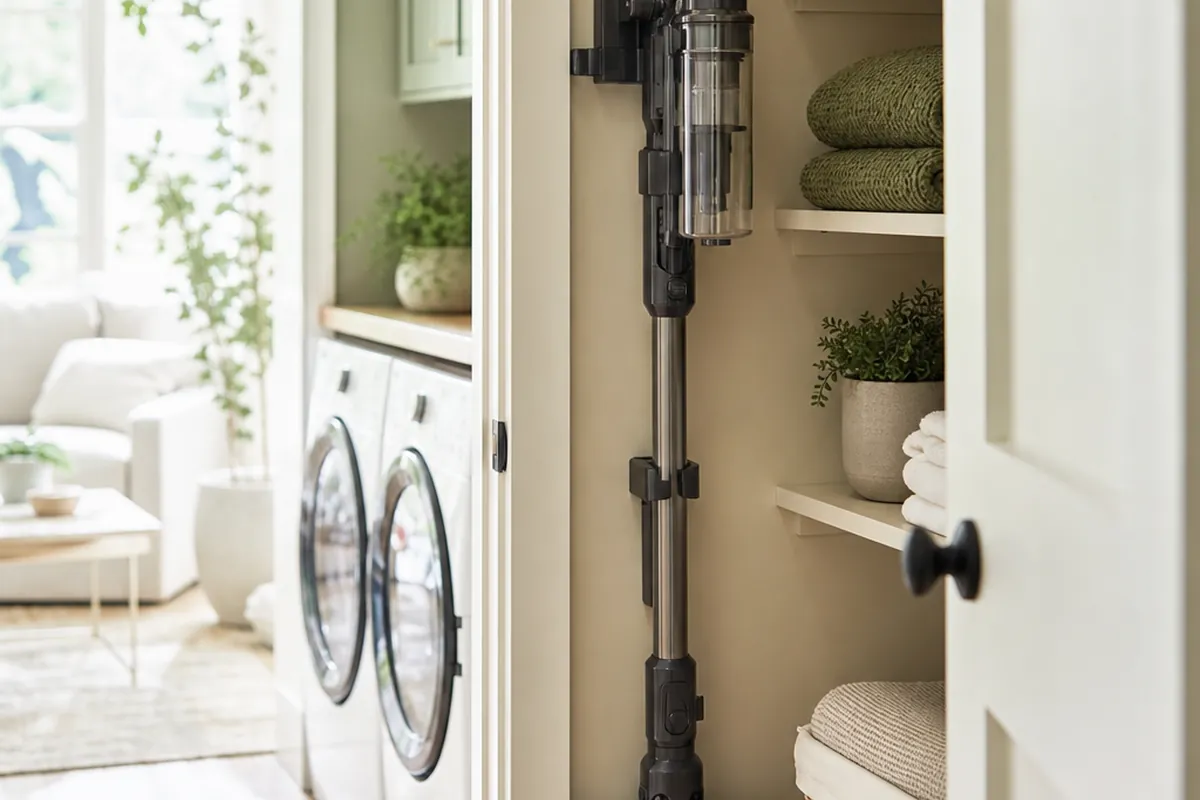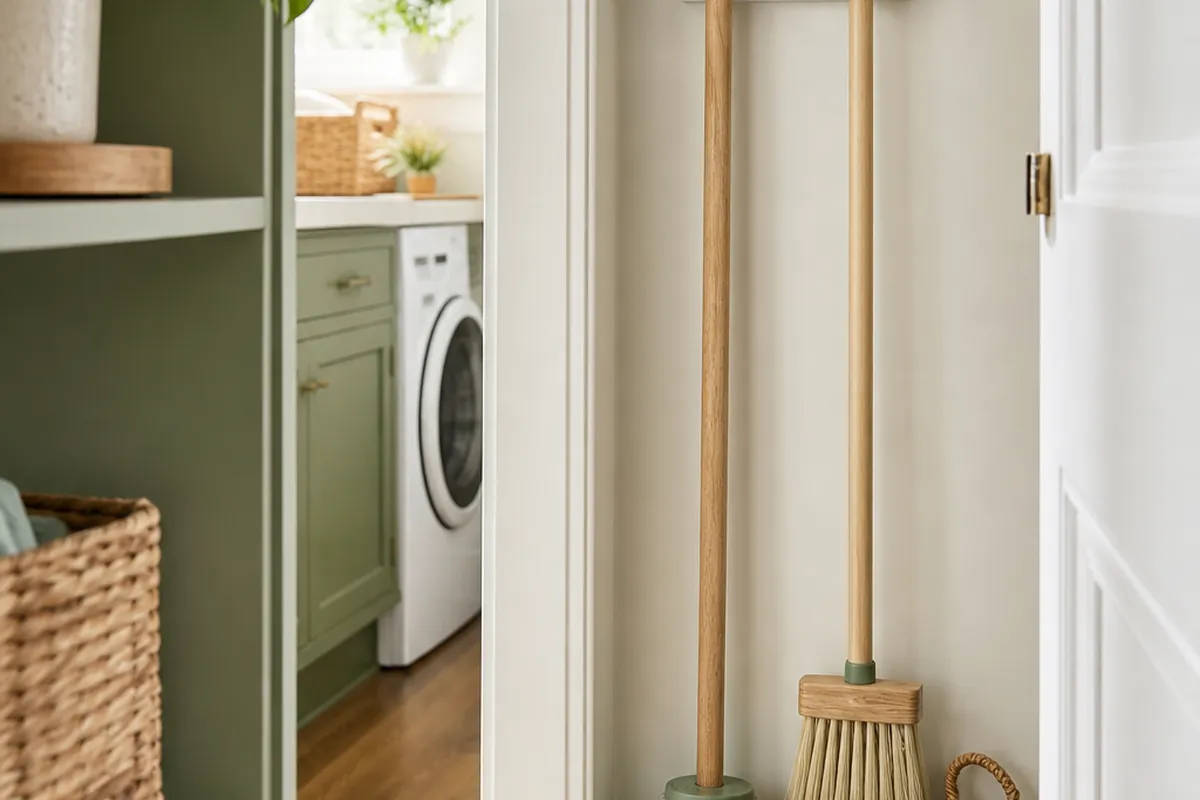
Open a small utility closet and the mop is usually the first thing to fall, because it was never actually stored, just leaned. The broom leans next to it, the handles cross, and pulling either one out drags the other down with it. Mop and broom storage in a closet this size isn’t about finding a bigger container. It’s about getting both handles off the floor and onto the wall or the door, where they stop touching each other entirely.
Most utility closets built for a single mop and broom are 18 to 24 inches wide, which is exactly wide enough for two handles to lean at an angle and cross paths, and exactly too narrow for a bucket to sit beside them without blocking the door. Every fix below works inside that footprint, and none of them requires more than a stud finder, a tape measure, or nothing at all.
1. Measure the closet before you buy anything
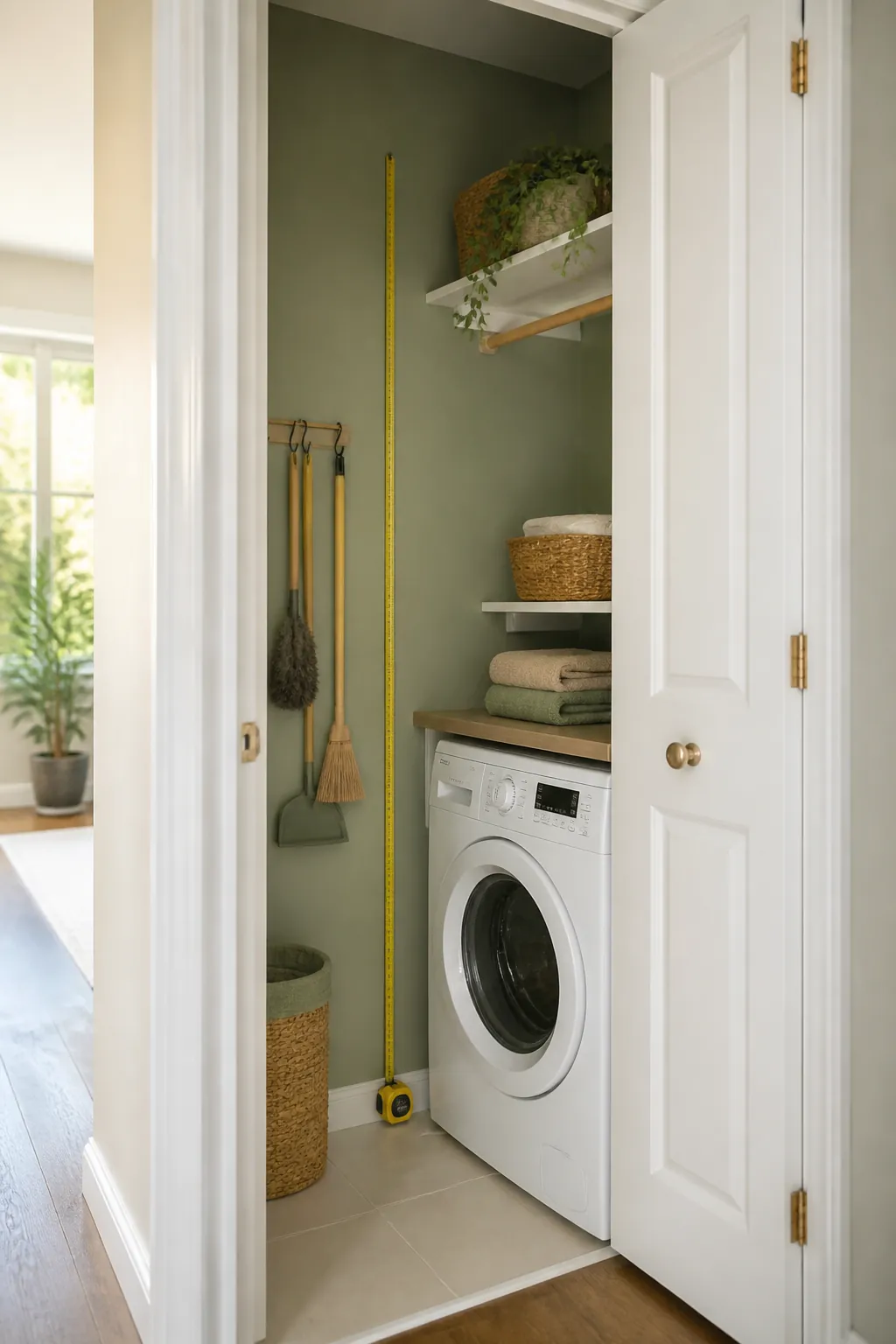
Three numbers decide what fits: the width of the side wall you plan to mount on, the depth from that wall to the door when it’s closed, and how far the door swings open before it hits the opposite wall or a shelf. Get all three before ordering anything.
The mistake that ruins most first attempts is measuring the closet’s width and ignoring the door swing. A mounted organizer that clears the closed door by an inch can still catch the door on its way open if the closet is narrow enough that the door has to swing past the mount to clear 90 degrees. Stand at the hinge side, swing the door all the way, and mark where the leading edge lands on the wall. Anything you mount goes below or beside that line, never on it.
2. Wall-mount the broom off the floor first
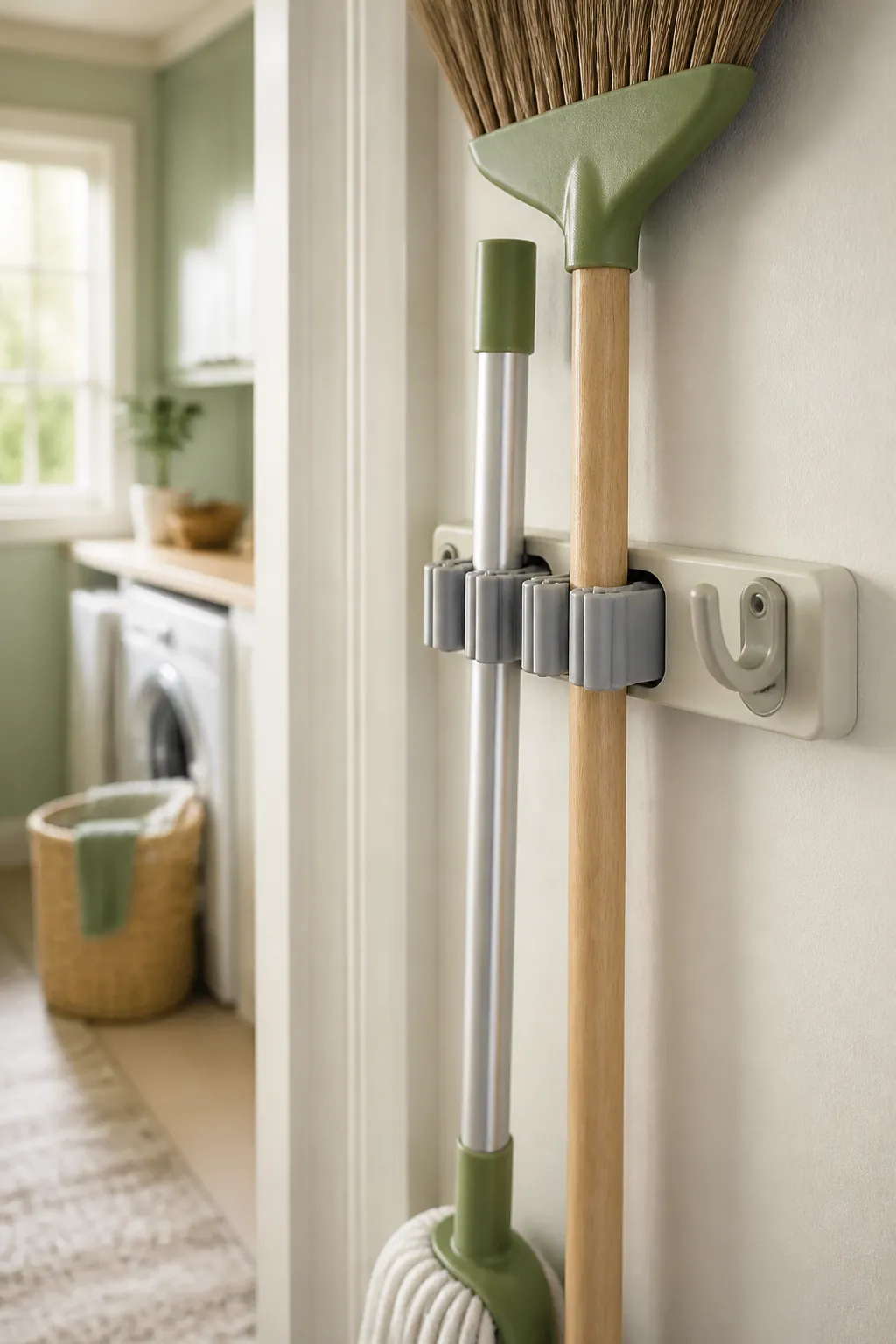
This is the single change that fixes the leaning pile. A wall-mount broom and supply organizer uses spring-loaded grippers to hold two or three handles upright and separated, so the broom and the mop stop crossing paths and stop sliding out the second the door opens.
Orientation matters more than people expect: the side wall keeps handles running front to back, while the back wall eats straight into shelf width. Once it’s up, walk the top gripper up or down until the handle tops just miss your lowest shelf, which on most closets lands somewhere around chest height, though it’s worth checking against your own shelf rather than assuming. If drilling isn’t an option, screw the organizer to a scrap of plywood and wedge that upright behind the mop bucket instead of into a stud, or go with adhesive mounting strips, just don’t trust the rating on the box at face value. A wet mop head is heavier than the dry plastic handle suggests, so treat 5 pounds per gripper as the floor to look for, not the ceiling.
3. Hang the mop on the back of the door
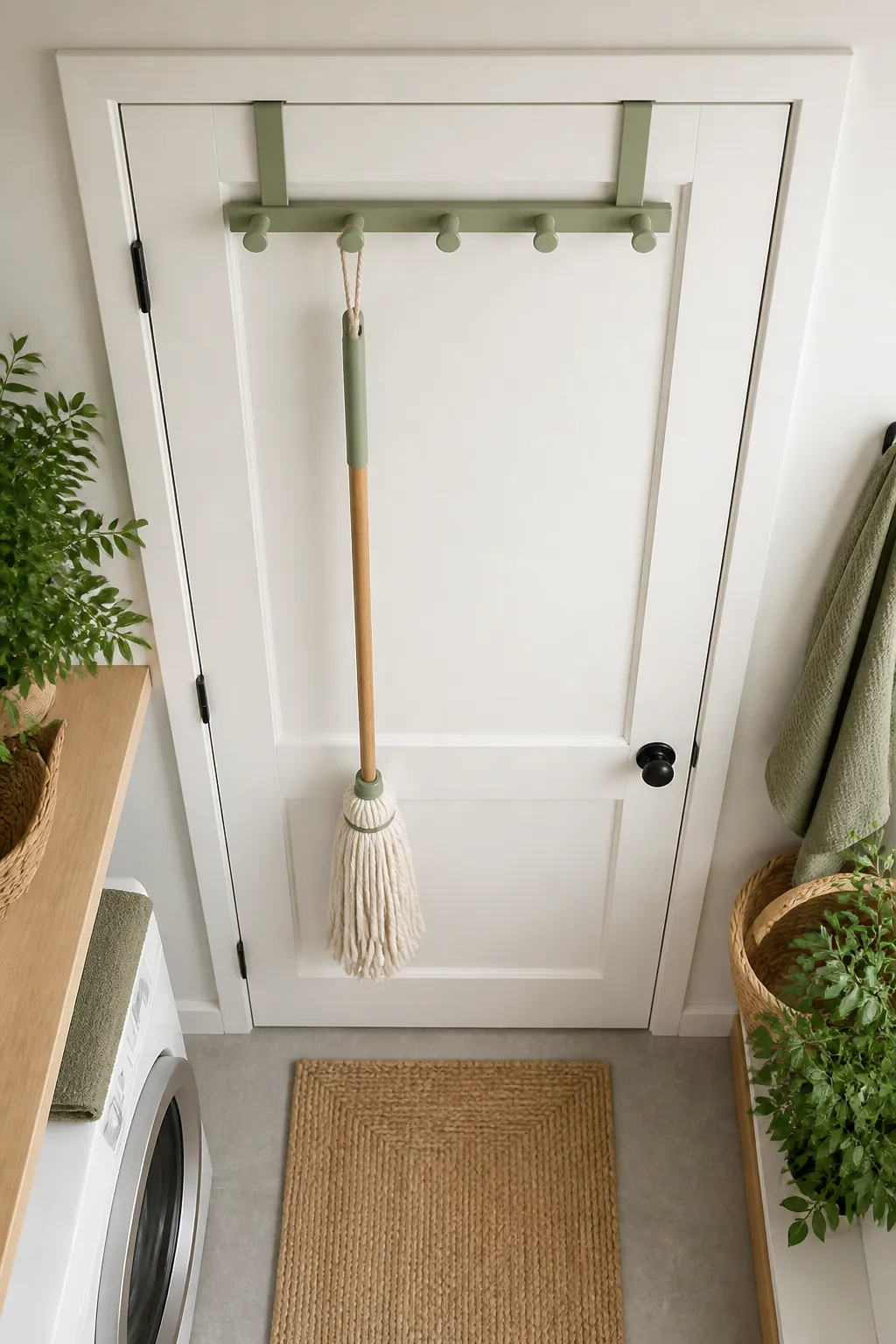
The inside of the door is unused vertical space in every closet this size, and it needs no wall contact at all. An over-the-door hook hanger slips over the top edge of the door and gives you two or three hooks for the mop, a dustpan, or a hand broom.
A mop won’t balance on a hook by its handle the way a coat does, so loop a short length of cord or an old shoelace through the small hole most mop handles already have near the cap, and hang that loop instead. The mop head then hangs clear of both the door and the floor, which matters more than it sounds like it should, since a mop head resting against the door picks up dust and starts to smell within a few days. Keep the total hung depth under 3 inches so the door still swings shut over whatever’s on the shelves behind it, and check that clearance with the door fully closed before you call the job done.
4. Add a second hook rail if one organizer isn’t enough
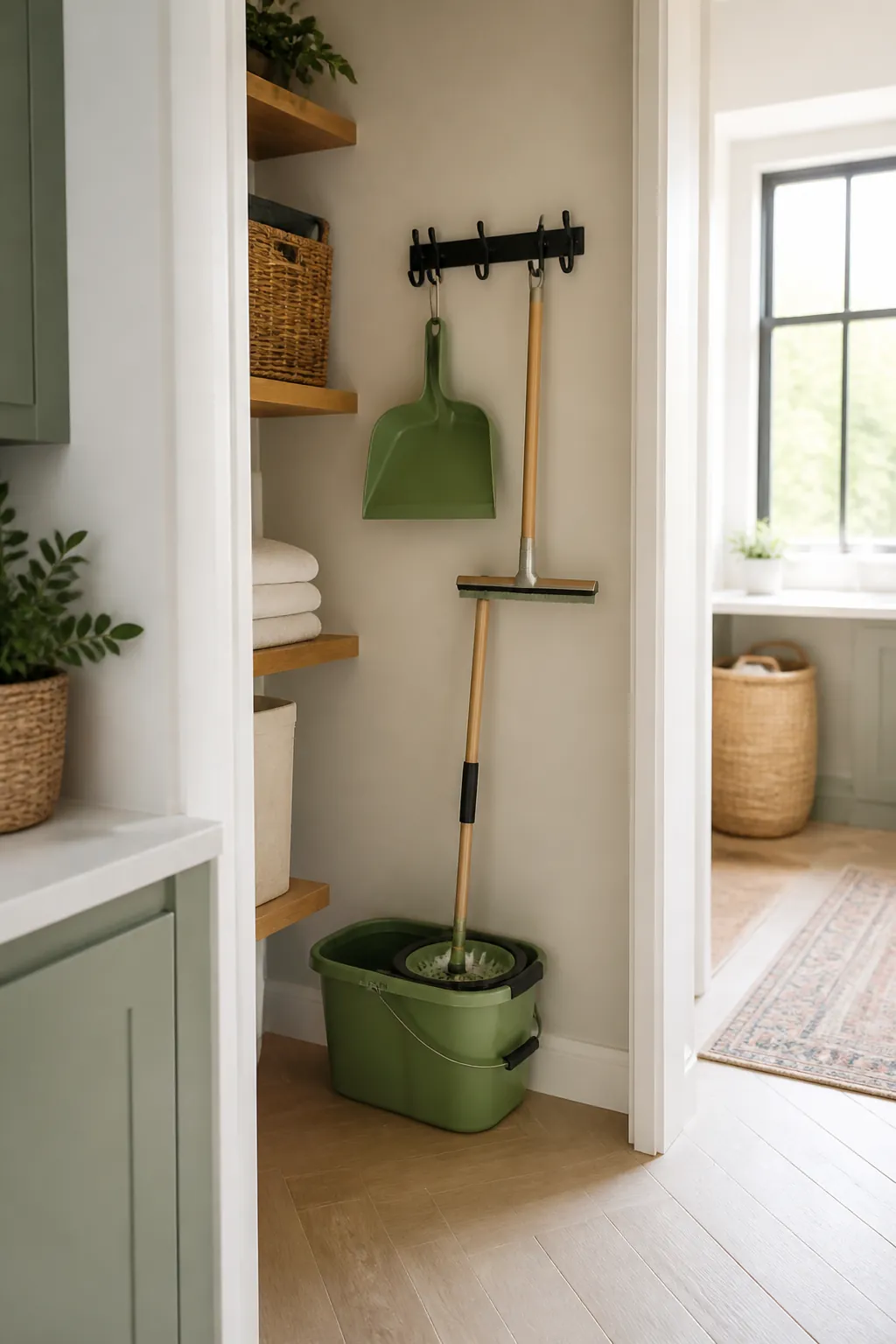
Some closets need more capacity than a single broom organizer gives, especially if a dustpan, a squeegee, and a second mop are all fighting for the same three grippers. A heavy-duty wall hook rack mounted on the back wall, above where the bucket sits, spreads the load across separate hooks instead of cramming everything onto one mount.
Space the hooks a hand’s width apart so handles don’t tangle when you pull one free, and hang the heaviest tool closest to the wall stud if you’re drilling into drywall rather than a stud, since a fully loaded rail concentrates weight on a small anchor point. This is the fix for a closet that also holds cleaning supplies, not just the mop and broom; there’s more on organizing that overlap in cleaning supplies organization for a tiny utility closet.
5. Go freestanding when you can’t mount anything at all
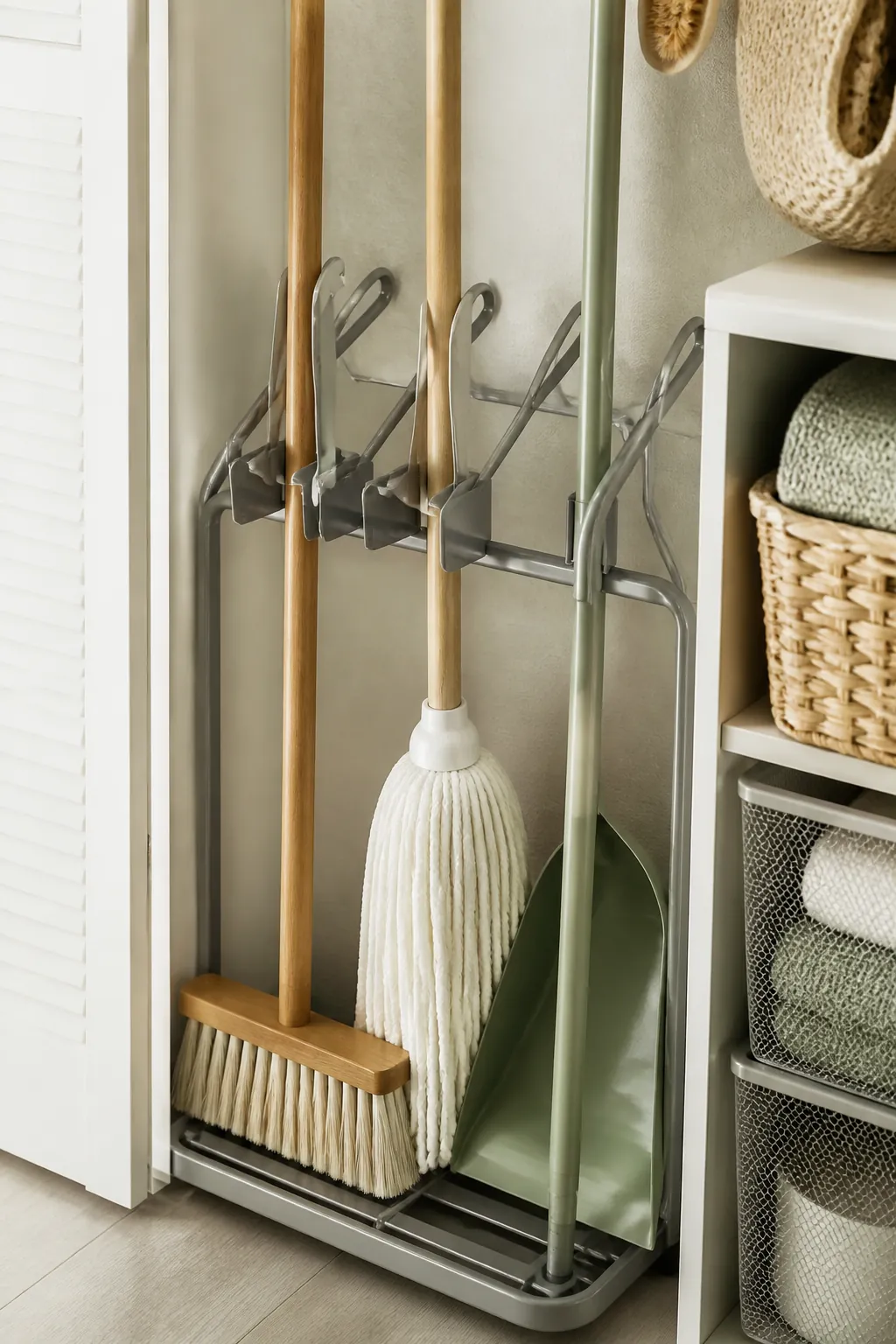
Some leases genuinely forbid any wall hardware, adhesive included, and a freestanding broom and mop rack is the honest answer for that closet. It stands on its own feet, holds several long handles at angled slots so they don’t cross, and comes apart in minutes to move with you. There’s no verified product of this type on this site yet, so rather than link something nobody here has checked, look for one rated to hold at least four tools and narrow enough to leave the door swing clear.
The tradeoff is floor space, which an 18-inch closet has almost none of to spare. If a freestanding rack is your only option, it usually has to replace the bucket’s floor spot rather than share it, so plan on hanging the bucket from a hook instead.
6. Keep the mop head clear of the floor and the walls
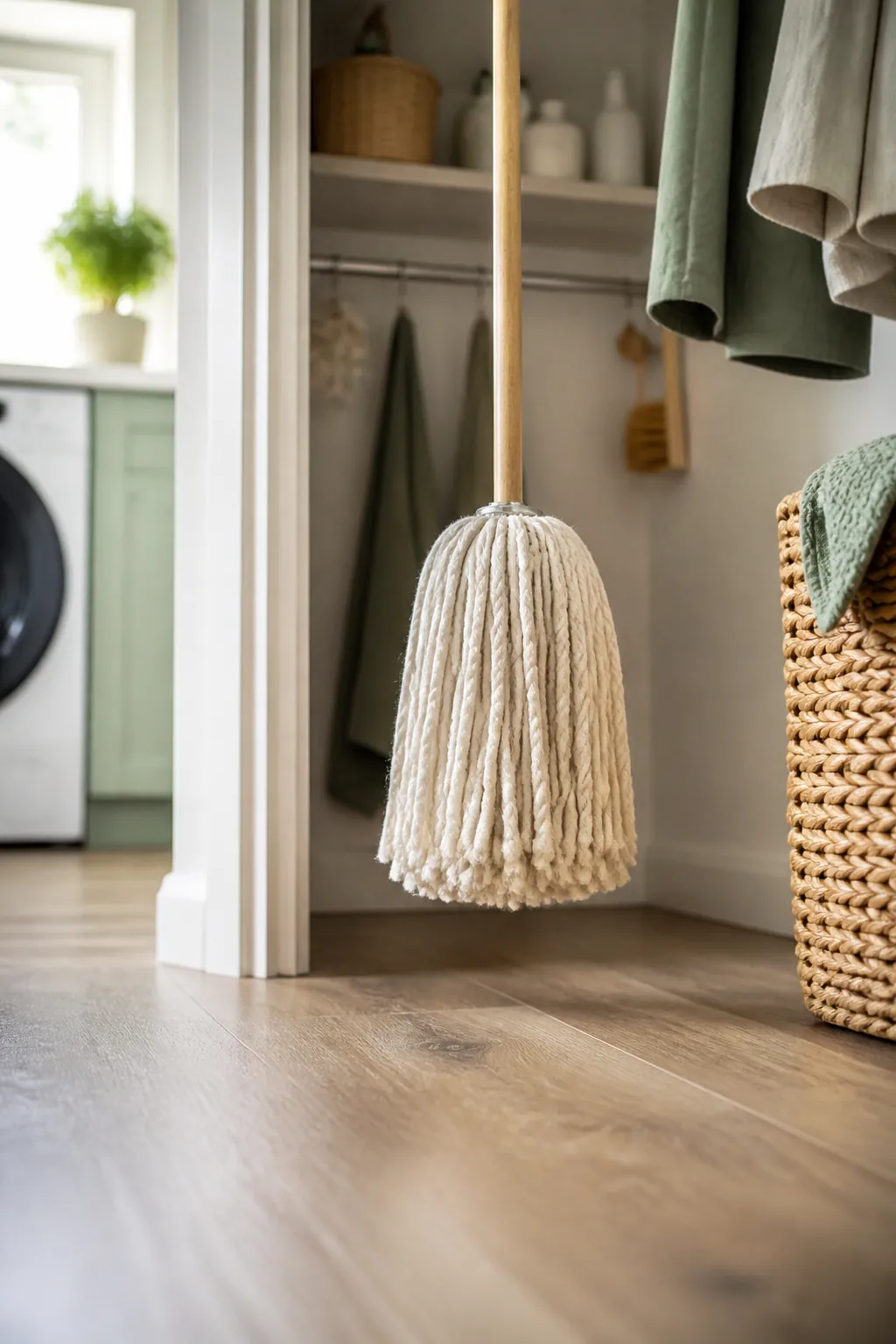
Upright storage alone doesn’t stop a mop from smelling. What actually causes the odor is the head sitting damp against a surface with no air moving around it, whether that surface is the floor, the door, or the back wall. A mop stored vertically but still touching the wall behind it will sour just as fast as one lying flat.
Hang it so the head has clear air on at least two sides, and let it dry for a few hours before it goes back in the closet at all if you have the room to spare outside. A quick rinse in hot water after each use, wrung out hard, cuts down on the smell more than any storage change can on its own.
7. Corral small tools before they end up on the floor
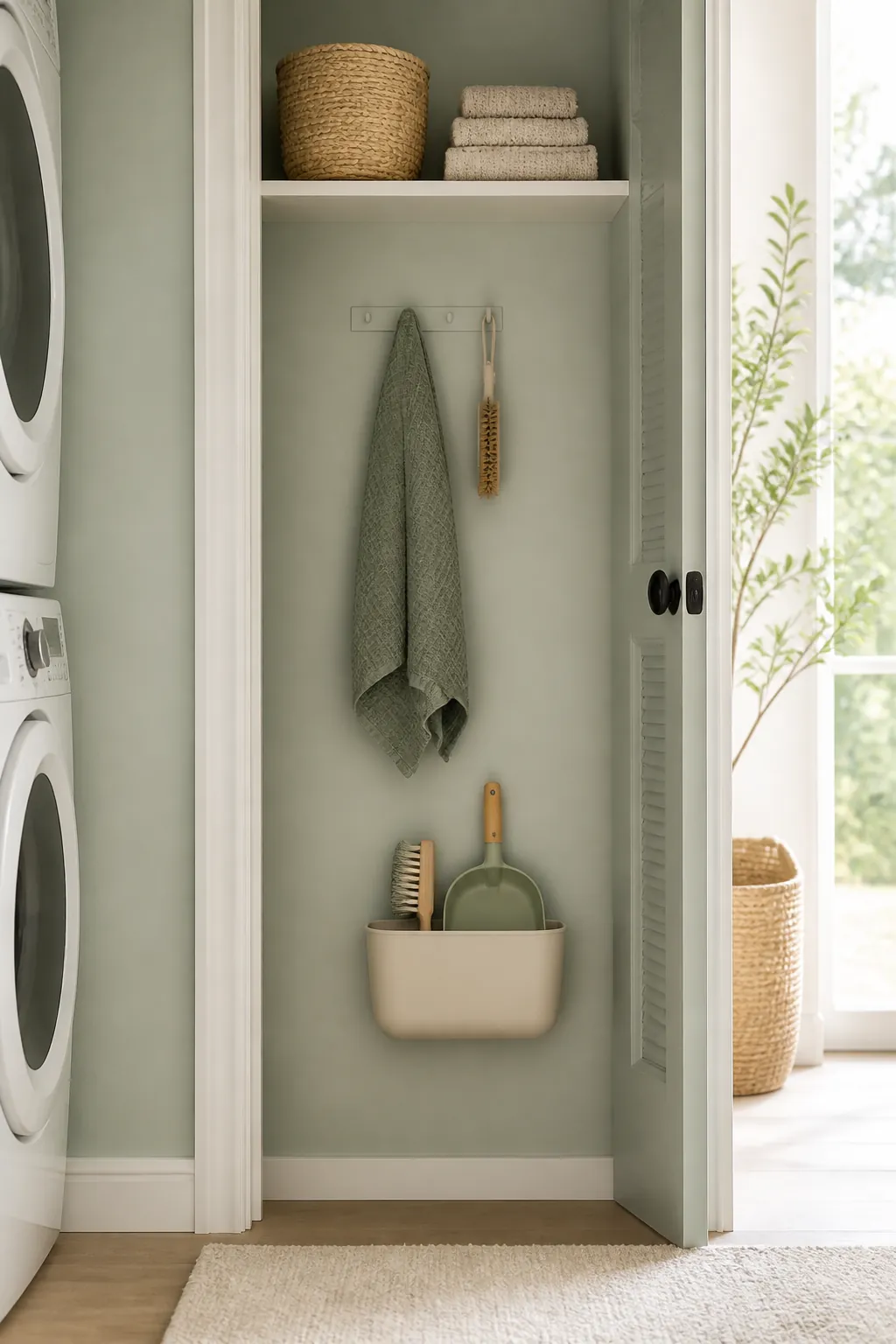
Dustpans, hand brushes, and dusters are the items that slide off a shelf and end up underfoot, because they’re light enough to shift and small enough to fall through the gap between a bucket and the wall. Give them their own low hook or a shallow bin at knee height rather than balancing them on top of the bucket, which is where they land otherwise.
A dustpan with a long handle hangs cleanly from a single hook near the broom. A short-handled one is better off in a bin, since a hook just lets it swing and clatter against the door every time it’s opened.
8. Keep the bucket dry and off anything it can drip on
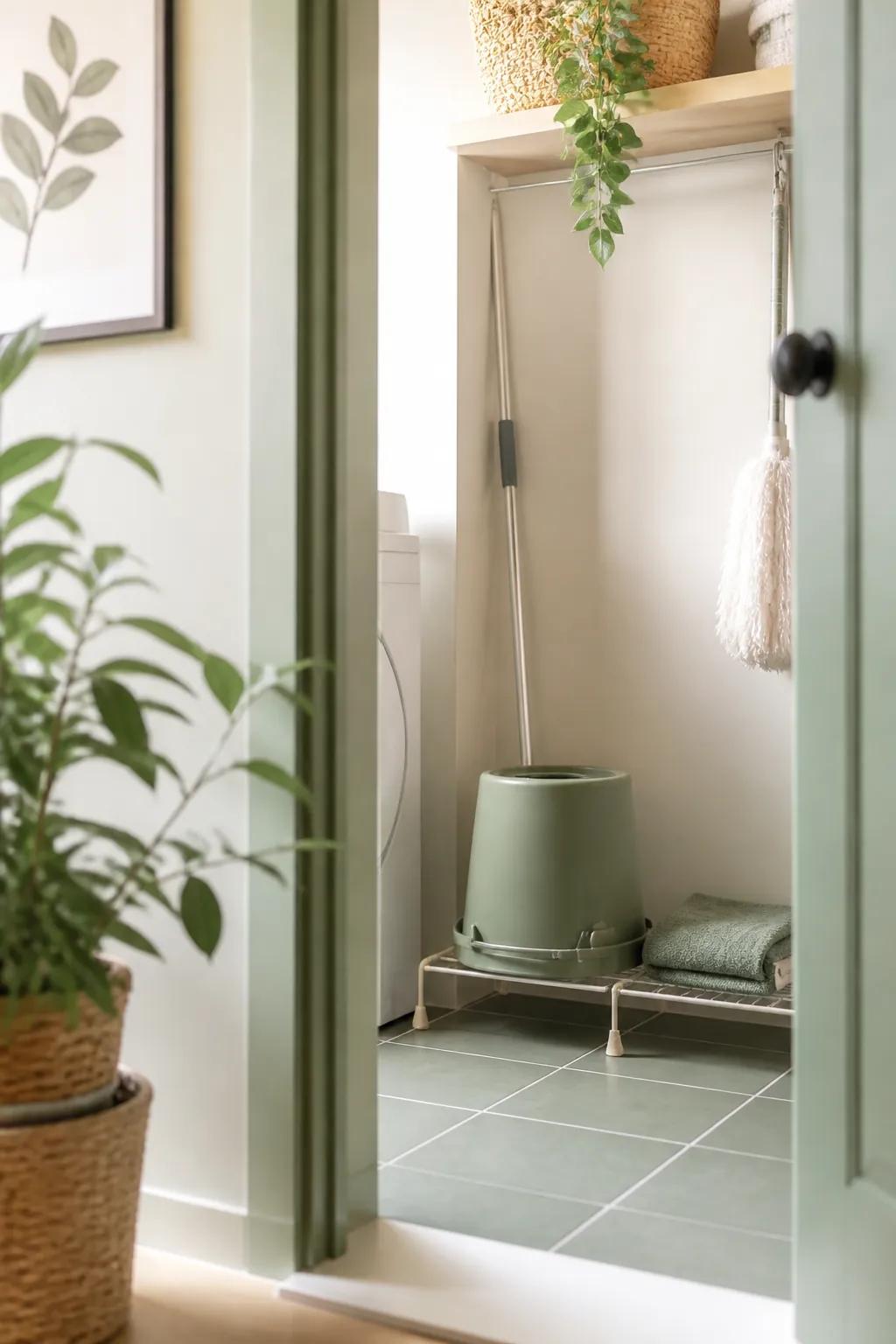
A mop bucket that goes back into the closet still wet is the reason a utility closet floor stays permanently tacky. Tip it upside down on a small rack or a folded towel rather than setting it flat, so the last inch of water drains out instead of sitting in the bottom between uses.
If the bucket sits directly under the wall-mounted organizer, check that drips from a hung mop don’t land on anything below it that shouldn’t get wet, cardboard boxes, a vacuum’s fabric bag, anything with a paper label. Moving the bucket a few inches to the side of the drip line solves this permanently and costs nothing.
9. Recheck the mounts every few months
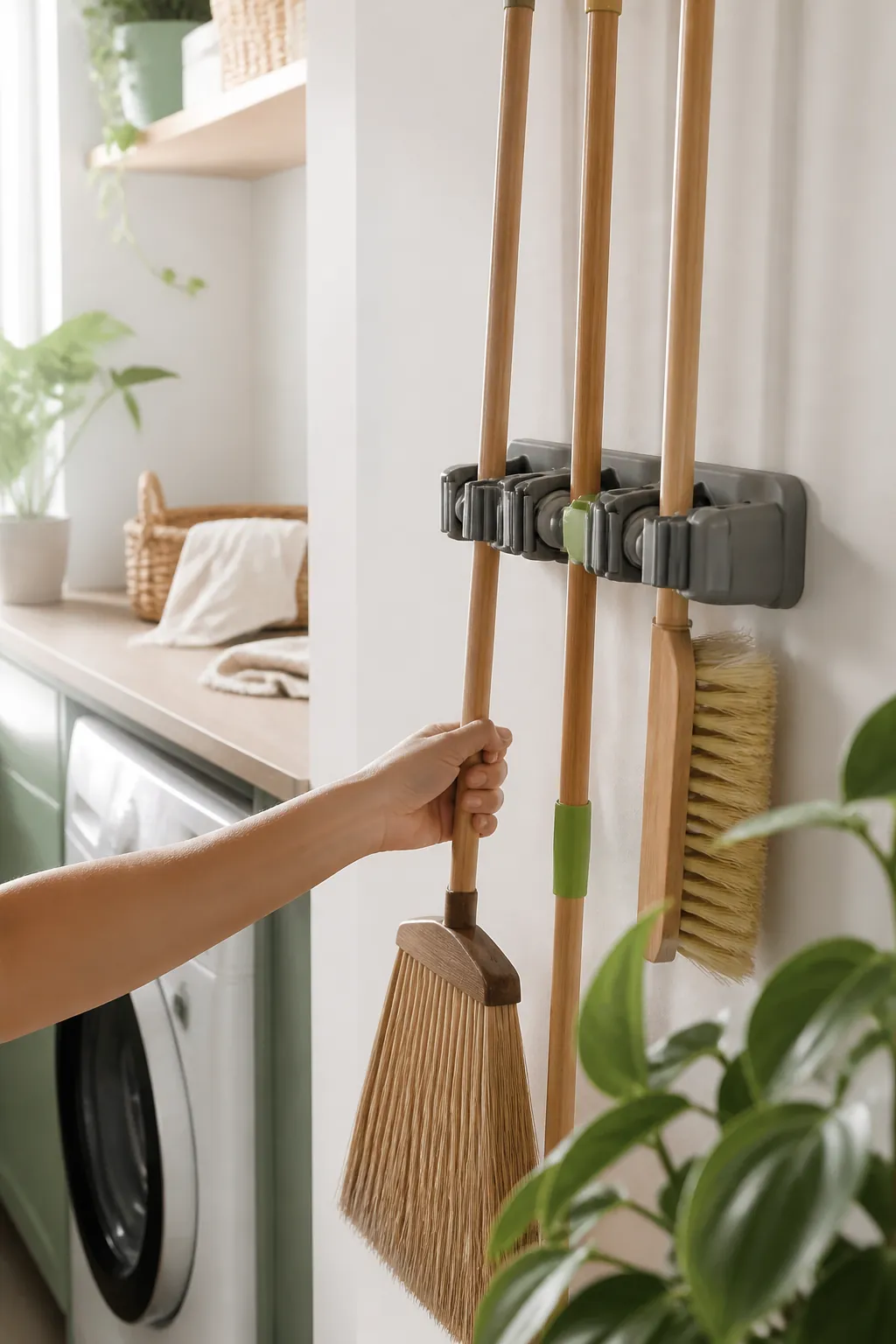
Adhesive strips and spring-loaded grippers both lose grip gradually, not all at once, so the first sign of trouble is usually a slight sag rather than a sudden fall. Every three or four months, give each mounted organizer a firm downward tug with a dry tool loaded in it and look for any give at the wall.
This is also the moment to retire anything actually worn out. A broom shedding bristles or a mop head that’s gone stiff and matted isn’t doing its job regardless of how well it’s stored, and a closet this small has no room to keep a tool around out of habit.
Where to start
Measure the door swing before anything else, since it’s the constraint everything else has to work around. Get the broom onto the side wall with a spring-gripper organizer, hang the mop on the back of the door by a cord loop instead of leaning it, and add a second hook rail if one mount can’t hold everything. Go freestanding only if the lease rules out mounted hardware entirely. None of these changes take more than half an hour on their own, and together they’re the difference between a closet you can open one-handed and one where something falls out every time you do.