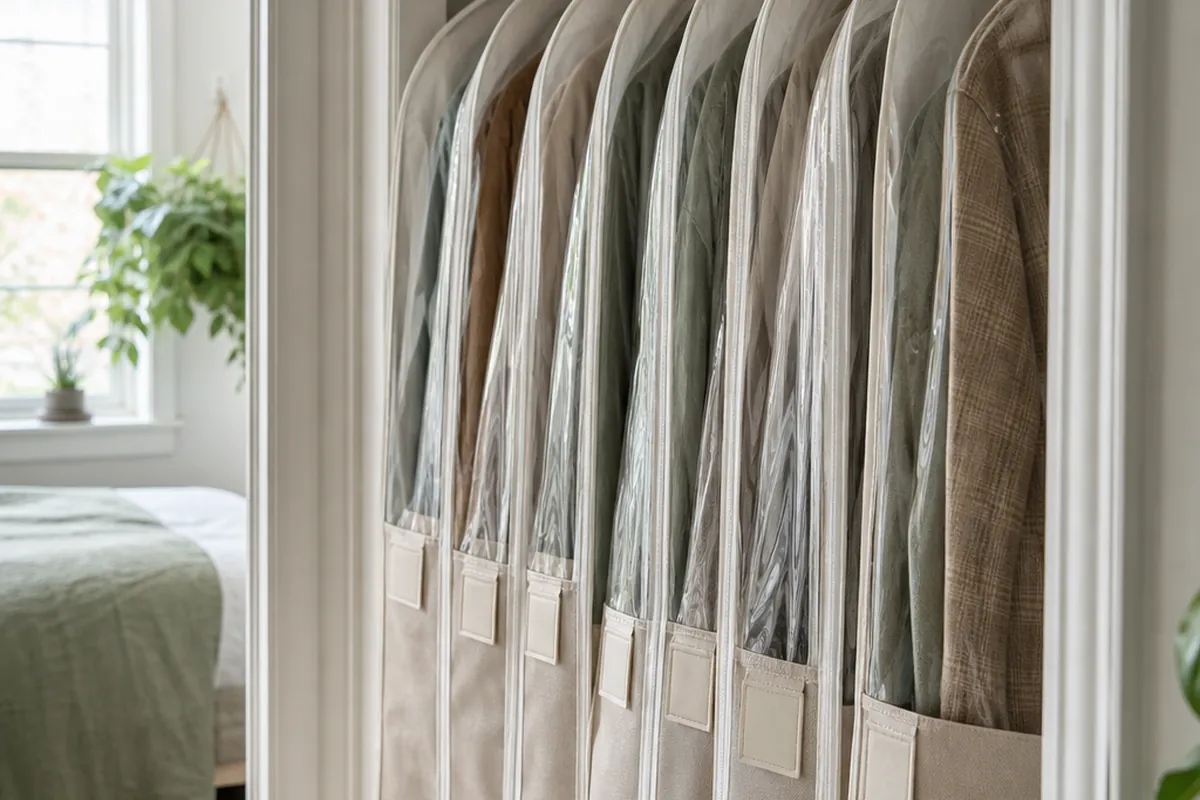
A capsule wardrobe is supposed to simplify a closet, but most attempts just rearrange the clutter instead of removing it. The clothes get edited down to thirty or forty pieces, and then those pieces go right back onto the same mismatched hangers, the same crowded shelf, the same floor pile that caused the problem in the first place. The piece count changes. The storage never does, so within a season the closet looks exactly as crammed as before, just with better clothes in it.
A rental closet is actually a good fit for this, once the storage catches up to the editing. A single rod and one shelf is close to all a real capsule needs, and none of what makes it work requires drilling, built-ins, or a landlord’s permission.
1. Decide the number before you buy a single hanger
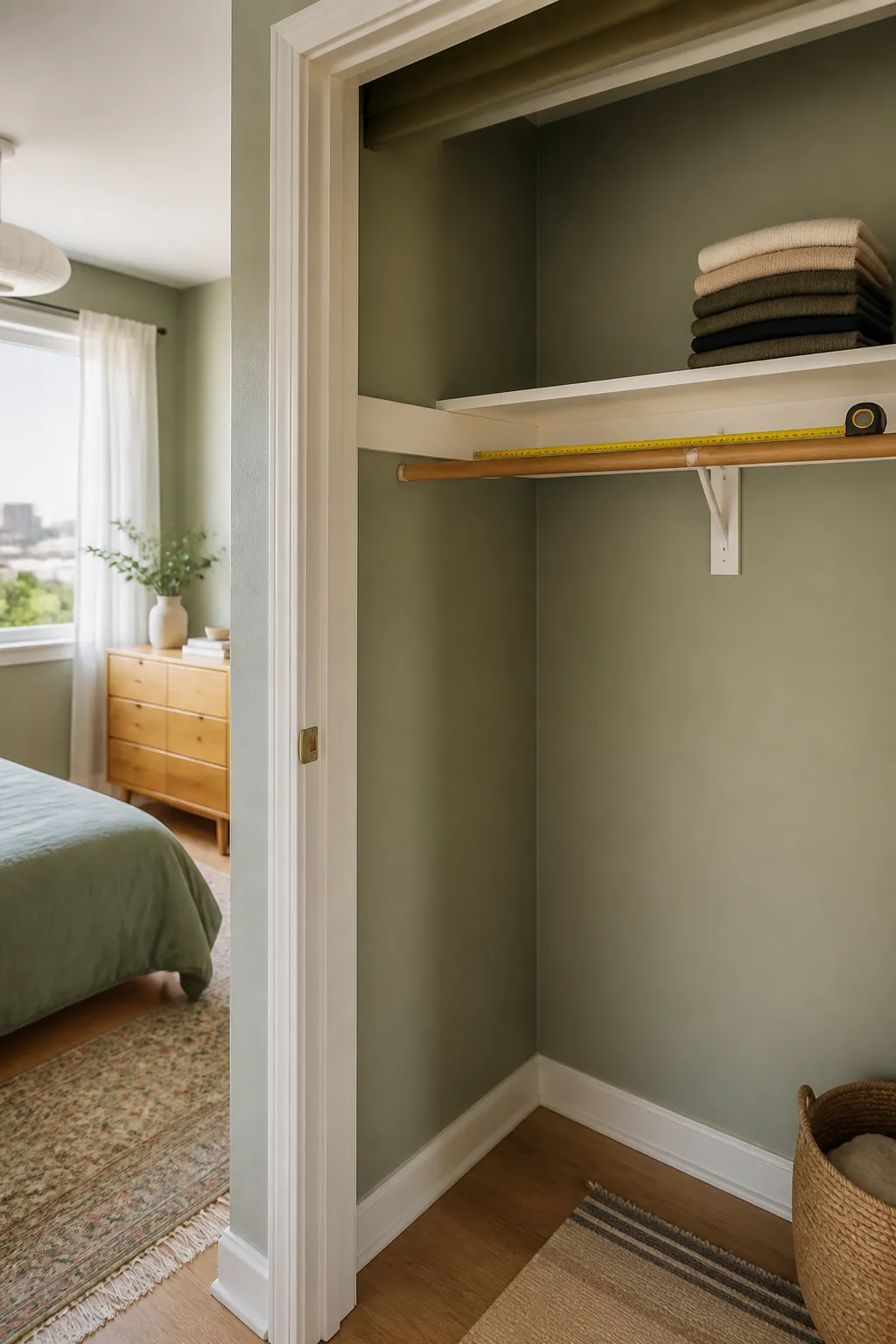
Most workable capsules land between 30 and 40 hanging and folded pieces, counting tops, bottoms, dresses, and outerwear but leaving out underwear, sleepwear, and workout clothes, which belong in a drawer system of their own. Pick a number in that range before you touch a hanger or a bin, because every storage decision after this one depends on it.
A rod holding 35 pieces on identical slim hangers runs about 17 to 18 inches of rail, which is a third of what a standard 60-inch closet rod offers. That gap is the whole point: a true capsule should leave visible empty rod, not fill it with careful spacing tricks. If your “capsule” fills the entire rod, the number is too high for the closet, not the other way around.
2. Standardize on one slim hanger for the whole capsule

Velvet slim hangers solve a problem specific to capsule wardrobes: a mixed set of wood, wire, and plastic hangers reads as cluttered even at a low piece count, because every style adds its own width and sits at a slightly different height. A wood hanger runs close to an inch and a half wide at the hook; a velvet slim hanger is about a third of that.
Buy one style, in one color, for every piece in the capsule, hanging items only. The flocked surface also keeps slippery blouses and bias-cut dresses from sliding off onto the floor, which matters more in a small capsule where losing a hanger means an outfit is actually missing, not just one option among many.
3. Give every garment type its own shelf bay

A capsule wardrobe’s folded half, sweaters, jeans, the handful of t-shirts you don’t mind creasing, needs more structure than a single flat shelf, because a small stack with nothing holding it upright slumps sideways within days. Shelf dividers for closets clip onto an existing wire or wood shelf and break it into bays roughly six to eight inches wide, which is enough for one category of folded clothing to stand upright without toppling into its neighbor.
With a capsule this small, assign one bay per category rather than one bay per stack: jeans in one, sweaters in another, folded tees in a third. You should be able to see every category at a glance without lifting anything, which is the entire argument for keeping the wardrobe small in the first place.
4. Add a hanging shelf tower for anything that doesn’t belong on the rod
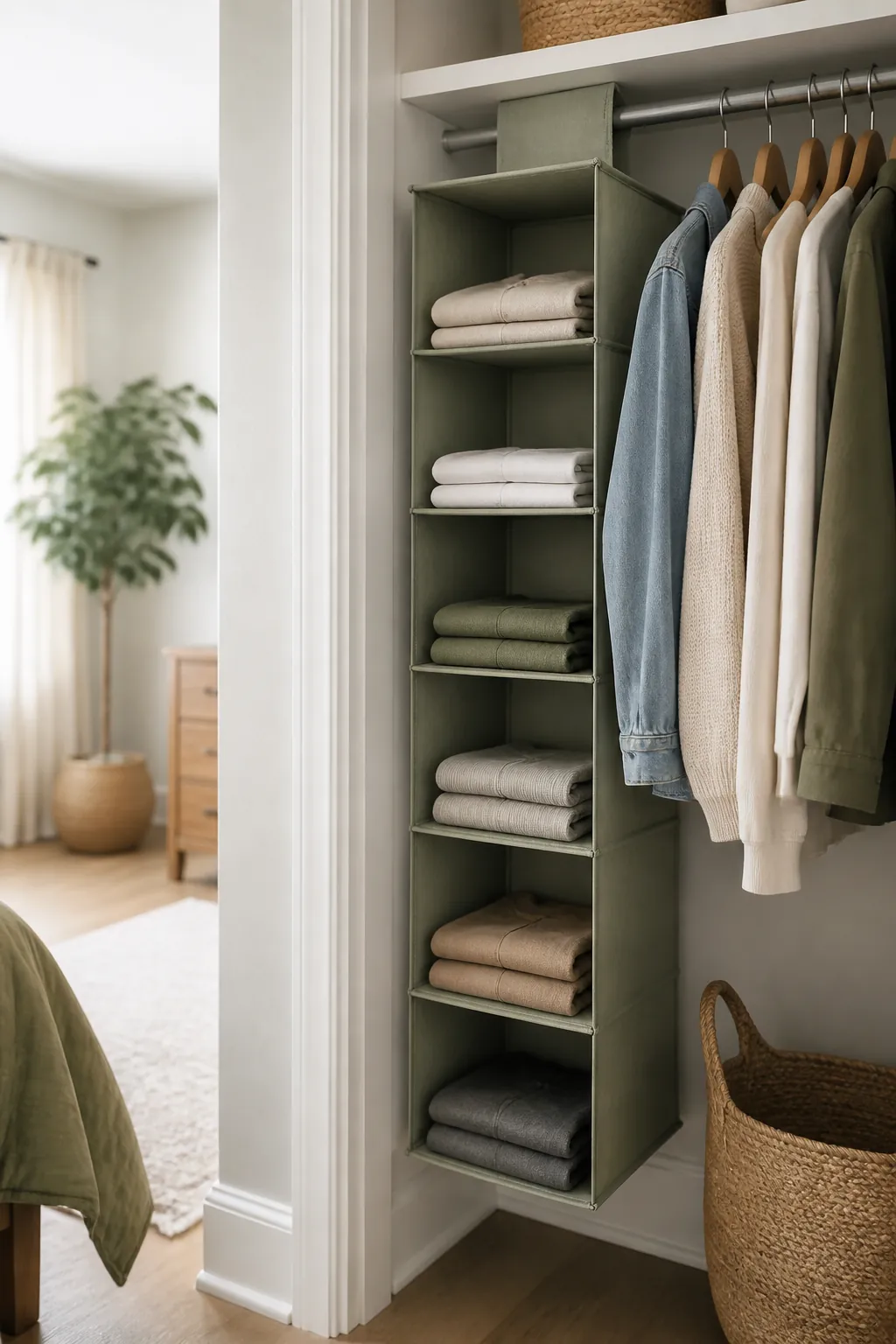
A 6-shelf hanging closet organizer straps over the existing rod and turns one narrow column of hanging space into six flat shelves, no hardware involved. In a full-size closet this is a nice-to-have. In a capsule, it’s where the folded third of your 30 to 40 pieces actually lives, instead of competing for shelf space with linens and off-season gear.
Hang it at one end of the rod, not the middle, so the remaining hanging section stays one continuous run rather than two awkward halves. Keep each shelf to a stack you can lift one-handed. A capsule’s whole advantage is that nothing in it is excess weight, literally or otherwise, and an overloaded fabric shelf slouching sideways undercuts that.
5. Set a hanger-count ceiling and enforce it at the hanger, not the hamper

The failure mode of almost every capsule wardrobe is slow creep: one new sweater here, a dress kept “just in case” there, until the 35-piece capsule is quietly a 55-piece closet again. The fix isn’t willpower. It’s counting hangers.
Buy exactly as many slim hangers as your target number, no spares, and leave it there. When every hanger is full and a new piece arrives, something else comes off the rod that same day, before the new item gets a hanger of its own. A closet with exactly 40 full hangers and no spares has no room to quietly expand, which is a much more reliable system than trying to remember a number in your head every time you shop.
6. Keep the off-season half somewhere other than the capsule rod

A capsule wardrobe is only a capsule if everything hanging on it is wearable this week. The moment last season’s heavy coat or this season’s beach cover-up shares rod space with your current rotation, you’re back to scanning past clothes you can’t actually wear, which is the exact friction a capsule is meant to remove.
Store the off-season half in a labeled bin on the top shelf, or in flat under-bed storage if the shelf is already holding your folded capsule items. Swap the two bins at the season change, not gradually, so the rod only ever shows what’s currently in rotation.
7. Pull the “maybe” pile out of the closet entirely

Every capsule edit leaves behind a handful of pieces nobody can quite commit to keeping or donating. Letting that pile sit on the closet floor or stuffed onto a high shelf defeats the whole exercise, since it’s still visually and mentally part of the closet even though it’s not part of the capsule.
Give the maybe pile a box outside the closet, in a hallway, under a bed, anywhere that isn’t the space you just cleared. Set a date, 30 days is plenty, to decide: back into rotation or into a donation bag. A maybe pile with no deadline becomes permanent storage for clothes nobody is actually using.
8. Limit shoes to what the capsule’s outfits actually require

A 35-piece capsule wardrobe rarely needs more than five or six pairs of shoes to cover every outfit combination in it, yet shoes are usually the first category to balloon past the rest of the system. Count the outfits your capsule can actually make, then count the distinct shoe styles those outfits call for; the gap between that number and what’s currently on your closet floor is usually bigger than people expect.
Keep that smaller shoe set on a slim rack along the closet floor or wall, and move anything beyond it, special-occasion heels, winter boots in July, to the same off-season bin as the rest of the rotation.
9. Sort by silhouette first, color second

Within a capsule this size, the fastest way to lose the whole point of it is to hang clothes in whatever order you took them out of the laundry. Group by garment type, all tops together, all bottoms together, all dresses together, then arrange each group by color inside that block.
This isn’t about tidiness. A capsule wardrobe’s actual value is how fast it lets you build an outfit, and sorting by silhouette first means you can scan one short run of hangers for “a top that goes with these jeans” instead of searching the entire rod. Color sub-sorting on top of that makes the scan close to instant.
10. Put a real date on the seasonal audit

A capsule wardrobe that never gets reviewed drifts the same way any closet does, just slower. Pick an actual date, the first weekend of each new season works for most people, and pull every piece off the rod to check it against the capsule’s rules: does it still fit, does it still get worn, does it still earn its hanger.
Treat the audit as a hard reset rather than a quick glance. Anything that hasn’t come off the rod since the last audit is the clearest signal you have that it doesn’t belong in a 30 to 40 piece rotation, whatever the reason felt like when you kept it.
Where to start
Pick your number first, something between 30 and 40 pieces, and buy exactly that many slim hangers before you touch anything else. That single constraint does more work than any bin or divider: it forces every other decision, from the shelf dividers to the shoe count, to answer to a real limit instead of however much the closet happens to hold.
Add the shelf dividers and the hanging shelf tower once the hanger count is settled, since they’re built to organize a known quantity, not to make room for an unknown one. The whole system comes down in an afternoon at move-out, which is exactly what a rental closet needs it to do.