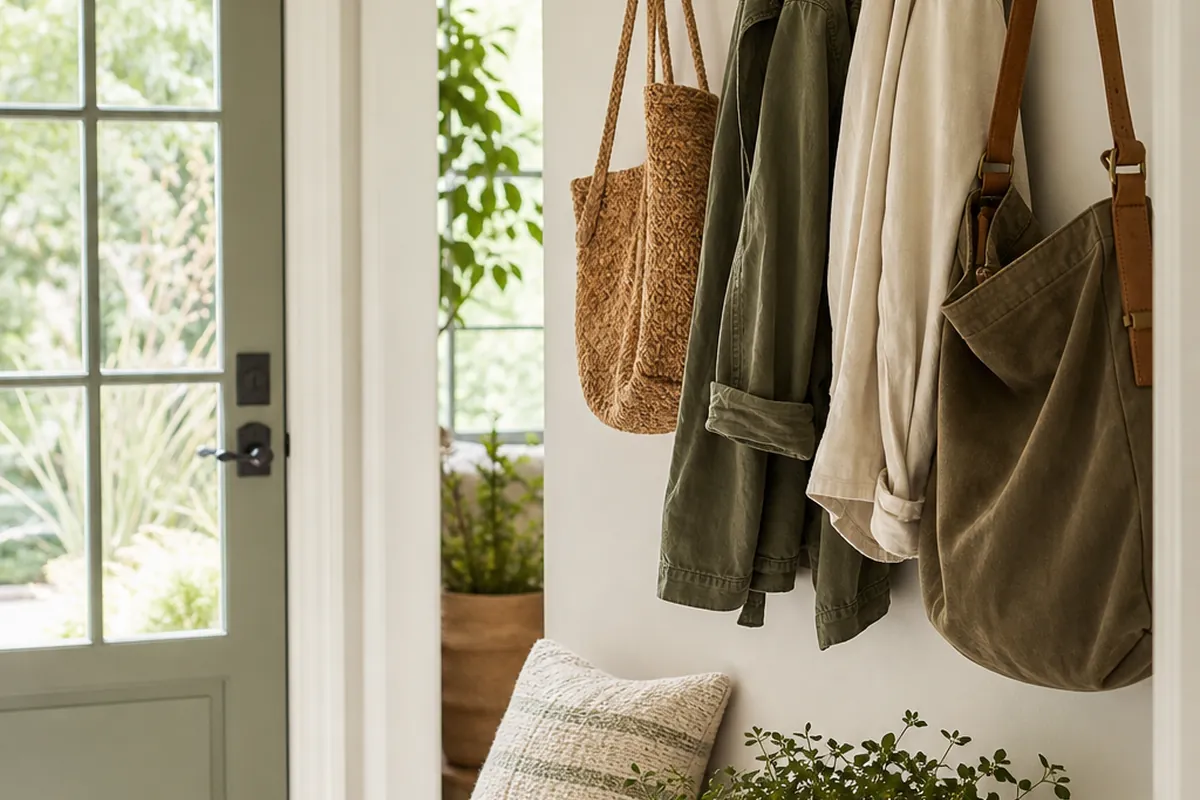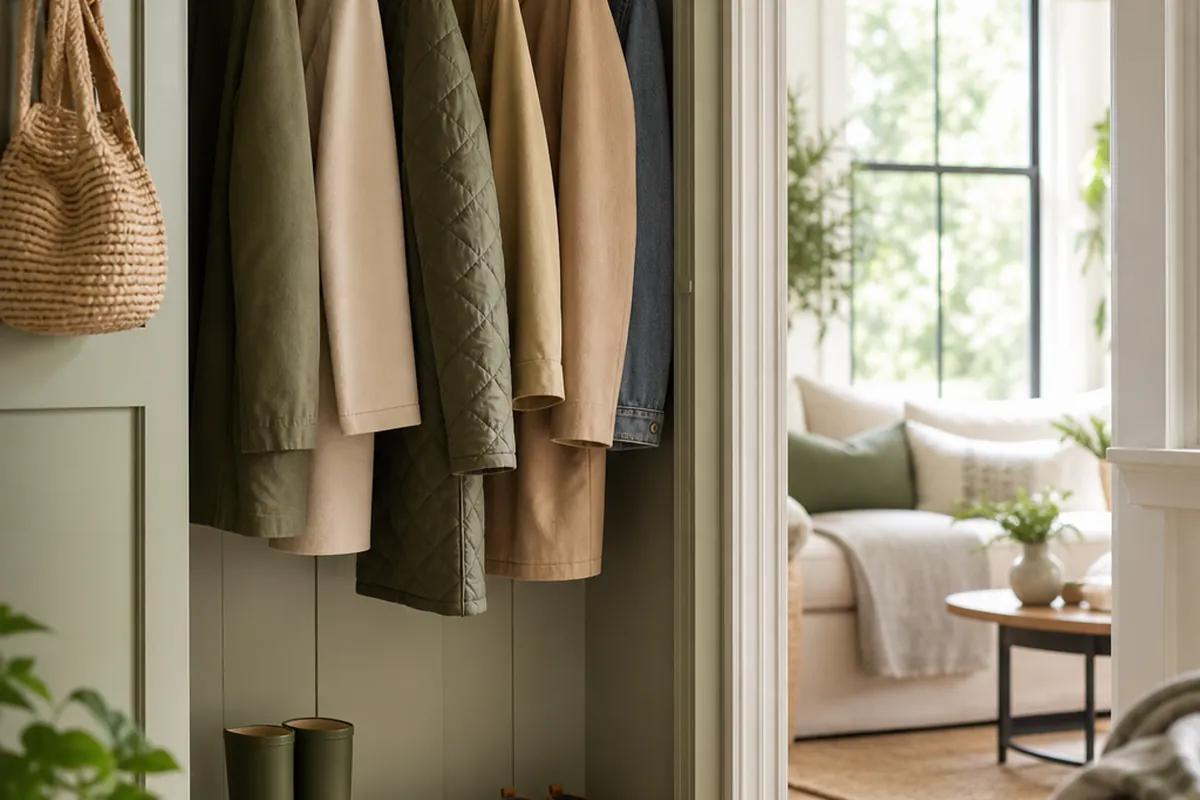
Count the hangers in your hall closet right now. A windbreaker from two apartments ago, a suit bag nobody has unzipped since somebody’s wedding, four wire hangers holding nothing: square footage was never the problem. Most coat closet organization breaks down for the same reason. A closet built for one season of outerwear is being asked to hold the entire year, plus the vacuum, plus the gift wrap.
Hall closets are usually the smallest and hardest-working storage in a home. That door opens more often than any other in the house, frequently by someone balancing groceries, so a system that demands care will collapse by February. Nine fixes follow, ordered roughly by how much room each one gives back.
1. Swap every hanger for slim velvet hangers

Highest return per hour of anything on this list. Plastic tube hangers eat roughly half an inch of rod apiece, and the chunky wooden ones closer to a full inch. Twenty of those and you’ve handed most of a foot of rod over to hardware you don’t even like.
A 50-pack of slim velvet hangers takes that space back, then does something quieter but just as useful: the flocking grips shoulders, so satin raincoat linings and wide-necked sweatshirts stop sliding onto the floor. Buy one style in one color and bag the old mixed hangers the same afternoon, or they creep back onto the rod within a month. One exception is worth making. Keep two or three broad wooden hangers for heavy wool and leather, because velvet handles the weight fine but a wide shoulder is what stops expensive outerwear from denting.
One rule protects the gain: leave a two-finger gap between garments. A rod packed shoulder to shoulder wrinkles everything and trains people to drape coats over the stair rail instead.
2. Move off-season coats out entirely
Your hall closet should hold what gets worn in the next six weeks, and nothing else. Puffers in July are why the rod is full.
Send the off-season half under a bed, onto the top shelf of a bedroom closet, or into a suitcase that isn’t traveling. For down, skip vacuum bags and use a breathable fabric garment bag or a zippered duffel; months of hard compression flatten the fill and you lose the warmth you paid for. Two calendar reminders, mid-April and mid-October, keep this honest without an annual purge.
3. The top shelf: where coat closet organization goes to die
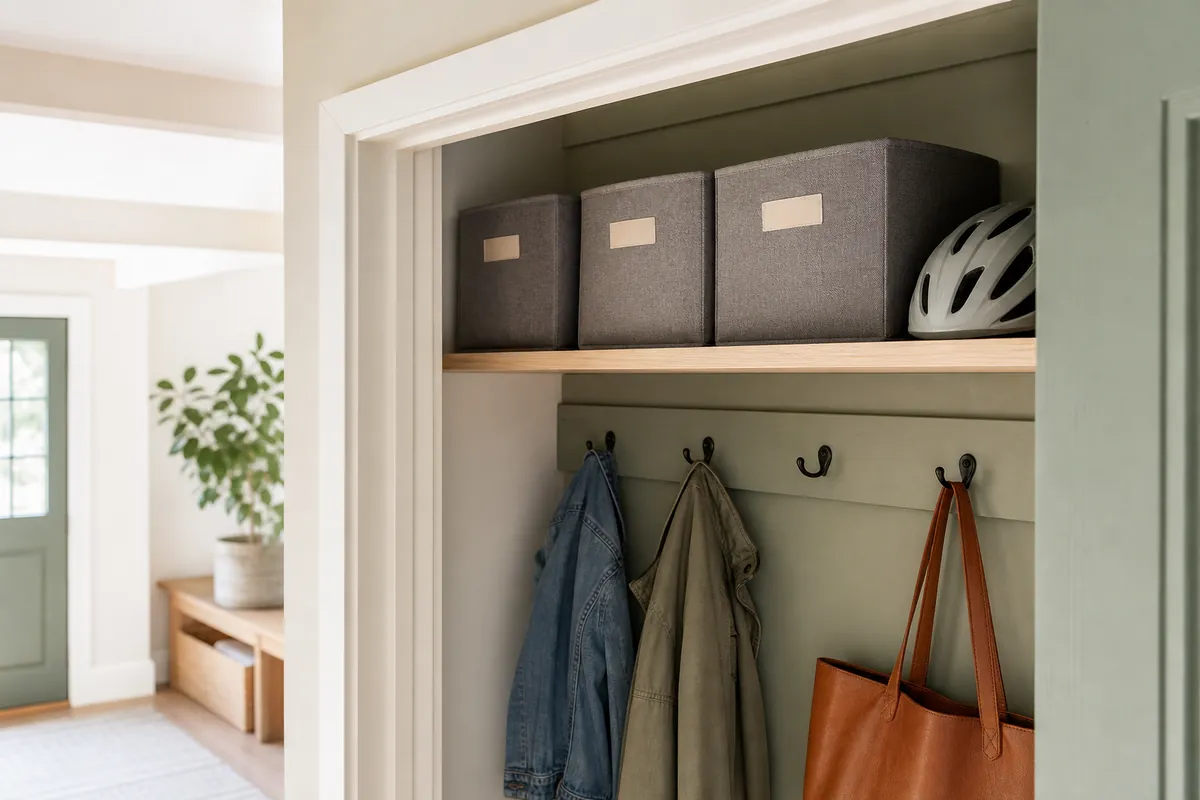
Loose hats, single gloves, a scarf, a bike helmet, three bags stuffed with other bags. Eventually you stop reaching up there because something always falls on you.
Fabric shelf bins turn that shelf into drawers. Measure shelf depth first and pick bins that stop an inch or two short of the back wall so nothing can hide behind them. One bin per category, and keep the categories blunt: hats and gloves, dog gear, sunscreen and bug spray, spare totes. Skip lids entirely. Above eye level a lid means the bin never gets opened, and an unopened bin is just a tidier pile.
Got a high shelf? Choose bins with a front handle, keep the front couple of inches of shelf clear so you can hook a finger and pull, and take two medium bins over one long one every time.
Label them anyway
You know what’s in each bin. Your partner, your roommate and your weekend guests don’t, and they’re the ones who will pull all three down hunting for a phone charger. Masking tape and a marker is plenty; nobody needs a label maker for a hall closet.
4. Put a boot tray on the closet floor
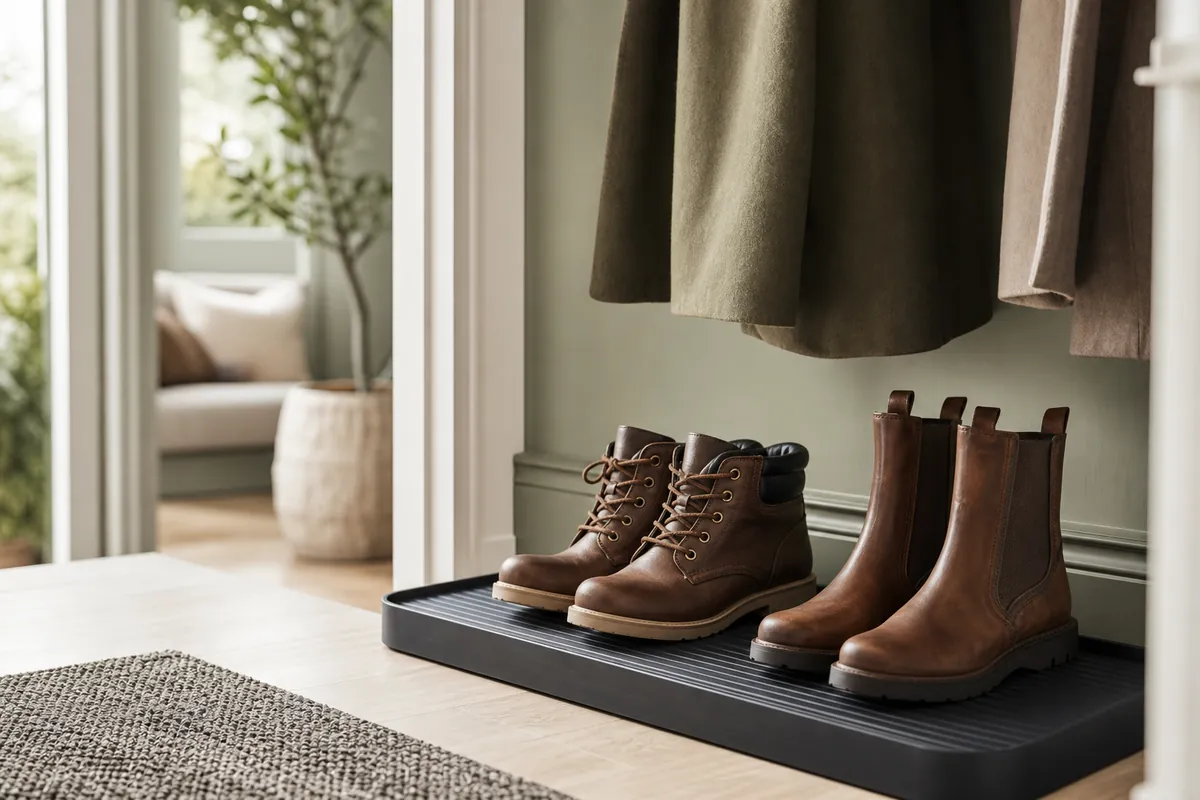
Wet boots on carpet or bare closet plywood is how a musty smell becomes permanent. A boot tray with a raised lip catches slush, road salt and grit, and it gives shoes an assigned parking spot so they quit sprawling wall to wall.
Match the tray to the closet width if you can find one that fits. Otherwise run one inside and a second just outside the door for whatever is in daily rotation. Lift it and wipe underneath monthly, because salt residue left to sit will mark the floor, and in a rental that turns into a deposit conversation. No closet by your front door at all? The tray logic works just as well against a wall, which I get into in these entryway storage ideas for a hallway with no closet.
5. Claim the back of the door
The inside face of the closet door is a full sheet of vertical storage doing absolutely nothing. A door-mounted coat rack turns it into the landing pad for everything that never gets hung properly: today’s jacket, the dog leash, a tote, a scarf, the folded grocery bags.
Hooks beat hangers here for a behavioral reason. Hanging a coat takes three seconds and a hook takes one, and the one-second option is what people reach for when they’re in a hurry. Reserve the rod for what you wear weekly or less. Check clearance before you commit, since a bulky coat on the rack still has to let the door shut: mount the rack low so coats hang into the empty strip beneath the shelf rather than fighting the rod. Renters, look for a rack that hooks over the door’s top edge, with no screws and no spackle at move-out.
6. Add a second rod in the dead air below
Look at the gap between the hem of your shortest jacket and the floor. In most hall closets that’s well over a foot of nothing.
A tension rod or a hanging double-rod extension slots straight in and doubles capacity for short items: kids’ coats, vests, sweatshirts, umbrellas hooked by the handle. Put the second rod under the short-coat side and keep the boot tray under the long coats so the two never compete for floor space. Tension rods only hold weight with snug wall-to-wall contact, so measure at the exact height you plan to hang it, not up at the shelf where the framing may be wider.
7. Deal with the tall junk honestly
Vacuum, ironing board, mop, folding chair. Nearly every jammed hall closet is really a coat closet plus an unofficial utility closet, and that overlap is what makes the whole thing feel unsolvable.
Two real choices exist. Relocate the tall items (behind a bedroom door, beside the washer, ironing board flat under a bed), or give them a dedicated vertical lane and stop pretending the closet is all coats. If you take the lane, use the hinge-side corner, keep everything upright against the back wall, and never hang a coat in that eight-inch strip again. Half a closet organized on purpose beats a whole one organized by accident. For dividing entry storage between closet and open wall, this small entryway organization plan for apartments works through the layout question.
8. Zone the rod by person and by frequency
Shared closets fail because nobody knows where their own coat belongs, so garments land wherever there’s a gap. Assign zones out loud: outer third nearest the door for whoever leaves earliest and most often, middle for everyday coats, far end (that awkward reach behind the door frame) for guest coats, garment bags and the blazer that comes out twice a year.
Height decides as much as horizontal position. Kids need a hook or a second rod at their own shoulder height, and they’ll use it. Hang a child’s coat at adult height and it hits the floor every single time.
9. Protect it with a five-minute weekly reset
An organized coat closet decays in about three weeks without maintenance. Once a week, open the door and do three things: rehang whatever is on the floor, empty every pocket, pull one item that hasn’t moved since the last reset. That third step is the whole trick, because it’s what stops the closet from quietly refilling.
Run a coat count while you’re standing there. More coats than hangers means too many coats for the space, and no product on earth fixes that arithmetic. Donate the third black jacket. You already know which one it is.
A coat closet organization plan for one afternoon
Order of operations matters more than people expect. Roughly two hours, start to finish:
- Empty the closet completely onto the hall floor. All of it, including the shelf.
- Wipe the shelf, the rod and the baseboard while everything is bare.
- Slide the boot tray in first, because it sets the floor plan the rest works around.
- Rehang current-season coats only, all on matching slim velvet hangers.
- Load the fabric shelf bins by category, label them, push them back to the wall.
- Mount the door rack last, positioning the hooks around the coats that are actually in there now.
What’s left on the hall floor is the real diagnosis: a pile of things that were never coat closet items. Deal with that pile the same day or it walks right back in. And if nothing in your home functions as a drop zone for shoes, bags and mail, that pile is the symptom, so faking a mudroom in a small hallway is the project to tackle next.