The backpack lands about eighteen inches inside the front door, slumps sideways against the baseboard, and stays there until somebody trips on it. One bag is enough to make an entryway read as chaos even when the rest of the place is spotless. Most backpack storage advice skips over why that keeps happening: a hook mounted too high, screwed into nothing but drywall, or parked three steps down the hall loses every time to gravity and a kid who is already hungry. What actually works is a landing spot that takes one motion, holds real weight, and sits where the bag already falls.
The One Rule Good Backpack Storage Follows
A bag gets hung when hanging it is easier than dropping it. That’s the whole calculation, and it puts three unglamorous things ahead of how the wall looks.
Distance comes first. The hook needs to be within a step of the door’s swing, because anything further down the hall means the bag gets set down “just for a second” and never picked back up. Height is second: the shoulder strap should meet the hook without anyone raising the bag above chest level, since a pack holding a laptop and two textbooks is heavier than any coat you own. Strength settles the rest. Hardware that tears out of the drywall in week one teaches the entire household that the floor is the dependable option.
Try this before you reach for a drill. Stand at the door with a full pack on and notice where your arm swings when you shrug it off. That spot, at that height, is where the hardware belongs, and every idea below is really just a way of protecting that one gesture.
Wall-Mounted Backpack Storage That Holds the Weight
1. Mount a heavy-duty wall hook rack lower than coat height
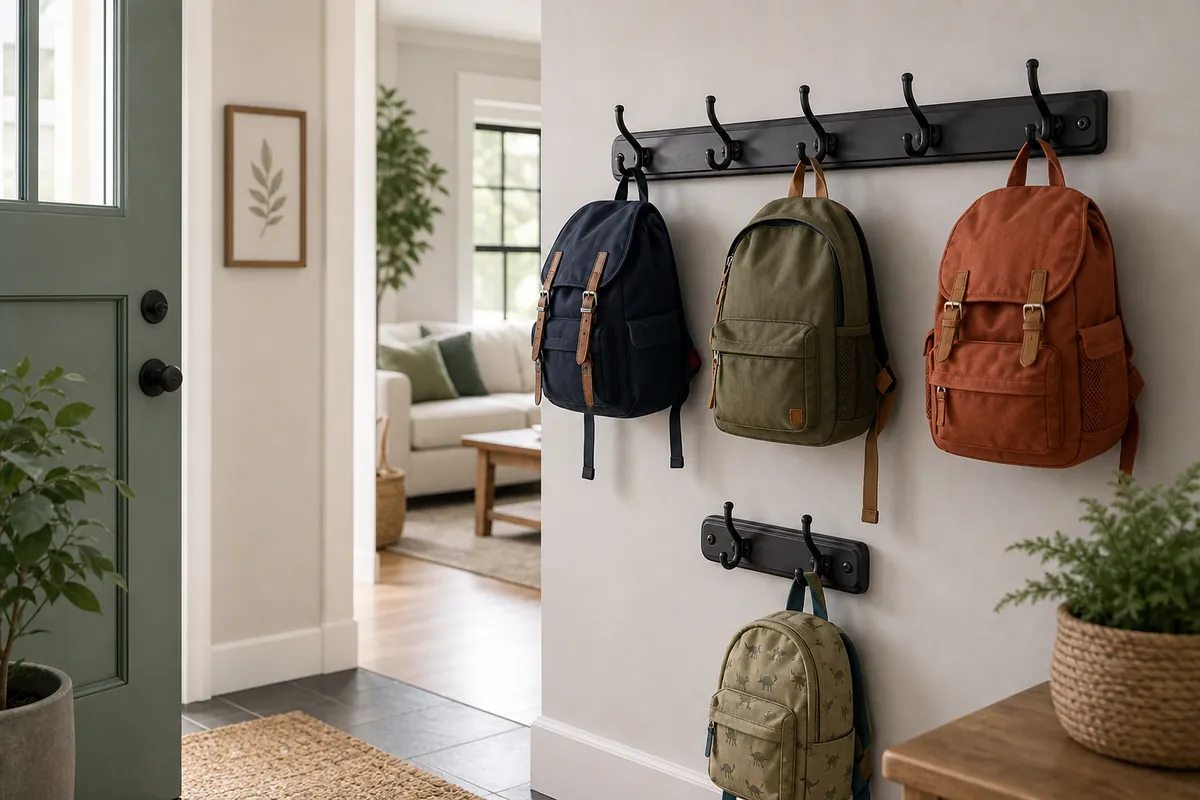
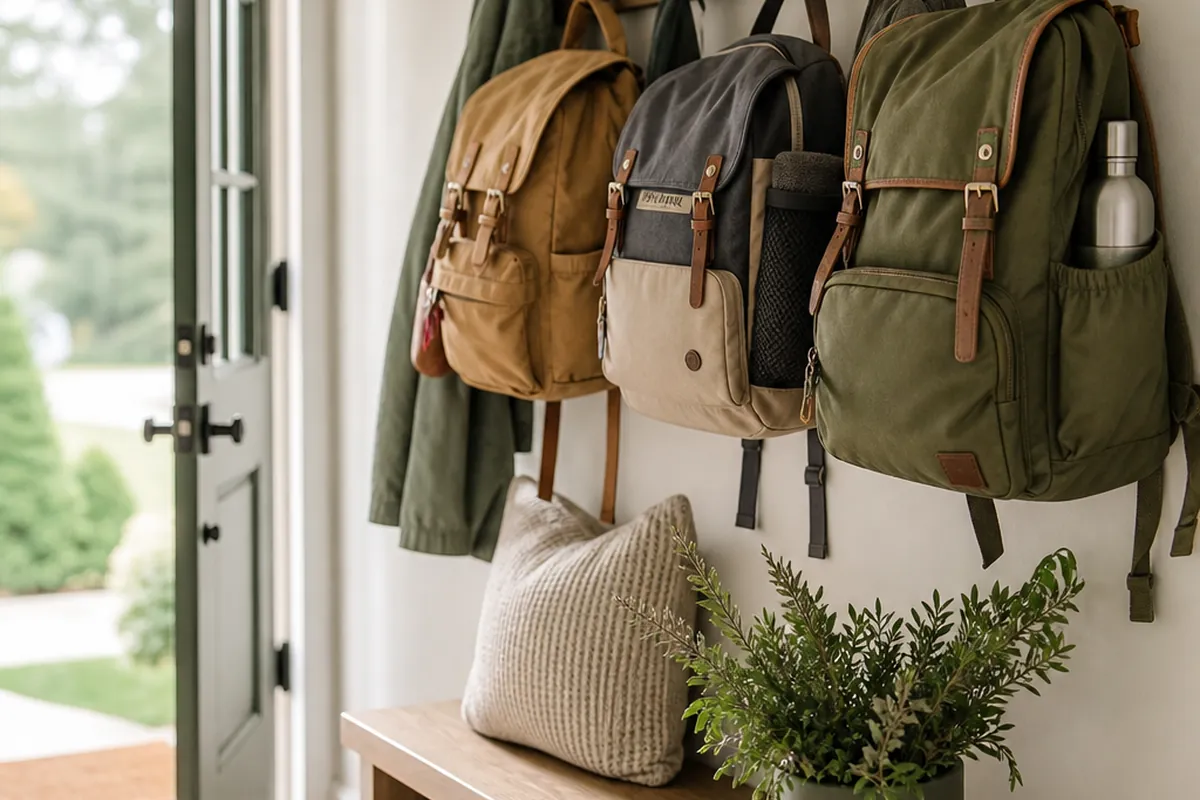
A heavy-duty wall hook rack is the backbone of any entryway backpack storage setup, and the usual mistake is installing it where coats go. Coats are light and want to hang long. Backpacks are dense and want to hang short, which means a rack at classic coat height forces everyone to lift a twenty-pound bag to eye level.
Splitting the difference is worse than picking a side. Set the main rack at roughly shoulder height for the tallest person in the house, then add a second, smaller rack around 36 to 40 inches off the floor for the youngest. Two racks cost less than the daily argument.
Hook shape matters as much as placement. Look for deep, upturned hooks with a pronounced lip that traps a wide nylon strap. Those shallow minimalist pegs photograph beautifully and shed a backpack strap in about four seconds, which puts you right back where you started.
2. Anchor into studs, or use anchors rated far above the load
Here’s the part that decides whether the system lasts past October. Find your studs with a magnet or a stud finder and drive at least two screws into solid wood if the layout allows it. When the rack won’t line up, switch to toggle bolts or self-drilling metal anchors and treat their rated weight as a ceiling you stay well under. A packed school bag plus a soaked raincoat on the same hook gets heavy faster than the number on the package suggests.
Renters, four small screw holes are not the problem you think they are. Lightweight spackle and a dab of paint erase them in five minutes at move-out. Adhesive hooks, by contrast, tend to let go at the worst moment and peel a strip of paint on the way down.
3. Use an over-the-door hook hanger when drilling is off the table
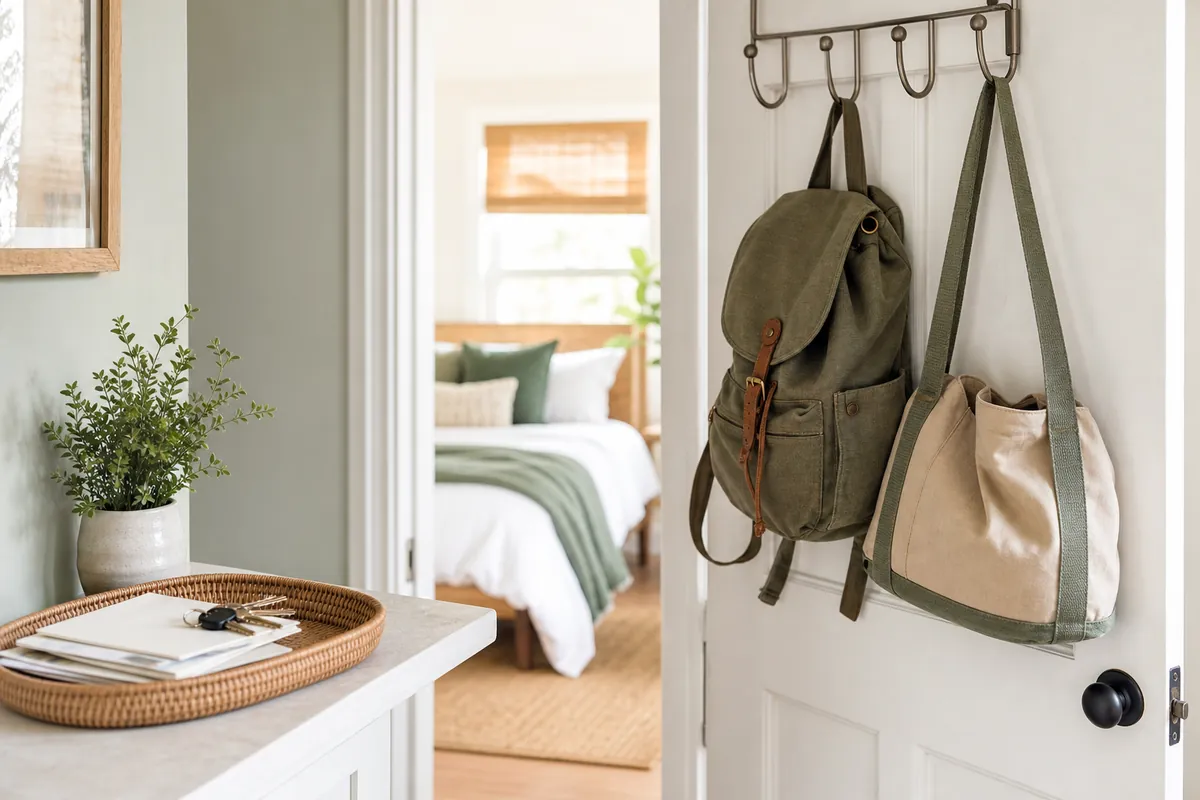
Strict lease, crumbling plaster, or a place you’re leaving in six months? An over-the-door hook hanger is the strongest no-hole option available, because it borrows the door’s structure instead of asking drywall to do a job it can’t. Hook it over a closet door or a bedroom door and you get four to six positions that handle real backpack weight with zero anchors.
Check two things. The top bracket has to clear your door’s thickness, and older solid-core doors with heavy trim are where this usually goes wrong. Second, a bag hanging at latch height will stop the door from closing flush, so load the heaviest pack on the lowest hook and let the door swing. This is the move I lean on in a hallway with no closet, where every wall turns out to be a doorway or a radiator.
4. Give each person a permanent hook and never rotate it
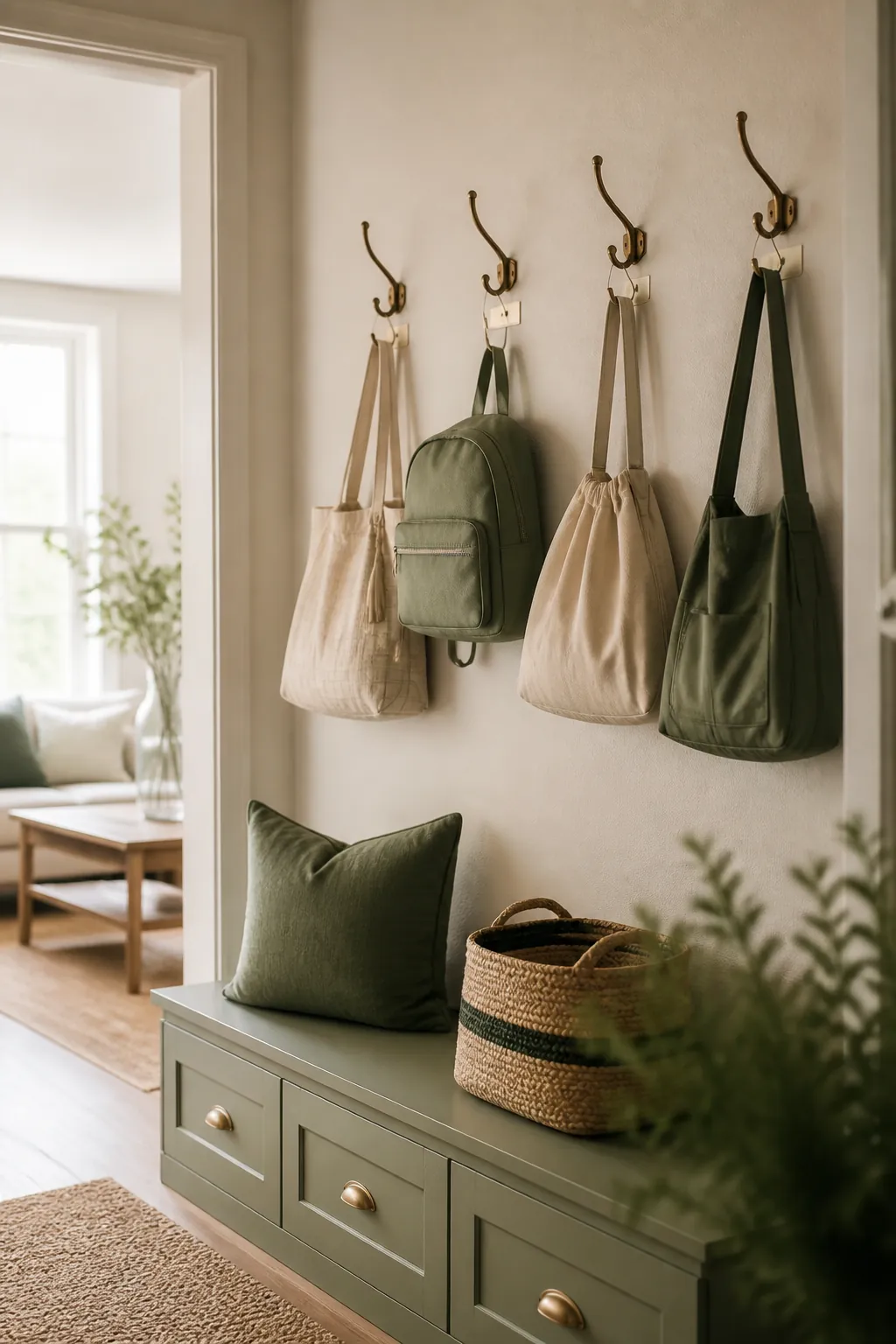
Shared hooks become one lumpy nylon mass by Thursday. Assign hooks by person, left to right in the order people walk in, and leave the assignments alone. A dot of paint or a different colored carabiner works as a label for a preschooler who can’t read yet. The goal isn’t tidiness for its own sake. It’s that nobody has to move a sibling’s bag to hang their own, and that extra step is exactly where these systems fall apart.
Floor-Level Backpack Storage for Heavy Bags
5. Slide a bamboo storage bench under the hooks
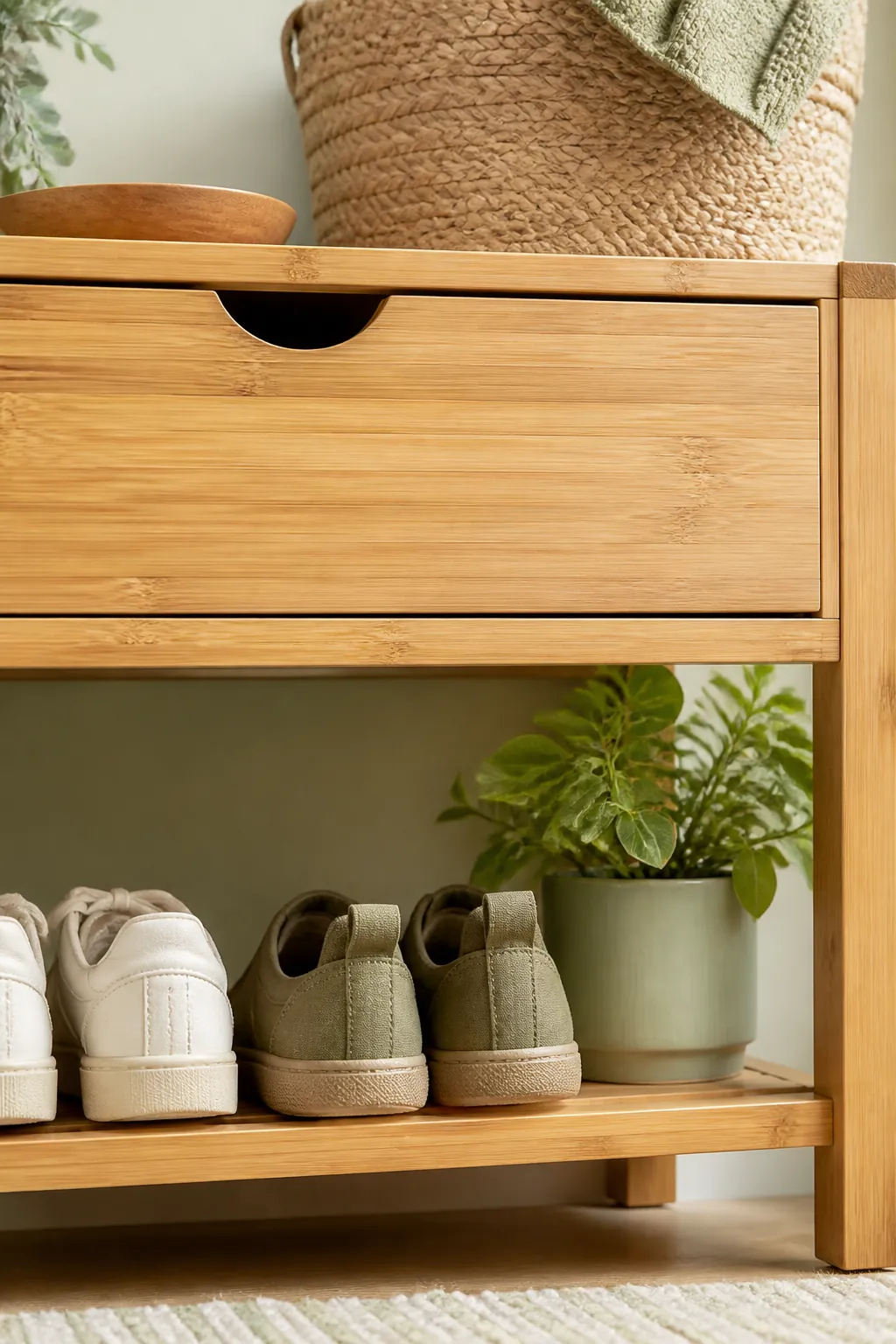
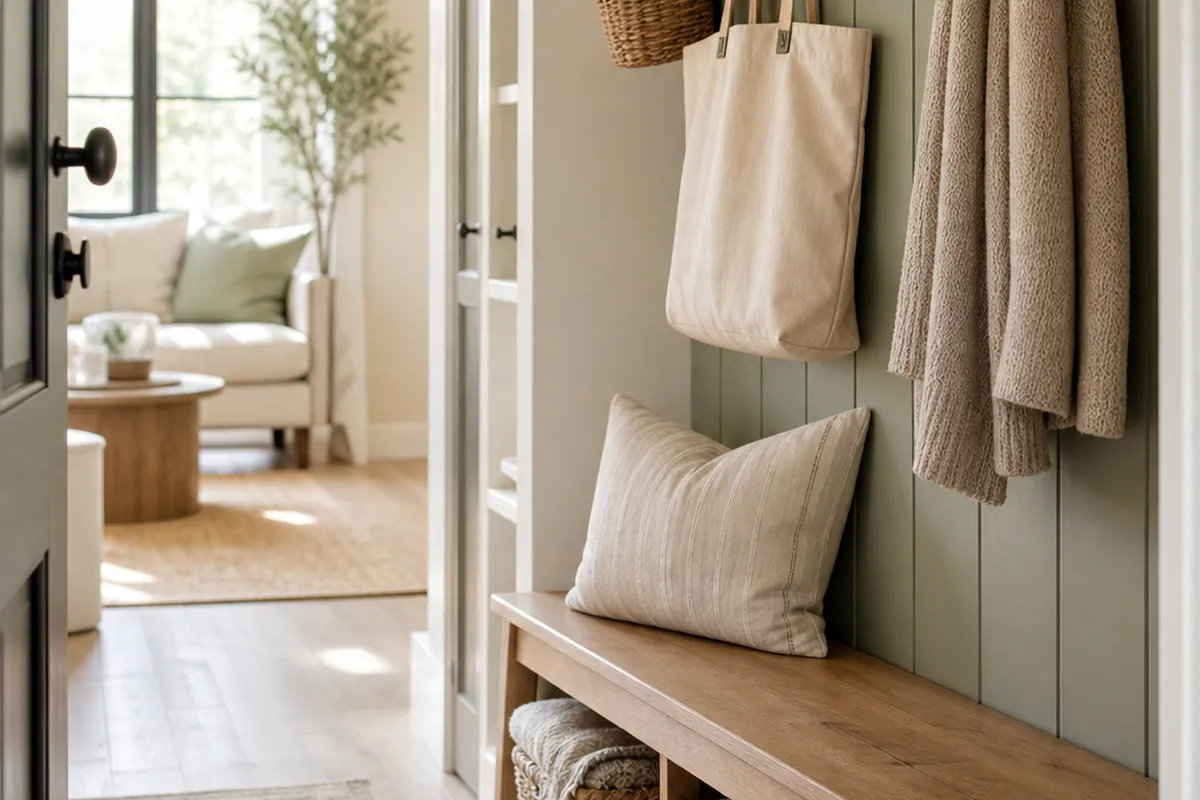
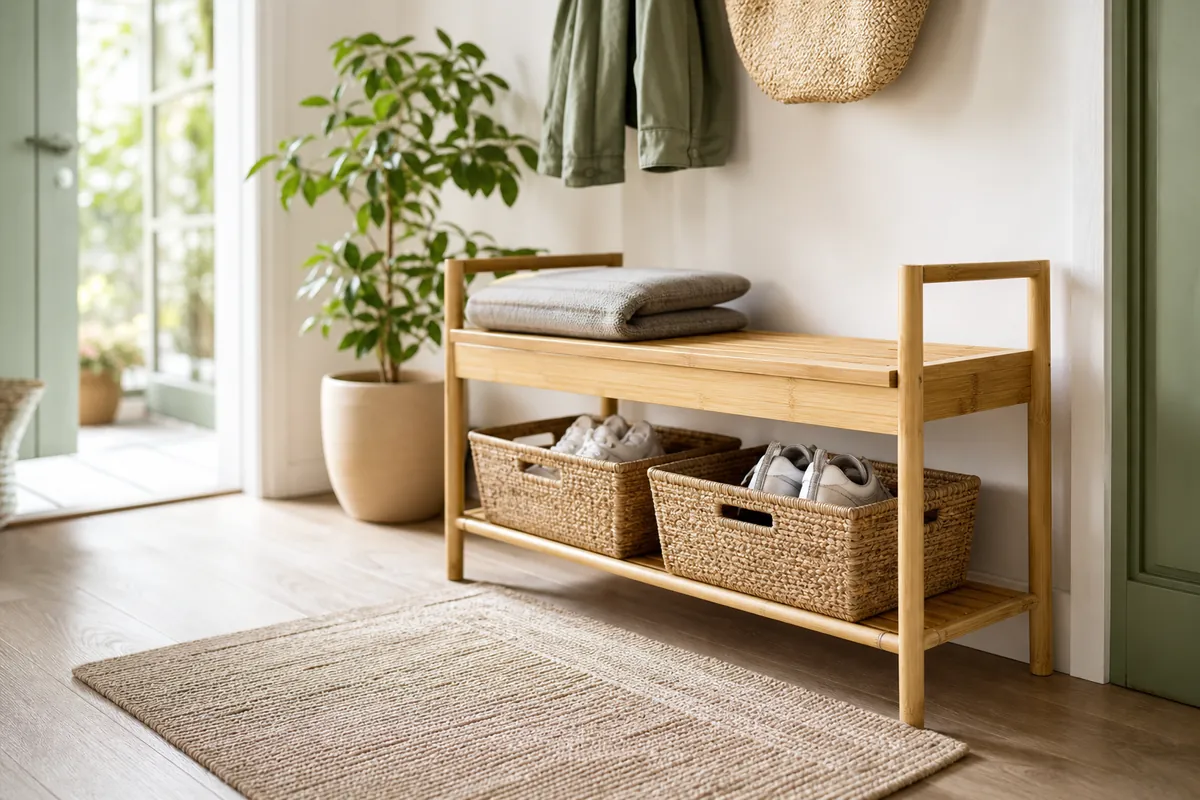
Hooks handle the bag. Shoes are the other half of the entryway pile, and a bench handles those. Put a bamboo storage bench directly beneath your hook rack and the whole sequence happens in one spot: sit, pull off boots, tuck them onto the lower shelf, hang the pack overhead on the way up. Bamboo is the right material for a wet-shoe zone because it tolerates damp far better than particleboard, which swells and delaminates at the corners after one slushy winter.
Size it honestly. Roughly two to three feet of width seats one person and still leaves walking room in a narrow hall. If your entry is shallow, measure the bench depth against your door’s arc before ordering, because a bench that stops the door two inches short will annoy you every single day.
6. Give the youngest kids one open basket on the floor
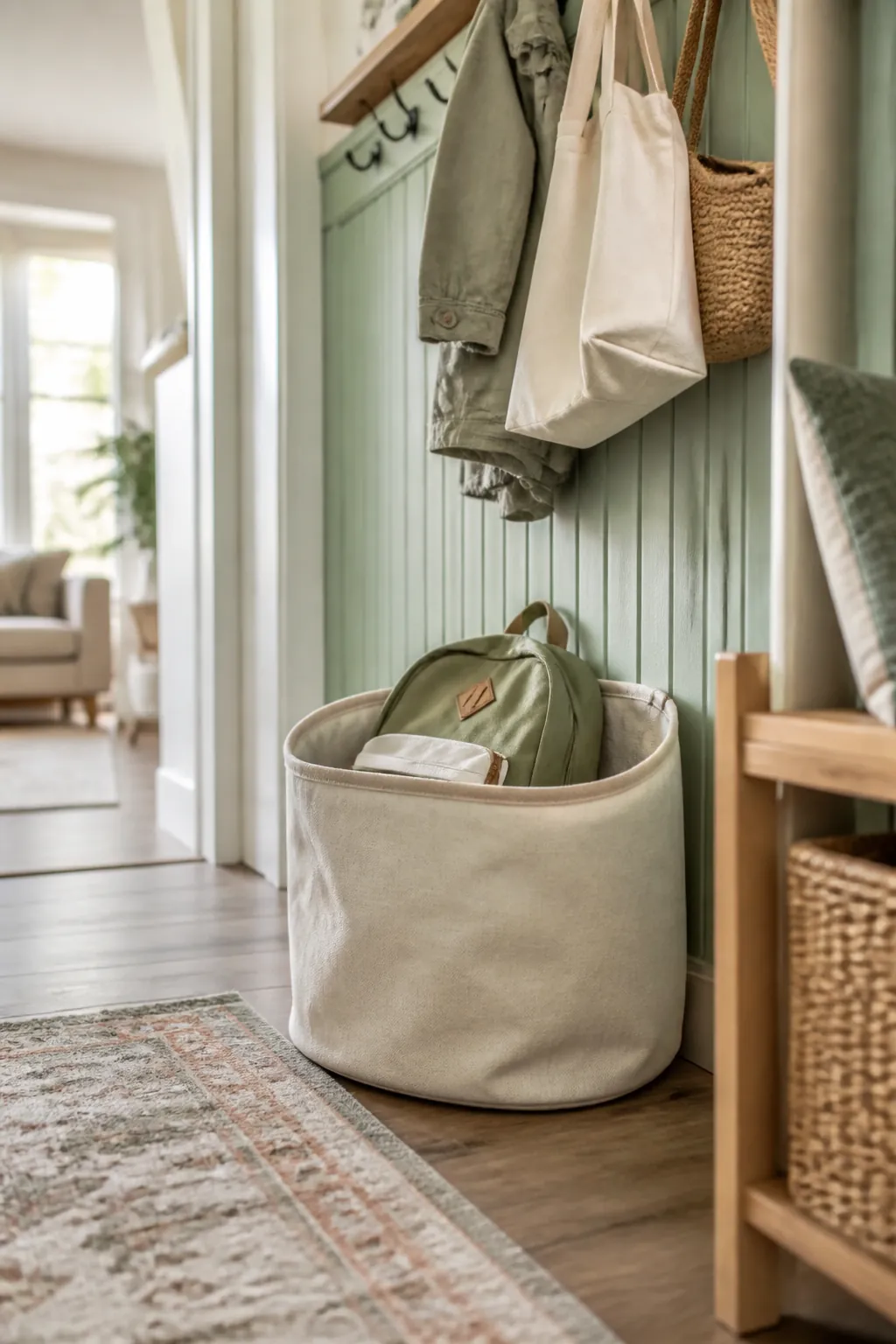
Toddlers and kindergarteners cannot reliably land a strap on a hook, so quit fighting it. A large open basket or fabric bin at the base of the bench accepts a whole backpack dropped in from above, which is the motion they already perform. Contained beats scattered, and it trains the habit of one designated spot before they graduate to hooks. Skip anything with a lid: a lid is a second step, and second steps get abandoned.
7. Claim the closet floor, not the closet rod
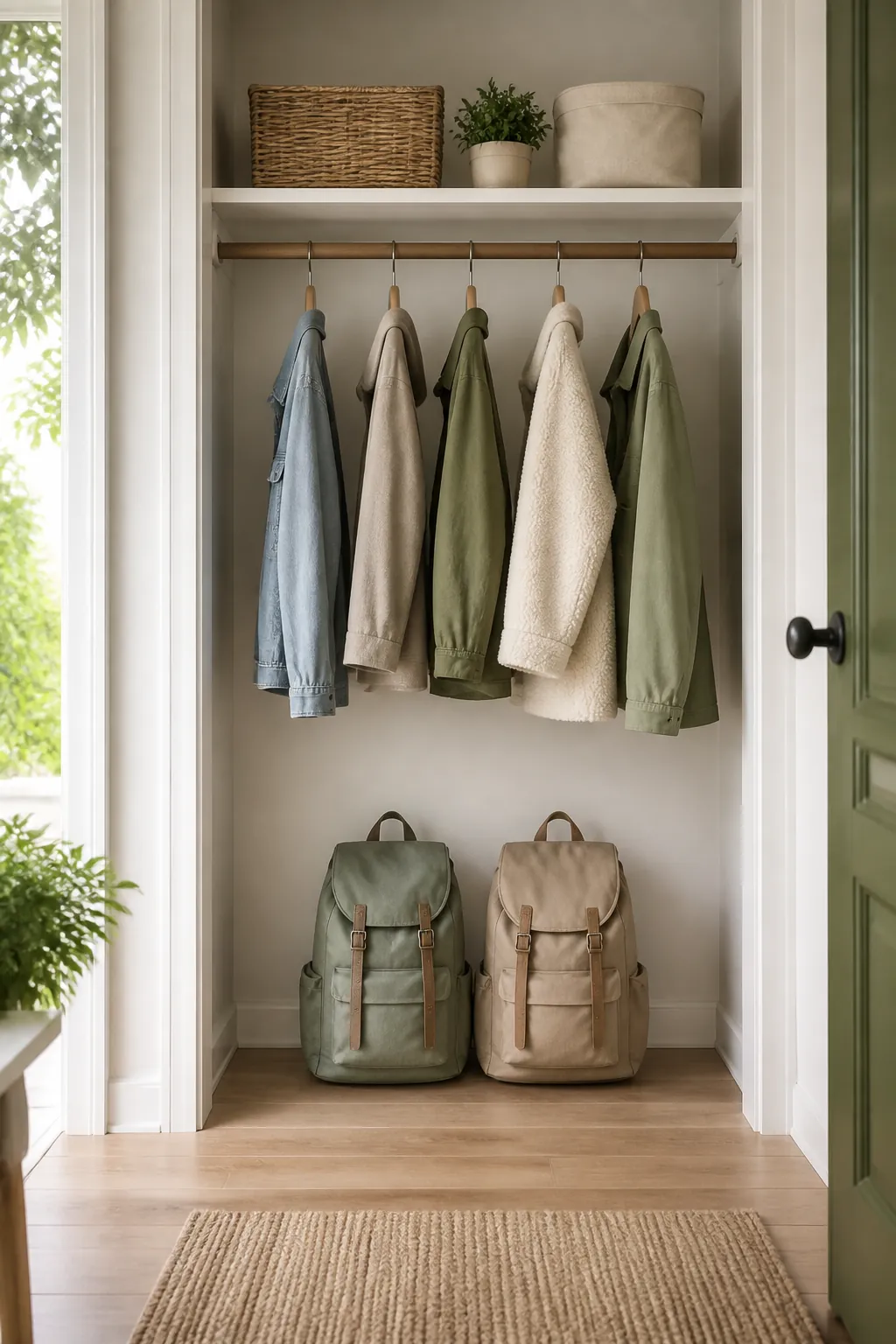
If you have an entry closet, the floor and the back of the door are the parts worth rethinking for bags. Rods belong to clothes, while the space under them is usually dead air holding a vacuum and one broken umbrella. Clear it out, add a low shelf or two stacked bins, and backpacks land at a height a nine-year-old can manage. My full approach to that space lives in coat closet organization, and the same logic covers totes and gym duffels.
Backpack Storage That Lives Outside the Entryway
8. Send part-time bags to bedroom doors
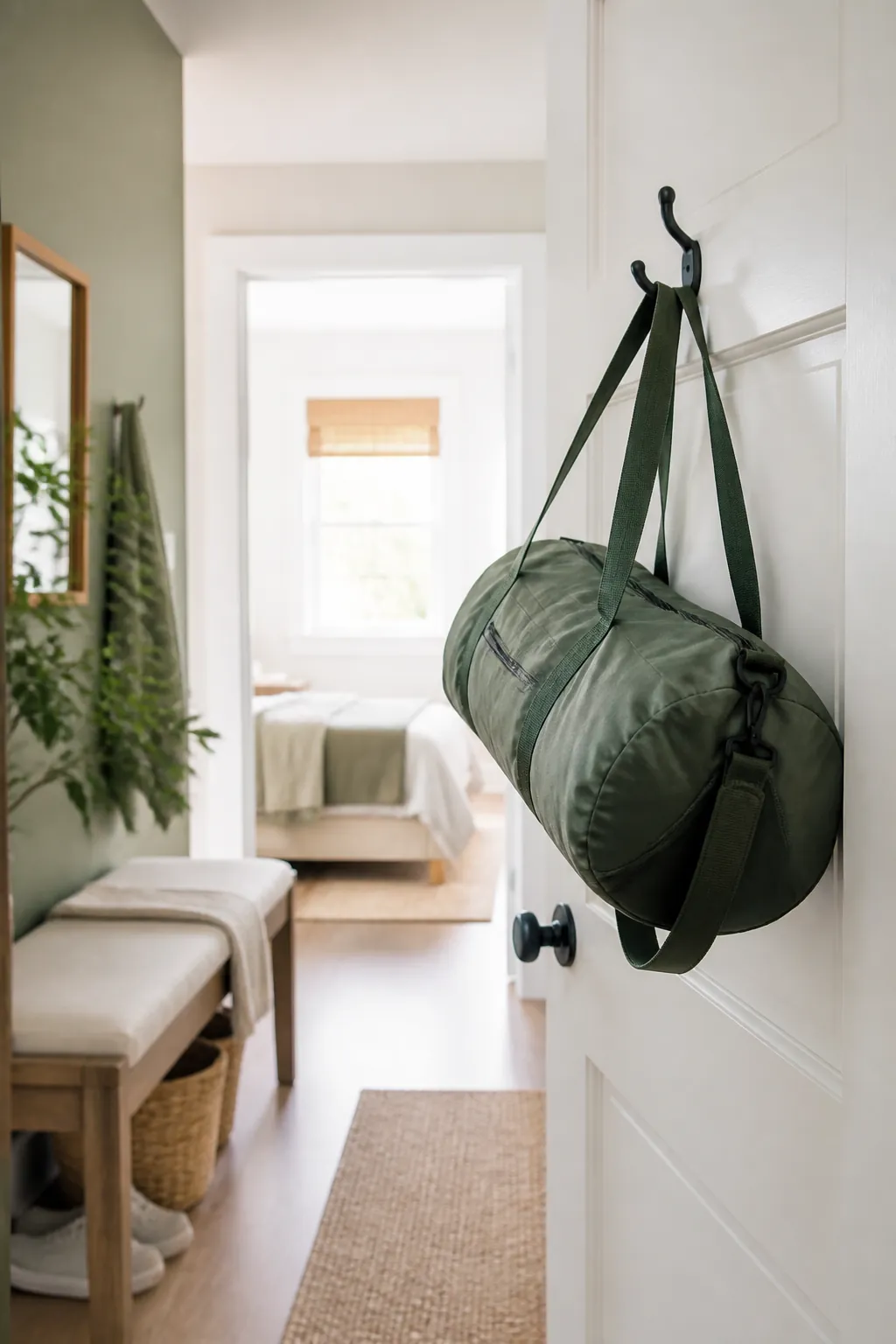
Not every bag deserves prime spot by the front door. Dance bags, sports bags, and the laptop pack you only carry on Thursdays belong on the back of their owner’s bedroom door, which frees the entry hooks for daily bags. In a small apartment this is the highest-leverage change on the list, because it cuts the number of objects fighting over eight feet of hallway wall. Working with a tight footprint? This entryway plan for apartments walks through what earns a spot by the door and what doesn’t.
9. Build an unload station so the bag empties itself
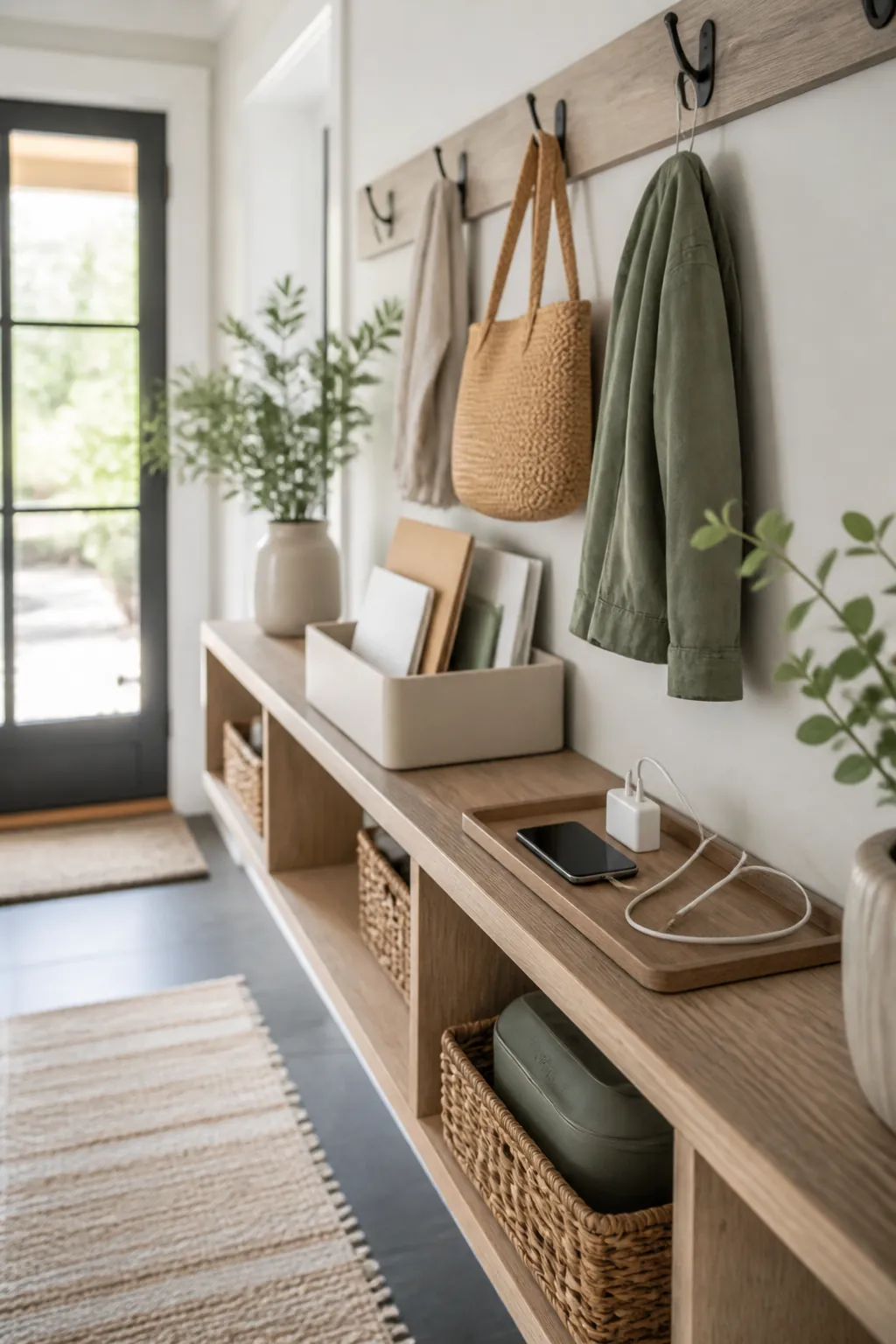
Bags still hit the floor in homes with perfectly good hooks, and the reason is almost always the contents. People dump the pack wherever the permission slips and the lunchbox come out. Fix that by putting a shallow tray or small basket on top of the bench, or on a narrow ledge shelf beside the hooks. Lunchbox to the kitchen, papers into the tray, bag onto the hook: three destinations within arm’s reach, and the whole unload happens standing up instead of kneeling over a heap.
No real entry at all, just a stretch of wall where the door opens into the living room? You can fake a mudroom in a small hallway with a hook rack, a slim bench, and a mat. The mat pulls more weight than people expect, since a visible boundary tells everyone exactly where stuff is supposed to land.
Making It Stick
Give a new setup two weeks and plan on adjusting the hook height once. When bags keep hitting the floor, the cause is nearly always the hook being too high, too far from the door, or too crowded, roughly in that order. Change the hardware instead of nagging the humans.
One habit carries the rest: a thirty-second reset at night. Bags on hooks, tray emptied, shoes onto the bench, all of it done while the kettle boils. Mornings get noticeably quieter once nobody is excavating a floor pile in search of a math folder, and the entryway stops being the first thing you apologize for when someone knocks.