A delivery box lasts about ninety seconds in its original shape before someone opens it, and after that it is dead weight taking up the same corner of a small entryway for days until trash day. Renters without a garage or a mudroom do not have anywhere to stash a growing stack of cardboard, so it ends up leaning against the wall by the door, in the way of every bag and stroller that passes through. The fix is not a bigger bin. It is breaking boxes down the moment they are empty, sizing the storage to the flattened panel instead of the box’s original volume, and giving the stack a hard limit so it never becomes a second piece of furniture.
1. Break the box down the moment it is empty, not the night before pickup
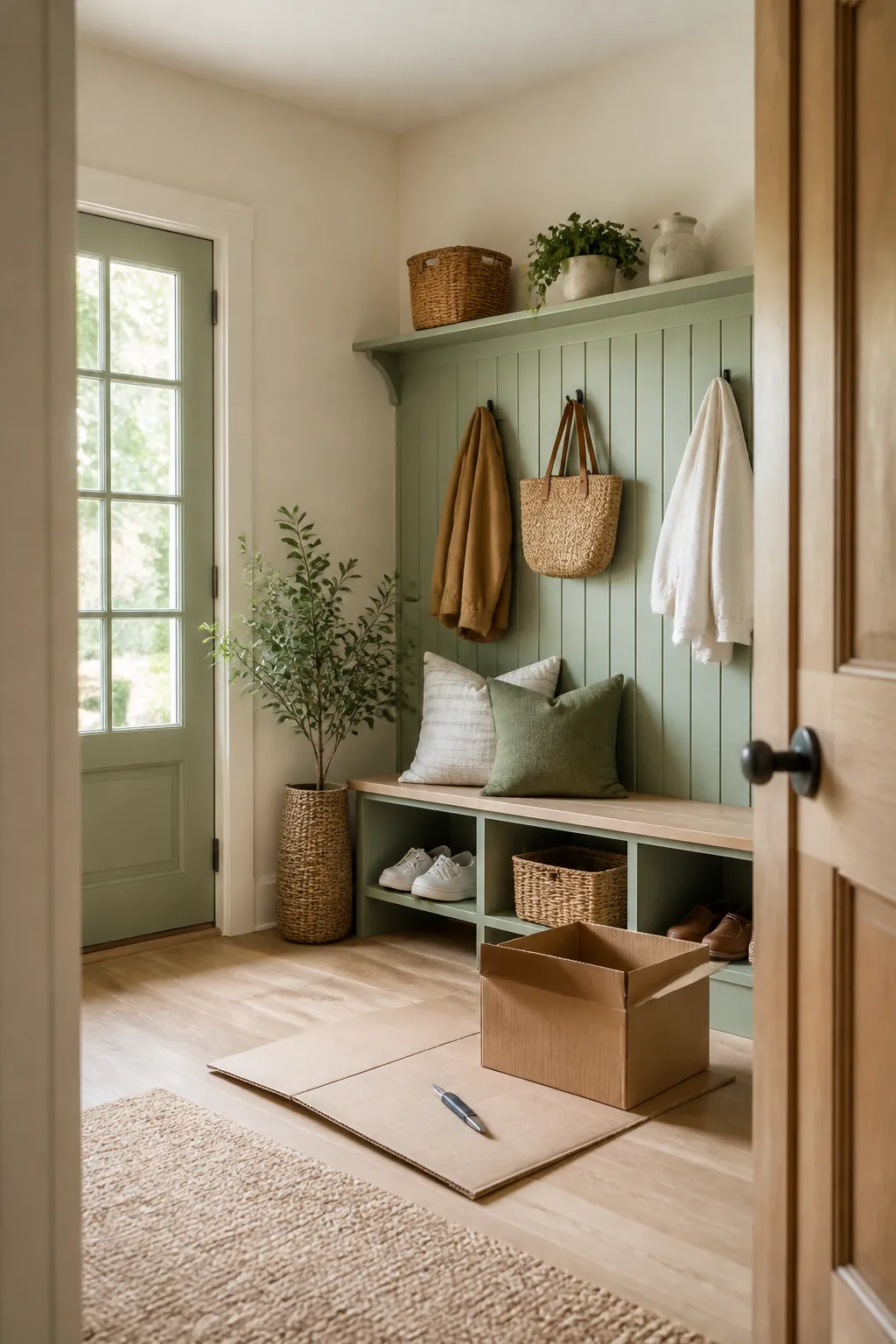
Cardboard that sits assembled for a week takes up six to eight times the space of the same box flattened, since most of that volume is air. Breaking a box down takes under a minute, but it almost never happens right away because the box is still useful as a staging spot for whatever was inside it. Make the unboxing and the flattening one motion: empty the box, then fold it flat before you walk away, rather than leaving it standing by the door to deal with later.
Score along the existing tape line with scissors or a seam ripper rather than slicing across the panel itself. The factory creases on a mass-produced shipping box are still there under the tape and fold cleanly even after a few trips through a packing machine, so working with those lines instead of cutting new ones keeps the panel flat and square instead of leaving a torn flap that will not lie down in a stack.
2. Size the bin to the flattened panel, not the box’s original footprint
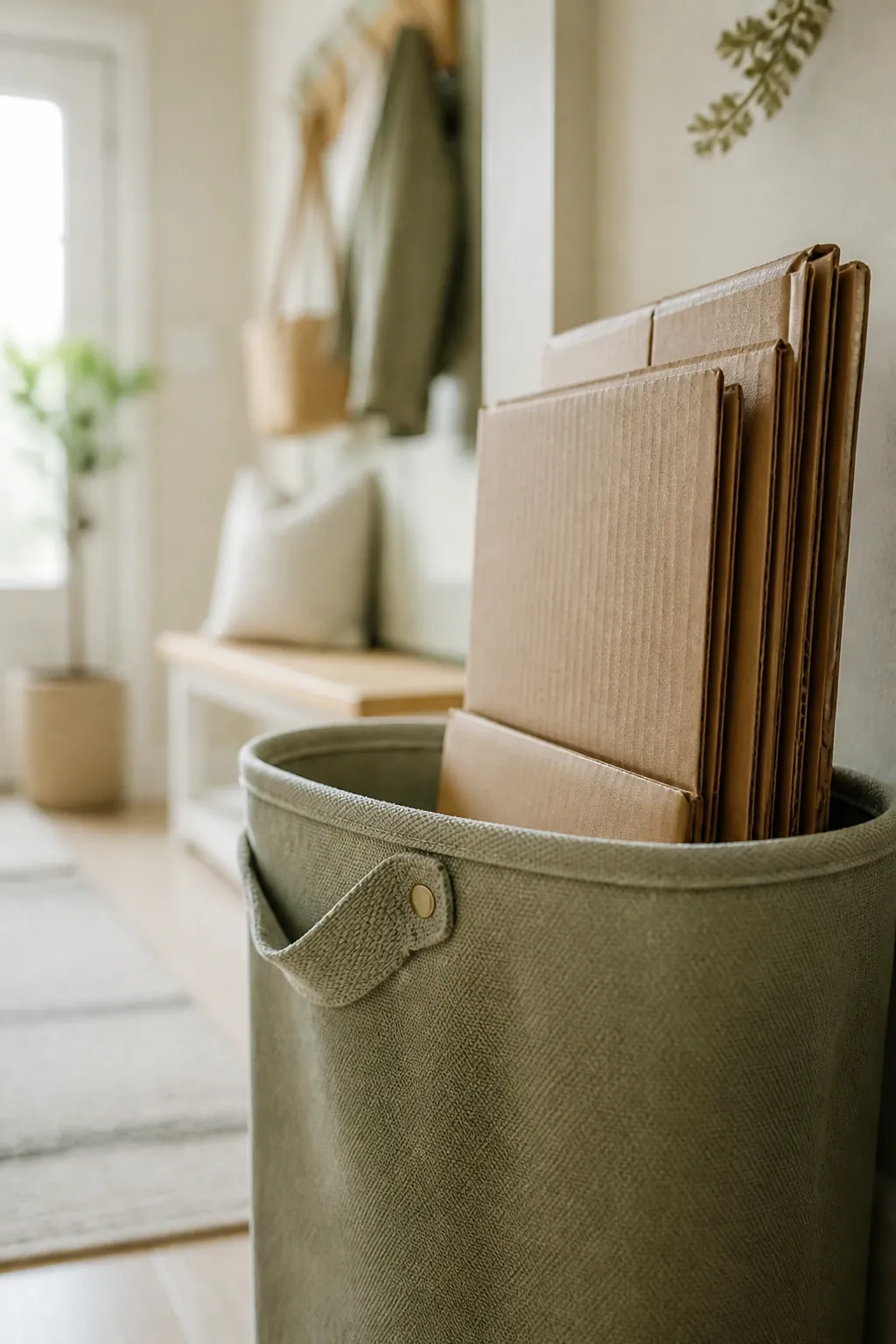
A medium delivery box runs roughly 18 by 14 by 12 inches assembled, but flattened it is an 18-by-14-inch panel about a quarter inch thick. That is the number that matters for storage, and it is easy to miss because most bins get bought while the box is still standing up in the entryway looking much bigger than it will be in twenty seconds.
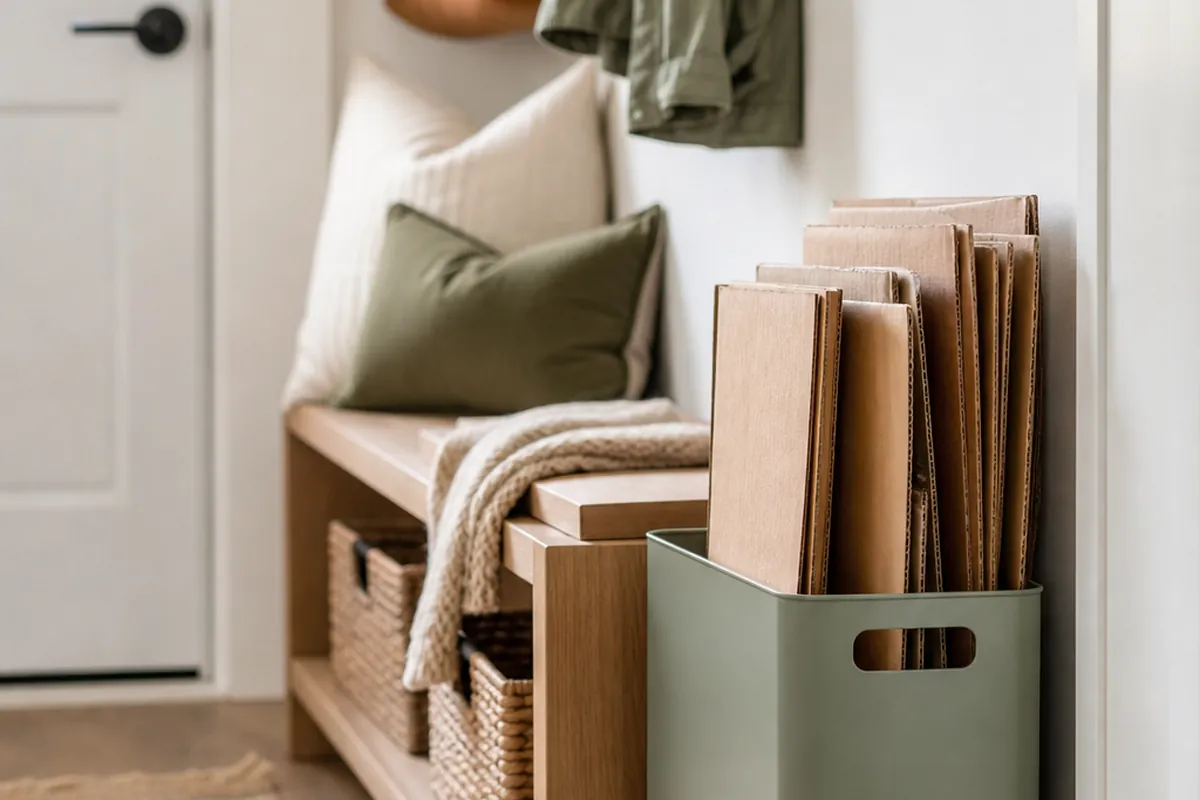
A fabric storage bin with handles tall enough to hold an 18-inch panel without the top corner folding over works for most household box sizes, and the open-weave sides let a slightly damp panel air out instead of trapping moisture against the rest of the stack. A bin sized to the entryway corner instead of the panel either swallows boxes sideways, where they slump and curl, or runs too short, leaving the tallest panels poking out over the rim.
3. Lean panels on edge instead of stacking them flat
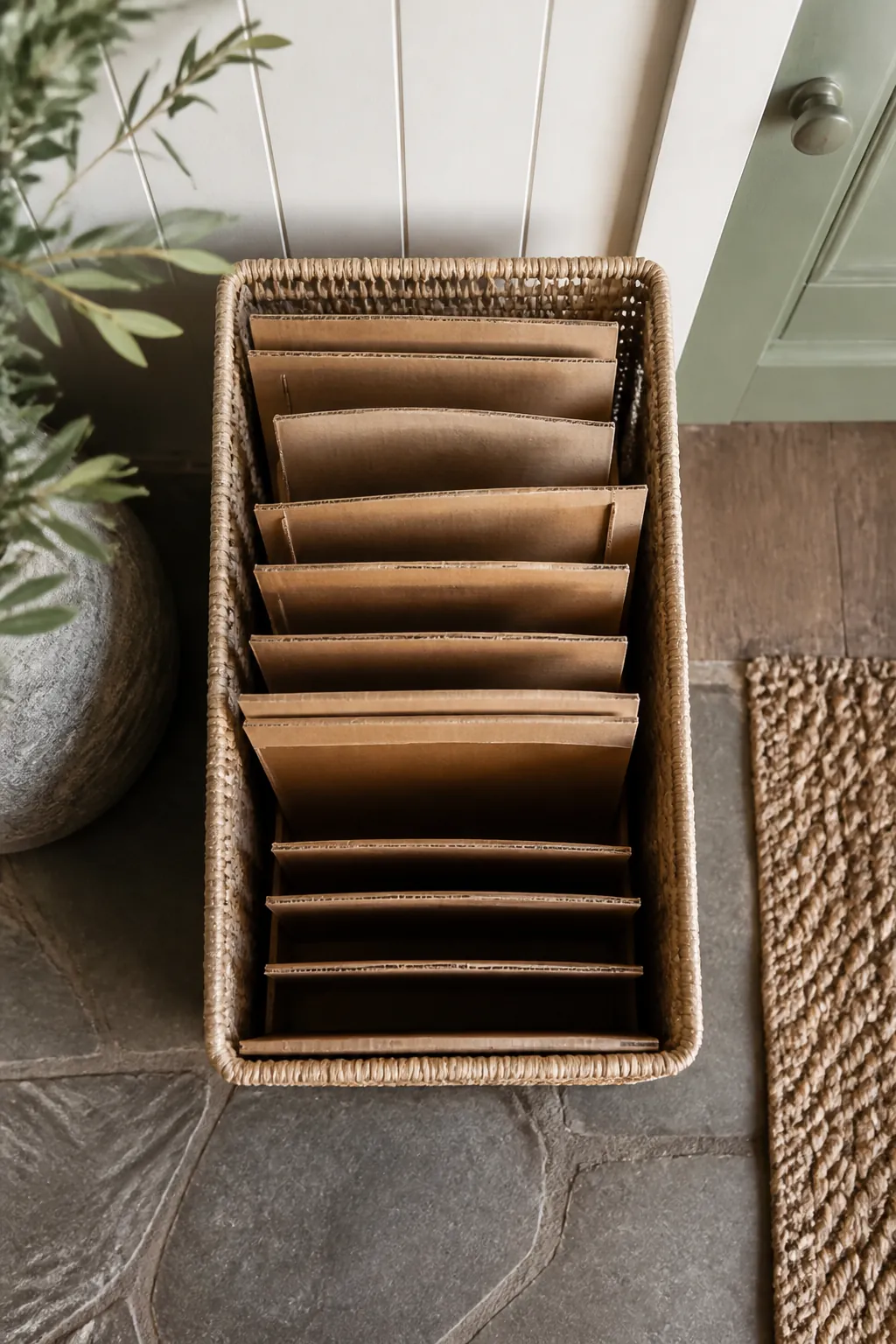
A flattened box laid down flat on top of another compresses the one underneath and makes it awkward to pull out a single panel without disturbing the whole pile. Leaning panels upright on their long edge, the same way records stand in a crate, solves both problems: each one stays flat under its own weight instead of someone else’s, and pulling the bottom panel out does not require lifting six others first.
This only works if the bin or corner is deep enough that the panels do not simply topple sideways. A gap of two to three inches between the bin’s inside walls is usually enough to keep a stack of five or six panels standing without a divider, though a household breaking down ten or more boxes a week will want an actual divider or a second bin before the leaning stack starts sliding.
4. Keep greasy or food-stained cardboard out of the stack entirely
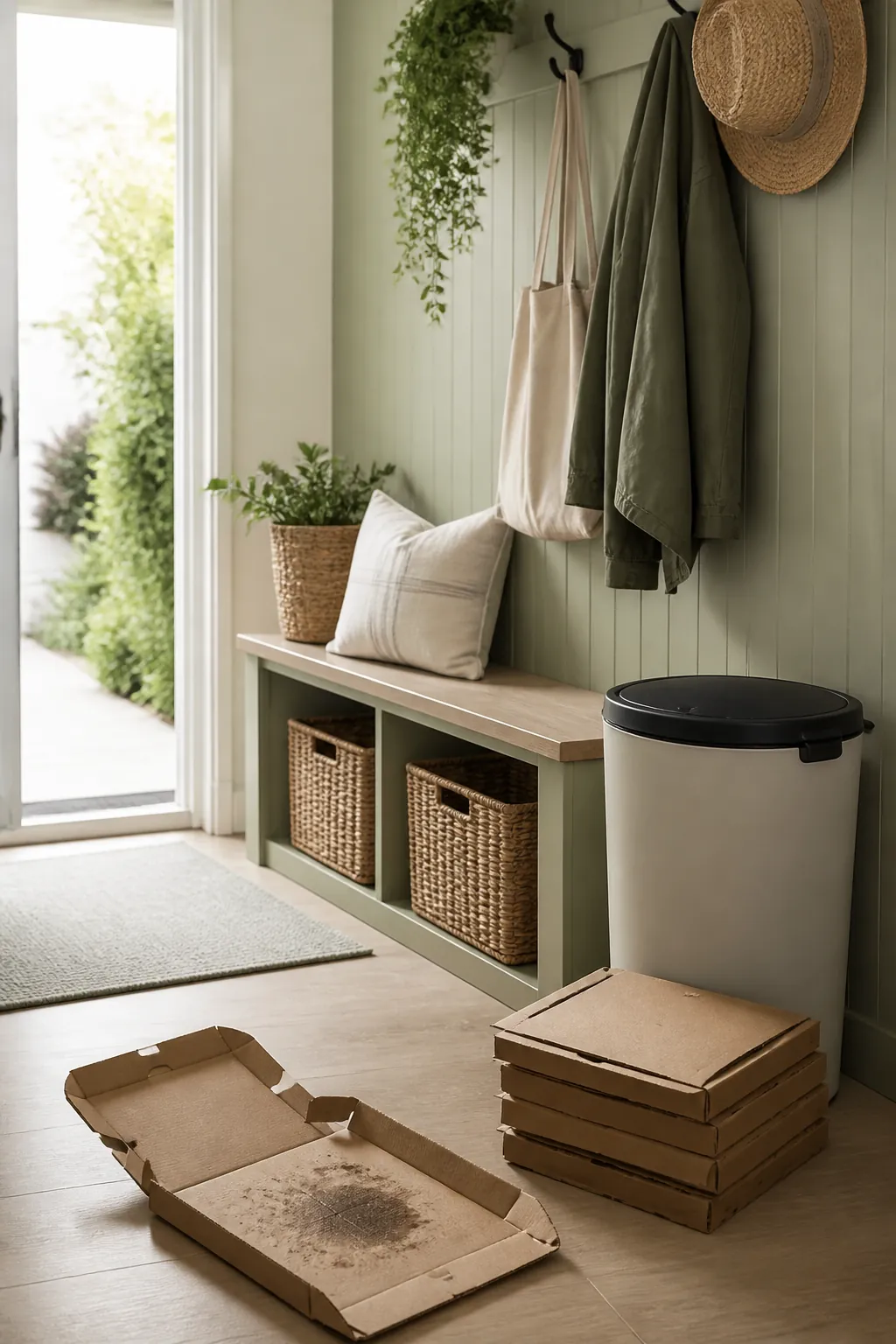
A pizza box or a shipping box that got a little wet and transferred food residue from whatever was shipped alongside it does not belong with the clean delivery boxes, even though they look similar. Most municipal recycling facilities reject an entire batch if grease or food contamination shows up anywhere in it, since the oil interferes with the pulping process for the whole load, not just the one offending box.
Keep a short rule at the point of flattening: if it smells like food or feels oily, it goes straight into the regular trash, not the recycling stack by the door. One contaminated box ruining a week’s worth of clean cardboard is a bigger loss than the five seconds it takes to sort it right the first time.
5. Hide the stack inside a bench that already earns its keep
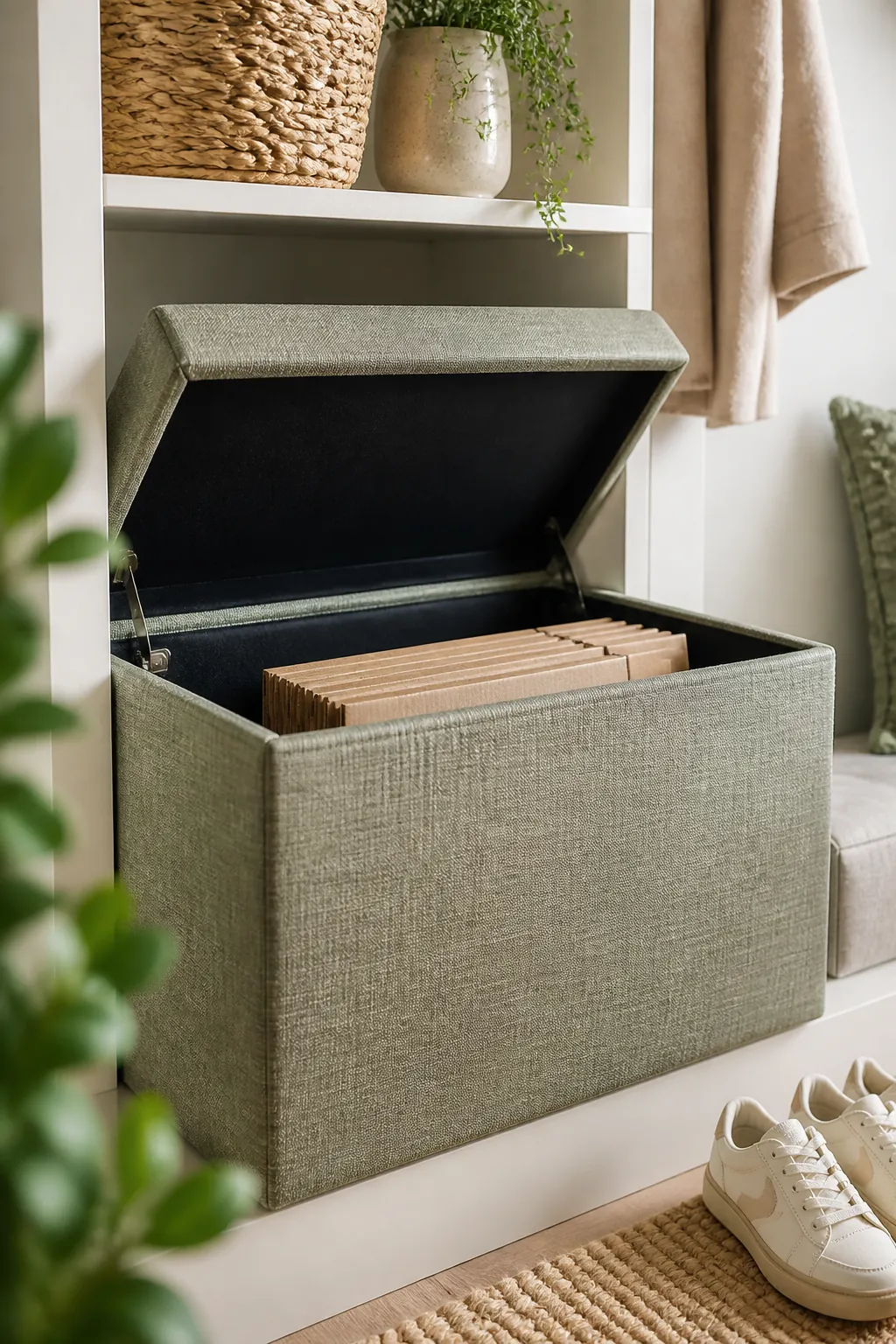
A visible stack of cardboard by the door reads as clutter even when it is perfectly organized, which is why tucking it inside a piece of furniture that is already doing another job solves two problems with one purchase. A folding fabric storage bench with a lid gives someone a place to sit while pulling off shoes, and the open cavity underneath holds a stack of flattened panels completely out of sight until pickup day.
Measure the bench’s interior height before counting on it for anything larger than a small or medium box panel, since most storage benches run twelve to fourteen inches tall inside the lid, enough for panels folded down from boxes in the 12-to-16-inch range but not a flattened mattress box or anything close to it. Oversized panels from furniture or appliance boxes need a spot against a wall instead.
6. Keep the cutting tool out of reach between uses
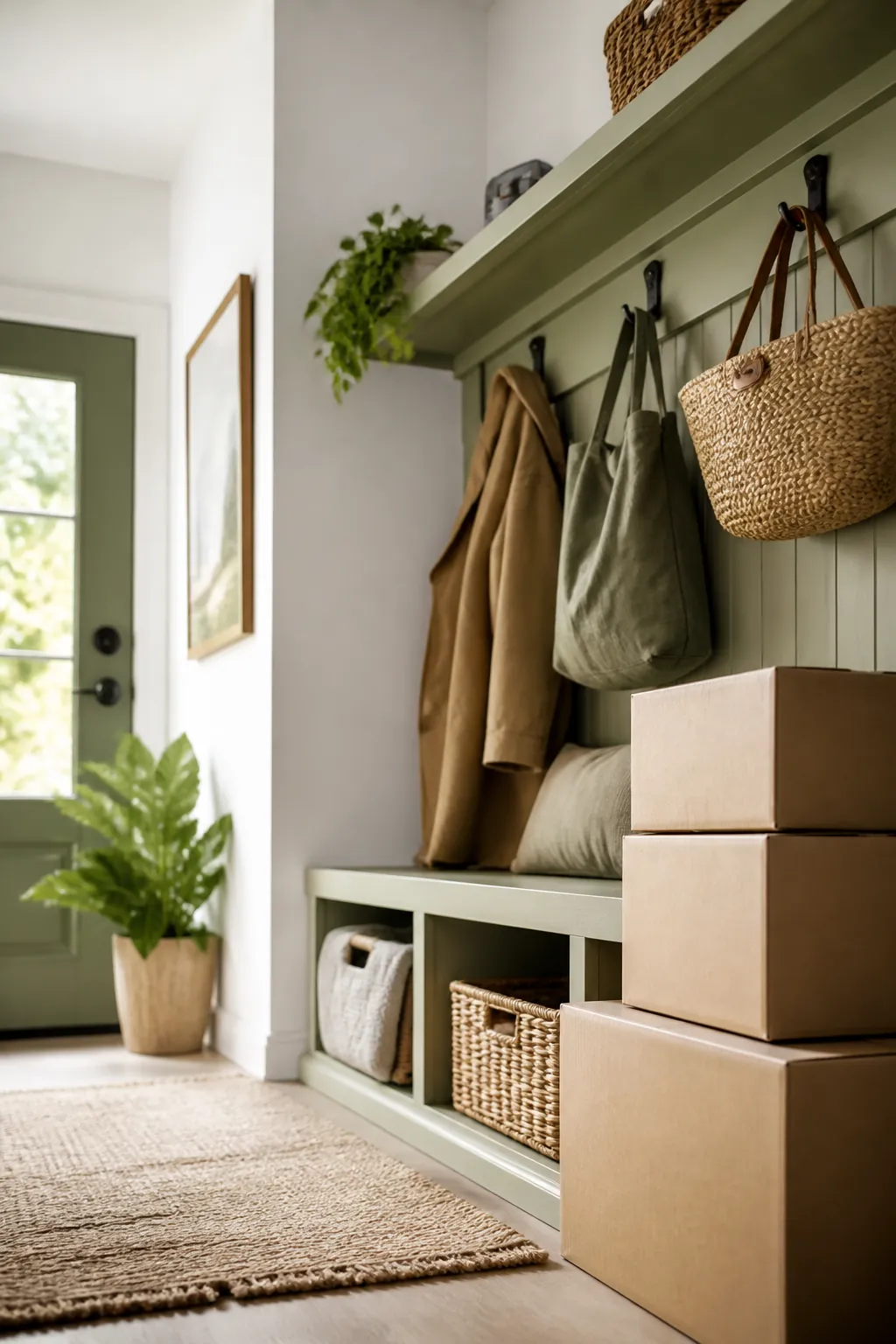
A retractable box cutter or utility knife makes short work of heavily taped boxes, but it is also the one tool in this whole system that causes an actual injury if a toddler finds it sitting on the floor next to the recycling stack. Store it closed, on a high shelf or in a drawer near the entry rather than loose on top of the bin, and get in the habit of retracting the blade the second a box is open rather than setting it down live.
Scissors or a seam ripper handle most tape without a blade at all, and for a household with small kids around the entryway, skipping the box cutter entirely removes the risk without losing much speed on breakdown day.
7. Stage tape, labels and scissors where you actually use them
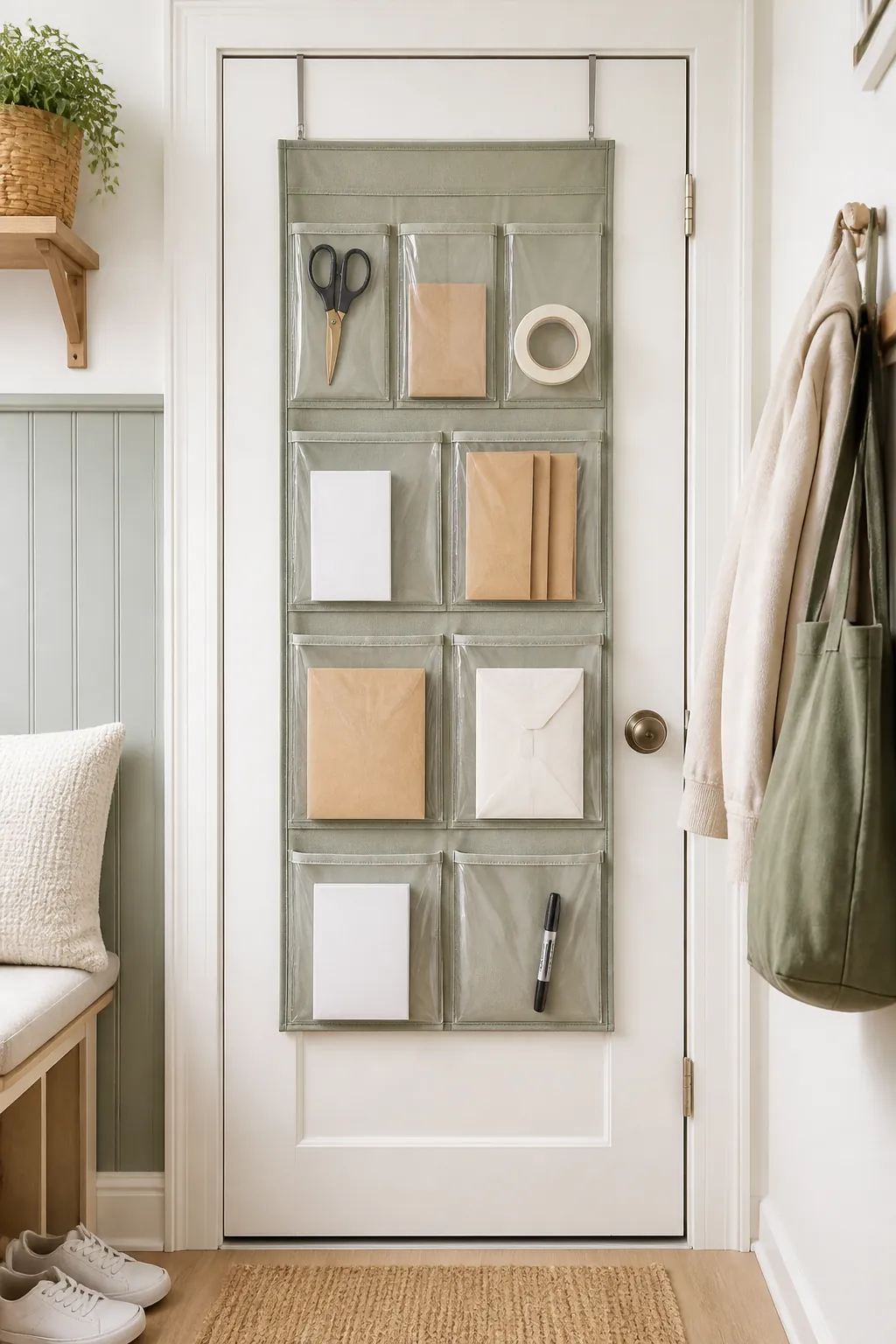
The small supplies that go with managing delivery boxes, a pair of scissors, a roll of packing tape for the occasional return, a permanent marker for crossing out an old label, tend to drift around the entryway because none of them has an obvious home. An over-the-door shoe organizer with clear pockets repurposes well here, hung on the back of a closet door near the entry, with scissors, tape, a marker and a stack of return labels each getting their own pocket at eye level instead of rattling around loose in a drawer.
Clear vinyl pockets mean everything is visible without unzipping or digging, which matters on the specific morning you are trying to repack a return in under five minutes before a pickup window closes. Reserve the pockets closest to the door handle for whatever you reach for most, and push seasonal or rarely used supplies, holiday wrapping tape, a spare marker, down to the bottom rows.
8. Set a hard cap and a pickup day so the stack never becomes a wall
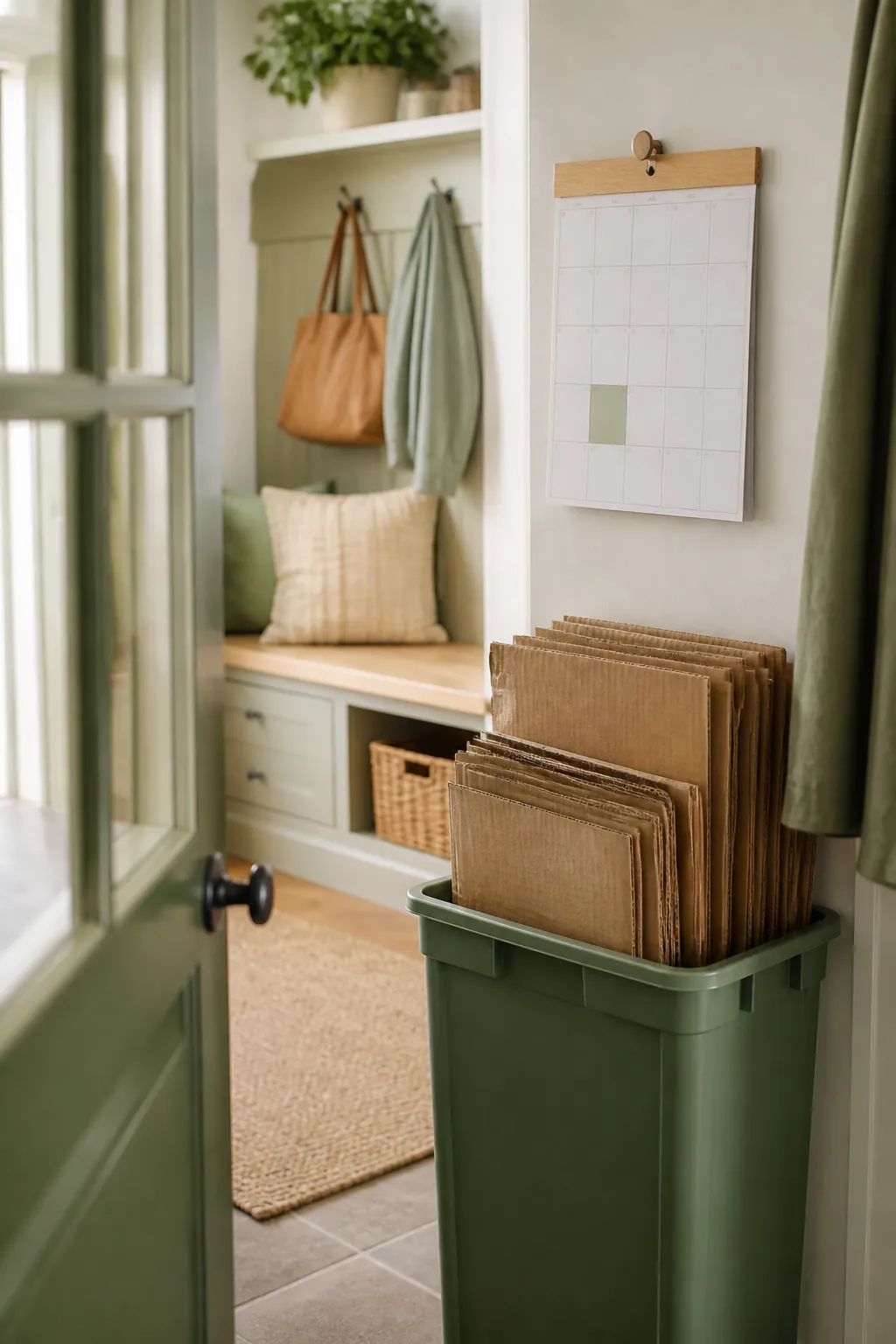
A bin or a bench cavity only stays useful up to a point, and without a limit, cardboard storage quietly turns into cardboard accumulation. Pick a cap, somewhere around eight to ten flattened panels for most single bins, and once the stack hits it, that is the signal to break the flattened cardboard down further by cutting panels into smaller pieces, or to make an off-cycle trip to a recycling drop-off rather than waiting for the next scheduled pickup.
Pair the cap with a specific day rather than a vague intention to deal with it eventually. Households that tie cardboard breakdown to an existing routine, the night before trash day, or right after the weekly grocery delivery, keep the stack from growing past what one person can carry out in a single trip.
9. Keep padded mailers and poly bags in a separate pile
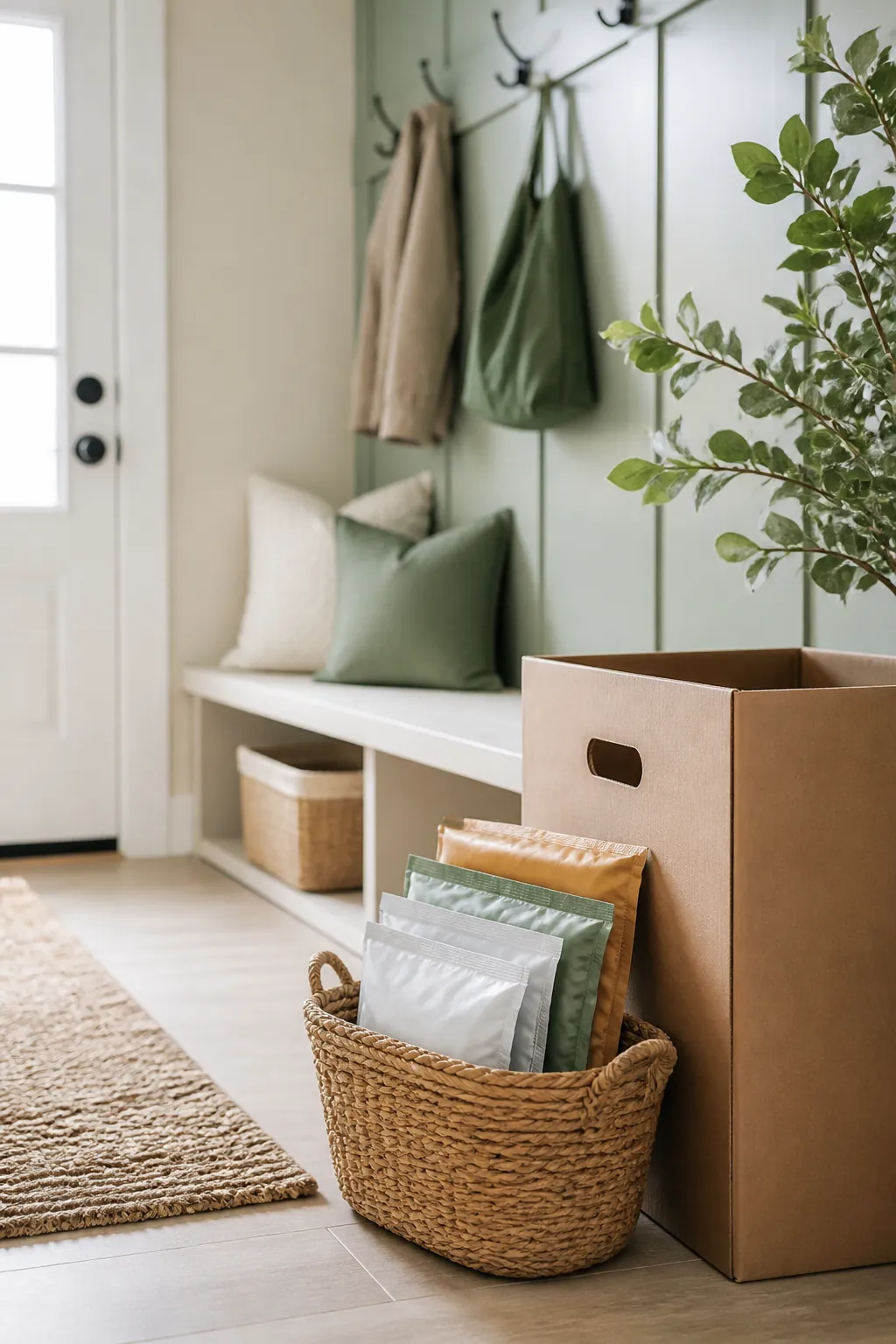
Padded mailers lined with bubble wrap or foam, and the plastic poly bags that lighter items ship in, are not cardboard and most curbside programs will not take them mixed into a cardboard stack. They need either a dedicated plastic-film drop-off, which many grocery stores offer near the reusable bag bins, or the regular trash if no drop-off is nearby. Mixing even a few of these into an otherwise clean cardboard stack is one of the more common reasons a hauler leaves the whole bin at the curb.
A second, smaller container, a gallon zip bag or a shallow basket, set right next to the cardboard bin keeps the two streams apart without adding real floor space.
Where to start
Start with the habit, not the bin: flatten every box the moment it is empty, scoring along the existing tape line instead of reaching for a blade. Size whatever container you choose to the flattened panel, roughly 18 by 14 inches for a typical medium box, and lean panels on edge rather than stacking them flat so the bottom one never gets crushed under the rest.
Add the bench or the over-the-door organizer once you know whether your real problem is visible clutter or loose supplies drifting around the entry, since buying both before you have broken down a single box usually means one of them sits empty. The cap and the pickup routine are what keep the whole system working past the first month, long after the new-bin enthusiasm wears off.