A spare room asked to be both an office and a guest room usually ends up being neither very well. The desk gets pushed into a corner it does not fit, the bed takes the good light, and the whole room holds a low level tension about which of the two it really is.
The reason is almost always that it was laid out for the guest. That feels polite and is the wrong way round arithmetically, because a spare room is an office for something like 350 days a year and a bedroom for maybe fifteen.
Everything below starts from that count. Lay the room out for the thing you do daily, and make the occasional thing the part that adapts.
1. Count the days before you plan the layout
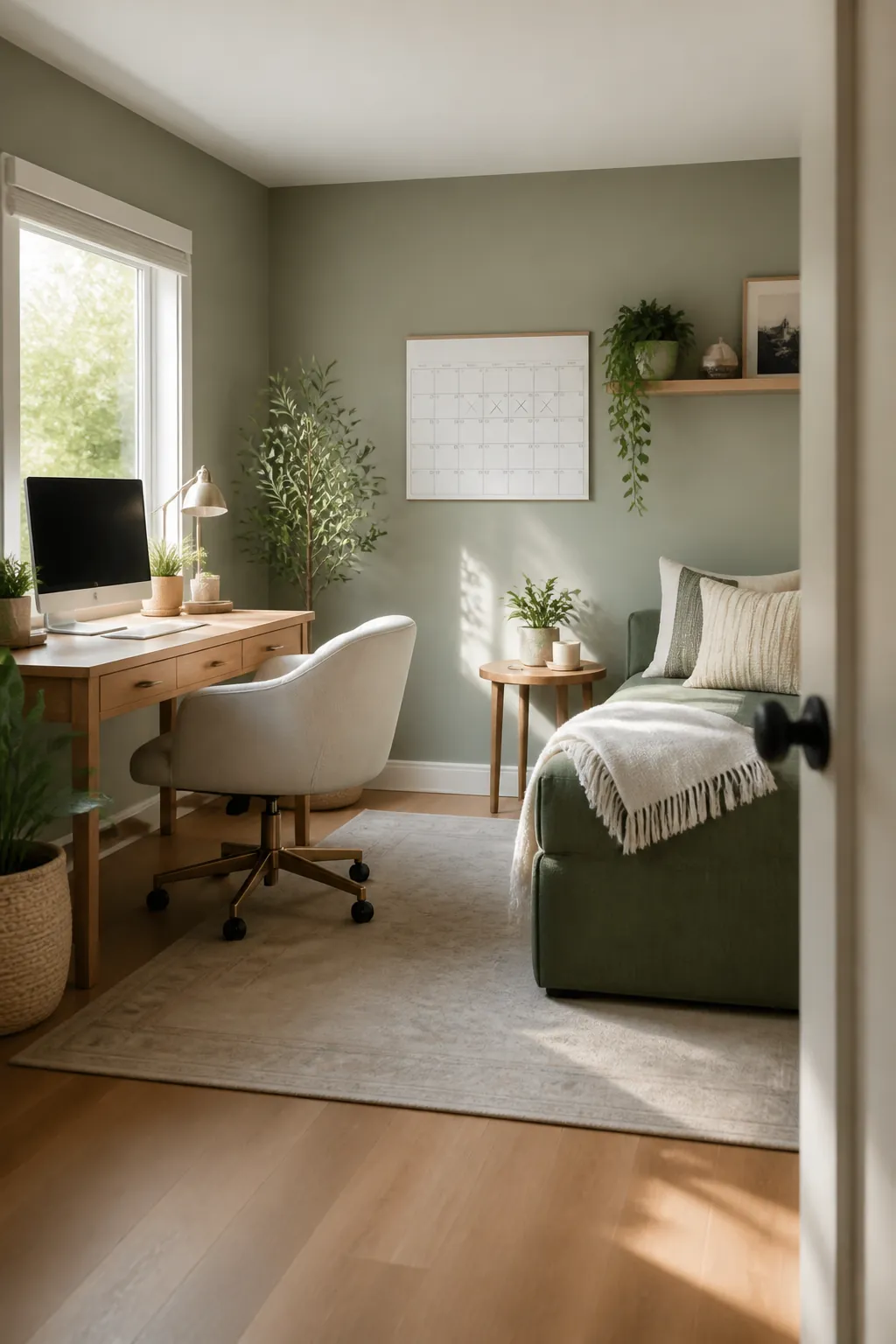
Work out roughly how many nights a year somebody actually sleeps in the room.
For most households it is under twenty. That number should decide which function gets the window, the good wall and the clear floor, and it almost always points at the desk.
This is not about caring less for guests. A guest sleeps in the room in the dark for eight hours and barely sees it. You sit in it in daylight for two thousand hours. Design for the two thousand.
If the count comes out much higher, say a room used monthly by family, the balance genuinely shifts and a proper bed with real bedside space starts to earn its keep. The point is to do the arithmetic rather than assume.
2. Give the desk the window and the bed the wall
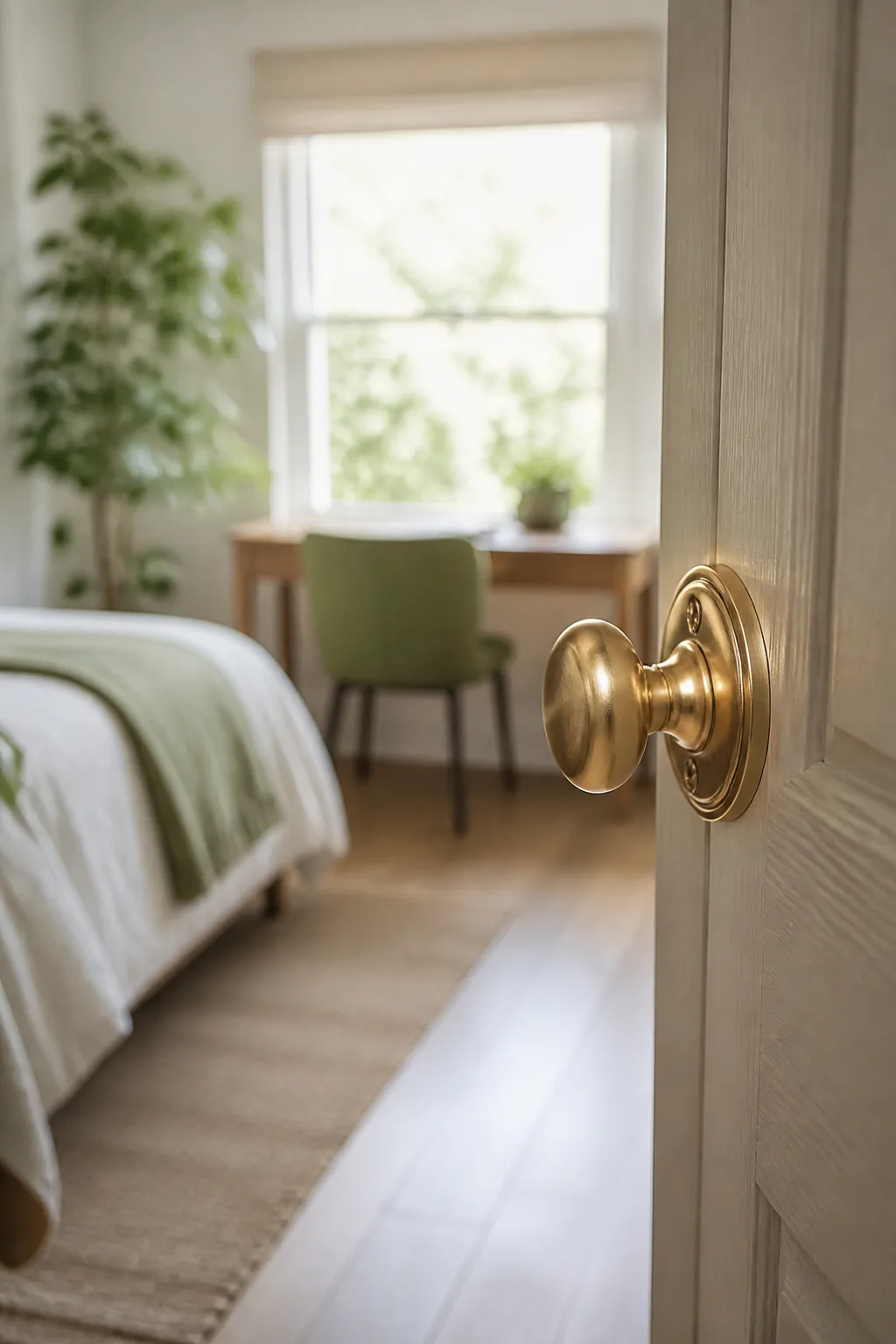
Natural light matters enormously at a desk and almost not at all beside a bed.
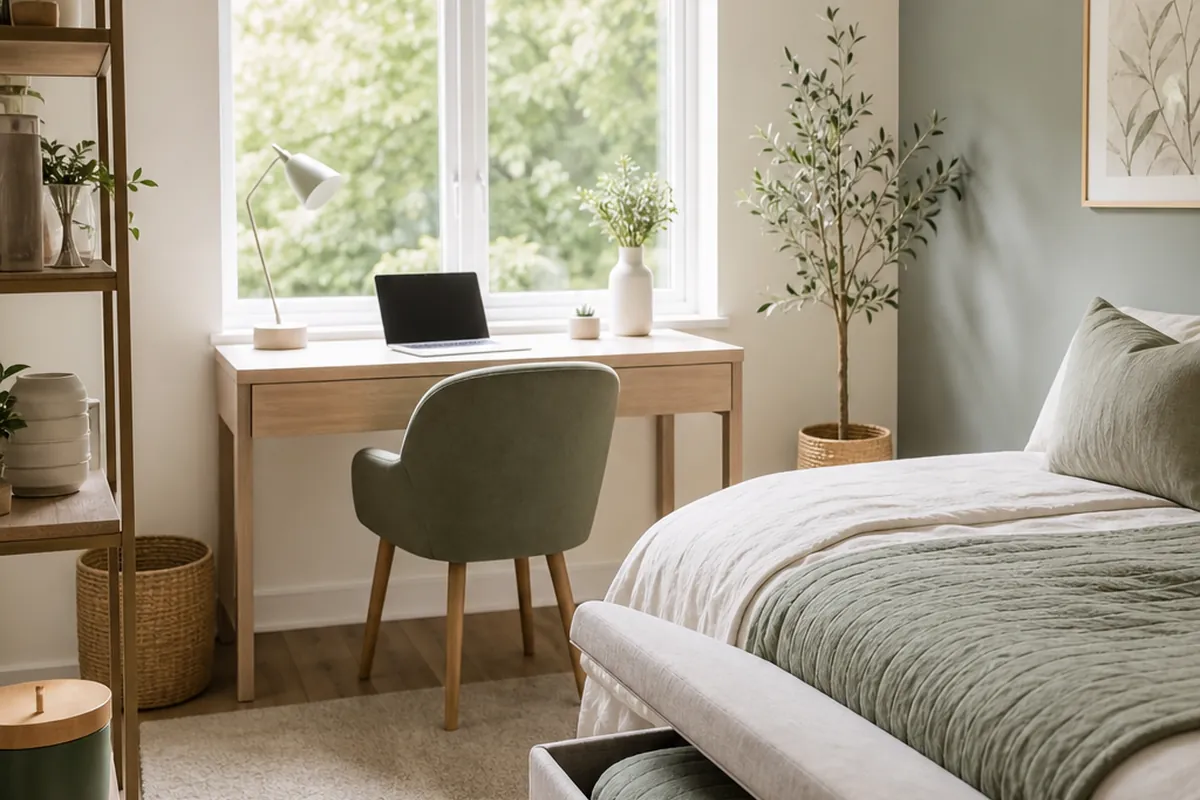
Put the desk under or beside the window and push the bed to the internal wall. A bed under a window looks appealing in photographs and is the colder, draughtier spot in most rooms, so the guest loses very little.
The other gain is screen glare. A desk against a wall with the window to one side is the arrangement that avoids both a bright window behind the screen and a bright window facing it.
There is one case for putting the bed under the window: a room so narrow that the bed only fits along that wall. Where the room forces it, a heavier curtain and a headboard between the sleeper and the glass fix most of the cold, and the desk takes the wall with the best artificial light instead.
3. Buy a narrower desk than feels right
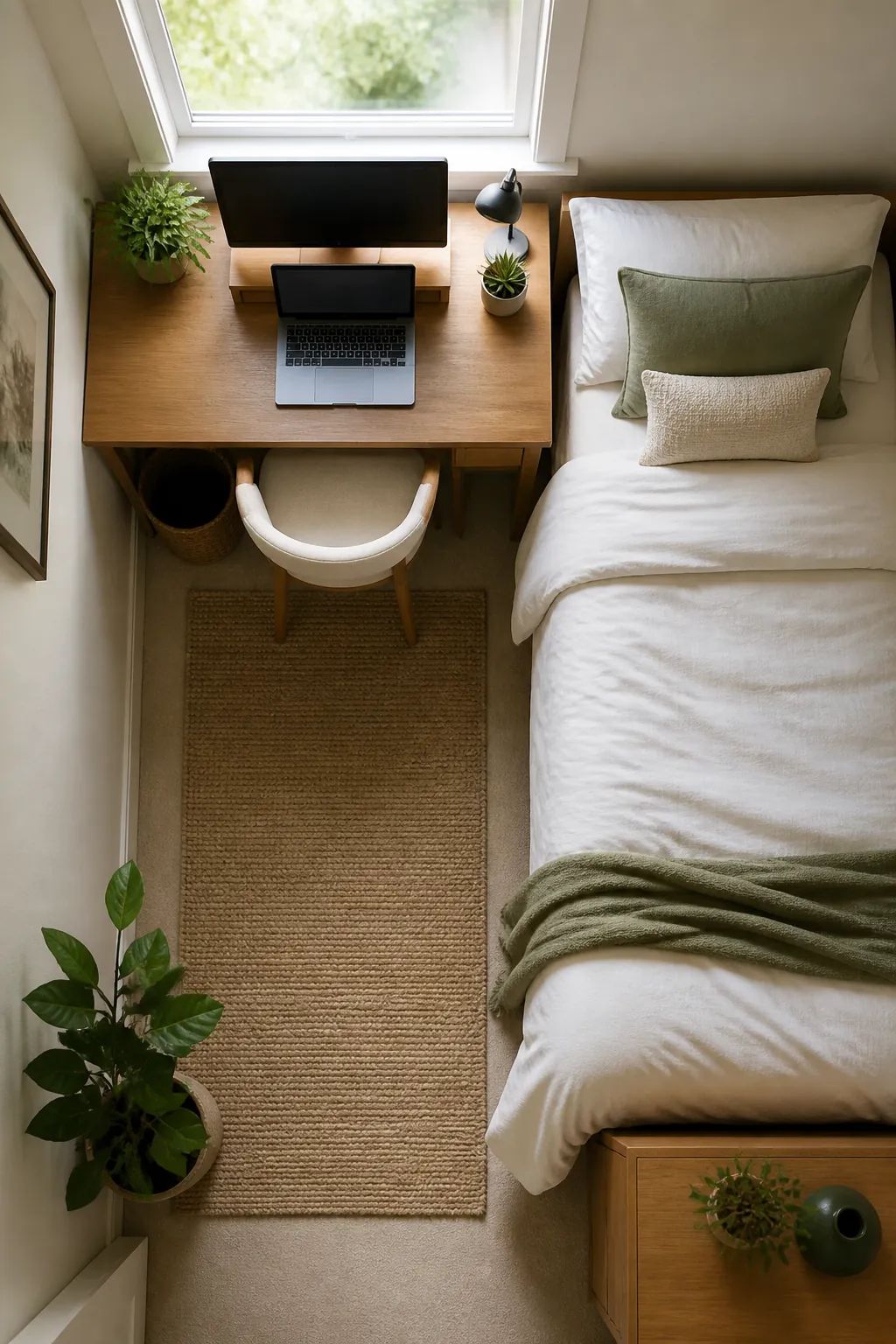
The single biggest layout gain in a combined room is desk depth.
A desk 20 to 24 inches deep holds a laptop, a monitor and a notebook comfortably once the storage goes upward rather than backward. A 30 inch desk holds the same things plus a strip of dead space at the back that collects mugs.
Those six inches are the difference between a walkway beside the made up bed and a squeeze. In a small room, depth is the measurement that decides whether two functions fit, and it is the one people over buy.
4. Go up from the desk, not out
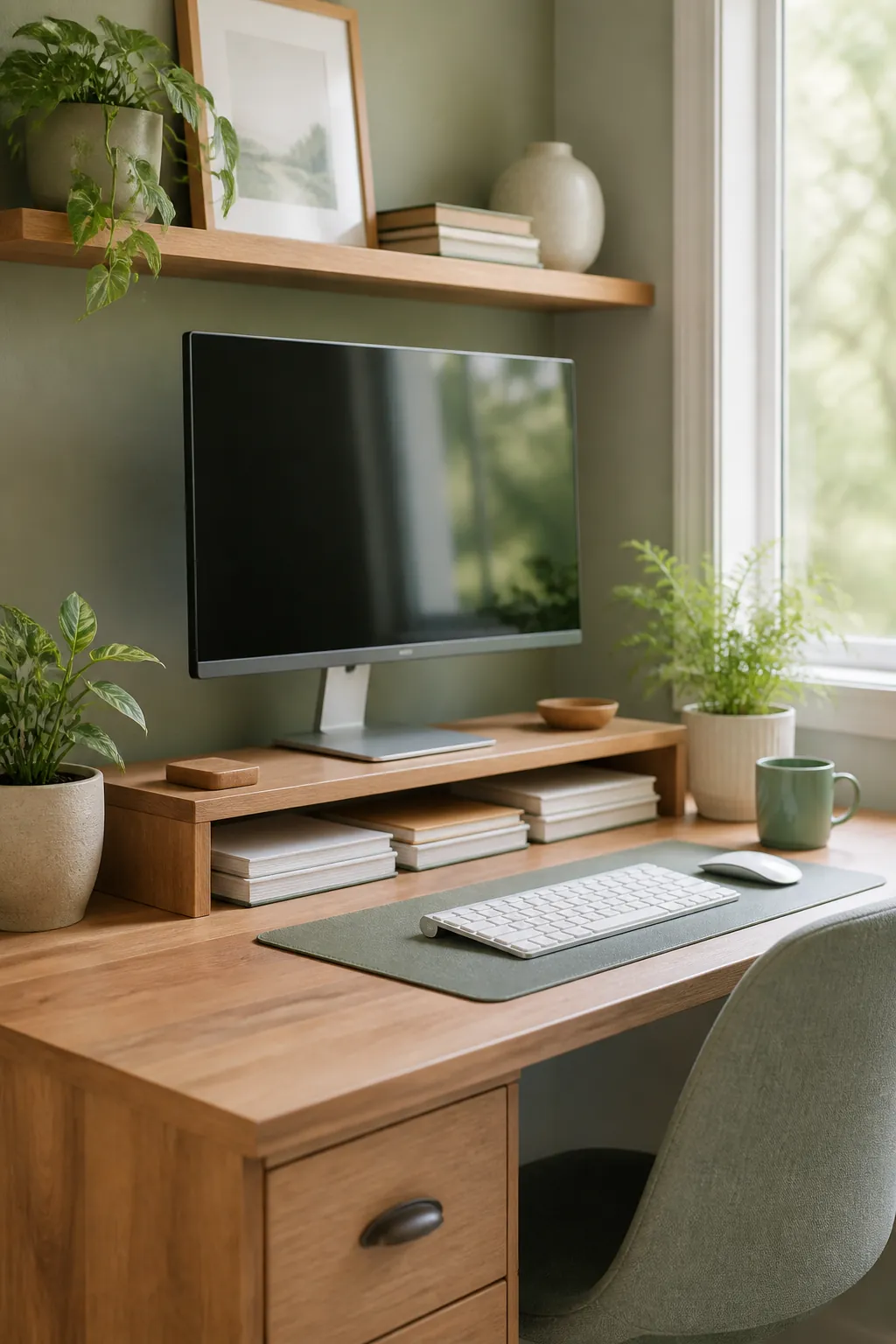
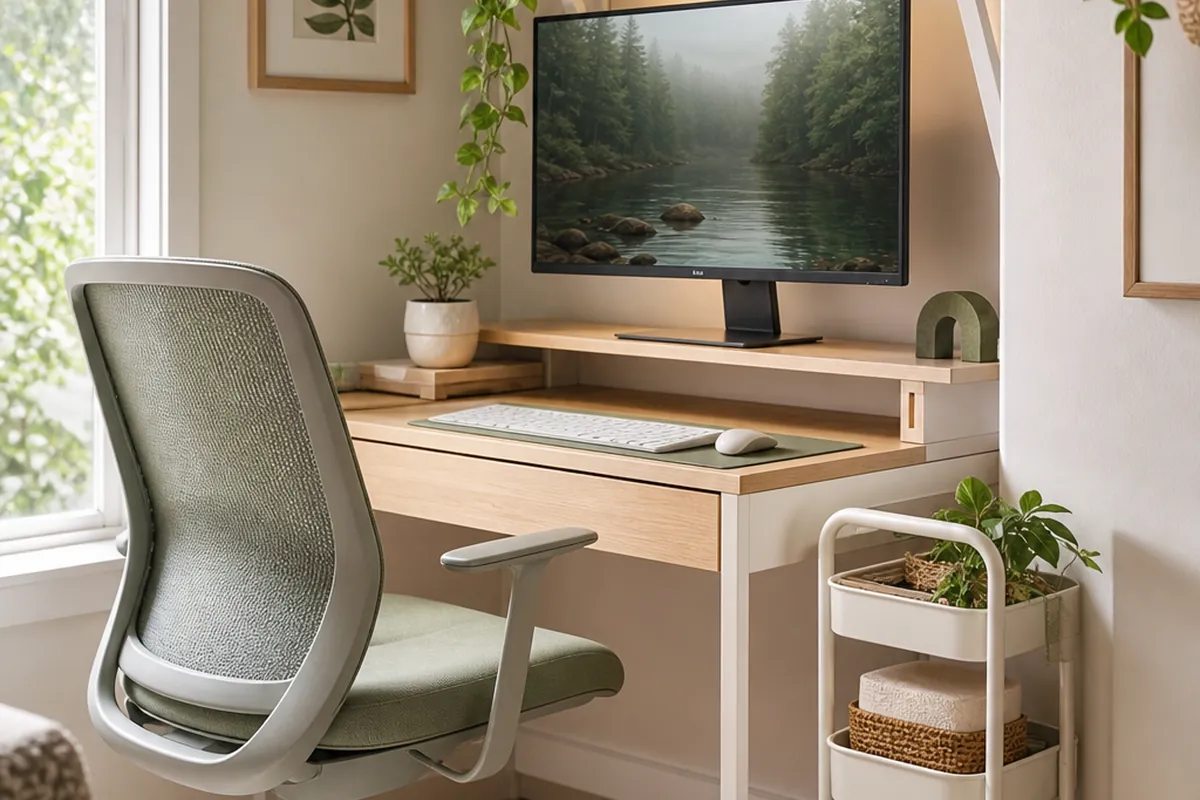
An adjustable desktop organizer shelf is about 22 inches wide and only 6.8 inches deep, so it spans the back of a narrow desk, lifts the monitor to a sane height and leaves the whole surface in front of it clear.
The shallow depth is the point rather than a compromise. A deeper shelf would take the space the monitor needs and push the keyboard forward, which is how a small desk becomes unusable.
Underneath the shelf is the right home for the small work objects that otherwise colonise the desktop, and being contained is what makes the ten minute reset in idea nine possible.
5. Store the guest bedding in the guest room
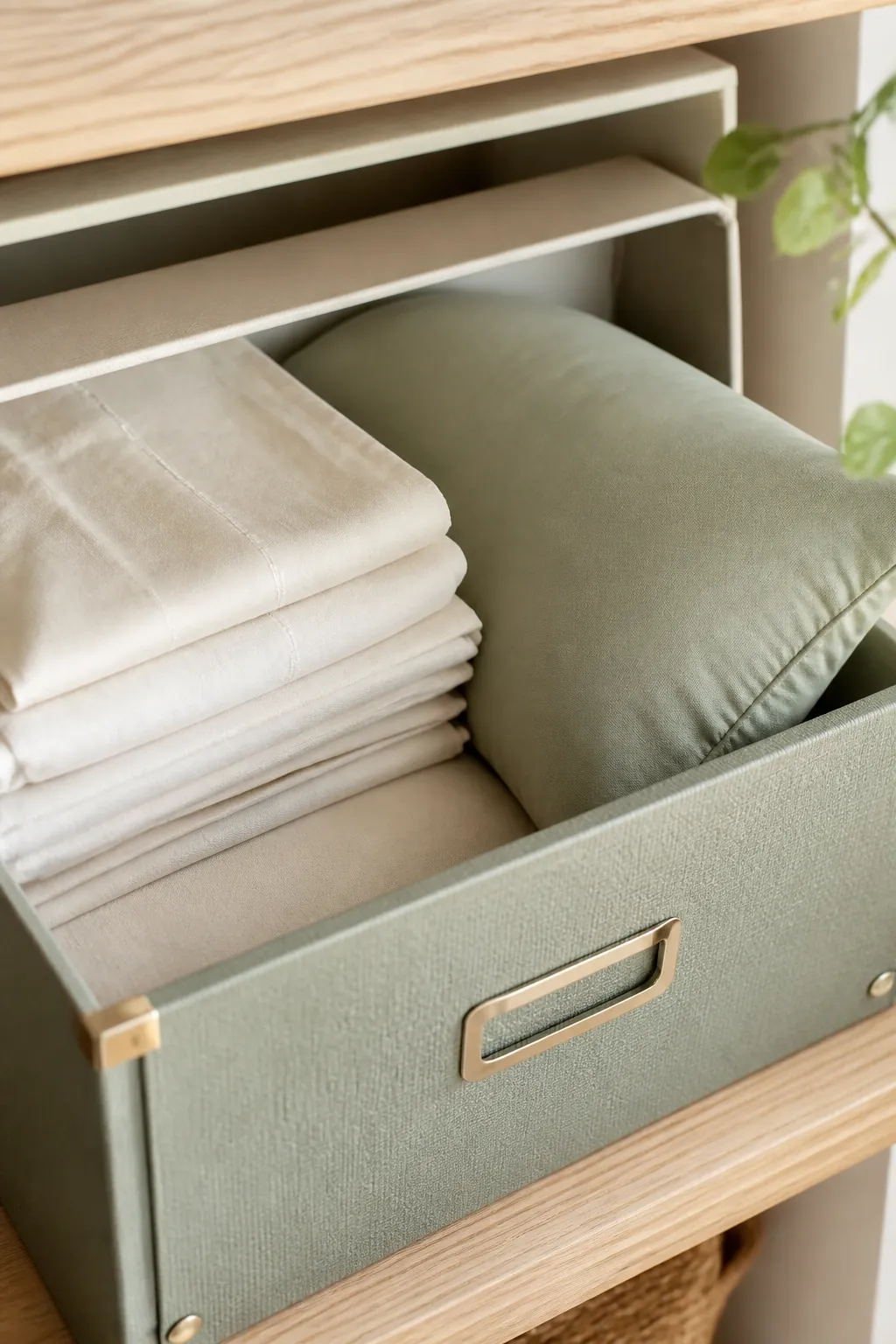
Bedding kept in a linen closet somewhere else means every visit starts with a hunt, and the linen closet is usually already full of the bedding in daily use.
The spare duvet, the spare pillows and the sheet set belong in the room they are used in. That sounds obvious and is very commonly not done, because a spare room is treated as having no storage of its own.
It has two large stores nobody counts: the volume under the bed, and whatever furniture the room already has a lid on.
One set of bedding is usually enough. A spare duvet, two pillows and a single sheet set covers almost every visit, and holding three sets for a room used a dozen nights a year is storing laundry rather than storing bedding.
6. Under the bed is the biggest cabinet in the room
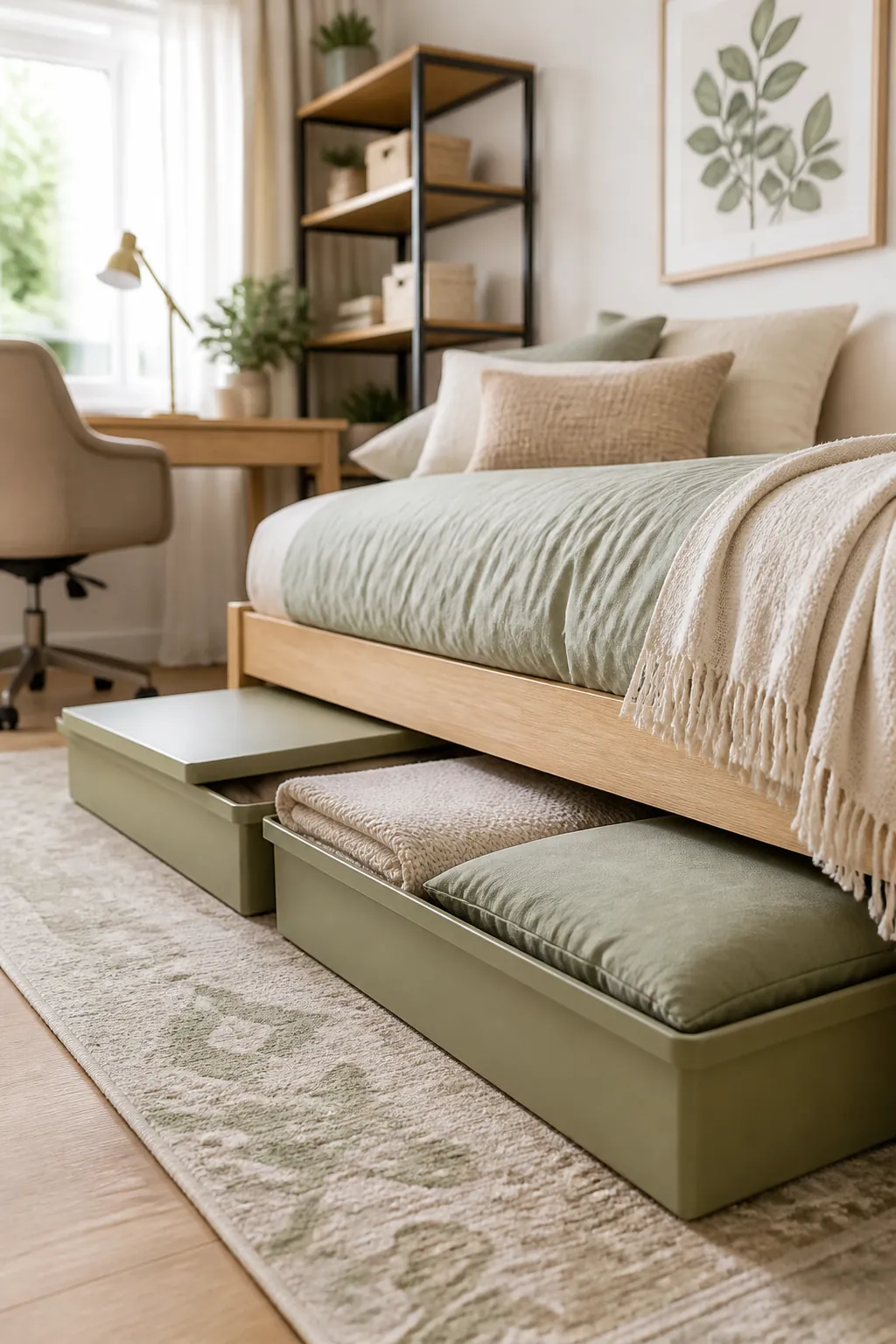
A standard bed sits over something like fifteen cubic feet of space that costs nothing and is invisible.
Open containers under a bed turn into lint traps within a month. Under bed storage bins with lids solve that, and a flat lid lets you set something on top without the stack folding in. Go long and shallow rather than short and deep, since these get retrieved by sliding rather than lifting.
On carpet, avoid the versions with tiny casters, which sink and stall. A smooth flat base glides better. The broader version of this is covered in under bed storage ideas for a small bedroom.
Put bedding in one bin and work overflow in the other. Two bins, two functions, one otherwise wasted volume.
7. One piece of furniture that does three jobs
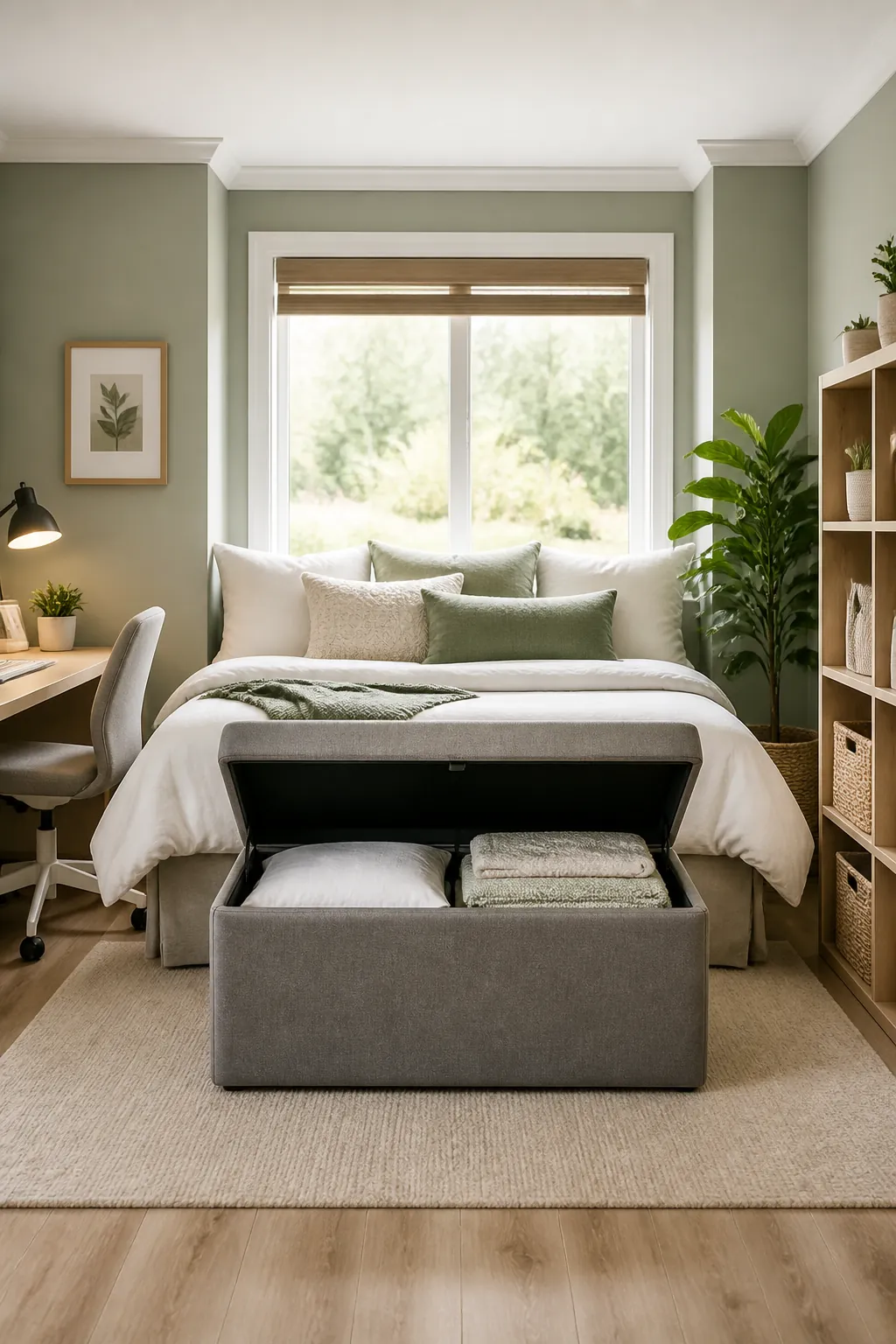
In a room doing two jobs, furniture that only does one is expensive.
A storage ottoman with a lid at the foot of the bed is a seat when a guest needs somewhere to sit, a surface for a suitcase, and a blanket box holding the spare bedding, all on one footprint.
It also solves the small indignity of a guest having nowhere to put an open case except the bed or the floor. Set it at roughly knee height and it works as a bench as well.
8. Contain work things rather than arranging them
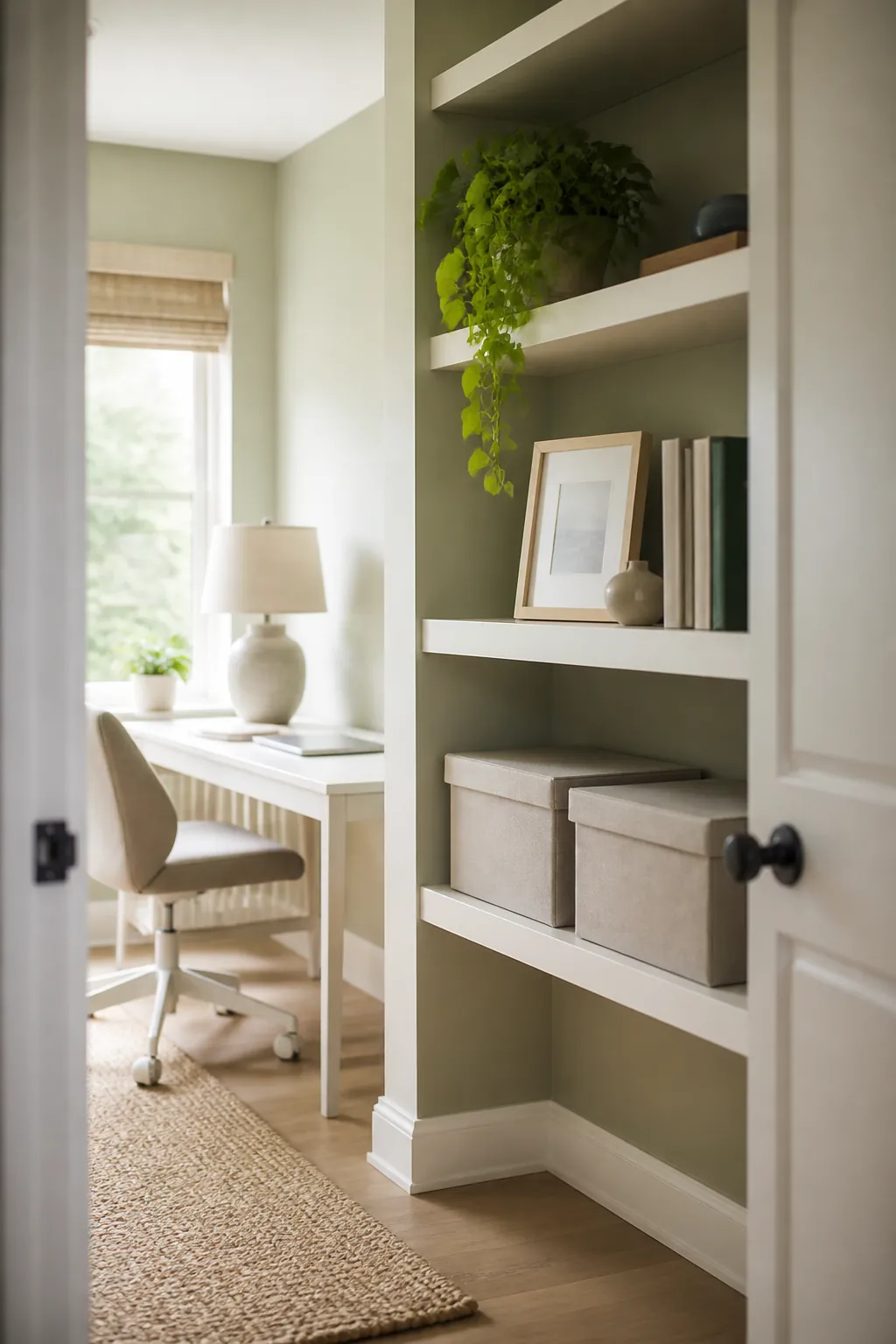
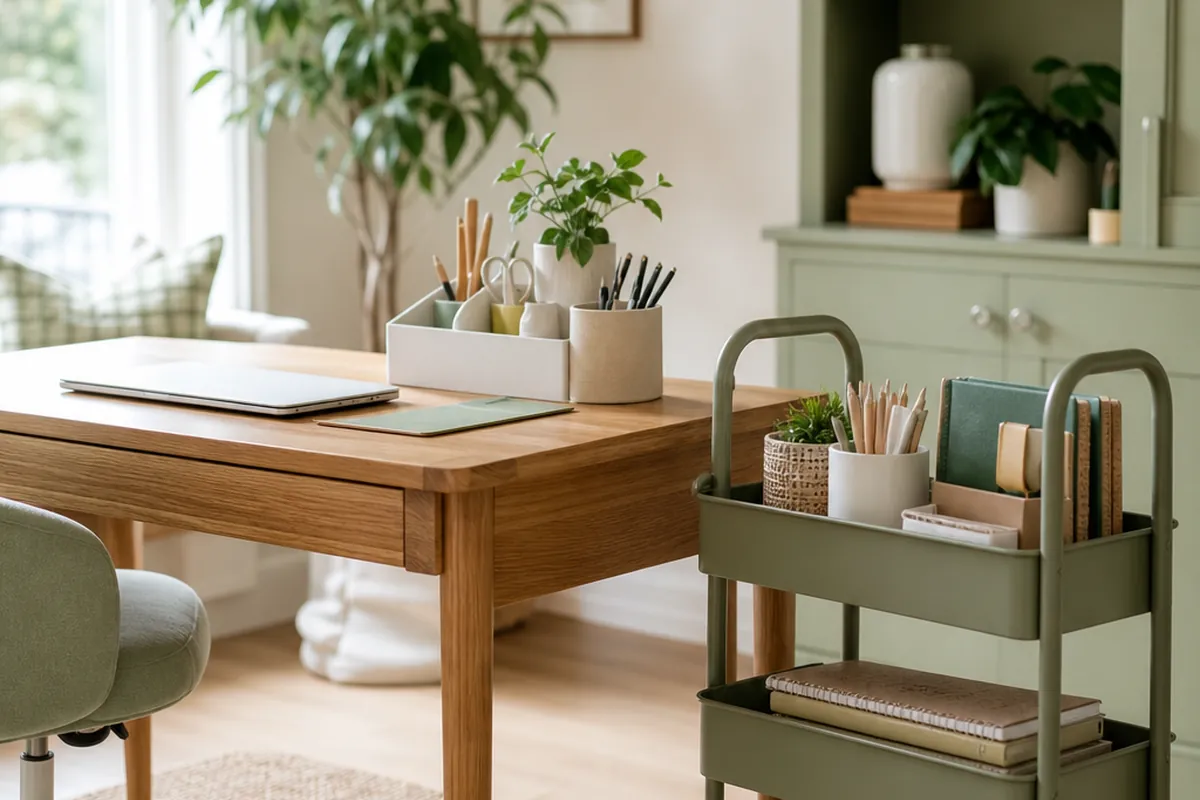
The difference between a room that resets in ten minutes and one that takes an afternoon is whether work lives in containers or on surfaces.
Fifty objects arranged neatly on a desk look organized and take an hour to clear. The same fifty objects in three boxes take one trip. Aim for the second even though the first photographs better.
Label the boxes for your own benefit rather than a guest’s. The reason a reset gets slow over time is that the boxes stop having defined contents, so clearing up becomes sorting, and sorting is the part that takes an afternoon.
This is the same principle as home office organization in a small apartment, where the constraint is a room that has to stop being an office at the end of the day.
9. Make the reset a ten minute job
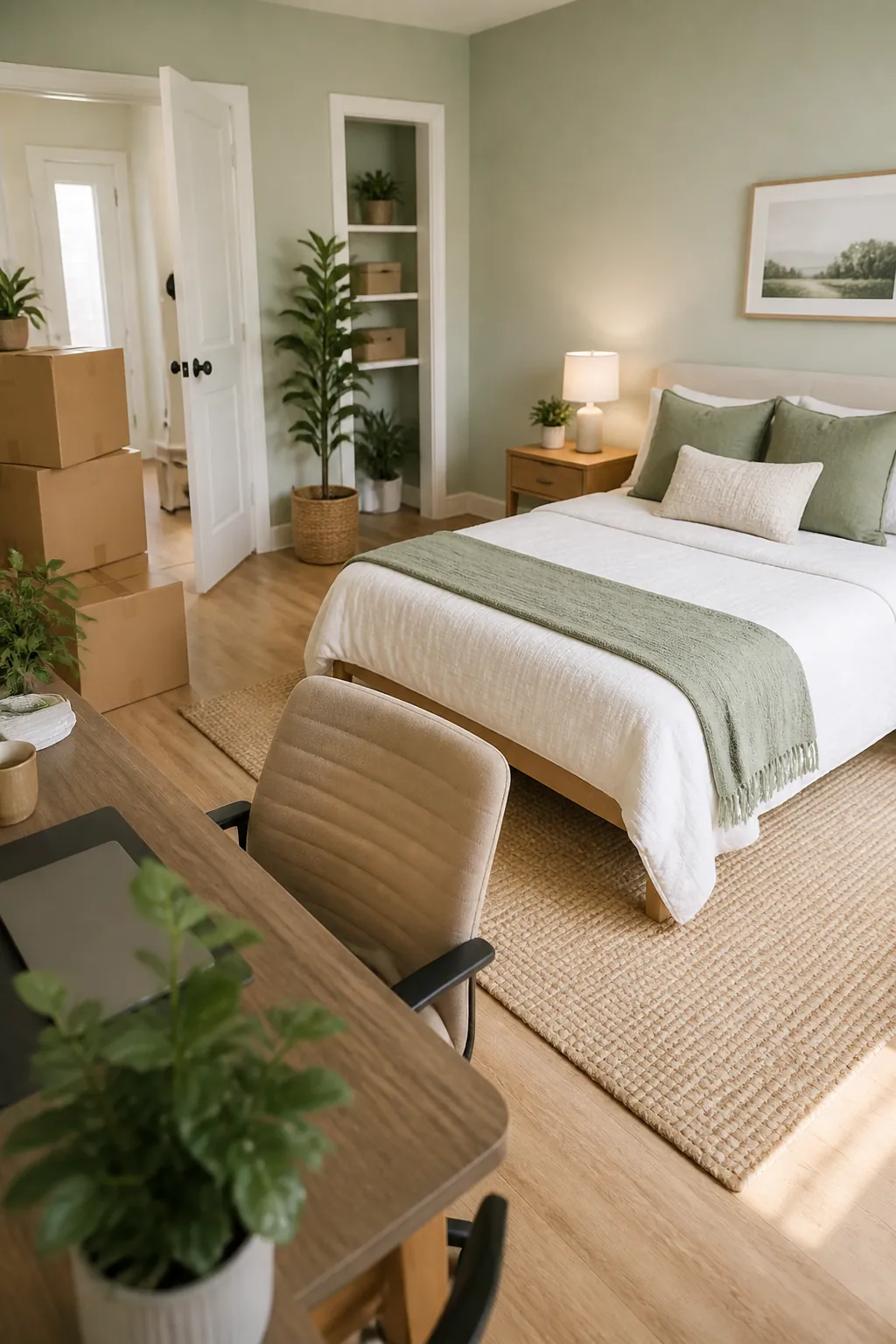
Decide in advance exactly what happens when a guest is coming, and time it once.
For most rooms it is three moves: work boxes into the closet, desk surface cleared into the ottoman, bedding out from under the bed. Ten minutes, no decisions to make in the moment.
If the reset takes longer than that, you will quietly start discouraging visits, which is the failure mode nobody admits to. Shortening it is worth more than any additional storage. The desk half of that routine is covered in office desk organization for a small space.
10. Give guests a surface and a hook
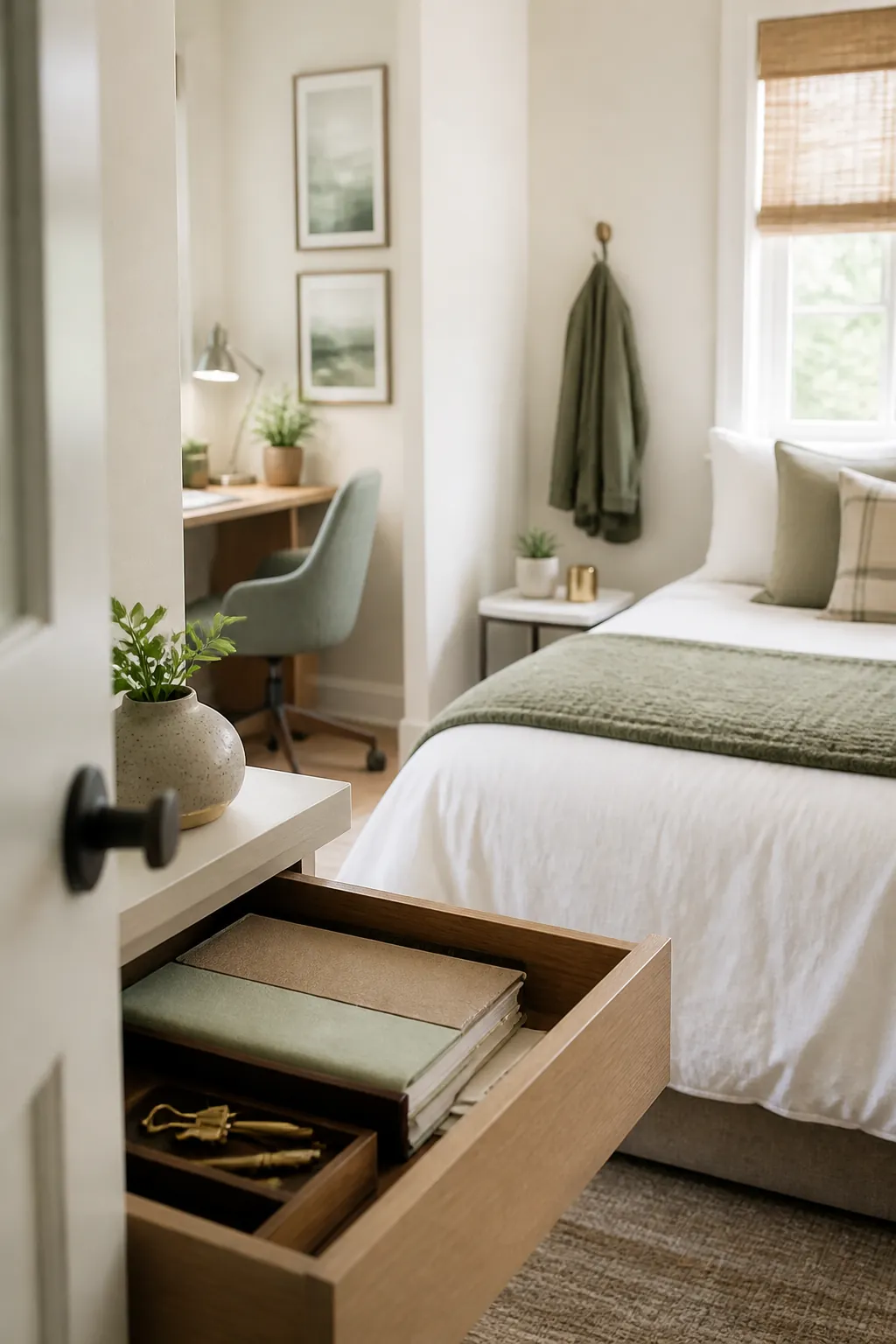
The last one costs almost nothing and is what makes the room feel like a guest room rather than an office with a bed in it.
A guest needs somewhere to put a phone at night, somewhere to put a bag that is not the floor, and somewhere to hang a coat. A small shelf or stool beside the bed, the ottoman for the case, and one hook on the back of the door covers all three.
Leave one drawer or one shelf genuinely empty as well. A guest who has nowhere to unpack lives out of a suitcase, and an empty shelf is the cheapest hospitality in the room.
Lay it out for the 350 days
A guest room office combo goes wrong when it is designed for the fifteen nights rather than the year.
Give the desk the light and the good wall, buy it narrower than feels right, and go up from it rather than back. Then use the two hidden stores, under the bed and inside a lidded seat, so the guest bedding lives in the room it is needed in. Keep work in boxes so the room resets in ten minutes, and the room will be a decent office all year and a decent bedroom on the nights it needs to be.