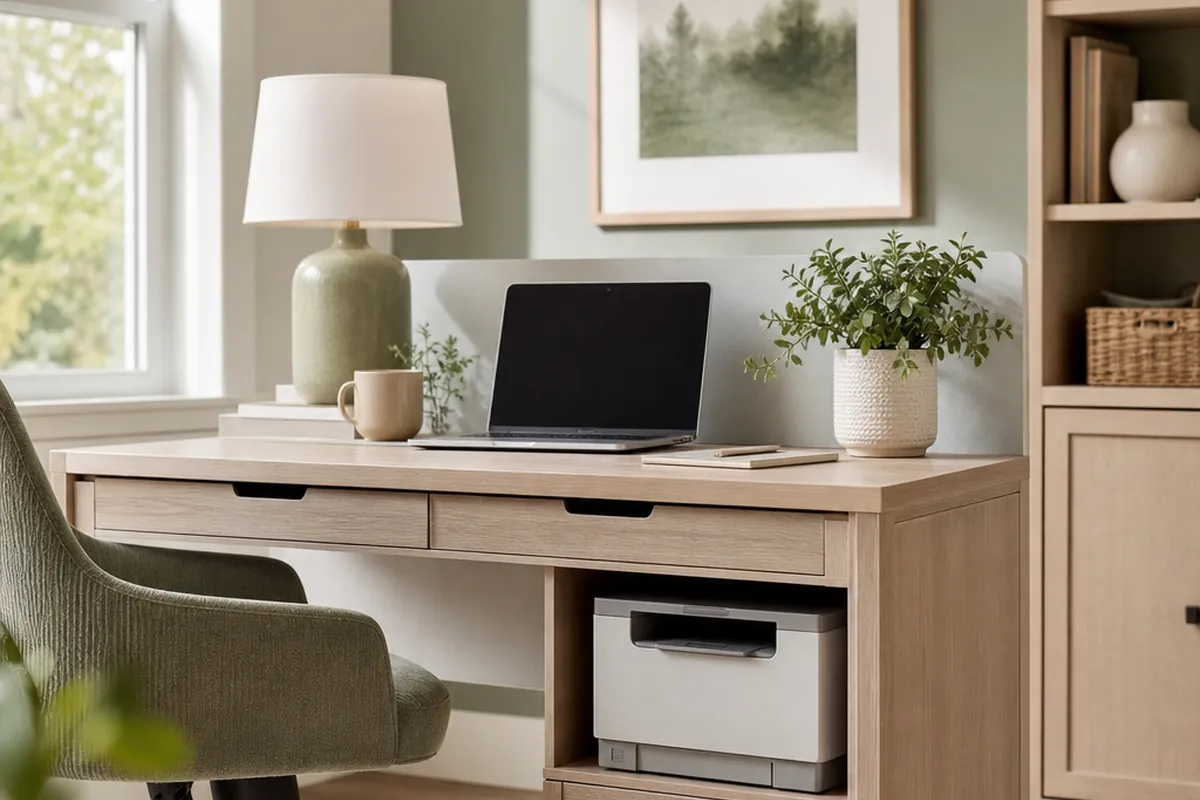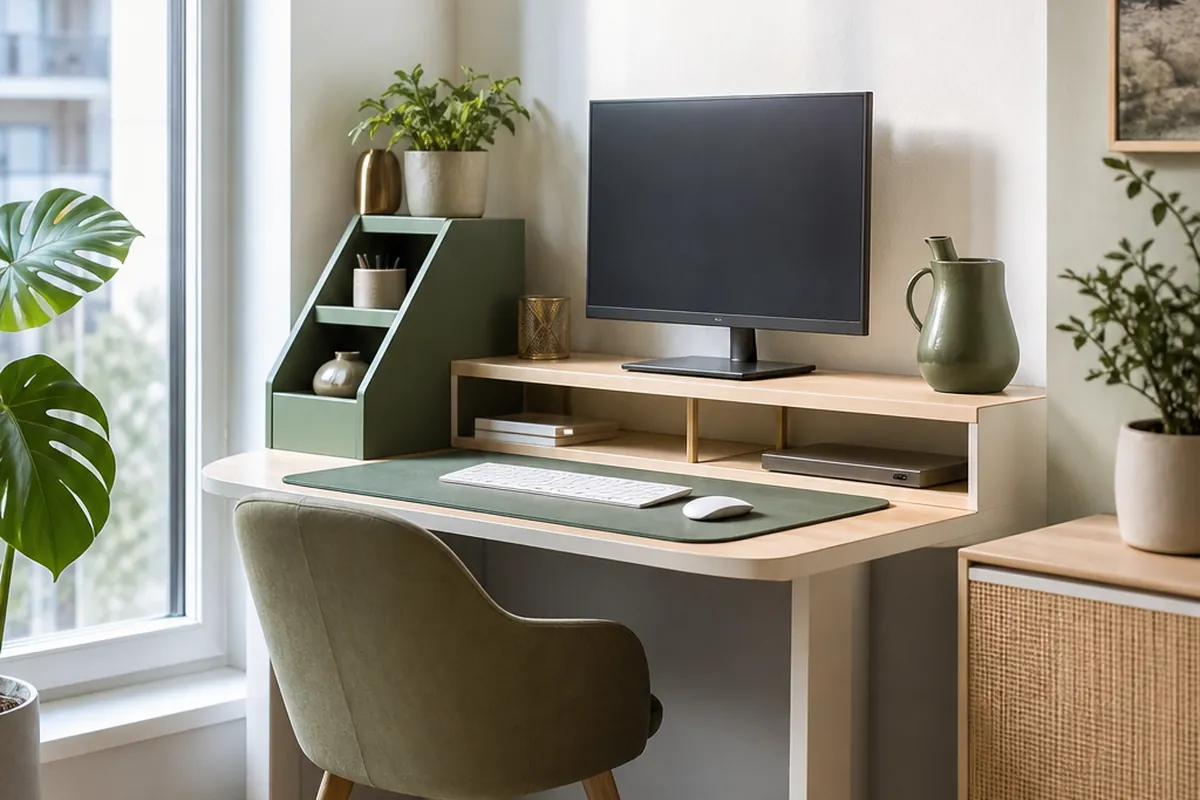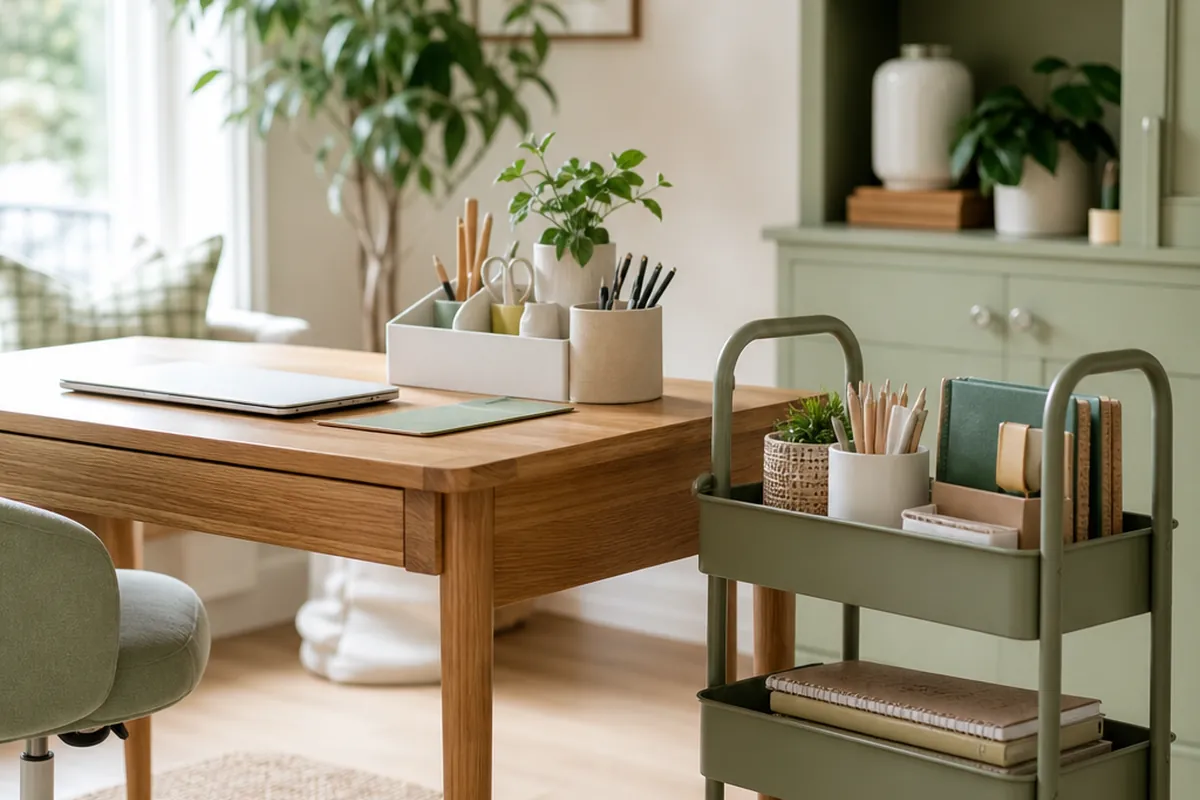
A desk with no drawers is a fine place to work and a terrible place to keep a stapler. Every pen, sticky note pad, charger and stray paperclip that would normally get swept into a drawer instead has to live in the open, on a surface already doing double duty as the workspace. The result is either a desk buried under small objects, or a desk with nothing on it and a shoebox of supplies hiding somewhere out of reach.
Neither is necessary. A desk with no drawers just needs its storage moved off the desktop and onto the wall above it and the floor beside it, split by how often each thing actually gets used. What follows is that split, in the order that keeps supplies reachable without turning the desk back into a pile.
1. Sort supplies by how often you touch them before buying anything
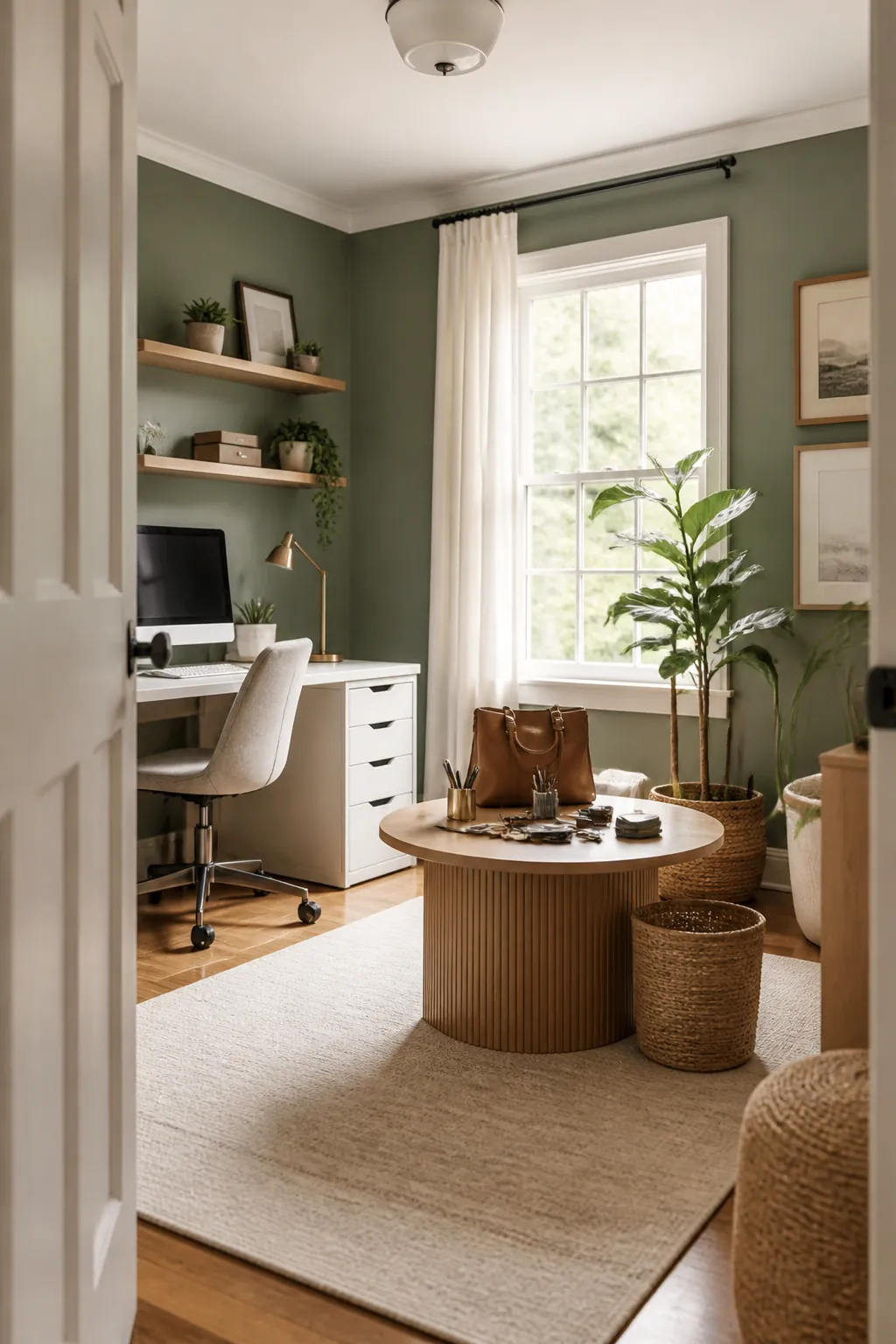
Before any organizer arrives, empty every bag, box and pencil case currently supplying this desk onto a table and sort the pile into three groups: daily, weekly, and rare. Daily is the stapler, the pen you actually use, sticky notes. Weekly is spare batteries, a hole punch, the label maker. Rare is the box of birthday cards and the three dead pens everyone keeps for some reason.
This step gets skipped because it feels slower than just buying a caddy and filling it. But a caddy sized for the daily pile holds maybe eight items comfortably, and loading it with thirty overflows it within a week. The sort is what tells you how big each container downstream actually needs to be.
2. Mount an organizer on the wall since the desk has nowhere to hide anything
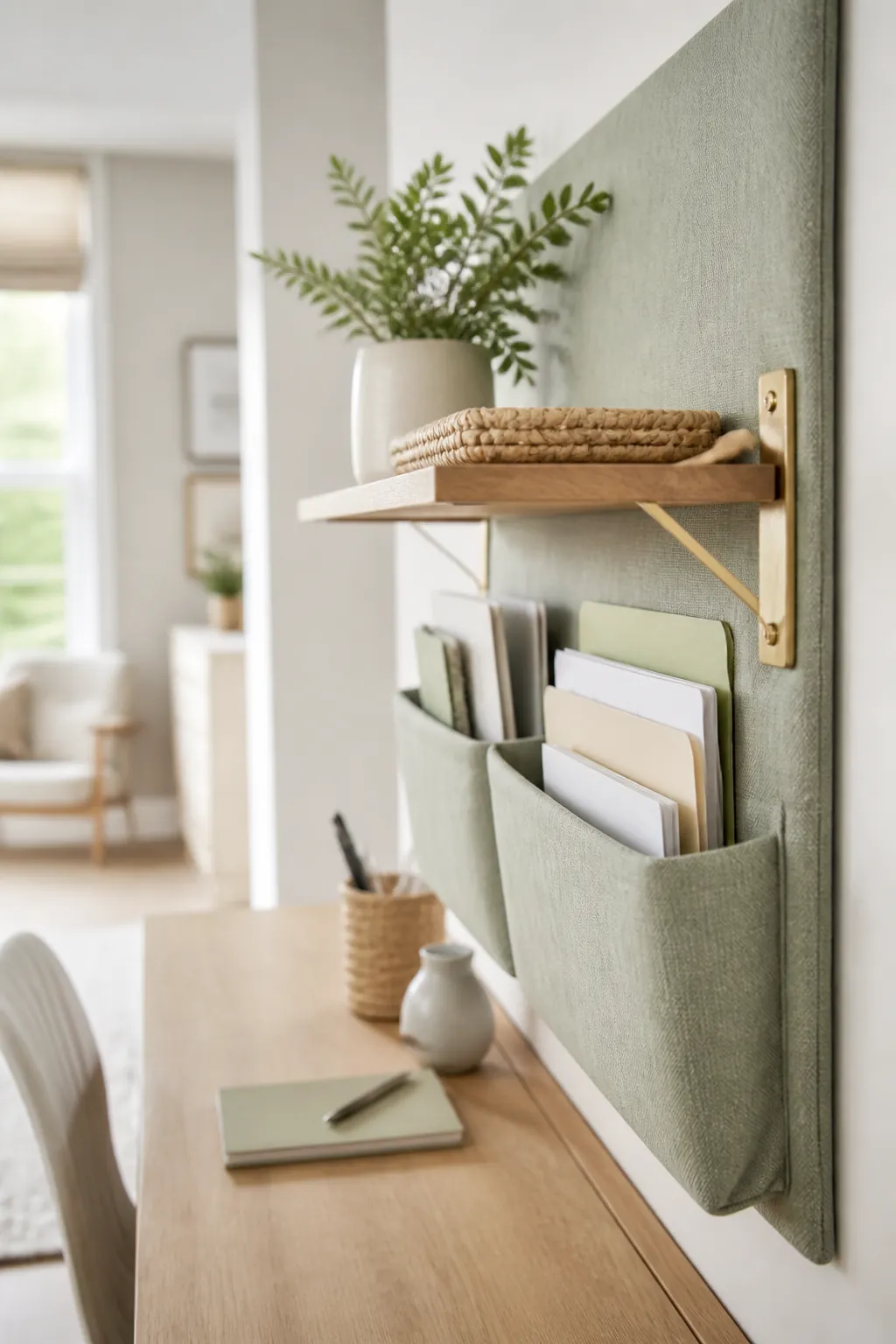
A drawer’s real job isn’t holding things, it’s hiding them below eye level so the desktop looks clear. Without one, the wall above the desk is the next best hiding spot, since it’s storage that doesn’t compete with the surface at all.
A wall-mount desk organizer with a few pockets and a small shelf handles the weekly pile from section 1, the things you want close but don’t need to touch every hour. Most mount with adhesive strips rated for a few pounds, enough for folders and light supplies but not a stapler and a full ream of paper, so check the rating before loading it up. Command-style strips also come down clean at move-out, which matters if you’re renting and the wall isn’t yours to drill into.
3. Put a caddy on the desk for the five things you touch hourly

The daily pile still needs a spot on the desk, because a drawer’s other job is putting frequently used things within arm’s reach, and a wall organizer three feet up doesn’t do that. A 4-tier desk organizer with a file holder does this in one footprint about the size of a paperback standing up, with separate compartments instead of one bin everything gets dumped into.
Keep this caddy to the daily pile only. The temptation is to use the biggest compartment for whatever doesn’t have a home yet, and that’s exactly how a caddy meant to replace a drawer ends up looking like a junk drawer with the sides cut off.
4. Roll a cart beside the desk to be the drawer you don’t have
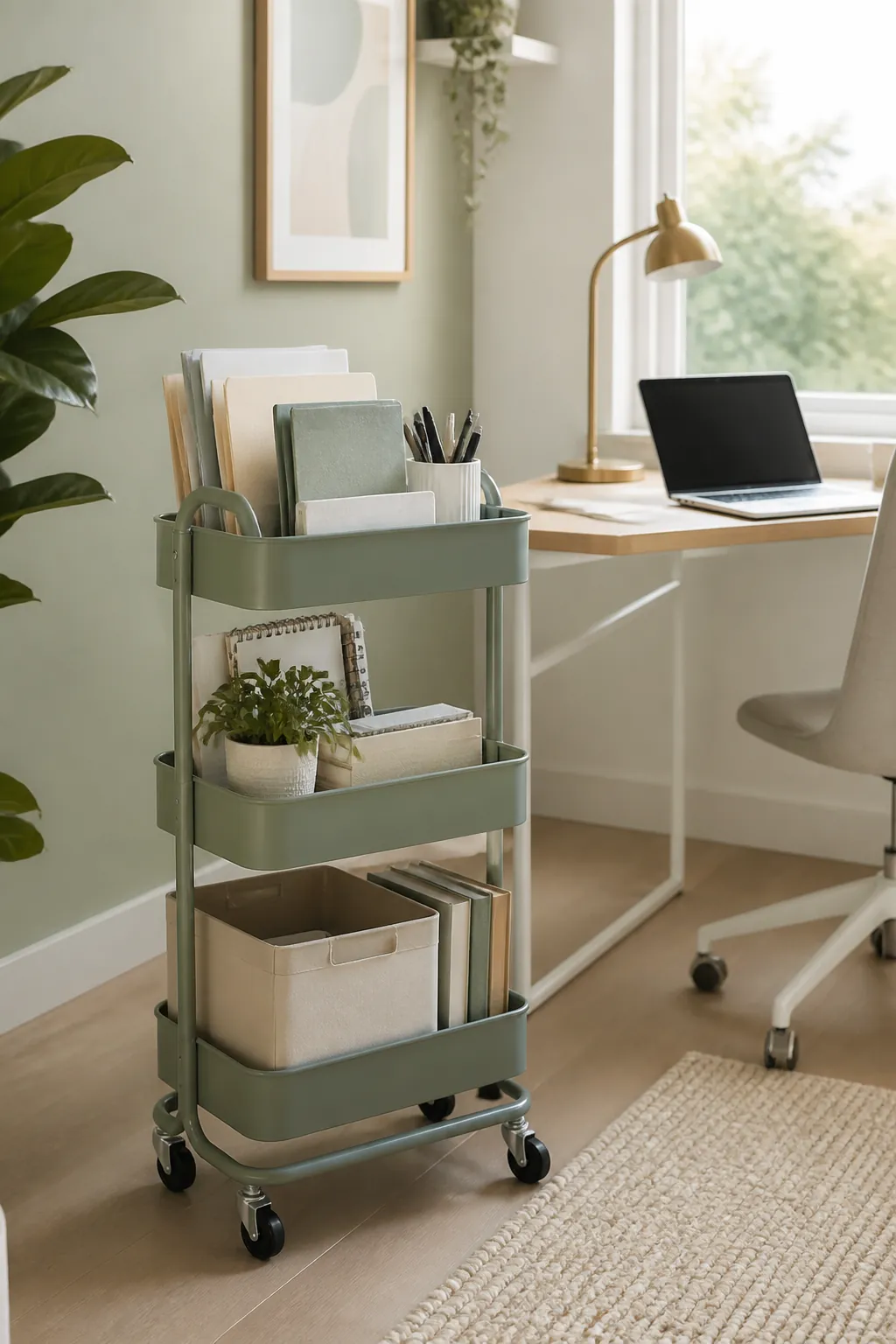
A drawer’s third job is holding the rare pile, the stuff you need four times a year but don’t want stored somewhere else entirely. A 3-tier rolling cart parked beside the desk does this without needing a wall or a drawer channel, and it rolls out of the way when the floor space is needed for something else, a chair pulled out further, a delivery box passing through.
Measure the gap beside the desk before ordering. Most carts in this class run 12 to 16 inches wide, and a desk pushed close to a wall or another piece of furniture may only have 10 inches of clear floor, tighter than it looks from a tape measure held at desk height rather than floor height. Leave an inch or two of swing room too, so the wheels clear a chair leg.
5. Give paper a stack instead of a drawer
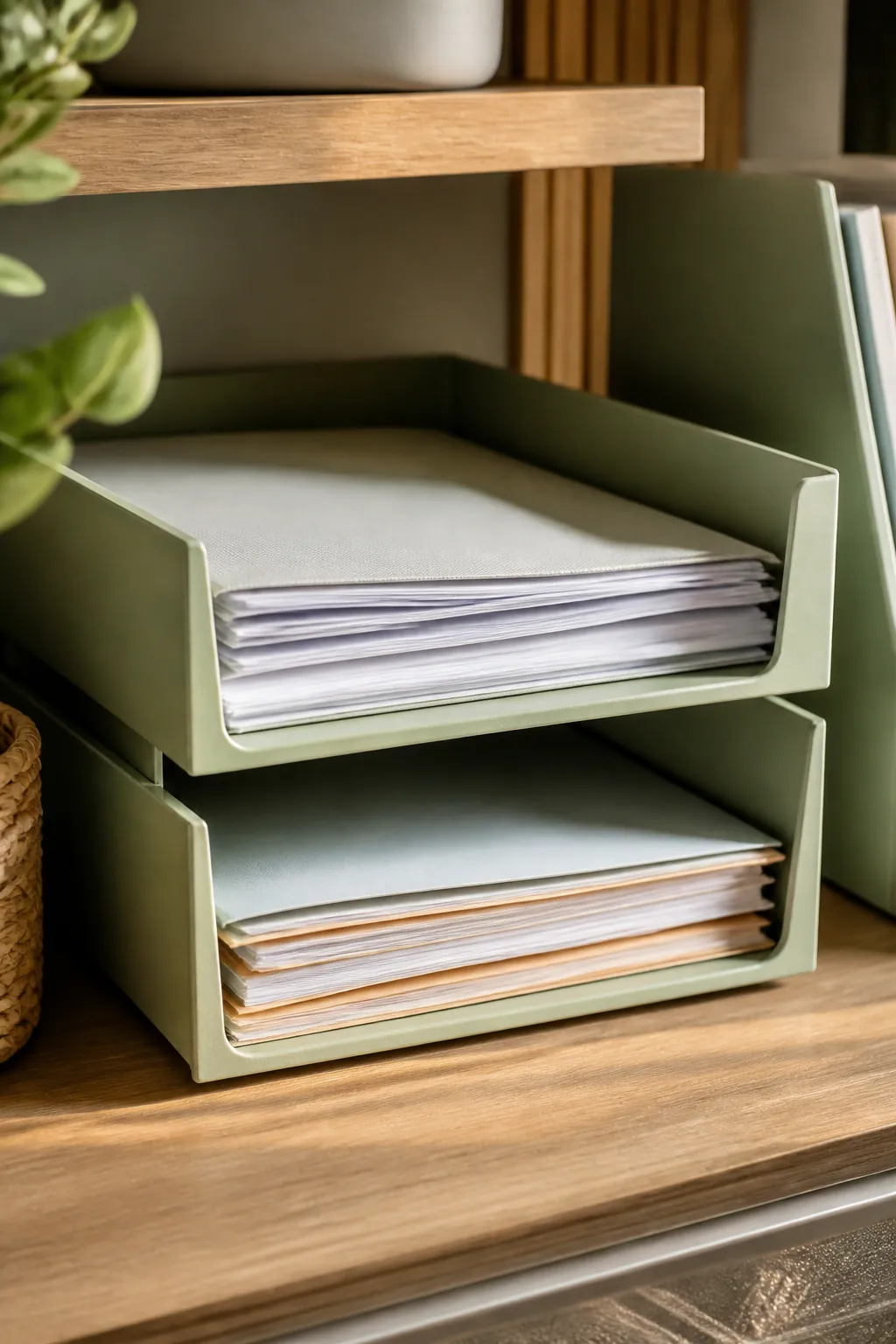
A file drawer’s real function is holding paper vertically so it doesn’t spread across a surface, and without one, paper fills a desk with no drawers fastest. A stackable paper tray on the desk or the cart’s top tier does the same job, sorted loosely into incoming, in progress, and reference.
There isn’t a specific stackable paper tray with a verified listing on this site, so the honest move is to name the product type rather than link one nobody here has checked in a browser. Look for a lip deep enough to hold a full stack without sheets sliding out when the desk gets bumped, and stop at three trays high before the bottom one becomes unreachable without unstacking the rest.
6. Stick small parts to the wall instead of losing them in a bag
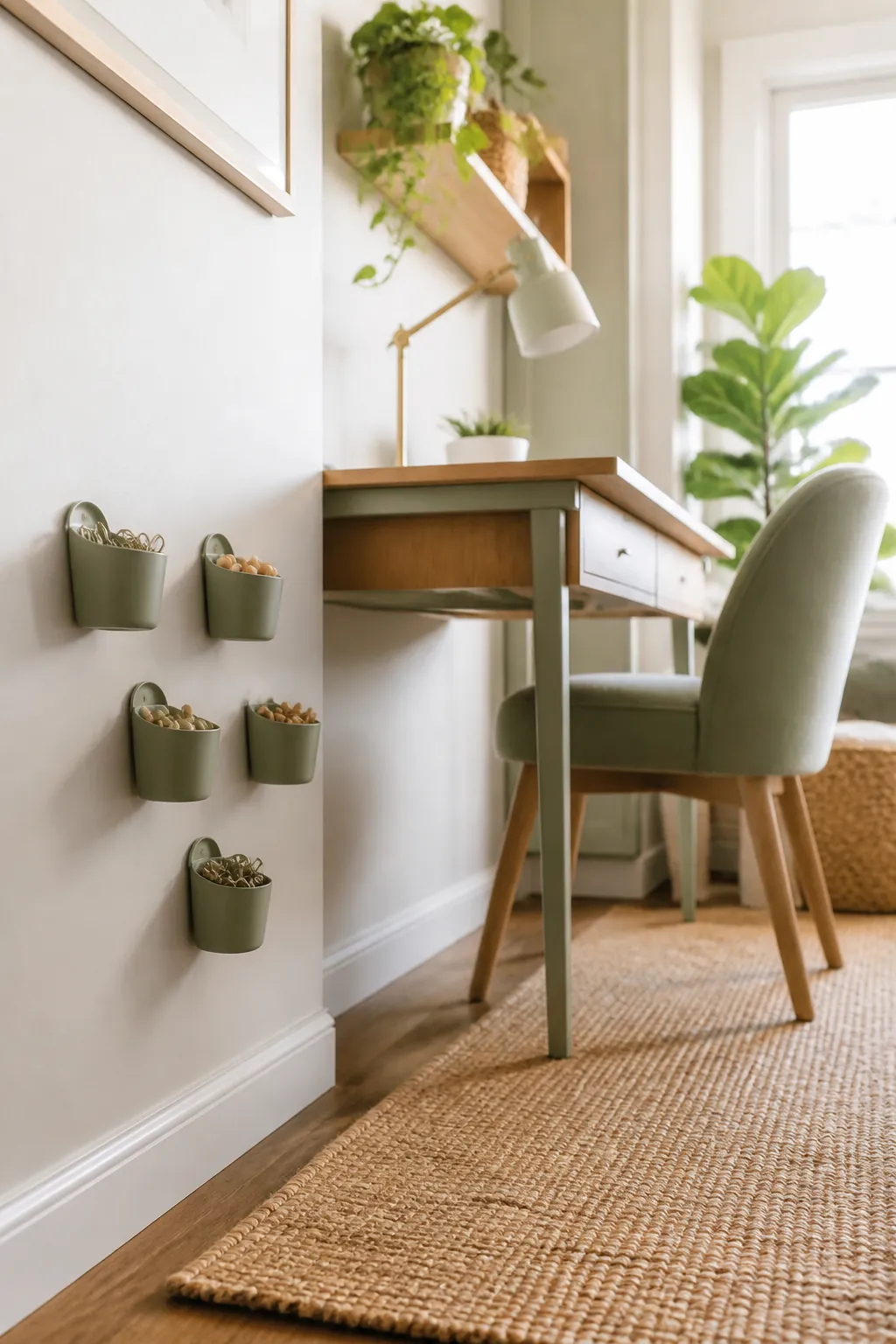
Paperclips, thumbtacks, spare SD cards and other things smaller than a deck of cards are what a drawer’s back corner is actually for, and without one they end up loose in a bag or a random mug. A few small adhesive storage cups mounted on the wall beside the desk give each category its own spot, visible instead of buried.
Group by category, not by size. A cup of “small metal things” that mixes paperclips and thumbtacks means fishing through both every time, while separate cups mean grabbing the right one without looking. It’s a small fix, and the one that saves the most searching later.
7. Route cords the same way a drawer would have hidden them
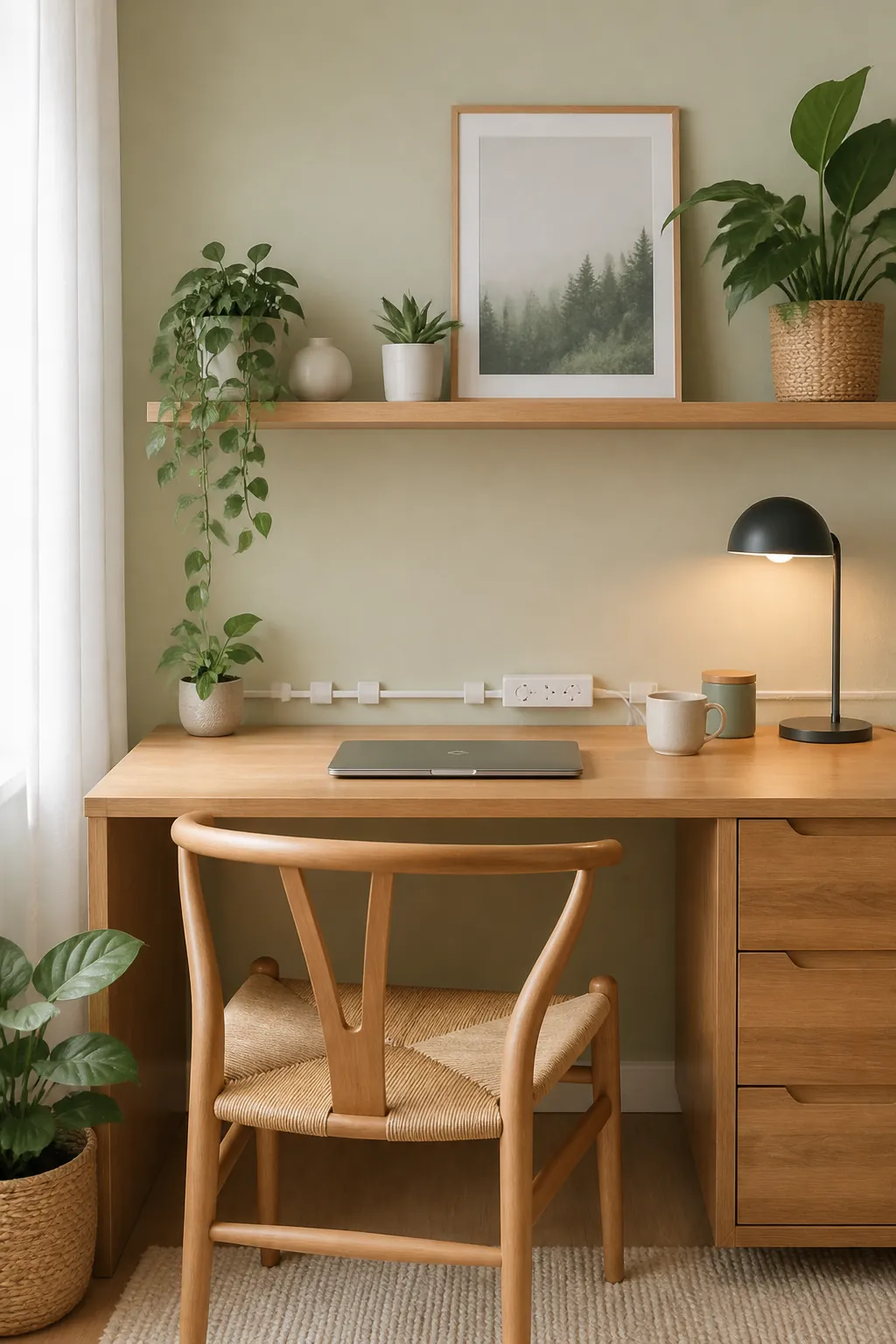
A desk with drawers usually gets its charger cords stuffed into the top one, out of sight if not organized. A desk with no drawers leaves every cord on top of the desk or dangling off the back edge, undoing the tidy look the other six sections just built.
The fix is the same one that works for any desk, drawer or not: contain the power strip, route the runs along the desk edge with adhesive clips, and keep chargers that come and go in their own small tray rather than tangled with permanent cords. Even a short run, 18 inches of loose cord bridging the desk to an outlet, reads as clutter the instant there’s no drawer lip to tuck it behind. The cord organization approach that keeps a power strip contained and runs clipped down covers this in full and applies here unchanged, since the cords don’t know the desk has no drawers.
8. Reset the desk every night since there’s nowhere to sweep the mess into
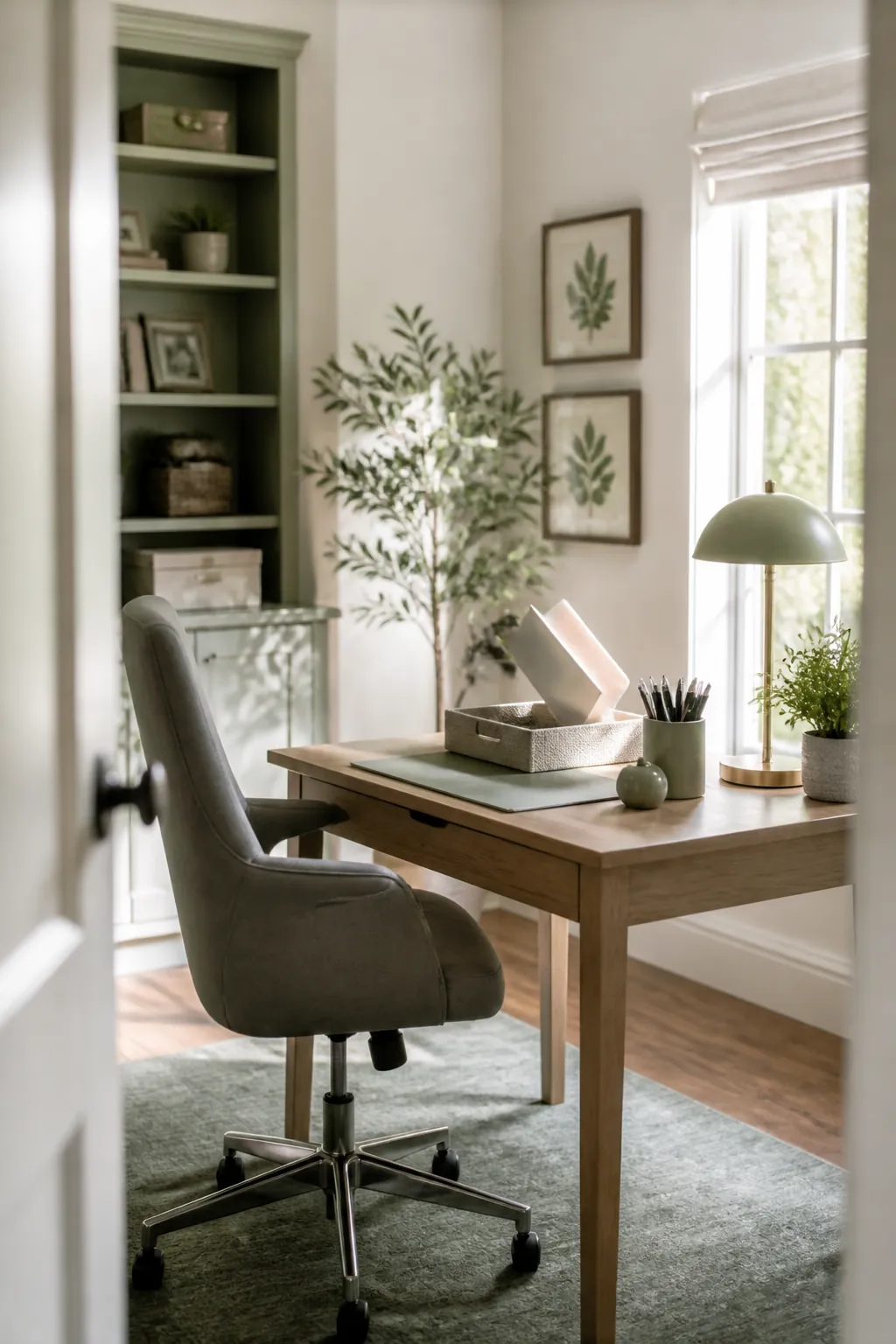
A desk with a drawer can absorb a bad day. Whatever’s out gets swept in, the surface clears, and the actual sorting happens later or never. A desk with no drawers doesn’t have that option, so today’s clutter is tomorrow’s clutter too unless something puts it back.
The reset that works here is short and literal: pens back in the caddy, paper into the tray, anything that migrated onto the desk from the cart or wall organizer goes back where it came from. Two minutes at the end of the day, not a Saturday overhaul. Skip it more than a couple of days running and the desk stops looking like it has a system, because without a drawer there’s no hidden slack to absorb the gap.
9. Keep the overflow off the desk entirely
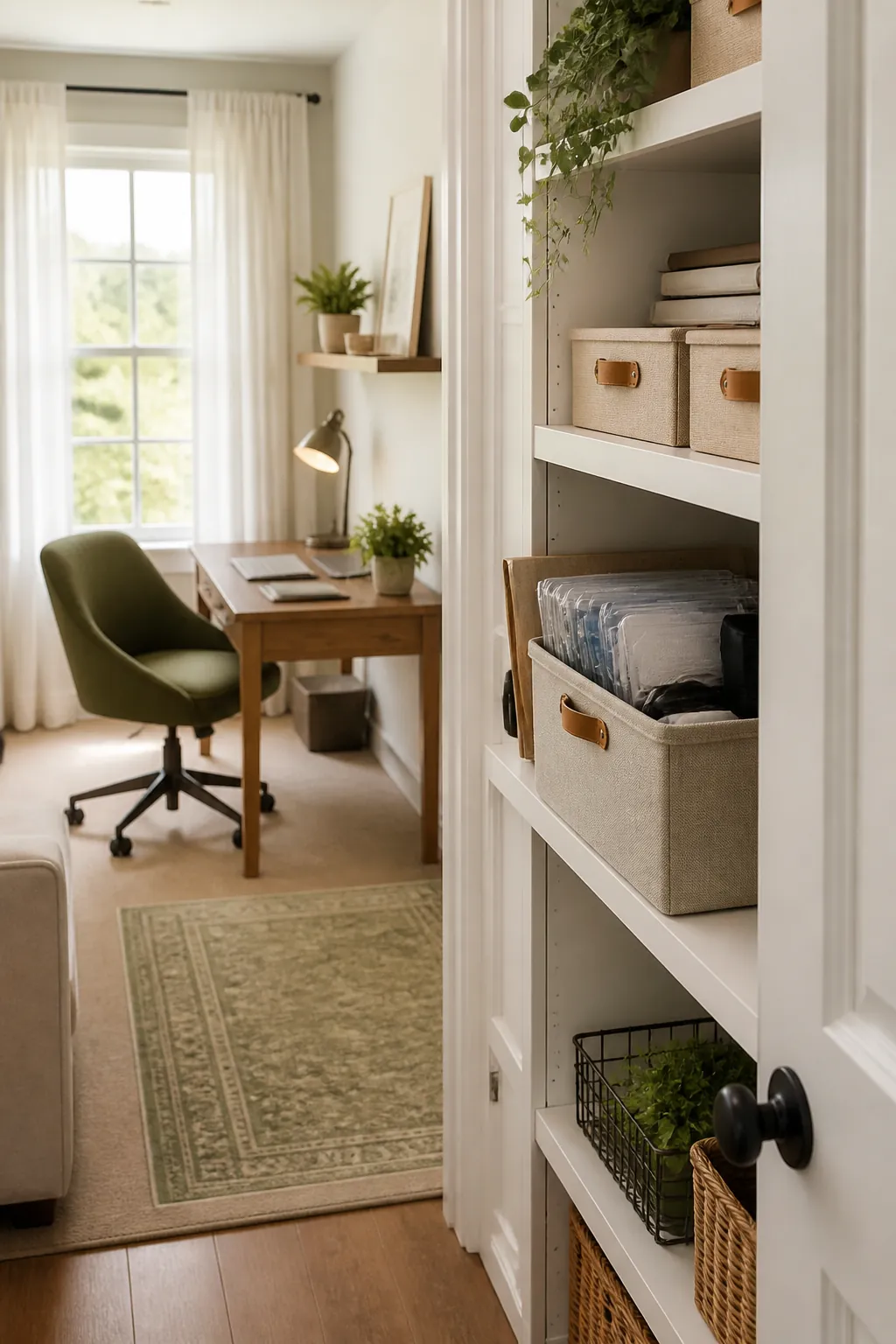
The rare pile from section 1, the stuff used four times a year, doesn’t belong on the desk, the cart, or the wall organizer. It belongs elsewhere in the room, in a fabric storage bin on a closet shelf or the top of a bookcase, since giving it desk-adjacent real estate crowds out the daily and weekly piles that actually earned a spot there. A shelf across the room costs nothing extra in practice: something reached for four times a year doesn’t lose real time by traveling an extra few steps, so it doesn’t need to be within arm’s reach of the desk to still be findable.
This step gets resisted because it feels like admitting the desk area can’t hold everything. It can’t. A desk with no drawers has less storage than one with drawers, full stop, and the fix isn’t cramming the same volume into a smaller footprint. It’s being honest about what deserves to be close and sending the rest somewhere still findable but out of the way.
Where to start
Start with the sort in section 1, since it decides how big the caddy, cart and wall organizer downstream need to be. Claim the wall for the weekly pile, keep a caddy on the desk for the daily five or six items, and let a rolling cart handle the rare pile without needing a wall mount at all. Route cords the same way any desk would, reset for two minutes every night, and send anything that isn’t earning its keep to a bin elsewhere in the room. None of this needs a drill or a permanent change to the desk, which matters most if the desk, and the walls around it, aren’t yours to modify.