Most small apartments do not have a room to spare for an office, so the office happens anyway, in a corner of the living room or against the bedroom wall. That is fine. What goes wrong is that it is treated as temporary for two years, so it never gets the wall space, the storage or the boundaries that would make it work.
These ideas assume the office is permanent and the apartment is small. That combination changes the answers, because the office has to coexist with whatever else the room is for.
1. Choose the spot by light and noise, not by what is left over
The usual method is to find the emptiest corner and put a desk in it. The emptiest corner is usually empty for a reason, and it is often the darkest.
Work backwards instead. Where is the daylight, and is it beside you rather than behind your screen or straight into your face. Where is the noise, meaning the door, the kitchen and whoever else lives there. A slightly awkward spot with good light and low traffic beats a convenient one you avoid sitting in by three in the afternoon.
If the only candidate is the spare room that also has to sleep guests, guest room office combo ideas covers how to make both jobs fit without either one looking temporary.
2. Consider the closet, if you can spare one
A closet with the rail removed makes a genuinely good small office, and the reason is the door. Anything you can close does not need to look tidy, which removes most of the daily pressure that makes a visible desk exhausting.
Two honest requirements. It needs to be around sixty centimetres deep or your knees will not fit, and you need to actually be able to spare the closet. In an apartment already short on storage, converting one is how you end up with an office and a pile of coats on a chair. If storage is your real bottleneck, keep the closet and see coat closet organization instead.
If that is the route you take, cloffice ideas for turning a closet into an office works through the measurements, the desk height and what to do about the doors.
3. Claim the wall, because the floor is already spoken for
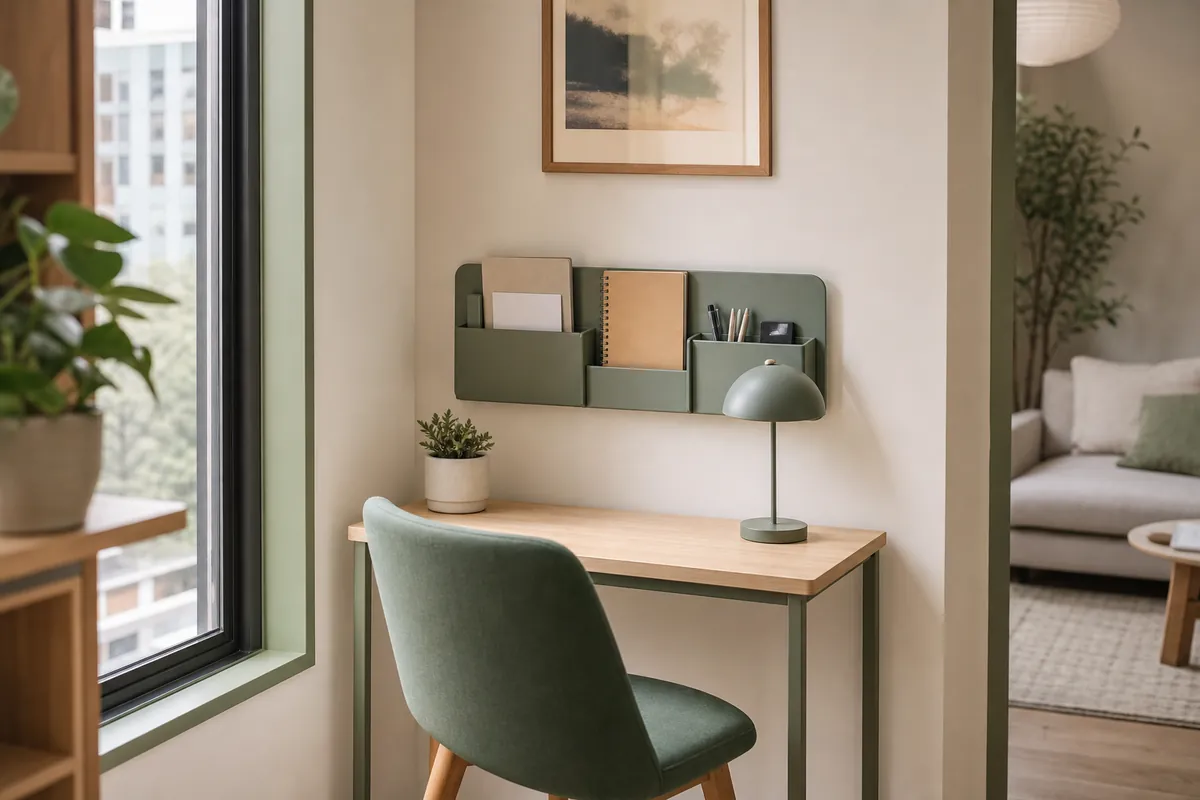
In a small apartment the floor is the contested resource and the wall above the desk is almost always empty. That asymmetry is the biggest opportunity in the room.
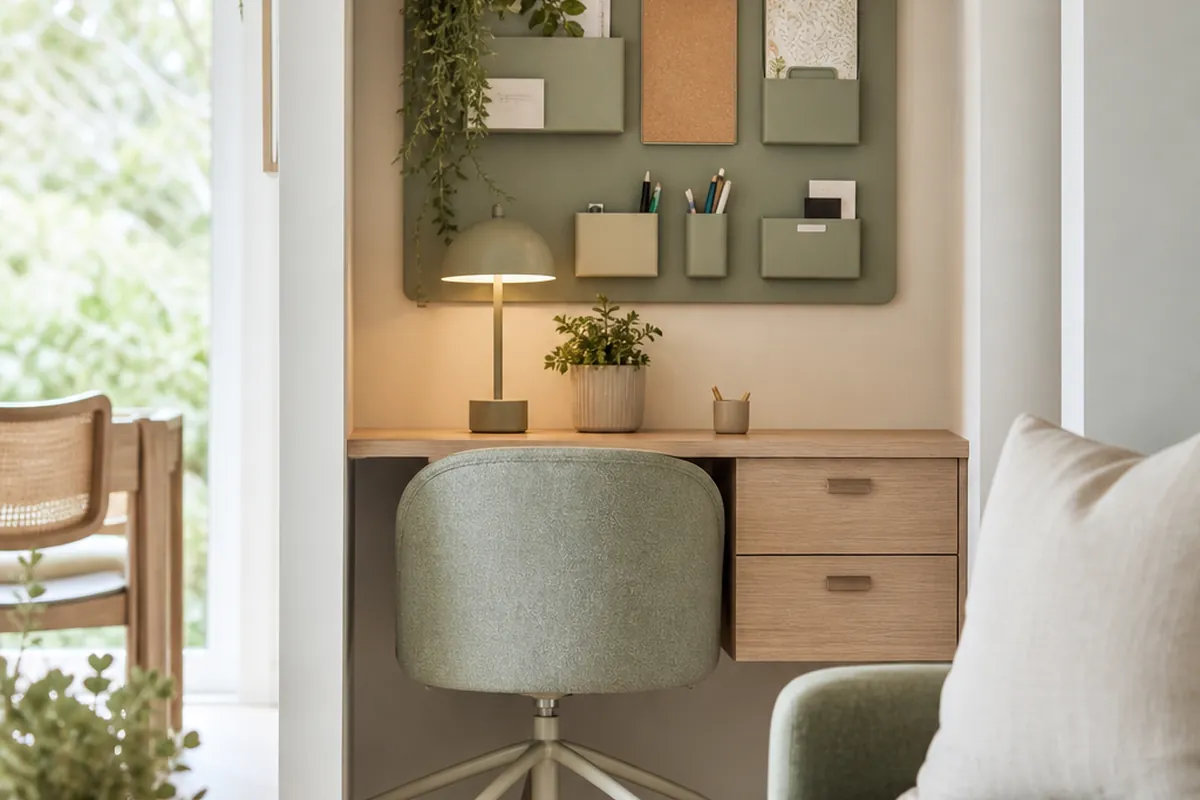
A wall-mount desk organizer moves the things that would otherwise colonise the desk, the mail, the notebook, the pens, up onto a surface that costs no floor area at all. Mount it slightly higher than feels natural, around fifteen to twenty centimetres above the desk, so the space directly behind the desk stays usable for a monitor or for spreading out.
If you rent, this is the one place worth using screws rather than adhesive. Two small holes are easy to fill and an organizer that lets go with a week of post in it is not.
4. Put supplies in one closed container you can see into
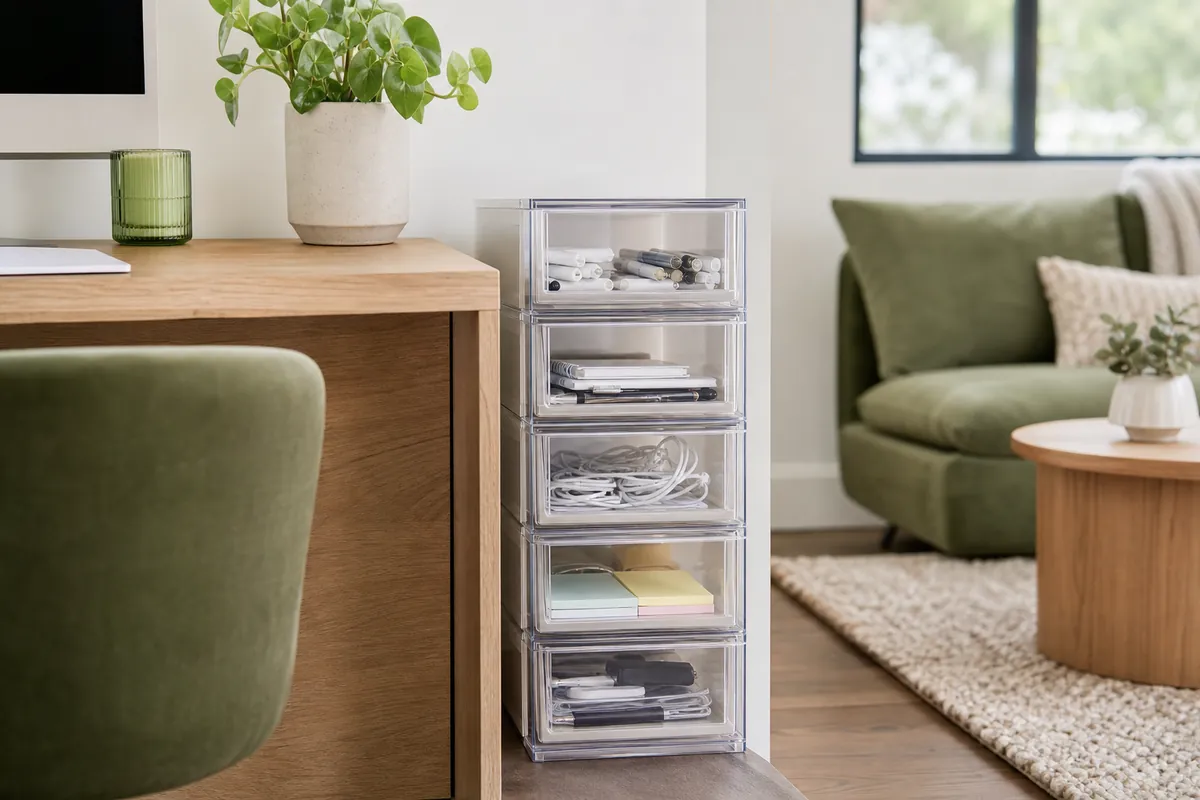
Office supplies are small, numerous and individually harmless, which is how they end up spread across every flat surface in the room.
Small clear stackable drawers solve this better than a pretty opaque box, and the reason is visibility. Things migrate onto surfaces because people need to see them to remember they exist. Clear fronts remove that reason, so the supplies stay put. Stackable matters too, because supply volume grows and a stack grows upward rather than sideways.
One drawer per category, loosely: writing, cables and adapters, paper bits. Any category needing a fourth drawer is probably a hobby rather than office supplies, and belongs with the rest of that hobby.
5. Box the cable nest rather than trying to tidy it
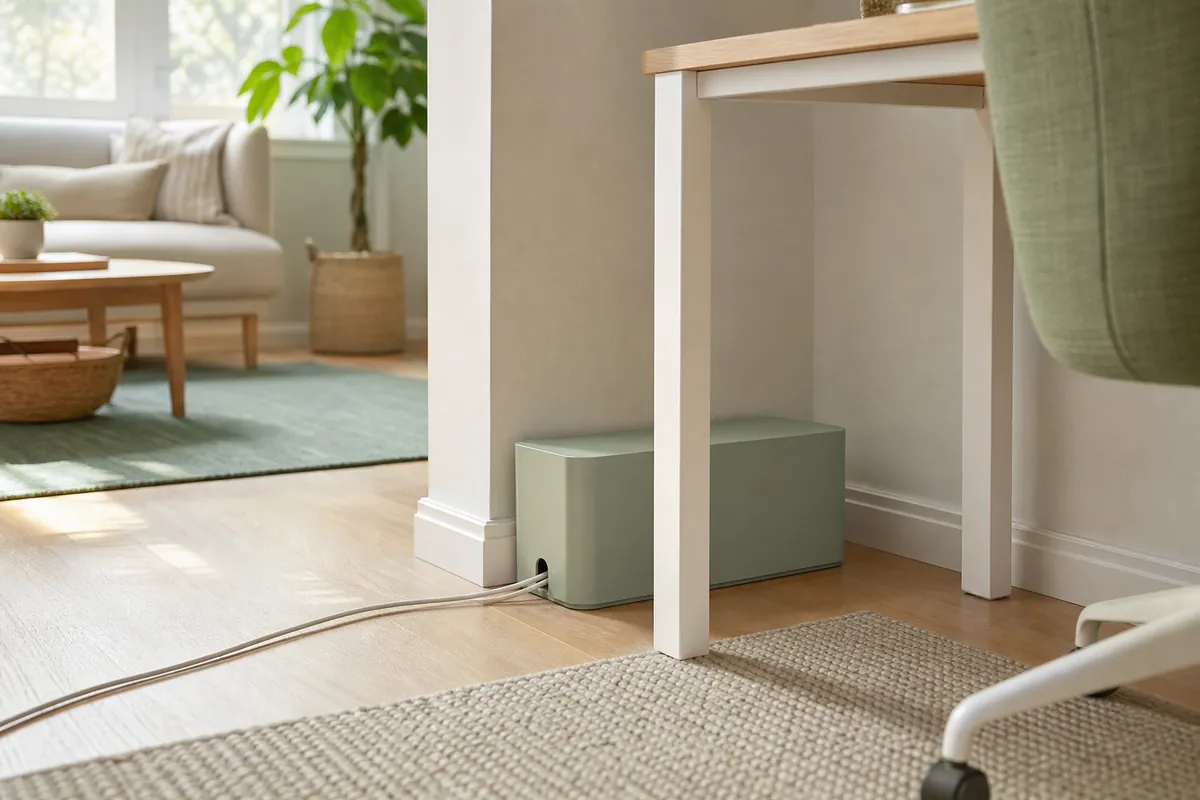
The tangle of power strip and adapters under a desk cannot be made neat. It can only be hidden, and attempts to arrange it beautifully are wasted evenings.
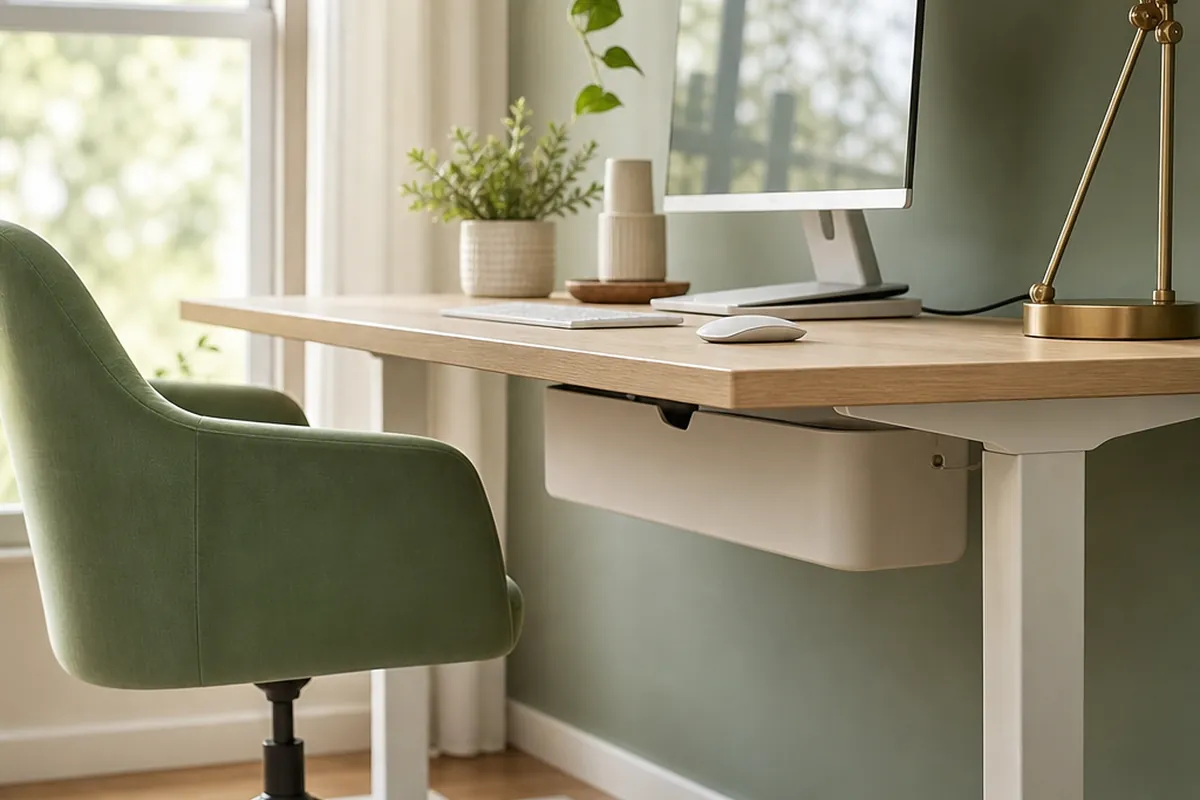
A cable management box takes the strip and the excess and reduces the visible mess to the two or three cables entering it. In a studio or a living room office, where the underside of the desk is visible from the sofa, this changes the look of the room more than anything else at the price. Pair it with the wider approach in cord organization for a small living room if the television wall has the same problem.
If the nest has outgrown one box, cord and cable storage ideas for a small home office goes through the rest: under-desk trays, labeled spares and what to do with the chargers you use twice a year.
6. Buy the chair for the room, not just for your back
The chair is the single object most likely to ruin a small room, because good task chairs are large, black and shaped like an office.
You have two workable options. Either a proper task chair that you accept will dominate, chosen in a color that is not black, or a decent dining style chair with a cushion, accepted as a compromise you will feel after four hours. What does not work is a large chair you dislike looking at, because it will get pushed away from the desk, into the room, where it takes even more space.
7. Store paper upright, always
Flat paper storage in a small space is a trap. Horizontal trays turn into strata where the top two centimetres are current and everything beneath is archaeology.
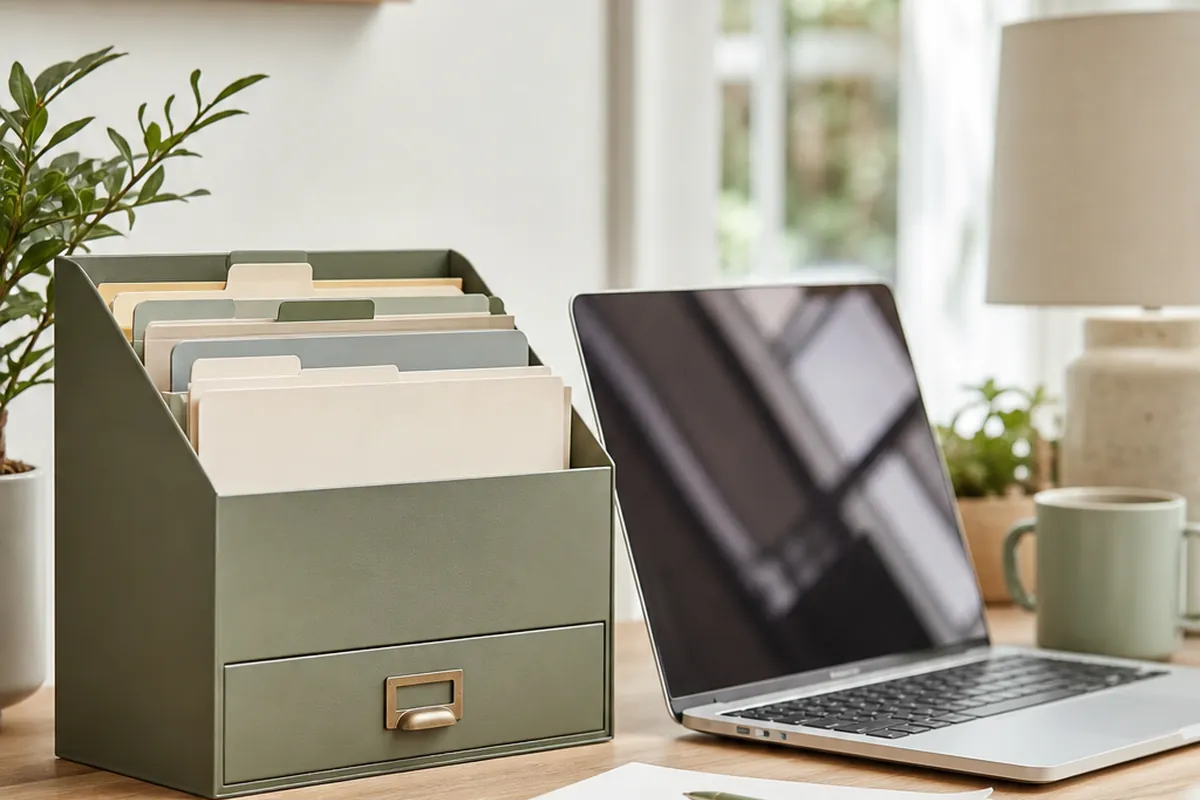
Upright is better for the same reason vertical filing works everywhere: you see edges, so you see the count. A dozen upright folders in a fifteen centimetre run is obviously a dozen. The same dozen stacked flat looks like one pile and gets treated as one problem to deal with later.
8. Give the office a hard stop
An office in a living space needs an end to the working day that is physical, not just a time.
The version that works is a single container, a shallow box or a lidded basket, that takes the current state, the notebook, the papers, the charger, and goes on a shelf. It takes under a minute and it converts the room back. Without it, the office is on for sixteen hours a day in a room where you also relax, which is the actual cost of working from a small apartment.
9. Mark where the office stops
In a shared room, an undefined office spreads. A rug the desk sits on, a shelf unit at one end, or a plant marking the corner all do the same job: they tell everyone, including you, where the office ends.
This is not decorative fussiness. A boundary gives you somewhere to put things back to, which is most of what keeps a small space working. The same principle keeps a homework station from taking over a family room.
10. Measure before you add a second screen
A second monitor is the most common small office upgrade and often the one that breaks the setup, because two screens need depth as well as width.
Measure the desk depth first. Under about sixty centimetres, two screens sit too close to your face and you will lean back into a room that has no space for you to lean back into. A laptop stand beside a single monitor gets most of the benefit and costs far less desk.
11. Reset the room weekly, not the desk daily
The desk needs a short daily tidy. The room needs something different and less frequent: once a week, put back the things that have wandered out of the office zone and, more importantly, the things that have wandered in.
In a small apartment the office corner attracts objects that have nothing to do with work, because it has flat surfaces and it is not the sofa. Half of a weekly reset is just walking those things back to where they live.
An office the room can live with
Small apartment offices fail on the same three things: the spot was chosen for convenience rather than light, the wall was left empty while the floor filled up, and there was never a moment when the office stopped for the day.
Fix those and the rest is detail. The apartment gets to be an apartment in the evening, which is the whole point of not having a separate room for this.