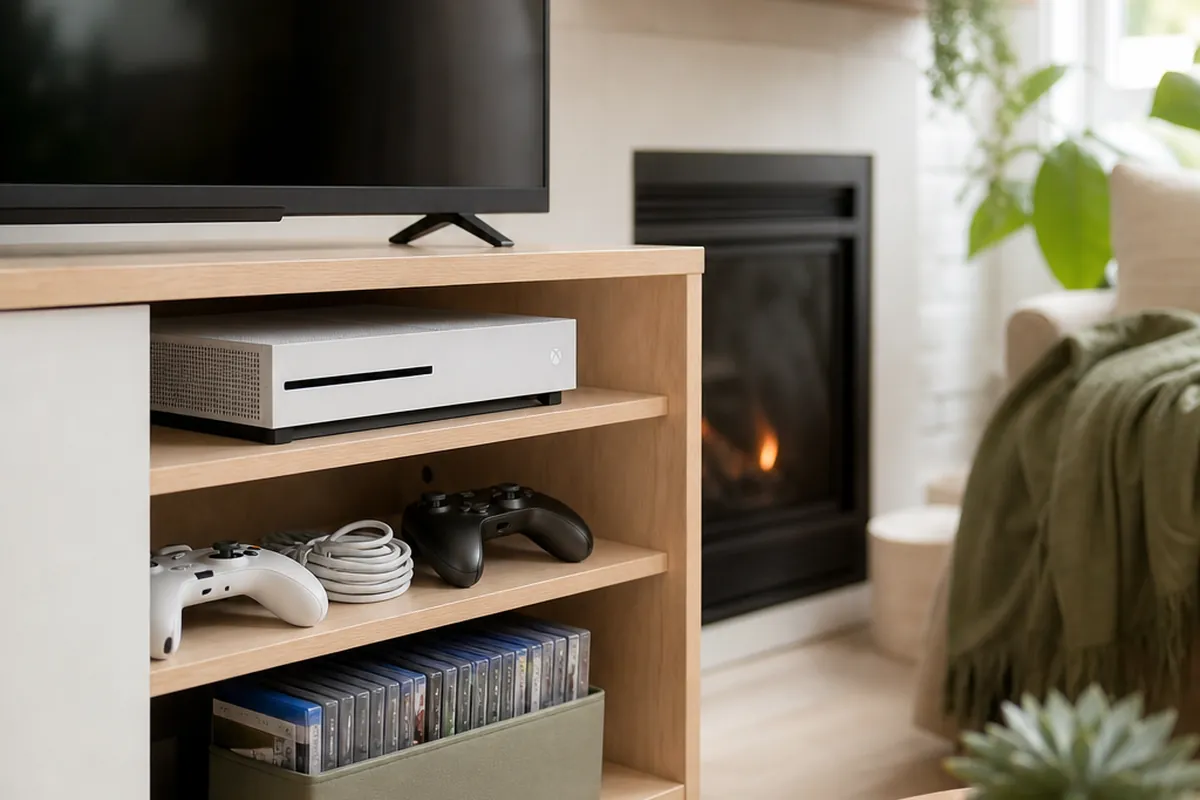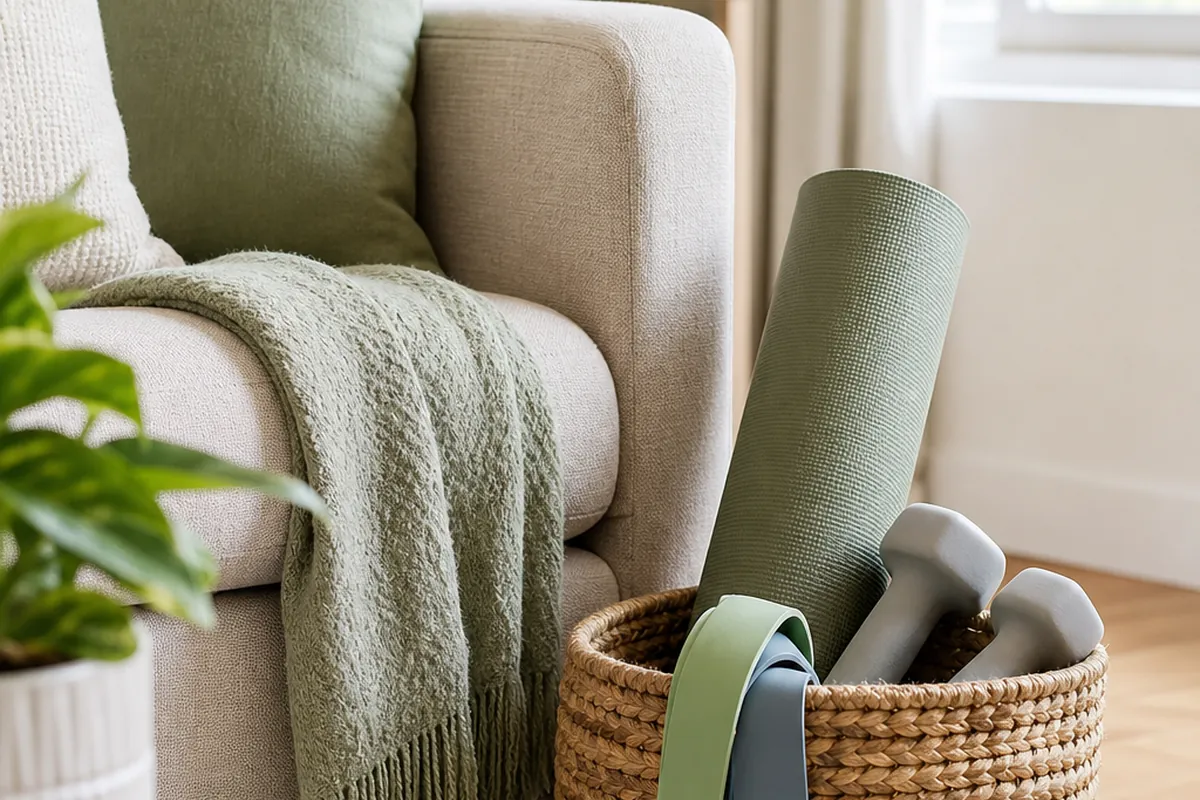
Home workout gear does not take up much floor space on its own. A mat, a pair of dumbbells, a set of bands: none of that is large. What it does is spread, because none of it has a drawer, a hook, or a shelf that was built for it, so it ends up leaning against the TV unit, draped over the arm of the sofa, and rolled under the coffee table where someone’s foot finds it in the dark.
A small living room cannot absorb that kind of scatter the way a spare room can. There is no closet to shut on it and no corner far enough from the sofa to hide the mess. The fix is not more space, it is fewer places the gear is allowed to land, and the nine ideas below build toward exactly one or two of those.
1. Pick one zone and make every piece of gear answer to it
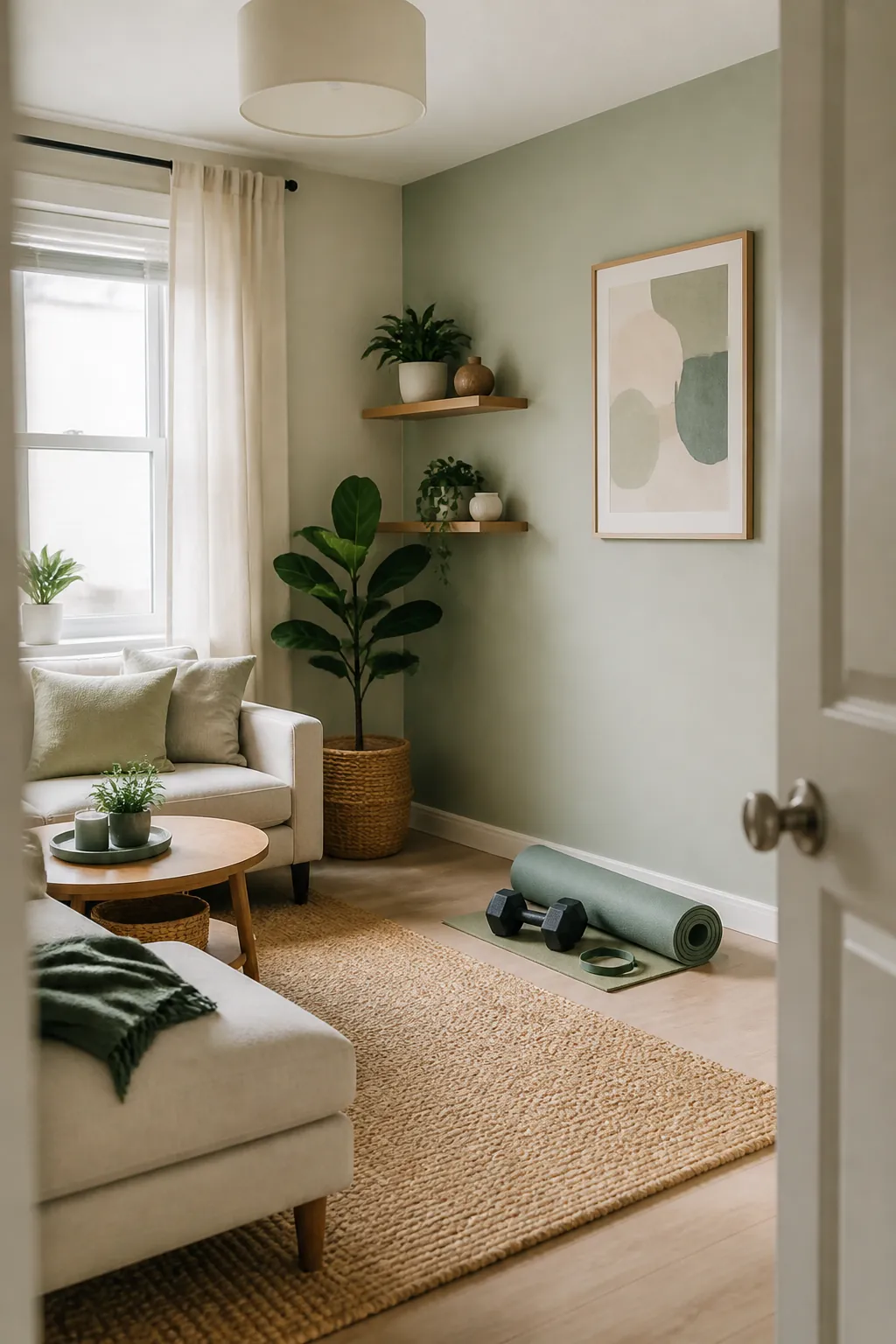
Before buying anything, walk the room and choose a single wall, corner, or piece of furniture that will hold the equipment. Not “near the TV” in general, one specific spot you could point to: a patch roughly three feet across is enough for a basket and a mat standing on end, which is the footprint the rest of this list is built around.
The reason this matters more than any container is that scattered storage fails quietly. A mat behind the sofa and dumbbells under the console and a resistance band in a kitchen drawer are each individually fine, and together they mean nobody can find the full kit without a five-minute search, which is often the actual reason a home workout gets skipped.
A single zone also keeps the room looking like a living room for the other 23 hours of the day. Equipment stacked in one deliberate place reads as organized; the same equipment spread across three surfaces reads as clutter, even if the total volume is identical.
2. Let one basket catch the floor-level gear
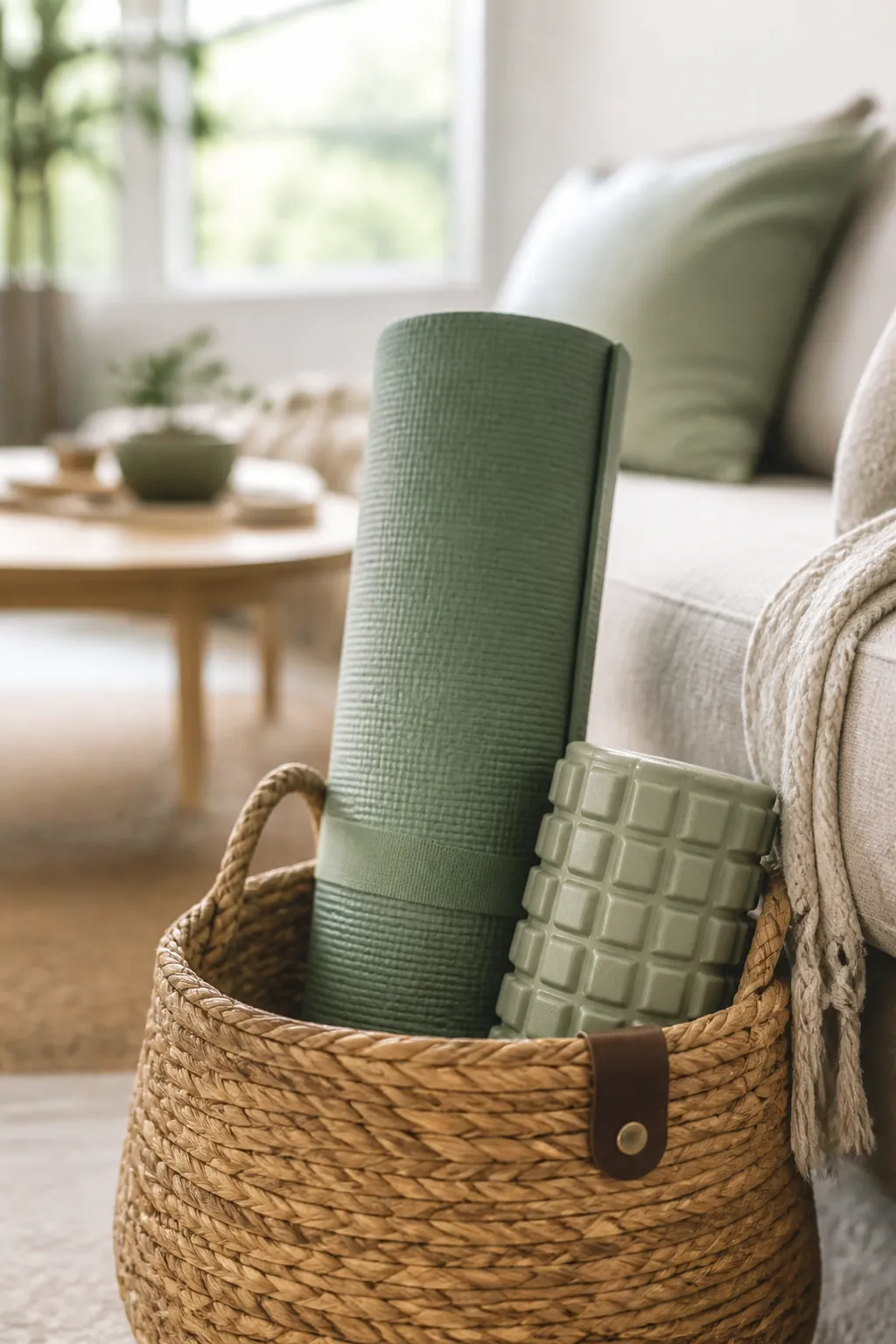
The large woven storage basket is the single highest-value purchase on this list, because it takes everything that does not have a natural shelf or hook: the mat, a foam roller, a set of light dumbbells, the bands when they are not hanging.
At around 16 to 18 inches across and 15 inches deep, it is large enough for a 72-inch mat standing on end plus a roller tucked beside it, with enough clearance that pulling one item out does not drag the rest onto the floor. Keep it beside the sofa or the end of a console table, somewhere the kit is one reach from where you actually use it.
The thing that makes a basket work for gym gear specifically, and fail for almost everything else in the room, is that it tolerates being overfilled and underfilled on different days without ever looking wrong. A basket that is half empty on a rest week still looks deliberate. A half-empty shelf does not.
3. Get dumbbells off the floor, even light ones
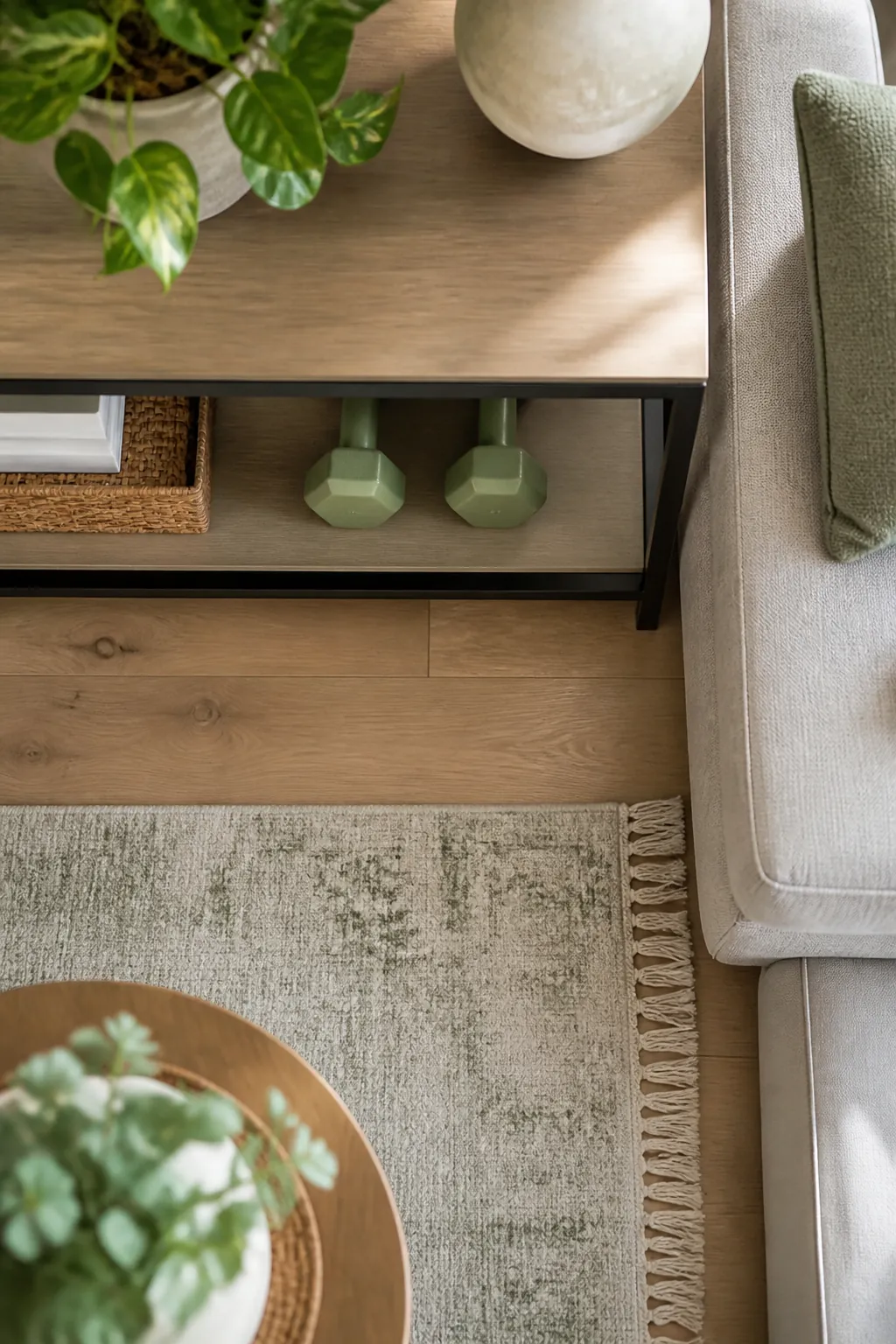
Dumbbells on the floor beside a sofa are a specific kind of hazard: low, dark-colored, and exactly the shape of something a bare foot rolls onto at full weight.
A shelf 12 to 16 inches off the ground, inside a console or on the bottom tier of a side table, solves this without needing a dedicated rack. The height matters because anything lower sits in the exact zone a foot sweeps through when standing up from a low sofa, and anything much higher starts competing with the surface you actually want for a lamp or a book.
Round dumbbells roll when a shelf gets bumped, hex-shaped ones do not, so if buying new, hex pays for itself the first time someone brushes past the console in the dark. If the ones you own are round, a shallow tray or a thin lip of wood glued to the shelf edge stops the roll for the cost of an afternoon.
4. Hang anything that tangles on real wall hooks
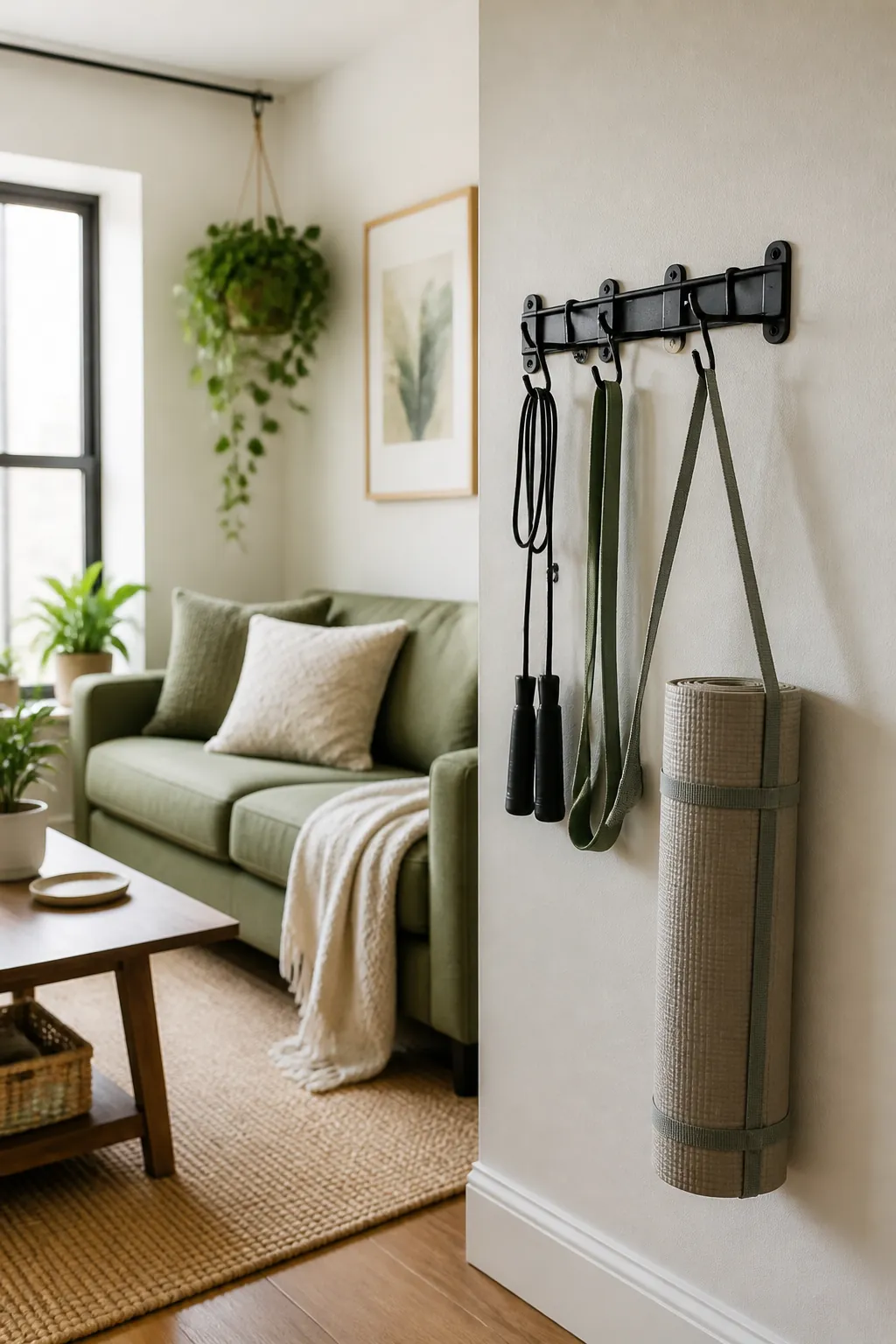
Resistance bands, a jump rope, and a mat strap share one trait: left in a basket together, they knot themselves into a single object within about a week. The fix is to stop putting them down flat at all.
A heavy-duty wall hook rack mounted near the equipment zone holds all three hanging, untangled, and visible at a glance. Look for deep, upturned hooks rather than shallow pegs; a thin resistance loop slides straight off a minimalist hook the first time someone brushes past it, where a hook with a pronounced lip traps the strap.
Mount into a stud where you can, or use anchors rated well above the combined load of what is hanging. The gear itself is light, a few pounds at most, so the margin of safety here is generous compared with the same rack holding coats, but a rack that pulls out of drywall still takes a chunk of wall with it when it goes.
For renters who cannot drill at all, a removable adhesive hook rated for several pounds will hold bands and a rope, just not a loaded mat strap with a yoga block clipped to it.
5. Roll the mat, and double-wrap the strap
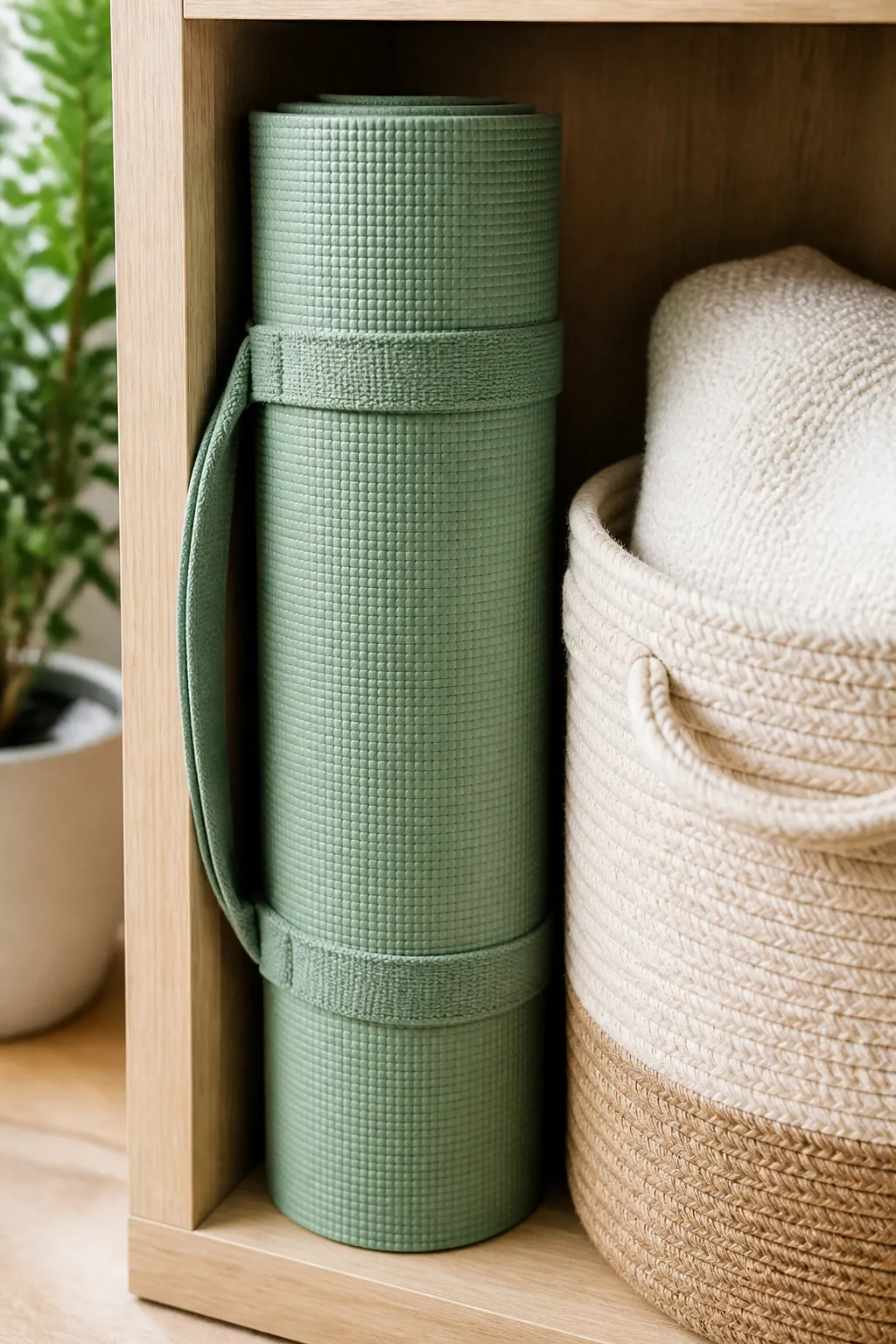
Mats stored loose, leaned against a wall, slowly unroll themselves and end up as a six-foot obstacle across the floor by the second week. The fix is procedural, not another container: roll it the same direction every time, and secure it with a strap or band wound twice around, not once.
A single wrap slips the moment the mat is lifted, because a relaxed mat has spring in it that works against a single loop. Two wraps hold under that spring, and a dedicated mat strap with a shoulder length doubles as the thing that carries it from the basket to the floor and back, which removes one more reason to leave it unrolled “just for today.”
If the mat lives in the basket from step 2, store it standing on its rolled end rather than laid flat on top of everything else. A mat laid flat becomes the lid everything else has to be dug out from under.
6. Let the ottoman be the real home for the bulk of the kit
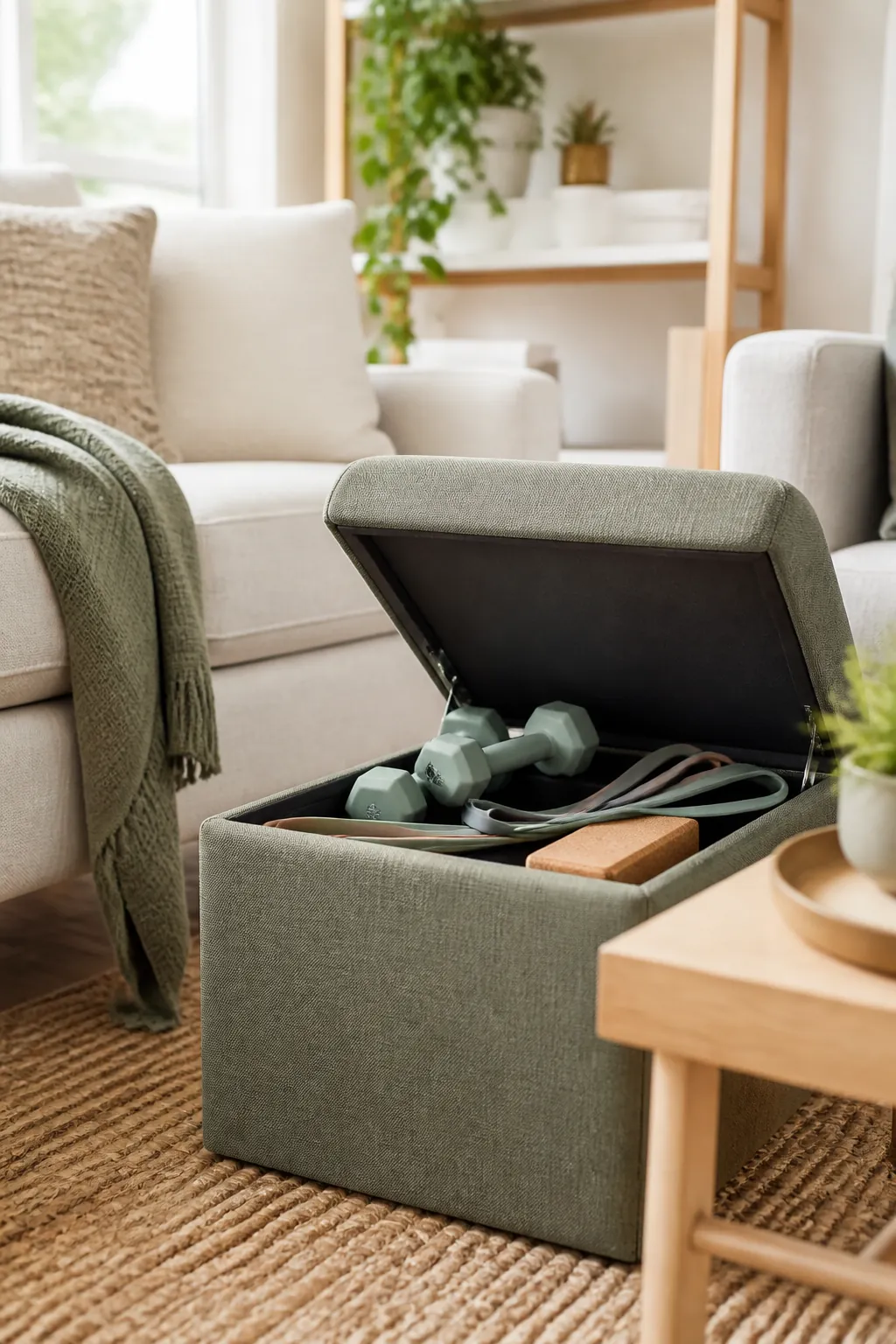
A storage ottoman with a lid solves the biggest problem with home gym gear in a living room, which is that it has no reason to look like gym gear when nobody is working out.
At roughly 30 by 15 by 15 inches, the interior swallows bands, a yoga block, a set of light dumbbells, and loose accessories, while the lid gives you a seat and a side table at the same time. Check the ottoman’s own listing for its interior load rating before loading it with iron, since a lid rated for a person to sit on is a different number from how much the hollow base can carry without the panels bowing over months of use.
Keep the heaviest single item near the bottom center of the interior rather than against a side panel. Ottoman walls are usually a single layer of particleboard or MDF wrapped in fabric, built to resist a sitting weight pressing down, not a weight pressing sideways against a thin wall day after day.
7. Give small accessories one container, not a drawer full of loose parts
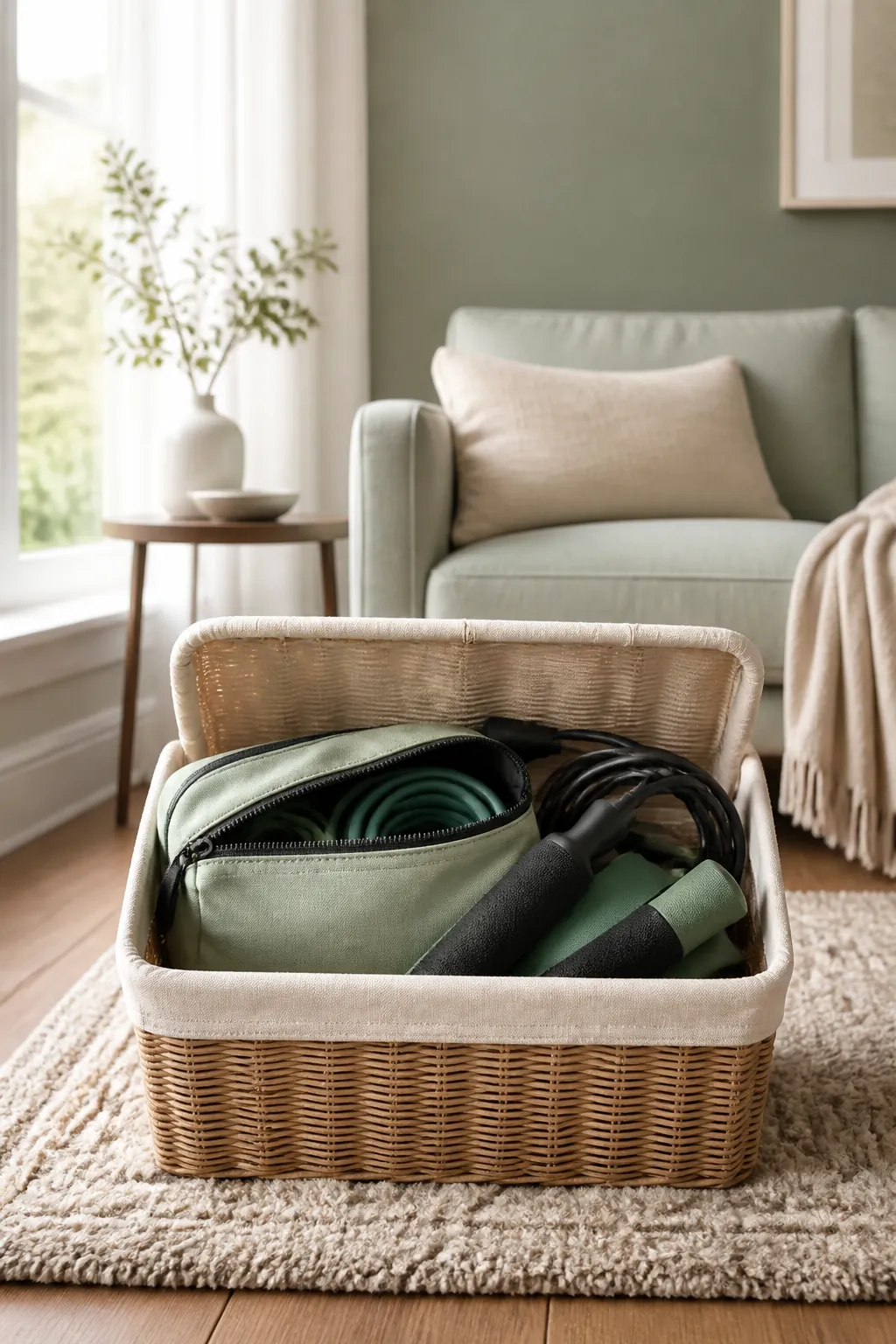
Resistance loops in three resistances, a set of ankle straps, a foam block, a jump rope handle: these are the pieces that go missing first, because each one is small enough to slide to the bottom of a basket and disappear under everything bulkier.
A single zippered pouch or a small fabric bin inside the basket or the ottoman keeps them as one unit instead of six loose objects. The point is not tidiness for its own sake, it is that a workout with a missing resistance band gets modified on the spot, and a workout that keeps getting modified gets skipped a little more often each time.
Label the pouch if more than one person uses the equipment. “Light bands” written on a tag saves the argument about which one is which more often than it seems like it should.
8. Protect the floor before the equipment protects itself
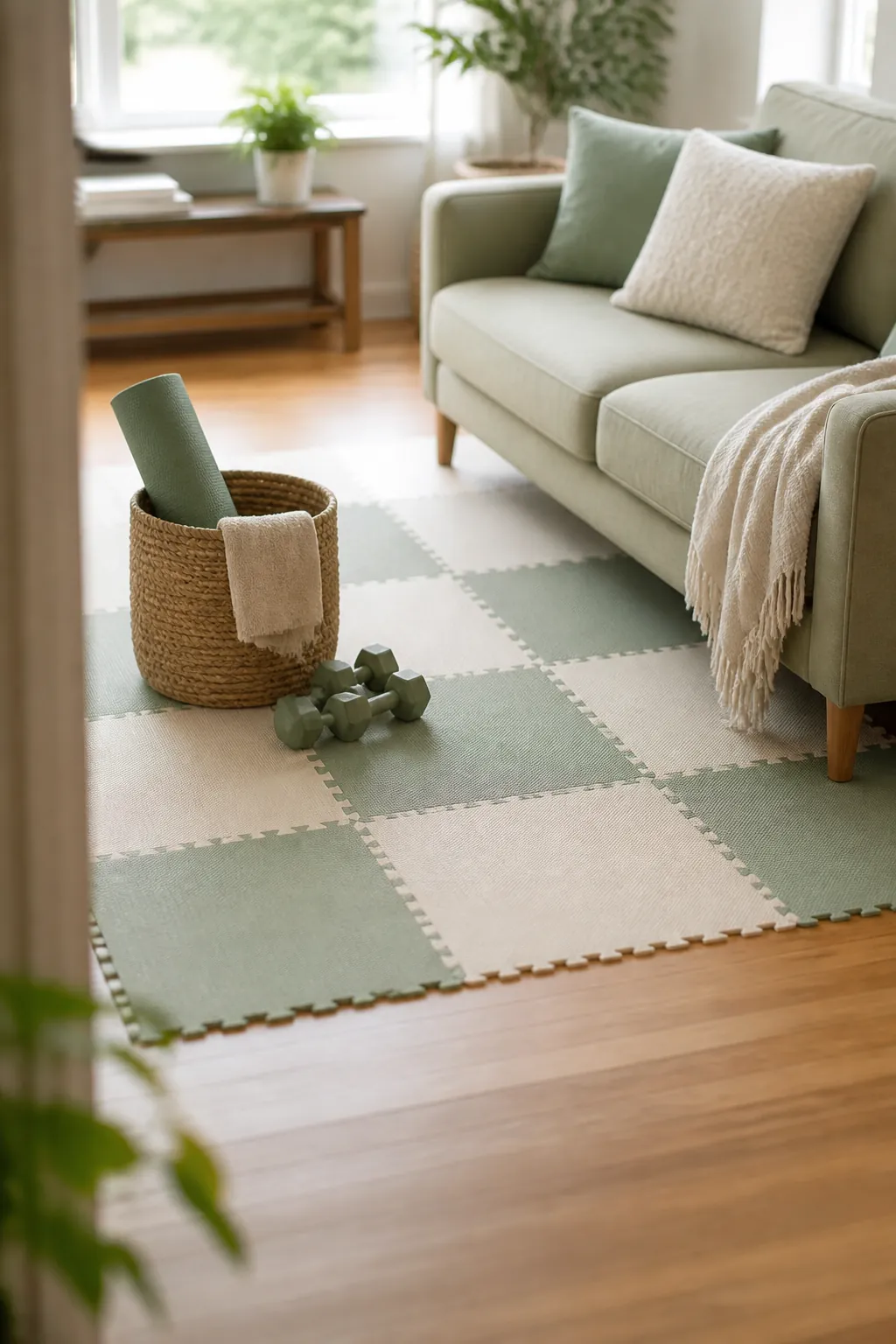
Dropped dumbbells and a rolling cart both do real damage to a hardwood or laminate floor, and a small living room usually has less floor to spare for a worn patch than a dedicated gym room would.
A rubber mat or an interlocking foam tile under the equipment zone, sized to the basket and the console rather than the whole room, absorbs both the impact of something set down hard and the squeak of a shifted dumbbell. In a rental this also protects the deposit, since a dented laminate plank is one of the line items a landlord can point to directly.
If floor space genuinely will not allow even a small mat, at minimum put felt pads under anything that gets moved, including the basket itself, since a 20-pound basket dragged across a floor for a year will mark it just as surely as a dropped weight will dent it once.
9. Build a 90-second teardown and actually do it
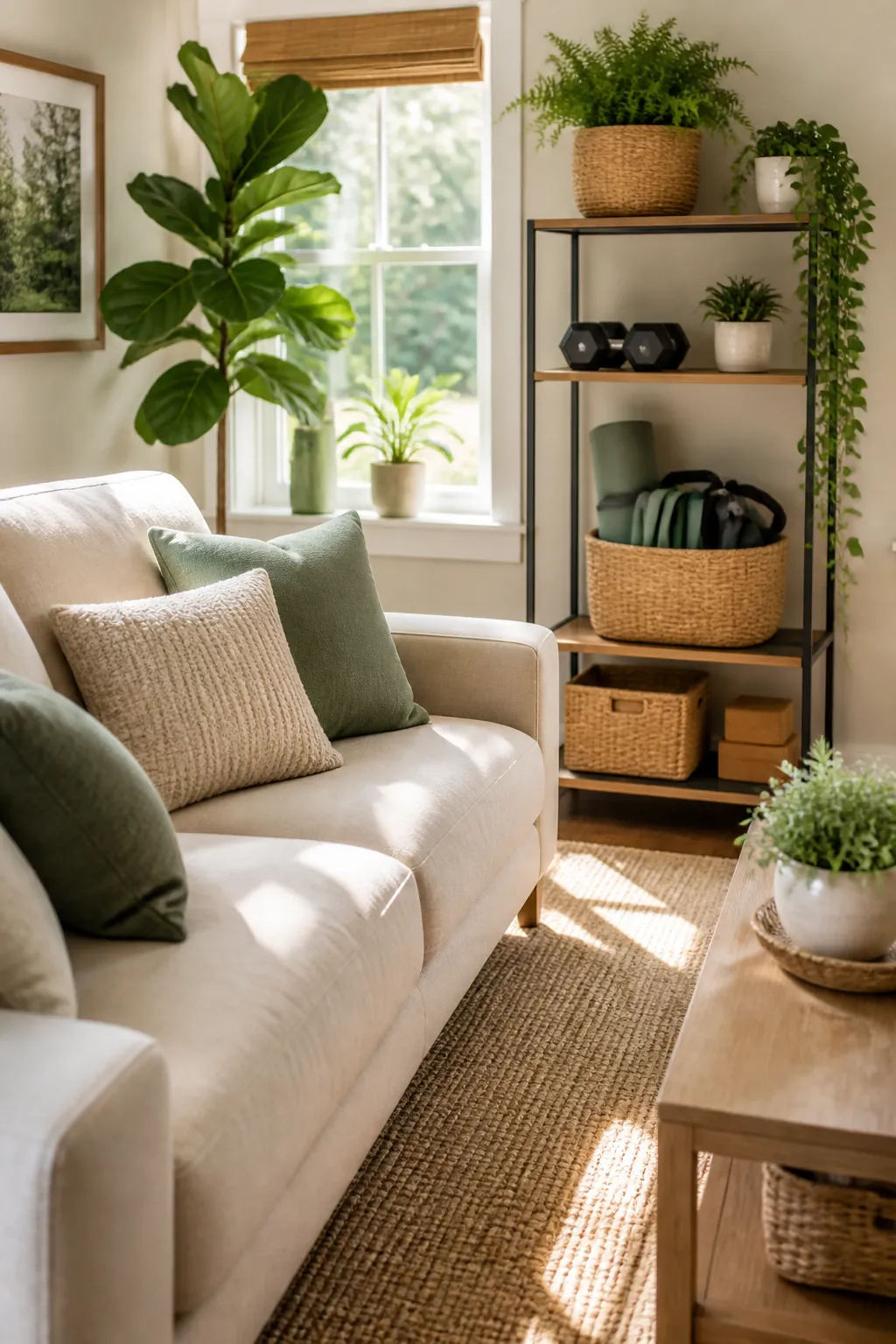
None of the storage above works if gear sits out between uses because putting it away “will only take a minute, later.” Later rarely arrives before the next person trips over it.
Set a genuine 90-second routine: mat rolled and strapped back into the basket, dumbbells back on their shelf, bands looped onto the hook rack, small accessories zipped into the pouch. Timed once with a phone, most setups like this clock in under two minutes once the zone from step 1 is established, because everything has exactly one home and no decision has to be made about where anything goes.
The habit matters more than the furniture. A perfectly organized basket that only gets used on laundry day is decoration, not storage.
Where to start
Start with the basket and the zone. Those two decisions, where the kit lives and what catches the loose items, fix most of the visible mess on their own. Add the wall hooks for anything that tangles and the ottoman for anything bulky, and the room stops announcing that a workout happened in it the moment the workout ends.
The equipment was never the clutter. Equipment with nowhere specific to go is.