In a small living room the coffee table is the only piece of furniture sitting in the middle of the floor, which makes it both the biggest obstacle and the best storage opportunity in the room. Most people get one of those two things and not the other: a table that stores nothing and blocks the walkway, or a chest so bulky nobody can get past it. The difference comes down to three measurements and one rule about what goes inside.
1. Get the height level with the sofa seat
Height is the measurement that decides whether a small room feels open or cramped.
A coffee table should sit level with the sofa seat or an inch or two below it, which in practice means sixteen to eighteen inches. Go higher and it starts to interrupt the sight line across the room, and a small living room reads as smaller when your eye stops at a solid block in the middle of it.
It also matters practically. A table below seat height is comfortable to reach down to. A table above it means lifting your arm to put a mug down, which nobody enjoys twice.
2. Two thirds the length of the sofa
The width rule is simple and it stops the two most common mistakes.
Aim for roughly two thirds the length of your sofa. That keeps the table reachable from both ends without it dominating the floor. In most small rooms this lands somewhere around thirty to thirty-six inches.
Below thirty inches a table stops being a useful surface, and you end up with a decorative object taking floor space. That is the worst outcome in a room where floor space is the scarce thing.
3. Protect the walkway before the table
Furniture fits the room, not the other way round.
You want fourteen to eighteen inches between the sofa and the table, which is enough to get past without turning sideways and enough to reach a mug while sitting. Any route people actually walk through needs closer to thirty inches.
Measure those gaps first, then buy whatever is left. Doing it in the other order is how a small living room ends up with a beautiful table everyone shuffles around, and shuffling is what makes people move furniture out.
If the table cannot fit at all, the space behind the sofa is often free. Behind-the-sofa storage ideas for a tight living room covers the slim consoles that do the coffee table’s job from the back.
4. A lift-top earns its space if you use it twice
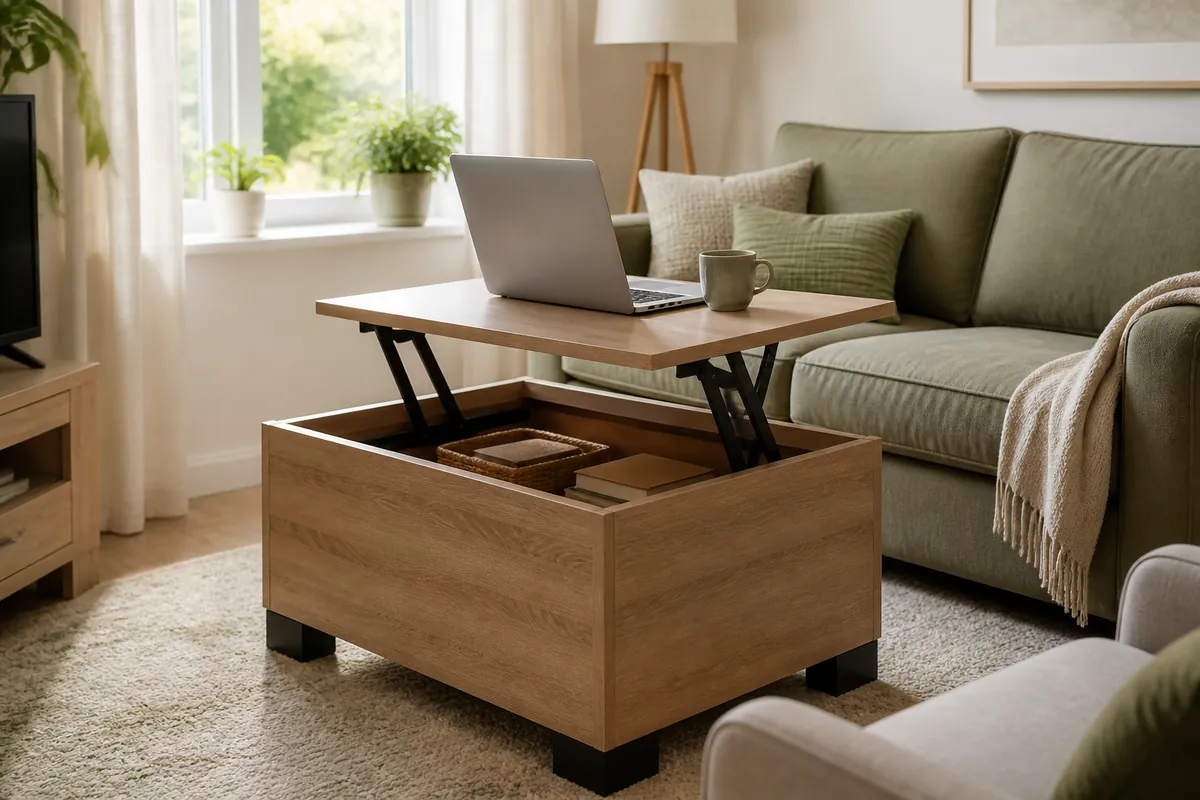
Lift-top tables get recommended constantly, and they are genuinely good, but for one specific reason.
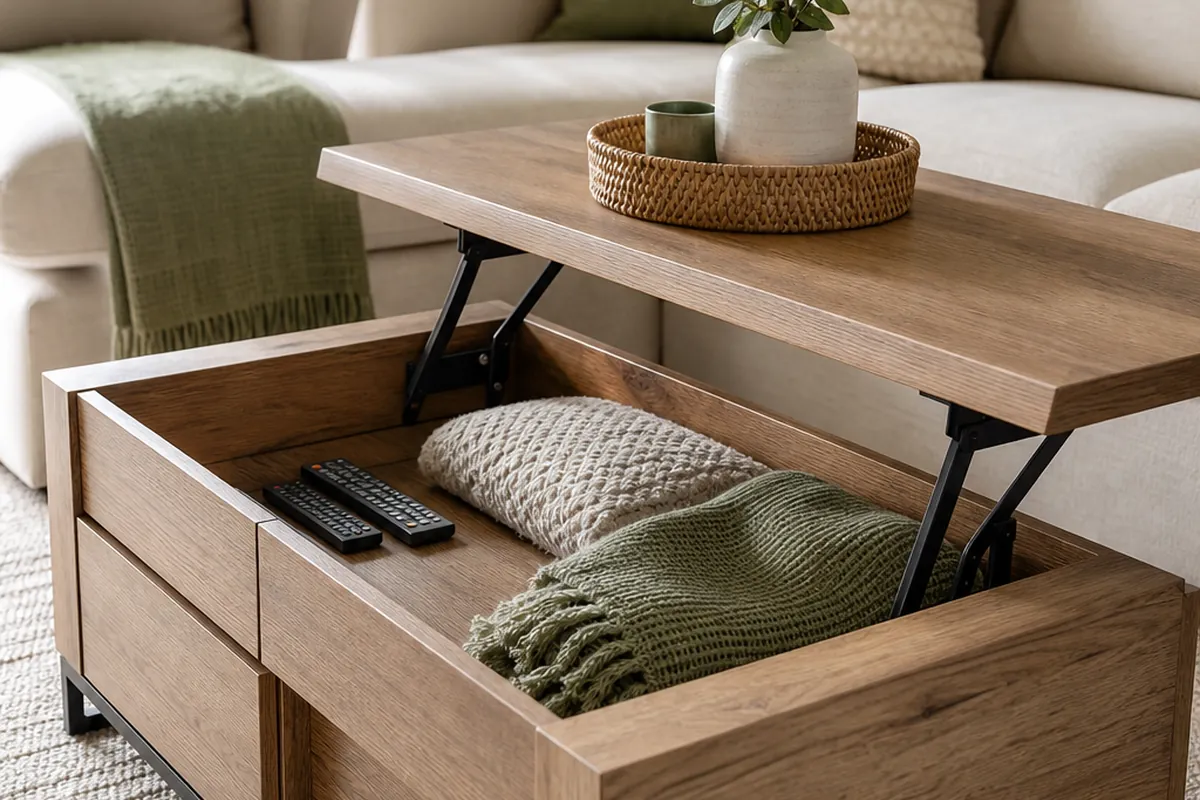
A 31.5-inch square lift-top coffee table raises the top to a working height, which turns a coffee table into a desk or a dinner table without adding furniture. In a small apartment where the living room is also the office and the dining room, that is one piece doing three jobs.
At thirty-one and a half inches square by eighteen high, it also happens to sit right in the range from the first two rules.
If you never eat or work at your coffee table, skip the mechanism. You are paying for a hinge you will not use, and an ottoman gives you more storage volume for less.
5. An ottoman stores more than a table does
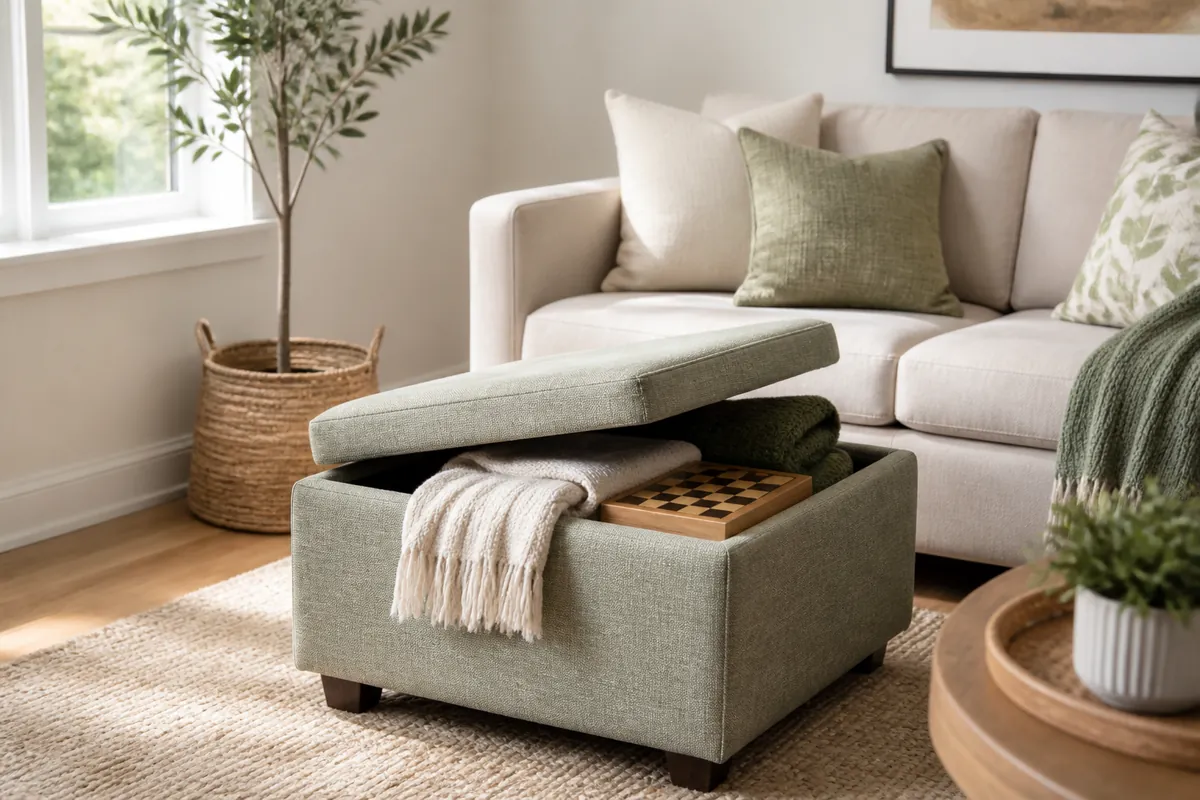
For pure volume, the box beats the table.
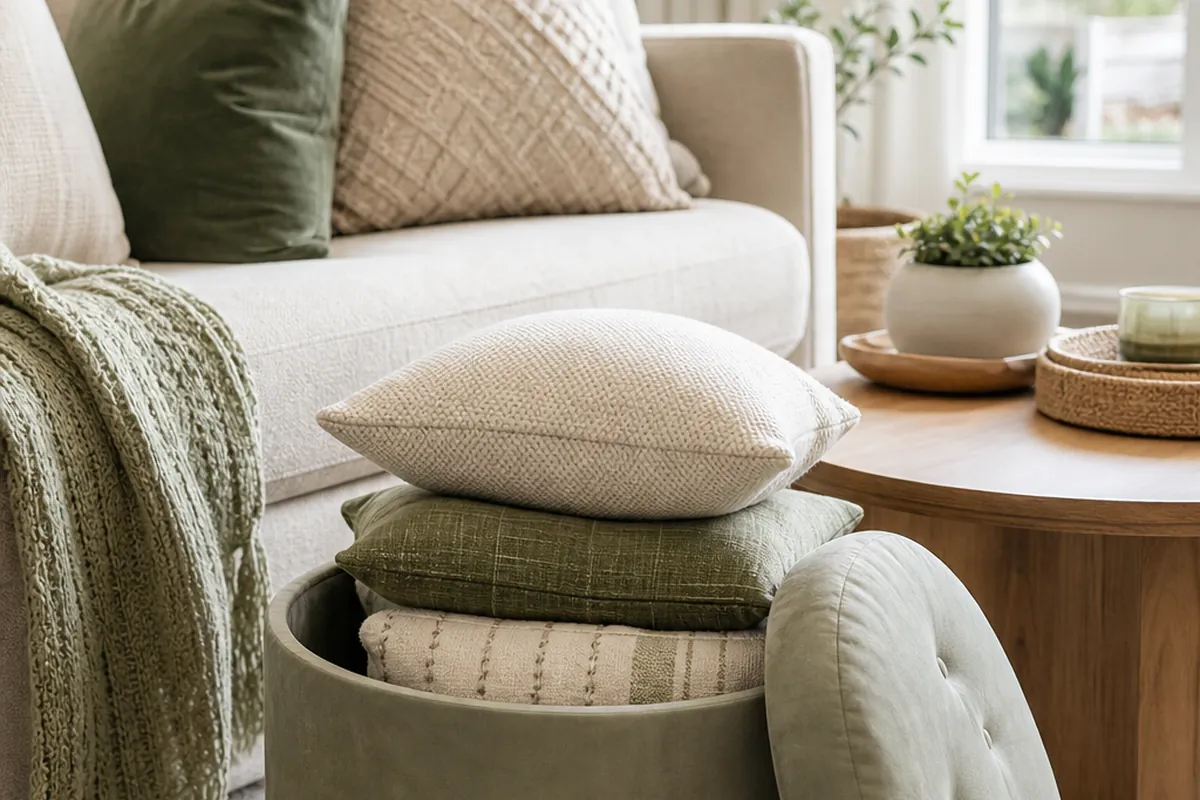
A storage ottoman bench with lid is a hollow box the whole way down, where a lift-top table loses depth to its mechanism and its shelf. That extra volume is where throws, spare cushions and board games actually fit.
It also doubles as seating when someone visits, which in a small living room is the difference between four people sitting down and two people sitting down.
The trade-off is the surface. A padded lid will not take a mug, so pair it with a tray.
6. Put a tray on top

The cheapest thing here and the one that does the most work.
A tray gives clutter a boundary. Remotes, coasters and a candle inside a tray read as arranged. The same objects loose on the table read as mess, even though nothing has changed except the edge.
It also makes clearing the table a one-motion job. You lift the tray, wipe underneath, put it back. Without one, clearing means relocating fifteen separate things, which is why it does not happen.
7. Only store what belongs in that room
The rule that decides whether the storage stays useful.
Coffee table storage should hold things used in the living room: remotes, chargers, coasters, a couple of games, a throw. The moment it starts absorbing mail, paperwork and things with no other home, it becomes a drawer nobody opens and the surface above it fills up instead.
The test is one motion. If putting something away requires sorting it first, it will not go in.
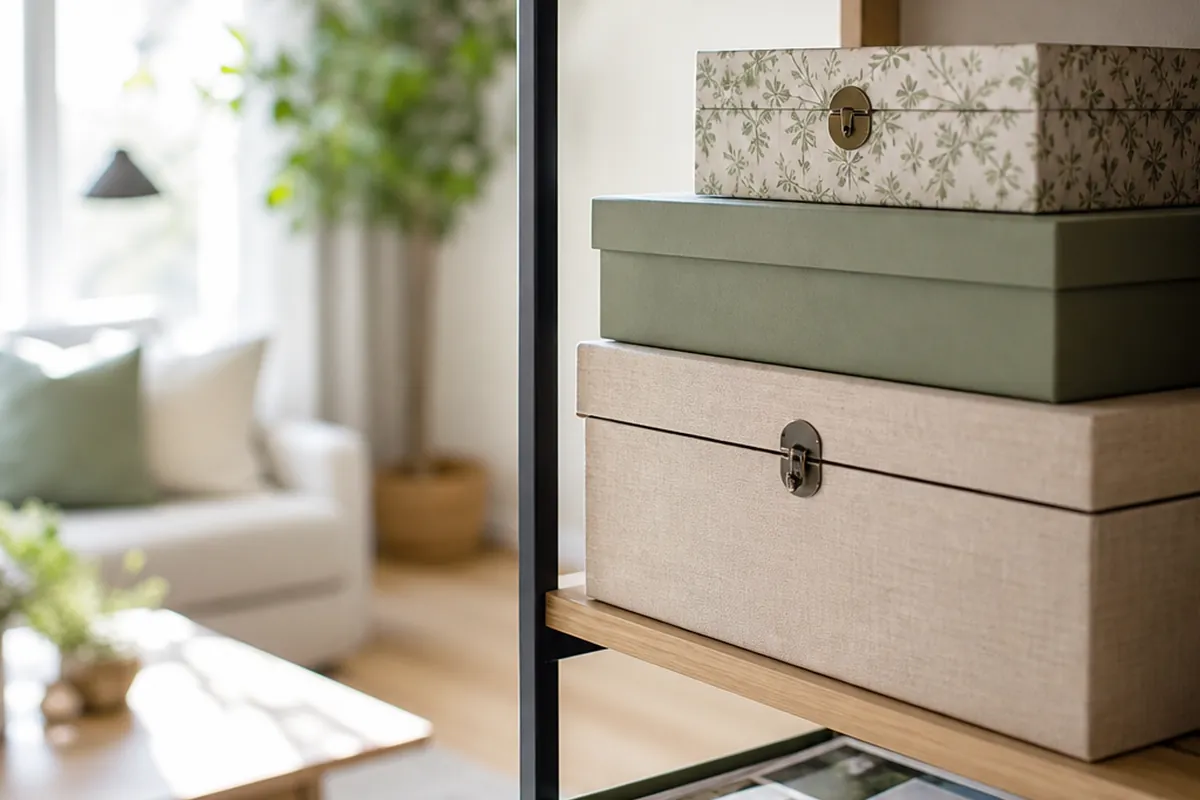
Magazines and mail are the two things that will try to colonize the table top anyway, and magazine and mail storage ideas for a small living room gives them a home that is not the table.
8. Divide the inside or it becomes a pit
A single deep cavity is where small things go to disappear.
Remotes, cables, chargers and pens in one open box means excavating every time. A clear drawer organizer tray set dropped inside gives each category a slot, and the see-through sides mean you stop lifting things to check underneath.
You do not need a fitted system. You need the space split into three or four zones so nothing buries anything else.
9. Round tables suit tight walkways
If the route past the table is genuinely tight, the shape matters more than the size.
A round table has no corners to catch a hip or a shin, so you can run a walkway closer to it than you could to a square one. In a narrow room, or where the table sits between a sofa and a doorway, that is real usable space rather than a style preference.
The cost is storage: round tables usually offer less internal volume than square ones of the same footprint. If the walkway is the binding constraint, take the trade. If it is not, square stores more.
10. Check the lid opens where the sofa is
The failure that only shows up after delivery.
A lift-top mechanism hinges from one side, and a chest-style ottoman lid swings up from the back. If that hinge faces the sofa, the lid opens into your knees and you have to stand up every time you want anything out of it. Storage you have to stand up for is storage you stop using.
Look at the product photos for which edge the hinge sits on, then work out how it will land in your actual room. In a small living room where the table sits close to the sofa, this decides whether the storage gets opened weekly or twice a year.
The same applies to drawers. A drawer that pulls toward the sofa needs the full walkway gap in front of it, so an eighteen-inch gap becomes the minimum rather than the comfortable option.
Where to start
Measure three things before you look at any product: the sofa seat height, the sofa length, and the gap you need to walk through. Those give you the table height, the table width, and the maximum footprint. Almost every bad coffee table decision comes from skipping that and buying by appearance.
Then decide honestly whether you will ever work or eat at it. If yes, a lift-top does two jobs. If no, an ottoman with a tray stores more for less money, and it seats an extra person when someone visits.