Most kids don’t need a desk. They need one spot where the pencils, the glue stick, and the half-finished worksheet all live together, so the twenty minutes before homework starts aren’t spent hunting for a sharpener. A homework station is really just that: a defined supply zone plus a surface. In a small apartment, those two things don’t have to be attached to each other.
That separation is the whole trick. Stop trying to wedge a full desk into a room that can’t hold one and the options multiply fast. Below are ten homework station setups built for tiny bedrooms, shared rooms, and apartments where the dining table already does five other jobs.
1. Put homework station supplies on wheels, not in a drawer
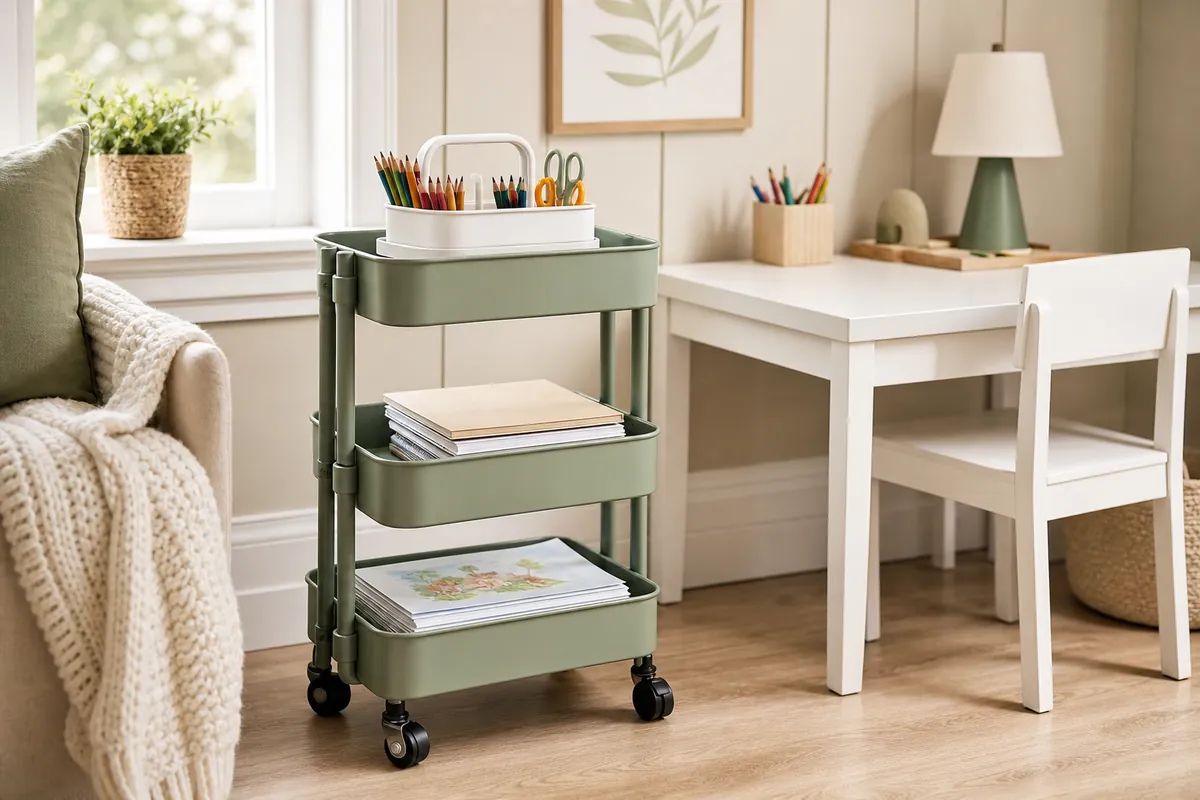
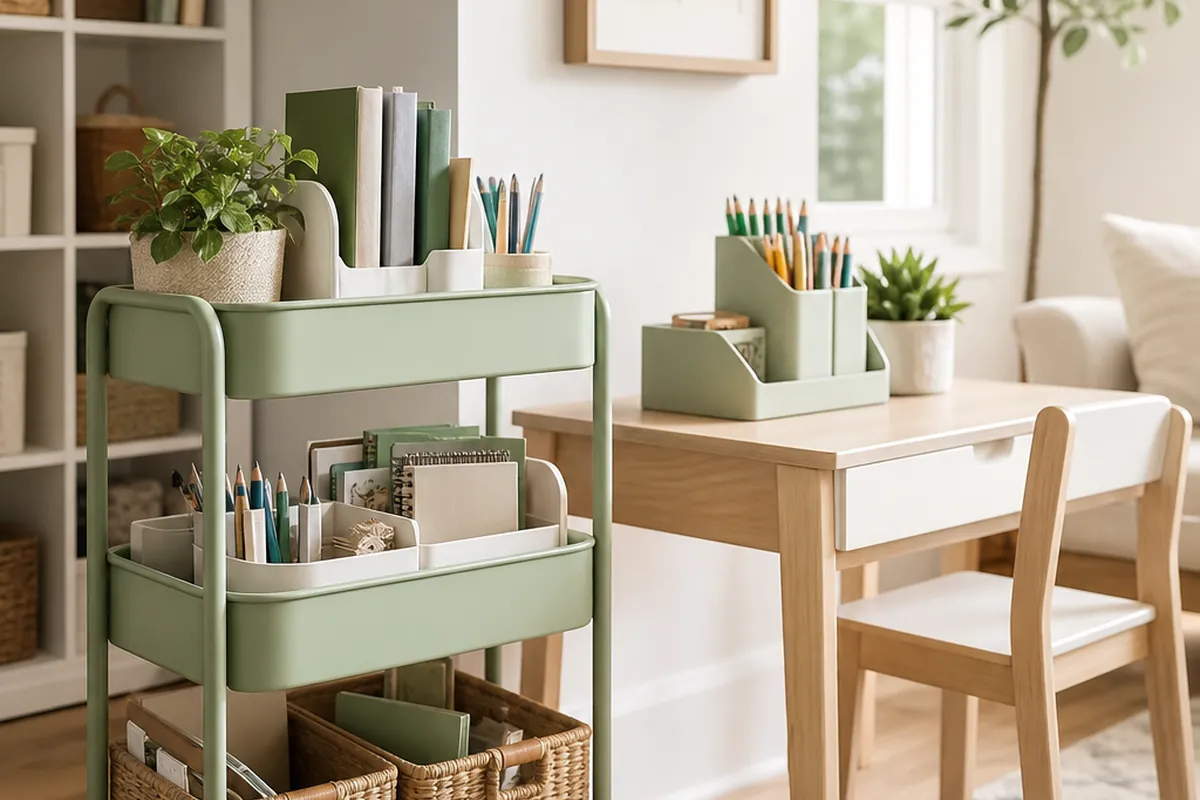
If I could recommend only one product for a small-space setup, it’s a 3-tier rolling cart. It parks in a closet or beside a dresser, rolls to whatever surface the kid is actually using that day, and swallows more than it looks like it should: paper on the bottom, workbooks and folders in the middle, pens and small stuff up top.
Mobility is why it beats a desk drawer. Homework happens at the kitchen table on Tuesday and on the bedroom floor on Thursday, and a drawer can’t follow anybody. Treat the top tier as the daily-use layer and don’t let craft leftovers migrate downward, or you’ll own a junk column on wheels by Halloween.
Assign each tier out loud
Say it once, then label it: top for writing tools, middle for current schoolwork, bottom for paper and larger books. Kids reset a cart correctly when the rule is short enough to repeat from memory. Vague zoning (“school stuff goes here”) gets you three identical tiers of chaos.
2. Use a stackable supply caddy as the portable core
A stackable supply caddy with a handle is the best few dollars you can spend on a kid who works in three different rooms. Load it with the true essentials, pencils, an eraser, a sharpener, one glue stick, scissors, a highlighter, and stop there. It travels from bedroom to table to couch as one object instead of fifteen loose ones.
The stackable part earns its keep in shared rooms. One tier per kid ends the daily ownership argument, and the full stack occupies a single footprint on a shelf when nobody’s working. If you’re already refereeing two kids in one bedroom, the logic behind a stacked caddy is the same logic behind most of the shared kids room organization fixes worth doing.
3. Go vertical with a wall-mount desk organizer
Small desks lose to clutter because the surface is the only storage there is. A wall-mount desk organizer changes that math by lifting the pencil cup, the loose papers, and the reminder notes off the desk and onto the wall above it, which leaves room for an open notebook and a forearm.
Height is the detail most people botch. Mount it so a seated kid can reach the top slot, which usually lands just above eye level sitting down, not standing. Renters nervous about anchors have two decent options: choose a lightweight organizer and hang it on heavy-duty adhesive strips rated well above the loaded weight, or drive one screw into a stud and patch the hole on move-out day.
4. Turn a closet into a homework station that closes
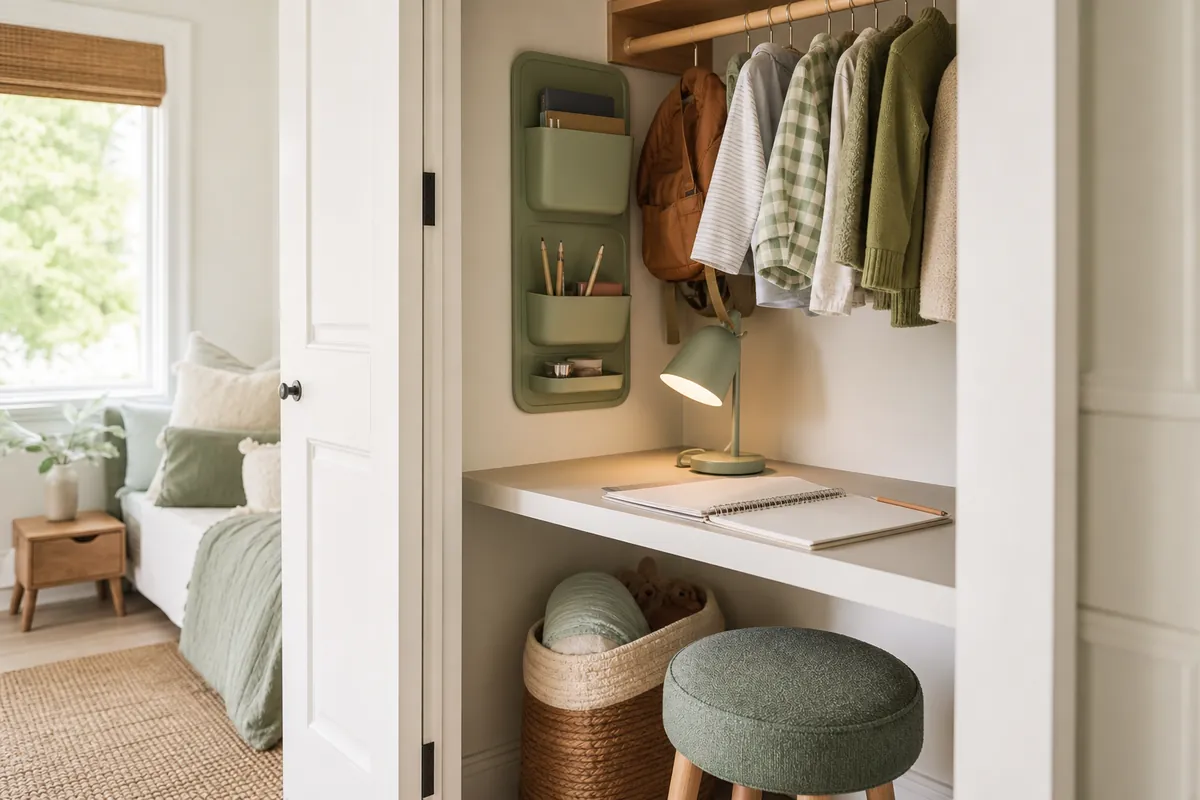
Pull the lower hanging rod, set a shelf at desk height, and you have a work surface with a door on it. For a bedroom too small for furniture, this is the strongest move on the list, because the mess vanishes at bedtime and nothing has to be cleared off first.
Add a clip lamp to the shelf edge. Closets run darker than you expect, and the room’s overhead light won’t reach past the doorframe. Hang the wall-mount desk organizer on the inside wall and the whole station takes up zero floor space in the bedroom itself.
5. Make the dining table work with a five-minute reset
Plenty of families do homework at the table, and there’s nothing wrong with that. The transition to dinner is what breaks down, so write the reset into the system: anything on the table has to fit back into the caddy and the cart, no negotiation.
Park the rolling cart within arm’s reach during homework hours, then roll it out of the walkway when the plates come out. A placemat under the work area gives kids a visible boundary and slows the creep of papers across four place settings.
6. Float a slim desk on a wall the door doesn’t hit
A fold-down wall desk or a narrow floating shelf at desk height buys you a real work surface with no legs eating floor. Sixteen inches of depth is roughly the minimum for a laptop or an open workbook; go shallower and elbows hang off the front edge all afternoon.
Test the door swing and the walkway before you drill anything. A desk that blocks a closet door for the next eight years is worse than no desk at all. Where drilling isn’t allowed, a slim console table against that same wall does most of the same work and leaves nothing to patch.
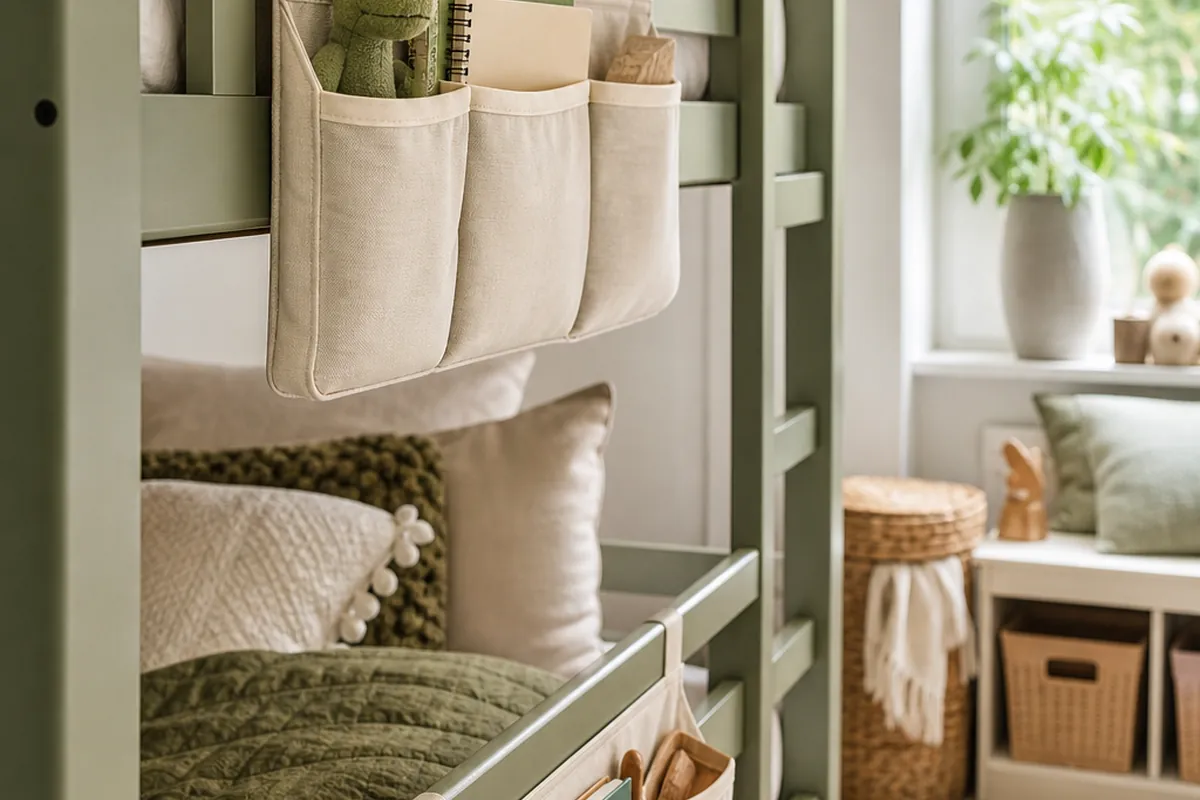
7. Claim the space under a loft or bunk bed
Floor space under a loft bed is the most wasted square footage in a kid’s room. Slide a small desk or a sturdy nightstand under there, clamp a task light to the bed frame, and tuck the rolling cart beside the ladder.
Head clearance decides whether it works. Low ceilings under a bunk read cozy to a nine-year-old and claustrophobic to an adult, so let the kid vote. If they duck every time they sit down, use that pocket for the cart and books and put the work surface somewhere else.
8. Give paper its own inbox
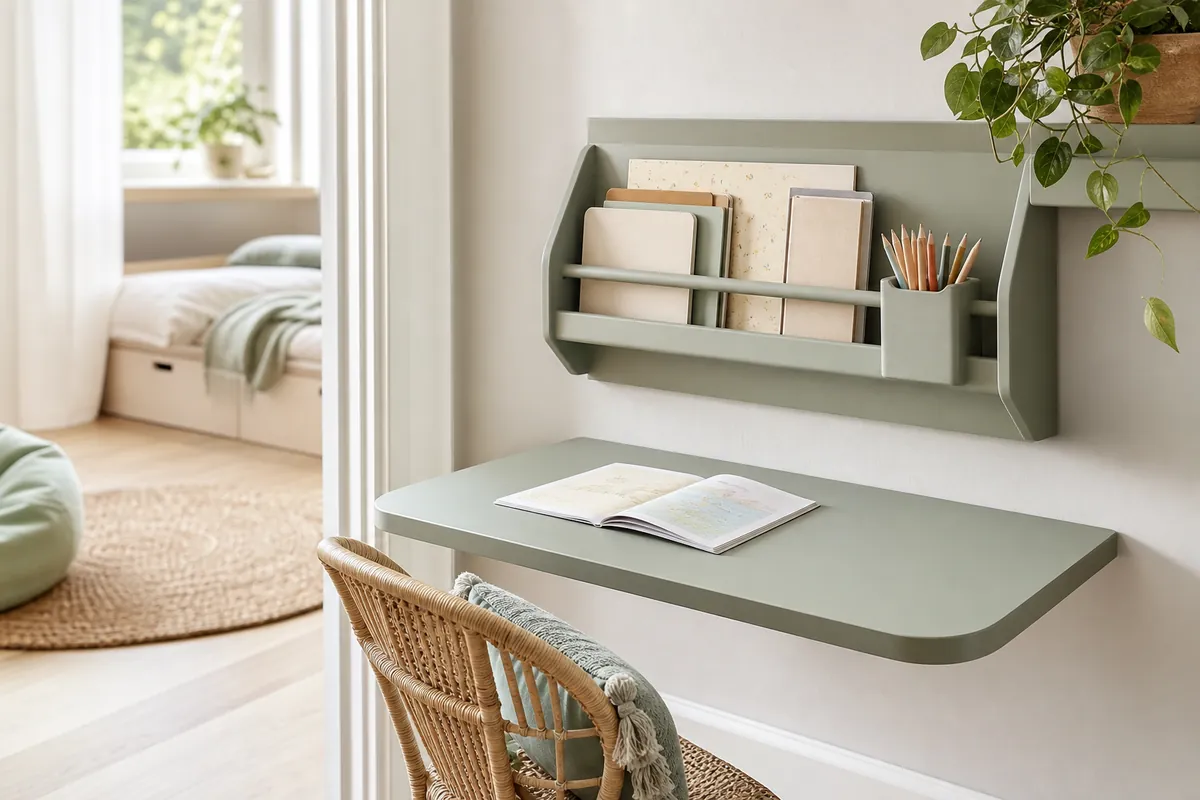
School paper arrives faster than anyone plans for: permission slips, reading logs, four drawings of the same dog. Give each kid one shallow tray or slot, wall-mounted or living on the cart’s middle tier, and route everything that comes home into it first.
Then process it weekly, or the tray turns into a compost heap. Sunday night, sort into keep, sign, and recycle. A wall-mount desk organizer with a document slot is ideal for this job because upright paper stays visible, and visible paper actually gets handled.
9. Corral books at the station, not across the room
Reference books, readers, and the library stack belong within reach of the work surface, not on a bookcase against the far wall. The bottom tier of the 3-tier rolling cart handles it, as does a narrow picture-ledge shelf above the desk with covers facing out so titles read at a glance.
Cap the count. Six to eight books at the station, with the rest in the room’s main storage, which is where the usual kids book storage ideas for a small room earn their keep. Load the homework zone with books and the work surface disappears inside a week.
10. Separate homework supplies from art supplies
Most homework stations skip this rule, and it’s why they quietly fail. Markers, stickers, pom-poms, and glitter glue need a different container than the pencil and the calculator. Mix them and every session opens with a five-minute craft detour nobody scheduled.
Stack a second supply caddy tier for art and keep it in another room entirely, ideally wherever projects already happen: the living room, a hall closet, the bottom of the coat cabinet. When craft overflow has already colonized shared space, the same containment approach runs through these toy storage ideas for a small living room.
Size the homework station to the kid
A six-year-old wants a low surface, big containers, and open bins they can drop things into without aiming. A twelve-year-old wants charging access, real paper storage, and a chair at the right height. Buying one setup sized for the older kid and expecting the kindergartener to keep pace is wishful thinking.
Aim for feet flat on the floor, elbows around table height, book or screen near eye level. When the chair sits too tall, a footrest fixes posture immediately, and a sturdy box of books counts as a footrest. Squirming drops noticeably once their feet have something to press against.
What to skip
The giant multi-drawer desk is the classic mistake. It fills with dead pens and last spring’s worksheets while eating floor space you can’t spare, and nobody ever excavates the bottom drawer. Cute matching containers too small for real supplies belong on the same list, along with anything that needs two lids opened to reach a pencil.
Hold off on permanent labels for the first month. Live with the setup, watch where things genuinely land, then label once the system settles. Label on day one and you’ll spend week six peeling stickers off plastic.
Start with one surface and one container
Pick where homework already happens, not where you wish it happened. Put a stackable supply caddy there and see how a week goes. Add the 3-tier rolling cart once the caddy stops holding everything, and bring in the wall-mount desk organizer when the surface starts disappearing again. A homework station built in that order stays useful, because every piece got bought to solve a problem you’d already watched happen.