Two people sharing one small bedroom run into a specific kind of storage failure that a single person never does: the space is not just tight, it has to be split, and splits that are not measured tend to drift toward whoever unpacked first. Six months in, one side of the closet is packed to the rod cap and the other has three empty hangers, one nightstand has become the household junk drawer, and someone’s off-season sweaters are living in a chair because there was never an agreed place for them.
None of this is really a storage problem. It is a fairness problem that shows up as clutter. Ten ways to split a small shared bedroom so the space stays even, and stays that way after the first week of good intentions wears off.
1. Measure the closet rod and split it in inches, not by eye
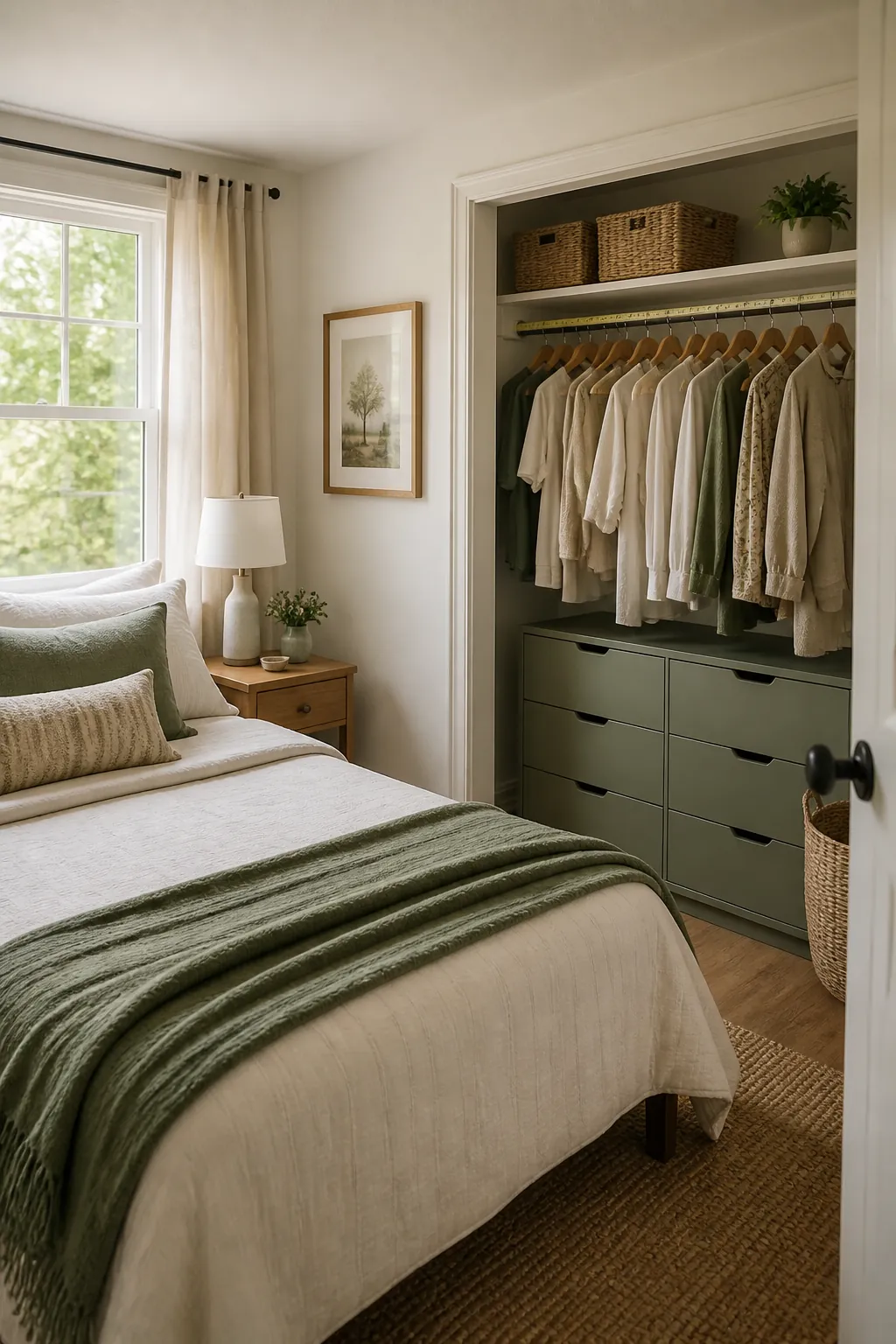
A shared closet rod almost never gets divided evenly, because the natural instinct is to eyeball a midpoint and that midpoint drifts toward whoever hangs clothes more often.
Measure the full rod length and mark the actual center with a small tag or a cable tie. If the rod is six feet, that is thirty-six inches each, not “your half looks about right.” The end nearer the door usually fills up first regardless of ownership, since it is easier to reach, so if one person’s half lands there, expect it to feel tighter even at an equal inch count. Swap ends every few months if that keeps causing friction.
2. Give each person an identical nightstand
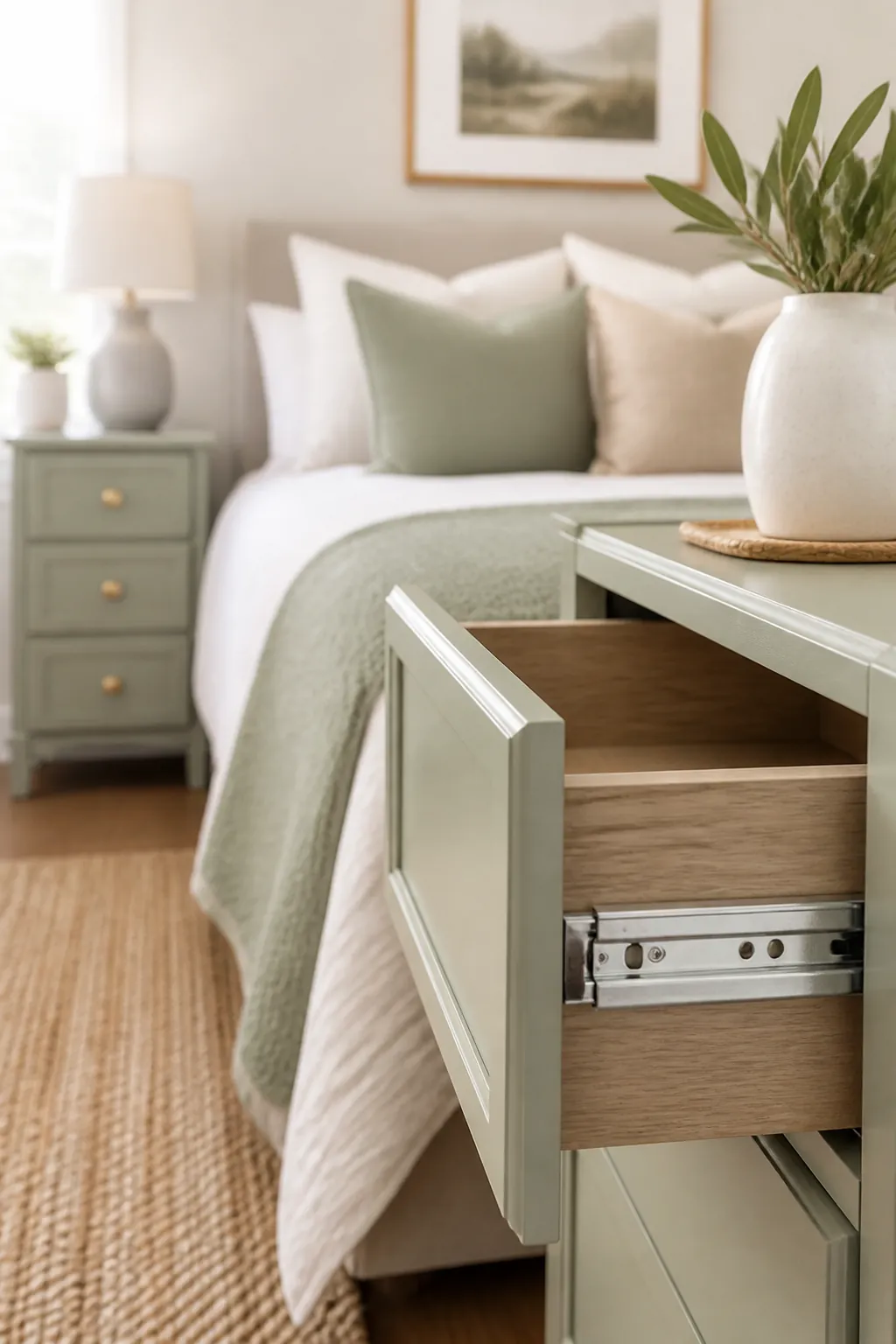
A mismatched pair of nightstands, one bigger or one with more drawers, reads as an imbalance the moment you’re standing in the room, and in a bedroom under a hundred square feet that imbalance is genuinely visible, not just felt.
Two of the same slim nightstand with drawers solves this without needing extra floor space, since a slim model runs around sixteen to eighteen inches wide and fits beside most queen and full frames without crowding a walking path. Buying the same model twice costs less than buying two different ones and it removes an entire category of low-grade resentment before it starts.
3. Split every dresser drawer down the middle instead of splitting whole drawers
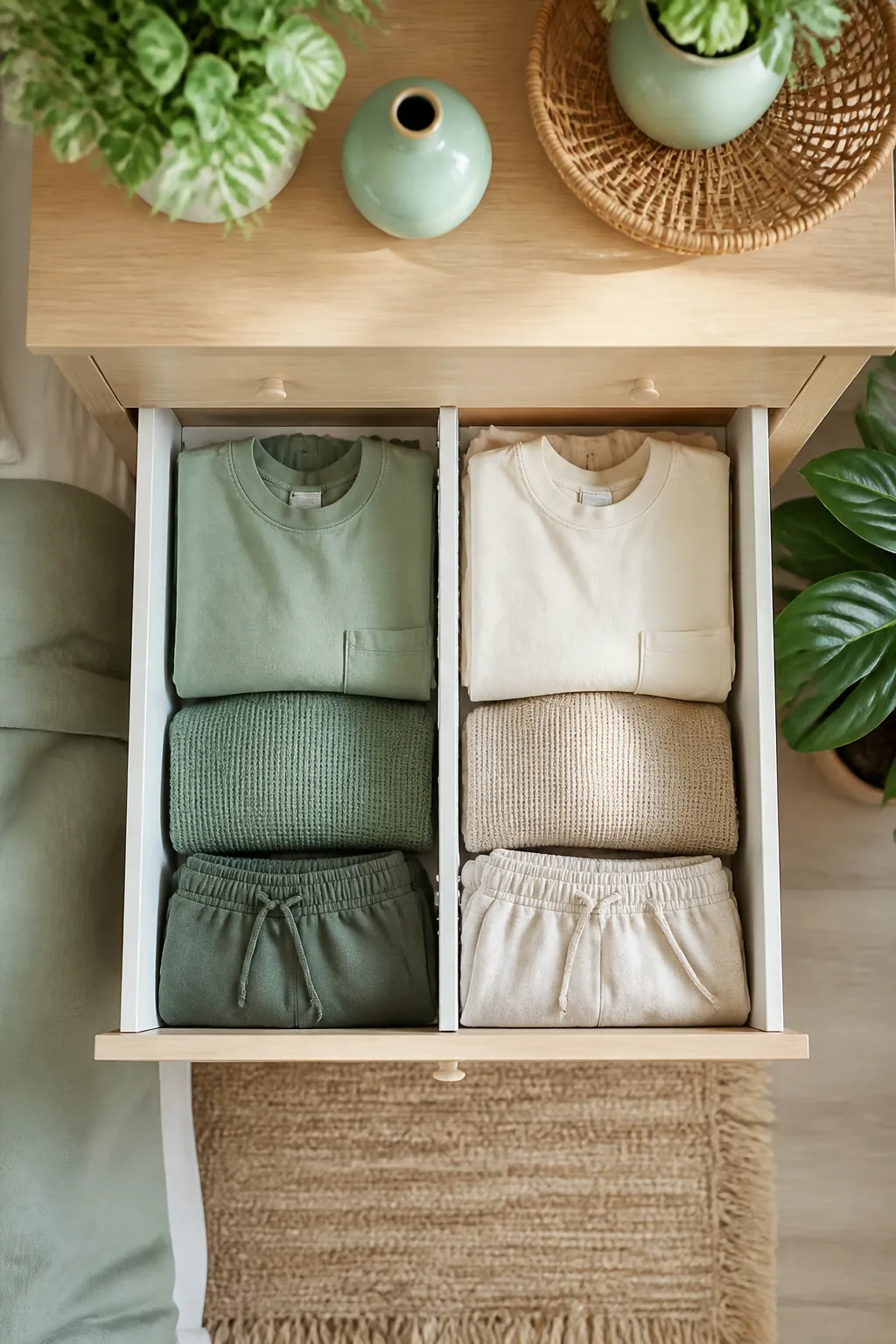
The obvious move, giving one person the top two drawers and the other the bottom two, feels fair on paper and fails in practice, because top drawers are at hand height and bottom drawers require a crouch every single time.
A better split runs a divider through every drawer, so each person gets the same half of the same drawer, same reach, same depth. Adjustable drawer dividers expand to fit most dresser widths and lock in place, so the split holds even when a drawer gets pulled hard. Set them dead center rather than guessing, and measure the drawer’s depth too, since a divider sized for width alone can still tilt in a deep drawer.
4. Keep off-season storage under the bed as two bins, not one
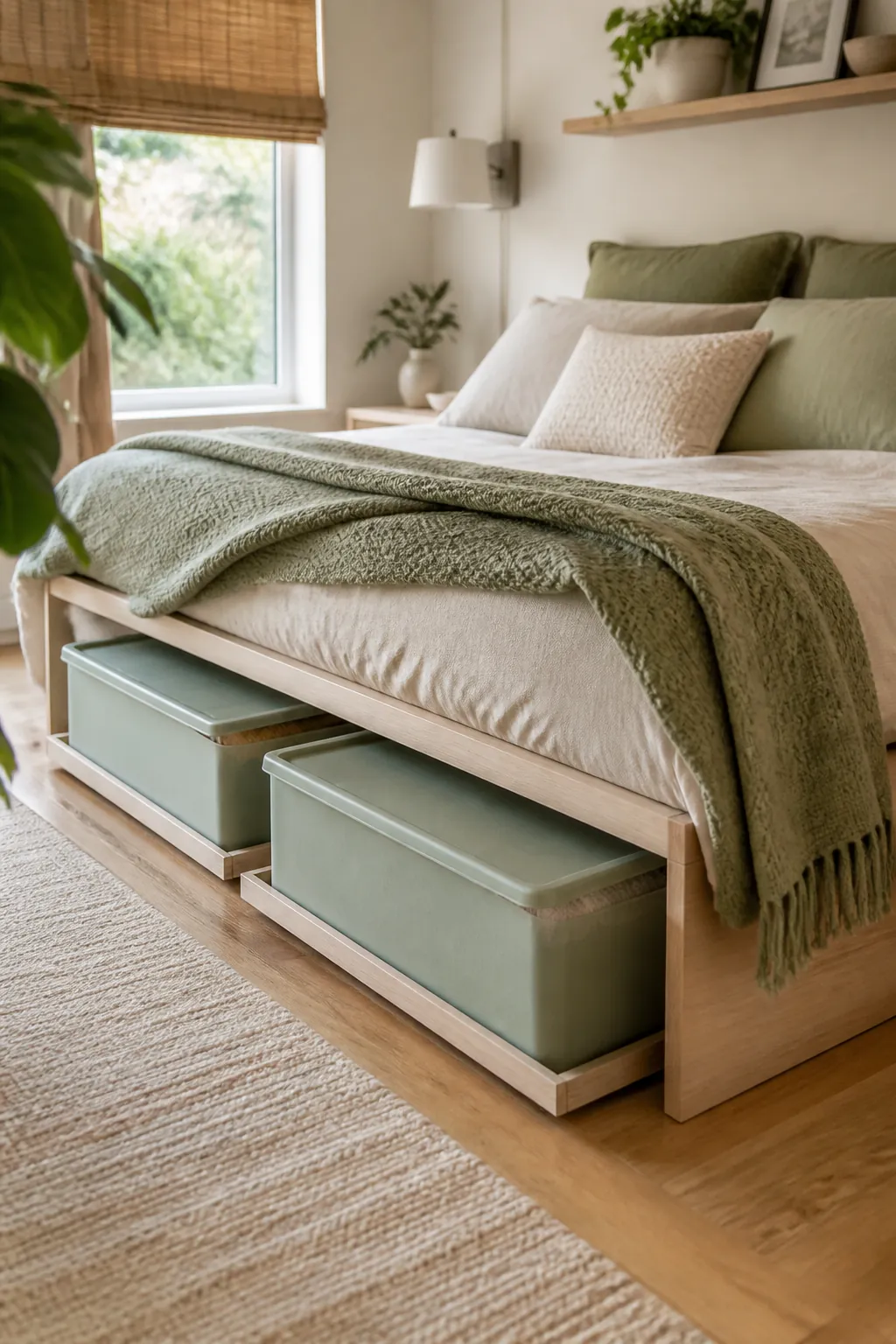
A single shared bin under the bed sounds efficient and turns into the thing nobody wants to open, because finding your own sweater means digging through someone else’s first.
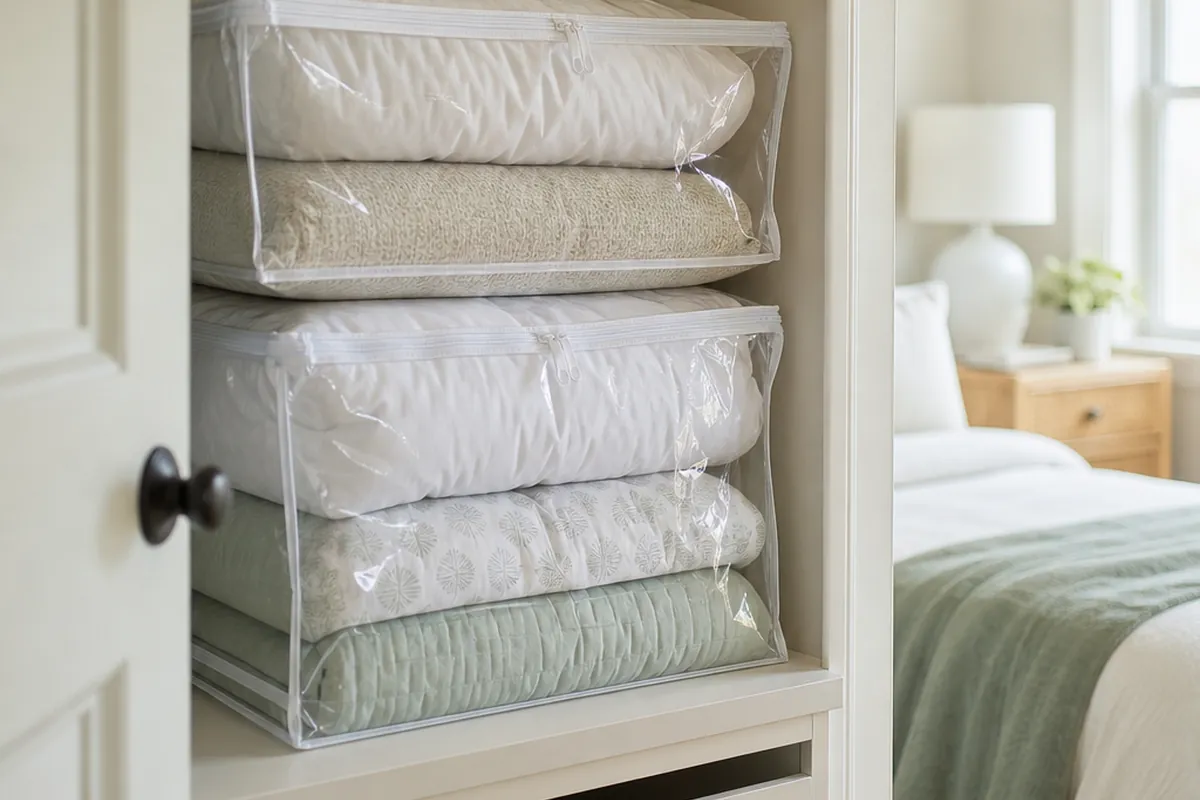
One labeled bin per person, same size, same side of the frame, solves it. Under-bed storage bins with lids come as a matched pair for exactly this reason, and the lids matter more here than in a single-person bedroom, since two people means twice the traffic in and out from under the bed and twice the dust getting kicked up. Measure the frame’s lowest clearance point before buying, not the mattress height, because center supports on a queen frame often sit an inch or two lower than the outer rails.
5. Mark the closet’s shared middle zone before anyone claims it
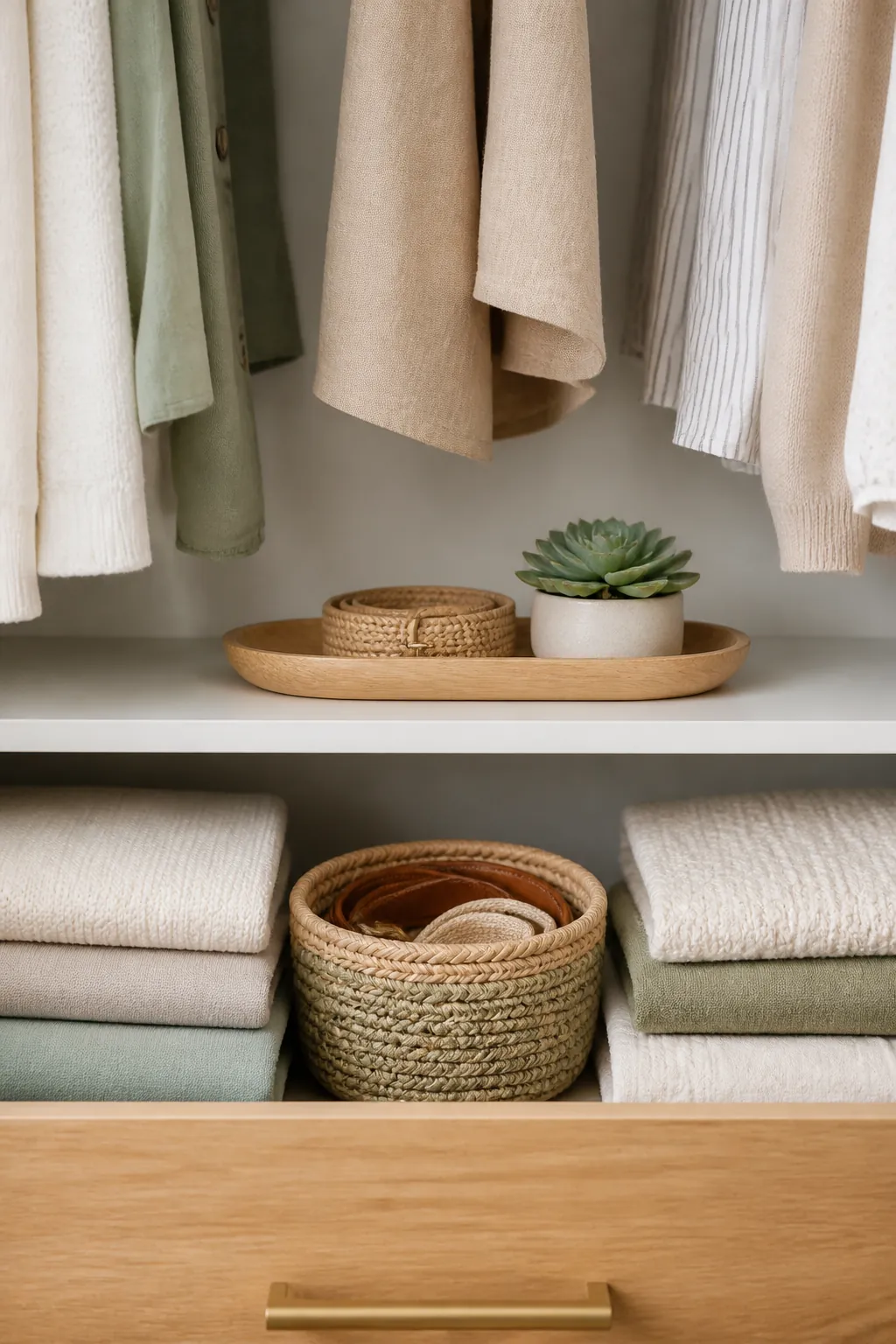
Two personal halves plus a chunk of genuinely shared items, spare bedding, a shared coat, the vacuum, is a three-way split, not two, and skipping that third zone is what causes the drift back toward one person’s half.
Put shared items in a visible middle third of the closet (about two feet of rod on a six-foot closet) or on a labeled shelf, and treat that zone as neither person’s storage. The moment a spare coat or the vacuum gets shoved onto whoever’s half has more room, that half starts absorbing everything, and the split you measured in step one quietly stops being real.
6. Assign hooks and hanging space by a count, not a feeling
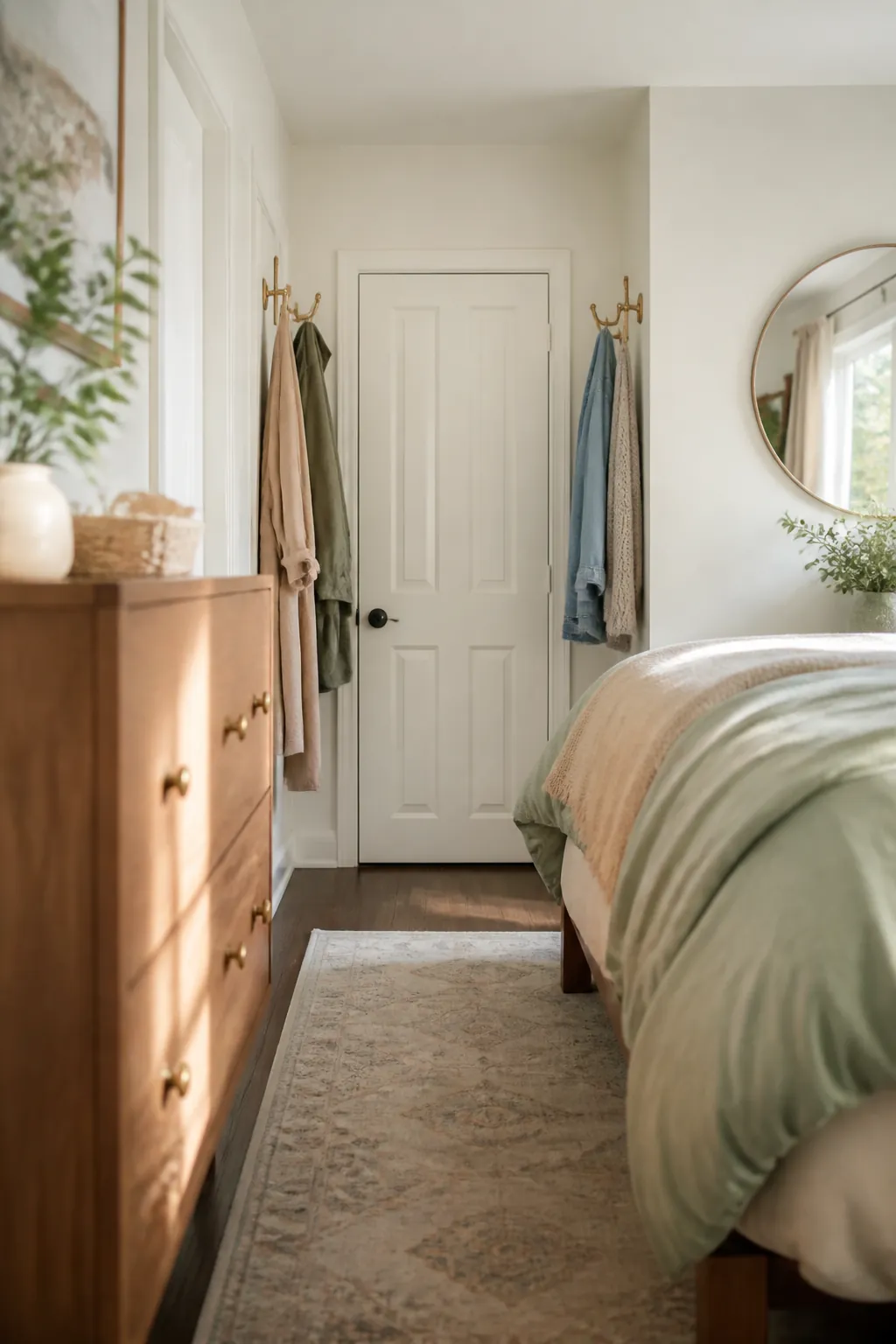
Command hooks and over-door hangers are cheap enough that couples tend to add them ad hoc, and ad hoc almost always means one person adds three and the other adds one, without either person deciding that on purpose.
Agree on a number, four hooks each behind the door, say, and stick to it. A specific count is something you can check at a glance; “roughly even” is not, and it is the kind of thing that only gets noticed once it has already tipped.
7. Give each nightstand surface a boundary, not just the drawer

The drawer split gets planned. The surface on top almost never does, and it is usually the first place a small shared bedroom starts looking cluttered, because two phones, two sets of glasses, two water glasses, and assorted change all land there with no assigned spot.
A small tray or shallow dish on each nightstand keeps the surface itself from spreading sideways. It is a minor fix, but it is the one that keeps the most-seen surface in the room from being the messiest one.
8. Treat luggage and bulky “sometimes” gear as shared, not owned
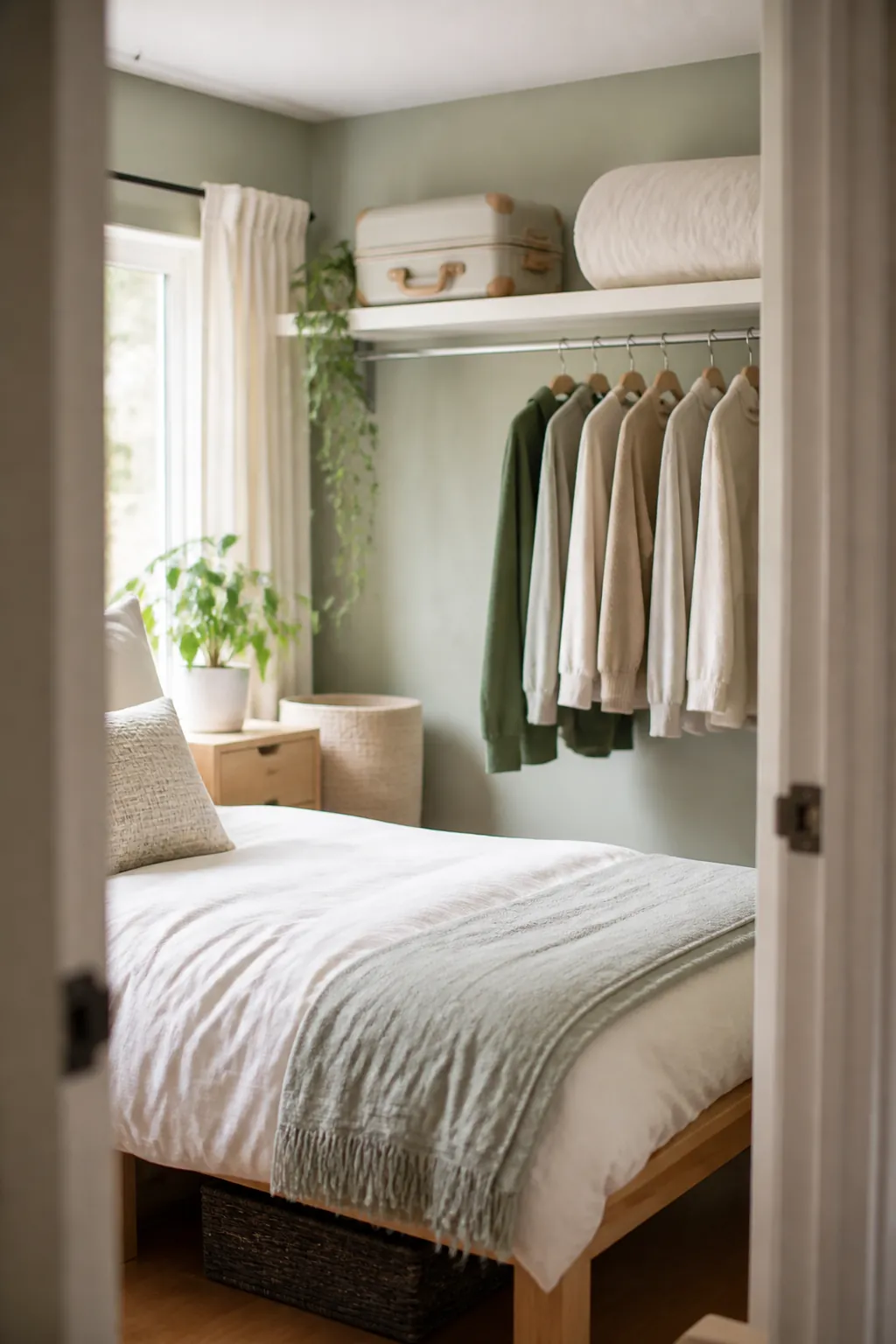
Suitcases, a spare duvet, winter boots that only get worn twice a year: these tend to get claimed by whoever bought them, which then means they eat into that person’s already-split half instead of counting as room overhead.
Put bulky shared items in one place, on top of a closet, in a single larger under-bed container, or on a shelf that is not part of either person’s counted space, and count it separately when you’re dividing everything else. Otherwise the split you did in steps one through four keeps getting quietly eaten by things neither person specifically owns.
9. Add a visual centerline if the room reads as one zone
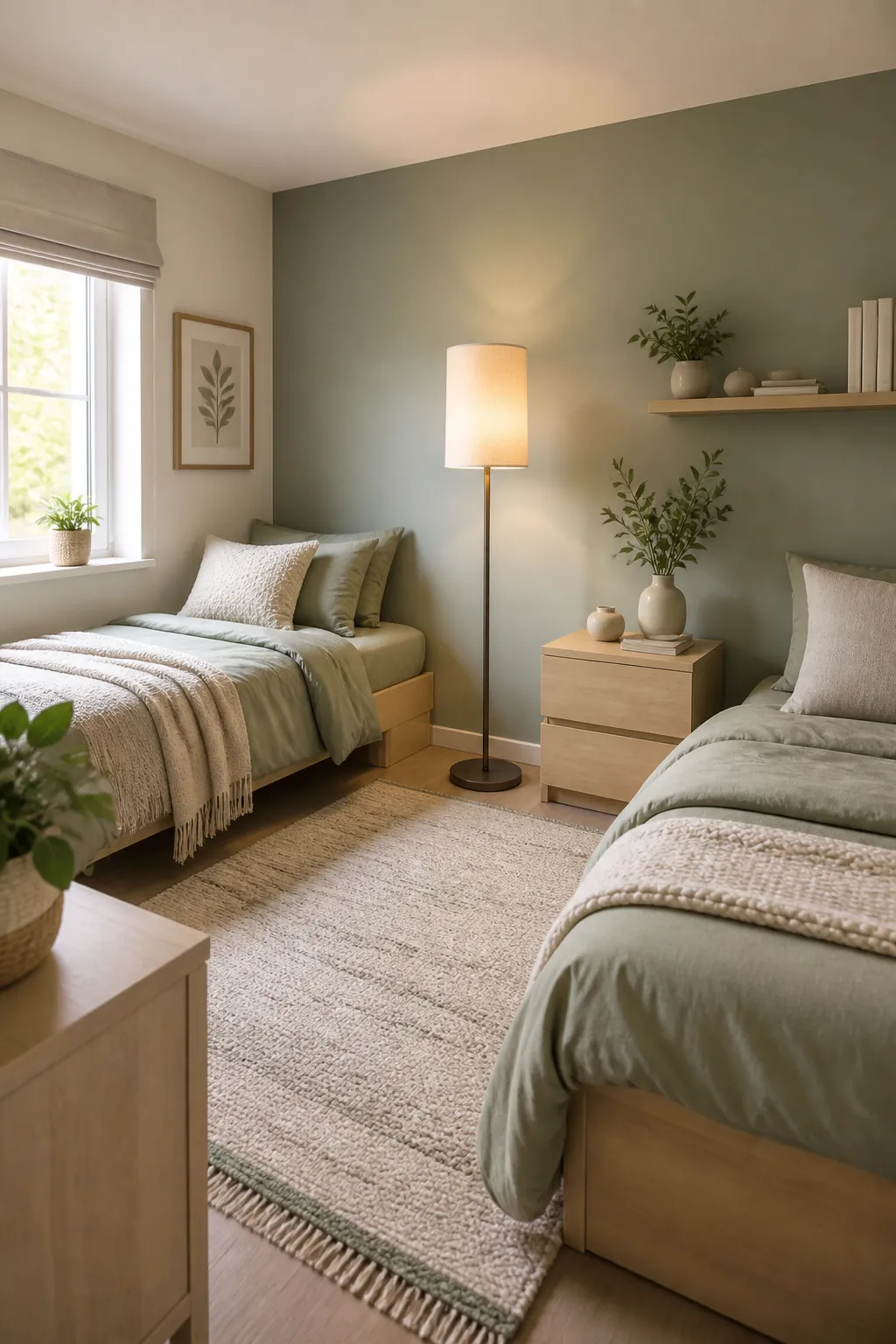
Some small bedrooms are shaped in a way that makes an even storage split invisible even when it is real, usually because the bed sits against one wall and everything visually clusters to that side.
A rug that runs perpendicular to the bed and extends a foot or two past each side, or simply arranging the nightstands and dresser symmetrically around the headboard, gives the eye a centerline to check the split against. It matters because an off-center room hides an off-center split: a nightstand that has crept two inches into its neighbor’s space, or a dresser drawer that has quietly gone three-quarters one person’s, reads as normal in a room with no visual middle to measure it against. This is entirely cosmetic and it is also the fastest way to catch a drift before it becomes an actual argument about drawer space.
10. Set a five-minute Sunday reset, done together
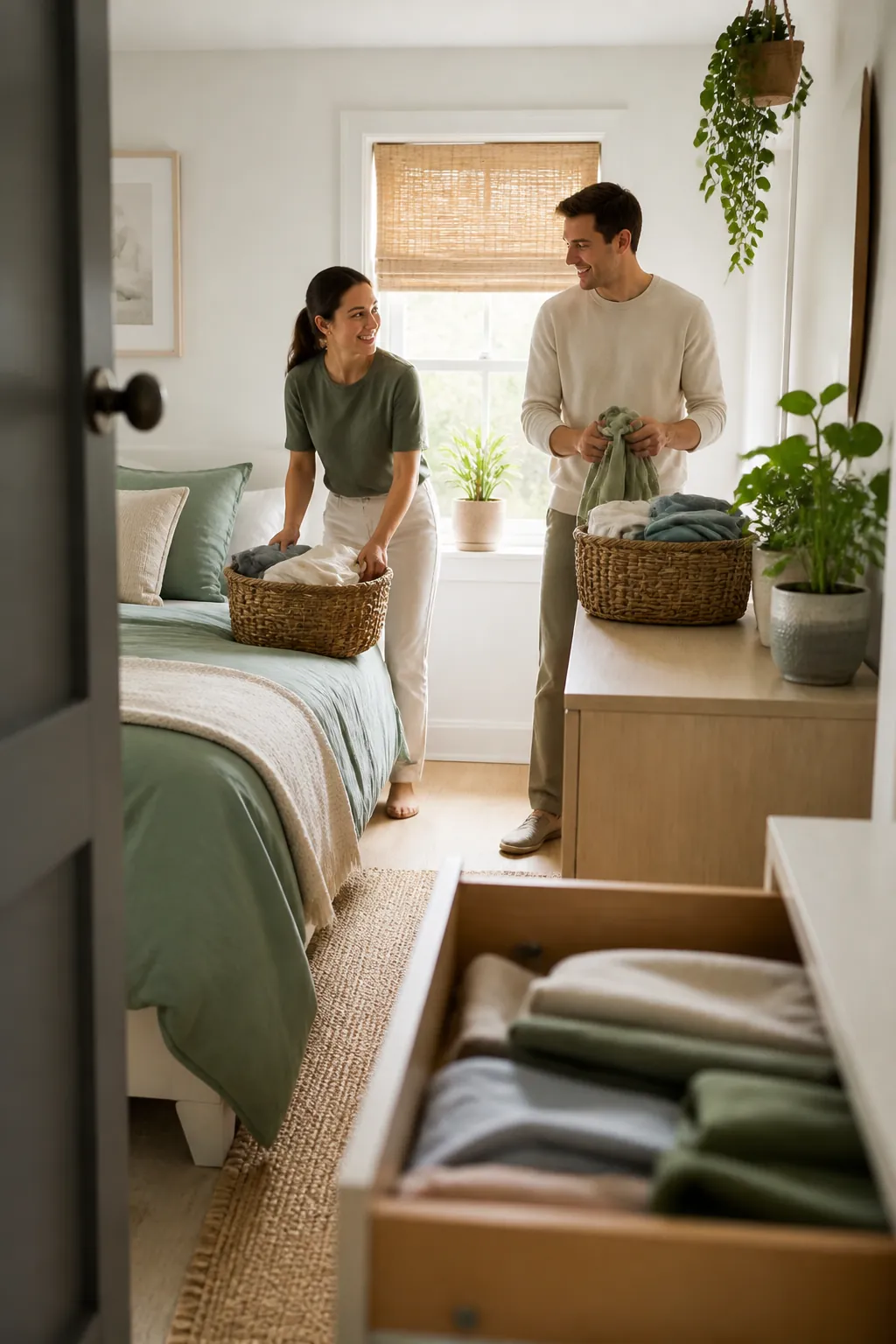
Every system above assumes maintenance, and maintenance done by only one person quietly turns “our system” into “their chore,” which undoes the fairness the whole setup was built for.
Five minutes each, at the same time, resetting your own half, is enough to keep drawers, the closet, and both nightstands from sliding back into imbalance. It costs less time than the argument that replaces it.
Where to start
Start with the closet rod and the dresser drawers, since those are the two spaces that drift fastest without a measured split. Adjustable drawer dividers fix the dresser in an afternoon, and under-bed storage bins with lids handle the off-season overflow without one person’s sweaters crowding the other’s. A matching nightstand pair rounds it out by giving both sides of the bed the same starting point.
None of this requires new furniture beyond the nightstands, and even those are optional if what you already own is already even. The goal is not a perfectly symmetrical bedroom. It is a split specific enough that neither person has to wonder whether they got the smaller half.