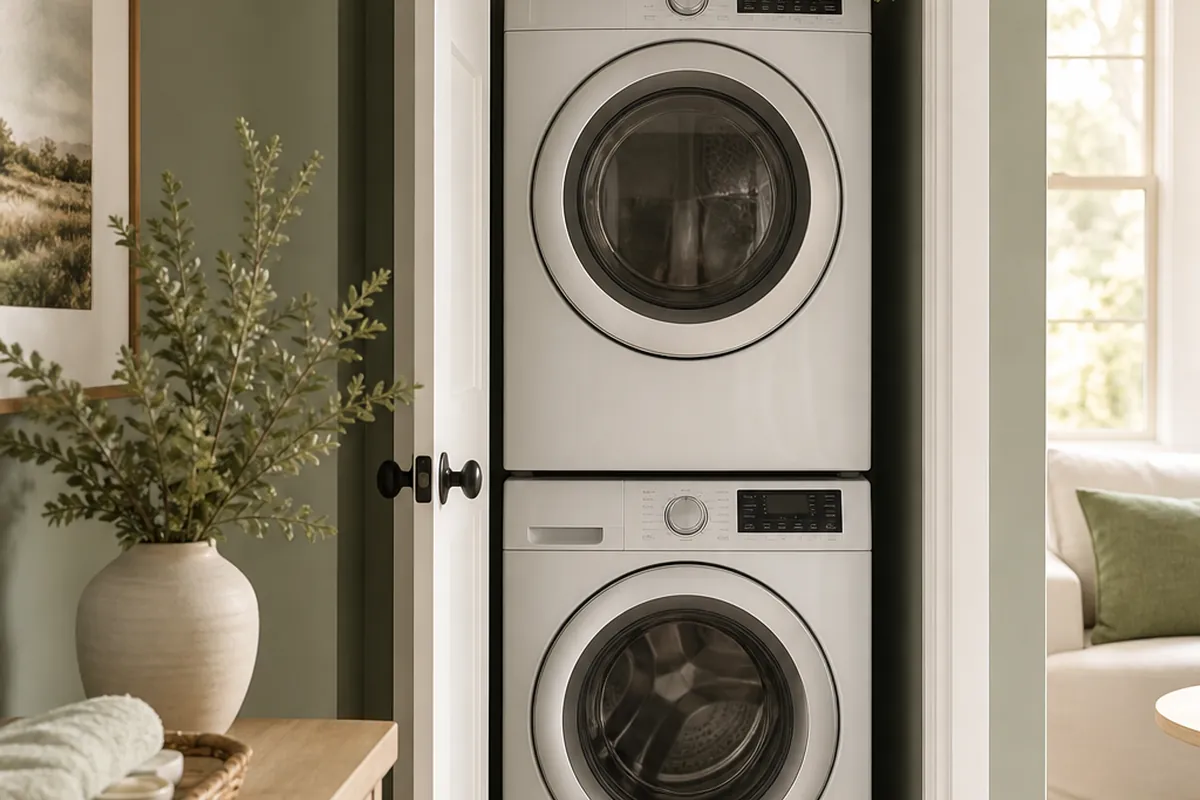
A stacked washer and dryer solves a space problem and creates a storage one. Putting the dryer on top of the washer buys you floor space, but it also turns a two-machine footprint into a single narrow column with almost nothing beside it, no side counter, usually no gap wide enough to slide anything into, and a control panel that’s suddenly five feet off the ground. Storage in a stacked closet isn’t about finding room next to the machines, because there often isn’t any. It’s about using the air above the dryer and the door in front of it, and being honest about what actually fits in a column this narrow.
Most stacked units, once the stacking kit is on, run 74 to 77 inches tall. In a standard 8-foot closet that leaves roughly 20 to 22 inches of ceiling overhead, and that’s your whole storage budget unless the closet door has room to spare. Here’s how to use it well.
1. Measure the closet, not just the machines
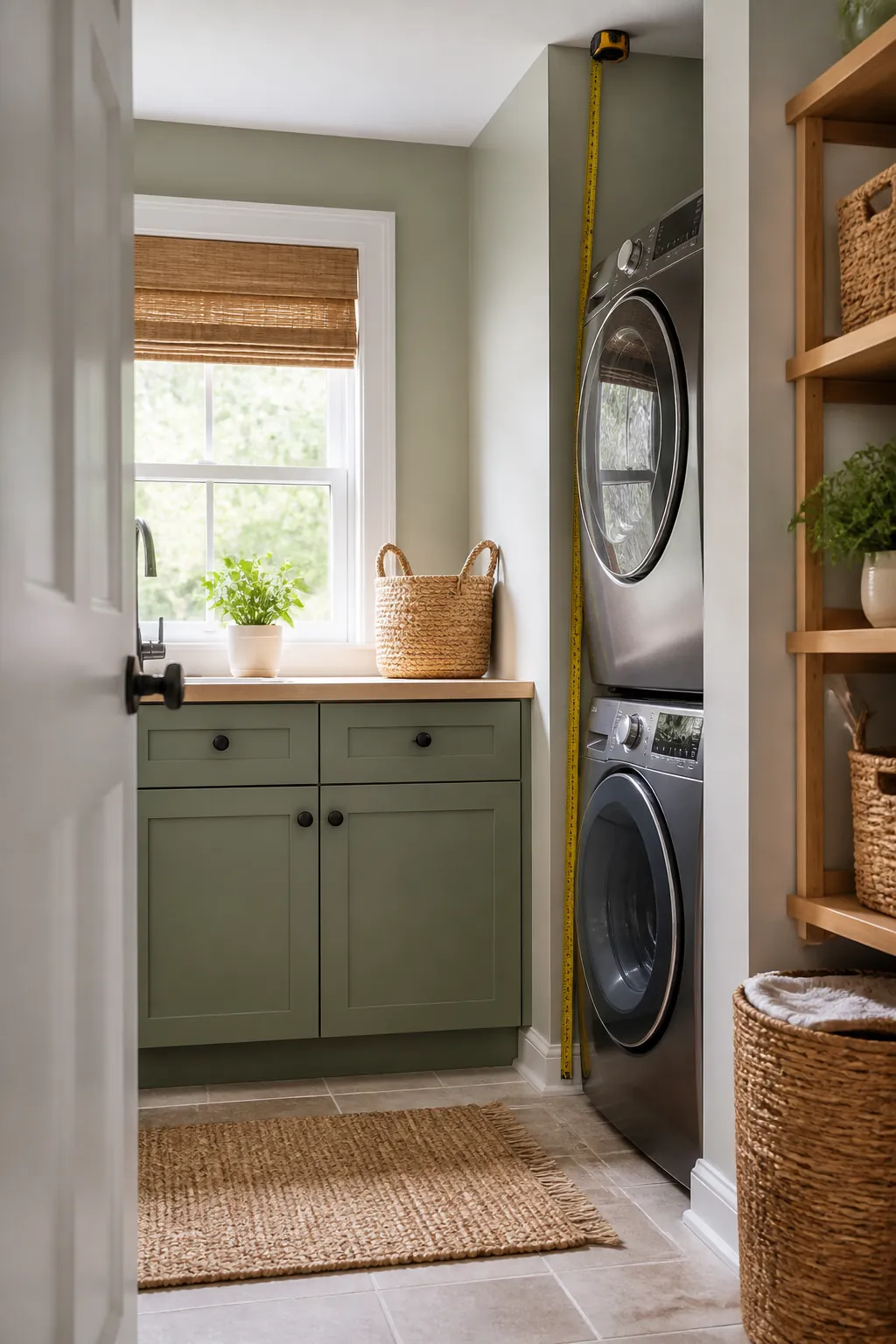
Before anything else, get four numbers: the width of the closet opening, the depth from the back wall to the door, the height from the top of the dryer to the ceiling, and how far the door swings before it hits anything. Stacked units are usually 27 inches wide and 30 to 33 inches deep, but the closet built around one is rarely much bigger, which means the numbers you actually need are the leftover inches, not the machine’s own dimensions.
The failure mode here is measuring the closet’s outer frame and forgetting the stacking kit adds height. A washer and dryer bought separately and stacked with a kit can sit a couple of inches taller than either spec sheet suggests on its own, and that difference is exactly the margin a tight shelf plan doesn’t have.
2. Put the overhead shelf to work first
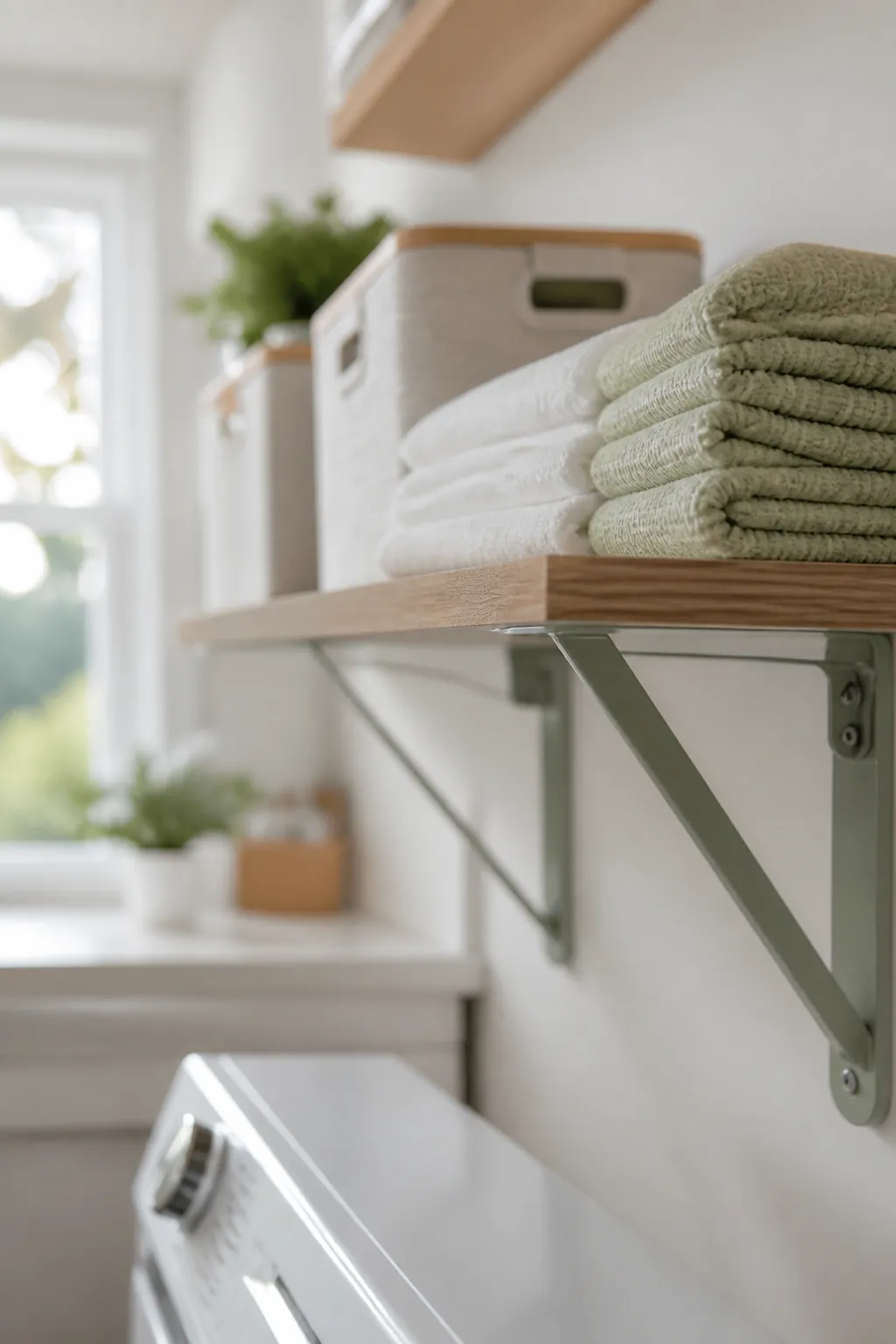
The over-the-washer shelf is built to mount above the appliance rather than balance on top of it, which matters here because nothing should ever rest directly on a dryer that vibrates during a spin cycle. Anchor it into studs above the unit, not into the dryer housing itself, and keep the front lip pulled back from the dryer door’s swing path so the door can open fully. Renters who can’t put a hole in the wall have a workaround: a freestanding shelf unit that straddles the machines on its own legs skips the studs entirely and lifts out clean on move-out day.
Load it with the things you touch every week or two: detergent refills, a stain kit, dryer sheets in bulk. Skip anything you need daily, since with 20 inches of headroom above the dryer, that shelf sits close to six feet off the ground for most people, high enough that grabbing something one-handed while holding a laundry basket isn’t realistic.
3. Respect the dryer door swing and the lint trap
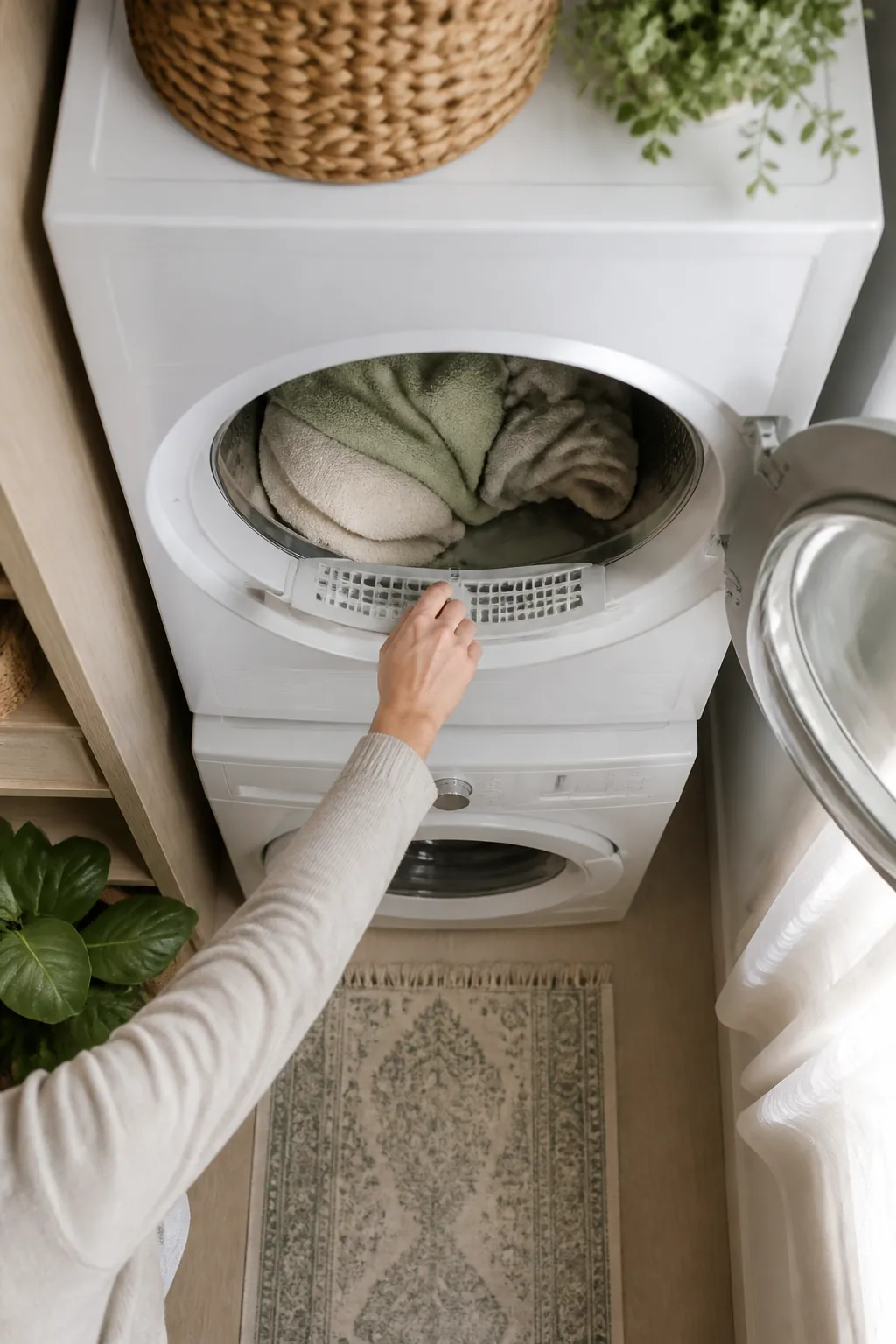
A front-load dryer door needs 20 to 24 inches of clearance to swing fully open, and the lint trap on most stacked dryers sits right at the top front edge of the drum, exactly where a shelf, a hanging organizer, or a stack of bins tends to end up. If you can’t open the door all the way or reach the trap without moving something first, that something is in the wrong spot.
This is worth checking before you mount anything, not after. Open the dryer door fully with nothing installed yet and mark where the door’s leading edge lands. Anything you add later goes above that line or well clear of it, never across it.
4. Keep daily items within reach of the washer door
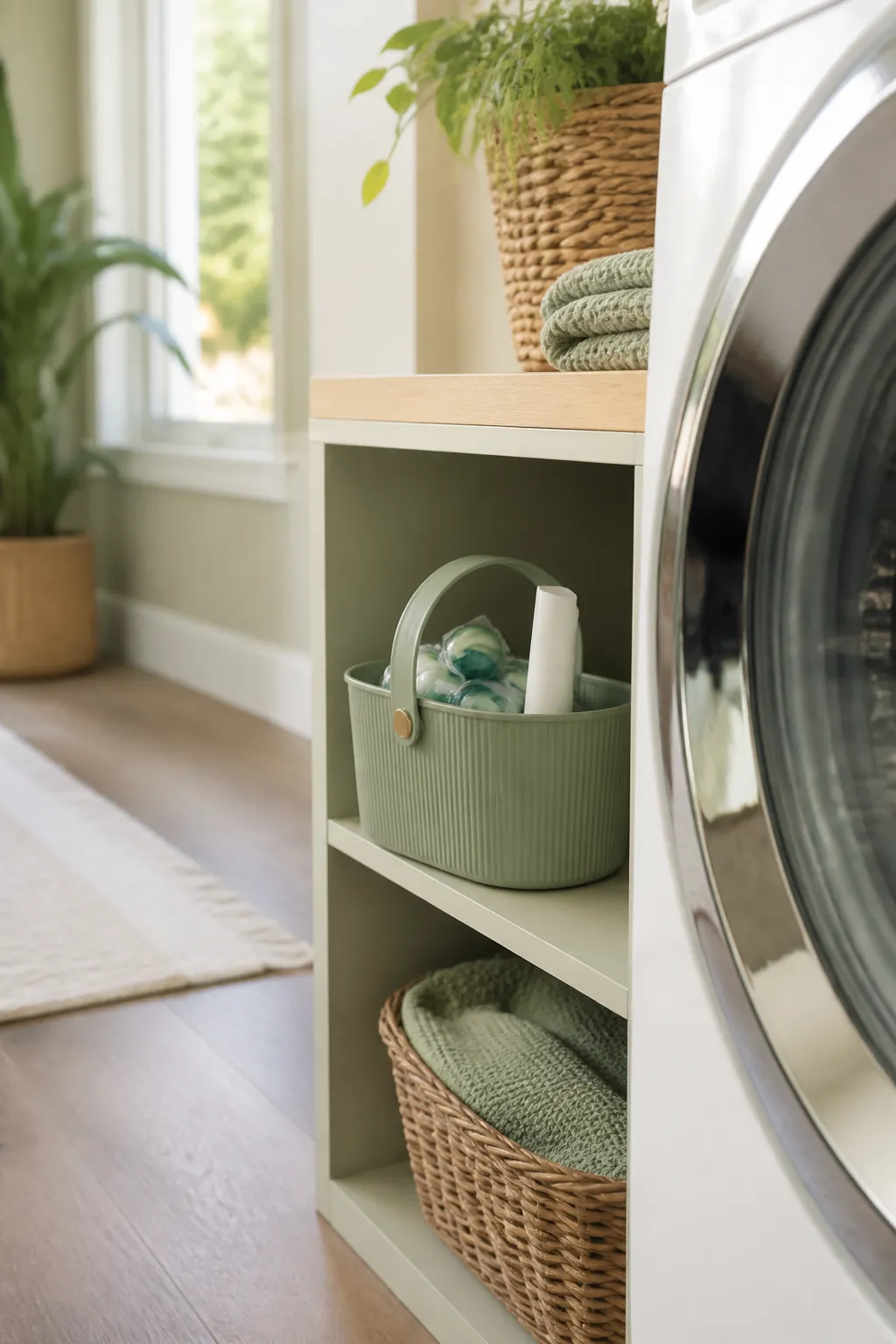
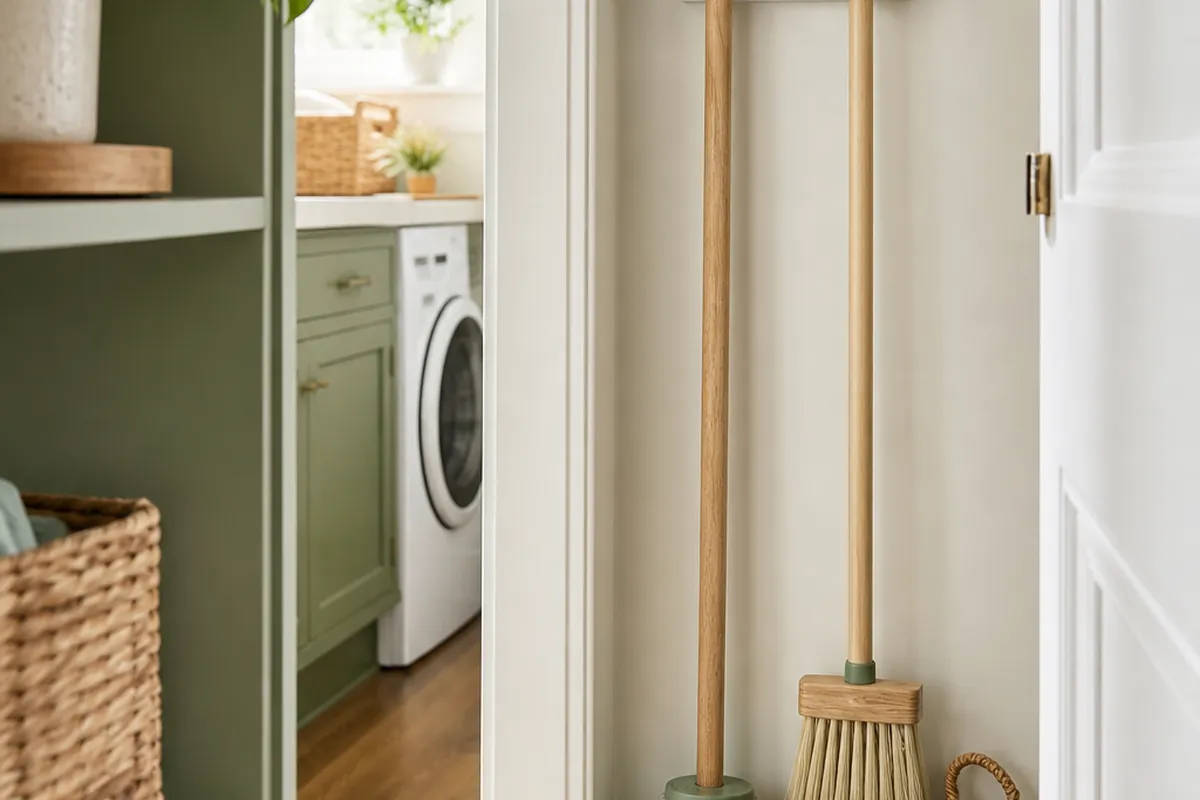
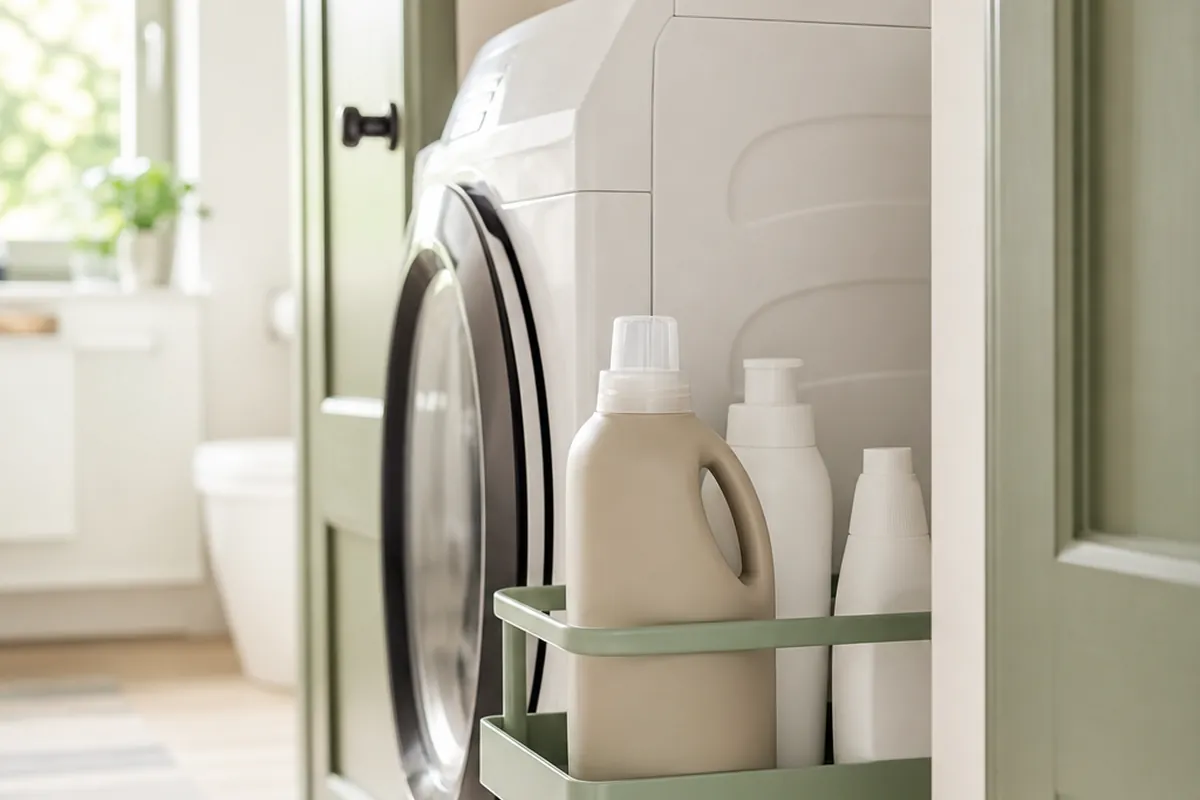
Unlike a side-by-side setup, a stacked washer sits at floor level, which means the door you open constantly is down low, not up at counter height. Put the things you reach for every load, pods, a stain stick, a small lint roller, close to that door instead of on the shelf above the dryer. A small shelf mounted at hip height beside the closet opening, or the stackable supply caddy with handle set on top of a low shelf or a nearby surface, both keep daily items at the height you’re already bending to.
The caddy earns its keep specifically because it travels. Carry it to a shared laundry room, a bathroom sink, wherever you’re actually doing the wash, then bring it back and set it down rather than trying to build a fixed shelf for every single item.
5. Use the side gap only if it’s real
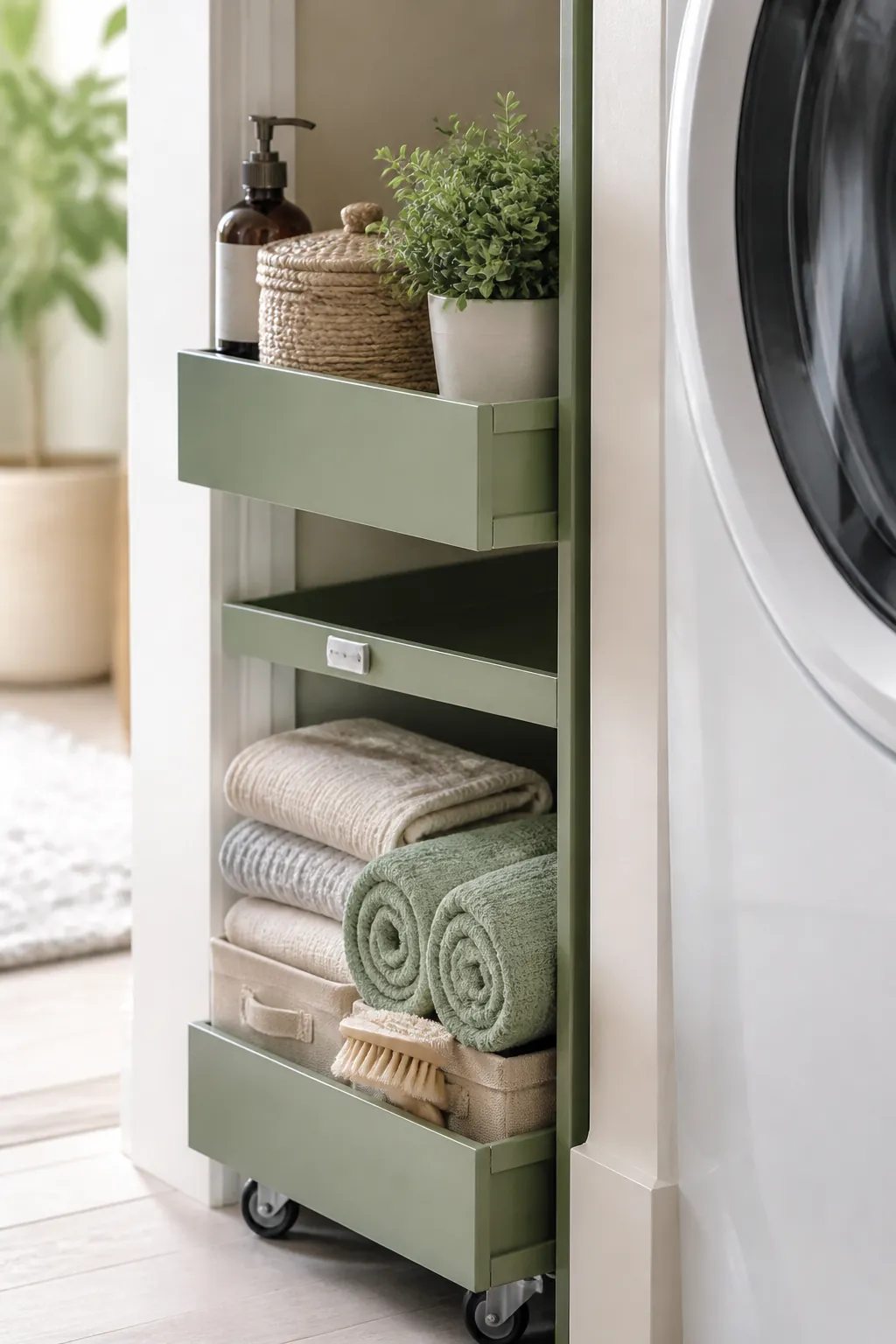
Some stacked closets leave two or three inches on either side of the unit. A lot leave less than one, because the closet was framed to the exact width of the appliance pair. Measure that gap before you buy anything for it. A slim rolling laundry cart needs at least six inches to roll in and out, so if your gap is narrower than that, don’t force it. Adhesive hooks on the side wall will hold small items without needing floor clearance at all.
If the gap really is wide enough, six inches or more, the cart becomes the spot for stain treatments, mesh bags, and wool dryer balls, everything you’d otherwise stack on top of the dryer where it just gets knocked over by the vibration.
6. When there’s no gap, look just outside the closet
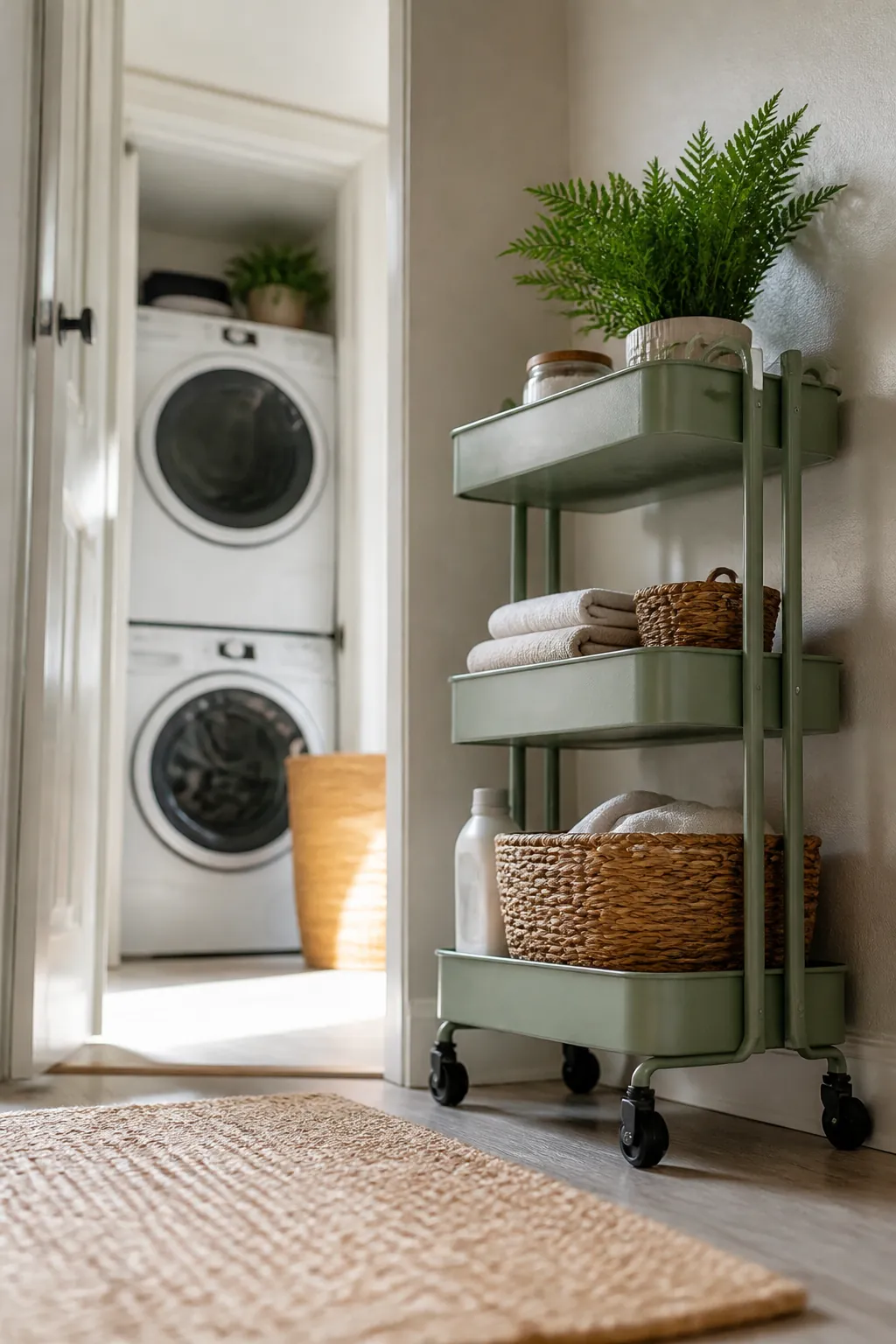
If the unit fills the opening edge to edge, stop trying to wedge storage into a column that has none to give. Move the rolling cart, a small shelf, or a wall-mounted caddy to the wall just outside the closet door instead. It’s a few steps farther from the machines, but a cart with real storage sitting in a hallway beats one crammed sideways into a gap that was never going to hold it steady.
This is also where a hanging rod or an over-the-door hook set earns its place, mounted on the outside face of the closet door rather than inside a column with no room to spare.
7. Turn the door into a second wall
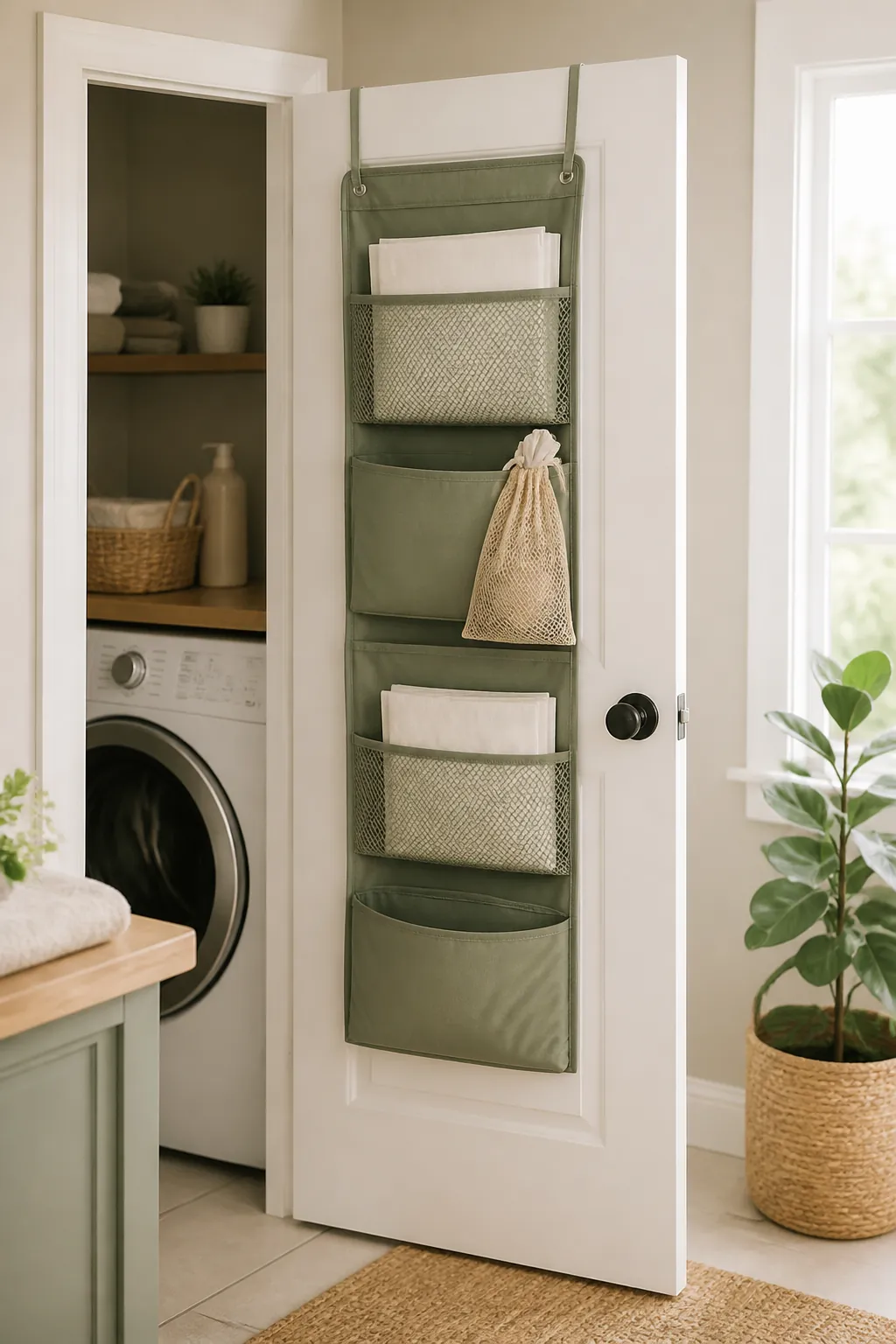
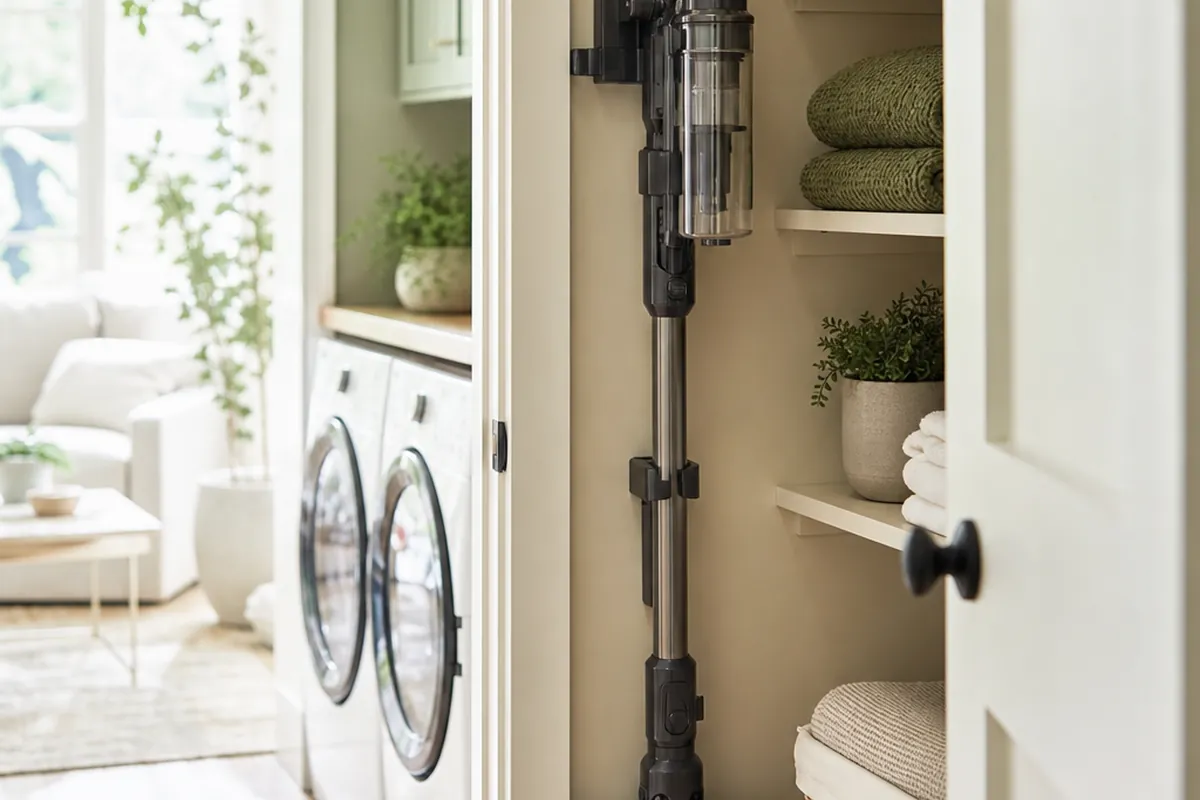
The inside of the closet door, if there is one, is flat vertical space that costs you nothing in floor or side clearance. A slim over-the-door organizer with pockets holds dryer sheets, stain pens, and a small bag for stray socks, all without touching the machines or the wall. Bifold doors are the exception: check how far they fold back against themselves before hanging anything with real depth, or the panels will jam on their own hardware.
Keep whatever you hang under about three inches deep so the door still closes flush against the frame. A door that won’t shut all the way defeats the point of using it for storage in the first place.
8. Protect the vent and the outlets from your own storage
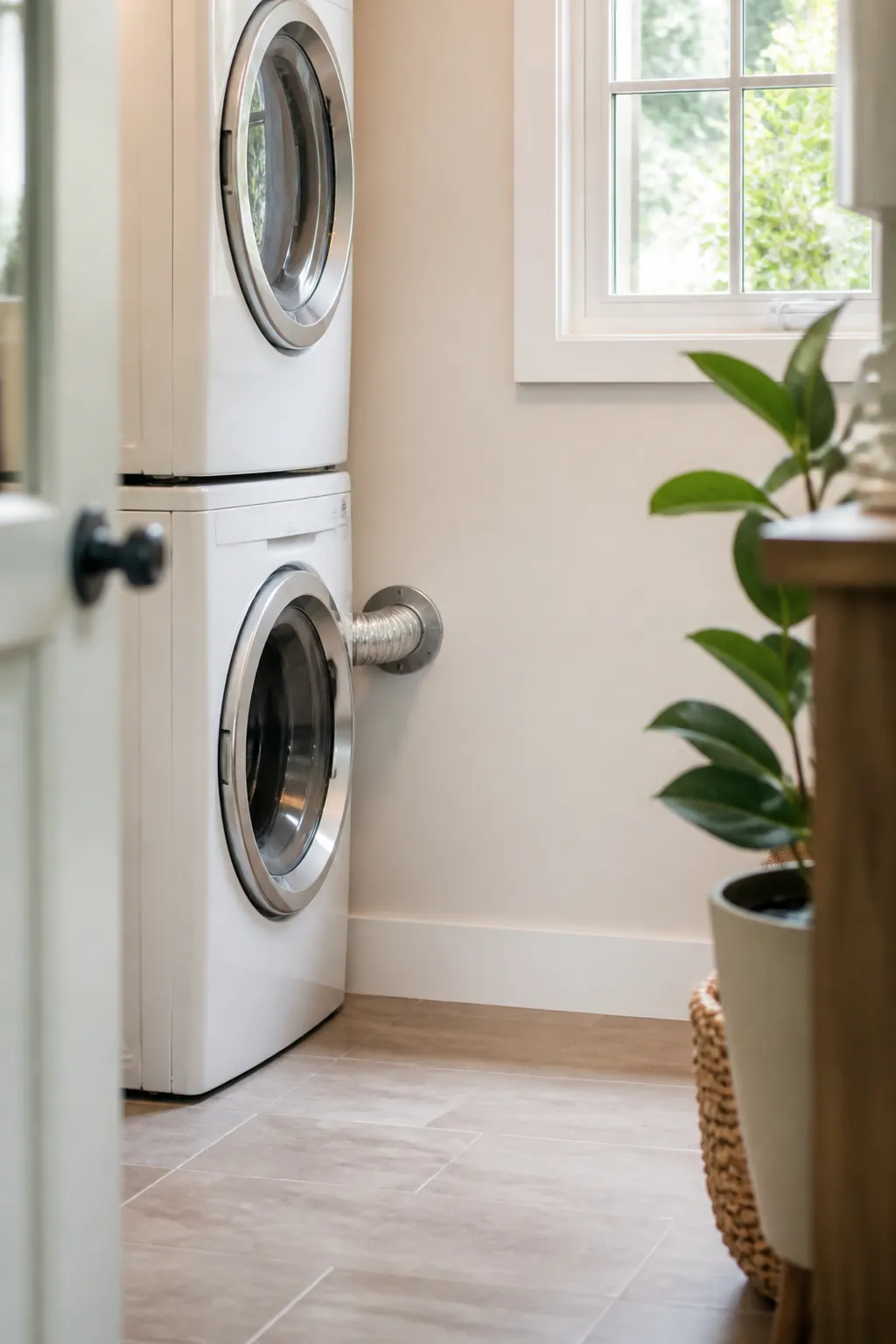
A dryer vent needs several inches of open space around the duct, both behind the unit and wherever it exits the wall. Bins, hampers, and boxes have a way of migrating toward that gap because it looks empty, but a crushed or blocked vent is a fire risk, not a storage opportunity. The same goes for the outlet the dryer plugs into: leave it reachable in case you ever need to unplug the unit quickly.
Walk the full perimeter of the closet once everything is installed and confirm nothing, not a shelf bracket, not a hanging bag, sits within a few inches of the vent duct or covers the outlet.
9. Solve the reach problem at the top
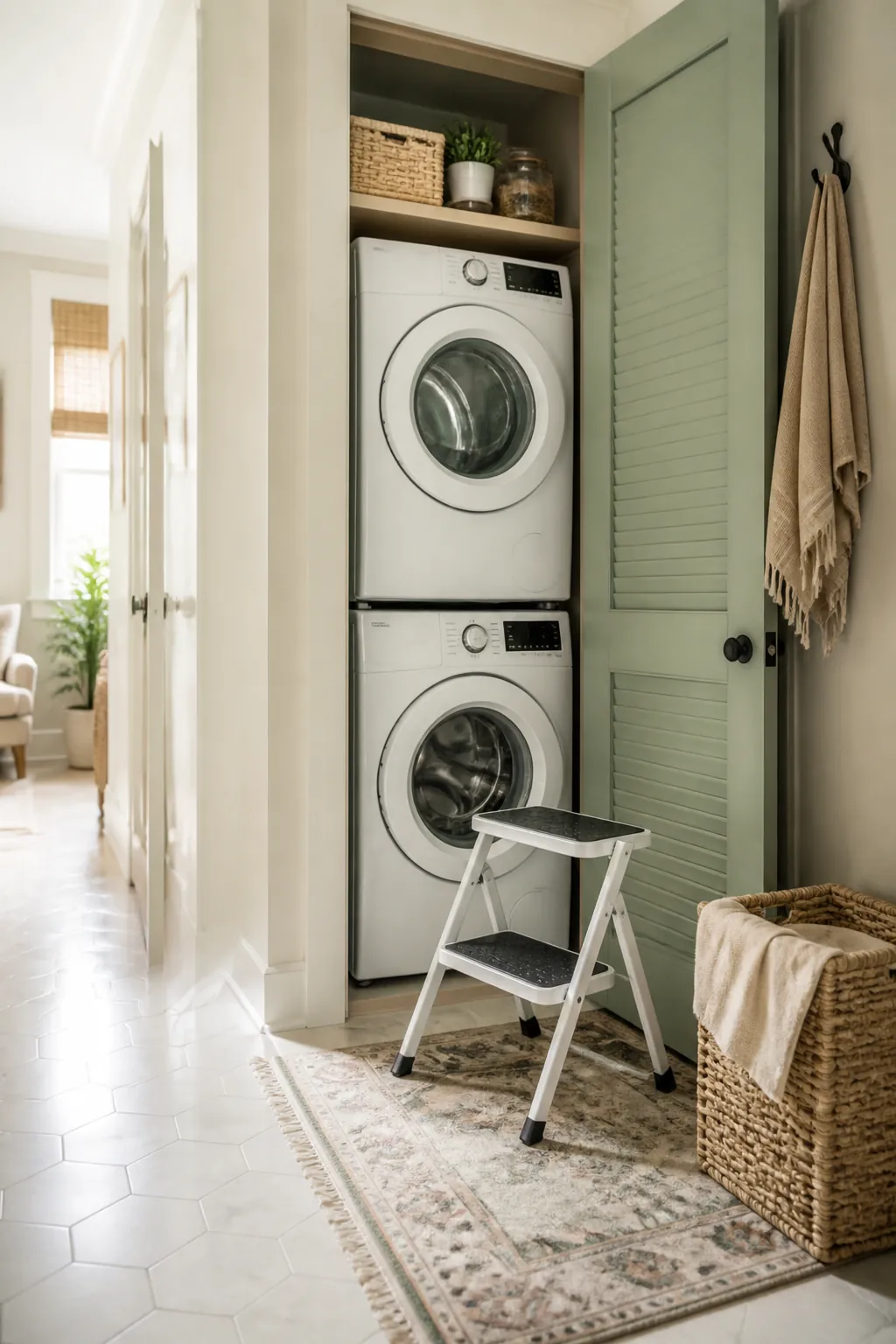
Even with a well-placed shelf, a stacked unit puts the top several feet off the ground, higher than most side-by-side setups. If you’re not tall enough to see what’s on that shelf without stretching, a small folding step stool that lives just inside or beside the closet solves this better than constantly climbing on the washer’s edge, which isn’t rated to be stood on and will eventually crack the top panel or scratch the finish.
Store the stool itself somewhere it doesn’t become one more thing crowding the narrow floor space, a nearby closet, a hook on the back of the laundry door, anywhere it’s out from underfoot but still within reach when you need it.
Where to start
Measure the closet’s real leftover space first, the overhead height and the side gaps, since a stacked unit rarely gives you both. Mount the over-the-washer shelf into studs, keep it clear of the dryer door’s swing, and load it with things you don’t need daily. Put a caddy or a low shelf near the washer door for everything you do reach for constantly. Use the side gap only if it’s genuinely wide enough for a rolling cart, and move storage just outside the closet if there’s no gap at all. Add door storage last, keep it shallow, and never let anything creep toward the vent. None of this requires a renovation, just an honest look at how little space a single-column laundry closet actually has to give.