A narrow laundry room is a corridor that happens to contain a washing machine, and it fails differently from a small square one.
In a small square room you run out of storage. In a narrow one you run out of walkway, which is worse, because the room stops working entirely rather than just getting full. Put a basket down in a corridor and you have to turn sideways to get past it. Put shelves on both walls and two people can no longer be in there at once.
The ideas below all follow from one rule: in a narrow room, floor is expensive and height is free. Almost every fix moves something off the floor or onto a wall you were not using.
1. Measure the walkway, then protect it
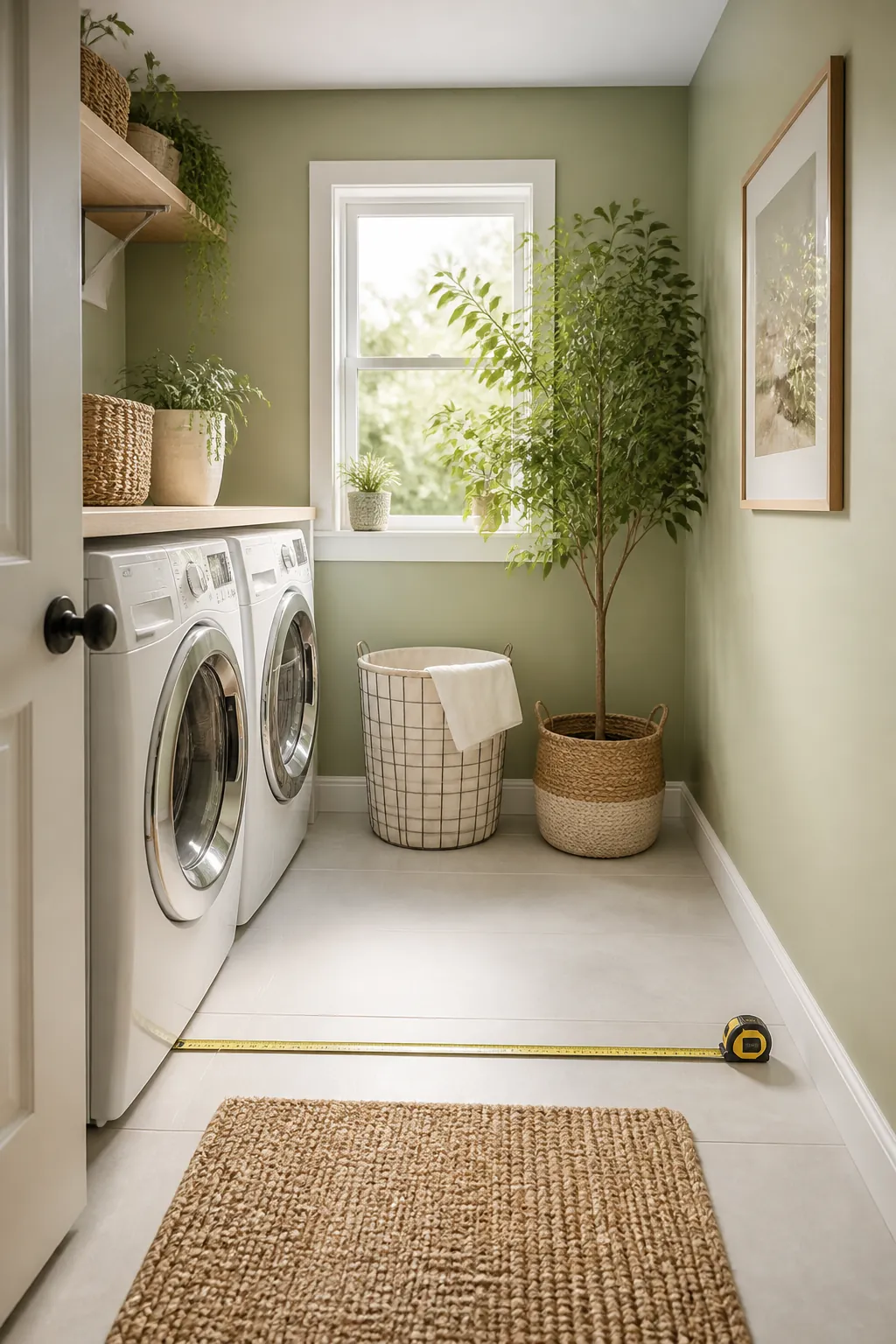
Before deciding anything else, find the number you cannot go below.
Roughly 30 inches lets a person walk through comfortably. Around 36 lets them walk through carrying a full basket without turning. Measure from the furthest projecting thing, which is usually a machine door at full swing rather than the machine body.
Write that number down and treat it as fixed. Every storage decision after this is spending the space that is left over, and a narrow room only has one chance to get this wrong.
It is worth checking the number with a laundry basket actually in your hands rather than a tape measure alone. A basket held at the hip is wider than a person, and the width that feels generous when you are empty handed is the width you turn sideways in on the one trip that matters.
2. Storage on one long wall, nothing on the other
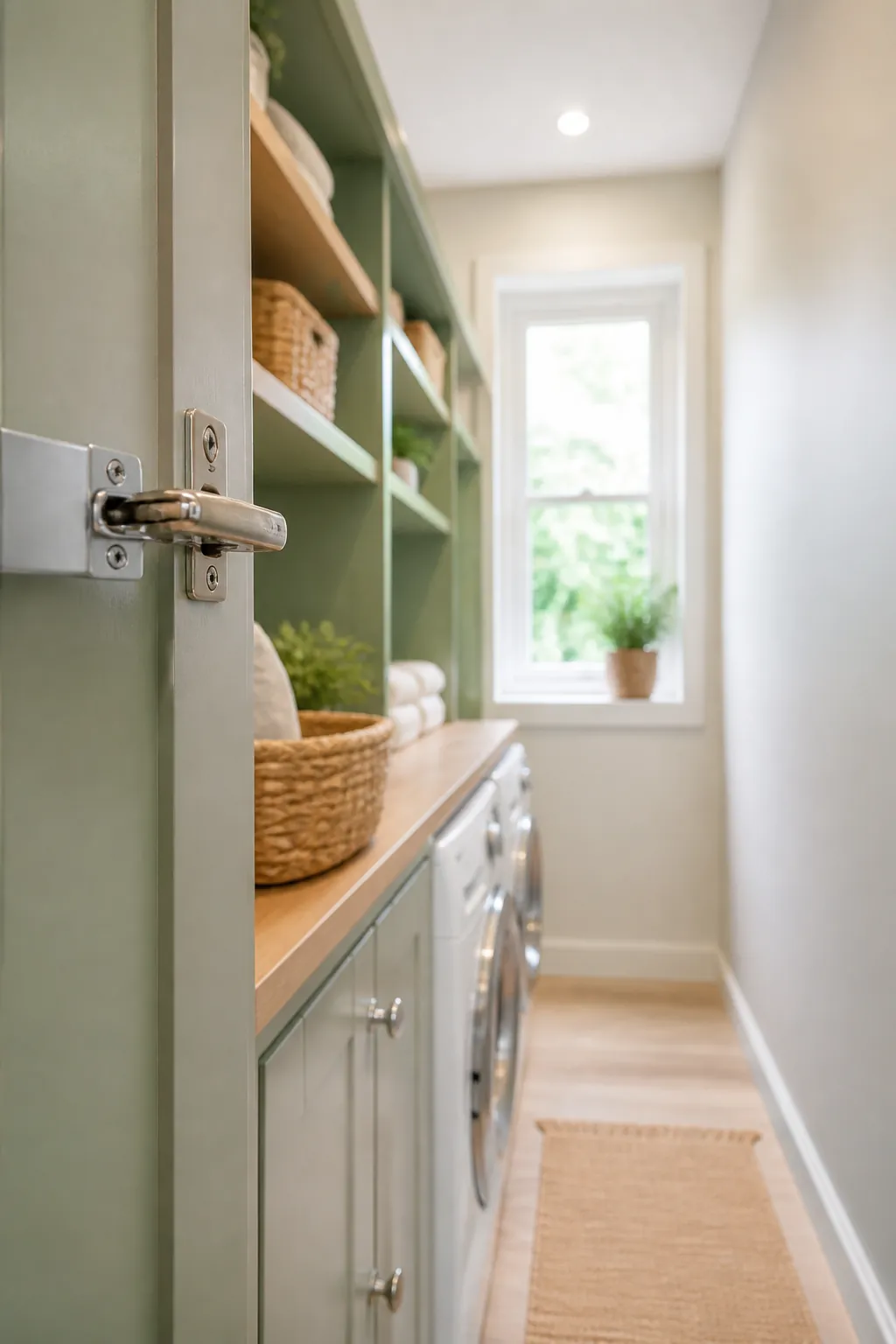
The instinct is to line both long walls with shelving, since both are equally empty. In a narrow room that is the decision that ruins it.
Storage on one wall keeps a clear run down the other, so the room still reads as a passage. Storage on both turns it into a squeeze, and a squeeze is a room people stop putting things away in.
Pick the wall the machines are already on. That way the working half of the room is all in one place and the other half stays a walkway.
There is a second reason to keep one wall bare. A narrow room reads as wider when the eye has an uninterrupted run down one side, so the clear wall is doing visual work as well as practical work. Painting it the same color as the ceiling exaggerates the effect for the price of a tester pot.
3. The gap beside the machines is the best space in the room
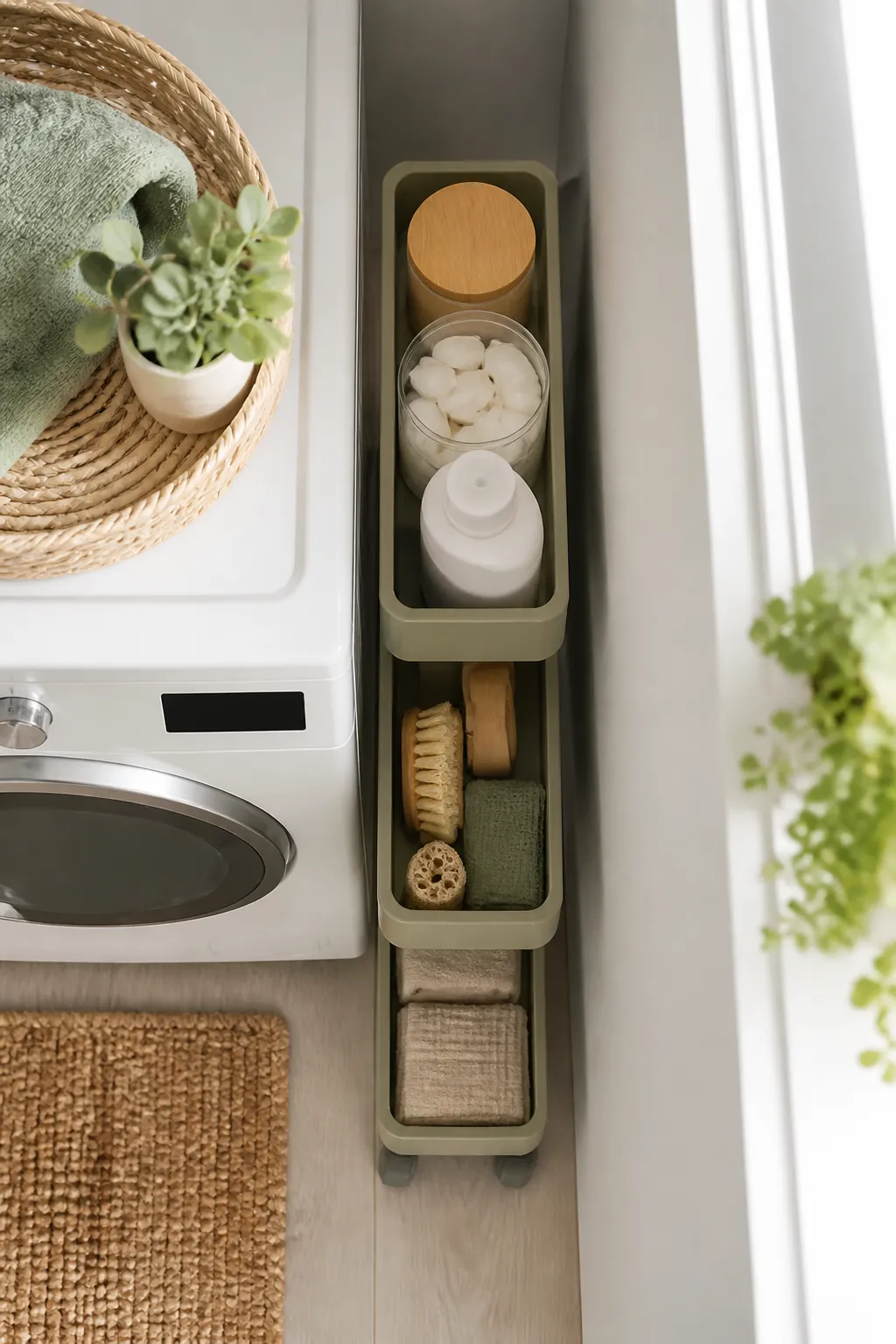
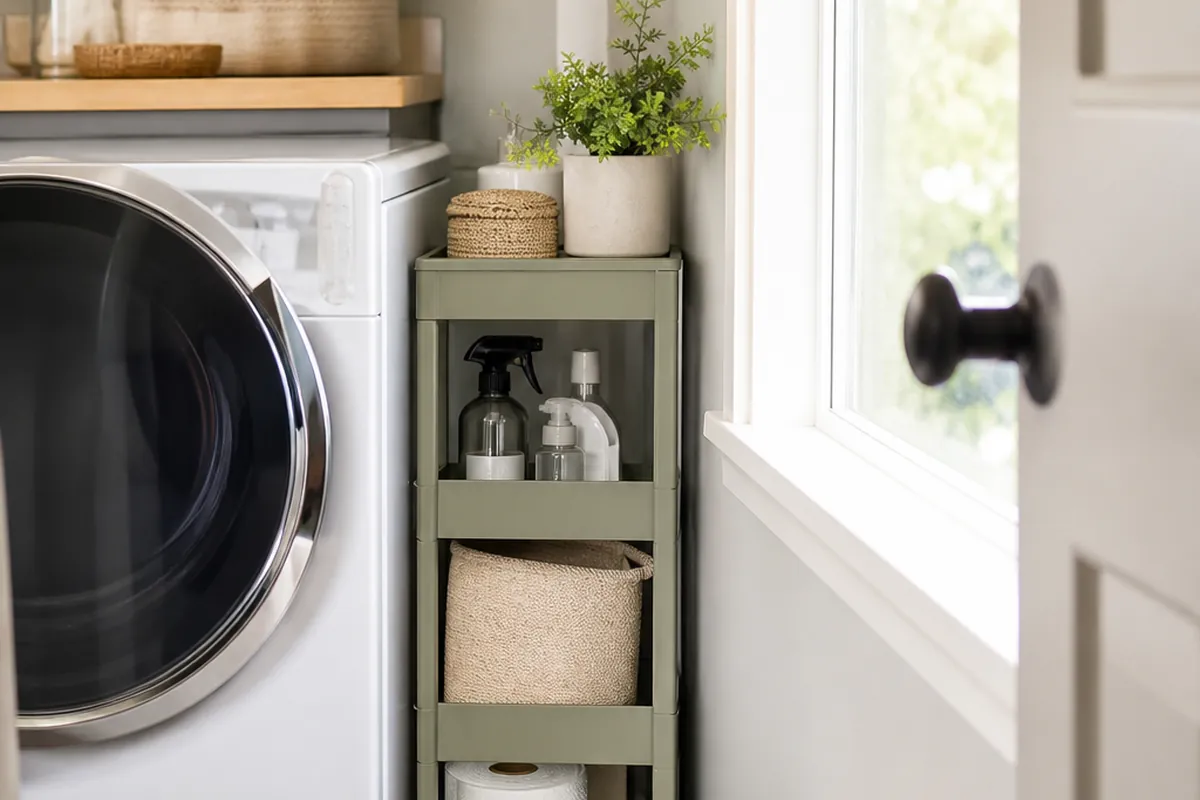
Almost every narrow laundry room has a slot of four to ten inches beside or between the machines that holds nothing.
That slot is ideal for a three tier rolling cart. It parks flush, swallows far more than it looks like it should, and rolls out to wherever you are standing rather than making you reach into a gap.
Load it by weight rather than by category: detergent and bulk on the bottom so it does not tip when it is pulled out, everyday supplies in the middle, small items on top. Measure the gap at its tightest point, usually the door architrave, and buy an inch under it.
Check what the wheels will run on before committing. A cart with small hard castors crosses tile and vinyl happily and stalls on anything with a lip, so if there is a threshold strip between the laundry room and the hallway, either choose larger wheels or accept that the cart lives on one side of it.
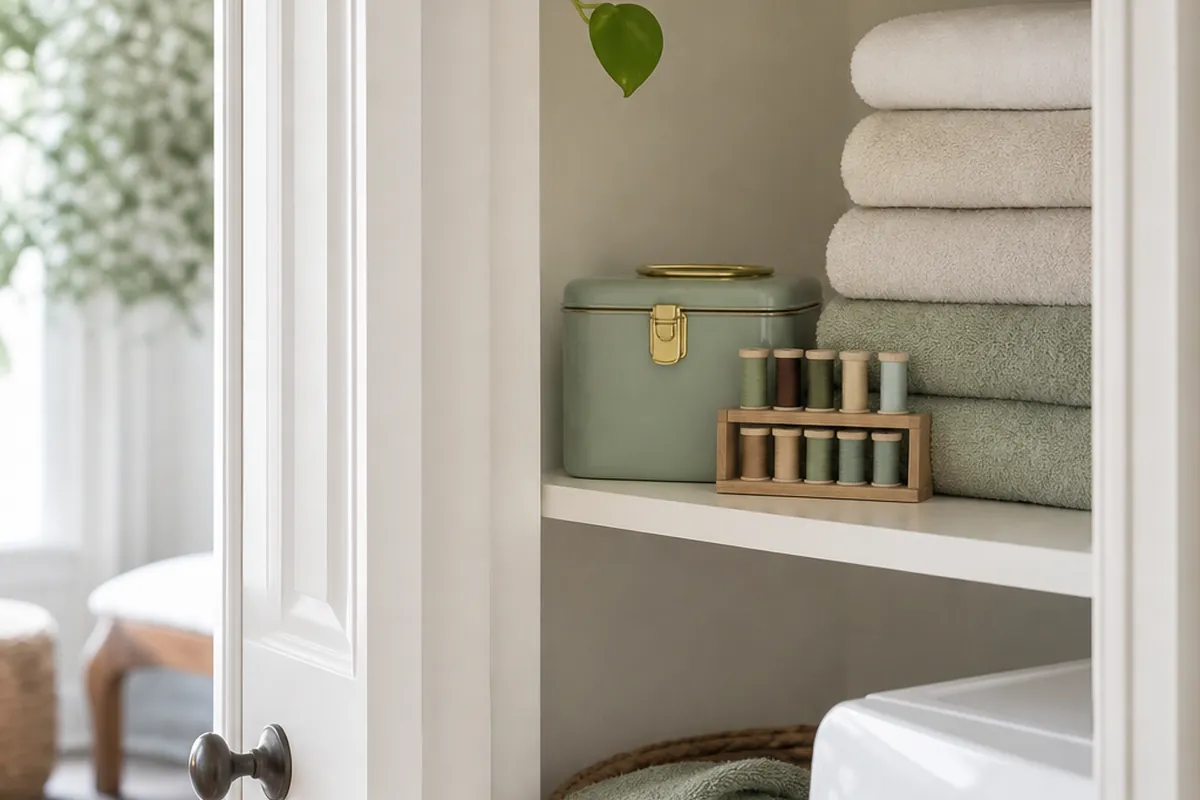
4. Floating shelves cost no floor at all
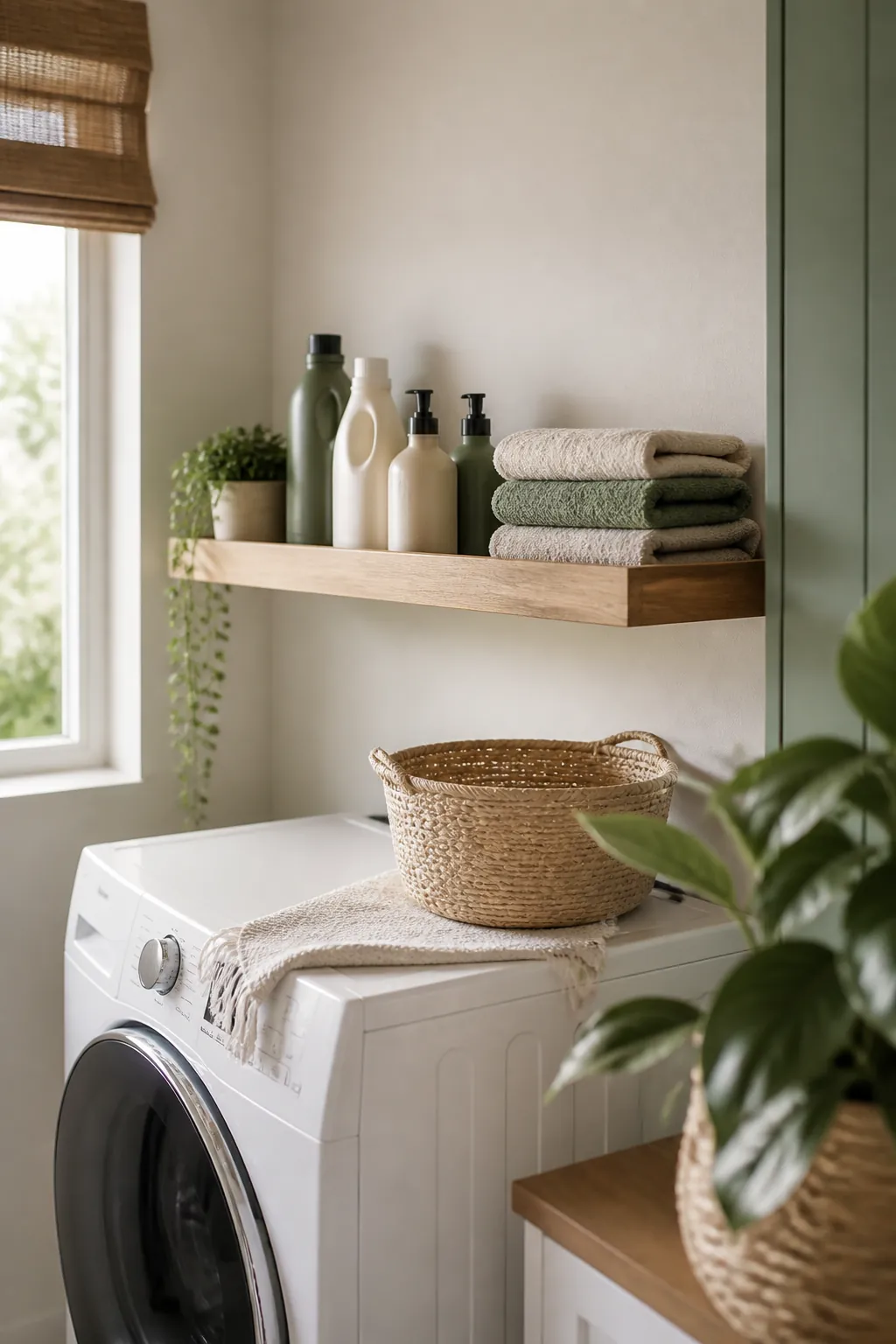
In a room where floor is the scarce resource, the shelf that touches no floor is worth more than the cabinet that does.
A floating wall shelf with a front lip gives a real surface and leaves the space beneath it free for a basket. The lip does more work than it appears to: it stops a bottle sliding off when the wall gets a knock, and it lets you get away with a shallower shelf than instinct suggests.
Six to eight inches of depth is plenty for detergent and folded towels. Going deeper is the trap, because a deep shelf in a narrow room both eats walkway and invites you to store things behind other things.
5. Use the height above the machines
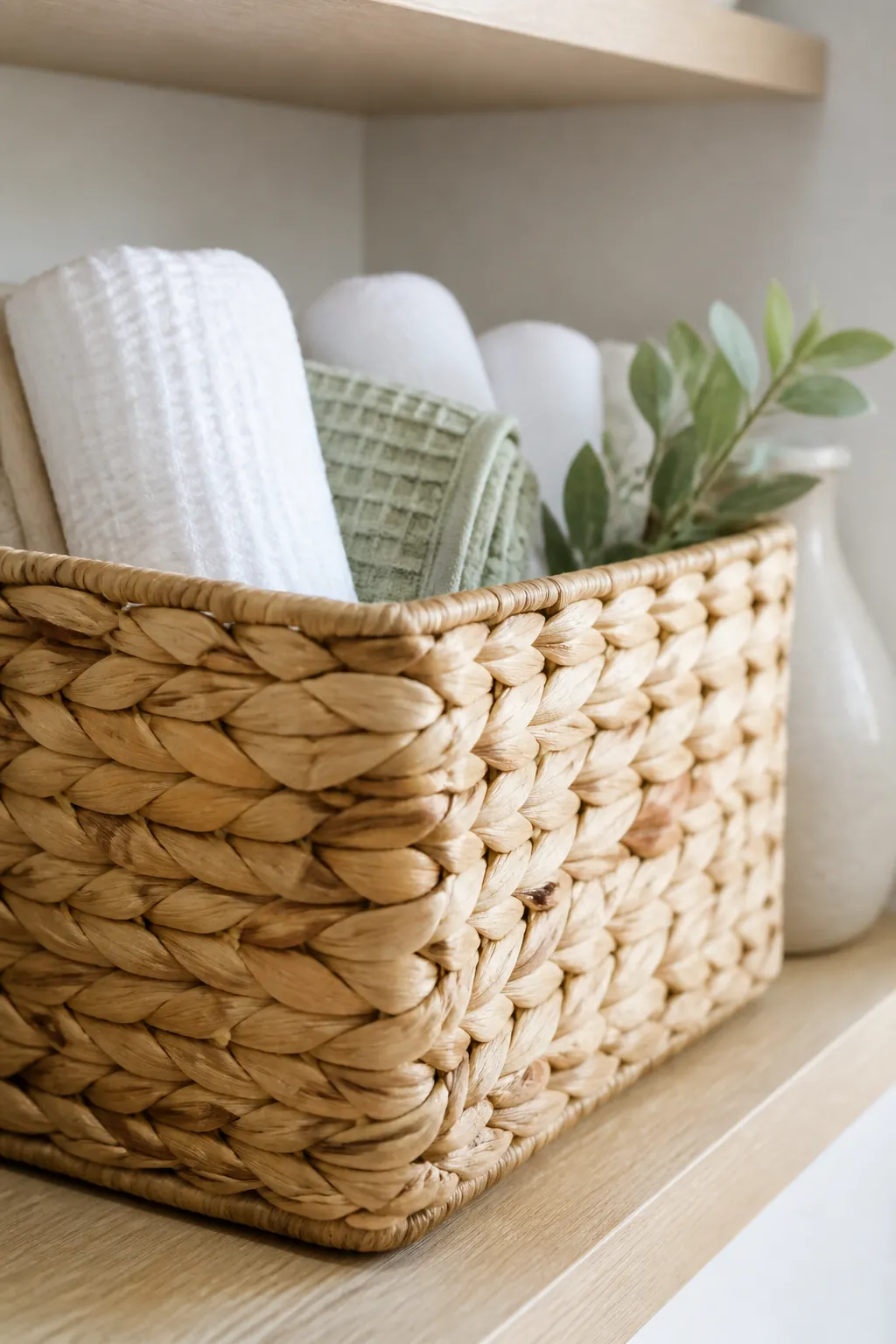
The volume above a washer and dryer is usually two or three feet tall and almost always empty.
In a narrow room this is the only place you can add serious capacity without spending floor, so it is where the bulk should go: spare detergent, the box of pods, the things bought quarterly rather than used weekly.
Measure with the machine open. On a top loader the number is the lid at full swing, and on a front loader it is the door arc. A shelf that clears a closed machine and fouls an open one is a mistake you discover on wash day.
Keep what goes up there genuinely light. Anything stored above a machine has to be lifted down over a hard surface, and a heavy box retrieved at arm’s length above a washer is how lids get chipped. Bulk that is light for its size, such as boxes of pods or spare bedding, is the right occupant.
6. Deep and narrow beats wide and shallow
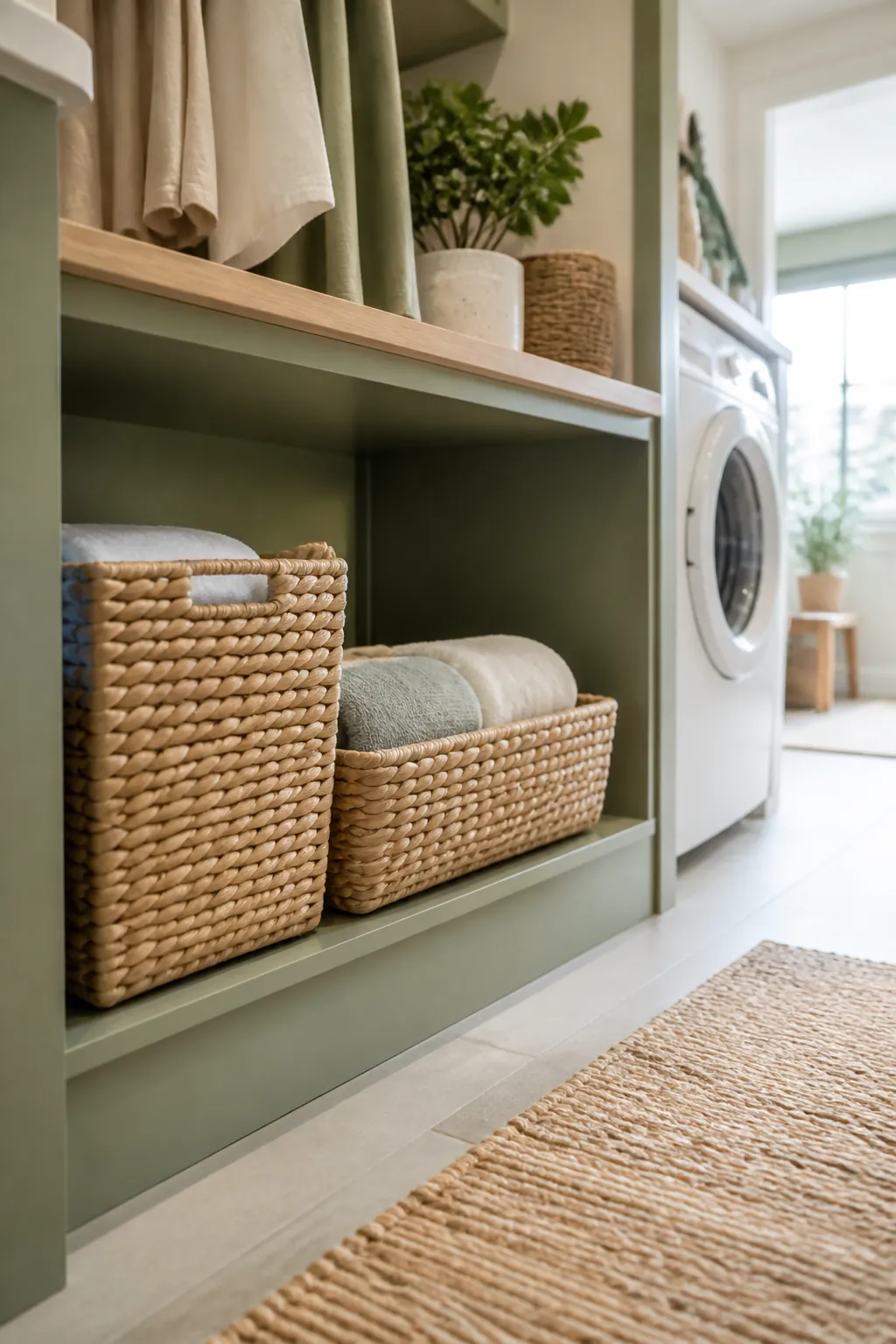
Basket shape matters more in a corridor than anywhere else in the home.
A woven storage basket that is deep and narrow, about 6.7 inches wide by 16 long, fits the strip beside a machine and holds a surprising amount vertically. The same capacity in a wide shallow basket sits across the walkway and gets kicked.
This is the general rule for the room. Where a normal space rewards spreading things out, a narrow one rewards stacking them up, so favour tall containers over wide ones every time there is a choice.
The limit is reach. A container tall enough that you cannot see into it from standing becomes a place things are dropped rather than stored, so keep the tallest baskets at floor level where you look down into them, and use shorter ones on shelves at eye height.
7. The doors are the last flat surfaces
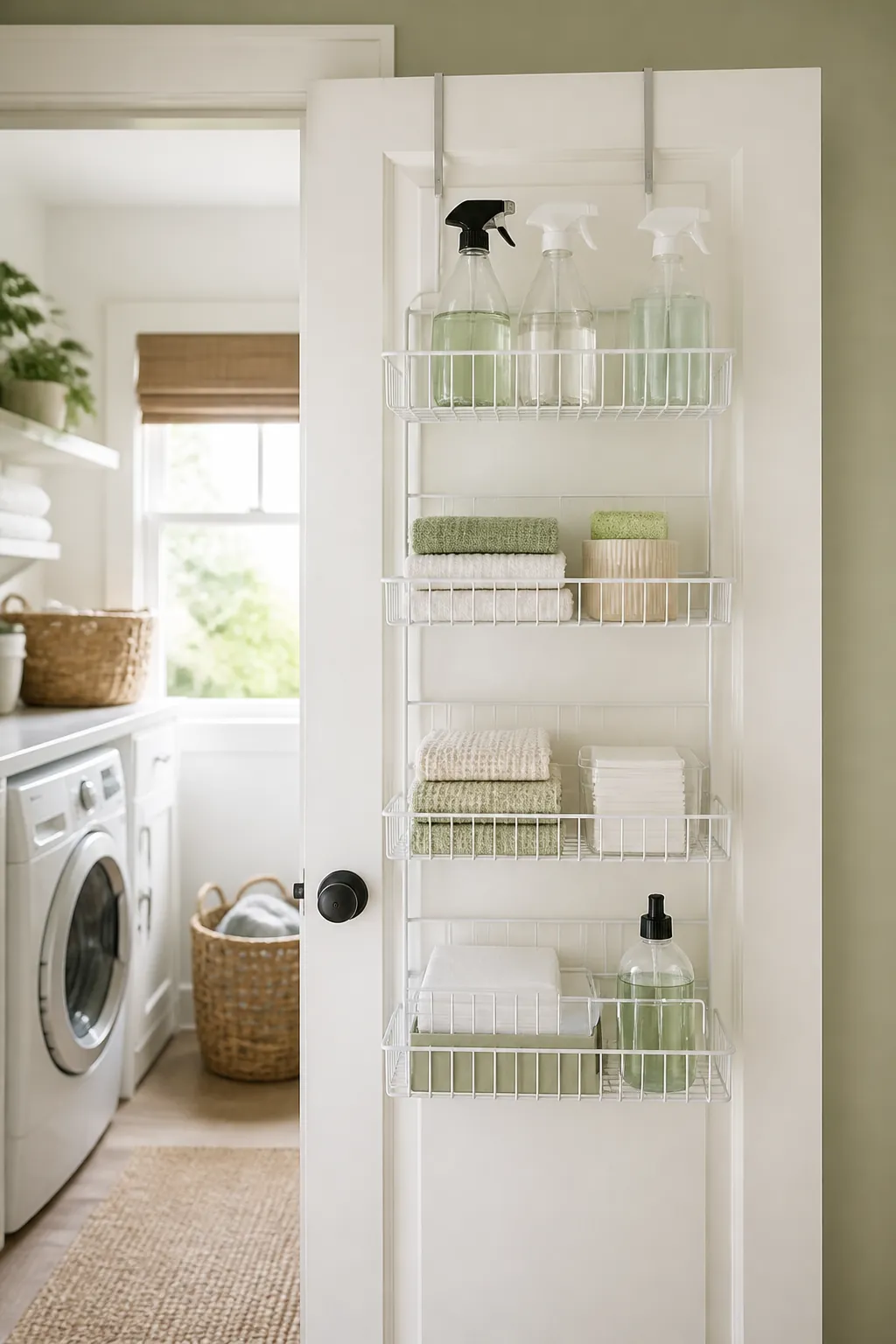
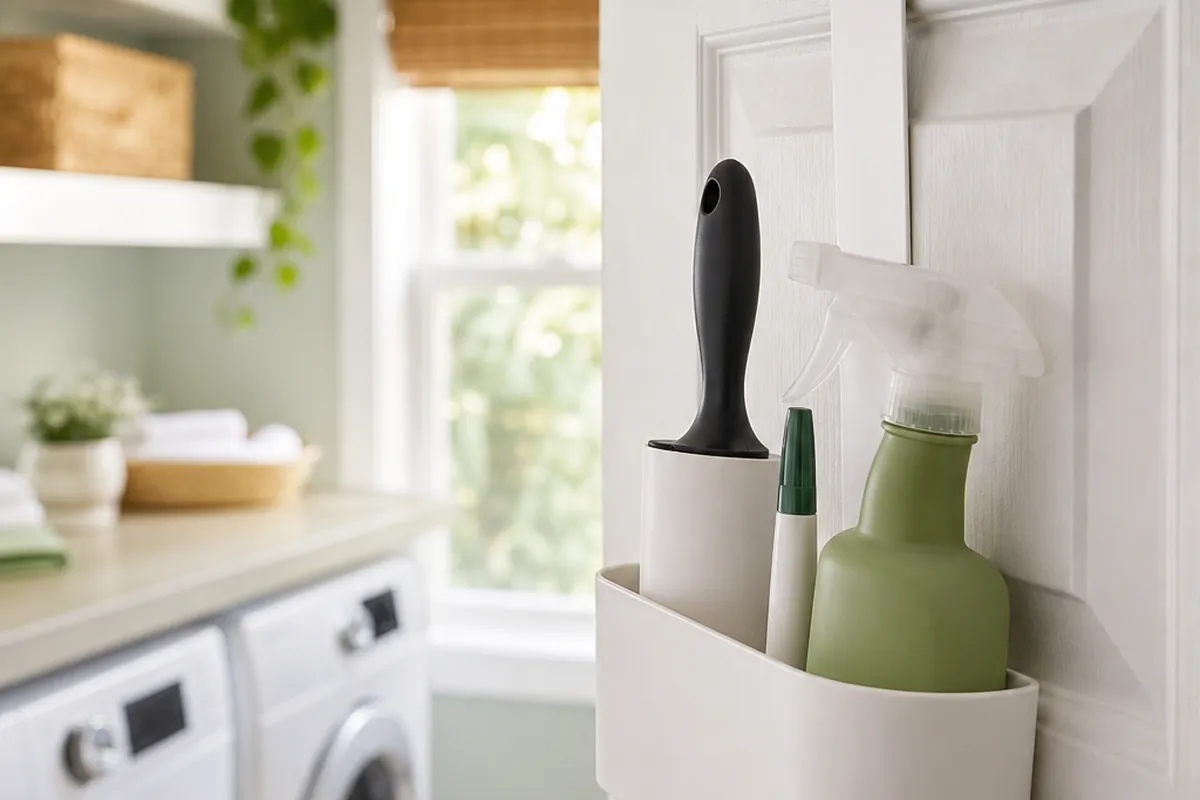
A narrow room usually has a door at one or both ends, and those are full sheets of vertical surface that belong to nobody.
Over the door racks with shallow baskets take the light flat things: cloths, dryer sheets, stain pens, gloves. Keep the depth genuinely shallow, since a door that hits a machine when it opens is worse than no storage.
If the room doubles as the cleaning closet, the same door is the natural home for sprays and brushes, which is the approach in cleaning supplies organization for a tiny utility closet.
8. Wall mount the drying rack
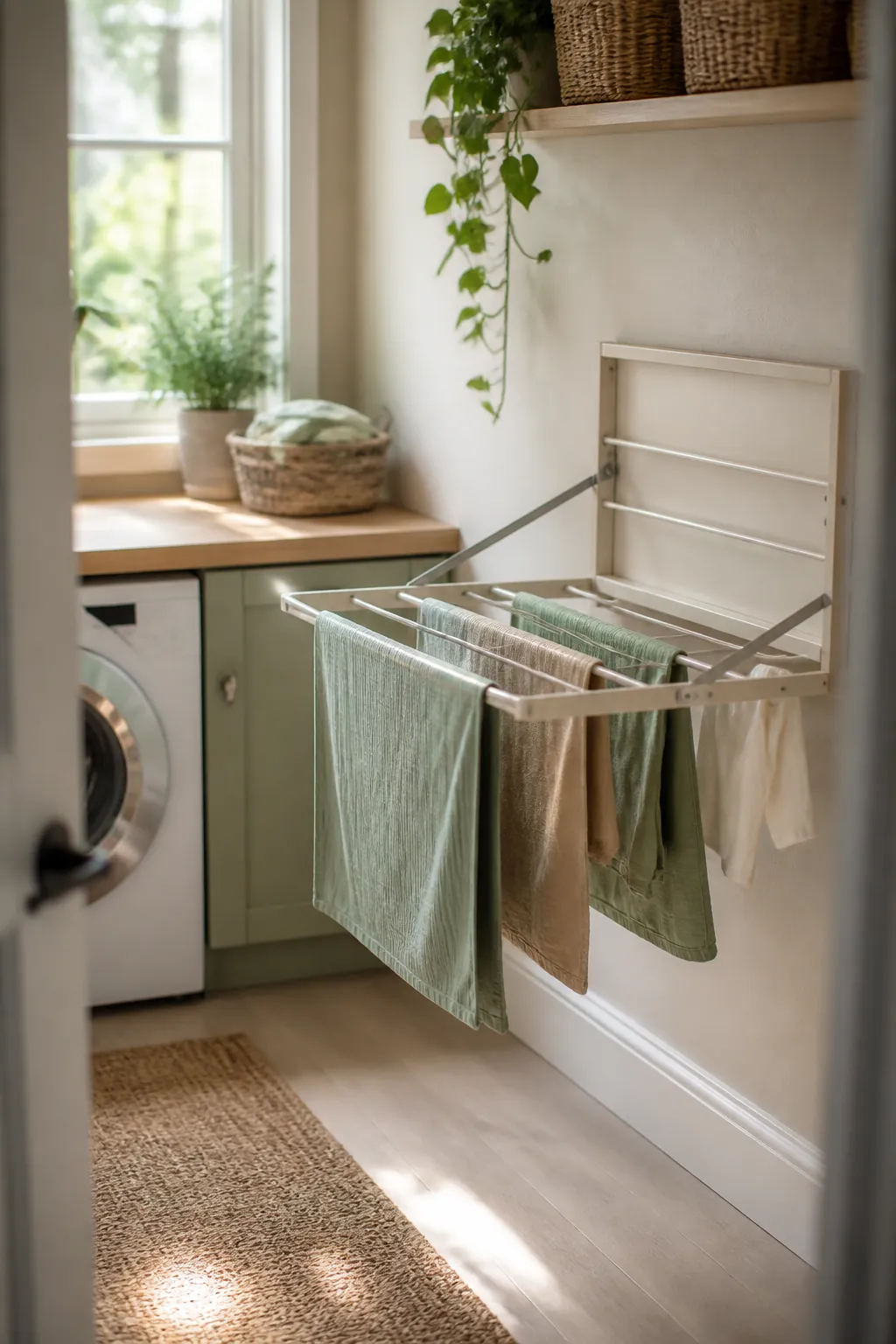
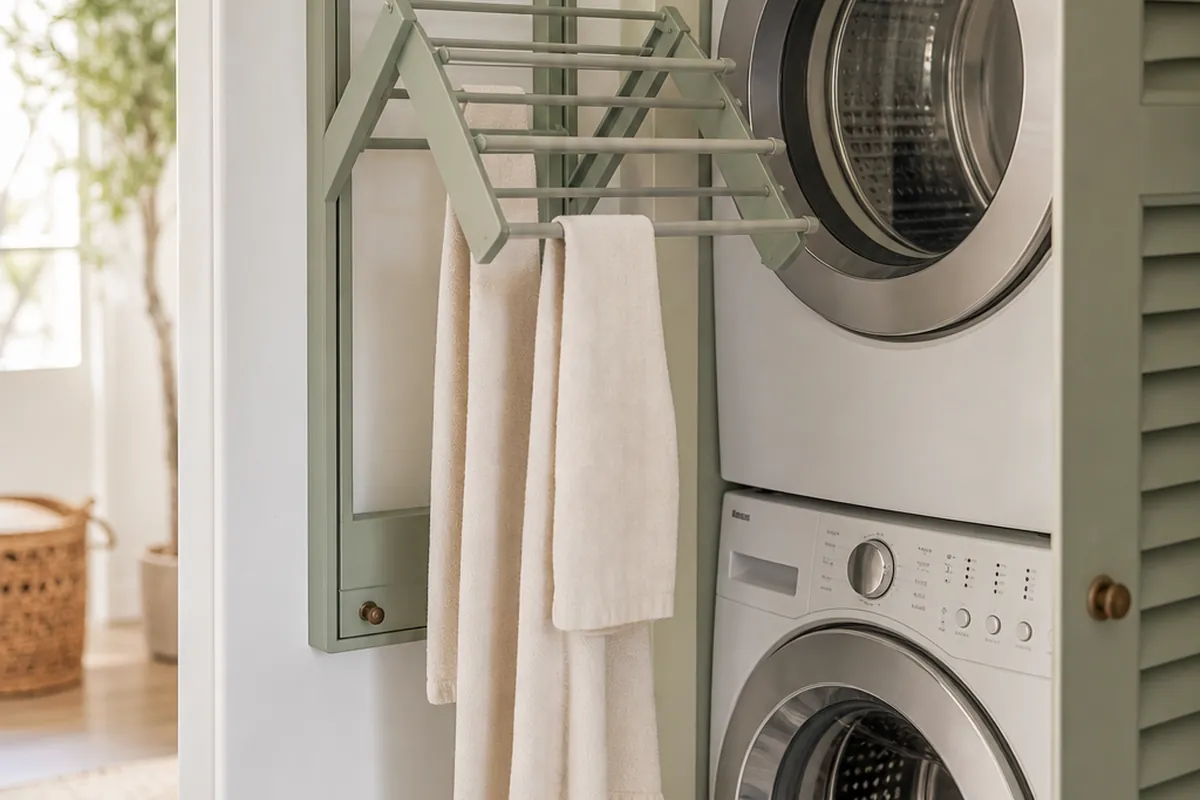
Drying is what most often makes a narrow laundry room unusable, because a floor standing airer occupies the entire walkway for a day and a half.
A wall mounted folding rack solves it by living flat against the wall at about an inch deep and swinging out only while it is in use. Mount it on the storage wall rather than the clear one, and high enough that a hanging shirt does not brush the machines.
If space allows only one wall fixing in the whole room, this is often the one worth spending it on. It buys back the floor on the days the room is under most pressure.
9. Light the far end
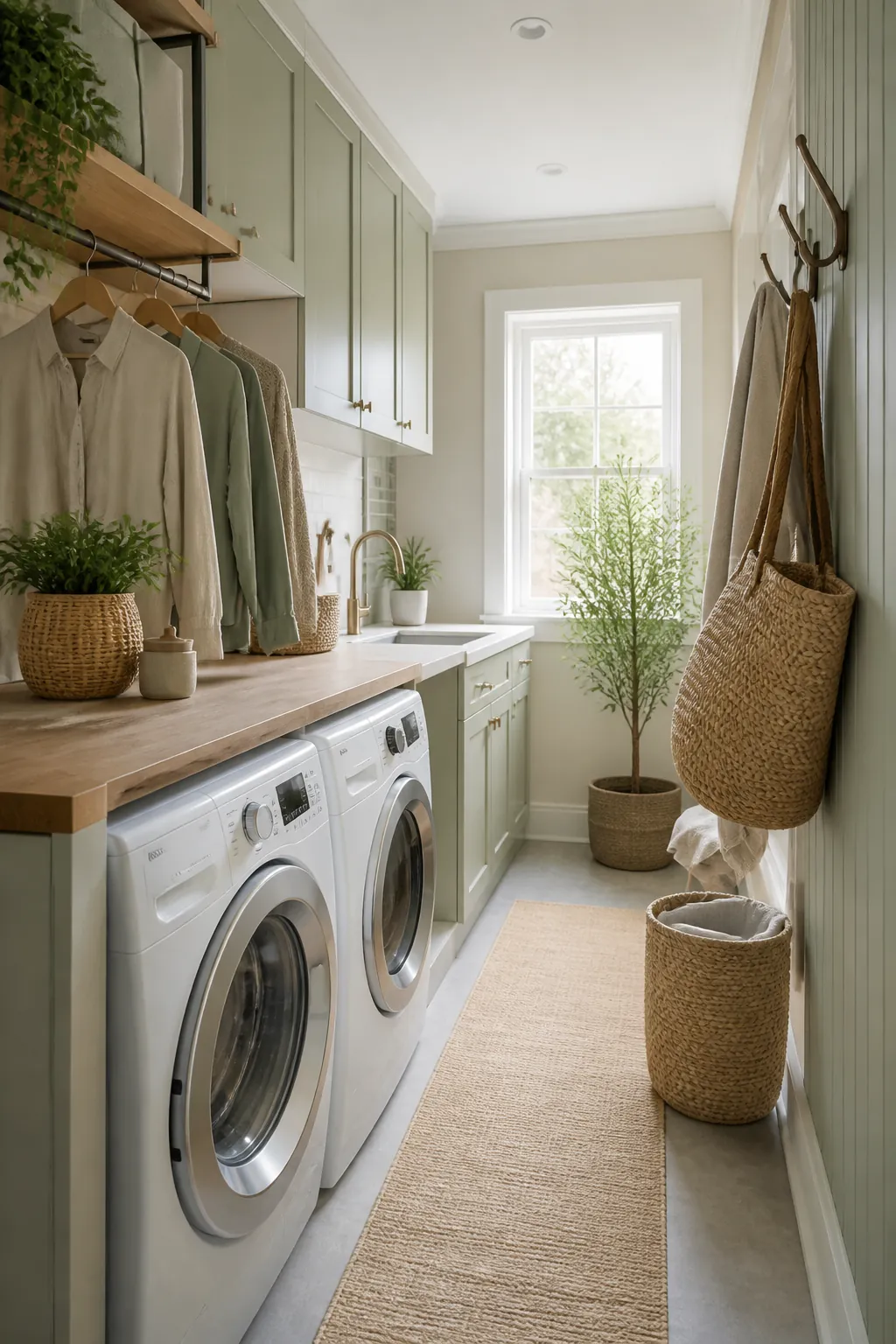
The last one is not storage, and it changes the room more than any single shelf.
Narrow rooms are usually lit by one fitting near the door, which leaves the far end dim. A dim far end stops being used, so everything migrates toward the entrance and the room feels shorter and more crowded than it is.
A cheap battery strip or a plug in light at the far wall pulls the whole length back into use. For the layout once the room is lit and cleared, laundry room organization ideas for a tiny space covers the arrangement, and small laundry closet organization covers the version where the room is really a closet.
Floor is the budget
A narrow laundry room does not need less stuff than a square one. It needs the same stuff kept off the floor.
One wall for storage and one kept clear, the gap beside the machines working, shelves that float, baskets taller than they are wide, and the drying on the wall rather than in the walkway. Protect the walkway number and the room will take everything you need it to.