Mail and magazines share a small living room’s worst habit: they land on whatever surface is closest and stay there. A coffee table that was clear on Monday is carrying three catalogs, a utility bill, and last month’s magazine by Thursday, and none of it arrived at once. It arrived one piece at a time, each piece too small to bother sorting, until the pile was too big to ignore.
The fix is not a bigger basket. It is catching the paper closer to the door than the sofa, and giving magazines a container that has a bottom you can see. Ten ideas below, roughly in the order they stop the most paper from reaching the coffee table in the first place.
1. Catch mail before it reaches the living room
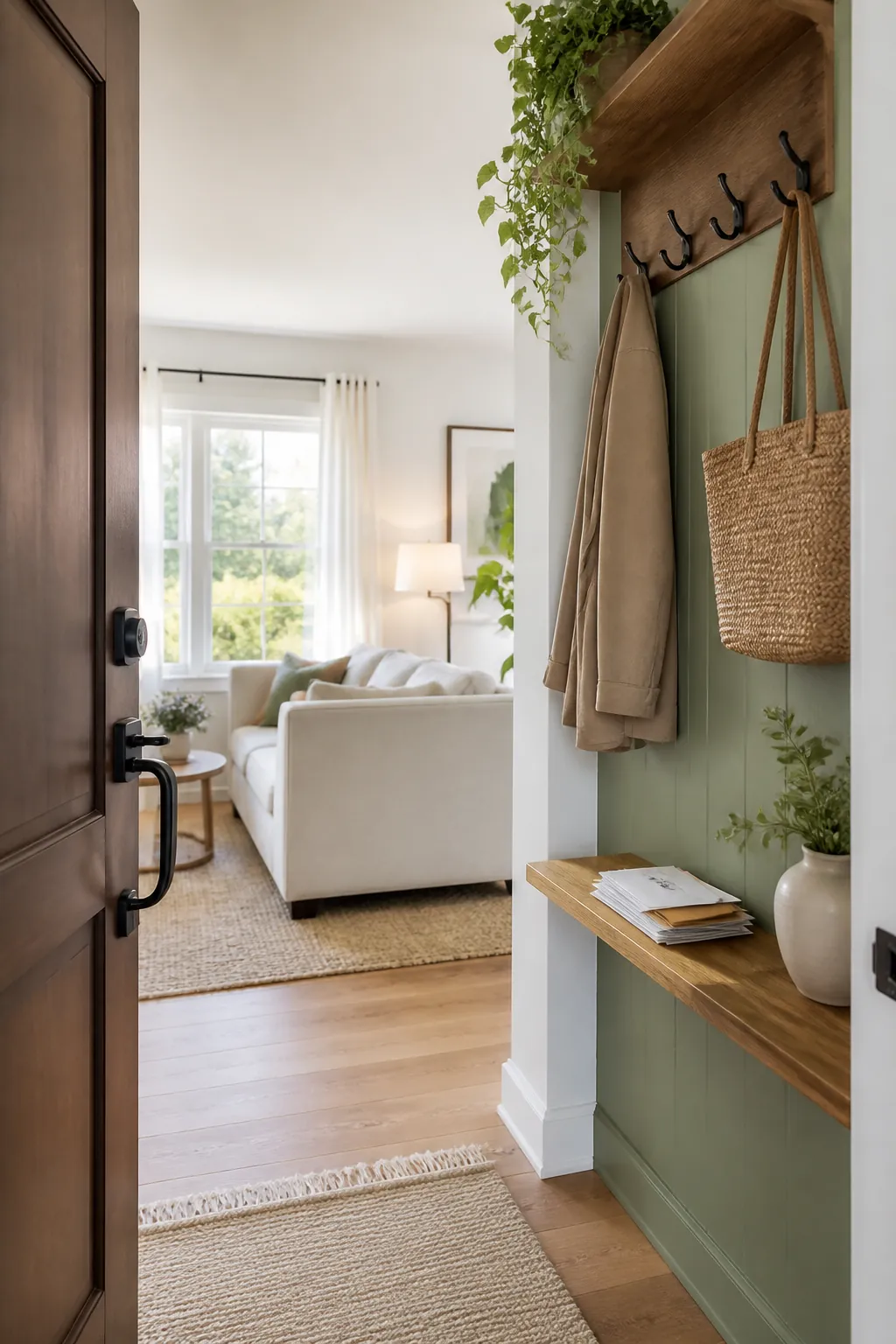
The single biggest change is geographic, not material. Mail that gets set down on a hallway table or a shelf by the door never makes it to the sofa arm in the first place, because it never enters the room that has nowhere else for it to go.
If your entry does not have a flat surface, even a narrow shelf 8 to 10 inches deep is enough for a stack of envelopes to land on before someone carries them further in. The point is not to sort here. It is to interrupt the walk from the mailbox to the couch.
2. Give mail one wall-mounted spot
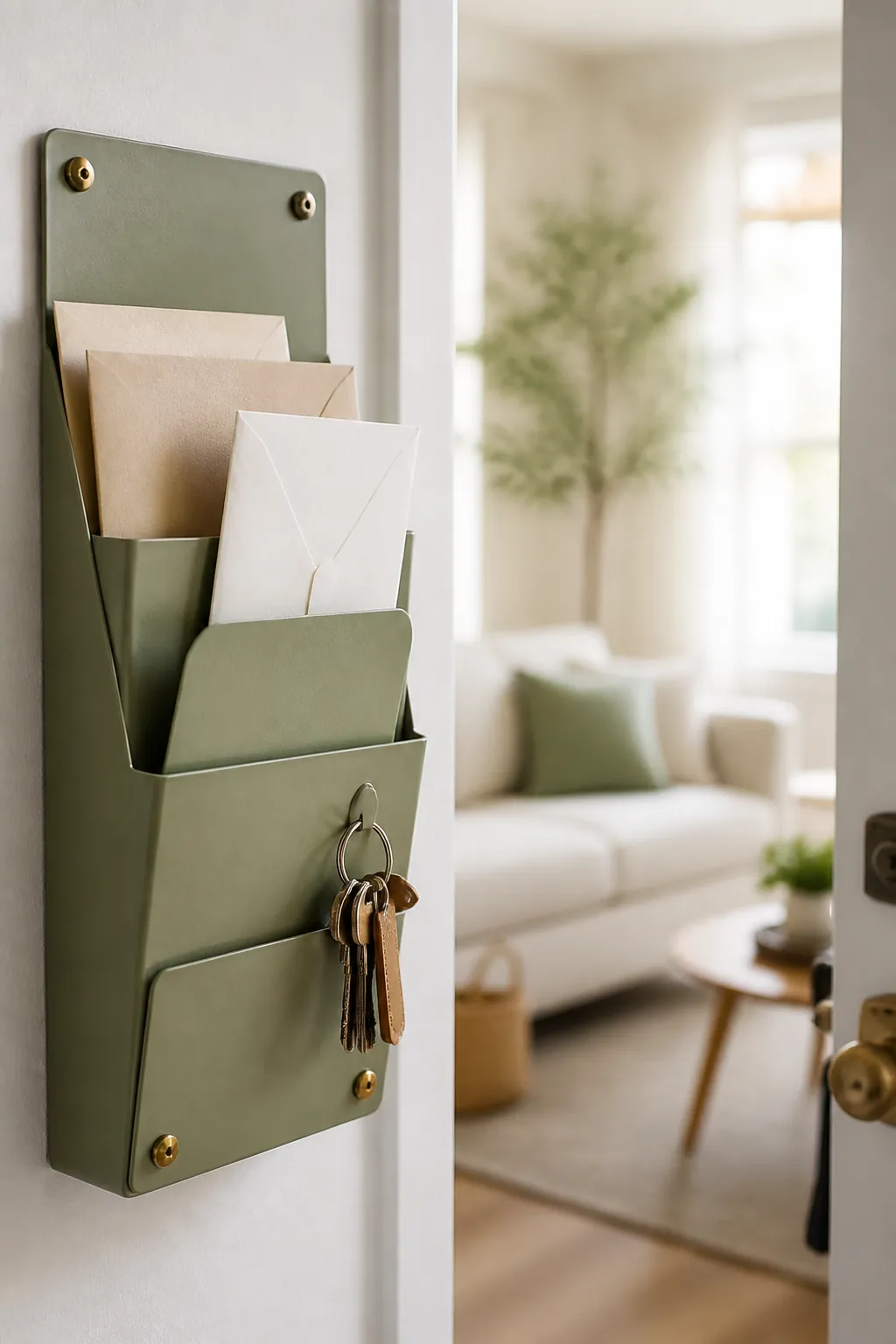
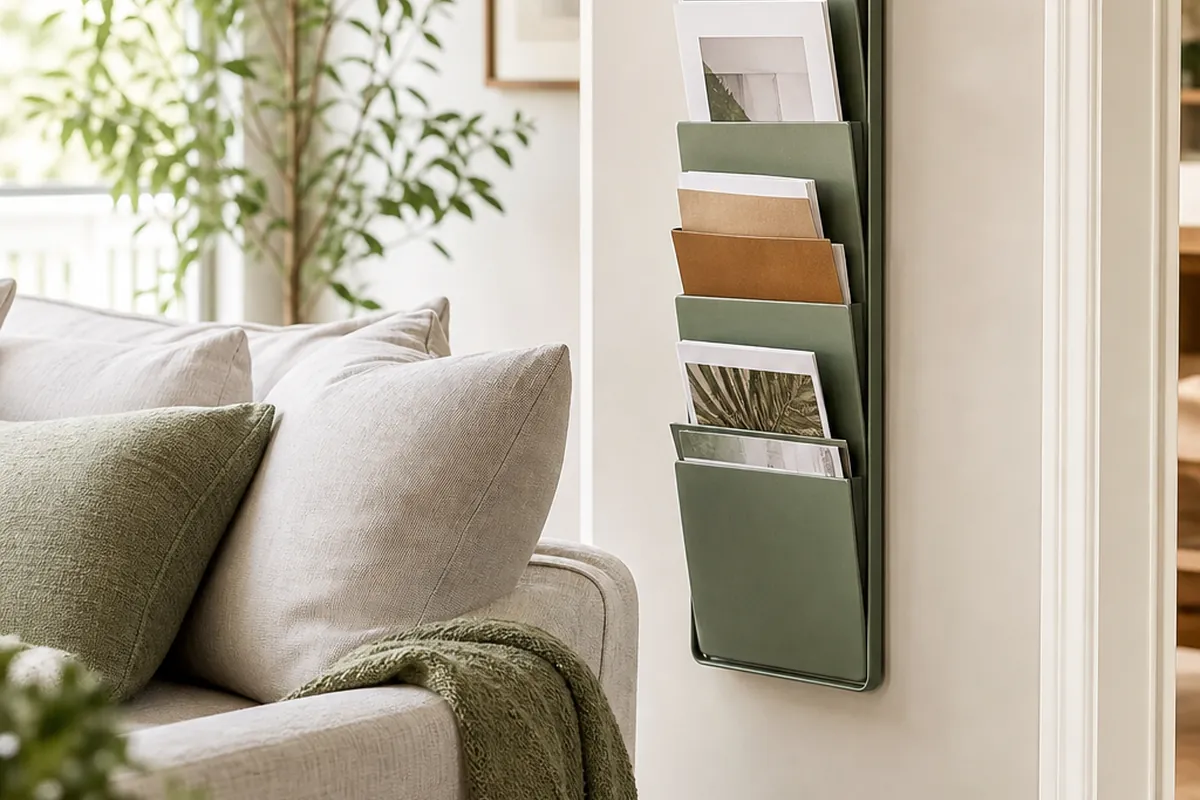
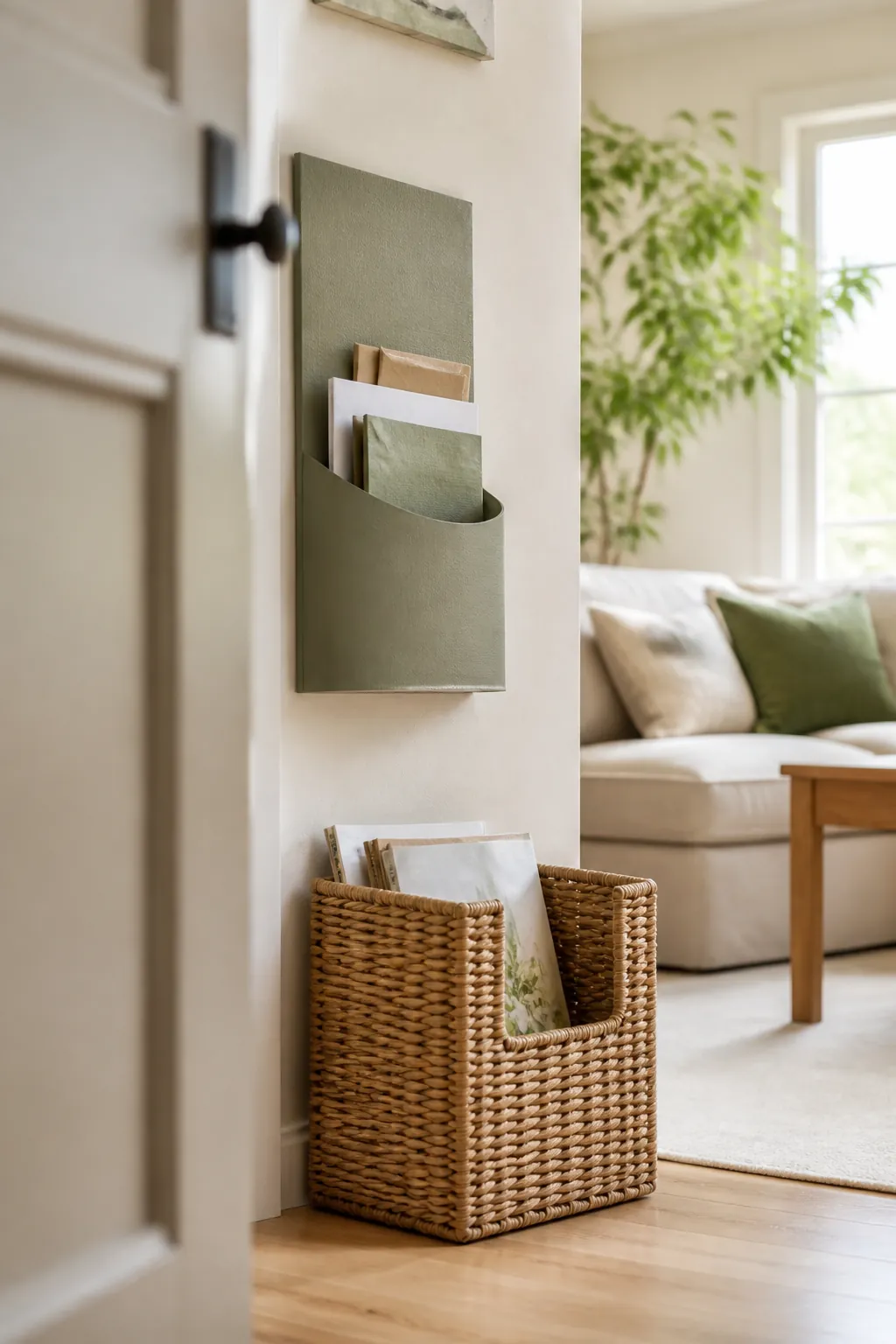
A wall-mounted key and mail organizer does the same job as the entry shelf but takes up no floor or table space at all, which matters when the entry is really just the first four feet of the living room.
Mount it at a height you will actually use, roughly chest height for whoever handles the mail most, not eye level for show. A pocket you have to reach up for gets skipped after the first week, and skipped pockets are how the coffee table pile starts.
For a rental wall, use adhesive strips rated for the organizer’s full loaded weight, not the empty weight printed on the packaging. Weigh it stuffed with a typical week of mail on a kitchen scale before committing to a strip rating, since a light plastic organizer becomes a two-pound problem once it is full of catalogs.
3. Sort standing at the recycling bin, not sitting on the sofa
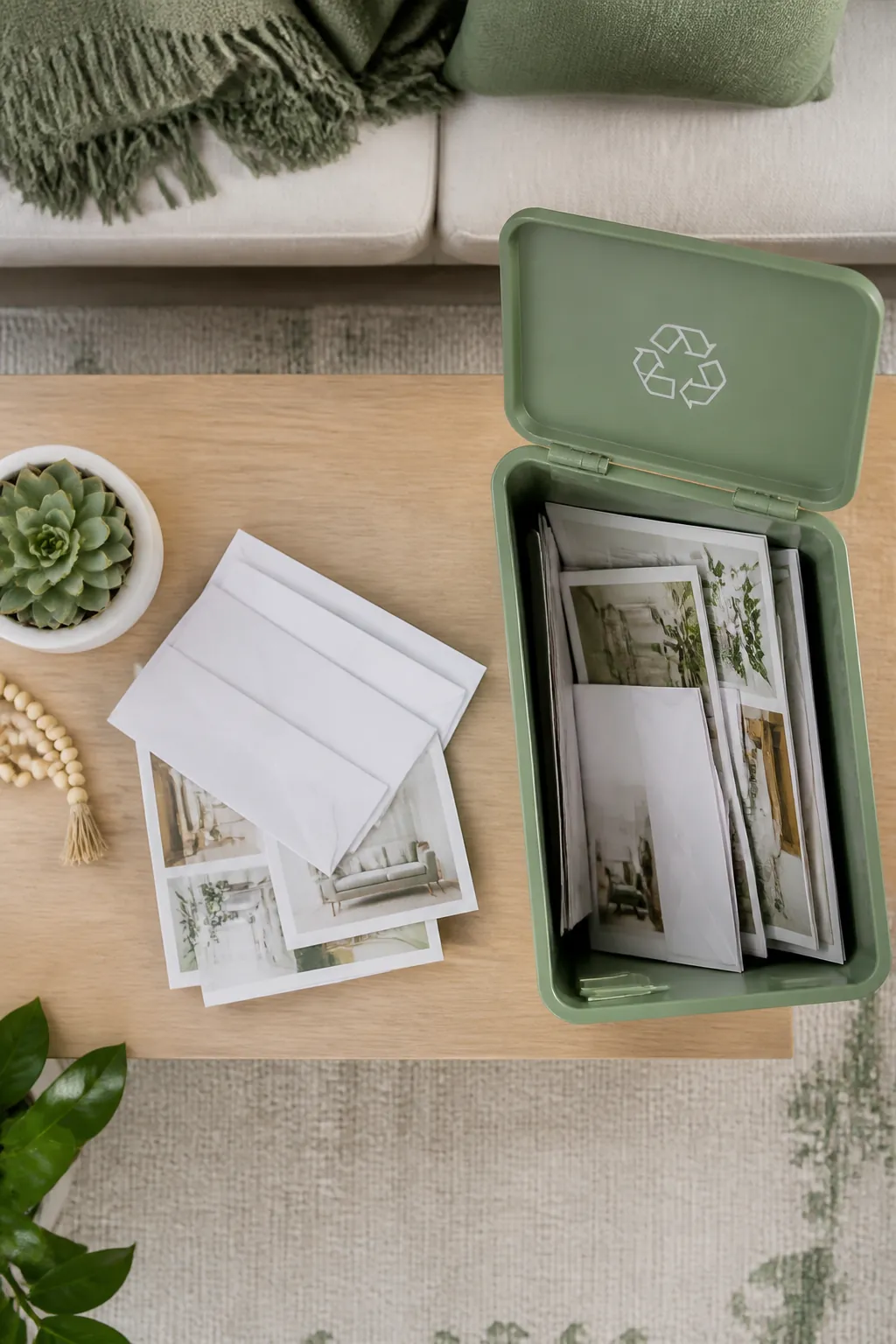
This is a habit change and it costs nothing. Open mail standing next to wherever your recycling goes, and bin the circulars and offers in the same motion they leave the envelope.
Sitting down to sort feels efficient and is the opposite. Once you are on the sofa with a stack, everything gets set down “to deal with later,” including the junk that needed no decision at all. Standing at the bin means only mail that genuinely needs action or filing ever makes it further into the room.
4. Keep magazines in one basket with a visible bottom
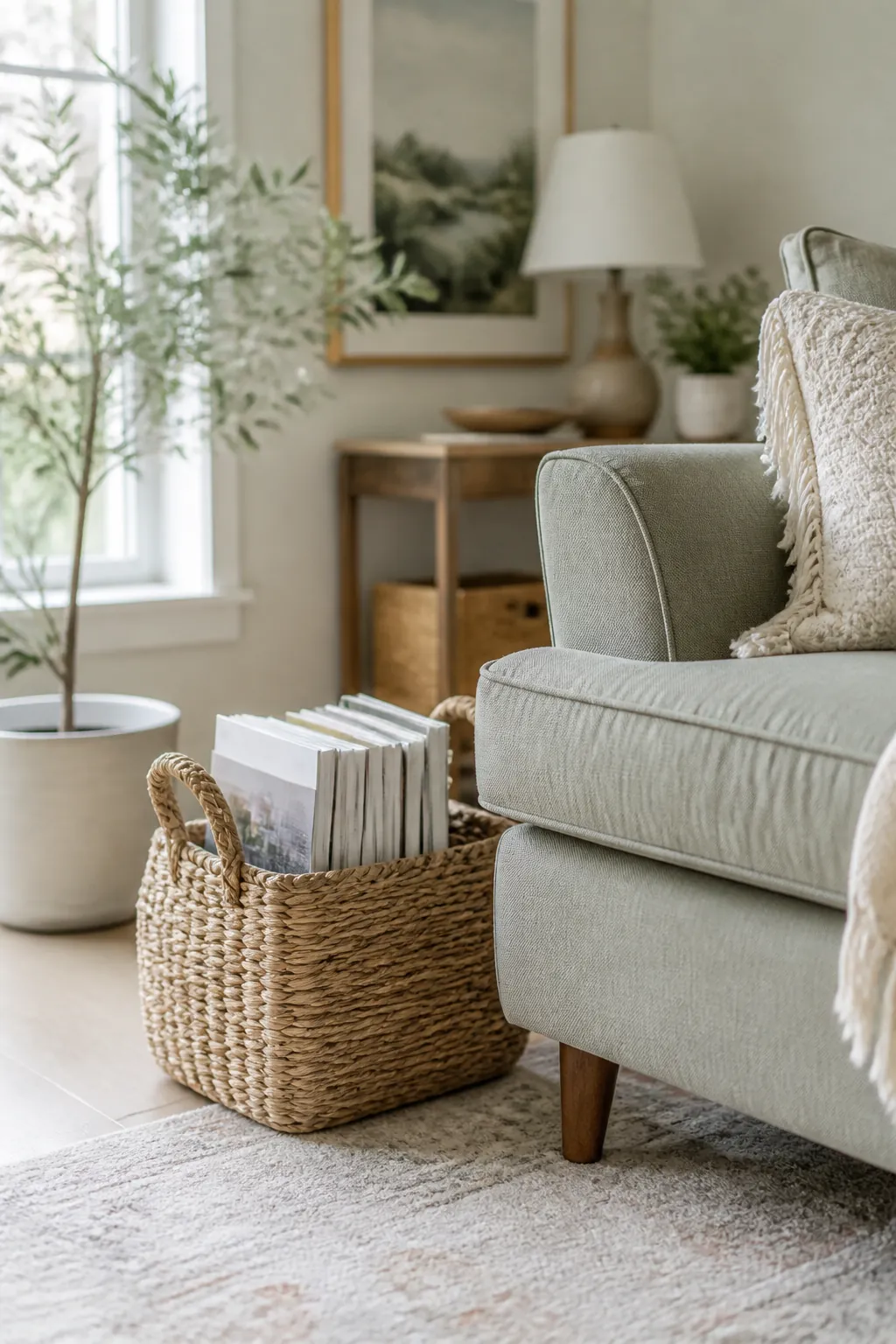
A large woven storage basket beside a reading chair holds roughly 15 to 20 magazines standing on their spines before it starts to look like an actual pile rather than a display.
The test that matters is whether you can still see the bottom of the basket. Once you cannot, it has stopped being storage and become the place old issues go to be forgotten. A basket that is always full to the brim is not a sign you need a bigger basket. It is a sign nothing is leaving it.
5. Set a one-in-one-out rule for magazines
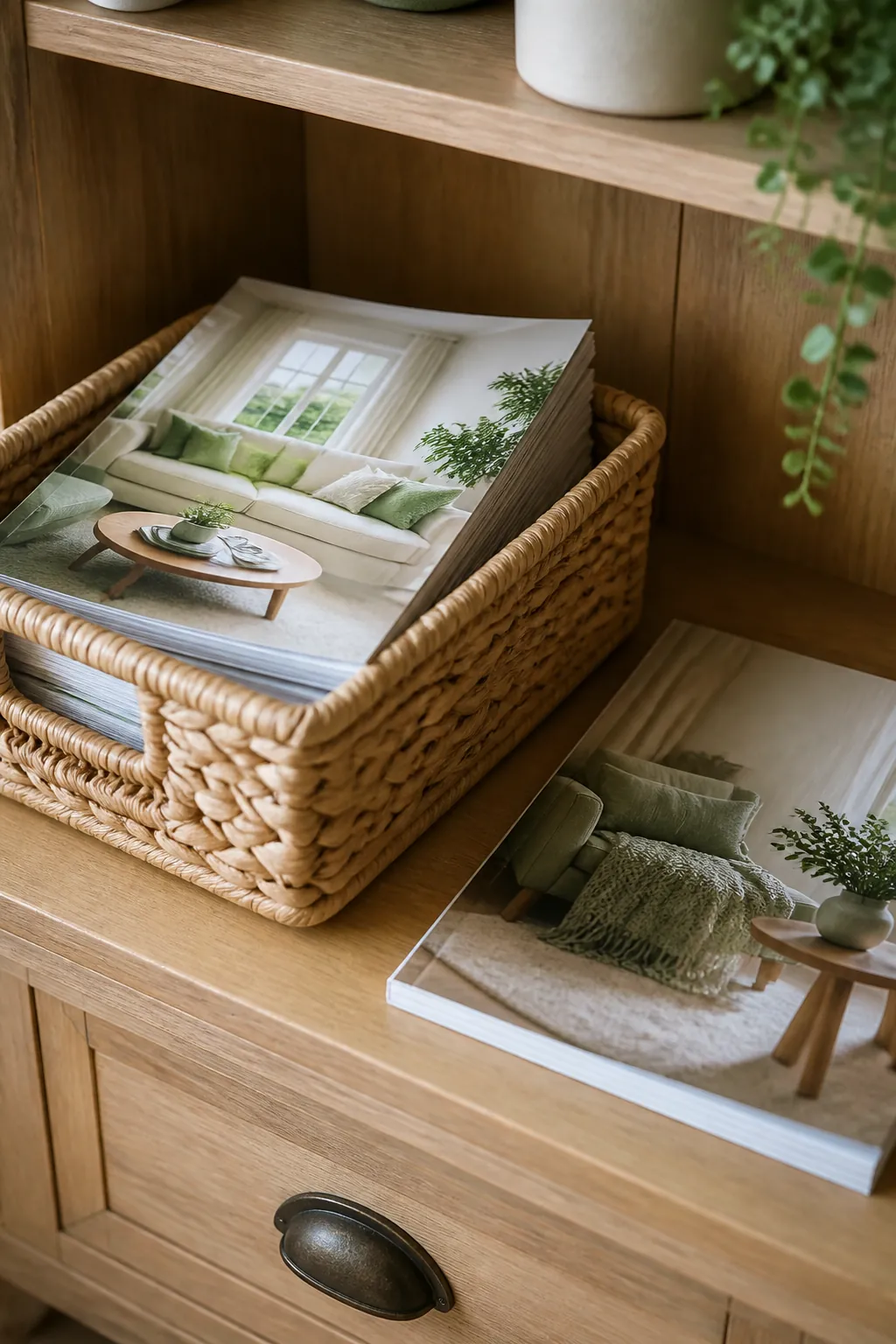
A subscription delivers a new issue whether or not you finished the last one, which is how a magazine basket fills faster than anyone reads it.
When a new issue arrives, an older one leaves, either read or not. This is simpler to enforce than “read everything within a month,” because it does not depend on finding reading time. It only depends on the basket having a ceiling. If the basket is always full at delivery time, that is the actual signal to cancel a subscription, not to buy a second basket for the overflow.
6. Use a desk organizer as the action tray
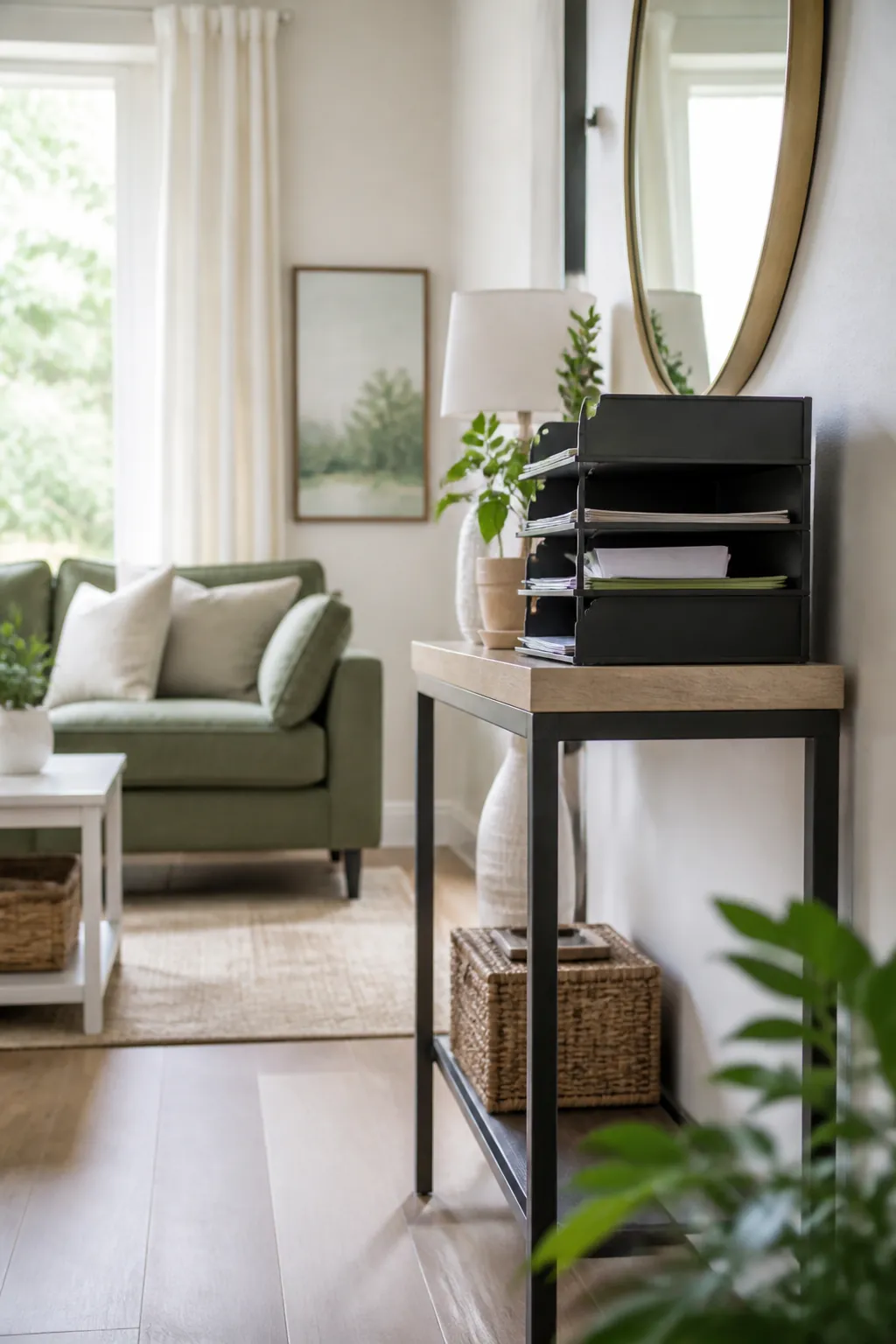
Not all mail is disposable, and not all of it belongs in the wall organizer either. Bills to pay, forms to sign, and anything with a deadline need a spot that gets checked, not just a spot that holds paper.
A 4-tier desk organizer with a file holder sitting on a console or side table gives that mail one slot in the file section, separate from the general shelves used for chargers or a laptop. The file slot should hold no more than a week’s worth of paper at a time. Past that, it is not an action tray anymore, it is a second pile that happens to be upright.
7. Let furniture with a shelf do double duty
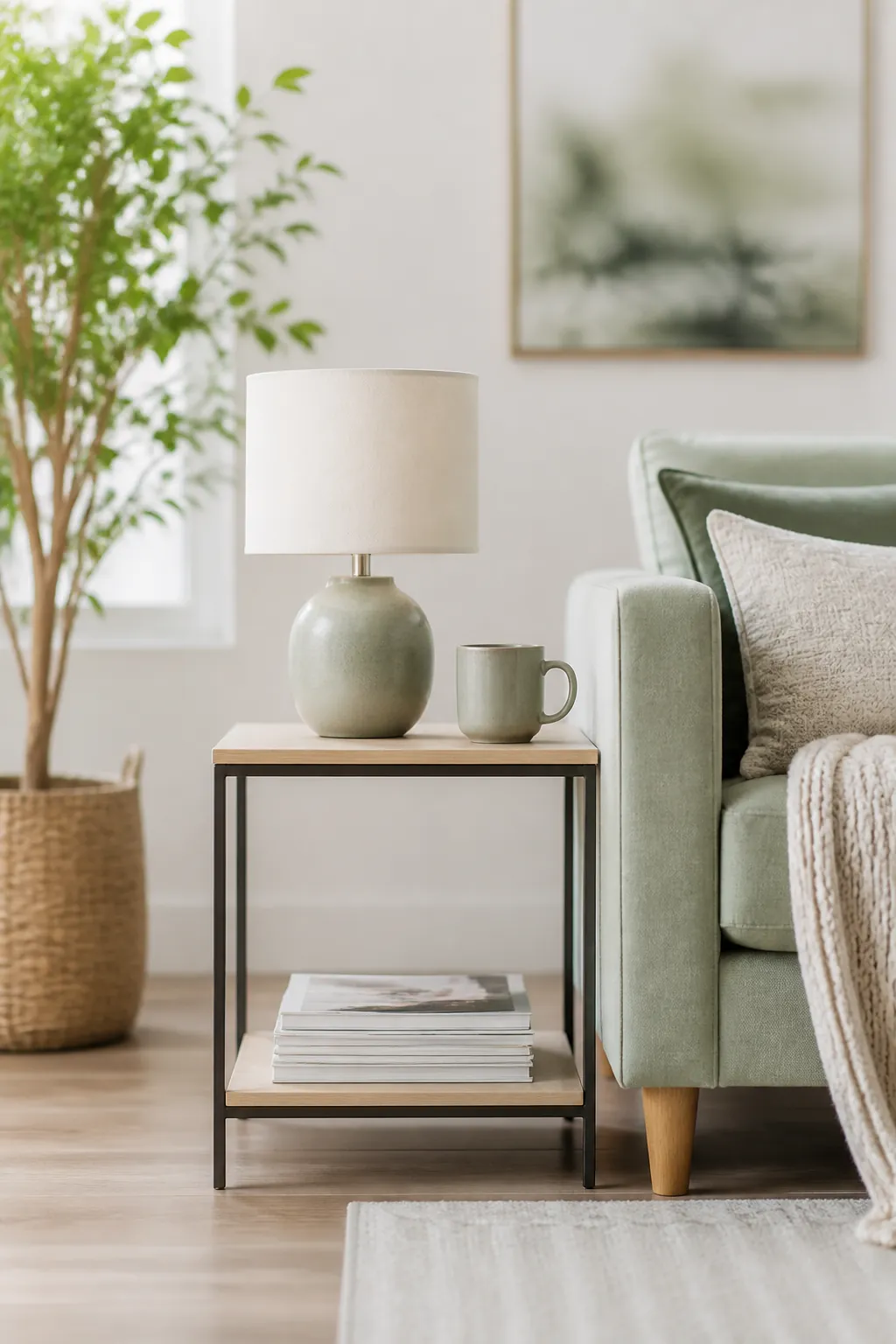
A side table or console with an open lower shelf is a place to stack current magazines flat, out of the way of the top surface where drinks and remotes actually live.
This works best when the shelf sits at least 4 inches off the floor, enough clearance to slide a stack in and out without scraping knuckles on the floor. It is not a substitute for the basket rule above. A shelf without a limit fills the same way a basket does, just lower down and harder to notice.
8. Route the junk mail out before it enters the house
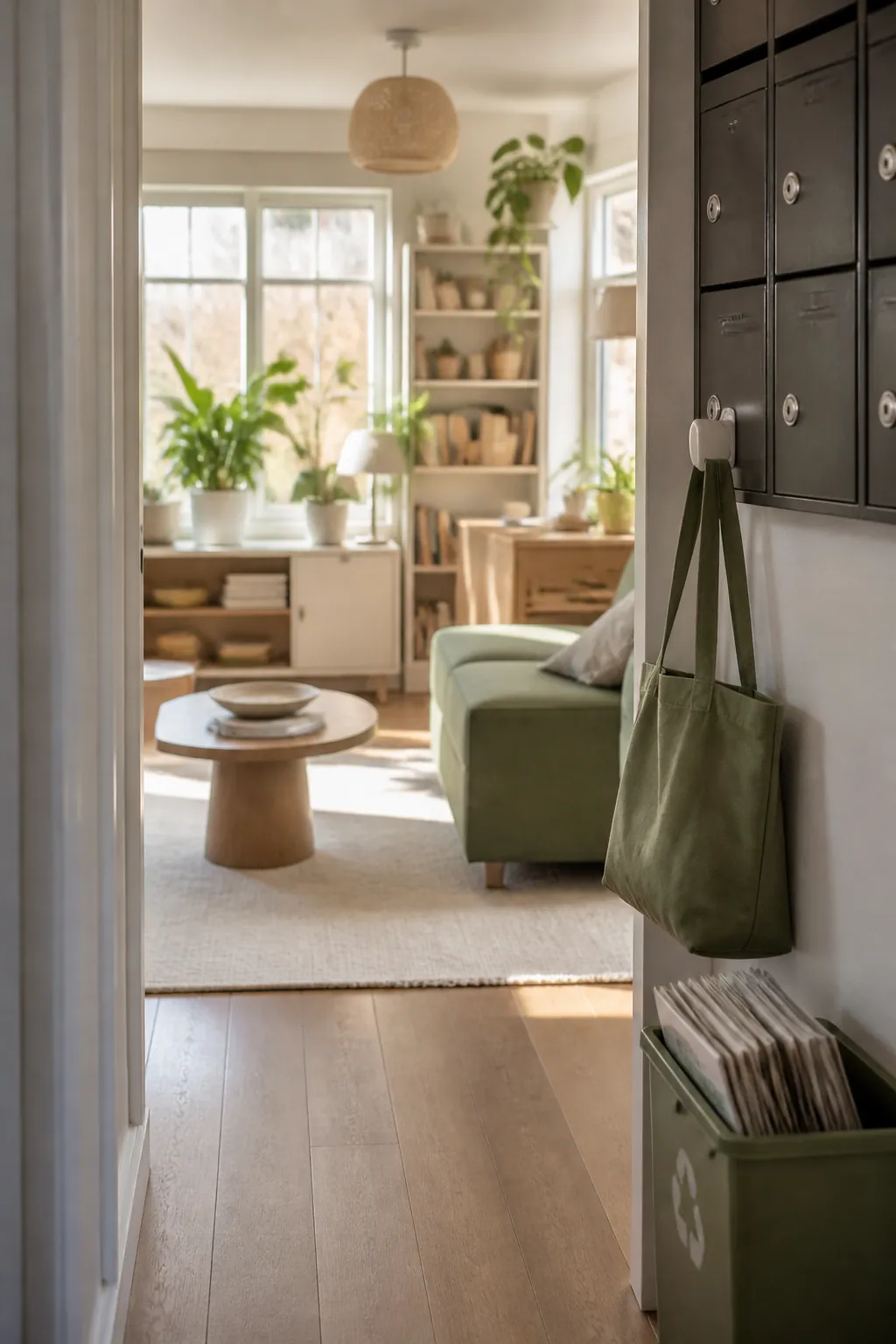
If the mailbox is not right at the door, carry a small tote or a spare basket to the box and sort walking back. Anything addressed to “resident” or clearly a circular goes straight into the outdoor bin if you have curbside recycling, so it never enters the living room to begin with.
This sounds like a small thing and it removes more paper than any indoor system does. The mail that never gets carried through the door cannot pile up on the coffee table, no matter how good the coffee table’s storage is.
9. Reduce the mail before you organize it
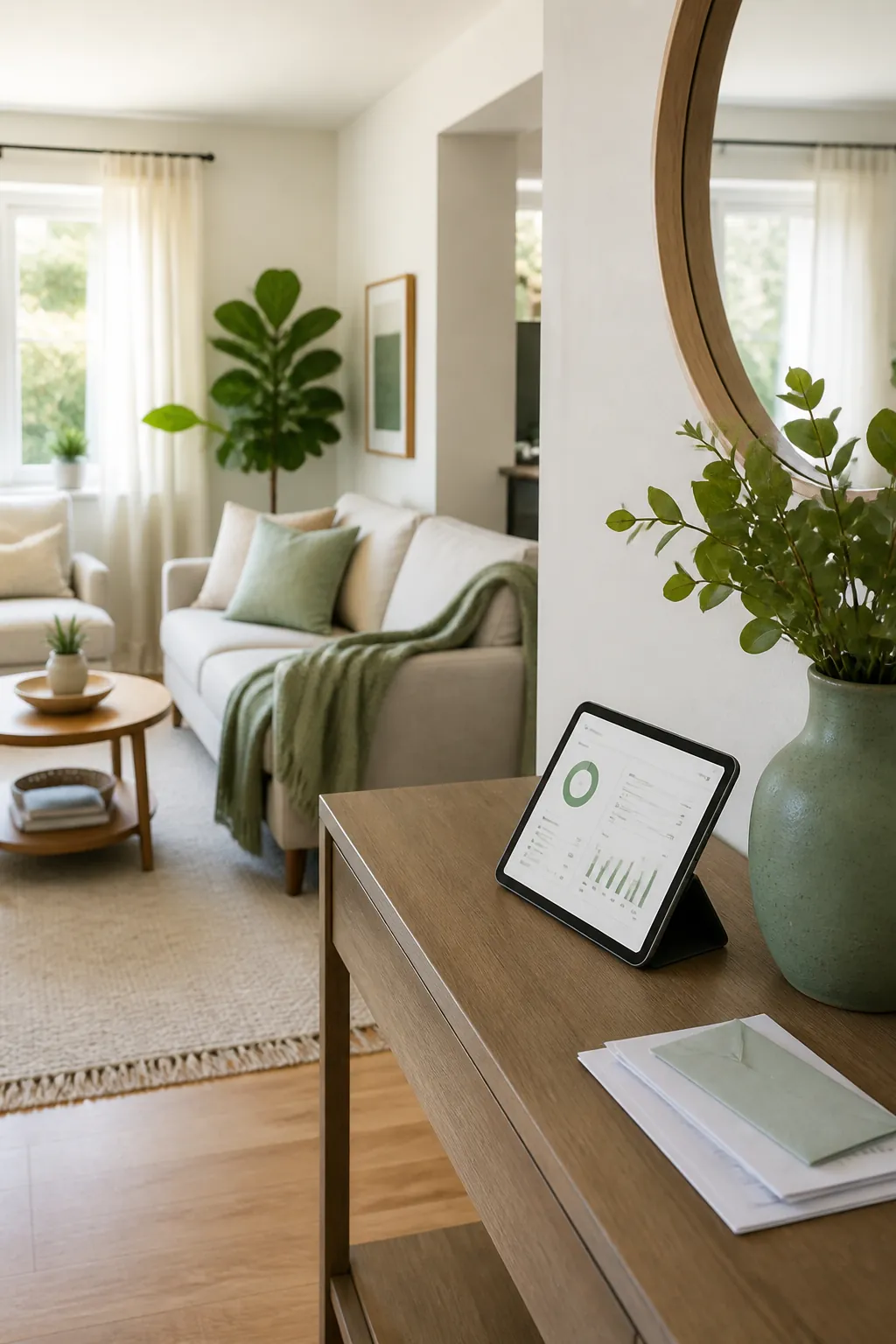
Every catalog and every paper statement you switch to digital is one less item competing for space in the wall organizer, permanently. This is slower than any storage purchase and it is the only fix that actually shrinks the problem instead of containing it.
Start with whatever generates the most volume: the retailer catalogs that show up weekly and the account you still get paper statements from out of habit. Cutting those two sources alone is often the single biggest drop in weekly volume you can make, which means every other idea on this list works less hard.
10. Review the whole system once a season
Set a recurring reminder, quarterly is enough, to empty the magazine basket down to the issues you would actually reread, clear the file slot of anything that has been sitting for more than a month, and check whether the wall organizer’s pockets still match how mail actually flows through the house.
Systems that were right in January drift by summer, usually because a subscription changed or someone started working from the console table. A five-minute check catches that before the coffee table becomes the overflow again, which is the same discipline that keeps a bookshelf or a storage ottoman from sliding back into a catch-all.
Where to start
Start at the door, not the coffee table. A wall-mounted mail organizer catches envelopes before they travel any further into the room, and a large woven basket gives magazines a visible bottom instead of an open-ended pile. The desk organizer’s file section handles the mail that actually needs a response, kept separate from everything else so it does not quietly become a second stack.
None of this holds without the one-in-one-out habit, since a basket or a shelf only works as storage if something leaves as often as something arrives. Get that rule running and the rest of the system mostly takes care of itself.