Take a tape measure to the empty air in your closet sometime. In a standard rental reach-in you’ll usually find two feet of dead space above the shelf, another two or three feet of nothing under the hanging shirts, and a rod choked with hangers so bulky they waste six inches of width. Real small closet organization isn’t about buying a system. It’s about reclaiming those three zones one at a time, and none of it needs a drill or a conversation with your landlord.
Below are twelve moves in the order I’d actually do them. A few take ten minutes. The whole sequence fits in an afternoon, assuming you don’t stop to try clothes on.
Small closet organization starts with three measurements
Before you buy a single bin, write down three numbers: top shelf to ceiling, bottom of your hanging clothes to the floor, and back wall to the inside face of the door.
That last number decides more than people expect. At twenty-four inches deep, a closet can take a hanging shelf tower beside your clothes without the door catching. At eighteen inches it can’t, and you’ll be printing a return label instead. Measure first and the rest of these ideas sort themselves neatly into yes and no.
The floor is a staging area, not storage
Right now your closet floor is holding shoes, a laundry heap, and a gift bag from 2019. Empty it completely before anything else happens. You need to see the real footprint you’re working with, and honestly, half of what’s down there belongs in another room or in a donation bag.
1. Hang a shelf tower in the dead column
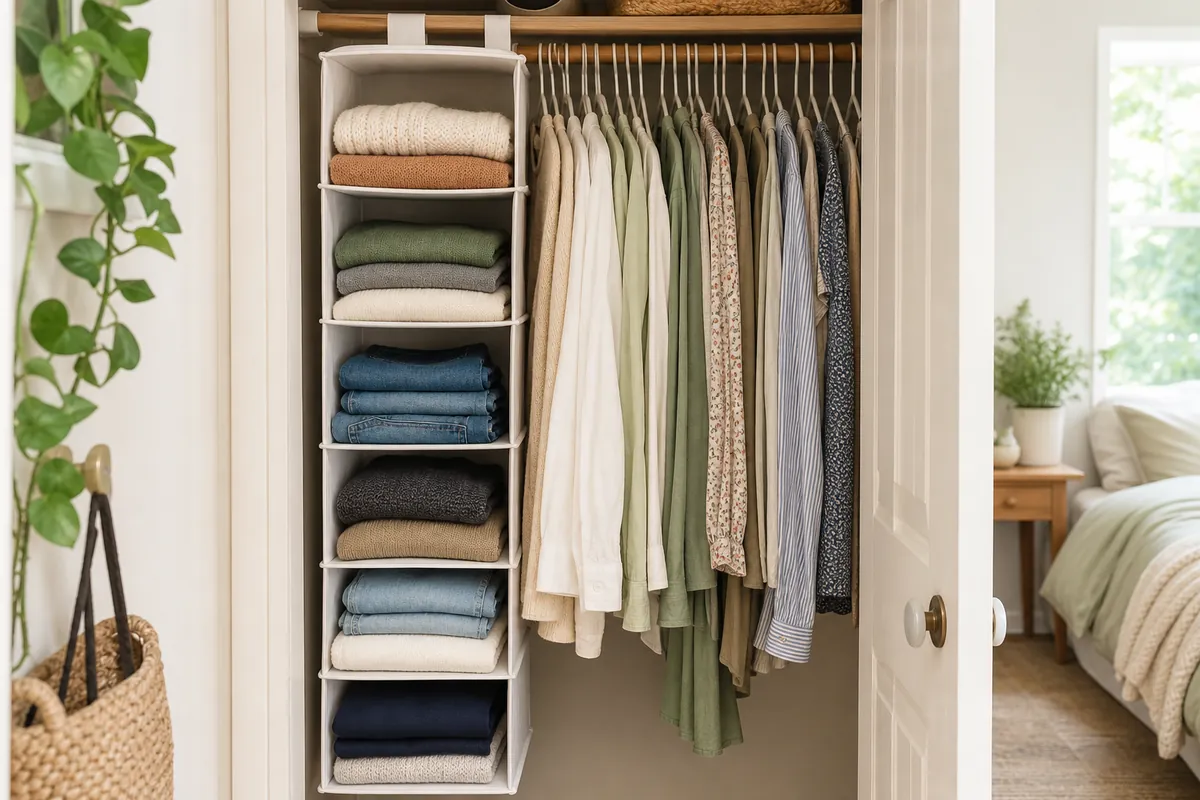
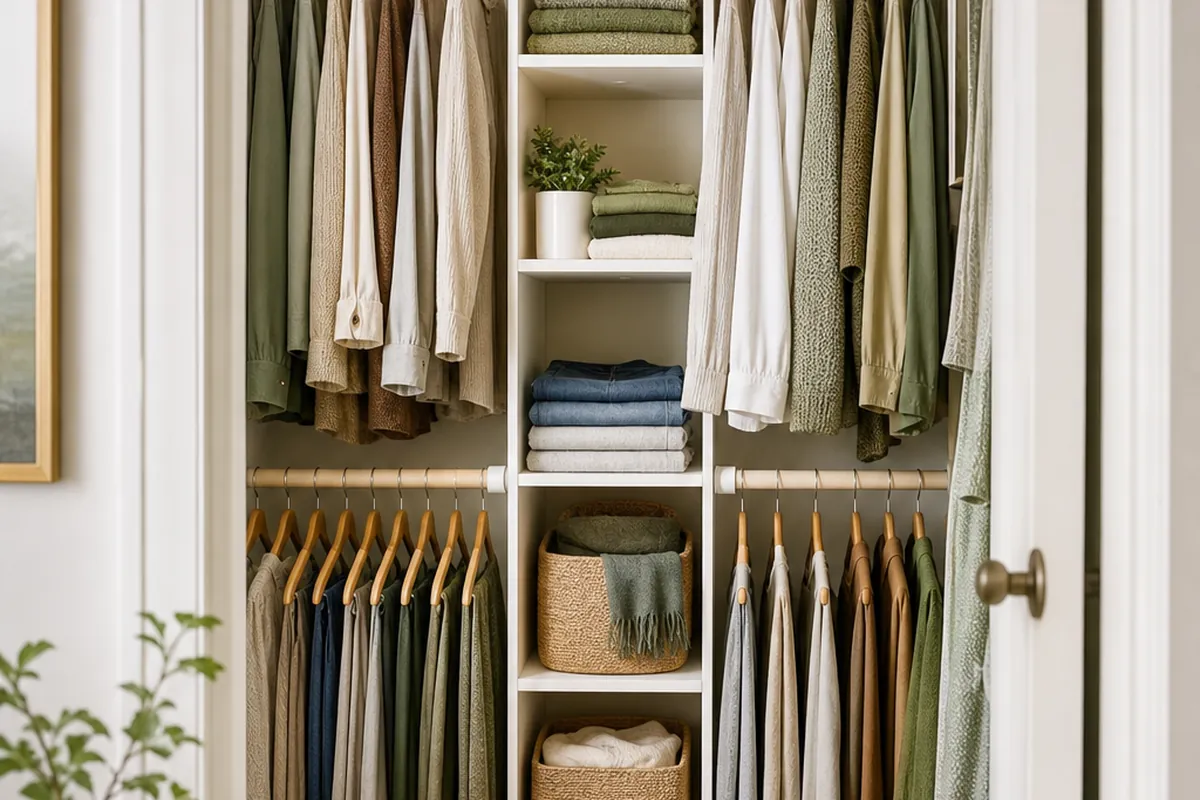
A 6-shelf hanging closet organizer gives the best return per dollar in a narrow reach-in. It straps over the rod, needs no hardware, and converts one vertical column of hanging space into six flat shelves. When you move, the whole thing comes down in thirty seconds and leaves the wall untouched.
Load it with the categories that hang badly: folded sweaters, jeans, leggings, the t-shirts you don’t mind creasing. Knitwear especially, since a hanger will stretch the shoulders out over a season.
The honest limitation is structure. Overstuff a fabric tower and it slouches sideways. Keep each shelf to a stack you can lift with one hand and it holds its shape for years.
Put it at the end of the rod, not the middle
Splitting your hanging space into two short runs makes both halves harder to use. Pushed to one side, the tower leaves a single continuous stretch of rod and lands exactly where you can reach it without leaning in.
2. Swap every hanger for one slim style
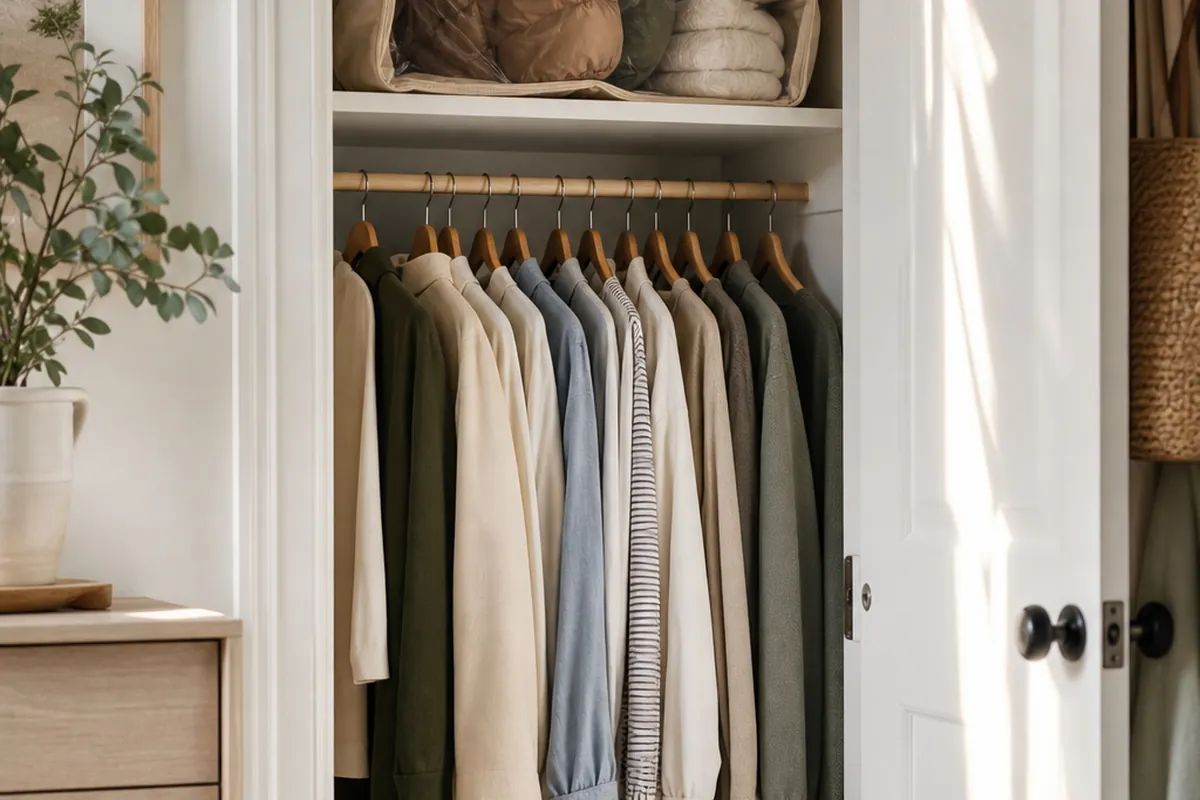
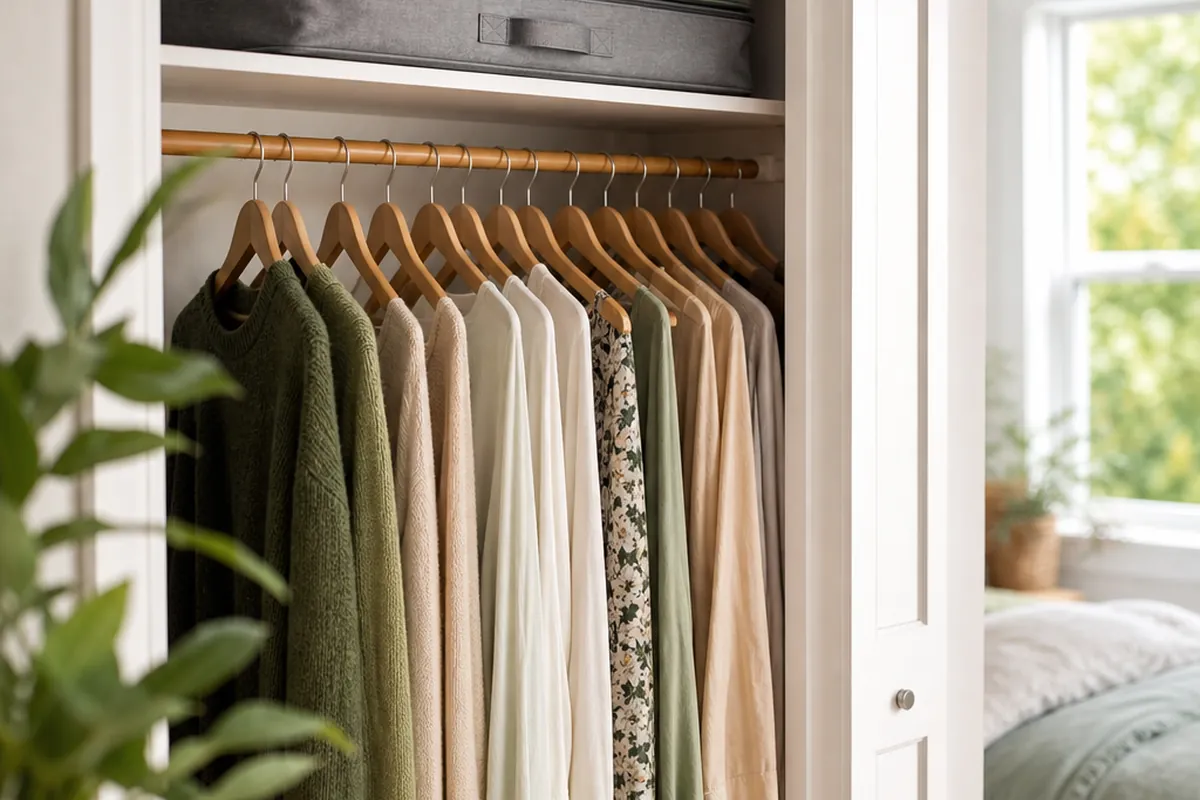
Velvet slim hangers are the cheapest way to buy hanging inches, full stop. Chunky plastic and wooden hangers are wide, uneven in depth, and slick enough that camisoles slide straight to the floor. Velvet is thin, grippy, and uniform, so the rod reads as one clean line rather than a jumble.
Width is the real prize. Trade a rod of mixed hangers for slim ones and you’ll typically free up room for another armful of clothes, plus the closet looks calmer before you’ve organized anything else.
One rule: commit fully. Half velvet and half plastic looks worse than either on its own, and mismatched hooks leave garments hanging at three different heights.
3. Double the rod under your short clothes
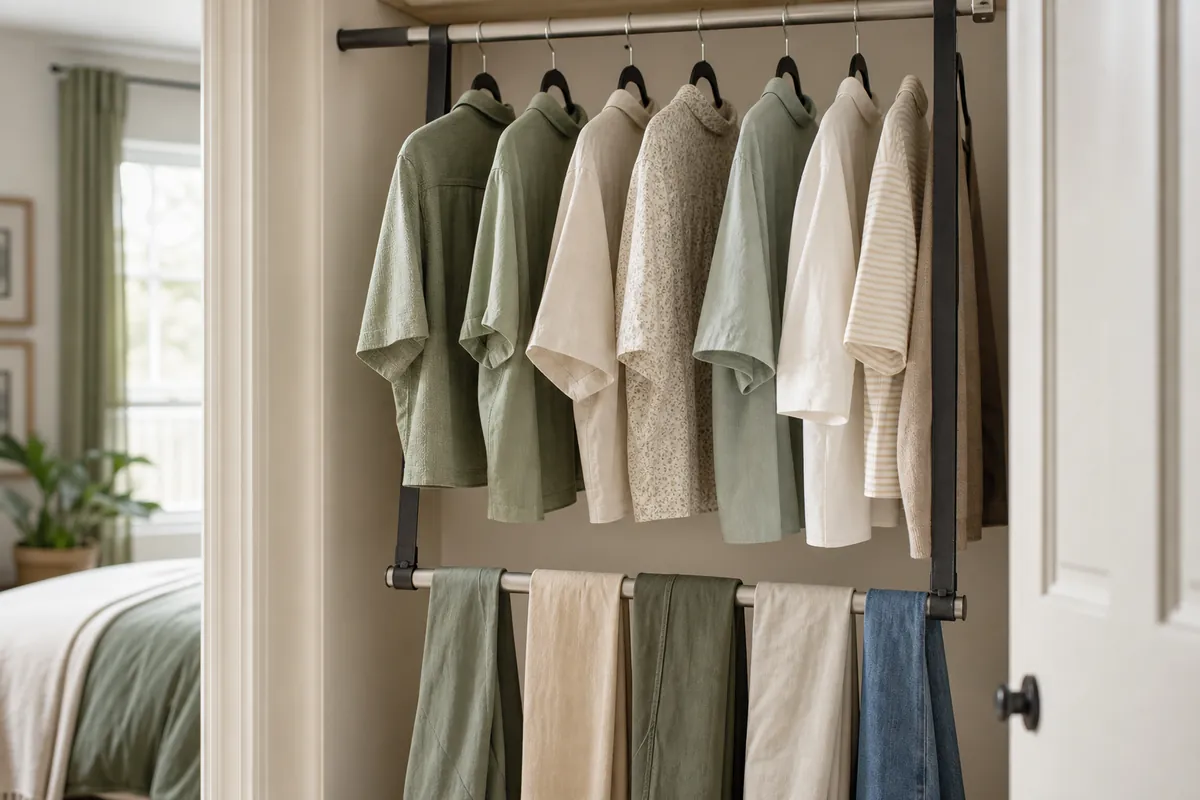
Shirts, blouses, and jackets need roughly forty inches of drop. Most rental rods sit five or six feet off the floor, which means the single largest pocket of wasted volume in the room is the empty air below your work shirts.
A second rod that clips onto the existing one with adjustable straps doubles that section in about a minute. Reserve one end of the original rod for coats, dresses, and full-length pants so nothing puddles onto the lower bar. For the longer walkthrough, read double closet space as a renter without any renovating.
4. Make the top shelf behave like a drawer
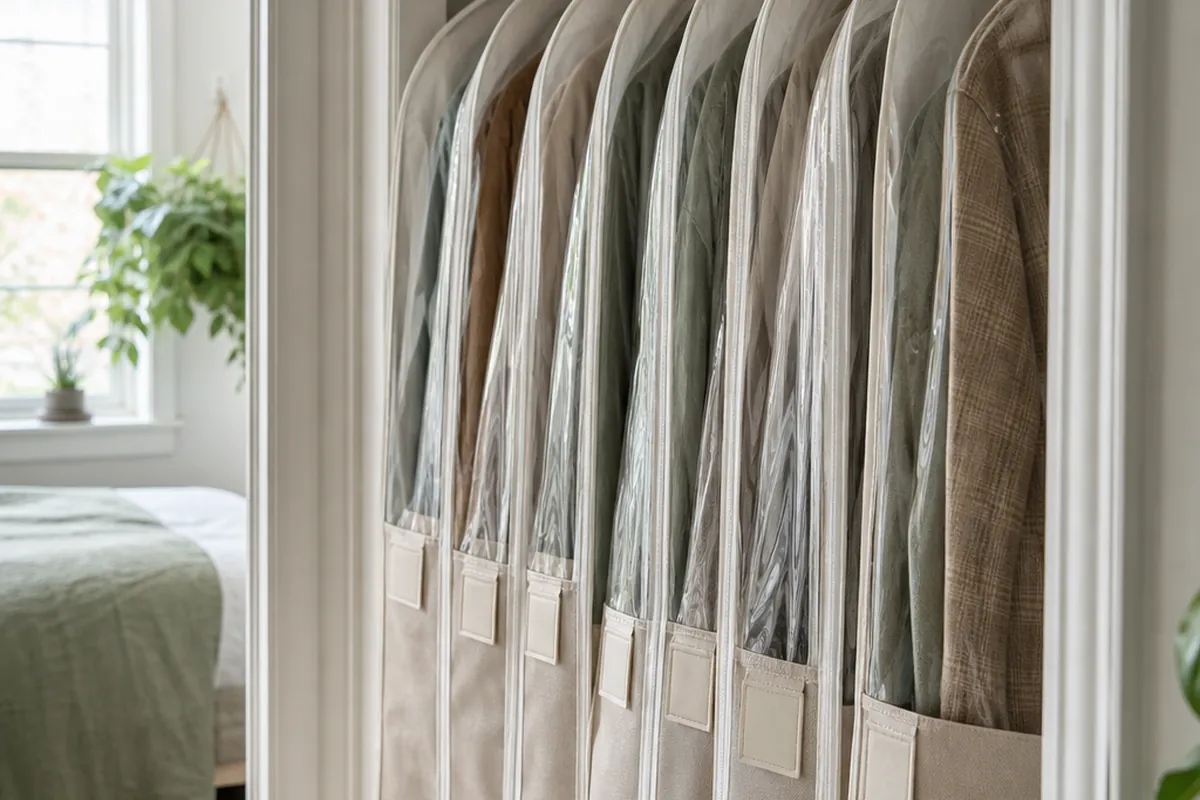
High and deep is a punishing combination: things drift to the back and never resurface. Fabric bins with a front handle solve it, because you can pull one out like a drawer, take what you need, and push it back one-handed. Lidded rigid boxes fail up there, since nobody can lift a lid with six inches of ceiling clearance.
Label the front of every bin even if it feels fussy. Viewed from five feet below, all bins look identical.
What actually earns a spot up there
Off-season accessories, spare bedding, gift wrap, the sentimental box you’re keeping but not using. Nothing you need weekly. If you’re dragging out a stepstool twice a day, the layout is wrong, not you.
5. Corral small clothing in clear drawers, not piles
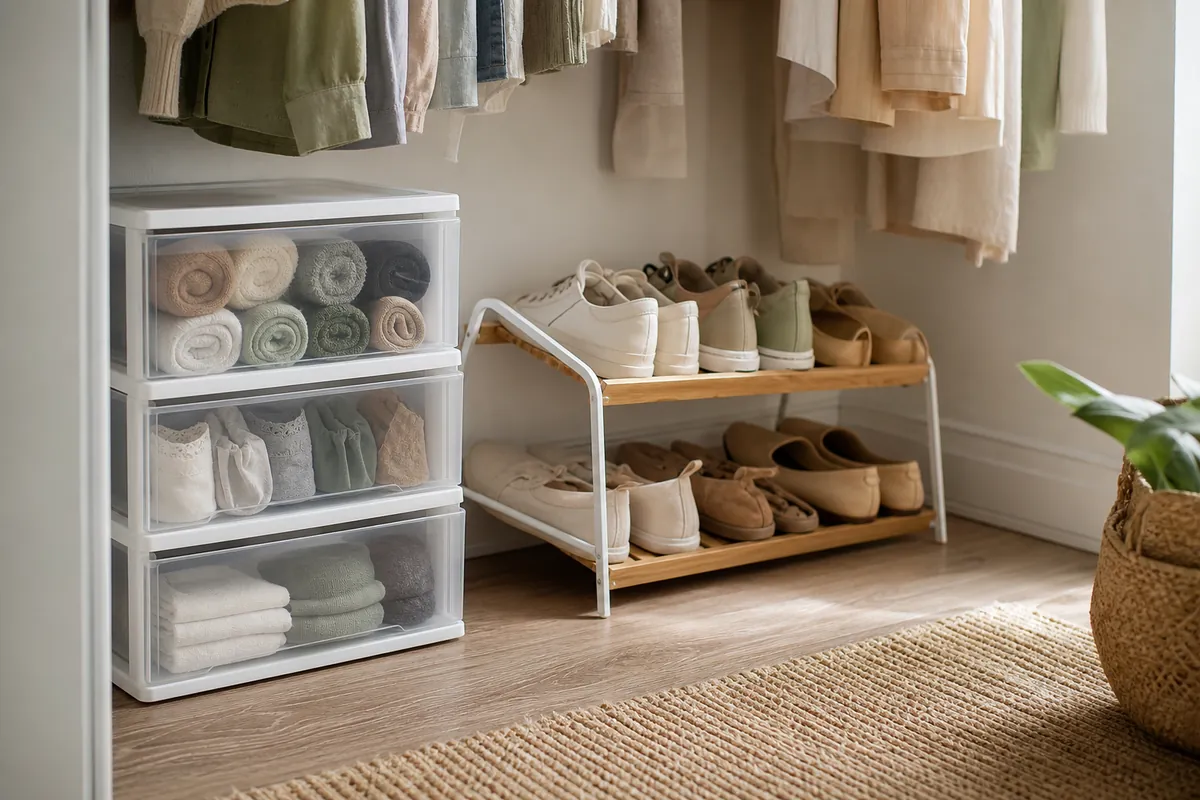
Socks, underwear, belts, and swim things vanish into a small closet. A clear drawer organizer set on the floor or a low shelf fixes that, because you can read the contents without opening anything. Clear beats opaque for one reason: you stop excavating.
Stack two or three units and you’ve built a dresser in the footprint a laundry basket used to hog. File items on edge rather than flat so pulling one thing out doesn’t wreck the rest. For the folding technique that makes this work, see my picks for drawer organizers for folding clothes.
6. Give shoes a real footprint or move them out
Shoes left loose on a closet floor creep sideways and swallow your only clear surface. Choose one approach and stick to it: a two-tier rack that stacks pairs vertically, or a bench by the front door that keeps footwear out of the bedroom entirely. Doing both halfway leaves shoes in two places, which is the worst possible result.
If the closet floor really is your only option, run a slim rack along the back wall rather than the front so nothing fouls the door swing. More layouts in shoe storage for a small space.
7. Hang bags instead of stacking them
Handbags stacked on a shelf slump into one another and lose their shape within weeks. S-hooks over the rod, a slim hook rail, or a hanging pocket organizer keeps them upright and visible. Structured bags will happily hold rolled scarves inside, which is free storage you already paid for. Several no-drill options live in how to store handbags in a small closet.
8. Send off-season clothes under the bed
A closet stops feeling small the moment you halve what’s inside it. Wool coats have no business on your rod in July. Flat under-bed bins on casters swallow a full season and roll out without shifting furniture, and a quick note in your phone spares you crawling around in October guessing which bin holds the sweaters. Under bed storage for clothes covers packing a season away without creasing everything.
9. Doors and walls, the small closet organization space nobody uses
The inside face of a closet door is flat, vertical, and completely idle. Slim racks that hook over its top edge hold shoes, scarves, or small accessories. Check the swing before you load one, because a heavy rack will stop a bifold from latching. Sliding doors, sadly, rule this idea out.
Adhesive hooks are the low-profile version: three or four at eye level for tomorrow’s outfit, a robe, or the tote you carry daily. They grip painted drywall far better than textured or glossy surfaces, so press firmly and let them set overnight before you hang weight on them.
The door is also where the laundry can go if the floor is full, and laundry sorting ideas for a closet with no floor space runs through the hanging options.
10. Sort by length, not by category
Grouping all shirts together, then all dresses, looks tidy and quietly wastes vertical space. Sort by hem length instead. Every short garment goes over the doubled rod, every long garment sits at the far end, and you’re left with a clean rectangle of floor beneath the short section for drawers or bins.
Within each length band, arranging by color speeds up getting dressed. That’s not purely aesthetic; you spot the shirt you want without disturbing the six beside it.
11. Add light you can actually see by
Dark closets always feel smaller and messier than they measure. Battery puck lights, or a rechargeable motion-sensor strip stuck under the top shelf, transform the space for very little money. Side benefit: you’ll stop leaving the house in the navy sweater you were sure was black.
12. Leave one shelf and six inches of rod empty
Nobody enjoys hearing this one. A closet filled to the brim has no capacity for laundry day, a new coat, or the week you’re too wiped to hang anything properly. Deliberate empty space, one shelf plus a short stretch of rod, is what keeps the whole arrangement from collapsing by the end of the month.
The small closet organization order that saves you redoing it
Work in sequence: empty the closet, take your three measurements, swap in the velvet slim hangers while the clothes are out on the bed, clip on the second rod, strap the 6-shelf hanging closet organizer to one end, then slide the clear drawer organizer set onto the floor under the short hanging section. Bins and labels on the top shelf come last, once you can see what’s genuinely left over.
Small closet organization rarely fails because of the products. It fails when people buy bins before they know what has to fit inside them. Measure, subtract, then build upward.