Thanksgiving asks a small apartment to do something it was never set up for: seat and feed more people than live there, using serving dishes, extra chairs, and a folding table that spend the other 364 days taking up space you do not have to spare. Most hosting advice assumes a dining room, a garage, and a second fridge. A one-bedroom rental has a kitchen with maybe two cabinets to spare and a coat closet that is already full.
None of what follows needs a storage unit or a bigger apartment. It needs the gaps you already have used with more intention than “wherever it fits,” and a plan for the leftovers so the meal does not end with a fridge nobody can close.
1. Count your actual guest list before you store or borrow anything
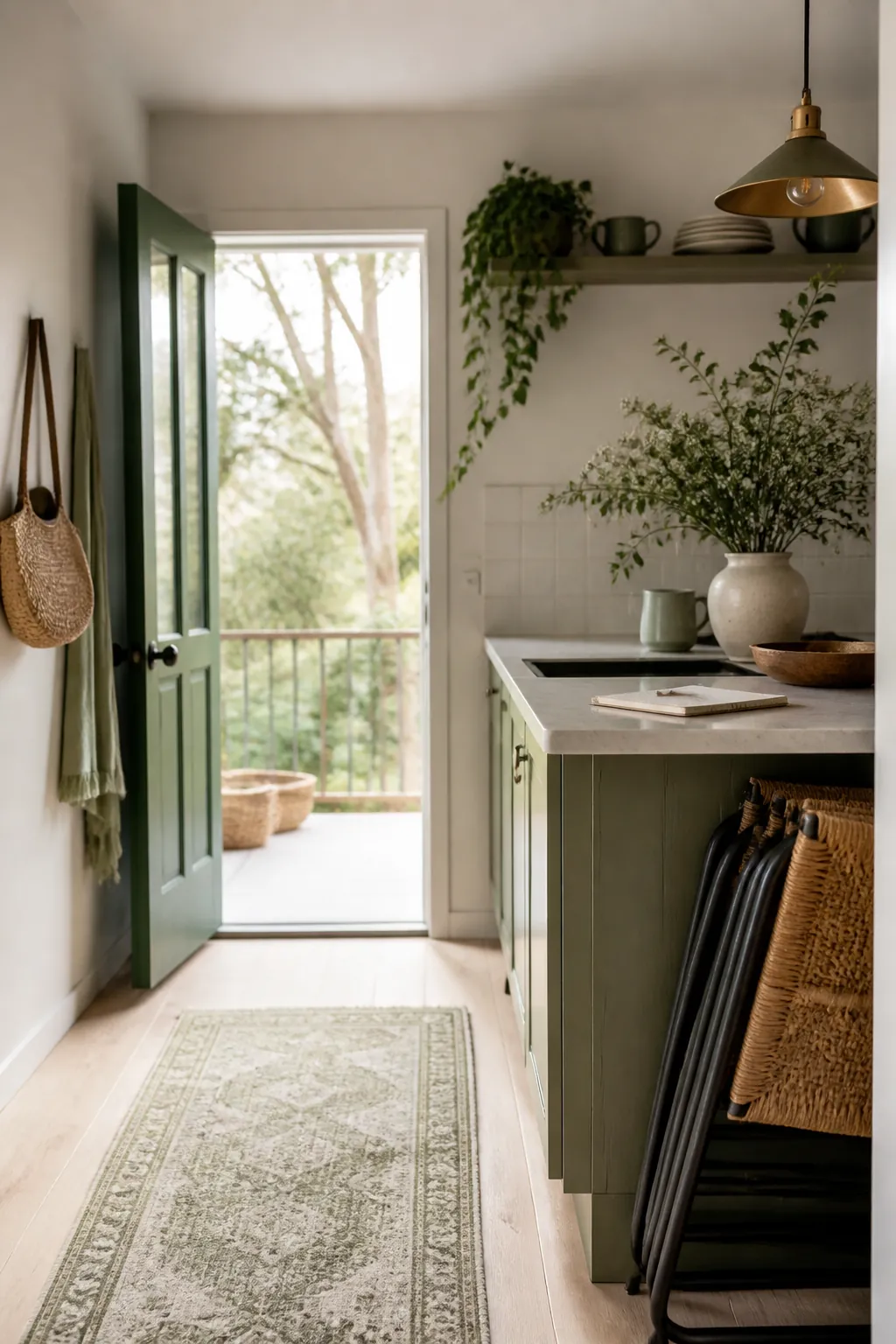
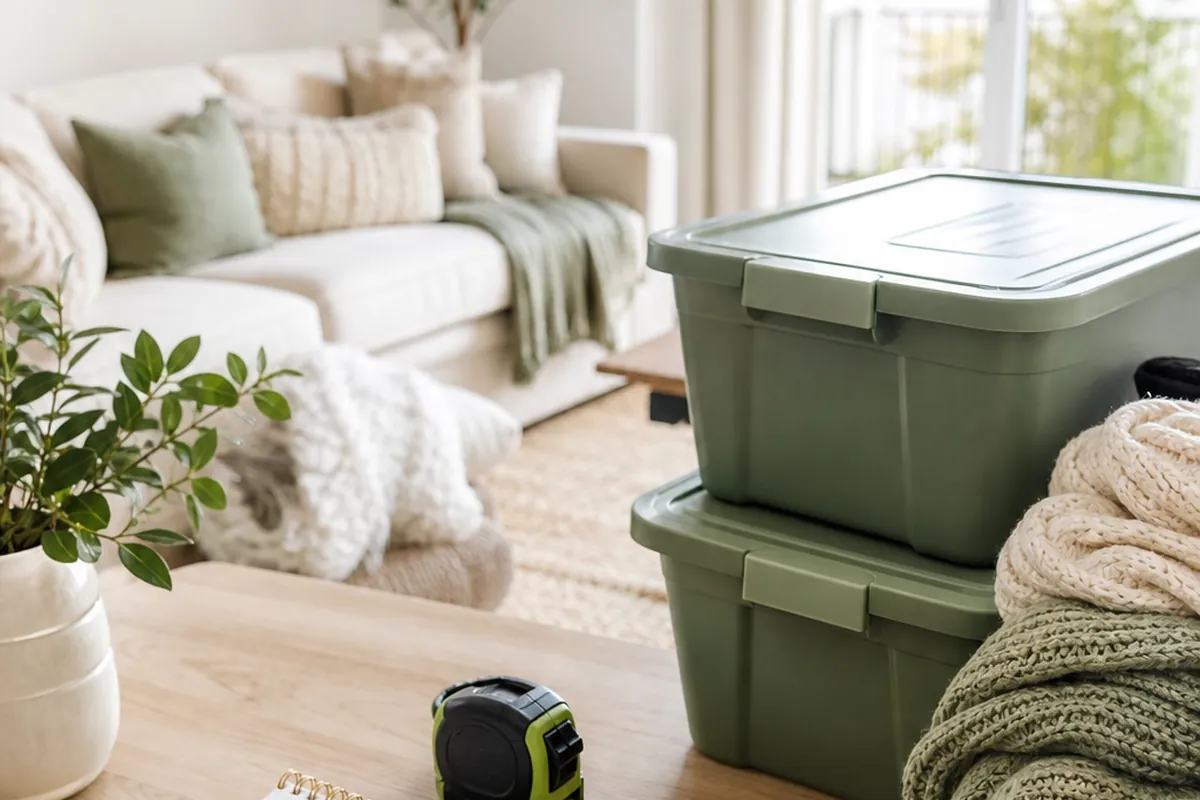
The single biggest storage mistake is buying for the Thanksgiving you imagine instead of the one you are hosting. A table for six does not need service for twelve, and every extra chair, platter, or folding table you bring in has to live somewhere for the other 364 days of the year.
Write down the real headcount first, then work out what you are actually missing: chairs beyond what you own, whether your everyday plates stretch to cover the table, whether you need a folding table at all or can seat people on the couch arm and a coffee table pulled close. Borrowing the gap between what you have and what you need almost always costs less closet space than owning it outright for one day a year.
2. Stack cabinet space with a riser so plates and bowls do not steal daily shelf room
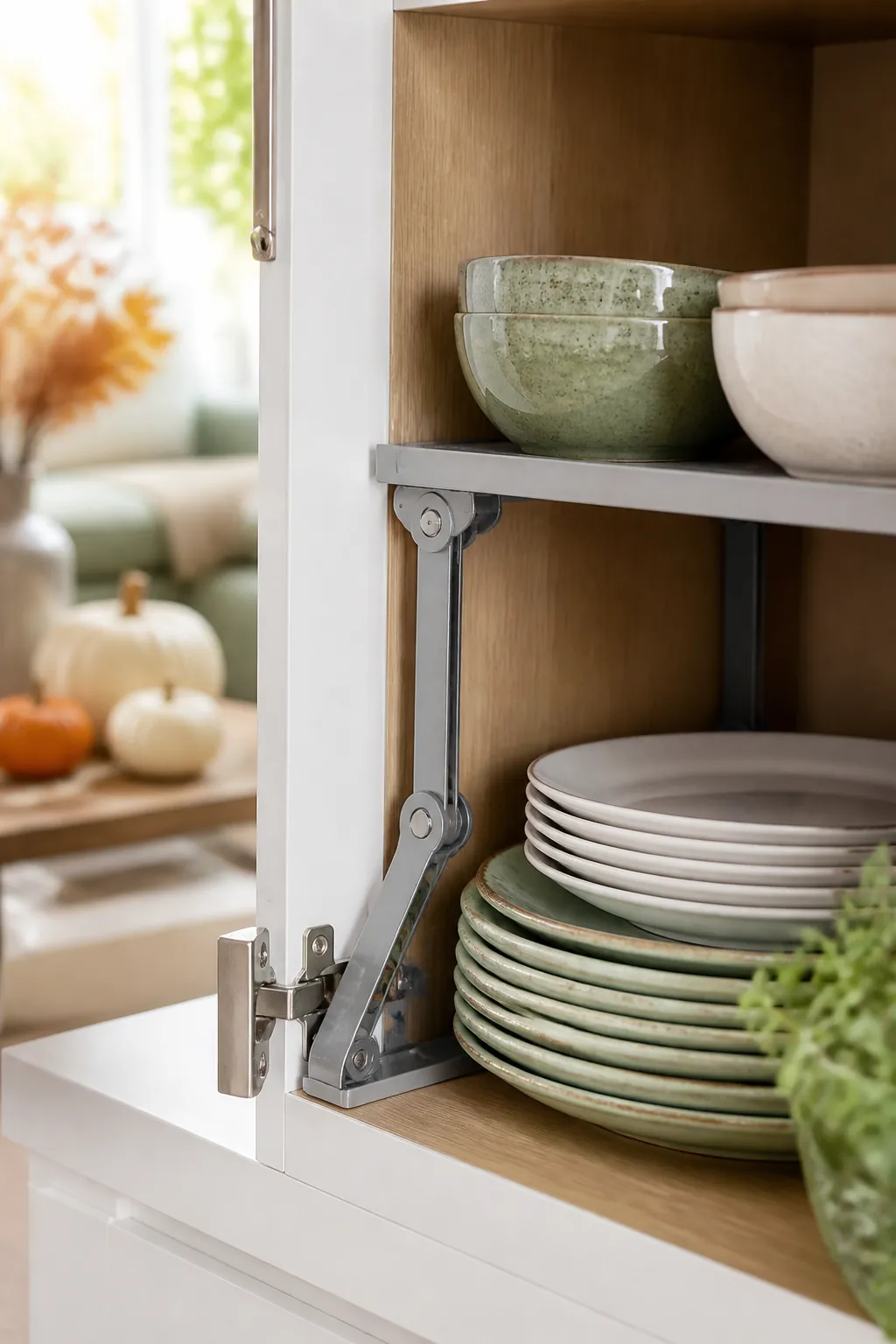
A standard upper cabinet shelf runs about 10 to 12 inches of clear height, which is more room than a stack of everyday plates needs and not quite enough for two stacks at once. An expandable cabinet shelf riser splits that single shelf into two shorter levels, so the extra Thanksgiving plates and side bowls sit above your everyday stack instead of crowding in beside it.
The riser works for flat stacks, not for anything tall or oddly shaped. A gravy boat or a deep serving bowl usually will not clear the gap underneath it, so check the height you actually have left before assuming everything fits. Measure your tallest everyday stack first; the riser only helps if there is spare height above it to split, the same measuring-first habit that matters for cabinet organization in a cramped kitchen the rest of the year.
3. Nest bowls and platters smallest inside largest, not by matching set
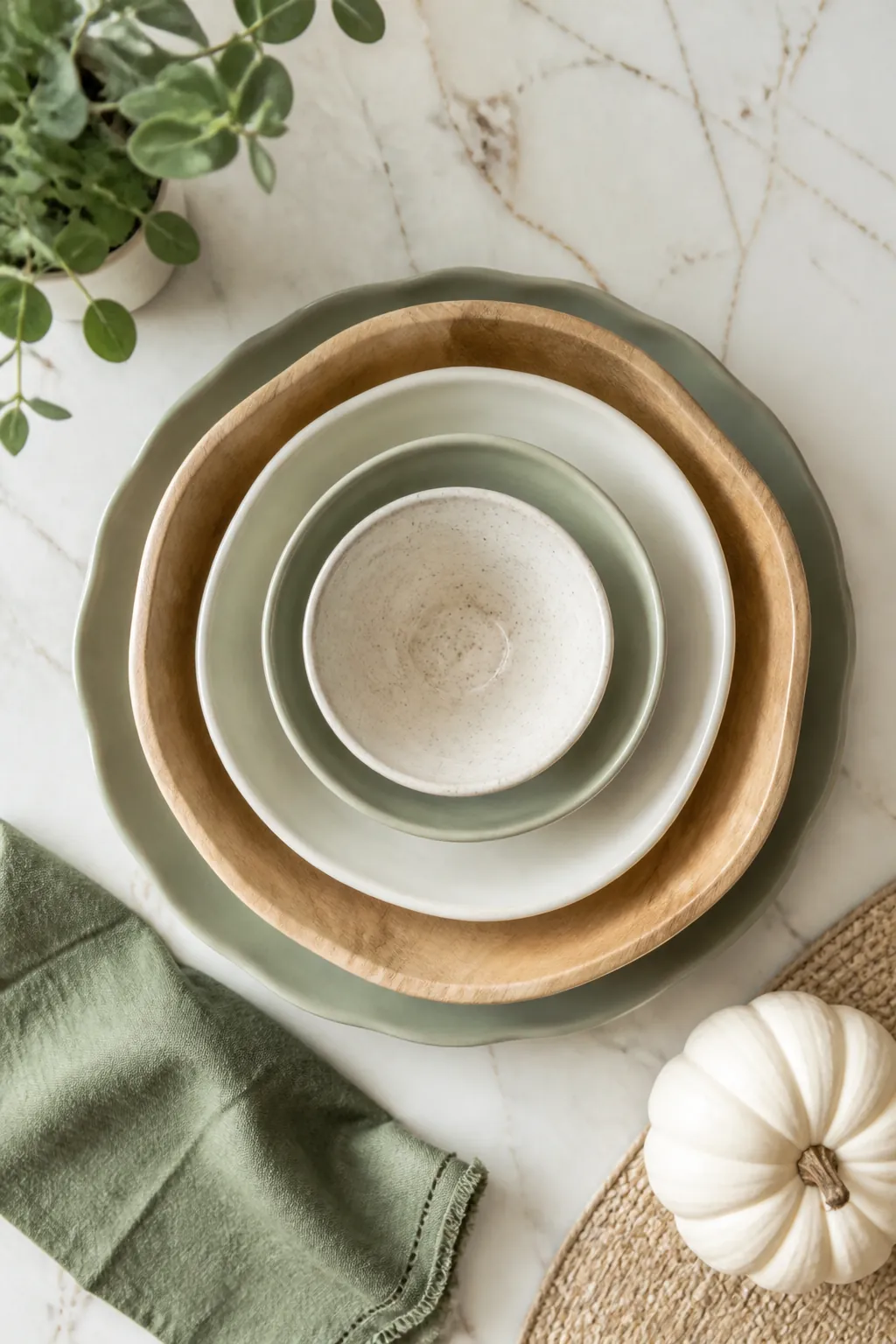
Serving pieces that only come out once a year rarely nest the way they were boxed, since a set bought as a set often ships in foam that keeps every piece separate. Once that packaging is gone, stacking by size rather than by matching set saves the most room: biggest bowl on the bottom, each smaller one inside it, finishing with the smallest on top.
The failure mode is stacking heavy stoneware on top of a lighter glass or ceramic piece, which is how a platter at the bottom of a stack ends up chipped by next Thanksgiving. Put a folded dish towel between pieces that touch glass to glass, and keep the heaviest piece on the bottom, not buried under everything else.
4. Give folding chairs a flat, vertical lane instead of a closet floor pile
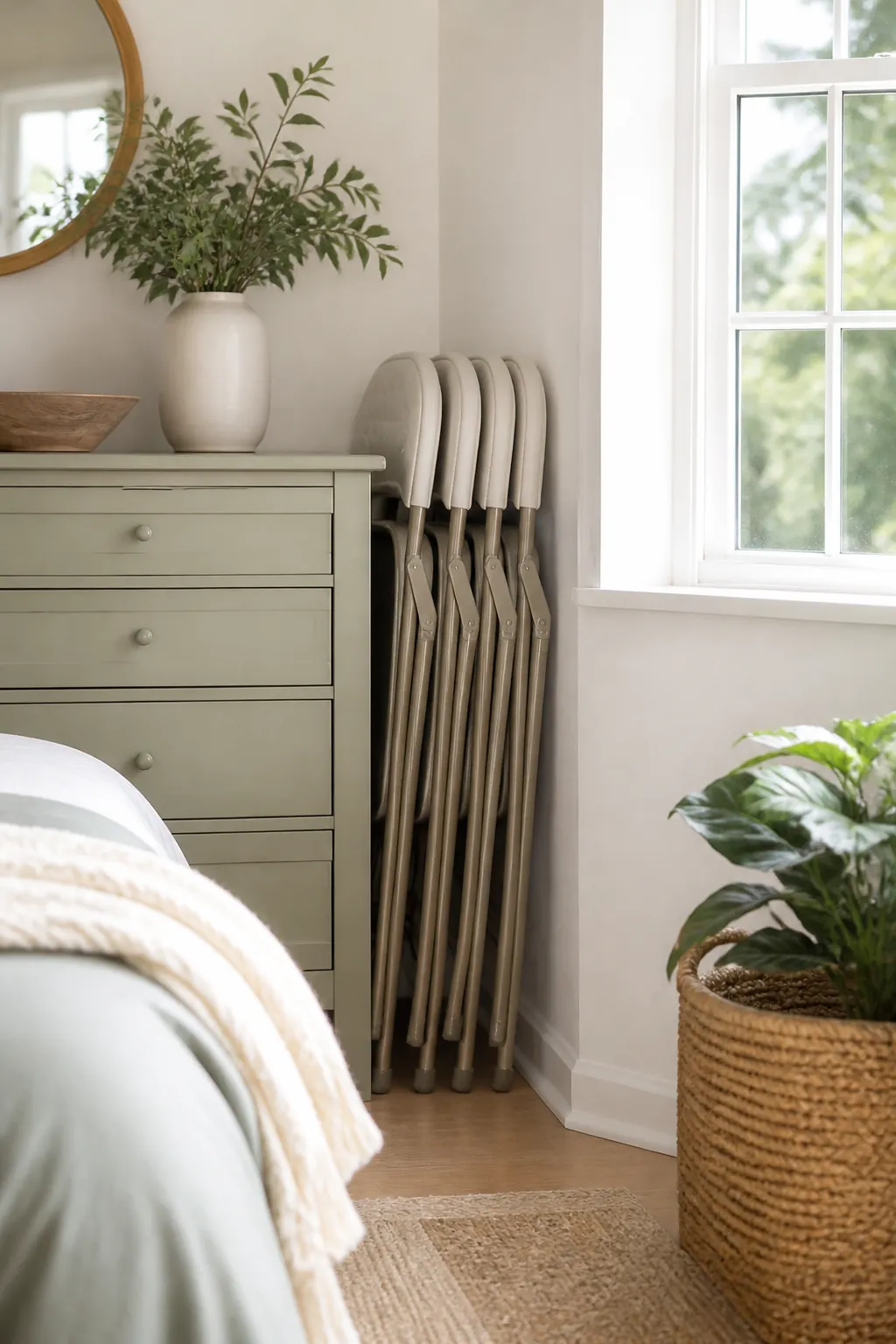
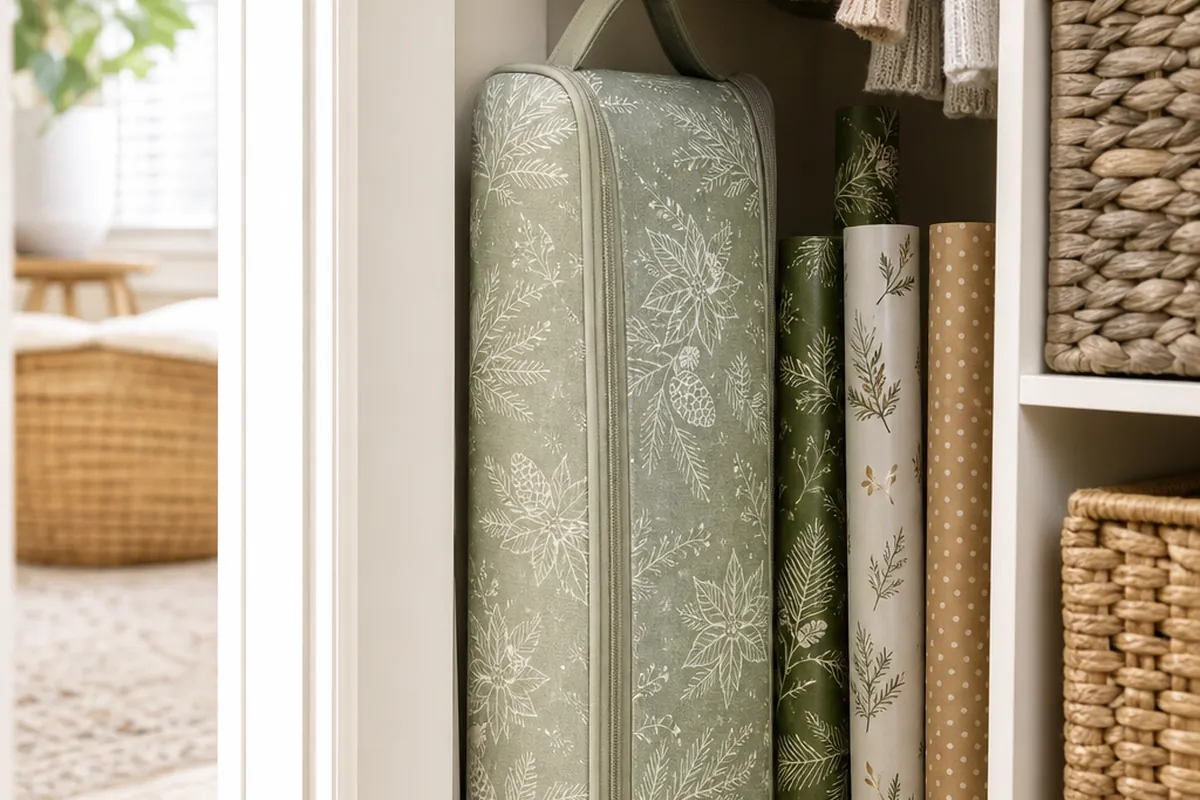
A folded chair is roughly 19 inches wide and about 2 inches thick, so four of them stack to around 8 inches, thin enough for the dead vertical gap beside a dresser, a bookshelf, or the side of a fridge that most apartments have and never use. Leaning them against a closet floor instead just turns into an avalanche the next time someone reaches past them for a coat.
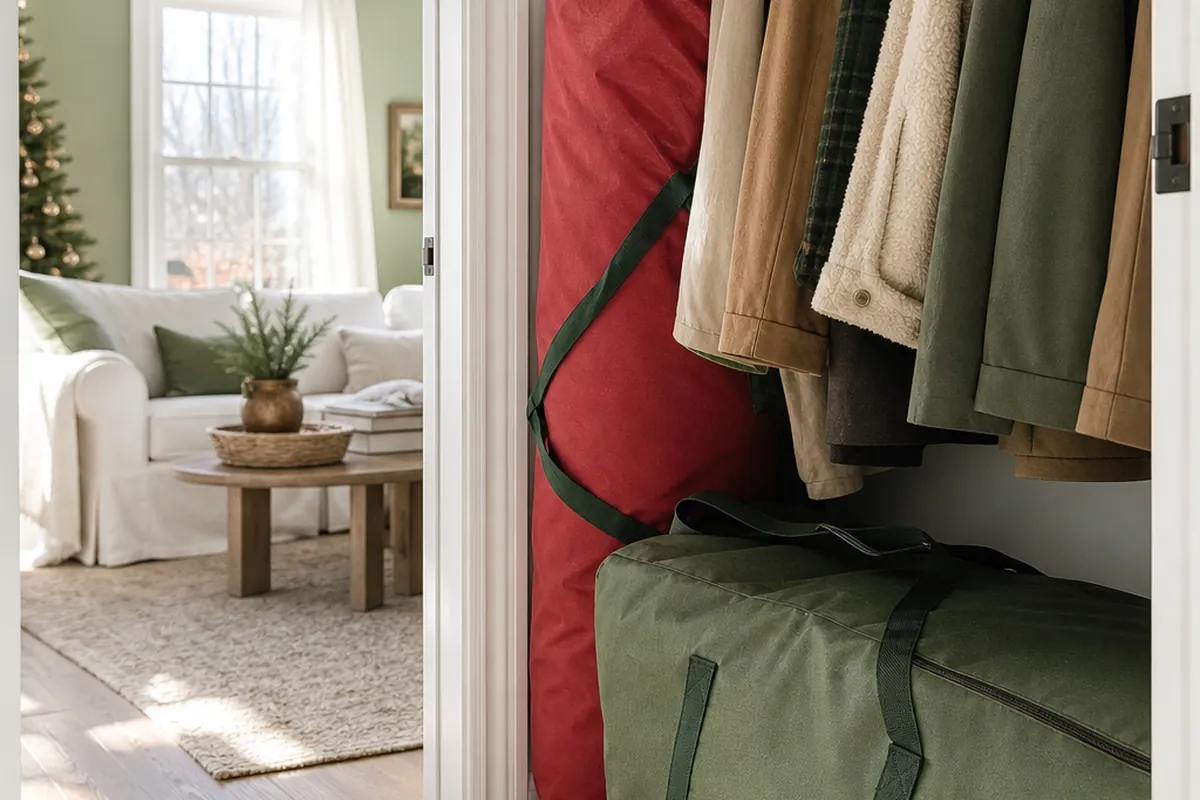
Keep the stack upright and braced against something solid rather than free-leaning, since chairs left at an angle slowly slide and fan out across the floor over months of sitting untouched. If no gap is deep enough, the chairs can go behind a couch against the wall, which claims almost no floor space anyone notices.
5. Break the card table down to its narrowest profile and pick one spot for it
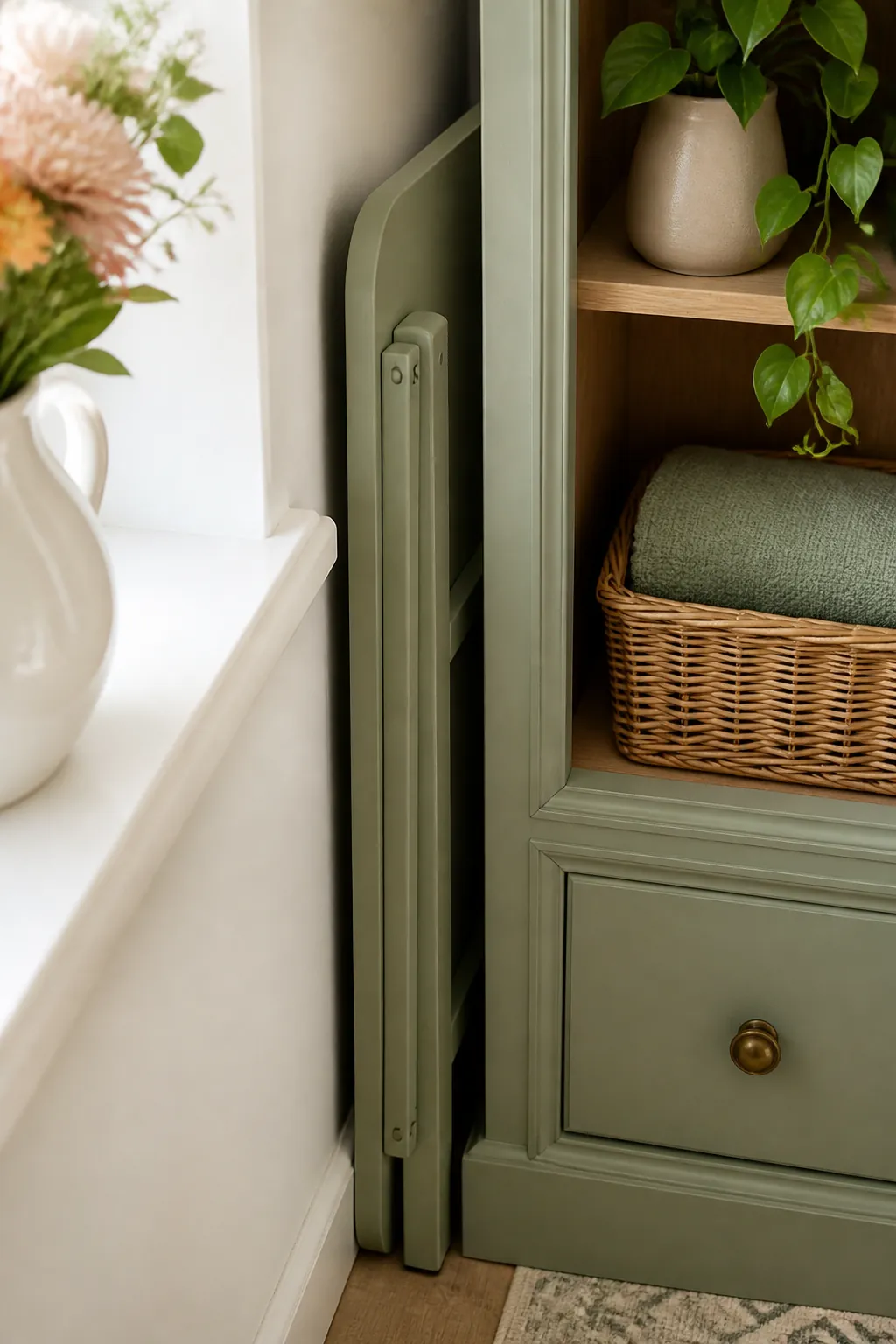
A folding card table is usually square, about 34 by 34 inches unfolded, and collapses to about 34 inches long by 2 to 3 inches thick, thin enough to slide behind a couch, under a bed, or into the same vertical gap holding the chairs. The mistake is treating it as a one-time problem and leaving it propped wherever it landed after the meal, which is how it ends up blocking a closet door by December.
Pick its storage spot before Thanksgiving, not after, so putting it away is a ten-second decision instead of another thing cluttering the apartment for a week. Under a bed works only if the frame clears at least 3 inches, so measure the gap before counting on it.
6. Roll a cart into the kitchen as the counter space you do not have
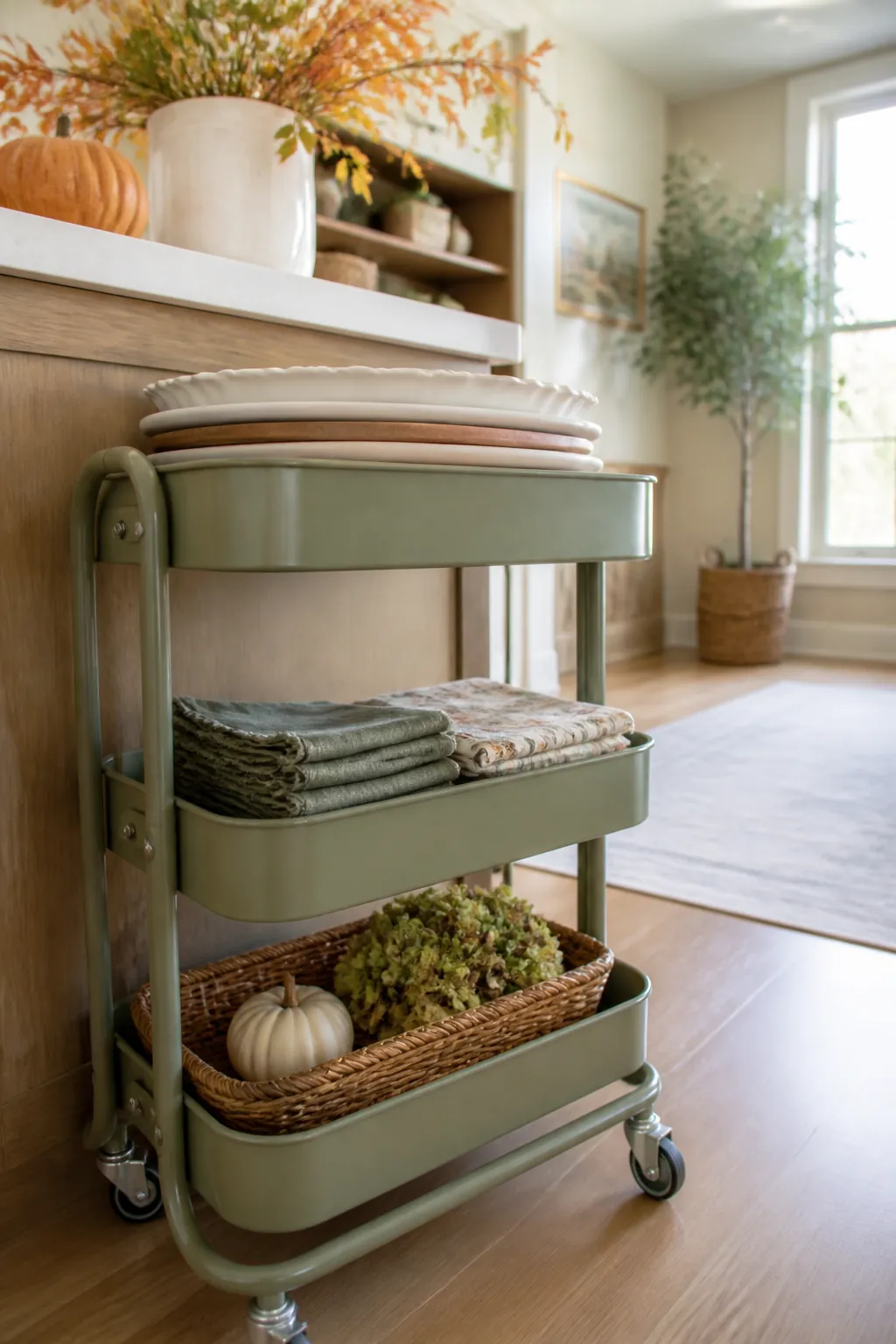
Most small kitchens run out of counter space the moment a turkey, two side dishes, and a stack of serving platters all need somewhere to sit at once. A 3-tier rolling cart solves this by adding a staging surface that rolls in for the day and rolls back out of the way once the meal starts, rather than claiming permanent floor space you cannot spare the other 364 days.
Use the top tier for whatever is about to go on the table, the middle for serving utensils and napkins, and the bottom for the empty containers waiting to receive leftovers. After the holiday, the same cart earns its keep as a bar cart or extra bathroom storage, so it is not a single-purpose purchase taking up a closet corner the rest of the year.
7. Clear the fridge two days out with a stackable bin system
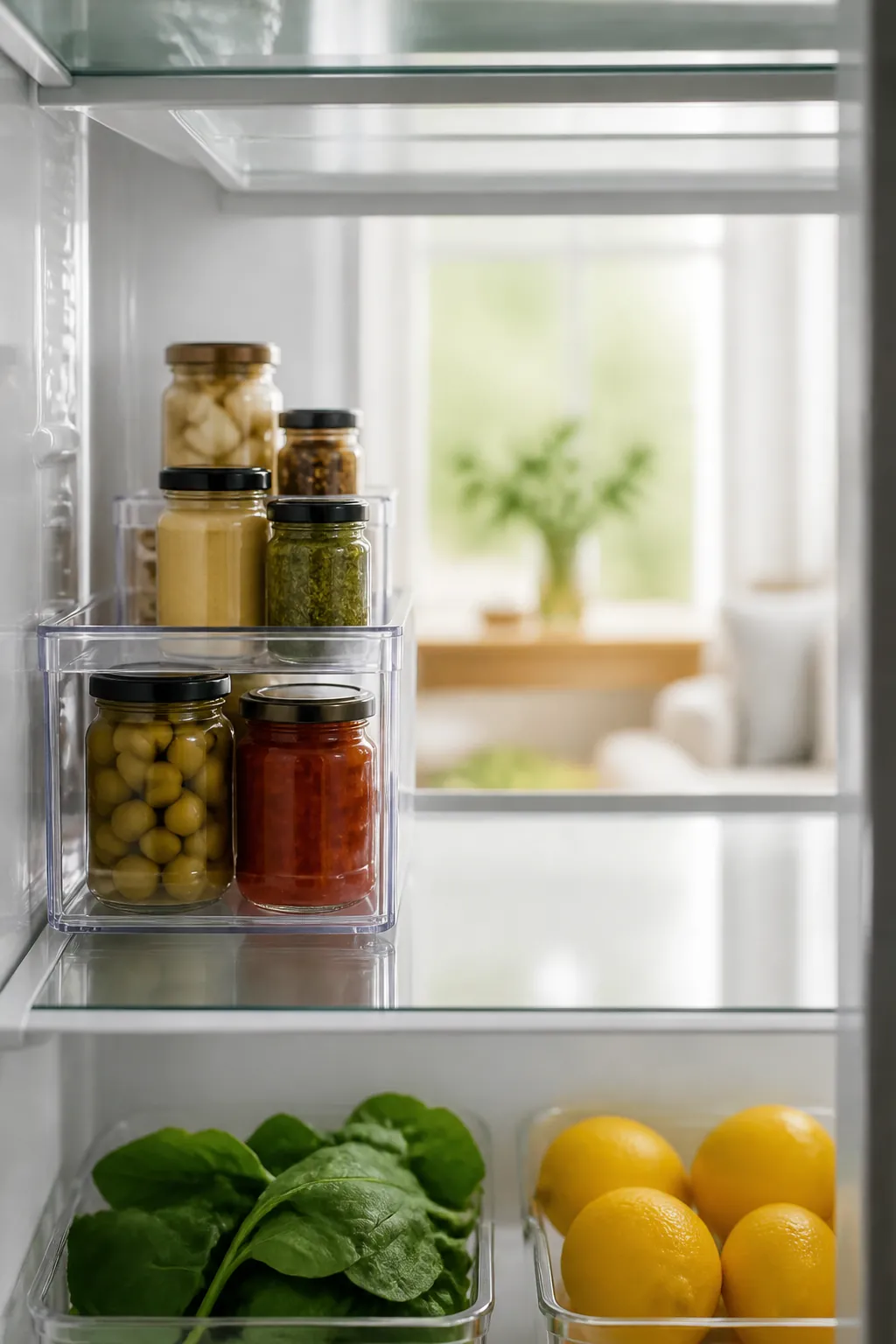
A 12 to 16 pound turkey in a roasting pan needs real vertical clearance, often more than a loaded shelf leaves once you account for everything already in there. Clearing the fridge the morning of Thanksgiving is too late, since half-used jars and the week’s leftovers do not disappear just because you need the room.
Two days ahead, pull anything with an open-ended expiration and consolidate the rest into a clear stackable food storage bin with lid so three half-empty jars take one footprint, the same consolidation move behind most fridge organization for small spaces. If your fridge has a removable shelf, take it out entirely rather than angling the roasting pan around it; most turkey-day fridge disasters are a pan that almost fits, tipping the moment the door swings shut.
8. Pack leftovers in containers sized to what people will actually reheat
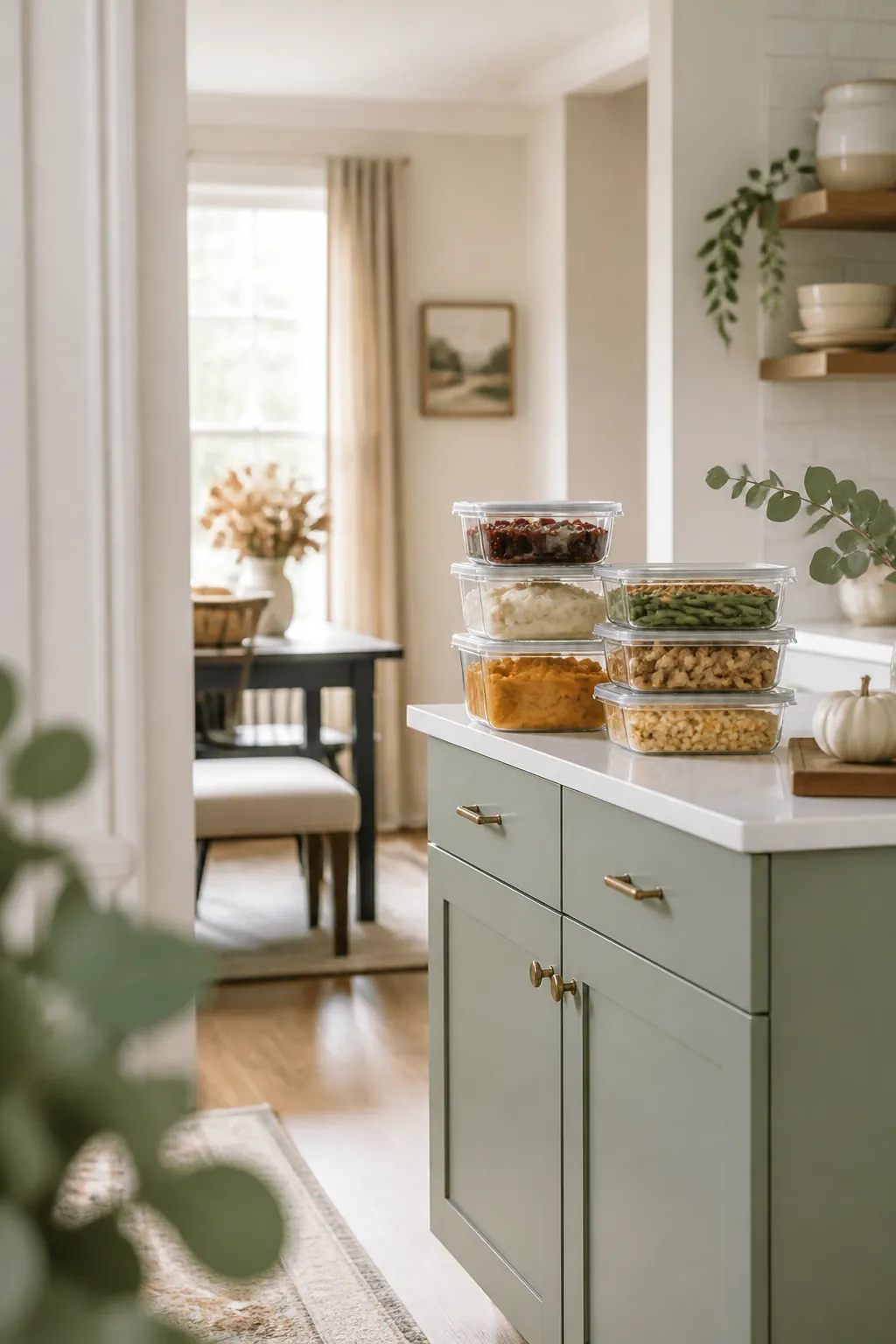
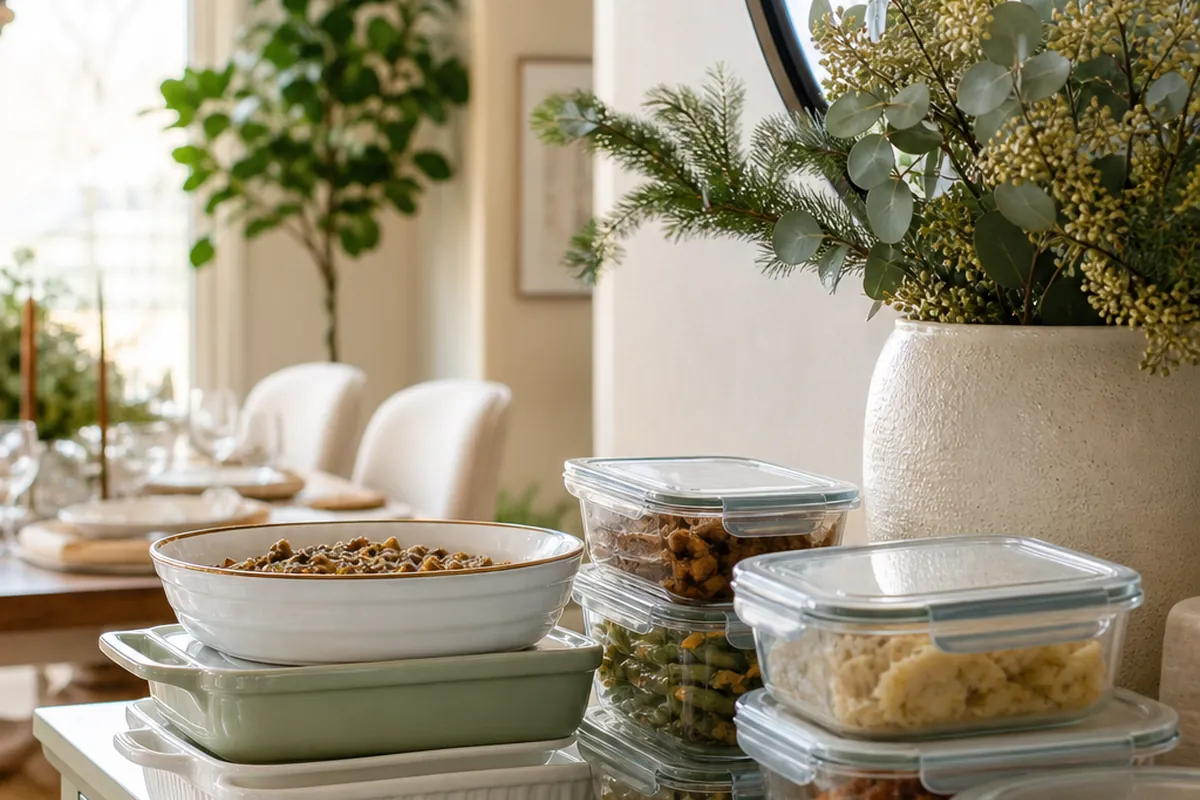
The leftovers that get eaten are the ones packed in portions someone will actually microwave, not one giant tub of mixed sides that needs to be excavated and reheated as a block. Split the meal into turkey, stuffing, mashed potatoes, and gravy as separate containers rather than one combined pile, and size each one close to a single reheated portion rather than packing everything into whatever container is biggest.
Stackable containers with flat lids matter here more than total count, since round tubs waste the square gaps a flat-sided container would fill, and a fridge full of leftovers in mismatched shapes runs out of room fast. Plan for eight to ten quart-sized containers for a table of eight, plus one larger one for the carcass if you are making stock afterward.
9. Freeze what will not get eaten within four days, and label the lid
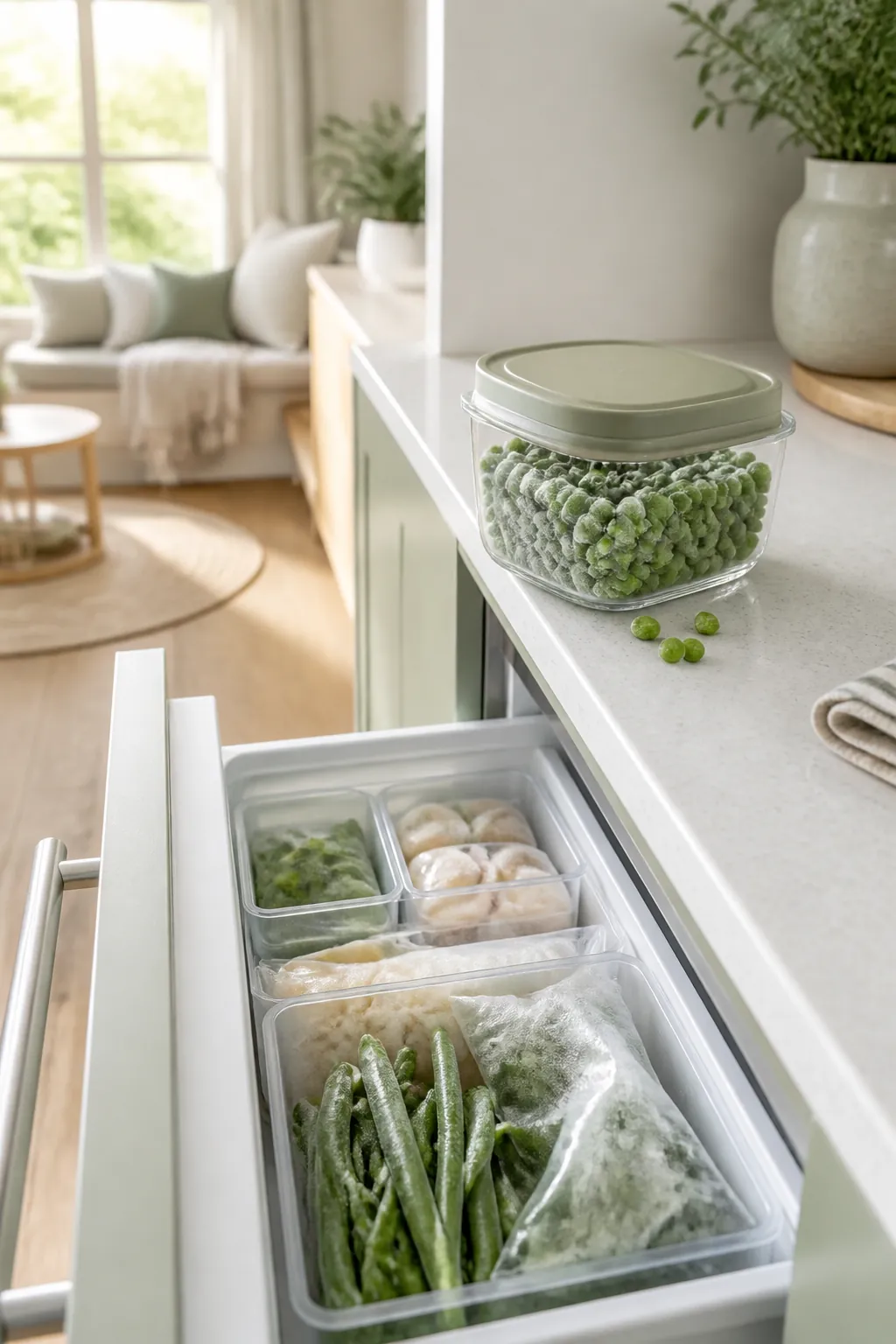
Cooked turkey, stuffing, and sides hold safely in the fridge for three to four days from when they came off the heat, not from the day you ate them, and gravy is usually the first to turn, often by day three. If nobody is realistically touching that fourth container of stuffing before the window closes, move it to the freezer on day one or two instead of gambling on day four.
Turkey keeps its texture frozen for up to about four months, stuffing and gravy for two to three months, in an airtight container with the air pressed out. Write the contents and the date on the lid before it goes in, since a frozen container looks identical six weeks later and gives no other way to tell a fresh portion from one that has sat there since last winter.
10. Store the once-a-year serveware somewhere that is not daily cabinet space
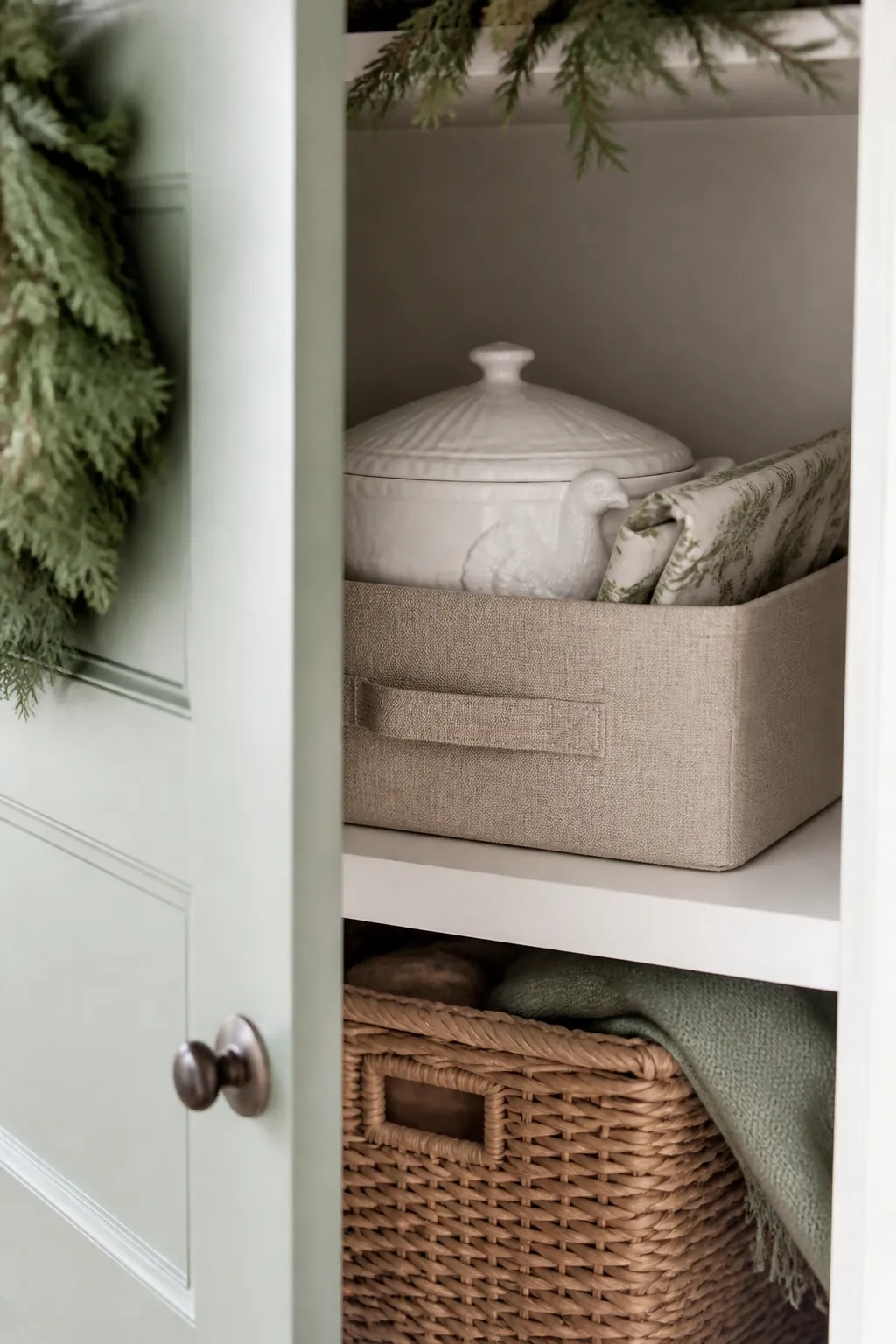
Once the meal is over and everything is washed, resist the urge to put the platters, the gravy boat, and the extra tablecloth straight back into the kitchen cabinet they borrowed space from all week. That cabinet needs to go back to holding what you actually use in December and every month after.
A closet’s top shelf usually runs 12 to 14 inches deep, enough for a stacked platter and a folded tablecloth laid flat beside it, and that or the space under a bed holds once-a-year serveware better than prime kitchen real estate does, the same top-shelf-for-rare-items logic behind storage closet organization for a small apartment, since you are trading easy daily access for space you will not miss until next November. Label the container with what’s inside, so next year’s setup starts with a found box instead of a search through every cabinet in the apartment.
Where to start
Start with the headcount, since every other decision scales off it. Then handle the one-day equipment: fold the chairs and the card table down to their narrowest profile and give each a specific vertical gap, not a pile on the closet floor, and roll a cart in if the kitchen counter cannot hold what cooking day needs.
Clear the fridge two days ahead rather than the morning of, and have leftover containers ready before the meal ends, sized for reheating rather than speed of packing. Once everything is washed, send the once-a-year serveware back to the top shelf or under the bed, not the kitchen cabinet, so the apartment resets to normal by the weekend.