Every guide to storing Christmas ornaments assumes you have somewhere to put the box. An attic, a garage shelf, a basement corner. In a small apartment you have a closet that is already full, the space under a bed, and possibly a hallway shelf, and the ornaments have to share all of it with the rest of your life for eleven months of the year.
That changes the job. It is not about buying the biggest box. It is about getting a fragile, awkwardly shaped collection into the two or three gaps an apartment actually has, in a form that survives being slid, stacked, and forgotten about until December. Ten ideas below, in the order I would do them, starting with the ones that cost nothing.
1. Take the tree down in the order you will put it up
Ornaments come off a tree fast and go back on slowly, and most of the slowness is sorting. So sort as you undress the tree rather than as you dress it. Lights first, then garland, then the top third of the tree, then the middle, then the bottom, each into its own tray or pile.
If you decorate by color or theme, keep those groups together too. Next December you open a box and the top-of-tree ornaments are the top tray, and the whole thing goes up in an evening instead of a weekend. It is the cheapest idea here and the one that saves the most time.
2. Cull before you pack, not after
Nobody culls ornaments in December. You are rushing, it is a bit sad, and the box is right there. So the collection only ever grows, and in an apartment the growth is the problem.
Before anything goes into a box, make three piles: broken, duplicates, and ornaments you have not hung in two years. The broken ones go. Duplicates and the unhung ones get a hard look. A collection that fits in one cube box is a collection you can store on a closet shelf. A collection that needs three is a collection that lives in a hallway.
3. Photograph the tree before you touch it
Two photos, one of the whole tree and one close-up of any section you are particularly pleased with. It takes thirty seconds and it is the single most useful thing in the box next year, because it settles every “where did that go” argument before it starts. Tape a print to the inside of the lid, or just leave it in your camera roll in an album called Tree.
4. Wrap glass and anything old individually, and never in newspaper
Most ornament breakages do not happen when a box is dropped. They happen when ornaments touch each other, or when a hook left on one scratches the next one along, every time the box is slid under a bed or lifted onto a shelf. Individual wrapping stops that. Acid-free tissue is the right material. Newspaper is the wrong one: the ink transfers onto glass and painted finishes over a warm summer, and it is the most common way an heirloom bauble ends up gray.
For the tiny ornaments, an egg carton inside the box is a free set of twelve padded compartments. For the medium ones, a plastic cup with tissue in it does the same job.
5. Choose the box by where it will live, not by how much it holds
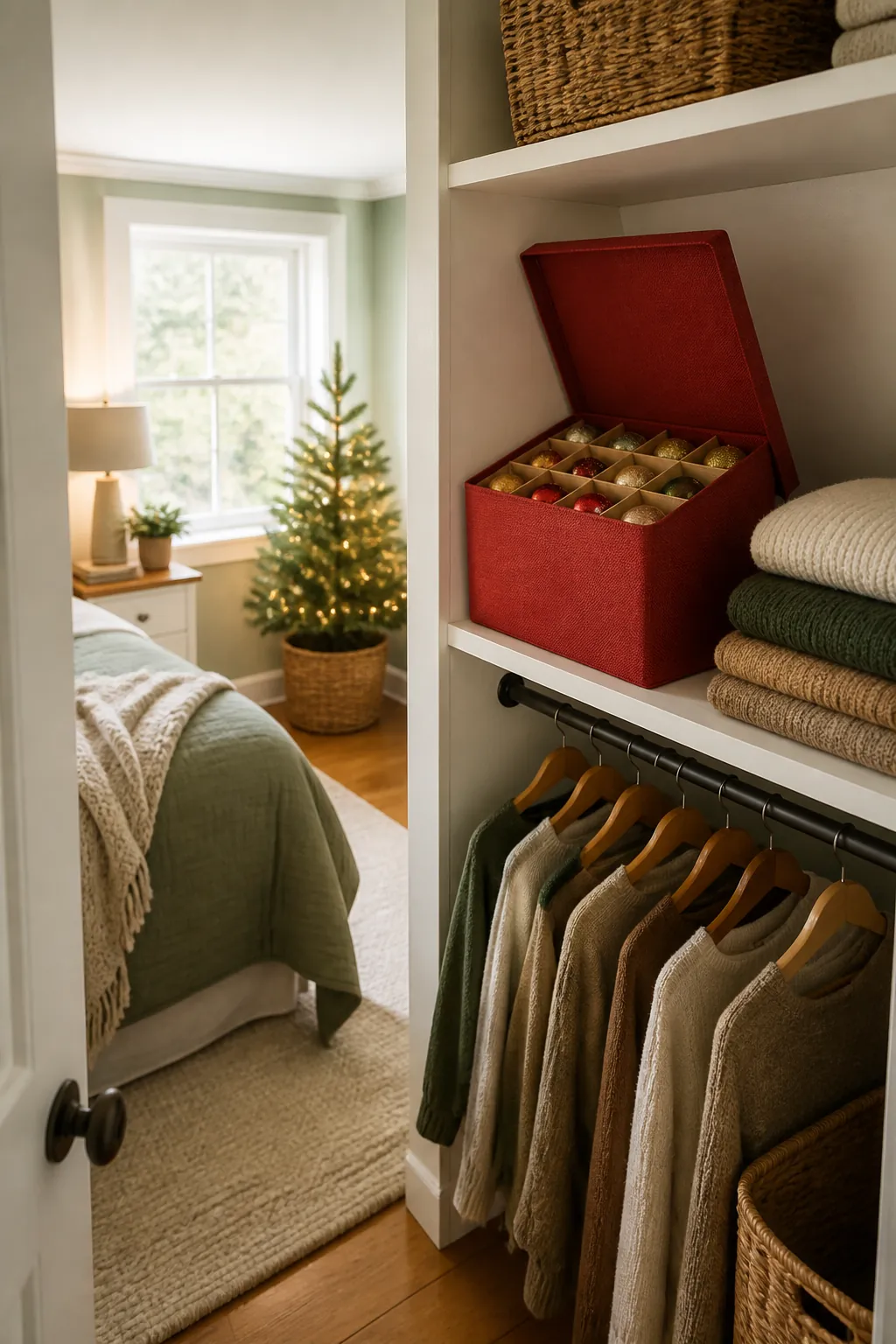
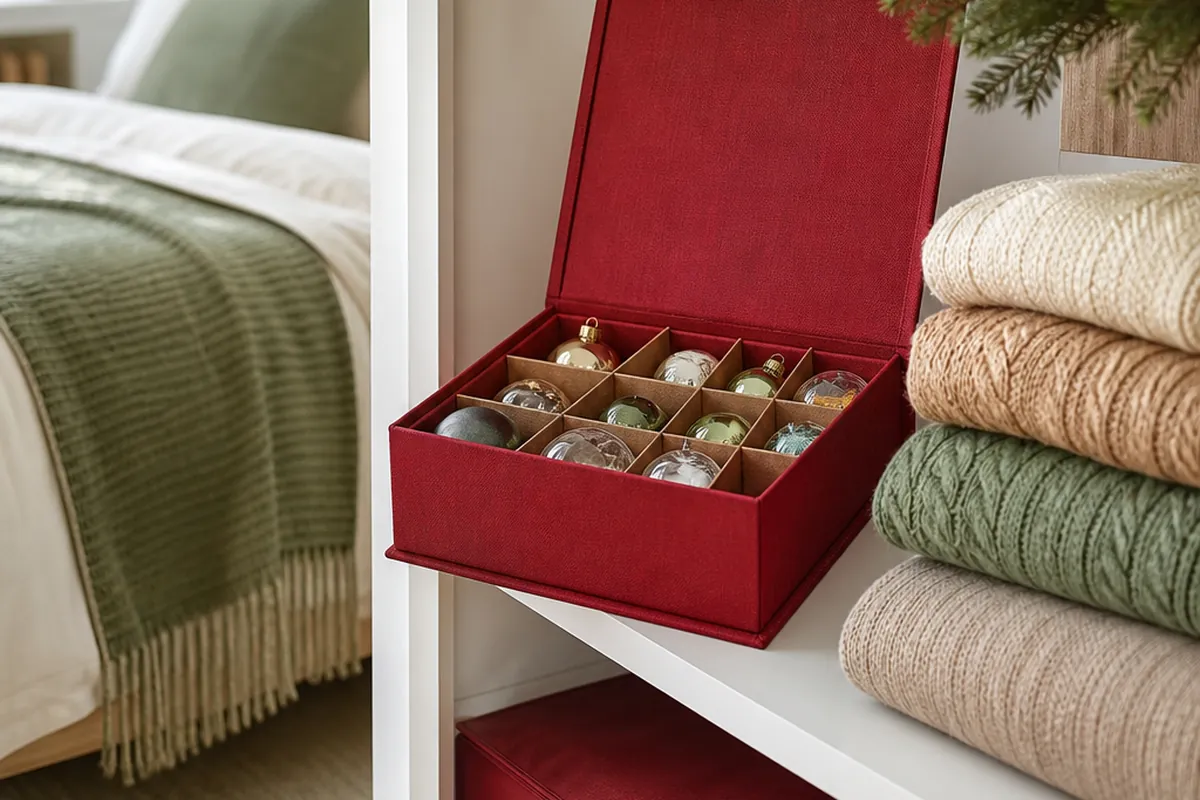
The mistake is buying the 128-ornament box because it is only a few dollars more, then discovering it lives on the floor of the closet with everything else piled on top. In a small apartment the box has to fit a specific gap, and the gap comes first.
For a closet shelf, that gap is usually a cube. A cube ornament storage box with dividers holding 64 three-inch ornaments is about thirteen inches on every side, which sits on a standard shelf with room beside it, and the dividers are the kind you can pull out to make room for one awkward larger piece. Check the height between your shelf and the one above before you order, because thirteen and a half inches is taller than some shelf gaps.
Two smaller boxes also beat one large one for the simple reason that two boxes can live in two different gaps.
6. Go flat under the bed, and measure the gap first
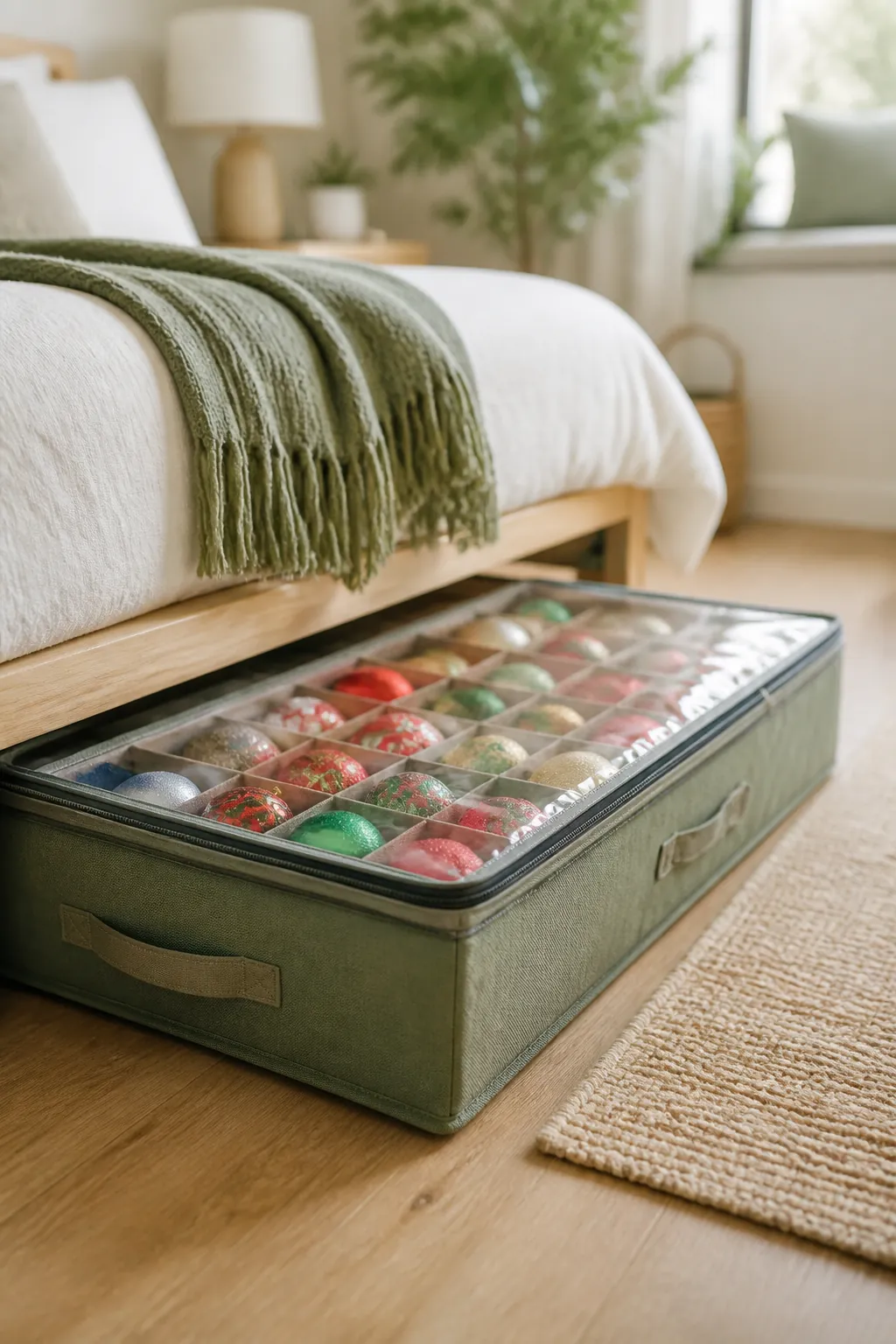
The space under a bed is the biggest unused volume in most apartments, and ornaments are light, so this is where the bulk of a collection should go. A flat under-bed ornament storage box takes around 120 ornaments in a single layer of dividers, and because it is one layer nothing sits on top of anything else.
The one rule is to measure before you buy. These boxes are about seven inches tall, and the most common complaint about every one of them is a bed frame that turns out to be half an inch too low. A tape measure from the floor to the underside of the frame, not the mattress, takes ten seconds and settles it. Slide the box in from the foot of the bed so you can reach it without moving anything. The same logic applies to everything else that lives down there, and the guide to under-bed storage for seasonal clothes covers how to share that space without it turning into a dumping ground.
7. Strip the hooks and store them separately
Ornament hooks are the source of most of the scratches and half the tangling. Take every hook off as the ornament comes down and drop it into one small lidded container, a jam jar, an old spice tin, anything that seals. Next year you hook as you hang, from a single pot, instead of untangling a wire nest from the bottom of the box. It also stops a stray hook from working its way through the tissue on the ornament beside it during eleven months of being slid in and out. Keep the pot inside the ornament box rather than loose in the closet, and count the hooks once before you seal it; if you have sixty ornaments and forty hooks, buy the pack now while they are cheap, not on the twentieth of December when every store is out.
8. Hang the wreath instead of boxing it
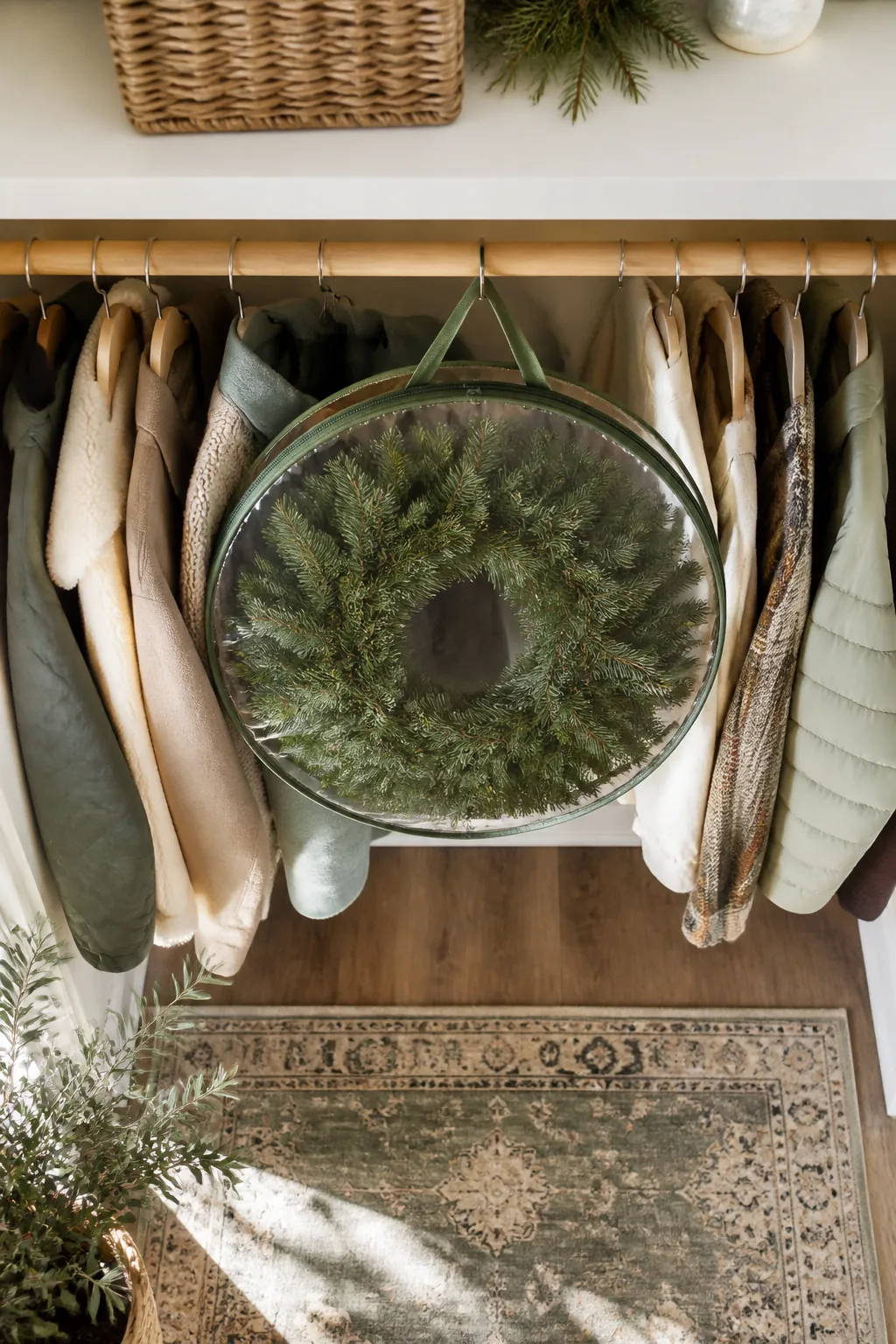
The wreath is the most awkward object in the whole collection. It is big, it is fragile in a different way from the ornaments, and it does not stack. Do not try to box it. A clear hanging wreath storage bag zips around a wreath up to about thirty inches and hangs from the closet rod by its handle, taking up a few inches of rail and no shelf or floor at all.
Clear matters here more than it sounds. You can see it is the wreath without unzipping it, and you can see if anything has been crushed against it. Hang it at the end of the rod where the coats are thinnest, or on the back of the closet door if there is a hook. If that rod is already at capacity, the coat closet organization guide is about making the room for it.
9. Keep the box away from the bathroom wall and the radiator
Small apartments do not have a neutral zone. Every closet shares a wall with something, and the two things that damage ornaments in storage are humidity and heat. Humidity softens the glue on glitter and trim, makes fabric and paper ornaments smell musty, and can spot the silvering inside older glass. Heat fades paint and warps plastic.
So the closet that backs onto the bathroom, the shelf above the radiator, and anywhere in the kitchen are all out. That usually leaves a bedroom closet or under the bed, which is convenient, because those are the two places the ideas above already use.
10. Store it with the rest of the season, and label the outside
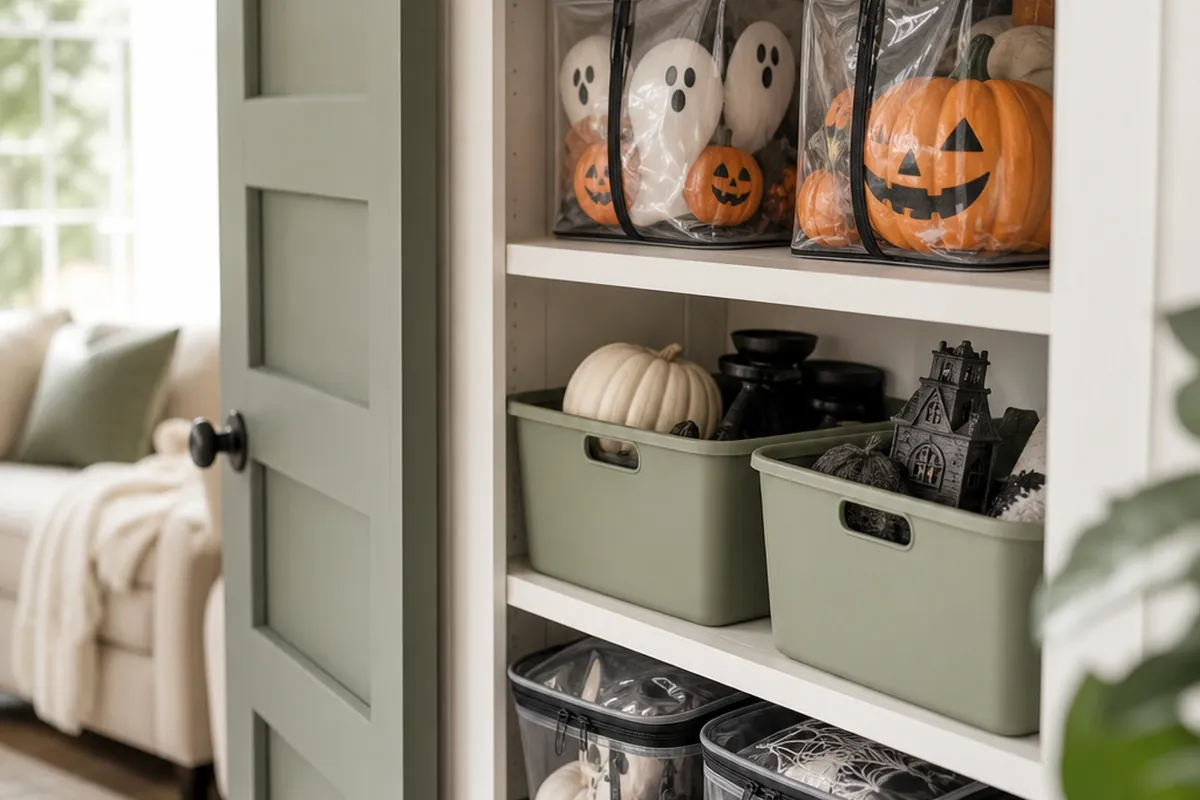
Christmas is not the only holiday that generates a box. If you have already worked out where the Halloween decorations live, the Christmas ornaments belong in the same zone, so that “seasonal” is one place in the apartment rather than four. Then label every box on the side that faces out, not the lid, because you will be reading it from the closet doorway or from the floor beside the bed, and a label on the lid is a label you cannot see.
Write what is inside and where it goes: “Tree, top third” is more useful than “Ornaments 1”. If you took the photos in idea three, note which box has the print.
Where to start
Do the free things first: take the tree down in sections, cull the broken and unloved, photograph it, wrap the glass, strip the hooks. That alone usually cuts a collection to one or two boxes and stops most of the breakage.
Then match the boxes to the gaps you actually have. A cube for the closet shelf, a flat box for under the bed, a bag on the rod for the wreath. Measure the bed gap before you order anything, keep it all away from the bathroom wall, and label the side you will see. Next December it goes up in an evening.