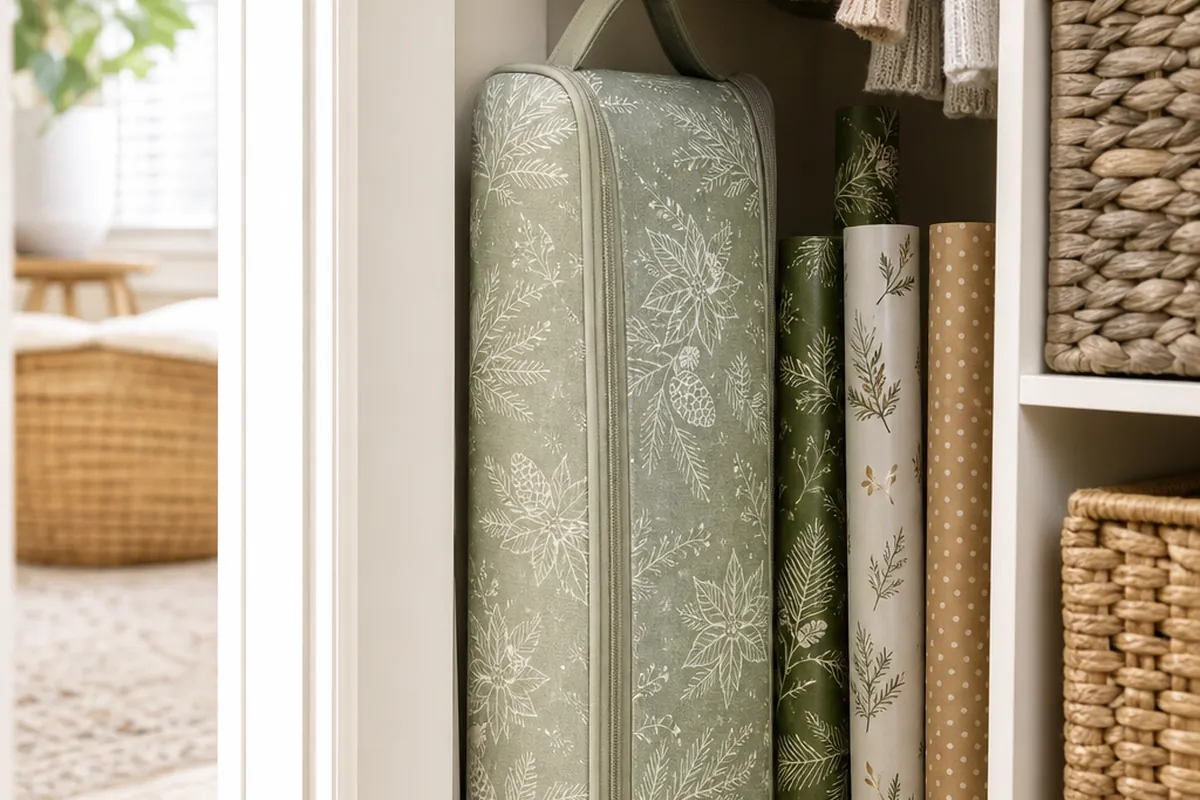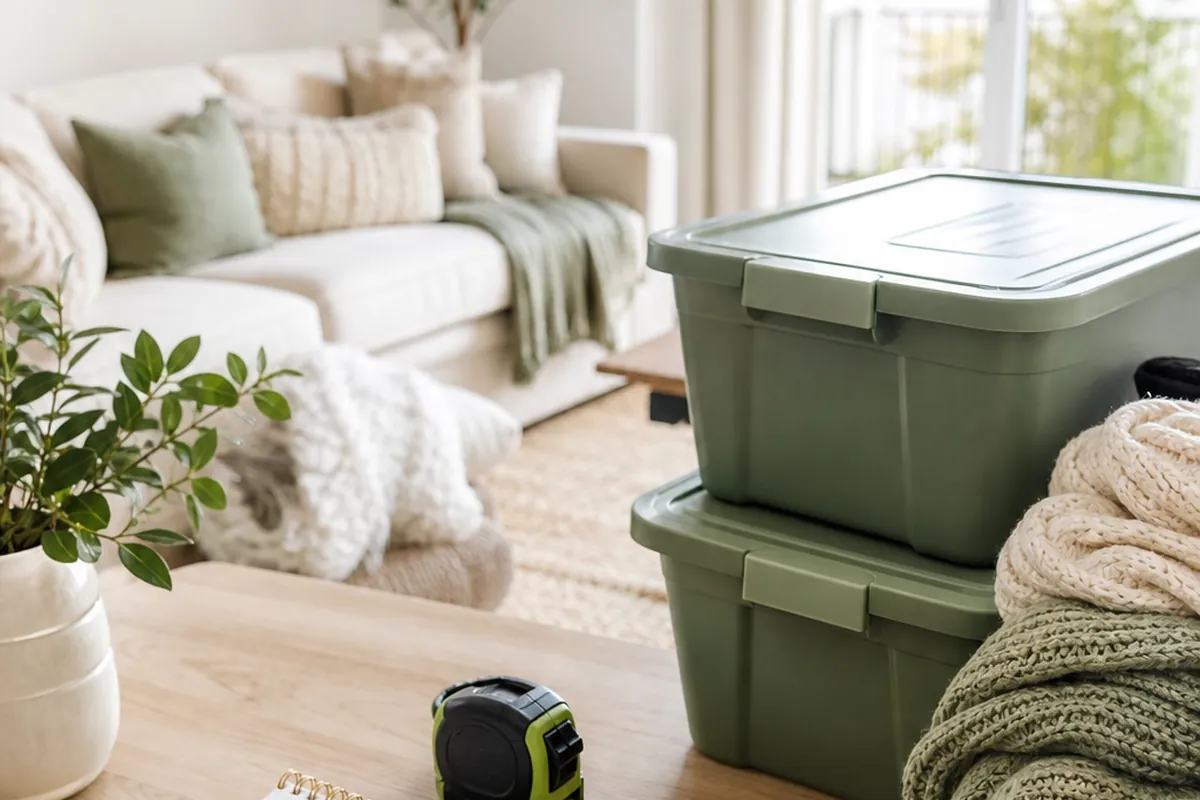
A wreath does not pack flat, does not stack, and does not shrink to fit a gap the way a folded sweater does. It is a circle of wire and florals that wants either to hang or to lie completely alone, and a small apartment with no attic or garage has exactly three or four places that can offer it either. Garland is worse: long, tangle-prone, and usually an afterthought shoved in beside the wreath at the last minute.
None of that means the wreath lives on top of the refrigerator from January to November. It means picking the right gap for the wreath you actually own, measured honestly, and treating a real or dried wreath differently from a plastic one. Nine ways to do that below.
1. Measure the wreath’s diameter and its depth before you pick a method
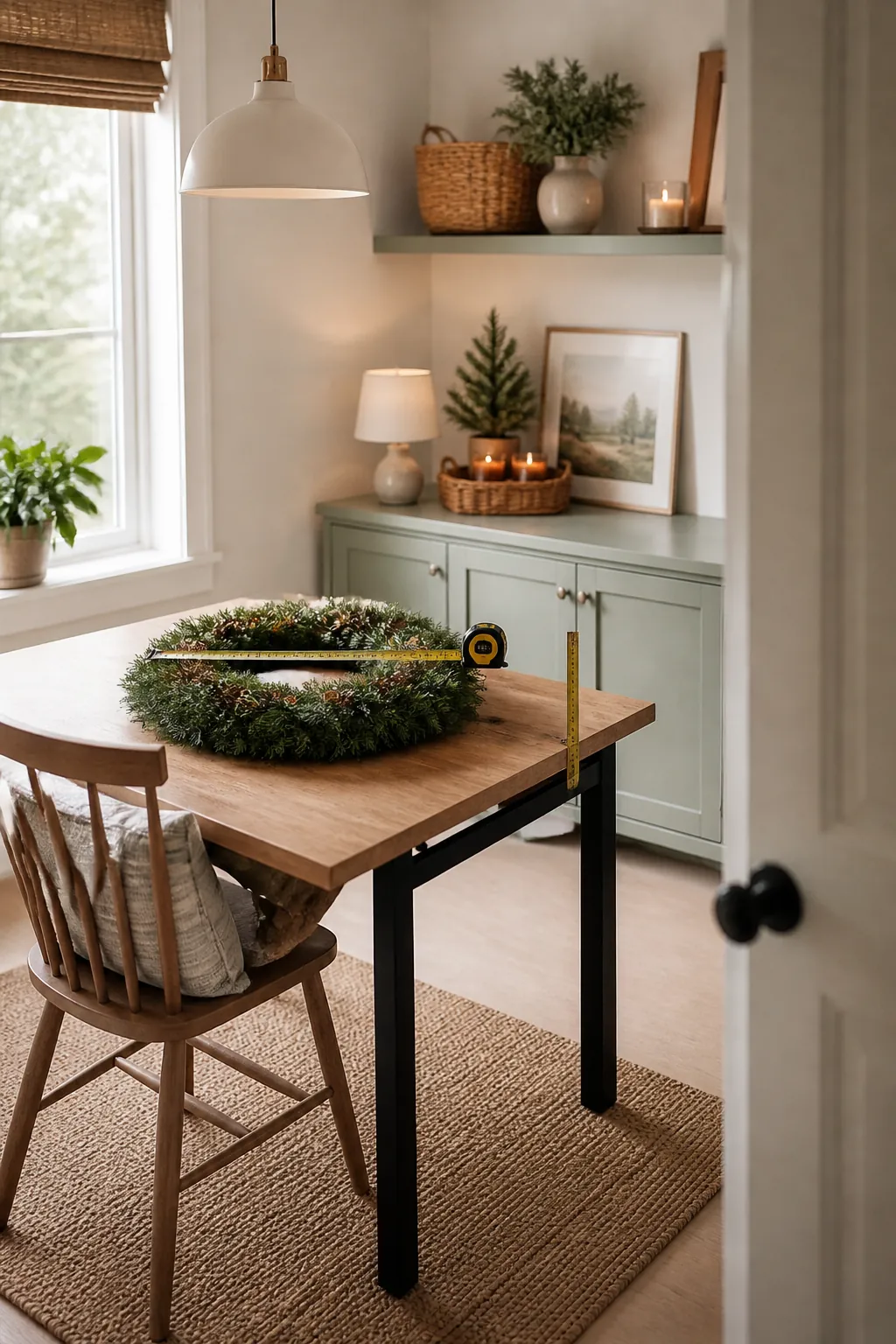
Diameter is the number everyone measures, and it is the easy one: lay the wreath flat and read across the widest point. Most faux wreaths run 24 to 30 inches across, with grapevine and mixed-floral styles sometimes wider once the wired-on picks are spread out.
Depth is the one that actually decides where it goes, and almost nobody checks it. A flat wreath with a thin wire frame and pressed-in greenery can be as shallow as 3 inches front to back. One with layered florals, pinecones, or a wired bow stacked onto the base can run 6 to 8 inches deep. That depth decides whether a wreath clears a closed door, fits under a bed frame, or needs a shelf to itself. Measure both before reading on, since every option below depends on one of these two numbers.
2. Hang it in a clear bag at the end of the closet rod

For a flat-to-medium wreath, this is the default. A clear hanging wreath storage bag zips closed around a wreath up to 30 inches in diameter and hangs by its own handle from the closet rod, the way a garment bag does. It has no stated weight rating or second size on the listing, so treat 30 inches as the ceiling and don’t assume a heavier, deeper wreath will zip shut without the florals pressing flat against the clear plastic.
Hang it at the end of the rod, past the last coat, where there’s a few inches of rail with nothing pressing in from either side. A wreath squeezed between two winter coats for eleven months comes out flattened on both faces, and the clear bag lets you check it’s not happening without unzipping anything.
3. Mount an over-the-door hook, but only after checking the swing
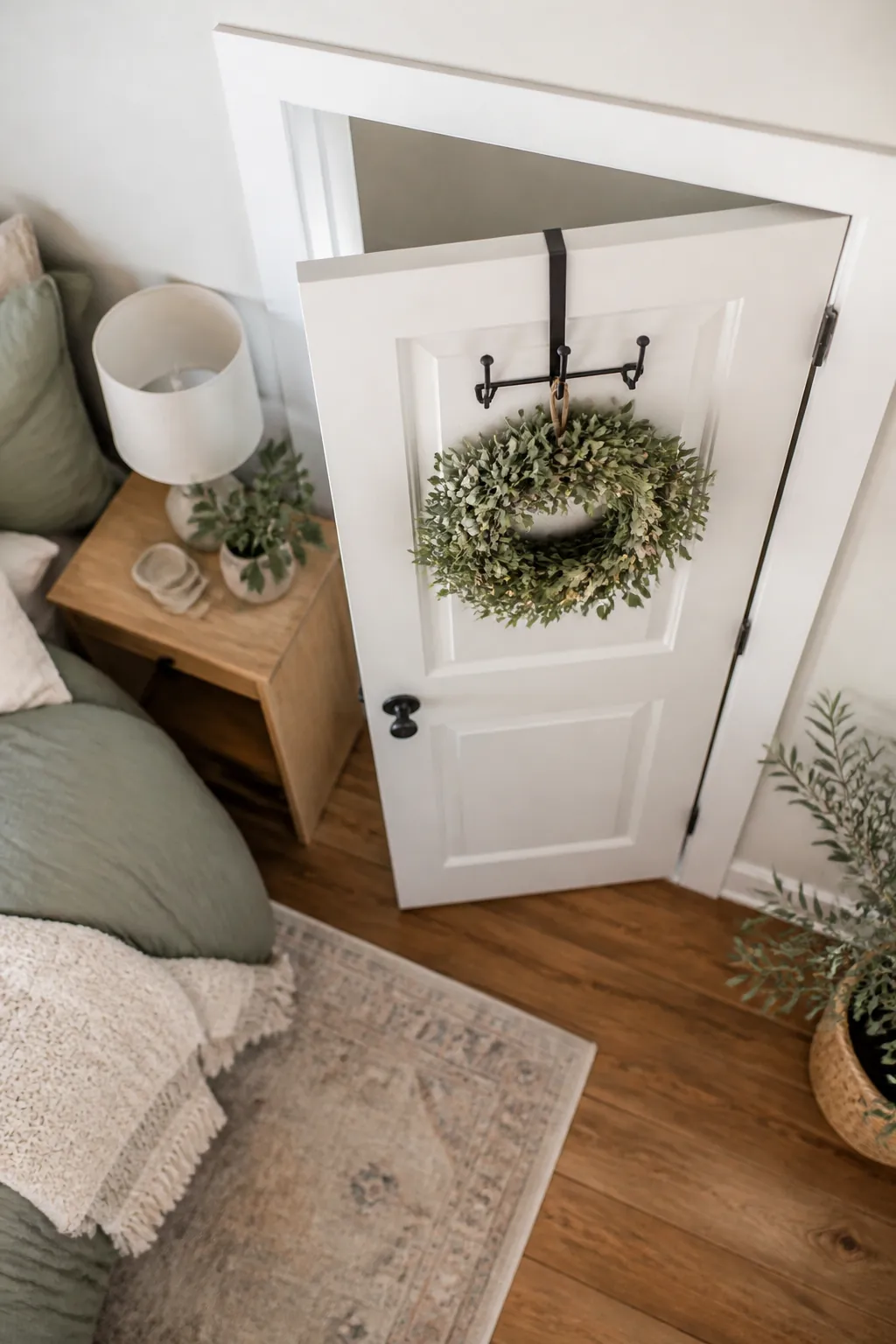
An over-the-door hook hanger is the obvious move for a wreath too deep to bag flat, since it hangs facing out into the room instead of pressed against anything. The problem is depth stacking up where you don’t expect it. A standard interior door runs about one and three-eighths inches thick, the hook bracket adds another inch or two over the top edge, and the wreath’s own depth sits on top of that. A 6-inch-deep wreath on a hook can add four or five inches a closet or bathroom door needs to swing through, and in a tight approach that’s enough to stop the door closing or scrape the wreath against the frame every time it opens.
Test it closed, not just hung: open the door, hang the wreath, then swing the door shut the whole way before deciding this is where it lives.
4. Lay it flat on the closet’s top shelf if there’s dead air to spare

Most closet shelves have eight to twelve inches of dead air between whatever sits on them and the shelf above, and a flat wreath takes up almost none of that lying on its back. This works well for a deep or heavy wreath a bag or door hook can’t handle, as long as nothing else gets set on top of it.
That last part is the failure mode worth planning around. A flat wreath under even one stacked bin loses its shape within a season, the wire frame bending wherever the weight presses hardest, and a bent wreath doesn’t spring back. If the shelf is shared, the wreath goes on top of the pile every time it’s put away.
5. Box a real or dried wreath instead of zipping it shut
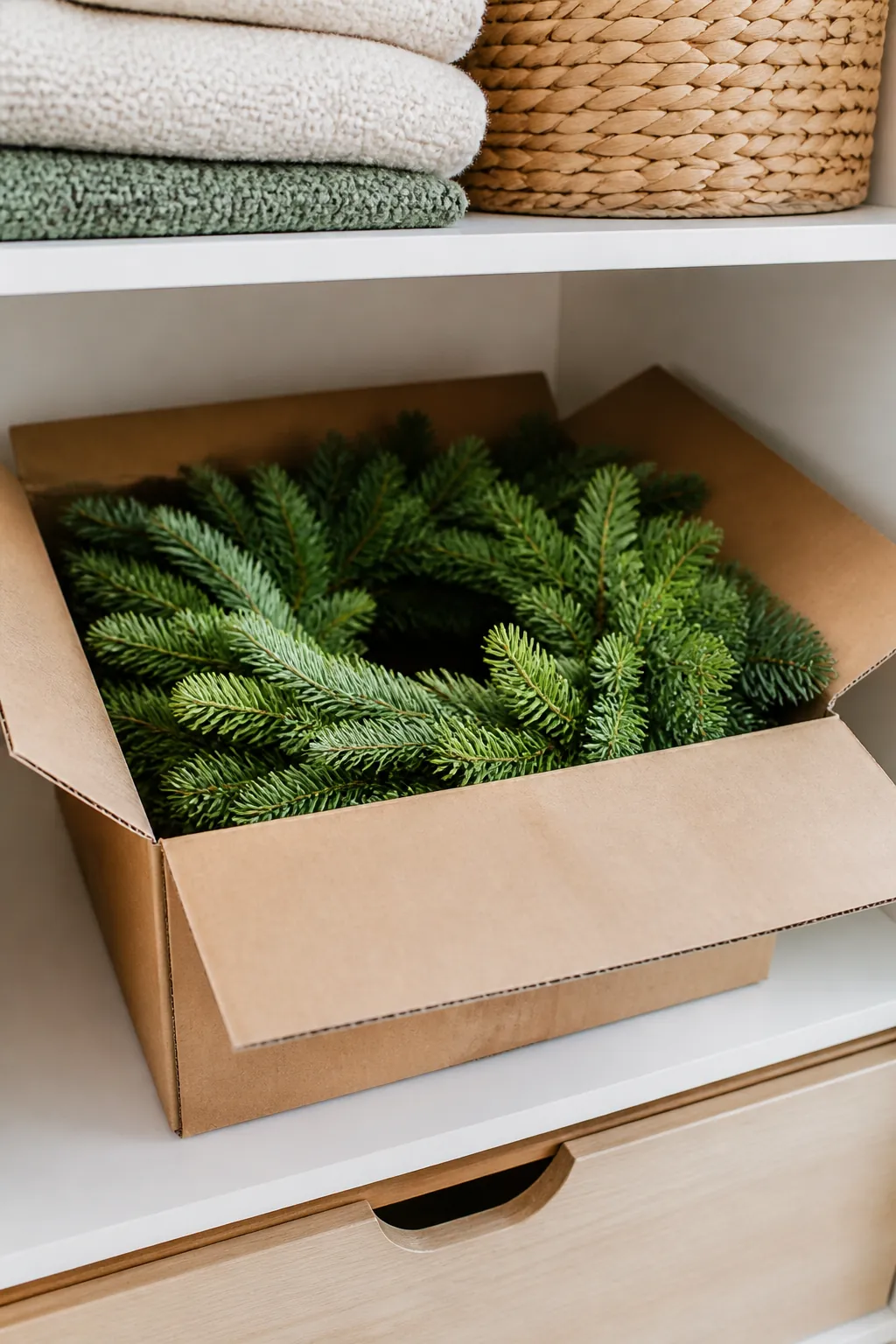
A fresh evergreen or dried floral wreath is not the same object as a plastic one, and it does not belong in a sealed plastic bag. Real stems and sap keep releasing moisture for weeks after the wreath looks dry, and that moisture has nowhere to go inside a zipped bag. It condenses, sits against the needles or petals, and turns to mold and a musty smell within a season, usually found only when the wreath comes out again next year.
A loosely closed cardboard box with the flaps not fully sealed, or an open shelf with nothing pressed against it, gives a real wreath the airflow a zip bag can’t. If you’re not sure whether a wreath is real, dried, or dried-look faux, treat it as real: extra airflow costs a plastic wreath nothing, but trapped moisture costs a real one the whole wreath.
6. Slide a rigid box under the bed, not a soft bag

The space under a bed is the biggest unused volume most apartments have, and it works for a wreath as long as two things line up: the gap is deep enough, and the container is rigid. Under-bed storage bins with lids run about six to seven inches tall, which matches what most bed frames clear at their lowest point, so measure your own frame from the floor to the underside, not the mattress, before counting on this spot.
Rigid matters more here than almost anywhere else on this list. A soft bag under a bed gets other bins pushed on top of it the moment the space gets used for anything else, and a flat wreath crushed under that weight for months comes out dented where the wire gave way. A hard-sided lidded bin holds its shape against that pressure in a way a zip bag never will.
7. Pull the batteries before a lit wreath goes into storage
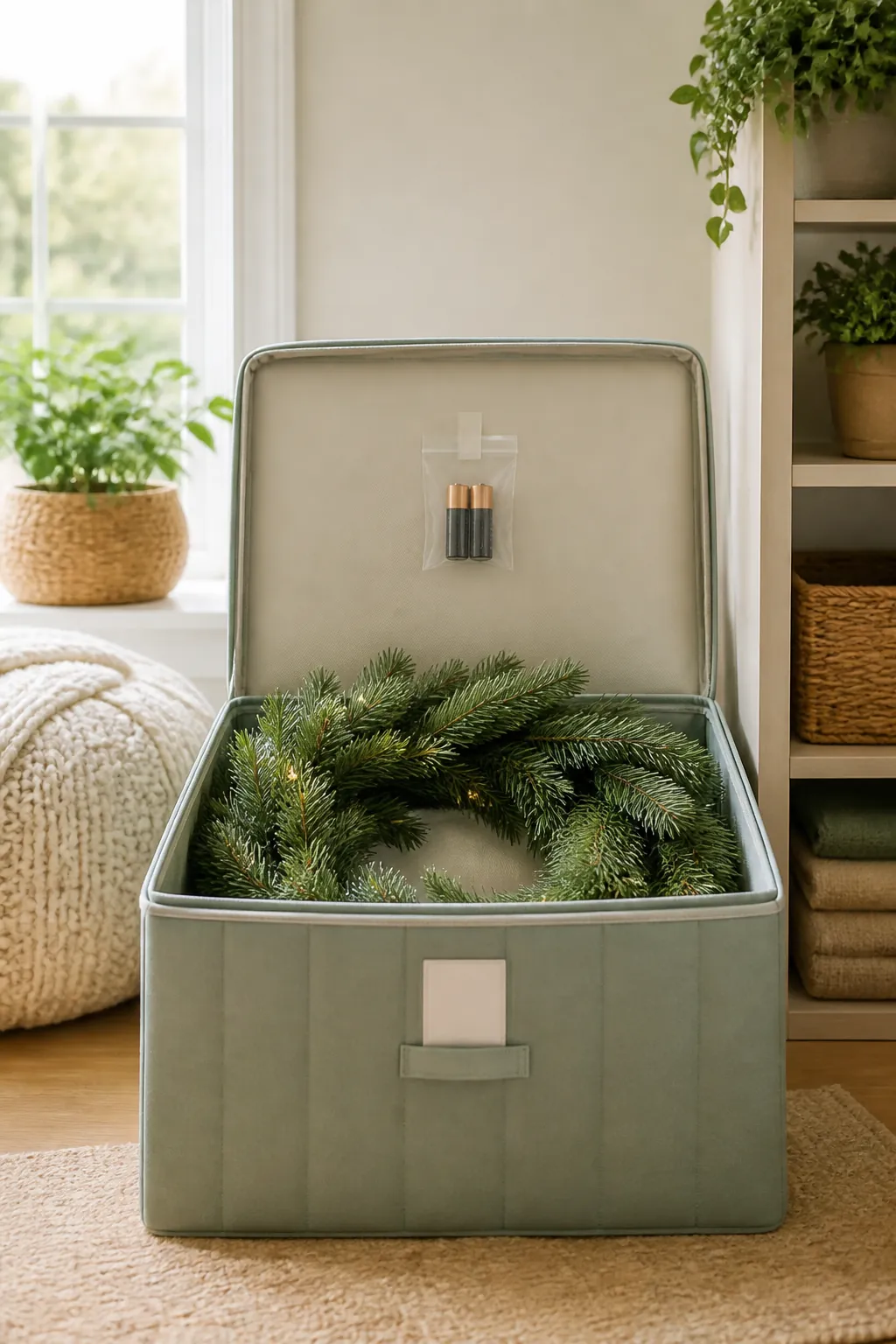
A pre-lit wreath with a battery pack wired into the greenery is easy to box up exactly as it came off the door, batteries and all, and that’s the one habit worth breaking. Batteries left in storage for eleven months at a time are the most common way a battery pack corrodes or leaks, and a leak inside a sealed bag spreads to whatever fabric or cardboard is touching it.
Pull the batteries out before the wreath goes into a bag, box, or shelf, and tape them in a small sandwich bag to the inside of its storage container so they’re found together next season. It takes thirty seconds and it’s the difference between a wreath that lights up again next November and one with a corroded battery compartment to replace.
8. Roll garland into a loose coil instead of bunching it
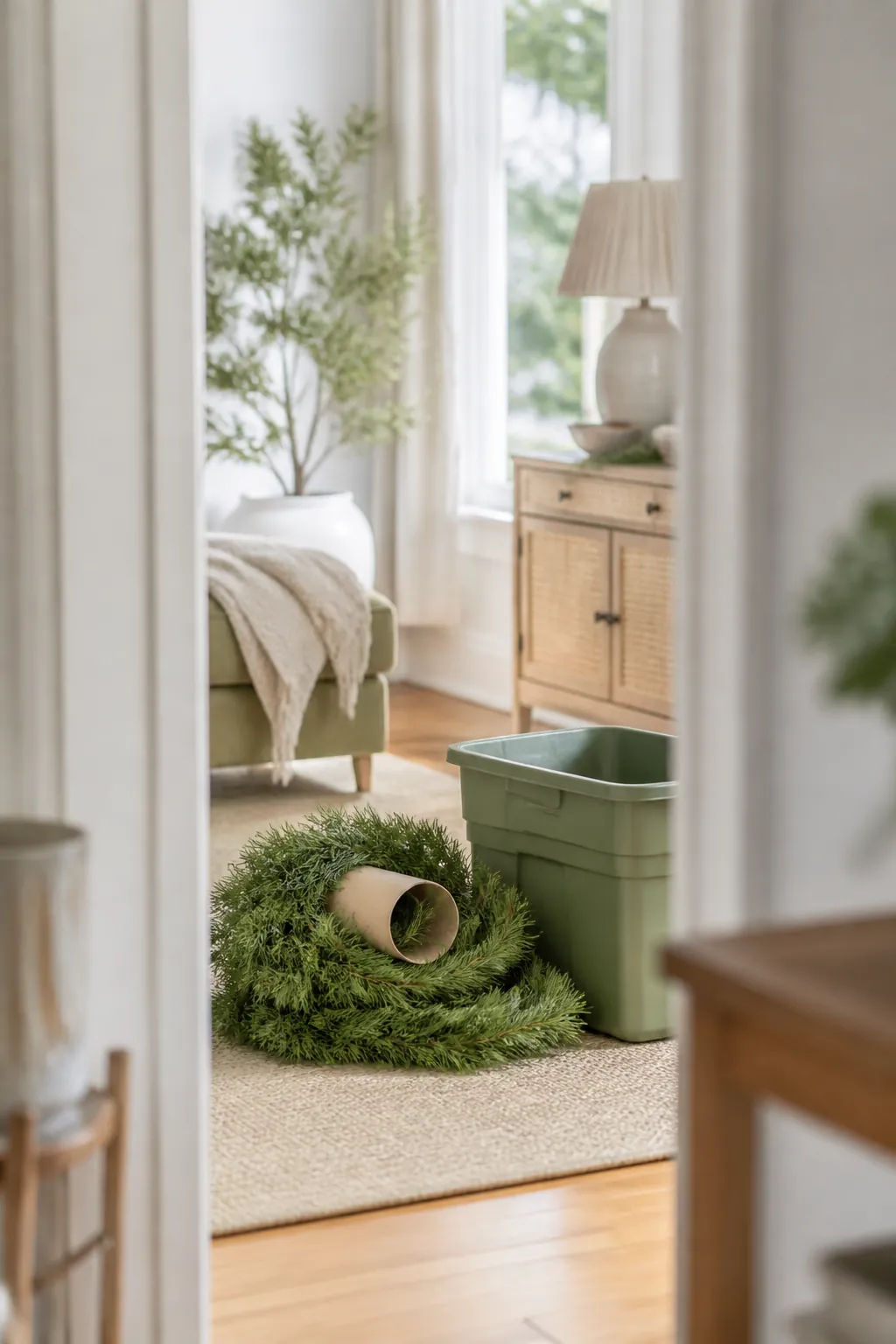
Garland gets treated as an afterthought more often than any other piece of holiday decor, stuffed into whatever gap is left after the wreath goes in, and that’s exactly how it ends up a tangled mass of branches and wire by the time it comes back out. Roll it instead, in a loose coil around a cardboard tube or an empty paper towel roll, the way you’d coil an extension cord rather than wad it into a ball.
Keep garland in its own space rather than wrapped around the wreath or crammed in beside it. The two shapes don’t nest: a garland coiled around a bulky wreath creases at the point of contact and adds a few inches of effective depth the wreath didn’t have on its own. A second small bin, or the same under-bed bin with room to spare, keeps the two from fighting over the same space.
9. Group it with the rest of the season, and label the side you’ll see
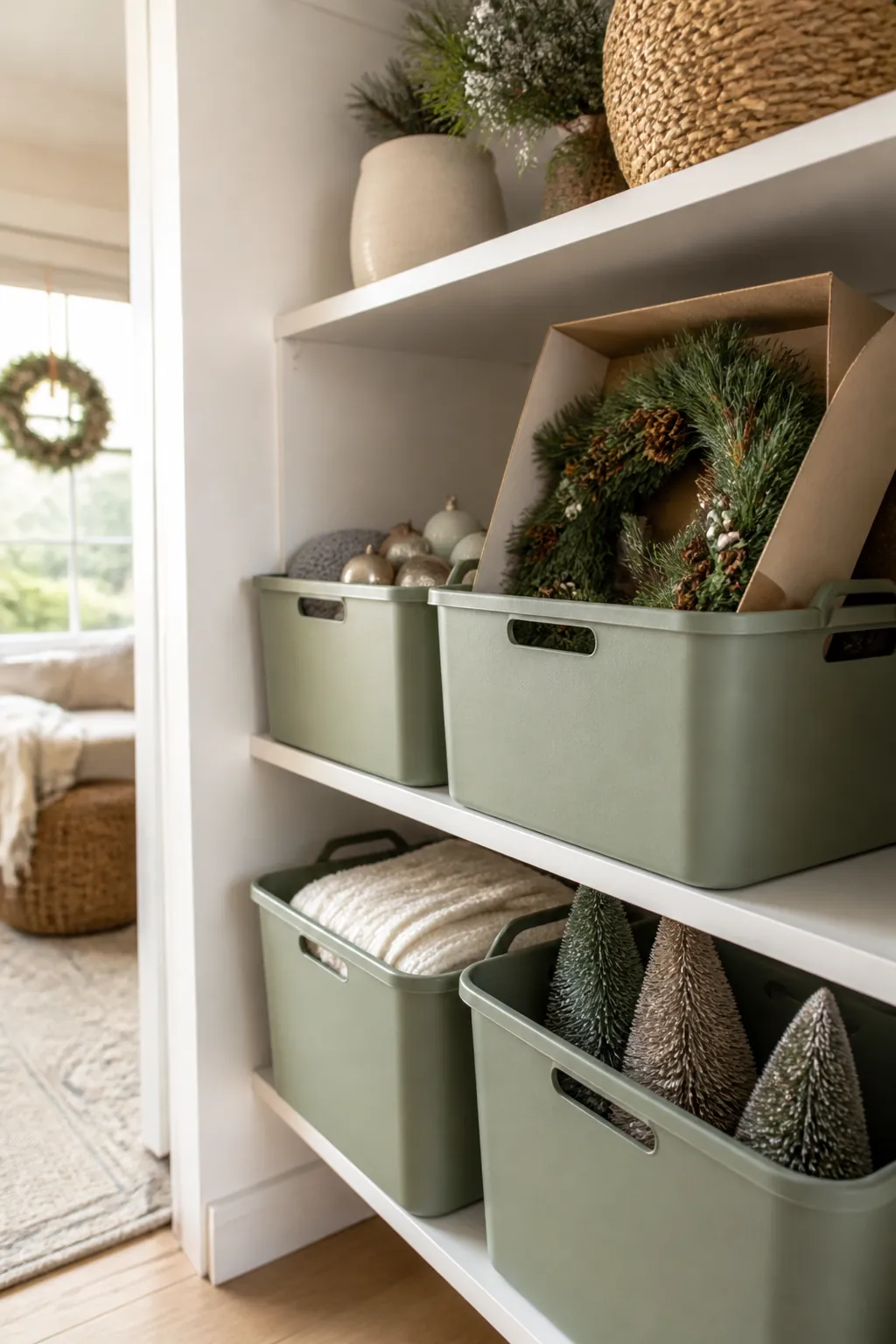
A wreath and its garland belong with the rest of the holiday decor, not off on their own, so “seasonal” stays one zone in the apartment instead of three. If you’ve already worked out where the Christmas ornaments live, put the wreath’s bag or box in the same closet or under the same stretch of bed rather than finding it a separate home; that post already covers ornament sorting in full.
Label whatever container the wreath ends up in on the side that faces out, not the lid, since that’s the side you’ll be reading from the doorway or the floor beside the bed. “Wreath, front door” is more useful next year than “Holiday 2.”
Where to start
Measure the wreath’s diameter and depth first, since that single pair of numbers rules half of these options in or out before you spend anything. From there, match the method to what you actually own: a flat faux wreath in a clear bag on the rod, a deep one boxed flat on the closet shelf, a real or dried one somewhere it can breathe, and garland rolled into its own small space rather than wadded in beside whatever else is going away for the season.
Whichever spot you pick, test it loaded before you trust it. Swing the door shut with the hook in place, check nothing will sit on top of a flat wreath, and pull the batteries if there are any. That’s the difference between a wreath that looks the same next November and one that needs replacing before the lights go up.