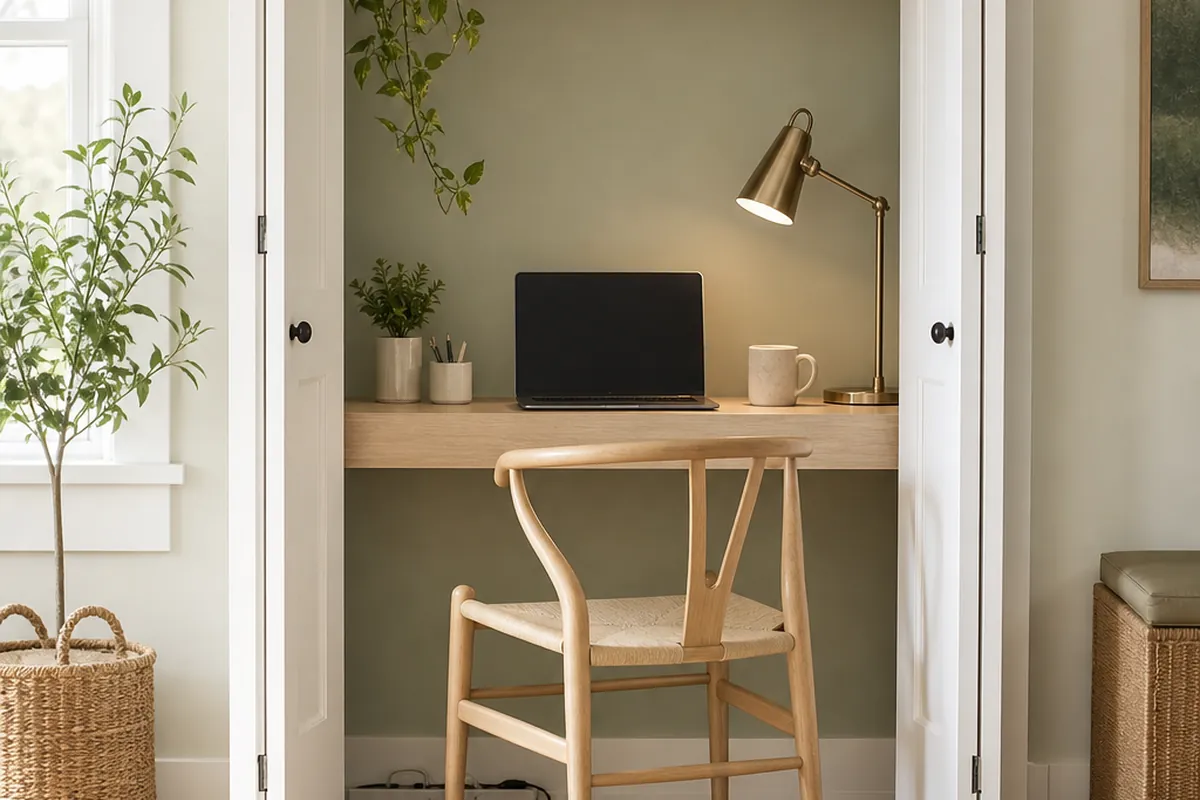
A cloffice works for one reason that has nothing to do with style: a closet is the only space in most homes that is already the right depth for a desk and is already walled off from the rest of the room.
The catch is that everything else about a closet is wrong for working in. It is too tall, too dark, and built around a rail at chest height. So the conversion is mostly a series of small corrections, and the ones below are in the order that actually matters.
1. Measure to the door line before you fall in love with a desk
The number that decides whether this works is depth, and the number people measure is width.
Most reach-in closets run about 24 inches deep, which is enough: a monitor against the back wall sits at roughly arm’s length, which is where it should be anyway. What catches people out is measuring to the door frame rather than to the point the doors close on. Bifold doors in particular steal a few inches when folded back, and a desk that fits the opening can still stop the doors shutting.
Measure the depth you can actually build into, then decide. A linen closet at 14 inches is not a cloffice, no matter how good it looks in the photo.
2. Decide early whether the doors stay
This is the fork in the road, and it changes every decision after it.
Doors off gives you a proper alcove, more light, and room to sit slightly outside the closet footprint. Doors on gives you the thing a cloffice is famous for, which is closing the laptop and the room in one movement at the end of the day.
Neither is wrong. Choosing late is, because the doors-on version has to keep every shelf, cable and chair inside the swing, and retrofitting that constraint means undoing work.
Worth knowing before you commit: bifold doors fold back into the opening and cost you width at the edges, sliding doors only ever expose half the closet at a time and are the worst option for a desk, and hinged doors give you the full opening but need clear floor in the room to swing into. If the closet has sliders, taking them off is close to compulsory rather than optional.
3. Put the desk at desk height, not at shelf height
The single most common cloffice mistake is using the existing closet shelf as the desk, because it is already there and already level.
Closet shelves usually sit somewhere between 40 and 68 inches off the floor. A desk wants to be around 29 to 30 inches. Working at a 42 inch surface in a normal chair puts your shoulders up near your ears, and you will feel it inside an hour and quietly stop using the space within a month.
Take the old shelf out or leave it as high storage, and put a real surface in at the right height.
4. Move the small stuff onto the wall, because you have no depth to spare
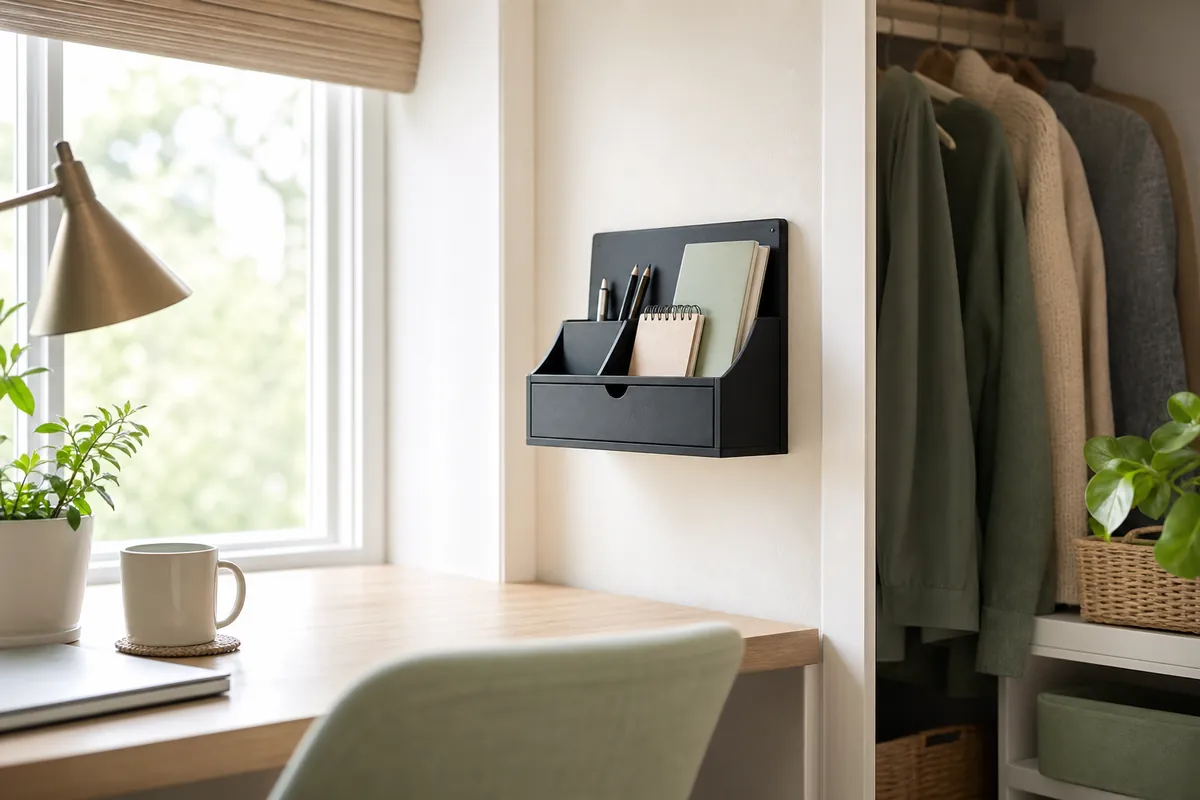
In a 24 inch deep desk, the monitor takes the back third and your hands take the front third. There is no middle third for a pen pot, a notebook and a charger.
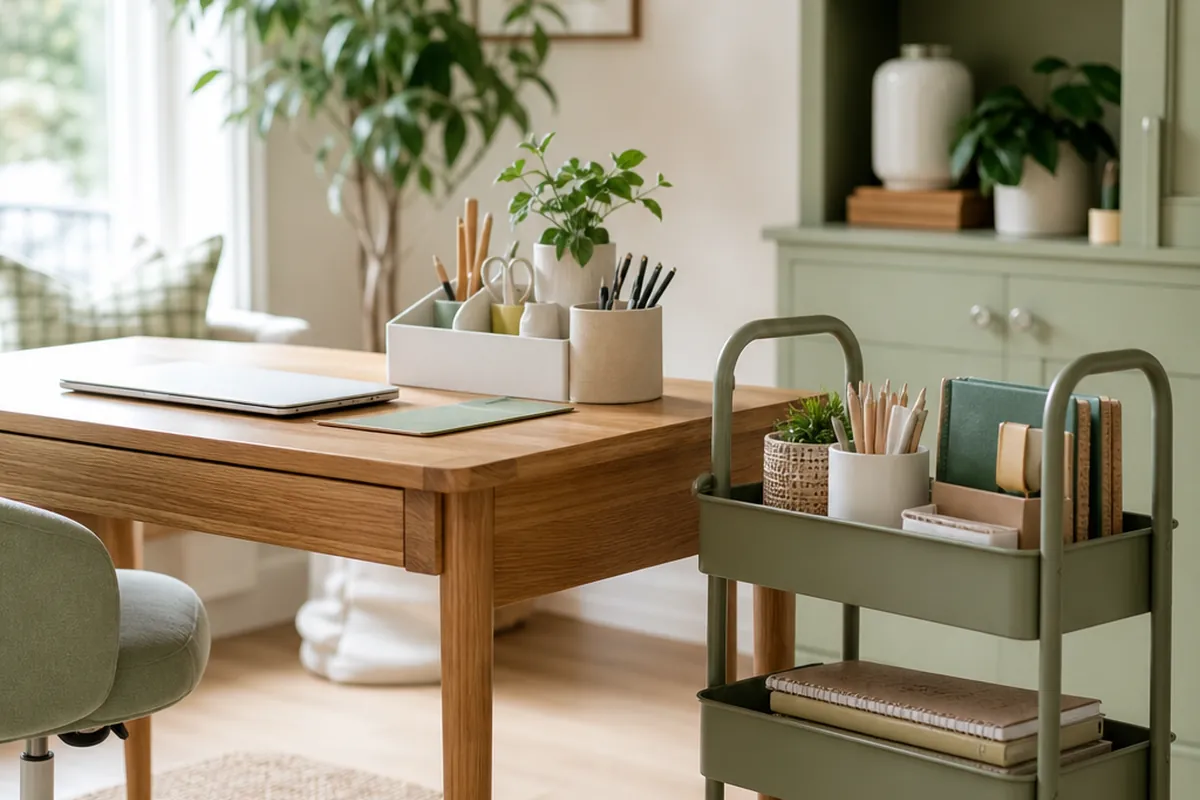
A wall-mount desk organizer solves that by taking the small clutter vertical. This one is 10 inches wide and about 6 inches deep with a drawer underneath, so it holds pens, sticky notes and cables without eating desk depth that you genuinely do not have.
Mount it on the side wall rather than the back wall if you can. The back wall is behind the monitor and you cannot reach it.
5. Give the desktop exactly one shelf
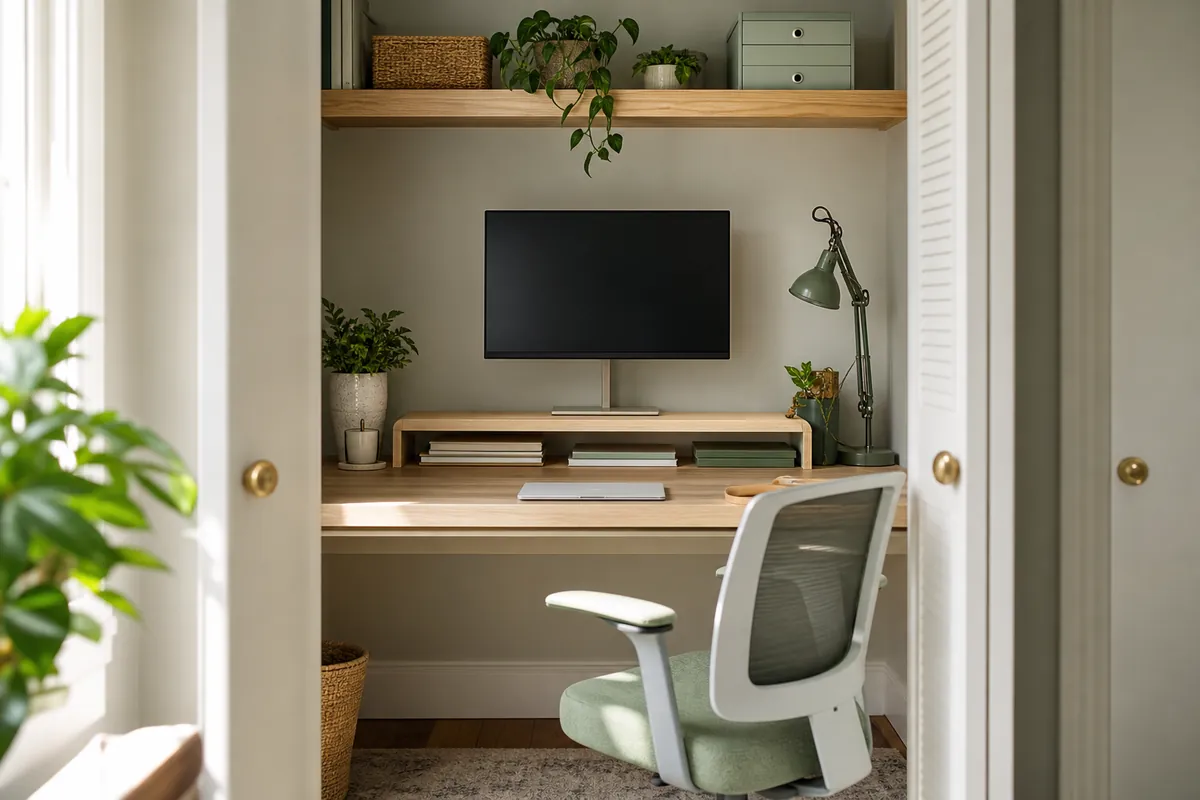
The temptation in a closet is to fill the height with shelving, because the height is free and the floor space is not. Resist most of it. Shelves at eye level close the space in and make a small desk feel like a booth.
One shelf on the desk is the version that works. An adjustable desktop organizer shelf is about 22 inches wide and only 6.8 inches deep, so it spans the back of the desk, lifts a monitor to a sane height, and leaves everything in front of it clear. The shallow depth is the point: a deeper shelf would take the space the monitor needs.
Anything above that first shelf should be storage you touch weekly at most. The same restraint that makes desk organization in a small space work applies here, only harder, because the walls are closer.
6. Sort the cables now, not after they annoy you
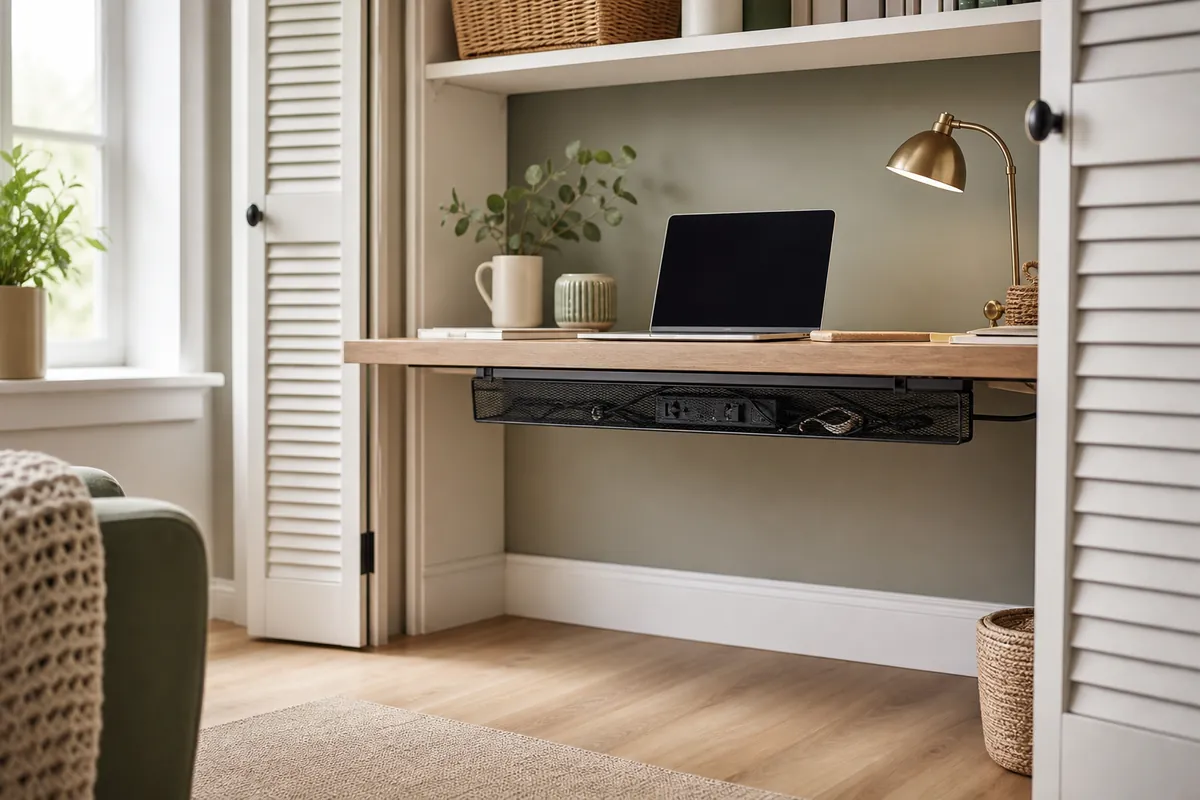
A cloffice concentrates every cable in the house into about six square feet, and the closet floor is where they all end up. That matters more than usual here, because the floor is also where your feet and the chair go.
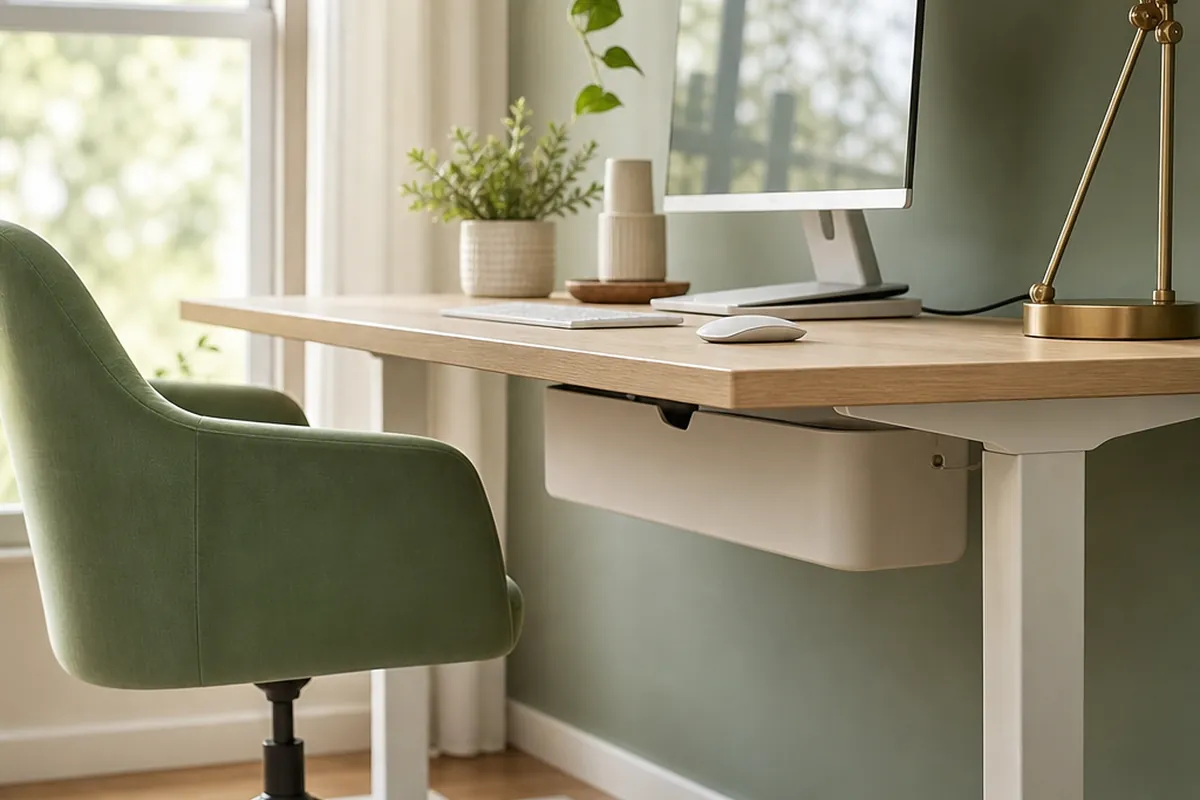
An under-desk cable tray takes the power strip and the slack off the floor entirely. This one clamps on rather than screwing in, which matters twice over in a cloffice: no holes in a rented closet, and no drilling into a desk surface that might be a repurposed shelf. It is 13 inches long, which is enough for a strip and the loops of two or three cables.
Do it while the desk is empty. Threading a tray under a working setup means unplugging everything, so it becomes a job you keep not doing. The broader approach is the same one in cord organization for a small living room, just in a tighter box.
7. Light the desk, not the closet
A closet has no window and usually one dim ceiling fitting several feet away, aimed at where the clothes used to hang.
That leaves you working in your own shadow, because you are sitting between the light and the desk. A clip lamp on the shelf edge, or a strip fixed under the first shelf, puts light where the work is and fixes the problem for very little money. Warm light in the evening, cooler during the day, if you want to be precise about it.
One more thing that costs nothing: paint the inside of the closet a shade lighter than the room, or at least keep it pale. A closet interior is three walls close to your face, so the color does far more work per square foot than it would anywhere else, and a dark cloffice reads as a cabinet no matter how good the desk is.
This is the difference between a cloffice you use and a cloffice that photographs well and feels grim to sit in.
8. Keep the floor genuinely clear
In a normal room, the floor under the desk absorbs a printer, a box and a bag without anyone noticing. In a closet, the floor under the desk is also the space your chair rolls into, and it is about three feet wide.
So the rule is stricter than elsewhere: nothing on the floor except your feet and the chair base. A tower goes on a shelf or a wall bracket, storage goes above the desk, and the bin goes outside the closet.
The test is whether you can roll straight back and stand up without moving anything. If you cannot, you will start working from the sofa within two weeks.
Chair choice follows from this. A wide gaming chair with a five star base will not turn inside a three foot opening, and an armchair pushed up to the desk cannot get close enough. A compact task chair, ideally armless or with arms that clear the desk edge, is the one that fits, and in a doors-on cloffice it also has to live outside the closet overnight.
9. Make it closeable, even without doors
The reason a cloffice beats a desk in the corner of a bedroom is that work can be put away, and that survives even if the doors came off.
Closeable means a five second end of day: laptop onto the shelf, mug out, chair pushed in, cables already tidy because of the tray. If the desk has to be cleared for ten minutes before it looks like anything other than a workstation, it will not get cleared.
Design for that five seconds. It is the whole psychological point of putting an office in a closet rather than in the room itself.
10. Renter rules, so you get the deposit back
Most cloffices go into rentals, and most of the regret is about holes.
The parts that need no permanent fixing: the desk surface if it sits on legs or a small table, the desktop shelf, the clamp-on cable tray, a clip lamp, and anything on a tension rod. The parts that genuinely need fixings are wall-mounted storage and a floating desk, and those are worth doing properly with anchors rather than badly with adhesive strips, which fail under load and take paint with them when they go.
Photograph the closet before you start. It costs nothing and settles the conversation at the end of the tenancy.
The closet was already the right shape
A cloffice is not really a decorating project. It is a closet that was already 24 inches deep and already had a door, corrected on three points: the surface put at 30 inches, the small things moved onto the wall, and the cables lifted off the floor.
Do those three and the rest is furniture. Skip them and you will have a very neat photograph of a space you avoid using.
If there is no closet to spare but there is a spare room doing double duty, guest room office combo ideas for a small spare room takes the same approach to a bigger box.