Pajamas and loungewear break the rules the rest of your dresser follows. A pair of flannel pants does not file-fold into a tidy standing rectangle the way a T-shirt does, a silky robe wrinkles if it sits folded under anything for more than a day, and half this drawer gets worn around the house two or three times before it hits the hamper, unlike nearly everything else you own. Treat it like a normal clothing drawer and it turns into a jumble of mismatched sets within a week.
The fix is to stop forcing loungewear into a system built for structured clothes, and instead give it rules of its own: pair the sets, fold the soft stuff flat instead of upright, and hang anything slippery. Nine ways to get a closet drawer of pajamas and loungewear to actually stay organized.
1. Keep every pajama set paired, not sorted into separate piles
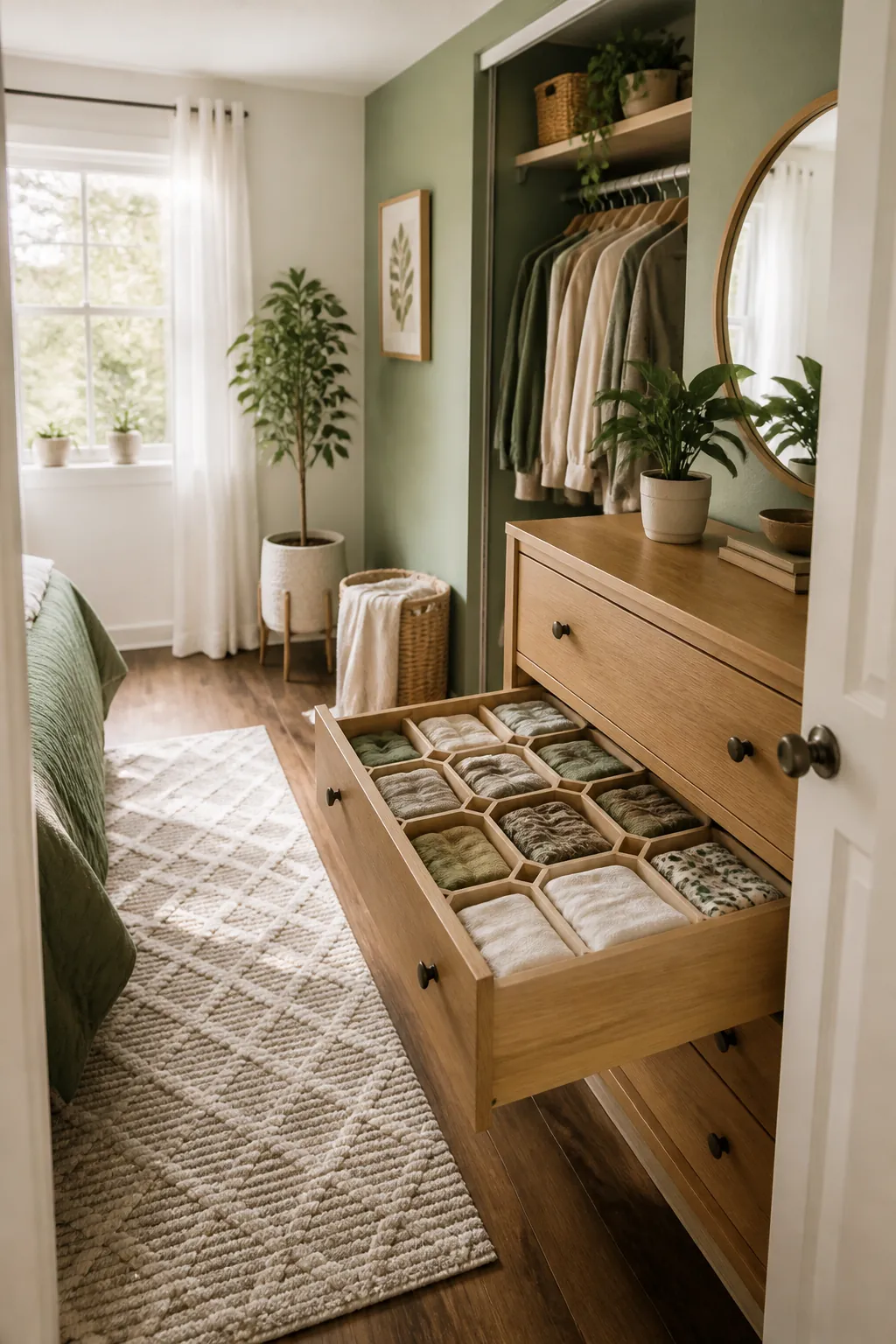
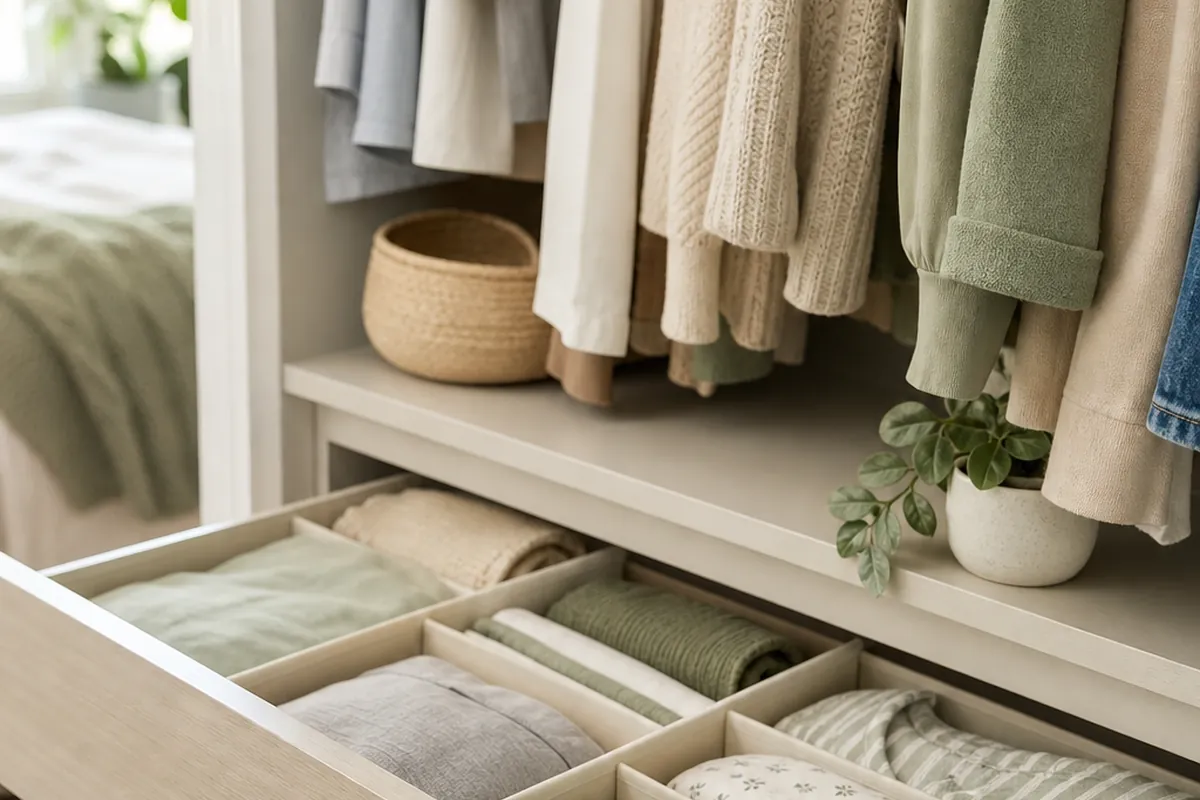
The instinct to sort by type, all the tops together, all the bottoms together, works for everyday clothes but wrecks a pajama drawer fast. Once tops and bottoms live in separate stacks, the matching bottoms to your favorite set drift to the far end of the pile within a week, and at bedtime you end up wearing whatever top and bottom happen to land together.
Give each set its own cell instead. An adjustable honeycomb drawer divider creates individual hexagonal pockets sized for one folded set at a time, top and bottom rolled or stacked together in the same cell. Sort by weight of fabric, flannel sets in the back cells, lighter cotton sets toward the front, so the ones you actually reach for in the current season are not buried behind the ones you are not wearing yet.
2. Fold knit and flannel flat, not file-folded on edge
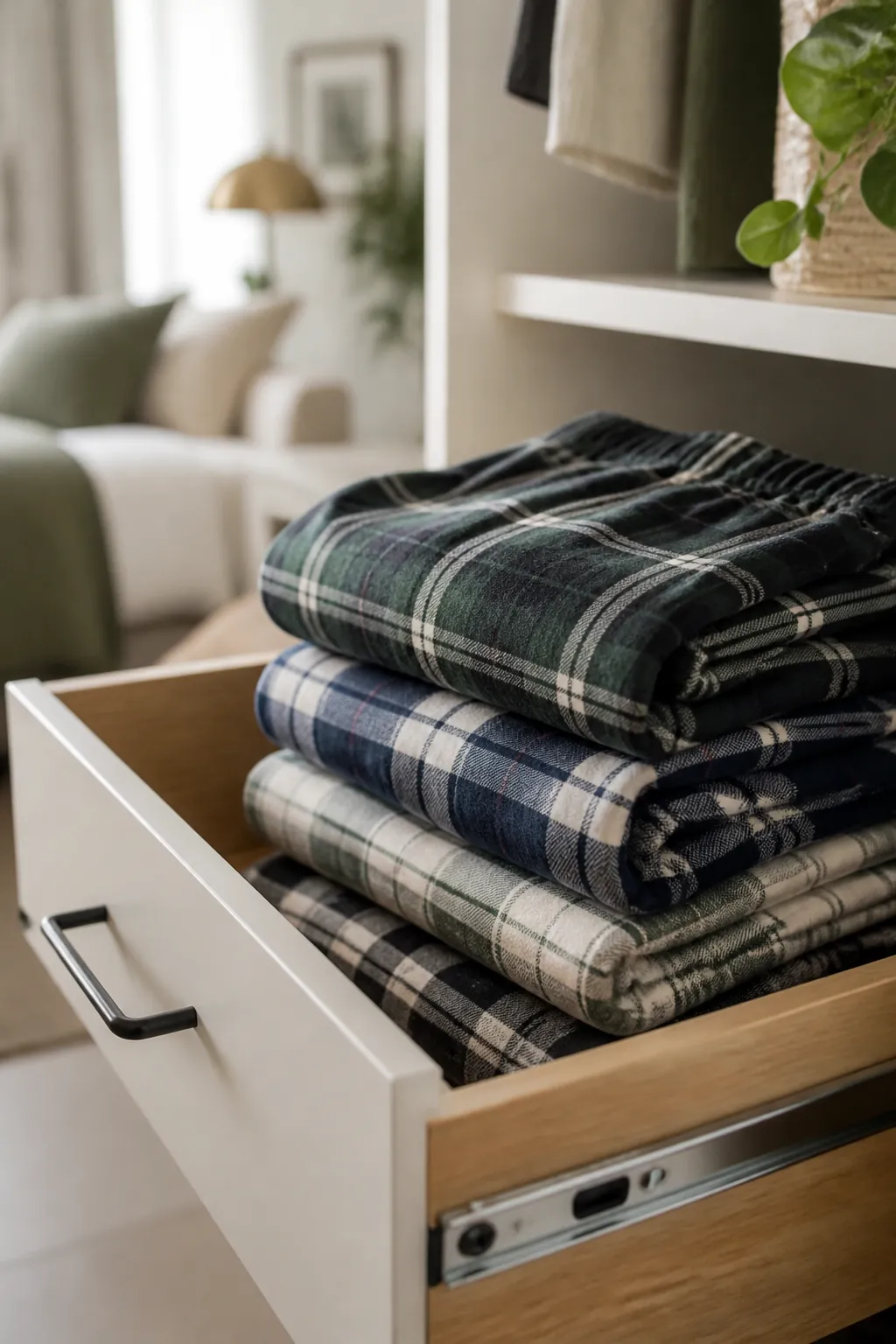
The upright file-fold that keeps a drawer of T-shirts standing in neat rows does not work on pajama fabric. Flannel and jersey knit have too much stretch and not enough structure to hold a vertical edge, so a file-folded pair of lounge pants slumps sideways within a day and drags its neighbors down with it. If you have already set up a KonMari-style divided drawer for the rest of your clothes, do not assume the same fold carries over here.
Fold these flat instead: lay the piece down, fold in thirds the long way, then fold in half or thirds again until it makes a flat rectangle about the size of a paperback. Stack flat folds no more than four or five deep. Taller stacks topple when you pull from partway down, and a toppled stack is what starts the slide back into a messy pile.
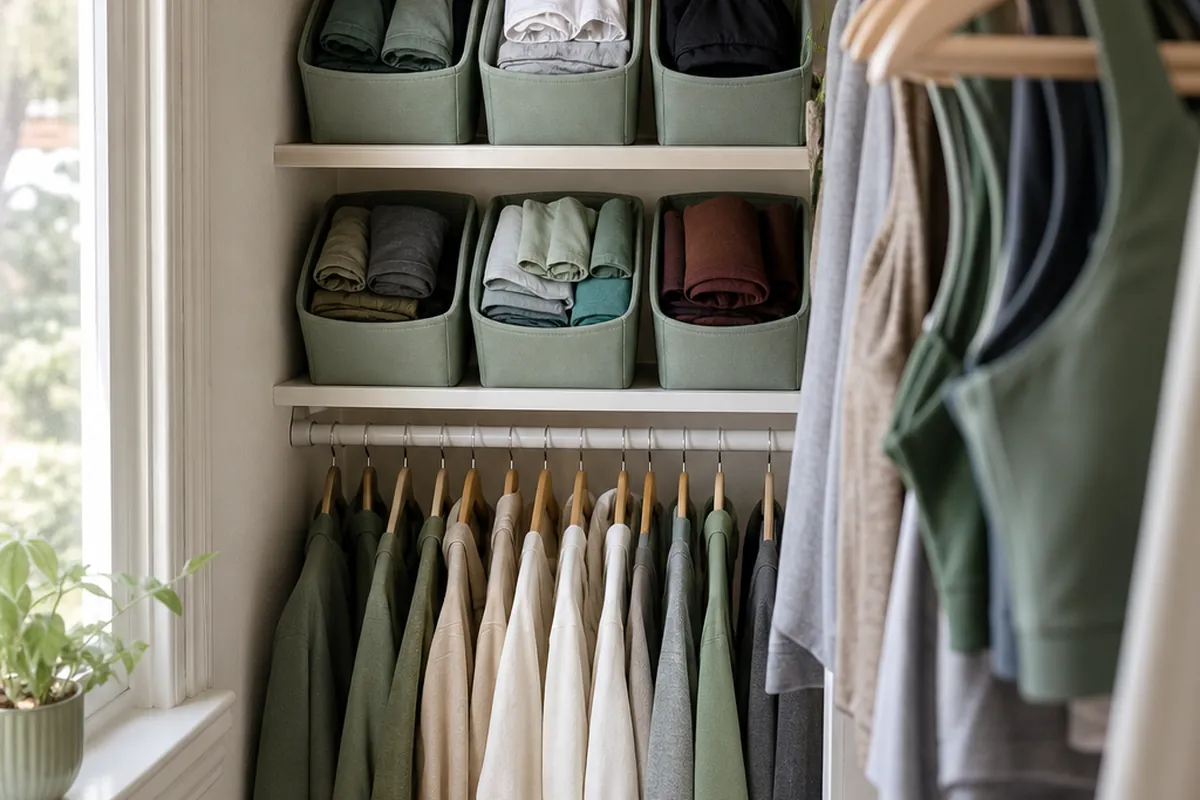
3. Give floppy knit shorts and camis their own fabric cube
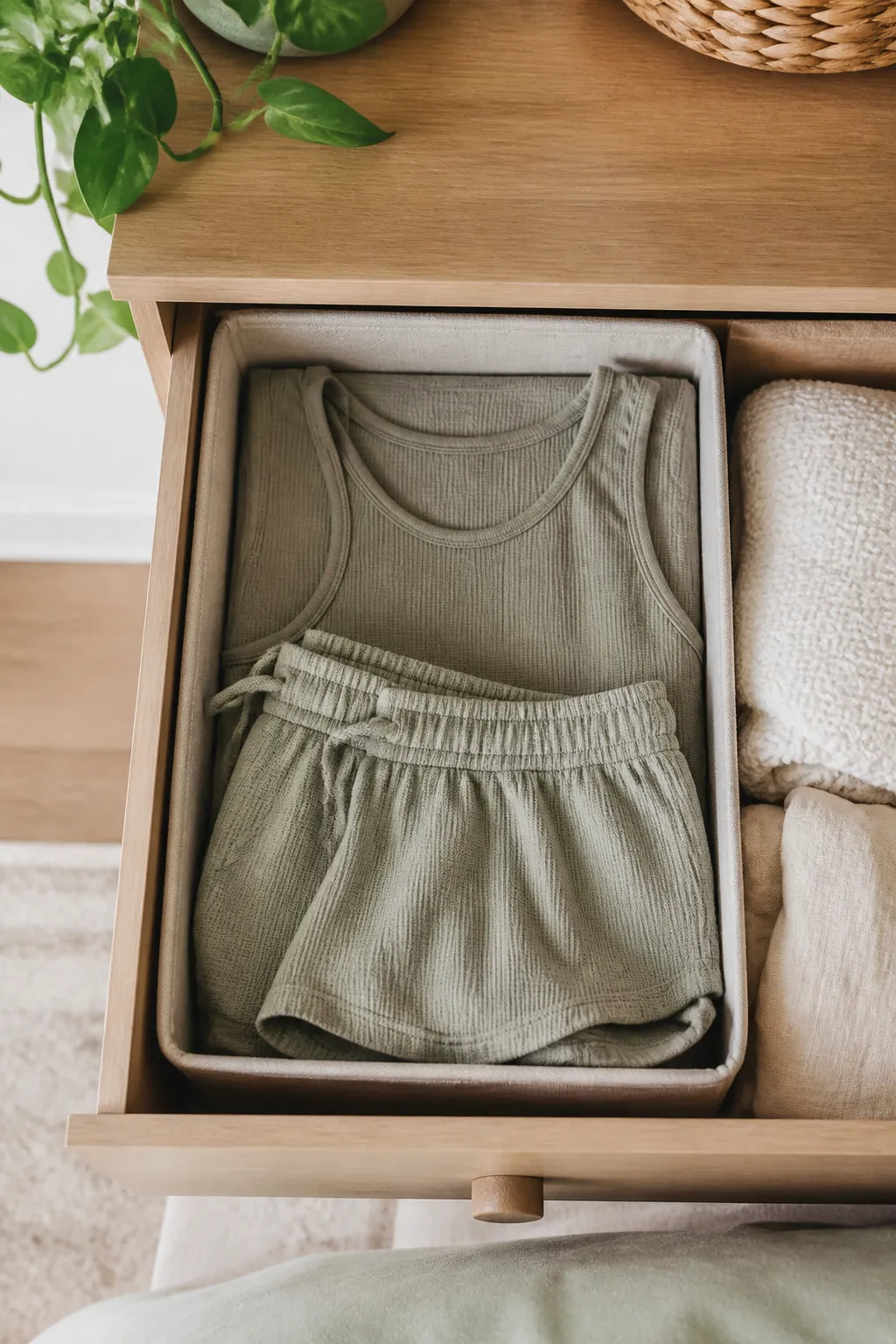
Lightweight lounge shorts, tank-style sleep tops, and anything in a thin, slippery jersey are too formless to hold either kind of fold for long. These are the loungewear equivalent of socks and underwear: small, soft, and better off contained than stacked.
A set of fabric drawer cube inserts solves this the same way it solves a sock drawer. Drop loose shorts, camis, and lightweight sleep tanks into one cube each so they stay corralled on all four sides instead of sliding out sideways and surfacing in the middle of a folded stack of something else. Match the cube height to roughly two-thirds of your drawer’s interior depth, so the fabric sits below the rim and does not catch when the drawer closes.
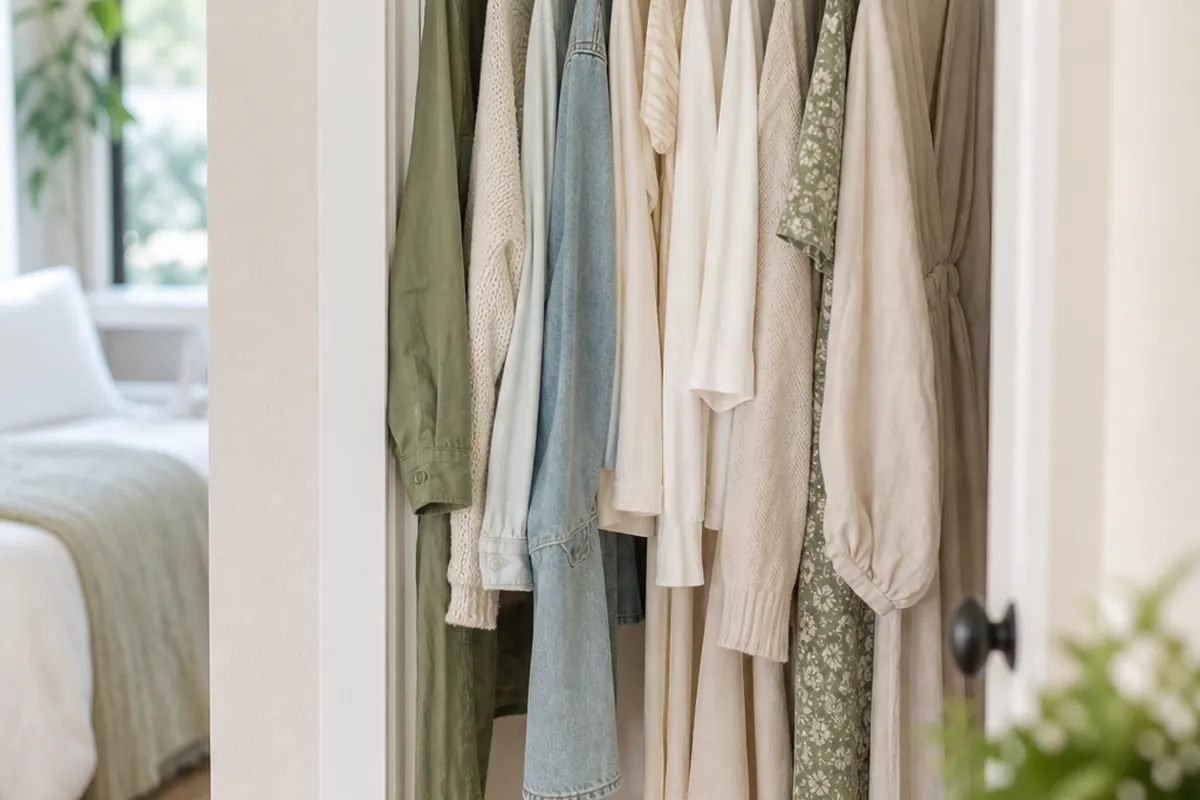
4. Hang silky robes and button-front sets instead of folding them
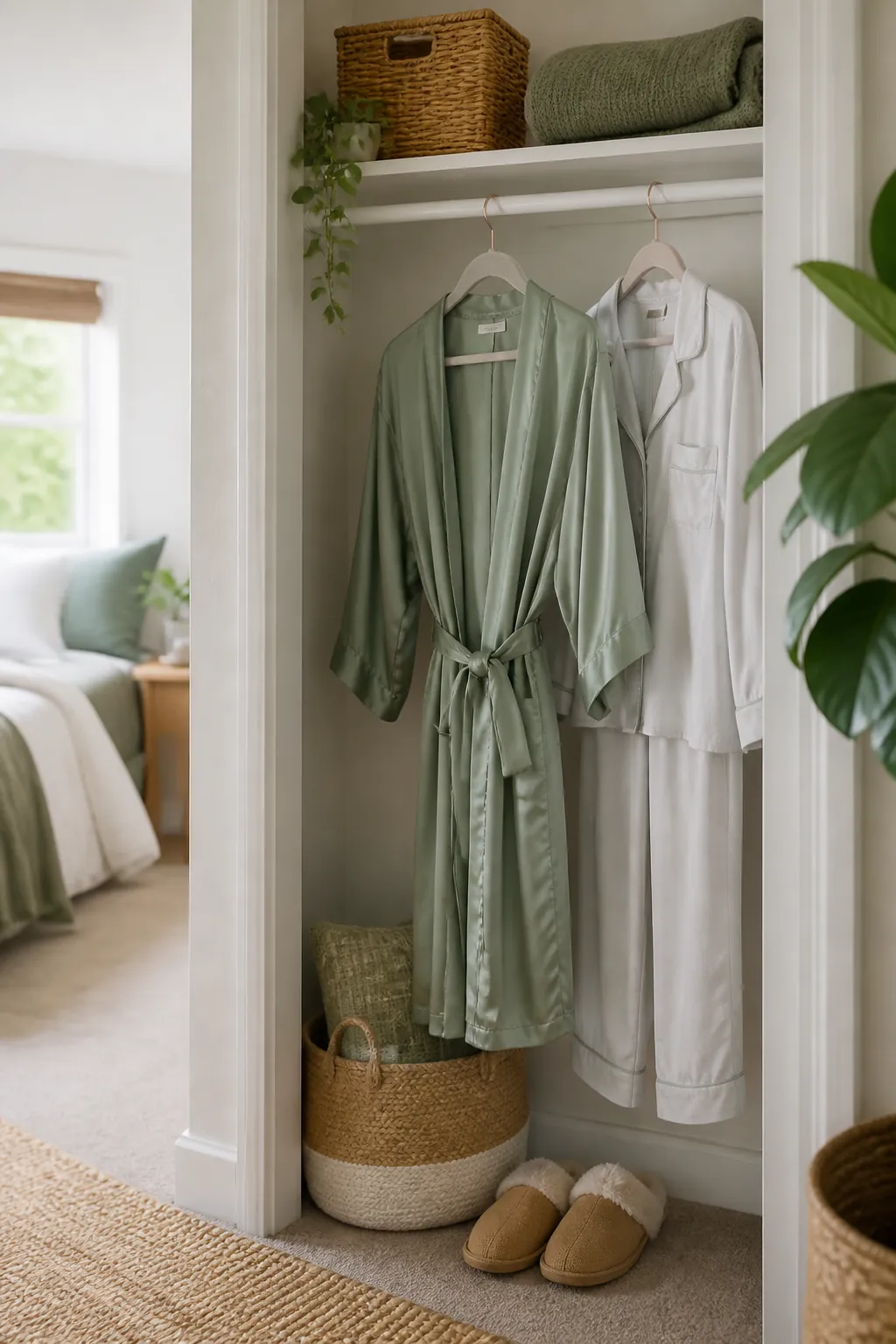
Satin, silk-blend, and other slippery robe fabric is the one category in this drawer that genuinely does better on a hanger. Folded and left under other clothes for even a few days, that fabric creases in a way that does not shake out, and a slippery robe folded in a drawer slides out of its stack almost immediately anyway.
Slim velvet hangers are the right tool for this, not because they are fancy, but because the velvet coating grips slick fabric that would slide straight off a wooden or wire hanger. The slim profile matters too: fifty standard-width hangers eat about a foot and a half more rod space than fifty slim ones, which adds up fast if your reach-in closet is already tight on hanging room. Button-front pajama sets you want wrinkle-free belong here as well, hung as a set on one hanger rather than split between a hanger and a drawer.
5. Measure folded length against drawer depth, not drawer width
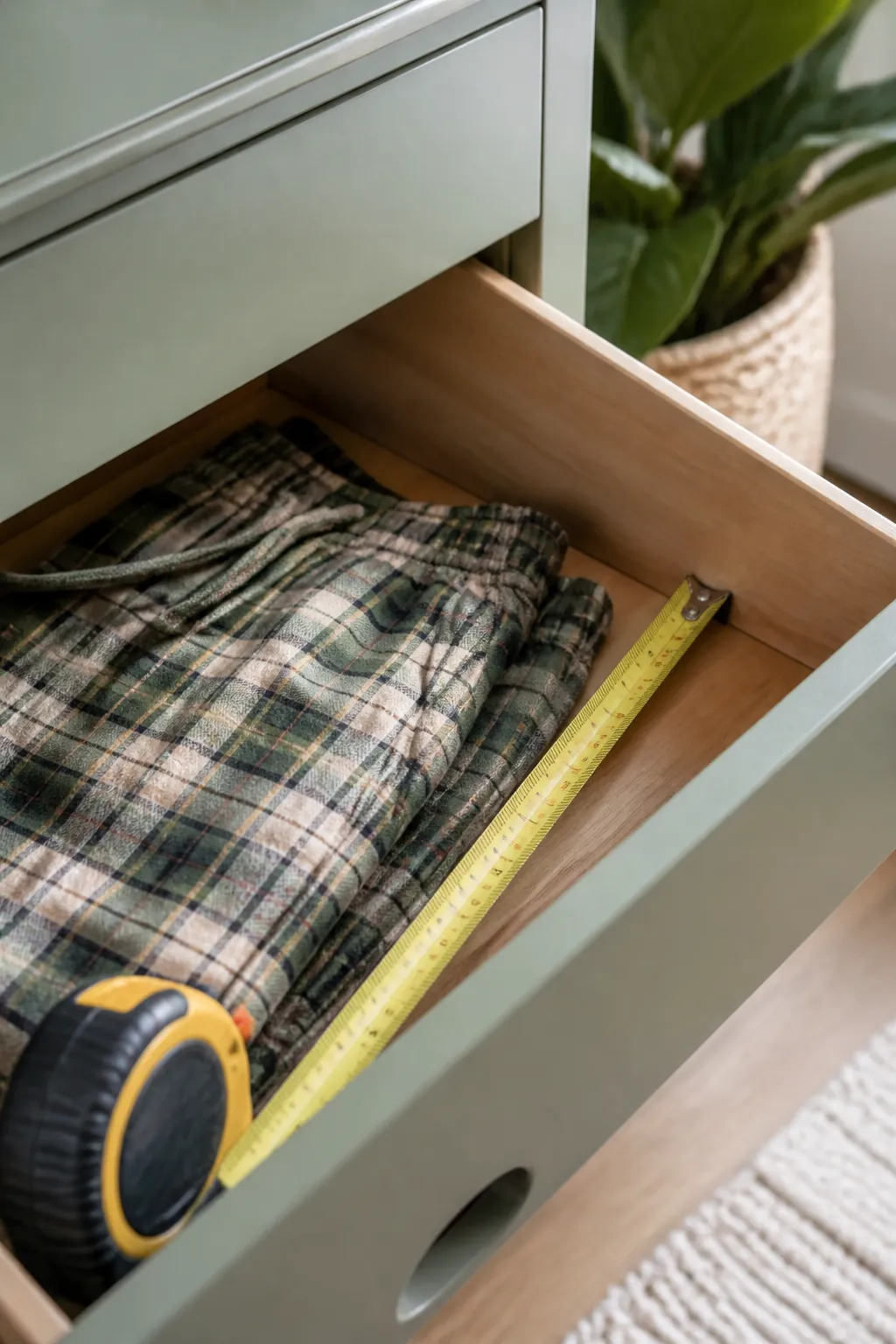
Lounge pants and joggers are long. Folded in thirds the standard way, a pair of full-length flannel pants often lands at ten to twelve inches, which is deeper than many closet dresser drawers run front to back. Force a fold that is too long into too shallow a drawer and the fabric buckles at the front, pushing up against the drawer face every time you try to close it.
Pull the drawer out and measure its usable interior depth before you decide how many folds a pair of pants needs. A drawer running eight inches deep needs one extra fold most dressers do not call for, bringing a long pair down to four even sections instead of three. It is a small adjustment, but skipping it is the single most common reason a loungewear drawer stops closing flush within a month.
6. Set aside one cube for worn-but-not-dirty loungewear
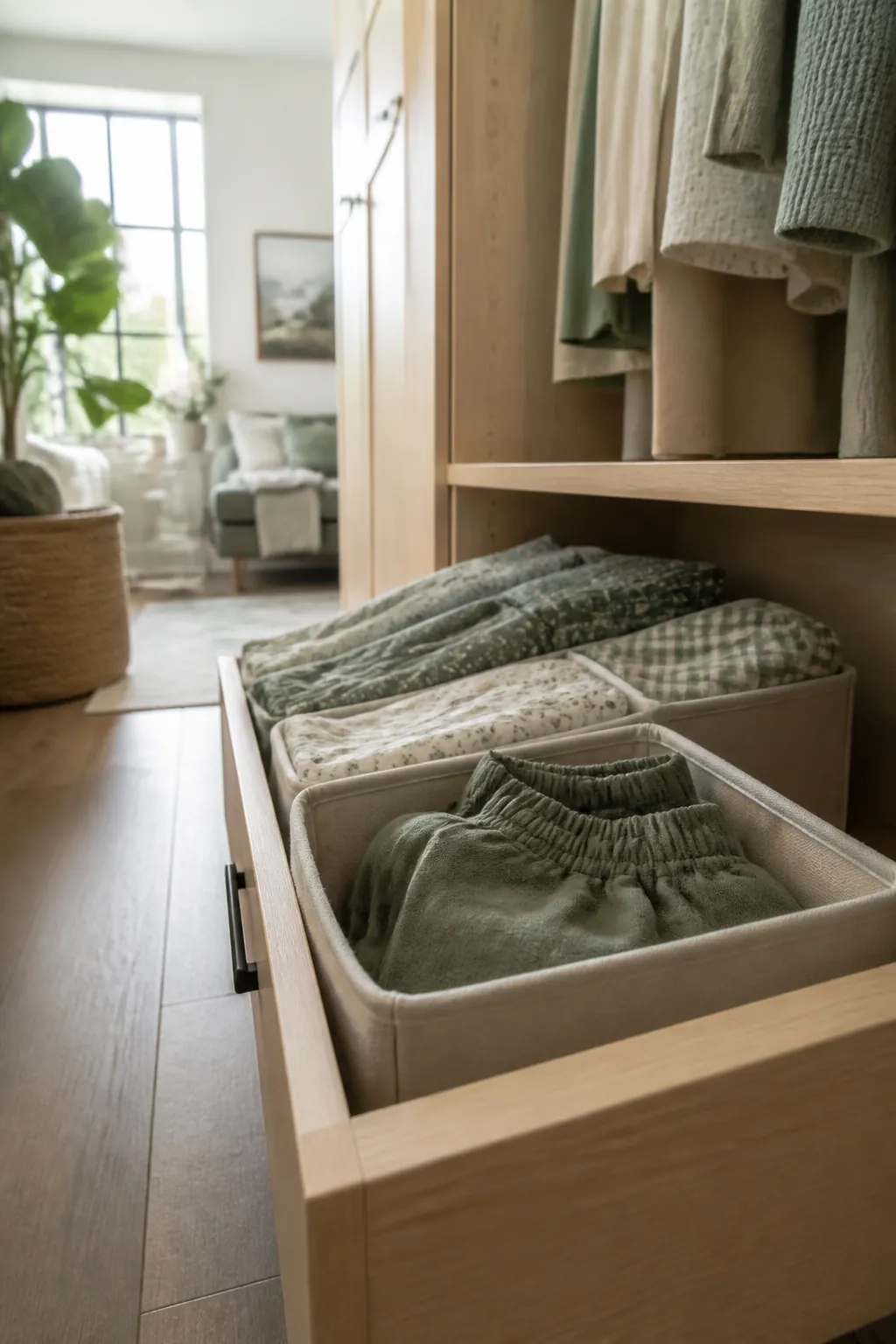
Loungewear breaks a rule the rest of your clothes mostly follow: you wear it around the house, take it off, and put large parts of it right back on the next lazy morning without a wash in between. Dropped back into the clean, folded stack, that worn piece undoes the fold and the pairing you just set up, which is usually the actual moment a tidy drawer starts to slide.
Dedicate one small cube or cell, separate from the folded clean sets, specifically for pieces that are worn but not yet laundry. It keeps the rest of the drawer’s folds intact and gives you one obvious place to grab from on a Tuesday night rather than draping that pair of sweatpants over a chair, where it tends to stay for a week.
7. Rotate heavy flannel and thermal sets out by season
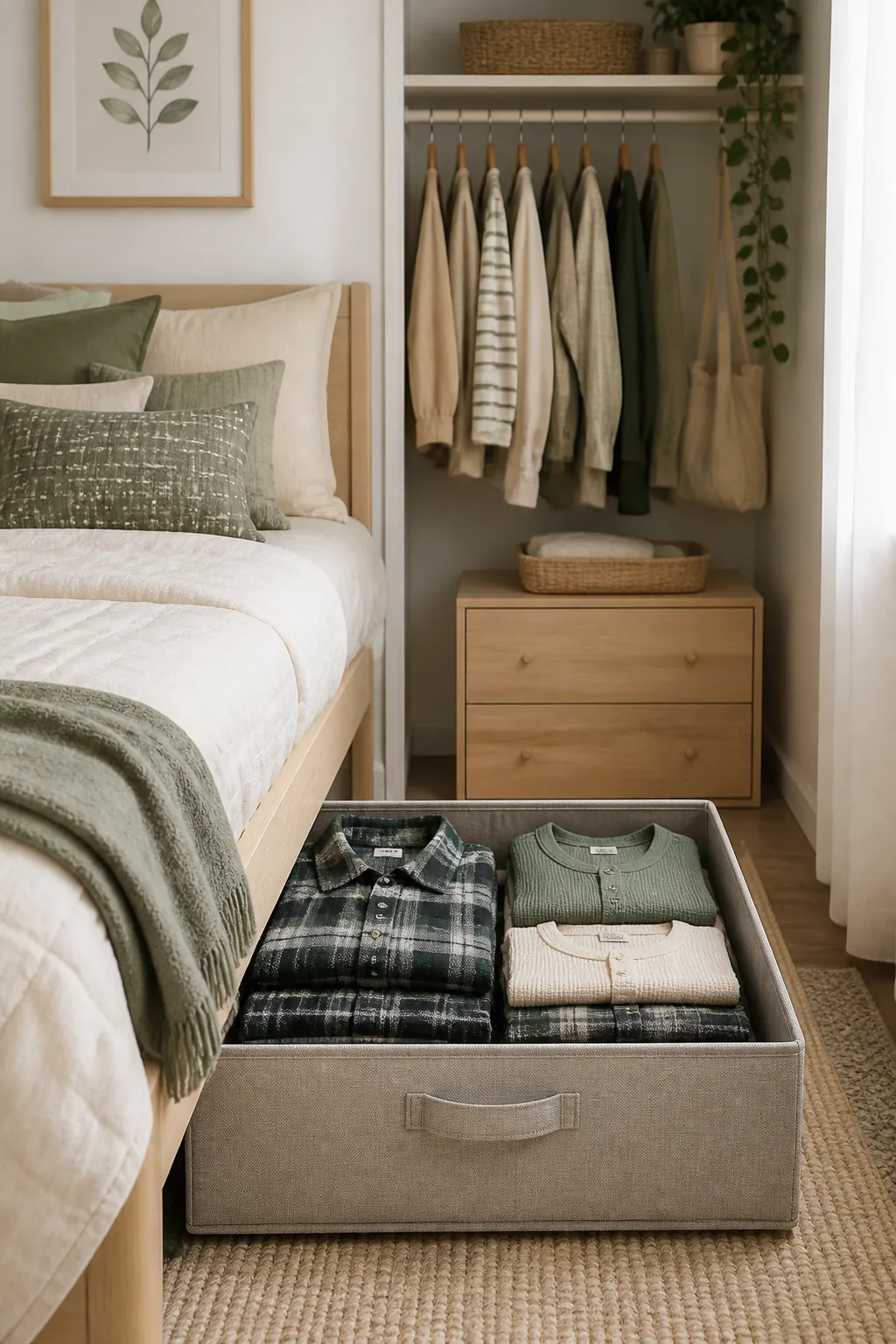
A drawer sized for pajamas in October is not sized for pajamas in October plus a full set of winter flannel and thermal layers you are not wearing yet. Bulky flannel and fleece-lined sets take up roughly twice the folded volume of a lightweight cotton set, and keeping both in the same drawer year-round means the off-season half is always in the way of the half you actually need.
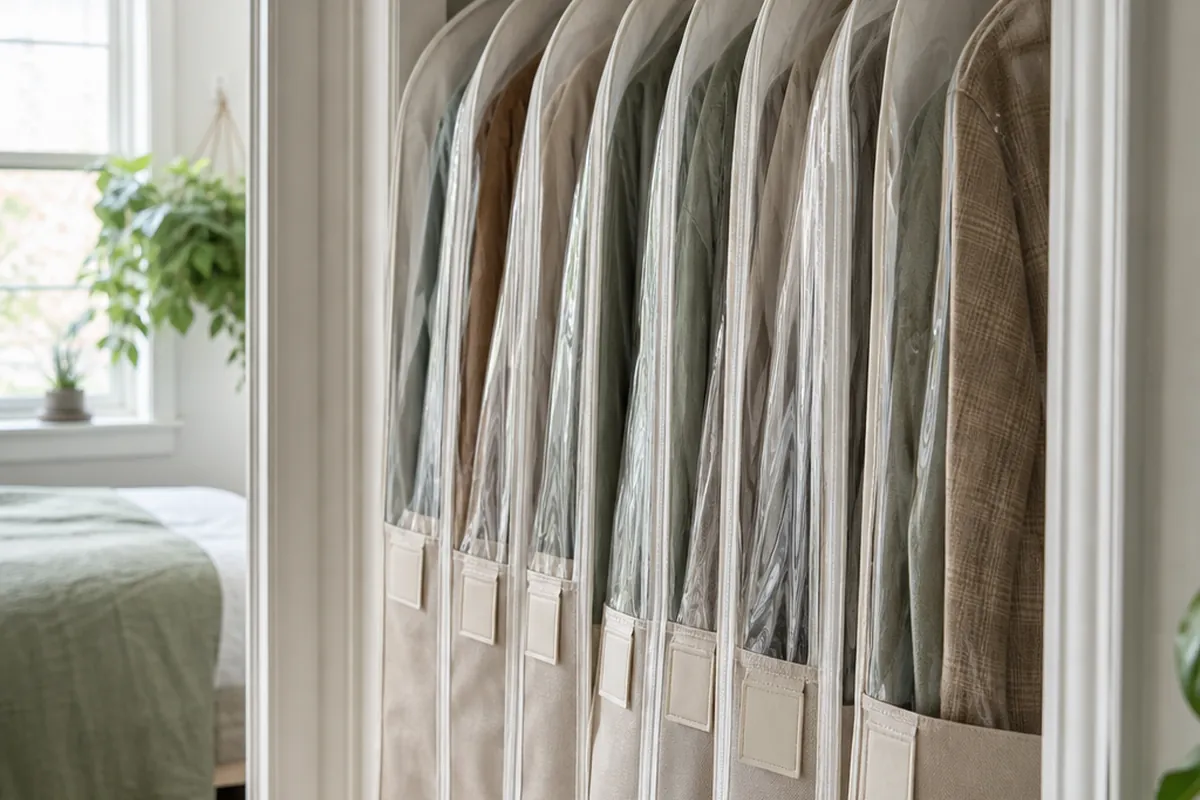
Move whichever season is currently inactive into an under-bed storage bin rather than trying to wedge everything into one drawer at once. Keep flannel in breathable fabric bins, not sealed plastic, and skip the vacuum bag for anything you plan to wear again within a few months; hard compression breaks down the stretch recovery in a jersey waistband faster than normal wear, and loungewear lives and dies by that stretch.
8. Add a stackable drawer unit on the closet floor if the dresser is still tight
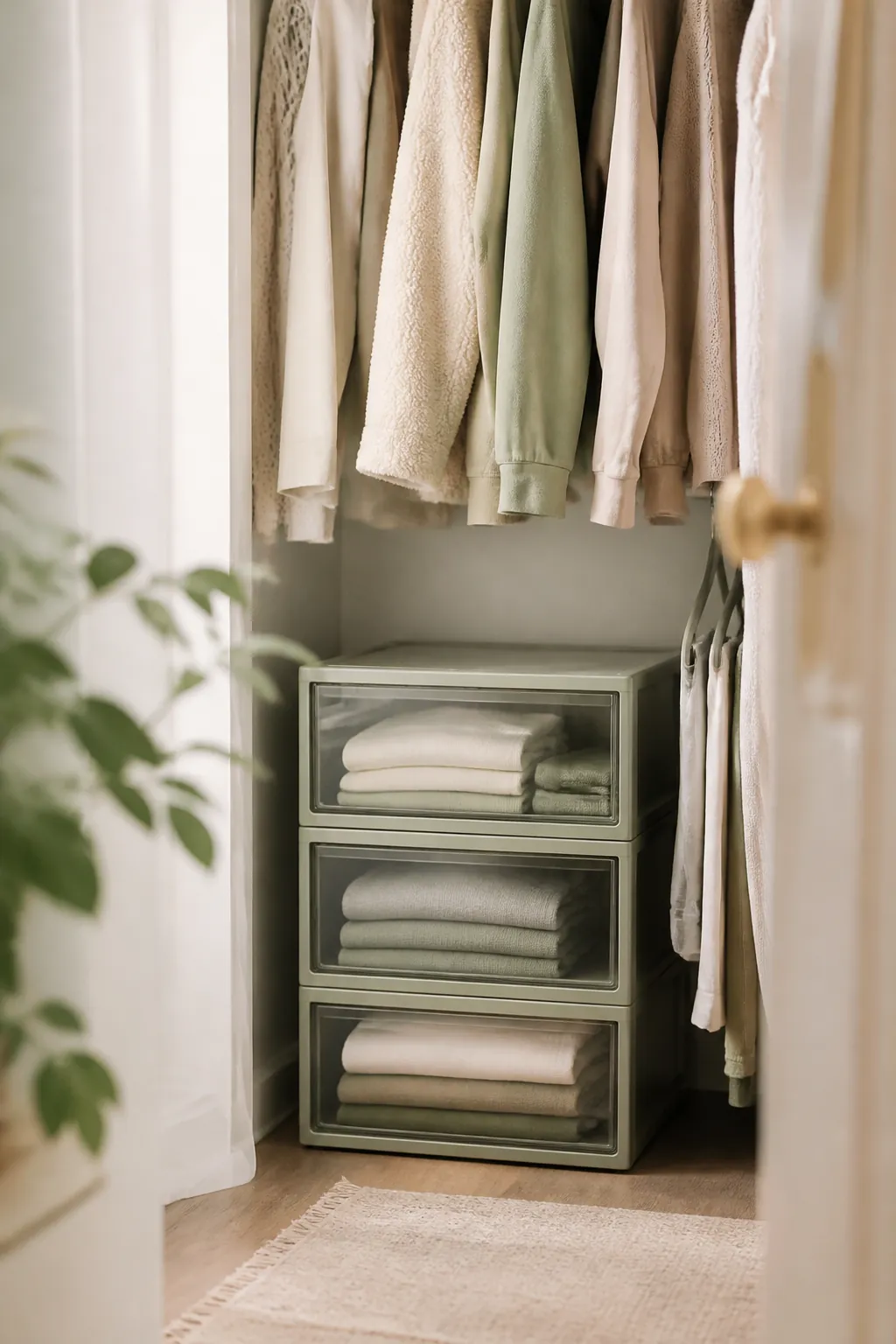
Once the heavy sets are rotated out and the drawer is still crowded, the honest answer is that the dresser drawer is not big enough for the full collection, and no amount of folding technique changes that. Rather than crushing sets back in, a stackable drawer unit on the closet floor adds a second home for the overflow without taking up any dresser space at all.
For a stackable closet drawer unit, look for one narrow enough to clear your closet’s floor space without blocking the door swing, and measure that gap before you buy, since reach-in closets rarely have more than a foot of unused floor to spare.
9. Check the drawer once a month for holes, stretch, and mismatches
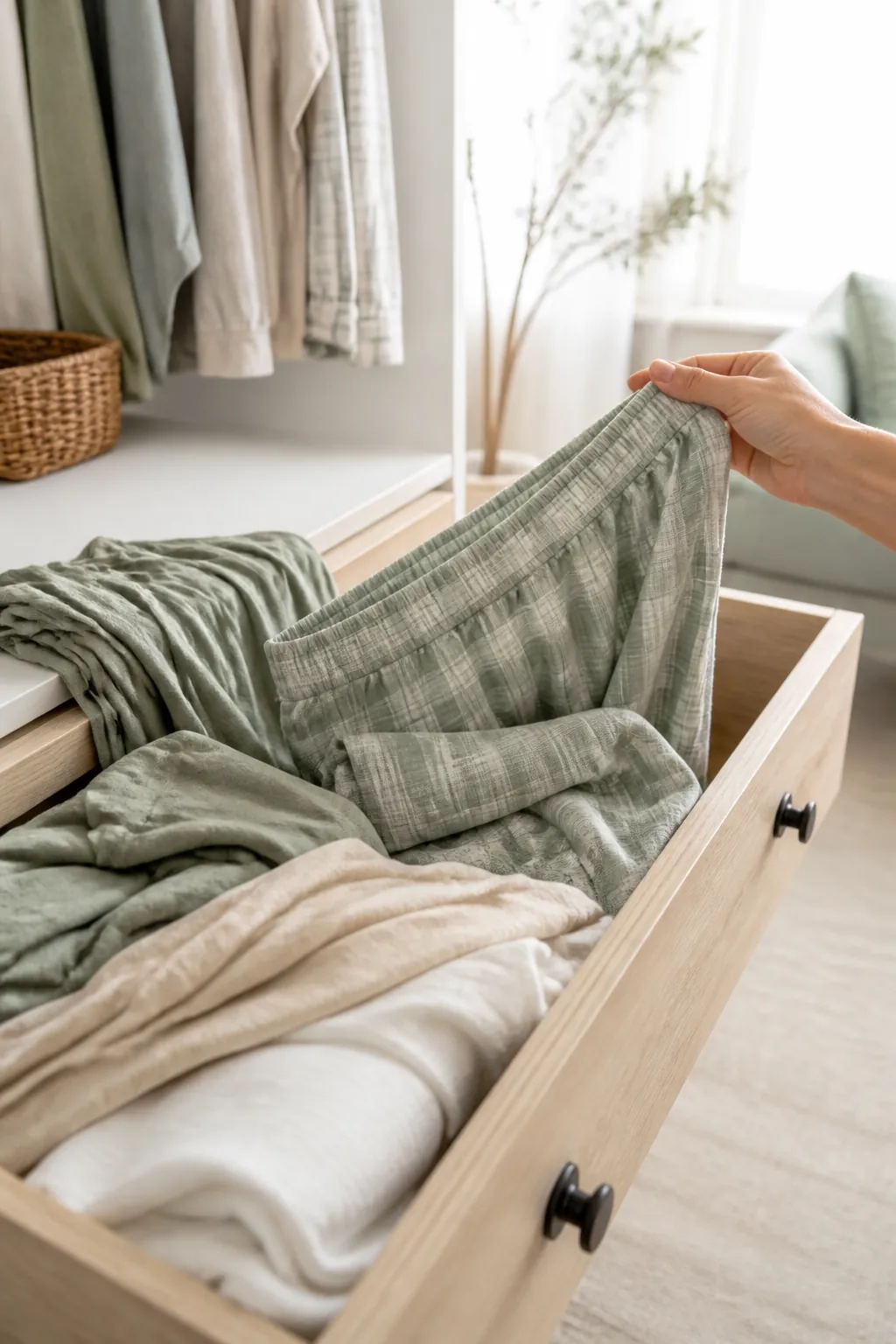
A pajama and loungewear drawer gets worn harder and washed more often than most of the dresser, which means fabric wears out here faster too, elastic waistbands go first, then knees and seat fabric thin out. Set a once-a-month check rather than waiting for a hole to show up mid-wear.
Pull everything out, re-pair any set that drifted apart, and pull anything with a stretched-out waistband, since that is usually the first sign a piece is on its way out even when the fabric still looks fine. A quick monthly pass takes five minutes and is the difference between a drawer that stays paired and one that slowly reverts to a pile.
Where to start
Start with the pairing, not the folding. An honeycomb divider that keeps every top with its matching bottom solves the problem that actually causes most of the mess, and it is the one change that keeps working even on nights you are too tired to fold anything the “right” way.
Add the fabric cubes for the floppy, formless pieces and the slim hangers for anything silky, measure your drawer’s real depth before committing to a fold width, and give worn-but-clean loungewear a spot of its own so it stops disrupting everything else. None of this needs a drill or a new dresser, just a drawer sorted around how pajamas actually get worn instead of how a typical clothing drawer gets organized.