A small living room collects two kinds of clutter that nobody wants to throw away: printed photos nobody has sorted since the last move, and keepsakes that arrived one at a time, a school drawing here, a ticket stub there, until the console shelf and the top of the bookcase both quietly filled up. Neither problem gets fixed by a bigger shelf. It gets fixed by a box that has a limit, a basket that has a job, and a habit of digitizing the bulk before it becomes permanent.
The nine ideas below start with sorting, since nothing else works until you know what you actually have, and end with the review that keeps the system from drifting back into a pile.
1. Sort into three piles before you buy anything
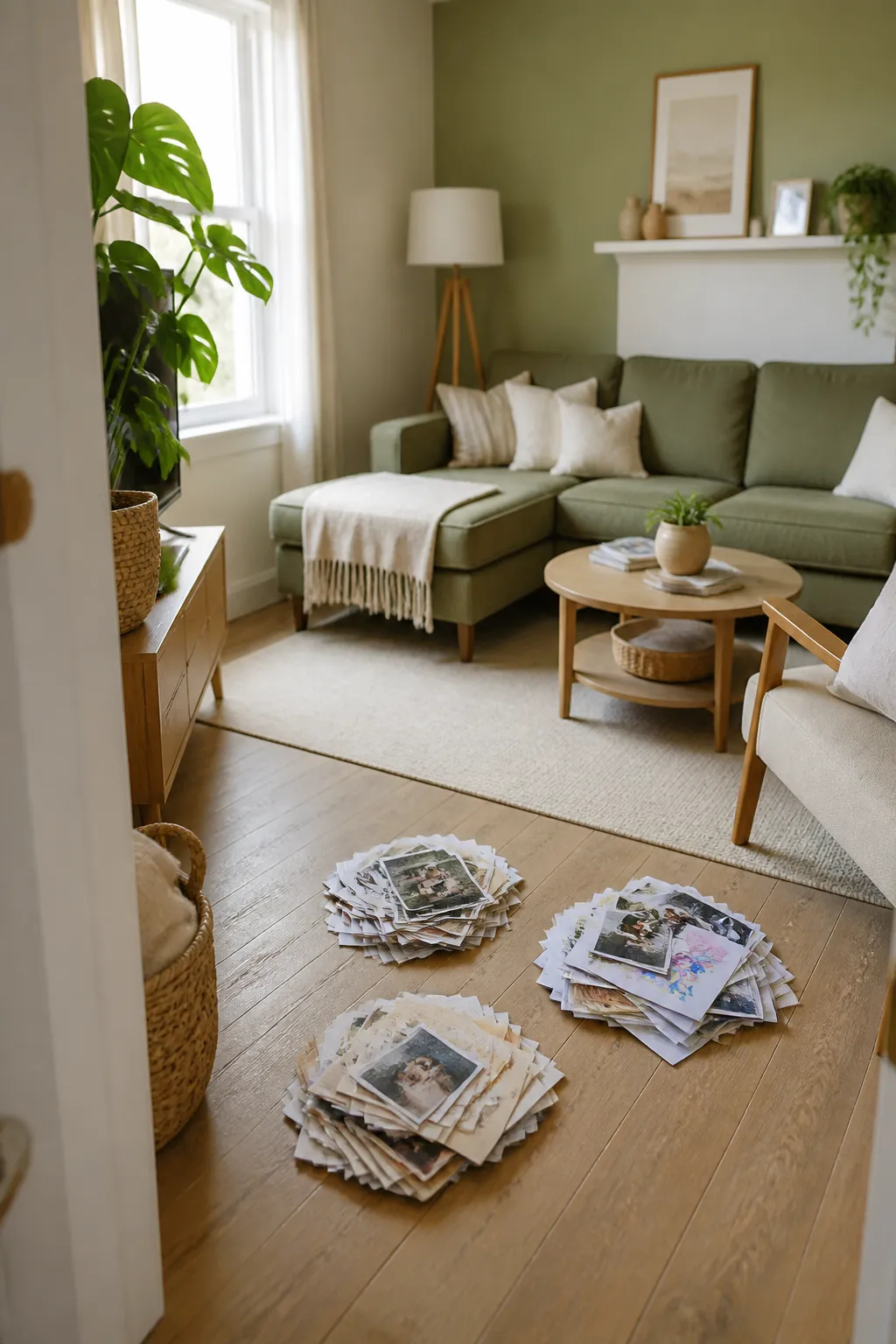
Before a single bin comes into the house, sort what you already have into three groups: keep and display, keep and archive, and digitize-then-decide. Doing this on the living room floor over a weekend afternoon takes longer than buying a box, but buying storage before sorting almost always means buying the wrong size, twice.
A rough rule that works for most collections: the display pile should be small enough to fit the wall space and shelf you actually have, the archive pile is everything worth keeping but not looking at daily, and the digitize pile is everything else, which for most households ends up being the majority of loose prints once duplicates and blurry shots get pulled out.
2. Give loose prints a real photo storage box, not a shoebox
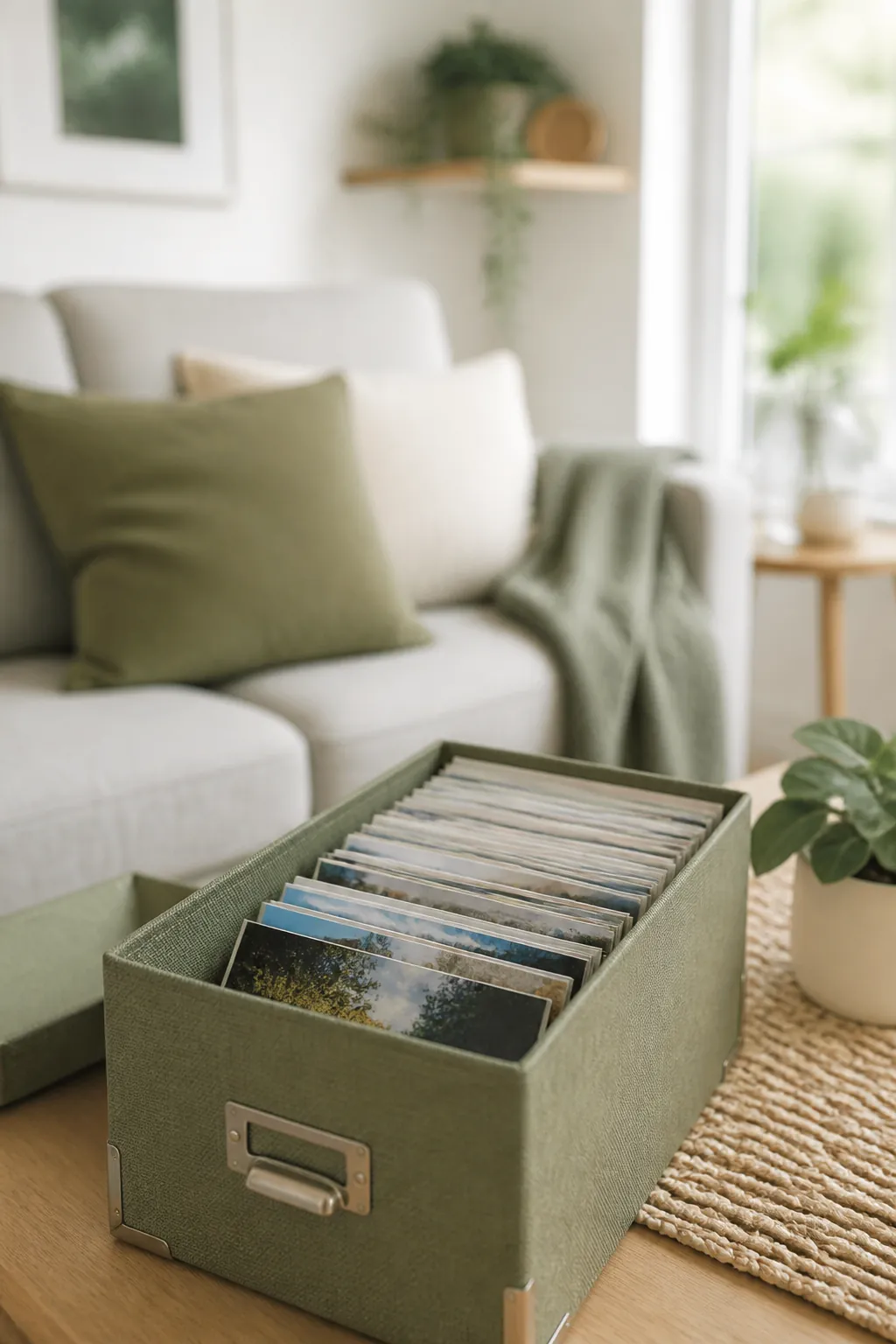
A photo storage box built for 4x6 prints typically runs about 7 by 5 by 6 inches and holds 500 to 1,000 photos standing on edge, which matters more than it sounds. Prints stacked flat in a taped shoebox press against each other for years, and in a humid summer the emulsion on adjacent photos can bond together well enough that separating them tears the surface off both.
Look for a box lined with acid-free, lignin-free material rather than plain cardboard. Lignin breaks down over time and yellows anything it touches, which is the actual chemistry behind photos that come out of an old box with brown edges even though they were never handled.
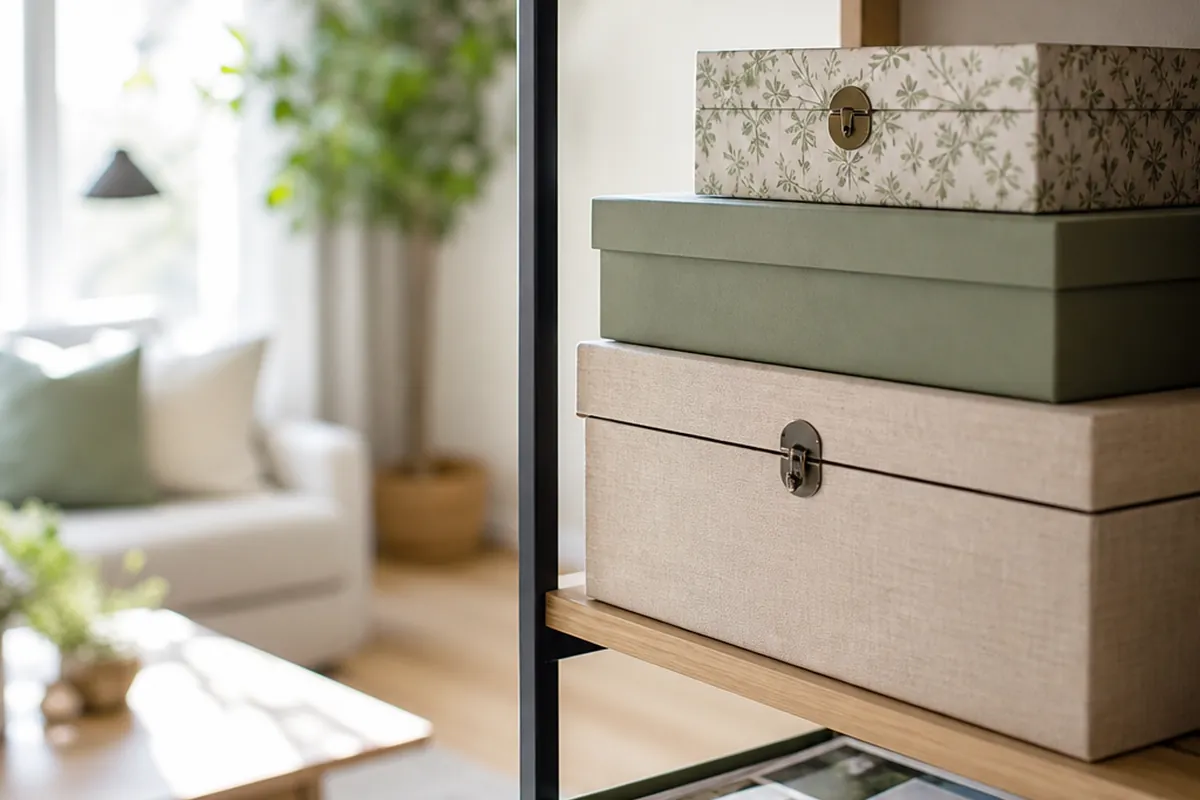
3. Stack keepsake bins by category, not by room
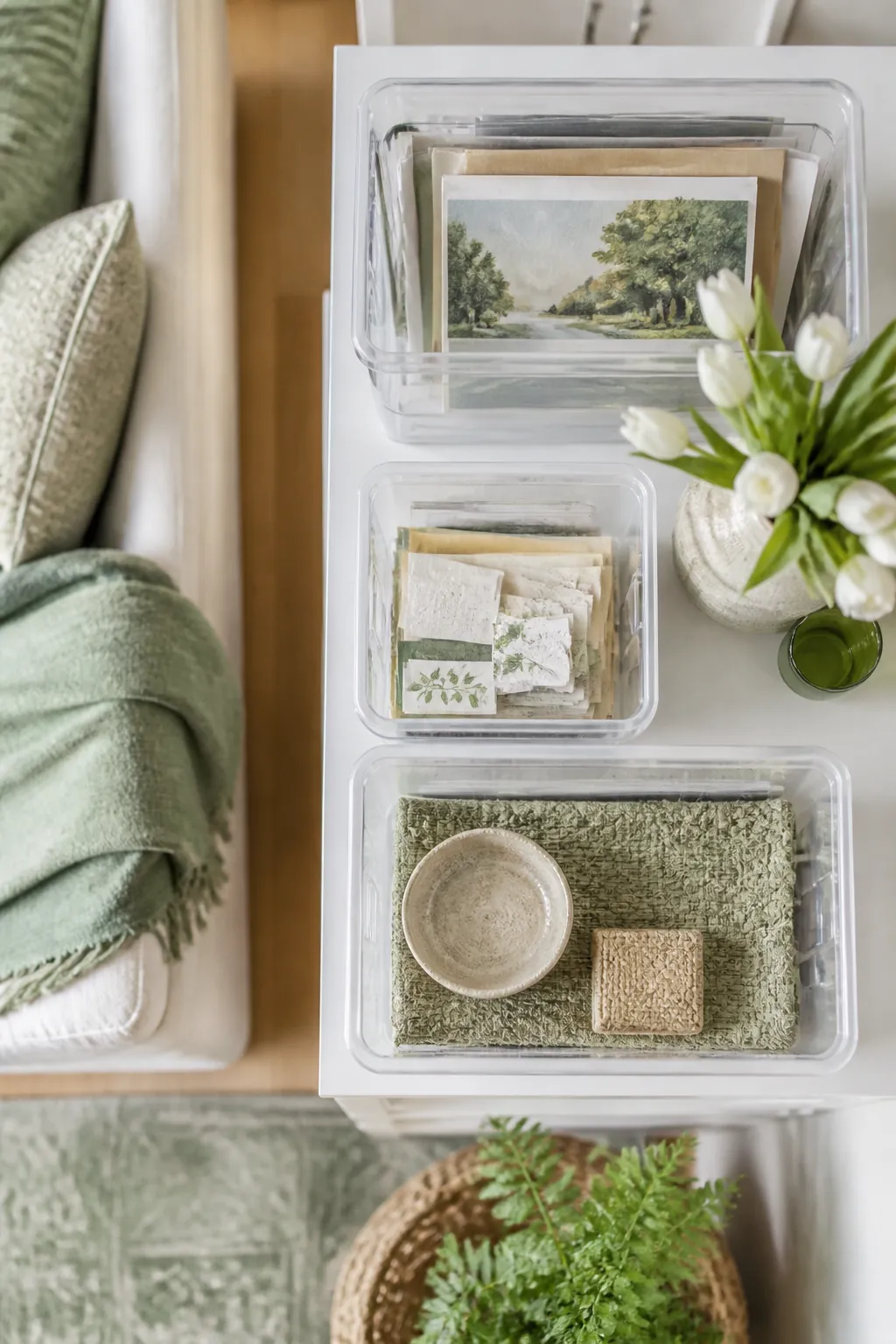
A clear stackable storage bin works better sorted by what’s inside, one bin for kids’ artwork, one for cards and letters, one for ticket stubs and event programs, than by which room the stuff happened to be sitting in when you decided to deal with it.
Category sorting means you can set an actual limit per category instead of one vague “keepsakes” limit that never gets enforced. Two bins of artwork per child per school year is a real rule you can check at a glance through clear sides. “Some artwork, somewhere” is not a rule at all, and it’s how a shelf that held one bin in September holds four by June.
4. Reserve one shelf for keepsakes, not a growing footprint
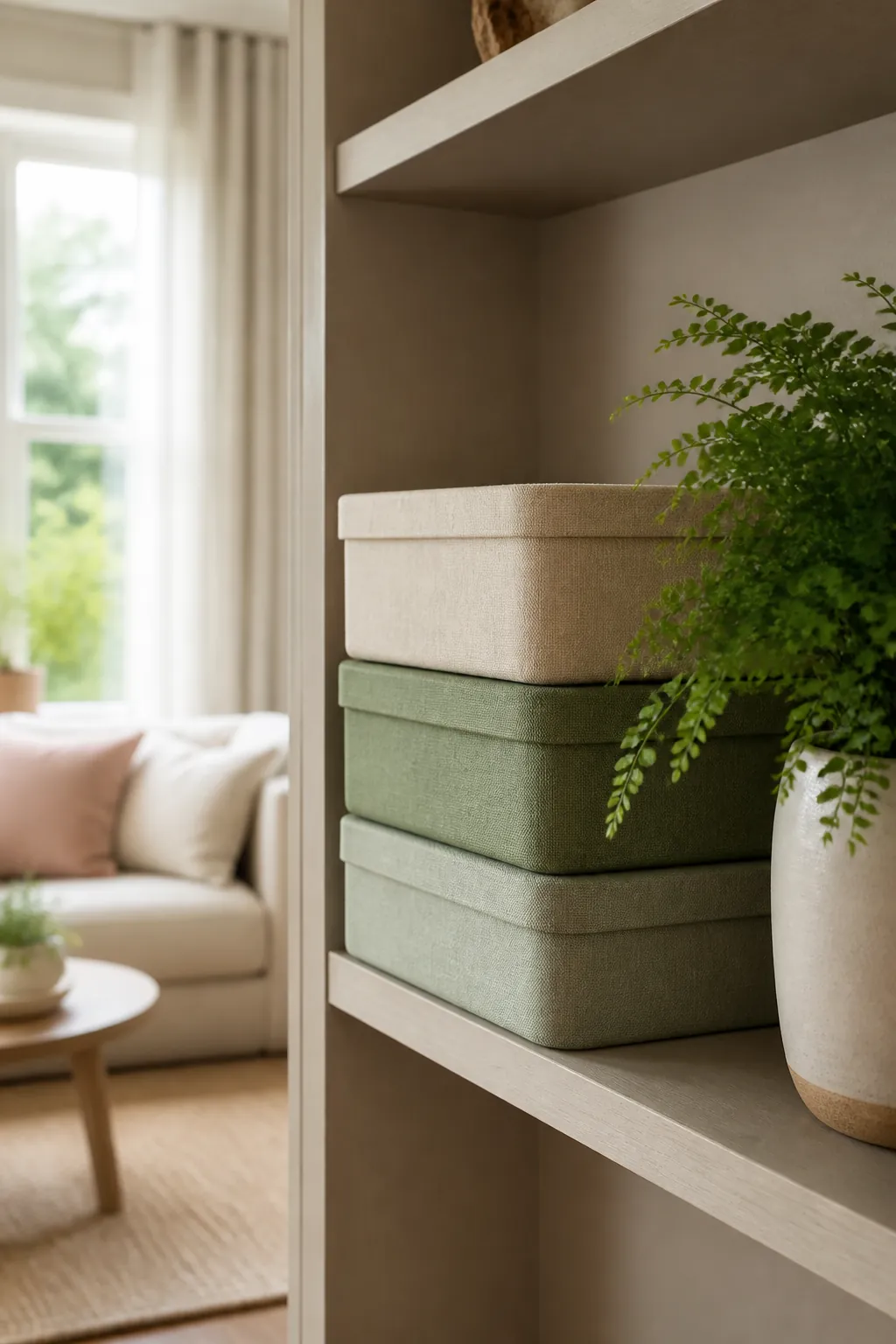
Pick one specific shelf, on a bookcase or a console under the TV, and treat its width as the actual limit on how many keepsake bins the living room holds. A shelf 30 inches wide fits two or three stackable bins depending on their footprint, and once that shelf is full, something leaves before anything new goes on.
This is the single change that stops keepsake creep in a small living room, because the failure mode is never one big decision to keep too much. It’s a hundred small decisions to keep one more thing, each of them reasonable on its own, until the shelf and the space beside it and the top of the bookcase are all keepsakes.
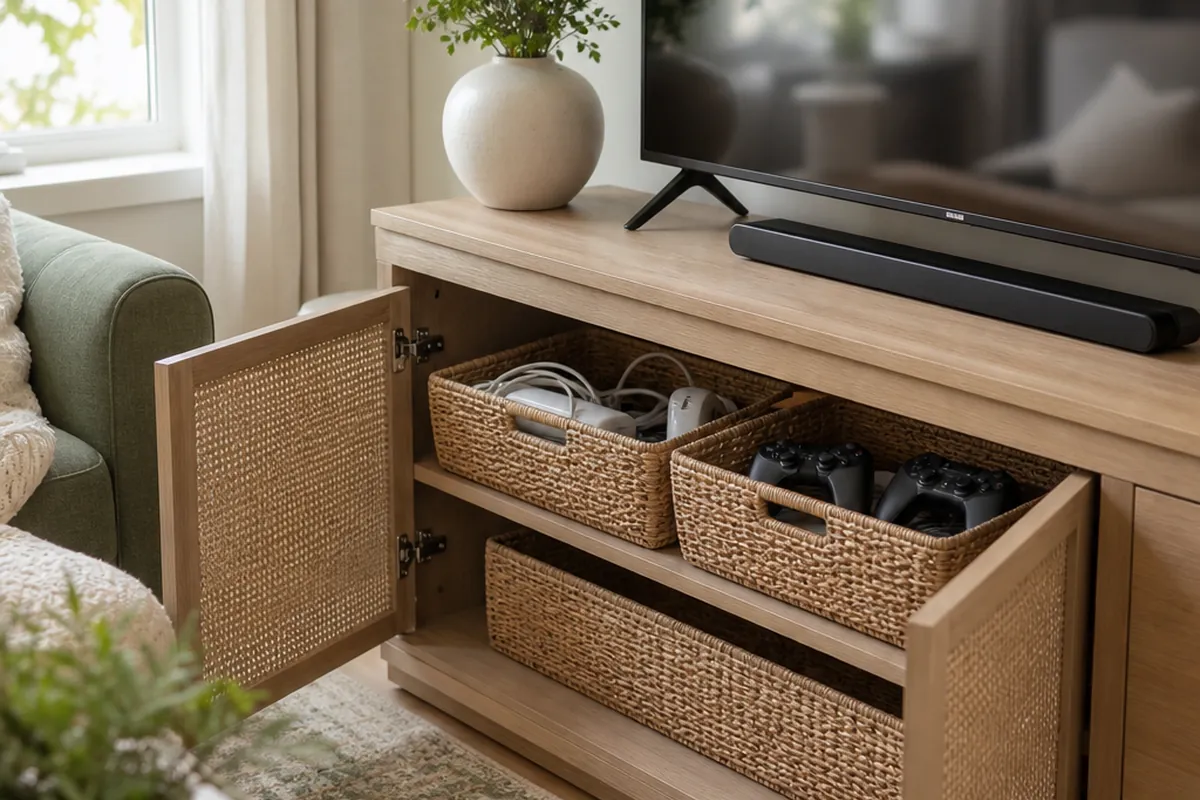
5. Corral small mementos in a shelf-sized basket
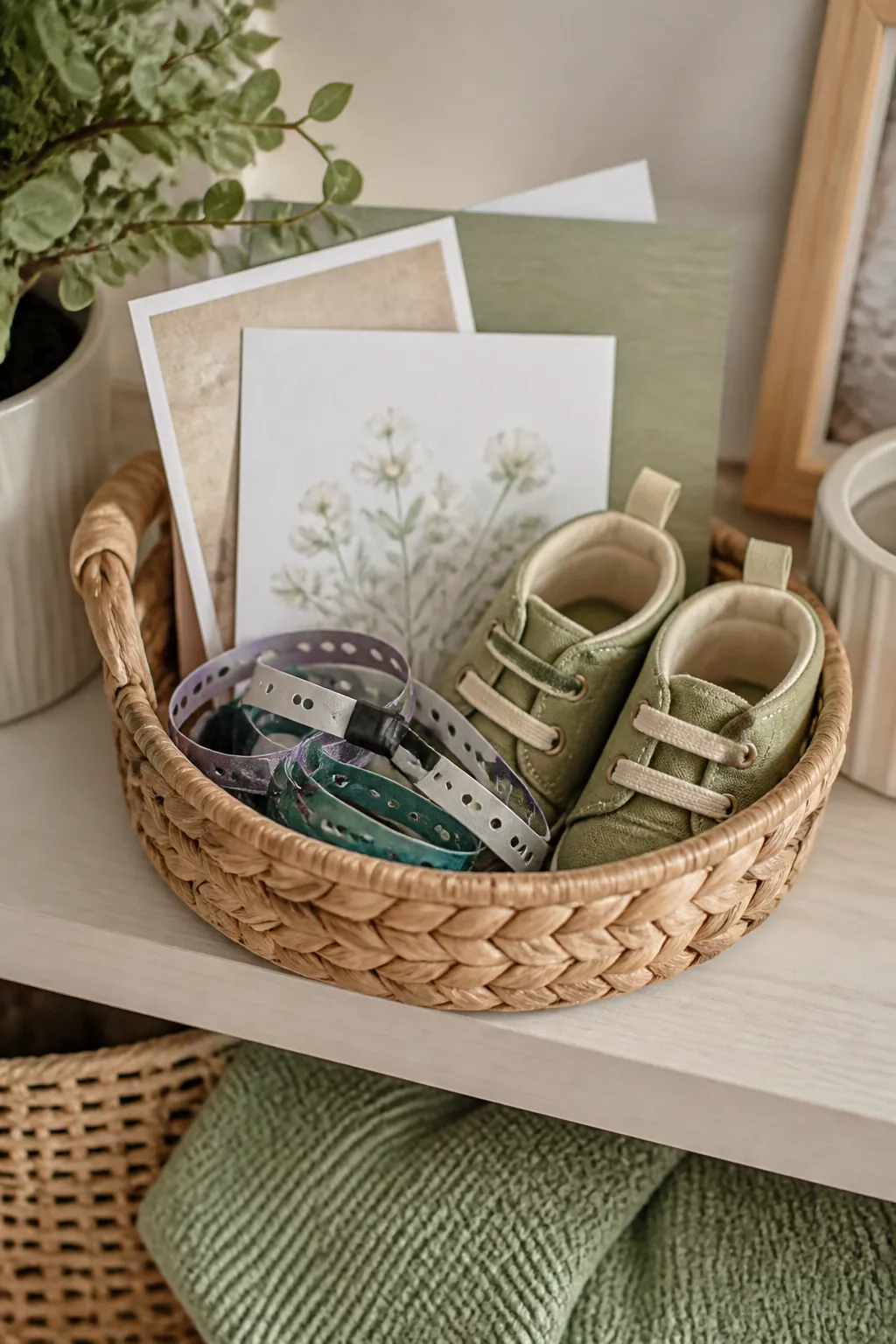
Not everything worth keeping fits neatly in a photo box or a stackable bin. Concert wristbands, a child’s first shoes, a stack of birthday cards from one particular year, these are the odd-sized items that end up loose on a shelf if they don’t have a container of their own.
A set of small storage baskets, something in the 8-by-6-inch range, sized to a single shelf gives these items one visible home instead of letting them spread across the shelf as individual objects. Go much bigger than that and the basket stops being a keepsake basket at all; anything sized for a coffee table ends up catching loose mail and a stray remote control within a week. A basket that holds a double handful of mementos and no more forces the same discipline as the stackable bins: when it’s full, something gets moved to the archive box or let go.
6. Hide bulkier memorabilia in one decorative basket

For anything too big or too irregular for a bin, a folded jersey, a stack of oversized cards, a rolled poster, a single larger woven storage basket does more for a small room’s appearance than three smaller containers scattered across different shelves. One basket beside a storage ottoman or reading chair reads as intentional decor; three half-full boxes on top of a bookcase read as unfinished business.
Measure before buying. A basket that’s 16 inches across and 12 inches deep holds noticeably more than it looks like it should, but only if the room has 16 inches of floor or shelf clearance to spare, which is worth checking with a tape measure before the basket shows up too big for the spot you had in mind.
7. Digitize before the archive box fills up
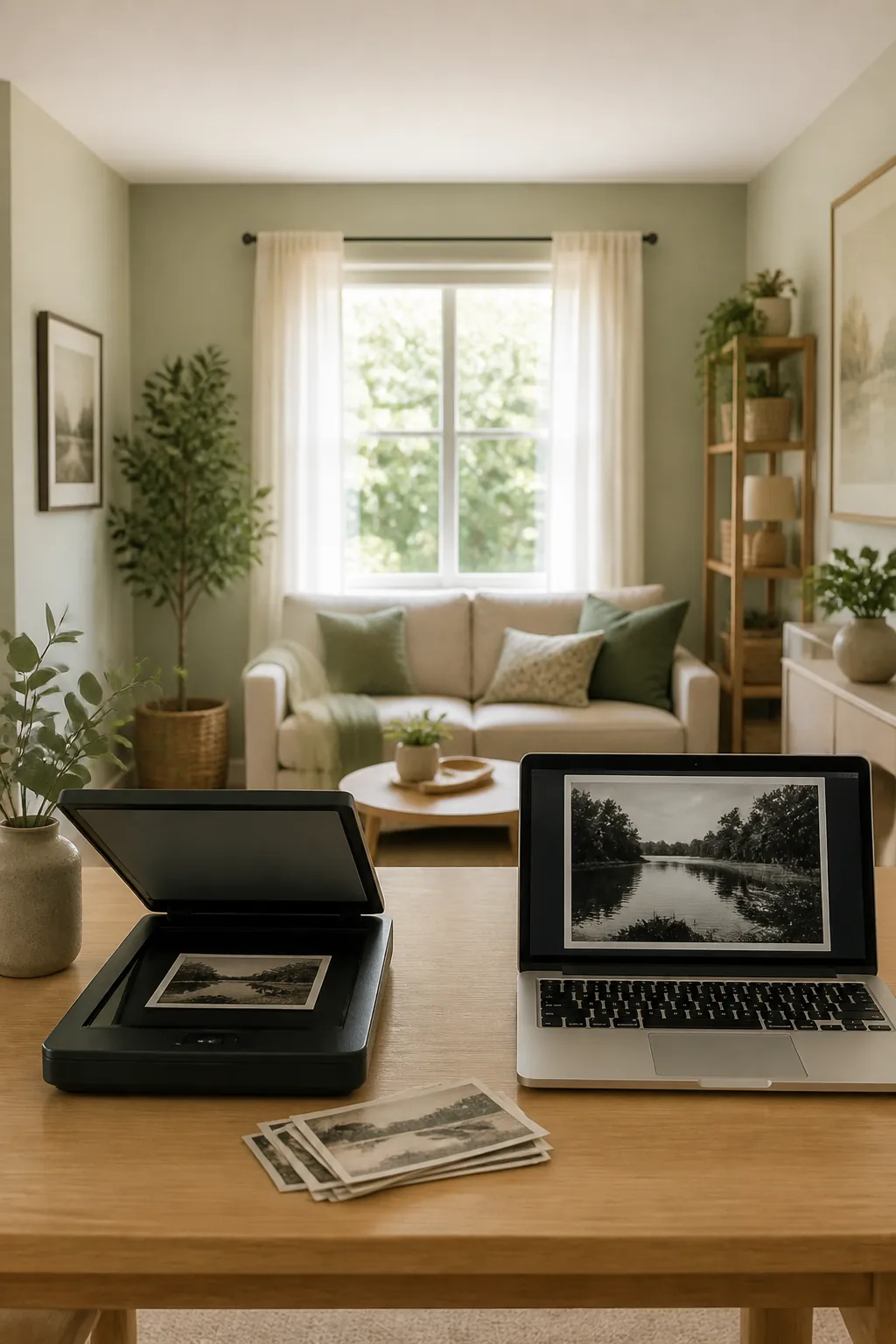
Scanning is the one step on this list that actually shrinks the collection instead of just containing it. A flatbed scanner or a phone scanning app handles the job at home; the trick is doing it in batches of 40 to 50 prints a session so it stays a Tuesday-evening task rather than a weekend you keep postponing.
Digitizing does not mean throwing every original away. Keep the photos that matter enough to hold in your hands, a handful of true irreplaceables per decade is common, and let the duplicates, the blurry shots, and the ten nearly identical photos from one birthday party exist only as files once they’re scanned. This is the same paper-reduction logic that works for a mail pile: the fix that actually shrinks the problem beats the container that only holds it.
8. Rotate what’s on display instead of adding to it
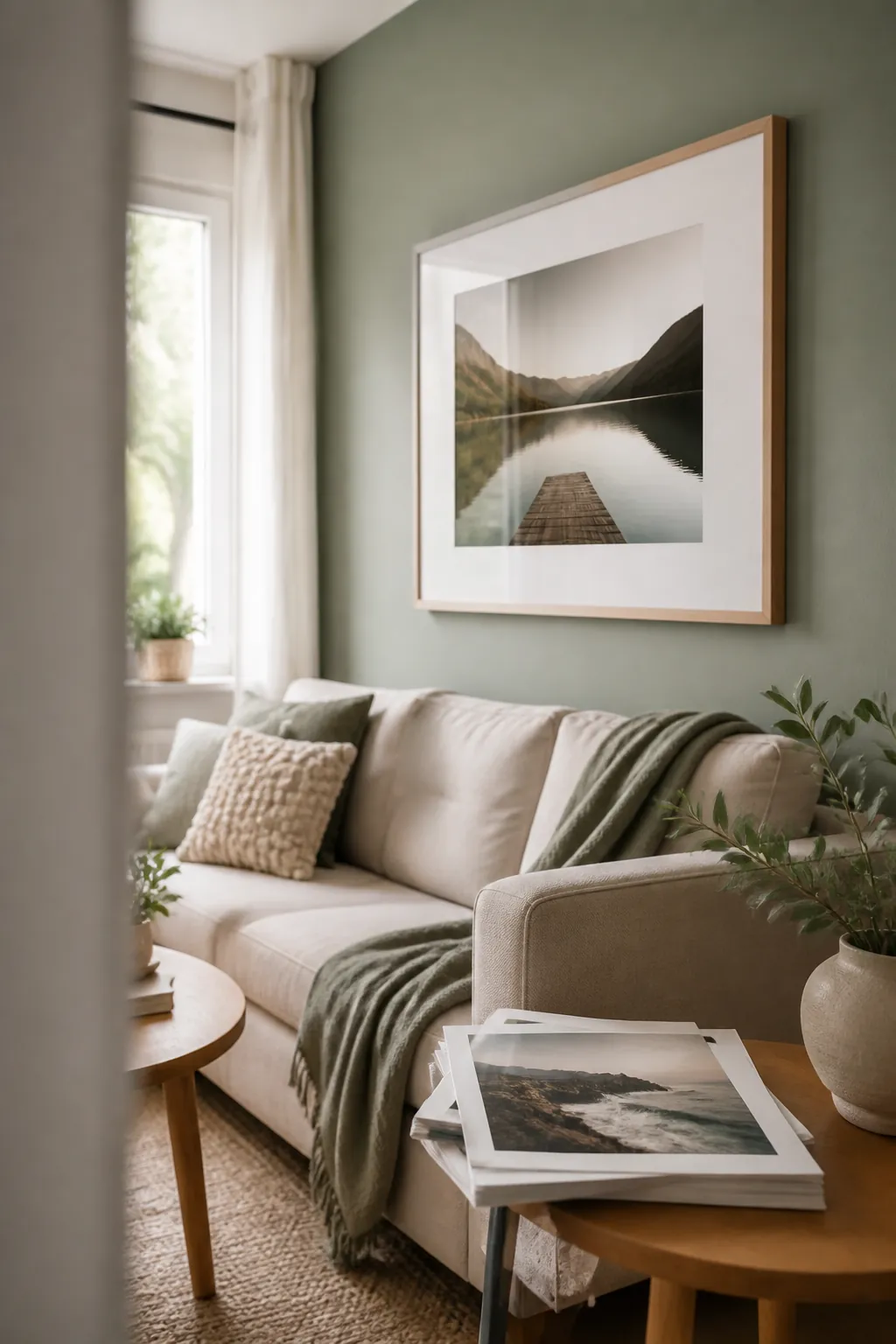
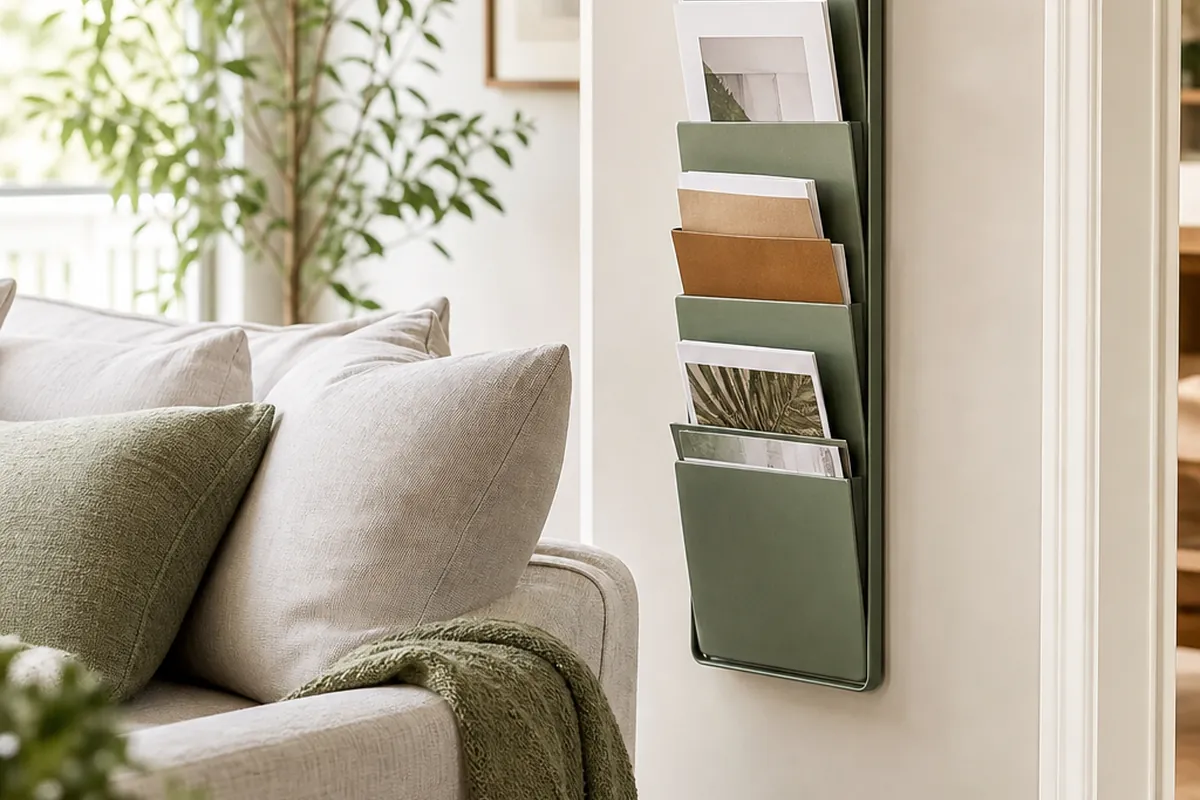
A single large frame or a small gallery ledge holds a fixed number of photos, which is exactly what makes rotation work. Swap what’s behind the glass every season rather than buying a new frame each time a photo matters enough to display, and the wall never grows past the space it started with.
This also gives the archive box a purpose beyond storage. A quarterly swap means every photo in the box gets a turn on display eventually, instead of the same five frames holding the same five photos for a decade while everything else stays boxed and unseen.
9. Review the whole system twice a year
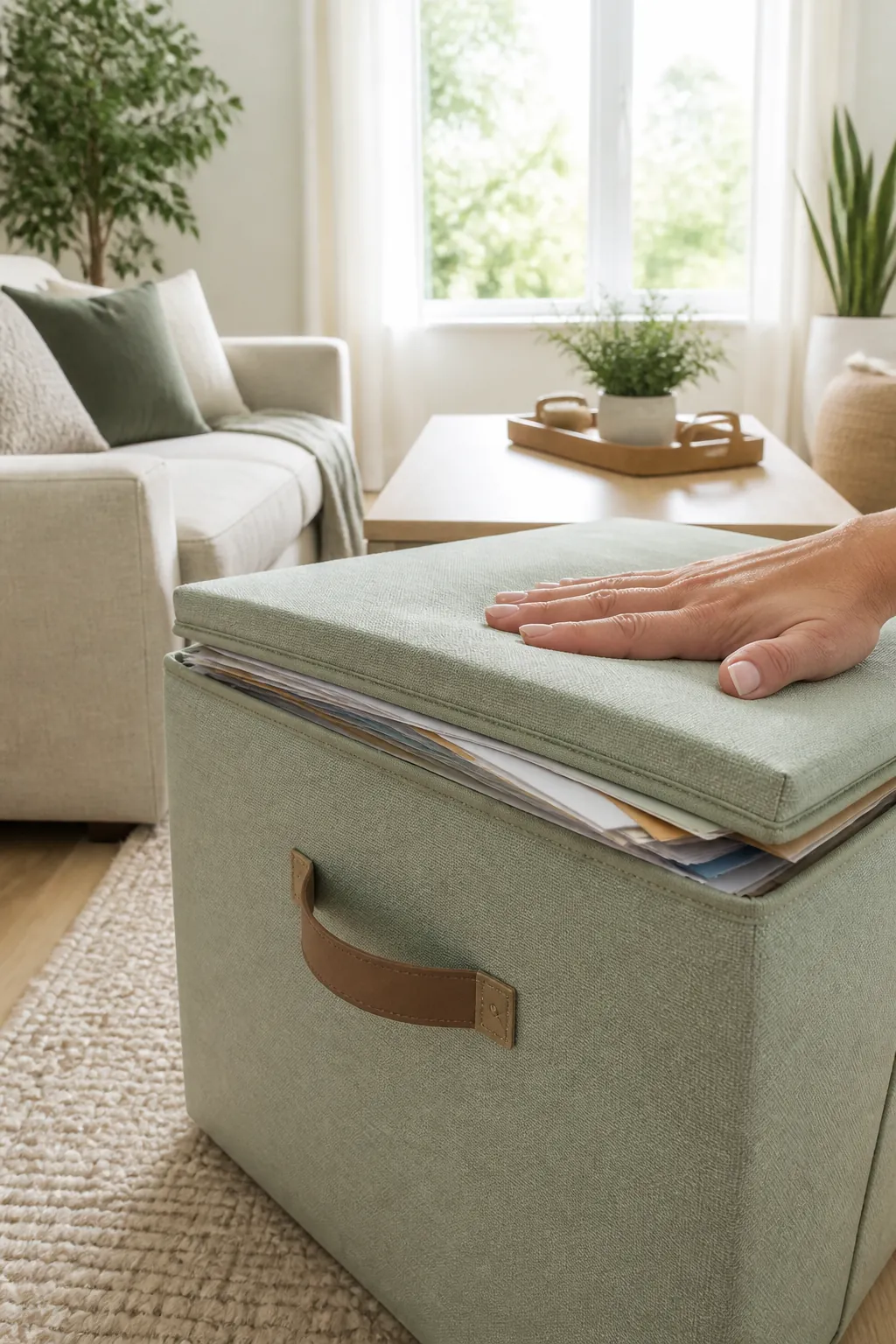
Set a recurring reminder, once at the start of summer and once around the holidays, to check whether each bin still closes without pressing down on the lid and whether the shelf is still holding the number of bins it started with. A bin that used to close easily and now needs both hands is the signal to archive digitally or let something go, not to add a second bin next to it.
This is also the moment to check that nothing has migrated to a sunny windowsill or near a heating vent, since both do more damage to old prints over a few years than average humidity does. A five-minute check twice a year catches drift before a shelf that was under control in January is overflowing by the holidays.
Where to start
Sort first, since nothing else on this list works until you know what’s actually in the pile. Give loose prints a real photo box with acid-free lining, and put keepsakes into clear stackable bins organized by category so a glance through the side tells you what’s inside without opening the lid. A small basket handles odd-sized mementos on the shelf, and one larger woven basket hides bulkier items without turning the room into a storage unit.
None of it holds without digitizing the bulk of the collection and rotating what’s on display, since a box only works as storage if it has an actual limit. Set that limit once, check it twice a year, and the shelf that used to grow on its own stays the size you meant it to be.